Syndicated

Study downplays leaking mine’s impact on fish

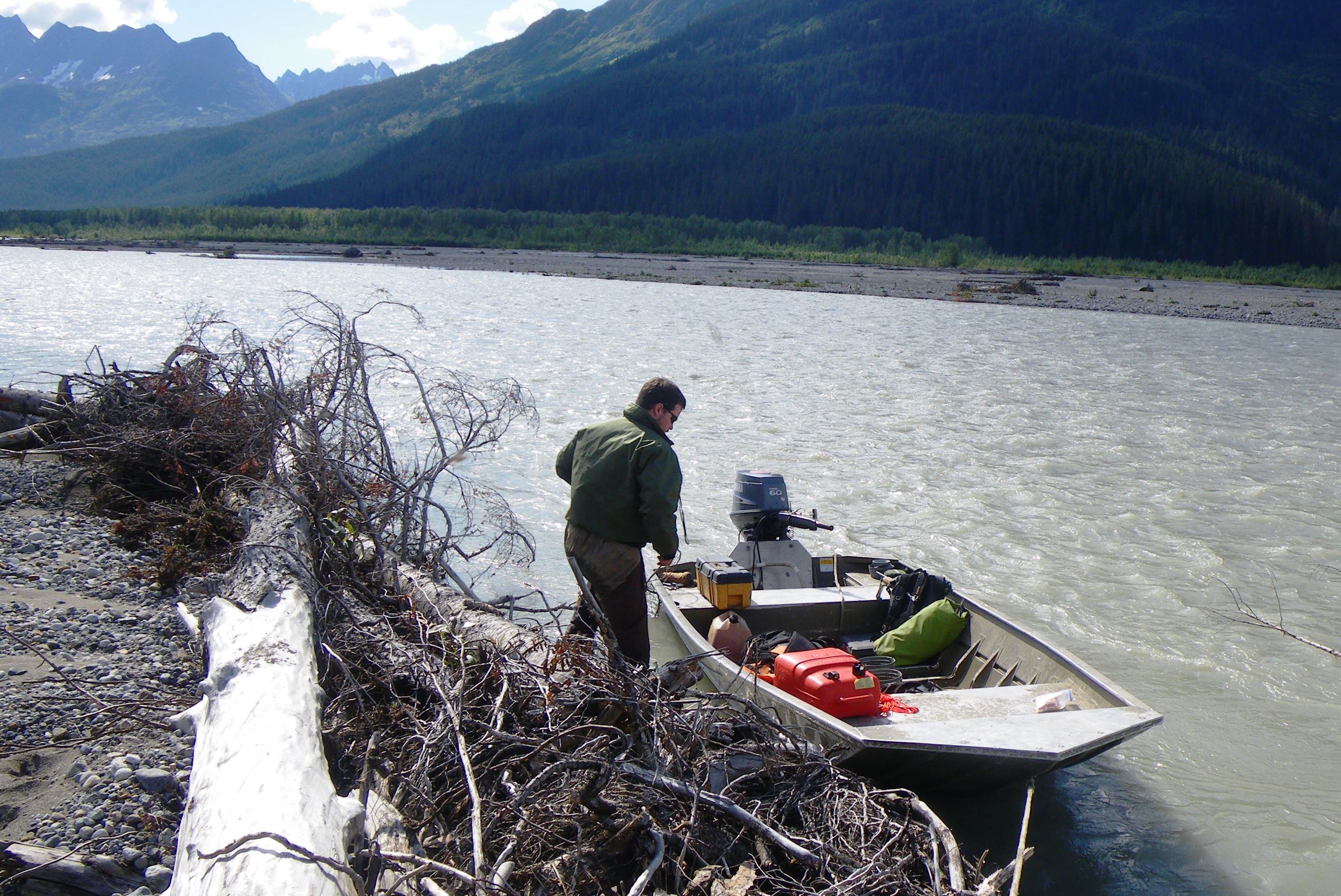
A state Department of Fish and Game staffer works on sampling fish for a study on toxic metal concentrations in Tulsequah and Taku river fish. (Photo courtesy Department of Fish and Game)

State biologists say a study shows pollution from an abandoned Canadian mine upstream of Southeast Alaska does not harm fish.

A chief critic of the Tulsequah Chief Mine says the research doesn’t tell the whole story.

The Tulsequah Chief, about 40 miles northeast of Juneau, has been closed for more than a half-century.

Two companies tried to reopen the copper, zinc, lead, gold and silver mine in the past decade. But both failed, the most recent earlier this year.

So, polluted water has continued to leach into the Tulsequah River, which flows into the Taku River, which enters the ocean near the capital city.

That’s raised concerns among Taku fishermen that salmon runs are being damaged – or that the fish might be unsafe to eat.

Dissolved metals, such as copper, which can affect aquatic life, were of particular concern.

A Department of Fish and Game study, released in late October, said that’s not the case.

“What we found was that the metals concentrations in the fish that we captured at the mine were real similar to the fish upstream and downstream of the mine,” said Jackie Timothy, Southeast regional supervisor of the department’s Habitat Division.
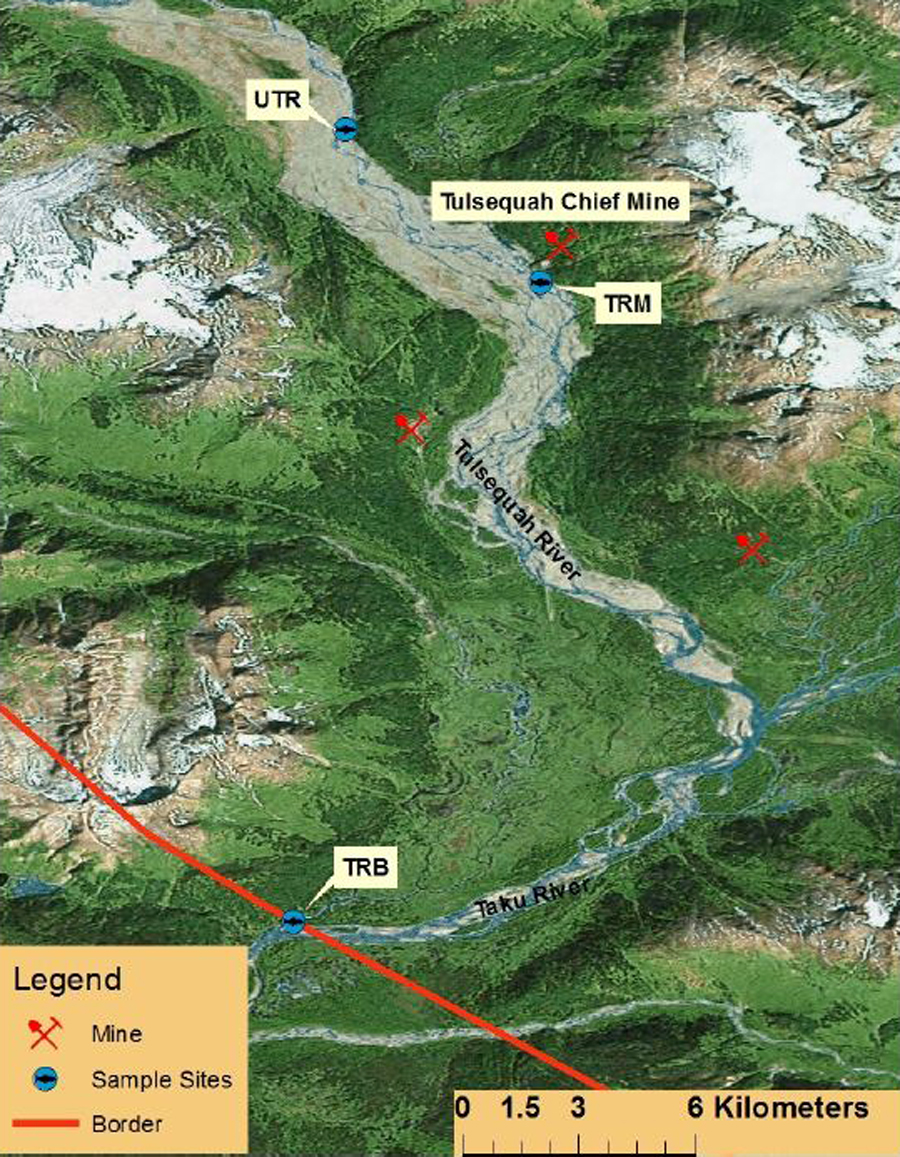
Map of test sites for Alaska Fish and Game fish study.
Tests sites used in the 2012 Alaska Department of Fish and Game Dolly Varden study are shown. (Map courtesy ADFG)

The study she co-authored updates similar research released by the department in 2012. The difference is additional sampling of the test fish, Dolly Varden char.

Critics of transboundary mines, including the Tulsequah Chief, say the study could leave a false impression, because it doesn’t answer all the questions.

“This is just one very small, very discreet little piece of data,” said Guy Archibald, who runs the Inside Passage Waterkeeper Program for the Southeast Alaska Conservation Council.

He and other critics point to earlier research estimating 15 tons of dissolved metals flow out of the mine each year.

Archibald, who helped write the study’s funding proposal, said it should also have looked for dead fish.

“When you collect fish, you’re collecting only the survivors. You have no idea of what that effluent is killing,” he said.

Another concern is that the study tested Dolly Vardens, not salmon.

Fish and Game’s Timothy said Dollies are year-round residents, while salmon are not.

She also stressed that the study had a very specific focus.

“We weren’t looking at whether or not there was a problem with the mine and whether there was pollution at the mine. That has been well-documented,” she said. “What we were looking at was whether or not fish were being impacted because that was the concern of the fishermen.”

Metals found in the sampled fish come from the general environment, she said. They occur naturally in the Tulsequah River, and other areas with mines and large ore bodies.
Sealaska Corp. announces $10.5 million in dividends

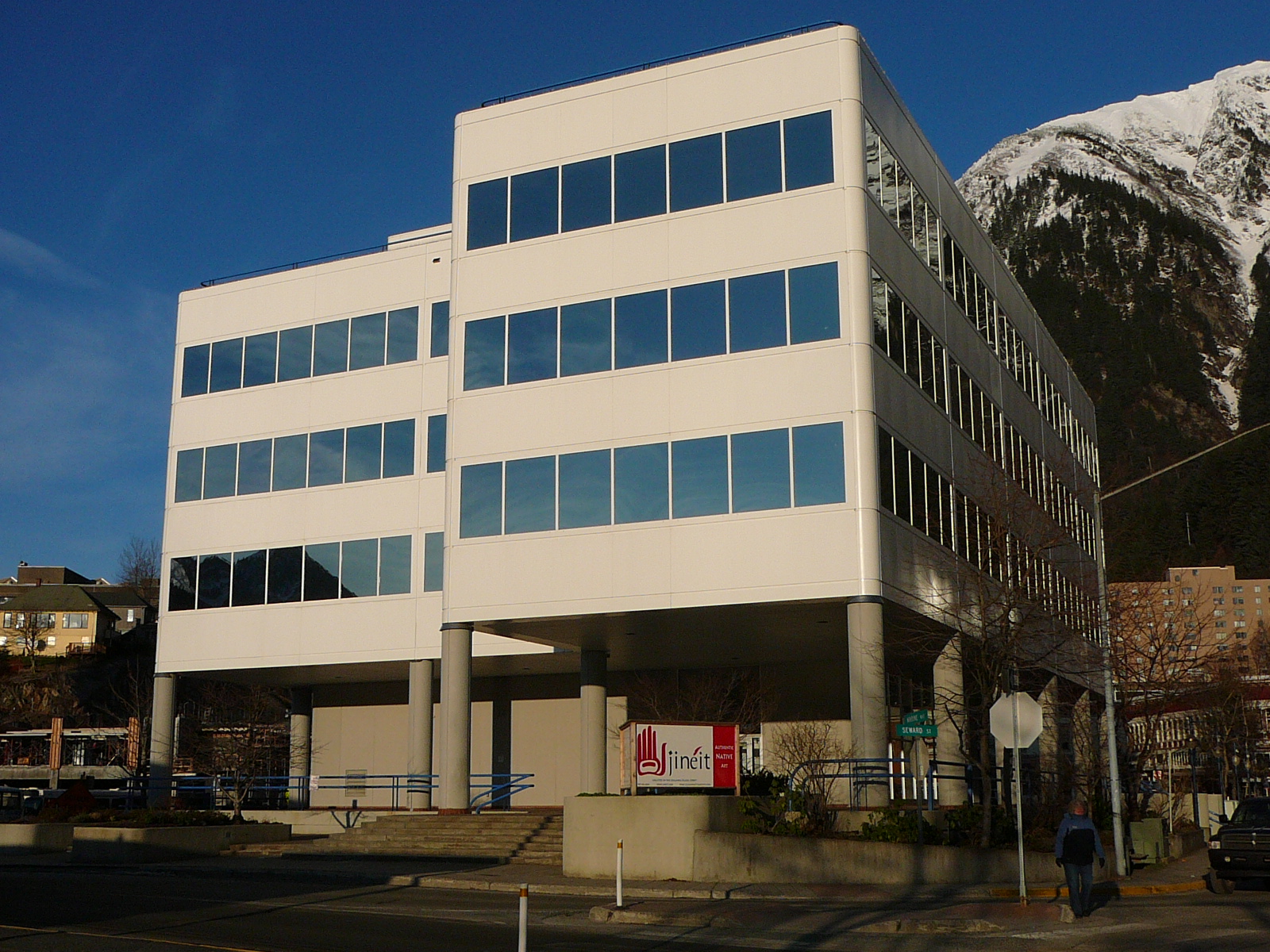
Sealaska Plaza, headquarters of the Southeast regional Native corporation, in Juneau. (Photo by Ed Schoenfeld/CoastAlaska News)

The Sealaska regional Native corporation will distribute $10.5 million to shareholders in November.

That brings the 2016 total payout to $26.4 million.

Payments go to the corporation’s approximately 22,000 shareholders, who live or have roots in Southeast Alaska.

An announcement on Sealaska’s website said most shareholders who also belong to an urban Native corporation, such as Juneau’s Goldbelt, will receive $597 directly. The same is true for at-large shareholders, who are not members of a village or urban corporation.

Most shareholders who also belong to a village Native corporation, such as Saxman’s Cape Fox, will receive $133 directly. The same is true for shadeholders’ descendants. Elders who register for a special program can receive an additional $133.

All amounts are based on ownership of 100 shares. That’s the most common number, but some Sealaska members own more or fewer shares because of gifting or inheritance.

Juneau-based Sealaska’s earnings come from savings, investments and businesses.

About four-fifths of the fall distribution comes from a pool of shared natural-resource earnings made by other regional Native corporations. That makes up the difference between the lower and higher dividend payments.

Sealaska President and CEO Anthony Mallott said in a prepared statement that the corporation’s goals include lessening dependence on the resource-income pool.

The fall dividends will be distributed Nov. 23.

In past years, they’ve been paid in early December.

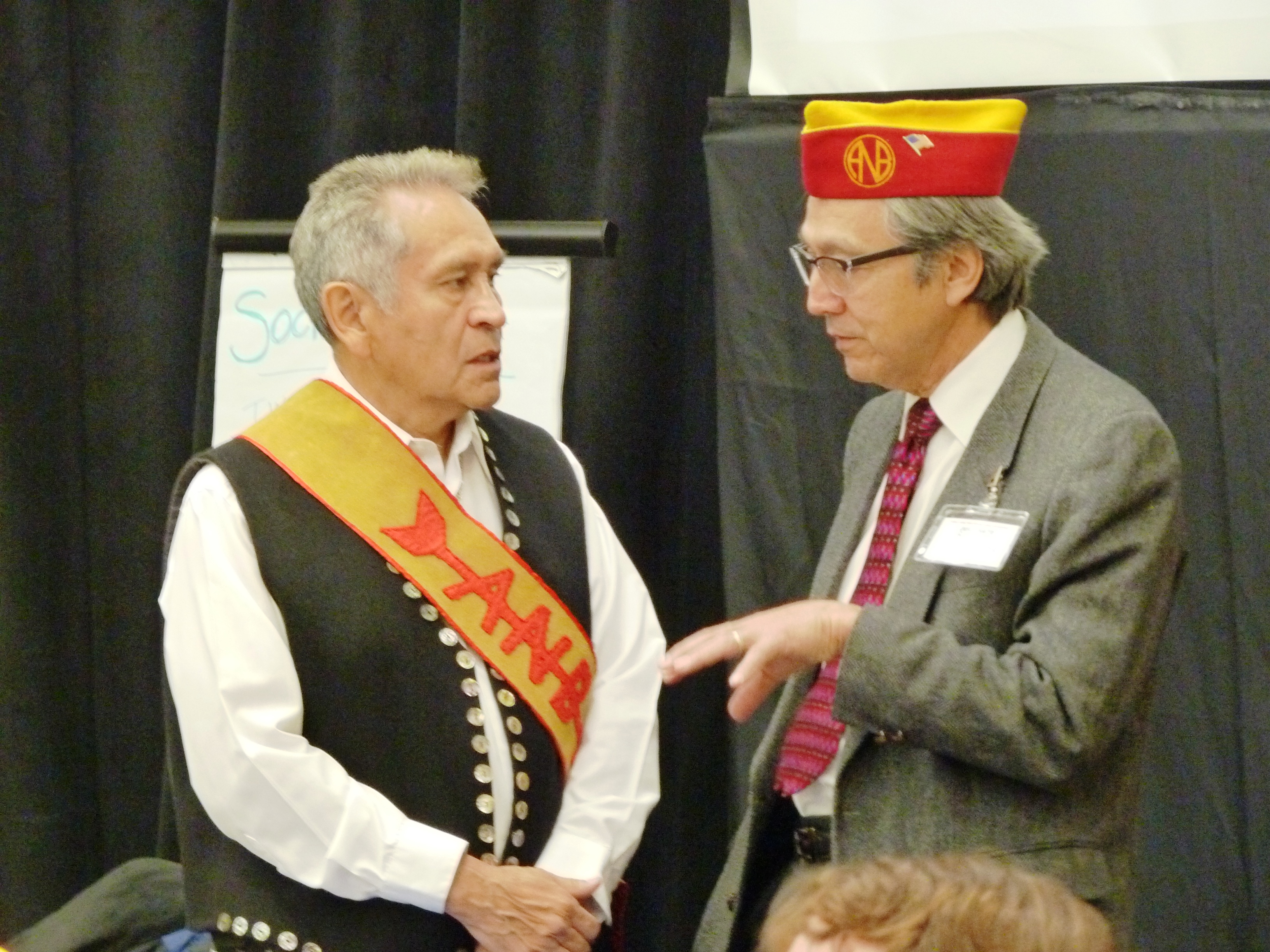
Native Brotherhood, Sisterhood boost youth leadership

Alaska’s oldest Native organizations are giving younger members more power.

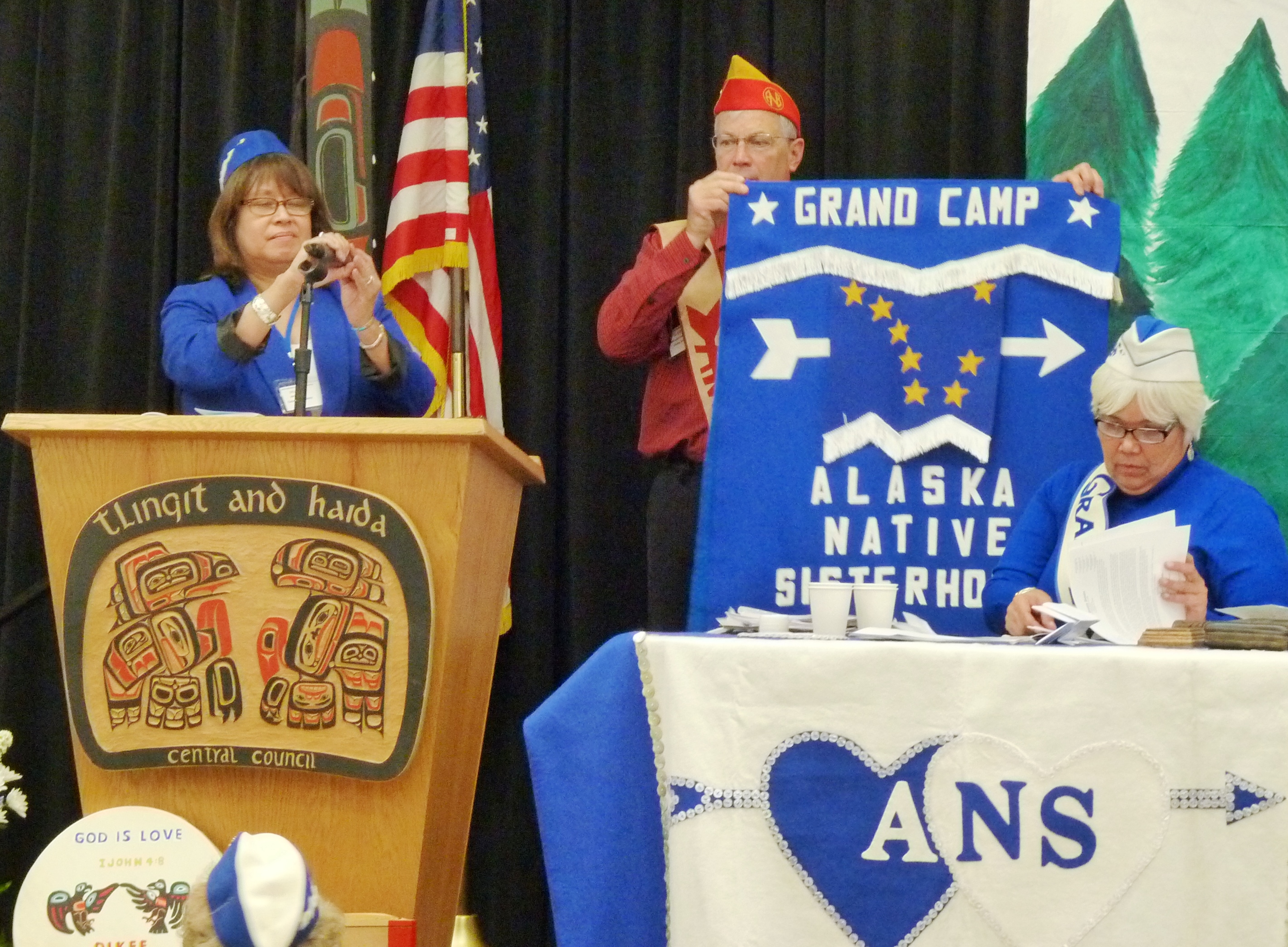
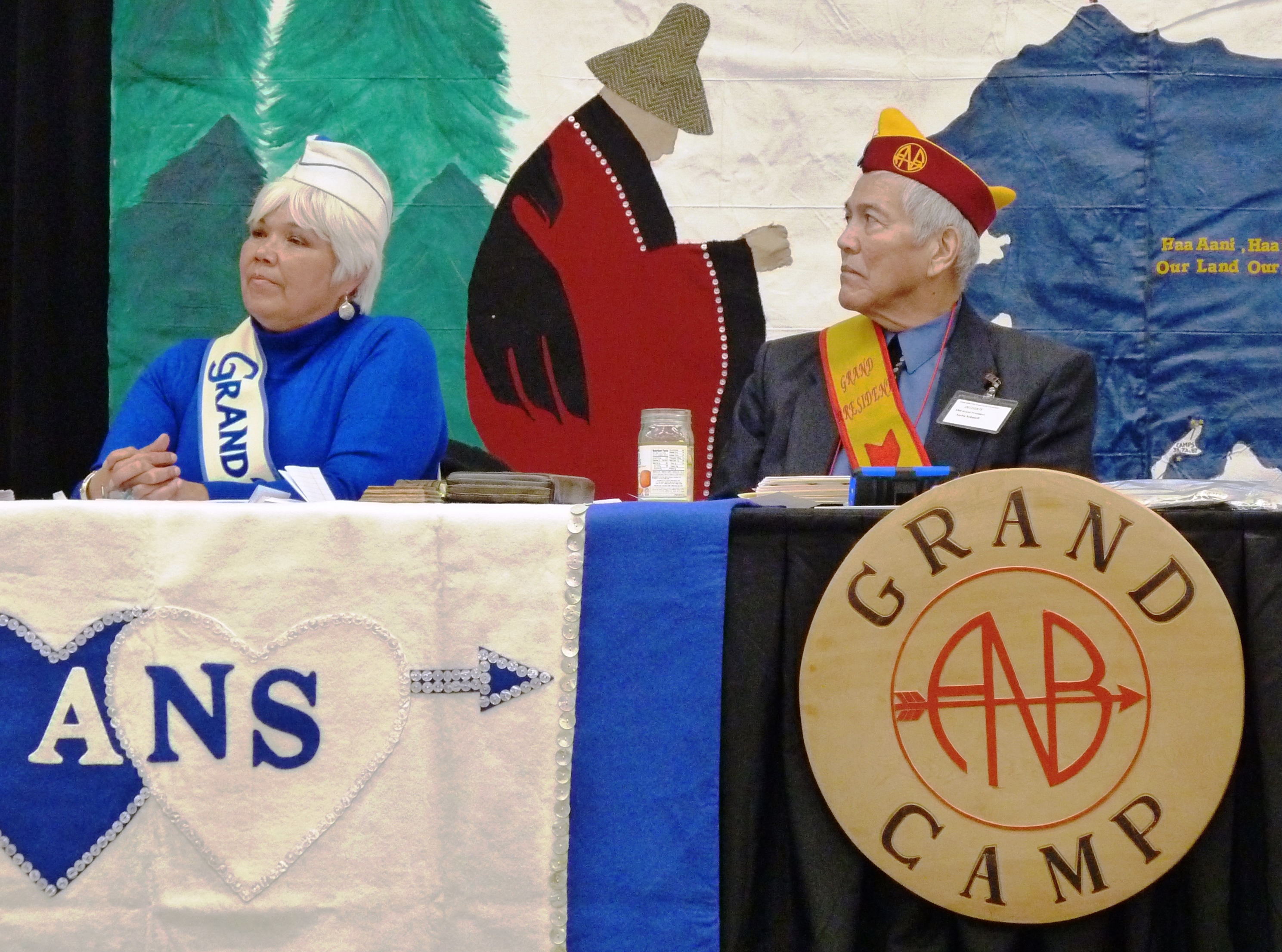
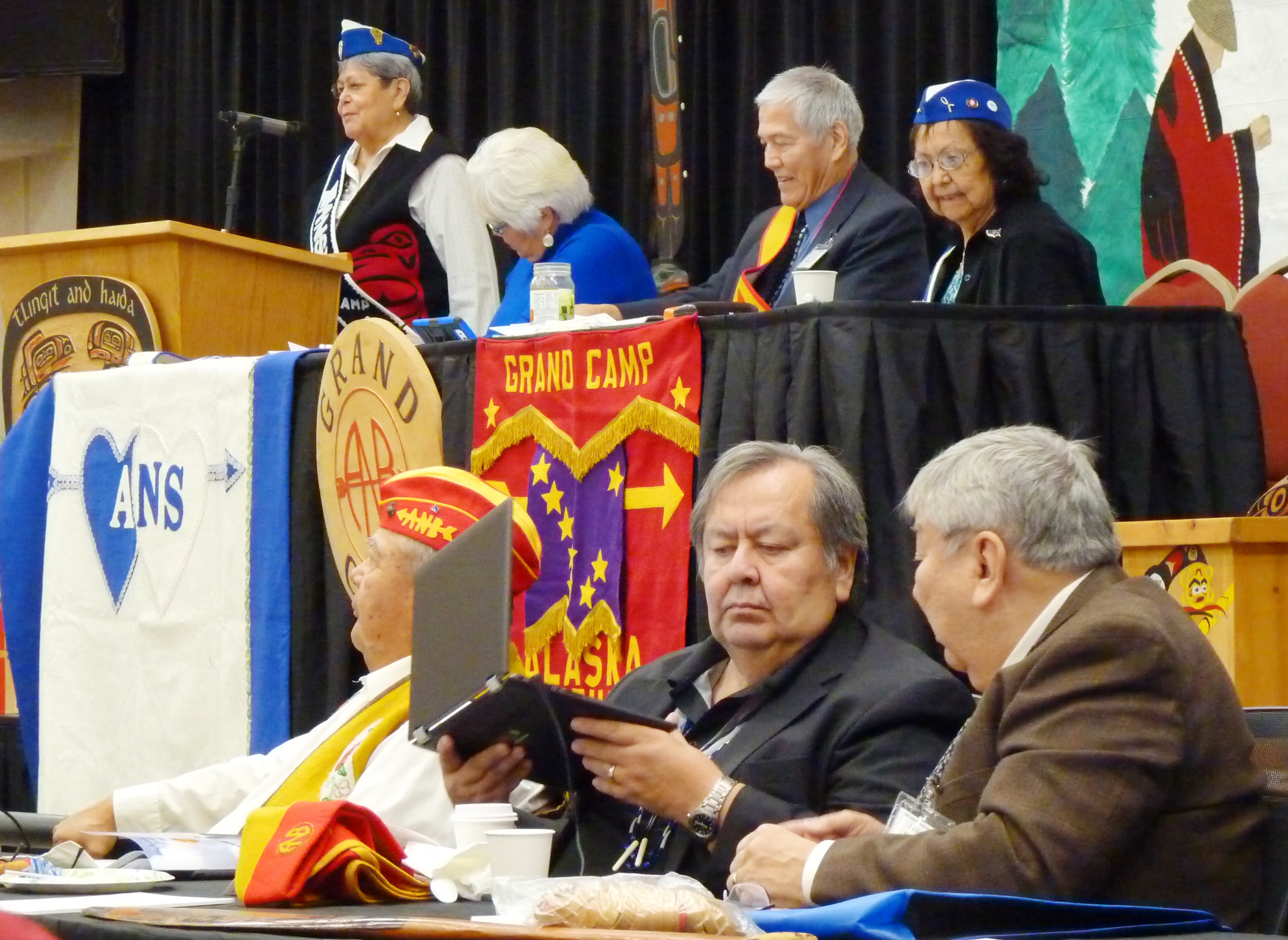
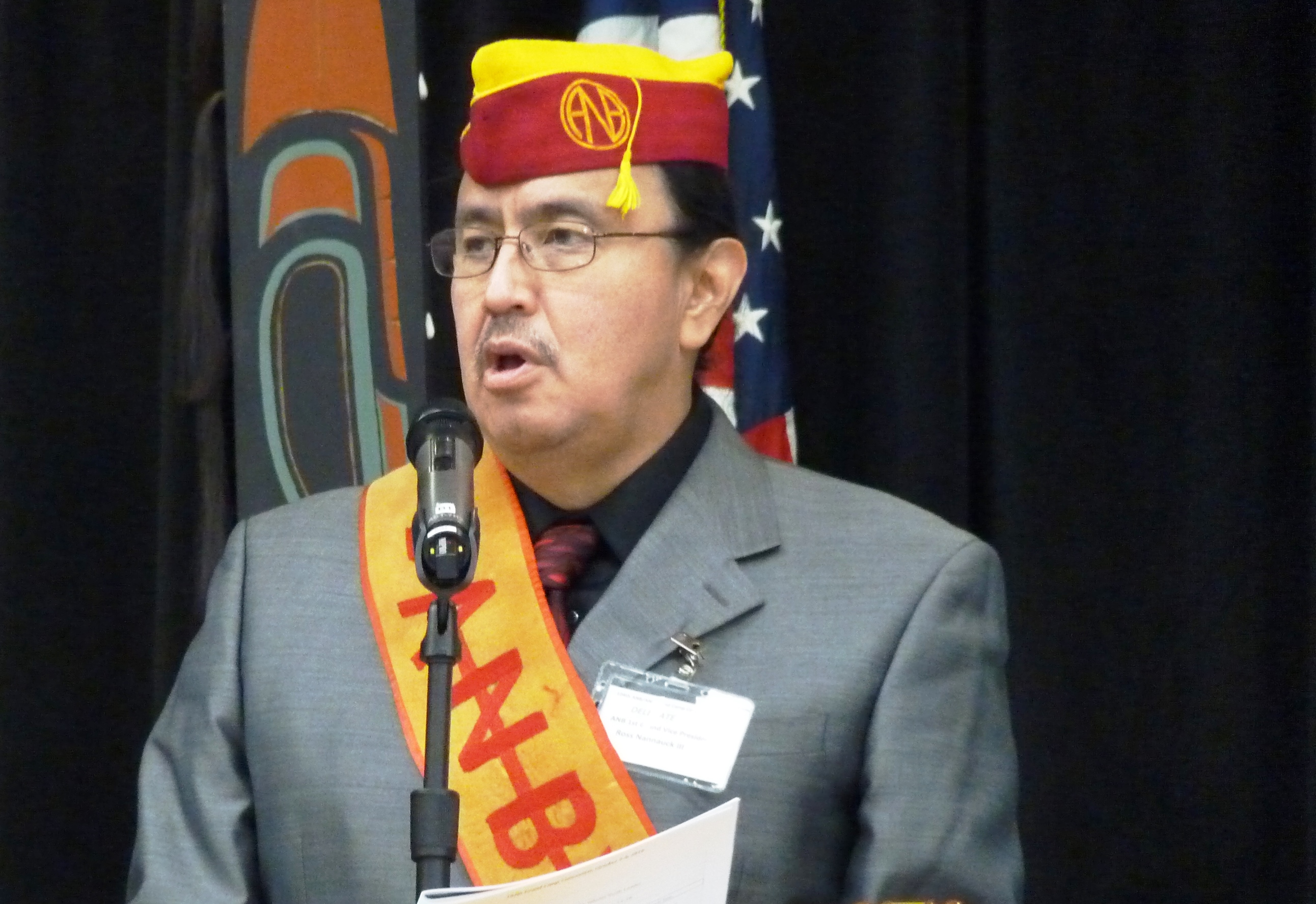
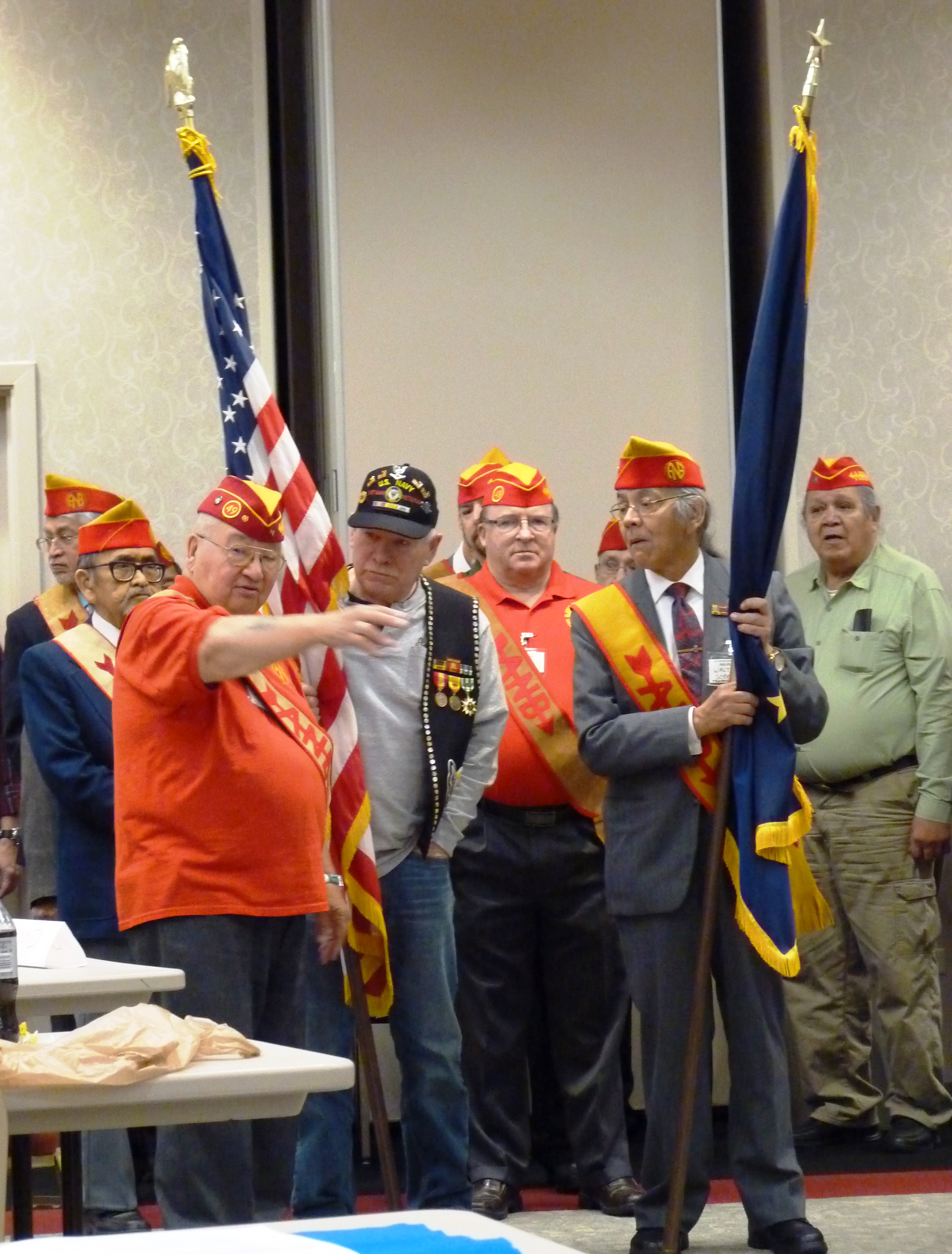
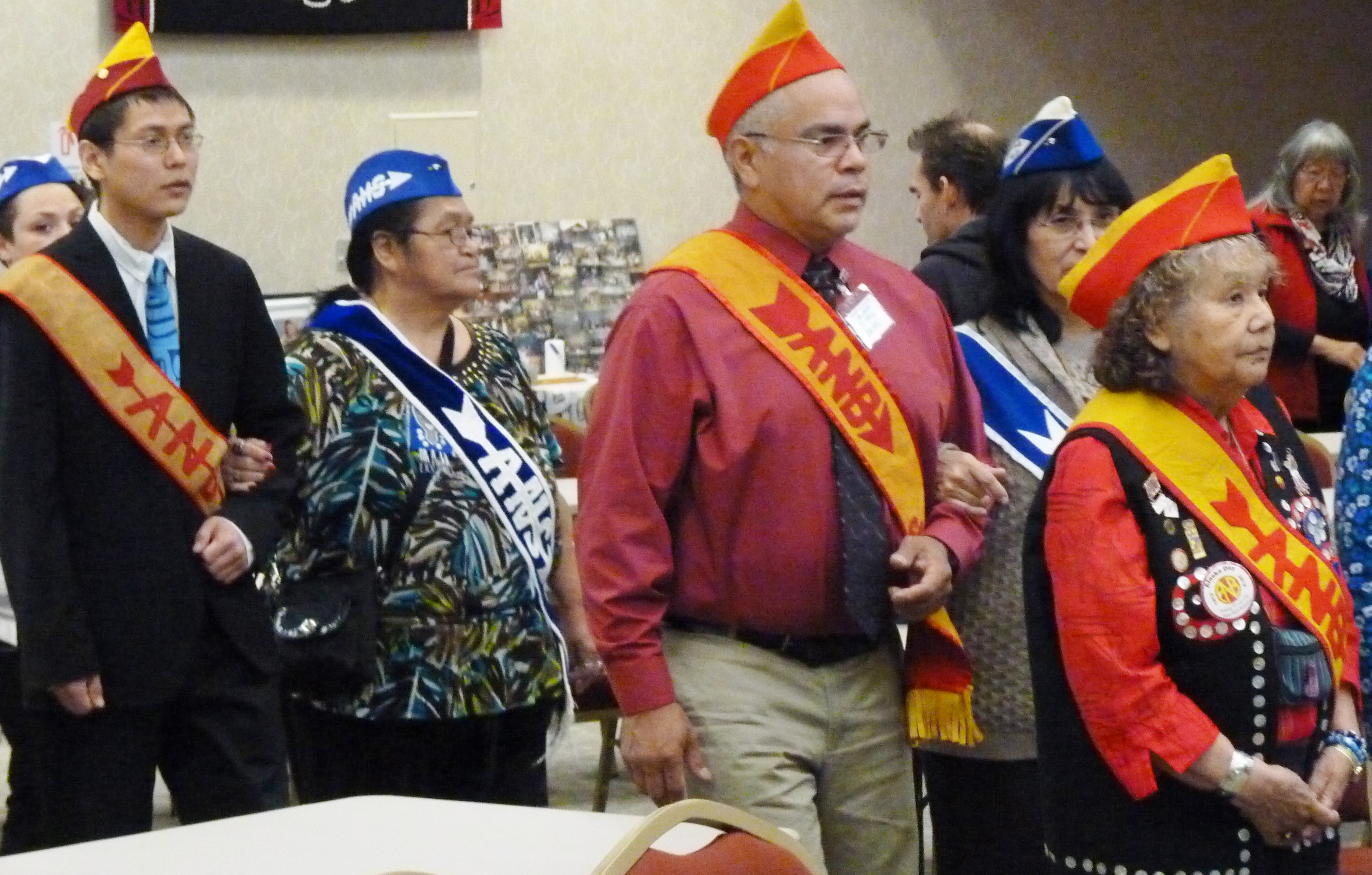
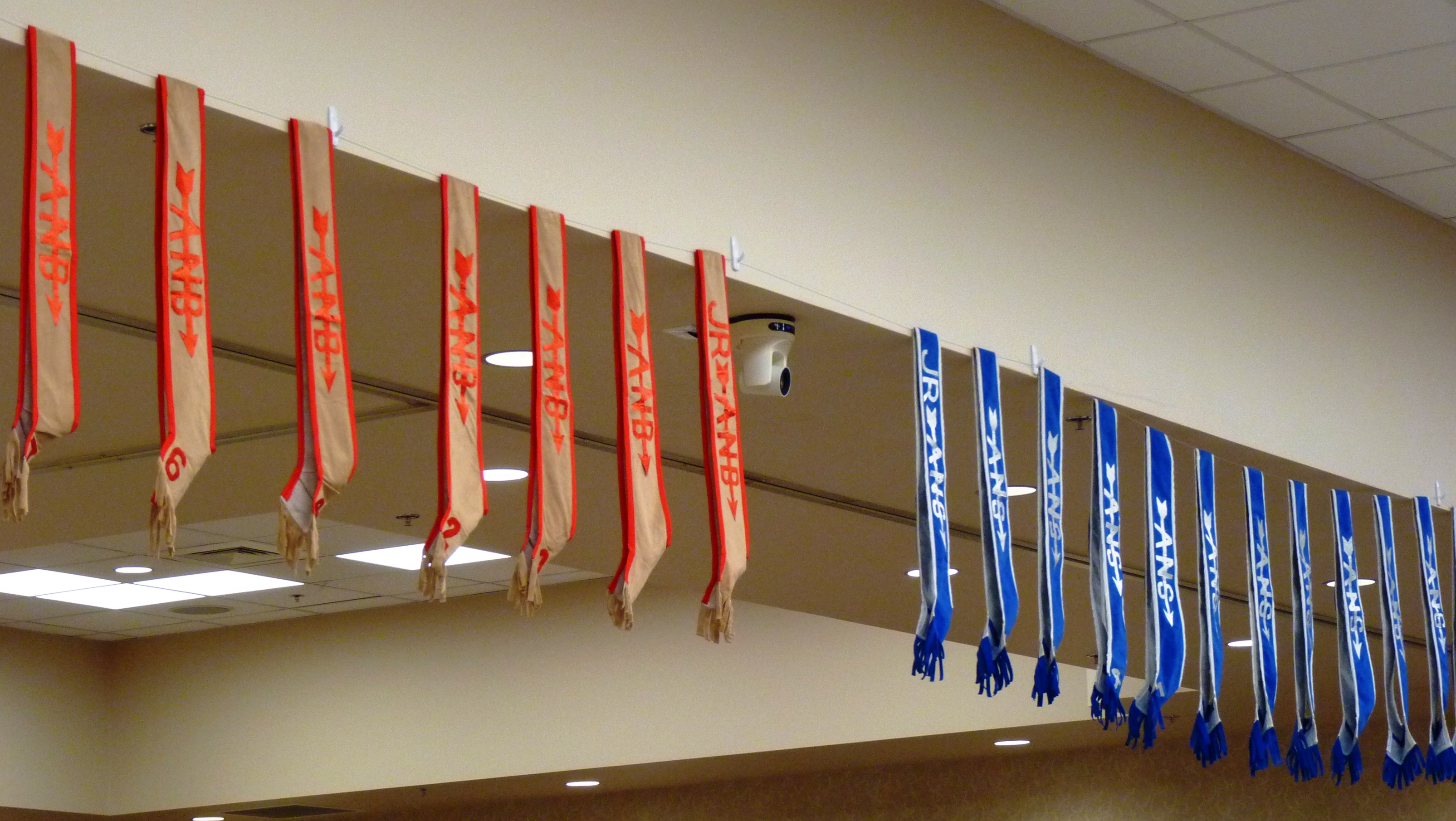
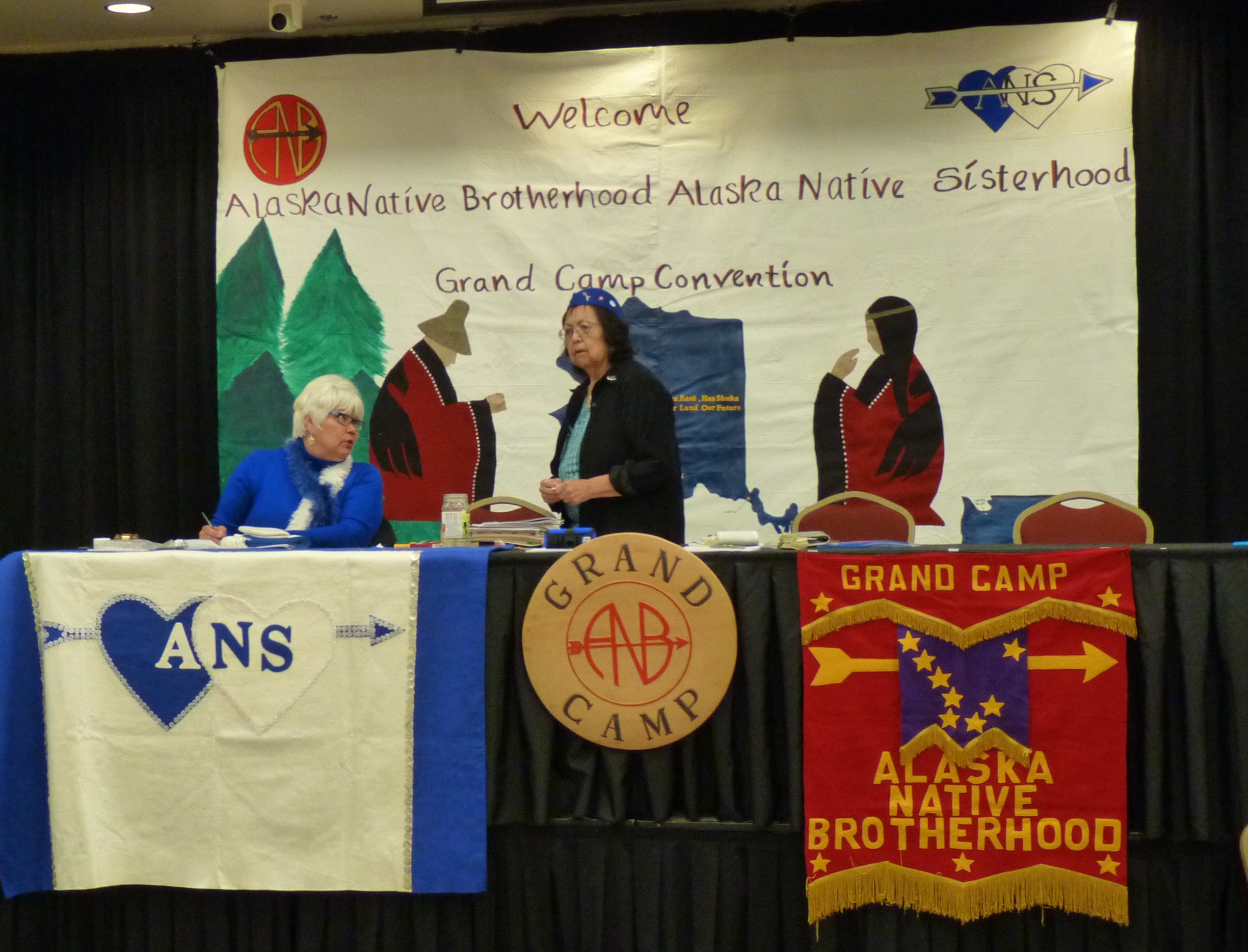
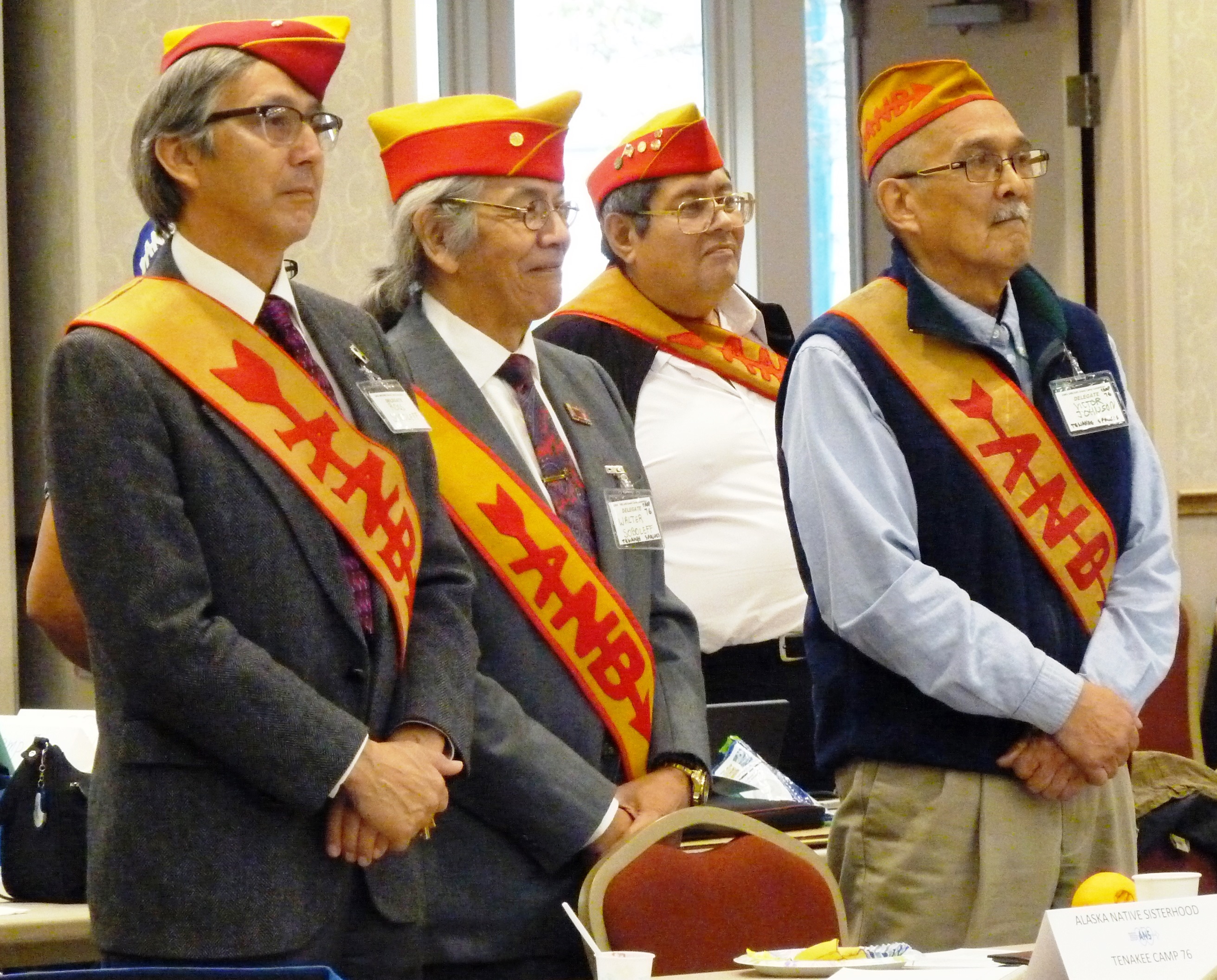
That’s the result of leadership elections held at the recent Alaska Native Brotherhood and Sisterhood Grand Camp Convention in Juneau.

The hundred-plus-year-old organizations have been trying to attract more youths and young adults.

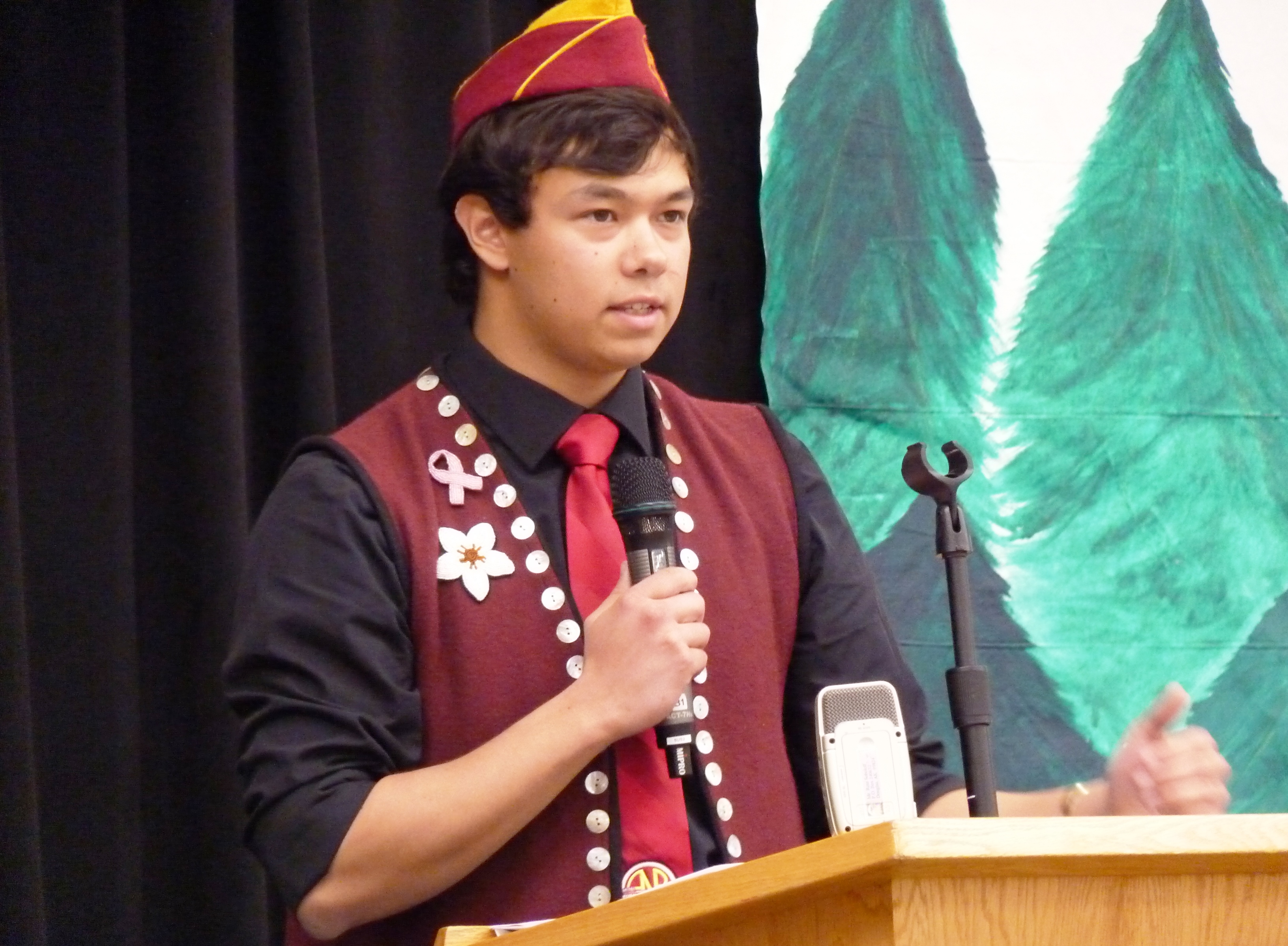
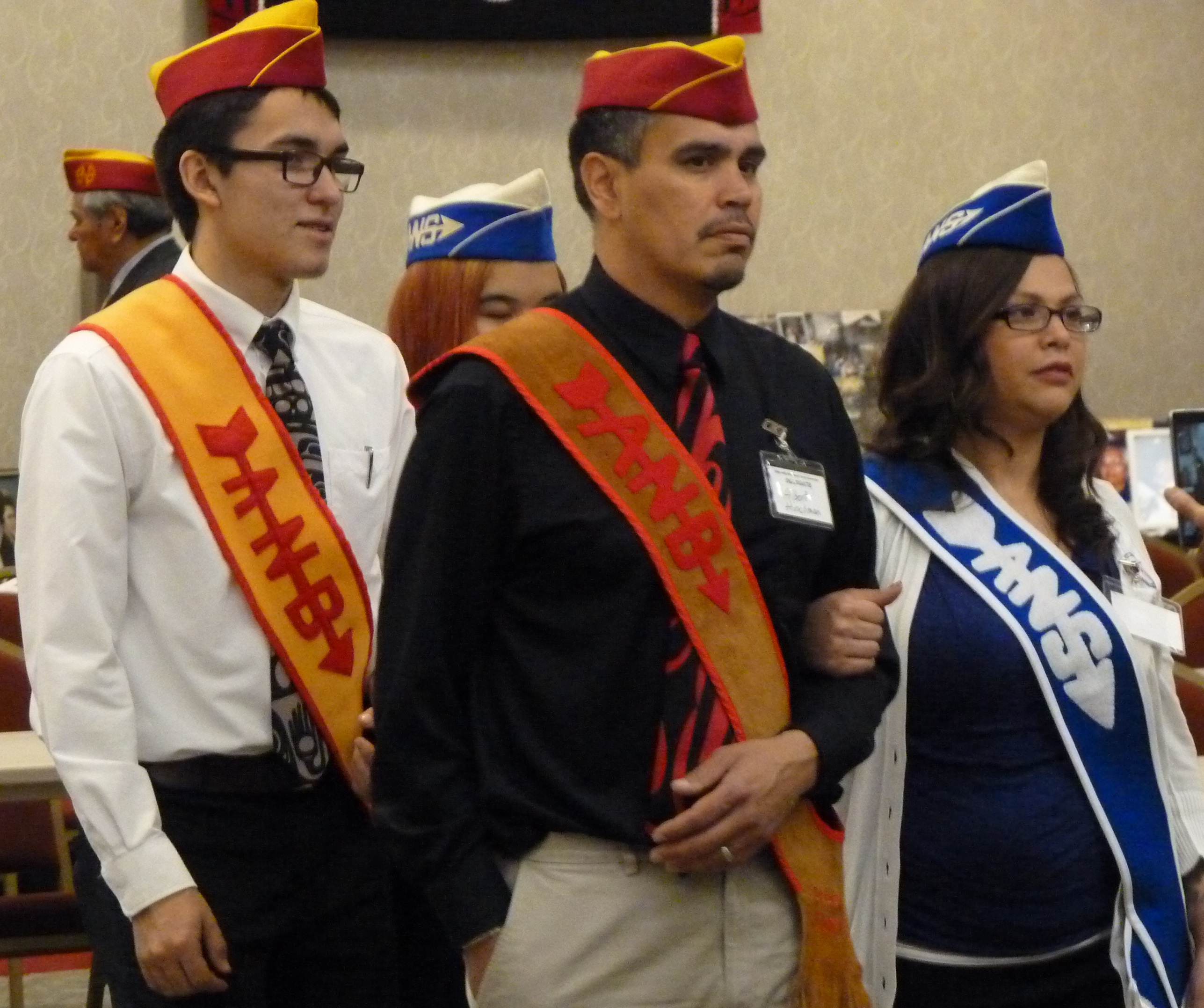
To highlight that effort, they chose Devlin Anderstom, 19, to be their keynote speaker.

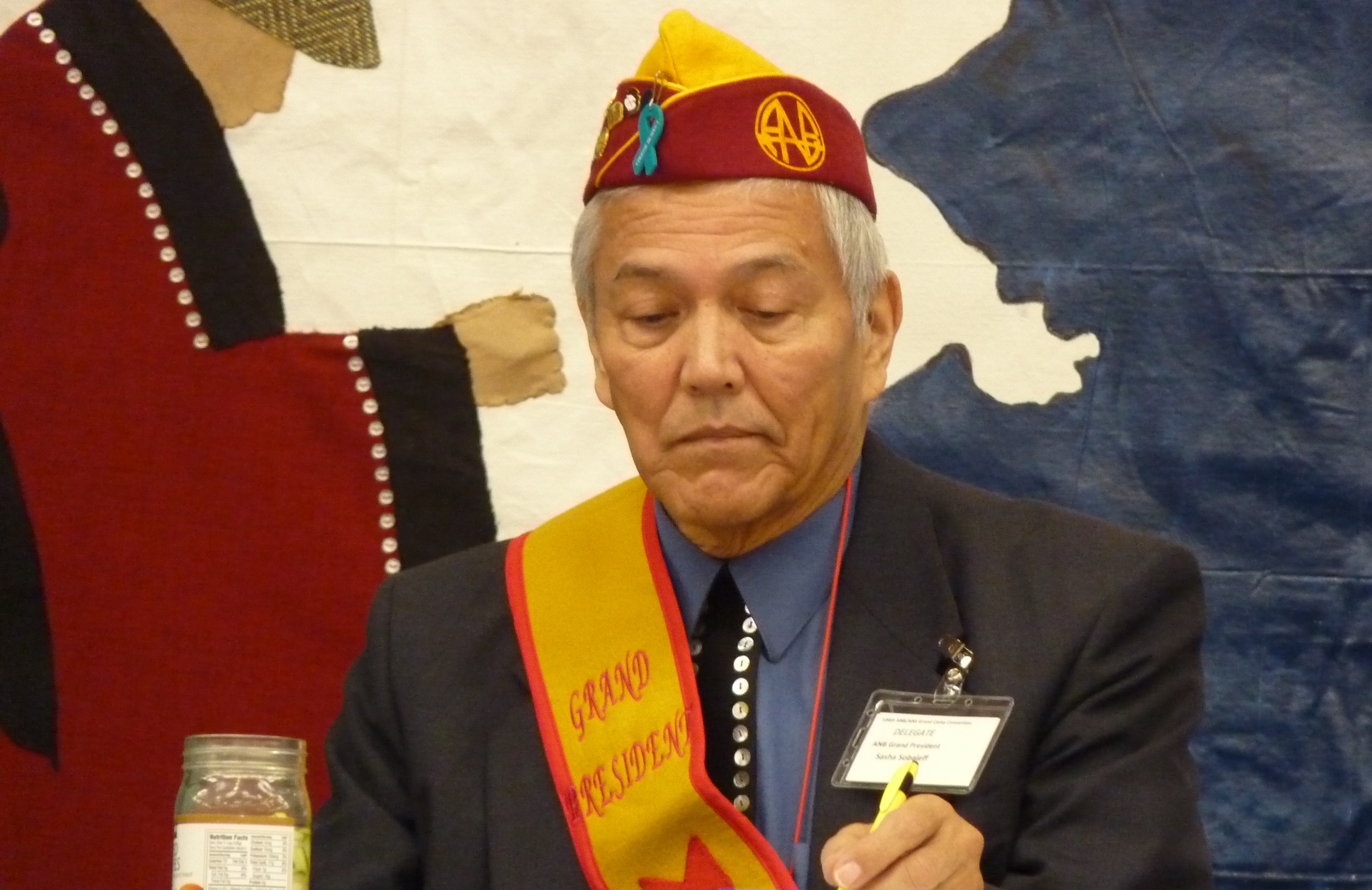
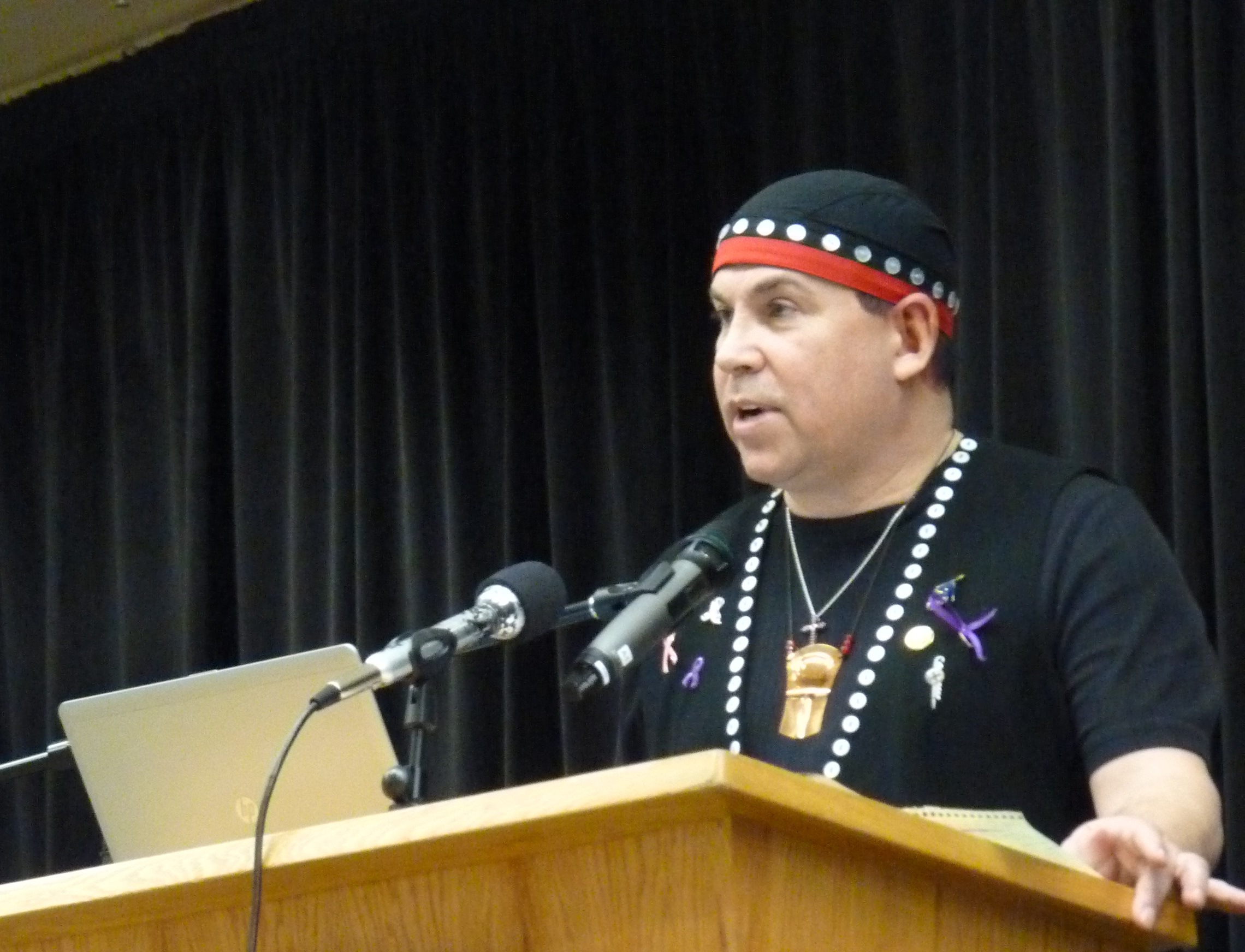
He’s already president of the brotherhood’s Yakutat camp. ANB Grand Camp President Sasha Soboleff said convention delegates elected him to regional office.

“His keynote speech … kind of set the tone for where these two organizations are headed, along with the realization that our young people, we need to make them integrally part of our organizations,” he said. “And with his election as grand secretary, which is a pretty high-profile office, put him right smack dab where he should be.”

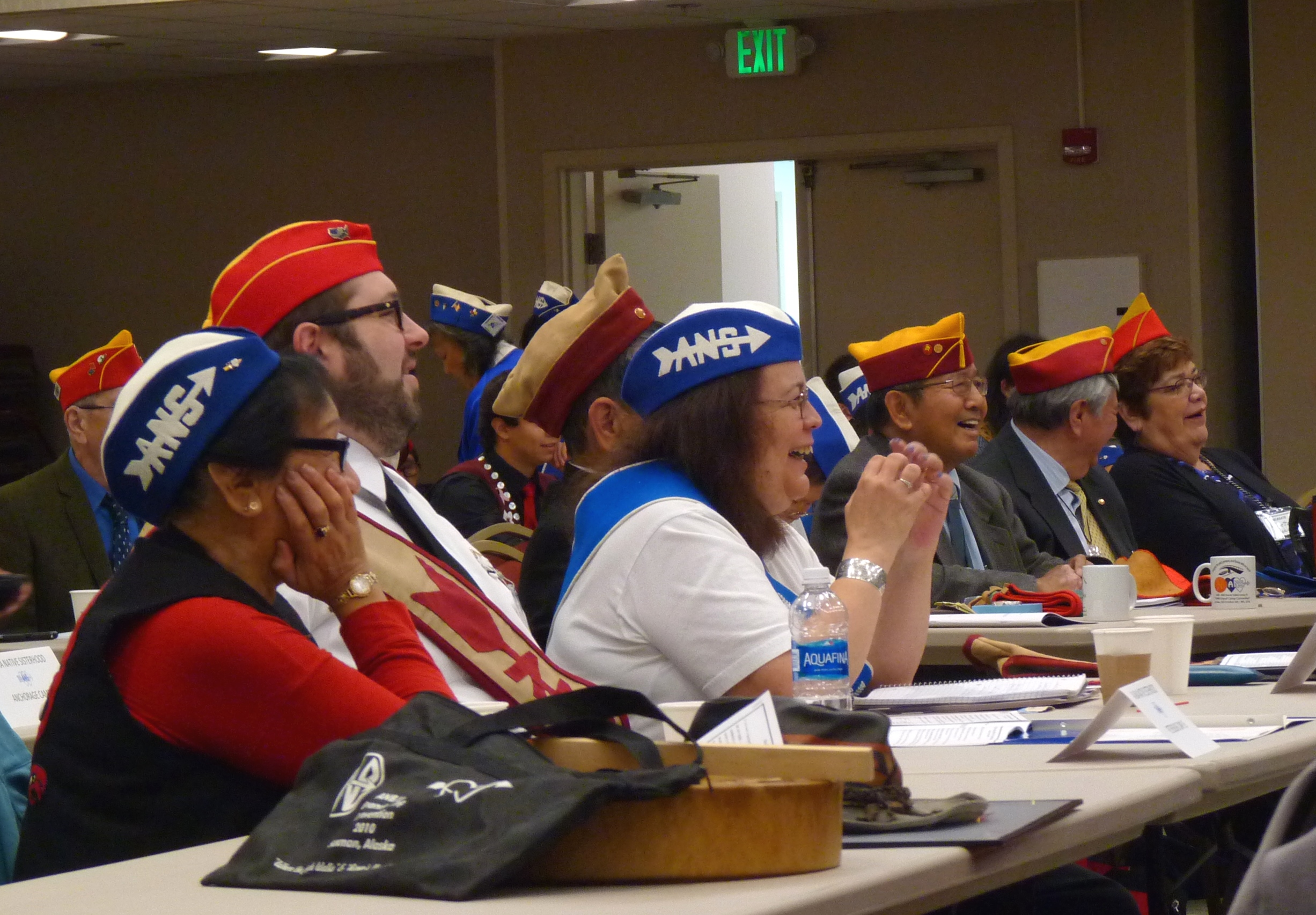
Many ANB and ANS members are in their 50s, 60s or 70s.

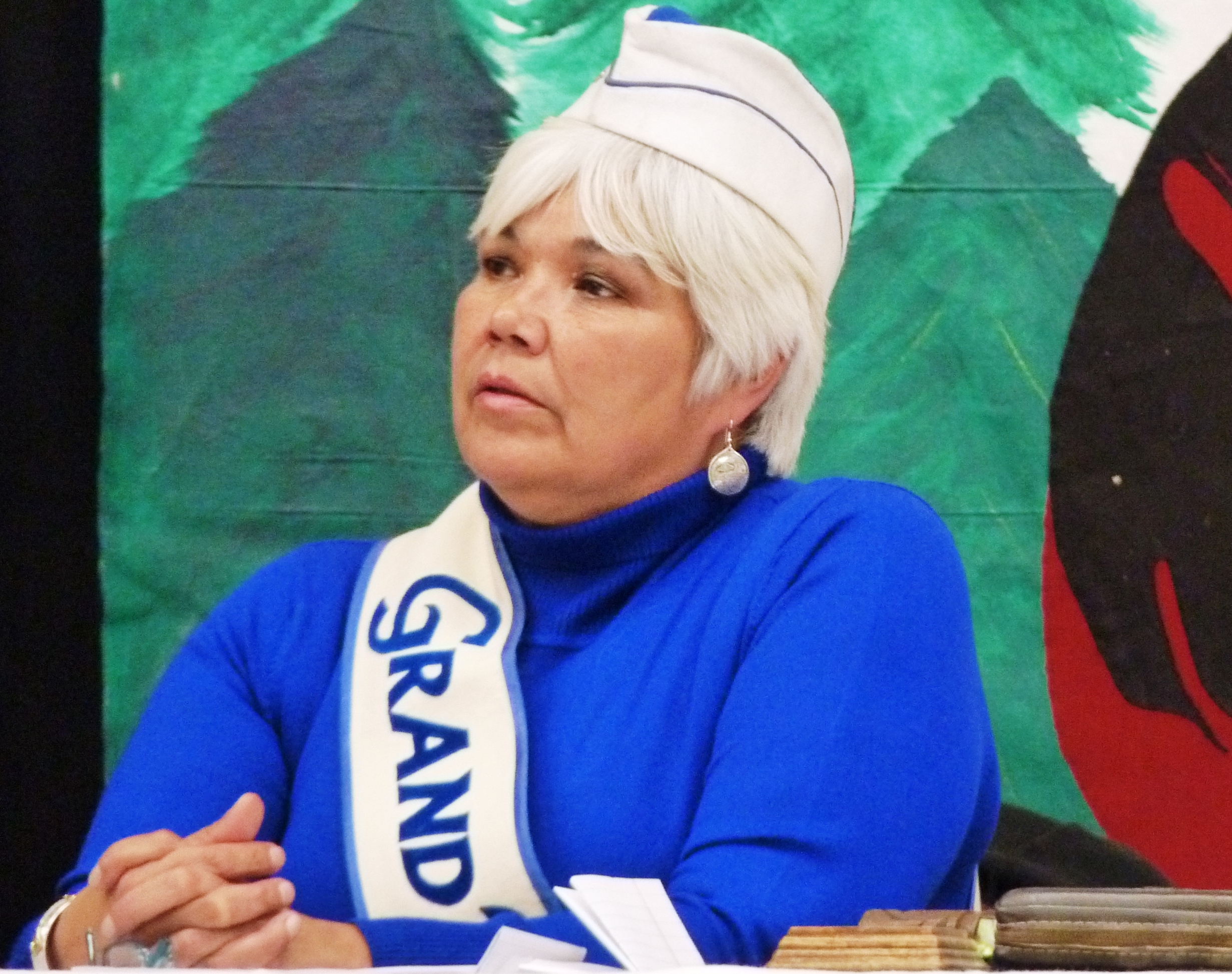
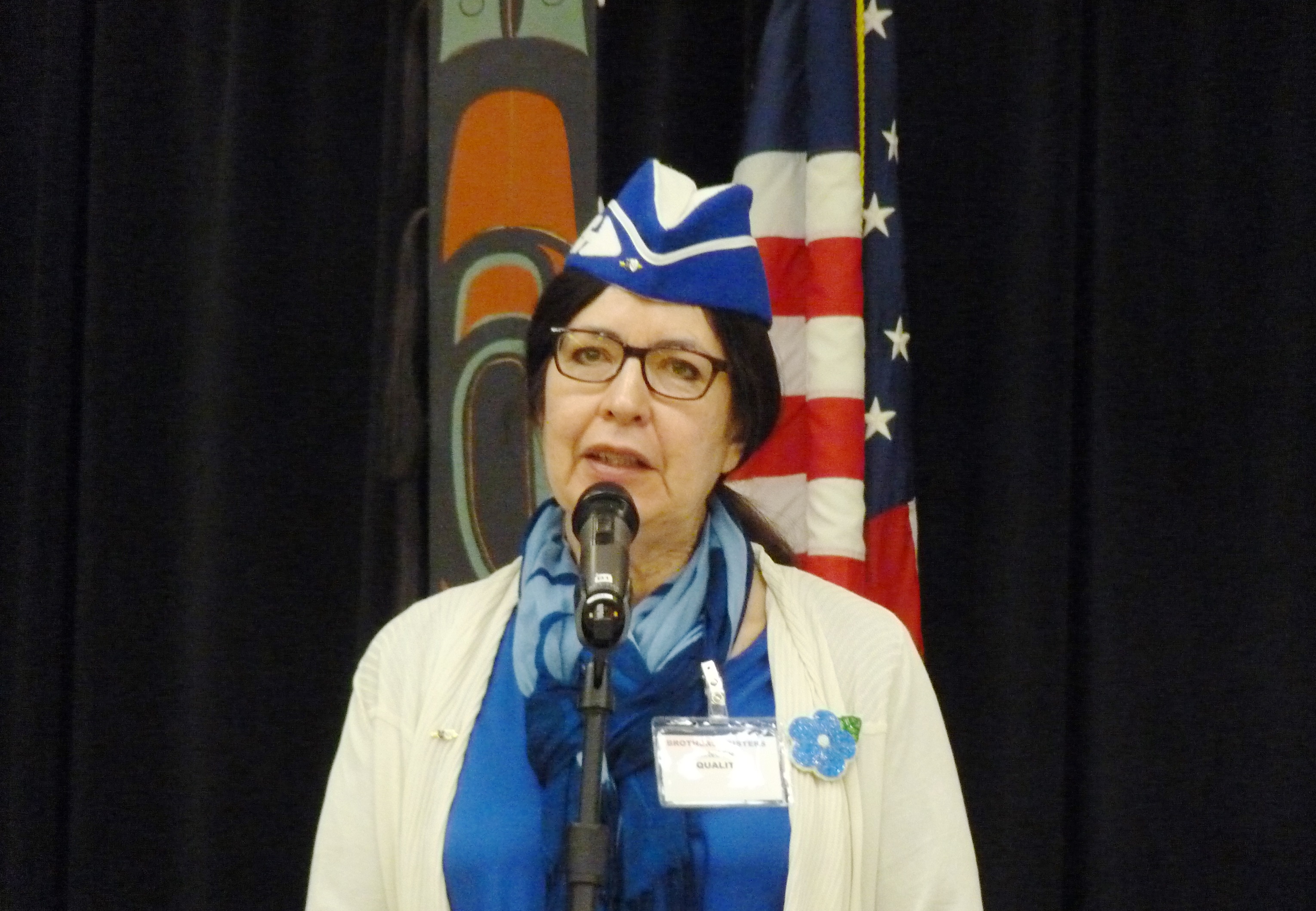
Alaska Native Sisterhood Grand Camp President Cecelia Tavoliero said delegates elected two members of the next generation to her group’s regional leadership.

They’re ANS Sitka camp President Paulette Moreno and fellow Sitkan Heather Powell.

“They wish to work with young people and to get them involved in helping the communities where they live, and active and involved in Alaska Native Brotherhood and Alaska Native Sisterhood,” she said.

Tavoliero and Soboleff pointed to other members in their 20s and 30s who attended the convention, held Oct. 5-8.

“The work that we had set about the year before was to bring young people and the camps that have not been active back,” he said. “We worked on that and got a couple more camps back that we didn’t have before.”

Soboleff was re-elected to his position. Tavoliero was newly elected, though she served in the post about a dozen years ago.

She said her priorities include continuing to focus on the potential dangers of British Columbia mines on rivers that flow into Alaska.

They also include education, targeting elementary students who are learning to read.

“In order to help them, we’d like to see some reading programs developed in the schools for some of our sisterhood members to go in and either listen to them read or reading to them,” she said.

The Brotherhood and Sisterhood are civil-rights and culture-bearing organizations. They’re also Christian groups.

Tavoliero said promoting faith is also a priority.

“What I want our sisters to do is to be in constant prayer for the whole state of Alaska and for our nation,” she said. “We surely do need it as a nation.”

The convention included consideration of changes to the organizations’ constitution and structure. Official results were not immediately available.

Hear Devlin Anderstrom’s keynote speech: 

Fisheries panel hears transboundary mine concerns

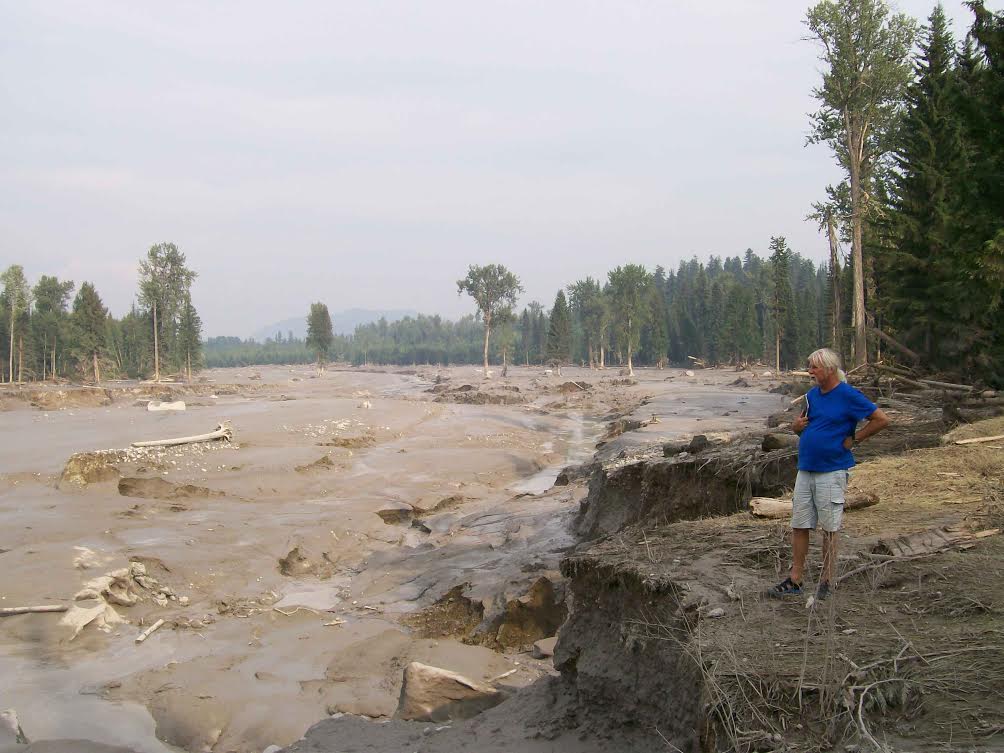
Hazeltine Creek, once a narrow waterway, is filled with mud, silt and logs following August 2014’s tailings dam breach at the nearby Mount Polley Mine. (Photo courtesy Chris Blake/MineWatch Canada)
Hazeltine Creek, once a narrow waterway, is filled with mud, silt and logs following August 2014’s tailings dam breach at the nearby Mount Polley Mine. Southeast Alaskans testifying at a recent hearing say a similar dam break could damage the region’s rivers. (Photo by Chris Blake/MineWatch Canada)

Critics of British Columbia mining told a legislative committee Wednesday about the dangers of mineral extraction along transboundary rivers.

Tribal leaders, scientists, fishermen and community members warned House Fisheries Committee members of the consequences of a cross-border mining disaster during the public hearing.

The focus was on the Taku, Unuk and Stikine Rivers, which begin in British Columbia and flow through Southeast Alaska to the ocean.

One speaker was Central Council of Tlingit and Haida Indian Tribes of Alaska President Richard Peterson of Juneau. He pointed to 2014’s Mount Polley Mine disaster, when a dam holding back silty, polluted water broke and spilled millions of gallons into nearby waterways.

Central Council of Tlingit and Haida Indian Tribes of Alaska President Richard Peterson. (Photo courtesy CCTHITA)
Central Council of Tlingit and Haida Indian Tribes of Alaska President Richard Peterson spoke at Wednesday’s hearing. (Photo courtesy CCTHITA)

“We’re terrified that that’s what’s going to happen here. And they we’re going to share their fate. We couldn’t sustain our traditional way of life. We couldn’t sustain our economic way of life, if that happened,” he said.

The B.C. government and the mine owner have said the Mount Polley spill caused no long-term damage.

But United Tribal Transboundary Mining Work Group Chairman Frederick Olsen Jr. of Kasaan said the impacts have been underplayed.

“When you call something a tailings storage facility, you treat it a lot differently than you would treat a lake of poison that’s held back by sand. But that is what we have. Mount Polley had a lake of poison held back by sand. And it was supposed to last forever. But it lasted fewer than 20 years,” he said.

The fisheries committee heard from several scientists who addressed the frequency and impacts of mine spills.

One was Center for Science in Public Participation Founder Dave Chambers. He said his research shows falling metals prices and rising costs putting a lot of pressure on mines to boost production.

“We’re seeing an increasing number … of large tailings dam failures because they’re being built and operated by companies under financial stress,” he said.

The state and British Columbia recently signed a statement of cooperation on transboundary mining. It promised Alaskans will play a larger role in resource development planning and permitting.

But tribal, or First Nations, leaders from across the border warned that the province has a bad track record of living up to such deals.

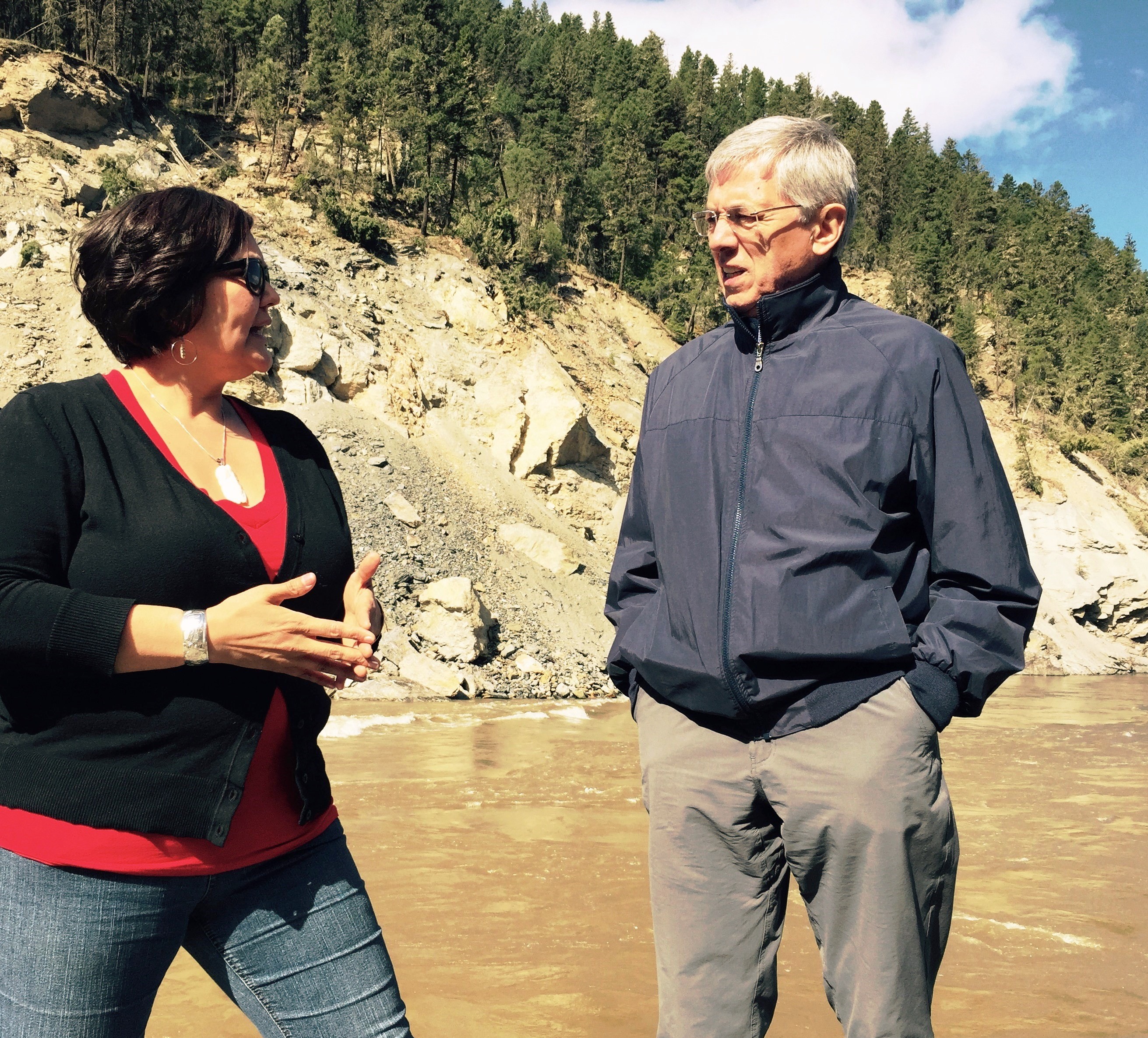
Alaska Lt. Gov. Byron Mallott discusses the Xat’sull people’s traditional fishing on the Fraser River with tribal council official Jacinda Mack on May 6, 2015. The Xat'sull live in the area damaged by August's Mount Polley Mine tailings dam collapse. They’re concerned about reopening plans. (Photo courtesy Office of the Governor)
Alaska Lt. Gov. Byron Mallott discusses the Xat’sull people’s traditional fishing on the Fraser River with tribal council official Jacinda Mack on May 6, 2015. (Photo courtesy Office of the Governor)

Bev Sellars chairs First Nations Women Advocating Responsible Mining.

“My recommendation based on my lifelong experience with the British Columbia government … is to try to get a solid country-to-country agreement on paper. Don’t put all your trust in the province of British Columbia,” she said.

She said the state should instead push for involvement of the International Joint Commission. That’s a U.S.-Canada body charged with resolving boundary water disputes. The Walker administration and Alaska’s Congressional delegation have asked for that action.

Like Sellars, Jacinda Mack is from a community directly affected by the Mount Polley spill. She said federal involvement is needed because there was little or no advanced planning for the Mount Polley disaster.

“It will be an adaptive management or a figure-it-out-as-we-go approach. And that is not good enough. And it’s something we’ve had to deal with and this is something I think we can get out in front of with these transboundary mines. The hearing, held in Juneau, was attended by most Southeast lawmakers,” he said.

Chairwoman Rep. Louise Stutes, who represents Kodiak, Yakutat and Cordova, acknowledged the importance of the issue. She said she plans to hold more hearings to continue looking into the impacts.

Ferry storage costs close to a half-million dollars

The M/V Chenega up on blocks in drydock at the Ketchikan Shipyard for maintenance and repairs. The Chenega is one of two fast ferries in the Alaska Marine Highway System. The ship has a service speed of 32 knots.
The fast ferry Chenega undergoes repairs in drydock at the Ketchikan Shipyard in 2014. It is being tied up and stored in Tacoma, Washington, until its future is decided. (Photo by Heather Bryant/KTOO)

The Alaska Marine Highway System is paying more than $1,200 a day for long-term storage of two unused ferries.

One critic says it would be better to sell them than to tie them up.

The state has awarded contracts totaling more than $450,000 to tie up the ferries Taku and Chenega for the next year.

The ferry system already docks a number of ships each winter when lower passenger numbers drop the demand.

But this is different.

Spokesman Jeremy Woodrow said they’re being completely shut down and emptied of fluids. The Taku is being towed to a storage site in Ketchikan’s Ward Cove. The Chenega is headed to the Vigor Shipyard in Tacoma, Washington.

“The vessel will be unmanned. That’s part of the cost. The company will be in charge of the vessels’ keeping,” he said.

Ferry managers have a clear take on the future of the Taku.

They plan to sell the 50-year-old mainline vessel, which can hold up to 350 passengers and 50 cars or trucks.

But Woodrow says that will take a while.

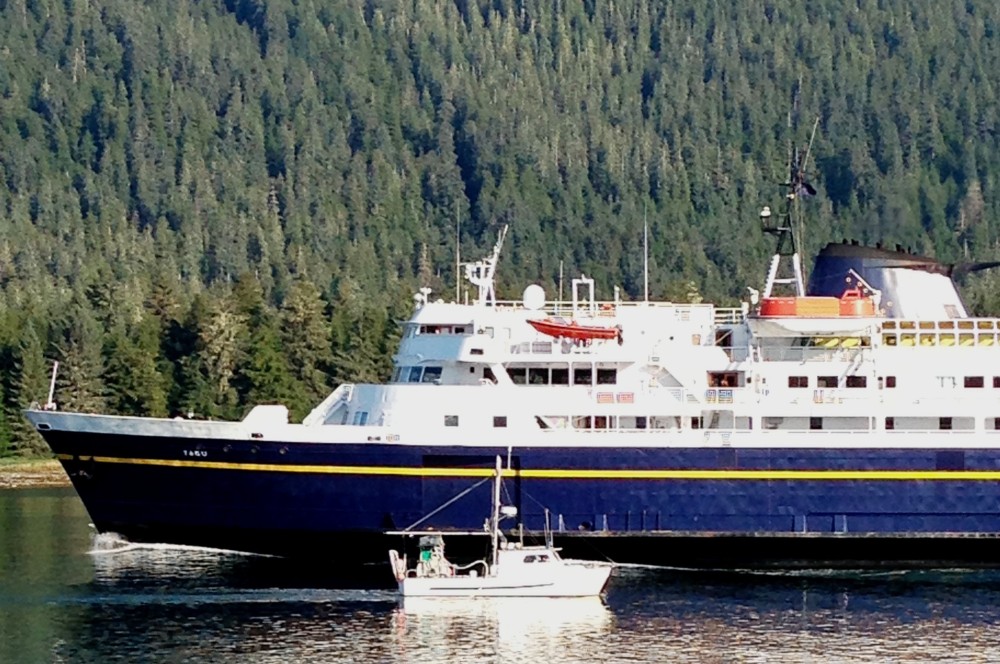
The ferry Taku sails into the Wrangell Narrows on its way south. It's part of an aging fleet needing repairs or replacement. (Ed Schoenfeld/CoastAlaska News)
The ferry Taku sails into the Wrangell Narrows on its way south in 2014. It’s since been pulled out of service and is being stored until it can be sold. (Ed Schoenfeld/CoastAlaska News)

“It’s not just listing it on eBay tomorrow,” he said. “There is a process to go through procurement and we’re working on that process.”

EBay is how the Bartlett, a smaller ferry, was sold in 2003.

The Chenega’s future is less clear.

It’s much younger, beginning service only 11 years ago. It has a smaller capacity — 210 passengers and about 30 vehicles.

Unlike the Taku, it has no staterooms or full-service cafeteria.

The Chenega and its sister ship, the Fairweather, were designed to provide faster, shorter sailings that some predicted would be the future of the marine highway system.

“No discussion of selling or of retiring the Chenega at this point or either of the fast ferries,” he said. “The only ship we’re looking at now is the Taku.”

“It doesn’t make any sense,” said Petersburg’s Dave Kensinger, who owns a regional produce business that depended on the ferry system before service cuts made it impractical.

He’s also a member of a committee coming up with a new Alaska Marine Highway System management structure.

“We don’t have enough money and we probably won’t have enough money in the future to maintain and operate the fleet that we currently have. So, at some point you just have to cut your losses,” he said.

He likes the fast ferries. But he says their fuel and maintenance costs are just too high.

“If you gave me a choice between riding in a Volkswagen or riding in a Maserati, yeh, I’d love to ride in a Maserati. But, guess what? If you gave me those vehicles, I couldn’t afford to even put the gas in a Maserati, let along pay the maintenance bill for it,” he said.

The new committee he’s on was set up by the marine highway and the Southeast Conference, the regional development group pushed to build the first ferries back in the 1950.

It’s looking at different models for running the system which include researching other ferries and how they’re governed.

“That’s how transportation’s run all over the free world. It’s not directly operated by the executive (branch),” he said. “You don’t have the mayor running the bus system. You don’t have governors running rail systems or ferry systems in most other places in the world.”

The one-year, $450,000 price for tying up the Taku and Chenega includes some towing and set-up costs.

Future years, if they’re needed, will cost about 25 percent less.

And Woodrow says the storage fee will be prorated when one or both ships are sold or returned to service.

British Columbia, Alaska sign transboundary mine agreement

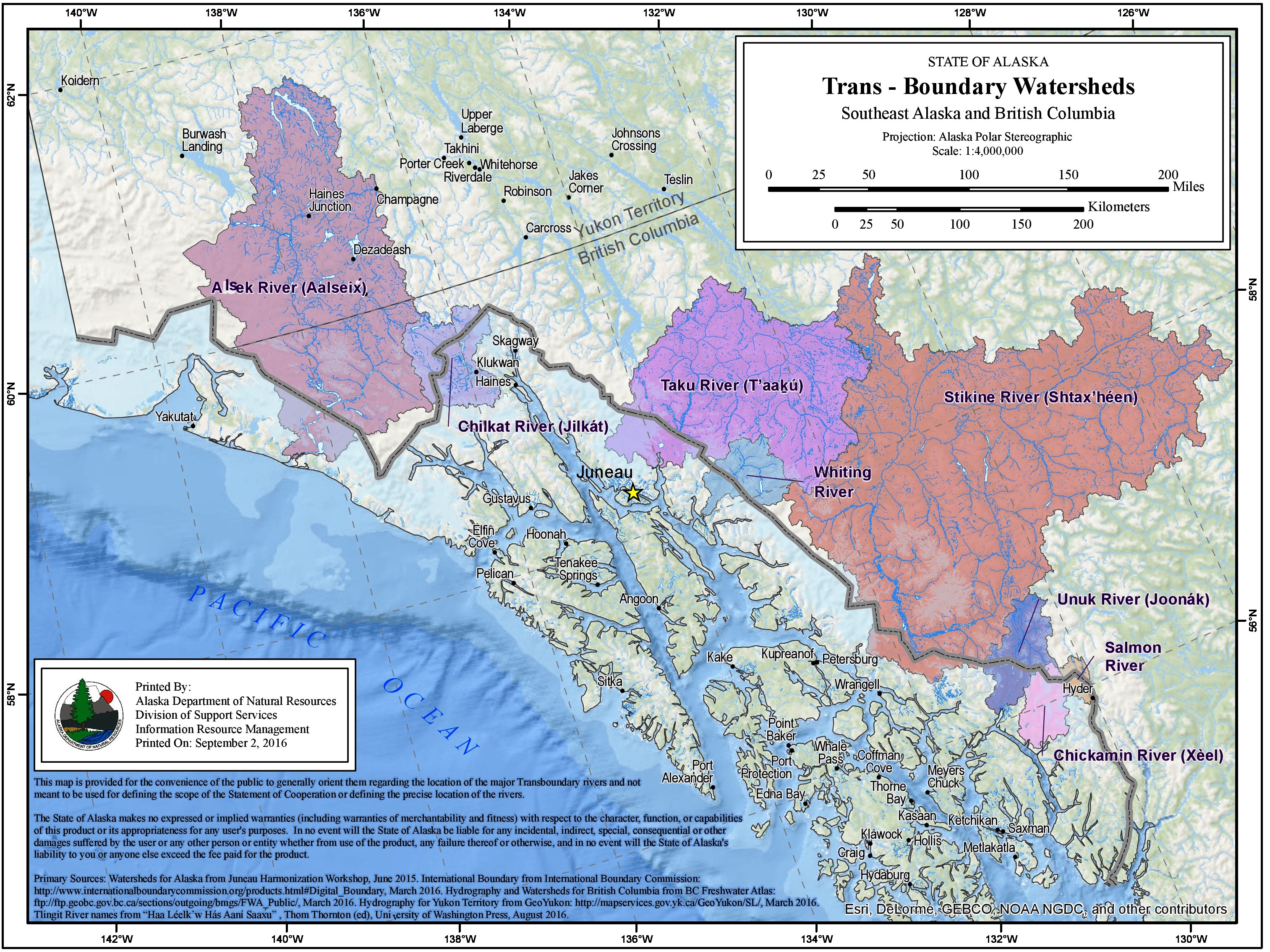
The state has identified eight transboundary watersheds feeding Southeast Alaska rivers. (Map by Alaska Department of natural Resources.)
Eight transboundary watersheds feed Southeast Alaska rivers. A new agreement with British Columbia aims to protect them from mining pollution. Critics say it doesn’t do the job. (Map by Alaska Department of Natural Resources.)

Alaska and British Columbia officials signed a statement of cooperation Thursday aimed at protecting rivers that flow through the province and the state.

Transboundary mine critics say it’s not strong enough.

The document is the result of about a year of talks following citizen warnings about B.C. mines and mining projects near the border.

Local and tribal governments, as well as fishing and environmental groups, said such mines could release pollution that would damage Alaska fisheries and traditional food-gathering.

British Columbia Mines Minster Bill Bennett said the agreement will give the state more input into the province’s environmental-assessment and permitting process.

He said the agreement will establish a technical committee — of experts, not politicians — to set up new water-monitoring systems.

British Columbia Mines Minster Bill Bennett signs a document on Thursday that promises to cooperate on monitoring and protecting water quality. (Photo courtesy B.B. Ministry of Energy and Mines)
British Columbia Mines Minster Bill Bennett signs a document on Thursday that promises cooperation on monitoring and protecting water quality. (Photo courtesy B.B. Ministry of Energy and Mines)

“We need baseline information so that we know whether there’s going to be or will be impact in the future from mining operations,” he said. “We need these folks to figure out how we’re going to pay for it and who’s going to do it.”

Alaska Lt. Gov. Byron Mallott, who has led the state’s effort on the issue, called the terms “another step in Alaska’s commitment to open and transparent collaboration.”

“It creates a technical working group to allow us to essentially put our hands on the power levers of the British Columbia government in its entire regulatory process of permitting mines,” he said.

The agreement was drawn up with feedback from mining, government, fisheries, community and environmental groups, as well as state and provincial officials.

Bennett said his ministry also reached out to First Nations members living in affected areas. He said similar outreach happened in Alaska.

“So I think on both sides of the border, we’re quite proud of the fact that this is not something that the two governments are imposing. This is something that, I think, has developed from the grass roots,” he said.

Some people disagree.

The Tlingit-Haida Central Council's Rob Sanderson Jr. talks about transboundary mining concerns at a Native Issues Form on March 9, 2016, in Juneau. (Photo by Ed Schoenfeld/CoastAlaska News)
The Tlingit-Haida Central Council’s Rob Sanderson Jr. talks about transboundary mining March 9, 2016, in Juneau. (Photo by Ed Schoenfeld/CoastAlaska News)

Ketchikan’s Rob Sanderson Jr., who works with the United Tribal Transboundary Mining Work Group, said tribal governments on both sides of the border should be co-signers of the agreement.

Sanderson also said it doesn’t address their most fundamental concerns.

“It’s not our business to issue permits to mining companies,” he said. “Our business, in my opinion, is to maintain our culture for all future generations. This agreement does not do that.”

Sanderson and other mine critics said the statement of cooperation, part of a larger memorandum of understanding, has little power to make significant mine-safety improvements.

They want the state to continue pursuing involvement of the International Joint Commission. That’s a U.S.-Canada panel handling cross-border water disputes.

“This memorandum of agreement throws a wrench into that. It’s because when you’re looking at it from the outside, they’re saying, ‘Well, probably, maybe we don’t need it. The state has a memorandum with the British Columbian government, so why go there?’ ” he asked.

Lt. Gov. Mallott said the statement of cooperation will not interfere with the state’s pursuit of joint commission action.

“We view this as a multi-track process, of which the SOC is but one,” he said.

The Southeast Alaska Conservation Council’s Guy Archibald said the document is much improved from earlier versions.

But in an email, he said some of its wording, such as the definition of “significant degradation,” is not strong enough.

Chris Zimmer of Rivers Without Borders was also critical. He said the agreement’s terms seem to answer British Columbia’s concerns more than those from Southeast Alaskans.

Lt. Gov. Byron Mallott signs a statement of cooperation with British Columbia Thursday. It targets protecting transboundary rivers. (Photo courtesy Office of the Governor)

B.C. mining companies and regulators said the existing process already safeguards transboundary rivers.

That’s a position taken by Alaska officials in past years, before citizen concerns led to talks that resulted in this agreement.

Only one mine – Red Chris – is up and running in the transboundary area. A second – Brucejack – is under construction. A third – Tulsequah Chief – is closed and needs cleanup.

But Bennett said another handful of exploration projects are far from development, due to technical and economic challenges.

“So, I don’t think you’re ever going to see a sudden emergence of a half-a-dozen new mines or something in northwestern British Columbia. But you will see other projects come along in the next two, three, four or five years,” he said.

Critics said even if it’s just one mine, it still threatens the environment and livelihoods in Southeast Alaska.

Site notifications
Update notification options
Subscribe to notifications