Aleutians

Largely insulated from COVID-19, Unalaska is watching its wastewater for signs of trouble

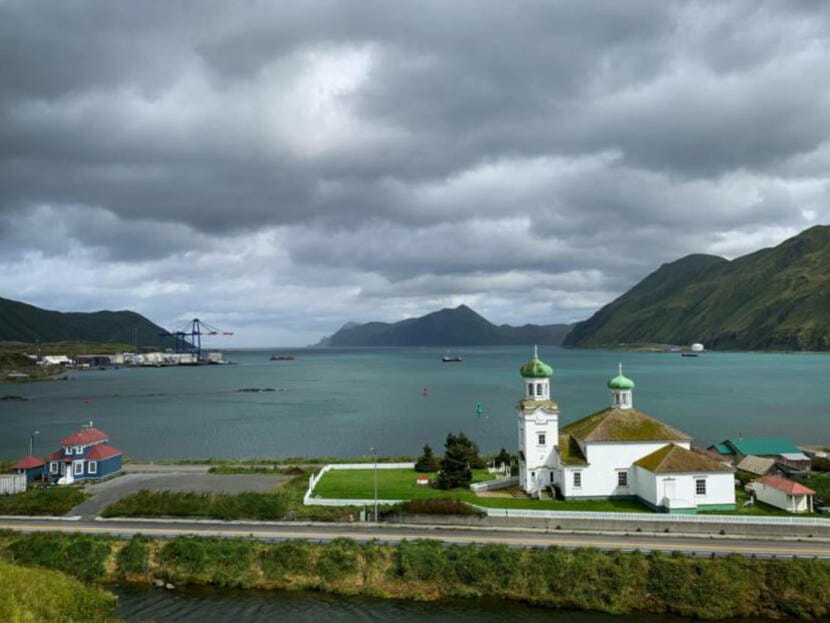
Unalaska pictured on August 30, 2020. (Hope McKenney / KUCB)

Unalaska and Dutch Harbor sit 800 air miles away from Anchorage. And the community of about 4,500 year-round residents more than doubles during peak fishing seasons.

It’s one of few places in the state that has been largely untouched by the coronavirus. Since the onset of the pandemic, the community has only recorded 107 cases, 85 of which were from one factory trawler.

As part of its mitigation strategies, in July the island began testing its wastewater for traces of COVID-19, mirroring efforts by universities and municipalities across the country. And despite the island’s first case of community spread two weeks ago, the virus is still below the detection level to identify it in Unalaska’s waste.

At Unalaska’s wastewater treatment plant, about 350,000 gallons of waste and greywater run through the facility every day. That’s about 70 gallons per Unalaskan per day.

“If somebody has COVID-19, they’re shedding this virus in fragments,” said Karie Holtermann, lab manager at the plant. “It’s in their GI tract, they’re shedding it into their feces, into their urine. And so we’re trying to pick that up in our testing here.”

Holtermann has lived in Unalaska for about two years. Her background is in the public health sector as a microbiologist in Los Angeles and the San Francisco Bay Area, and she’s worked as a research technician and engineer in oceanography labs in San Diego, Seattle and on the Red Sea in Saudi Arabia.

She said sewage testing has been successfully used as a method for early detection of other diseases, such as polio. And at the start of the COVID-19 pandemic earlier this year, she saw a Netherlands-based study that concluded that wastewater serves as an early warning system for viral spread because it can detect virus in people who haven’t been tested or who have mild or no symptoms.

“What they’ve all seen is that wastewater monitoring can predict an outbreak a week before showing up at the clinic,” Holtermann explained. “And once it is shown that COVID-19 is in a community, it’s able to show the beginning, the tapering and the resurgence of an outbreak.”

About 77 universities in 27 countries are doing this testing — including University of Alaska Anchorage, which is partnering with communities around the state, according to Holtermann. To help Unalaska track community spread of the coronavirus, she got permission from the city to purchase the appropriate equipment, developed a method and then began testing Unalaska’s waste.

“The equipment that you need to be able to test for COVID-19 is a high speed centrifuge, a vortex mixer, micropipettes, a [quantitative PCR] machine, a spectrophotometer and consumables,” she said.

Every week since July, Holtermann has taken two to three wastewater samples from around Unalaska during peak flow times, dipping a bucket hanging from a rope down into a few of the 10 lift stations located around the island.

“We go all around the clock,” she said. “So, at midnight, three o’clock in the morning — it’s a very interesting view of Unalaska.”

Then Holtermann concentrates the samples in her lab using a high speed centrifuge, extracts RNA and turns it into DNA, and puts it in a quantitative PCR machine to make billions of copies of viral DNA. After about 24 hours, she tests the samples for SARS-CoV-2, the virus that causes COVID-19.

“But we haven’t gotten positives in the community yet,” Holtermann said.

And that’s good news, she said, because it means the levels of the virus in the community are still too low to detect. But she said that could change. If it does, this testing could be used to try to pinpoint where the positive cases are coming from.

“So you can’t target it to a certain house, by any means,” explained Holtermann. “But you can definitely look at a part of town — it may be on the Unalaska side, or it may be coming from the UniSea side, or it may be from the spit. So you could probably target which area it’s from.”

While the island has yet to see widespread transmission of the virus, local health officials say they anticipate more positive cases with the upcoming influx of workers for the winter fishing season. In the meantime, Holtermann said she’ll continue to test Unalaska’s wastewater every week and do her part to keep the island safe.
Cold Bay COVID-19 outbreak leaves Unalaska without flight service

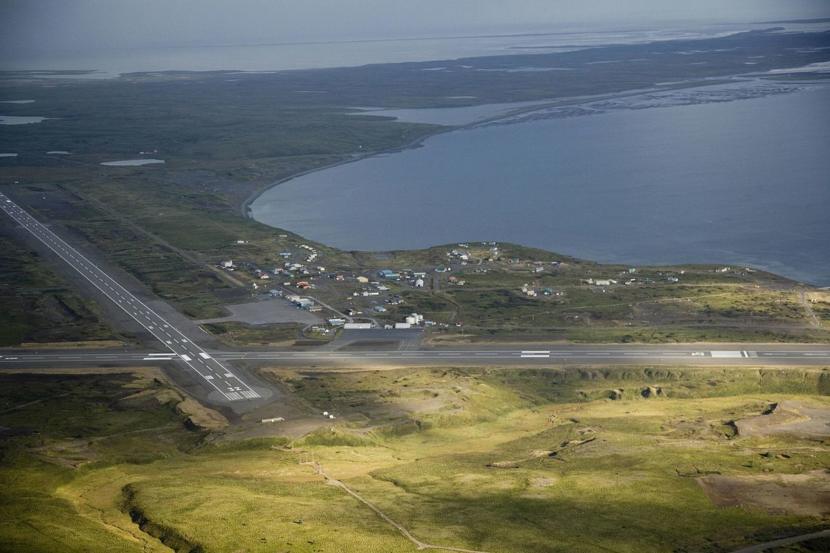
The runway at the Alaska Peninsula village of Cold Bay is long enough for jets to land — unlike the airstrip at the nearby fishing town of King Cove.
A 2007 photo of the runway at Cold Bay. (U.S. Fish and Wildlife Service)

Scheduled air service to Cold Bay has been canceled through Dec. 1. That’s expected to also disrupt service to Unalaska, where the only commercial flight option requires a connection in the Alaska Peninsula village.

This is the first closure of its kind during the pandemic at any State of Alaska airport, according to Sam Dapcevich, a public information officer with the Alaska Department of Transportation.

The flight cancelations are due to an increase in the number of cases of COVID-19 in Cold Bay, a community of roughly 50 people, Dapcevich said. Over the last week, 11 residents have tested positive for the virus.

“We worked with local entities and we coordinated with airlines and decided that the safest path forward, at this point, is to cancel scheduled large air carrier service to Cold Bay Airport through Dec. 1,” Dapcevich said.

The airport is expected to remain open with reduced Aircraft Rescue and Fire Fighting (ARFF) capabilities, he added.

Unalaska City Manager Erin Reinders said the DOT’s action specifically applies to Alaska Airlines’ jet service between Anchorage and Cold Bay. But, she said, Grant Aviation — which serves as a kind of “shuttle” between Unalaska and Cold Bay, has also canceled service to the Alaska Peninsula village.

“It’s my understanding that both Alaska Airlines and Grant Aviation are coordinating with their current ticket holders, on either rescheduling their flights or reimbursing,” she said.

It’s startling to hear DOT would cancel flight service, Reinders added.

“But given the positive COVID cases in Cold Bay, it’s probably the most responsible move,” she said. “I’m not going to pretend to know all the details of what Cold Bay is experiencing, nor the decision making process that DOT went through, but it seems like the right move at this point.”

The DOT’s decision canceled flights scheduled for Wednesday and this coming Saturday.  The airlines are expected to resume service next Wednesday, Dec. 2.

In the meantime, Reinders suggested Unalaskans look into some of the local charter flight options to get on and off the island.

Russian and American Scientists say warming water is pushing Bering Sea pollock into new territory

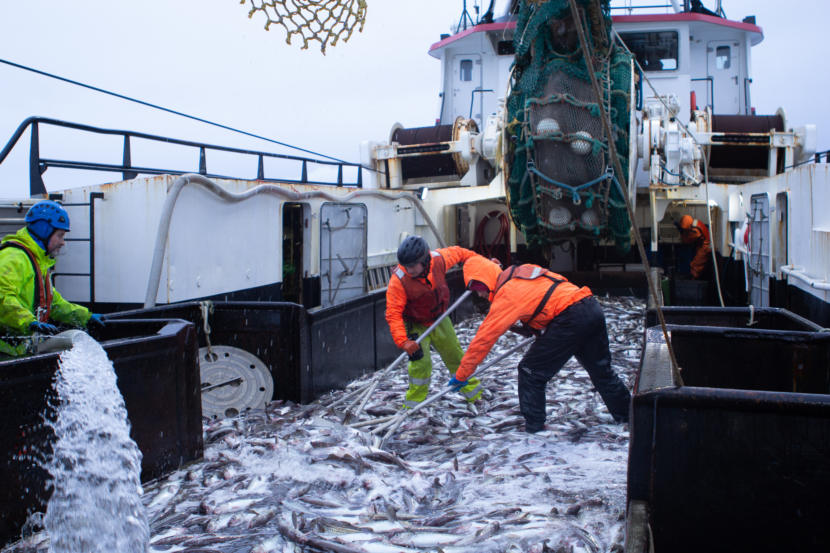
Crew members shovel pollock on the deck of a Bering Sea trawler last year. (Nathaniel Herz/Alaska’s Energy Desk)

In a new study, scientists have linked warming Arctic temperatures, changing wind patterns and shifting currents to movement of commercially valuable Alaska pollock in the Bering Sea.

The Bering Sea has seen the loss of a summer cold water barrier in recent years, which used to keep pollock from spreading out and moving north.

But while scientists are seeing drastic shifts in pollock movement patterns, further research needs to be conducted to know what the changes mean for communities like Unalaska and Dutch Harbor and the billion-dollar pollock industry.

“This research is really critical because pollock are a key ecological component of the Bering Sea shelf food web supporting the largest commercial fishery in the U.S. by biomass,” said Robert Foy, NOAA’s Alaska Fisheries Science Center director. “To get an accurate assessment of pollock abundance so that resource managers can set sustainable catch limits, we have to be able to understand pollock distribution, which certainly looks different under a warm water regime.”

While the implications of changing pollock distributions in the Bering Sea are not yet known, this study marks the first time American and Russian scientists have been able to work together to look at why the groundfish species has shown up in new places in recent years.

By looking at historical and recent data, they’ve been able to confirm both a northward shift of the species and a long-suspected movement of fish between U.S. and Russian waters.

“We were trying to compare what was driving those changes,” said Lisa Eisner, a NOAA Fisheries oceanographer and lead author of the study. “And also if it was possible for some of the fish from the eastern shelf to mix with the fish on the western side of the Bering Sea.”

While scientists have been surveying Bering Sea fisheries for nearly four decades, Eisner said this specific study was born out of the unusual warming events they’ve seen in recent years, and it also drew on historical datasets from both the U.S. and Russia.

According to Stan Kotwicki, program manager for NOAA’s Groundfish Assessment Program, pollock generally have a north-south migration. Typically, as ice comes down from the Arctic over the course of the winter, it pushes fish south to feed in warmer areas.

“And, of course, then during the spring, summer and fall, when the ice is melting, pollock move back north,” he said.

But as winters warm and sea ice melts, Kotwicki said the pollock can migrate much further north and stay there for longer. That’s in part because of a shrinking cold pool — an area of frigid water left behind by melted ice that fish don’t like to swim through. According to the study, with declines in the cold pool, there appears to be more intensive mixing between the Russian stock as it moves north and eastward and the U.S. stock as it moves north and westward.

Lyle Britt leads a team of NOAA Fisheries scientists who do yearly surveys of the eastern Bering Sea shelf and northern Bering Sea to track fish stocks.

Britt said studies like this one often worry people in communities like Unalaska and Dutch Harbor, where the economy is dependent on the commercial fishing industry. He said people can interpret these studies as saying that all pollock are moving north and to Russia.

But, he said, that’s not the message here. It’s much more about understanding pollock movements and behavior than it is an alarm bell that all the pollock are swimming out of reach of fishing boats.

“We are now just starting to fully understand really what their migration pattern is and how they interact with going into Russian waters, or staying in U.S. waters, being constrained by a cold pool or less constrained when there’s a limited or even no cold pool,” Britt said.

The change in temperatures and shifting sea life has happened very rapidly in recent years throughout the eastern Bering Sea ecosystem, according to Britt. And for him and fellow scientists, the big question is how these environmental changes will affect pollock over the long term.

“Science for us is only as good as the number of observations we have,” he said. “And in this case of unprecedented warming, and we really only have a couple of years [of data], it’s really hard to draw really large scale conclusions at this point.”

But he said scientists are planning an array of studies on how whole ecosystems are changing. Not just on pollock movements, but on how they follow prey like plankton or smaller fish and how they interact with bird and marine mammal migrations.

“All of these are questions that are ramping up within our research community,” Britt said. “And we realize it has to ramp up very quickly because of the amount of change we’re seeing.”

Ravn Alaska will resume flights to 6 communities Friday

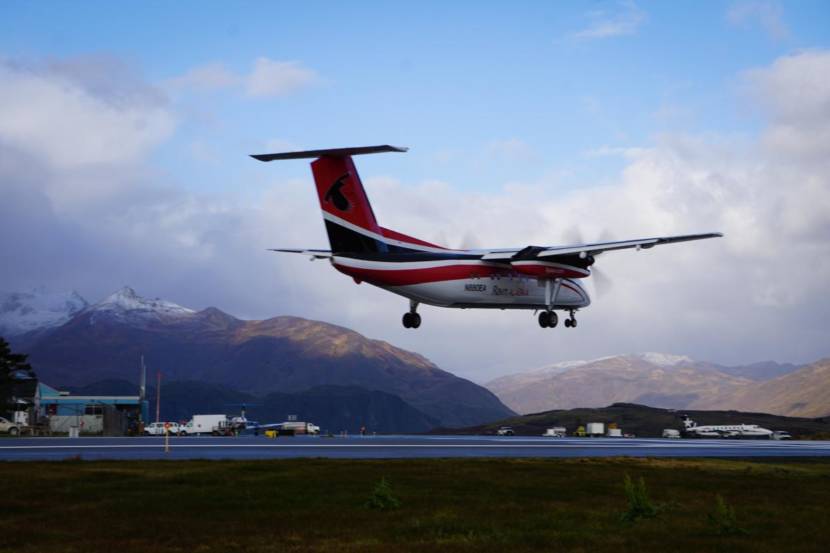
On Friday — for the first time since RavnAir Group filed for bankruptcy earlier this year — a DeHavilland Dash 8 airplane landed on Tom Madsen Airport’s short 4,500-foot runway. (Hope McKenney / KUCB)

Ravn Alaska will return to six Alaska communities on Friday, with regularly scheduled public chartered flights offered by Ravn Travel.

Tickets are now available for scheduled flights between Anchorage and Unalaska, Sand Point, Homer, Kenai and Valdez, according to Ravn CEO Rob McKinney.

“We were issued our public charter status under Part 380 of the U.S. Department of Transportation’s rules, which means that we can publish the schedule for four round trips per week to any given pairs of cities,” McKinney said.

Under DOT public charter regulations, Ravn was required to establish a separate agency, Ravn Travel, in order to offer the service. The airline is also limited to four flights per week to each destination until it receives final DOT approval to resume regular scheduled service.

“We were hoping we would have had our regular authority by now, but that hasn’t worked out,” said McKinney. “So we’re trying this other direction just to get service going as quickly as we can.”

Last month, two airlines — Alaska Seaplanes (Kalinin Holdings, Inc.) and Alaska Central Express (ACE) — objected to Ravn resuming regular commercial operations during the DOT’s “show cause order” window. The order opened up a 14-day period for anyone to show cause for the DOT not to find the air carrier “fit, willing, and able” to provide scheduled air service.

“They are working through the objections that were filed during the show cause period,” said ports director Peggy McLaughlin at a city council meeting Tuesday night. “There were two companies that objected and so USDOT is working on that. We don’t have a timeline for regular scheduled service just yet. It’s going to take them a minute to work through those objections.”

Under Ravn’s public charter service, the airline will be flying to Unalaska on Mondays, Tuesdays, Thursdays and Fridays.

McKinney said flying on Ravn’s charter flights will look similar to flying on normal commercial flights, except that people won’t be able to book online, and will have to call Ravn’s reservation center.

He said for the general population, tickets will cost $649 or $549 to the island, depending on whether or not it’s refundable, and Unalaskans will get a local discount.

“The really exciting part of what we have to offer is that if you have an ID with a local address on it, so if you’re local to the Aleutian Islands, you will be able to get a $399 fare,” he said.

Alaska residents will be allowed two free checked bags, according to McKinney. And for non-residents, it will be $15 for the first bag and $25 for the second.

The flights on the DeHavilland Dash 8 planes will likely make a stop in Cold Bay to refuel. McKinney has said in past interviews that Ravn is eventually moving towards using aircraft that don’t require a refueling stop.

While McKinney said he was hoping to have the DOT’s final approval by now, he is excited to finally offer reliable air service to Unalaska.

“But at the same time, I’m still frustrated that the situation is taking as long as it has,” he said. “We started working on this in July, and here we are in November. So that part is still obviously frustrating, but I’m really, really happy to watch the first airplane take off and head your way this Friday.”

To book a flight on Ravn’s new public charter service, you can call the airline’s reservation center at 833-418-2360, or visit the Ravn counter at Unalaska’s airport for the local discount.

Ravn is still waiting on the DOT’s final route authority approval to begin scheduled commercial flights, which McKinney said he expects to be awarded in the coming weeks.

$9M settlement to be paid to survivors, families of Scandies Rose crew, which sunk on New Year’s Eve

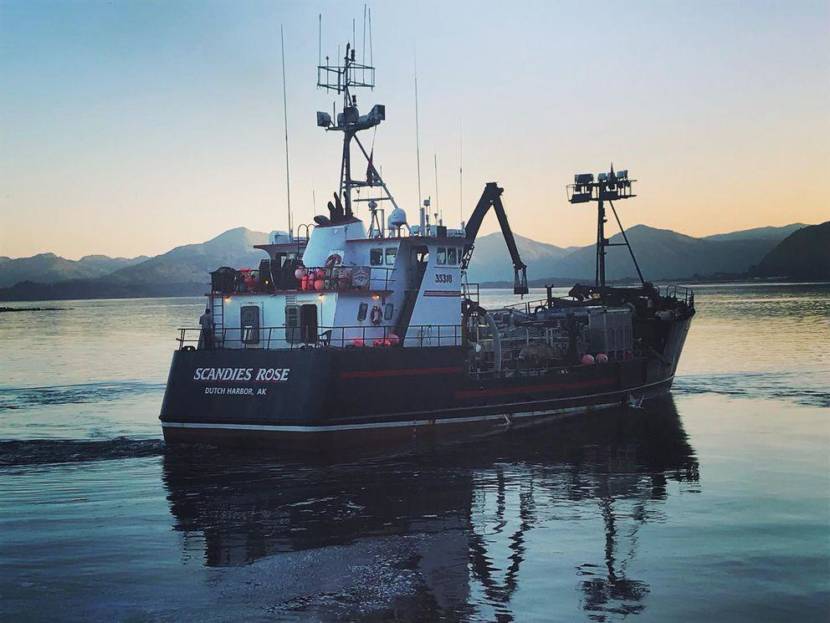
The F/V Scandies Rose sank west of Kodiak on Dec. 31, 2019. (Photo courtesy of Bret Newbaker)

A $9 million settlement will be paid to survivors and families of those lost at sea last New Year’s Eve after a Dutch Harbor fishing vessel sank off the Alaska Peninsula.

The company that owned the fishing vessel Scandies Rose will pay out from its insurance policy to the families of four deceased fishermen and two survivors that worked on the 130-foot crab boat.

Earlier this year, attorneys for the survivors and families of deceased crewmates filed claims on their behalf, alleging that the Scandies Rose went down because it wasn’t seaworthy for the freezing conditions at sea when it left Kodiak and that they were entitled to damages.

“They carried a full load of pots and proceeded into some known icing conditions, which we feel was a major cause of the accident,” said Jerry Markham, a Kodiak attorney who represents the families of three of the deceased.

But neither side is seeking to formally cast blame in court now that a cash settlement has been reached.

“This takes care of everyone’s claims against the vessel,” said Mike Barcott, a Seattle-based attorney representing the vessel owners, Scandies Rose Fishing Company and Mattsen Management.

How the settlement will be divided between the survivors and families of the deceased will likely be done in private, either through mediation or arbitration, he added.

Captain Gary Cobban Jr. of Kodiak owned a stake in the Scandies Rose. He and his son perished when the vessel sank during a storm while on its way to the Bering Sea for Pacific cod and crab.

Barcott said the skipper’s next of kin is not part of this arrangement; his family will be receiving a separate settlement through insurance.

The settlement ends litigation that was headed to trial next spring in Washington state. That means assigning blame for the tragedy will not be decided in a courtroom.

“The trial would have decided if the vessel and her owners had been negligent in some way,” Barcott said. “It would not have divided up the verdict among the parties. This was just a ‘who’s responsible’ trial. And now that’s not necessary.”

But some of the questions raised in the lawsuit may be addressed during a formal inquiry by the Coast Guard Marine Board of Investigation. It’s slated to begin hearings into the incident on Feb. 22 in Seattle.

Barcott said the majority of maritime claims that involve lost ships end in a cash settlement. Trials, he said, rarely bring closure.

“Trials in an incident like this are wrought with emotions, and 99 percent of these cases involving vessel sinkings settle,” Barcott said. “The question is always how much is the settlement. The owners thought this was a terrific vessel, they thought Gary Cobban was a terrific skipper, and to vindicate themselves, they would have liked to have gone to trial. But they also understand there are some estates that are grieving, and it’s frankly better for everyone not to go through the process of the trial. It’s really hard to go through a trial like this. It’s hard on everybody.”

Jerry Markham, the Kodiak attorney who says he’s handled more than a dozen similar cases, echoed that sentiment.

“I think the families are relieved that they don’t have to go to court and cast stones on all the reasons why the accident happened,” Markham said. “It’s part of fishing; vessels sink. It’s [the responsibility] of vessel owners to keep them safe, and not put them in the position of having that happen.”

One of the crew members’ next of kin is a minor. The court will need to approve that portion of the settlement by determining it’s in the best interests of the child, Barcott said.

“Under maritime law, when a seaman dies, one of the claims that can be made is on behalf of their child who has lost the support of that parent. And that’s the situation here,” he said.

The four deceased crew members who will receive a portion of the settlement awarded this week are the captain’s son, David Lee Cobban, of Kodiak; Brock Rainey, Art Ganacias and Seth Rousseau-Gano. The two survivors sharing in the settlement are Dean Gribble and Jon Lawler.

The $9 million settlement will be paid by insurance, Barcott said.

“It’s how much insurance they had,” he added.

High school hatchery revitalizes Unalaska silver salmon population

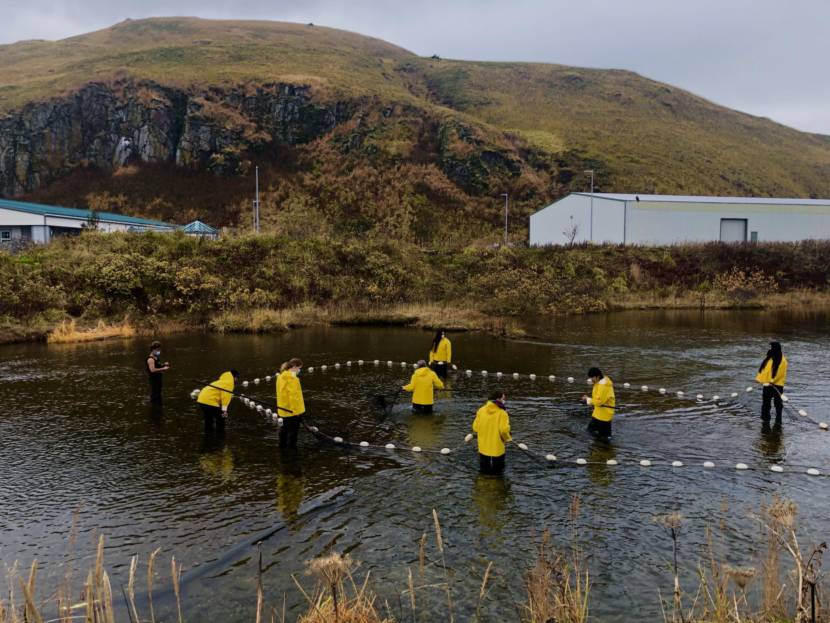
Students in Steven Gregory’s fisheries class stretched a seine net from bank to bank of the Iliuliuk River, while another group waded upstream, slapping large dip nets on the surface of the water. (Maggie Nelson/KUCB)

Around October every year for the last 19 years, Unalaska High School students have been wading into the Iliuliuk River, under science teacher Steven Gregory’s guidance, to collect pairs of spawning salmon.

Last week, students in Gregory’s fisheries class stretched a seine net from bank to bank, while another group waded upstream, rhythmically slapping large dip nets on the surface of the water.

“Two people go down and they scare the fish into the net and then a bunch of people stand on the net so the fish can’t escape,” said Natalie Buttner, a junior at Unalaska High School. “And then as the people come down, scaring [the fish] in, the net comes all the way around and catches the fish, hopefully males and females.”

Buttner said she’s excited to be in Gregory’s class, and that it’s something that seems unique to the region. As the course has progressed, she said she’s gained more interest in the subject, as she’s been able to observe the salmon daily, from counting silvers from the banks of the river to assisting with the fertilization process.

While the class struck out last Tuesday — only catching a single male silver — they caught two spawning pairs the day before.

After they catch the spawning pairs, Gregory said they collect the eggs in a bucket and fertilize them. They then add salt to water from the Iliuliuk River, which is added to the eggs. Gregory said his class started adding the extra salt about four years ago, and it has increased their fertilization success rate to about 90 percent — a percentage that he said is comparable to professional hatcheries.

Gregory encourages the students to actively participate, but he said the beginning of the harvesting process requires a delicate and experienced approach.

“What I do is I express the eggs from the female. I usually do that because it takes a certain amount of experience to be able to squeeze the eggs out,” said Gregory. “You don’t want to break the eggs, it’s very bad if you break the eggs because the contents of a broken egg will interfere with the fertilization of the healthy eggs.”

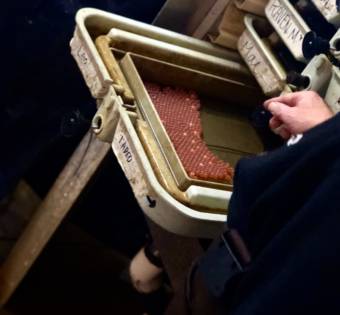
After fertilizing the eggs, they place them into incubation trays with running water to simulate the undergravel nest in the river — also known as a redd.

Gregory very carefully pulled out an incubation tray filled with about a thousand salmon eggs, directing pairs of students to gather around to get a closer look.

“The eggs can be exposed to the air for a short period of time,” Gregory explained to the students. “You don’t want them to be exposed to the air for too long because the mold spores will land on them and a fungus will start to grow on the eggs. The dead eggs will appear white. So anything that is white was not fertilized.”

Unalaska Senior Landen Shaishnikoff holds a fertilized silver salmon egg. (Maggie Nelson/KUCB)

Gregory said the fisheries course covers a number of topics, ranging from basic biology to commercial fishing and salmon hatchery operation.

He tells the students that they are “the stewards of the river.” And as part of their current unit, they’ve performed a salmon census. The eggs that they are now collecting will ultimately develop into young salmon and will be released into the Iliuliuk River.

Gregory and his students monitor the eggs until they become fry, which are small salmon that no longer have a yolk sac attached to them. Most of the fry are released into the river, but some, Gregory said, are kept longer in the hatchery.

“Once the alevins have turned into fry, we put them in the other part of the hatchery — it’s called the raceway,” said Gregory. “And the raceway simulates the flowing water part of the river. And so that’s where the salmon go when they’re fry and then they turn into what are called ‘smolt’.”

Gregory said they will keep 50 fry in the raceway and feed them and chart their growth.

“And this spring, May of 2021, [the smolt] will be about as long as your hand,” said Gregory. “And we will let them go along with the fry from the eggs that we captured last week.”

Along with some of the elementary students, Gregory’s class will release last year’s smolt into the river in the spring and will nurture another group of salmon for next year’s class to observe and then release.

In the meantime, Gregory uses the fish to teach students about a number of subjects, from the salmon life-cycle to analyzing and protecting the watershed.

Rodrey Sebastian, a senior in the class held up a murky vile of water and explained that they monitor the water in the raceway to ensure it has the correct amount of dissolved oxygen in it.

“So this right here is sodium thiosulfate,” said Sebastian. “This is what we use to determine how much dissolved oxygen there is in the water. So right now the water is just super mucky. After we add this chemical, we have to mix it up and then after that we transfer it into this little tube, and then put it in this mixing jar. And what we’ll do once this is a little bit mixed up and settled, is we’ll drop as many drops of sodium thiosulfate that we need to make the water clear again.”

Sebastian said the number of drops of sodium thiosulfate will tell them the number of units of dissolved oxygen in the water. He said they are aiming for about 9 to 11 drops.

Gregory and his students place the salmon eggs into incubation trays with running water to simulate the undergravel nest in the river — also known as a redd. (Maggie Nelson/KUCB)

And as Gregory discussed aspects of the course and detailed the life-cycle of a salmon, it was easy to see where that enthusiasm originated.

“Do not take the salmon that run in our river for granted,” said Gregory. “The amount of urbanization that has taken place in this town — it’s obvious that [it has] negatively impacted our watershed. And I’m very passionate about that.”

While Gregory remains frustrated with some of the ways local streams and water quality are neglected, he said he’s noticed a significant increase in the silver salmon population in the river since they began regularly offering the course and releasing salmon into the stream.

“Our operations here at the hatchery have done nothing but increase the silver salmon population,” said Gregory. “It’s been amazing to see that come back. When I was a kid here, there were hardly any of them spawning out there. And today, you can go out there for two or three straight weeks and see 100, at least, actively spawning at any one time. So it’s been a success.”

Gregory said the class will try again this week — weather permitting — to catch another spawning pair of silvers.

Site notifications
Update notification options
Subscribe to notifications