Juneau

Report reveals prison staff failures in death of Juneau man

(Photo by Lisa Phu/KTOO)

A just released state report on the state’s prison system details disturbing events related to the death of Juneau resident Joseph Murphy.

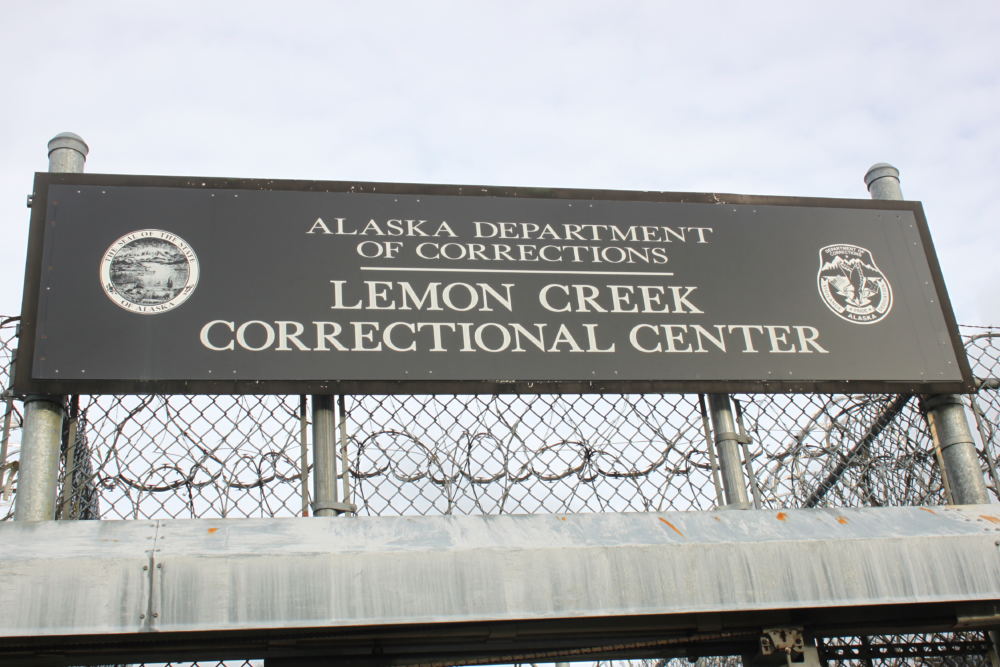
In August, the 49-year old Iraq veteran died of an apparent heart attack in a holding cell at Lemon Creek Correctional Center. He was being held there on noncriminal charges. At the time, Department of Corrections released scant information about the death.

Dean Williams calls Joseph Murphy’s death at the Juneau prison an “incident gone wrong.” Williams is special assistant to Gov. Bill Walker. He spearheaded the three-month review of the Department of Corrections.

Murphy died at Lemon Creek Correctional Center the morning of Aug. 14. The night before, he was intoxicated and had been brought to the prison on a protective hold, not on criminal charges. Around 7 p.m. on Aug. 13, Murphy was put in a cell that had a video camera. Williams watched the footage.

“It’s compelling video, very, very disturbing,” Williams said.

Williams and the review team used the video, which had no audio, and interviews with prison employees to piece together what happened.

Murphy is seen awake at 5:20 the morning he died and doesn’t appear to be intoxicated anymore, according to the report. About a half hour later, Murphy complains of chest pains to two different staff members. Both say they offered to call for medical help, but Murphy declined.

Ten minutes later, a third staff member responded to Murphy banging on his cell door and yelling for medical care. A fourth staff member overheard what Willams calls a “callous” exchange.

“Staff 4 hears the quote between Staff 3 and the inmate as essentially saying, ‘I don’t care if you live or die.’ It’s basically, ‘I don’t really care,'” Williams said. “Staff 4 is clear that’s what he overheard. It’s a credible report and it’s not refuted either.”

The staff member and Murphy also said “f— you” to each other.

Within 20 minutes of that exchange, the report indicates Murphy was sweating, paced the cell and banged on the cell door. At one point he’s on his hands and knees. He stands and walks while patting his chest, then collapses and dies. He’s not discovered in that condition for another 10 minutes.

“I wouldn’t want anyone, I wouldn’t want a relative of mine – my father, my brother – or anyone dying in prison who’s complaining of chest pain and not having someone call for help, let alone an exchange that occurred between a staff person and Mr. Murphy the way it did,” Williams said. “I don’t know if he would’ve lived otherwise, but I can tell you that it’s unacceptable what happened in terms of the interaction and the fact that help wasn’t called.”

Williams says that third staff member was sanctioned, though not to the level Williams deemed appropriate.

The report also finds fault with why Murphy was put prison in the first place. State law allows for an individual who is incapacitated by alcohol or drugs in a public place to be put in temporary protective custody.

Williams said it doesn’t make sense to put medically unstable people in jail, “Just the whole practice of taking highly intoxicated individuals, some that are detoxing, and placing them in a prison where they are going to receive far less attention is not a good plan.”

The report shows incidents where people with a blood alcohol concentration six times the legal limit for driving under the influence are being dropped off at prisons. Murphy’s that night was .165, about double the limit.

Williams said the practice puts the prison system and the individuals at risk, and it’s something that needs to change.

“Protective custody was originally designed to be a last stop place for individuals and somewhere along the line in the history of our state, it’s become more of a middle of the road stop,” Williams said.

It’s also misinterpreted by corrections, he said. Instead of keeping an individual until they’re no longer incapacitated or for a maximum of 12 hours, corrections treats the 12 hours as mandatory.

Williams said the state may release the video footage of Murphy’s death and three others the review team examined. Williams will be in Juneau this week to meet with Murphy’s ex-wife and walk her through the footage. Her reaction and other family members’ will help inform the decision to release the videos.

There isn’t anything, Williams said, he or the state can do to bring Murphy back, but he’s dedicating himself to make sure what happened to Murphy doesn’t happen to anyone else.

How Juneau students stack up in new state assessment

(Modified Creative Commons photo by Horia Varlan)
(Creative Commons photo by Horia Varlan)

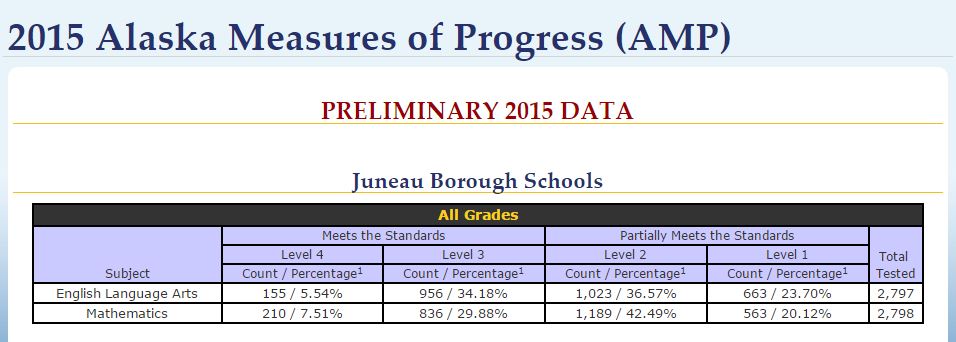
Juneau students performed second best among the state’s five biggest school districts in Alaska’s new standardized test. Alaska Measures of Progress evaluates third through 10th grade students on math and English language arts.

About 40 percent of Juneau students that were tested meet the standards, while roughly 60 percent partially meet the standards. That’s better than how the state did as a whole. Sixth grade math is the only area where Juneau students fell behind state averages, according to the superintendent.

Results of Alaska Measures of Progress were released Nov. 9.

The test was administered this past April. It’s based on state standards revised in 2012 and replaces a test based on 2006 standards.

Phil Loseby, assessment evaluation coordinator for the Juneau School District, said the new standards are more rigorous.

“Alaska is not a Common Core state, but roughly 90 percent or more of our state standards align either very closely or exactly with the national Common Core,” Loseby said.

Old standards wanted fourth graders to know their multiplication tables. New standards have that expectation and more of third graders.

Students are scored on four levels. Students who score on the 1 or 2 level only partially meet the standards, while students who score on the 3 or 4 level meet the standards.

“The ‘meet’ and ‘partially meet,’ it’s really you meet the standard or you’re below the standard,” Loseby said.

Of all Juneau schools, Auke Bay Elementary had the top English scores with close to 55 percent of its students meeting the standards. Gastineau Elementary topped the district in math scores with close to 50 percent meeting standards.

Loseby says the test provides only one measure of assessment and shouldn’t be used in isolation. The district also administers the nationally-normed Measures of Academic Progress test three times a year. He says that assessment allows parents and teachers to track performance throughout the year and helps identify instructional targets.

The new Alaska Measures of Progress test has critics that include many superintendents, and a state lawmaker is drafting a bill to repeal it.

Juneau superintendent Mark Miller said the district is still trying to figure out what the test means.

“The test itself has some quirks and some flaws that we’re going to be working with the state around to figure out what exactly it means. It’s not very good to help us inform instruction. It doesn’t help us get much better at what we do,” Miller said.

Individual student scores will be sent out around Thanksgiving.

Community remembers Native leader for 2nd annual Dr. Walter Soboleff Day

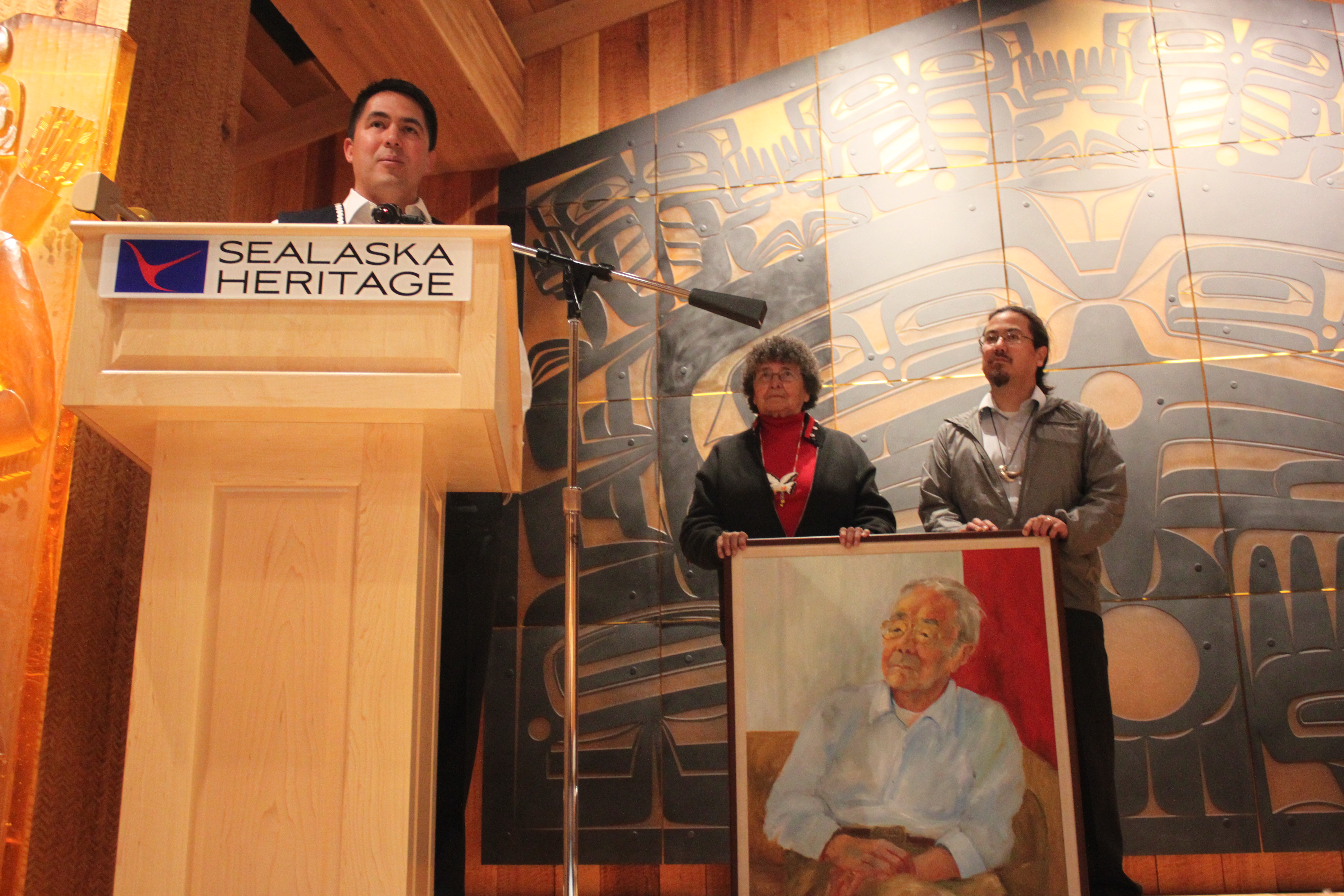
Sealaska Corporation CEO Anthony Mallott remembers Dr. Walter Soboleff. SHI board chair Marlene Johnson and Sealaska board chair Joe Nelson stand by a portrait of Soboleff. (Photo by Lisa Phu/KTOO)
Sealaska CEO Anthony Mallott remembers Walter Soboleff. SHI board chair Marlene Johnson and Sealaska board chair Joe Nelson stand by a portrait of Soboleff. (Photo by Lisa Phu/KTOO)

Family members and community leaders shared anecdotes of the late Walter Soboleff on Friday. Sealaska Heritage Institute and Sealaska Corp. hosted the event inside the clan house of the building named in his honor.

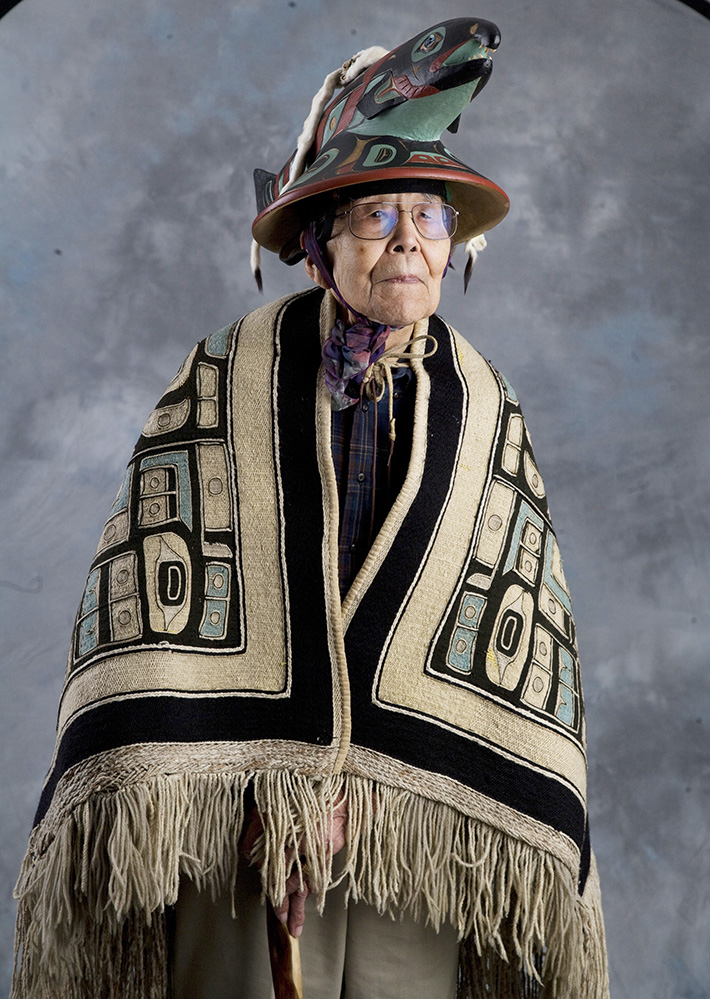
Dr. Walter Soboleff (Photo courtesy Sealaska Heritage Institute)
Walter Soboleff (Photo courtesy Sealaska Heritage Institute)

The Tlingit cultural and spiritual leader died in 2011 at the age of 102. Three years later, the Alaska Legislature passed a bill naming his birthday Nov. 14 as Dr. Walter Soboleff Day.

Soboleff’s son Sasha Soboleff recalled praying before each meal growing up. When no one volunteered to say the prayer, “Dad said, OK. He prayed for the governor and his cabinet by name, for the senators and representatives and their staffs by name, for all the fishermen who were on the fishing grounds and their boats and their captains by name. So the next night when there was a time to give a prayer, boy, hands went up right away.”

During the event, Sealaska transferred a portrait of Soboleff commissioned on his 95th birthday to Sealaska Heritage Institute. Sealaska CEO Anthony Mallott says it was the only individual portrait of any leader that was in the Sealaska building.

“He took the power of values, the power of kindness and the power of caring to improve people’s lives. I think the fact that we have a building like this, that we have Dr. Walter Soboleff Day in Alaska, that we have people that are willing to share their stories about him, he’s going to continue to touch people’s lives,” Mallott said.

The portrait will hang in the conference room of the Walter Soboleff Building.

There will be a reception for Dr. Walter Soboleff Day at the Tlingit-Haida Community Center on Saturday from 1 to 3 p.m.

Soboleff was known for sending handwritten letters. The Juneau-Douglas City Museum invites the public to send a note of encouragement to someone. Note cards and postage will be provided.

Language matters: The alleged disappearance of Áak’w Kwáan, T’aaku Kwáan


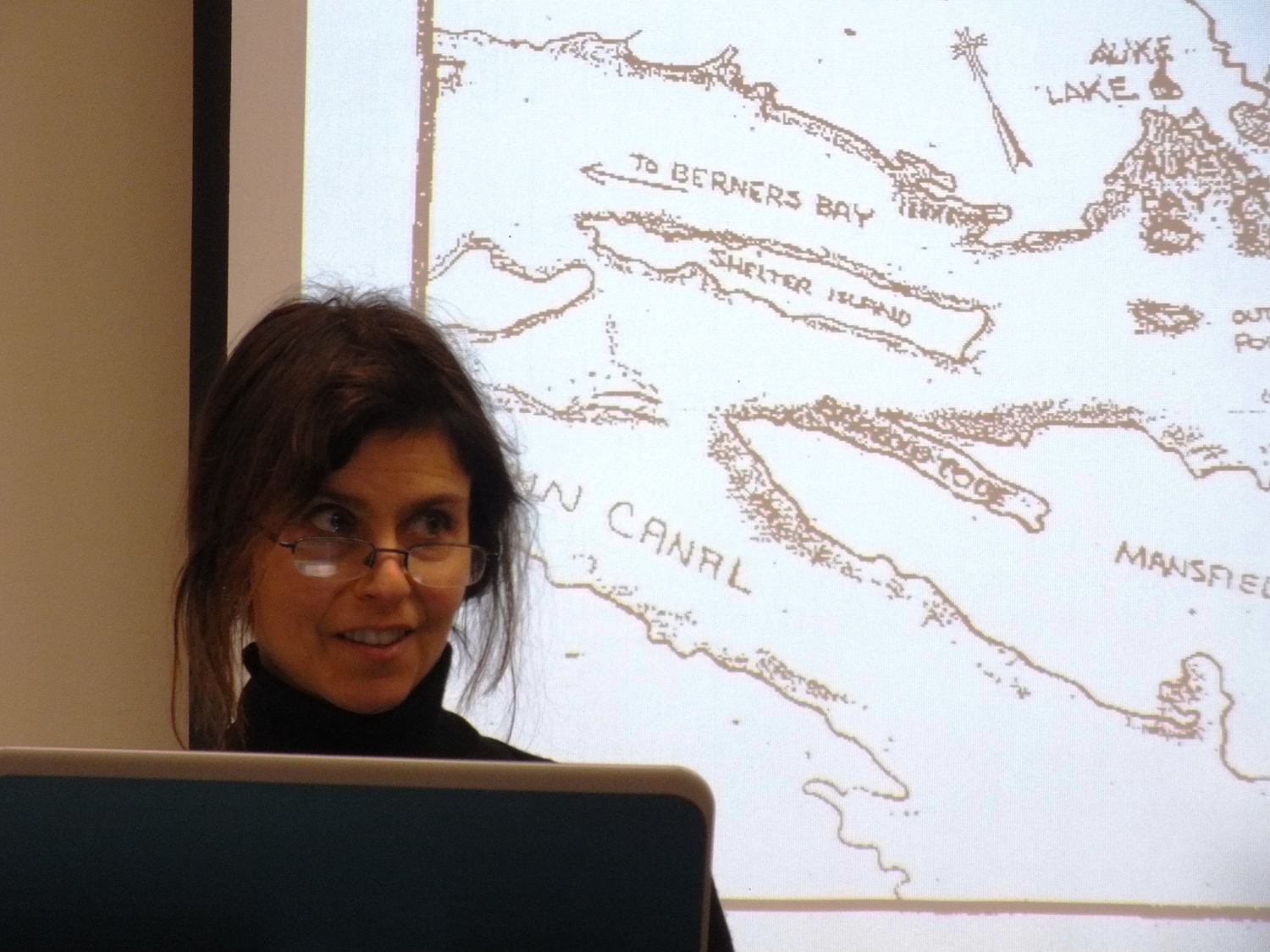
Anastasia Tarmann with the Alaska State Library and Historical Collections gives a presentation at Sharing Our Knowledge: A Conference of Tlingit Tribes and Clans on Oct. 29. (Photo by Matt Miller/KTOO)


What happened to the Áak’w Kwáan and T’aaku Kwáan? Did they all die of disease? Become assimilated? Move away?

A state researcher challenges the modern day, persistent narrative implying that local Tlingits seemed to have just vanished as soon as non-Native settlers arrived in the area.

Anastasia Tarmann with the Alaska State Library and Historical Collections explained her ongoing research during a session at “Sharing our Knowledge” clan conference held recently in Juneau.

“The stories that we tell ourselves, these interpretations, they reinforce or they cultivate relationships,” Tarmann said. “They can make relationships. Or they can just reinforce old messages. … They are our identities. And they also are possibilities.”

Tarmann pointed to recent interpretive signs for the new Brotherhood Bridge and the Auke Village Recreation Area as examples. The wording and the past-tense language implies that the Áak’w Kwáan either moved on from the area or abandoned their winter village early last century.

Tarmann highlighted the Brotherhood Bridge sign: “It says, ‘Although changes in Áak’w Kwáan lifestyle occurred, they continued to live in their traditional homeland.’ That bothers me. I’m sure it bothers you.”

Then, for the Auke Village sign, Tarmann noted: “By 1900, most of the Natives had moved to Juneau to work in the mines, and by 1926 all structural remains of the village were gone.”

“It’s like Áak’w history is a preface to Western history,” Tarmann said.

In Berners Bay, the forest was clear cut by gold miners in the area.

In 1962, Douglas Village Natives were forced from their homes without compensation and the village was burned down while many villagers were at their fish camp on the Taku River. The City of Douglas seized the land for a harbor project.

There’s an old saying that history is written by the victors, or the occupiers. Based on Western ideology and values, Tarmann said it seems that local history really didn’t start until after the United States took possession of the territory and the Gold Rush started. Does morality and virtue really only begin with Western civilization?

“When the signs, these interpretations speak in the past tense, and when they talk about people having left their lands, it really seems inaccurate,” Tarmann said. “I know, I see, I’ve been told that T’aaku and Áak’w people are alive and well, and continuing.”

Several attendees of the Tarmann’s presentation stood up and spoke afterward. They pointed out that the Áak’w Kwáan and T’aaku Kwáan have always been here, and will continue to be here.

‘We’re not going to hide our family members or be ashamed’

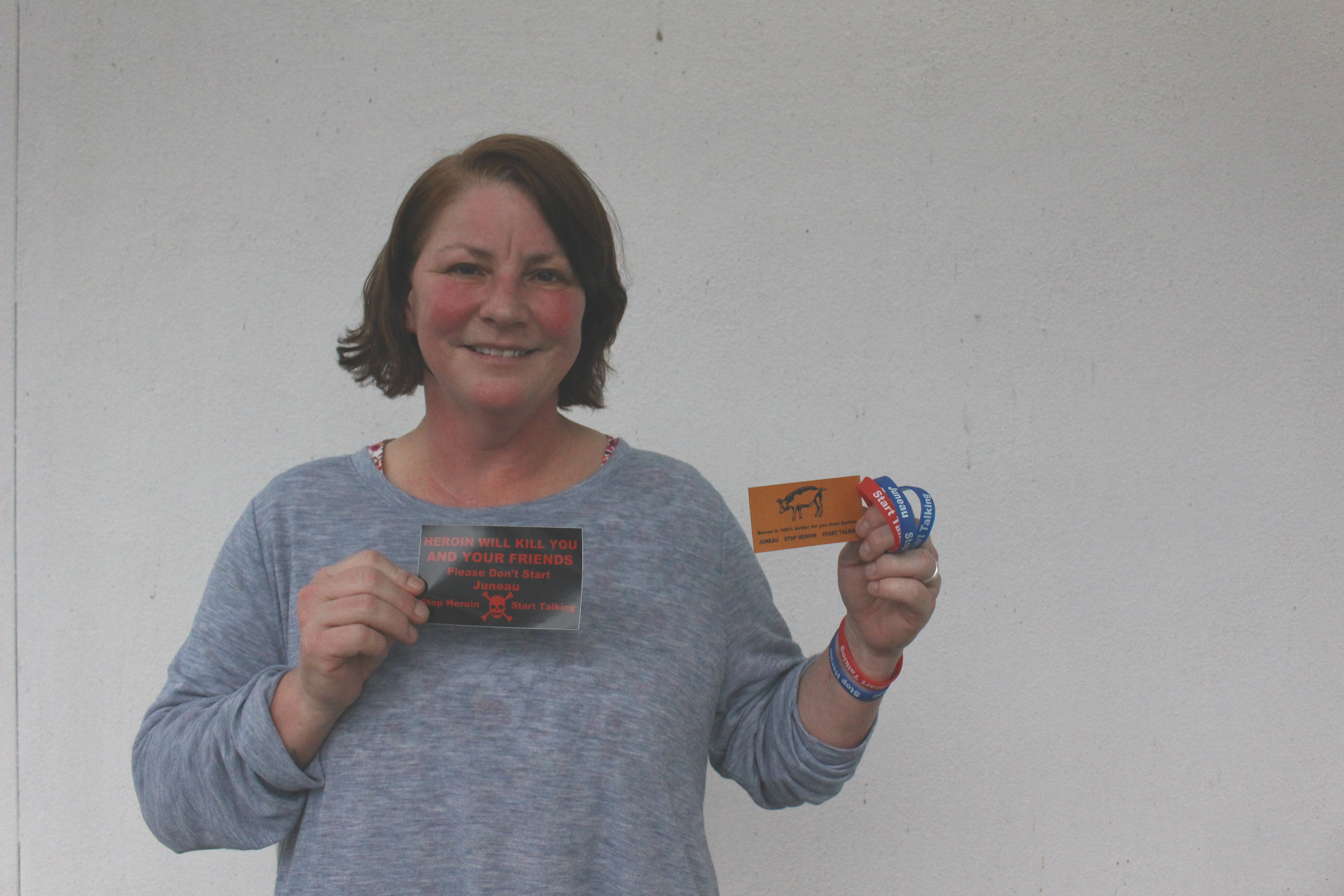
Michele Stuart is organizing the Stop Heroin Start, Talking Event. (Photo by Elizabeth Jenkins)
Michele Morgan is organizing the Stop Heroin Start, Start Talking event. (Photo by Elizabeth Jenkins/KTOO)

There are two different Juneau events this weekend to raise awareness about heroin addiction. This year, seven people have died in deaths involving heroin. The community is banding together to talk about what’s happening to their neighbors and family.

Michele Morgan said she wasn’t aware of an opioid problem in Juneau. The realization happened gradually.

When it came time for her teen-aged son to have his wisdom teeth pulled, she asked if he would tell his friends.

“And he said, ‘No, mom. Don’t tell anyone.’ He said, ‘Mom, because they’ll come to our house. They’ll know I have oxycodone,” Morgan said.

That was about nine years ago. Oxycodone, like heroin, is an opioid. It elicits the same effect on the brain. If you look at the recent drug seizures in Juneau, heroin is gradually increasing.

Morgan, the director of the Juneau Softball Association, said she noticed a shift in 2014. That’s when one of the young players died of an overdose.

“No one talked about it, except through the grapevine,” she said. “We have a benefit tournament we do for our players for those who have passed. So we did a plaque for that kid. And six months later we lost another kid to the same, to heroin.”

Then another. Breyner Haffner, in his mid-twenties. “Like one of my children,” Morgan said.

He used to play on her softball team.

“And I came home and I was mad and I was scared. And so I went on my computer and I ordered some stickers and some magnets,” Morgan said. “Anything I could get to make me feel like I was getting the word out.”

The stickers say, “Heroin will kill you and your friends, please don’t start.” That snowballed into the grassroots initiative: Stop Heroin, Start Talking.

The Juneau police noticed a trend last year in heroin-involved deaths and they’re tracking it now. During the next few months, they’ll be releasing videos of users speaking about their struggles with addiction.

The people appear in silhouette. Their voices are altered.

INFORMATION RELEASESubject: Stop Heroin Start Talking-Part 4 Date: 11-2-15From: Lt. Kris SellThe Juneau Police Department, as part of a six month anti-heroin initiative, will be introducing the public to several former and current heroin addicts throughout November. While JPD continues to work many heroin importation cases, like many other police departments, JPD knows going after only the heroin supply without addressing heroin demand does not give the community the results everyone wants. In order to address heroin demand the questions of why people started using heroin and why they keep using heroin must be answered for the community to have an effective prevention and treatment strategy. One person interviewed by JPD was nearly an overdose death at one point but was saved by Capital City Fire and Rescue. That person continues to use heroin. It is difficult for a non-addict to understand why someone would make that choice. The answer seems to be that the addict’s desire for the heroin high becomes so strong even an addict’s child cannot compete.

Posted by Juneau Police Department on Monday, November 2, 2015

Morgan said the hope with her initiative is education but also to remove the stigma attached to losing a loved one.

Then there’s policy change, like Senate Bill 23. It allows a medication called Naloxone to be distributed at trained agencies or sold over-the-counter at pharmacies.

“And Naloxone under the brand name Narcan stops the heroin overdose or the opiate overdose. Is it a cure for addiction? No, but it could save lives,” she said.

The Senate has already passed the bill, sponsored by Sen. Johnny Ellis. It now needs to pass the House. And as the legislative session gets underway, Morgan said she’ll be focusing her energy promoting it.

Overall, she said she wants to inform the community that having addiction isn’t a character flaw. It’s a health crisis. One that can be addressed.

“We’re coming out,” she said. “We’re not going to hide our family members or be ashamed, we’re going to kick heroin’s butt, and we’re going to do that as a group.”

Before she leaves, she hands over a Stop Heroin, Start Talking bracelet. Morgan said she’s giving them out to everyone she meets.

On Saturday, Stop Heroin, Start Talking is holding a 5:30 p.m. event at Rockwell. It features hip-hop performances and karaoke. There’s a $5 suggested donation.

On Sunday at 3 p.m., Community of Compassion meets @360 for a conversation about heroin addiction.

Tlingit language and culture program begins Saturday at youth center

Paul Marks
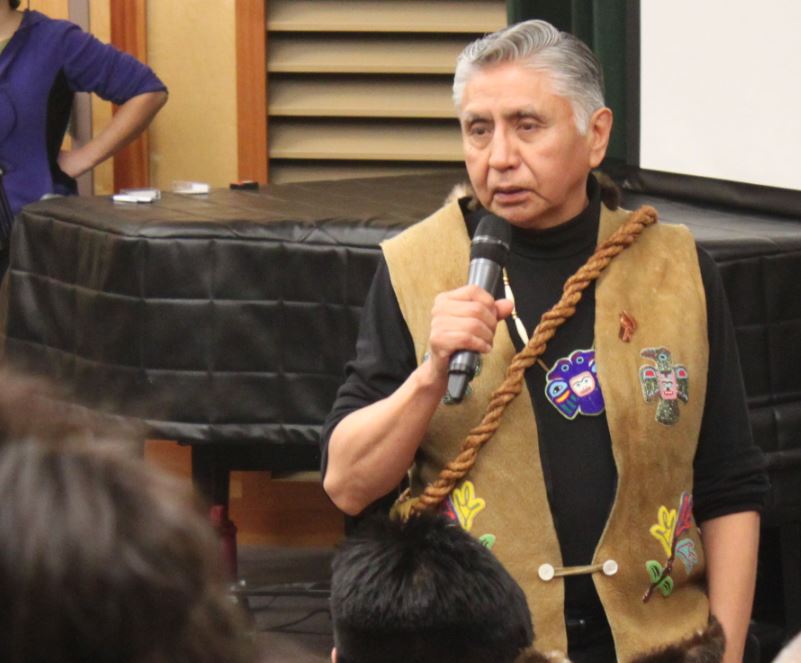
Paul Marks discusses the Raven story at the UAS Egan Lecture Hall in March 2015. (Photo by Lisa Phu/KTOO)

Goldbelt Heritage Foundation is beginning a free Tlingit culture and language program at Zach Gordon Youth Center on Saturday.

Over the next five Saturdays, kids will make and paint traditional Tlingit drums, learn some language and hear stories with Paul Marks, a Tlingit language and culture specialist with Goldbelt Heritage.

The 3-hour sessions begin at 1 p.m. this Saturday.

The program is free, but limited to 15 participants age 8 and older. It’s geared toward families, and elementary and middle school students.

Register through the Zach Gordon Youth Center at 586-2635.

Site notifications
Update notification options
Subscribe to notifications