Juneau

Juneau artist Crystal Worl honored at VP Biden’s house

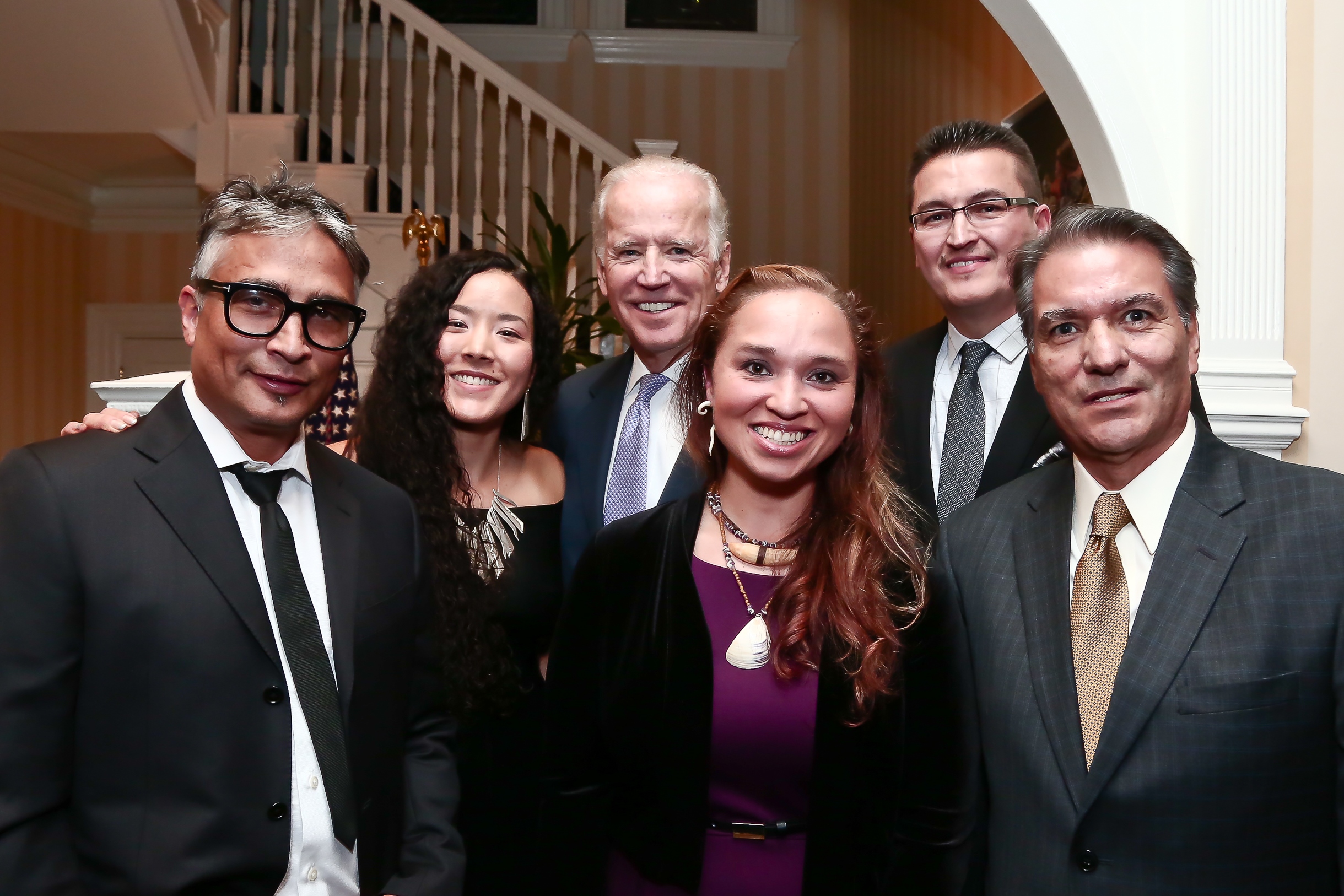
Tony Abeyta, Crystal Worl, Vice President Joe Biden, Courtney Leonard, Jeff Kahm and Dan Namingha at the Bidens' house on October 27, 2015. (Photo © Tony Powell)
Tony Abeyta, Crystal Worl, Vice President Joe Biden, Courtney Leonard, Jeff Kahm and Dan Namingha at the Bidens’ house on Oct. 27, 2015. (Photo © Tony Powell)

Juneau artist Crystal Worl was one of five Native artists from around the country to show their work at Vice President Joe Biden’s house last month. Worl was commissioned to design a print for the U.S. State Department’s Art in Embassies program.

“The piece itself is called, ‘Héen,’ which is a Tlingit word for water,” said Crystal Worl.
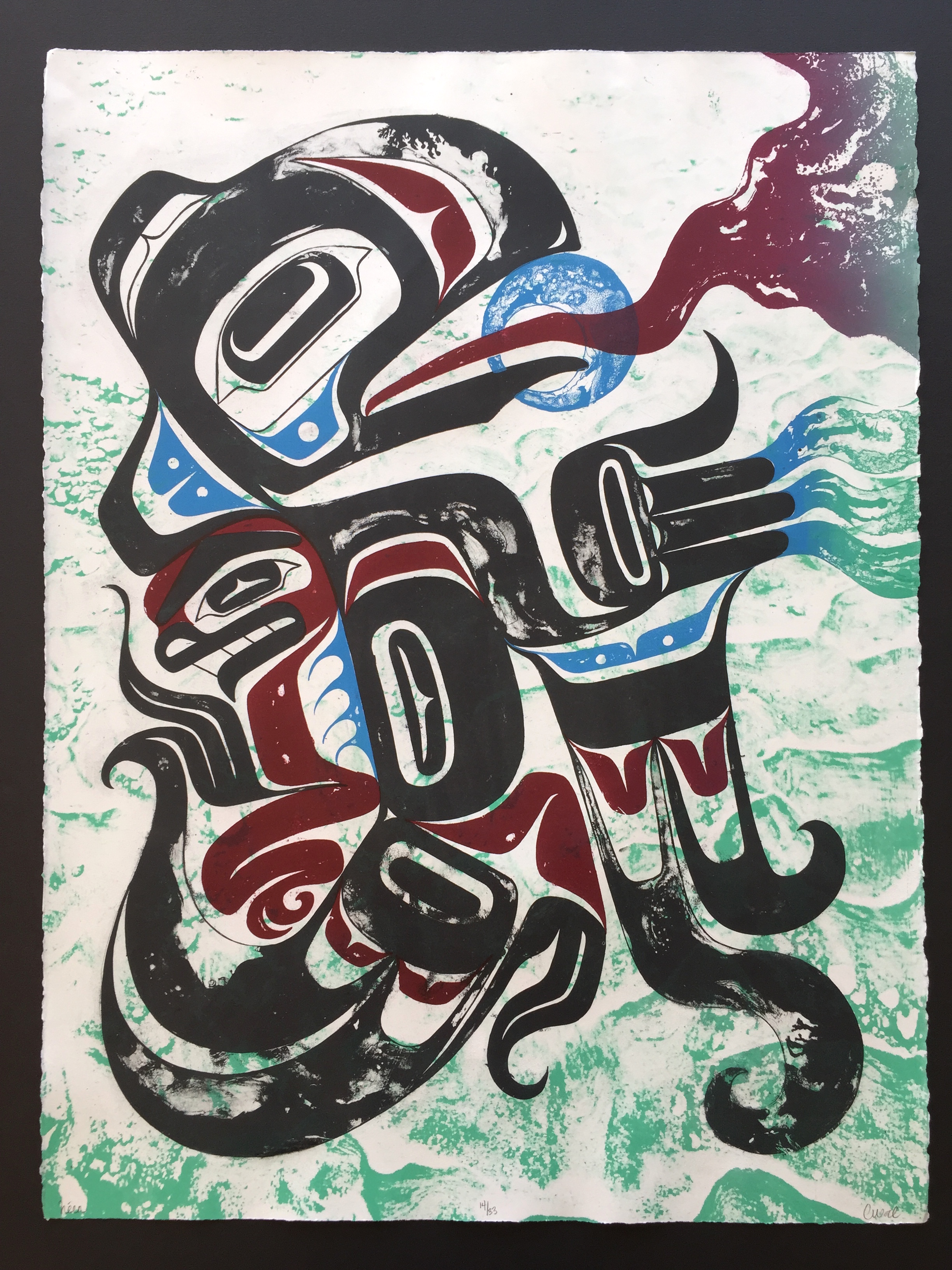
Crystal Worl worked with printmaker Jeff Sipple to produce "Héen." (Image courtesy Crystal Worl)
Crystal Worl worked with printmaker Jeff Sipple to produce “Héen.” (Image courtesy Crystal Worl)

Its alternate title is “Into Water.” Worl said the design, which is an image of Raven intertwined with a sea spirit, is an interpretation of a dream she had earlier this year.

“I was really, really thirsty in my sleep and I was flying around looking for water and I saw this huge range of mountains and I knew there was water on the other side. So I flew over the mountain and there was this huge body of clear water, and I dove into it to quench my thirst and to soak my feathers in the water,” Worl said.

And then she flew out of the water. “As I flew over the land, the water that was in my feathers began to drip and create rain, because the rest of the world was thirsty. The dream itself reflects an actual Raven story about Raven and water; there is an actual Tlingit story about that,” Worl said.

Worl came up with this design this summer over a period of 12 hours at the Institute of American Indian Arts in Santa Fe, New Mexico, where Worl graduated in 2013.

“I struggled for the first 5 hours. I couldn’t come up with what I wanted to do. I was like, ‘It has to be good, it has to be good,’ and that kind of haunted my creation,” Worl said.

The Institute of American Indian Arts chose five alumni from different regions of the country to produce new work as part of the Art in Embassies program. Worl was selected to represent Alaska. Prints of her and the four other Native artists’ work will end up on the walls of U.S. embassies and ambassadors’ houses all over the world.

While working on the design, Worl studied books on traditional formline, took pictures of her sketches and consulted with her brother Rico Worl. She wanted to stay true to the art form, but also depict the sensation of underwater movement.

“You can recognize it as traditional design, but you look at the tail feathers and the tips of the claws – they kind of spiral out and curl outward – which is not traditional,” Worl said.

The background of the print is a photo transfer of the shore at Eagle Beach. Worl said she wanted to use an image directly from home.

Last month, the U.S. State Department flew Worl to Washington, D.C. She attended a reception at Joe and Jill Biden’s house where her print was framed and displayed. She and the other Native artists were being honored.

“It was unreal,” Worl said. “I remember standing in front of my print while people were approaching and talking to me, and I was just kind of like outside of my body watching myself, like, ‘Is this really happening?’”
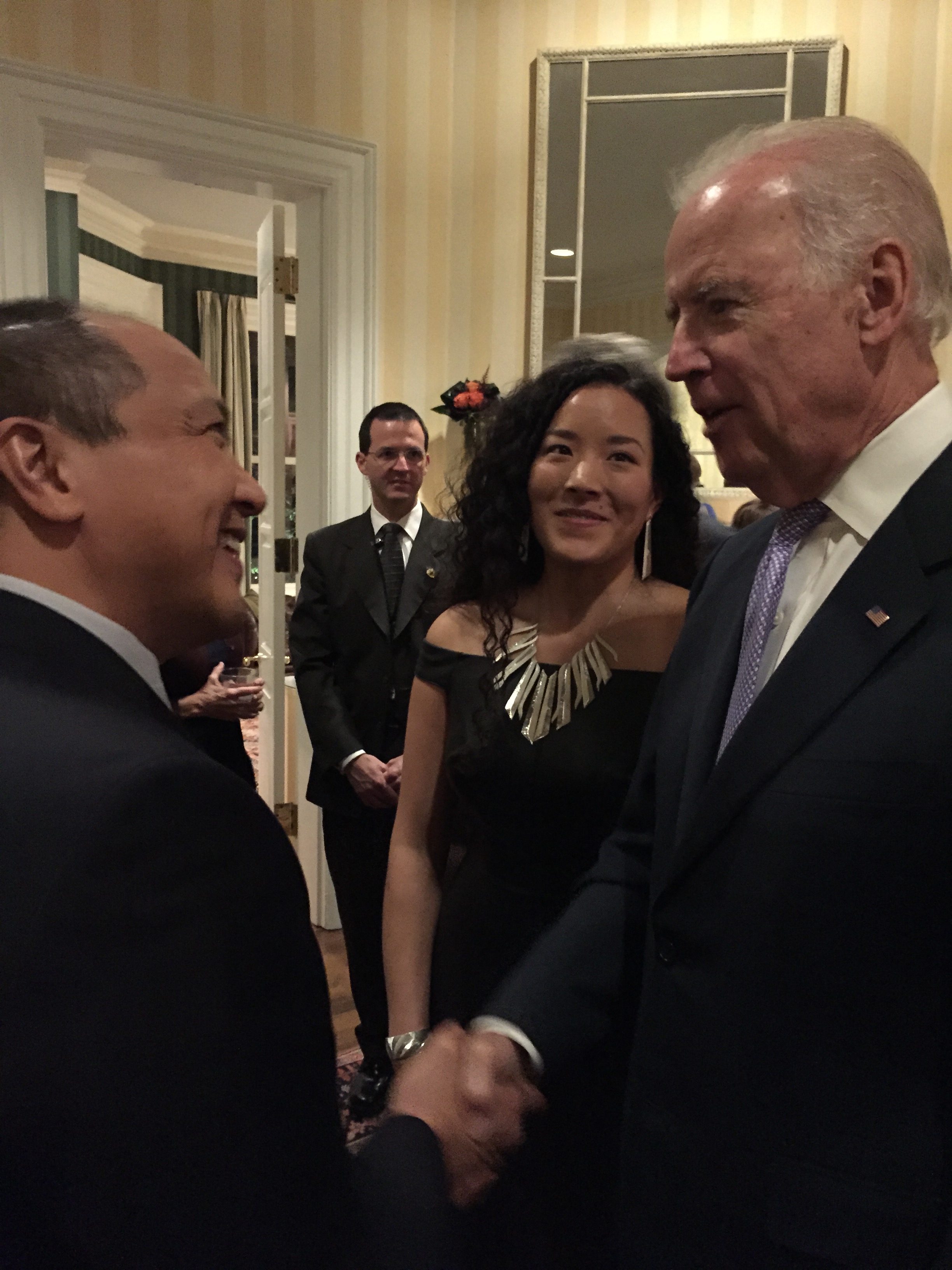
Crystal Worl looks on as her father Rodney Worl shakes hands with Joe Biden. (Photo courtesy Crystal Worl)

As Jill and Joe Biden gave speeches about the exhibit, the artists, including Worl, stood next to them.

“The best part for me was that I had my dad there with me and just to see him standing there smiling at me when I’m standing by the podium. I’ve seen him smile at me, but he was just beaming. He was glowing,” Worl said.

Both Worl and her father Rodney Worl got to shake hands with the vice president.

“I just remember my cheeks hurting from smiling, my feet hurting from those awesome heels and I was wearing this beautiful sea otter and seal fur shawl that my Aunt Louise had made and I just remember standing there next to him trying not to wipe my nose because I had otter fur on my nose,” Worl said, laughing.

Worl got to take some of the 33 prints of her work home. One is hanging at Trickster Company, a Juneau art store she co-owns with her brother. She’s selling the print for $2,500.

Worl is 27. She said it never gets old surprising yourself, “You can never tell yourself you’re not good enough for anything because you don’t know that. Just to keep going and keep pushing yourself is ultimately going to be good for you and the success of whatever it is you choose to do.”

Soon after Worl returned to Juneau, she set off for Los Angeles to sell art and she’s now in Seattle to network with galleries and museums.

Worl is also working on creating an art collective of indigenous millennial women making Northwest Coast art.

Veterans’ values needed in past, present and future, chaplain says

U.S. Coast Guard color guard
U.S. Coast Guard color guard present the colors during Wednesday’s Veterans Day observance. (Photo by Matt Miller/KTOO)

Juneau residents honored and remembered veterans during an observance held Wednesday at Centennial Hall.

Veterans Day used to be called Armistice Day prior to World War II, and is observed during the 11th hour of the 11th day of the 11th month, the moment when hostilities ceased during World War I.

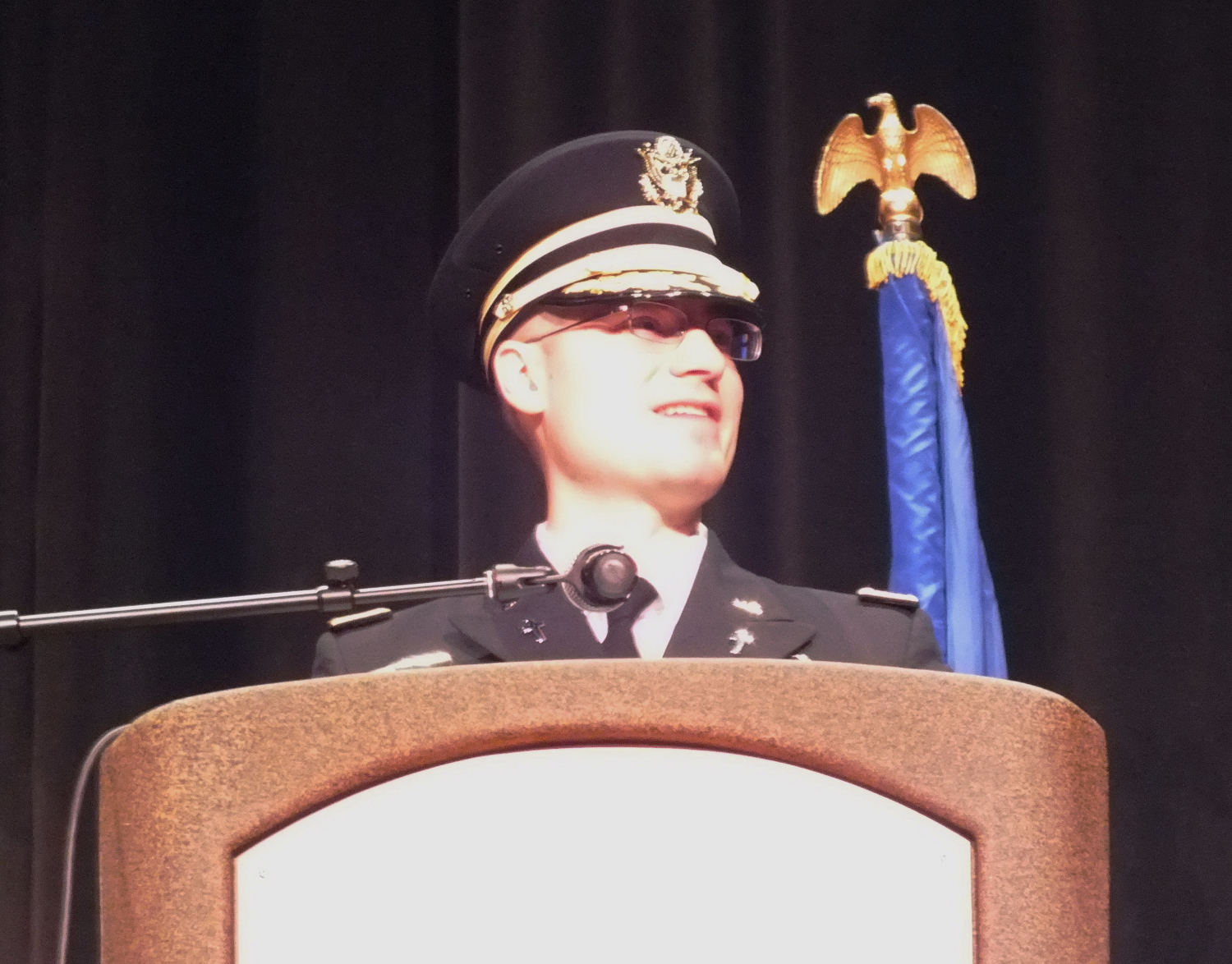
Chaplain Major Kirk Thorsteinson
Chaplain Major Kirk Thorsteinson of the Alaska Army National Guard delivers the Veterans Day address Wednesday morning. (Photo by Matt Miller/KTOO)

“The positive values of veterans were needed in the past, they are needed today, and they will be needed in our future,” said Chaplain Major Kirk Thorsteinson of the Alaska Army National Guard to those attending the Veterans Day observance.

Thorsteinson told of the many core values important to all of the service branches: honor, courage, loyalty, commitment, duty, integrity and selfless service.

“Each of the branches has core values, that when adopted benefits the service member, their unit, their family, their friends and their community. These values are lived 24 hours a day, seven days a week, and they are values that we should continue to demonstrate as we transition out of uniform,” Thorsteinson said. “Our nation celebrates us today for our service. May they also celebrate us for what we continue to offer to those around us for the rest of our lives.”

Thorsteinson told the story of Robert Norman Ross and Carlos Ray Norris, two veterans whose values and experiences in the U.S. Air Force carried over into their life outside of the service. Ross, who disliked screaming and yelling during his posting at Eielson Air Force Base, later became known as Bob Ross, the calm television painter whose mistakes always became “happy accidents.” Norris, who jumped on a live grenade and threw it back to the enemy, later became known as the martial artist Chuck Norris whose roundhouse kicks always punctuated his television and movie appearances.

Listen to Chaplain Major Kirk Thorsteinson of the Alaska Army National Guard deliver his address during Wednesday’s Veterans Day observance:

Sara Radke
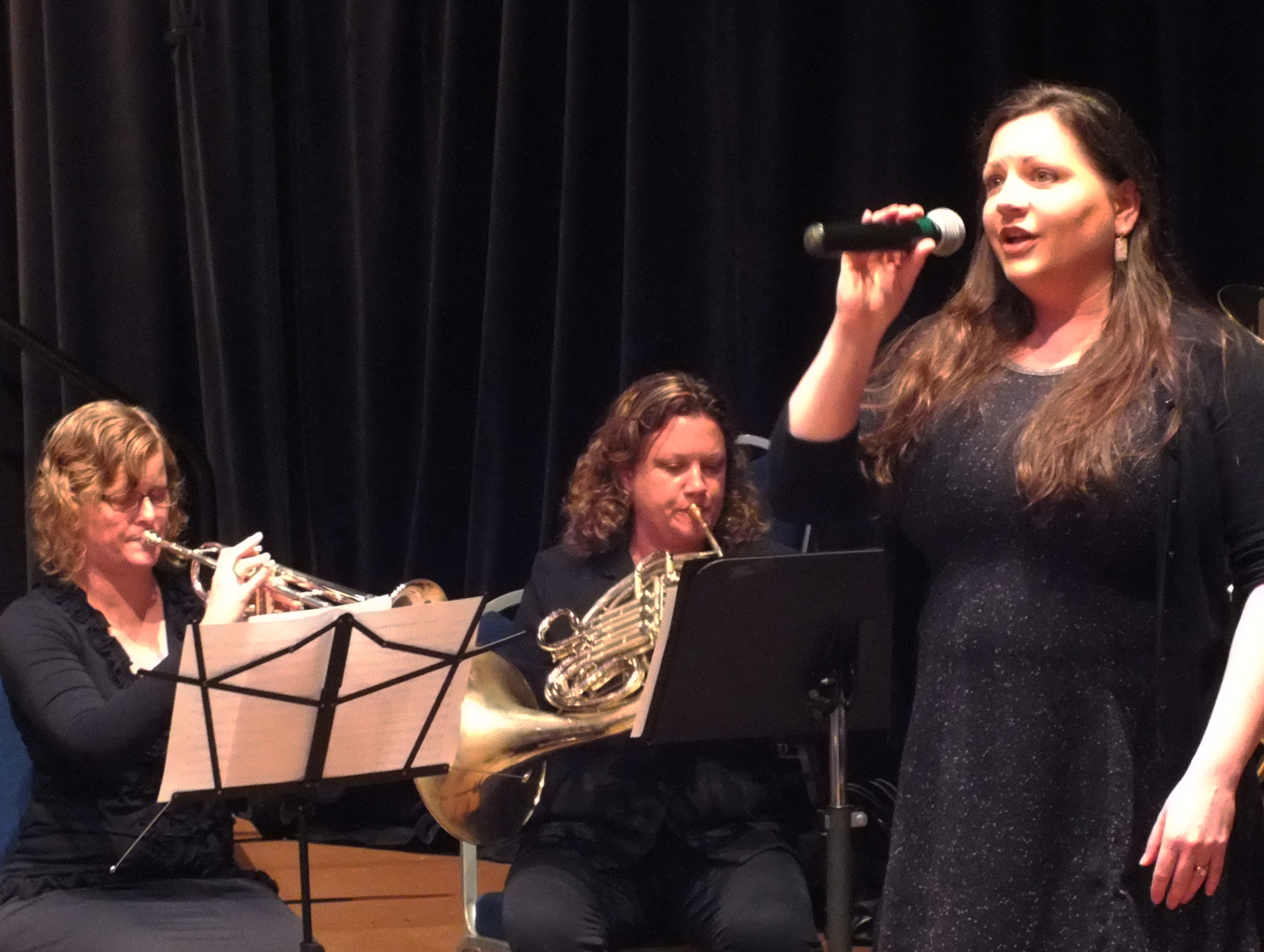
Sara Radke sings the national anthem while accompanied by Capital Brass during Wednesday’s Veterans Day observance. (Photo by Matt Miller/KTOO)

Thorsteinson also briefly described the story of four U.S. Army chaplains aboard the World War II troop ship S.S. Dorchester. The Methodist minister, rabbi, Dutch Reform minister and Catholic priest put their differences aside and jointly provided religious support and comfort to GIs aboard the ship. When the ship was torpedoed off Greenland, Thorsteinson said all four chaplains helped soldiers board life boats and gave away their life vests. The four chaplains linked arms, prayed, and sang hymns as they went down with the ship.

“The powerful testimony from the Dorchester survivors shows the power our lives and values have in the eyes of others, and that it is better to die living out our values than to live a full life devoid of them,” Thorsteinson said.

“Our shared veteran experience in values uniquely allow us to acknowledge our differences, unite together, and then find solutions.”

Capital Brass
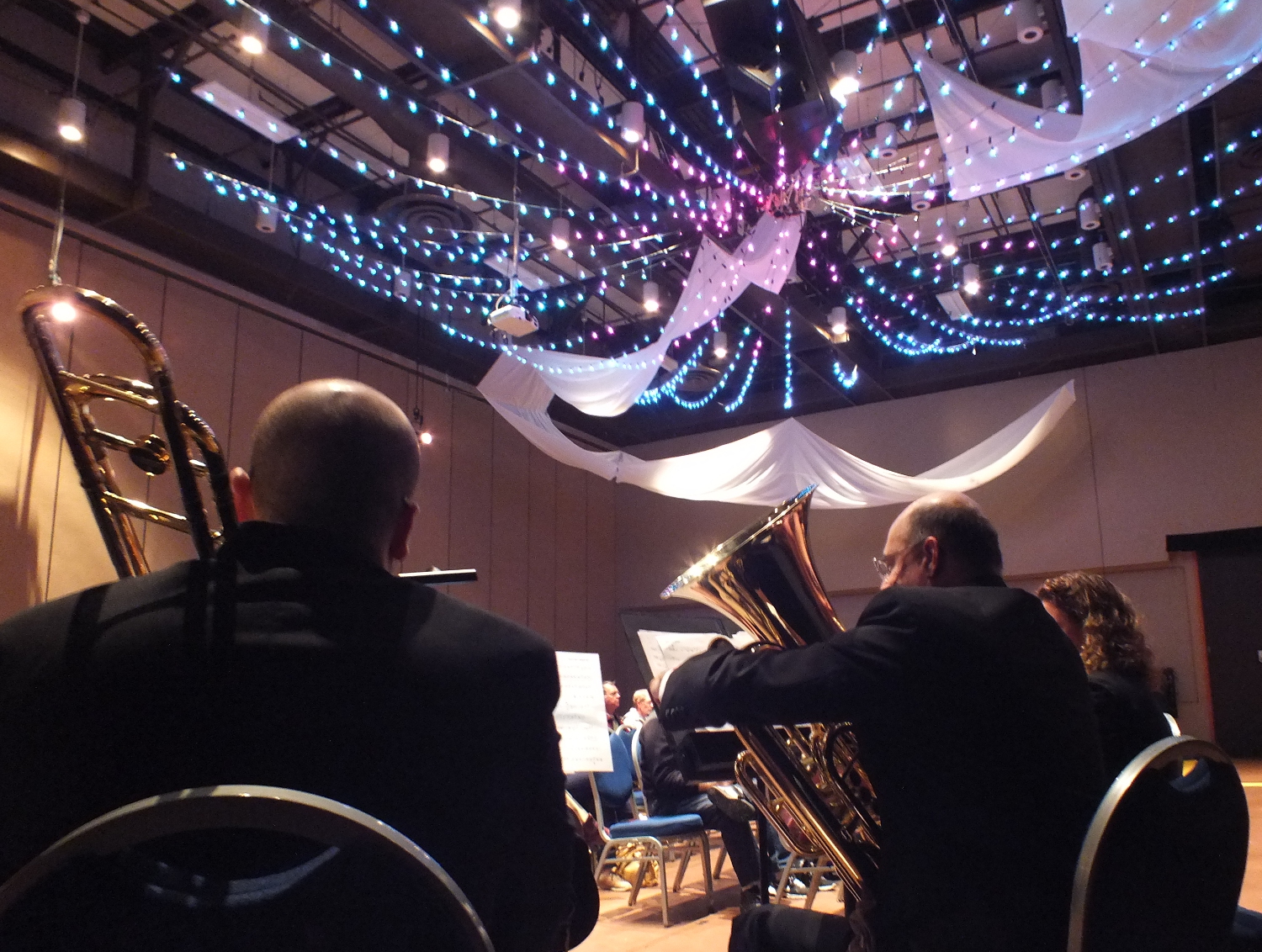
The group Capital Brass play during Wednesday’s Veterans Day observance in Centennial Hall. (Photo by Matt Miller/KTOO)

During Wednesday morning’s observance organized by the American Legion Auke Bay Post 25, Sara Radke sang the “Star Spangled Banner” while the group Capital Brass provided the musical accompaniment.

Alaska’s veterans by the numbers
By Liz Ruskin, APRN, and Zachariah Hughes, KSKA

For Veterans Day, we’ve drawn a statistical portrait of Alaska veterans using figures from the Census Bureau.

Alaska veterans earn more than vets in any other state. The median income of Alaska vets is $51,060. That’s a lot higher than the nationwide median vet income of $37,000. Also, the unemployment rate among Alaska vets is lower than among vets nationwide.

Alaska doesn’t have the most vets. Our 70,000 is a drop in the bucket compared to a big state like California or Florida. But nearly 14 percent of Alaska’s adult population has served in the military — the highest rate in the nation.

Our vets are also younger. More than half served since the first Gulf War.  Nationwide, about a quarter of the veterans are from that period.

Juneau School Board ratifies new teachers’ contract

The Juneau School Board during its regular meeting on Nov. 10, 2015. (Photo by Lisa Phu/KTOO)
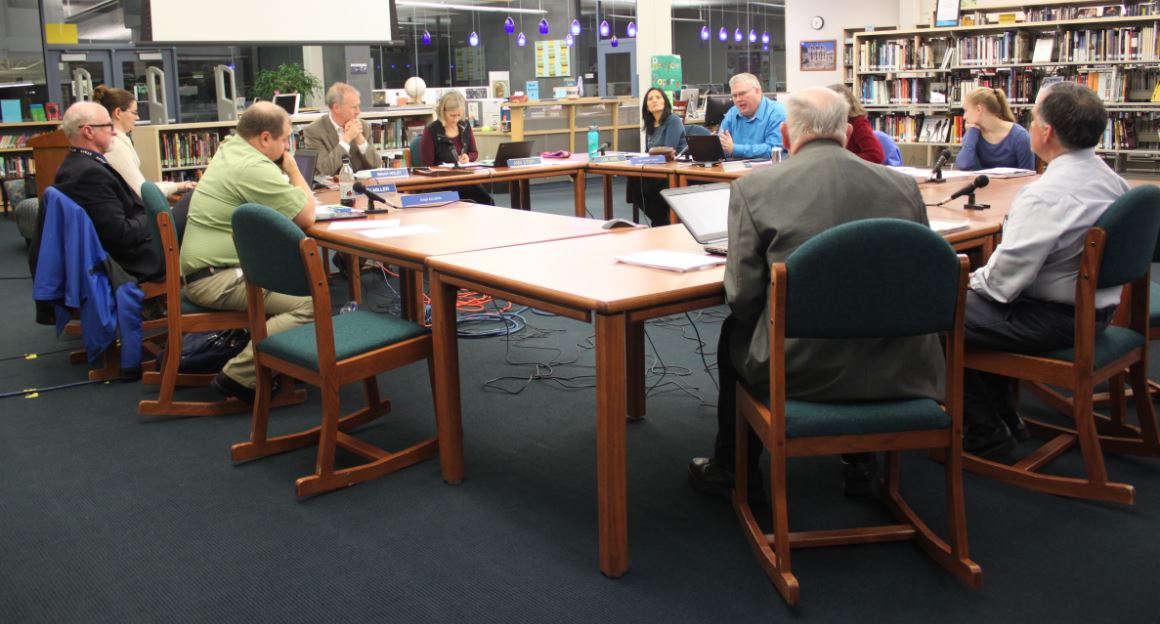
The Juneau School Board during its regular meeting Tuesday. (Photo by Lisa Phu/KTOO)

Juneau teachers are getting a 2 percent salary increase. On Tuesday night, the Juneau School Board approved the negotiated contract between the school district and the teachers’ union.

Negotiations began in January. The Juneau School District and the Juneau Education Association reached a tentative agreement in mid-October and the teachers’ union voted to approve it at the end of the month. The board approval was the final step.

The 2 percent raise includes a 1 percent permanent salary schedule increase and a 1 percent temporary increase. The negotiated agreement also includes a more competitive starting pay for specialist positions and compensating some teachers for extra meeting hours at a rate of about $33 an hour.

The estimated fiscal impact of the contract for this budget year is about $650,000. This will come out of budget savings from the general operating fund.

The Juneau School Board unanimously ratified the contract. Board vice president Andi Story said the district has an outstanding teaching staff.

“They work really hard for our kids. They’re very dedicated and we’re very grateful for them. We wouldn’t be much without them. They’re the ones who are in front of our kids each day, our most valuable resources,” Story said.

Board member Emil Mackey said he’s worried about class sizes getting bigger as budgets get smaller.

“I’m extremely concerned that we’re on a non-sustainable path that is not good for kids, is not good for the teachers, is not good for the district. And in the future negotiation, I really hope we collaborate on getting those class sizes down,” Mackey said.

Juneau Education Association President Dirk Miller said neither side got everything they wanted, but the teachers’ union is happy. He said the collaborative bargaining method worked out well.

“I guess the difference between this and other negotiations is, I brought pie to the last bargaining team meeting and we all talked and it was congenial,” Miller said. “This was a nice path and it led to a resolution of something that is important for all of us.”

For future contract negotiations, both the district and the teachers’ union want equity in teacher preparation time, which currently varies across grade levels. The district also wants to explore the possibility of a seven-period high school day, as opposed to the current six-period day, which would allow students more opportunities to earn credits toward graduation.

This is a one-year contract. It’s retroactive to July 1 and goes through June 30 of next year.

Juneau Assembly adopts marijuana zoning

medical marijuana grow operation
Flowering cannabis plants under green light in an air-conditioned, indoor hydroponic grow operation in Oakland, Calif. (Creative Commons photo by Rusty Blazenhoff)

The Juneau Assembly has established zoning for marijuana cultivation, processing and retail.

Pot entrepreneurs will be able to grow their crop in some low-density neighborhoods, outside the city’s urban service boundary. That includes parts of North Douglas, Thane and out the road.

Margo Waring, who lives on North Douglas, testified that she was concerned about the scale of commercial grow operations.

“We’re not looking at your backyard raised veggie bed. This is an indoor industrial activity,” Waring said.

Grow facilities, in the designated D1 areas, are limited to under 500 square feet or about the size of a two-car garage. Residents will be able to voice concerns with the city on a case-by-case basis if issues come up.

Assemblymember Debbie White said by establishing zoning, existing marijuana businesses can come into the light. Pot entrepreneurs will be able to apply for conditional use permits by the end of the year.

“The fact is, then we get to tax for sales,” White said. “And if you think cultivation is not already happening in residential areas, the fact is it’s already there.”

The assembly also enacted a 1,000-foot buffer for marijuana processing facilities around registered neighborhood associations in rural reserve areas.

Retailers will be able to set up shop in parts of downtown, Lemon Creek and by the Juneau airport. Also, in rural reserve areas, which is basically everything off of the road system, plus parts of North Douglas and out the road.

The state is proposing a 500-foot buffer around all schools, youth centers, and churches.

Tlingit playwright wins short play competition

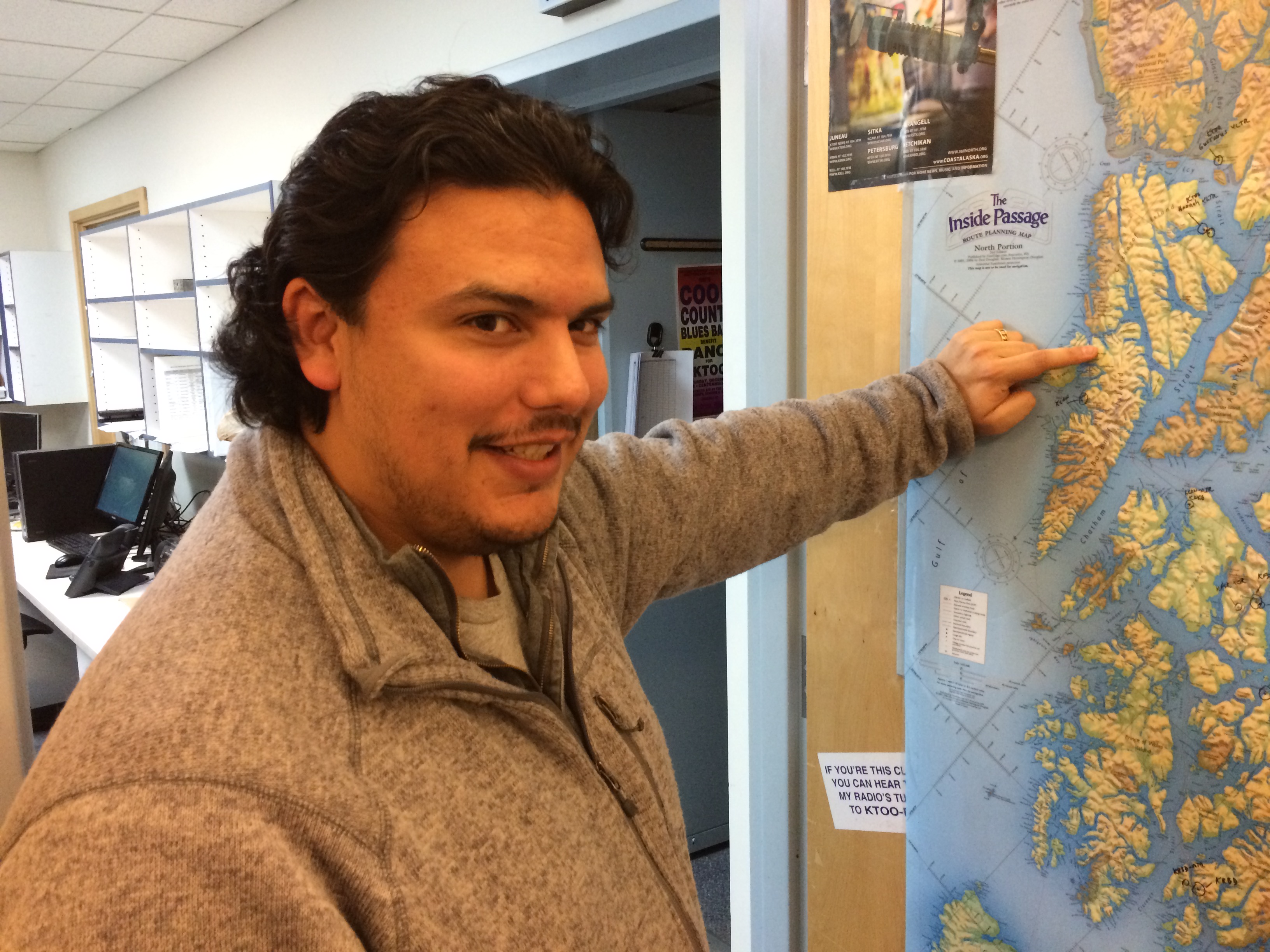
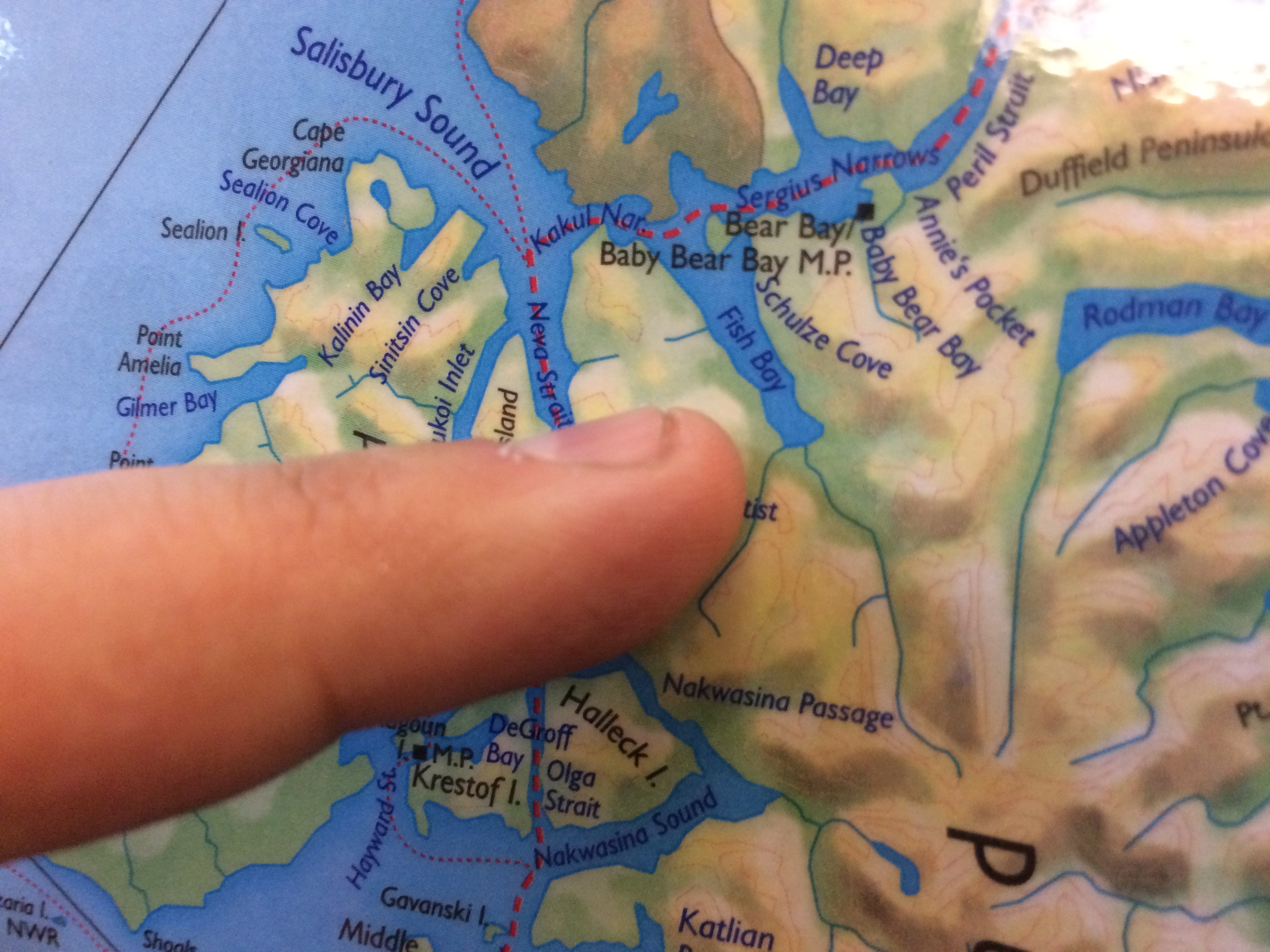
Katasse points to Fish Bay on Baranof Island where the play is set. (Photo by Scott Burton/KTOO)

Juneau theater artist Frank Henry Kaash Katasse won a short play competition Sunday. “Reeling” — a play based on Tlingit values — won Native Voices at the Autry’s Fifth Annual Short Play Competition in Los Angeles. Katasse says the play’s main characters are two female cousins who lose the uncle who raised them.

“They go and steal his urn from his memorial service and they decide they’re going to go throw the urn into the halibut hole (where) he would always take them. And so the whole play takes place on a canoe,” Katasse says.

Listen to our interview with Katasse here:

For the production, Katasse imagines the canoe on wheels with the uncle moving the cousins throughout the play. Flashbacks also help tell the story.

Katasse points to Fish Bay on Baranof Island where the play is set. (Photo by Scott Burton/KTOO)

The play was partially inspired by a story Katasse heard about some determined canoers in Kake who braved high seas to honor a family member. In this story, the cousins are honoring their uncle’s wish.

“Because that’s what he said he always wanted — to be placed there because he took so many halibut from this halibut hole,” Katasse says. He adds, “I talk a lot about balance and a lot of traditional Tlingit core values. … That’s what it all comes down to.”

As winner of the competition, Katasse received the Von Marie Atchley Excellence in Playwriting Award and a $1,000 prize. Katasse says another one of his plays — “They Don’t Talk Back” — received accolades from the same theater company in the spring and is now under negotiation for production.

Juneau Assembly stays the course on Gastineau demolition

A Seattle developer is considering renovating the historic building and turning into it subsidizerd and market-rate housing. (Photo by Elizabeth Jenkins)
The burned out Gastineau Apartments are still slated to be demolished after a developer attempted an eleventh-hour save. (Photo by Elizabeth Jenkins)

The crumbling Gastineau Apartments are still slated to be torn down. The Juneau Assembly voted 2-6 on Monday not to change course, after a Seattle developer presented an alternate plan.

Private Public Partnership LLC and local company, Coogan Alaska Construction, have entered into a last-minute purchasing agreement with Gastineau’s owner. But haven’t bought the building yet. The group originally intended to turn the building into affordable housing.

Construction attorney, Garth Schlemlein, said that plan changed after meeting with city officials and realizing their sense of urgency.

“And that’s why we have morphed away from the affordable housing and the time that would take to pull that together to a more right-of-tackle straightforward deal that we will know within 30 days what it’s going to take us to do what we’re planning,” Schlemlein said.

City engineer, Rorie Watt, said it would cost the city $50,000 to delay the demolition, which was already contracted to CBC Construction.

Schlemlein and his partners presented the assembly with an option to salvage Gastineau into a turn-key shell. After the rehab, the city could purchase the building. But several downtown business owners testified in opposition.

Colleen Goldrich, of Annie Kaill’s, said she’d experienced the negative effects being located next to an empty building.

“I just worry that we’ll end up in the same position that we’re in now with a nice looking shell that will then degrade and there will be no improvement, and the opportunities we have right now may go away,” Goldrich said.

The city budgeted $1.8 million for the project which it hopes to recoup from the owners, James Barrett and his mother.

Assemblymember Loren Jones said he was tired of the owners jerking him around.

“As far as I’m concerned, we proceed with the demolition order,” Jones said. “Whoever buys that property buys that demolition order. If we lose the $1.8 because it stays a hole in the ground, I guess that’s the price we pay.”

The city needs to send the notice to proceed to CBC construction for the demolition deal to be finalized.

Site notifications
Update notification options
Subscribe to notifications