Juneau

Utility says natural gas could lower Juneau home heating bills by 1/3

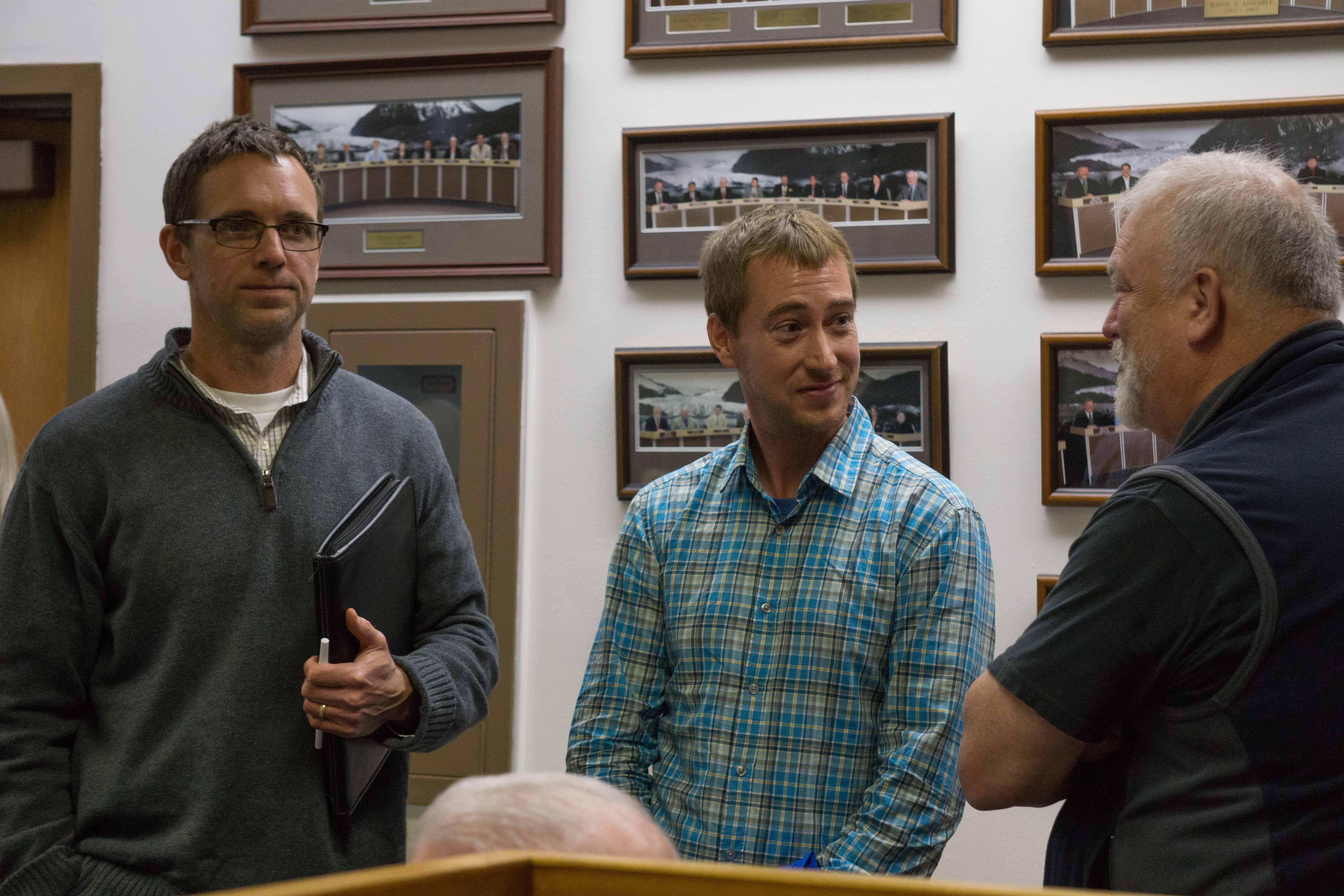
Avista's Jeff Smith, left, and AELP's Eric Eriksen, center chat with Bruce Botelho at the Juneau Assembly's Committee of the Whole meeting. (Photo by Jeremy Hsieh/KTOO)
Avista’s Jeff Smith, left, and AELP’s Eric Eriksen, center chat with Bruce Botelho at the Juneau Assembly’s Committee of the Whole meeting. (Photo by Jeremy Hsieh/KTOO)

The utility Avista says it can bring natural gas to Juneau and save home heating consumers about a third over diesel fuel, heating fuel or baseboard electric heat.

Avista senior business analyst Jeff Smith tallied up the estimated impact at a meeting Monday with the Juneau Assembly.

“Five to $15 million savings annually on heating. Indirect job creation of 60 to 180 new jobs and the job creation during the construction phase would be 90 construction jobs (in) year one, and 20 construction jobs (in) years two through 10. So pretty positive impact for Juneau.”

The Spokane-based utility’s assertions were based on home phone surveys, commercial surveys and economic studies, including a proprietary study with the McDowell Group based off of fall 2014 data.

Smith said Avista would ship liquefied natural gas up from British Columbia, and possibly build a marine facility on the back side of Douglas Island. The overall project is only at the exploratory stage right now — natural gas at home would be years out — though Ketchikan and Sitka may also be in line.

Even if today’s low energy prices hold, Smith estimated the burner tip price would still be about 15 percent cheaper in Juneau than the current market rate for comparable heating. The savings wouldn’t accrue until after a home conversion though, which Smith said costs the average homeowner about $6,000.

Juneau Assembly members seemed eager, but put the analysis through its paces with a long series of questions. Smith said it’s a unique opportunity that helps customers and the utility, which bought AEL&P last year.

“In the sense that we can add to our rate base — where let’s say, right now we look at the project at being $130 million — provide growth for the utility, while being able to actually provide savings to the consumer in terms of reduced heating cost.”

The assembly asked the city manager to draft a letter of support for Avista’s natural gas project. The letter may help the utility secure financing or energy grants from state economic development agencies to build the infrastructure.

Botelho: There’s no fixing the budget with uninformed public

Pat Race's fiscal gap graph
(Illustration courtesy Pat Race)

State officials can’t fix Alaska’s budget crisis if the public doesn’t get it, according to former Juneau Mayor Bruce Botelho.

“If the public is aware of the situation, they’re going to be in a better position to give elected officials permission to make decisions, make the hard decisions, and to make them soon,” he said. “I think we all share the view that the longer we postpone making those decisions, the fewer options we have and the more drastic the outcome.”

Botelho is one of the organizers behind Wednesday night’s forum at Centennial Hall on the budget crisis. Without dramatic changes, the state is forecast to run at a $3.5 billion annual operating deficit for the foreseeable future.

The program begins at 6 p.m. with the governor’s budget director Pat Pitney, who will explain the state budget and the financial circumstances.

She’ll be followed by a panel of four finance and economics experts: Jim Calvin of the McDowell Group, natural gas pipeline expert Larry Persily, economist Gregg Erickson and Anchorage finance consultant Brad Keithley.

“This event is not designed to come to any specific resolution, in terms of, ‘Here’s the package that’s going to solve the day,’” Botelho said. “And in fact, our speakers reflect I think a range of political perspectives, some who believe government needs to be drastically reduced and reengineered, others who believe that while some cuts should take place, our focus needs to be on generating revenue through broad-based taxes.”

Pat Race's Fiscal Future info
(Illustration courtesy Pat Race)

A community panel will ask the experts questions, and then Juneau’s legislative delegation will discuss what Botelho calls “the art of the possible.”

Organizer Pat Race also encourages attendees to play with the state’s interactive finance modeling tool. He said it’s helped him put the scale of the budget crisis and possible fixes in perspective.

“To sit down and look at, like, ‘Oh, that’s actually going to not change anything by implementing that,’” he said. “Or, ‘Wow that has a huge effect!’ to fiddle with the settings and increase different taxes, or what not.”

Administration officials will walk attendees through the model and in a separate room starting at 5:15 p.m.

Race described himself as a political satirist who accidentally learned about government along the way. His pitch for who should attend?

“Anyone who wants to stick around Alaska, might want to have an idea of what it’s going to look like in 5, 10 years, and be a part of that conversation,” he said.

The organizers were speaking on “A Juneau Afternoon” on Monday.

You can listen to the entire interview from Monday’s A Juneau Afternoon here.

You can see past coverage of the governor’s related conference on Building a Sustainable Future at 360north.org.

Juneau School Board candidates split on STEM charter school

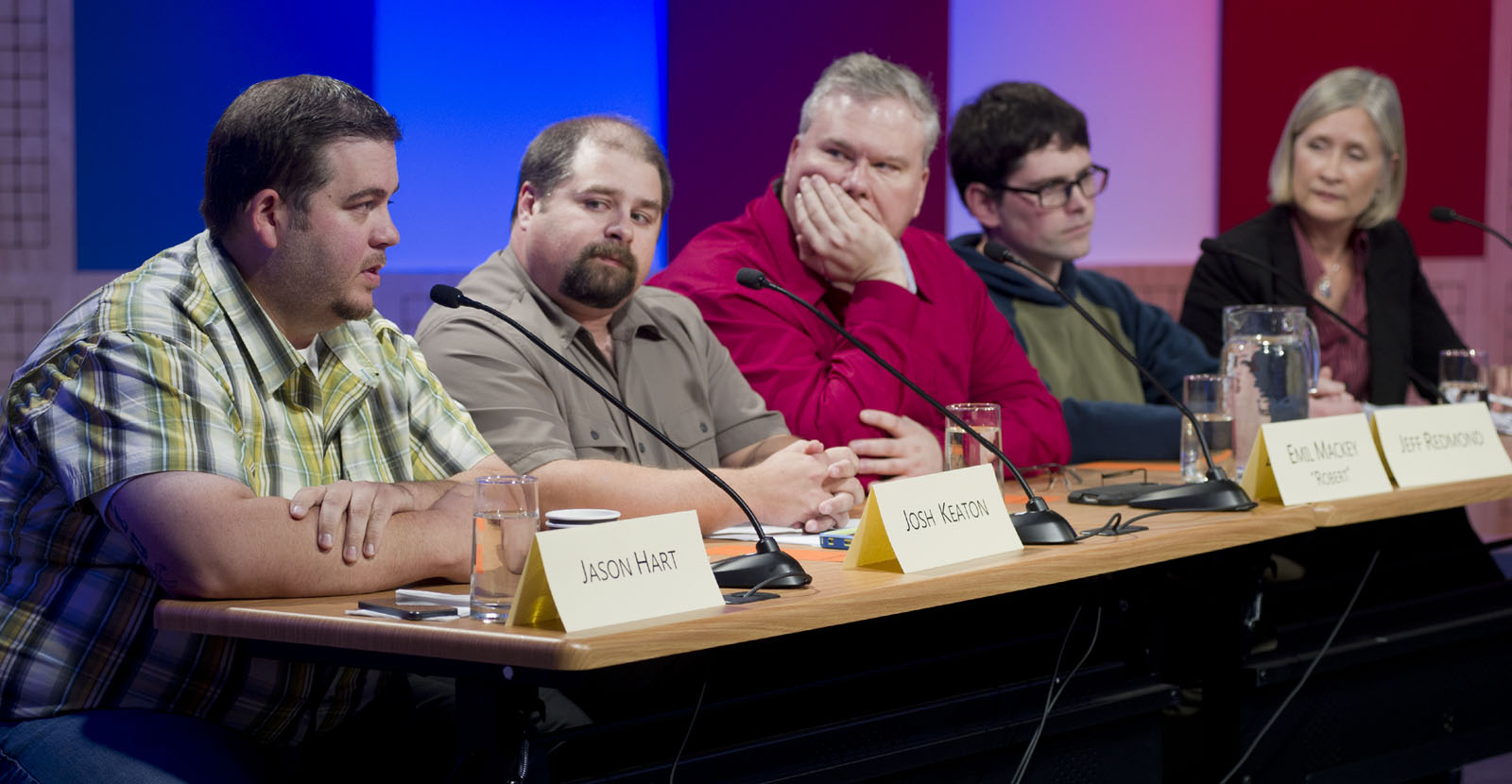
Juneau District School Board candidates answer questions from KTOO's reporter Lisa Phu and the Juneau Empire's managing editor Charles Westmoreland during a Juneau Votes! debate at the @360 Studio on Monday. The candidates from left are: Jason Hart, Josh Keaton, Emil Mackey, Jeff Redmond and Andi Story.
Juneau School Board candidates answer questions during a Juneau Votes debate @360 on Monday. The candidates from left are: Jason Hart, Josh Keaton, Emil “Robert” Mackey, Jeff Redmond and Andi Story. (Photo by Michael Penn/Juneau Empire)

Listen: School Board Candidate Debate
7 p.m. Thursday, Oct. 1
KTOO-FM 104.3

Attend: Juneau Assembly Candidate Debate
5:30 p.m. Tuesday, Sept. 29
Egan Lecture Hall, University of Alaska Southeast

At Monday’s Juneau School Board debate, candidates expressed their opinions on everything from a STEM charter school to a Tlingit immersion program and Planned Parenthood.

Voters get three picks on the Oct. 6 ballot for Juneau School Board but five candidates expressed why they’d make the best fit.

One of the topics that divided the panel with one undecided was the proposed Summit STEM Charter School. It focuses on science, technology, engineering and math based curriculum. Josh Keaton, a NOAA fishery biologist, was reluctant to back it.

“I personally feel that STEM should be involved in all schools,” Keaton said. “So whether another charter school is needed and the financial drain that might happen, I’m not decided at this point in time.”

Emil “Robert” Mackey said he wasn’t a fan of charter schools and proposed an alternative. Mackey pointed out Juneau-Douglas High School isn’t at full capacity.

“If we could, though, create an enhanced curriculum at that high school and attract students that then would opt in to that alternative curriculum using a magnet model, I think that would be a lot better than using a charter school model,” Mackey said.

But Jeff Redmond said he supported it and wondered how it might be good for schools overall.

Juneau District School Board candidates answer questions from KTOO's reporter Lisa Phu and the Juneau Empire's managing editor Charles Westmoreland during a Juneau Votes! debate at the @360 Studio on Monday. The candidates from left are: Jason Hart, Josh Keaton, Emil Mackey, Jeff Redmond and Andi Story.
Juneau School Board candidates. (Photo by Michael Penn/Juneau Empire)

“The data that we can collect from the these alternatives could be useful to bring back to the main curriculum,” Redmond said.

As for the rest of the candidates, incumbent Andi Story said no on the charter school while candidate Jason Hart said  yes.

But when Story was asked during the Q&A if she would support a K-12 Tlingit language immersion school, she said yeah. “Very much.”

“It’s something we owe the first people of where we live in this place. … What I’d want to do is work with our partners who really want that. And see how can they see that happening,” Story said.

Hart, on the other hand, said no.

“I think having that be a class that can collaborate with UAS would probably be the best way to go about it. In reality, I don’t see how we could have a school that’s taught that way,” Hart said.

 The other candidates echoed the same sentiment, wondering if a Tlingit immersion preschool was more feasible. But for 20-year old David Russell-Jensen who asked the question, it wasn’t enough.

“If you look at the Hawaiian model for their immersion schools in Hawaii, they teach every single concept in Hawaiian,” Russel-Jensen said. “I mean, sure you might have to make up new words for some concepts. But it’s entirely possible. It’s a living language, it’s dynamic.”

There was one topic all the candidates agreed on, however. Planned Parenthood should have a presence in the schools.

The debate was organized by Juneau Votes, KTOO and the Juneau Empire.

Assembly ambivalent about Gastineau Apartments redevelopment pitch

Bauer Clifton - Gastineau Apartments redevelopment concept art
Bauer/Clifton Interior Design concept art for a redeveloped Gastineau Apartments.

Bauer/Clifton Interior Design has big ideas for redeveloping downtown Juneau’s biggest eyesore, the burnt out Gastineau Apartments.

“It would include a small, contemporary boutique hotel, high-rise condominiums, long-term apartment rentals, a restaurant and lounge as well as other amenities that would be a part of the hotel and made available to the residents of the condominiums,” said Jason Clifton. “And lastly, a parking garage or parking facility.”

Clifton, partner Jeremy Bauer, and a California real estate developer on the phone were pitching a public-private partnership with the city to the Juneau Assembly on Monday.

There were a lot of moving parts in that pitch: property tax breaks, hotel tax breaks, building new public parking spaces as an in-kind repayment for the city’s demolition costs and more. And a possible legal problem the city attorney flagged. That made members of the assembly ambivalent about jumping in.

Assemblyman Jerry Nankervis said he loved the idea. But, “There are so many variables out there right now that are so variable — I have some concerns about this. And it’s not about necessarily your project, it’s about how it’s gonna happen with us.”

The assembly was noncommittal, and asked city staff to continue exploring the proposal and negotiations as a way to recoup its demolition expenses.

Weather service issues flood watch, warns of mudslide risk

The National Weather Service has issued a flood watch for Juneau and northern Admiralty Island.

“This is a wet one,” said weather forecaster Kimberly Vaughan.

The service is forecasting up to 6 inches of rain by late Tuesday night, which could cause rapid rises on rivers and streams. With saturated soil and high winds in some areas, there is also risk of mudslides.

“This weather is coming in from the Pacific, and it’s drifting in from the west Gulf of Alaska. And we’ve got these pulses that are going through today, and then the main system is still out in the west gulf right now,” Vaughn said.


Communities affected include Skagway, Haines, Gustavus, Hoonah, Elfin Cove, Pelican, Sitka, Port Alexander and Angoon.

The watch is in effect through late Tuesday night.

Fourth annual Capital Brewfest sells out despite rain

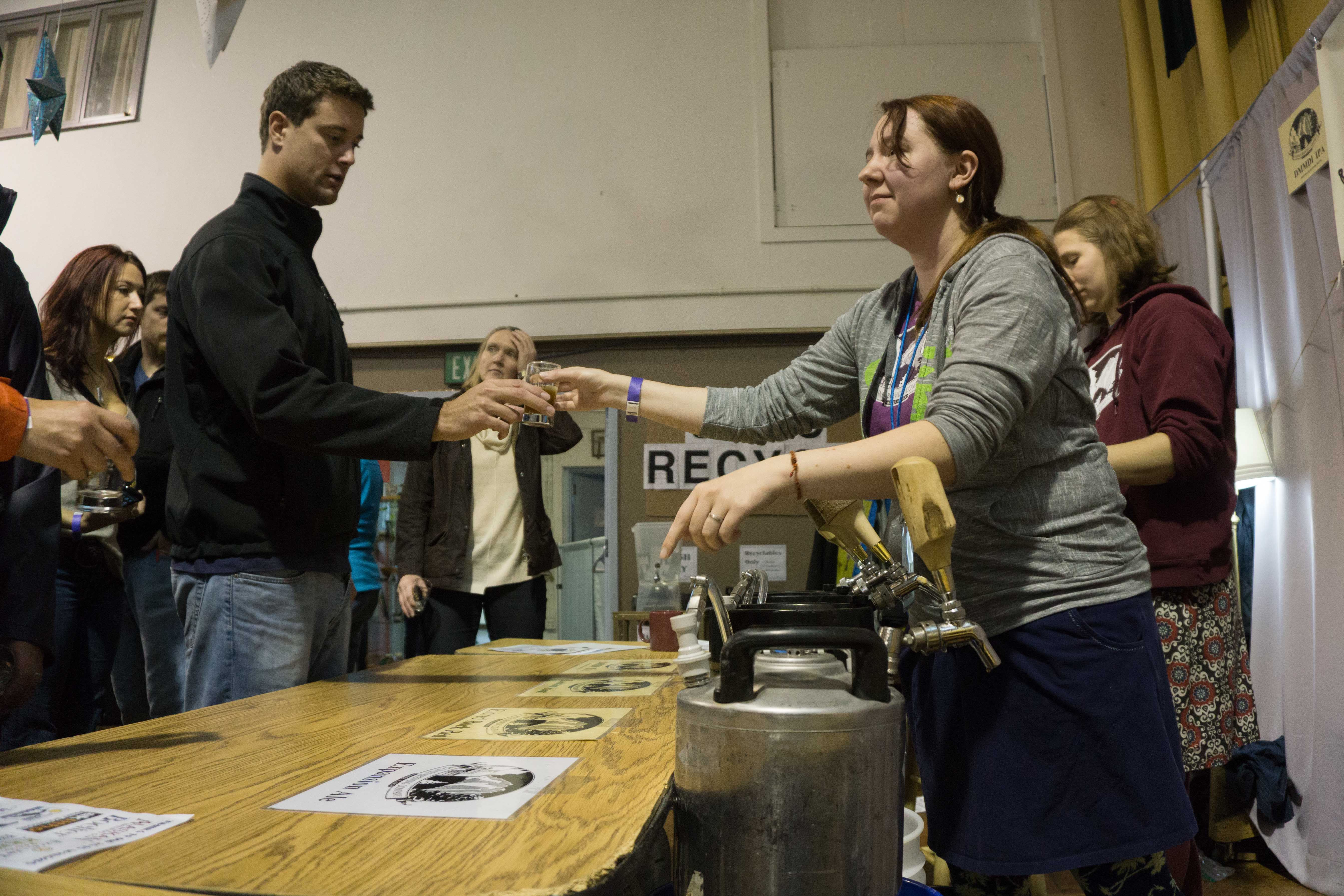
Tasting glasses for Capital Brewfest 2015.(Photo by Jeremy Hsieh/KTOO)

Juneau Rotary held its fourth annual Capital Brewfest on Saturday. The annual event showcases dozens of specialty and craft beers from around the state and beyond.

This year, it’s estimated it will raise about $25,000 after expenses for the club and its charity partner United Way.

Take a listen to this audio postcard from the event.

Ann Metcalfe headed up Juneau Rotary‘s Brewfest organizing committee. She said all 900 tickets sold out this year.

“You know, people were really anxious and hungry to have a beerfest here, so it sells out every year. We sold out this year on Wednesday before the event,” she said.

Metcalfe was eager to try Alaskan Brewing Company’s new pilot series coffee brown ale.

“And HooDoo has a nice Kolsch, um gosh, and the Homer folks, I’m hoping to get a little taste of that because we can’t get it down here. They have beautiful ales,” she said.

The Haines Brewing Company booth at Capital Brewfest 2015. (Photo by Jeremy Hsieh/KTOO)

Sean McLaughlin is part of Alaskan’s brew crew. He explained what went into the new coffee brown.

“A pilot series, it’s a chance for us to showcase some unique beers, something special, something different. They’re a little more involved, a little more special ingredients. In this case it’s the special coffee extract cold press from Heritage Coffee,” McLaughlin said.

“We teamed up with Heritage Coffee, our local coffee roaster here in town, it was a kind of collaboration brew with them. We wanted to showcase two different styles. We’re using a English brown ale along with a Brazilian coffee. So it’s just a traditional based English brown, it’s about 7 percent alcohol, but infused with Brazilian cold coffee pressed extract. … And then we added that to the brew. We also took some of our malts, and we ran them through their coffee roaster, so we were able to pick up some of the oils and characteristics of the coffee roaster onto the malts, and then we ground them and used that into the brew.”

Morgan Peterson-Park
Morgan Petersen-Park shows off the hands-free utility of her umbrella hat. (Photo by Jeremy Hsieh/KTOO)

Morgan Petersen-Park stood out among the attendees.

“Well, an umbrella hat is actually a umbrella you wear on your head instead of holding it in your hand, so your hands are free, one, to eat, and two, mostly to drink beer,” she said. “Yeah, and honestly, for Brewfest, it is necessary. Especially when you have two glasses and only two hands. How do you deal if you have an umbrella? Well, you have an umbrella hat.”

Editor’s note: KTOO is a sponsor of Capital Brewfest. 

Site notifications
Update notification options
Subscribe to notifications