The Juneau Police Department says it’s the sixth heroin-related death this year. James Robert Hanson, 48, was discovered by his brother in the family home. In a news release, the police department said it appears Hanson overdosed while the family was in another room.
Juneau police typically don’t release information about in-home, unsuspicious deaths, but Hanson’s mother gave specific permission. She was distressed over the large number of heroin deaths in the capital city.
The family believes Hanson relapsed. The police department is continuing to investigate the death and has requested an autopsy by the State Medical Examiner.
The new Capital Transit routes add service to Riverside Drive, but reduce service elsewhere.
They come after more than two years of study and back-and-forth with bus drivers since a city commissioned transit plan was completed in 2013. The Juneau Assembly had mandated both the new service and budget trimming.
New schedule pamphlets and online resources are expected to be ready toward the end of the month.
(Graphic by Jeremy Hsieh/KTOO. Creative Commons photo by Matt Biddulph)
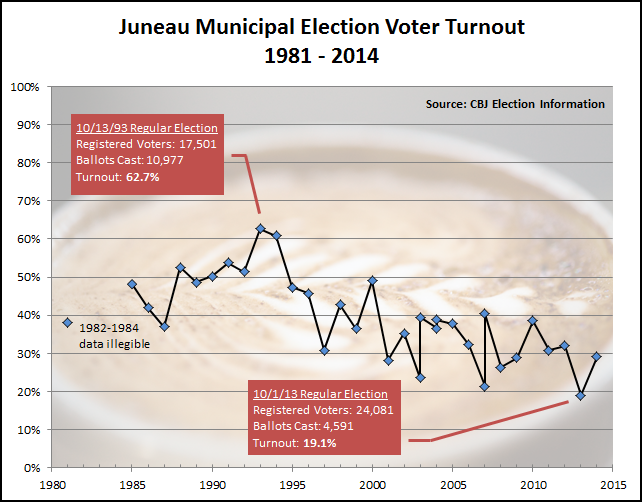
The better the turnout in Tuesday’s municipal elections, the cheaper the coffee on Wednesday.
Coppa, GonZo and The Rookery have promised to peg coffee discounts on Wednesday to Tuesday’s voter turnout percentages.
The discount at GonZo will correspond to the turnout at the Lynn Canal and Auke Bay precincts. Discounts at Coppa and The Rookery will correspond to the two precincts covering downtown Juneau, West Juneau and Thane Road.
In Auke Bay and Lynn Canal, that’s about 1 percent off per 30 votes. Downtown, it’s about 50 votes per point.
Early voting ends Monday. Regular polls are open Tuesday from 7 a.m. to 8 p.m.
For live election night coverage, tune into KTOO at 8 p.m. or visit our election guide.
Editor’s note: An earlier version of this story misstated that the discount at GonZo will correspond to downtown precincts voter turnout. The downtown precinct discount applies to Coppa and The Rookery.
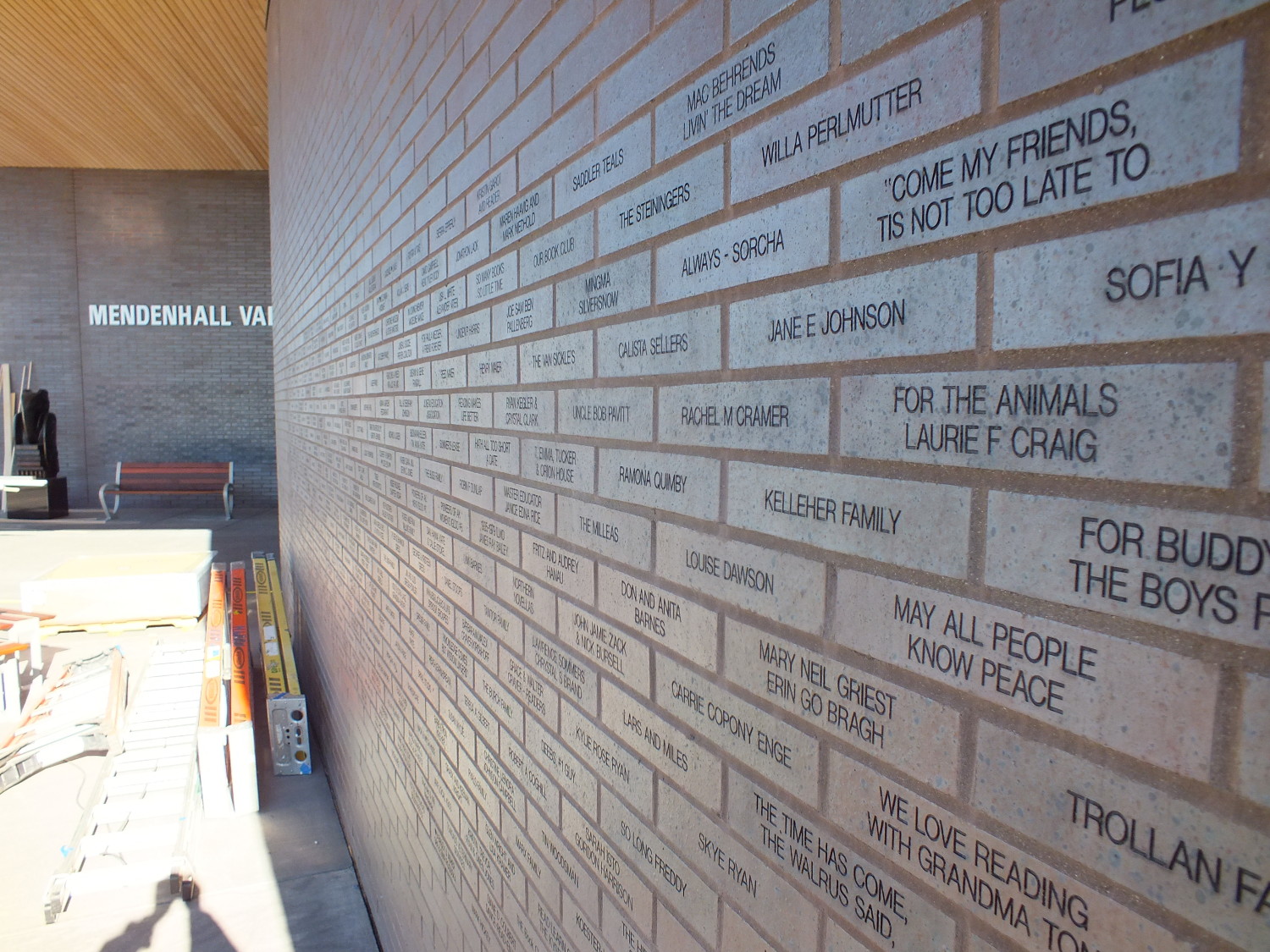
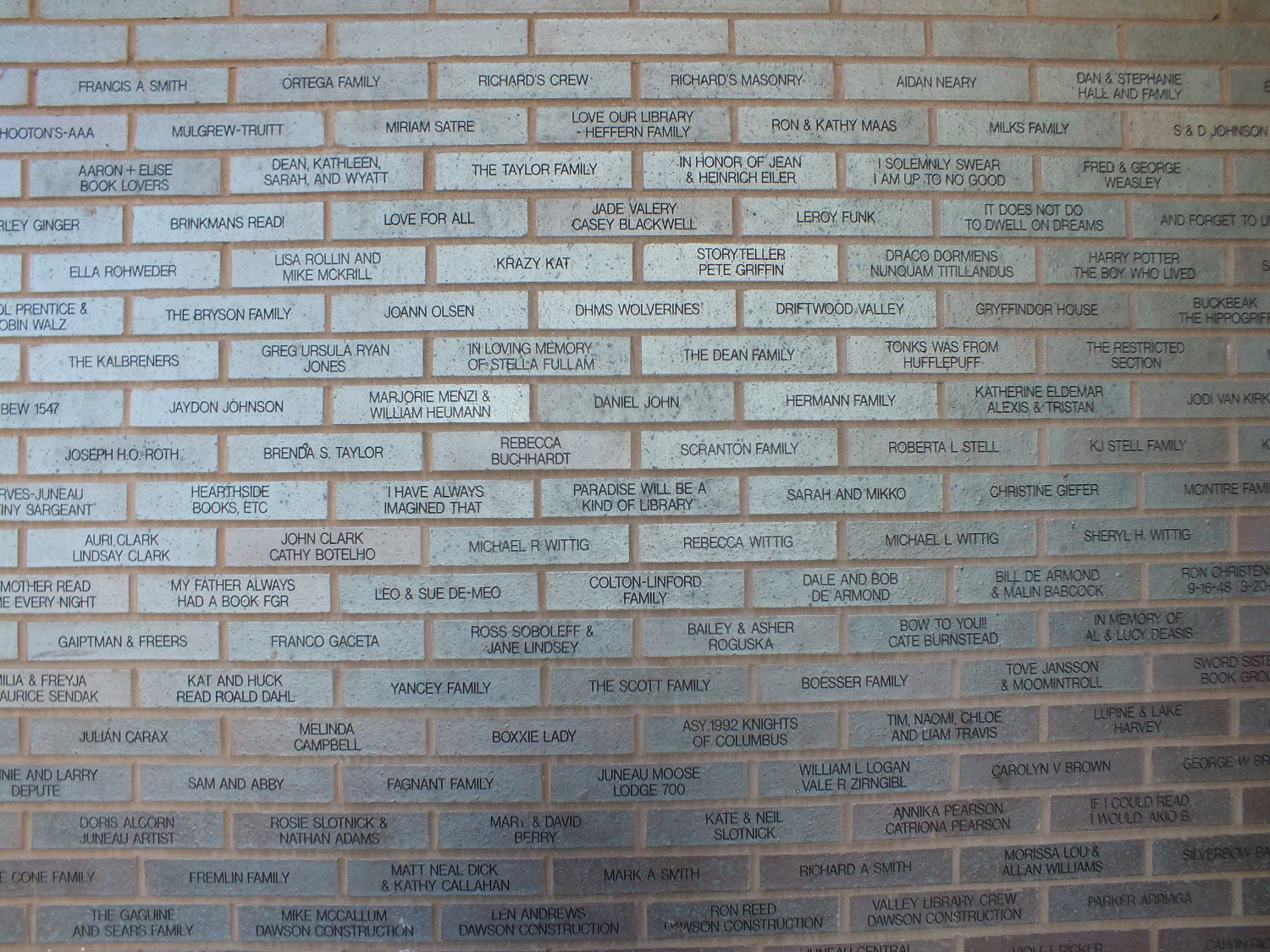
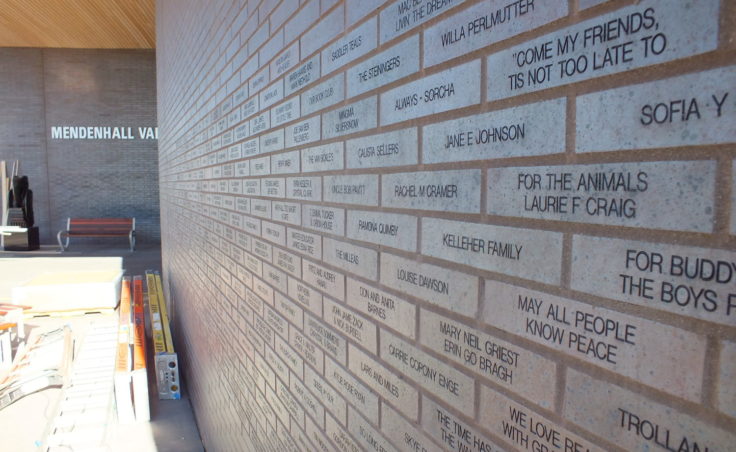
The names of donors to the new Mendenhall Valley Public Library are engraved on bricks. (Photo by Matt Miller/KTOO)
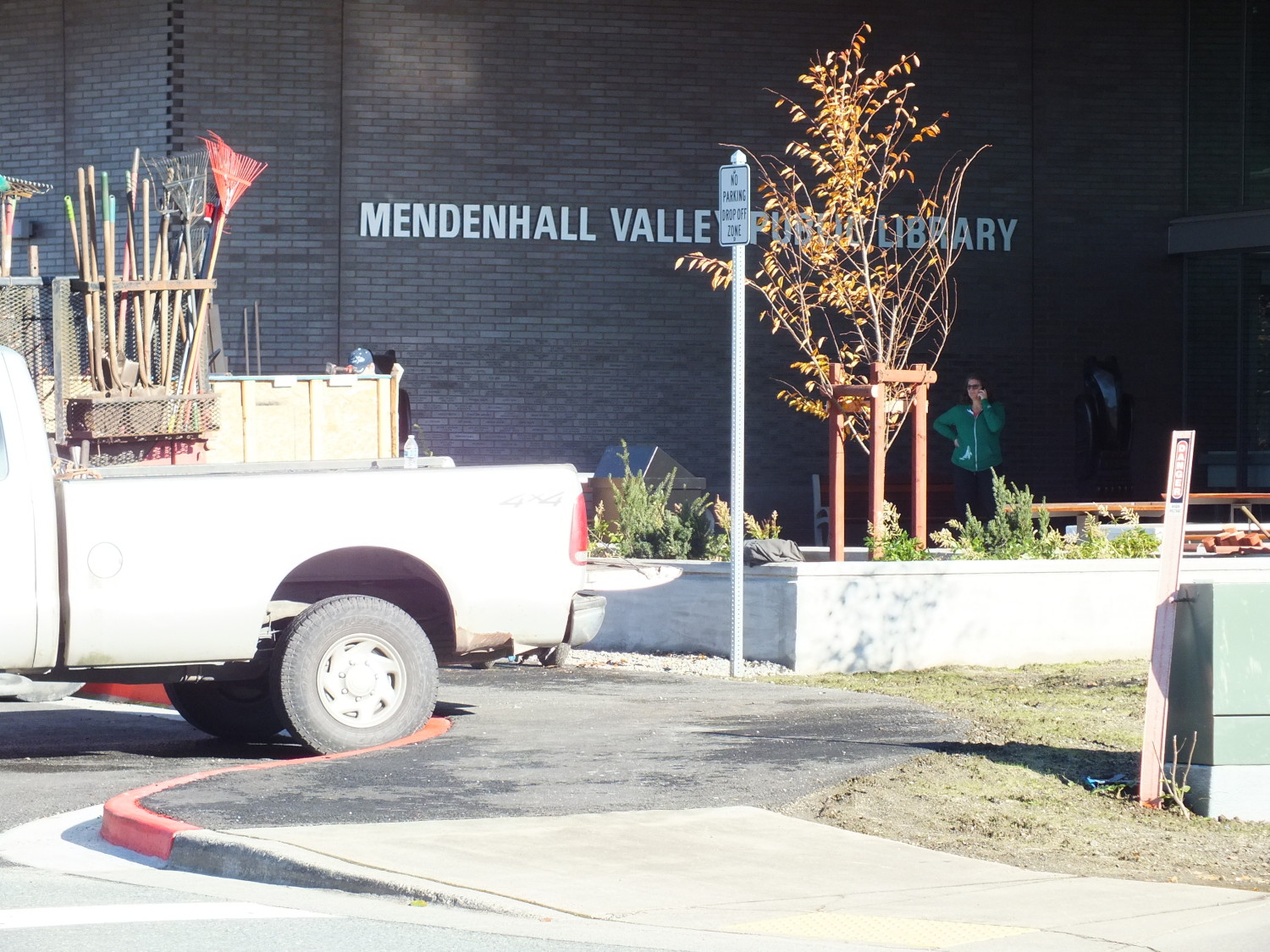
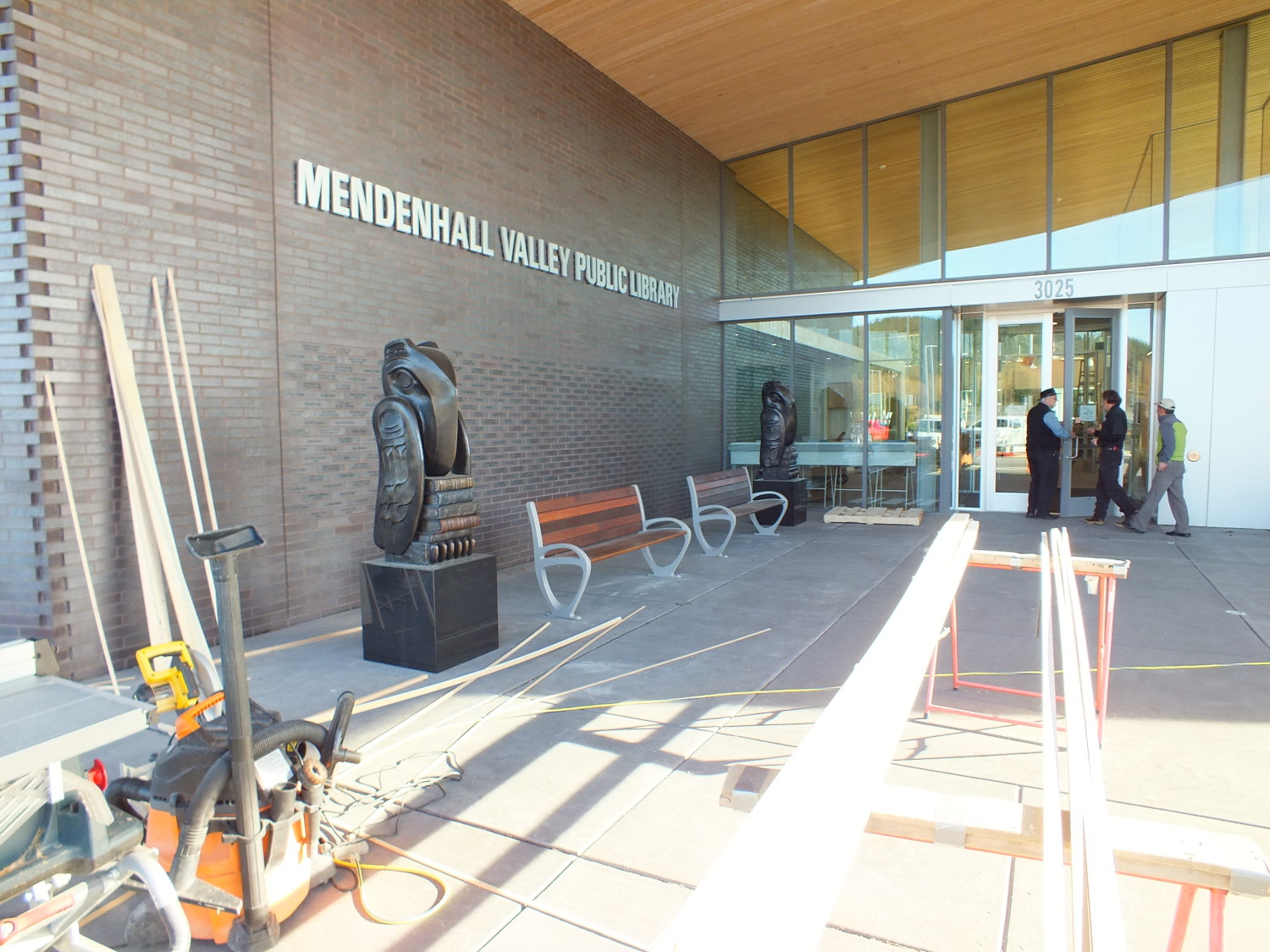
The entry to the new Mendenhall Valley Public Library. (Photo by Matt Miller/KTOO)
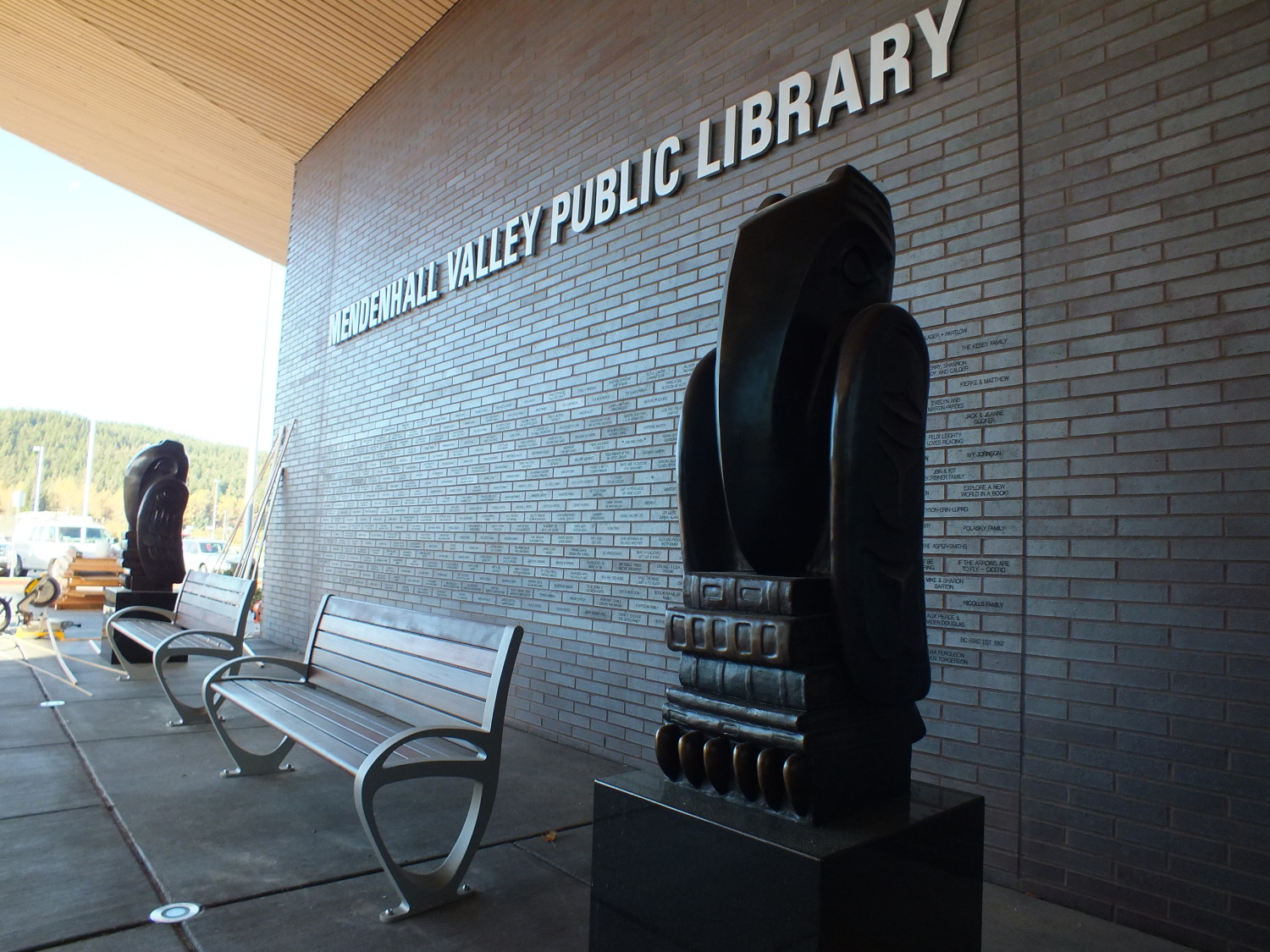
The new Mendenhall Valley Public Library. (Photo by Matt Miller/KTOO)
The names of donors to the new Mendenhall Valley Public Library are engraved on bricks. (Photo by Matt Miller/KTOO)
The new Mendenhall Valley Public Library. (Photo by Matt Miller/KTOO)
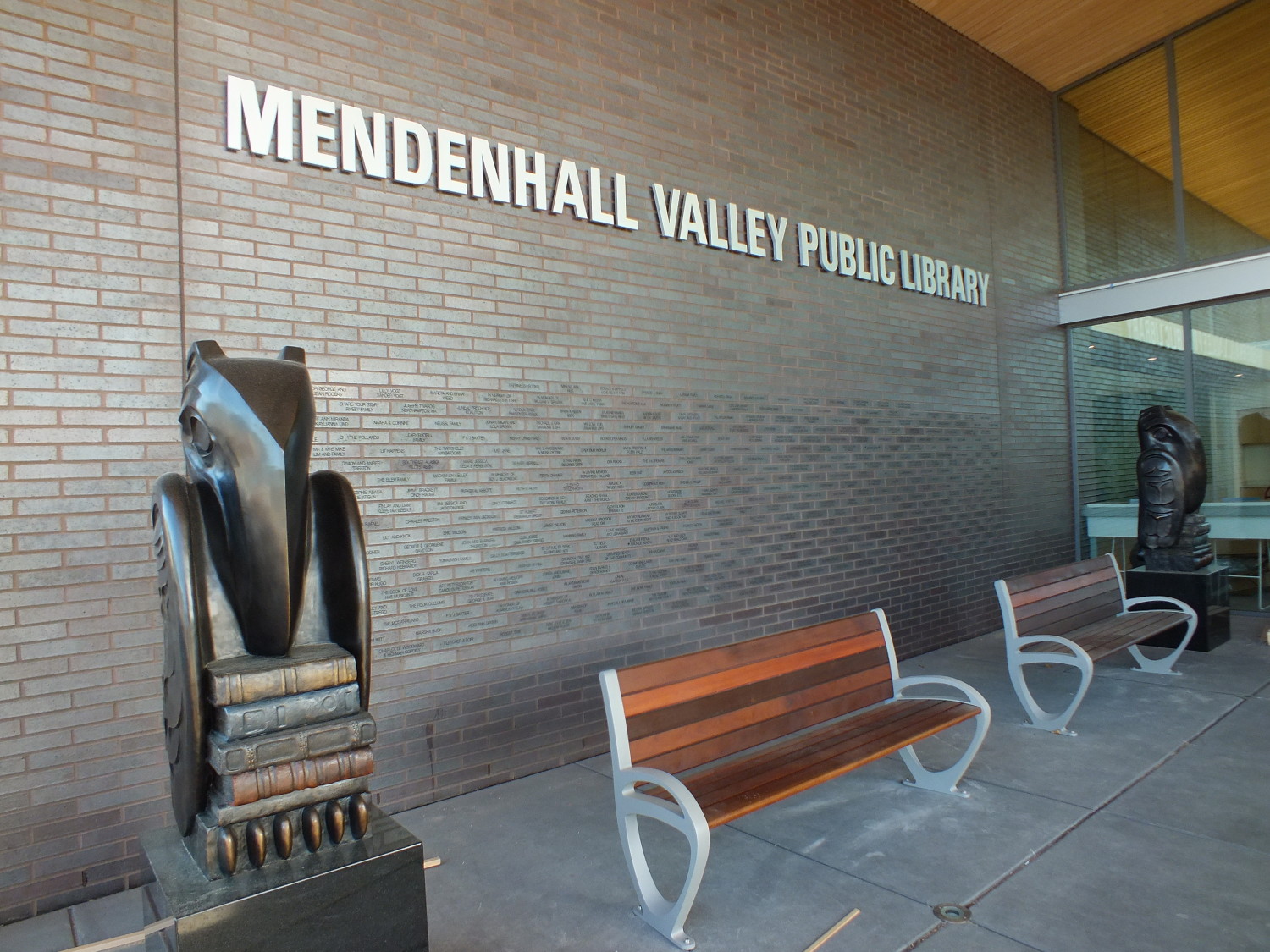
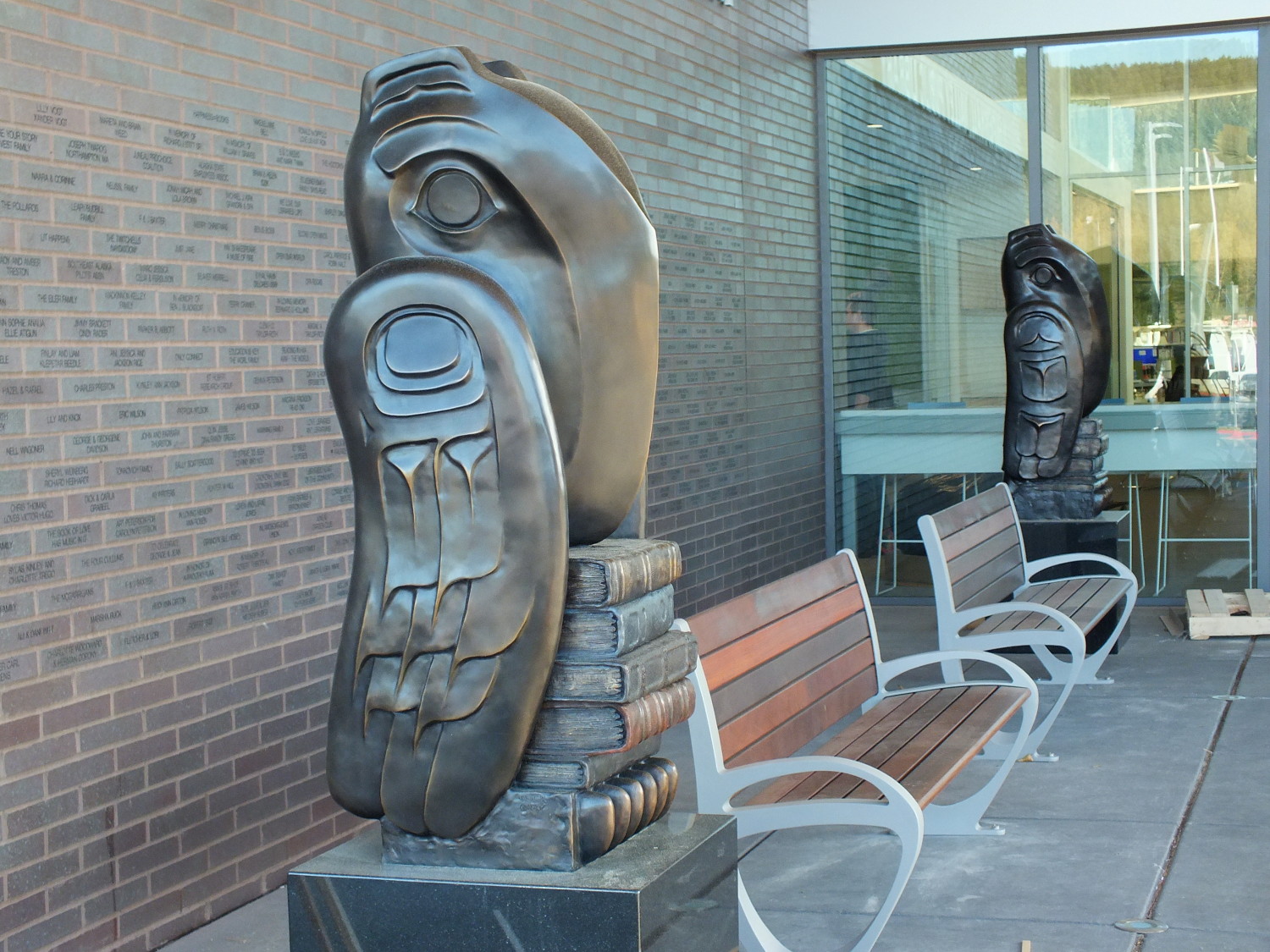
The main entry features bronze sculptures by Dan DeRoux. (Photo by Matt Miller/KTOO)
The main entry features bronze sculptures of Eagle and Raven bibliophiles by Dan DeRoux. (Photo by Matt Miller/KTOO)
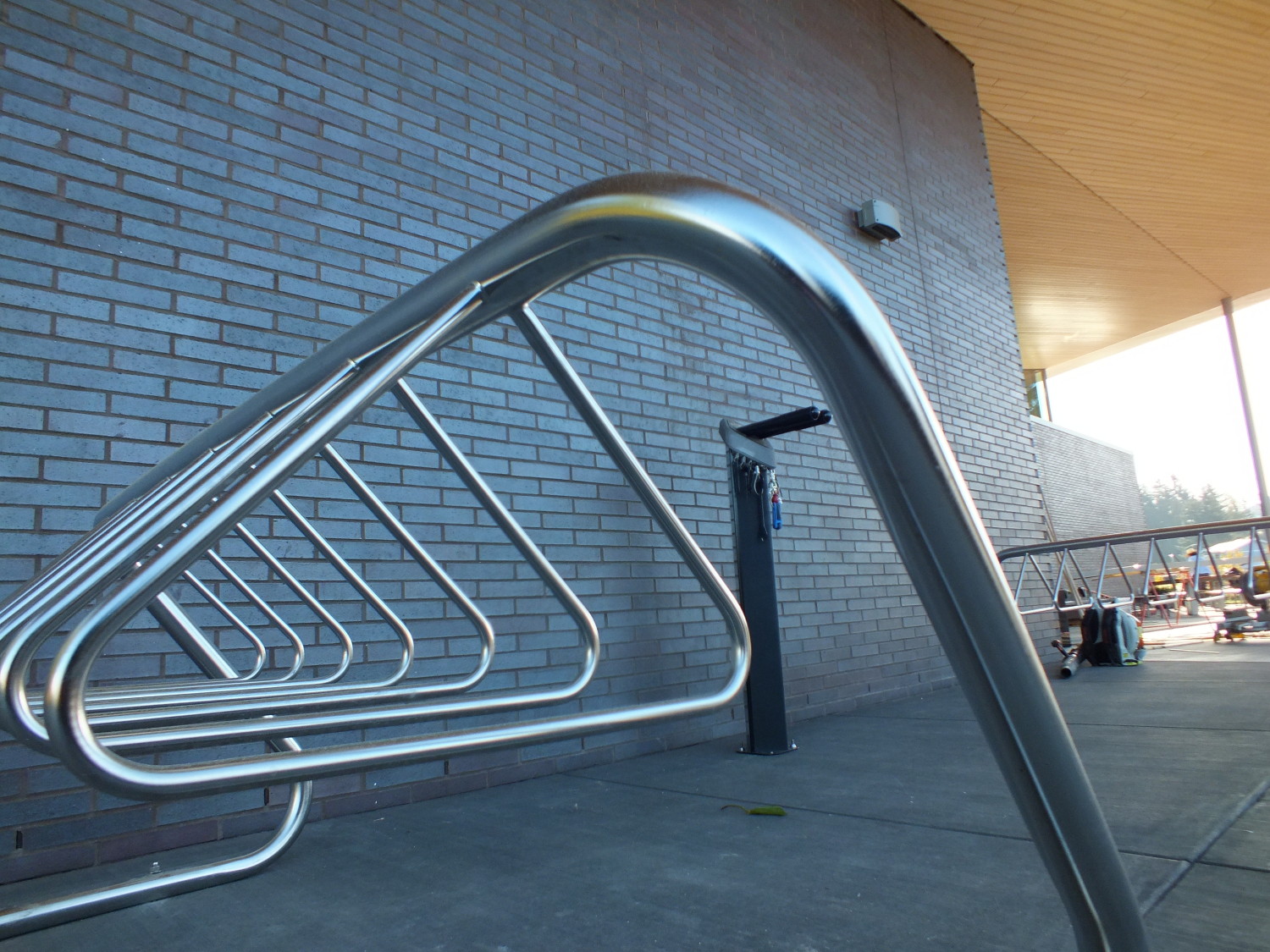
Bike rack and repair station at the new Mendenhall Valley Public Library. (Photo by Matt Miller/KTOO)
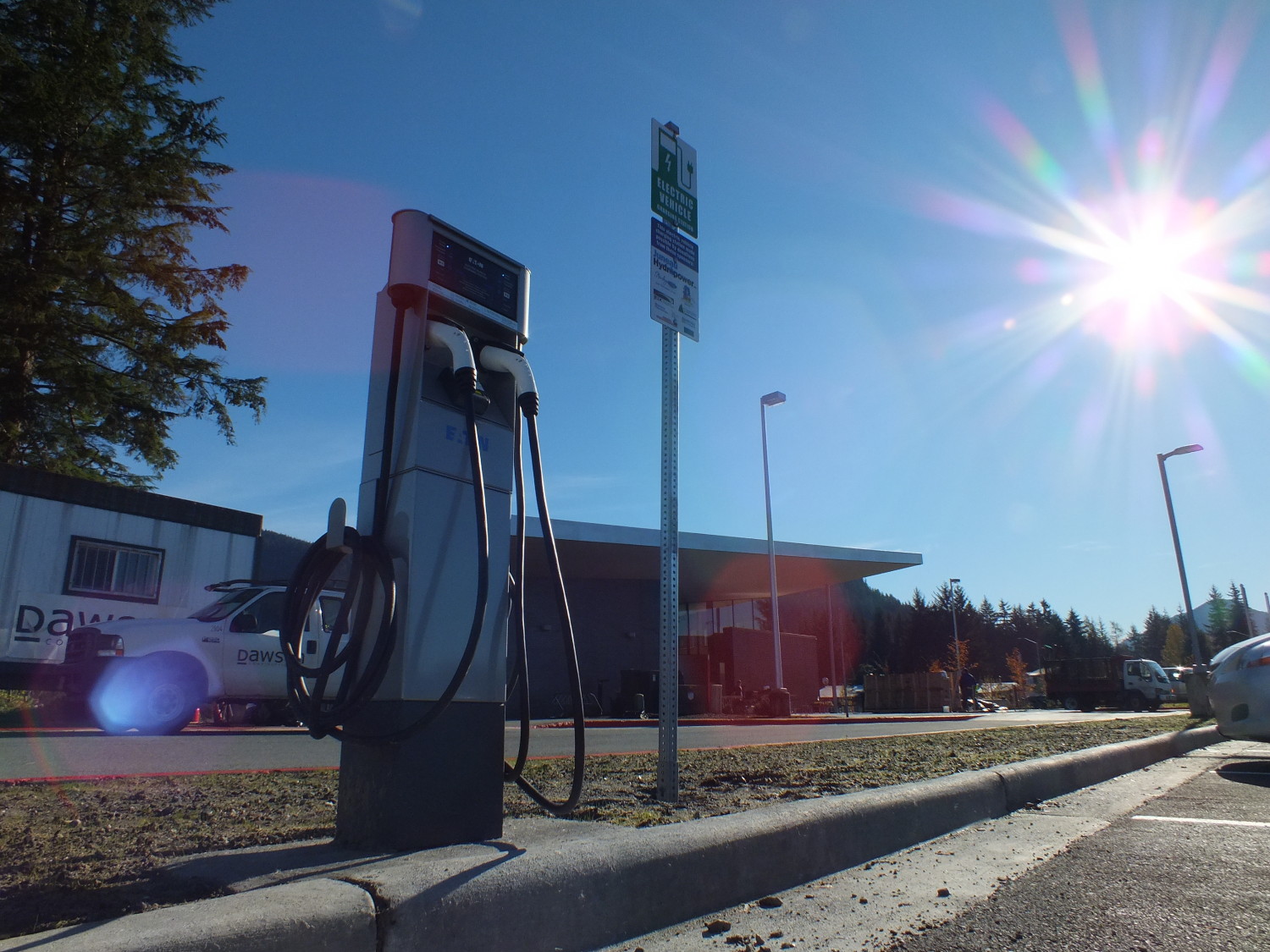
An electric vehicle charging station at the new Mendenhall Valley Public Library. (Photo by Matt Miller/KTOO)
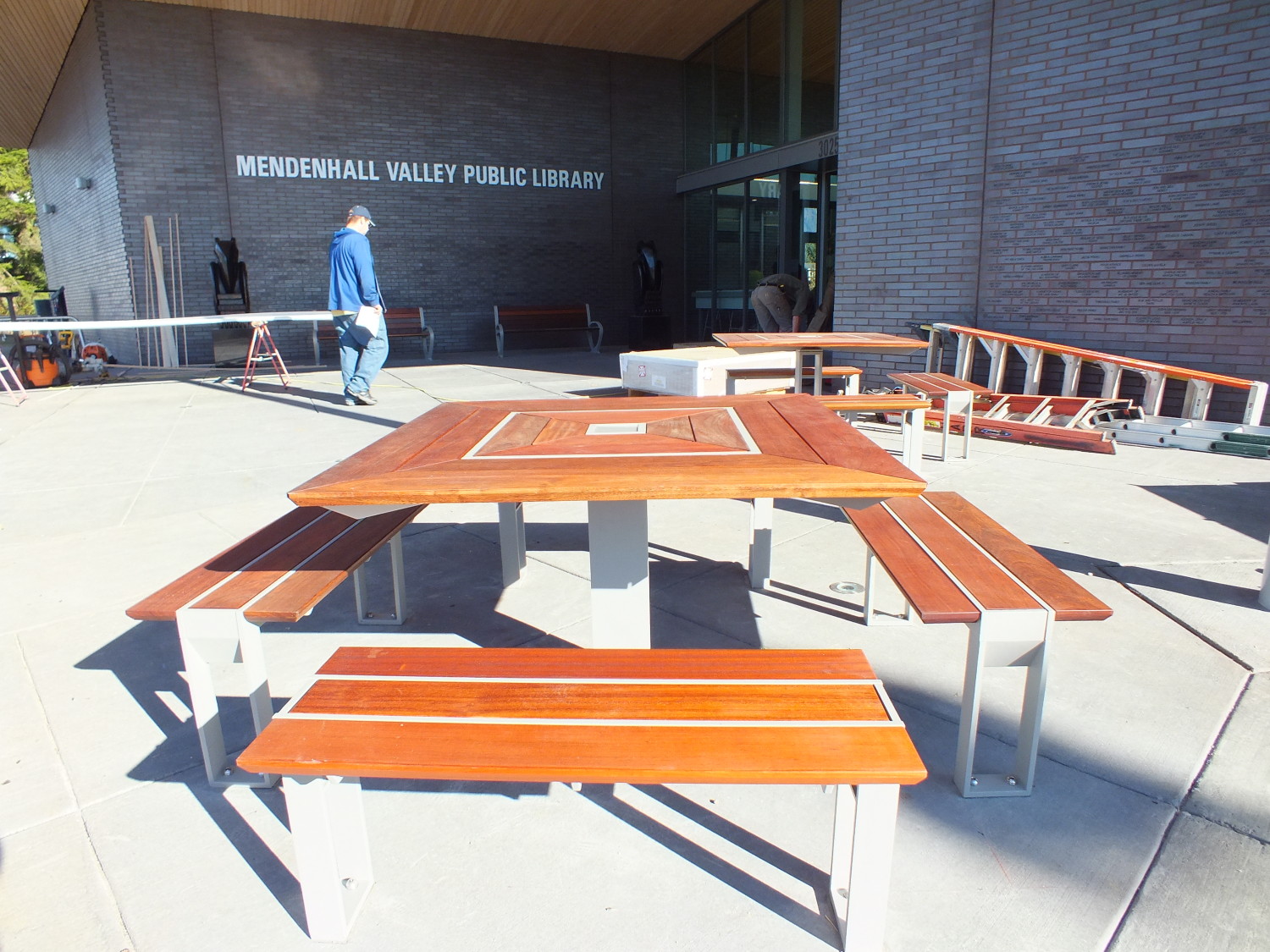
Outdoor seating at the new Mendenhall Valley Public Library. (Photo by Matt Miller/KTOO)
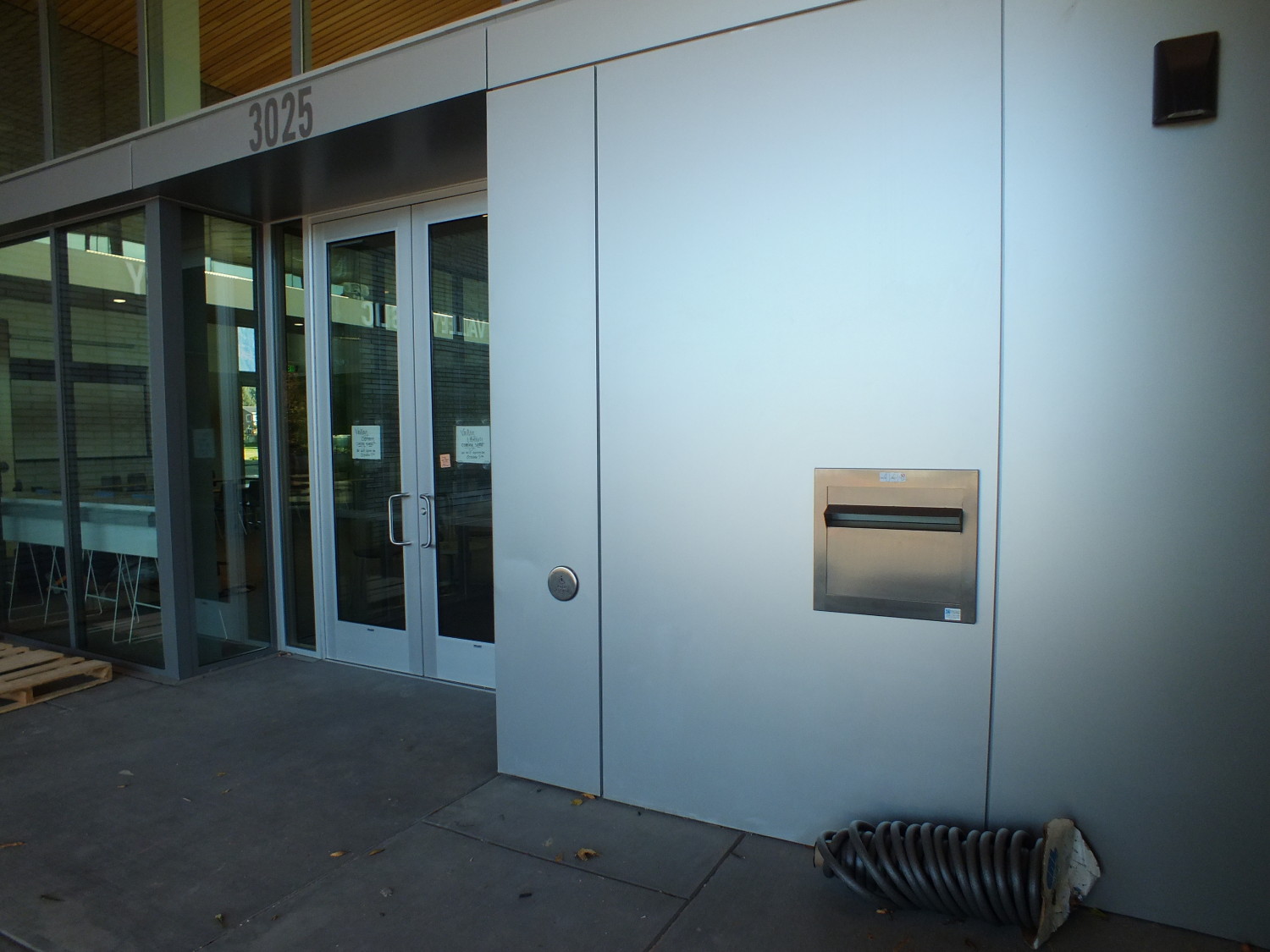
Book drop-off at the new library. (Photo by Matt Miller/KTOO)
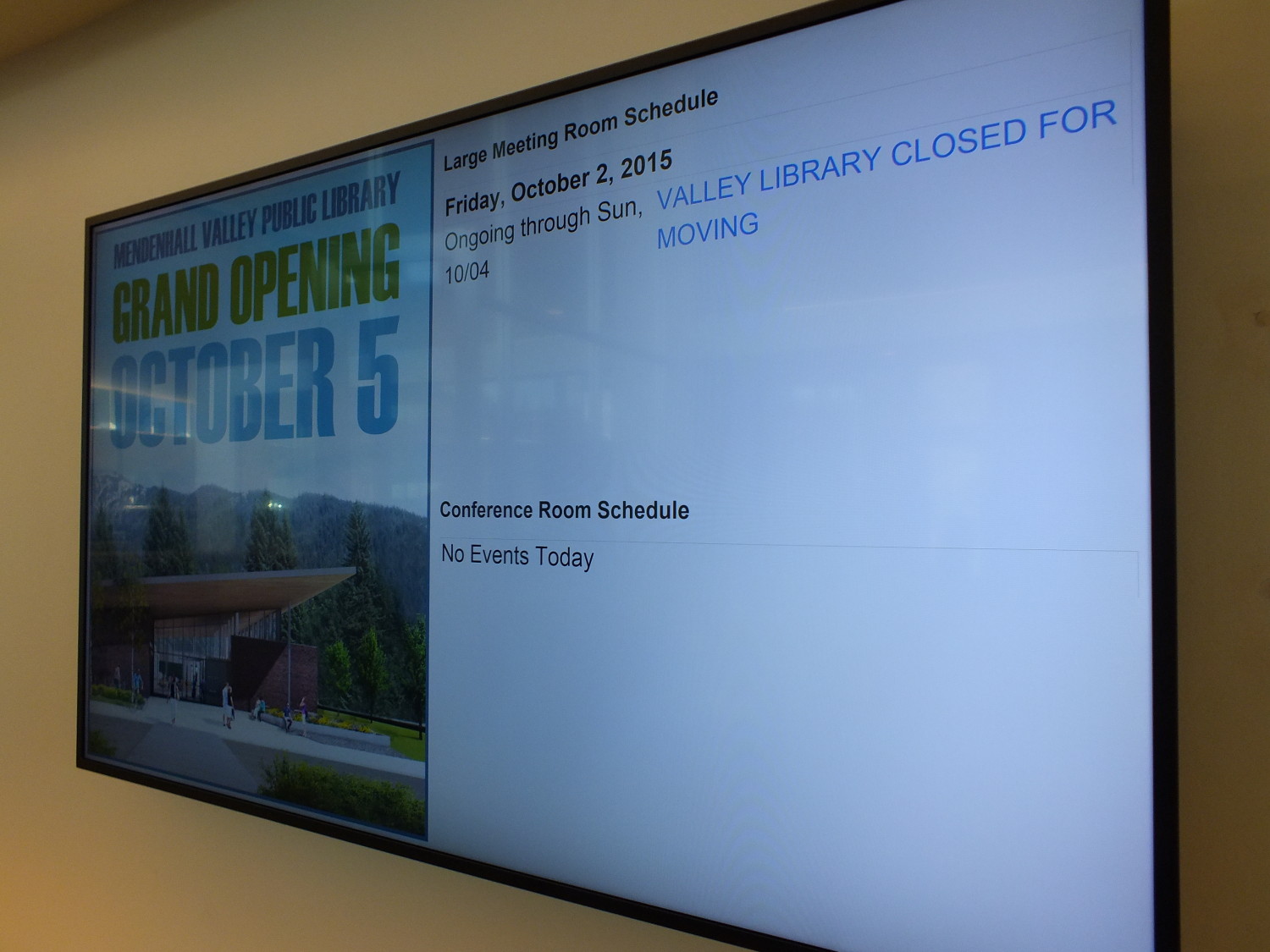
Notice display board is located in the entrance of the new Mendenhall Valley Public Library. (Photo by Matt Miller/KTOO)
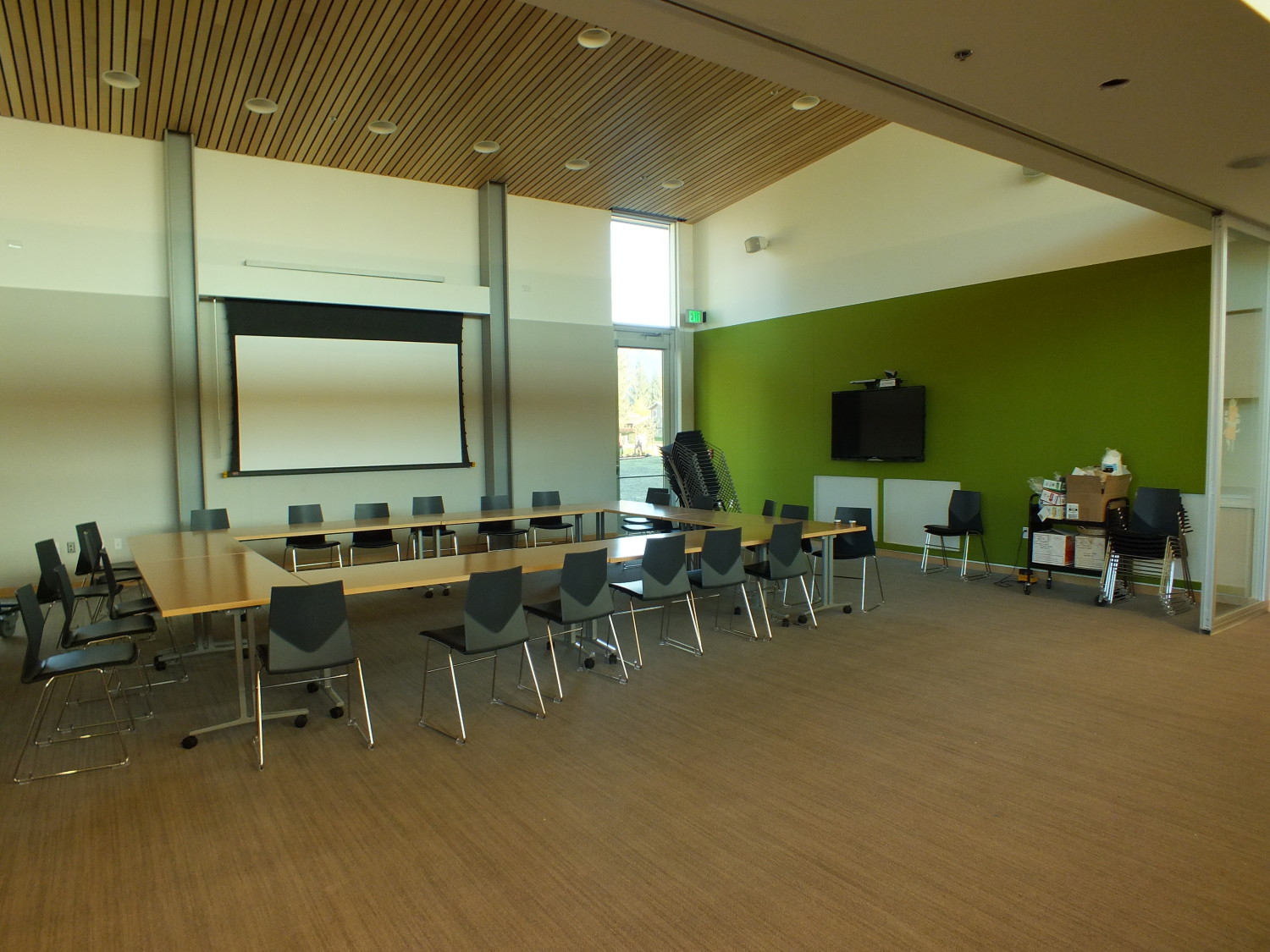
Meeting room at the entrance of the new Mendenhall Valley Public Library. (Photo by Matt Miller/KTOO)
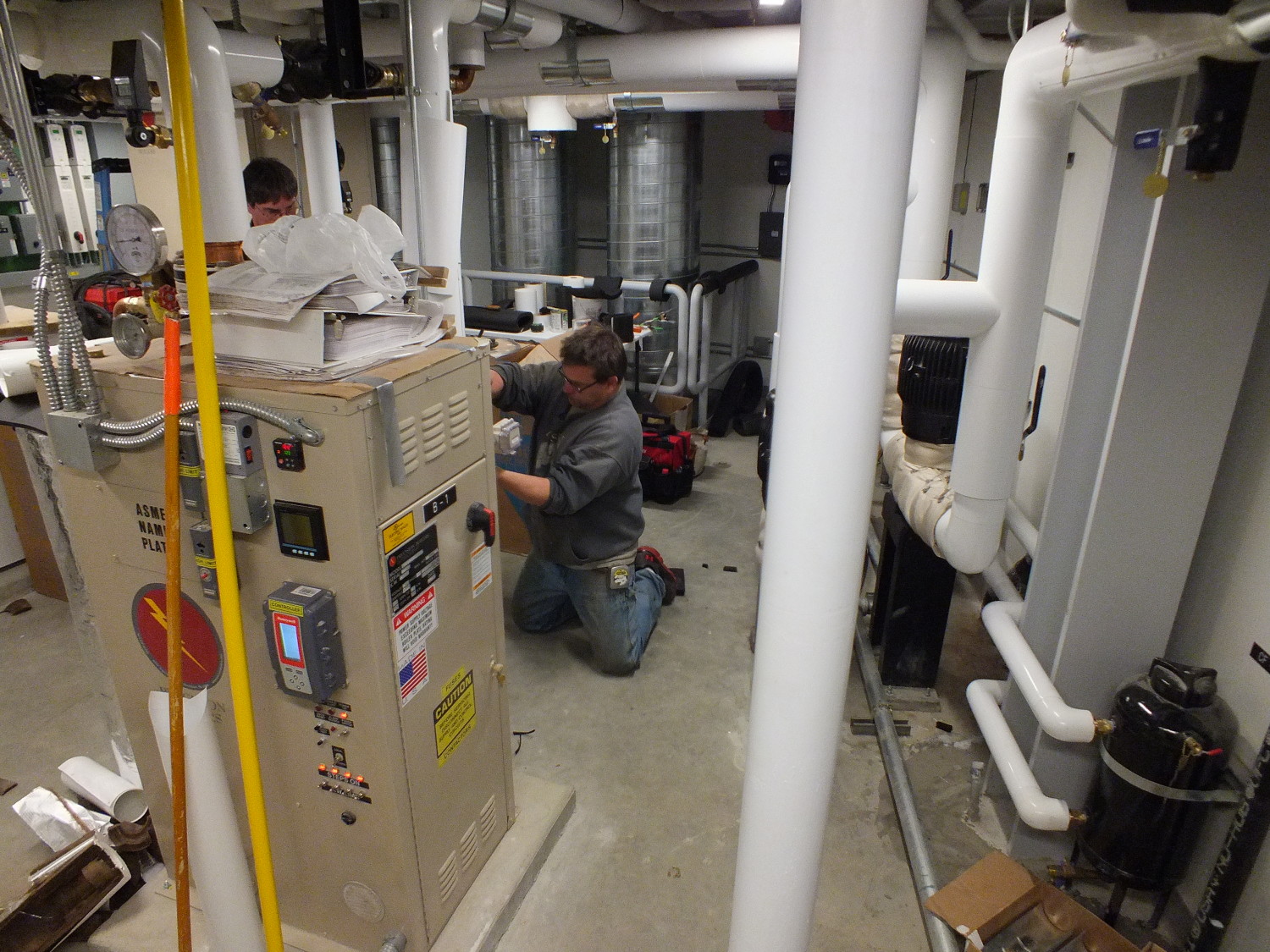
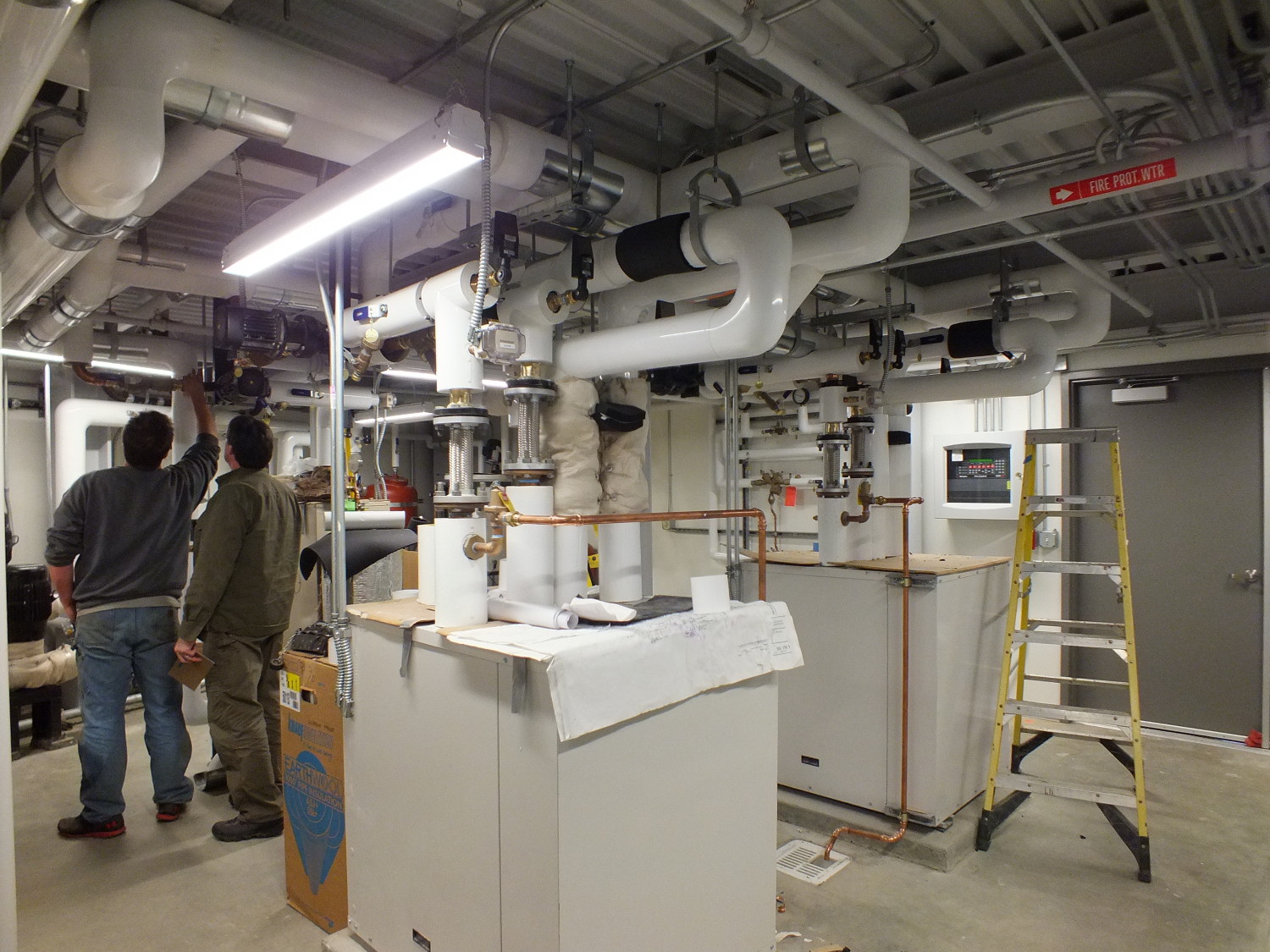
Mechanical room in the new Mendenhall Valley Public Library features a ground source heat pump system. (Photo by Matt Miller/KTOO)
Ground source heat pumps are connected to eight, 300 foot wells located under the parking lot at the new Mendenhall Valley Public Library. (Photo by Matt Miller/KTOO)
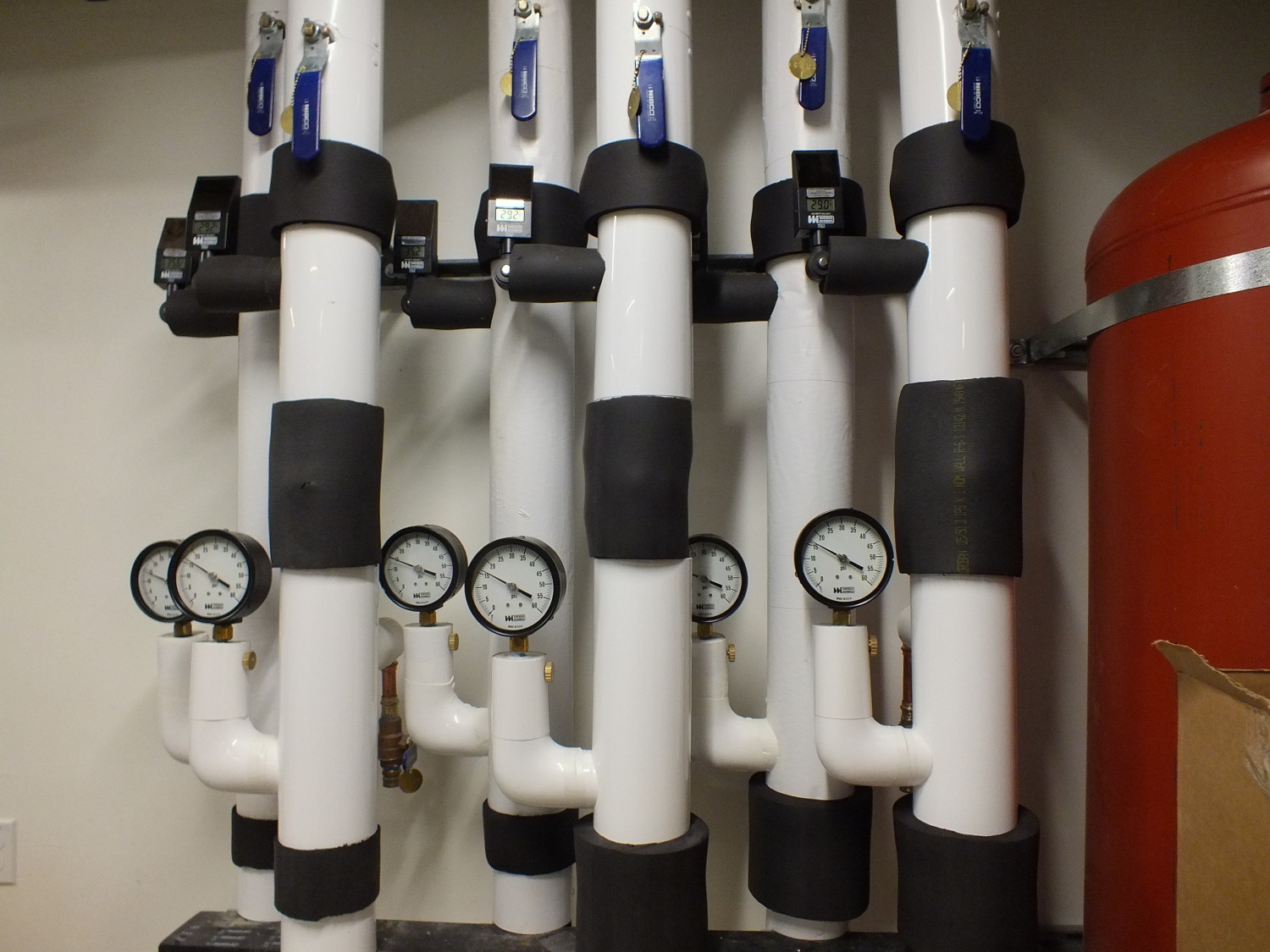
Ground source heat pump system uses a mixture of water and glycol to heat the main slab of the new library. (Photo by Matt Miller/KTOO)
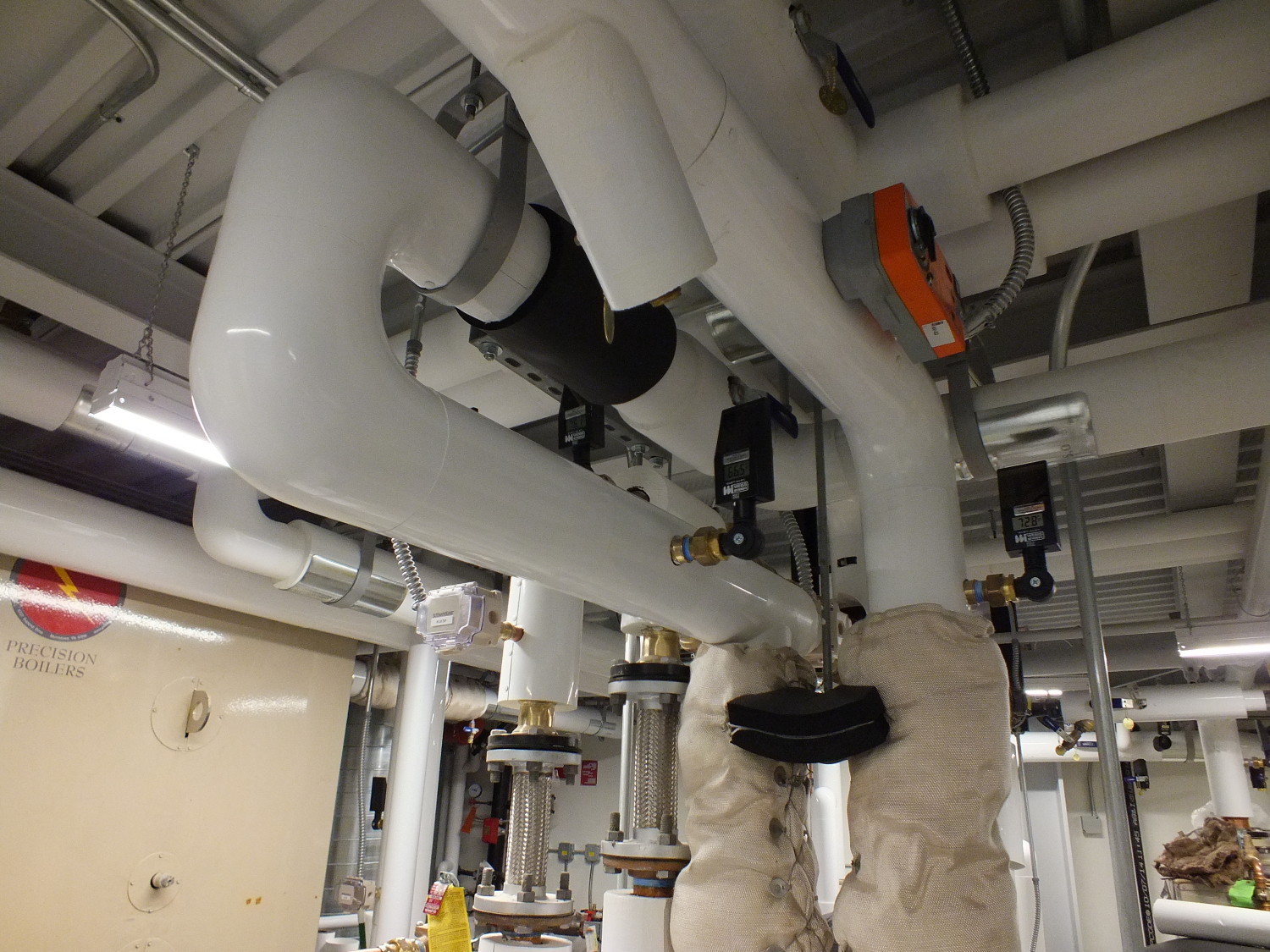
Piping in the mechanical room in the new Mendenhall Valley Public Library. (Photo by Matt Miller/KTOO)
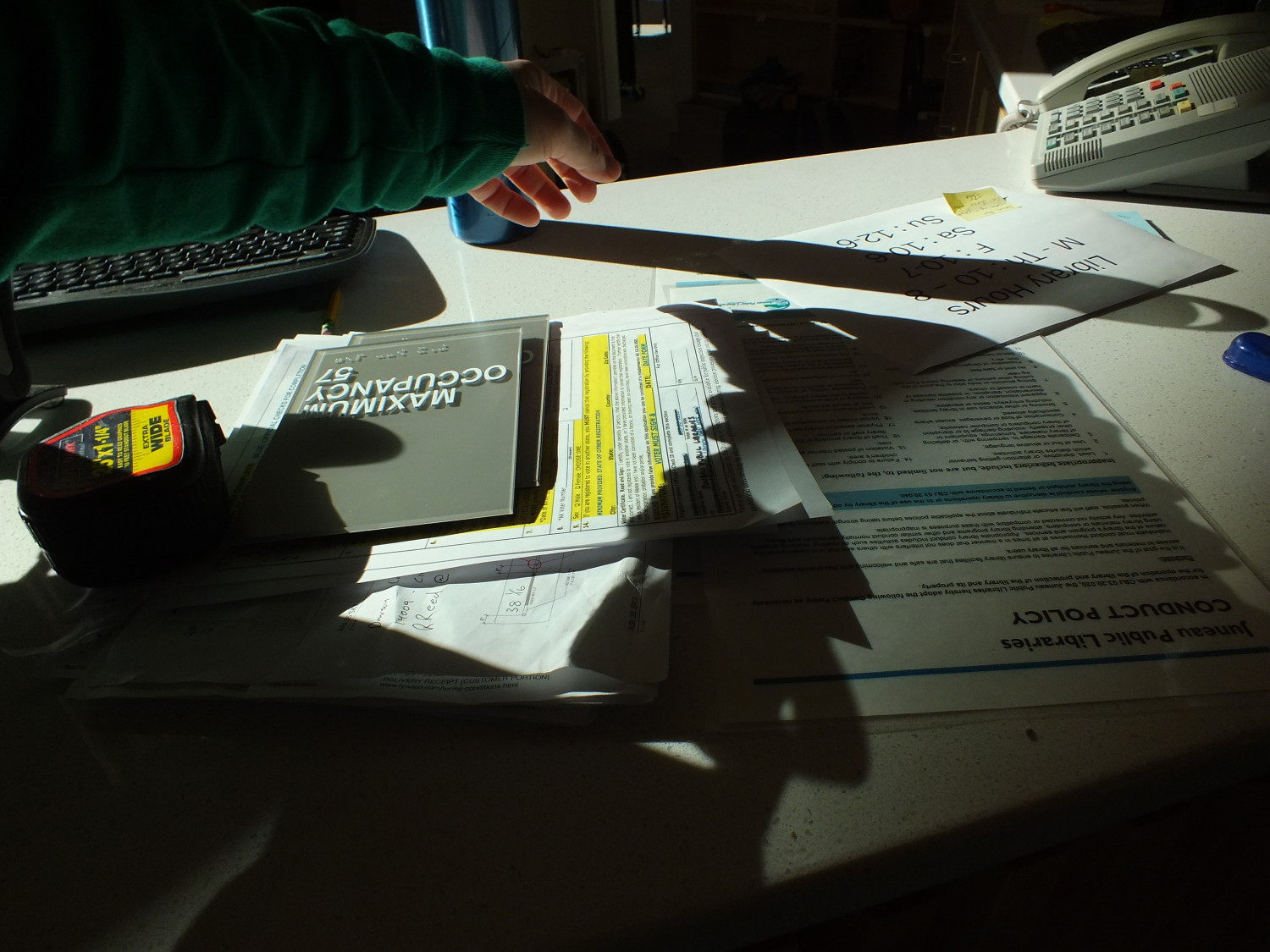
For now, opening hours will be the same as they were at the old location: 10-8 Monday through Thursday, 10-7 Friday, 10-6 Saturday, and 12-6 Sunday. (Photo by Matt Miller/KTOO)
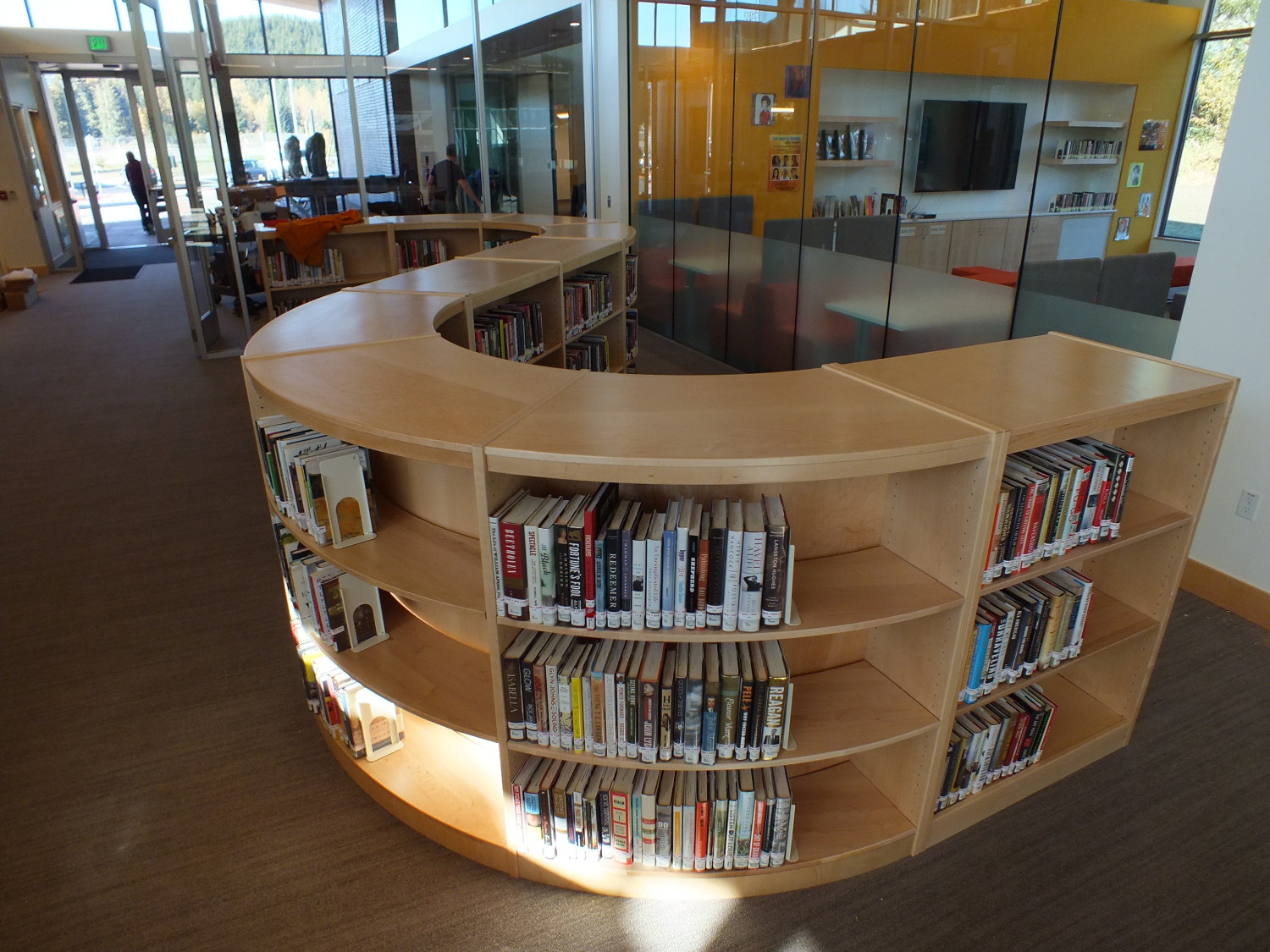
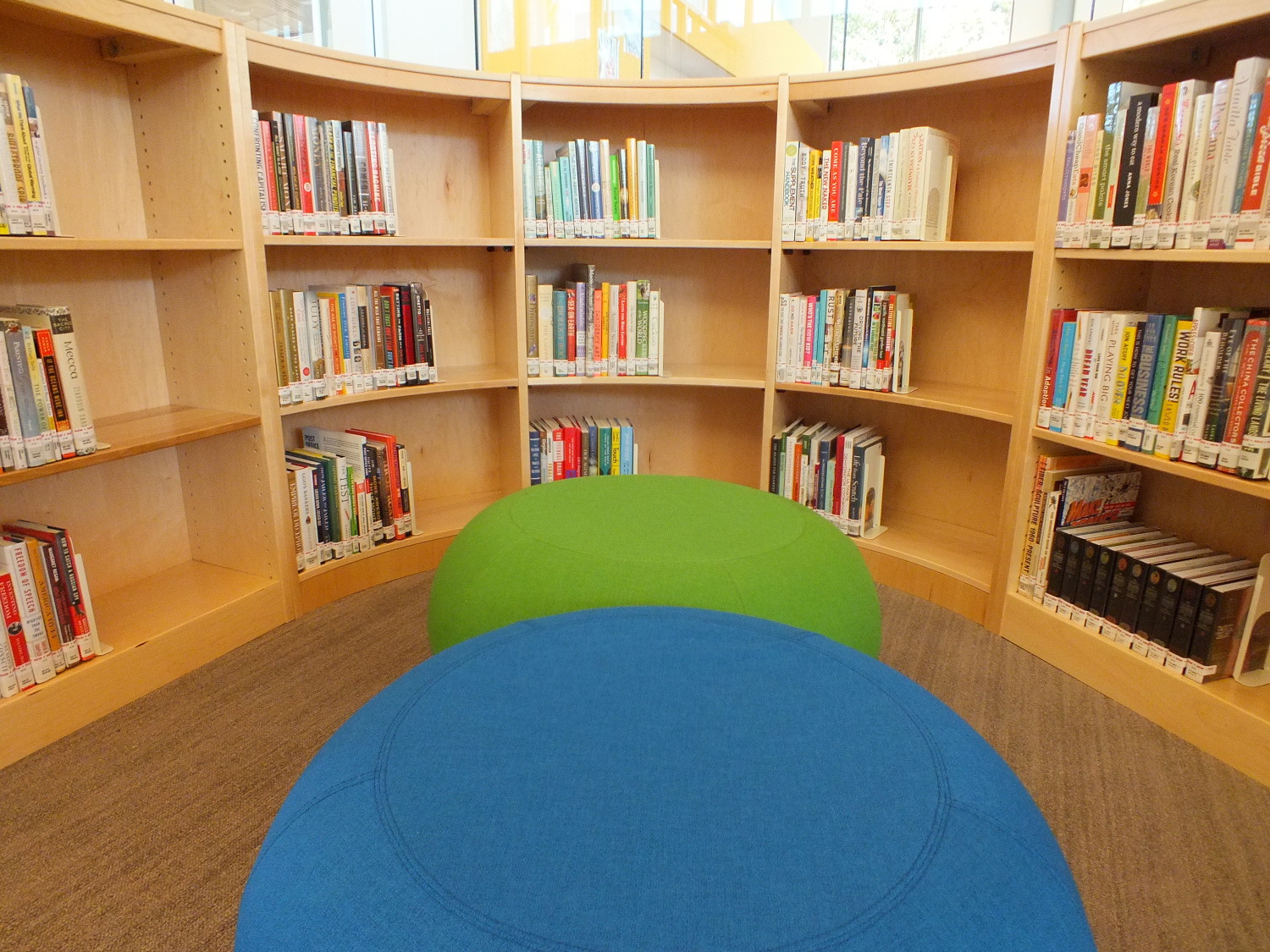
Serpentine book display feature new arrivals at the new Mendenhall Valley Public Library. (Photo by Matt Miller/KTOO)
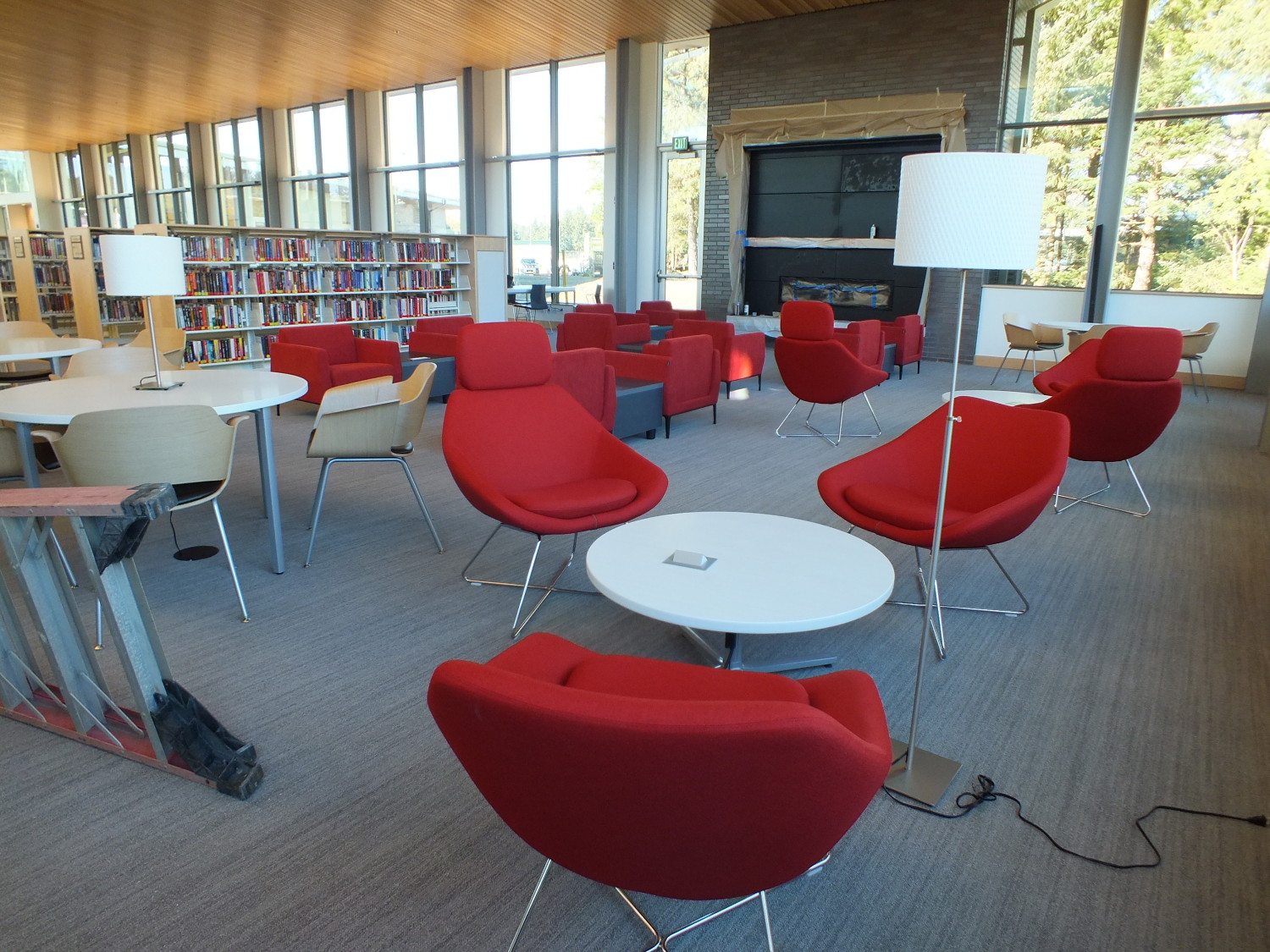
... And you can sit while you peruse them. (Photo by Matt Miller/KTOO)
Work continues at the new Mendenhall Valley Public Library. (Photo by Matt Miller/KTOO)
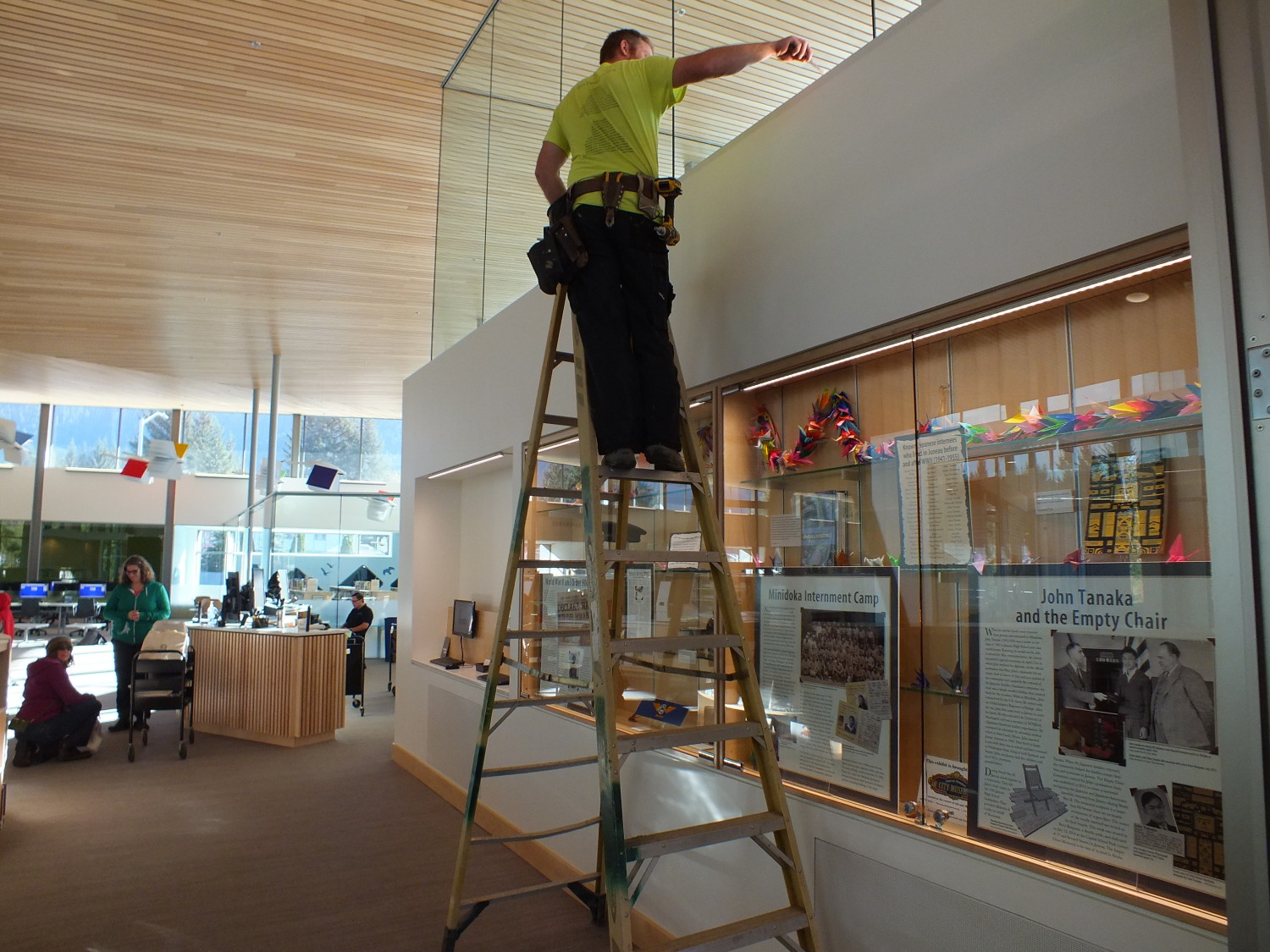
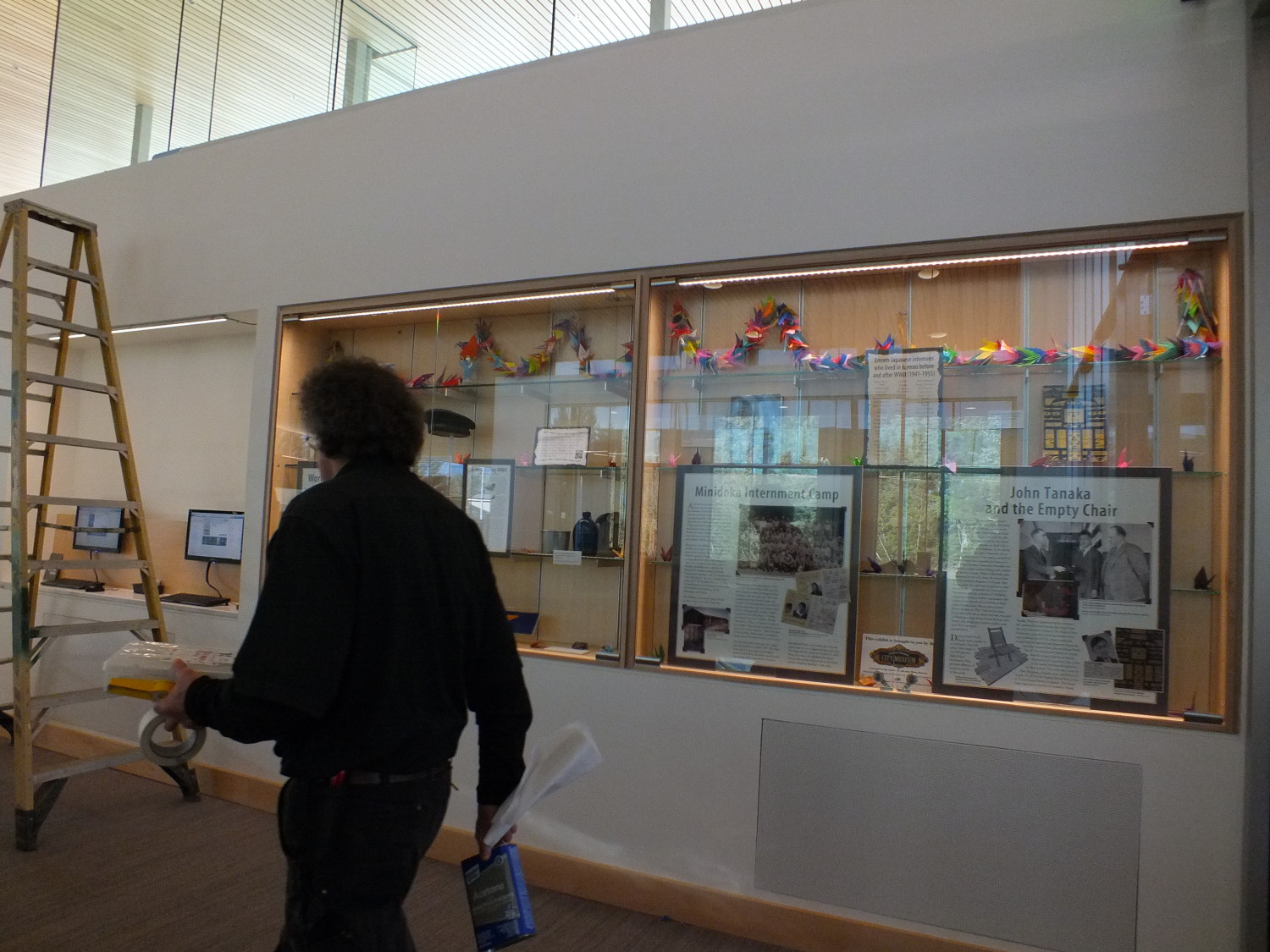
Public catalog computers are located at the left. Display cases at the new Mendenhall Valley Public Library will be stocked by the Juneau-Douglas City Museum. (Photo by Matt Miller/KTOO)
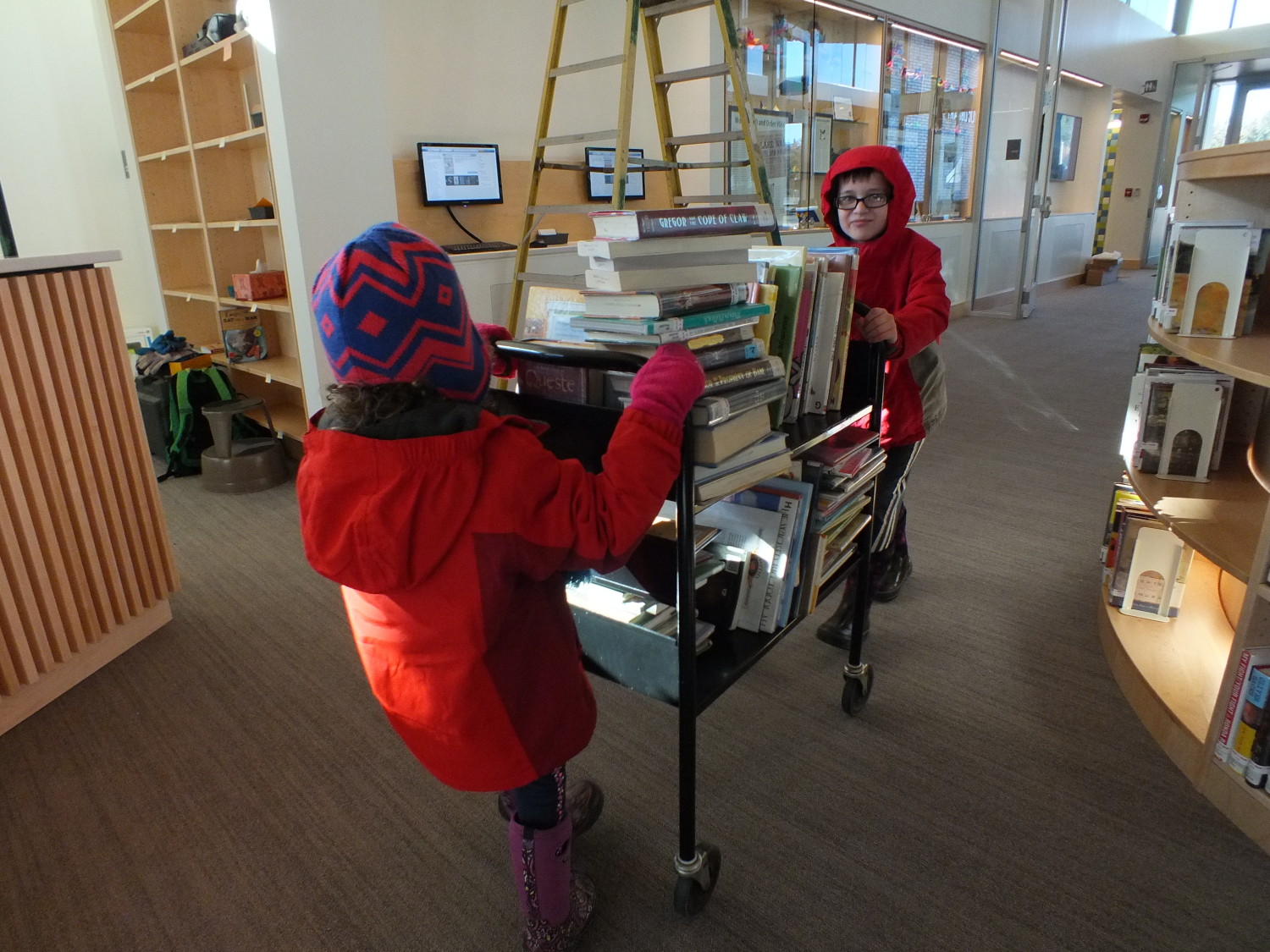
Sadie Frances Curtis, 5, and Q Curtis, 8, wheel in a cart of 119 books they checked out from the old Mendenhall Mall Library just before it closed. Along with their mom Linda Curtis, they were deemed Checkout Champions as patrons who helped with moving books from the old library. (Photo by Matt Miller/KTOO)
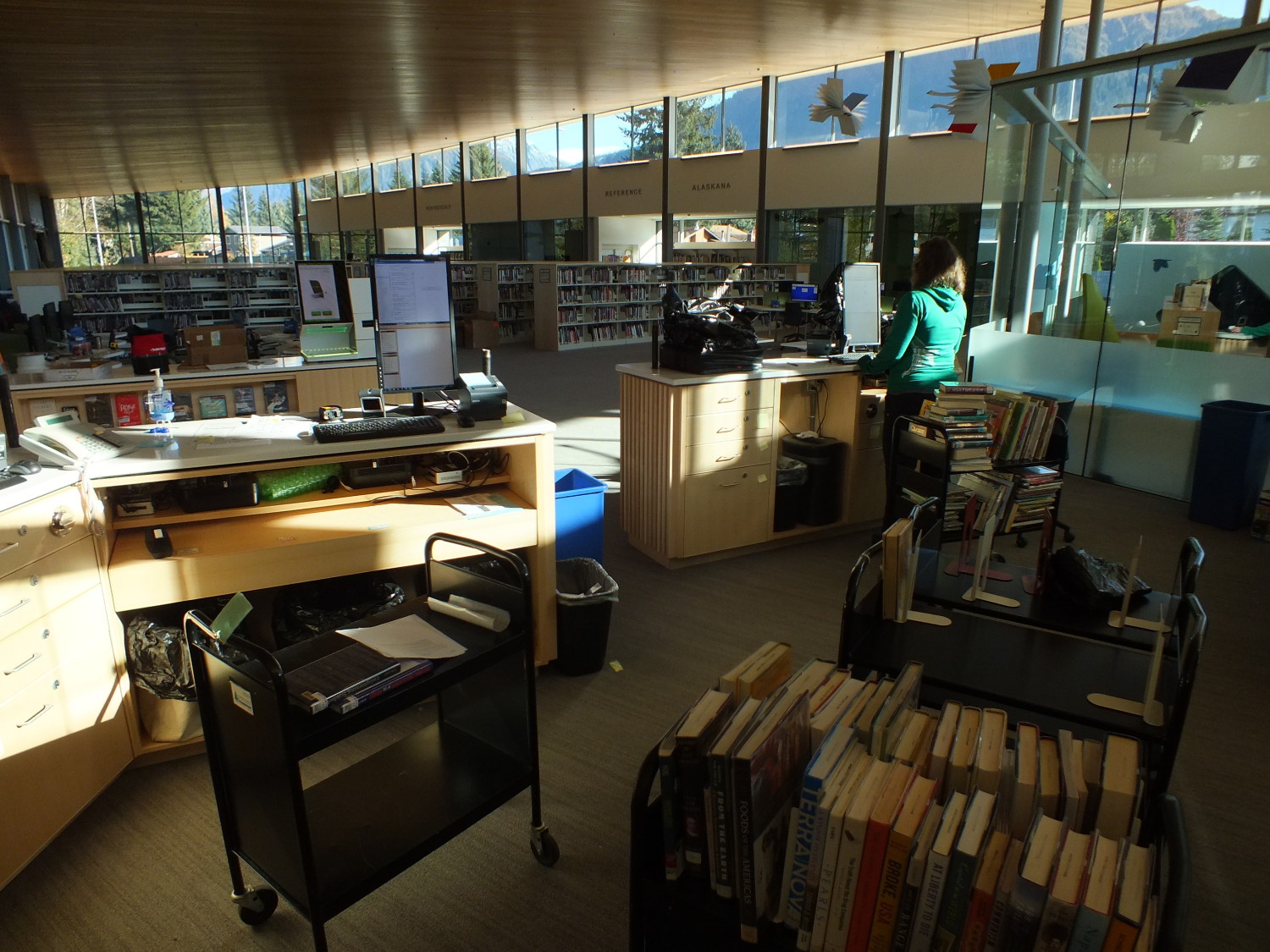
Behind the circulation desk at the new Mendenhall Valley Public Library. (Photo by Matt Miller/KTOO)
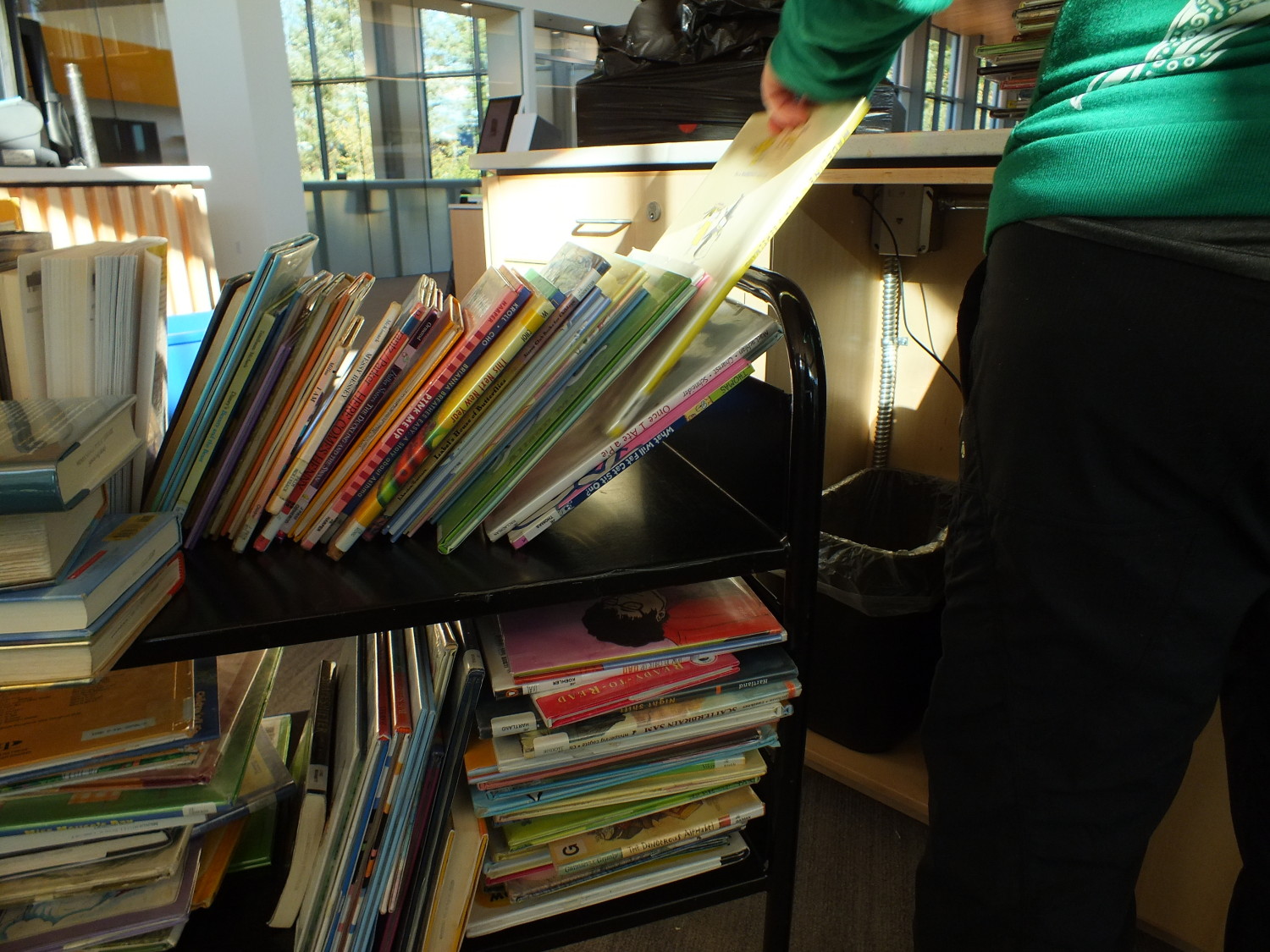
Beth Weigel checks in returned books at the new Mendenhall Valley Public Library. (Photo by Matt Miller/KTOO)
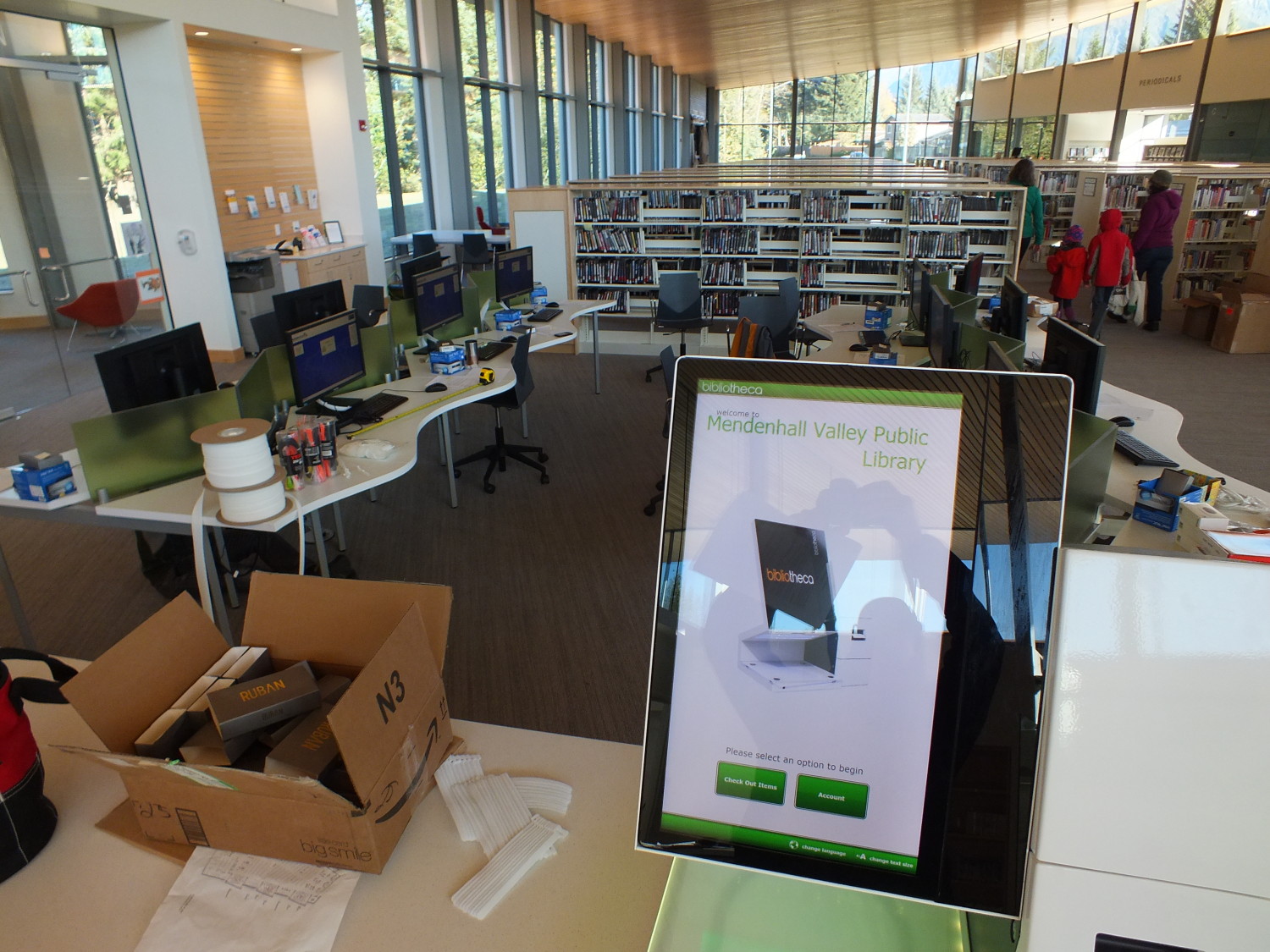
A self-checkout terminal is located between the public access computer section and circulation desk. (Photo by Matt Miller/KTOO)
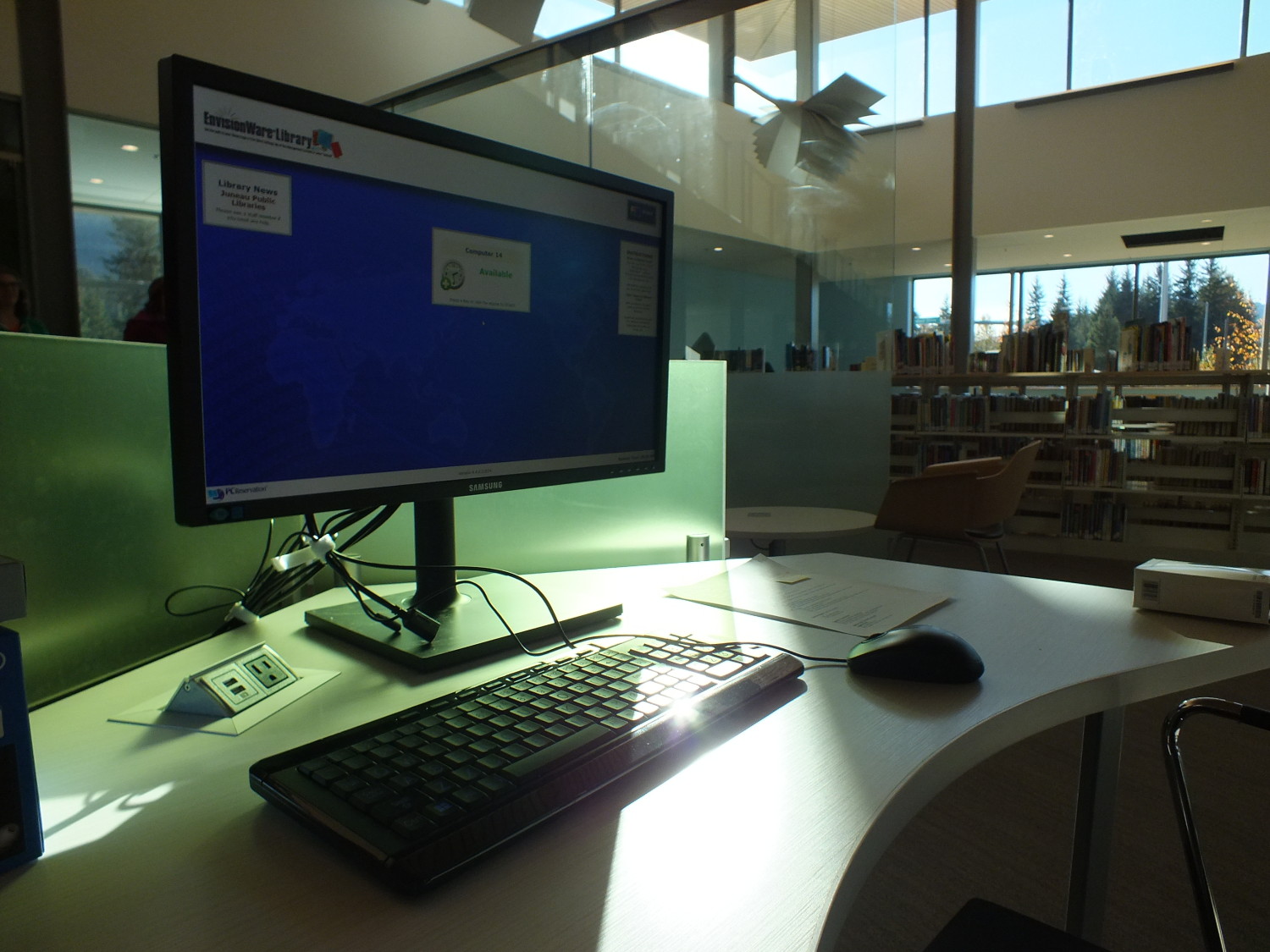
Public access computer terminals at the new Mendenhall Valley Public Library. (Photo by Matt Miller/KTOO)
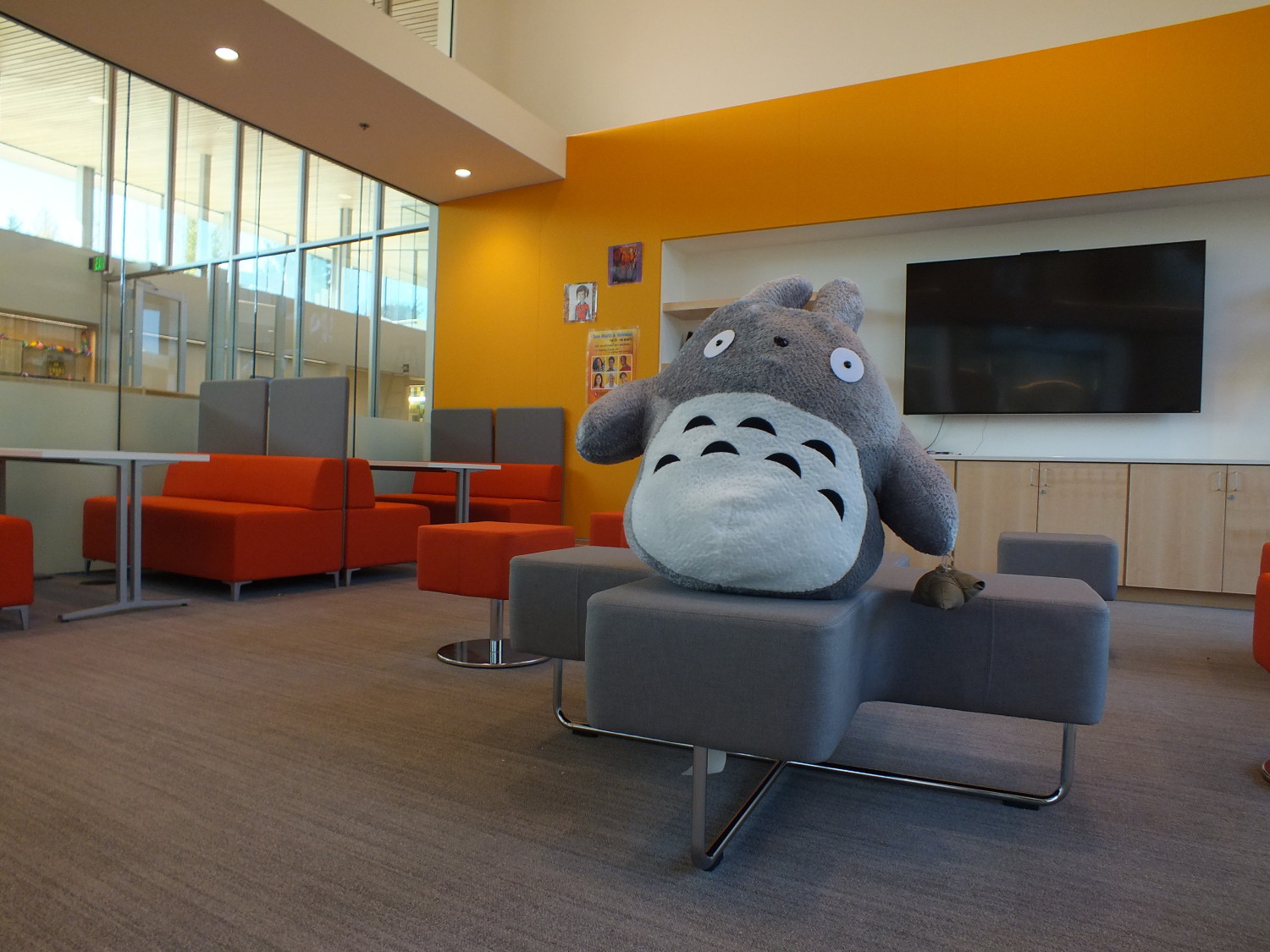
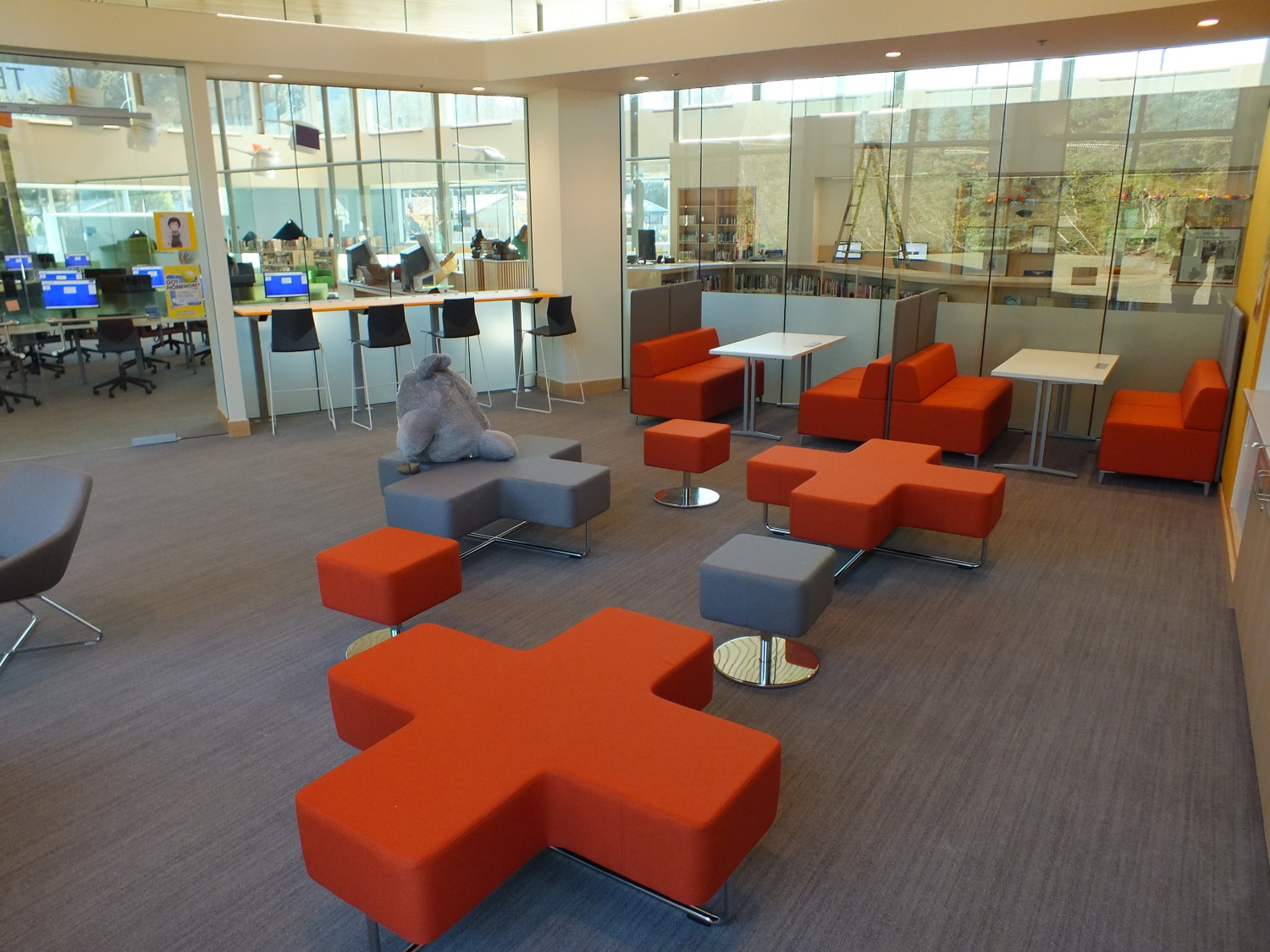
Teen section at the new Mendenhall Valley Public Library is for teenagers only and features a gaming station. (Photo by Matt Miller/KTOO)
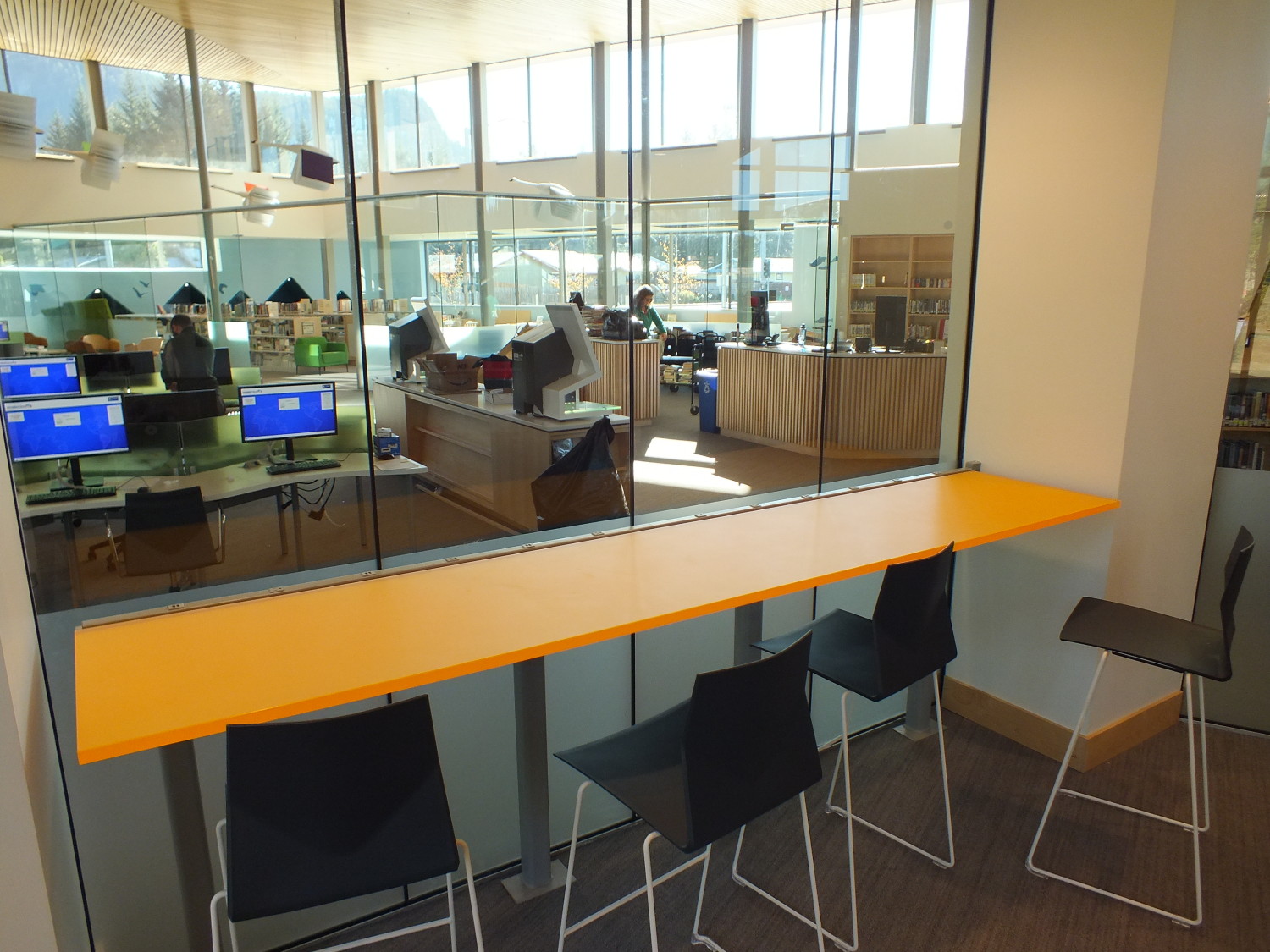
The teen section has a view of the main portion of the library. (Photo by Matt Miller/KTOO)
The teen section at the new Mendenhall Valley Public Library. (Photo by Matt Miller/KTOO)
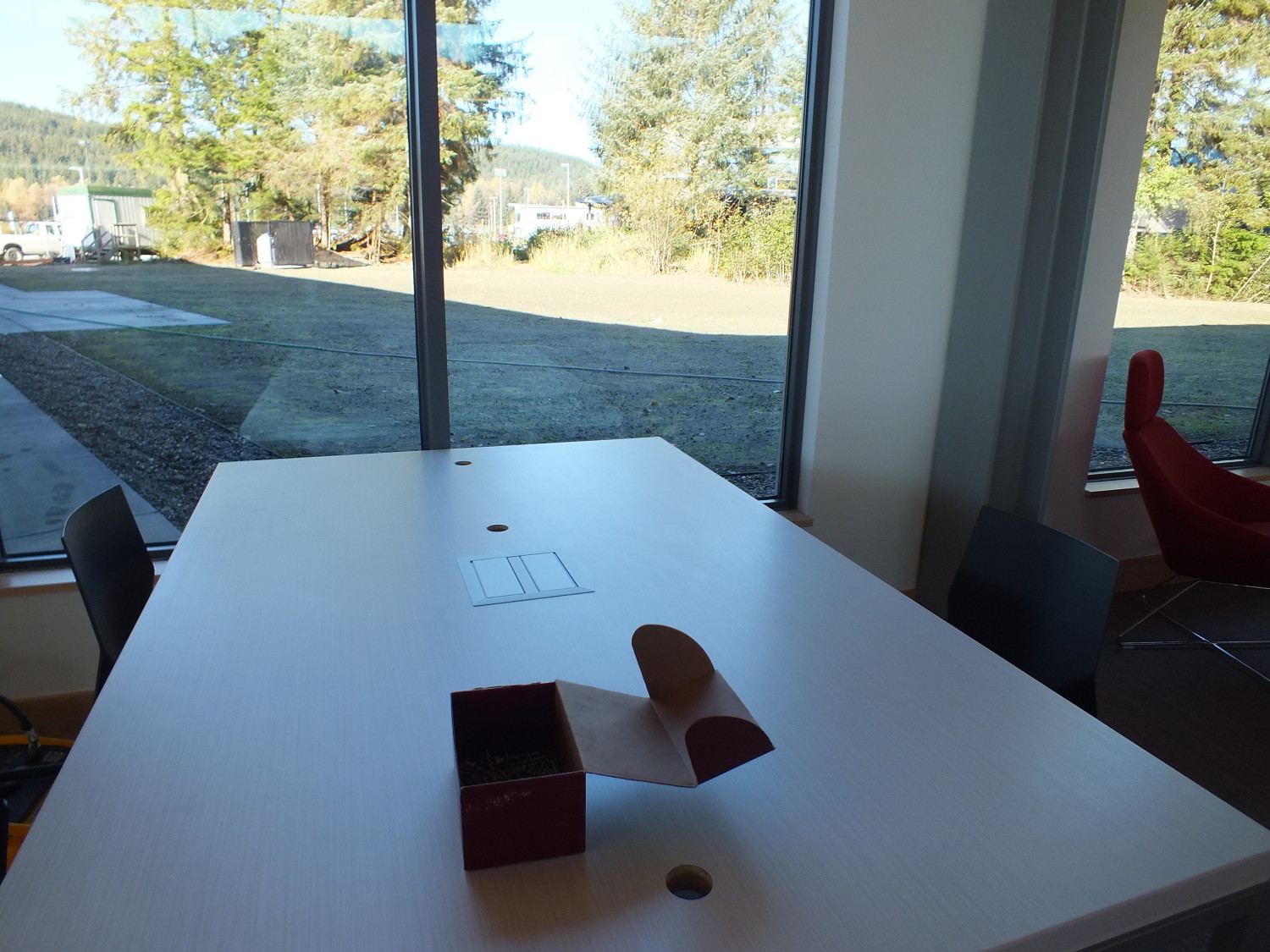
These tables with power outlets will soon have focused lighting. Landscaping is still in progress. (Photo by Matt Miller/KTOO)
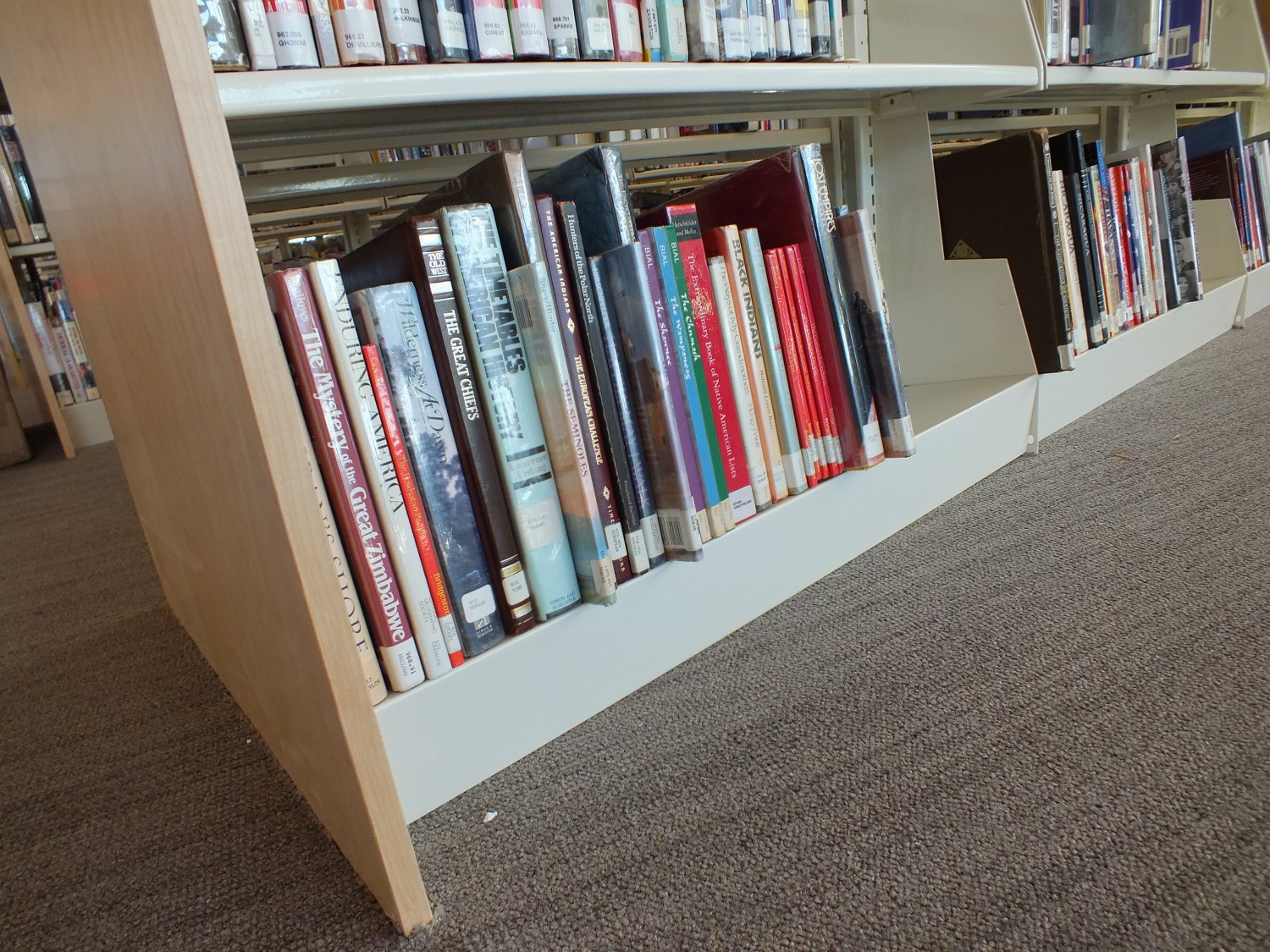
Angled book shelves will make it easier to find books on the bottom. (Photo by Matt Miller/KTOO)
Diffuse air vents are located behind the white panels at the end of some book shelves at the new Mendenhall Valley Public Library. (Photo by Matt Miller/KTOO)
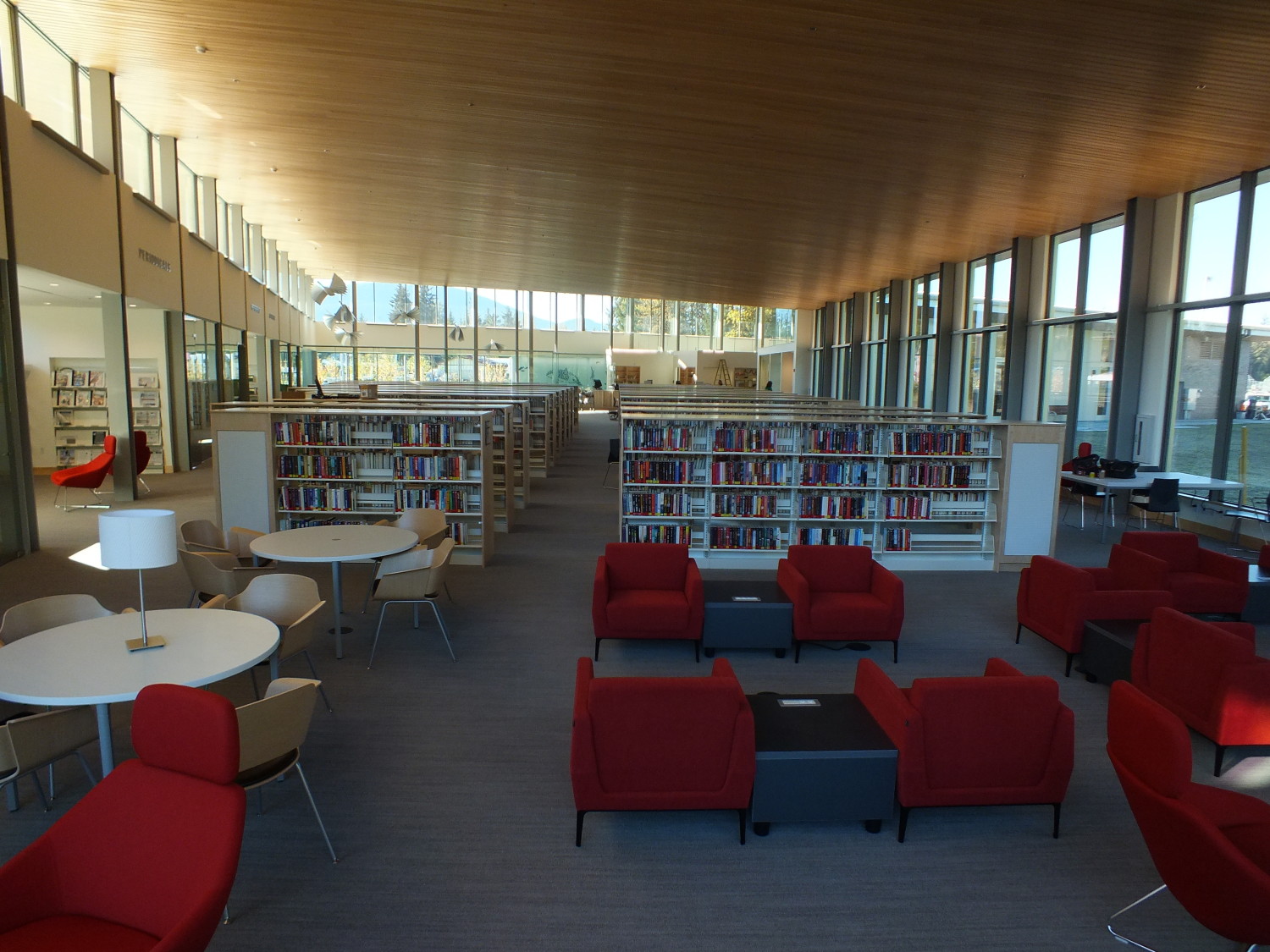
Glass and wood dominate the interior of the new Mendenhall Valley Public Library. (Photo by Matt Miller/KTOO)
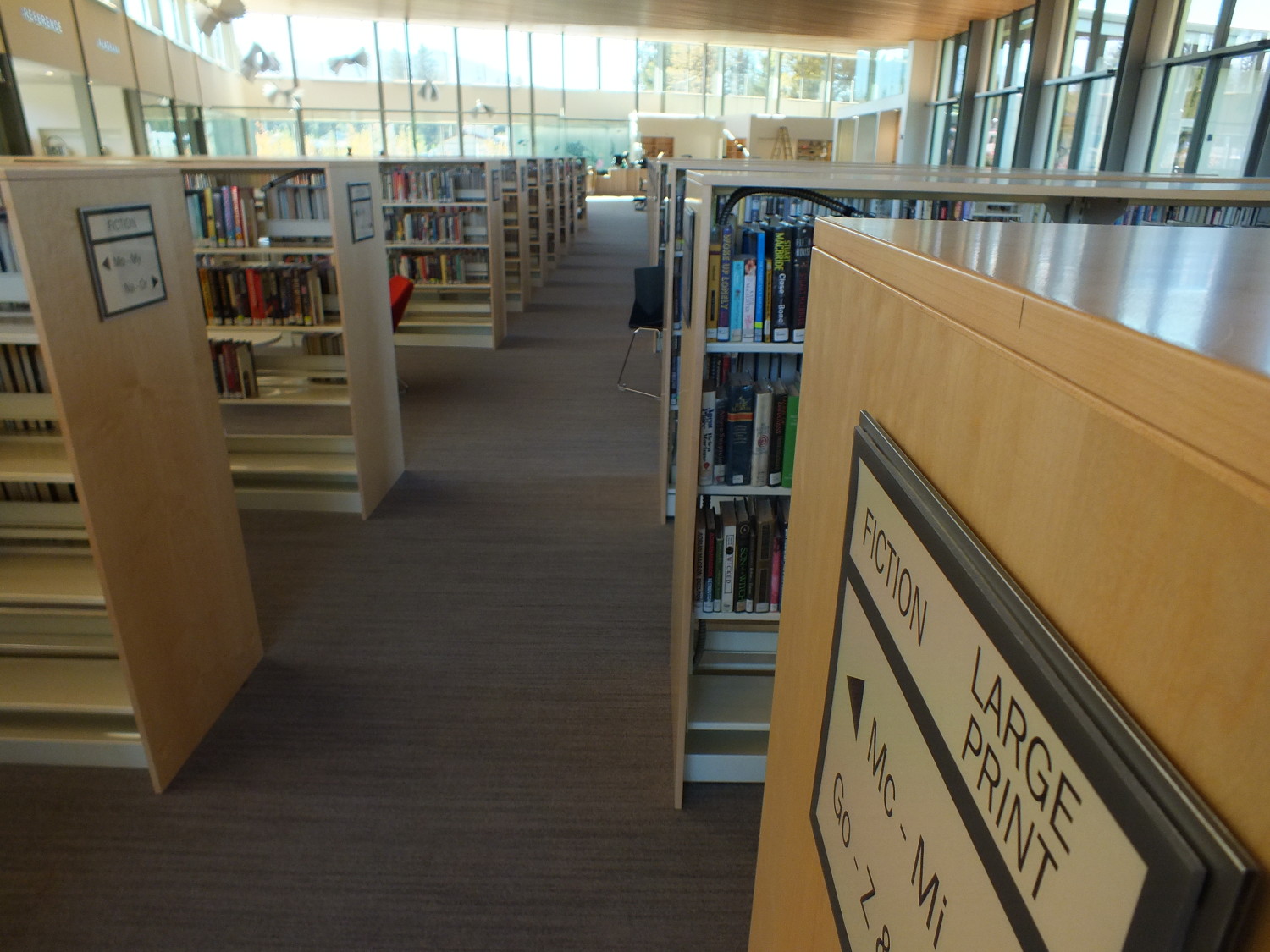
Most adults will be able to see over the book shelves at the new Mendenhall Valley Public Library . (Photo by Matt Miller/KTOO)
Quiet area is located at the far eastern end of the building. (Photo by Matt Miller/KTOO)
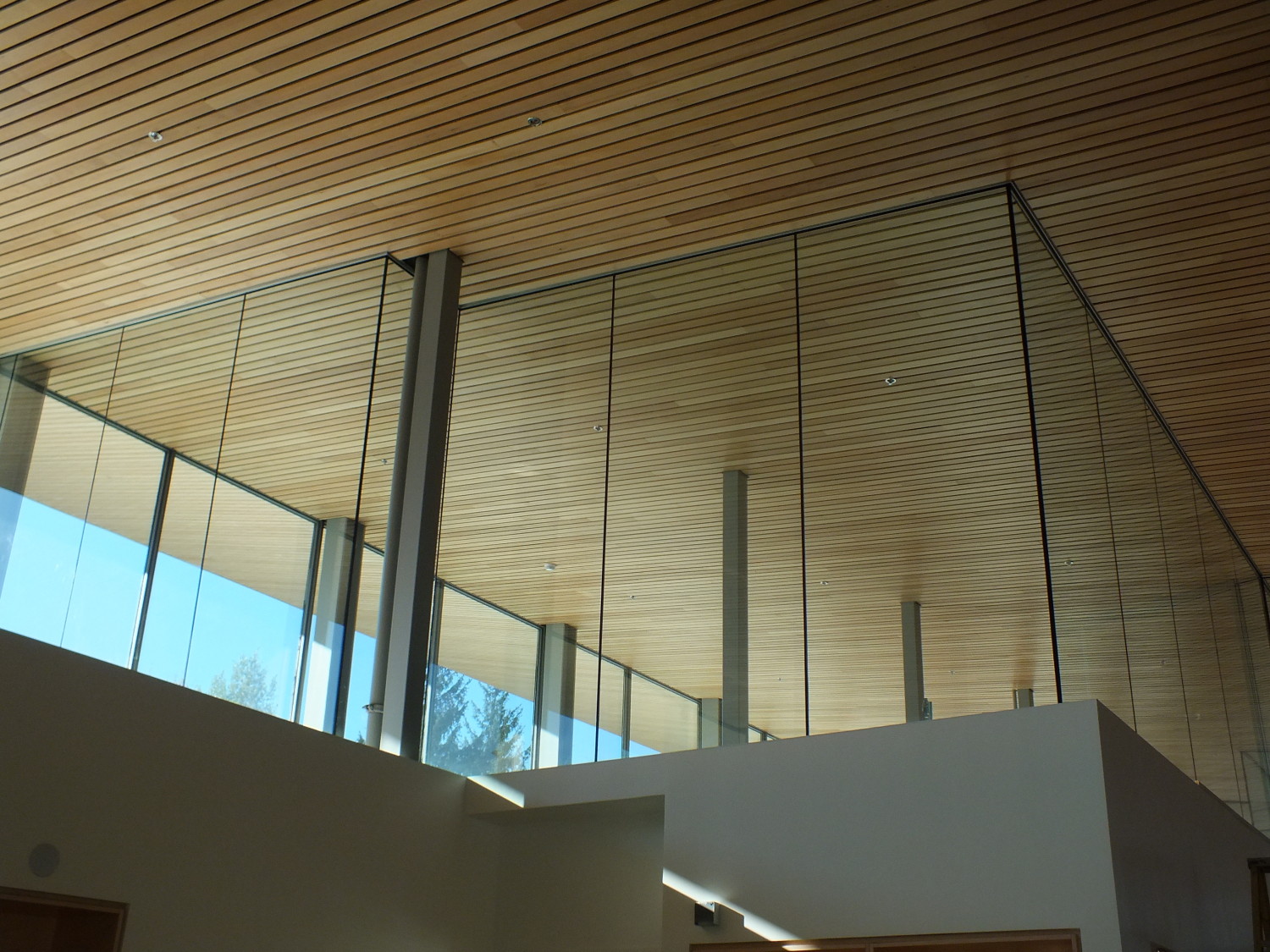
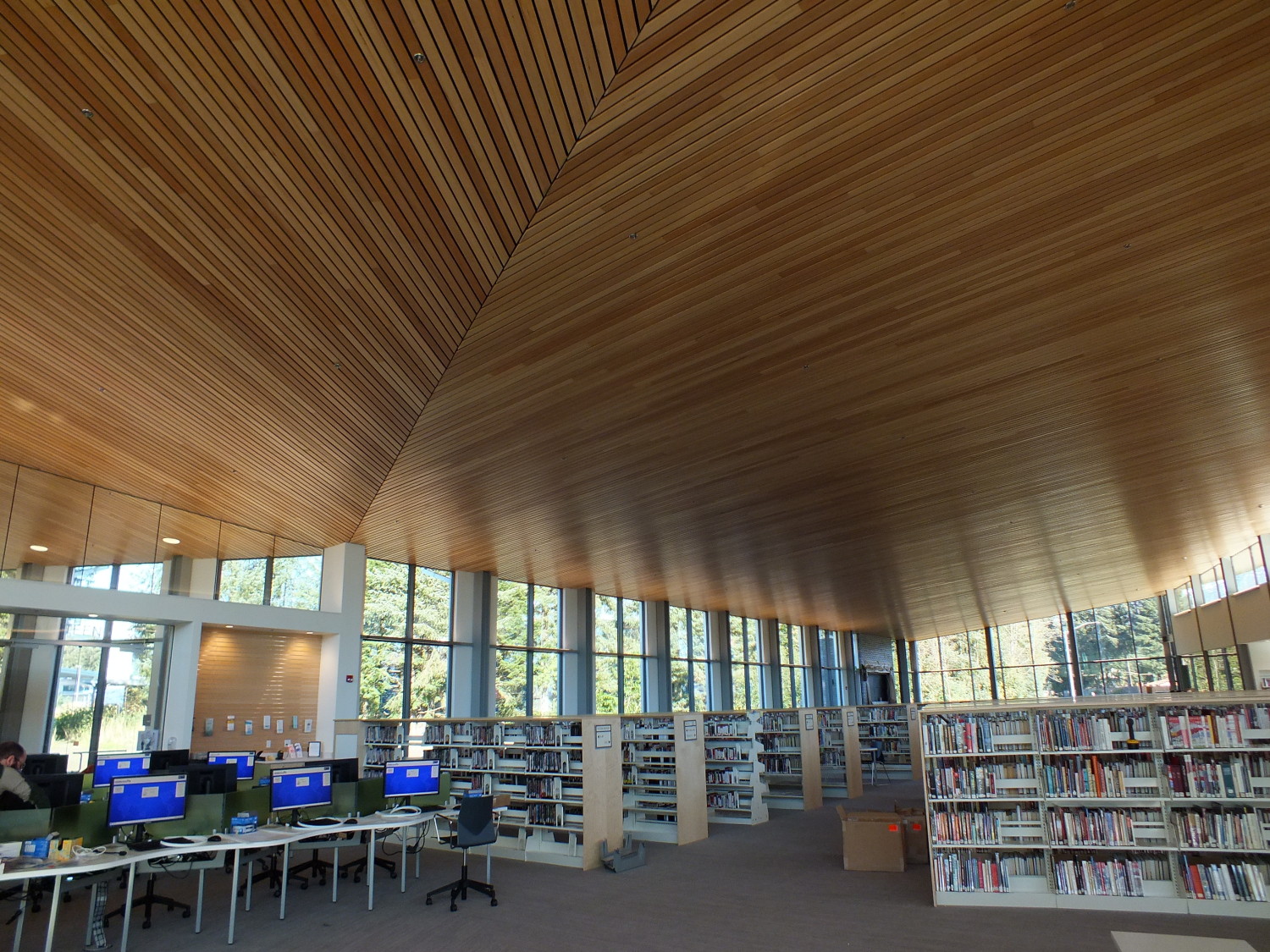
Wood strip ceiling is backed by acoustic deadening black felt. (Photo by Matt Miller/KTOO)
The new Mendenhall Valley Public Library features a wood ceiling. (Photo by Matt Miller/KTOO)
The wood ceiling at the new Mendenhall Valley Public Library is sloped to distribute light and dampen sound. (Photo by Matt Miller/KTOO)
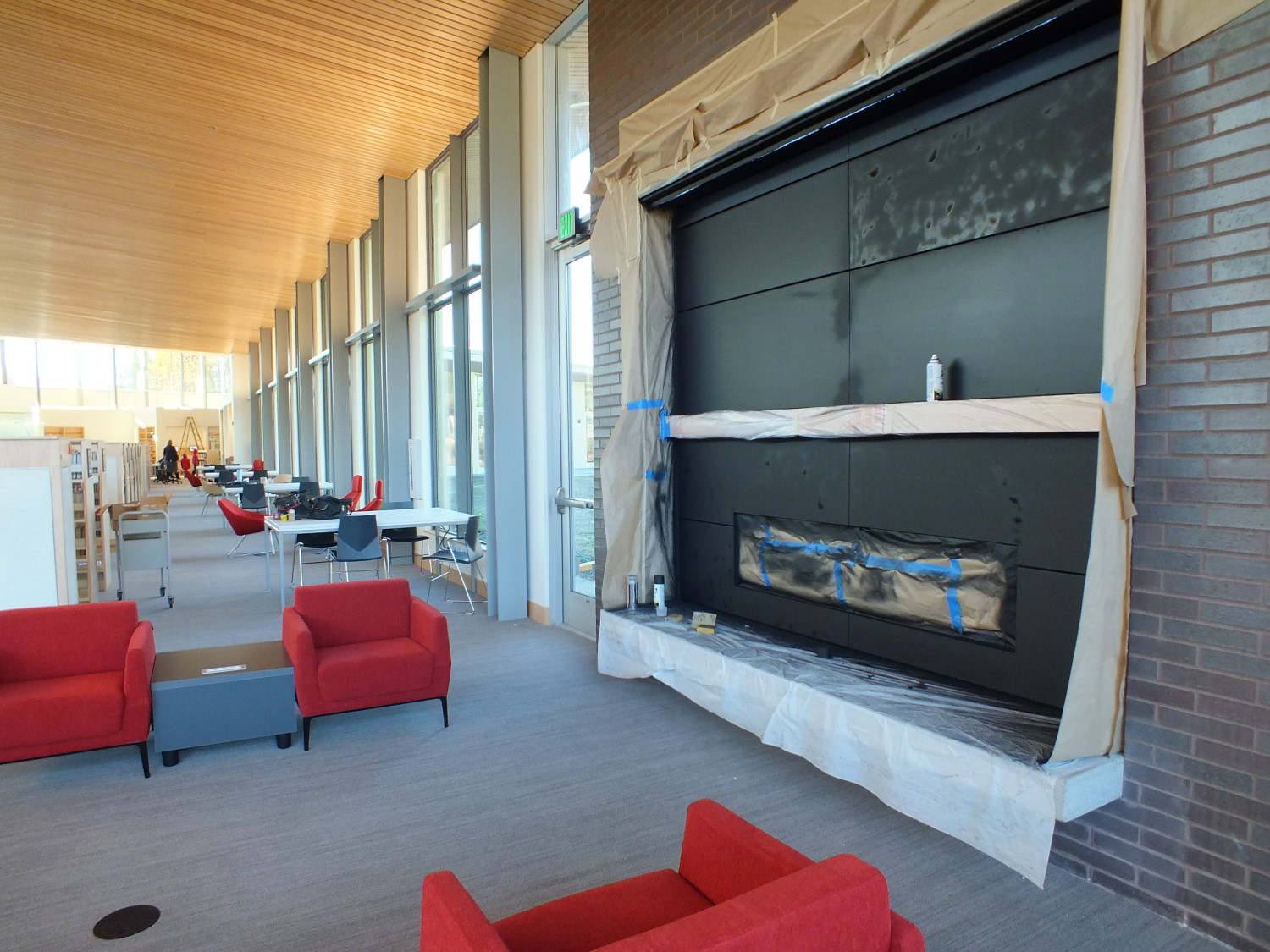
Finishing touches are in progress on the fireplace hearth located in the quiet section of the library. (Photo by Matt Miller/KTOO)
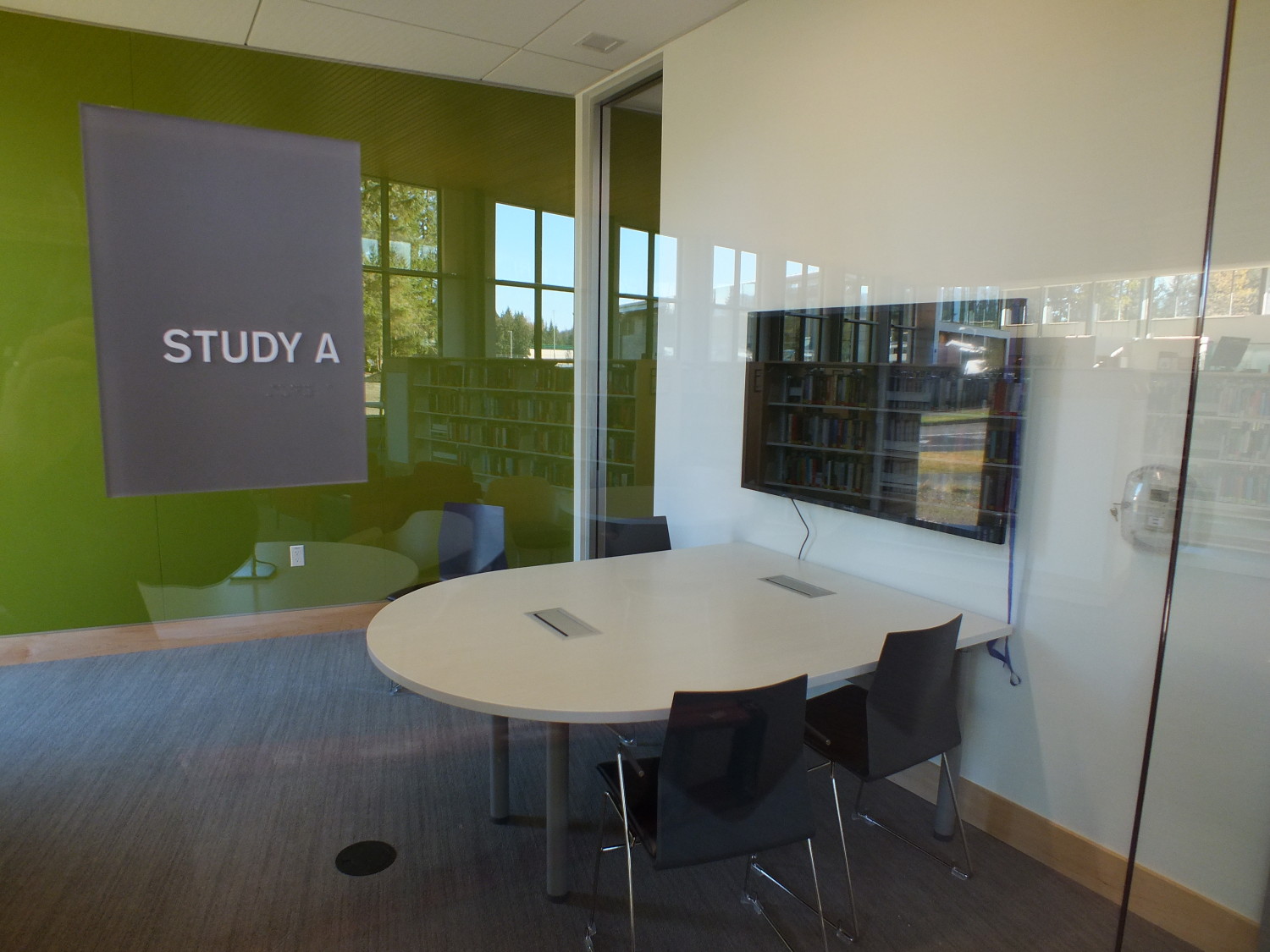
One of four study rooms at the new Mendenhall Valley Public Library. (Photo by Matt Miller/KTOO)
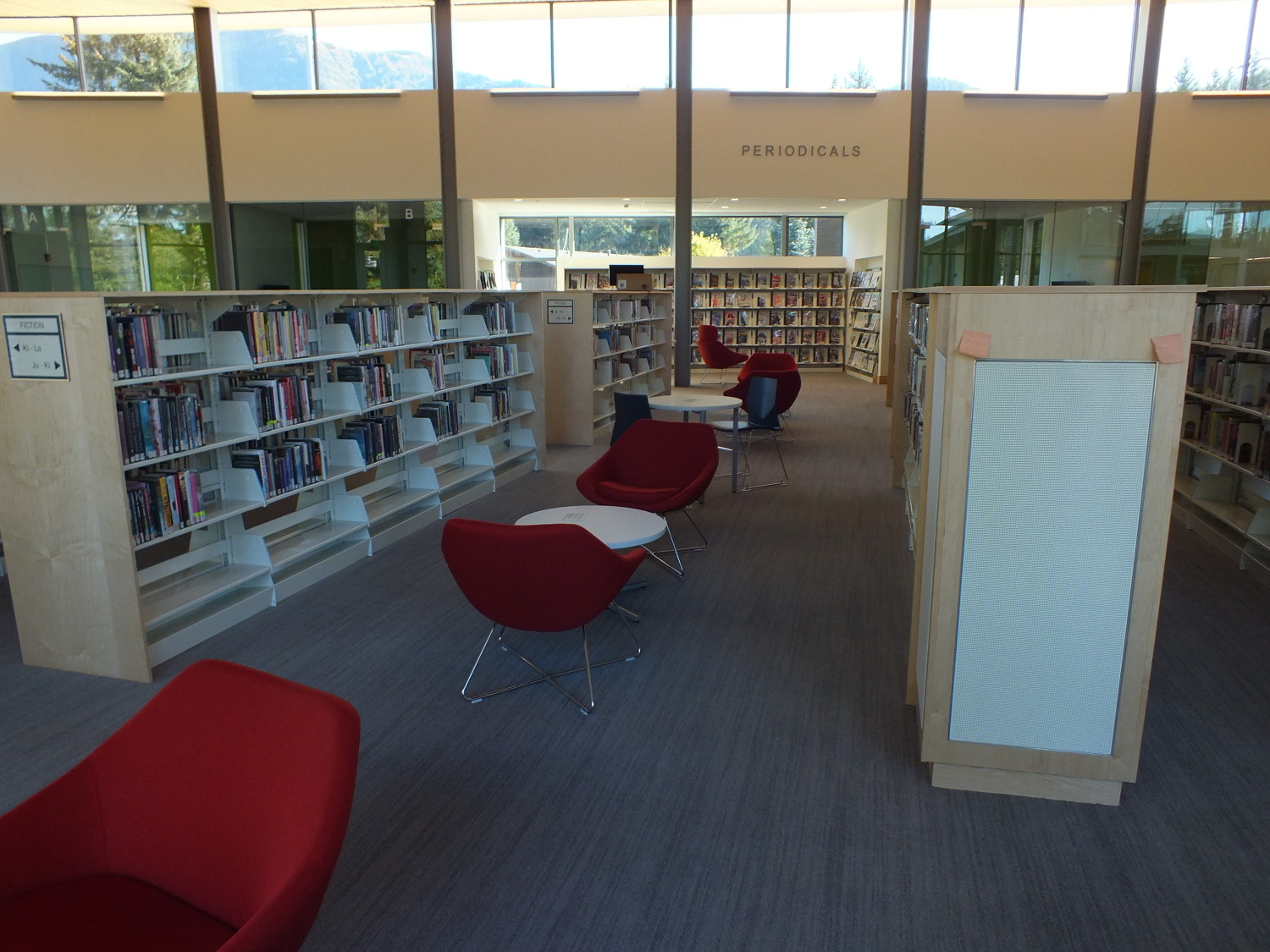
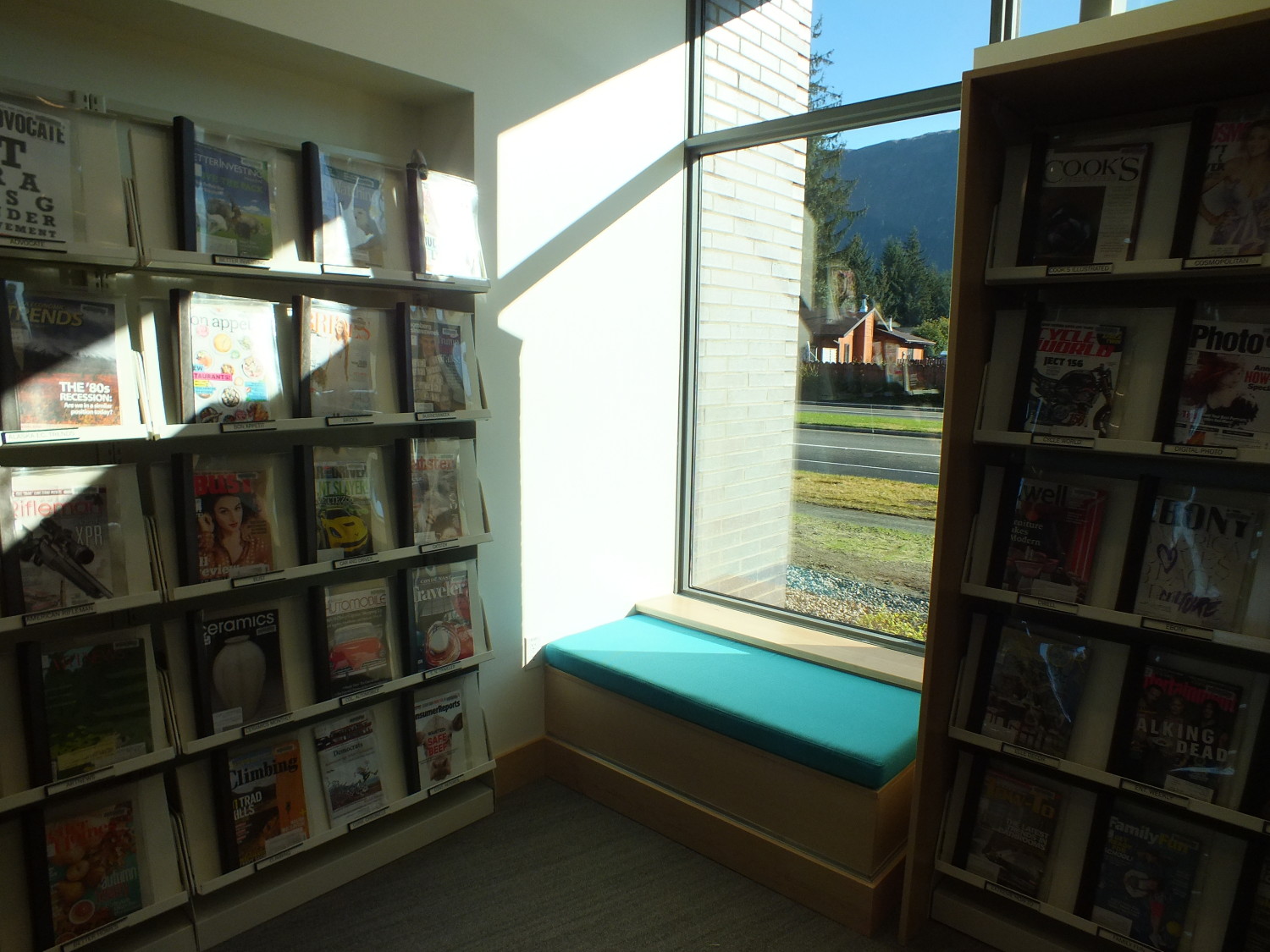
The periodical section features a window alcove for seating (Photo by Matt Miller/KTOO)
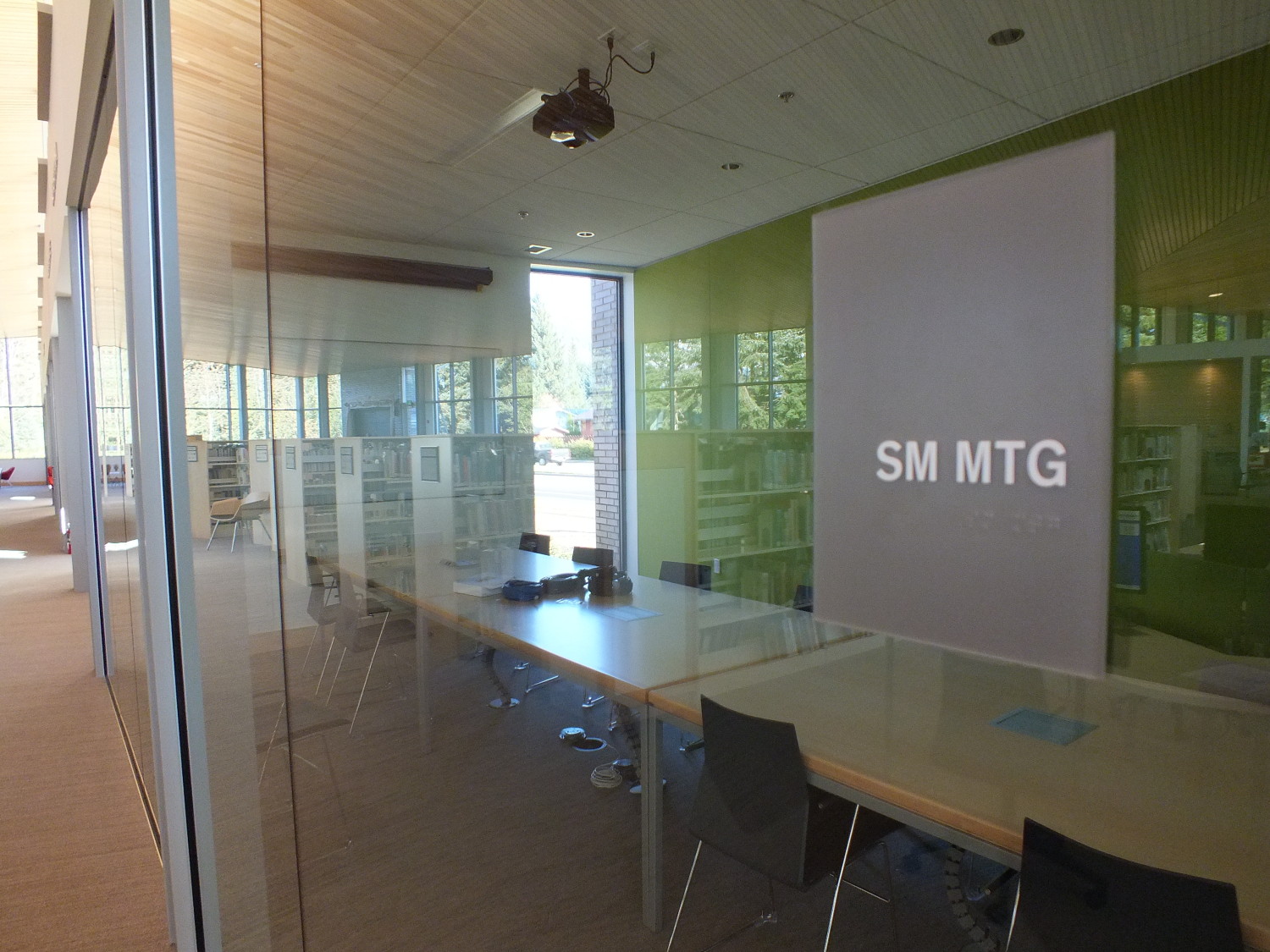
A conference room at the new Mendenhall Valley Public Library. (Photo by Matt Miller/KTOO)
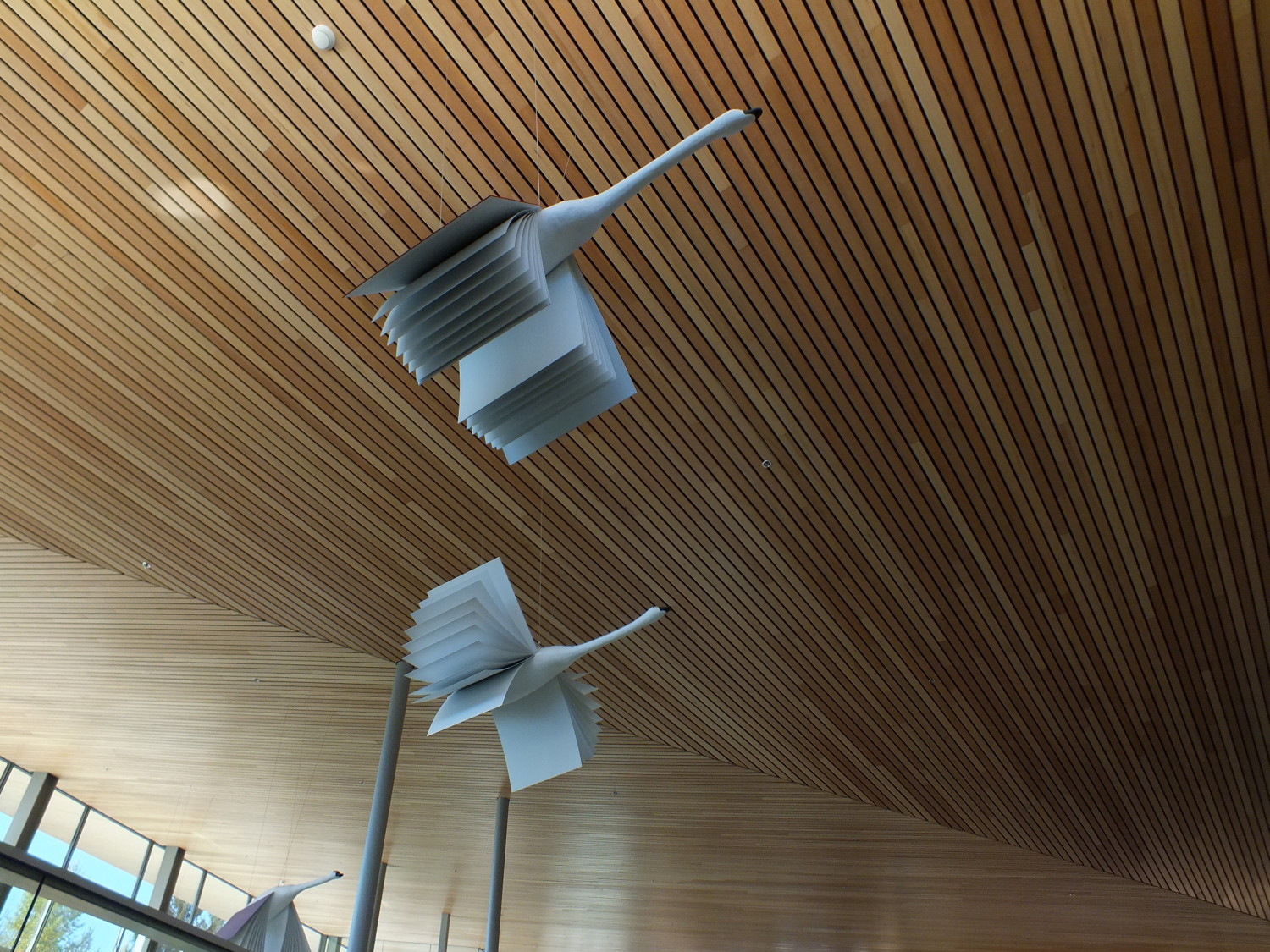
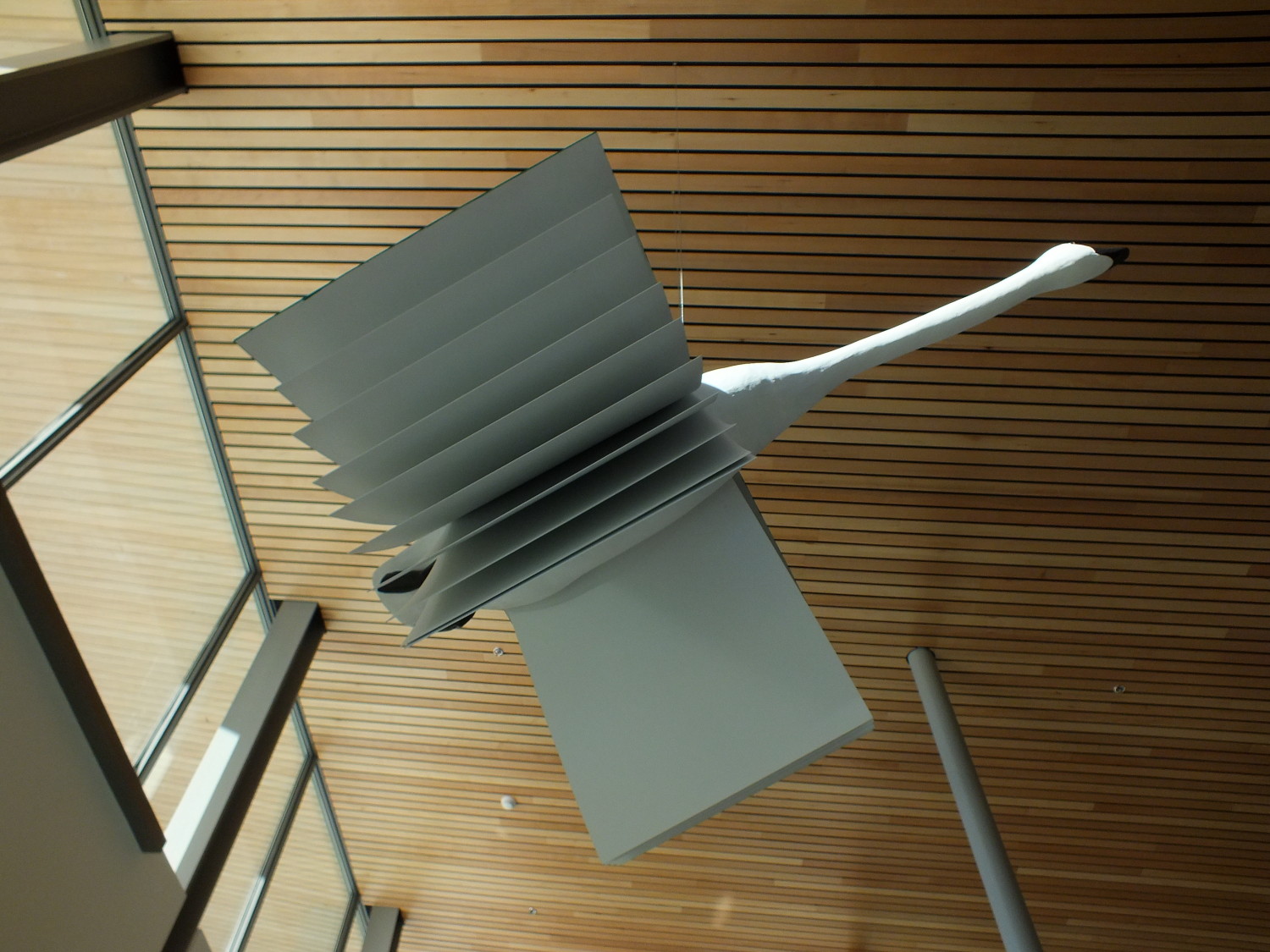
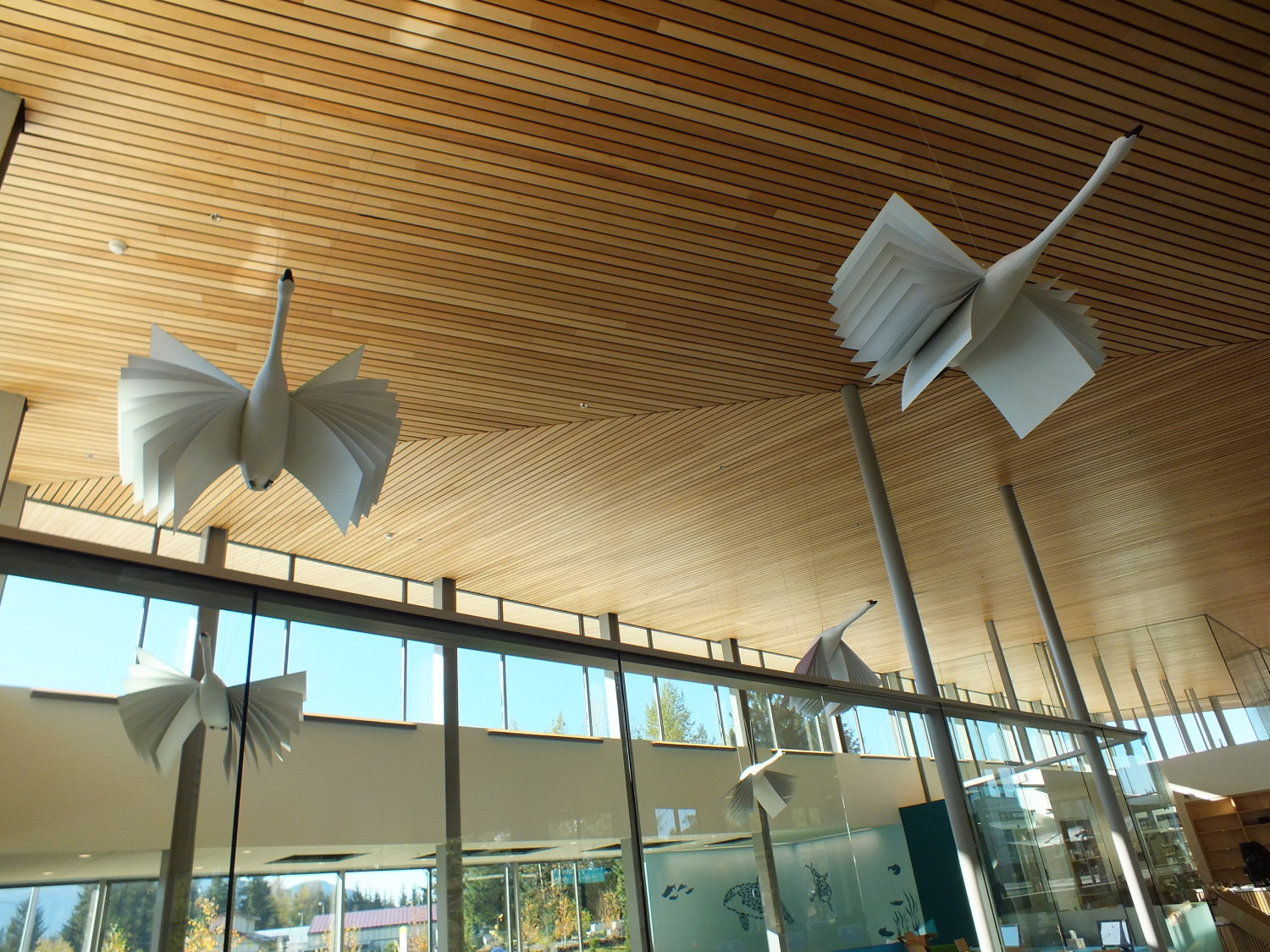
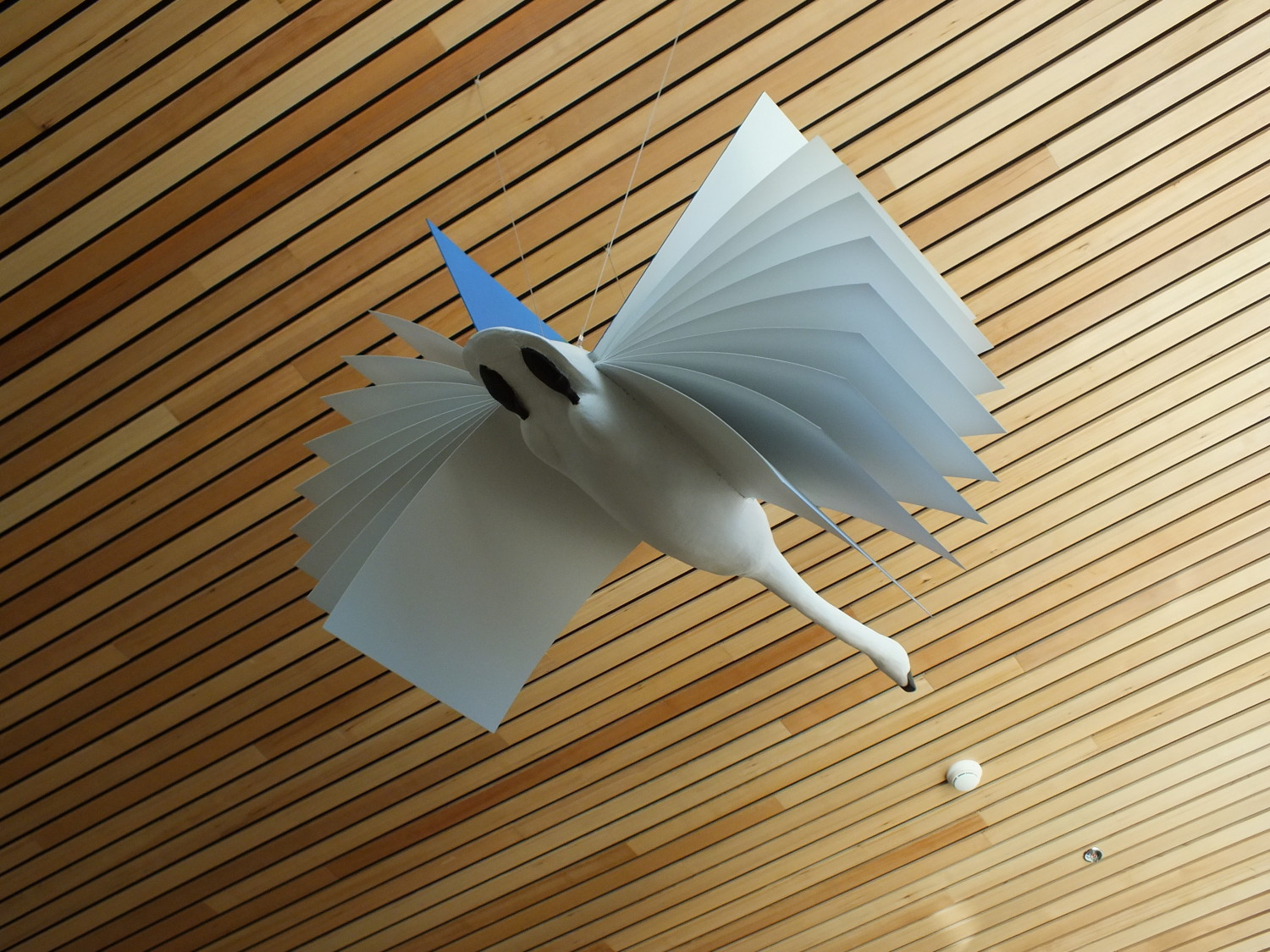
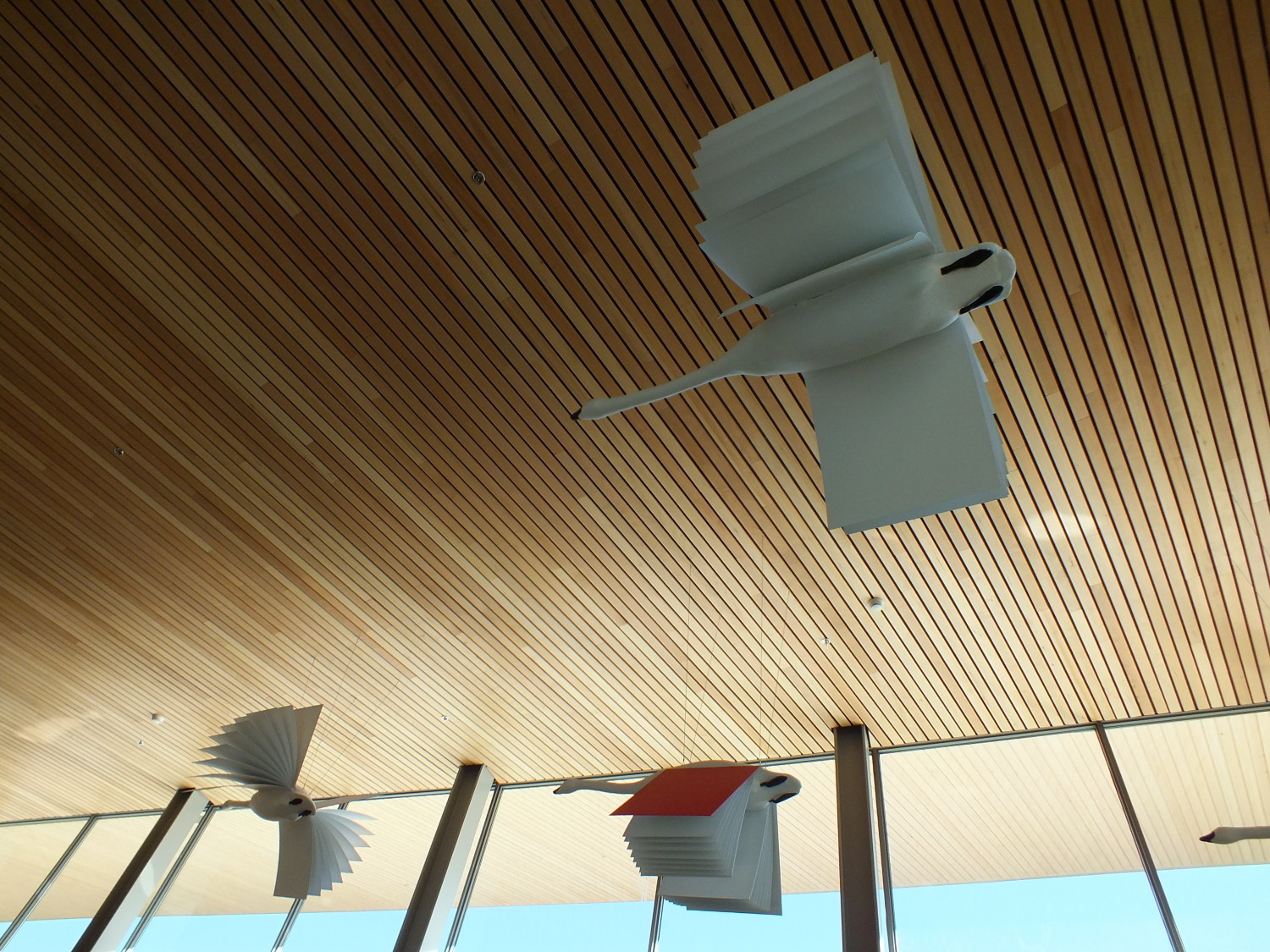
Biblioswans designed and constructed by artist Dan DeRoux at the new Mendenhall Valley Public Library. (Photo by Matt Miller/KTOO)
The swans are lifesize. (Photo by Matt Miller/KTOO)
Another view of the swans at the new Mendenhall Valley Public Library. (Photo by Matt Miller/KTOO)
The swans are a One Percent for Art commission for the new Mendenhall Valley Public Library. (Photo by Matt Miller/KTOO)
The swans are flying in formation heading north. (Photo by Matt Miller/KTOO)
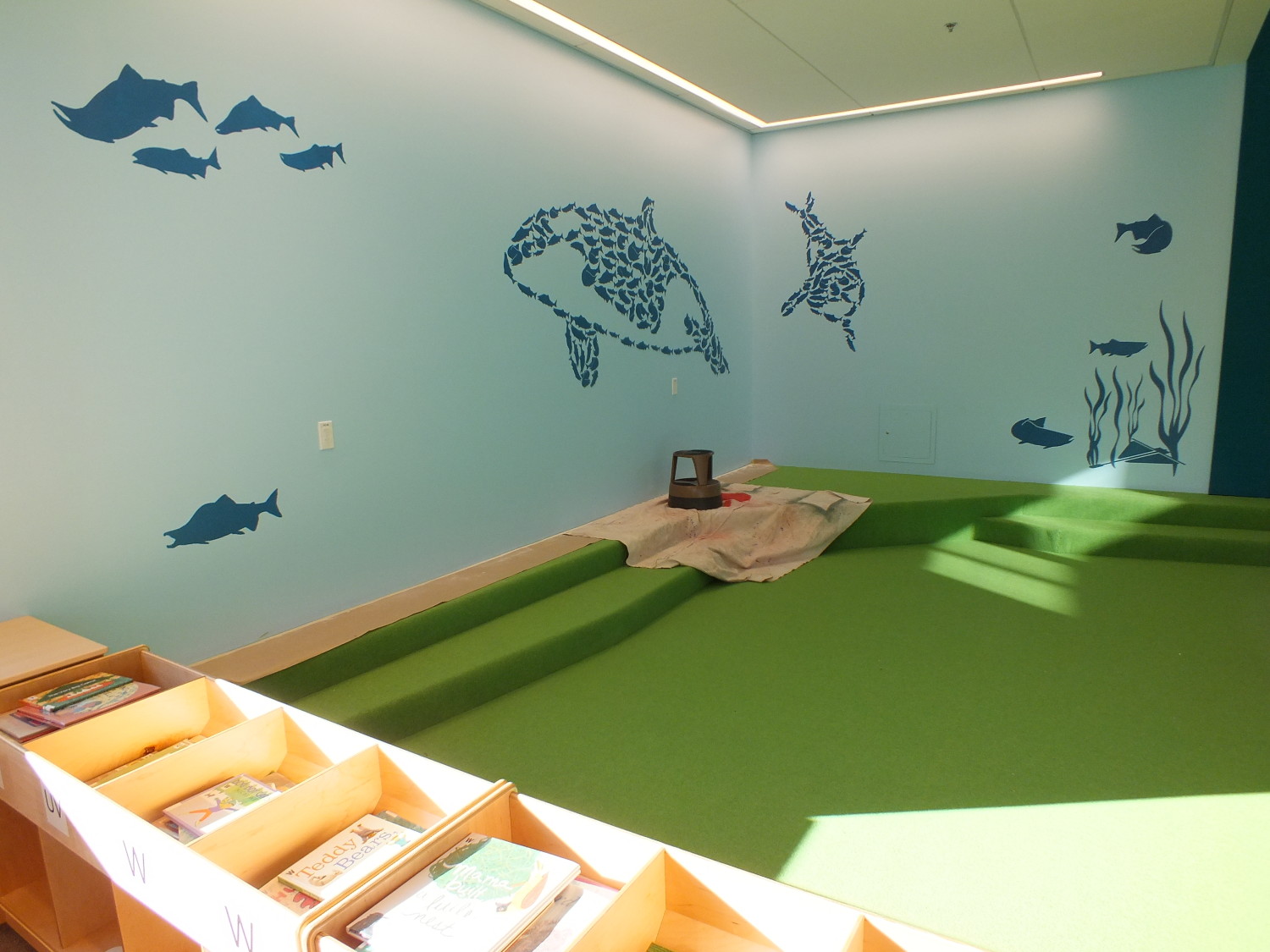
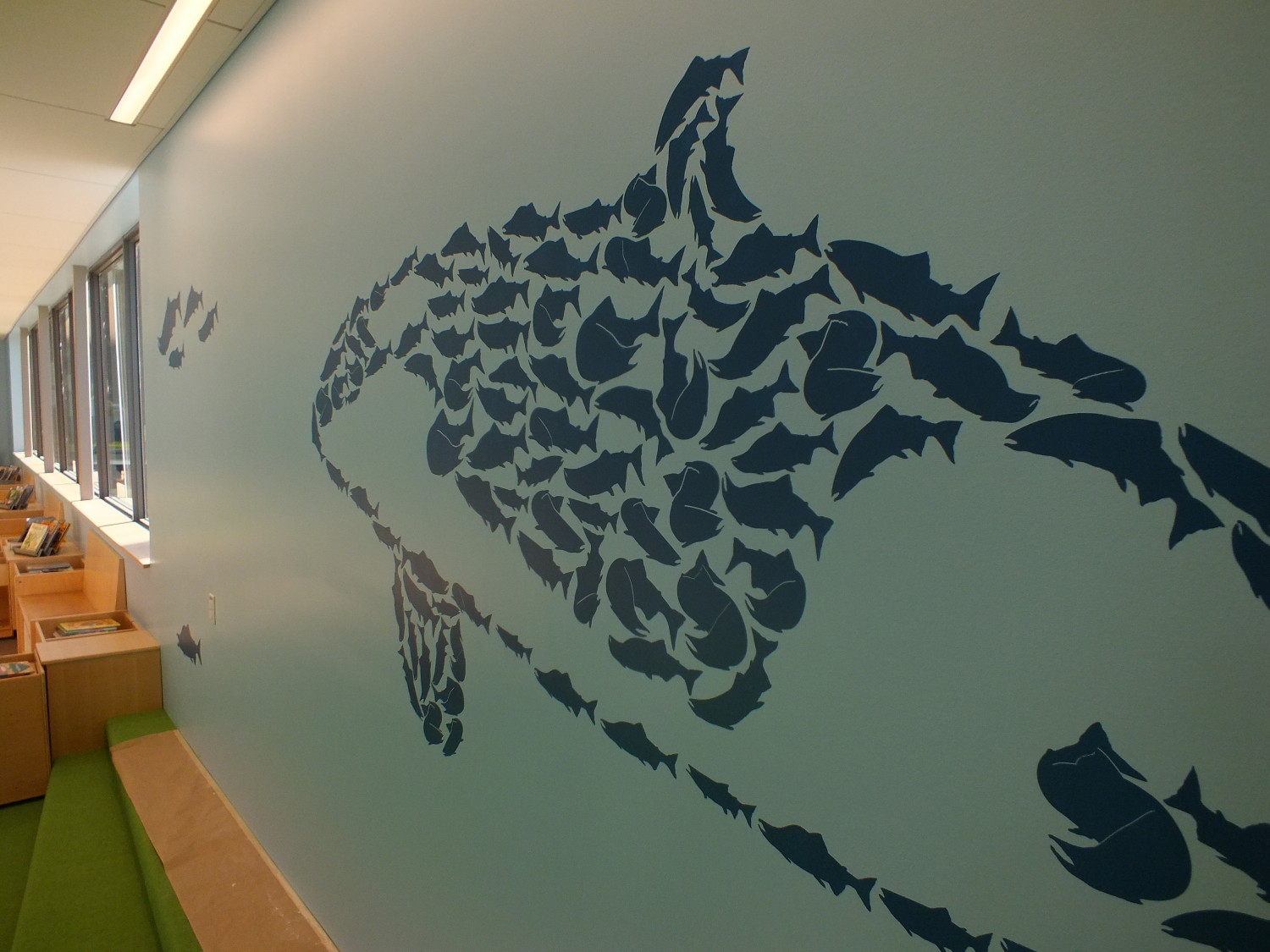
Aurora Projekt artwork dots the walls of the children's section and surround the stage for story time. (Photo by Matt Miller/KTOO)
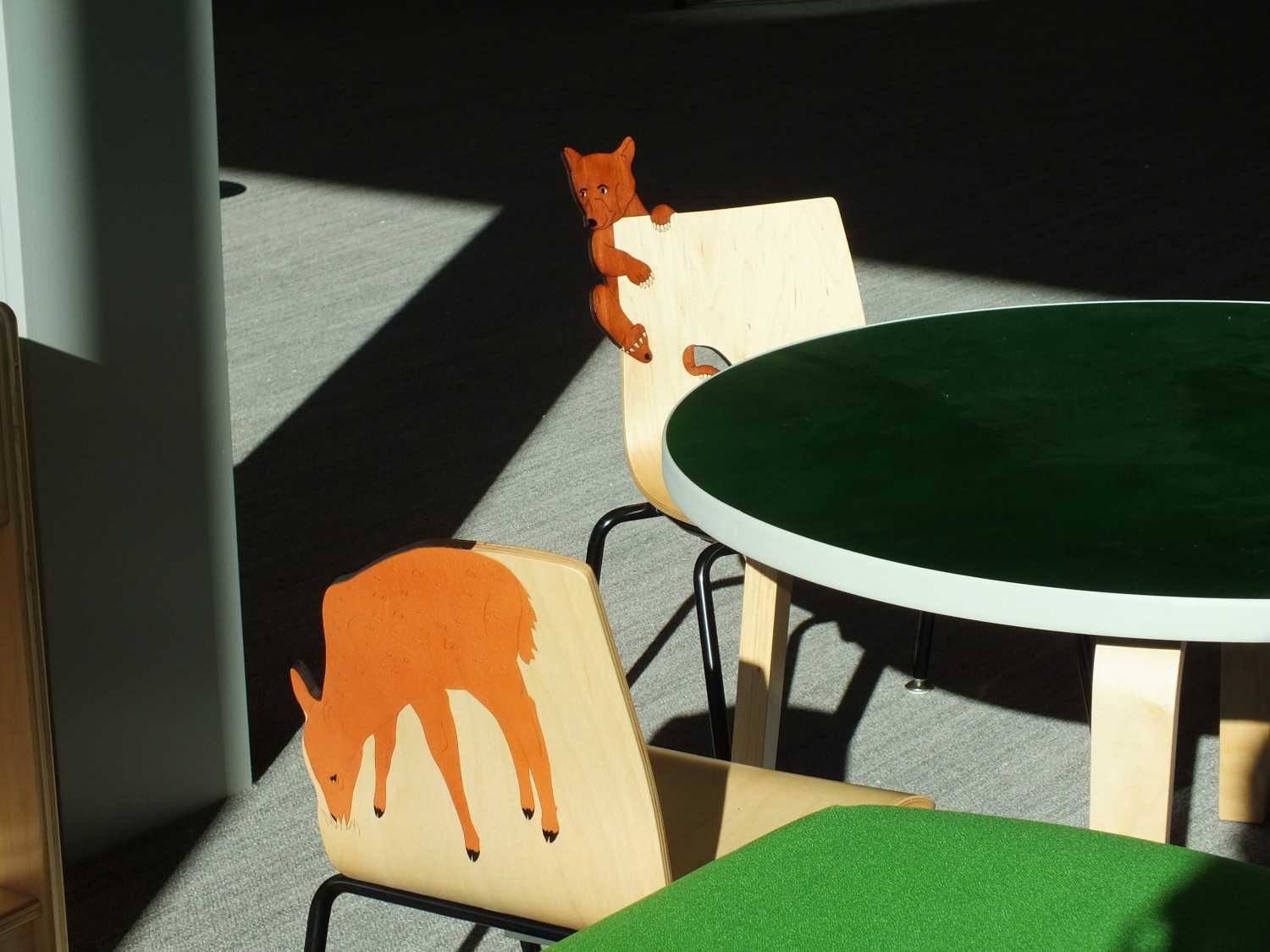
Kids' chairs feature animals commonly found in Southeast Alaska. (Photo by Matt Miller/KTOO)
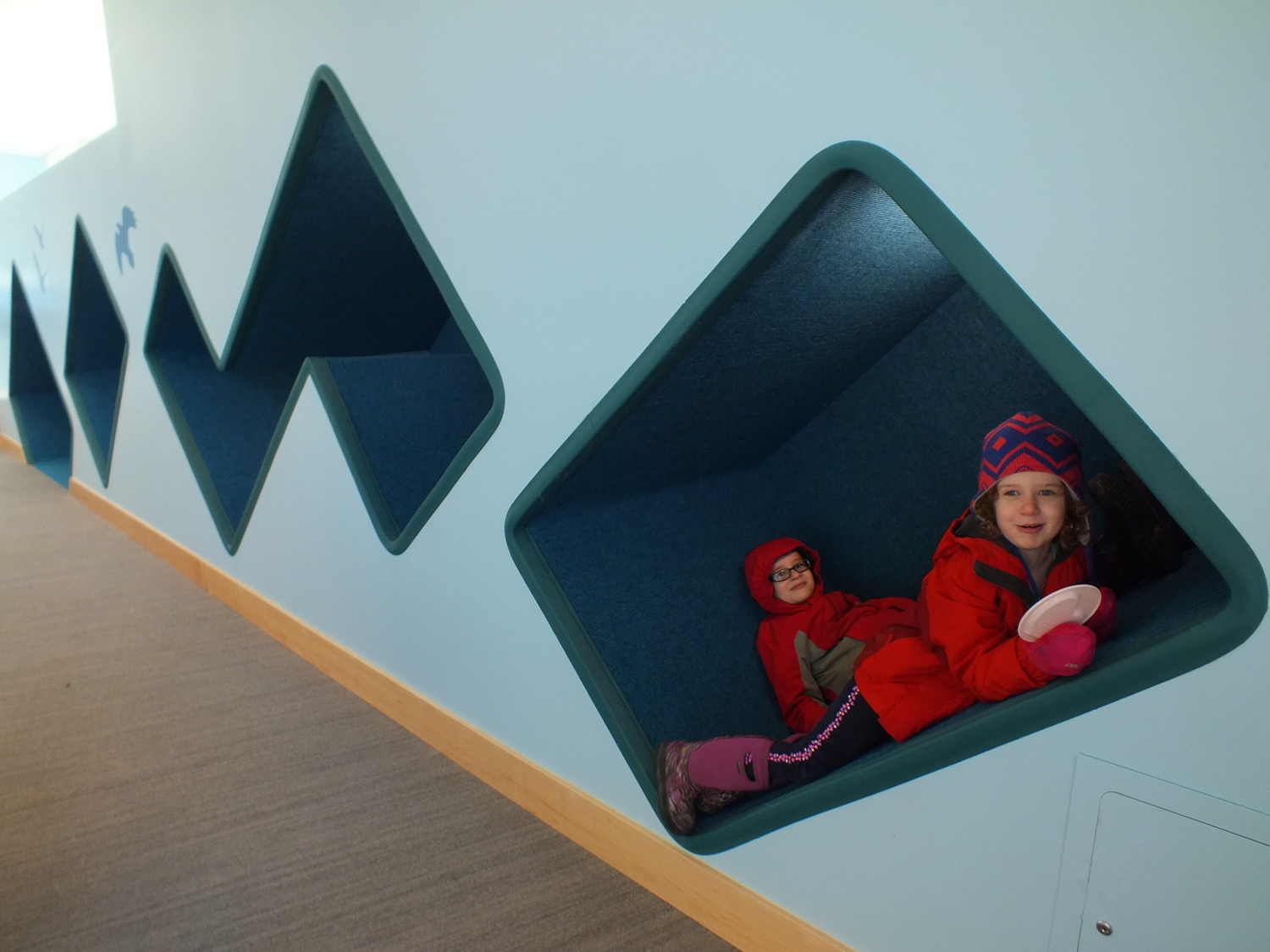
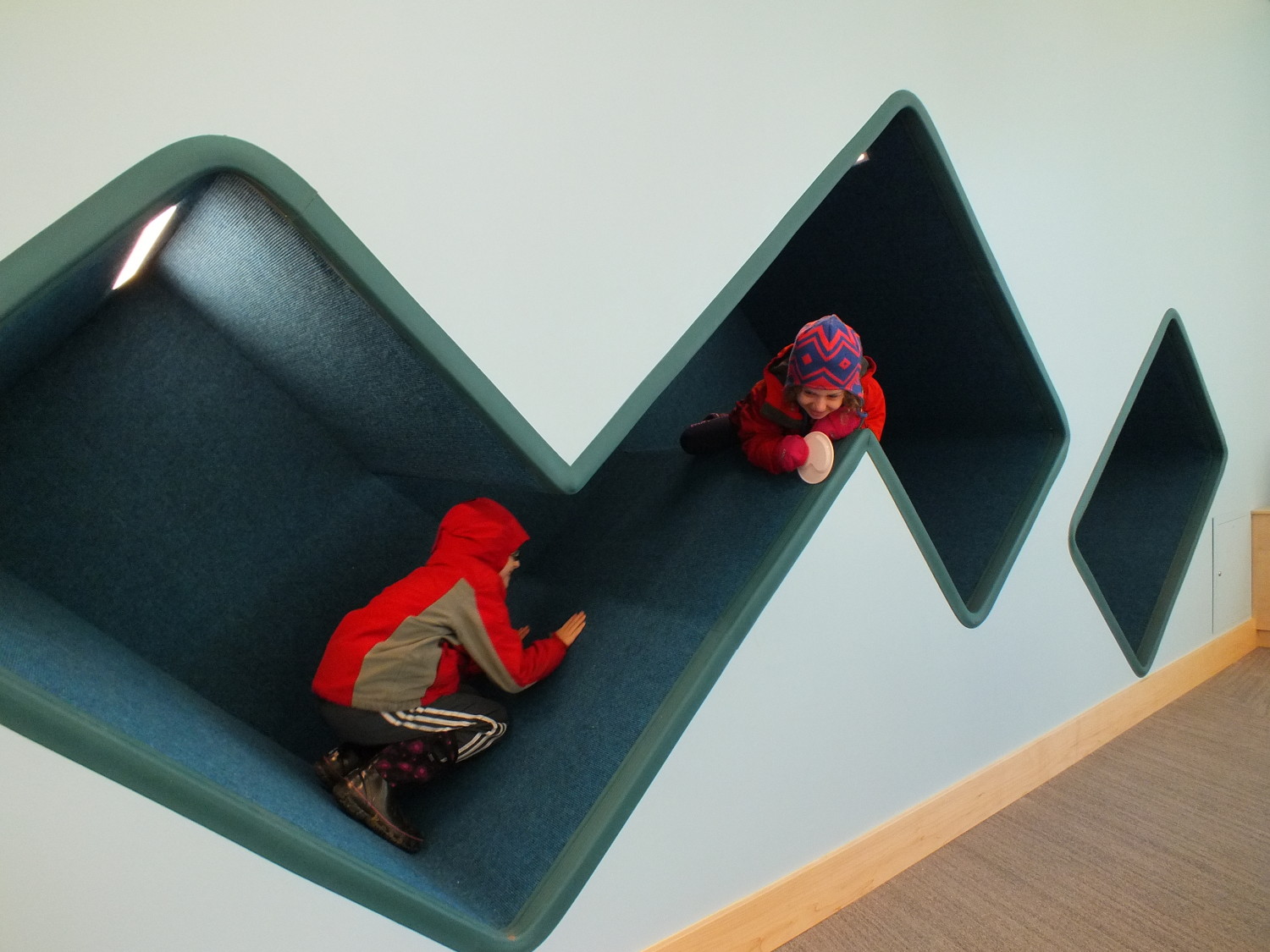
Q Curtis, 8, and Sadie Frances Curtis, 5, enjoy the new children's reading nooks. (Photo by Matt Miller/KTOO)
Aurora Projekt art is featured at the new Mendenhall Valley Public Library. (Photo by Matt Miller/KTOO)
Q Curtis, 8, and Sadie Frances Curtis, 5, enjoy the new children's reading nooks. (Photo by Matt Miller/KTOO)
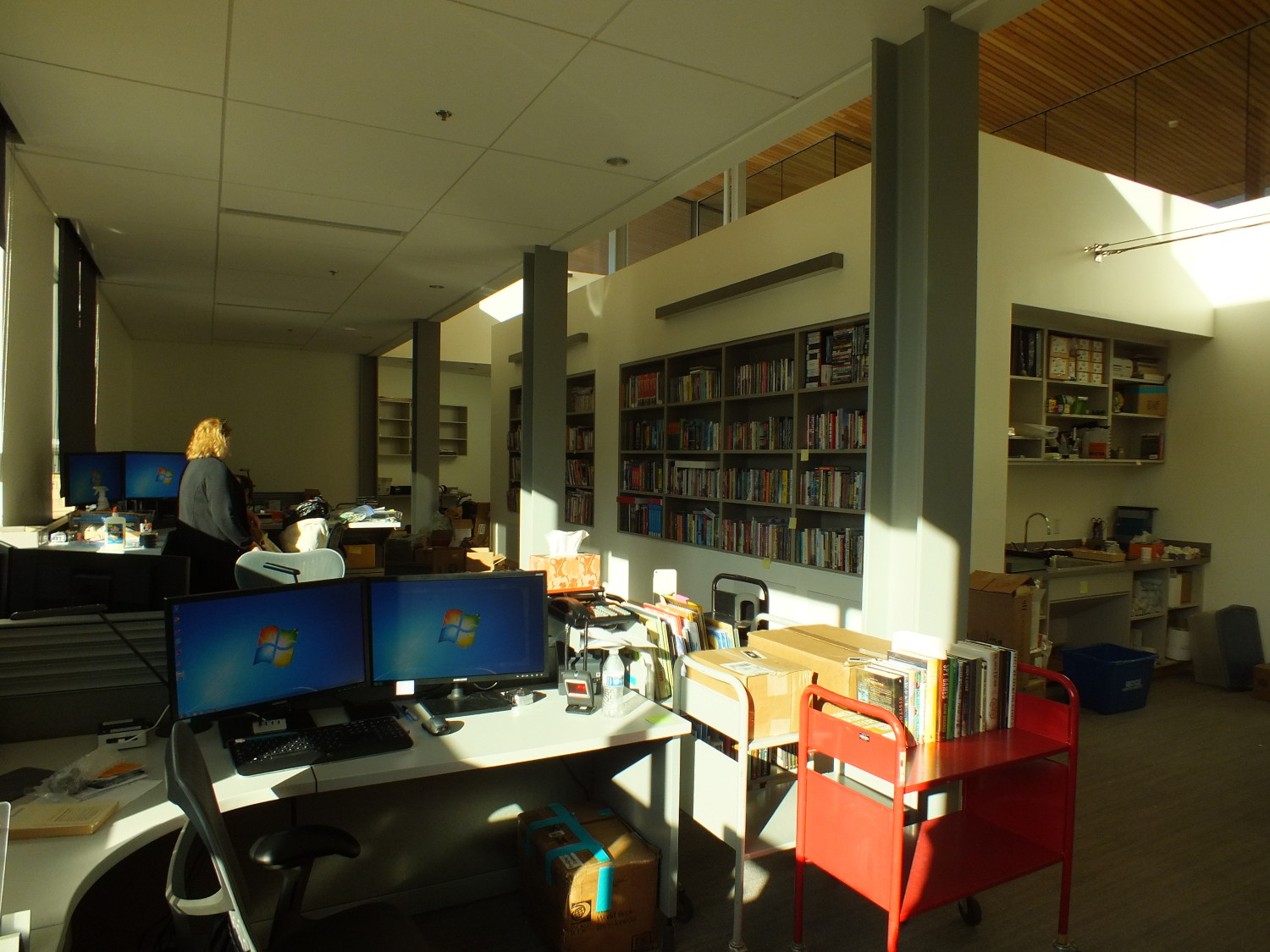
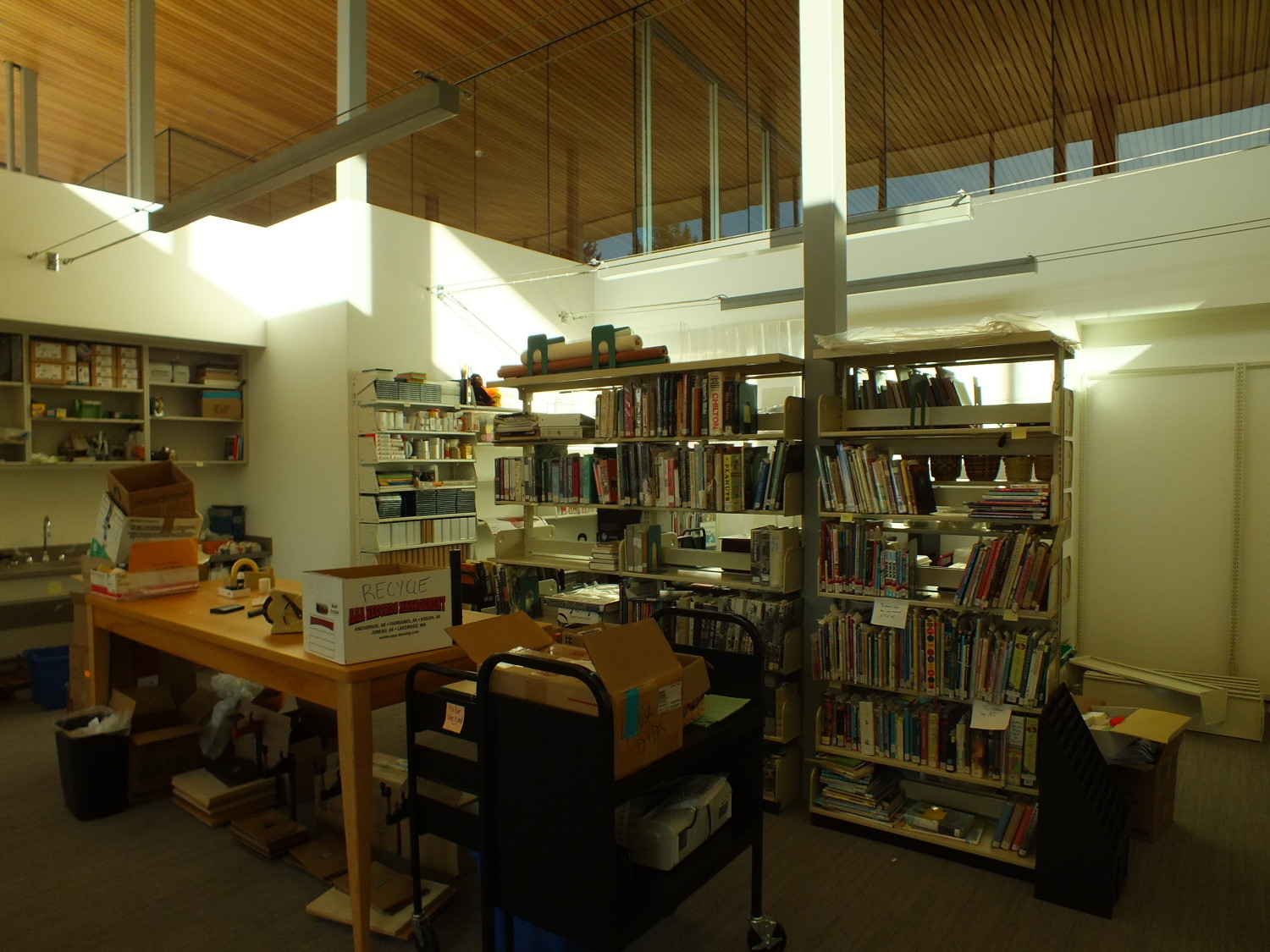
A back office for book processing. (Photo by Matt Miller/KTOO)
A back office for book processing. (Photo by Matt Miller/KTOO)
Take a virtual tour of the new Mendenhall Valley Public Library (about 13 minutes) conducted by library program coordinator Beth Weigel. Start the audio file below and click through the slideshow above:
Juneau book lovers can check out the new Mendenhall Valley Public Library in Dimond Park — and check out more books — after its soft opening Monday, Oct. 5. For more than 30 years, the old library was located in the Mendenhall Mall.
The new 24,000 square foot structure — almost twice as much space as its former location — is open and inviting with natural light streaming through exterior and interior glass that reflects off the wood ceiling.
The $14 million project was largely paid for by city sales tax proceeds, a state grant and a contribution of more than $1 million from Friends of the Juneau Public Libraries. The organization raised most of the funds from used book sales at their Amazing Bookstore in the Airport Mall.
A formal grand opening ceremony for the Mendenhall Valley Public Library is planned for November 7.
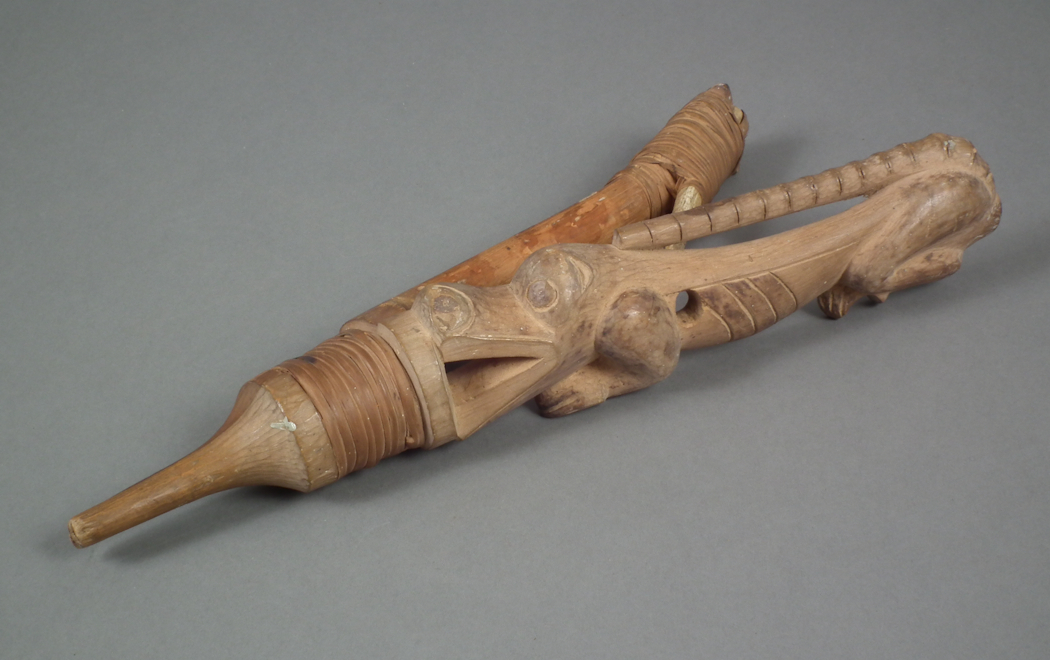
This Tlingit halibut hook with a wolf spirit was slated for auction. (Photo courtesy of Karen Kramer/Peabody Essex Museum)
A Massachusetts college that planned to liquidate its Native art collection has called it off. The pieces are from 52 tribes, including Tlingit and Haida items that might be sacred. Now the country’s oldest theology school could get dinged with penalties as feds investigate.
Over the summer, the Andover Newton Theological School, or ANTS, quietly decided it would sell 80 pieces of Native art from their collection. But their plans didn’t stay quiet for long. The museum that’s housed the collection since the 1940s alerted hundreds of tribal leaders.
Sealaska Heritage Institute was one of the organizations contacted because the school intended to auction off a Tlingit halibut hook, an item that SHI President Rosita Worl says is sacred.
“The halibut hook has spiritual dimensions to it and in this particular case, we have a halibut hook with a wolf,” she said.
Worl believes the school also has a Southeast shamanic doll. If a college or museum receives federal funds, then federal law dictates that certain items in their collection are subject to repatriation.
So, how did Andover Newton wind up with such a vast collection of Alaska Native, Native American and Hawaiian art?
“It was through their own missionaries going out into the field and collecting objects. Like, I tell the story over and over again … they collected our sins,” Worl said.
What those missionaries considered “sins” could fetch the college a million dollars now if the legality of the sale hadn’t come into question.
Peabody Essex Museum President Dan Monroe says the school was confused from the jump. It didn’t file an inventory or summary providing tribes with information. And the college assumed the museum could cherry-pick what was subject to the law, but only tribes have say in that.
“No other party can make those identifications,” Monroe said.
Even so, the school claims that information came from Peabody Essex. Monroe lets out a big laugh before responding.
“OK. Number one: we could never tell them what objects in their collection are subject to NAGPRA. … Because we have no standing in the law and we perfectly well understand that,” Monroe said.
In 2009, Monroe says the Onondaga Nation asked the school to give back a wampum belt. The school denied the request. As a private college, it thought it wasn’t subject to the law. But here’s the problem with that: some students pay their tuition with Stafford loans, which are funded by the government.
This tunic was repatriated from a museum in 2007. Although it’s of Southeast origin, the tribe is unknown. (Photo by Elizabeth Jenkins/KTOO)
“If the institution receives federal financial assistance, whether directly or indirectly, that would be receipt of federal funds,” said David Tarler.
Tarler works at the NAGPRA office in Washington, D.C. He said the school is being investigated, and in this case penalties can range from $5,000 for each failure to comply up to about $21,000, or .25 percent of the school’s annual budget — whichever is less. Then there are aggravating circumstances, like previously denying a tribe’s claim.
Monroe says he’s still not sure if the college gets it.
“On the plus side, they’ve made the commitment not to sell objects; they’ve made a commitment to comply with NAGPRA and those are admirable and very positive decisions on their part,” he said. “Regardless of the means of how they arrived at them.”
Martin Copenhaver, the school’s president, said he was too busy to comment but forwarded a letter that said “we will proceed to repatriate artifacts … if feasible and appropriate ways can be found to do so.”
“I mean, that sent up a red flag to me,” Worl said. “When I read that, ‘if feasible and appropriate.’ What does that mean? It should be if it complies with the law. Who makes that determination? If it’s feasible?”
Aside from the law, she says there’s a larger underlying issue the school doesn’t seem to understand about the collection.
“They keep referring to them as artifacts and they’re not artifacts. They’re at.oow. They’re living things to us; they’re spiritual things to us,” Worl said.
Andover Newton Theological School did recently reach out to the Onondaga about the wampum belt, Worl said. But Southeast tribes are still waiting.
Clarification: we’ve reworded details about how the school may be fined.
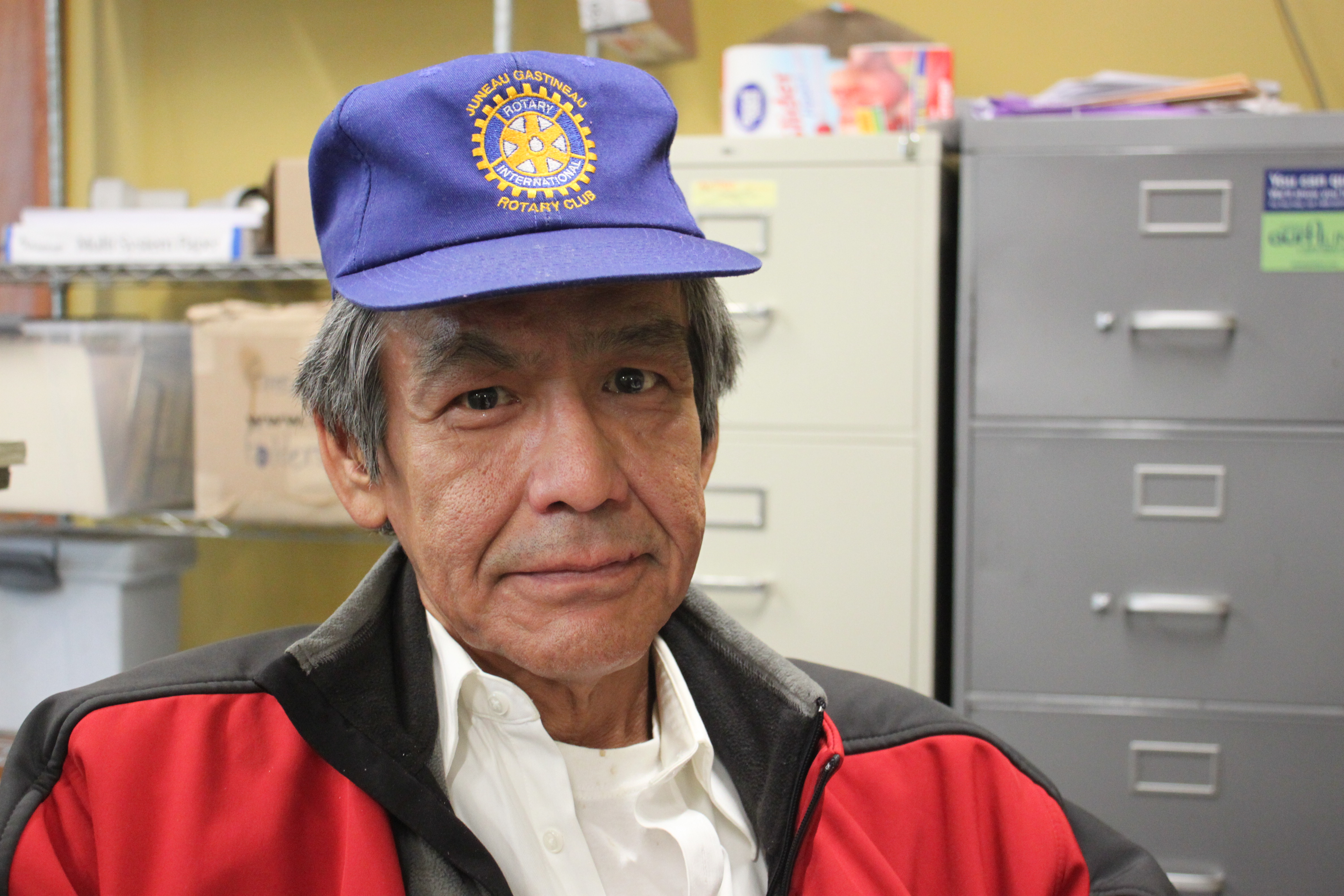
At The Glory Hole, James Knudson, 57, becomes emotional while talking about his brother, John Knudson, who died last month. (Photo by Lisa Phu/KTOO)
There are moments when James Knudson forgets his younger brother, John Knudson, is dead.
“Riding on the buses, I start looking out where we used to see him, around Switzer or A&P or down at the bus barn, places you know he hung out. I catch myself looking for him,” Knudson says.
His brother’s body was found in the Mendenhall Wetlands in mid-September. Juneau Police said he had likely been in the water and exposed to the elements for at least several days. His body was sent to the state medical examiner.
John Knudson, 56, is one of at least eight people who have died outside in the past three years. These are just the ones we know about based on the 2012 Juneau Homeless Coalition survey.
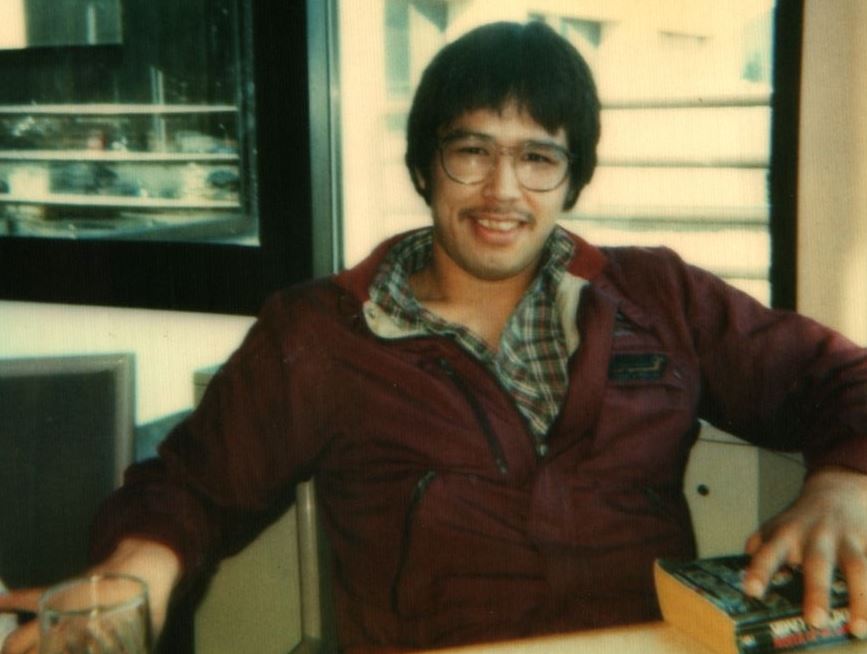
John Knudson during his younger adult years. (Photo courtesy Jennie Knudson)
Juneau Police still don’t know what caused Knudson’s death. His brother James Knudson doesn’t either, but he has a theory: “My suspicion is that he was by either Switzer Creek or Lemon Creek and fell in there and then got washed out.”
Knudson says his brother was staying with a friend in the Lemon Creek area. He assumed he was safe, even though he hadn’t heard from him in a few weeks. The two brothers had always looked out for each other.
“If somebody got in a little scrap with somebody else, somebody would show up and help out. But this time I didn’t have any feeling. I thought he was safe,” Knudson says.
Knudson is staying at the Bergmann Hotel at the moment. He says he’s been homeless for 10 years. He says his brother became homeless when he split up with his girlfriend.
“He had his issues with alcohol, like other people, like I do at times,” Knudson says. “It’s a tough life living on the streets. I’d been there and we’d both lived on the streets together at different times.”
Just one year apart, the two brothers — of seven children total — were close growing up and as adults. They were both born in Juneau but spent their early years in Hoonah.
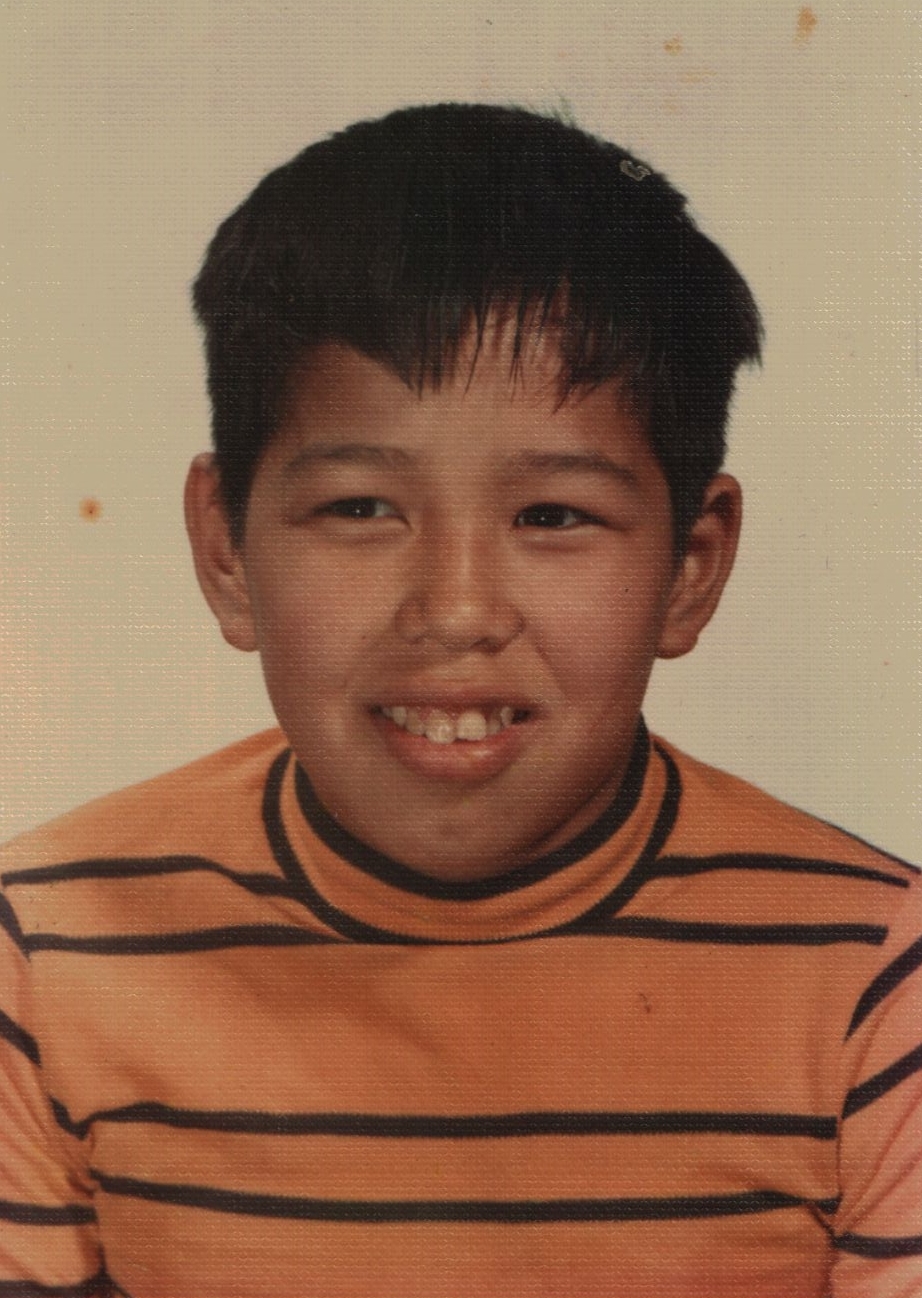
John Knudson’s school picture. (Photo courtesy Jennie Knudson)
James Knudson’s favorite story about John is one their mom used to always tell.
“My dad had just gotten back from deer hunting, had a couple deer hanging out in the shed. That night my brother came up to me. He had a butter knife in his hand, goes, ‘Jer, let’s go hunt some deer.’ That’s what they called me, ‘Jer.’ I looked at my brother and go, ‘What if we run into a bear?’ Holding a butter knife, he goes, ‘We’ll jump on his back,'” Knudson says, laughing.
Knudson says his brother fell into the wrong crowd at a young age, got in trouble and paid for it the rest of his life. Knudson says his brother went to a mining trade school.
“The instructor thought he would be a good mine worker, but with his felony, he couldn’t get a job at the mine. I tried to talk to him about it. I guess some people can work around a felony as far as working in the mine, but my brother just wouldn’t look into it,” Knudson says.
Instead, John Knudson went into construction and mechanical work.
“He’s a real good worker. It’s just alcohol got the best of him,” Knudson says.
Knudson continues to struggle with alcohol. He’d been sober for two months, but started drinking again while planning his brother’s memorial services. He says John’s body will be cremated, his ashes spread over their parents’ graves.
“In the meantime, we should just not accept this as an acceptable reality, because it’s not acceptable. It’s not acceptable to have people die on the street,” says Glory Hole Executive Director Mariya Lovishchuk.
If you see someone laying outside, ask if they’re OK. If they’re not, call for help.
“We just need to treat people like human beings,” Lovishchuk says.
A memorial service will be held for John Knudson on Sunday, Oct. 4 at 6 p.m. at the Tlingit-Haida Community Council Building on Hospital Drive.
Close
Update notification options
Subscribe to notifications
Subscribe
Get notifications about news related to the topics you care about. You can unsubscribe anytime.