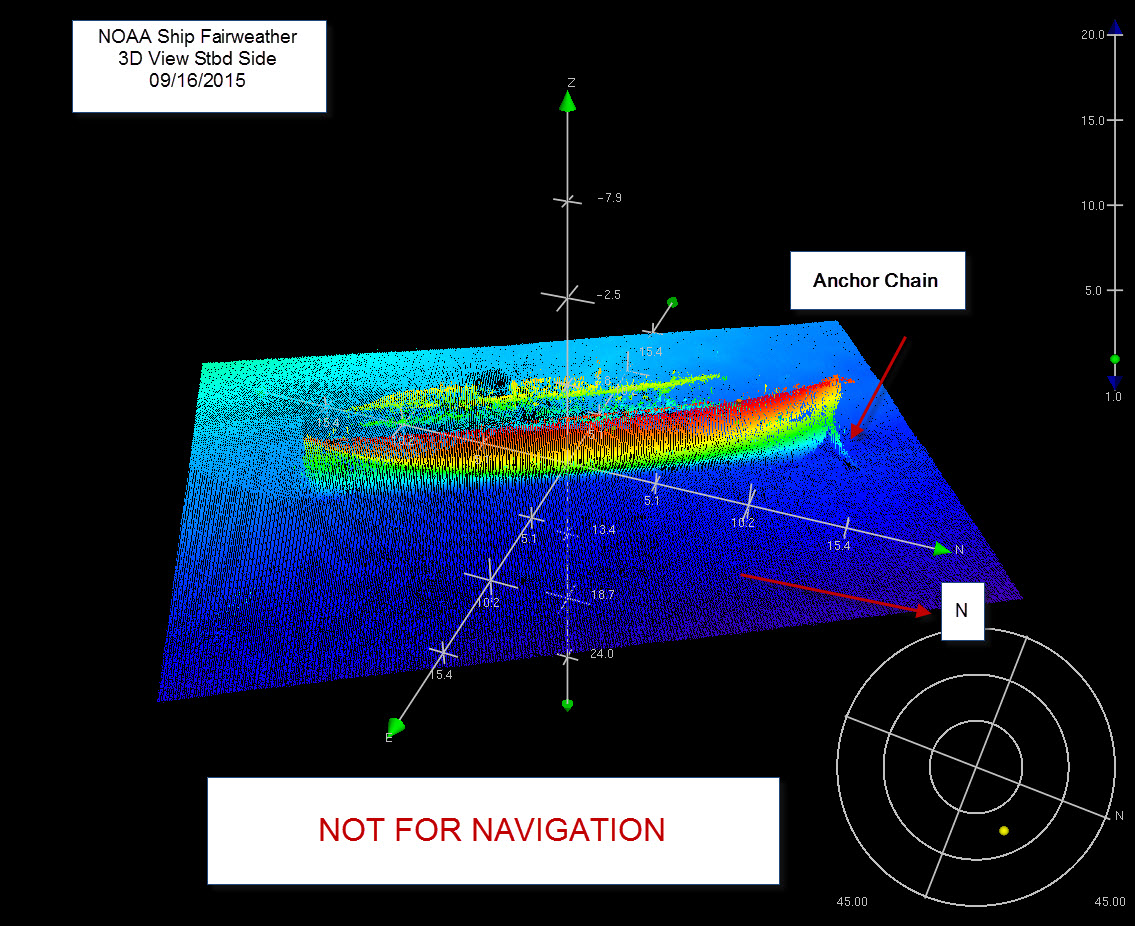
This sonar scan of the tug Challenger shows the starboard side of the vessel as it rests at the bottom of Gastineau Channel near the west shoreline. (Image courtesy of NOAA ship Fairweather)
The U.S. Coast Guard says all of the known hazardous materials, oil and fuel have been removed from the sunken tugboat Challenger.
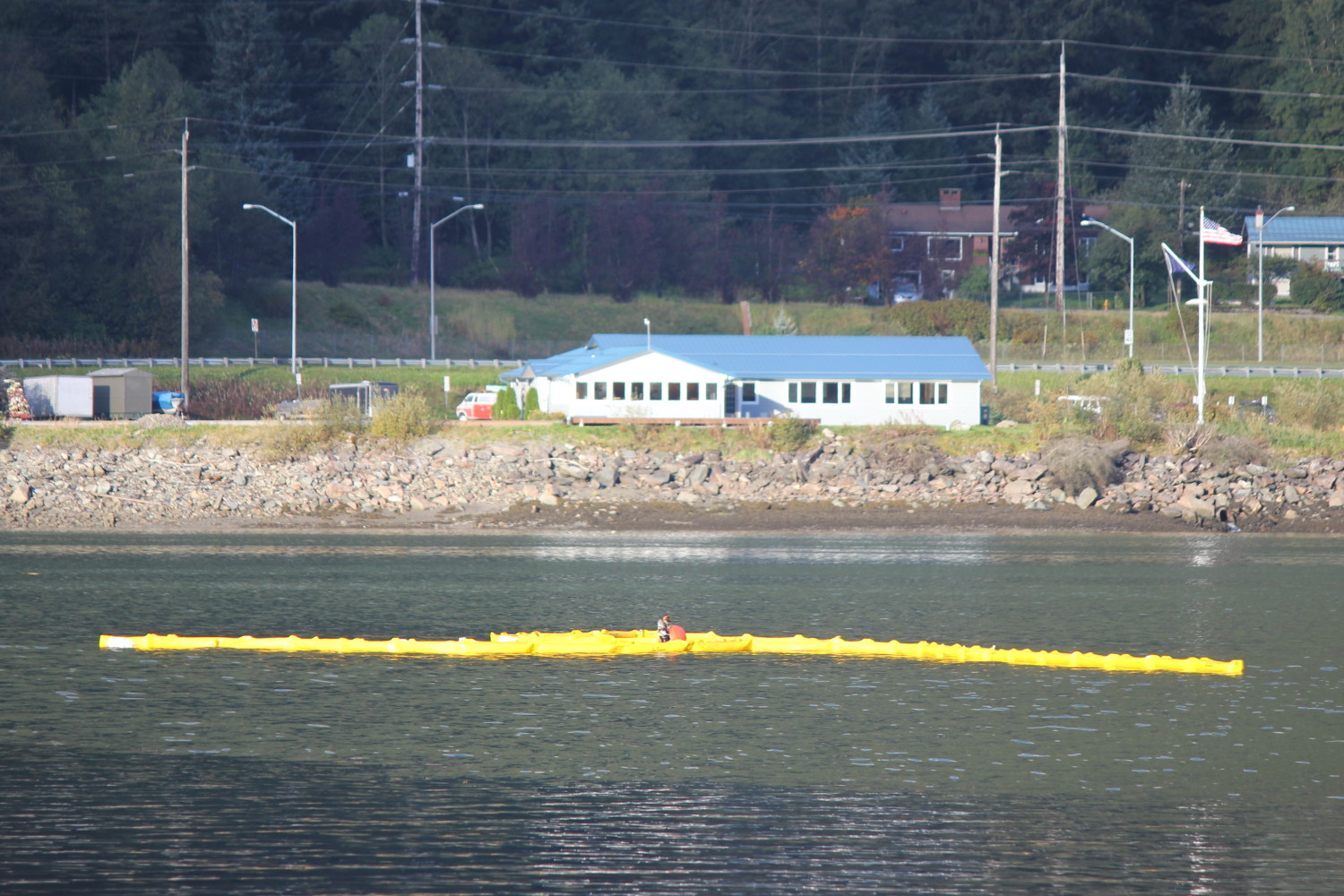
Emergency boom was initially placed around the wreck by the Coast Guard after it sank Saturday, but later swapped out with boom deployed by contractors Global Diving & Salvage and Southeast Alaska Lighterage.
Chief Petty Officer Hugo Gaytan of Sector Juneau’s Incident Management Division says the contractors examined the interior of the vessel, and removed any potential sources of pollution.
“We had a diver from Global go down and basically walk the decks, go through every room, go through all the spaces on the boat to identify any of the hazards,” Gaytan says.
Some of the items included a propane tank, a drum of corrosive material, paint cans and gallons of lube oil.
“One by one, they pulled them out,” he says.
Gaytan didn’t know exactly how much material was removed, but a report issued by the Alaska Department of Environmental Conservation on Monday estimated that there was 250 gallons of diesel fuel on board.
“They went around and looked at the tanks,” Gaytan says. “They cracked open the seal to see if any fuel would come out. If they did find fuel, they would close it back up and go get a hose with an attachment, and hook it up to the tanks to pump the fuel out.”
Coast Guard crews that initially responded to the sinking on Saturday reported a light sheen streaming away from the wreck, but none of the material was considered recoverable.
USCG containment boom is placed around the sunken tug Challenger on Sept. 13, 2015. (Photo courtesy C. Bressler/ Alaska Department of Environmental Conservation)
The Coast Guard has tapped the Oil Spill Liability Trust Fund for $50,000 to pay for the response and mitigate any potential environmental impact.
The National Oceanic and Atmospheric Administration hydrographic survey vessel Fairweather happened to be making a Juneau port call for shore leave. It was on its way to Craig after recent surveys off Barrow.
Lt. Matt Forney, the ship’s operations officer, says the Coast Guard asked them to go out on Wednesday and scan the wreckage with sonar.
“What we will definitely be doing with that is putting out a publication Notice to Mariners as well as Local Notice to Mariners to just let everybody know that the chart isn’t necessarily accurate there anymore,” says Forney. “There’s a vessel sitting on the bottom.”
Images and data from the scans were passed on to the Coast Guard as part of their investigation.
Forney says the Challenger is resting in about 28 feet of water on the western side of the channel across from downtown Juneau’s Harris and Aurora boat harbors. The bottom slopes gently along that side of the channel before it drops off sharply toward the center.
This sounding plot of the tug Challenger shows its current location near the west shoreline of Gastineau Channel. (Image courtesy of NOAA ship Fairweather)
The tug’s mast occasionally appears above the water during low tide, and the wreck has been marked with a temporary buoy and containment boom.
The Coast Guard says they were able to contact the current owner of the Challenger. He has been directed to remove the vessel from tidelands and submerged lands, but it’s unclear if and when that will occur.
This sonar scan of the tug Challenger shows a bow-to-aft view of the vessel as it rests at the bottom of Gastineau Channel near the west shoreline. (Image courtesy of NOAA ship Fairweather)
The Central Council of Tlingit and Haida Indian Tribes of Alaska announced plans on Thursday to open a cultural immersion park. Next year, the shuttered Thane Ore House is expected to be transformed into a new Juneau tourist destination.
Myrna Gardner, the council’s business and economic development manager, said the park could offer teachable experiences for Native youth and guests. They’ll see weaving and master carvers working with apprentices on totems and canoes.
Thane Ore House is located at about mile 4 of Thane Road just before Sheep Creek. (Photo by Matt Miller/KTOO News)
“They’ll not only see a living culture, they’ll be able to talk to the artists,” Gardner said. “We’ll have cultural guides with them. Our plan is to not only strengthen our culture and the connection with our youth but also share our culture with the guests that travel into Juneau.”
Plans include a gift shop and restaurant that serves traditional foods–like blueberries, salmon and Hudson Bay tea. As many as 100 permanent jobs could be created.
President Richard Peterson said that’s part of the business model. The immersion park will draw employees from the Central Council’s existing vocational program. He hopes, eventually, it will help Central Council become more self-sufficient.
“You can’t have a program live off grants forever. Part of that sustainability is that economic development engine kicking in for tourism, kind of solves each others’ problems,” he said.
The city owns the land and solicited project proposals. Central Council beat out pitches from caterer Abby’s Kitchen and Liquid Alaska Tours.
Peterson said, as the final design plans come together, it’ll be done with careful thought and planning.
“I want to make sure that what we do is culturally sensitive and culturally appropriate,” Peterson said. “I don’t want to do something that’s a parody of our culture. This has to be something that’s done right.”
The $1.3 million Tlingit-Haida immersion park is slated to open next summer.
Storm Large and Pink Martini. (Photo by Chris Hornbecker/Pink Martini)
When Storm Large first sang with the genre-defying band Pink Martini, she had four days to learn 10 songs in five different languages — and perform them all to sold out audiences at the Kennedy Center.
That was 2011. The regular singer was having surgery on her vocal cords.
Four years and 17 languages later, Large is now a permanent fixture in the mini-orchestra. This weekend, she and Pink Martini will play Centennial Hall as part of the 30th Juneau Jazz & Classics season.
“The whole experience of Pink Martini is being invited to a beautiful amazing party in 1961 where you’re just kind of waiting for Lauren Bacall to show up,” said Large. “It’s not an experience where you’re sitting in the audience and the musicians are separate from you on stage. We love to engage with people and be inclusive and have everybody be part of the show. We love to get people up and dancing. I jump offstage and dance with people. It’s just a little joy factory.”
Onstage, she says the Portland-based band recreates the glamour of old Hollywood and the sounds of the Copacabana. Though the group has toured through Alaska before, this is Large’s first trip.
“Pink Martini classes me up a little bit,” she said. “I’m kind of a rock and roll punk cabaret artist. Working with them has taught me you can say a lot without saying much.”
See Pink Martini live at 7 p.m Sunday at Centennial Hall.
Juneau Assembly Candidate Debate
5:30 p.m. Tuesday, Sept. 29
Egan Lecture Hall, University of Alaska Southeast
The five candidates for Juneau School Board fielded questions Thursday about their priorities, testing, teacher pay and the budget situation at a forum held by the Juneau Chamber of Commerce.
Most of the candidates expressed concern about college and career readiness, and all of them acknowledged the challenge of attracting teachers and compensating them enough given the high cost of living. Responsiveness to the community and transparency also seemed to be a priority for several candidates.
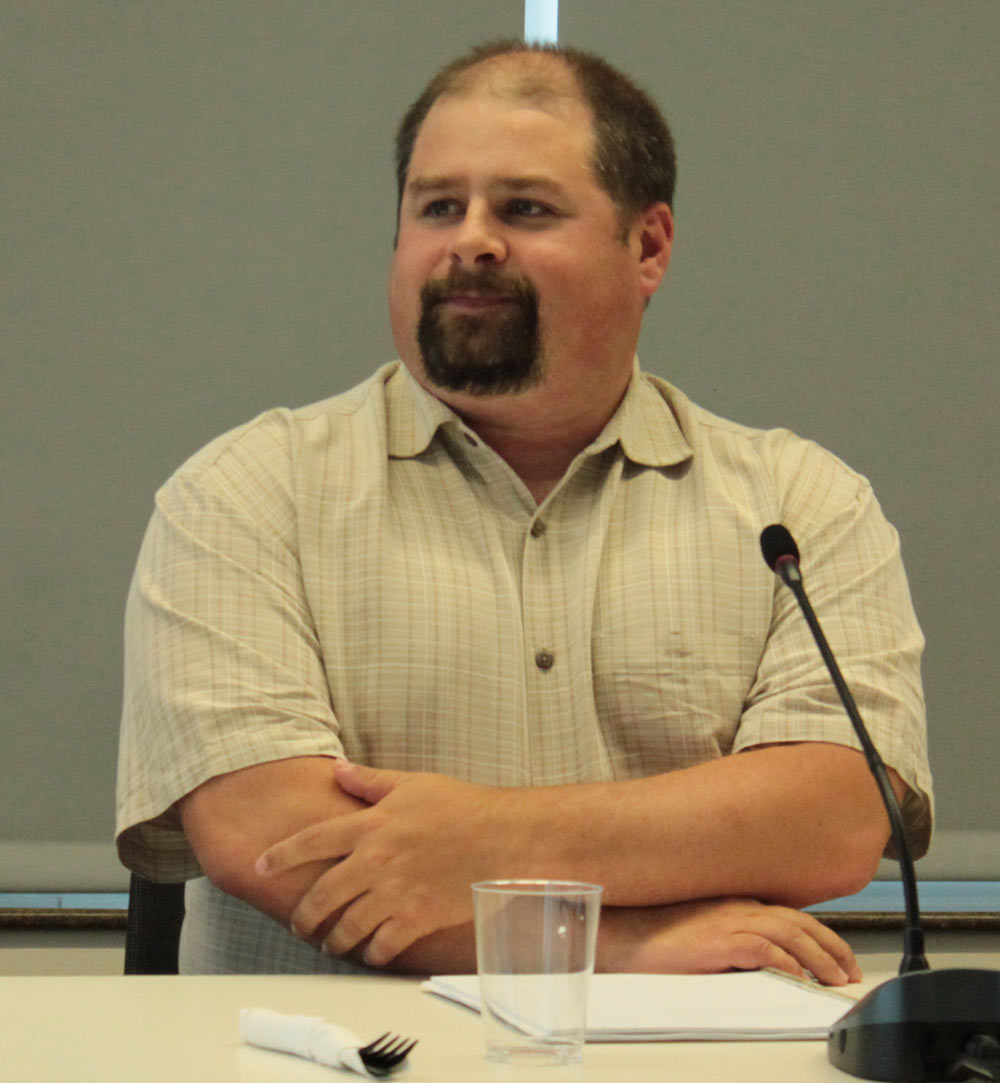
Jeff Redmond
Jeff Redmond. (Photo by David Purdy/KTOO)
Jeff Redmond is a long-time Alaska resident who moved to Juneau two years ago. He studies education and English at the University of Alaska Southeast and has a 3-year-old daughter.
He spoke about the importance of connecting the education system to the community and the need for transparency. For student assessments and evaluating teacher performance, he emphasized a balance between quantitative metrics and flexibility.
“I think teachers need enough space to be creative, and that constant analysis and assessment may detract from the magic of teaching,” he said.
He suggested curtailing charter school expansion as a possible cost-saving measure, but said he would consult with experts on further budget issues.
Andi Story
Andi Story. (Photo by David Purdy/KTOO)
Andi Story has lived in Juneau for 28 years and is in her 12th year on the Juneau School Board. She has three children who went through the school system.
She emphasized increasing the quality of instruction through continuing support of teachers with professional development.
“The number one in-school factor that increases student learning is the teachers’ skill set and their relationships with their students,” she said.
When asked about the fiscal situation, she emphasized ensuring adequate funding for the district, adding that administration costs had already been cut “down to bare bones.” She also suggested smaller class sizes for younger students and working with the community partnerships like reading tutors.
Josh Keaton
Josh Keaton. (Photo by David Purdy/KTOO)
Josh Keaton has lived in Juneau for 15 years, where his two children attend Mendenhall River Community School.
He spoke about the importance of community responsiveness and transparency for the school board. He also favors qualitative over quantitative analysis of teacher performance.
Rather than just looking at a number, he suggested asking questions like, are “the students leaving the class excited about learning?”
He also suggested smaller kindergarten through second grade class sizes, programs for gifted students, college and career readiness as a priority, and encouraging learning at home. While he said he does not currently have a deep enough understanding of the budget to suggest specific cuts, he does advocate increasing funding for schools.
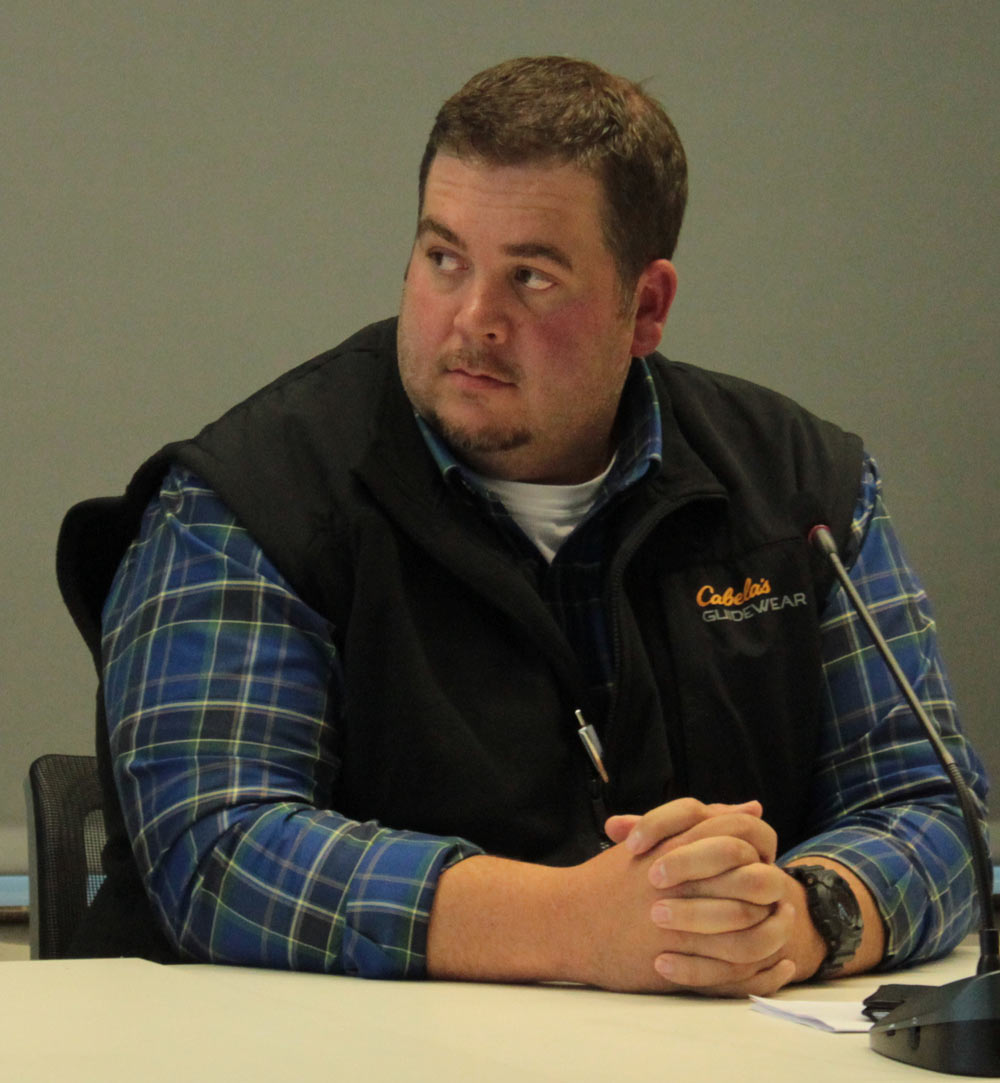
Jason Hart
Jason Hart. (Photo by David Purdy/KTOO)
Jason Hart has lived in Juneau for 17 years and has one child in fourth grade at Mendenhall River Community School.
One of his priorities is making the school board more available and responsive to the community.
“I’d like to bridge the gap between the community and the board,” he said.
He also mentioned the importance of pre-K and wants to restore funding for sports programs. He expressed skepticism about the reliance on test scores as the sole measure of student learning and feels they do not adequately account for individual learning styles. While he did not offer any specific suggestions for the budget, he mentioned the importance of carefully allocating the money available.
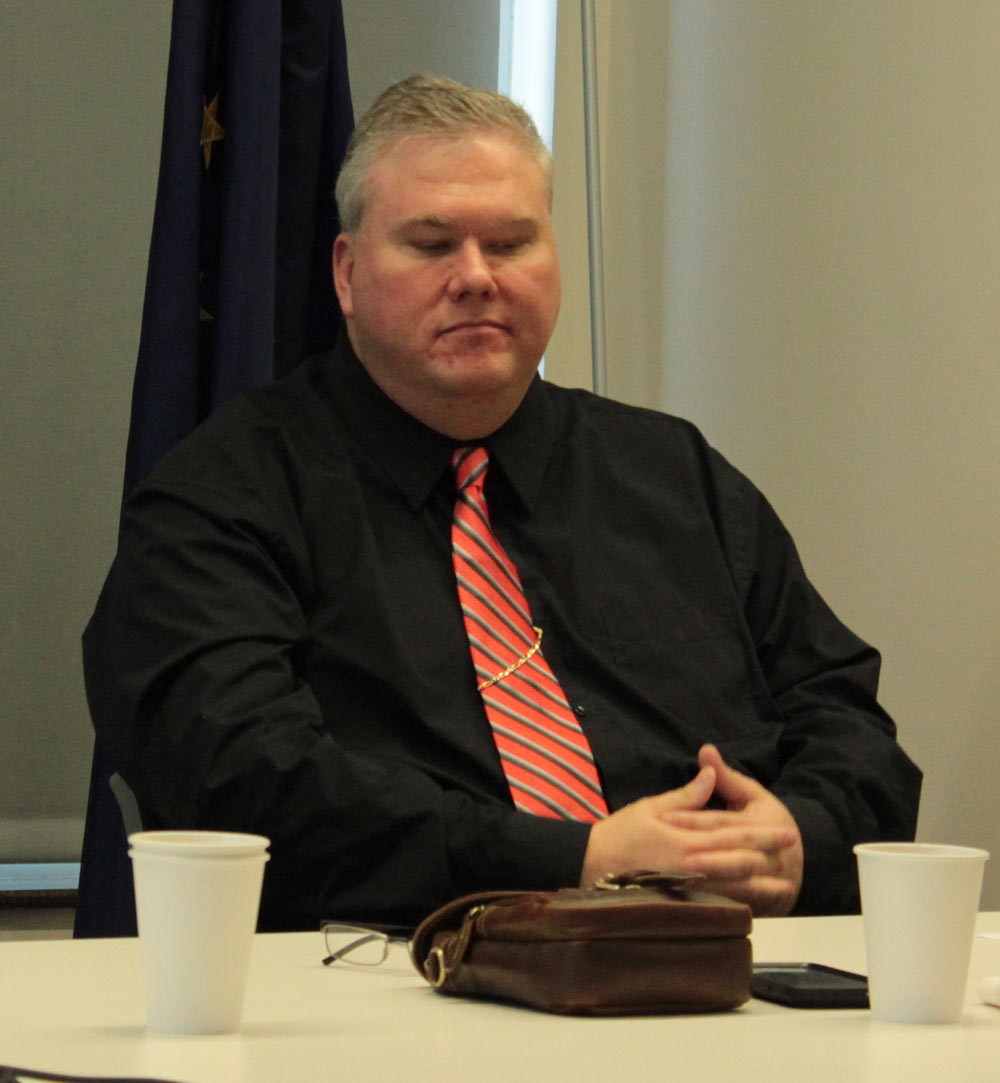
Emil Mackey
Emil Mackey. (Photo by David Purdy/KTOO)
Emil Mackey has a masters in education from the University of Alaska Fairbanks and a doctorate in public policy. He has worked as a student affairs professional for the University of Alaska and the University of Arkansas. While he does not have children, he says if he does, he would enroll them in Juneau public schools.
When it comes to the budget, Mackey advocated increasing efficiency.
“We do not control our revenue sources, but we do control our expenditures,” he said.
His suggestions included possibly combining junior and senior high schools. He said that high school facilities are underutilized compared to overcrowded lower grades.
He favors exploring voluntary specific college and career tracks for students, community partnerships with the University of Alaska and local unions, and incentivizing retirement for more senior teachers, who earn more than newer teachers.
The Juneau School District has won a $500,000 grant to incorporate more art into the classroom.
The funding from the Margaret A. Cargill Foundation is for two years. Director of Teaching and Learning Ted Wilson says the funding could continue for up to 10.
He says the grant will provide professional development for K-12 teachers.
“Train teachers on just artful thinking, what does it mean to think artfully when you’re presenting your curriculum? Then some of the work will be, how do you integrate art into your classroom, into the daily activities of your class?” Wilson said.
The grant will bring in visiting artists, including people from The Kennedy Center in Washington, D.C.
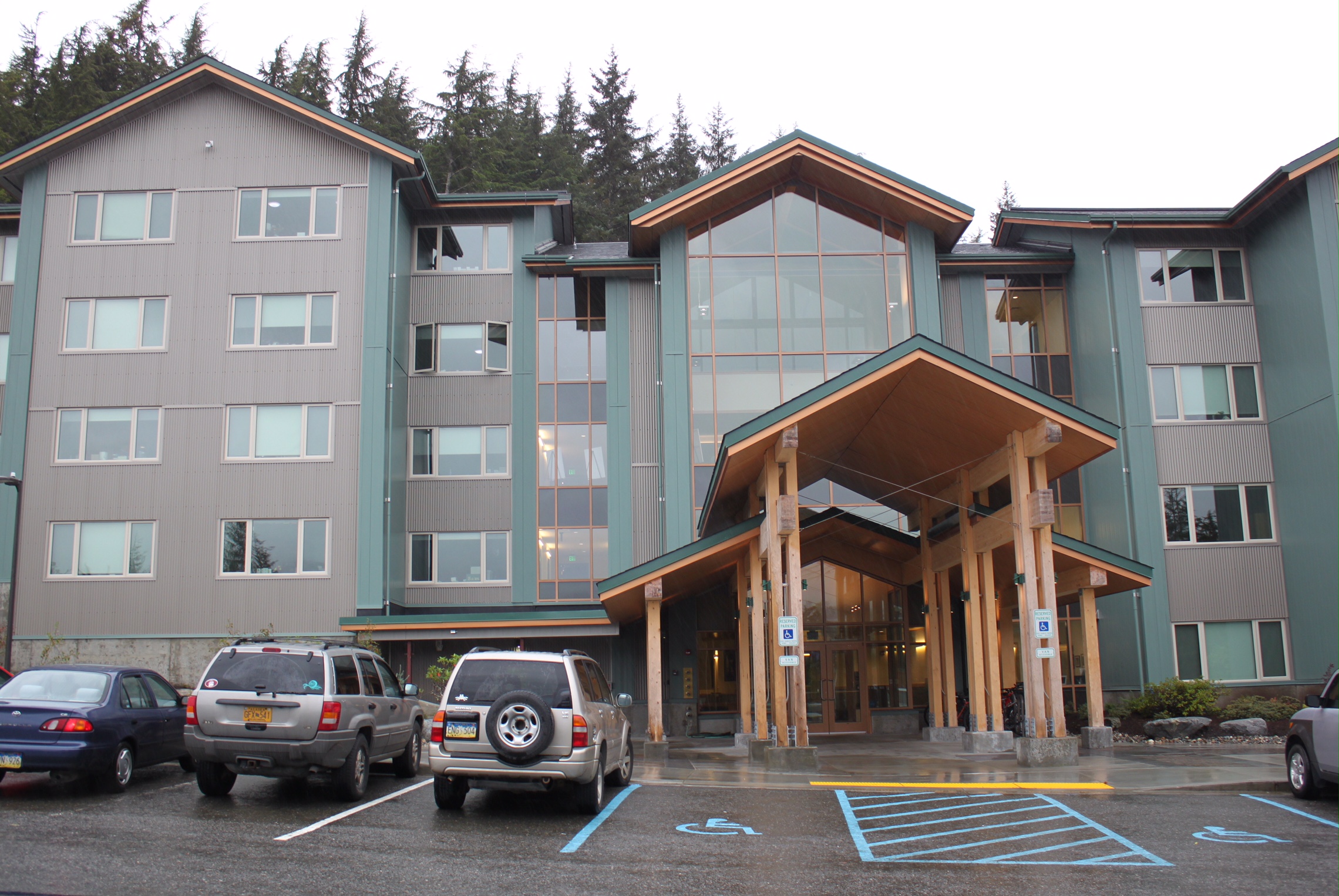
The John R. Pugh Residence Hall. (Photo by Lisa Phu/KTOO)
Former University of Alaska Southeast chancellor John Pugh was honored Thursday during a naming ceremony of the freshman residence hall.
The dormitory opened in the fall of 2014 and was dedicated this past May. The UA Board of Regents approved naming it the John R. Pugh Residence Hall at its June meeting.
Pugh started working at UAS in 1987. He served as dean of Arts and Sciences before becoming chancellor in 1999. He retired last May.
The Board of Regents is in Juneau for a regular meeting. The body is taking public testimony at the UAS Recreation Center Friday at 10 a.m.
Close
Update notification options
Subscribe to notifications
Subscribe
Get notifications about news related to the topics you care about. You can unsubscribe anytime.