Juneau

CBJ staff: Gastineau Apartments demolition may be right time to demolish pocket park

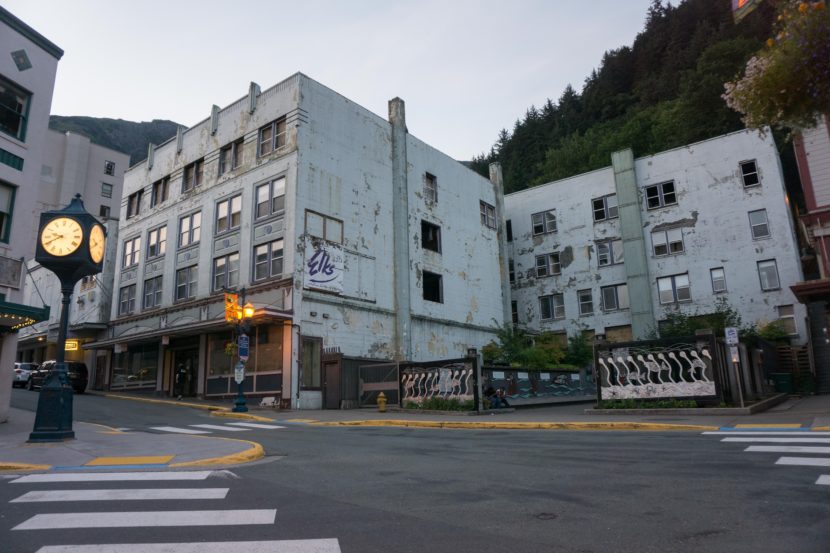
The derelict Gastineau Apartments, July 21, 2015. (Photo by Jeremy Hsieh/KTOO)

Demolishing a downtown Juneau eyesore may also be an opportunity to demolish another problematic property, Gunakadeít Park.

“The park itself, I think, it’s no secret, is not a particularly successful park,” said city Engineering Director Rorie Watt, addressing the Juneau Assembly on Monday.

That was an understatement. Litter, fistfights, intoxicated loiterers, open container violations and sundry calls for emergency services are common at the pocket park in the shadow of the Gastineau Apartments.

Watt was circumspect when describing the park’s “long-term disposition.”

“The more we’ve looked at it, we wonder how much of the park to preserve. So, quite frankly, if a contractor has to dance around the park and preserve it, the demolition will go slower and be more expensive,” he said. “And I think there’s a persuasive argument that appears to be lining up that demolition of the park effectively might be the best path forward.”

Gunakadeít Park opened at the corner of South Franklin and Front streets in 1984. It’s been a sore spot for downtown businesses for decades. In 1998, the Juneau Assembly officially banned alcohol from it after police had been issuing drinking citations in or near the park for years.

None of the members of the assembly spoke up in defense of the park.

“I will say that Parks and Rec staff is not particularly attached to preserving the park as it exists today,” Watt said. “It may be property that can end up some time in the future on the tax rolls as a better utilized parcel.”

Watt said the Parks and Recreation Advisory Committee is discussing the future of the park at its next meeting, Sept. 8.

Meanwhile, Watt said the city’s contract for the demolition of the Gastineau Apartments will be ready to go out for bid Sept. 9. A contract for $116,000 was awarded last month to Northwind Architects to write the demolition plans.

The city hopes to recoup some of the demolition costs, budgeted at $1.8 million, from the property owners. Watt said the city’s aiming for demolition to be complete by Dec. 31.
16-year-old driver crashes into AML truck on Egan Drive

A 16-year-old driver had minor injuries after running into an Alaska Marine Lines truck this morning on Egan Drive.

“A Dodge Neon was heading inbound, and the vehicle reportedly hydroplaned on some water and ended up striking the vehicle next to it,” said Juneau police Lt. David Campbell. “The vehicle next to it happened to be an AML truck.”

The accident occurred at about 7:30 a.m. and shutdown one lane of inbound traffic near Wal-Mart for about an hour, Campbell said.

Police did not name the driver because she’s a minor. She was cited for careless driving.

Listen: The education of Nora Marks Dauenhauer

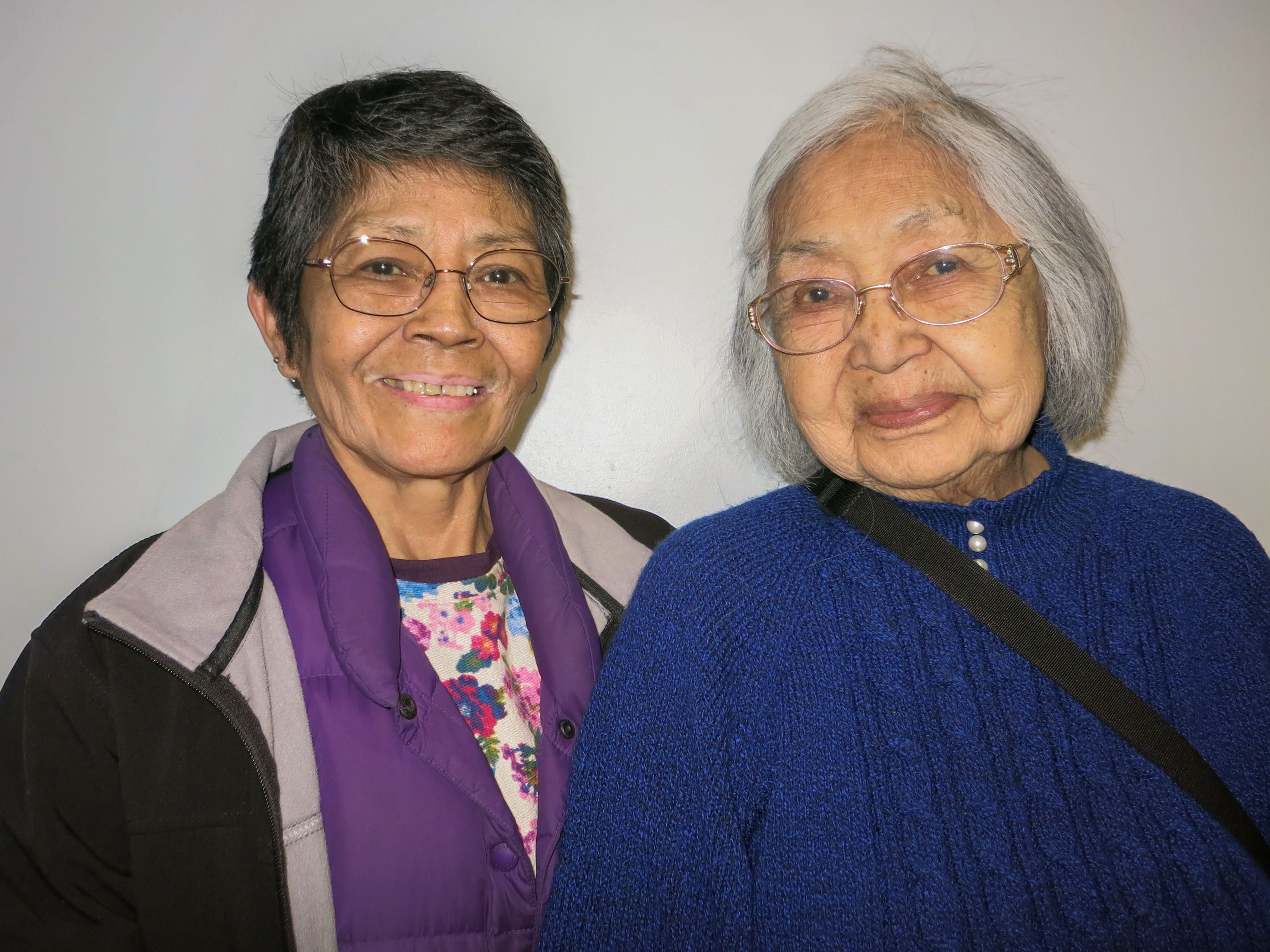
Leonora Florendo and Nora Marks Dauenhauer. (Photo courtesy Juneau Public Libraries)

The Juneau Public Library system is collecting Alaska Native stories on educational experiences as part of an oral history project.

In this edited interview, Leonora Florendo speaks with her mother 88-year-old Nora Marks Dauenhauer, who left school in sixth grade but went on to become a prominent Tlingit scholar, poet and writer. She’s published many books with her late husband Richard Dauenhauer as well as her own.

Leonora Florendo: Did you go to school in Douglas?

Nora Marks Dauenhauer: Yes, I went to Douglas school after I was in fourth grade, I think. We got bused over from Juneau. I got picked up at the end of the bridge and we were taken over to Douglas.

Leonora Florendo: And the school is where the Montessori School is now. That was the government school.

Nora Marks Dauenhauer: These teachers were paranoid. They’re afraid that my hair might have bugs, so they sprayed every one of our hair and clothes with kerosene. At sixth grade I dropped out. That was no good for me. It does something for your self-esteem being a kid and having somebody spray you because you might be full of bugs, although I didn’t have any.

Leonora Florendo: I know you worked as a fish slimer, as a shrimp picker, a crab shaker, ‘cause I’ve done those things, too.

Nora Marks Dauenhauer: Chamber maid…

Leonora Florendo: At the Baranof. Oh, and you did housekeeping for people in the community

Nora Marks Dauenhauer: Oh yeah. I went from house to house.

Leonora Florendo: You taught at Juneau High School for a while. You were teaching Tlingit.

Nora Marks Dauenhauer: Yes, there was 14 in my class. Two of them were non-Tlingit. They still come and say hello and we talk.

Leonora Florendo: And they let you go because you weren’t certified.

Nora Marks Dauenhauer: I got halfway through the school teaching and then I got called by the principal and she told me that I am no longer going to teach and that was it.

Leonora Florendo: You got your GED.

Nora Marks Dauenhauer: I went to GED because working with the high school kids I discovered that I needed help.

Leonora Florendo: And then you went to college.

Nora Marks Dauenhauer: I majored in anthropology and some students asked me, “What are you going to do with anthropology? You’re going to study yourself?” And that’s exactly what I did. I worked on my language. People thought of Tlingit as being simple and your stepdad Dauenhauer discovered it’s one of the hardest languages he’s ever encountered. Dick and I have numerous books. I haven’t counted lately.

Leonora Florendo interviewed Nora Marks Dauenhauer at the Juneau Public Library downtown in July. Their conversation was recorded as part of the national oral history project StoryCorps.

Artist teaches formline in prison by day, Tsimshian by night

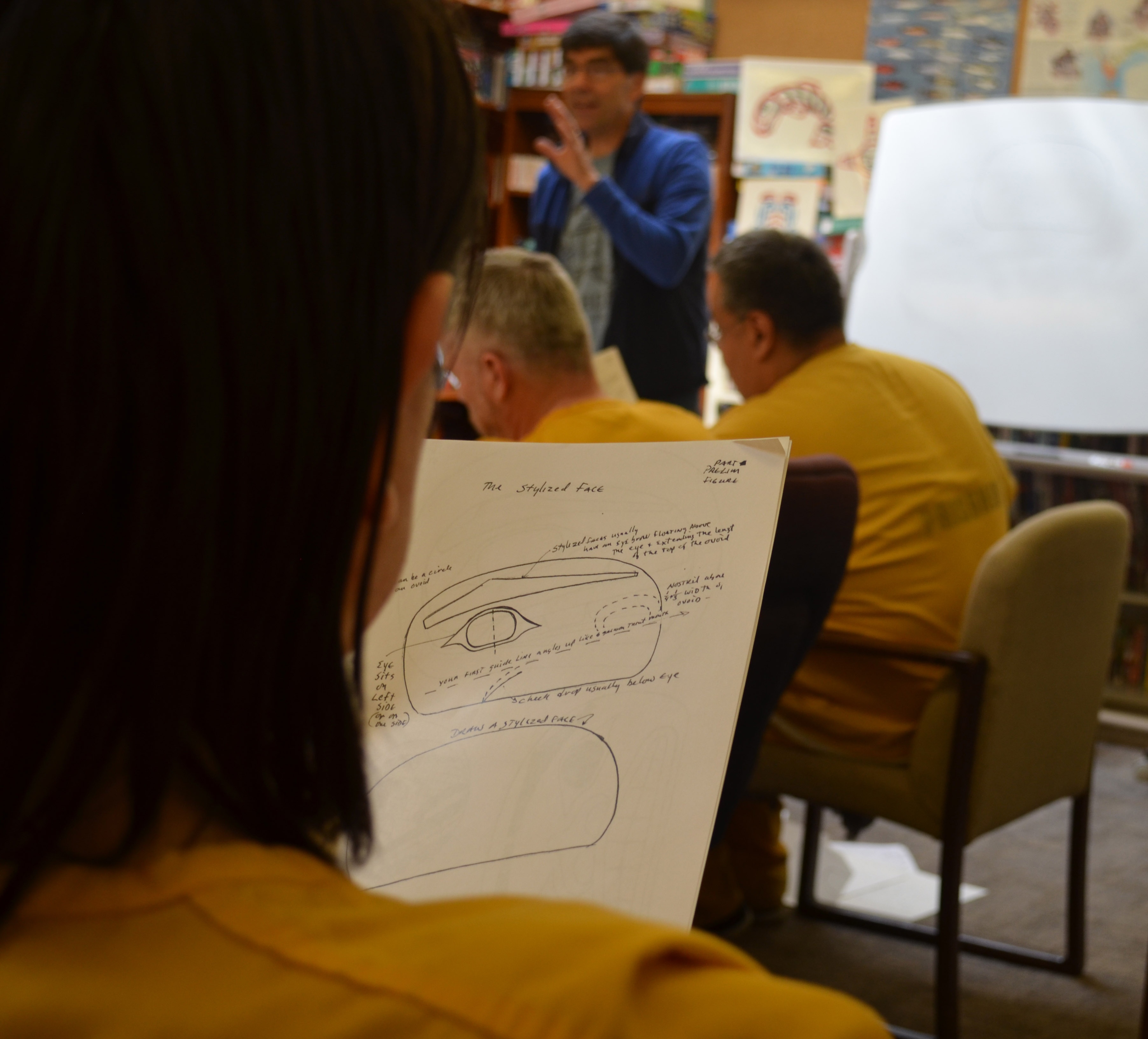
Littlefield examines one of David A. Boxley's handouts. He says handouts like these, and Boxley's ability to break things down make him a great teacher. (Photo by Scott Burton/KTOO)
Tsimshian artist and teacher David A. Boxley just wrapped a pair of intensive, weeklong workshops on formline design and Tsimshian language in Juneau. He’s been at Lemon Creek Correctional Center teaching formline by day, and at the Walter Soboleff Building teaching Tsimshian language by night.

Entering the maximum security prison—with its checkpoints, razor wire barricades, metal detectors and armed guards—it’s hard to imagine an art class. Until you get to the library.

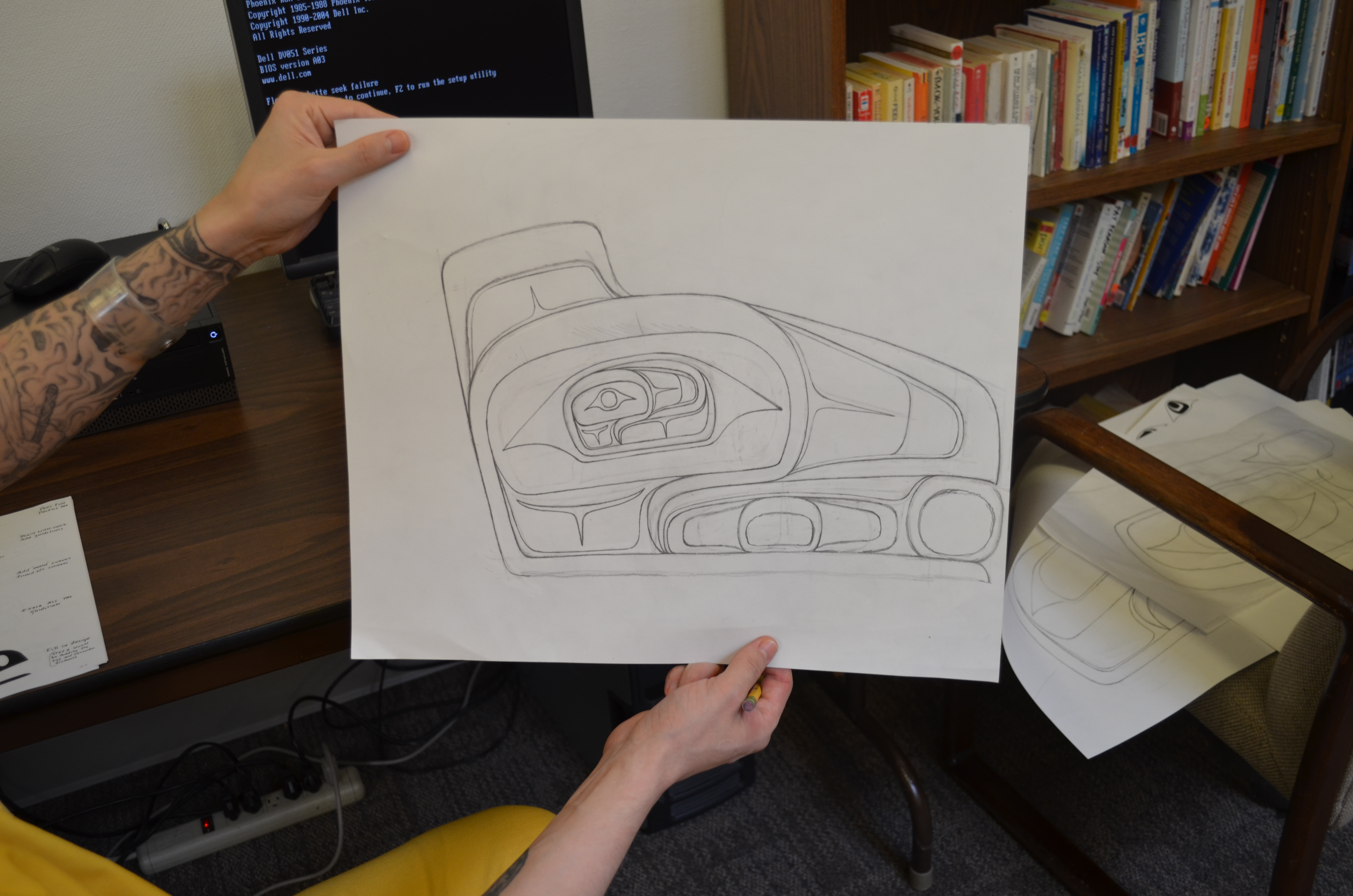
“I have nine hard-working fellas sitting around a big conference table with elbows flying, and pencils and erasers moving quickly, and they’ve got templates, and booklets with all the information and diagrams to help them produce the eagles, ravens, wolves and killer whales that they’re working hard to produce,” says Boxley who is best known in Juneau for the two-story high clan house front he made for the Walter Soboleff Building.

Nine men attended David A. Boxley's four-day formline design class. (photo by Scott Burton/KTOO)
Nine men attended David A. Boxley’s four-day formline design class. (photo by Scott Burton/KTOO)
William Littlefield holds his drawing. He hopes to make and teach art professionally when he is released. (Photo by Scott Burton/KTOO)
The men wear bright yellow prison onesies and are of diverse cultural backgrounds. They look focused and work silently. Colorful examples of formline art are taped to the shelves of books, and natural light filters in through two skylights. Boxley circles the room observing the students’ work. Among them is aspiring Tlingit artist William Littlefield from Sitka.

“There’s been a few people that has been willing to teach me this but they don’t break everything down like how David has,” says Littlefield, who wants to make art and teach professionally when he gets out.

Boxley and class sponsor Sealaska Heritage Institute want to help artists like Littlefield improve their formline design.

“The art is endangered because people are producing stuff that isn’t really that great,” says Boxley. “There are some of us that really want to stem that tide and redirect people back to making good quality formline. And formline, like my grandfather used to tell me, no matter how good the carving is, if the design is bad then the whole thing is bad.”

Once the 7-hour formline class is over, Boxley heads downtown to teach Tsimshian language for 3 more hours.

Boxley demonstrates with the Tsimshian language class. UAS student David Russell-Jensen sits second from the left in the back row. (Photo courtesy Brian Wallace/Sealaska Heritage Institute)
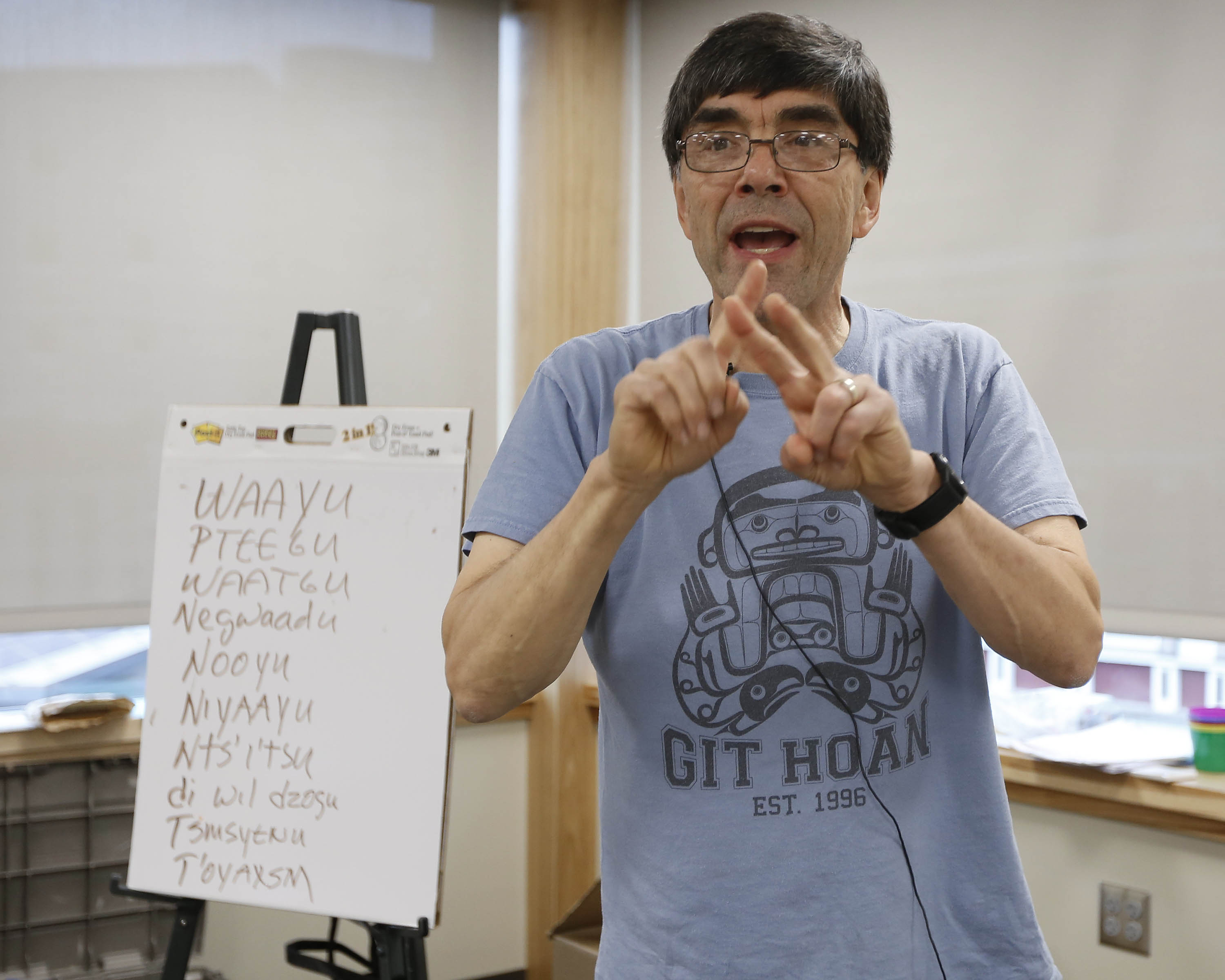
Close to 20 people have gathered in an empty office space at the Walter Soboleff Building. Boxley has labeled most objects in the room in Tsimshian, and two tables of props for games and activities stand before them. While art and language are related, Boxley says they’re in different states.

“Our art is flourishing. There are hundreds and hundreds of people from different tribes from Yakutat to Seattle who are producing art,” says Boxley.
The language is a different story. Boxley says there are only 50 fluent Tsimshian speakers left.

“Our language is extremely threatened, I mean beyond extremely threatened,” he says.

After instruction from Boxley, the students break out into small groups to practice introductions.

David Russell-Jensen is Tsimshian Killer Whale with roots in Metlakatla and now lives in Juneau. He goes to the University of Alaska Southeast. While studying Tlingit there, he learned about Boxley’s class.

“I think it’s important to be connected to the land you live on but also it’s very important for me to be learning my language because it’s not in that great of state right now so, hoping to work on that,” says Russell-Jensen.

Russell-Jensen embodies Boxley’s hope for the future of Tsimshian language.

“You know it’s not our fault that we speak primarily in English these days, but it will be our fault if the last speaker dies and no one else can do it,” says Boxley.

“Not everyone can be a dancer or a singer, not everyone can be a carver or an artist but everybody talks. So we’re all responsible for the life or death of our language going into the future.”

Both Boxley and the Sealaska Heritage Institute hope to do more Tsimshian language classes in the future. Boxley’s next gig is at home in Washington state, where he’s teaching a mask-making workshop.

Boxley teaches the class how to introduce themselves in Tsimshian. (Photo courtesy Brian Wallace/Sealaska Heritage Institute)

Gardentalk – Late summer preparations

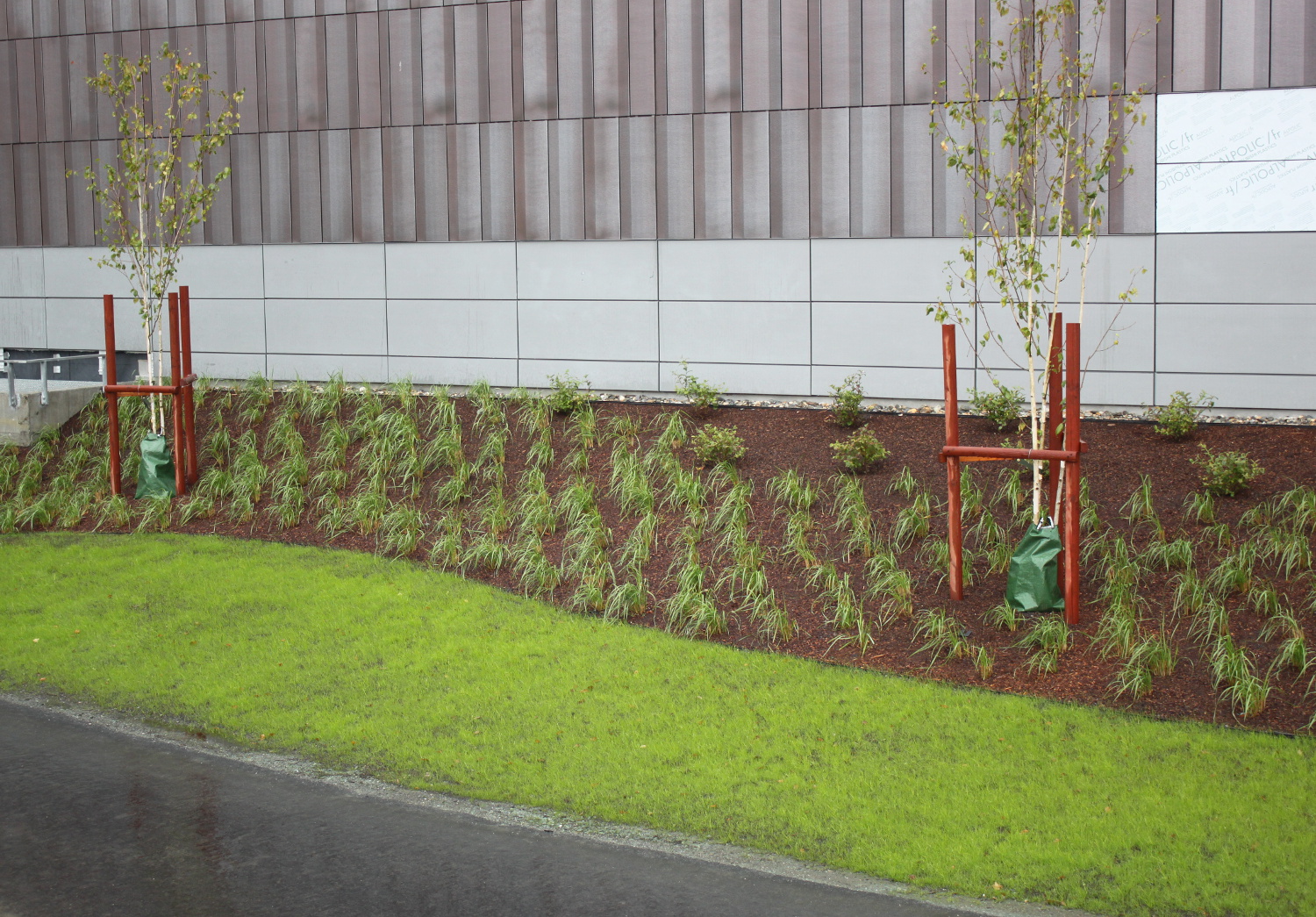
These trees, just planted on the grounds of the new State Library, Archives and Museum, have yet to develop a root system to survive the fall and winter winds. (Photo by Matt Miller/KTOO)

Master gardener Ed Buyarski says it’s a good idea to stake up vulnerable or young trees with undeveloped root systems in advance of gusty winds that usually blow through Southeast Alaska in the late summer and early fall.

Listen to Buyarski discuss staking tips and preview Saturday’s Food Festival on this week’s edition of Gardentalk.

Highlights

“I got to inspect a very nice dolgo crabapple tree that got snapped off at the base, unfortunately,” Buyarksi says. “It was weird winds, swirling all over the place.”

He also has some tips for storing bulbs before they’re planted later this fall.

“We can get them now, bring them home, and put them in a cool place,” Buyarski says. “Make sure they’re not in plastic bags that don’t breathe.”

Also, this Saturday’s Food Festival features local produce vendors and workshops. It starts at 9 a.m. at the JACC.

Search begins for new Juneau city manager

Kim Kiefer
Kim Kiefer is the outgoing city manager. (Photo courtesy City and Borough of Juneau)

A subcommittee of three Juneau Assembly members is leading the search for the next city manager. Mayor Merrill Sanford appointed Mary Becker, Karen Crane and Jerry Nankervis to whittle down the candidate pool to about 10 applicants.

“This is the most important thing that we do right here, hiring the city manager,” said Mayor Sanford. “And you are all invited to be a part of this subcommittee at any of their meetings.”

The mayor said subcommittee meetings would be public unless personnel issues were discussed.

“There’s no reason this hiring process isn’t 98 percent transparent and in the open,” he said.

It hasn’t been decided whether outside HR headhunters should be brought in to help. The assembly remarked on the success of Juneau staff facilitating a previous city attorney search.

Geographic preference is also up in the air. Assembly member Karen Crane said she’d like to look broadly.

“At least statewide but not discount anybody Outside that sees the application and applies,” she said. “That doesn’t mean we don’t end up hiring locally if someone is there but what it does mean is it shortens the process.”

Some assembly members said they’d like to see a candidate selected before the holiday season is in full swing.

Current City Manager Kim Kiefer is retiring at the end of the year.

Site notifications
Update notification options
Subscribe to notifications