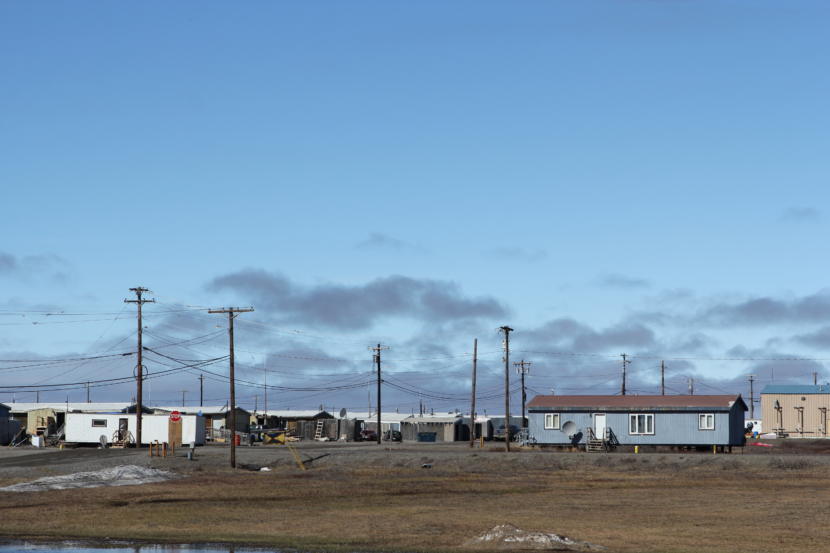
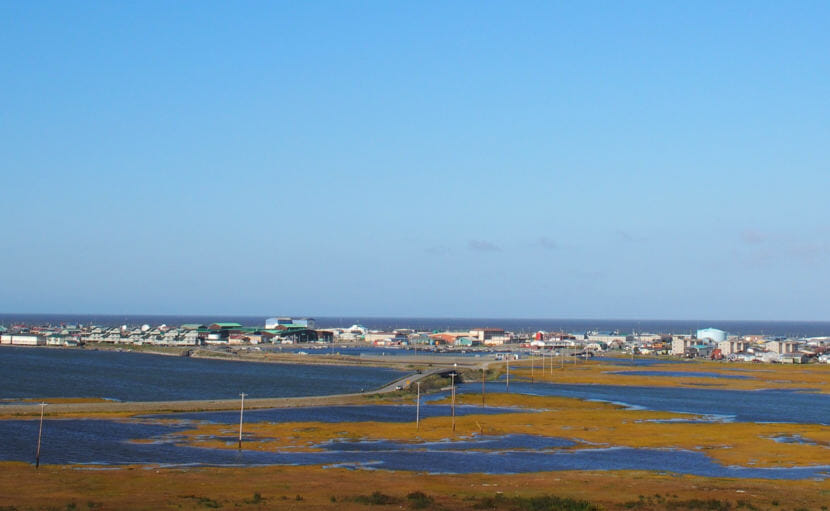
Nuiqsut in June 2018. (Photo by Elizabeth Harball/Alaska’s Energy Desk)
A former teacher at the Trapper School in the village of Nuiqsut is suing the North Slope Borough School District, claiming the district did not properly address racist actions by students.
In a lawsuit filed last week, attorneys for Candice Gardner, a Black woman, say that students in Nuiqsut made racist threats against her in a classroom setting in 2017. That includes an incident where a student called Gardner a “ni–er b–ch” and told her to “get [her] Black ugly ass out of our village.”
Attorneys also cite incidents of racist graffiti using the “N word” within the school building. The lawsuit quotes the principal of the school at the time saying the graffiti was “just a little bit” racially motivated and “done in a real cute little font.”
According to the lawsuit, Gardner was the only Black resident of Nuiqsut at the time, and racist actions like these had not occurred before.
When Gardner brought complaints to the school principal, her attorneys say, students were not appropriately disciplined and the harmful actions continued.
In a separate incident, while Gardner was on bereavement leave, lawyers say a student fashioned a noose out of rope and said, “this is for Ms. Gardner.”
According to the lawsuit, a police investigation found that the student’s parents were not contacted about the incident. Gardner says she feared for her safety, and alleges that the district did nothing to reprimand the student. When she requested a transfer to a different village school, lawyers say the district delayed the request indefinitely.
Lawyers also wrote that when Gardner made hate crime complaints to the district, officials refused to either release her from her contract or allow her to transfer schools unless she stopped her allegations of racism.
After filing an inquiry with the federal Equal Employment Opportunity Commission, Gardner was issued a notice of a right to sue earlier this month.
Gardner is suing under Title VII of the Civil Rights Act, which protects against discrimination on the basis of race.
North Slope Borough School District superintendent Pauline Harvey says it is district policy not to comment on pending litigation.
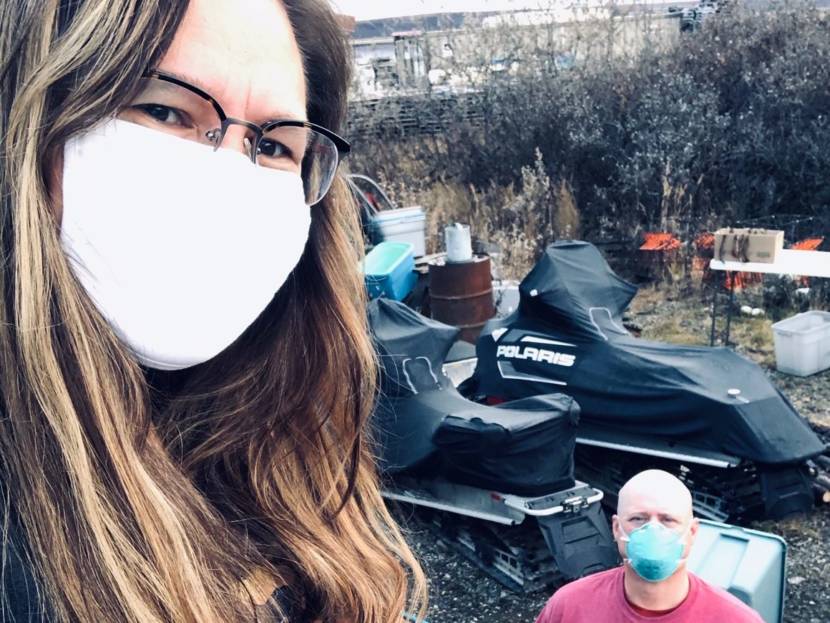
Maija Lukin during her self-isolation in Kotzebue. (Photo courtesy of Maija Lukin)
At the beginning of the coronavirus pandemic, many rural communities acted quickly to impose strict quarantine measures to keep the virus out of their towns. That was largely successful in stalling the spread of COVID-19.
But over the past several weeks, that’s started to change. Clusters of cases have flared up in dozens of villages across the state.
Gambell, Quinhagak, Stebbins, Buckland and Utqiagvik have all reported recent outbreaks. Some of those villages had case counts that grew quickly to dozens of people. Rural cases still make up just over one in 10 reported cases statewide, but the sudden, rapid growth is a worrying sign.
“It’s a building crisis, but it’s not as loud as when you see 100 cases a day in Anchorage or 60 cases a day in Fairbanks,” said Christina McDonogh, a law student originally from Perryville who has been tracking rural COVID-19 cases on a Facebook group.
Northern and Northwest Alaska, where all villages are off the road system, now have the highest case rates — the average number of daily positive cases per capita over the last week — in the state. Crowded housing makes containing the spread especially difficult.
Kotzebue resident Maija Lukin was diagnosed with COVID-19 about two weeks ago.
She got a rapid test in town and returned home. About 45 minutes later, she got a call from the clinic informing her she was positive. Without saying a word, her husband put on a mask and held one out for her to do the same She put it on while still on the phone. They had recently lost a friend to the virus, so fear of it was still raw.
“I just started crying and (my husband) was like ‘you’re not positive, you’re not positive’ and I was staring at him with tears running down my face,” she said.
But Lukin and her family were fortunate: they had a large house with their kids’ empty bedrooms, which allowed them to isolate within the same home. She hung up a blanket as a divider wall, so she could use the lower part of the house, which had its own kitchen and bathroom, as well as a separate entrance.
“I was packing things like packing clothes for myself to go into the other side of the house,” she said.
Her husband and 3-year-old granddaughter, whom she takes care of, would stay on one side of the house in the hopes that they wouldn’t catch the virus, while she isolated in the other. But separating a three-year-old from her grandmother wasn’t easy.
“Our granddaughter freaked out. And she was like, ‘Where’s my ana, don’t leave me!’” said Lukin.
Multigenerational households and extended families living nearby are much more common in rural Alaska than in the urban parts of the state, making social distancing especially hard. Some communities have imposed harsh lockdowns, and families are having to make tough decisions to stop seeing elders or kids. But that’s not always enough to keep the disease out, . And the virus has found a way to sneak into dozens of rural communities, where it can spread quickly.
“When you’re living in a rural place, you’re used to stopping by people’s houses. That’s how you pass the time, you stop by your grandma’s house, you stop by your uncle’s house, usually don’t even knock on the door. But with that being unsafe now, it’s very, very difficult to feel feel like yourself, and to feel connected to who you are,” said McDonogh.
McDonogh said that after many medical appointments were delayed early on in the pandemic, she’s heard of a new vector of transmission: medical transports.
“For people to receive routine medical care, they have to fly to Anchorage or to Fairbanks. And these are the two huge hot spots in the state,” she said.
Of course, she says, medical care shouldn’t be delayed. But she’s hoping that residents and officials keep paying attention to making sure people have places to quarantine when they return to their villages.
State officials say they’ve been working with tribes to plan for large outbreaks. They have conducted staged exercises for how to respond if there is one, according to Tim Struna, Chief of Public Health Nursing for the state of Alaska.
“It is a concern for everybody, and everybody is passionate about making sure that as soon as a case is identified, that there’s this, this team that is going to surround it and do everything they can to keep it as contained and as small as possible,” he said at a Thursday press conference.
Despite their best efforts, many worry that if cases around the state continue to rise, it could mean trouble for rural communities who rely on cities for their healthcare.
“If Anchorage is full, where are they going to send people? They can send people to Seattle, where they have their own number of cases? It’s a really big problem,” she said.
So far, Anchorage’s ICU capacity has been within a normal range for this time of year, according to Jared Kosin, president of the Alaska State Hospital and Nursing Home Association. But he warned that could change soon following a spike in cases that began over two weeks ago. Normally, it takes about two weeks for a surge in cases to manifest as more filled beds.
“It’s really important to remember that hospital capacity, the number of beds you have available is a lagging indicator. So if you’re trying to use capacity as a measure for the pandemic, you’re getting the wrong indicator,” he said at a Thursday press conference.
That’s why officials are renewing calls on city-dwellers to mask up and take other precautions to make sure that rural residents have access to the hospital beds they’ll need.
As for Maija Lukin’s granddaughter – Lukin decided that living at different ends of the house was worse than the increased risk of her catching COVID. Lukin is wearing a mask at home and letting her granddaughter sleep with her, but in a different bed on the other side of the room.
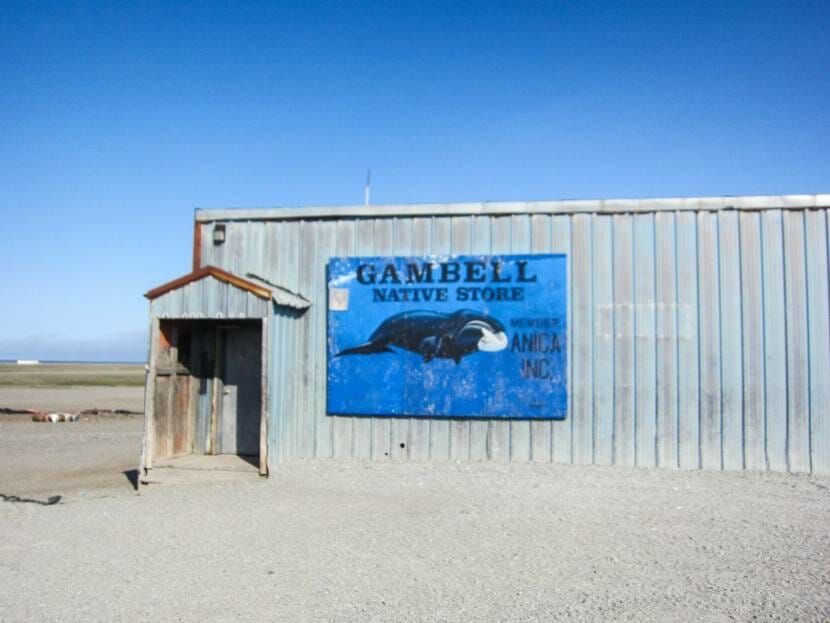
The local grocery store in Gambell, on St. Lawrence Island in 2017. (Davis Hovey, KNOM)
Melanie Campbell is finishing up work for the day at the Gambell IRA office. It’s nearly 5 p.m., and she hasn’t had a chance to call in her groceries to the Native store.
“I kind of feel like it’s too late for me to make an order!” she said with a laugh.
With 29 cases of the virus locally, and about half of the community tested, the local store is only taking phone orders. Residents are asked to form a line, stand six feet apart and wait for the store clerk to deliver their groceries.
There’s one grocery store for the community of 700 people, and the phone line is constantly busy. And the lockdown is exacerbating the already delicate grocery supply chain.
“We haven’t had any eggs and fresh produce in quite a while,” said Gambell City Clerk Charlotte Apatiki. She notes that several times this season the cargo plane failed to land and unload groceries.
Apatiki says Norton Sound Health Corporation is helping deliver groceries to families in isolation.
The Gambell school is closed and right now, and the Bering Strait School District is not doing meal deliveries. Many children in the community normally eat both breakfast and lunch at school.
While eggs would be nice to have for baking projects to keep her children entertained, Apatiki doesn’t think her household of six will go hungry.
“Most of us, if we were lucky to have gas during the spring harvest, are living on Native foods and fish,” she said.
Charlotte Apatiki, Gambell’s city clerk, in 2020. (JoJo Phillips/KNOM)
Earlier this year a broken fuel line caused Gambell to be on a fuel ration for most of the spring and summer subsistence season. That has since been repaired, and Apatiki says local fuel prices have gone down from $12 to about $7.40. But she thinks the fuel ration impacted a lot of residents’ ability to harvest the food they now need to get them through lockdown.
Some assistance did come from the federal government. The Native Village of Gambell decided to give every member of the community $600 through their tribal CARES Act funding to help ease the burden of those costs. According to grant administrator Melanie Campbell, that funding is for cleaning supplies, food, fuel or anything else a family would need.
The emotional costs are taking a toll as well. Gambell has three village police officers going around the community to enforce the lockdown. That’s hard for Apatiki’s kids, who are used to roaming the tightly-knit village.
“My five-year-old really wants to go play with his cousins and everything. The weather hasn’t been cooperating at all. It’s raining and pretty windy out there.”
Aside from being cooped up inside, online schooling isn’t an option either, and homework isn’t being sent out by the local school.
“Our [internet/mobile] data here is practically slow-to-nothing on some days,” Apatiki said. “Nothing is being done right now.”
The local hospital considers the situation in Gambell to be an outbreak. Local residents told KNOM they worry that the virus is spreading more easily because of the number of people living in overcrowded homes with their extended families.
Norton Sound Health Corporation is reporting that at least one household of six individuals in Gambell all tested positive for COVID-19. Despite that, local Mayor Joel James feels prepared for the current hunker-down order.
“People that are in isolation have isolation housing and people that are in quarantine are in quarantine at home,” he said.
For privacy reasons, he wouldn’t confirm where the isolation units are, but James says there are enough units available in Gambell if more people become sick.
Local leaders like Mayor James stress the importance of following curfew and quarantine rules to slow down the community spread. The mayor is trying to do his part too
“I’m a very busy man,” he said. “I was delivering toilet paper to people in isolation.”
Kotzebue as seen from the road east of town (Photo by Zachariah Hughes/Alaska Public Media)
All three schools in Kotzebue, as well as three Northwest Arctic village schools, are in the red, high-risk operational zone. That means schooling will have to be conducted totally remotely.
Regional health care provider Maniilaq Association announced several positive cases of COVID-19 last week, including multiple cases in Kotzebue, and a case apiece in Noatak and Kiana. The village of Buckland continued to see community spread of the virus last week, with another positive case happening in the village.
According to Northwest Arctic Borough School District superintendent Terri Walker, for a school in a village community to move from the red zone to the yellow, medium-risk zone, they must have zero cases of COVID-19 over a 14-day period. Kotzebue has a threshold of four cases.
Reopening after all the other village schools, Kotzebue had allowed limited in-person schooling for a couple days last week, before having to move back to the red zone.
The schools in Selawik and Shungnak, which haven’t had a case of COVID-19 in the last 14 days, are also in the red zone due to staffing shortages.
The most recent cases in the Maniilaq service area were announced on Sept. 24, including two Kotzebue residents, two Kiana residents, and a resident each from Noatak and Point Hope. Among those cases, Kotzebue, Kiana and Noatak all had an individual test positive after returning from Red Dog Mine.
This story has been updated with school closures in Selawik and Shungnak.
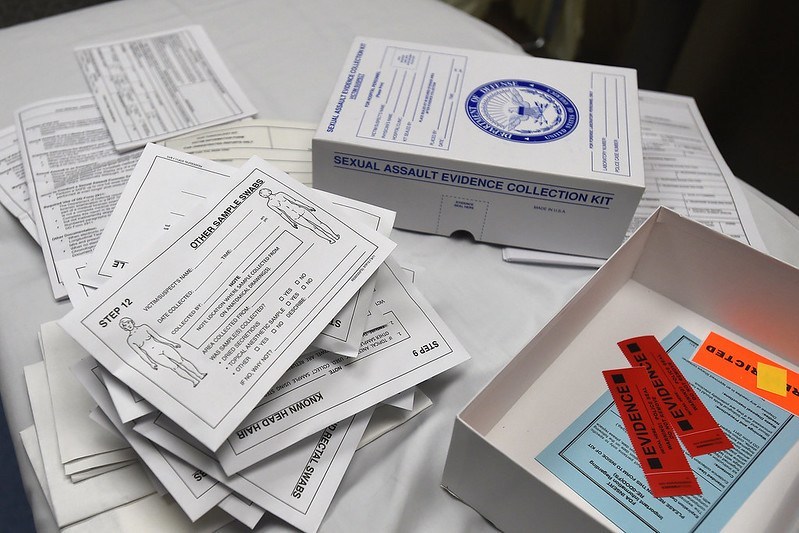
Local entities are stepping up financially to help survivors of sexual assault in Nome. Kawerak Inc., Norton Sound Economic Development Corporation and Norton Sound Health Corporation are all pitching in to pay for testing of Nome’s backlogged sexual assault kits. Their donations amount to $38,295.
Kawerak’s President and CEO Melanie Bahnke says the tribal consortium has made public safety a priority. In late July, Bahnke sat down with the Nome police chief and city manager to learn how Kawerak could help.
“One of the things they [Nome police and the city] shared is that they didn’t have adequate resources and also that the state lab is backlogged,” Bahnke said. “After they submitted all of the sexual assault kits, the anticipated wait time is a year. That’s just unacceptable.”
The Nome Police Department sends all of their sexual assault kits to the state crime lab for processing — and so does everyone else, including the Alaska State Troopers and other municipal police departments across the state. Right now, according to Nome police evidence custodian Paul Kosto, it’s taking kits about a year to be processed in the state lab. Kosto says the donated funding will allow Nome’s unprocessed sexual assault kits to get tested at a private laboratory.
“A big part is money,” Kosto said. “It costs a lot of money to get kits sent to the front of the queue and to pay an outside entity to perform the test.”
That means around a dozen kits will tested by BODE Laboratories in Virginia. Instead of taking a year for processing, Kosto says those kits will likely be done in 60 days or less.
“Then the investigators and the District Attorney’s office can determine where they’re going to go forward on those kits,” Kosto said.
More sexual assaults were reported to Nome police by mid-September this year than all of last year — 98 so far in 2020 compared to 88 reported in 2019.
Kawerak’s Melanie Bahnke says it’s unacceptable for any of those survivors to be waiting a year for their sexual assault kit. She wants to remain focused on building a partnership with the City of Nome and local law enforcement.
“We’ve got some bigger hurdles ahead of us, and Kawerak will keep advocating for justice for victims of all kinds of abuse,” Bahnke said.
Bahnke says that includes advocating for resources at the state level so there won’t be a backlog of sexual assault kits to begin with.
Kiana, Alaska, on the Kobuk River (Wikimedia commons image)
A resident of the Northwest Arctic village of Kiana has tested positive for COVID-19 after flying home from Red Dog Mine, local officials confirmed.
“They tested negative at Red Dog,” said village tribal president Ely Cyrus. “And I guess the results of the test on the third day was delayed, so they were allowed to come back to Kiana. And two days after they got back to Kiana, their positive test was confirmed, so they were in the community for a couple days.”
Cyrus says the individual and their family immediately went into medical isolation, and the local school has moved back into the red, high-risk zone — which means school will be entirely remote.
Cyrus says the tribal council is asking Red Dog to suspend flights into Kiana as the mine continues its new testing protocols. People leaving Red Dog are now required to take two COVID-19 tests, with a three-day isolation period in between them.
“With this one that just kind of slipped through, we just ask that they hold off for a week or so on letting travelers back in, so they can update what their testing standard is,” Cyrus said.
There are currently 21 active cases of COVID-19 at Red Dog Mine.
Close
Update notification options
Subscribe to notifications
Subscribe
Get notifications about news related to the topics you care about. You can unsubscribe anytime.