Southcentral

Amid child care crisis, some Alaska businesses launch centers for employees’ kids

Two children play in a sandbox at the Credit Union 1 child care center in Anchorage. (Wesley Early/Alaska Public Media)

It’s a Wednesday afternoon, and preschoolers at the Credit Union 1 child care center in Anchorage are playing outside. Activities range from passing a basketball, playing tag or simply digging for treasure in the sandbox. Site manager Kayla Hayes said unlike other child care centers, many of the kids’ parents are going about their work day in the same building.

“When we can we take a trip around the credit union to say hi to our families, which is one of our favorites,” Hayes said. “And I know the families’ favorites too.”

Though its child care facility has been around for more than 15 years, Credit Union 1 is part of a growing trend of more companies offering child care assistance to employees. Companies report happier staff and better retention rates — especially as affordable child care becomes harder and harder to find, with rising costs and lengthy waitlists in urban areas and child care deserts across rural Alaska. A new state task force was recently formed to address the state’s child care crunch, as many families struggle to find care.

At Credit Union 1 in Anchorage, demand is high for its child care center. It’s licensed to serve 32 children. It’s not free, but human resources officials say it’s priced lower than the market average for child care.

Hayes said the schedule for the center is built around Credit Union 1’s branch hours.

“We’re open a little earlier than the credit union,” Hayes said. “And we’re open a little later than the credit union so that families don’t have to worry, ‘Oh, my gosh, I’ve got to run to go get my kids. The center’s closing.’ No, we’re here… we’re here for you.”

For employees in Credit Union 1’s non-Anchorage branches, like Fairbanks and Kodiak, the company offers financial assistance to help cover child care costs, since they don’t have on-site centers in those locations.

Partnerships help make it possible

While Credit Union 1 owns its Anchorage child care center, Providence helps manage it. Other businesses also have partnered with operators to get child care for their employees.

The Alaska Native Tribal Health Consortium opened its child care center in 2018. ANTHC business support manager Hollie Aga said the move came after hearing concerns from workers.

“Employees were voicing their opinions that they couldn’t find child care,” Aga said. “They put it in satisfaction surveys, telling their managers they were missing work because they had to care for children.”

The facility is licensed for 100 kids and is operated by KinderCare, a company that also operates a center for Southcentral Foundation and another one for federal employees. Anchorage KinderCare executive director Angie Lantz said child care has become a widely sought after benefit.

“Child care is second to only health care as the most important employer-provided benefit,” Lantz said. “Above benefits like retirement, dental and even paid leave. It’s a huge perk.”

Lantz said it’s not just a benefit financially. Many parents enjoy the close proximity to their children during the work day.

“We have a lot of moms that come on their breaks to either see their children, nurse their children,” Lantz said. “We have a space that allows them to have private time with their child in the middle of a day.”

A way to attract workers

Trevor Storrs is president and CEO of the Alaska Children’s Trust, a statewide organization that advocates for families. He said when a business creates an on-site child care center for its employees, it also frees up space in other facilities.

“The employees’ kids are going there, which could take people off a waitlist, shorten waitlists, and it does expand the overall system,” Storrs said.

However, Storrs said, a downside for smaller child care centers is that corporate-sponsored child care could potentially offer higher wages and benefits, making it harder for them to compete for staff.

“So, at times, those businesses could be more attractive to the workforce to enter and work there,” Storrs said. “We already have a shortage. And even though the waitlist got shorter, if people don’t have the staff, they can’t take on more.”

As businesses explore how to provide child care for employees, Credit Union 1 President and CEO Mark Burgess said there’s no one pathway.

“I think you can do it in a bunch of different ways, whether it’s having a child care facility at your location, or offsetting the cost of some of the child care or partnering with other businesses or cooperatives to create one together,” Burgess said.

And while other companies weigh the pros and cons, a new project at Anchorage’s major airport is moving forward with its child care proposal. Northlink Aviation is set to break ground soon on an expansion of the Ted Stevens Anchorage International Airport’s southern cargo terminal. Northlink CEO Sean Dolan said the terminal will include an on-site child care center. Dolan sees it as a way to hire a diverse and loyal workforce.

“You have to look for something besides a cool looking water bottle and another 50 cents an hour,” Dolan said.

Dolan said the child care center will be available for Northlink employees, as well as other terminal workers.
Biologists are still catching invasive baby possums in Homer

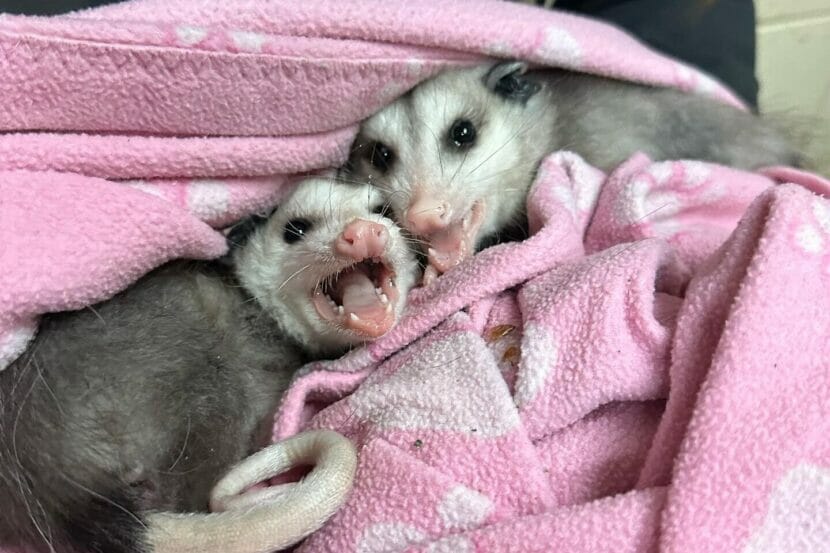
Two of Grubby’s joeys arrived at the Alaska Zoo on Friday. (Lori Stackhouse/Alaska Zoo)

The Alaska Department of Fish and Game caught another baby opossum in Homer late last week, bringing the total to five since the capture of their mom, Grubby, in late May. But Jason Herreman, a wildlife biologist at Fish and Game, said the search isn’t over. Opossum litters are usually eight or nine joeys — and can be as many as 13.

“It’s possible there’s more out there, it could be that we’re getting towards the end of them,” Herreman said. “But if you go off the average litter size, that would suggest we still got four or five more to catch out there.”

Opossums aren’t native to Alaska — Grubby arrived in a shipping container from Washington state. Biologists like Herreman are concerned that if Grubby’s kids aren’t all captured they’ll start breeding and establish a population here. Herreman said it’s likely they could survive the winter. Opossums have spread as far north as Canada.

“You look at where their home ranges have expanded to in the Lower 48, and the environmental conditions in the winter aren’t that much different than what you can find in downtown Homer,” he said.

Herreman isn’t an opossum expert – before this March, there were no opossums in Homer. But these past few weeks, he’s been reading up. He said he always enjoys learning about new animals, but he just wishes he’d had more time to prepare for this.

Since their litters are so big, Herreman said even a handful of rogue opossums have the potential to explode into an invasive population, and they could pose a threat to local wildlife. Opossums could spread diseases, as well as eat local insects, rodents and birds — potentially disrupting the ecosystem.

Herreman said there’s no way to know if the saga of Grubby and her family is over.

“No matter what, unless we catch 13 of ’em, I wouldn’t ever really be comfortable to say we got them all,” he said.

Herreman said Fish and Game still has traps out around Homer. He encouraged people to report any opossum sightings to the agency at 907-235-8191, and to the Homer Police Department after business hours at 907-235-3150.

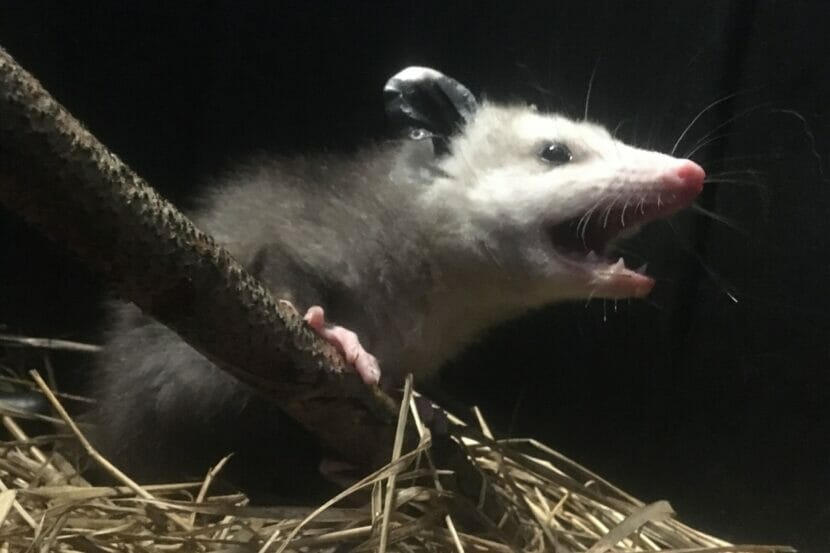
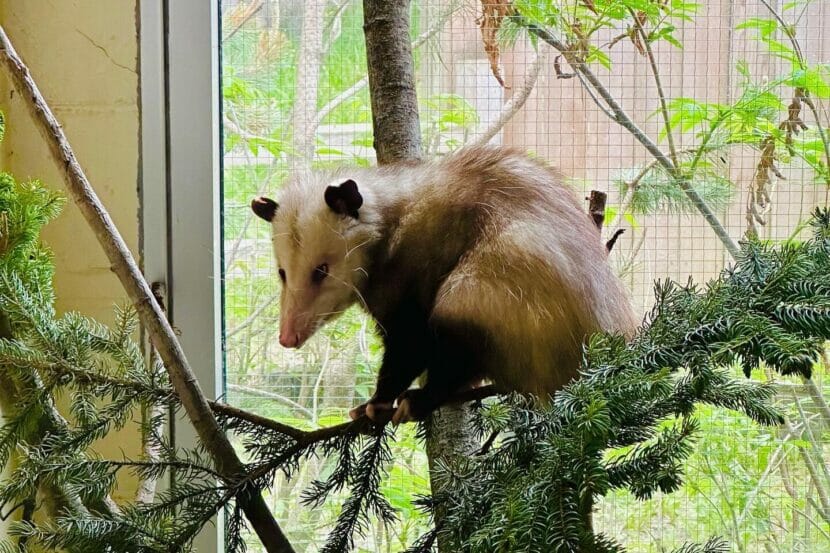
Grubby the opossum perches on a branch in the infirmary at the Alaska Zoo. (Lori Stackhouse/Alaska Zoo)

Homer police have said that placements would be found for all of Grubby’s offspring. So far, Grubby and two of her babies have been taken to the Alaska Zoo, and two more will be heading there in the next few days. Fish and Game said one baby opossum did not survive.

Only Grubby is taking up permanent residency at the zoo in Anchorage. According to Fish and Game, one of the babies will move to the Alaska Wildlife Conservation Center, and two more have confirmed placements at zoos in the Lower 48. It’s still unclear where the fourth will go.

Invasive pike can use Cook Inlet to travel between freshwater systems, research finds

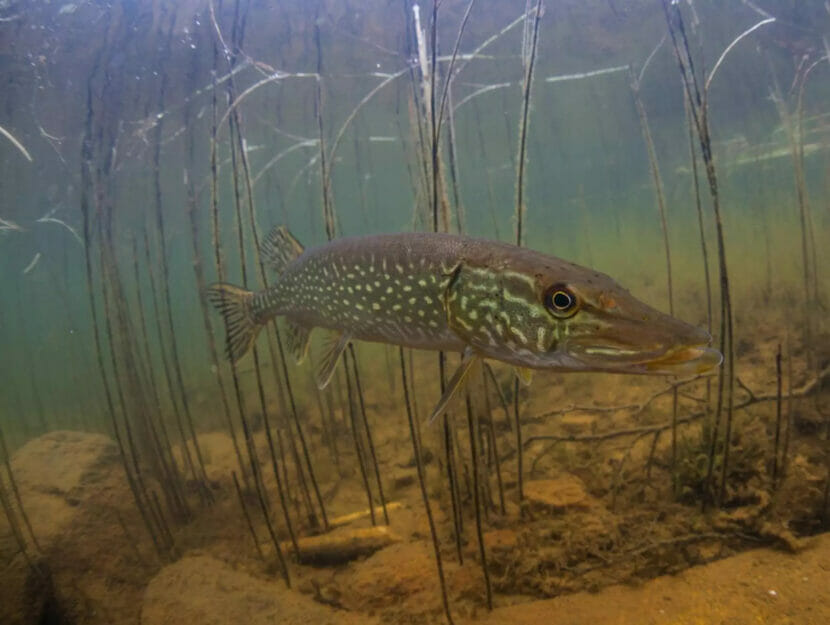
Northern pike are not native to Southcentral Alaska. But in the decades since the fish were illegally introduced into some Kenai Peninsula lakes, biologists have been hard at work eradicating local pike populations. Now, they know pike can travel between freshwater systems via Cook Inlet — raising concerns about how pike can spread. (Courtesy Of Kristine Dunker/Alaska Department Of Fish And Game)

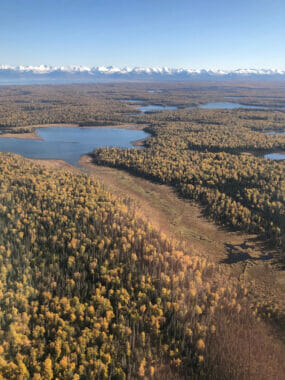
It was a very ominous discovery back in 2019: invasive northern pike in Vogel Lake, at the tip of the Kenai Peninsula.

And it raised some red flags for biologists with the Alaska Department of Fish and Game. Soldotna-based Fisheries Biologist Eric Wood said before the Vogel discovery, biologists on the peninsula had only found pike in lakes that were accessible by car. Those pike had likely been illegally put there by anglers.

That didn’t explain why there were pike in Vogel — a remote lake near Point Possession, accessible by float plane or snow machine.

Now, for the first time, researchers have concrete evidence that the fish could use the ocean to move between freshwater habitats, introducing new questions about where those fish can travel and what scientists can do to keep their numbers under control.

“This discovery kind of opened the door to a whole bunch of other concerns and questions and things we need to figure out,” Wood said.

Northern pike are native to interior and western Alaska, not Southcentral.

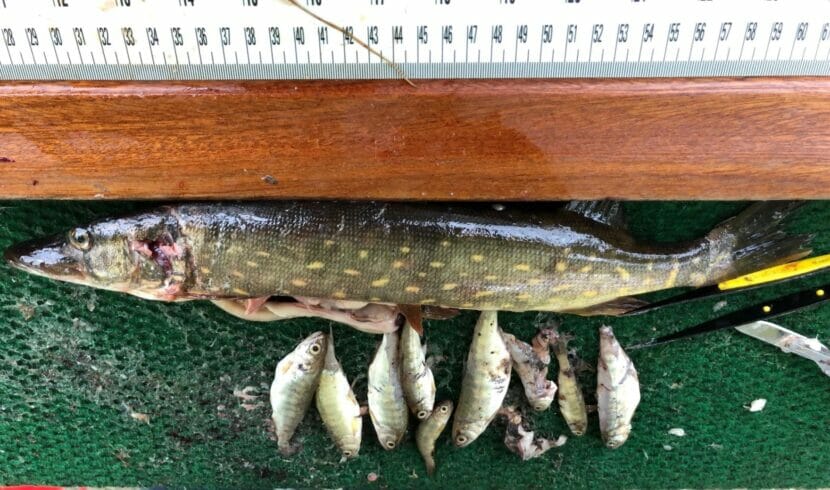
But they’re a popular species among anglers. As the story goes, sport fishermen started introducing pike into lakes in the region in the 1950s and then in Kenai Peninsula lakes in the 1970s, likely by way Fairbanks — causing problems for other fish species. Pike dominate any system they’re in, eating salmon and degrading local fish populations.

Invasive pike pose a threat to native fish species, like salmon. (Courtesy Of Kristine Dunker/Alaska Department Of Fish And Game)

Invasive Species Biologist Kristine Dunker said pike have been found in 150 bodies of water in the region, overall. In the Matanuska-Susitna Borough, researchers have had a hard time getting populations under control.

But on the Kenai Peninsula, the problem has been more manageable. Dunker said over two decades, biologists from a handful of local, state and federal agencies worked hard to eradicate pike on the peninsula.

“And we thought we had. In 2018, we finished a project in the Tote Road area and thought that that was it — that all known populations were gone at that point,” she said. “And it was like, ‘Yay!’ — for about a week.”

That’s when the department heard from an angler who had found the pike in Vogel. The department was also getting word from some set netters that they were catching pike in Cook Inlet.

With a researcher in Fairbanks, Fish and Game started testing pike for signs they had traveled through saltwater. They looked for signs in their otoliths, or ear bones — which can absorb traces of the fish’s environment.

“When we got the results back, you could see on the graph that this fish actually came from somewhere, spent time in saltwater, and then went to a different freshwater location,” Dunker said. “That was very eye-opening to us.”

Biologists first found a pike in Vogel Lake, shown above, in 2019. (Courtesy Of Kristine Dunker/Alaska Department Of Fish And Game)

Wood said that ocean pathway could complicate efforts to contain pike, and he said inlet conditions could become more favorable for the freshwater fish as glaciers continue to melt.

“As to where they came from, how they ended up where they ended up, we don’t know that for sure,” Wood said, adding that the Susitna River seems to be the obvious point of origin, since pike are so widespread there.

Wood and Dunker both said from the research side of things, the new discoveries are fascinating. Now, they’re finding marine signatures in pike from other systems too, including two lakes in Anchorage earlier this year — Campbell Lake and Westchester Lagoon.

But the findings create more challenges on the management side.

Dunker said since pike disperse, it’s important to prevent populations from spreading.

“The big challenge for us now is to try to figure out — How do we do that well? When you have a scenario where pike could be moving around marine estuary corridors, that makes it a much more difficult problem. But it doesn’t make it an impossible one,” she said. “It just means we have to be kind of smart about it and anticipate where they might be going.”

Already, Wood said Fish and Game has put a weir at Miller Creek, which flows out of Vogel Lake, to stop northern pike from entering the system there. But he said that’s not a permanent solution .

“The reality of it is, there’s so much money, so much tradition and everything tied up with salmon in this area, that this could have the potential to wipe out so much,” Wood said. “So it is scary, in that way.”

With many questions remaining, Dunker said every fish they can test and study is helpful. She said anglers and fishermen who catch pike should report their sightings to Fish and Game and bring in retained pike, when possible. The number to report invasive pike is 1-877-INVASIV.

Troopers say 2 women found dead near Trapper Creek were murdered

An Alaska State Trooper K-9 Unit SUV. (Joey Mendolia/Alaska Public Media)

Two women found dead in the Trapper Creek area June 2 were the victims of murder, Alaska State Troopers said.

Troopers discovered the bodies of 30-year-old Fairbanks resident Sunday Powers and 34-year-old Anchorage resident Kami Clark while investigating Powers’ disappearance, according to a written statement troopers posted online Friday.

Powers was reported missing May 24 after making a 911 call.

Troopers spokesman Austin McDaniel declined to comment on why Powers made the call or what she told dispatchers.

“So at this point, just due to the active and ongoing nature of this investigation, I don’t have any additional details that I’m prepared to share at this time,” McDaniel said.

Troopers began looking for Powers on the Parks Highway, where she was believed to be traveling between Fairbanks and Southcentral Alaska. More than a week later, they found her vehicle, as well as her body and Clark’s body, in the Trapper Creek area, according to troopers’ online statement.

Evidence at the scene led investigators to believe the women were murdered, the statement said.

“Investigators do not believe that these murders were random, and troopers also do not believe that there is any public safety risk to the community at this time,” said McDaniel.

Troopers ask that anyone who has not already shared information with law enforcement contact investigators at 907-352-5401 or, to remain anonymous, to submit tips through the AKTips smartphone app.

Alaska Zoo nears capacity for orphaned animals

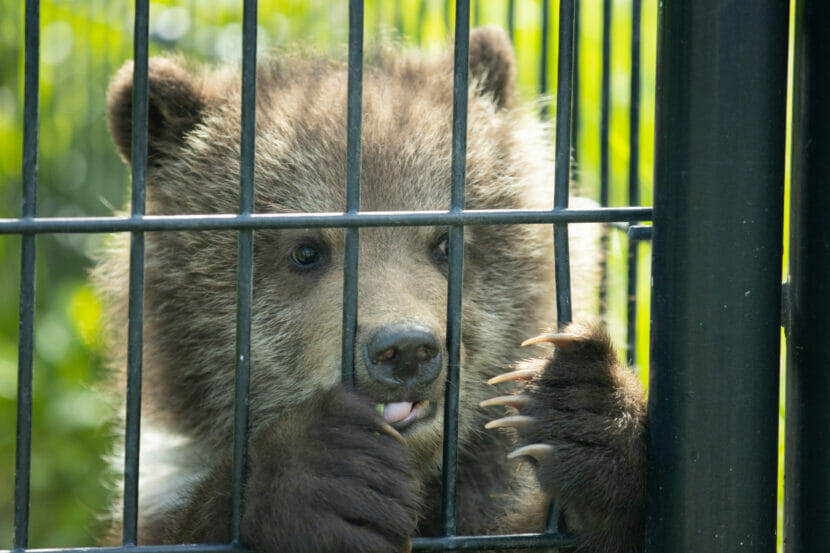
Gator, a very talkative bear cub from Hood Bay, asks for snacks. Monday, June 5, 2023. (Matt Faubion/Alaska Public Media)

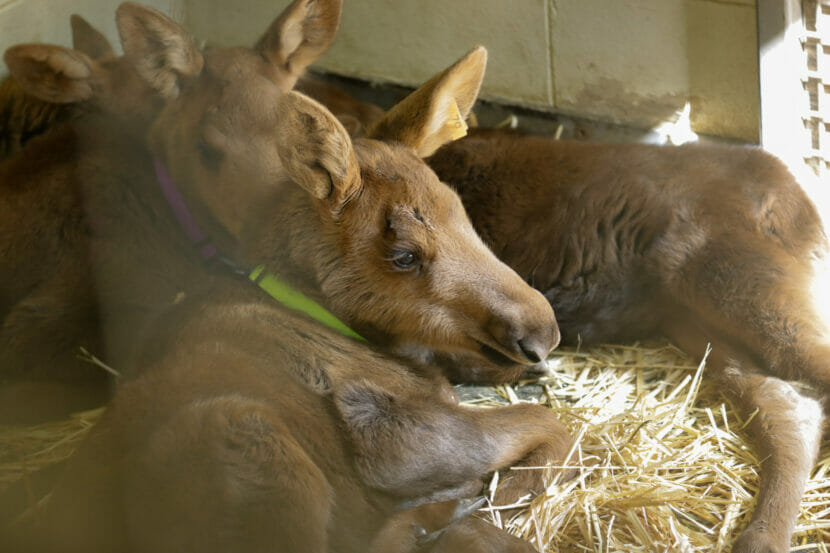
The Alaska Zoo is nearly at capacity for housing orphaned animals. In late May, the zoo welcomed a very talkative brown bear cub nicknamed Gator from Hood Bay, near Angoon. Six moose calves followed soon after, each nicknamed after Australian wildlife: Kangaroo, Mouse, Wombat, Echidna, Emu and Wallaby.

“From this time on up through July is when we’re usually busiest in receiving orphaned animals,” said the zoo’s executive director, Pat Lampi.

The zoo is also hosting Grubby the opossum, who hitched a ride from Washington to Homer in a shipping container this spring. Although she’s now out of the wild, biologists are still trying to catch a litter of her offspring born before her capture late last month.

Lampi said the number of orphans the zoo can foster is decided by the Alaska Department of Fish and Game, and depends on how many permanent homes are available that year.

Emu (green collar), a rescued moose calf from Eagle River, lays down for a nap after a big meal. Monday, June 5, 2023. (Matt Faubion/Alaska Public Media)

The zoo doesn’t keep the orphans it takes in. The staff’s focus is on rehabilitating the animals, which often arrive emaciated or in poor health. Once they’re healthy the zoo works with Fish and Game to place them, usually at zoos in the Lower 48. Lampi said they’ve sent orphans to zoos all across the United States.

“It’s not the ideal situation because they’re not in the wild, but these animals can be saved,” he said. “They can be ambassadors for their species and do a lot of really good education and conservation work.”

But transporting animals can be tricky. They’re usually sent on cargo flights with multiple attendants. They need permits, medical records and health certificates.

In the meantime, the orphans are on public view at the Alaska Zoo – Gator the bear in the orphaned cub facility, and the moose calves right next door in the infirmary yard.

In the wild, Lampi said it’s important not to assume a young animal is orphaned just because it’s alone. Many species will leave their babies to go foraging.

“It’s best not to interfere,” he said. “You contact somebody with Fish and Game and let them know where it is and then let them make sure it’s really an orphan and that, out of the goodness of your heart, you’re not creating the orphan yourself.”

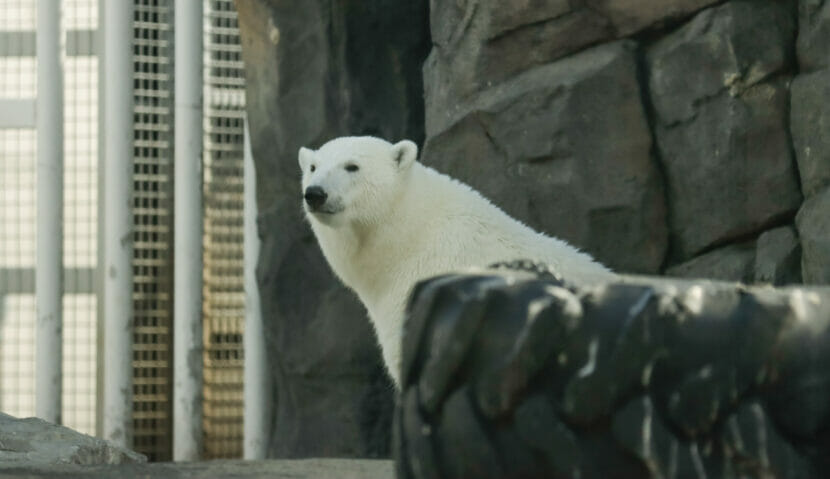
Kova, a rescued polar bear from Prudhoe Bay. Monday, June 5, 2023. (Matt Faubion/Alaska Public Media)

The zoo took in an orphaned polar bear cub named Kova in November, who was found living under a building by a dumpster in Prudhoe Bay. She was placed under rabies quarantine protocol for six months, which ended May 30. Kova made her first public appearance at the zoo on Sunday.

Homer biologists grab 3 more of Grubby’s offspring as search for opossum posse continues

A young male opossum among the offspring of Grubby the opossum, captured in Homer on Tuesday, June 6, 2023. (Jason Herreman/ADFG)

State biologists are continuing their efforts in Homer to catch offspring of Grubby the opossum, with three more members of her litter captured as of Tuesday.

The now-infamous Grubby, an opossum from Washington that made its way to Homer in a shipping container, was caught late last month and sent to the Alaska Zoo in Anchorage.

But to the chagrin of area biologists and the Department of Fish and Game, Grubby made landfall carrying offspring.

Jason Herreman, with the Department of Fish and Game, said a male opossum three to four months old was captured near Homer City Hall on Thursday. As of Tuesday morning, a fourth young opossum — another male — had been captured. At least one more of Grubby’s spawn remained at large.

Herreman said the small marsupials, referred to as joeys, will be out foraging for food and shelter.

“They’re going to try to find food sources, and places with shelter,” Herreman said. “Shelter areas will be under houses, sheds, any kind of little hole where they can make a burrow. And then food sources, where people have trash outside, if they leave pet food out. Basically, anything that an omnivore could eat. These guys are really generous in their diet.”

In addition to the risk of spreading diseases as an invasive species, opossums’ indiscriminate hunting and foraging methods pose a risk to local wildlife. Herreman said nesting birds, rodents, and even frogs are a possible food source.

“So you think of the small mammals we have, like our redback voles, our shrews, some of our ermine that are smaller in size, they can compete for space and food and prey on some of these things,” Herreman said.

The search in Homer is currently focused an area between Ulmer’s Drug & Hardware and City Hall, extending down to the local Safeway store. Pet owners should keep animals indoors during the live trapping efforts to capture the young opossums.

Fish and Game is asking the community for help in locating any remaining joeys. Herreman says they may transfer diseases to people who get too close and recommends people keep an eye on it and call their office at 907-235-8191 and Homer police at 907-235-3150 after business hours.

Site notifications
Update notification options
Subscribe to notifications