Alaska Native Arts & Culture

Research shows Alaska Native, Australian indigenous groups’ isolation from flu

H7N9 Lab
A CDC Scientist harvests H7N9 virus that has been grown for sharing with partner laboratories for research purposes. Photo courtesy of the Centers for Disease Control.

Indigenous populations in Alaska and Australia may be vulnerable to influenza, particularly a recent form of bird flu.

Since the first break-out of H7N9 in China early last year, 150 people have been infected and 45 people have been killed. Two people died earlier this month. It’s called bird flu since people have obtained the virus from domesticated poultry.

Although there does not currently appear to be a sustainable person-to-person transmission of H7N9, scientists and health officials worry that will eventually happen with further mutations of the virus. That potential person-to-person transmission is what worries researchers like Katherine Kedzierska, Associate Professor of Microbiology and Immunology and laboratory group head at the University of Melbourne in Australia. She was also senior author of the study that was published last month in the Proceedings of the National Academy of Sciences that examined possible pre-existing cellular immunity among various human ethnic groups.

“This immunity really depends on the genetic make-up of the individual,” said Kedzierska.

H7N9
Influenza A H7N9 as viewed through an electron microscope. Both filaments and spheres are observed in this photo. Photograph courtesy of CDC.


Kedzierska said indigenous populations in Alaska and Australia would likely be very vulnerable to latest strains of flu. They have been relatively isolated and have not had the exposure to various influenza viruses that were identified as circulating in Greece as early as two millennia ago.

“So, (Europeans) had centuries of evolutionary pressures from viruses like these to develop all the mechanisms to protect and fight the viruses,” said Kedzierska.

The research also provides some clues about the 1918 influenza outbreak.

“We think it was a new virus entering the human circulation,” said Kedzierska. “So, that’s why we didn’t have much immunity and that’s why it was catastrophic, more than 40 million people die around the globe.”

It also sheds some light on why mortality rates were so high among Alaska Natives during the 1918 outbreak.

We know that in some isolated Alaskan villages (that) up to 100 percent of adults have died. Similarly, in the Australian indigenous population, we had higher mortality rates. Ten to 20 percent of the Australian indigenous population died of this influenza and this is comparing to less than 1 percent of non-indigenous Australians. So, we know from history that this had happened before when we have a new influenza strain emerging and entering the human circulation.”

Link to published paper in Proceedings of the National Academy of Sciences: Preexisting CD8+ T-cell immunity to the H7N9 influenza A virus varies across ethnicities

Link to page of frequently asked questions about H7N9 influenza from the Centers for Disease Control: H7N9 FAQ
Alaska lawmakers file bill to create Dr. Walter Soboleff Day

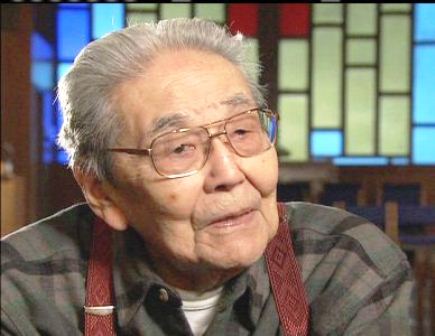
Walter Soboleff
The Rev. Dr. Walter Soboleff. File photo.

November 14th of every year would be Dr. Walter Soboleff Day in Alaska under a bill pre-filed by members of the Alaska House of Representatives on Friday.

It’s one of at least two bills relating to Alaska Native culture and languages that lawmakers will consider during the upcoming legislative session.

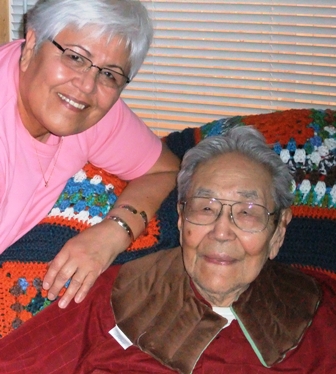
“I think it’s wonderful,” said Janet Burke, Soboleff’s oldest child and only daughter.

She says she and her three brothers are thrilled that members of the Alaska Legislature want to honor their late father, who passed away in 2011 at the age of 102.

“It’s hard to believe he’s already going to be gone almost three years, and of course, he was a pretty prominent citizen. So everywhere we go, we know he’s been there,” Burke said.

Rev. Dr. Walter Soboleff with his daughter, Janet Burke in 2010. Photo by Rosemarie Alexander/KTOO.

Soboleff was a cultural and spiritual standard bearer for the Tlingit people. The Presbyterian minister was the first Alaska Native pastor in Juneau. Back when the town was segregated, his church was open to all.

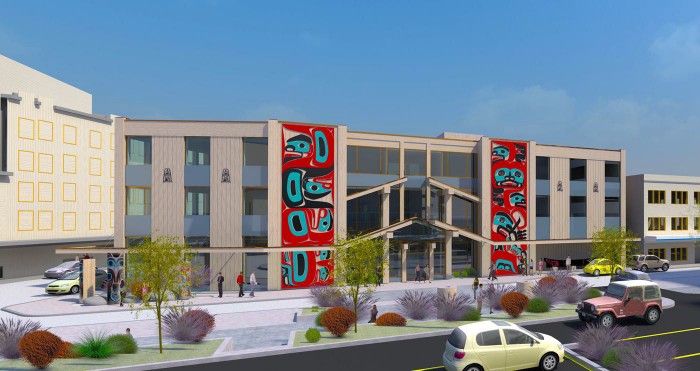
He chaired Sealaska Heritage Institute’s Council of Traditional Scholars, a panel of clan leaders and elders formed to advise the nonprofit’s language and cultural programs. The heritage institute’s new cultural center will be named for Soboleff. It’s under construction in downtown Juneau, and is expected to open a year from now.

At SHI’s 2010 Celebration festival, Dr. Soboleff talked about the strength of Southeast Alaska’s Native people.

“They survived through the ages. And we are here today as descendants of the people of Alaska,” he said to loud cheers.

Burke says the Alaska Native Sisterhood and Brotherhood first floated the idea of a day to honor her father on or near November 14th, which was his birthday. House Bill 217 makes that Dr. Walter Soboleff Day. It was introduced by a bipartisan group of Southeast Alaska lawmakers, including Juneau Representatives Cathy Munoz and Beth Kerttula, Sitka’s Jonathan Kreiss-Tomkins, and Wrangell’s Peggy Wilson.

Munoz says Soboleff was a good friend of her father and grandfather.

“I heard him speak a number of times,” Munoz said. “And every time I heard him speak I was moved by his message of unity, and respect, and love. He was a great leader and we all miss him very much.”

A drawing of the Walter Soboleff Center shows its structure and facade. Image courtesy Sealaska Heritage Institute.

Another bill pre-filed Friday would add 20 Alaska Native languages to the list of official state languages. Tlingit, Haida, and Tsimshian are included from Southeast. Among the others are Alutiiq, two Yup’ik dialects, Eyak, and Inupiaq.

Kreiss-Tomkins is a prime sponsor of the legislation, House Bill 216. The Democrat says it’s largely symbolic, but he hopes meaningful to those in Alaska who are trying to revitalize Native languages.

“It’s a profound loss if a language goes extinct,” Kreiss-Tomkins said. “And this bill is a means of raising the profile of the revitalization movement across Alaska.”

Right now U.S. English is the only official state language.

The bills will be introduced when the legislature gavels in on January 21st.

Grant advances Kasaan longhouse repairs

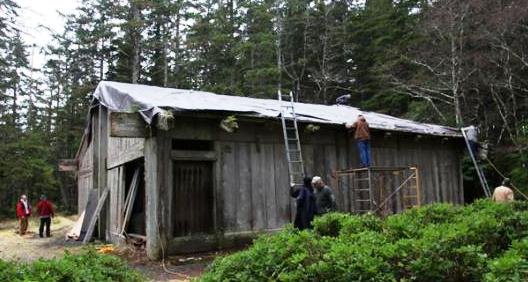
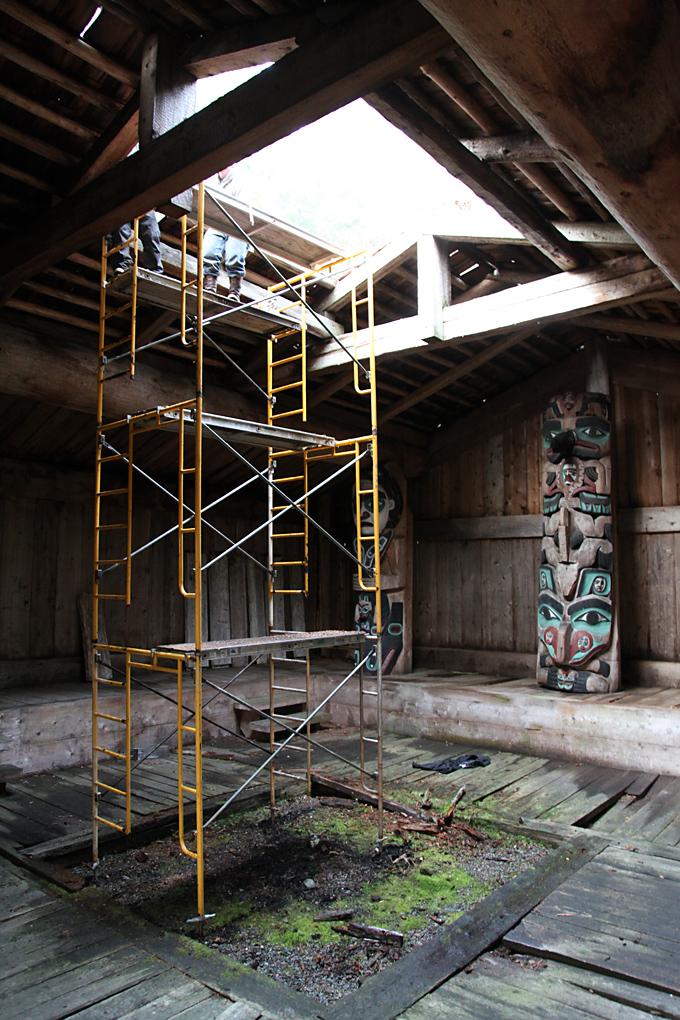
The roof of Kasaan’s Chief Son-i-Hat House, also known as the Whale House, is covered by a tarp during repair work. (Organized Village of Kasaan.)

A nearly-half-million-dollar grant will speed restoration of Alaska’s oldest Haida longhouse. The structure was first built 130 years ago.

Haida Chief Son-i-Hat built the original longhouse in the 1880s at the village of Kasaan. It’s on the eastern side of Southeast’s Prince of Wales Island, about 30 miles northwest of Ketchikan.

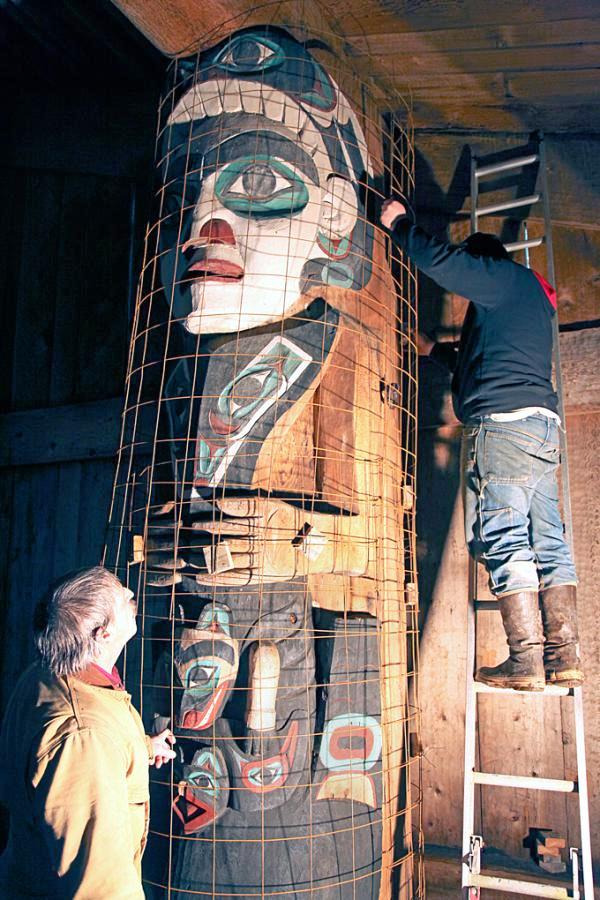
An insect-infested house post is prepared for heat treatment to kill carpenter ants. (Organized Village of Kasaan)

It was called Naay I’waans, The Great House. Many know it as The Whale House, for some of the carvings inside.

It deteriorated, as wooden buildings in the rain forest do. The Civilian Conservation Corps, a depression-era employment program, rebuilt it in the late 1930s.

Now, the house badly needs repair again.

“It’s a matter of our cultural revitalization, showing that we’re still here and part of these lands,” says Richard Peterson, president of the Tribal Council for the Organized Village of Kasaan.

The tribal government is partnering with the Native village corporation Kavilco, and its cultural arm, the Kasaan Haida Heritage Foundation.

“A lot of the building is still in really good condition. Some of the supports are what’s failing. I think we’re fortunate enough that we don’t need a total reconstruction, so we want to maintain as much as we can,” Peterson says.

Read more about the effort.

An analysis by Juneau-based MRV Architects estimated full repairs would cost more than $2 million. A scaled-back plan totaled about $1.4 million. It listed several phases to be completed as funds came in.

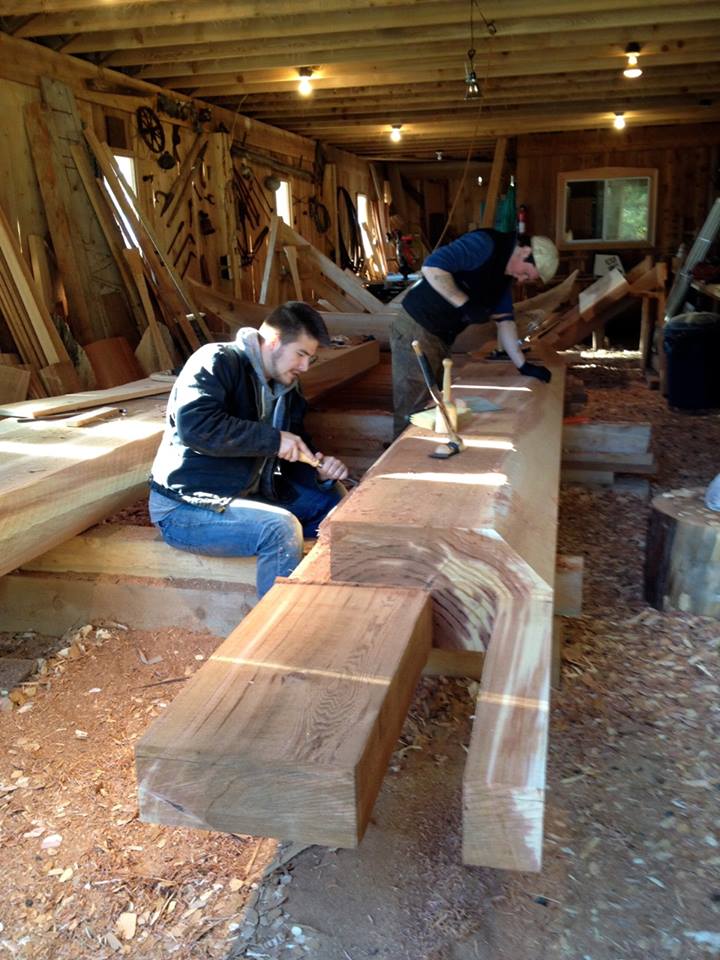
Eric Hammer (front) and Harley Bell-Holter work in Kasaan’s carving shed. (Courtesy Organized Village of Kasaan)
Eric Hammer (front) and Harley Bell-Holter work in Kasaan’s carving shed.  (OVK Photo)

And they have. In late November, the Anchorage-based Rasmuson Foundation awarded the project $450,000. Peterson says that, plus funds from the tribal government and its partners, is about enough to complete the work.

“So right now, we’re milling up the logs and they’re going to hand-adz all of the timbers. And we’re just going in and starting to secure up some of the corners that are dropping down. It’s been a really exciting project,” Peterson says.

The effort to stabilize the longhouse has been underway for around two years. But it picked up speed last summer.

The lead carver is Stormy Hamar, who is working with apprentices Eric Hamar, his son, and Harley Bell-Holter. Others volunteer.

Peterson says it’s an all-ages effort.

“The great part is these young kids that are getting involved. And it’s across the lines. Native, non-Native, it doesn’t matter. There’s been a real interest by the youth there,” Peterson says.

Work continues through the winter. Peterson says the focus now is repairing or replacing structural elements so the longhouse doesn’t collapse.

The Whale House is already attracting attention. Independent travelers drive the 17-mile dirt road that starts near Thorne Bay. And Sitka-based Alaska Dream Cruises also stops in Kasaan, where the house is on the list of sights to see.

“Because it’s off-site, you’re not going to see any modern technology. There’s no cars driving by. You can really see how our people lived 200 years ago and experience that and look at those totems in a natural setting,” Peterson says. “It wasn’t put there for a park. This is how it was. And I think people really appreciate that.”

Without too many surprises, Peterson hopes work can be completed in around two years.

Then, he says, the tribe will host a celebration like the one Wrangell leaders put on last year when they finished the Chief Shakes Tribal House.

Scaffolding allows repairs to the Kasaan Whale House smokehole, which was damaged by rot. (Organized Village of Kasaan.)

Preventing language loss: A three-step process

(Image courtesy of Lance Twitchell)

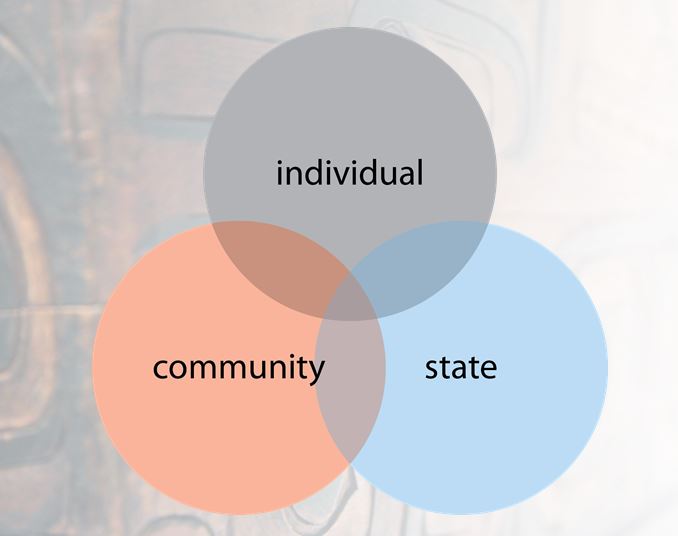
Indigenous languages throughout North America are teetering on extinction. Of the Native languages spoken in Southeast Alaska, less than 200 people can speak Tlingit, Haida, or Tsimshian. But a Tlingit language expert suggests indigenous language loss can be prevented by addressing it at three levels – individual, community, and state.

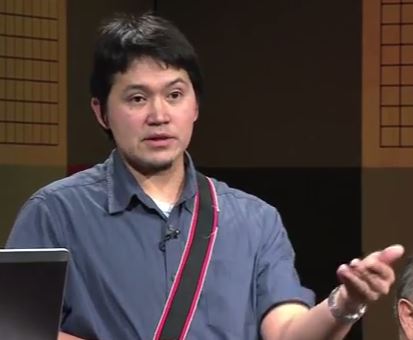
Lance Twitchell is an Assistant Professor of Alaska Native Language at University of Alaska Southeast.

Lance Twitchell says it’s time for a dramatic shift in the way Alaskans look at endangered languages, like Tlingit. Twitchell is an assistant professor of Native Languages at the University of Alaska Southeast. “Sometimes we say the language is dying, we don’t have many speakers. And some of these things get so insurmountable in your mind that you don’t really know where to start,” he says.

The first place to start, Twitchell says, is at the individual level. He says it’s important to speak as much as you can on a daily basis:

“I tell students, ‘Find something that that’s the only thing you speak Tlingit to – dog, cat, steering wheel, shower head, mirror – and make that switch.'”

Since the 1800s, Alaska Natives have experienced discrimination, forced assimilation, and boarding schools that prohibited children from speaking their language. Twitchell says due to post-traumatic stress disorder and intergenerational trauma, many students of Tlingit have a fear of failing or being chastised:

“Our grandparents experienced great violence for our language, our parents experienced great neglect with our language, we are trying to look at all those things so that our children and grandchildren will just speak.”

Learning the language is an act of healing, Twitchell says. At an individual level, it’s not about changing the world, but by trying to speak a Tlingit word every day.

The next step is making a dramatic shift at the community level. One way to do this is by implementing language into place. “When I want to Hawaii, I came off the plane and the first thing I heard was Hawaiian, and I thought, ‘That’s what we need to do,'” Twitchell says. “We’re trying to put Tlingit on the ferries, so that when you get on the ferry and you’re pulling into Hoonah, you can hear Tlingit telling you about this place Xunaa.”

Twitchell says community also means surrounding yourself with other Tlingit speakers and doing everything with them, “You guys shop together, you eat together, you do a lot more things together, and it’s a challenge.”

Rebuilding an endangered Native language also requires non-speakers. Twitchell advises non-speakers to be encouraging and supportive of those trying to speak a second language.

Twitchell says it’s up to the community to make room for Tlingit through the implementation of language immersion spaces, like a Tlingit daycare or a community center where only Tlingit is spoken:

“If you want to learn French, you can go to France. If you want to learn Spanish, you can go to different countries. If you want to learn Tlingit, you have to manufacture a place where Tlingit really exists.”

The state also must be involved in the rebuilding of a language, Twitchell says. Part of this involves admission. “We see a trail of responsibility that does go to federal governments, state governments, and religious organizations as far as what has put us in this situation with our languages,” Twitchell says. “So there has to be conscious efforts made to reverse language shift.”

Linguist Alice Taff says the language resurgence in Southeast Alaska is part of a worldwide movement against language loss, “Every nation in this planet has small language communities that are standing their ground against language loss. And it’s a relatively new phenomenon that there is a pushing back from within the communities saying, ‘This is us and we are going to use our own voices.’”

Of the estimated 20,000 Tlingit people in the world, Twitchell says only 140 can speak the language. He says the dramatic shift that needs to be made at the individual, community, and state levels is not a matter of tolerating Tlingit speaking but embracing it.


Watch Lance Twitchell speak on how to prevent language loss on this episode of Forum@360: Living the Language. He’s one of four guests on the topic. The other speakers are Tlingit speaker and clan leader David Katzeek, UAS Tlingit language instructor Marsha Hotch, and linguist Alice Taff.

Appeals court reinstates overfishing charges against Kookesh, two others

Sen. Albert Kookesh
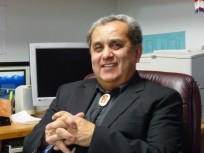
Albert Kookesh

Overfishing charges against former State Senator Albert Kookesh and two other men have been reinstated by the Alaska Court of Appeals.

In 2009, Kookesh and three others – Rocky Estrada, Sr., Stanley Johnson, and Scott Hunter – were fishing for sockeye salmon at Kanalku Bay near his hometown of Angoon. A state wildlife trooper observed them catching more salmon than allowed under their subsistence permits, and issued citations.

Kookesh, Estrada, and Johnson challenged, saying the Alaska Department of Fish and Game cannot establish catch limits. They argued the only way to enact limits is through the Alaska Board of Fisheries.

A District Court judge agreed, and dismissed the charges against the men.

The Court of Appeals in ruling today (Friday) said the board of fish can delegate authority to the department. The case was returned to the District Court.

Kookesh says he and the other defendants would like to continue fighting, but their attorney – Tony Strong of Juneau – has been disbarred for an unrelated matter.

“We have to find another one. We have to find people like AFN or Tlingit and Haida or somebody else to step up with us,” Kookesh said. “To me it’s an important question, to other people it may not be. But I think the Native community sees this as a question that we have to take to courts to have the State of Alaska recognize that we have a concern here.”

While the case hinged on the narrow issue of who can set catch limits, Kookesh says the men are really challenging the state’s overall subsistence policy.

“We appealed the bag limit of 15 fish per family per year in Angoon,” Kookesh said. “Fifteen fish per family per year, and that’s what we appealed on, because less than two or three miles away we had seine boats getting thousands and thousands of fish intended for that area, sockeye bycatch there. Nobody cited them. But when you’re a commercial boat in Alaska, you can get all you want.”

Kookesh also says fish and game did not get input from Angoon residents before enacting the catch limit.

Mike Mitchell, an attorney with the Alaska Department of Law, says the state is pleased with the Appeals Court’s decision. He says it affirms a longstanding form of fishery regulation, and bolsters the ability of fish and game and the board of fisheries to manage and conserve salmon for all user groups.

Kookesh, a Democrat, served eight years in the Alaska House of Representatives followed by eight years in the state Senate, representing a largely rural district. He lost his seat in 2012 after the state Redistricting Board put him in the same district as Sitka Republican Bert Stedman.

(Note: This story has been updated with reaction from Albert Kookesh and the Alaska Department of Law)

Ancient shoreline search boosts evidence of early human habitation

Soil scientist Dave D’Amore, right, works with students and anthropology professor Dan Monteith, left, during a dig on the University of Alaska Southeast’s Juneau campus. (Ed Schoenfeld/CoastAlaska News)

Scientists are finding more evidence that Southeast Alaska’s first residents arrived more than 10,000 years ago. It’s coming through a new method of locating early settlements. But it’s not easy to search for ancient shorelines in a region where sea level is not a constant thing.

Dave D’Amore digs into a hole on the University of Alaska Southeast’s Juneau campus.

He’s looking for evidence that this spot – around 100 feet above sea level – was once an ocean shore.

“I can kind of see it now. This looks like it’s organic, over that beach,” he says.

University of Alaska Southeast anthropology professor Dan Monteith goes over GPS data with Bernadine DeAsis during a dig. (Ed Schoenfeld, CoastAlaska News)

D’Amore is a soils expert with the U.S. Forest Service’s Pacific Northwest Research Station. He’s one of the scientists working with university students to map Juneau‘s ancient shorelines.

They’re hard to find, because of the region’s ever-changing geography.

The weight of huge glaciers depressed the Earth’s crust. Their forward movement created raised bulges of land. Their melting allowed the surface to rise. And then, there’s plate tectonics.

Early residents – Tlingit Indians or their predecessors – lived along these shores. So finding their camps and villages, sometimes hundreds of feet above today’s sea level, can lead to new discoveries.

Dan Monteith is an anthropology professor at the university. He’s scooping water out of another hole, where he hopes to find something interesting.

“We need one of those three-gallon buckets,” he calls to a nearby student.

“We’re going around, following up old river drainages or cut banks looking for evidence of old, ancient, raised marine beaches,” Monteith says.

They’ve already found some. Monteith walks up a small creek to an eroded bank. There, sticking out of the soil, are small, dirty-white seashells.

“By collecting shells and other things from those areas, then we can radio carbon-date those and get kind of a fixed point of when that was a beach at different points of time,” he says.

The technique was developed on Prince of Wales Island.

Forest Service Geologist Jim Baichtal says it can be used to make an educated guess of where early residents used to live.

“Just as you and I today would camp within 2-3 feet above high tide, so would folks in the past. And if you had food and you had good moorage, that’s the kind of places we would camp,” he says.

Baichtal, archaeologist Risa Carlson and other scientists began their effort about four years ago. On an early outing, they headed up an estuary and into the forest to where waves lapped the shore thousands of years before.

This enhanced map shows the Juneau-area shoreline about 12,600 years ago, when sea level was about 630 feet higher. Click on image to enlarge. (Jim Baichtal/U.S. Forest Service)

“And we dug down about 50 centimeters (20 inches) and dug into the top of over a meter of charcoal and tools and other things that were left there by the inhabitants of that place,” he says.

Radiocarbon-dating showed those items to be around 10,000 calendar years old.

Baichtal says he and other scientists used the technique to find archeological material on more than 70 Prince of Wales Island sites.

About 10 have been dated to around that same time, showing Southeast’s first residents were well-established by then.

“It had been thought in the past that maybe there weren’t large populations here that early. But it was because we never knew where to look. And this is giving us a whole different way of where to look and what to look for,” he said.

Back at the university, Monteith makes sure his students record GPS coordinates for each hole they’ve dug.

“Did you guys get lat and longitude on any other test bits we got?” he asks.

The group has dug in other areas of Juneau. It’s also inventoried known tribal sites in a bay north of town.

Student Bernadine DeAsis says that helped her learn some of her own history.

“That was really important for me to get a perspective of where the Tlingits were in this area, because I’m Tlingit myself,” DeAsis says. “We know for sure that they’ve been in this area, so it’s kind of like a treasure hunt for me.”

The effort will continue for many years, expanding to other parts of the region.

Others involved include the U.S. Forest Service’s Dennis Landwehr, Jane Smith and Rachel Myron.

This enhanced map shows a larger central and south Southeast Alaska when shorelines were about 500 feet below today’s. (Jim Baichtal/U.S. Forest Service)
Site notifications
Update notification options
Subscribe to notifications