Community

Tongass Voices: Holly Huber on what it takes to be Miss Alaska Volunteer

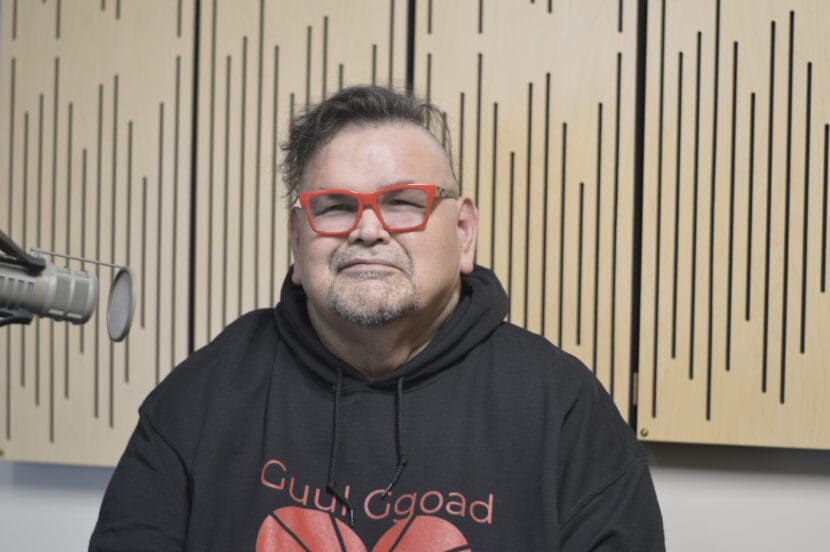
Miss Alaska Volunteer Holly Huber in the KTOO studio. March 3, 2024. Photo by Yvonne Krumrey/KTOO.

This is Tongass Voices, a series from KTOO sharing weekly perspectives from the homelands of the Áak’w Kwáan and beyond.

Holly Huber is this year’s Miss Alaska Volunteer. It’s a newer crown within U.S. pageant system, and it focuses on what contestants do to support their communities. 

Huber uses her platform to bring awareness to the mental health crisis in Alaska. Her duties include advocating, representing the pageant brand and the state, and, of course, posting pictures of herself as Miss Alaska on social media. 

And a warning: this interview contains a mention of suicide. 

Listen:

This transcript has been lightly edited for clarity.

Holly Huber: I’ve done pageants absolutely my entire life. If you’ve ever seen Toddlers and Tiaras, that’s basically a biopic of me. My mom was the ultimate pageant mom, she had all five of us doing pageants, including my little brothers. They were adorable. 

But I’d never done a Miss USA or Miss Volunteer America or Miss America Pageant before. You know, those circuits are so glamorized. And they’re so big and well known that they’re kind of intimidating. 

But when I turned 18, I competed for Miss Alaska USA for the first time. And I didn’t win, which if you look at the video, is no surprise. And then I competed again at 19. And again at 20. 

And the reason that this system was created was really to focus more on what it means to be in pageantry and to hold a national title rather than what you look like when you hold that title. 

Every pageant you compete for, you need to have a platform, which is basically something that you stand for. This one, they call it their initiative, and you have to put in work. It’s not just, “I like to donate to St. Jude’s. I like to go pick up trash on the side of the road.” You have to have such a developed and dedicated platform that really shows what you’re doing in your community and how you specifically are making a change. It’s not just “I want to do this,” it’s “I am doing this.” 

My platform is called No Empty Hearts. It’s the platform I’ve been running with since I was about 16 years old. And what I do is I’m very focused on bringing comprehensive and accessible mental health care to my community here in Juneau and across Alaska. 

Mental health has been a big issue in my family personally. My mom really struggled with her mental health growing up. You know, it really, really manifested physically for her. You know, she really always did her best as a mom, and she tried to do everything for her kids. But unfortunately, when I was 15 years old, my mom attempted to take her own life. 

And — sorry — I had come home from my shift at McDonald’s, to the little room that we shared. And she was there completely unresponsive with an empty bottle of pills right near her. And I think in that moment, I just realized that it’s so much of a disease. 

And it’s really unfortunate that children here don’t have the same kind of resources. Adults’ resources are abysmal. And it’s just, it’s something I’m fighting so hard to change. And I’m really excited to go to Nashville and fight for national resources for my community. 

I prepped like crazy going to the gym. I did a lot of mental health work. I did a lot of journaling — everything that kind of made me feel prepared. And I competed for the title back in October and I won. So now I am Miss Alaska Volunteer and I get to go compete for the national title here in June. 

I mean, everybody still calls them beauty pageants. And you know, when you’re so set in your ways, it’s hard to change that because for a long time, they were beauty pageants.

I mean, you look at old time, Miss USA, like back when Donald Trump owned it. It didn’t matter how educated you were, how involved you were. It didn’t matter what you were. If you weren’t a pretty face you weren’t getting on that stage.

And what I love about pageantry now is that beauty has completely changed. Beauty is a spectrum and every girl who gets on that stage is beautiful, because the reasons that she’s there is to make a change. 

So the national competition is in June. It is in Jackson, Tennessee. I’ve already got to connect with so many of the girls who are competing in this pageant, and I’m so impressed.

Women are just so incredible and resilient and intense and just — we know what it’s like to fight. And so these girls are really bringing the fight.
Tongass Voices: Jeremy Kane on the philosophy of bowl-making

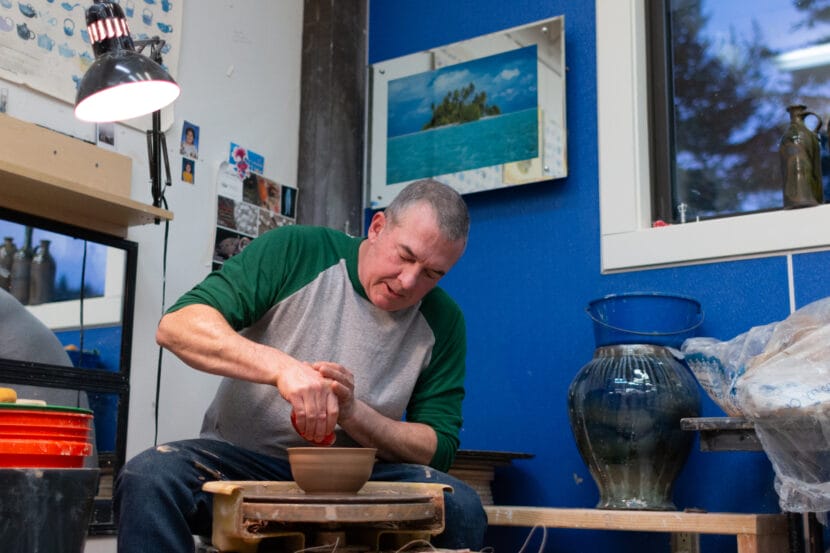
University of Alaska Southeast ceramics professor Jeremy Kane demonstrating bowl-making for his intermediate class. (Tasha Elizarde/KTOO)

This is Tongass Voices, a series from KTOO sharing weekly perspectives from the homelands of the Áak’w Kwáan and beyond. 

The University of Alaska Southeast’s ceramics classes in Juneau are hard to get into — because so many people want to take them. 

Jeremy Kane has been teaching ceramics for 20 years. Each year, the ceramics department makes and donates hundreds of bowls to the Empty Bowls fundraiser, which raises money for the Glory Hall shelter in Juneau. This year’s fundraiser is on Sunday. 

KTOO sat in on a bowl-making demonstration in his intermediate class at UAS. 

Listen:

This transcript has been lightly edited for clarity.

Speaking to his class: But we’re going to start with about a couple of pounds of clay, maybe a little bit more — two-and-a-half, two-and-a-quarter. It’s not really so important how you make it was just a matter of being efficient with your operation.  

And when I put this clay on the wheel, there’s no need to show off. Make that nice round ball of clay, getting your hands smacking around a little bit. This clay is going to soften up so much.

Center it, and enter it. If the clay is wedged properly, shouldn’t have to do too much centering, shouldn’t have to do too much work at all. 

Interview transcript: My name is Jeremy Kane. I moved to Fairbanks when I was 18 years old with my friends, and I had taken ceramics classes as a kid, so I’ve been making things for a long time. So I took college ceramics starting when I was 18 in Fairbanks. Then I have a master’s degree from Ohio University. That’s when I finally landed this position here, and I’ve been working here ever since. So it’s my 20th year teaching. 

To class: I encourage you guys to try to set some goals for timing on these pots. We had like a race in grad school one time, I think I made 45 bowls in an hour. All the clay was prepped, not talking to anybody, you just sit there and go knock them out. And then later, you got to trim them.

So I wouldn’t go to that extent, but I think that you guys should all easily be able to make 10 bowls. I mean, easy.

Interview: This particular project, we do it for the homeless shelter in town, and we’ve been doing it for years. We’ve donated thousands of bowls to this particular project over the years. But I don’t want it to be just a donation. I want the students to be able to learn from it.

To class: Part of a nice handmade bowl has to do with the fact that you still have a hand in it. Okay, so some of the nicest pots you’ll buy, that are actually commercial pots, like say from China. They all have reference of hand marks in them, because that’s what people like.

You can see there’s a little undulation in that pot. Undulation means it’s got a little wiggle to it. When I make pots, I like to have that motion in there. Or else I can just buy them at Kmart. You guys probably don’t know what Kmart is anymore. 

Interview: I try to encourage them to do it different ways, different styles of bowls and different techniques. So itʼs not necessarily like one standard bowl you crank out, I want them to really think about it.   

To class: You know, when you think about bowls, like for this particular project, I want you guys to like — we’re not just donating time. I want you guys to think about things — and it sounds selfish, but when you’re making pots, you gotta make them for yourself. If they’re nice enough for you, then they get really evenly distributed throughout the community, essentially. Okay, so you don’t make things for other people, you make them for yourself. Because you’re the artist, you’re the person who spends the time doing it. But you gotta make something that you like.

Interview: I do think that making things in multiples is the only way to learn how to make pottery. You know, it’s kind of the art of repetition. 

To class: But when it comes to making pots, sometimes it’s nice to have a bigger, bigger bowl. You want room in that bowl to be able to put stuff. So if you’re serving somebody dinner and you have this really tiny little bowl that you made, you’re real proud of it. Maybe it’s better to put like jelly or like put some sort of dip in there or something. 

But a real bowl would have enough room that you could serve food and still have like two or three inches on the top of that pot in order to be able to look at the surface on that ceramics, or to be able to see what it is, or it creates a contrast between the food. 

Say you’re eating some sort of crab bisque. Right? Oh my God, that sounds killer. Did anybody bring that tonight for class? I wish you did.

So many cultures have that sort of specialty, different foods and different spices, but it’s all food. People make potatoes, meat and vegetables. That’s the world. It’s not that amazing. But the dishes that the stuff is served in, I think, make it amazing. 

Okay, alright, get to work. 

You can check out work made by Kane’s students at the Juneau Arts & Culture Center Gallery through April 27.

Tongass Voices: Juneau Hostel’s Khrystl Brouillette-Gillam and Joey Scoggins on keeping travel affordable

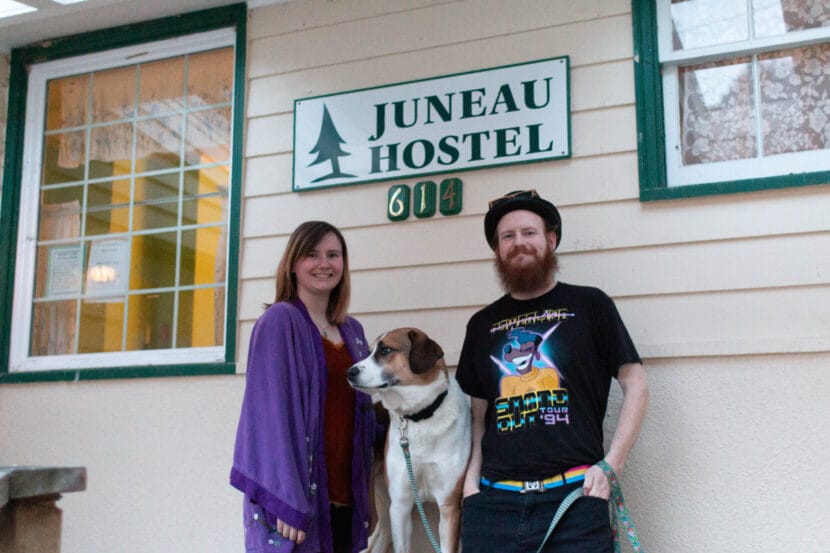
Khrystl Brouillette-Gillam and Joey Scoggins outside the Juneau Hostel in March 2024. (Tasha Elizarde/KTOO)

This is Tongass Voices, a series from KTOO sharing weekly perspectives from the homelands of the Áak’w Kwáan and beyond. 

Khrystl Brouillette-Gillam and Joey Scoggins are part of the team behind the Juneau Hostel. Their mutual desire to make travel to Juneau affordable is what drives them to keep the nonprofit hostel’s doors open.

Listen:

This transcript has been lightly edited for clarity.

Joey Scoggins: My name is Joseph Scoggins, I go by Joey, and I’m the manager of the Juneau Hostel. 

I’m from Georgia. And I never had an opportunity to really travel outside the state until I was almost 30. And then I just randomly needed a reset. So I moved out to California, because I had a friend with a couch and he said, c’mon over. I loved it out there, worked at Disneyland and all that fun stuff. One day, it just hit me. I was like, it’s March and it’s 100 degrees. I can’t live here anymore. So I went online, and I saw this hostel opportunity. I was like, you know, this is an opportunity to finally make it to Alaska, because I have been applying for jobs up here probably since I was like 19, you know, but it was always like, can you get here? Like, sorry, we can’t hire you. You know, so I finally got here. And that was the hardest part. 

Khrystl Brouillette-Gillam: No, I think yeah, the point of the hostel is to provide people with a low cost place to stay. And the point, the reason why we run it with volunteers like this, is to give people like Joey and others an opportunity to live in Alaska and enjoy everything we have in Juneau, but at a lower cost. 

My name is Khrystl Brouillette-Gillam, and I’m the president of the Juneau Hostel Board of Directors. So we’re the only nonprofit hostel in Alaska, and one of the very few that I can find, nonprofit hostels in the U.S. And that makes us different, makes us keep costs low. So that’s how we’re able to offer like $30 for a bunk versus other hostels that charge a little bit more.

Yeah, so what you’re seeing right now, obviously, we have a private group staying so there’s games around, and books around, and hostel’s full of life right now. In the wintertime, we don’t have that many guests. So the hostel is a very different vibe. But we’re excited to have the energy back in the hostel.

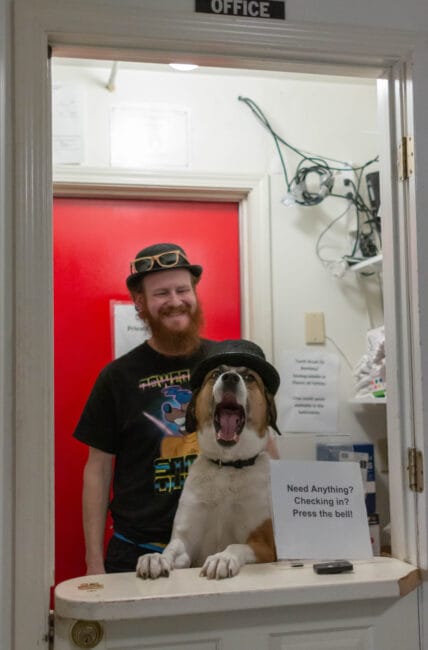
Joey Scoggins and his dog, Saint, play around with hats behind the Juneau Hostel’s front desk in March 2024. (Tasha Elizarde/KTOO)

Joey Scoggins: Compared to summer months, we’ll have like a couple dozen every day, you know what I mean? It’s a lot more fun. Gentleman that came last summer, he’s a big fan of an author that lived around here. And he was actually from somewhere in Eastern Europe. He was writing his own novel, and he had hit of a writer’s block kind of thing. So he was like, I’m gonna go there, I’m gonna go to Juneau, I’m gonna walk those same paths this guy did.

Khrystl Brouillette-Gillam: So like I said, the hostel operates as a nonprofit, which is great because it keeps our costs down for our guests, but has some other problems with it. And the biggest thing is just funding of course, that’s the biggest thing with all nonprofits. We do have a source of funding through renting rooms to people, but it’s definitely not enough to cover all of our expenses.

During COVID, we had to shut down operations almost entirely. I wasn’t on the board at that point. But we had to shut down all operations, and the hostel was actually thinking about closing — was very close to shutting our doors and not being open anymore. 

Joey Scoggins: This is just a few weeks ago, we had a prank call. But it turned into a serious conversation where the gentleman was concerned because all the other hostels he had called in Alaska to try and prank call had already closed down or turned into AirBNBs. And he was like, so, I was just messing with you, but I’m kind of glad you’re still there.

Khrystl Brouillette-Gillam: So if you don’t want the Juneau Hostel to turn into an AirBNB, please join the board. We would love to keep it running.

Correction: An earlier version of this story misspelled Khrystl’s name. 

Juneau Assembly sticks with plan to relocate city-run homeless camp, despite pushback from business owners

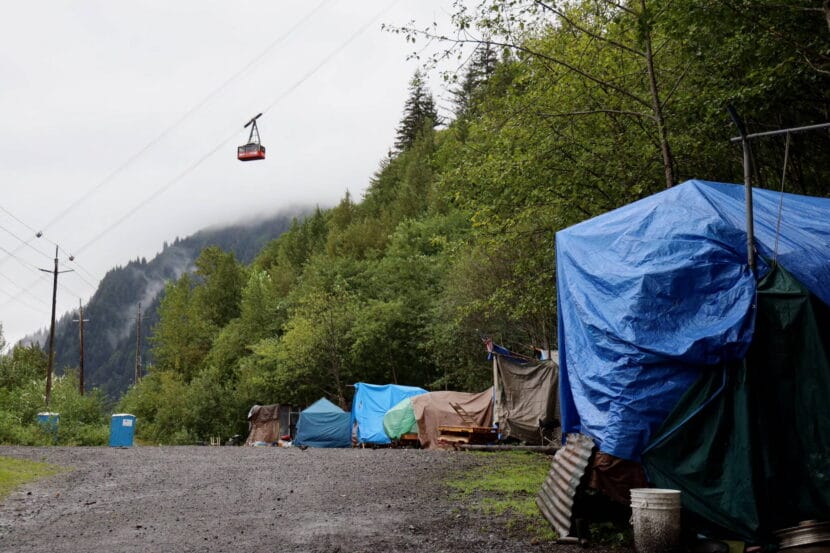
A Goldbelt Tram car rises up Mount Roberts above the Mill Campground in August, 2023. (Clarise Larson for the Juneau Empire)

The City and Borough of Juneau is moving forward with a plan to relocate its seasonal campground to a different site further from downtown, despite nearby business owners’ concerns. 

According to Mayor Beth Weldon, the Assembly is tasked with finding an option that is “the best of the very, very worst.” 

City officials proposed the plan to move the city-run campground for people experiencing homelessness last month, citing an increase in illegal activities there last summer. 

The new location is next to the city’s indoor cold weather shelter, in an area mostly populated by commercial businesses by the port. City officials say moving there would make it easier to provide maintenance and emergency services to campers and would ease the campground’s impact on nearby neighborhoods.

But last week, a group of business owners nearby wrote a joint letter in opposition of the plan. 

Kyle McDonnell with Alaska Coach Tours testified at Monday’s Juneau Assembly meeting. He said the city’s proposed location would put commercial businesses at risk of vandalism, break-ins and other criminal activities he said were associated with the indoor cold weather shelter.

“I recognize the difficult position the Assembly is in right now, and I recognize there are no easy solutions. We’ve seen it all winter long with break-ins in the buses, destruction of equipment and garbage scattered all around our property including used needles,” he said. “Putting this camp right in the middle of an industrial-zoned area, full of local businesses, is not ideal for anyone.” 

He and the group proposed a different location even further down Thane Road called the Little Rock Dump, which is owned by Docks and Harbor. The group said moving the campground further down Thane would be safer for both businesses and campers. 

But resident Kiernan Riley opposes the move. They’re concerned that the Little Rock Dump is too far away for campground users to walk to.

“Pushing the Mill campground to Thane, with no way to access it, will make it just that — inaccessible,” Riley said. “Without a shuttle, there’s not a lot of incentivization to walk all the way out the road to a tent when you can put that tent somewhere else that’s more accessible to Foodland or to other resources to get food.”

City officials said the city just does not have enough staff to shuttle people to and from the campground. 

The Assembly voted to move forward with the plan to move the campground next to the cold weather shelter for now. But multiple members said they have concerns. A final decision will likely come at the April 29 Assembly meeting. 

In the meantime, the cold weather shelter is set to close on April 15.

Correction: A previous version of this story misidentified the pronouns of Kiernan Riley. 

Tongass Voices: Shiggoap Alfie Price on the challenges and rewards of learning endangered languages

Shiggoap Alfie Price is a student of three Southeast Alaska Native languages and leads Sm’algyax classes online. (Photo by Yvonne Krumrey/KTOO)

This is Tongass Voices, a series from KTOO sharing weekly perspectives from the homelands of the Áak’w Kwáan and beyond.

Shiggoap Alfie Price is Tsimshian, Lingít and Haida, and he was raised in a Tsimshian household. Today, he’s a language learner and teacher who believes in using the power of community to strengthen the language revitalization movement. 

Price has studied all three Southeast Alaska Native languages, starting with Sm’algyax – the Tsimshian language. 

Listen:

This transcript has been lightly edited for clarity.

Listen to: Shiggoap’s Sm’algyax introduction

Shiggoap Alfie Price: There’s a fellow that you probably know, Lyle James who speaks Lingít, X̱aat Kíl, Sm’algyax , among others. And before I started actively learning, he would greet me at the store or what have you, and in Sm’algyax , and I certainly knew what he was saying, but I could not answer him. And I was a little bit embarrassed that this Lingít man was using my language and I couldn’t converse with him. 

Shiggoap dee waayu. My name is Shiggoap which means wave-maker. 

I started learning Sm’algyax because it’s the one I grew up hearing. And I know people, I know family and friends who want to learn. So that’s why I started. 

Also, I had some prompts from my mom, who, in her last few years, she started learning our language and teaching it to children. She was a guidance counselor at elementary school in Metlakatla. And so I felt encouraged. And, you know, I wish I had started earlier when she was still around so I could talk to her on the phone, or what have you or FaceTime.

I was asked to be a moderator or what have you at Celebration to introduce the groups, and I decided that I wanted to be able to introduce myself in all three languages. And so I set out to do that. 

And they’re very different. You would think, here in Southeast Alaska, where we’re so geographically close, that our languages would be similar, but they’re really not. All three are very, very different. Sentence structure is way different. And most of the sounds are different. 

So there’s a couple of years where I was attending classes in all three languages and tried really hard to be able to at least have the basics down where I could greet somebody in these languages, introduce myself, talk about the weather. 

It’s pretty fun, too, when you find crossover. It’s like, in X̱aat Kíl, when we greet each other, we have a word that means like, “hey” or “hi.” We say “Ja!” So whenever I see my fellow X̱aat Kíl speakers, we say “Ja! Hello my friend!”

And then I was in a headstart classroom fixing computers one day, and they had posters on the wall of Lingít words, and one of them was a lady holding your finger up to her mouth, like saying “shhh.” And it said, “Ja!”, and I just, like cracked up because, you know, maybe Lingít speakers would see us X̱aat Kíl telling each other politely to shut up when we see each other. 

I think one of my very favorite phrases in X̱aat Kíl is — it’s parting greeting, “Díi gwíi hl sdíihl.” And it means return to me. And that’s just a really sweet, sweet way to part with a friend. 

Our Sm’algyax group, we met in person every Saturday. And then when the pandemic hit us, we had to stop meeting in person and switch to zoom. So we invited our social media contacts and followers to join us. And suddenly, we had this huge group of people who wanted to learn.

I’m not a trained teacher or linguist. I never thought I’d ever have to learn the difference between transitive and intransitive verbs, but here we are. 

So we all know that our three languages are kind of in trouble. They might be considered endangered. So we definitely need more people to not just study them, but to use them every day at home, at the grocery store or what have you. 

I think the most powerful reason to keep at it for me and a lot of my friends is how healing it is for us as individuals in our spirits to reconnect with these languages because we learn a lot from them. You get an understanding, an insight into the worldview of our ancestors — of the way they view the world, the way they deal with each other. 

And there are a lot of lessons in our languages, that once you start internalizing them, and being able to use them, they can definitely guide your thinking, your priorities. 

And they really restore, they’ve restored my sense of worth, of value. I know who I am today, where before I learned Sm’algyax, I really didn’t. 

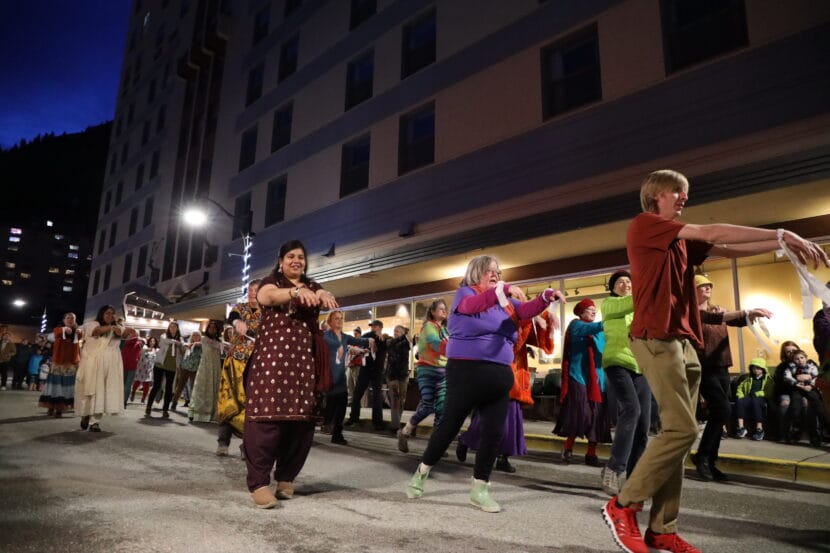
Holi celebration brings dancing and color to downtown Juneau

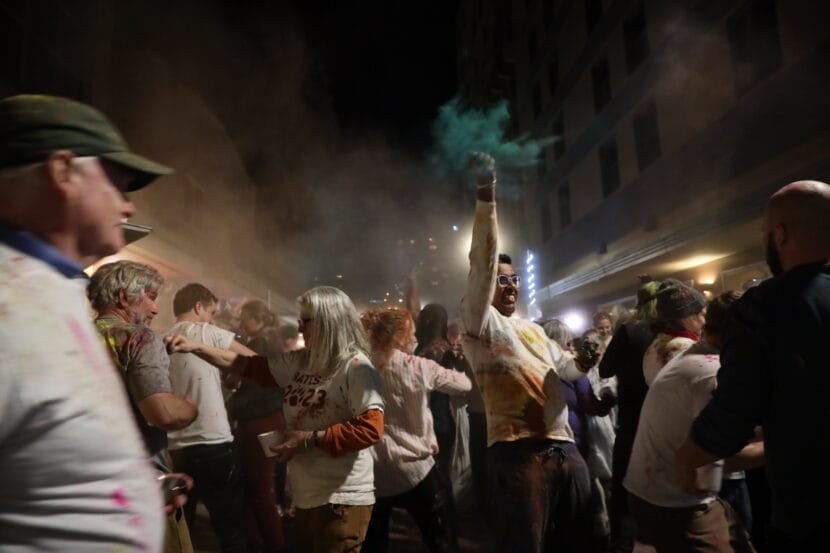
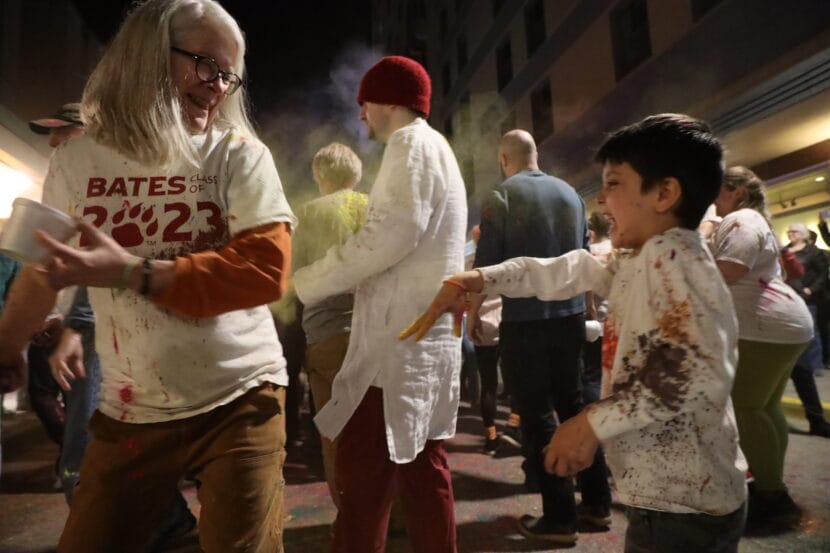
Gary Totwani throws colored powder during a Holi festival celebration downtown on Monday, March 25, 2024. (Clarise Larson/KTOO)

A Bollywood flash mob took over Franklin Street in downtown Juneau Monday night, followed by dozens of people throwing colorful powders at each other. 

It was all part of Juneau’s third Holi Festival. Holi is a Hindu holiday, often called the Festival of Colors, celebrating love and harmony.

Nimmy Philips is the owner of Indian restaurant Spice, which hosts the festival.  

“The Hindu festival traditionally is to celebrate the love of Lord Krishna and Radha and the triumph of good over evil,” Philips said on Juneau Afternoon last week. 

Ruth Fisher performed a dance with Philips to a song she holds dear. 

“The most important song to me out of all was the Vande Mataram song, which means ‘thank you to the motherland,’ so it could be any motherland,” Fisher said. “It’s not just our country, it’s everybody’s motherland.”

Ruth Fisher (left) dances on Franklin St. as part of a Holi celebration on March 25, 2024. (Photo by Clarise Larson/KTOO)

One of the dancers, MJ Grande, said she was just happy to be a part of the celebration. 

“I’m dancing tonight, and I hope people have a really good time because Nimmy is brilliant and great, and the rest of us are having a good time,” she said.

Eshita Rahman (left) and Nimmy Philips (right) dance on Franklin St. as part of a Holi celebration on March 25, 2024. (Photo by Clarise Larson/KTOO)

After the dance, some performers mixed cups full of colored powder. 

“The idea is to spread the colors around so people will have them on their clothes and on the street, and it’ll be a very colorful display,” said Tara Kovach. “We’ve got pink and orange and purple and yellow and green — pretty much every color you can think of.”

Soon shrieks of laughter and clouds of color and filled the air, leaving a splotchy rainbow across North Franklin Street — and the attendees.

Gary Totwani came with his family. He said the festival brought back growing up in India. 

“It reminds me of a childhood memory,” he said. 

Next year, he said, he and his wife will join the dancers.

Brenda Taylor (left) and Reyaan Totwani (right) throw colors at each other during a Holi festival celebration downtown on Monday, March 25, 2024. (Clarise Larson/KTOO)
Site notifications
Update notification options
Subscribe to notifications