Community

Juneau weighs winter campground for downtown homeless

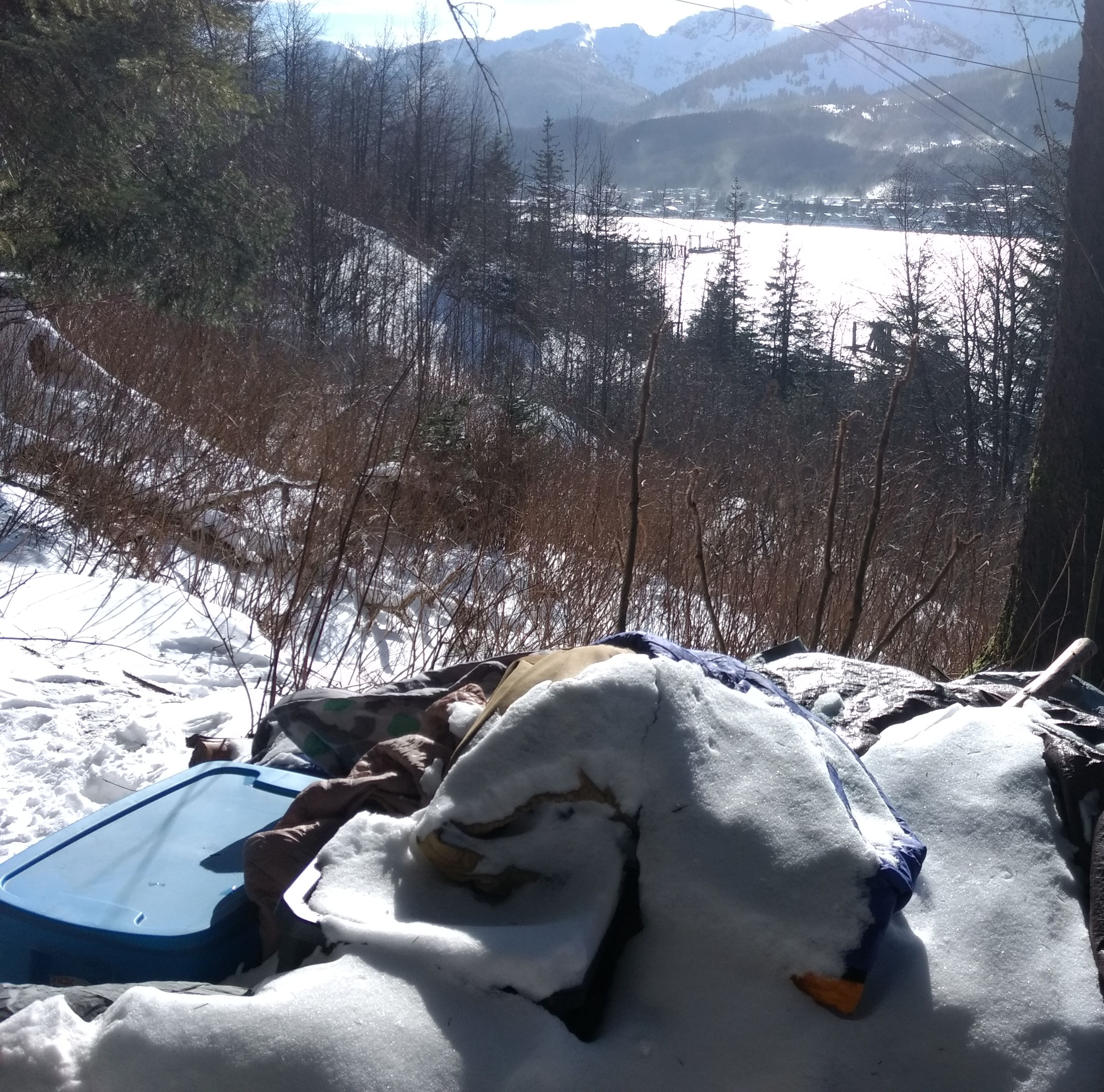
Snow collects on abandoned belongings at a campsite above downtown Juneau on March 3, 2017. AJT Mining Properties evicted its occupants in February. Homeless people have few legal camping options in the winter. (Photo Jacob Resneck/KTOO)
Snow collects on abandoned belongings at a campsite above downtown Juneau on March 3, 2017. AJT Mining Properties evicted its occupants in February. Homeless people have few legal camping options in the winter. (Photo by Jacob Resneck/KTOO)

Next month Juneau’s downtown camping ban goes into effect. Supporters of the ban said it would only be one part of the community’s homeless strategy. Much of the land above Juneau’s downtown is owned by Alaska Electric Light and Power’s sister company, AJT Mining Properties. And in all seasons homeless people erect makeshift camps in the woods on those lands.

Employees of AJT Mining Properties are constantly evicting the people it finds camping on these lands. People often ask where they are supposed to go?

“Many times it’s kind of hard — I personally don’t know what their other options are,” said Alec Mesdag, lands manager for AELP and its affiliated properties. “This campsite was tagged a number of weeks ago,” he said, pointing to a former campsite behind a thicket of elderberries. A mound of gear in totes, backpacks and a collapsed tent still remains.

“We offered a period of time for them to remove their campsite and move along, find somewhere else to go — not that I necessarily know where that other place to go really is.”

After April 15 they will be barred from camping downtown on private property. Mesdag said that AELP has offered the use of about an acre below the former AJ Mill to the city as a winter camping site.

“If we had this time of year a campground that we could direct people to, I think that would make it easier for us to say, ‘Well, you can’t camp here, but you can go over to this other managed campground,'” he reasoned.

The city already runs a summertime campground on AELP land off Thane Road. It’s used as a cheap housing alternative. But it’s also in an avalanche zone, so the city closes it down in the winter.

This proposed winter site isn’t perfect either. It’s an uphill walk from the end of Gastineau Avenue and there can be heavy snow in the winter. AELP is willing to turn it over to the city on a year-to-year arrangement. Mesdag says talks have been ongoing with city staff since December.
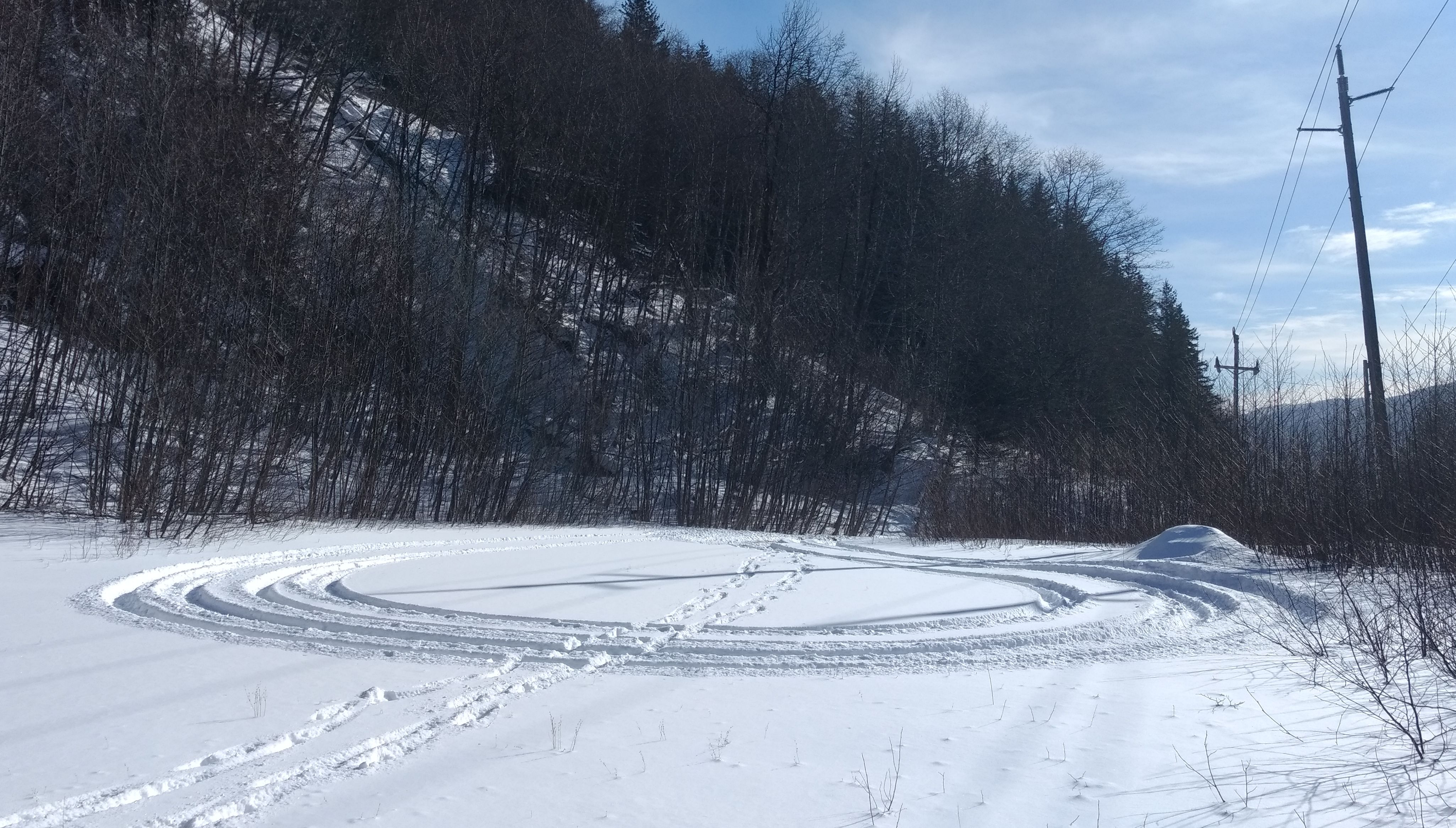
AJT Mining Properties, a sister company of Alaska Electric Light and Power, owns this clearing above downtown Juneau, photographed March 3, 2017. The utility has offered the land as a possible site for a winter campground. (Photo Jacob Resneck/KTOO)

“There’s actually an old fire ring sitting out here,” Mesdag said. “It’s been used as a campsite before and we’ve been up here with a number of folks from the city to look at how useful this would be, which parts of this area would be best for setting the actual tent sites, and what type of services we could bring up here.”

The city hasn’t decided whether it’s willing to manage a winter campground.

“The question of whether a winter campground is a good idea hasn’t been thoroughly vetted,” said City Manager Rorie Watt. “When I look around the country other places are actually trying to shut down homeless campgrounds.”

That discussion is slated for a Juneau Assembly committee meeting on March 20.

“There will be a cost to it and there will certainly be some philosophical decisions that have to be made in order to do that,” Watt said. “We’ve got other issues as well in terms of zoning and where you could legally put a campground and some other mechanical questions — but I think the big question for the Assembly is: What is the city’s role?”

Homeless advocates say just doing nothing isn’t an option.

“There will be people who pick up their blanket and move three streets over or to the Marine Park structure,” said Mandy Cole, co-chair of the Juneau Coalition on Housing and Homelessness. “And so it’s not ending homelessness in any way — it’s moving it away from that kind of one visible area.”

She notes that the new camping ordinance is not enforceable on public property. That means campers could move from downtown sidewalks and into city parks.

So if the city doesn’t want campers in parks it will need to create alternatives — a winter campground could be one of those options.

“There are people who live on the street who are looking for a kind of space of their own but not necessarily ready or willing to live in an apartment or participate in a program,” she said. “They want a space that’s theirs. Literally doorway-sized space that they can keep their belongings and themselves safe — for those individuals a campground seems totally reasonable.”

The Glory Hole downtown shelter continues to operate at about capacity. Not everyone can pass the required Breathalyzer test to sleep there overnight and some continue to shelter in alcoves.

On a recent morning 57-year-old Wolf Johnson was gathering up his bedding on South Franklin Street. He says he can’t understand how downtown buildings sit vacant while people like him sleep out in the cold. He says he’s looking forward to the 32-bed Housing First shelter that will open in May. But he complains the Assembly’s camping ordinance ultimately put private property rights over human welfare.

“They say April 15 is coming around,” Johnson said. “Well, we all as homeless, we look after each other. These business people are more worried about their property. Me? I’m homeless and all I worry about is where I’m going to sleep.”

There have also been talks between the city and Salvation Army over operating a warming station when temperatures dip dangerously low. That will also be up to the Juneau Assembly to consider later this month.


Government and nonprofits shakeup village of Oscarville with clean water and cheaper power

Oscarville students dance in the village school in February 2016.
Oscarville students dance in the village school in February 2016. (Photo by Dean Swope/KYUK)

A group of representatives from a variety of government and nonprofit agencies are headed to Oscarville on Friday. The group is going there to observe the changes that have been made to the village since it became a pilot project for what is being called a holistic approach to community development.

Jack Hebert of the Cold Climate Housing Research Center was one the people who came up with the idea of working with a community so small that it did not have the capacity to do its own planning. The group included people from the Department of Energy, the Department of Agriculture, the Alaska Native Tribal Health Consortium, and the Bureau of Indian Affairs, among others. They approached the Association of Village Council Presidents to see which community would be a good pilot project for their holistic approach.

“AVCP recommended Oscarville because the community of Oscarville is very tight knit,” said Brent Latham, a program administrator with AVCP. “They work well together. They spearhead projects, and that is really needed to get things done.”

Though it was connected to Bethel’s electric utility by a six-mile-long cable, Oscarville was seeing many of the challenges facing much of bush Alaska. The village of about 60 people has no roads in or out. During fall freeze-up and spring breakup, residents are stuck in the village, unable to get to Bethel for groceries or health care.

The pilot project started with a meeting in Bethel two years ago and included a site visit to Oscarville, and the community met with agency people. At first, the residents thought what they wanted was a recreational facility for the kids and community, but after discussing the difference between what they wanted and what they needed, it became obvious that what they needed was much more basic: water.

Hebert and others at the initial meeting did not know that the village well had failed some time ago and that families were making do with rainwater, melting snow, and river water. Unfortunately, Oscarville is downstream from Bethel’s wastewater discharge.

“So there were some real health concerns,” said Hebert. “And this is the part that the Alaska Native Tribal Health Consortium was addressing. And that’s being done now. They have a new well that’s been drilled. It has to be developed and brought into their water treatment plant with upgrades there, but now they’re going to have water.”

That left another big need: cheaper electricity. Though Oscarville is part of the Bethel grid, in that it has a line coming into the community, there was only one official buyer: the village corporation, which was not eligible for the state’s Power Cost Equalization subsidy. The community then had its own grid, and each household paid for its share of the village’s bill.

“That means they were paying four times more for power than people in Bethel,” said Hebert. “This is a small community with very little economic resources paying their bills, but basically held to that standard: one meter for a whole town, plus the line-loss.”

The Alaska Village Electric Cooperative helped Oscarville bring its grid up to current standards and helped install meters that allow villagers to qualify for Power Cost Equalization. Oscarville’s electricity now costs almost the same as what’s paid by homeowners in Bethel.

There are other projects in the pipeline, like more energy efficient buildings, but according to Hebert the biggest change is that the community feels it now has control over its future and doesn’t have to just get by with whatever is provided.

“I think the greatest success of Oscarville has been that sense of empowerment of the people themselves,” said Hebert. “Of taking control of where that community is going to go.”

Members of the group representing agencies and nonprofits are visiting Oscarville Friday, and are hoping to come away with ideas that they can apply in other small communities.

“It was an advantage for us on the scalability of this first pilot project on the holistic approach for Oscarville to be that size, because we could get our hands around it,” said Hebert.

“But what we want to do, and what we are working on at the housing research center, is a template for the holistic approach for other communities, communities that are larger. We are taking that same approach with our multi-agency partners and the community of Newtok to develop a whole new community at Mertarvik because of climate change and issues they are having to deal with.”

Among the future plans for Oscarville are a new boat ramp for the village, a board-road extension to Bethel, and that multipurpose building the community wanted when the planning process began.

Fairbanks Four may receive dividends for 18 years of wrongful imprisonment

A Fairbanks Four banner at the 2015 Alaska Federation of Natives Conference. Two measures moving through the Alaska House would compensate the four men for the 18 years spent in prison. (Photo by Mikko Wilson/KTOO)

It took the work of journalists, lawyers, tribal leaders and citizens to release the Fairbanks Four after they wrongfully convicted on a murder charge and other serious crimes in 1997.

Now, an effort is underway to compensate the men for the 18 years they spent in prison in the form of two state House measures.

These bills would apply to others who are freed after a wrongful imprisonment, but the Fairbanks Four are the only ones who meet the conditions right now.

On Dec. 17, 2015, hundreds gathered at the Chief David Salmon Tribal Hall in Fairbanks to celebrate the release of the Fairbanks Four. That night three of the four men were released. The fourth, Marvin Roberts, was released on parole the summer before.

Attorney Bill Oberly led the effort to free the Fairbanks Four. After it was all over, he became involved in an effort to give Permanent Fund dividends back to the four men for the time they spent behind bars.

“Don’t let the door hit ya’ in the rear end on the way out is all they got for their 18 years of wrongful conviction,” Oberly said. “It seems only fair that the dividends that were taken away from them wrongfully should be provided to them and give them a little monetary help trying to restart their lives.”

Roberts wrote a Facebook post about what he thinks of the bill.

“What did the Facebook post say?” I asked.

“It’s basically giving a first-hand account of what my first night in prison was like,” he said.

Roberts wasn’t willing to read the post aloud over the phone.

“I don’t know. I don’t think so,” he said. “It was difficult for me to write it, so it would be more difficult for me to read it to you.”

“I actually cried when I wrote certain parts of the story, ‘cause that’s how much, um, that’s how deep that wound is,” Roberts said.

The post is long, but here is a snippet:

“I told the Guard that I wasn’t supposed to be in there, that I was innocent. Nobody heard me. I layed down on that torn mattress and had sad thoughts. Who could sleep in a situation like that? I prayed and asked God to get me out … please get me out. I prayed and still my spirit was breaking. I was hurting real bad. I don’t know when I started crying or how long it lasted. My world was upside down. I’d love to say I was released the next day and that was that. No, this is not a happy ending. We spent over 18 years trapped in that nightmare.”

He goes on to thank his supporters, and then he asks for people to please call their representatives to support two bills: One that would give them their dividends for the years they were wrongfully imprisoned (House Bill 127) and another that goes even further, requiring the state to pay $50,000 for each year of wrongful imprisonment, with a cap of $2 million (House Bill 118).

I asked Roberts what the bills would mean for him, if they pass.

“I realize now after being away for so long how valuable being with family is and, receiving all those back dividends would … I’d just be so happy. I’d be able to see my family. I’d be able to maybe start my own business. I’d be able to stay ahead of my bills. I mean, it would help out a lot.” he said, adding that he was staring at his 6-month-old daughter as he spoke.

Roberts lives in Fairbanks. He has two jobs — he works at a company that makes and installs granite counter tops during the week and delivers pizza on the weekends.

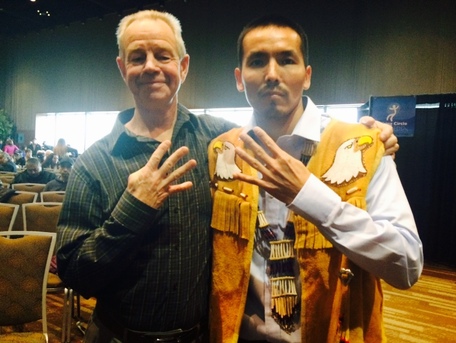
Alaska Innocence Project Director Bill Oberly (L) and Marvin Roberts (R) at the Alaska Federation of Natives

I asked him, “Do you think that this is part of carrying out justice?”

“I don’t really know too much about all of that. All I know is, it would help us a lot,” he said.

Oberly, who pushed to free the Fairbanks Four, has a stronger opinion.

“It is the right thing to do,” he said. “These men should have gotten it because they shouldn’t have been in prison, so it’s the right thing to do at this point.”

Last year, Oberly’s effort to get dividends paid to the Fairbanks Four didn’t really go anywhere. He’s hopeful that this year will be different.

Pederson Hill housing gets Planning Commission approval

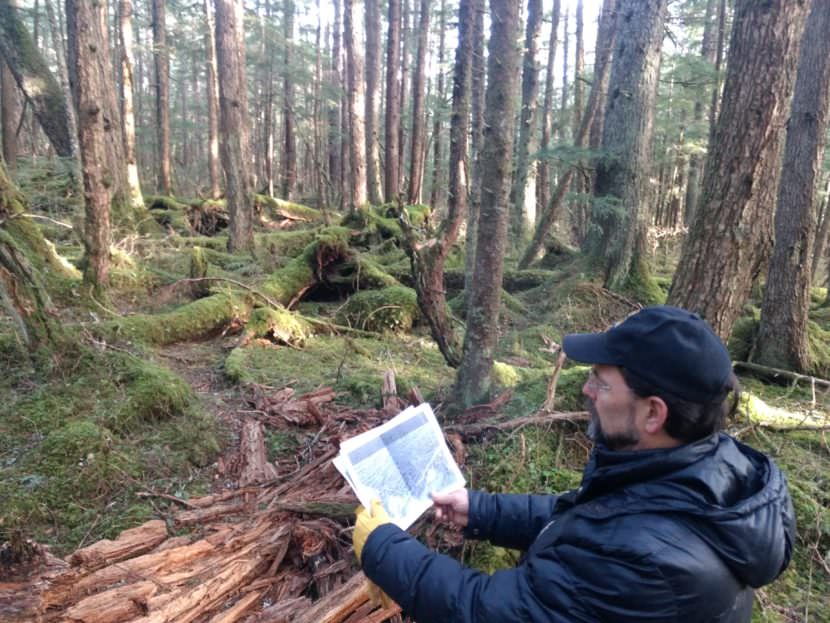
Greg Chaney, City and Borough of Juneau lands manager, consults the site plan for an 86-lot residential subdivision near Pederson Hill on Feb. 16, 2017. (Photo by Jacob Resneck/KTOO)

A unanimous Juneau Planning Commission approved the first phase of the Pederson Hill subdivision, clearing a major hurdle for the city’s housing initiative.

Commissioners heard testimony Tuesday night from the city’s Lands Manager Greg Chaney who made a pitch for 86 relatively small homes that could be entry-level housing for renters looking to buy.

“You could have a $250,000 starter home — nothing fancy,” Chaney said. “Compare that to living in an apartment and that’s what people will be considering with a mortgage payment here or a rent payment there.”

But the Planning Commission also heard pointed criticism.

“You guys, at some point when you went from infrastructure from roads and highways, airports, docks and harbors, water and sewer and you became housing developers for private sector,” said Jeremy Sidney, who owns a trucking company.

“You interjected yourselves into this market that was a really big mistake and you never should’ve done it,” he said. “And you shouldn’t do it now. I don’t believe it’s your place as a government.”

After the vote, Juneau Assembly member Debbie White said she supports the Pederson Hill concept even if it is controversial.

“Everybody’s always saying how we need to do something about affordable housing — this is something that we can do about it,” White said in an interview. “I have to say that I found it frustrating to find out that the same people that say they want affordable housing said, ‘Oh we want you to do this in a different way.’ And there’s no one way that is going to please everybody in Juneau.”

Now that the subdivision has been approved it will be up to the Juneau Assembly to decide how it will offload the lots.

Questions remain whether they will be put out to bid individually or in blocks.

Whether lots would be offered at fair market value or discounted to make them more affordable is another decision that’s still months away.

Eaglecrest Ski Area proposes beer and wine sales

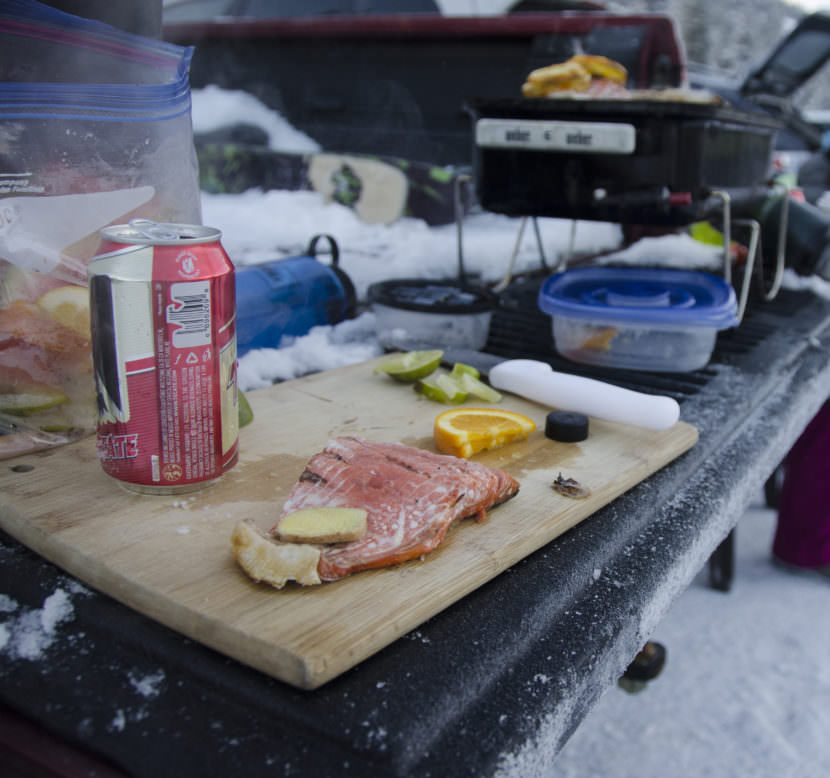
A filet of salmon is prepped for the barbecue on Dec. 13, 2015, in the parking lot of Eaglecrest Ski Area. (Photo courtesy Sarah Cannard)
An après-ski drink and a filet of salmon prepped for barbecue sit on a truck tailgate in the ski area’s parking lot on Dec. 13, 2015. The Eaglecrest board wants to license alcohol sales and earn a share of the revenue. (Photo courtesy Sarah Cannard)

The Eaglecrest Ski Area’s outgoing manager made a pitch to the Juneau Assembly to allow alcohol sales at the public ski area.

“It adds to the community feel of the ski area,” Matt Lillard said in an interview after the meeting. “People are looking for places to meet, places to get together and a beer and wine venue of that sort is just a good place for adults to meet either after the ski day or during the ski day and enjoy a beer.”

The Eaglecrest board added possible beer and wine sales to its master plan in 2012. Lillard has said on-site beer and wine sales won’t solve the ski area’s budget challenges, it could make the ski area more attractive as a destination.

None of the Assembly members spoke for or against the proposal. Assembly member Loren Jones said he’d sought legal advice from the city attorney’s office over any liability issues for the city and would present its findings to the Eaglecrest board when it meets on Thursday.

The Assembly would need to amend an ordinance to allow beer and wine to be sold in lodges. Nothing has been drafted and any decision is still at least several weeks away.

Lillard’s last day at Eaglecrest is Thursday. He’ll be taking the helm of a small cooperatively-run ski area in Vermont.

Snow advisory stalls downtown Juneau street work

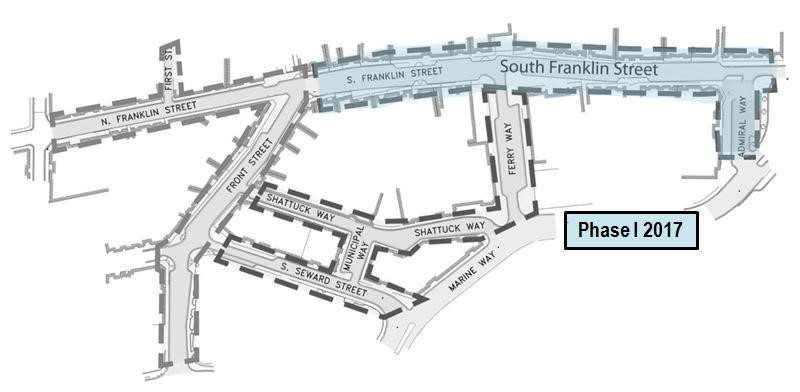
The first phase of downtown street improvements will be along South Franklin Street. (Courtesy City & Borough of Juneau)

Street improvements to South Franklin Street in downtown Juneau began Monday morning, though a winter weather advisory has led the city to temporarily suspend work.

The National Weather Service is forecasting 3 to 6 inches of snow overnight into Tuesday.

The city’s project manager Lori Sowa said planners knew weather would be a factor.

“February is not the ideal time to be doing construction, but with this project we are trying to get finished before the summer season hits in full force,” Sowa said. “We might be doing a bit of start and stop through these last weeks of winter and into spring.”

Crews are working on the first phase of improvements to sidewalks, lighting and the pavement from Manila Square to Ferry Way, and then Ferry Way to Front Street. Bus service is suspended along South Franklin as the road will be closed to cars while the work is being completed.

The $1.2 million phase of the project is being funded through marine passenger vessel fees, sales tax and water utility funds. The target date for completion is June 1.

City Engineer Lori Sowa will be a guest on Juneau Afternoon at 3 p.m. Tuesday to talk about downtown street work in greater detail.

Site notifications
Update notification options
Subscribe to notifications