Community

Alaska high school baller from tiny island village faces decision of a lifetime

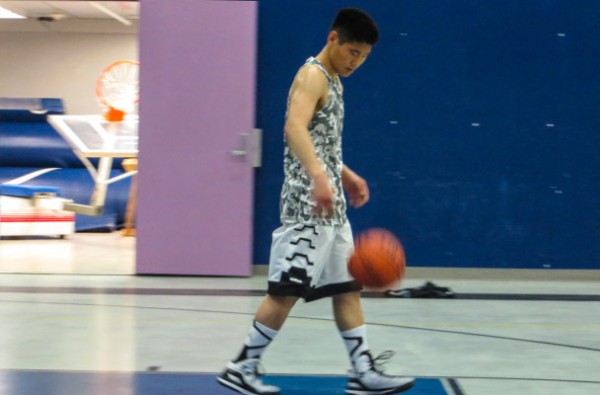
As a sophomore, point guard Wallace Ungwiluk averaged over 27 points per game for Gambell. (Photo by Laura Kraegel/ KNOM)

NBA point guard Derrick Rose was first scouted at his local high school and eventually drafted by his hometown Chicago Bulls. Sixteen-year-old Wallace Ungwiluk is a big fan of Rose — and a point guard too. But basketball could carry the junior from Gambell much farther from home — more than 2,000 miles to Seattle, where he’s been recruited to play for a private high school.

This summer, Ungwiluk has a decision to make: stay home and try to win Gambell its first championship in 30 years or move to Seattle and get seen by college scouts.

According to Alvin Aningayou, there’s nothing like a Gambell home game.

“It’s a raucous, rowdy, exciting, electrified environment,” he said. “When we win, you can feel the excitement and the buzz. And when we lose, you can feel their heart breaking just as our heart’s breaking. It’s just incredible.”

Aningayou is coach of the Gambell boys basketball team, and he said it’s Wallace Ungwiluk who has gotten the crowd going in recent years.

He is the team’s captain, point guard, and top scorer. As a sophomore last season, he averaged over 27 points per game — nearly double the production of Gambell’s second best scorer. And Coach Aningayou said he’s just getting better.

“He’s special,” he said. “He started to shine, and he’s continually trying to get better. And that’s what we need — not having players settle.”

Wallace was in Anchorage last summer for a basketball camp. He trained, worked on his game, and — for the first time — saw just how far basketball could take him.

“That was the first time I’ve really ever been coached or pushed that hard,” he said. “I went to that camp not thinking I’d get much exposure there, but I actually did and I was quite surprised. This is a big opportunity for me.”

That’s the opportunity to move to Seattle, attend a private school, and play competitive ball. The offer comes from Seattle Lutheran High School, which had a solid postseason last year and is planning for a deep run in this season’s state tournament.

But the offer comes at a critical time for Wallace and his hometown team. Gambell is looking to improve after a string of early exits from the Bering Strait School District’s annual tournament. In the last two years, Gambell has been knocked out quickly, and Wallace wants to help turn the team around and contend for the title.

“I do want to stay here in this village and win a championship for this village, because it hasn’t been done in about 30 years. But I’m not only thinking about my high school career,” he said. “I’m also thinking about after high school. I want to play college basketball, and my best chance for that is getting exposure in Seattle.”

Wallace said western Alaska is no hotbed for college recruitment, and he knows most scouts don’t make it to St. Lawrence Island. Even after writing letters to 12 colleges and making a YouTube video of his highlights, Wallace isn’t sure he can crack a college lineup if he stays in Gambell.

“No one’s really heard of me,” he said. “But Seattle — they’ve got colleges all around Seattle. They’ve got scouts there too. It gives me a better chance.”

But Seattle would also be a big change. In Gambell, Wallace gets around on his four-wheeler, often with his 12-year old brother Skyley. He loves boating, snowboarding, and doing subsistence hunting with his family. His dad Rodney has home movies of Wallace’s first whale-hunting trip, and his mom Yuka makes his favorite meal, walrus.

Life in Seattle would be different, and Wallace worries about being homesick, getting lost in a big city, and having to make new friends at school. But he takes pride in representing Gambell, and Coach Aningayou said he’ll support Wallace whether he stays in Gambell or takes his talents to Seattle Lutheran.

“If he decides to stay, I think it’s going to be a breakout year for Gambell,” he said. And if not, “he has a chance of actually making a living playing basketball — something he loves. That’d be a great success for him. For the community also.”

But either way, Wallace said he won’t leave Gambell for good.

“I want to study business, and I want to come back out here to this village because the unemployment rate is super high,” he said. “I want to be able to establish something where there could be jobs for everybody because it’s hard to live out here. And that’s one of the reasons that I want to go off to college and I’ll be coming back.”

Until then, Wallace will attend three summer basketball camps and think about his decision. His final stop will be Seattle, where Wallace and his dad will tour his prospective school and meet with the Seattle Lutheran coaches in person. He’ll make his final decision after that visit.
Twin Lakes closed to swimmers due to “high fecal bacteria”

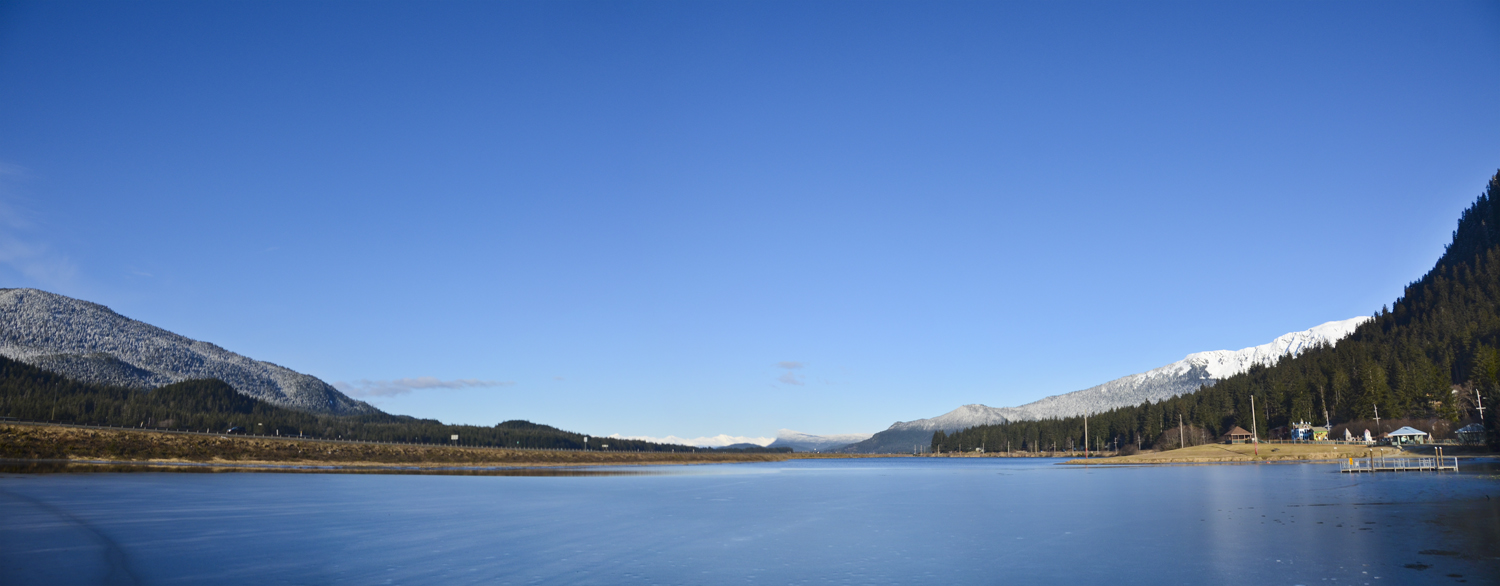
Hardly a cloud in sight over Twin Lakes. (Photo by Heather Bryant/KTOO)
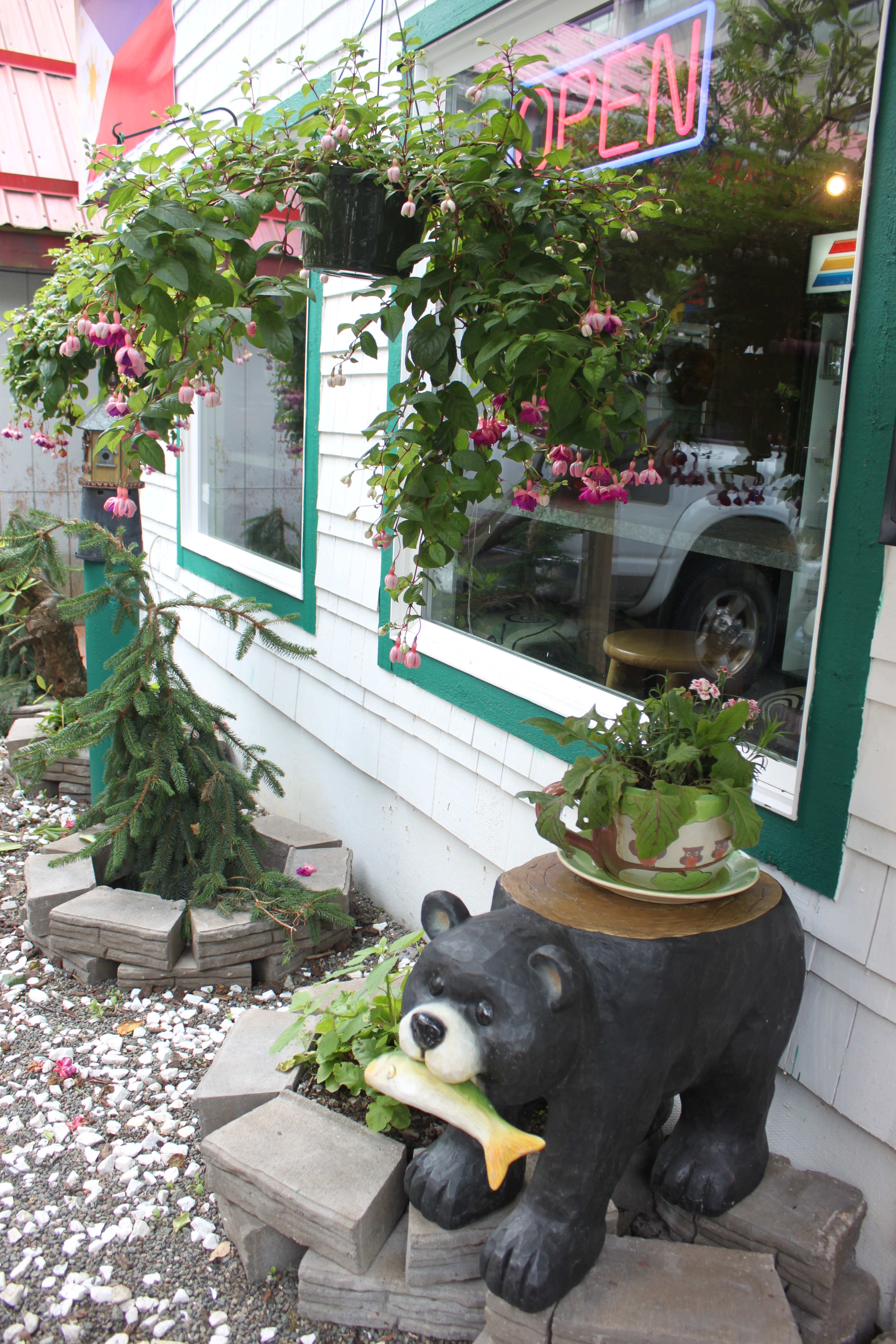
Twin Lakes is closed to swimming due to high fecal bacteria. (Photo by Heather Bryant/KTOO)

Twin Lakes is closed to swimming after sample test water returned results indicating “high fecal bacteria.” The City and Borough of Juneau sent out a notice Saturday recommending that no one, including pets, swim in the lakes. The city issued the same notice about two weeks ago.

Twin Lakes is a popular recreation spot for families and pet owners. Feces not picked up by pet owners can leech into the lake; rain only hastens contamination. Last month was Juneau’s wettest July on record.

The next sampling will take place Monday morning and will include testing of water entering the lakes in an attempt to find the source of the bacteria.

Pizza v. Adobo: How outdated zoning led to neighbor beef

A neighborly dispute over property lines in the Willoughby District has escalated to chainsawing a tree, police calls and an unwelcome alteration of Twilight Cafe’s award-winning storefront.

When Catherine Cristobal and her husband Ariel bought their business in 2008, they told the previous owner they would name the cafe in his honor.

Twilight Cafe won Storefront Stars last year. (Photo by Lisa Phu/KTOO)
The winning storefront. (Photo by Lisa Phu/KTOO)

“I will name my cafe Sonneman’s Cafe.  He said, ‘Don’t use my name. Just don’t cut my tree,'” Catherine Cristobal says.

Joe Sonneman used the small house as a business and residence. He has since passed away but the rhododendron tree outside, according to Twilight’s owners, was alive. Catherine says she had a sentimental attachment to it.

“When we were remodeling this, we’re debating to cut it down or what. I said, ‘No. I want that tree there in respect of Joe.'”

The cafe serves coffee, smoothies and adobo, a popular dish in the Philippines. As the new business grew, so did the tree, which their neighbor says was part of the problem.

The Willoughby District is a bit of a hodgepodge with zoning you wouldn’t see today. The cafe is boxed in by city-owned parking and property belonging to Bullwinkle’s Pizza.

“A warm, family place to be. People can bring their kids here and run amok and throw popcorn all over and play video games,” says Mitch Falk.

He’s owned the local chain for about seven years. The parking lot in front of Twilight Cafe is his, including a 500-gallon tank in the back.

“I poured a new concrete base for the propane tank back there. If you look back and look at it, their family handprints are in my concrete. I said go ahead and do that,” Falk says.

Mitch Falk's office walls are adorned with pictures of goats and wildlife. He enjoys goat hunting when he gets the chance. (Elizabeth Jenkins/KTOO)
Mitch Falk’s office at Bullwinkle’s Pizza is decorated with pictures of goats and wildlife. (Photo by Elizabeth Jenkins/KTOO)

Both owners say the relationship was civil, but this is where their stories start to differ.

Since Twilight Cafe is pretty much boxed in, a path cuts through Bullwinkle’s property. This kind of arrangement is called an easement.

“They came to me and asked if they could move the access from this side to the other side,” Falk said.

Catherine Cristobal disagrees.

“Mitch Falk is the one who asked my husband to switch the easement. Not us. Because he wanted the tank to stay.”

A notarized document signed by both owners in 2014 shows that the easement was switched in exchange for the propane tank staying in its place. Who asked for it and why is up for debate.

Catherine Cristobal says Mitch Falk verbally assured her that the rhododendron tree wouldn’t be cut, per their agreement. Its roots are on Twilight’s property, the overhang on Bullwinkle’s. She thought the tank was a safety hazard but she was willing to let it slide.

“He drafted the agreement. We sign it and for the very first time we shake hands. We’re happy. I can’t wait to say hi to him when I come to the store,” says Cristobal.

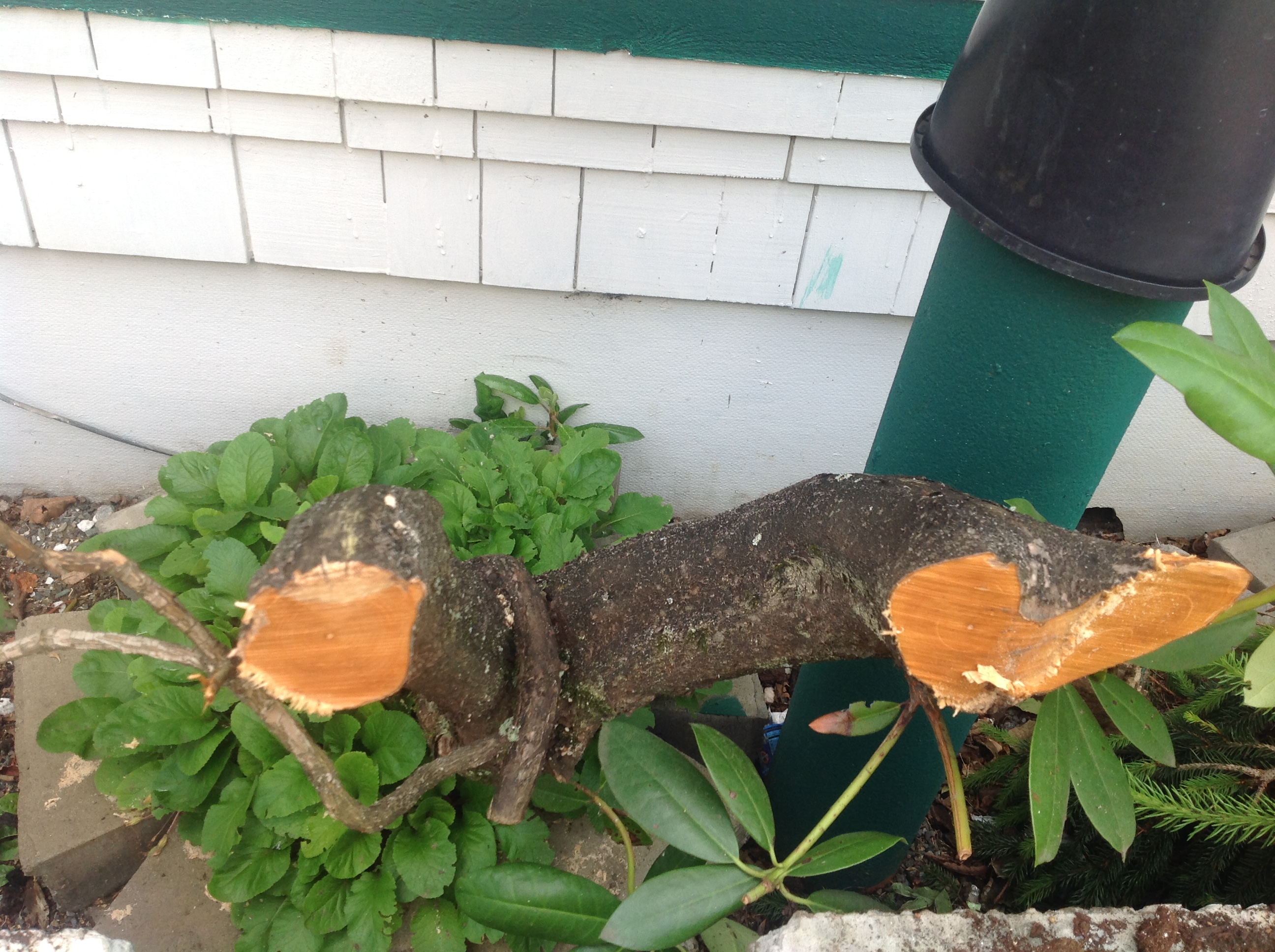
That neighborly feeling was short-lived. About a month ago, Mitch Falk cut down Joe Sonneman’s tree.

Greg Chaney, a lands and resource center manager at the city, says with historic properties like this, issues come up.

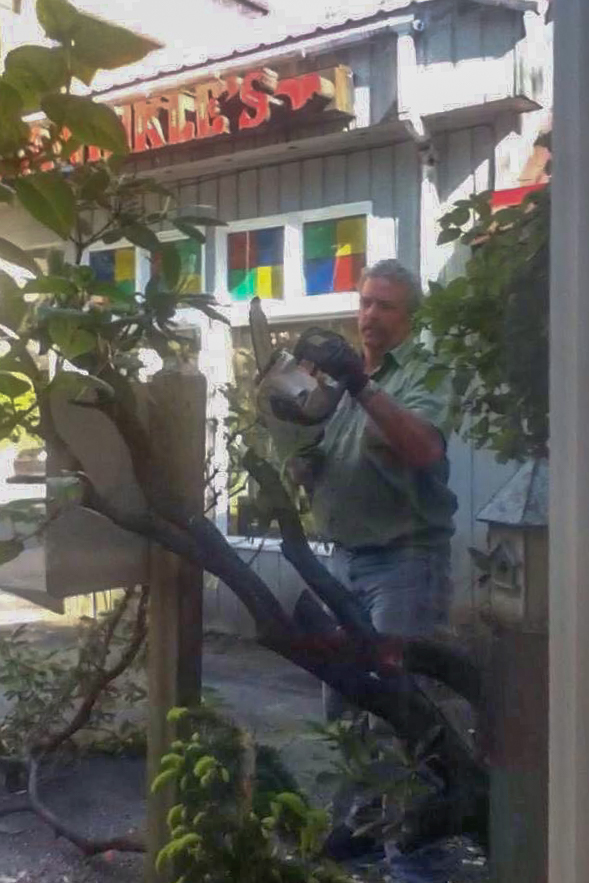
Bullwinkle's Pizza owner Mitch Falk cuts down Twilight Cafe's tree. (Photo courtesy Ariel Cristobal)
Mitch Falk chainsawing the rhododendron. (Photo courtesy Ariel Cristobal)

“I’ve seen what we call grandfathered situations or inherited situations from previous subdivisions that didn’t comply with our code and when that happens, people don’t get along,” Chaney says. “And access issues generally causes strife. It’s kind of designed to fail.”

Chaney says zoning can create harmony or discord. The subdivision ordinance now requires direct, practical access and parking.

“Specifically because these types of situations cause neighbor disputes and sometimes the neighbor disputes can be extremely acrimonious.”

When Mitch Falk cut down the tree, Ariel Cristobal watched from inside the cafe.

“I just (took) a picture … and I called the police because, you know, I’m scared. I don’t know what he (was) going to do,” he says.

There have been at least two calls to Juneau police regarding the dispute.

Falk says there was no verbal agreement and it was nothing personal. The rhododendron’s overhang was damaging his car.

“Oh, yeah. I’ve got deep scratches in my truck. You can look at it right now. It’s down there,” Falk says.

He spent $3,000 to have custom snow barricades placed between the parking lot and Twilight Cafe. They also double as flower planters.

But to Catherine Cristobal, the outside is unrecognizable. It doesn’t look like what won her the Storefront Stars award last year.

“I feel like I’m trapped. I cannot enjoy my back(yard) because of that big ugly tank. I cannot enjoy my front because of all these things,” she says. “I don’t know what to do anymore. It’s coming from both ends.”

She says she’s thought of selling the business, but there’s too much invested. Customers have been bringing her flowers to make up for the tree’s loss.

Twilight Cafe’s attorney recently issued a letter to Mitch Falk asking him to remove the concrete snow barricades. The letter says it’s unsafe for customers and violates a previous verbal agreement.

What's left of the tree. (Photo by Ariel Cristobal)
What’s left of the tree outside Twilight Cafe. (Photo courtesy Ariel Cristobal)

Four Western Alaska communities to receive large halibut donation after dismal walrus harvest

Four communities affected by this spring’s poor walrus harvest will soon receive 10,000 pounds of halibut from a nonprofit that supplies seafood to hunger-relief efforts.

Nearly 200 boxes of the fish were delivered to Nome July 29, according to Kawerak senior planner Donna James. She said the delivery is being sorted and will soon be distributed to Diomede, Gambell, Savoonga and Wales.

The halibut comes as a donation from SeaShare, a nonprofit based in Washington state. All four communities declared states of economic disaster after a spring harvest that Vera Metcalf called significantly worse than usual.

Metcalf is director of the Eskimo Walrus Commission and has worked with the communities through the food shortage. She said the commission reached out to the State of Alaska and the governor’s office for help through Rep. Neal Foster and Sen. Donny Olson

“Their staff (was) really good about following up with our concerns, making sure the communities were aware that the State of Alaska and Walker’s administration were aware of the situation,” Metcalf said.

The U.S. Coast Guard brought the frozen halibut to Nome free of charge, and James said Kawerak is working with Bering Air, Erickson Helicopters and Ravn Alaska to organize free freight delivery to the four communities.

Although the donation is good news, Metcalf said it’s only a temporary solution as climate change makes hunting more difficult.

“In the event that another disaster is declared, what do we do? And how do we move forward? We need to come up with a long-term plan,” she said.

For now, Metcalf said the donation will be a big help, even if it doesn’t completely solve the food shortages.

“I know it won’t fill the nutritional value that a walrus or other marine mammals provide, but it’s there and it’ll be put to good use,” she said.

The halibut will ship out as soon Kawerak can coordinate delivery with the different airlines. Kawerak will then distribute the fish equally to households in each community.

UCLA report examines sexual orientation and gender discrimination in Alaska

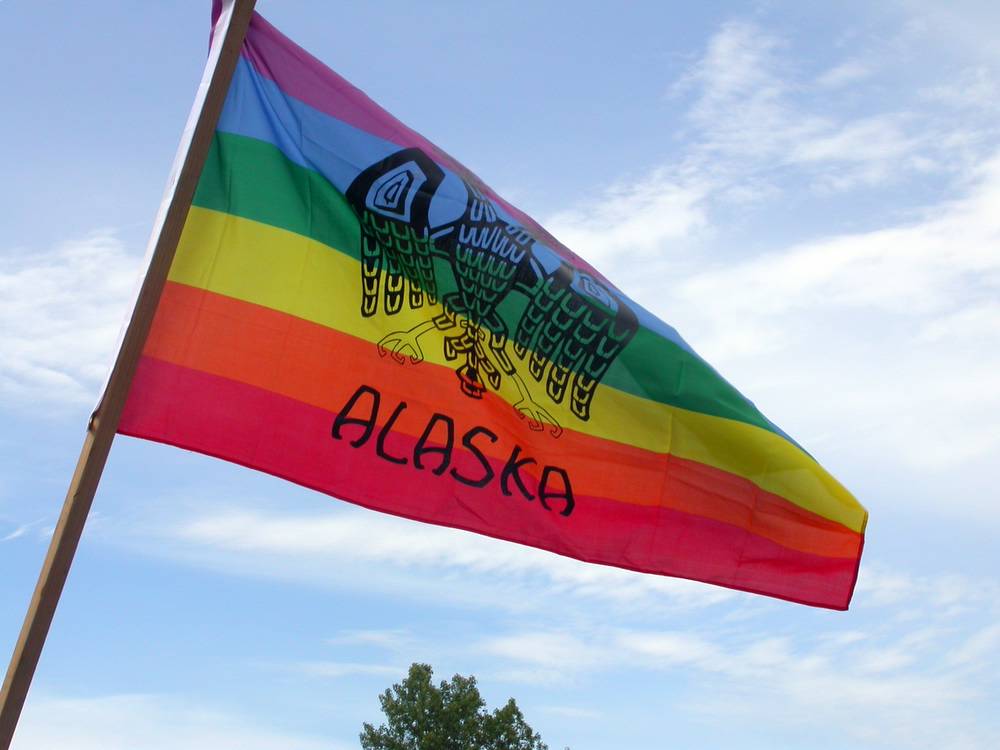
(Photo by Mel Green)
An Alaska Pride flag. The image is based on a double-faced eagle design from Alaska before Russian contact. (Creative Commons photo by Mel Green)

Last Wednesday, the University of California, Los Angeles, published a report on employment discrimination in Alaska based on sexual orientation and gender identity. Alaska is home to more than 19,000 lesbian, gay, bisexual and transgender adults, according to a Gallup poll.                                                                             

The report, published by UCLA’s Williams Institute found that 17 out of Alaska’s 25 largest employers have corporate policies that prohibit discrimination based on sexual orientation. At least 11 of them list gender identity as a protected class. Some of these employers include Providence Health and Services, Wal-Mart, Fred Meyer and the Arctic Slope Regional Corporation.

Christy Mallory co-authored the report, and says it took about a month to compile.

The report predicts that if non-discrimination laws were expanded, approximately six complaints of sexual orientation or gender identity employment discrimination would be filed annually in Alaska.

“So, six complaints is pretty low,” Mallory said, “that’s mostly because there’s a smaller population in Alaska than many other states.”

The report also cites a 2012 web survey on LGBT discrimination in Anchorage.

According to the Anchorage survey, 44 percent of the respondents had experienced harassment and nearly a fifth had been turned down for a job or promotion. The survey found that transgender people are more at risk for housing and employment discrimination.

The report found that straight male workers’ income was 30 percent higher than gay male workers.

Mallory says their reports focus on the 28 states that don’t offer LGBT legal protection in the workplace.

In a 2011 poll, nearly 80 percent of Alaskans said Congress should pass a law to prohibit LGBT employment discrimination.

In 2002, Gov. Tony Knowles issued an administrative order protecting state employees from employment discrimination and harassment. There are no restrictions on the private sector.

Neither the Alaska State Commission for Human Rights or the Anchorage Equal Rights Commission processes discrimination claims based on sexual orientation or gender identity. But the Williams Institute says that this discrimination does take place, citing legislative testimony.

Live burn training with Capital City Fire/Rescue

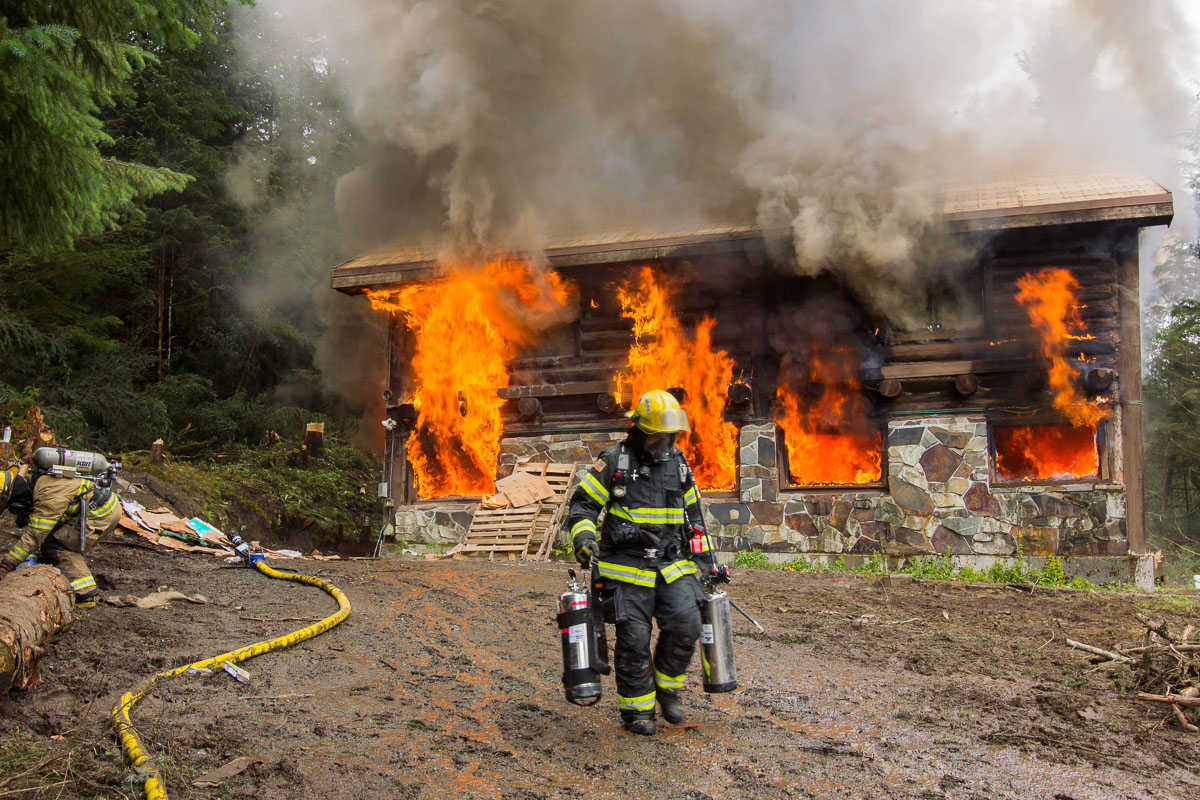
Firefighters move training equipment away from the fire. (Photo by David Purdy/KTOO)

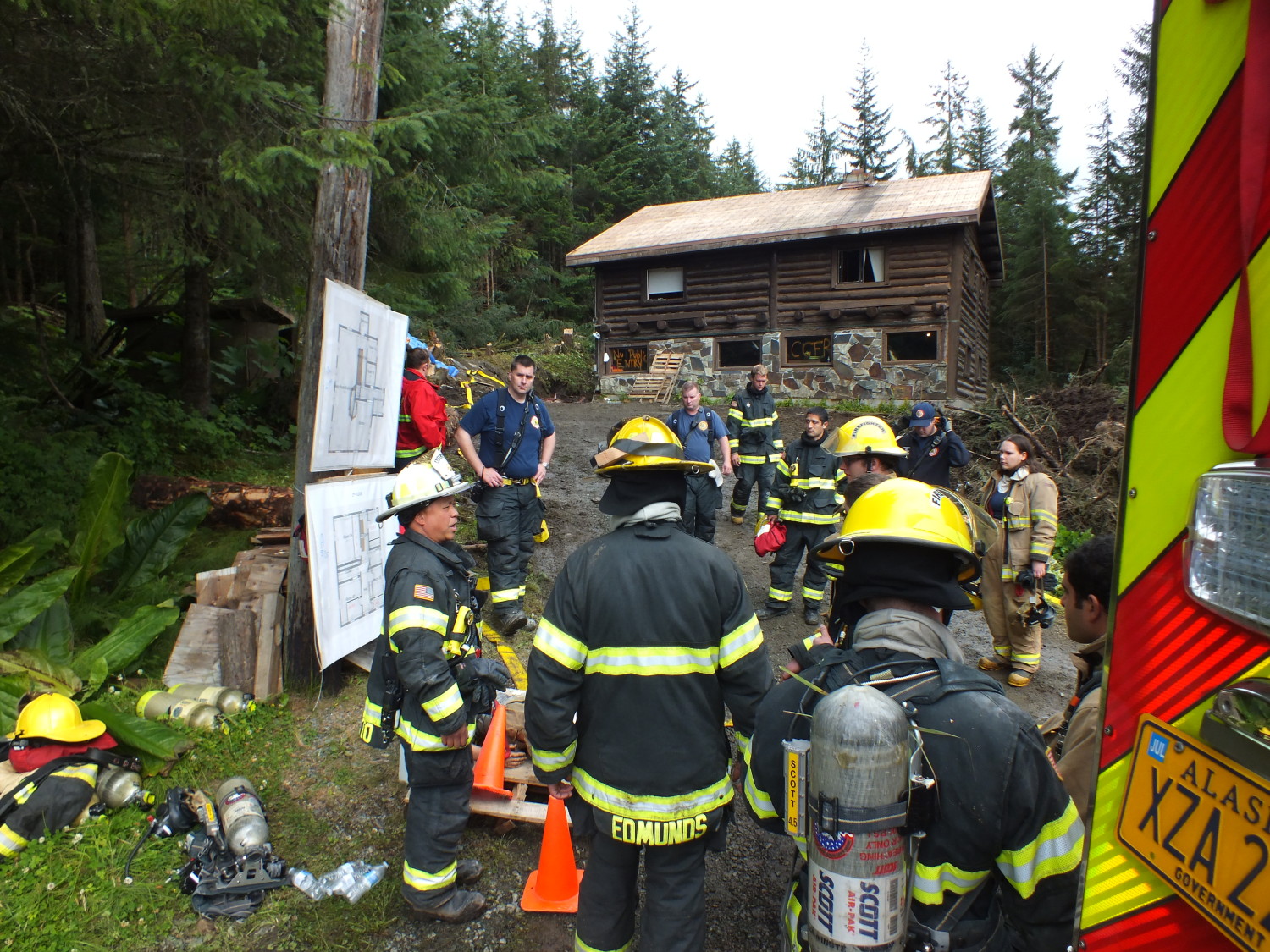
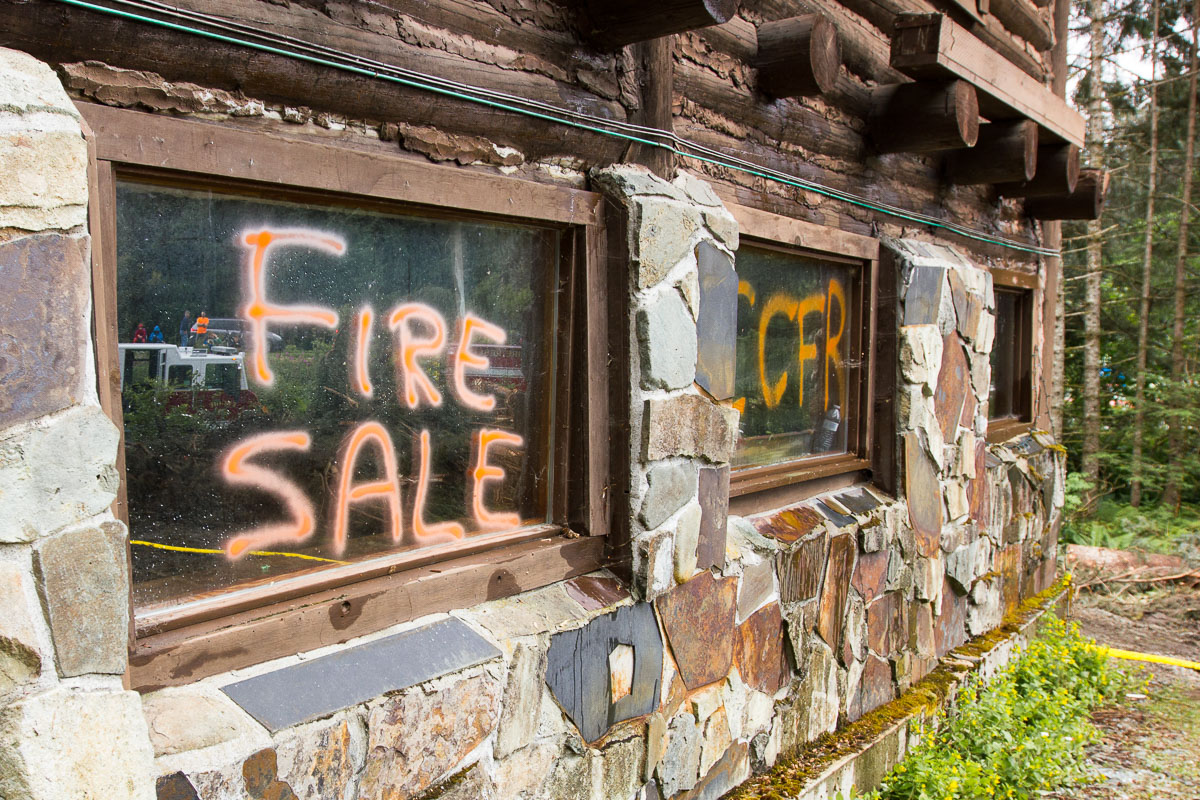
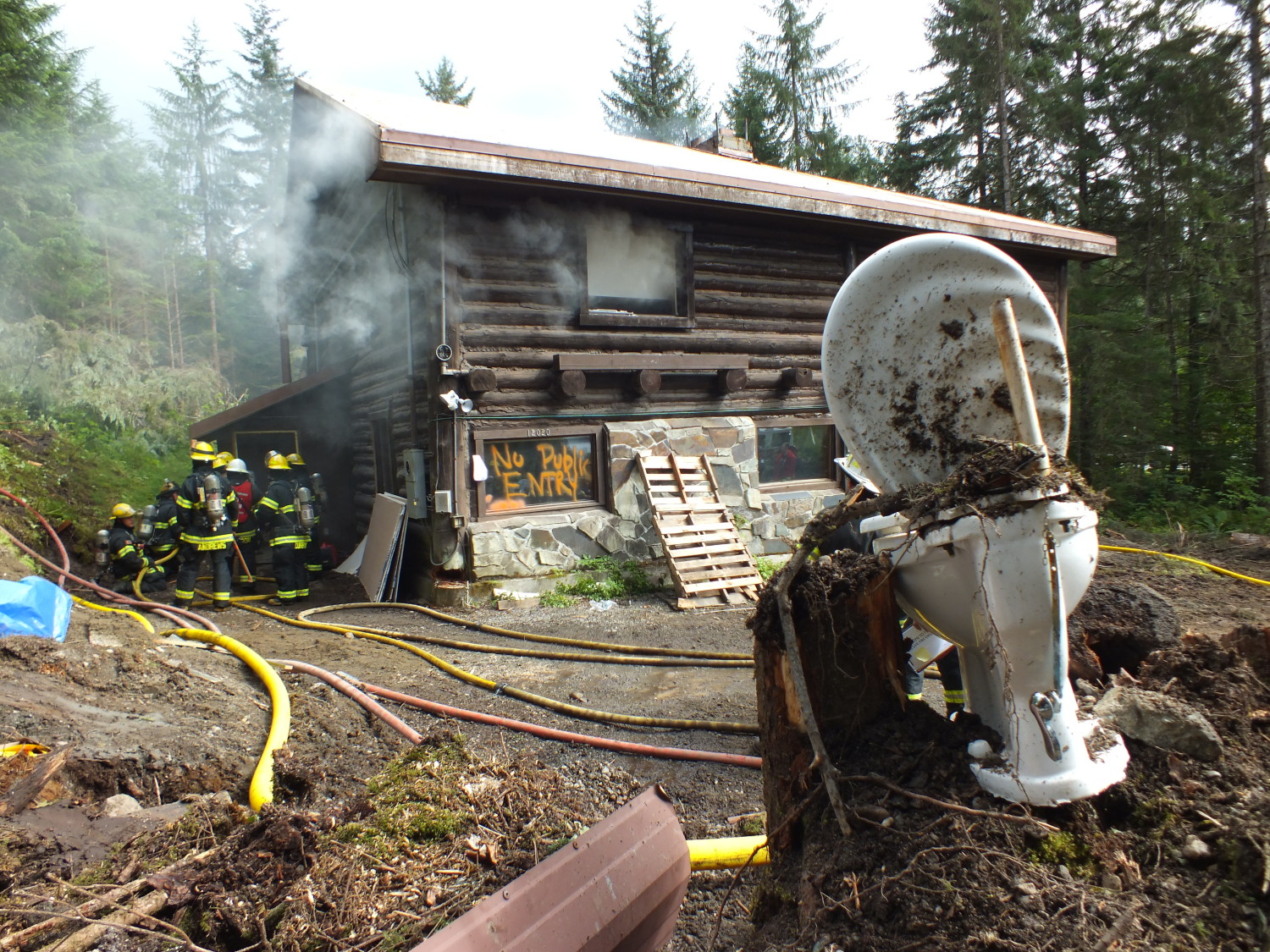
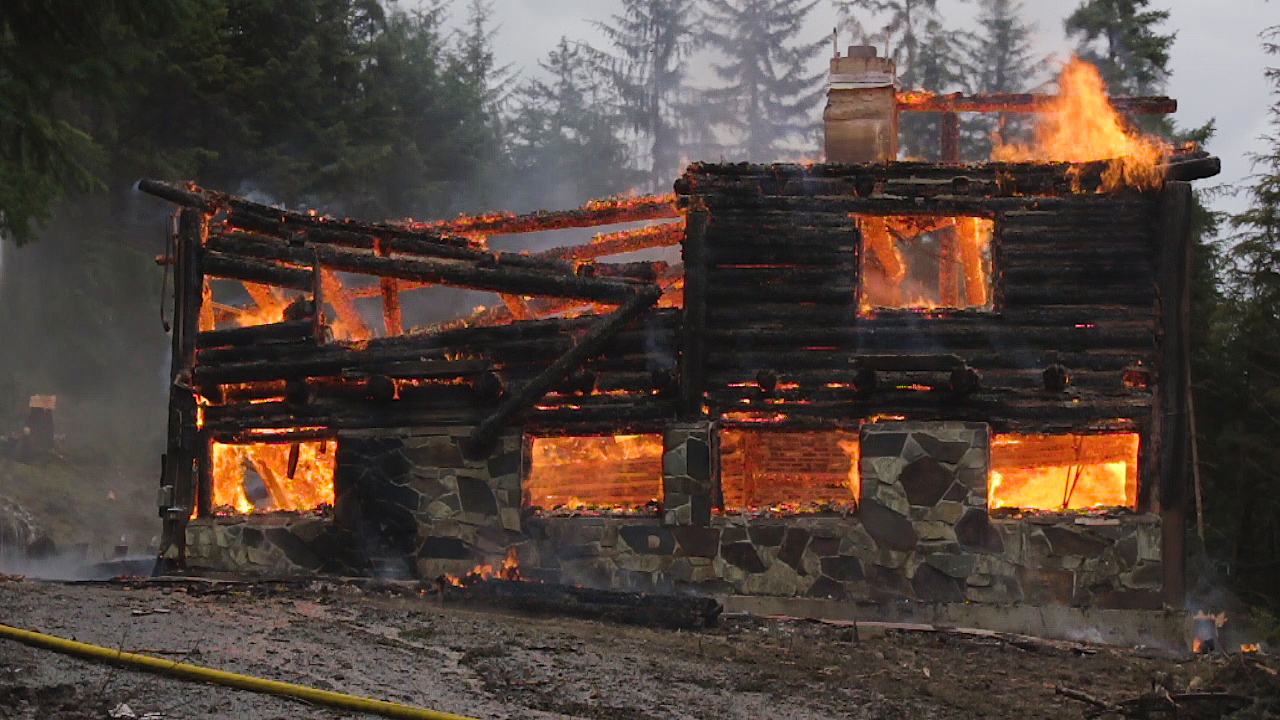
Capital City Fire/Rescue held a drill Saturday with a live fire at an old log cabin on Mendenhall Loop Road. The cabin was considered beyond repair. Its foundation timbers were partially rotted and the entire structure was leaning over.

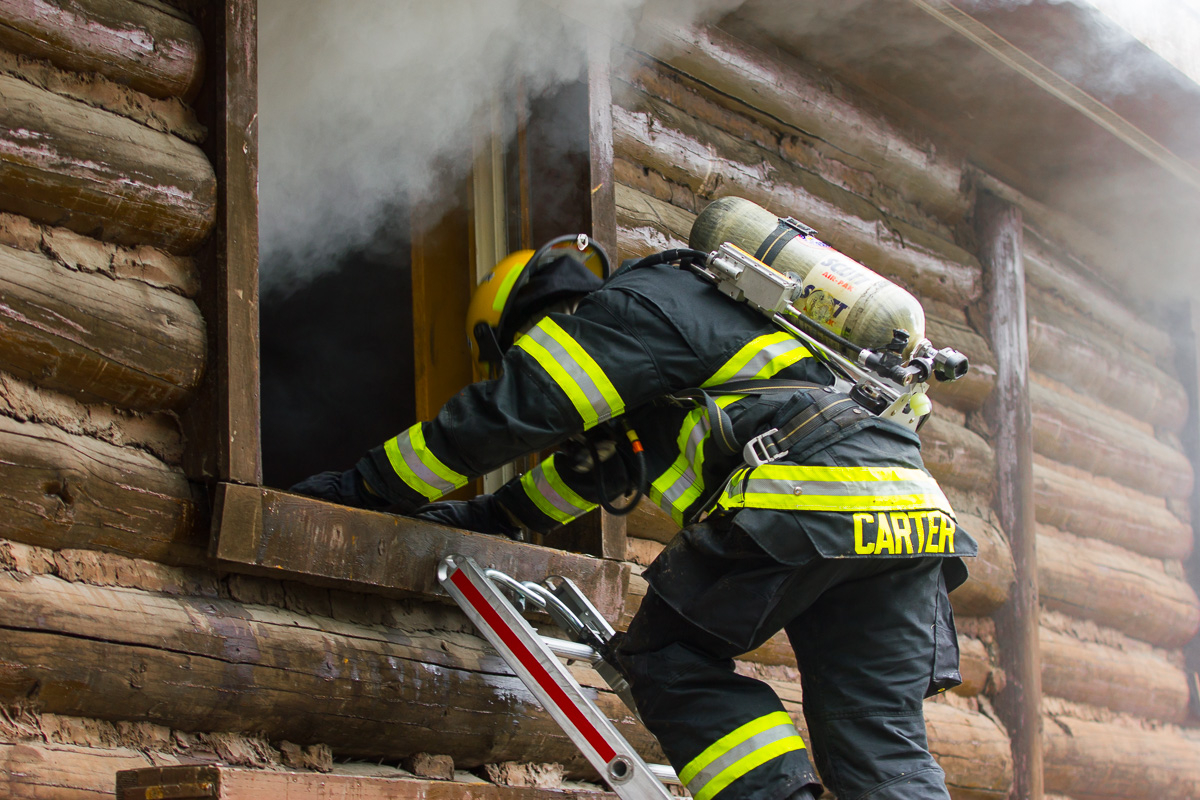
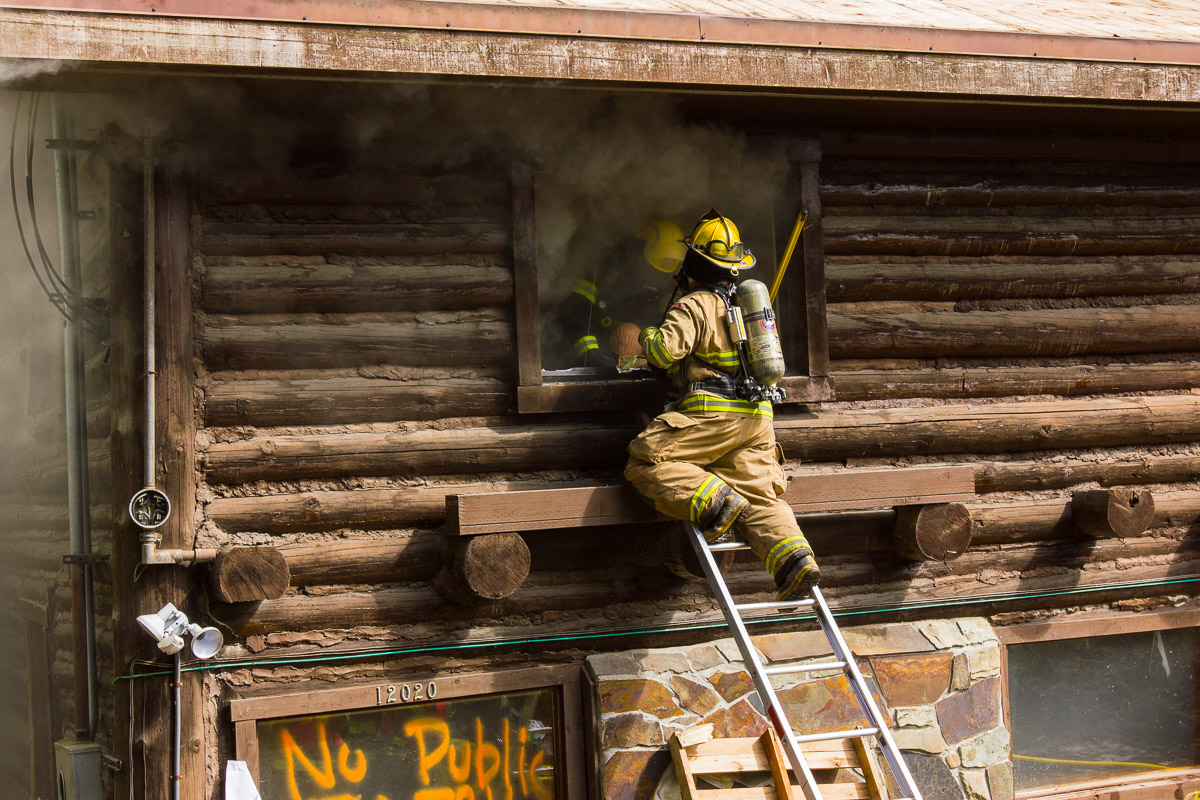
For career and volunteer firefighters, it was a unique opportunity to hone their skills and train outside the Hagevig Fire Training Center. Firefighters practiced entering the structure, attacking the fire, searches and rescues.

The structure, owned by University of Alaska Southeast, was demolished with one final burn at the end of the day.

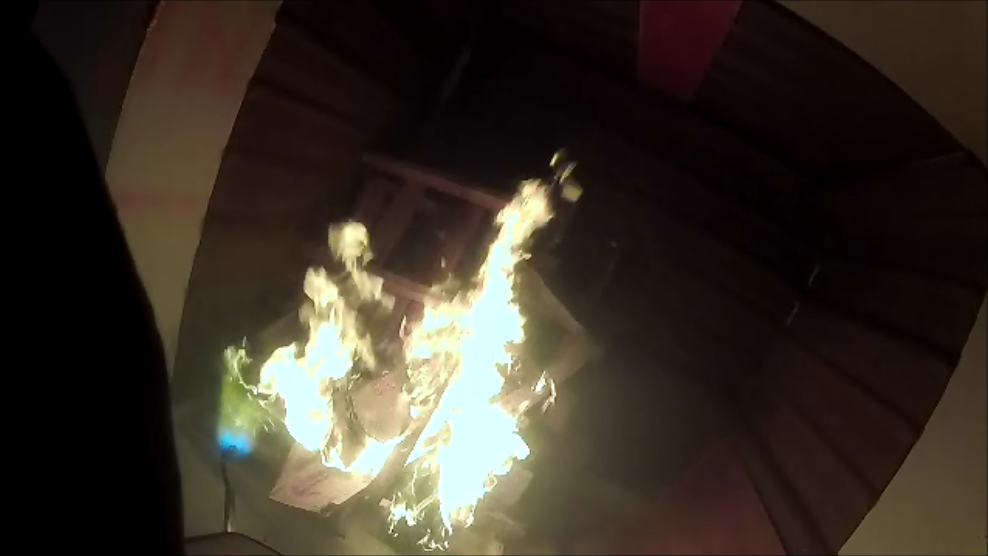
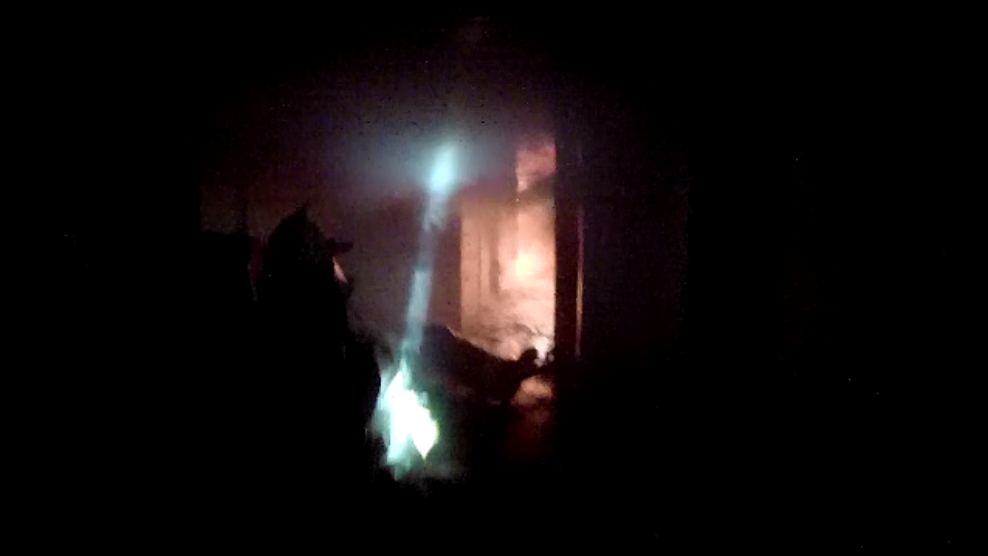
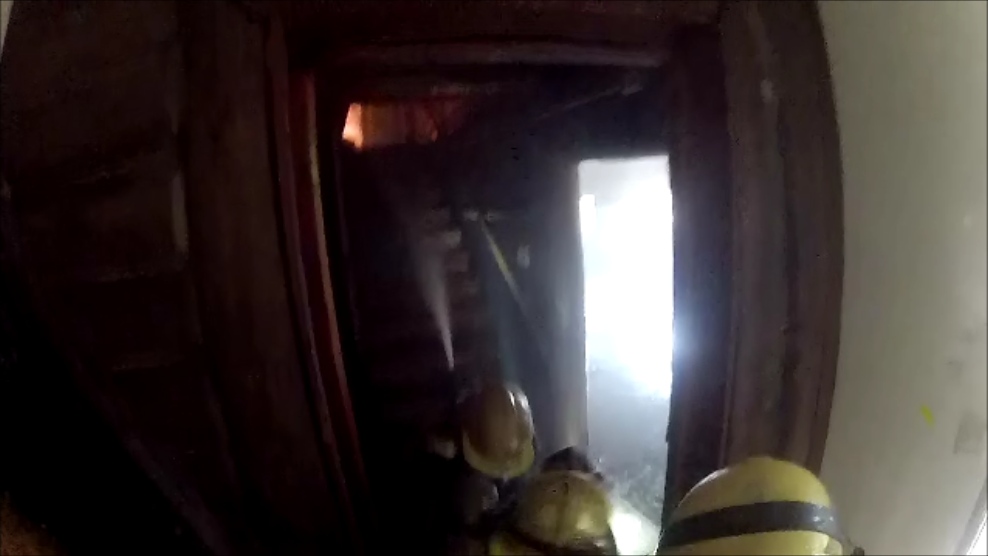
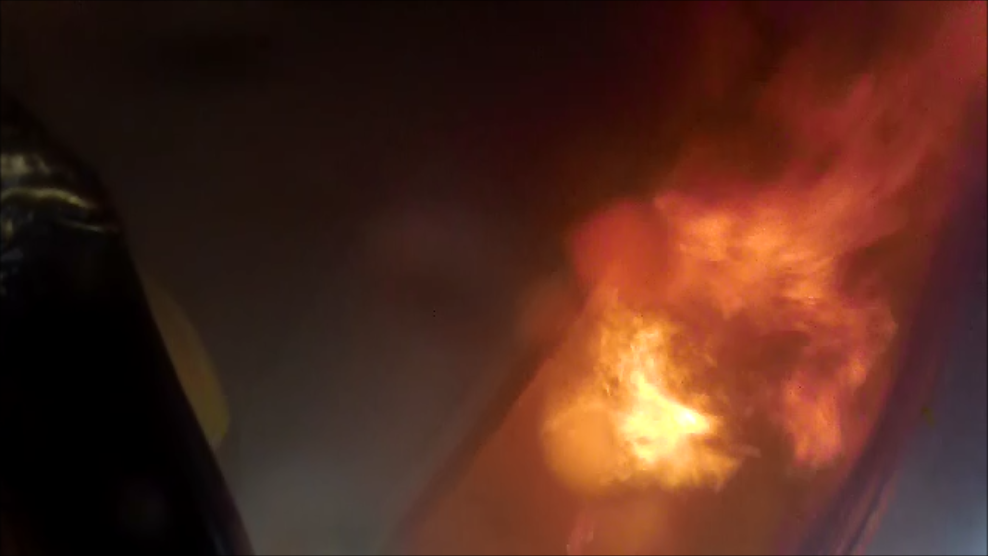
Firefighters Sean Rhea and Noah Jenkins, who acted as instructors during Saturday’s exercise, wore KTOO’s helmet-mounted video camera that provided some of these stills.

Floor plan and scenario briefing. (Photo by Matt Miller/KTOO)

(Photo by David Purdy/KTOO)

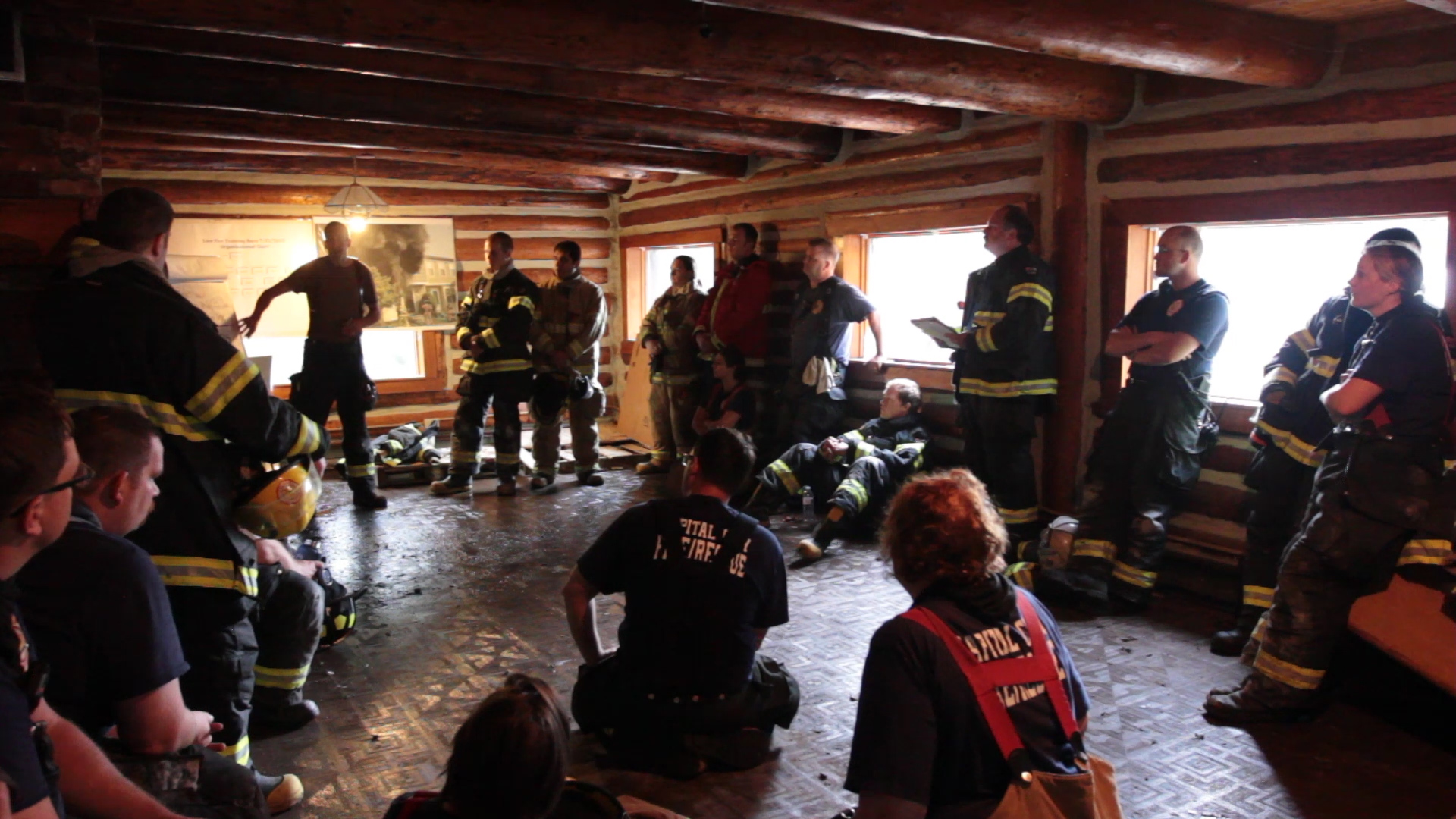
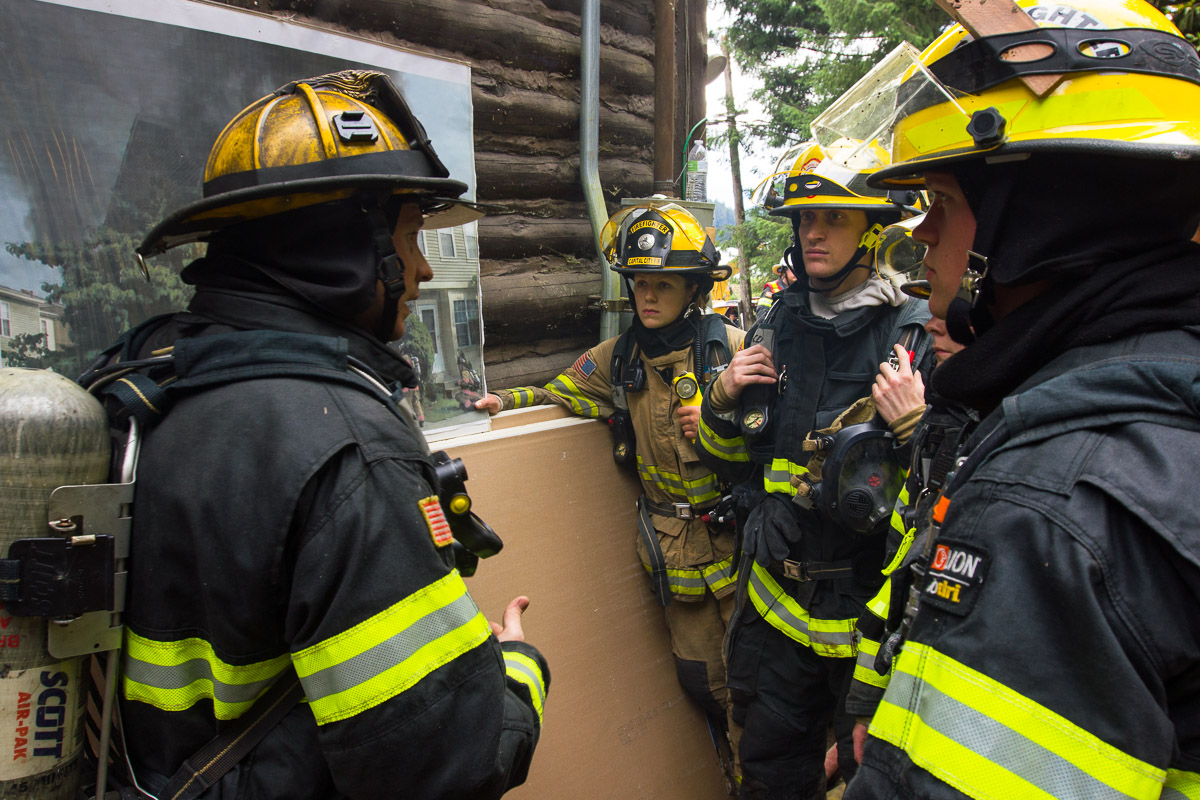
Firefighters are briefed on the plan for the day. (Photo by David Purdy/KTOO)

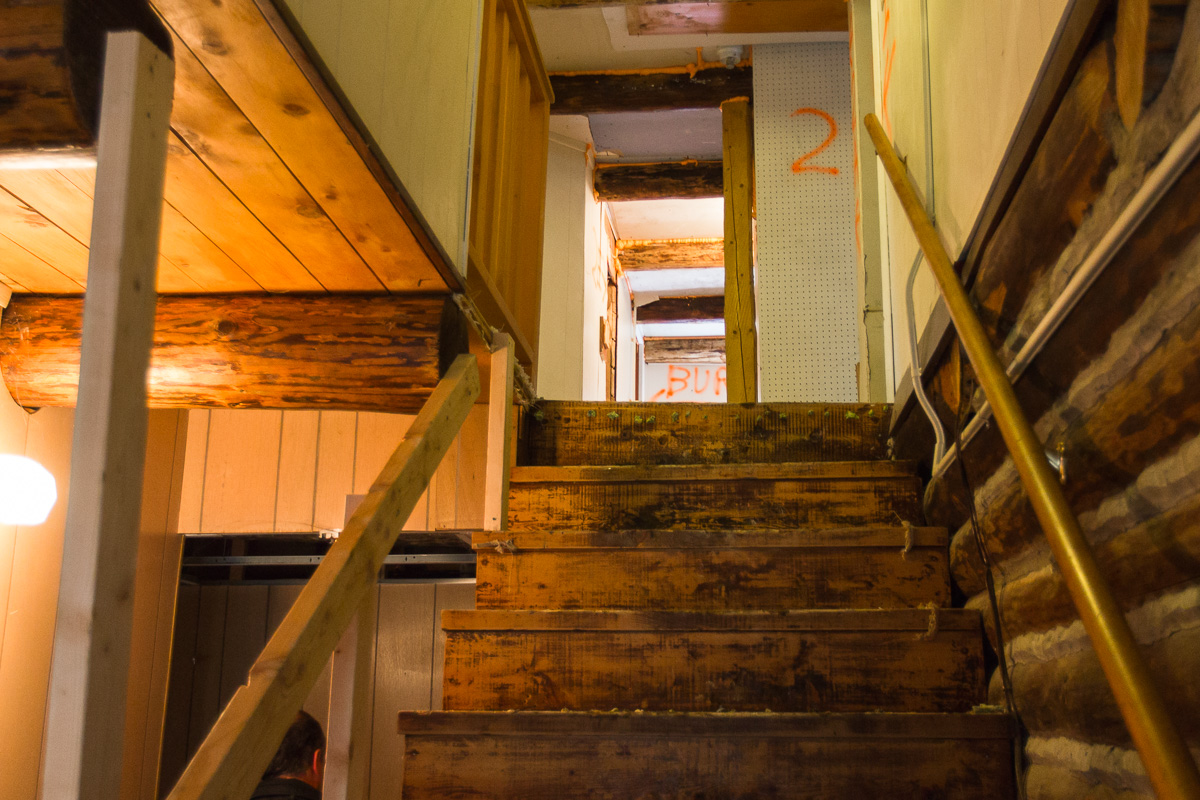
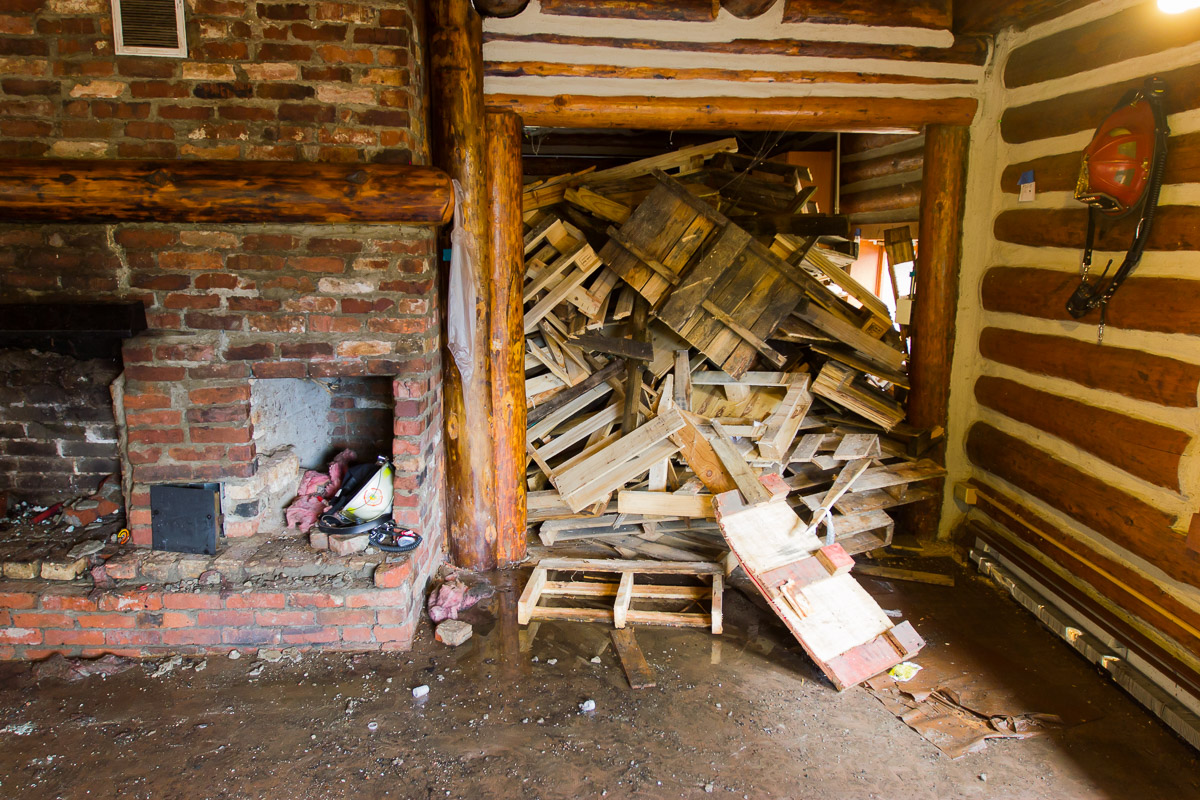
In the weeks before the training day, firefighters cleaned out the cabin and installed additional drywall to control the fire during training. (Photo by David Purdy/KTOO)

Pallets were used for kindling for the training fires. (Photo by David Purdy/KTOO)

An instructor uses a propane torch to light straw and cardboard for one of the scenarios. The room has been modified with added drywall and metal siding.

A firefighter investigates a fire in an upper bedroom.

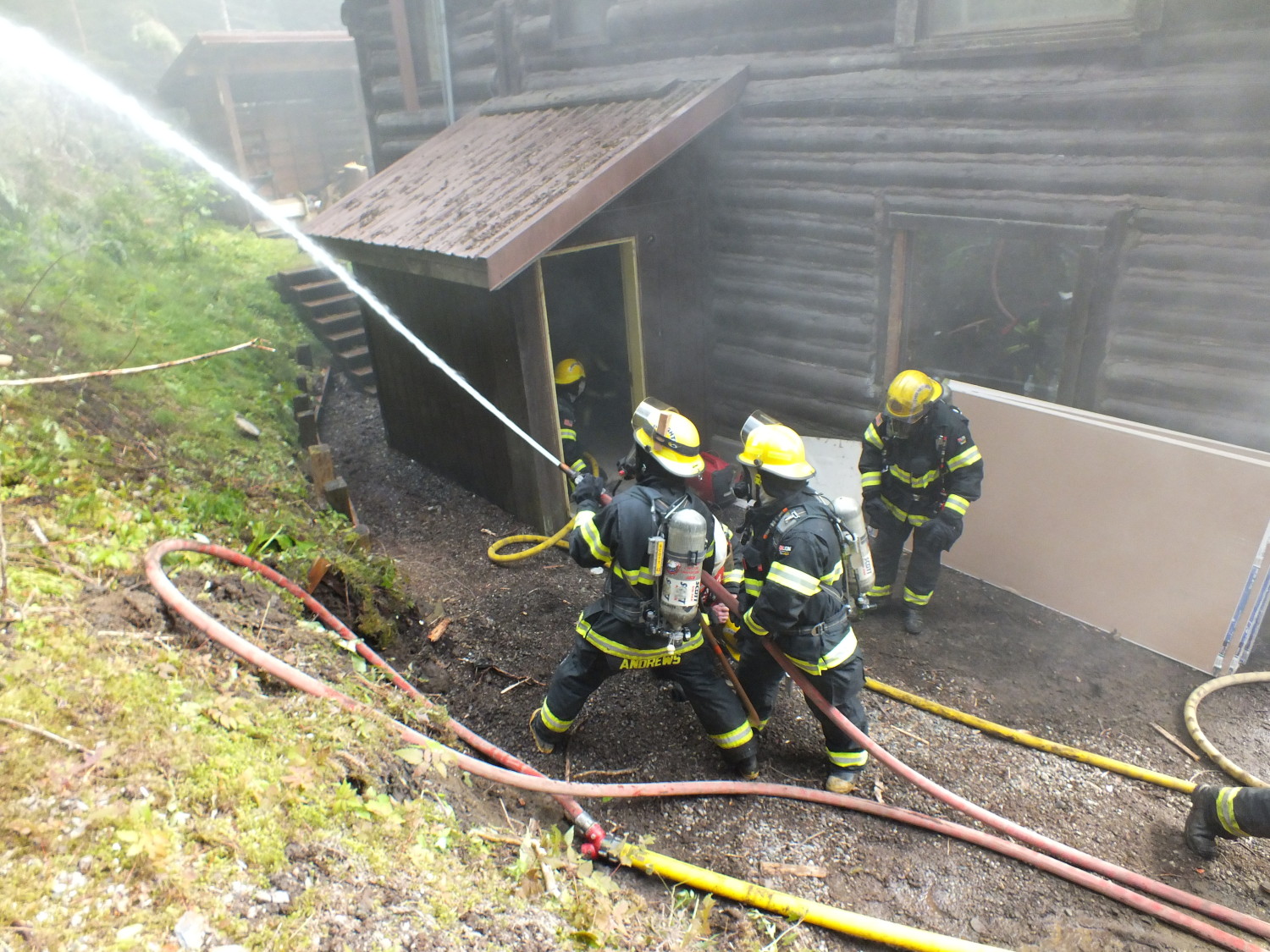
A hose team attacks a fire on the second floor.

Fire lashes out at a firefighter before a hose team enters a room.

(KTOO video stills)

Briefing just before beginning a training exercise in the cabin. (Photo by David Purdy/KTOO)

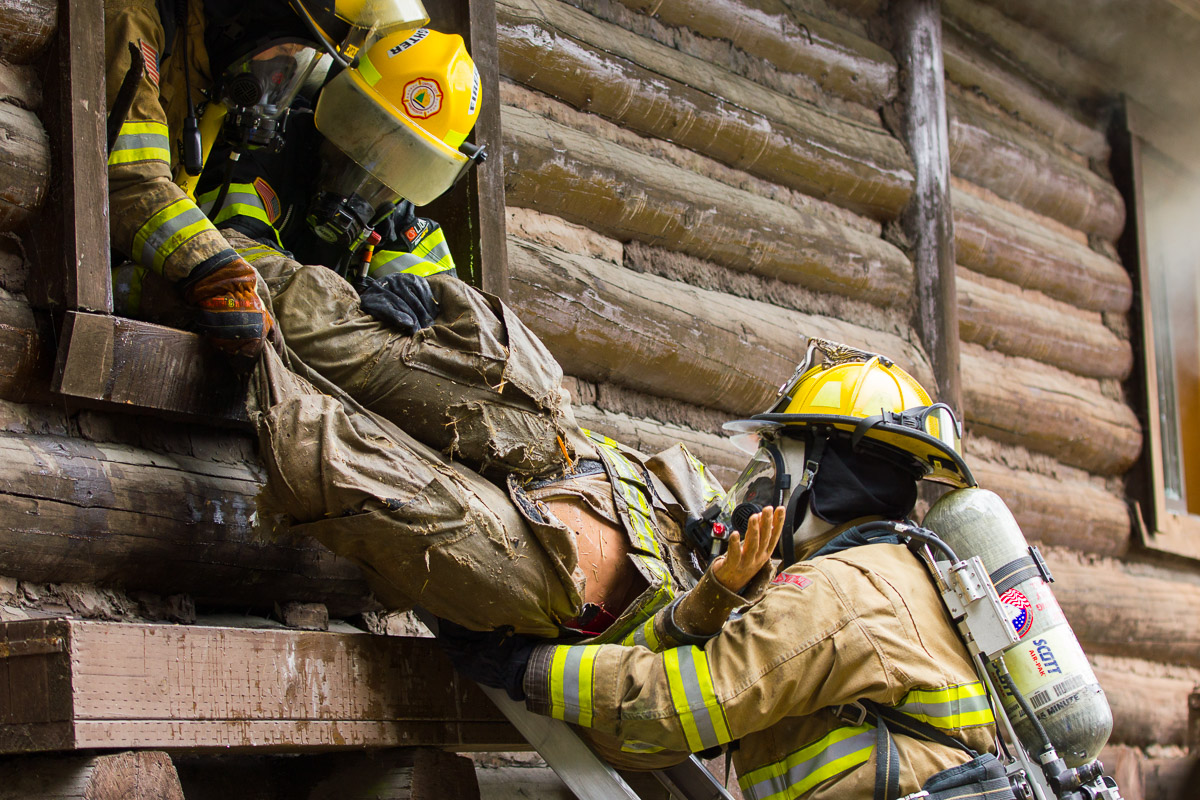
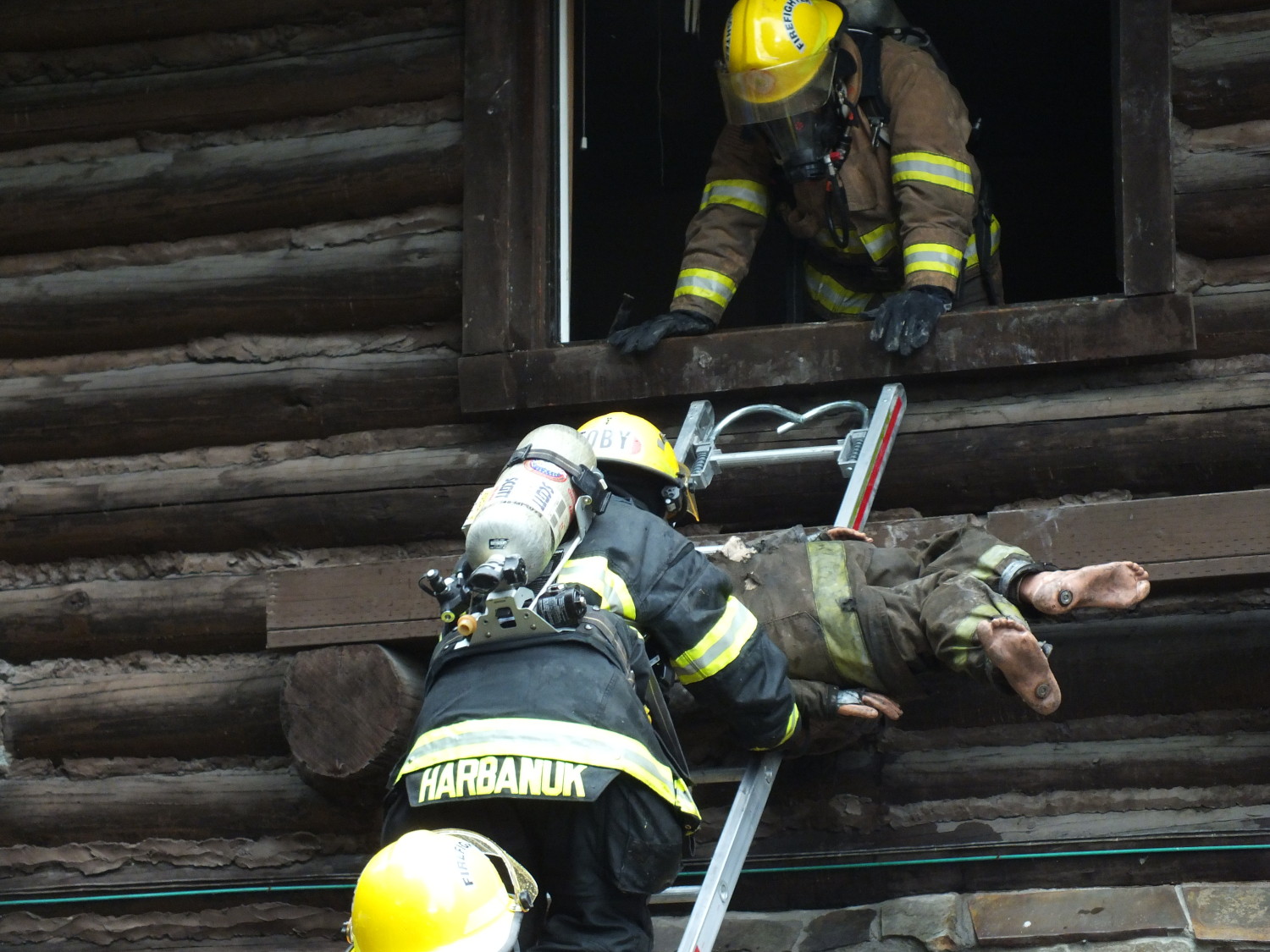
Firefighters practice a second-floor rescue with a dummy. (Photos by David Purdy/KTOO)

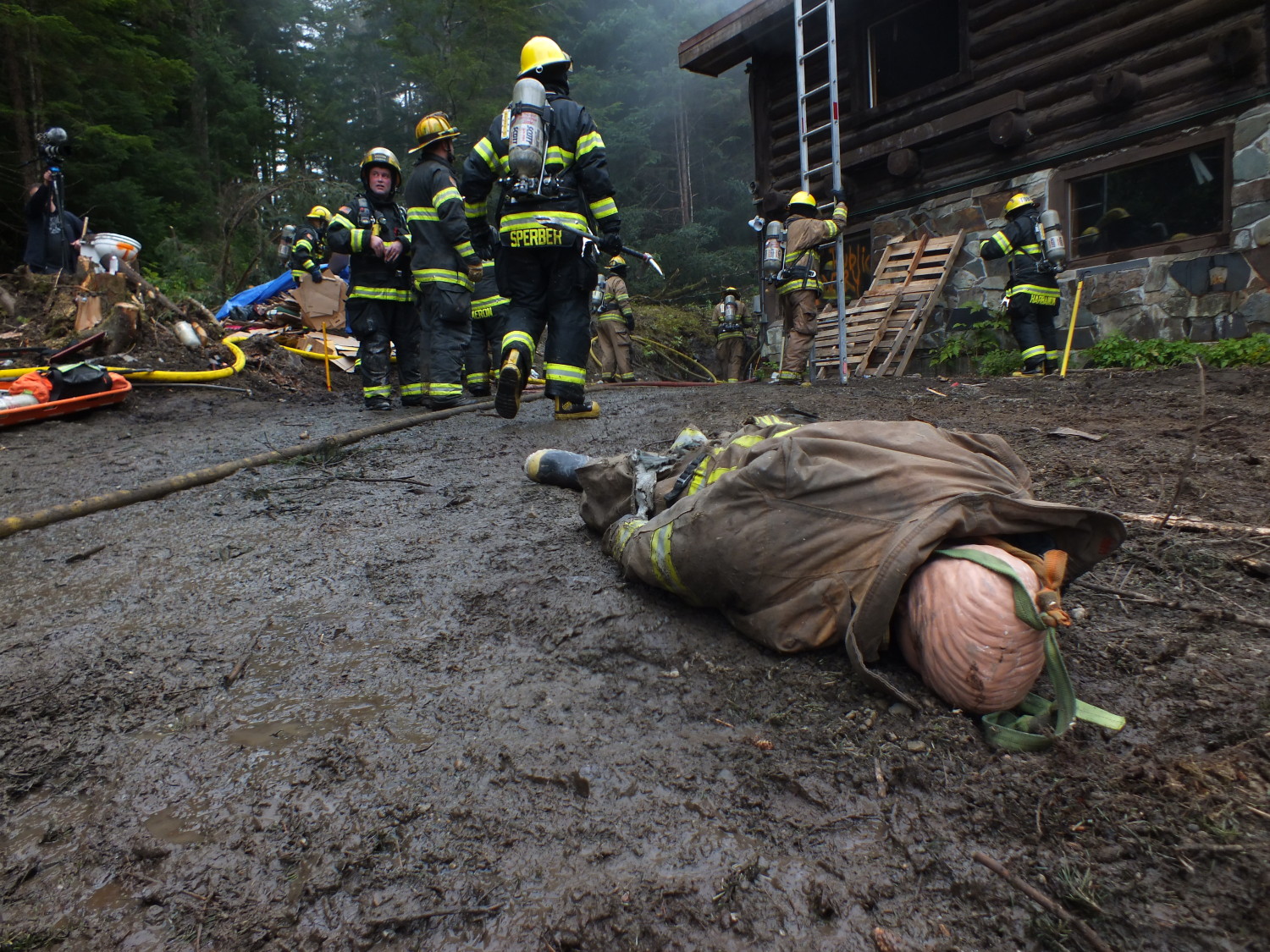
The dummy weighs 180 pounds. (Photo by Matt Miller/KTOO)

The victim awaits treatment by EMTs. (Photo by Matt Miller/KTOO)

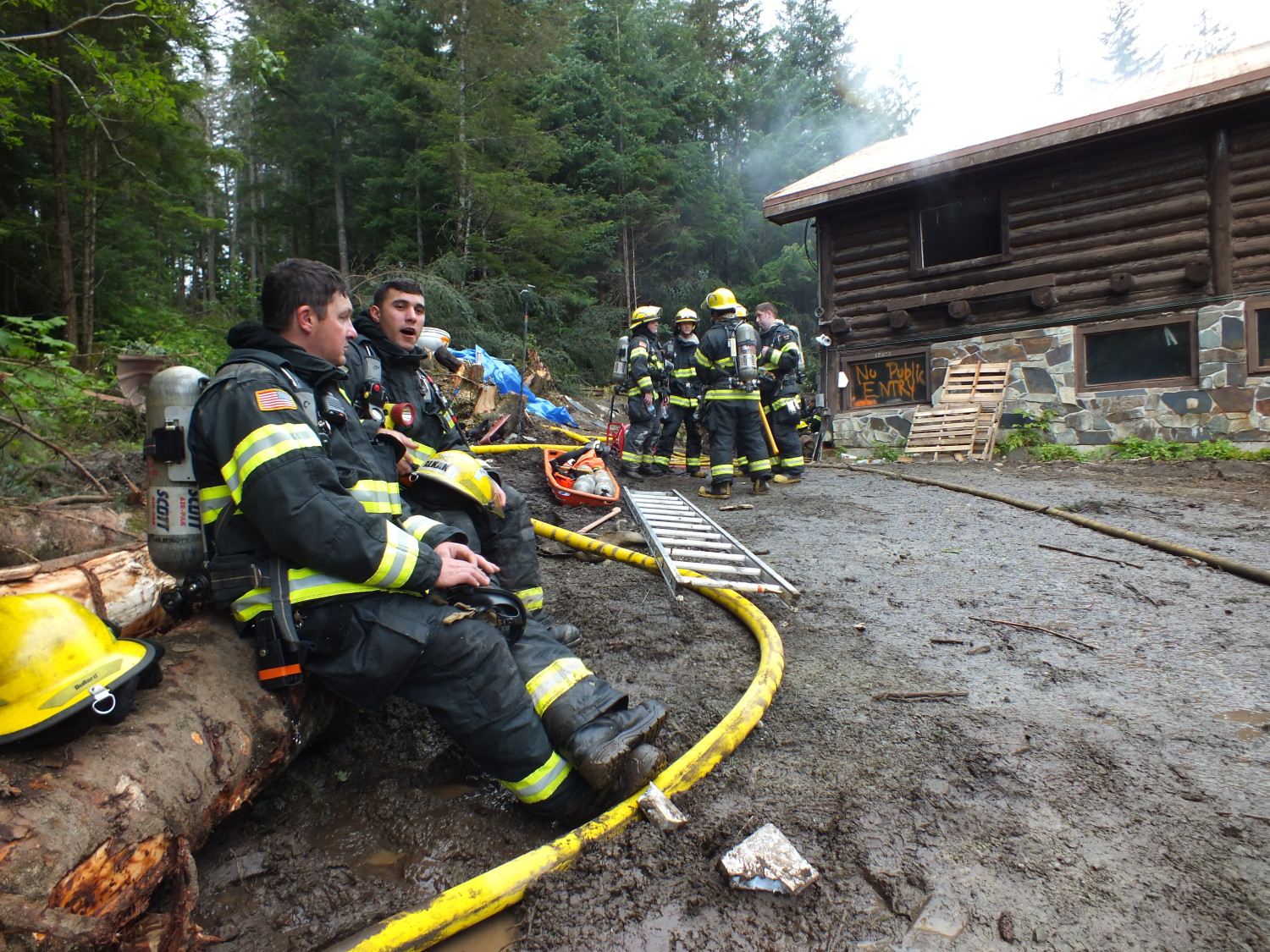
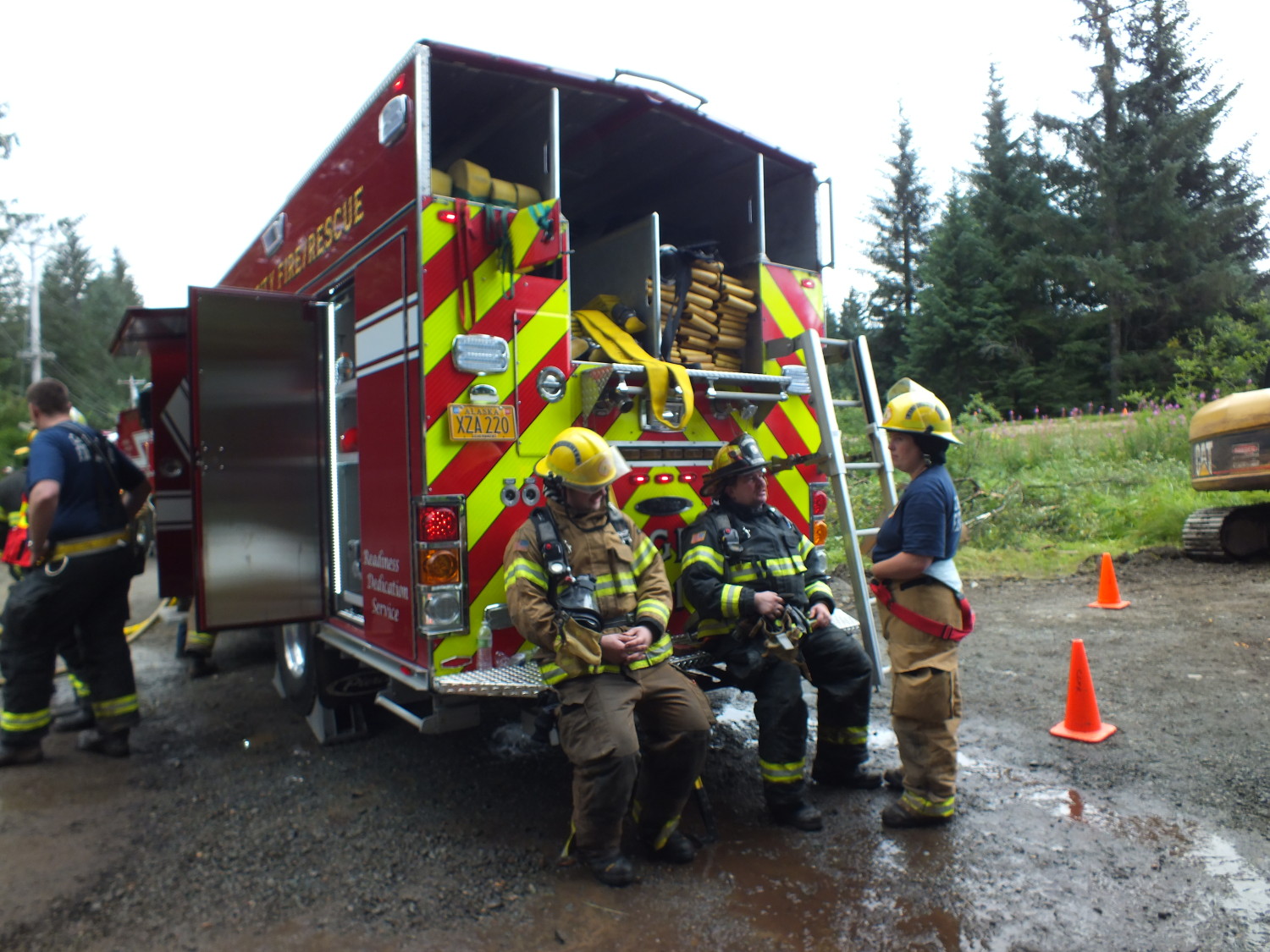
Rest before the next entry. (Photo by Matt Miller/KTOO)

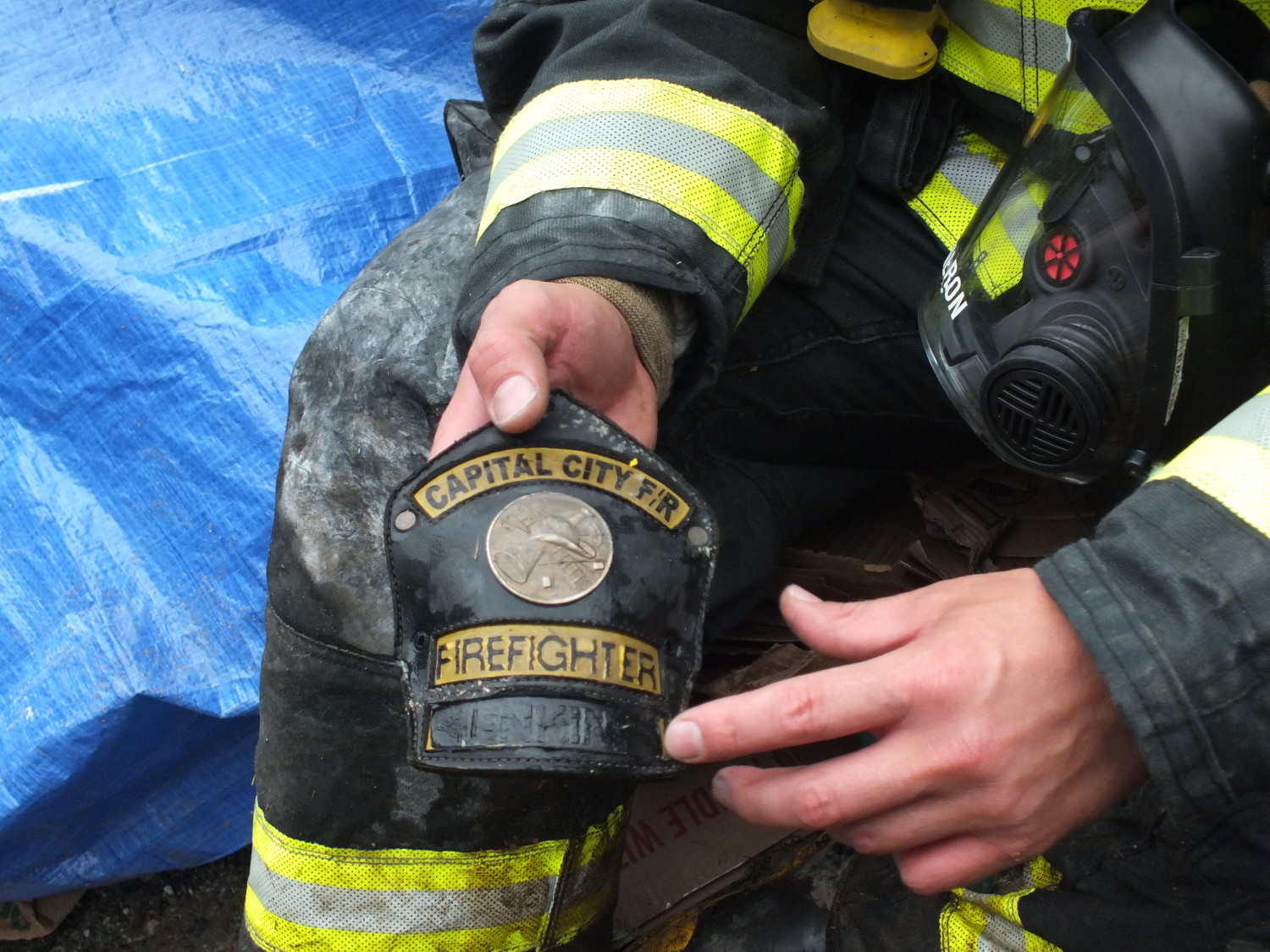
One firefighter has lost his leather nameplate for his helmet. (Photos by Matt Miller/KTOO)

Who left the lid up? (Photo by Matt Miller/KTOO)

Nozzle test by hose team. (Photo by Matt Miller/KTOO)

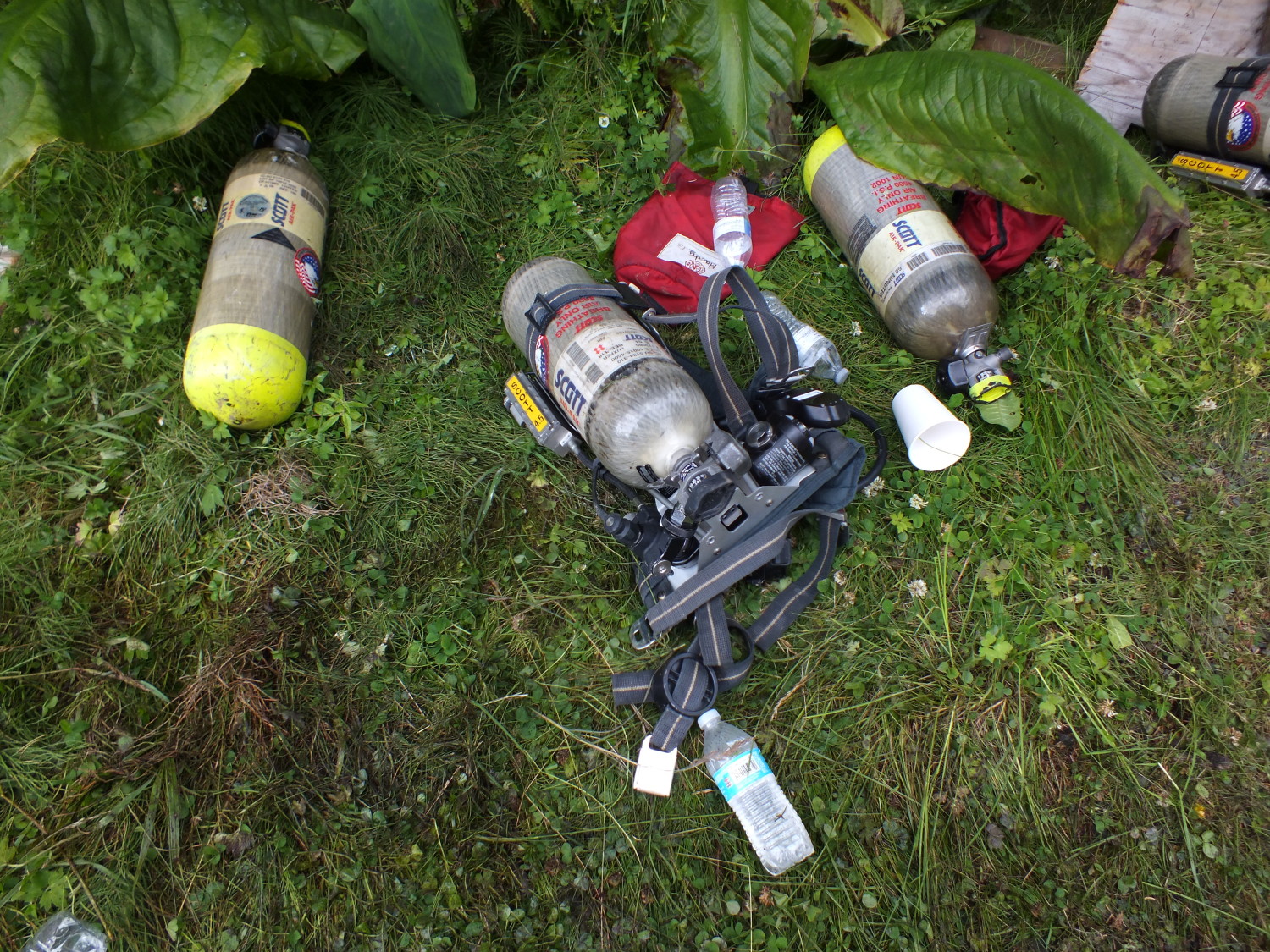
Water and air are important components for a firefighter’s stamina. (Photos by Matt Miller/KTOO)

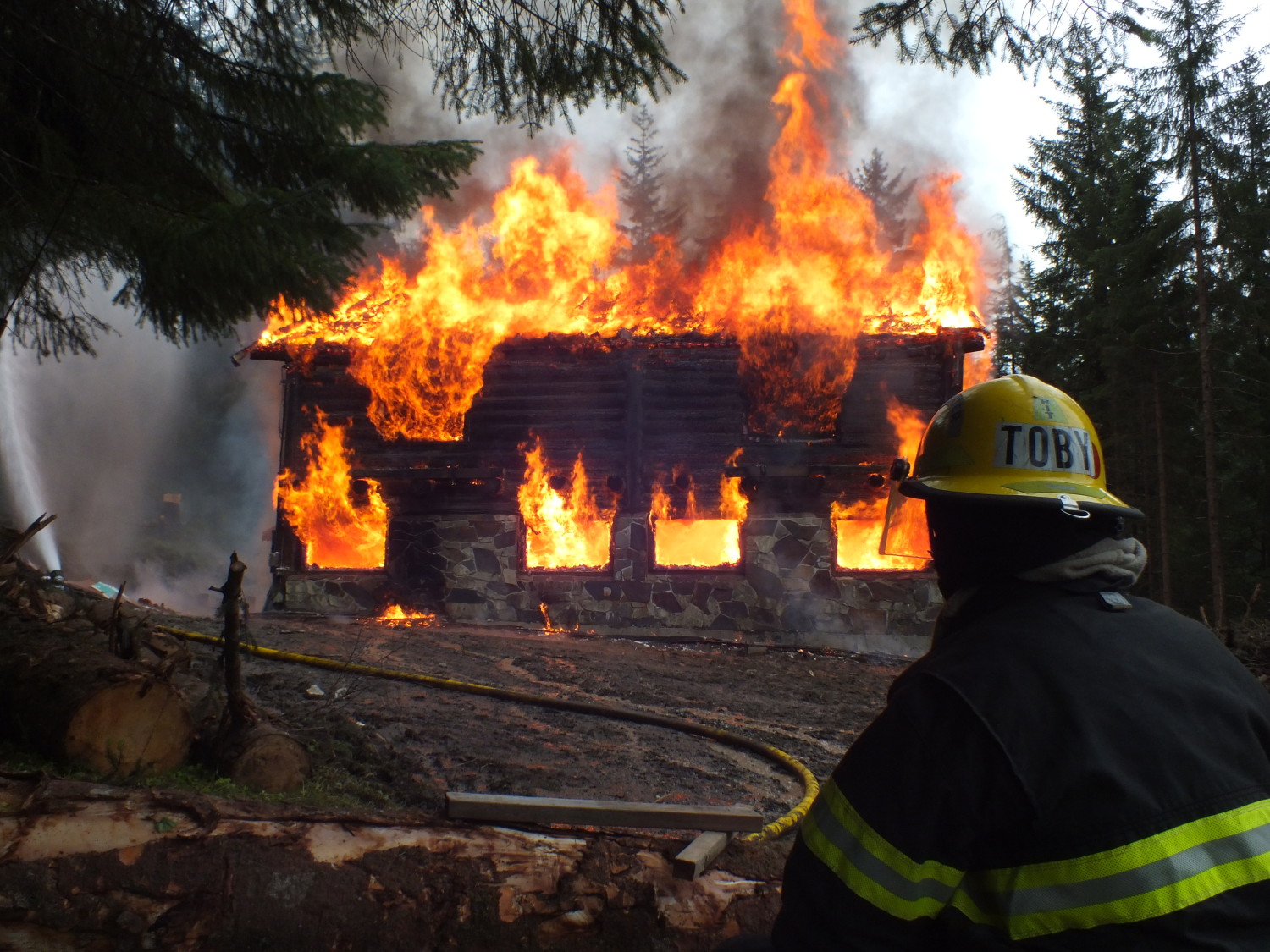
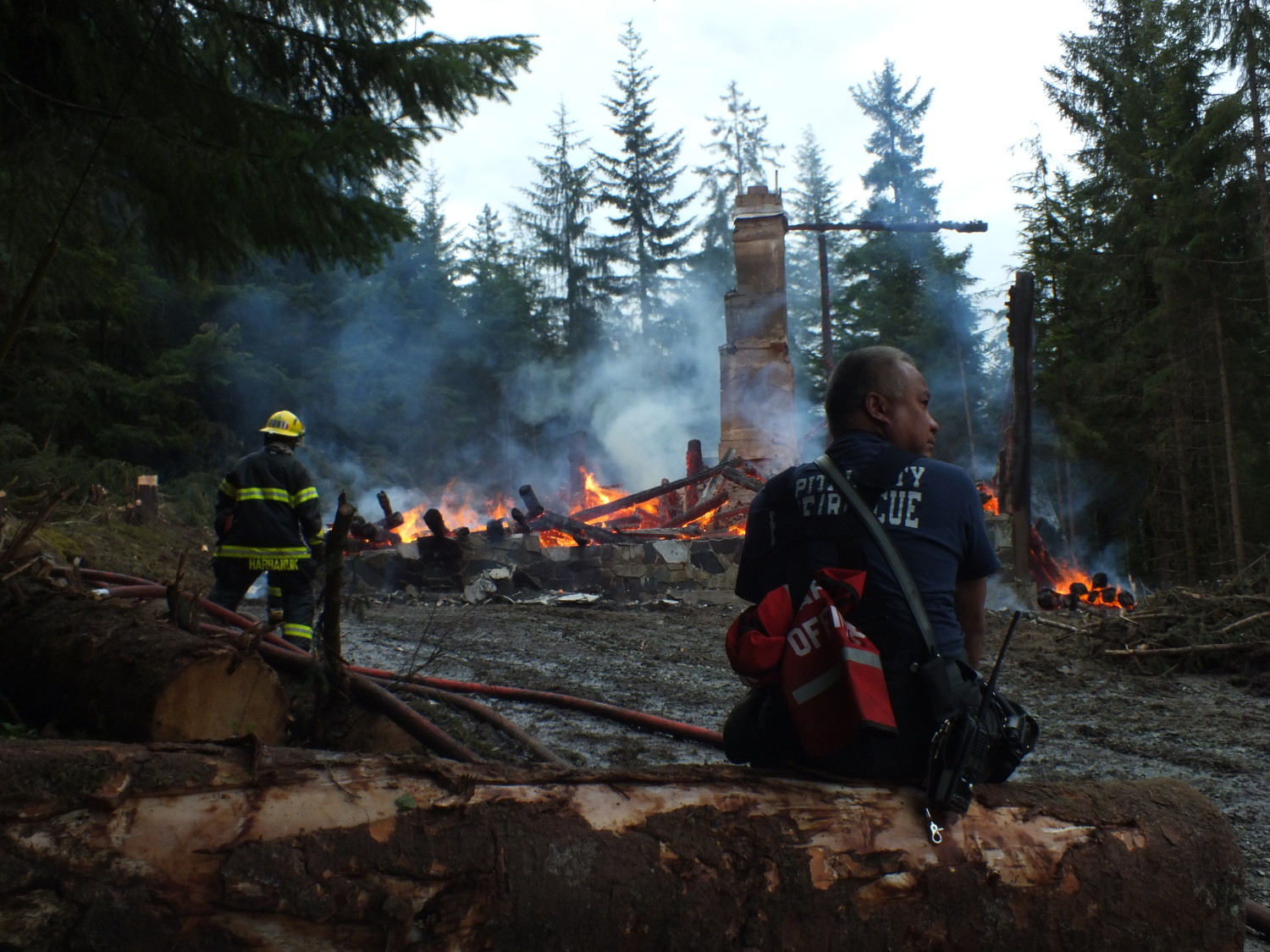
Firefighter Toby Harbanuk stands by during the final burn of the cabin. (Photo by Matt Miller/KTOO)

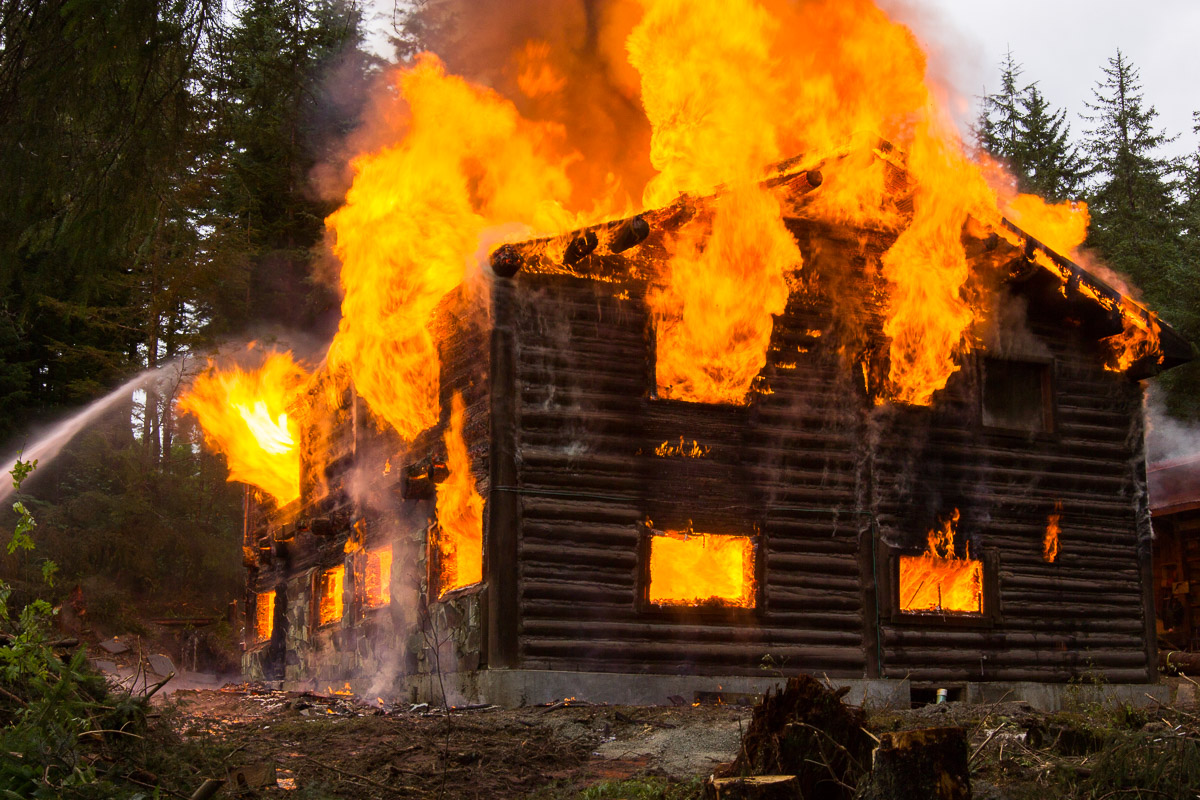
Fire engulfs the cabin while firefighters spray the vegetation behind it to keep the fire from spreading. (Photo by David Purdy/KTOO)

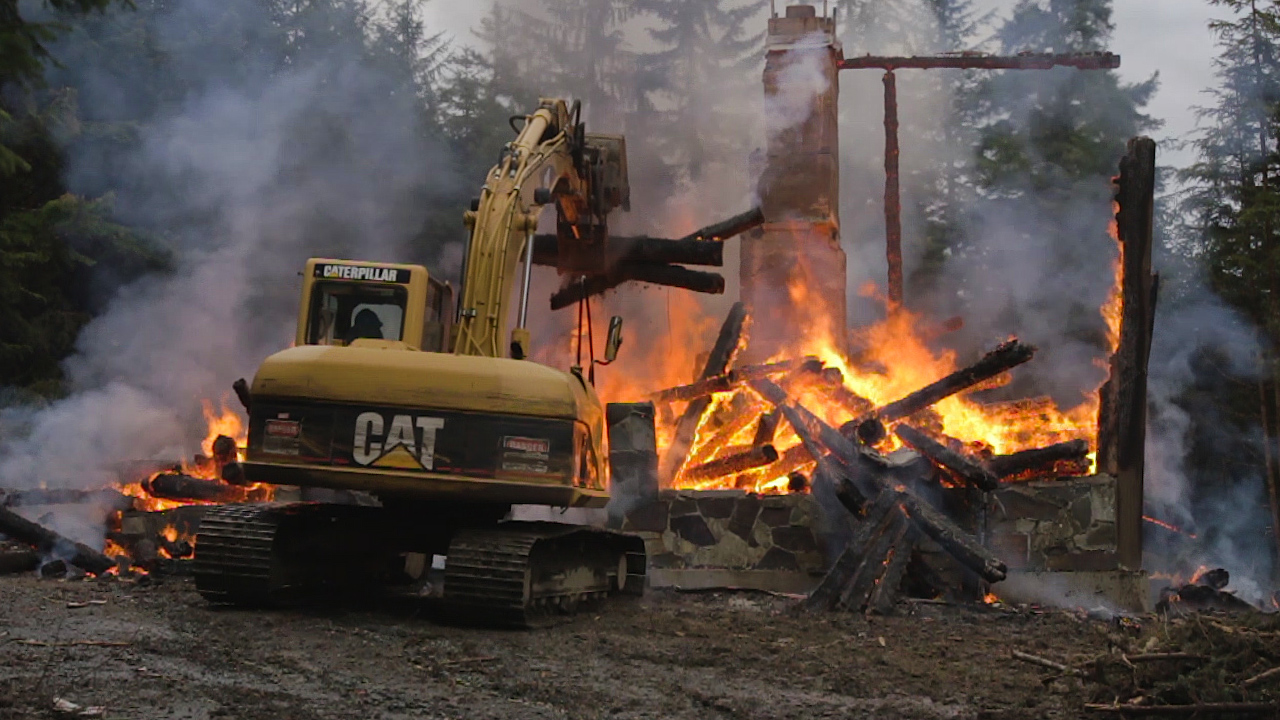
Debris is added back on to the main fire to keep it contained. (Photo by David Purdy/KTOO)

The cabin collapses as the fire burns. (Photo by David Purdy/KTOO)

End of the day for Assistant Chief Ed Quinto and other firefighters. (Photo by Matt Miller/KTOO)

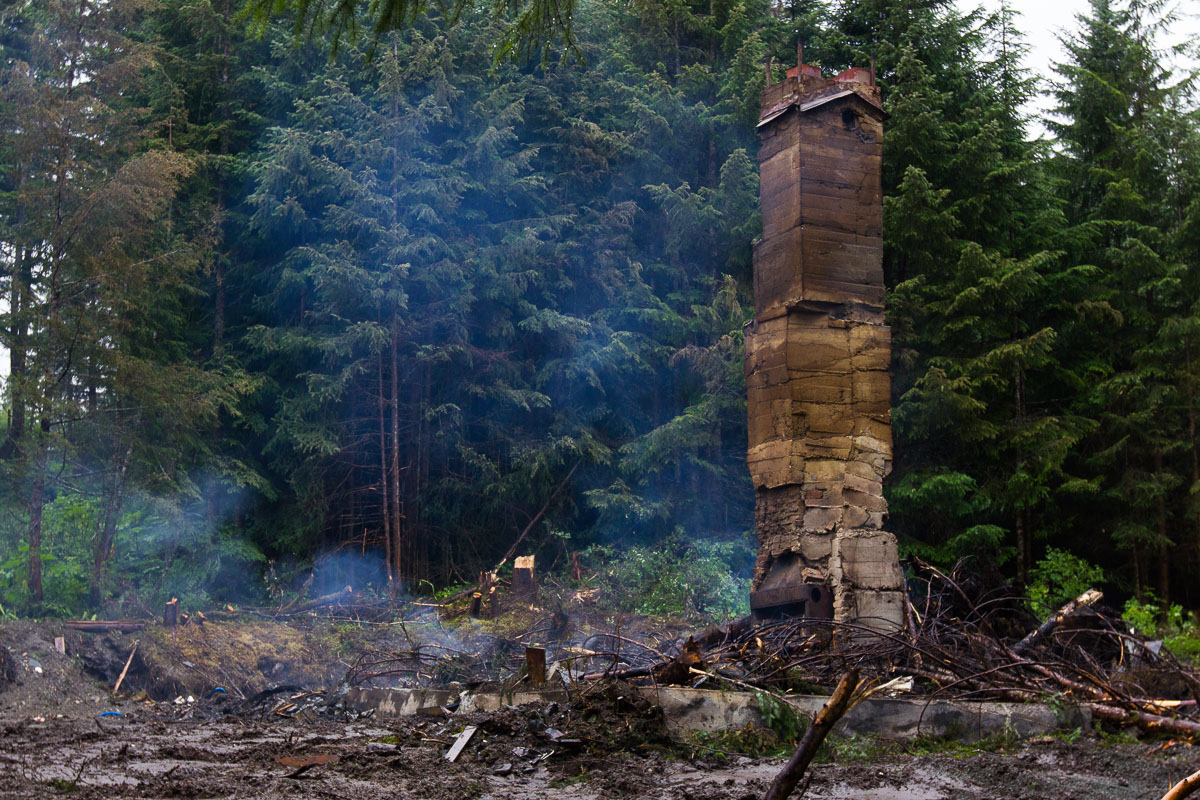
The ruins still smolder the day after the fire (Photo by David Purdy/KTOO)

Site notifications
Update notification options
Subscribe to notifications