Community

Next generation takes over fishing in Ekuk

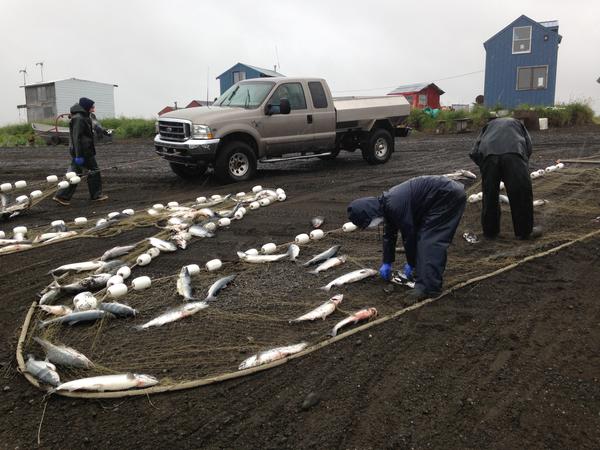
Ani White pulls the net out of the water with her truck as her siblings start to pick out the fish. (Photo by Matt Martin/KDLG)
Ani White pulls the net out of the water with her truck as her siblings start to pick out the fish.
(Photo by Matt Martin/KDLG)

During the summer, the population of Bristol Bay explodes with people from all over the world. They’re looking to play a part in the largest sockeye return in the world. Many of these strangers crew on drift boats or work at a cannery. But there is one beach in the Nushagak Bay that remains a home to local family operations.

Ani White sprinkles rosemary, among other spices, over two whole chickens. She’s preparing dinner for her fishing crew. They’re all taking a quick nap before it’s time to pick the nets again.

“We eat pretty good around here. I like to cook, definitely,” said Ani.

Along with the chicken, fresh green salad and corn on the cob (is) the menu. Ani prepares the meal in one of the half dozen cabins her family owns on Ekuk beach. About 20 other families have similar cabins all along the beach.

There are a few close friends that fish along with Ani but it’s mostly a family operation. Ani is in her midtwenties and lives in Anchorage now but says it’s like a family reunion each summer at the small fish camp.

“During the year, we’re all at different places going to school and so we usually only come together at Thanksgiving, Christmas and then of course, in the summertime for Ekuk and fishing,” said Ani.
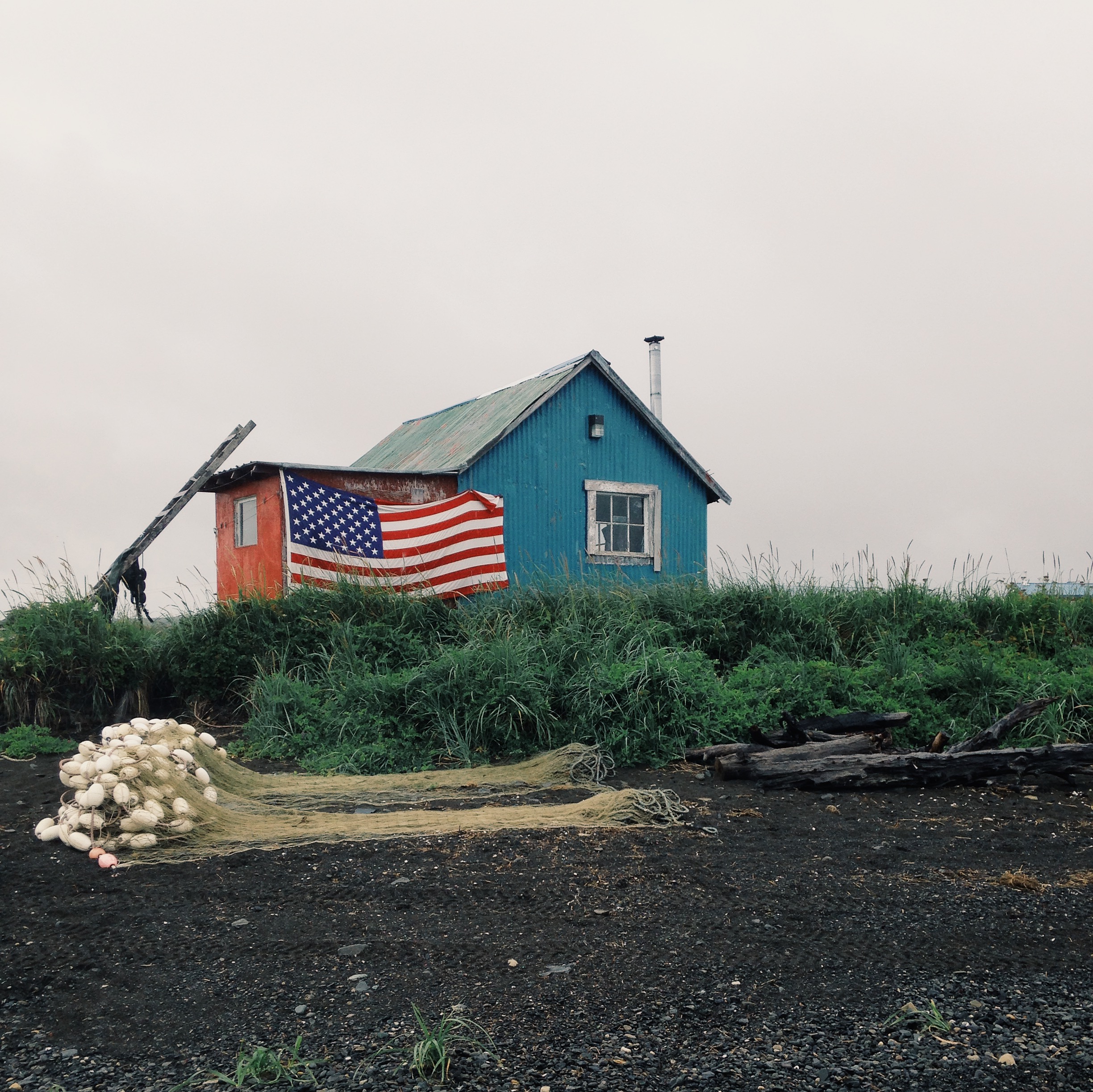
An American flag dons a fish camp cabin on Ekuk beach. (Photo by Matt Martin/KDLG)

Ani is the oldest child and has kind of taken over as head of the camp. Her father, John Bouker, is a pilot in Dillingham. He’s been fishing since the 70s but now that his children are older, for the most part, he lets them do all the work.

“My wife and I keep none of the money. It’s all for these kid’s college and their endeavors,” explained Bouker.

He flew over from Dillingham earlier in the day to drop off some supplies and fix the fridge. He says fishing on Ekuk is unique for Bristol Bay. With satellite TV and nightly steam baths, he says the fishing here is like a vacation, not really work.

“Out here you throw your net out like you see out front, we’re not sitting out in a boat beating around out there,” said Bouker. “Look at those boats beating around out there. That look like any fun? No, I did that when I was a kid, that’s no fun. Those guys ain’t having no fun.”

Ani leaves the chicken in the oven to cook. The tide is on the way out and it’s time to pull the nets. Heavy wind and rains greet this fishing family as they leave their cabins to retrieve their nets from the bay.

While most fishing in Bristol Bay involves around pulling a net over the stern or bow of a boat … Things are done differently here on Ekuk, no boats needed on this beach. A highway of trucks and four-wheelers move up and down the beach. Unlike set net sites on other beaches in Bristol Bay, the fisherman in Ekuk use pickup trucks and a pulley system to drag their nets up out of the water.

“Nikki, help Johna when it’s down here,” said Ani, directing the work from her truck. “She needs help. Somebody, one person.”
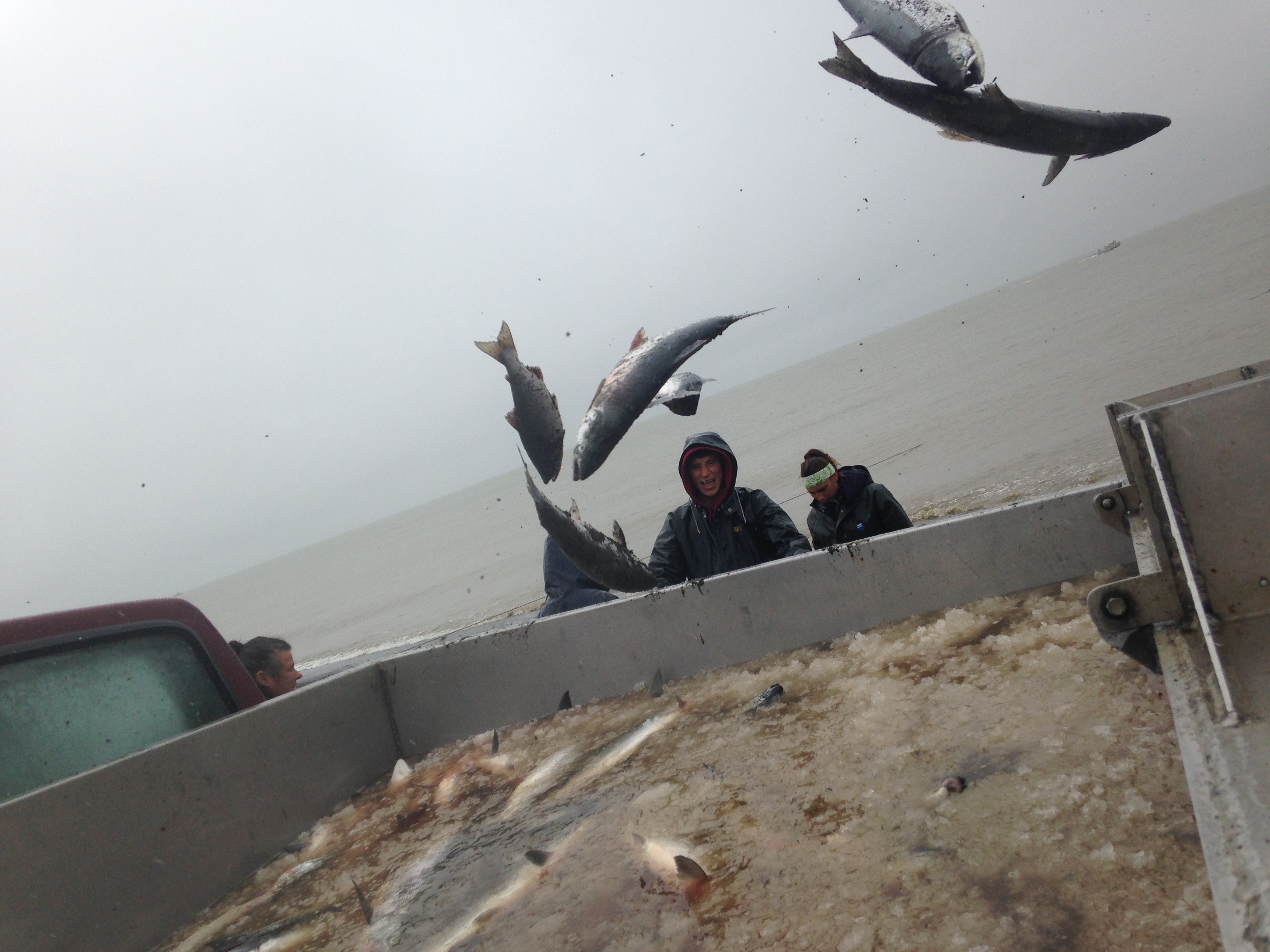
Fish picked out of the net find their way to the ice slush in the back of the truck. The crew then delivers the catch to the cannery down the beach. (Photo by Matt Martin/KDLG)
Fish picked out of the net find their way to the ice slush in the back of the truck. The crew then delivers the catch to the cannery down the beach.
(Photo by Matt Martin/KDLG)

Once the net is attached to the winch on the front of the truck it begins to back up and the net slowly slides out of the water. The beds of the trucks have to all be modified to hold a slush of sea water and ice. Their catch goes into that icy brine, and they drive it up to the cannery about a mile down the beach.

Like a lot of fisherman, Ani thought the season was going to be a dud but the late push changed that. She says this time last year they had already packed up all their gear.

“Yeah, we thought we weren’t going to get any fish and here we’re on more fish then we got last season so pretty happy about that,” said Ani.

With fishing out of the way, it’s time to eat that chicken.

“Oh yeah!” exclaimed Ani’s other sister, Nia Bouker, at the sight of the chicken.

“We don’t know if we eat better or if it just tastes better because we work all day,” said Nia.

John Bouker believes having his children do this work is about more than just fish or money. He says the summer fishing work has taught his children discipline and how to plan for the future.

“People don’t think about looking into the future,” said Bouker. “No plan. No plan you might as well be a piece of drift wood drifting around out in the bay. You don’t have a clue we’re you’re going. You’re taken where the current and the wind are going to take you. So you got to have a plan for your children, you know.”

Ani White has a plan. She plans on being back at Ekuk beach each and every summer.

“As long as there is fish, as long as the cannery is open, as long as there is some to buy my fish, I am going to be down here,” said Ani. “So definitely a lifelong Ekuk resident.”

After dinner, the crew heads off to the steam baths before bed. The tide turns early in the morning and another day of fishing will begin.
City of Bethel considers a vote after ABC board rejects liquor license appeal

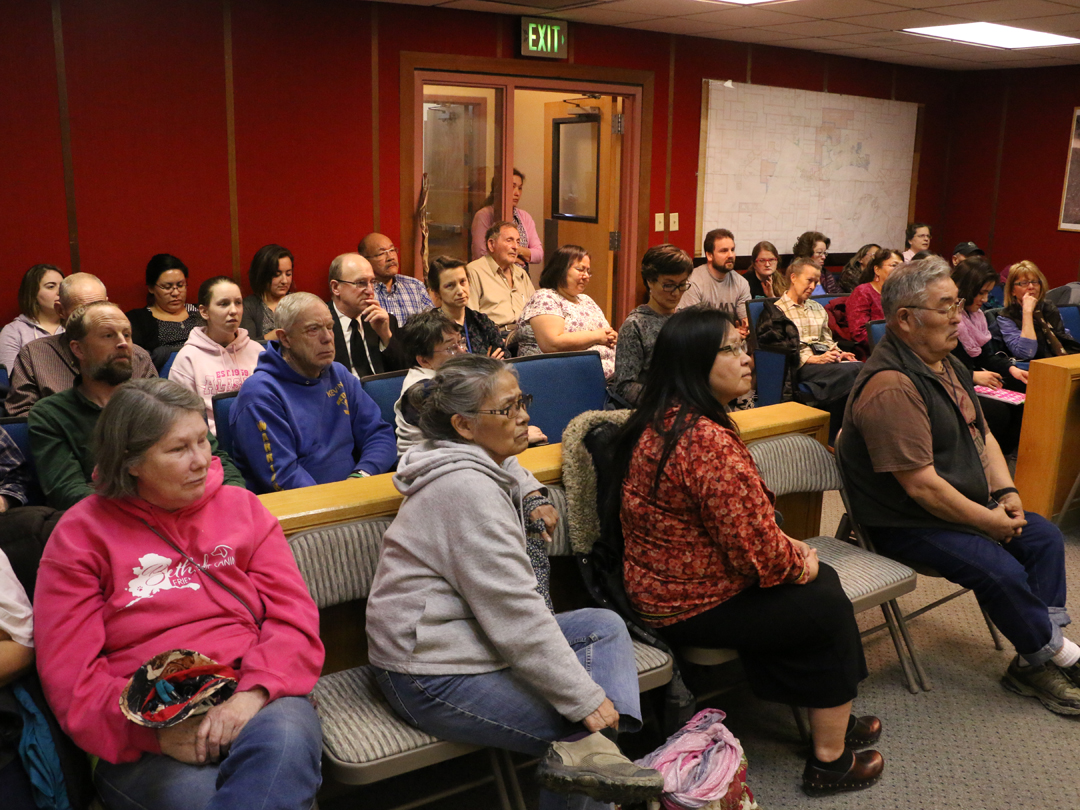
Earlier this year, a capacity crowd, largely opposed to local liquor sales, spoke for nearly four hours before the council. (Photo by Dean Swope / KYUK)

The Bethel City Council is appealing the state Alcoholic Beverage Control Board’s rejection of their protest of the Bethel Native Corporation’s package liquor store application. The council met in executive session Thursday evening for three and a half hours.

The ABC board July 1 called the city’s protest of the proposed Bethel Spirits license “arbitrary, capricious and unreasonable,” sparking outrage from the council. The board is required to honor protest unless it meets those criteria. Mayor Rick Robb says he’s personally in favor of local sales.

“But I do not think the protest was arbitrary, capricious and unreasonable. I think the protest was valid, based on community standards, debate, process, public hearings, past votes, planning on future votes. All of those things were taken into consideration. The protest was very well thought out,” said Robb.

The board has not decided on the status of the license and plans a public hearing in Bethel after the October election in which citizens will again advise the council on whether they want to see a liquor license of some variety. And in that same election, it’s possible that voters could choose to go back to local option with a city-run store.

In the council’s Tuesday meeting, they could introduce a move to hold a binding vote in October on the possibility of opening city-run liquor store through local option. Councilman Chuck Herman is sponsoring the action and cited local control.

“Especially now with this uncertainty over what we can do as a community, I think that is what at this moment forced my hand. I don’t believe we have the power any more. It doesn’t seem like the ABC board is going to uphold our ability to control our own community. I think the only way we can get that power back is by going toward this local option with the ability to have a city-run liquor store,” said Herman.

Before it goes to voters, the measure must make it through council. The city did away with local option in 2009. Citizens in a 2010 advisory vote rejected several types of liquor licenses and the city successfully protested several licenses. Citizens again rejected going back into local option in May of that year.

For now, October is shaping up to be a busy month and the timing of the city’s appeal is uncertain. The board hasn’t formally issued their finding to the city, which they need before proceeding. Leif Albertson is Bethel’s Vice Mayor.

“The stage we’re at right now is we directed counsel to appeal the protest, and they’re going to put together what they feel is a good appeal. That’s going to involve legal research,” said Albertson.

Councilman Zach Fansler says he wants to get the conversation rolling in advance of the fall vote.

“The last thing we want is people to be making these decisions thinking they’re going to get something they’re not going to get out of it. I think there (are) a lot of half-truths, or 75 percent of the facts, but not the whole story and you think you might be able to do this or that. I think it’s incredibly important and I think it’s going to take up a lot of everyone’s time to make sure everyone is as informed as possible and knows exactly what they’re choosing when they’re voting,” said Fansler.

That vote is Oct. 6. Separately, 17 months after the city launched an expensive third-party investigation into contracts, purchasing and personnel issues, there’s still more to discuss. Michael Gatti, a former city attorney and the man who led the third-party 2014 city investigation was at the meeting. Mayor Robb gave a brief update following executive session.

“The council received an update from our legal team about the investigation, considered litigation and other options. We will continue to look at ways to improve operations of the city. The city will address some of these issues in upcoming public meetings,” said Robb.

Another executive session item concerned potential litigation regarding real estate taxes. The city’s next meeting is Tuesday night.

(Un)change.org petitioner unsure how to move forward

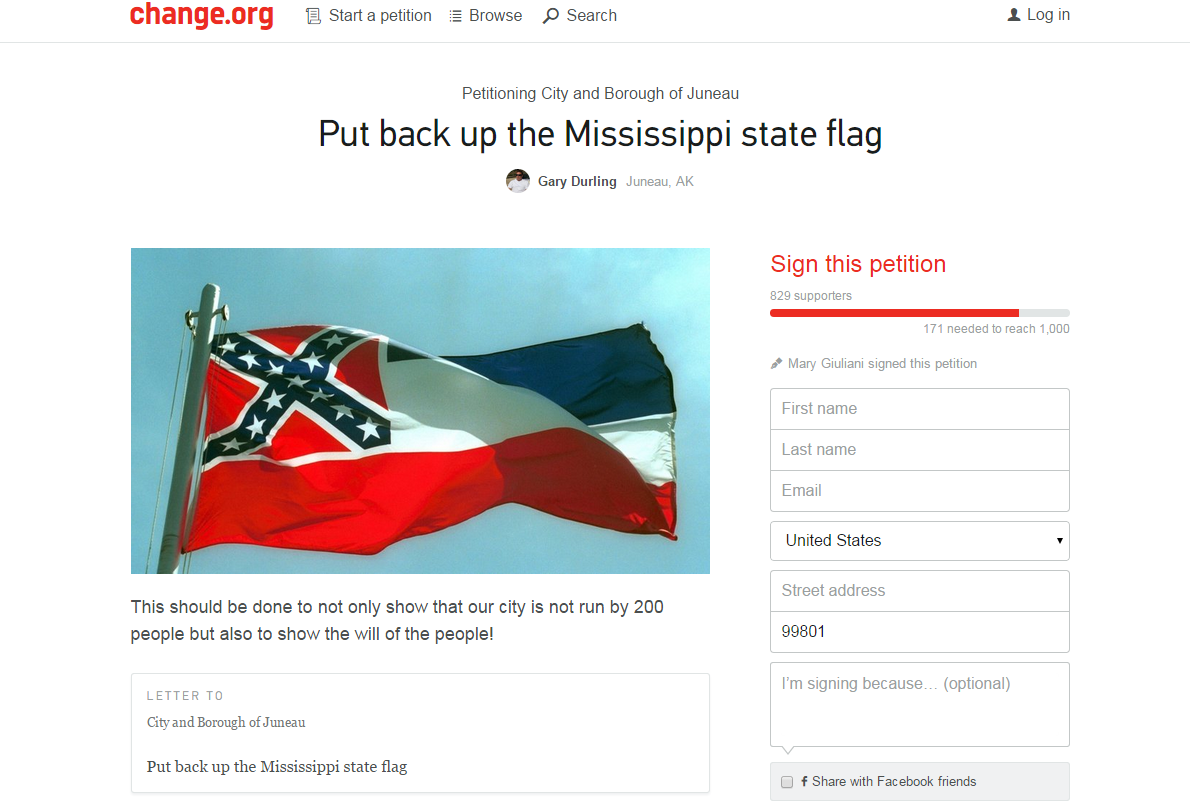
Screenshot of the online petition to put the Mississippi flag back up in downtown Juneau.

More than 800 people have signed a petition created Tuesday to put the Mississippi flag back up in downtown Juneau, just days after it was removed over its Confederate imagery.

The new, unpunctuated, seven-word petition on change.org says, “Put back up the Mississippi state flag.”

It’s addressed to the City and Borough of Juneau, which doesn’t control the all-flags display on Egan Drive and hasn’t officially weighed in on the controversy.

“The city employees don’t put those flags up, there are no city vehicles, they’re not city poles, it’s not even a city right of way,” Juneau Assemblyman Jesse Kiehl said. “So the Friends of the Flags group has not gotten any instructions, directions or push from the Assembly that I’m aware of,” Kiehl said.

Community member Gary Durling started the petition after about 200 people last week successfully petitioned to replace Mississippi’s official state flag with its first official flag, the Magnolia flag.

Durling doesn’t think that group should make the decision for all of Juneau.

“I feel that a lot of groups in this town try to push their ideas on others in this town, and it divides us,” he said.

Durling acknowledges the different sides of the issue, but says Mississippi’s official flag should fly downtown.

“All of a sudden it becomes an issue, and if you like the flag you’re racist or promoting slavery,” Durling said.

For Durling, who grew up in Juneau, the flag controversy is a part of a city that’s changing. He says it worries him a little. Now that his petition has garnered so much attention, Durling is unsure what he will do moving forward.

Juneau college student Amos Kissel is a supporter. While he acknowledges the flag’s association with racism, he says it’s also a part of people’s heritage.

“I understand people are offended by the Confederate flag, and I respect that and value their opinion. But I know there’s also people that are good and value the Confederate flag as a part of their history and it’s not just about racism and slavery,” Kissel said.

Assemblyman Kiehl says he recently spot-checked the supporters of the new petition and says the majority of them are locals.

“Eighty or 90 percent of the folks live in Juneau, and probably 90 percent of those are registered voters. So it’s clearly something folks in Juneau are starting to think about,” Kiehl said.

The June 17 racially motivated massacre of church parishioners in Charleston, South Carolina, sparked a national conversation about the Confederate and Mississippi flags — and in the Magnolia state itself.

So far, five Mississippi cities have removed the flag from their municipal properties. Clarksdale is one of them.

Clarksdale Mayor Bill Luckett says he wishes he removed the state flag sooner. For him, the Charleston massacre was the tipping point.

“They call it heritage, I call it history. It’s not most peoples’ history, at least not around Clarksdale, Mississippi,” Luckett said.

He says the flag is a reminder of a darker time in America.

“That is a reminder to many people of oppression, suppression, slavery, divisiveness, it just carries a lot of negative connotations with it,” Luckett said.

Luckett hopes that the increased attention to the issue will encourage the Mississippi lawmakers to change the flag.

“Sometimes you need to stand out from the crowd and be different if it’s for the right reason, but we stand out and we’re different from most states for the wrong reason,” he said.

The Columbus city council recently voted unanimously to remove the flag, becoming the fifth city in Mississippi to do so. Councilman Charlie Box voted on the issue.

“I just felt like anything that divisive—it’s a piece of cloth—and to some it means so much, but I  just feel like it’s really time to move forward,” Box said.

Box says his constituents are split down the middle.

If the change.org petition succeeds at reversing the Friends of the Flags decision, supporters in Juneau will need to pay for a replacement flag, installation equipment and a permit from the Department of Transportation.

The original Mississippi flag was donated to the Juneau-Douglas City Museum. Once collections are logged, the museum usually doesn’t give them back.

Friends of the Flag organizer Judy Ripley, who allowed the original flag replacement, did so because of the hateful associations with the flag. Although she would not comment on the new petition, she said she was not surprised.

Fish waste ‘burp’ stinks up downtown Ketchikan

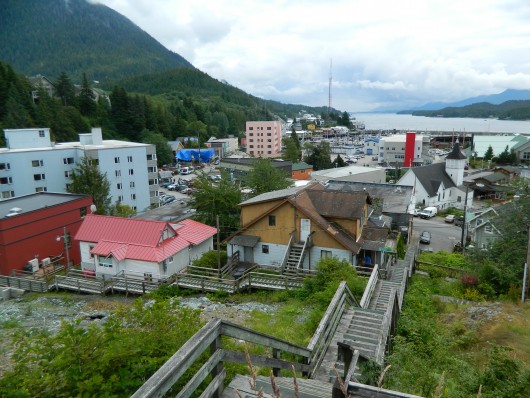
A view of Ketchikan from the top of the Edmonds Street stairs. (KRBD file photo)

There was a big stink in Ketchikan Wednesday. It was difficult to miss, and some residents wondered where it came from.

Steve Corporon is the City of Ketchikan Port and Harbors director, and is the acting Public Works director, too. He said the Harbormaster office got a call early Wednesday morning from someone worried that a visiting cruise ship might have dumped sewage into the Tongass Narrows.

“I just happened to be down on Berth 2, took quick walk along the Berth 2 and Berth 3 ship and didn’t see any evidence of any discharges or odor or anything, so we turned it over to Public Works,” he said. “The wastewater supervisor did a quick drive around downtown, (and he) did smell kind of a stench. (He) followed his nose over toward the fish processors in between Thomas Basin and the Coast Guard base.”

Turns out, it was a burp of sorts from the ocean floor. Corporon explains that discharge from fish processing plants builds up over time.

“As the fish waste decomposes, it gives off sulfur dioxide,” he said. “At some point, the layer can rupture or burst or bubble and you’ll get some odor coming up. It appears that’s exactly what happened.”

Corporon says it happens pretty much every year, although the first burp of the season usually surprises residents.

Corporon notes that discharge from fish processing plants is regulated through the federal Environmental Protection Agency and the Alaska Department of Environmental Conservation.

After destructive fire, Bethel alcohol treatment center under construction again

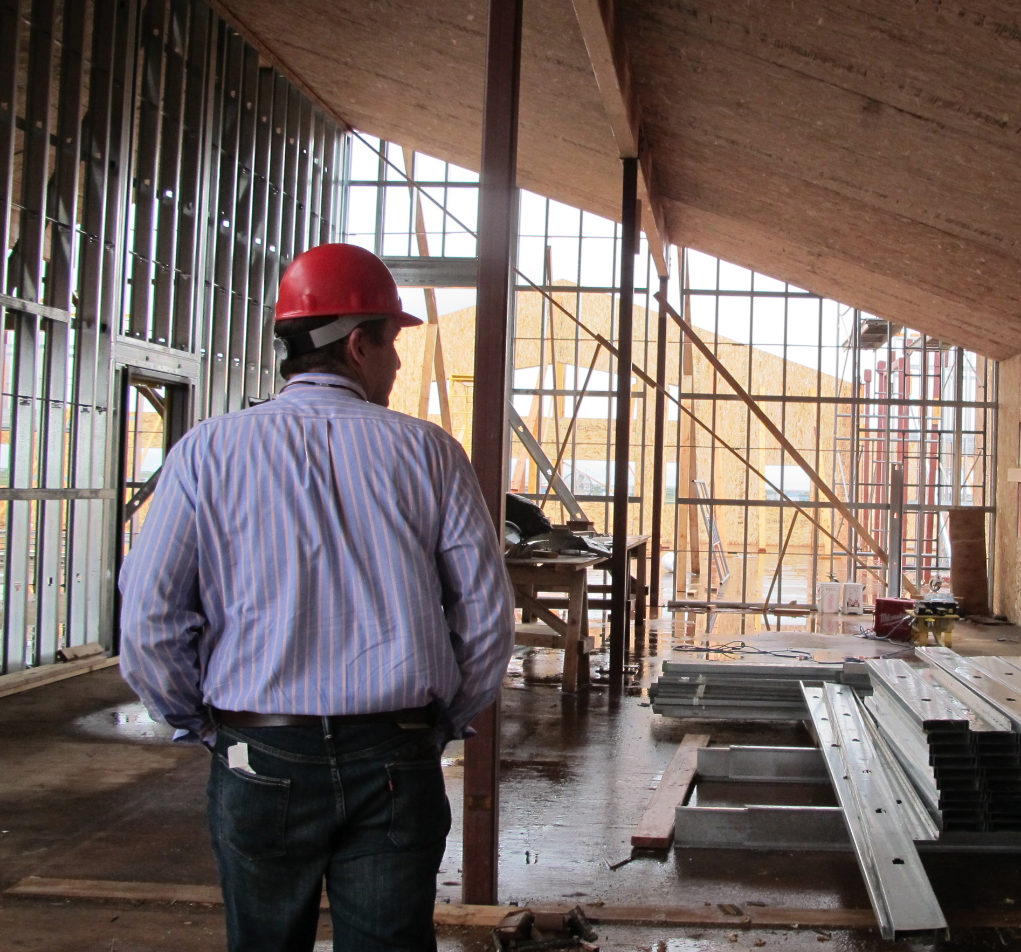
Kris Manke walks through the new Phillips Ayagnirvik Treatment Center. (Photo by Ben Matheson, KYUK)

The skeleton of the new Phillips Ayagnirvik Treatment Center, PATC, is coming up quickly and aims to be closed in for a winter of work. Kris Manke is Director of Construction for the Yukon Kuskokwim Health Corporation, which is leading up the project. He says about 15 crew members are working now, including close to 70 percent local Alaska Native hires.

“We do all of our own electrical, mechanical, framing, siding, we self-perform all of that,” said Manke.

The $12 million, 16,000 square foot facility is under construction for a second time following a fire in October that destroyed it when it was 90 percent framed in. YKHC doesn’t want to take chances the second time. A chain link fence surrounds the site and a 24-hour security team stands watch. Big floodlights shine at the building at night. Manke says having to start from scratch is hard on his team.

“It was hard for me because they all are my guys, but for the guys who were actually building it, we should ask them the question. It’s gotta be really hard, I mean guys were crying when they saw their work burning up that night,” said Manke.

YKHC is offering a $20,000 reward for information that leads to the arrest or conviction of those responsible for the fire that destroyed the alcohol treatment center. YKHC says it was a criminal act that started the blaze last October during construction.

An investigation from the state Fire Marshal’s office said the cause of the fire was ‘undetermined’. Though investigators ruled out all possible mechanical and electrical causes, their summary does not explicitly rule out arson.

The goal is to turn over the new facility in October 2016, but there’s a lot of work before that happens.

“Our winter goal is to be dried in October, middle of October, that’s always our winter goal. We usually get really close, I think we’re going to do it this year, that’s the plan,” said Manke.

This winter they will rough in the electric and mechanical systems. Drywall starts around first of the year, while the finishing work happens in springtime.

A Compromise On Displaying The Confederate Flag

Protesters shout at Ku Klux Klan members at a Klan demonstration at the Statehouse on Saturday in Columbia, S.C. John Moore/AP
Protesters shout at Ku Klux Klan members at a Klan demonstration at the Statehouse on Saturday in Columbia, S.C.
John Moore/AP

Last week, I wrestled with an idea that admittedly made me very uncomfortable: the possibility that for many defenders of racially loaded symbols like the Confederate battle flag and the Washington Redskins’ brand, their affinity for these icons may be more understandable and — crucially — more relatable than many of us might like to admit.

“There are few symbols so inelastic and so static that they cannot be stretched to accommodate our own complicated, personal histories in ways that feel genuine and worth protecting,” I wrote. “That’s true even for loaded symbols like the Washington team’s logo, and yeah, even the Confederate flag.”

More than a few readers told me they were wholly unpersuaded — until they got to one specific anecdote in the story. It was about how a group of mostly black lawmakers in New Orleans quietly declined to change the name of New Orleans’ first high school for black students, even though it bears the name of a notorious slave owner. It appears the school’s name was spared because for many black folks in New Orleans who have passed through its doors in the generations since it was founded, changing the name would mean taking away some part of their cherished teenage memories. As I wrote, “It just happens that McDonogh 35 was named for a powerful racist, and so the solution seems clear: Pick something else, and move on.

“But for a lot of grads, it just wouldn’t be the same, and that mattered beyond what seems practical. We all undertake the awkward mental gymnastics of making space for ugly cultural objects when they’re familiar, when our personal memories are wrapped up in them.”

Of course, acknowledging that those feelings are real doesn’t mean that some symbols shouldn’t ultimately be changed. It just means that those of us calling for their removal might do better to understand that for many folks, the “heritage” of something like the rebel flag is less about Stonewall Jackson and copping pleas for the Lost Cause and more about driving around in their first truck with Lynyrd Skynyrd in the 8-track deck. That doesn’t mean the nostalgia-havers don’t have to change some behaviors today. But it could help us have these conversations.

We talk a lot here at Code Switch about how, depending on where you are and whom you’re talking to, the same objects and words can land very differently. That seems especially important to remember when debating whether the flag or the Redskins logo are racist or whether people can love those things in ways that aren’t racist. The reality, though, is that both of these things are true at the same time.

Of course, that leaves the question: What do we do about it?

The Washington Post‘s Alyssa Rosenberg riffed on the ideas in our post at her blog on Monday. “Even though we might enjoy an old movie, feel pride in an old high school mascot or get a tinge of rebellious pleasure from an old television show,” she wrote, “we should have the good sense to recognize that our most private reactions to powerful images aren’t necessarily available to anyone else.”

And when it comes to navigating these waters, Rosenberg offers a really compelling compromise:

“So how about [an] exchange of courtesies? One side grants that the other might have private feelings about the flag unrelated to a wish to restore the Confederacy or to revive and expand white supremacy. The other agrees to commemorate those feelings in private, or to confine its displays of historical emblems to historical contexts, including museums and perhaps Confederate cemeteries. A compromise such as this one wouldn’t do all the work required to bring us to a shared understanding of American history. But it might help set the conditions to inch the conversation forward.”

What do you make of Rosenberg’s proposal? We’d love to hear from you in the comments.

Copyright 2015 NPR. To see more, visit http://www.npr.org/.
Read Original Article – Published JULY 22, 201511:44 AM ET
Site notifications
Update notification options
Subscribe to notifications