Community

Barefoot pastor raising money to buy shoes for people in developing countries

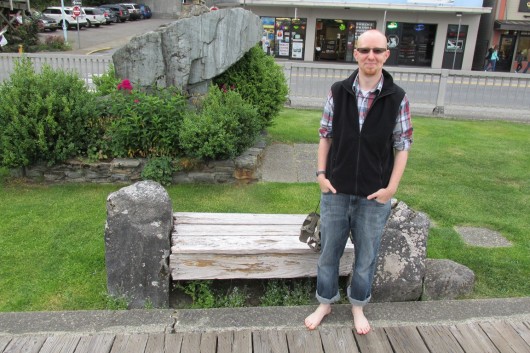
Peter Epler, a pastor at Ketchikan Church of the Nazarene, is going barefoot for a month to raise awareness of the need for shoes in third-world countries. (Photo by Leila Kheiry/KRBD)

A Ketchikan minister is going barefoot for a month, in hopes of raising awareness of the need for shoes among the world’s poor.

While only part way through his monthlong project, Peter Epler has gotten a feel – so to speak – for what many people deal with all the time.

Epler’s bare feet are a little weird in downtown Ketchikan. Most people here and in developed countries around the world don’t think twice about wearing shoes, beyond which pair matches which outfit.

Some places, though, there’s a shortage of affordable shoes, which can be a health and safety hazard.

“(People) walk through dirt roads, sewer systems, manure, sharp rocks,” he said. “Children get cuts on their feet and infections because of what they walk through, so they can lose their feet or die from the infection. So, shoes tend to save lives in third-world countries.”

Epler is a pastor at Ketchikan’s Church of the Nazarene. That church and other Nazarene churches in Alaska are working together to raise money for an international charity that provides special shoes for children in developing countries.

The group is called Because International, and the shoes they provide are made to last five years.

“They grow five sizes in five years, so roughly kindergarten through fifth grade,” he said. “And they’re working on a second pair that will take them up to ninth grade.”

And will they actually last five years?

“Yeah, they’ll last five years,” he said. “The rubber on the bottom is made from the rubber you make street tires from. And then they used high-quality leather and industrial snaps. So, these things are very sturdy … This is the final product they put out. They’ve been working on it for years.”

Many churches involved in the campaign are raising money through their congregations. Epler is taking it a little further in hopes of involving more community members. So, to raise awareness, he’s pledged to go without shoes for a month.

About a week into it, Epler has had some new-to-him tactile experiences.

“I’ve got a blog that I’m kind of keeping track of my own experiences: Things I’ve stepped in that you take for granted with shoes,” he said. “I’ve stepped in unidentifiable wet substances on a hot, sunny day, I’ve stepped in dog poop. I’ve stepped in gum. That was not my favorite. There was a sticky, warm quality to it that was distasteful.”

The point of going barefoot is to attract attention, and hopefully engage people in conversation. Then Epler can talk about the campaign and hand out cards with information about how to donate.

Sometimes it works. Sometimes, not so much.

“Most people give me the once-over stare, like ‘Who’s the crazy guy without the shoes?’” he said.

That was the case as Epler and I walked through downtown Ketchikan. He received a lot of furtive glances.

“Yeah, the glances go from head to toe and they kind of linger, and they look away,” he said. “I tend to wait until someone leans a little in for the conversation before I’m like, ‘Here’s the card and information,’ because I don’t want to creep people out. It’s enough that I’m the barefoot guy.”

Epler said the campaign is, indeed, raising money, although it’s difficult to say how much in total. People in his church have given about $600, but the cards he’s handing out direct people to not only the church’s webpage, but also to Because International’s main site. He said that’s a way to reach more people.

“Some folks might not be religious and might not feel comfortable donating through a church and that’s fine,” he said. “They can still go to theshoesthatgrow.org and donate. “

Epler isn’t the only one going barefoot for the cause. He said a few other people in his church, adults and children are spreading the word, too.

“I think children are the key to this,” he said. “They can relate very much to other children and they have this unashamed ability to buy into an idea and advertise it quite well, because they’re bolder. They can do a lot of good. Children can make a lot of difference. And because this project is for children, I think getting children involved is the best way to go.”

With several weeks left in the campaign, Epler predicts his feet will become sturdier. And, so far, it’s not been a bad experience.

“I’m feeling more connected to the world around me, which I didn’t expect: sticky things, smooth things, soft things, temperature changes, from going inside to outside. These are things I was completely unaware of before,” he said.

So, Epler’s barefoot campaign is raising a different kind of awareness for himself, along with helping the public learn more about a global need.
K-9 in training to combat Juneau’s heroin problem

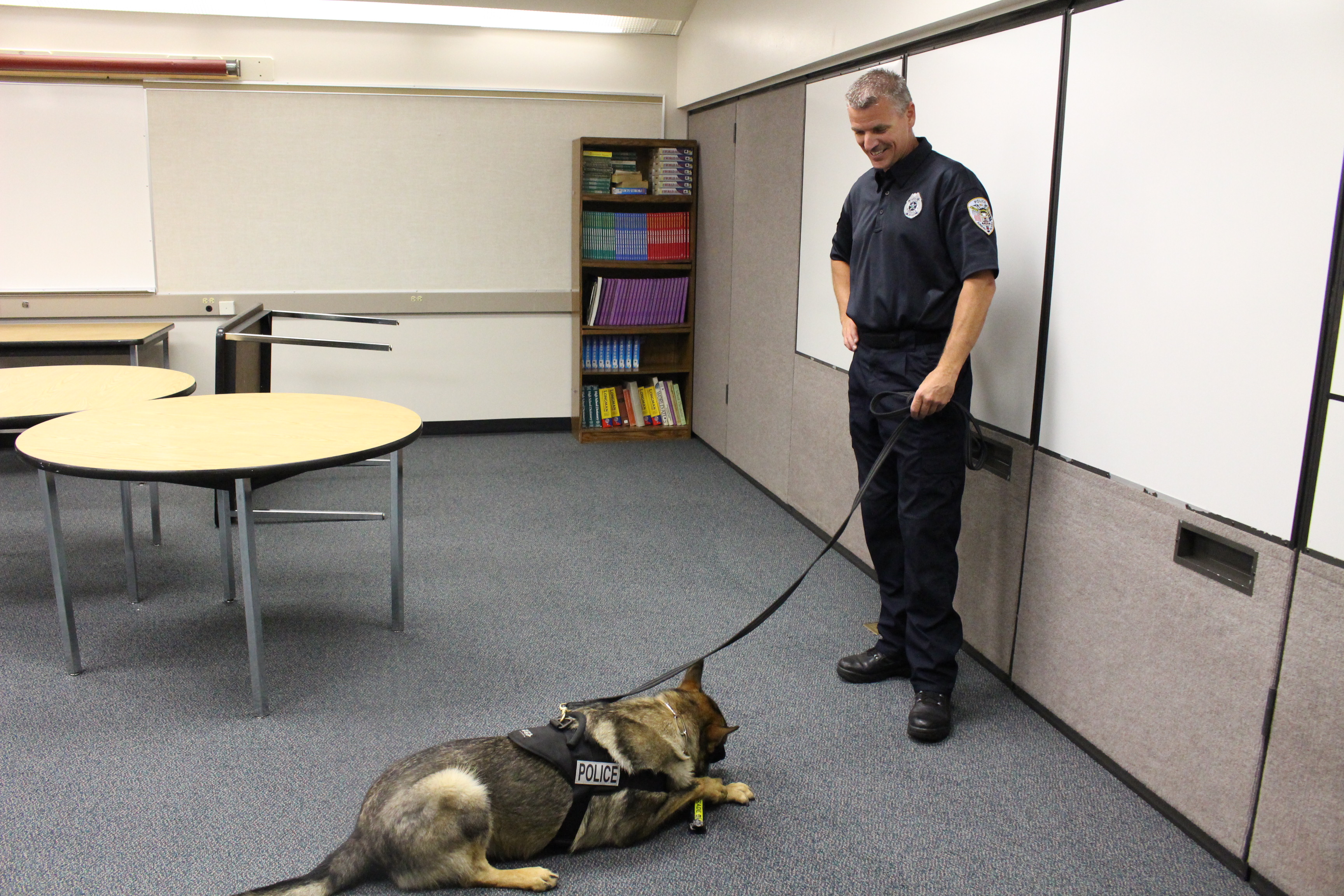
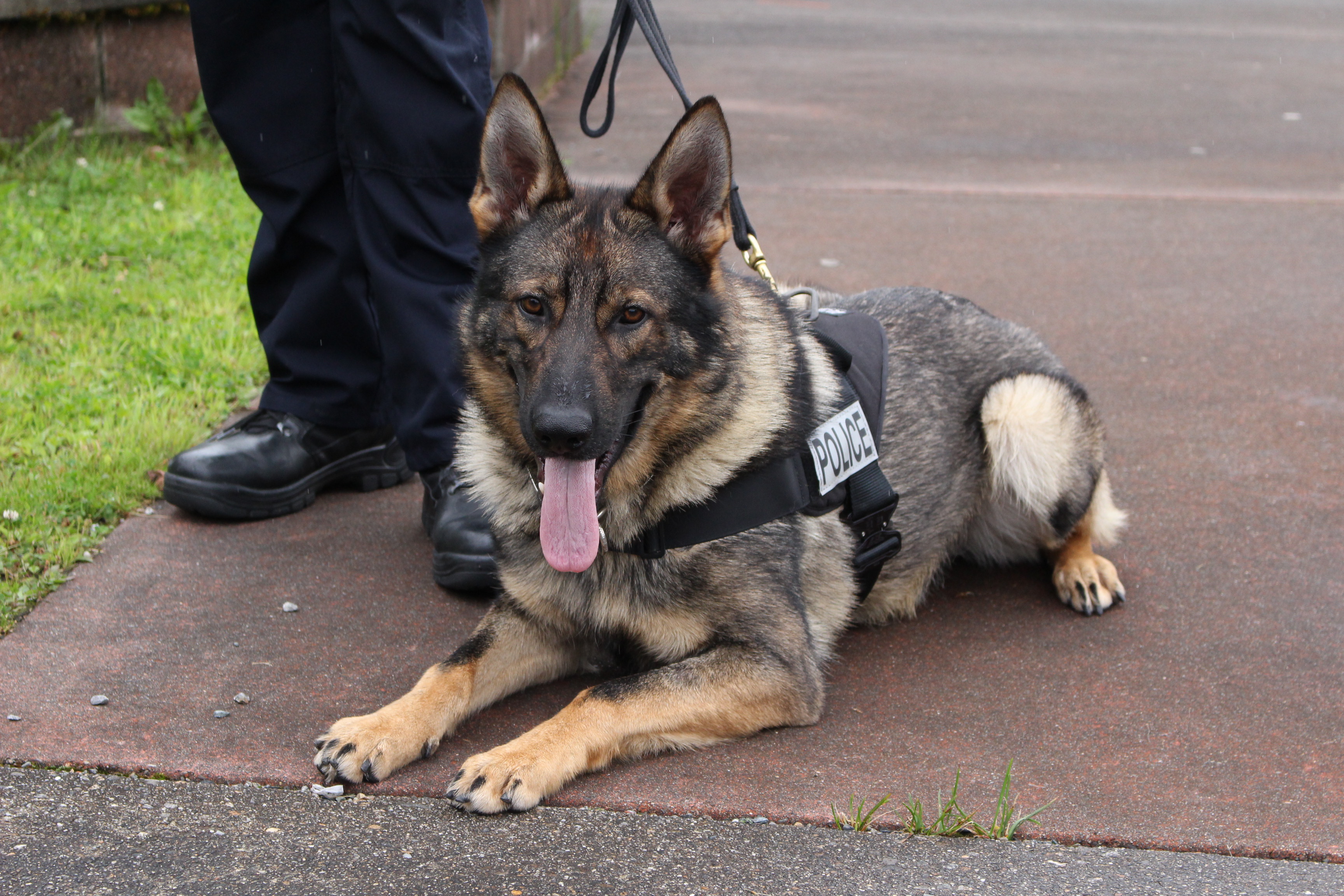
Buddy has been with the Juneau Police Department for about three weeks. (Photo by Elizabeth Jenkins/KTOO)

The Juneau Police Department’s newest recruit is a young gun, just 18 months old and 63 pounds. He’s a German shepherd named Buddy with black and sandy brown fur. It’s been about 25 years since the department had a K-9 on staff.

His partner, Officer Mike Wise, is training Buddy at Dzanktik’i Heeni Middle School to sniff out drugs on campus.

Inside a classroom, Wise snaps on blue plastic gloves while Buddy waits in the car.

“So, basically right now. I have some narcotics on me I’m going to be planting and basically getting ready to hide,” he says.

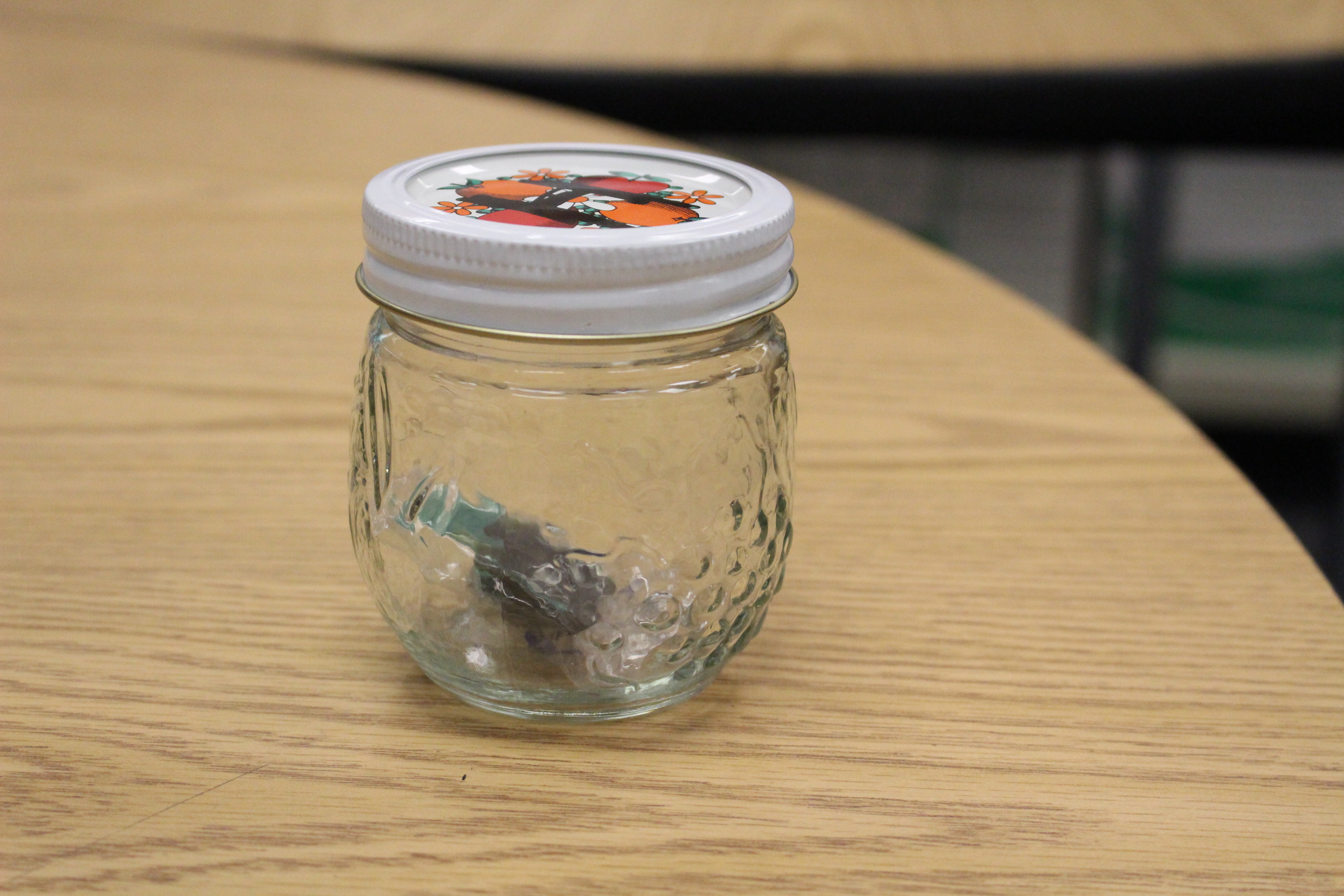
Wise unscrews the lid off a mason jar and pulls out 4 grams of black, tacky looking heroin.

“We’re going to put it in the stash box and then we’re going to put it inside the filing cabinet.”

The police department received nearly $25,000 in grant money from the feds to bring the K-9 on staff. Buddy was Russian-born and snapped up by a recruiting agency that finds dogs with a “high drive” for law enforcement.

Officer Wise had to fly down to Alabama to pick up Buddy, then named Baddie.  He remembers walking in a kennel with 30 dogs barking. The handler pointed to a German shepherd and handed him a collar.

“And I didn’t know who this dog was, I’d never met him before, and he’s never seen me,” he says. “And for a stranger just to walk into his kennel was kind of terrifying.”

But Buddy just looked at him and wagged his tail.

“There was a huge relief to know that this dog is not going to try to eat me. The first day Buddy walked off and he just wanted to pull me everywhere,” he says.

Slowly, Wise started to bond with his new partner; he brushed Buddy’s fur, played with him and did some additional training before bringing him back home to his wife and two kids.

“And from then on it’s been inseparable. We just stay together.”

Buddy is trained to smell heroin, meth and cocaine. But not marijuana since that’s legal now in Alaska. His nose is so good that he can detect each note in the narcotics. For example, you might walk into a room and smell a delicious pizza.

“He smells every little ingredient that’s involved in making that pizza. That’s how he does it with the meth, cocaine or heroin and knows that’s something,” he says.

Officer Wise says he stores the heroin used to train Buddy in his wife's old mason jars. (Photo by Elizabeth Jenkins/KTOO)
Officer Wise says he stores the heroin used to train Buddy in his wife’s old mason jars. (Photo by Elizabeth Jenkins/KTOO)

The police department is going to need the help. Last year, they confiscated over $4.6 million of heroin in Juneau. There’s a big incentive for smugglers. A dose here is worth five times more than down south.

Lt.  Kris Sell oversees investigations. She says Heroin gets to Juneau in a number of ways.

“The people who are importing heroin move regularly between the U.S. mail, other mail delivery services and bring it in on the airlines or on the ferry,” she says.

Last year’s seizures were made up of a couple of big busts and several small ones. A drug conspiracy involving stolen Costco jewelry yielded 10,000 street doses of heroin.

“In Juneau, we’ve had such a heroin problem, I think you’d be hard pressed to find an adult who doesn’t know a  family who’s been impacted in some way by the addiction.”

Sell says there hasn’t been a sudden spike in heroin, it’s more like a steady march. And finding it once it’s here can be difficult.

“People have done things like taped drugs to the underside of the baby’s dresser in the baby’s room,  Buddy will help us ferret out things like that. Things we’re worried we haven’t been finding.”

Buddy's "paycheck" is a piece of hose or PVC pipe. (Photo by Elizabeth Jenkins/KTOO)
Officer Mike Wise watches Buddy play with his “paycheck.” A piece of hose, sometimes PVC pipe. (Photo by Elizabeth Jenkins/KTOO)

Back inside the classroom, Wise holds tight to Buddy’s leash which is attached to a police harness. He walks him around but, really, Buddy is leading him to the place where we stashed the heroin.

Right when he sniffs the filing cabinet, he lays down–indicating this is the spot.

A black piece of rubber hose is discreetly thrown over Buddy’s head.

It’s his paycheck for a job well done. Wise will play tug of war with it and let Buddy win. Then he’ll hurl the toy back out of sight. Buddy is restrained from going after it.

“So, he’s always assuming his toy’s in the field out there. So when we’re working. He’s looking for this toy again. That’s why he’s doing what he’s doing for that thing right there,” he says. “So, we’re going to hide it from him. It kind of makes him mad a little bit, but we gotta keep working. ”

Wise hopes with Buddy’s help, incoming drugs can be kept off the street. They’ll start patrolling the airport, commercial barges and ferry system soon.

Man with multiple arrest warrants runs from Juneau Police

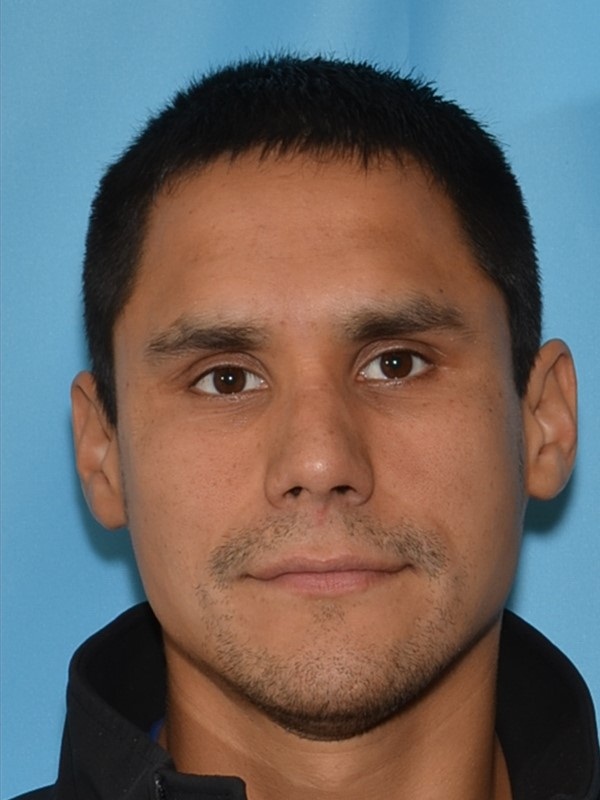
The Juneau Police Department is looking for 32-year-old Derick Nathaniel Skultka, who has three warrants out for his arrest.

On Monday, an officer spotted Skultka’s vehicle going over the speed limit in Douglas. Lt. Kris Sell says an officer attempted a traffic stop, but was unable to detain Skultka.

Derick Nathaniel Skultka has three warrants out for his arrest. (Photo c/o Juneau Police Department)

“The subject drove into a residential neighborhood, he ditched the vehicle and ran between residences in a brushy area,” Sell said.

He disappeared near Nowell Avenue. Additional officers were called to the scene; however, Skultka wasn’t found.

Six hours later, he was involved in a car accident near McDonald’s and fled immediately. His passenger, the owner of the vehicle, complained of “pains” from the crash.

JPD believes Skultka may be hanging out near Switzer Village where the woman lives.

Skultka’s arrest warrants stem back to February when he failed to appear in court for charges of burglary and fourth degree assault.

JPD is asking anyone with information on Skultka’s whereabouts to call 586-0600.

Douglas Indian Association charters cruise to the Taku Glacier

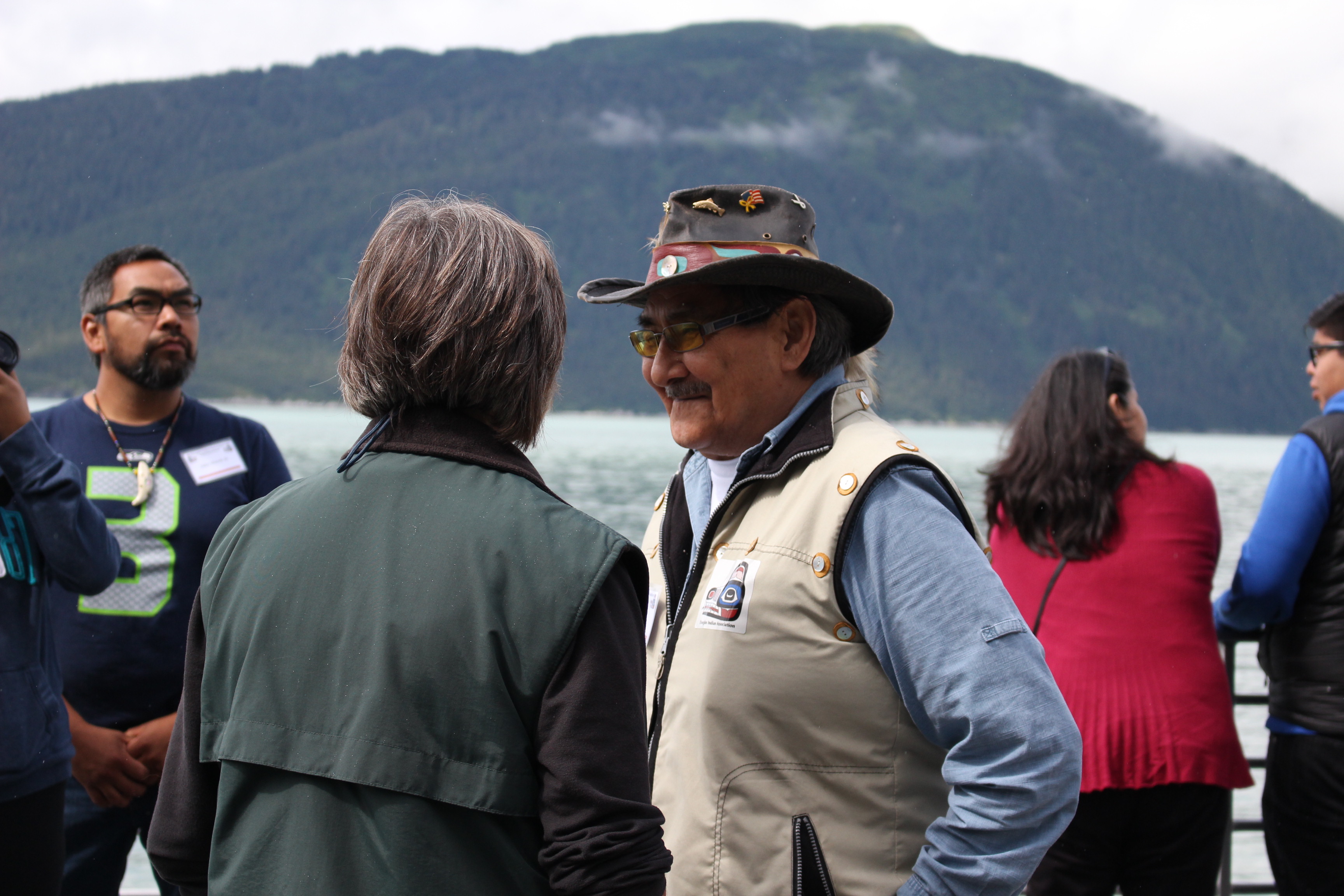
John Morris, a Douglas Indian Association Tribal Council Member, says people recognize him by his trademark hat. (Photo by Elizabeth Jenkins/KTOO)

On Sunday, the Douglas Indian Association invited tribal elders, elected officials and members of the press on a trip up to the Taku Glacier.

DIA members are Tlingit and originate from the T’aaḵu Kwáan and A’akw Kwáan clan — the original inhabitants of Douglas and Juneau.

The organization chartered an Allen Marine vessel to discuss transboundary mine issues and the culture of the T’aaku Kwáan. For some, the cruise was an opportunity to see their ancestors’ waters for the first time. Tillie Day is Tlingit of the T’aaku Kwáan

“We originate from Taku River and this is my first time seeing gillnetters and I worked in a cannery for how many years. I’ve never actually seen them do the gillnetting thing and this is pretty cool. There’s like 35 boats out here,” she said.

The cruise stopped at noon to observe the gillnet fleet put nets in the water to fish for sockeye.

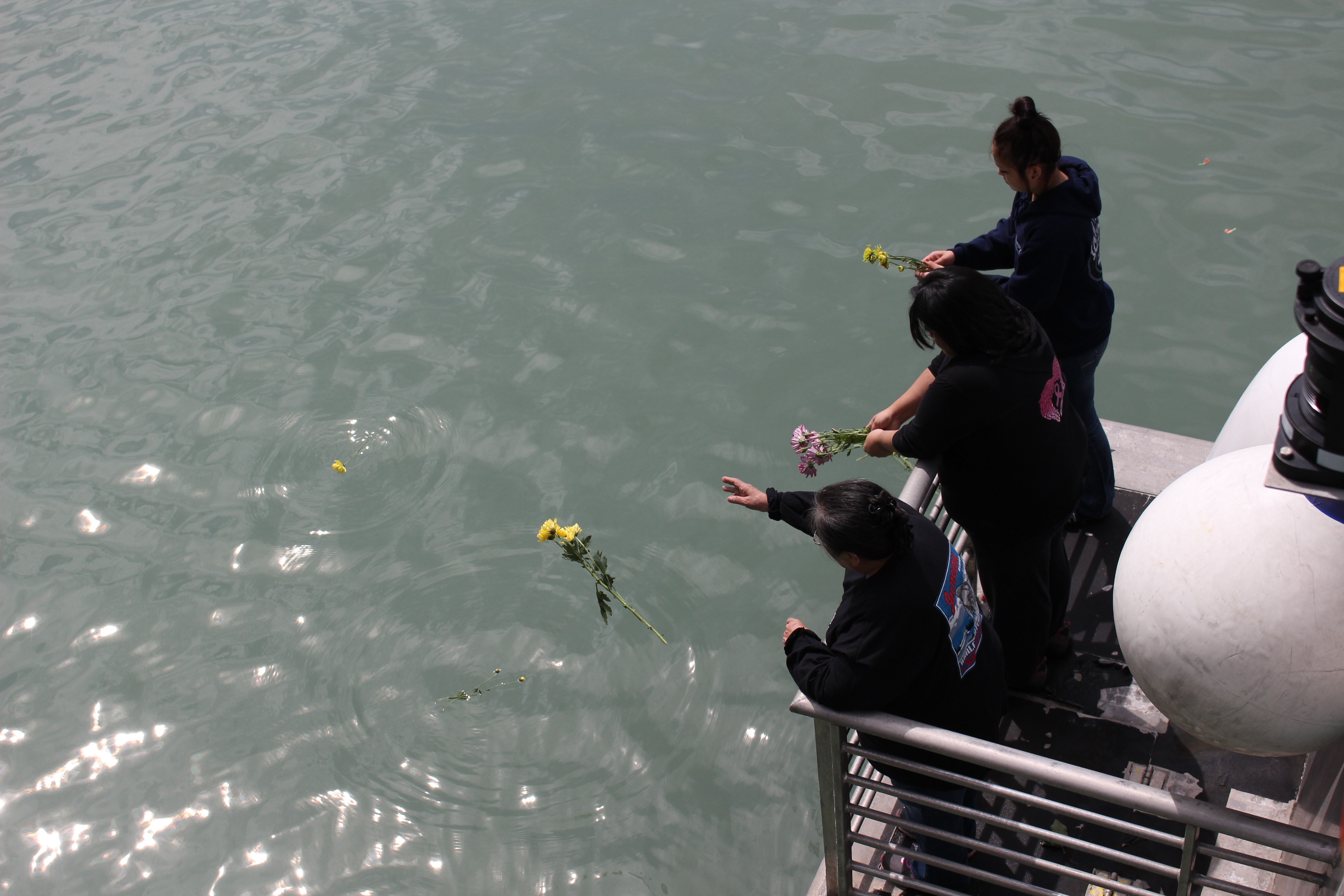
Family members aboard the Douglas Indian Association chartered cruise threw flowers into the water to honor deceased relatives. (Photo by Elizabeth Jenkins/KTOO)

Later, John Morris, a Douglas Indian Association Tribal Council member, spread his brother’s ashes at Taku Inlet near Davidson Point.  His brother died in the spring.

“And since then I’ve been in possession of his ashes. I went to council a couple of months ago and told them I thought this would be a good time to lay them on the river,” he said.

Other family members threw flowers in the water to honor the deceased.

Despite marriage equality ruling, LGBTQ Alaskans can still be discriminated against

A man waves a gay pride flag on the steps of the Supreme Court of the United States while arguments are heard on legalizing same-sex marriage. (Photo by Ted Eytan)

The State of Alaska has a commission whose sole purpose is to eliminate and prevent discrimination, but it can’t do anything when it comes to gender identity or sexual orientation.

Alaska is one of 28 states that allow workplace discrimination against these classes.

Rachel Pettijohn says she was discriminated against by two Juneau employers. The State of Alaska has no law protecting  (Photo by Lakeidra Chavis/KTOO)
Rachel Pettijohn says she was discriminated against by two Juneau employers. The State of Alaska has no law protecting discrimination based on sexual identity or gender orientation. (Photo by Lakeidra Chavis/KTOO)

Rachel Pettijohn believes she was discriminated against and humiliated at two tourism companies she’s worked at since moving to Juneau two years ago.

“They didn’t fire me, they just cut down my hours to where I wasn’t getting any hours,” she said.

Since she still works in the industry, Pettijohn declined to name them.

During her first job, a supervisor implied that she was a pedophile, according to Pettijohn.

Her boss was horrified after she made an innocent comment about a coworker’s toddler.

 “I said, ‘Hey, your little girl is really cute,” Pettijohn said. “’And she went, ‘You said that? I can’t believe you said that.’ She thought I was meaning it, in that way,” she said, “and it was just because I was gay. She wouldn’t think it if I was a straight person.”

But Pettijohn didn’t make a big deal about it.

“I think I was kind of embarrassed about it, to be honest,” she said.

Even if she could prove she was discriminated against because of her identity, she wasn’t protected by the law. Despite the U.S. Supreme Court legalizing same-sex marriage across the country, people who are lesbian, gay, bisexual, transgender or queer are not consistently protected under federal law from workplace discrimination.

Former Juneau Rep. Beth Kerttula, a Democrat, tried in 2011 and 2013 to outlaw this type of discrimination. Republican Rep. Cathy Muñoz is carrying the bill this time around.

The Alaska Human Rights Commission documents discrimination complaints each year in their annual report, but doesn’t include data on gender identity or sexual orientation discrimination.

“Very few people contact us because they’re concerned about discrimination based on lesbian, gay, transgender or queer issues because they know we don’t cover those,” according to Paula Haley, the commission’s director.

“So they don’t reach out to us, because they know we don’t have the ability to help them.”

In the past few years, Haley’s only seen a handful of cases. However, the U.S. Equal Opportunity Commission is beginning to accept some LGBTQ claims, according to Haley.

But this area of the law is complicated.

LGBTQ employees who work for the State of Alaska do have workplace protections, according to Department of Administration Commissioner Sheldon Fisher.

“If someone claimed they were not hired or fired due to reasons other than their ability to do the job, whatever those reasons are, that’s something we would work with,” Fisher said.

Some private sector employers may have their own policies.

Drew Phoenix is director of Identity, Inc., an Anchorage-based nonprofit that provides resources for the LGBTQ community. One of the services Identity provides is workplace cultural competency training, also referred to as sensitivity training.

“There’s no legal recourse, which is the really sad part. It’s like our hands are tied, so we can’t even report things at any point,” Phoenix said.

Requests for the training have doubled in the past year. Identity has administered more than 20 since January, according to Phoenix.

Rachel Pettijohn is now at her third company, where she says her employers are welcoming and respect her sexual orientation.


Clients say bullying is a problem at Anchorage homeless shelter

Clients of the Brother Francis Shelter in Anchorage are agitating for change. They are frustrated with the way they are being treated at the shelter and with some of the policies. Catholic Social Services, which runs the shelter, is trying to work with them to improve the situation.

Celia Harrison started staying at Brother Francis back in March, when she felt like she could no longer safely stay in her housing in Soldotna. Since then, the former nurse has been writing about her experiences extensively on Facebook. Her posts include positive things, like small kindnesses, and detailed stories of staff being loud in the middle of the night or her belongings being soaked by flooding in the shower room.

“For a very long period of time, I would write at least one incident report every day about things that went on,” she said. “Things that the staff were doing and other problems.”

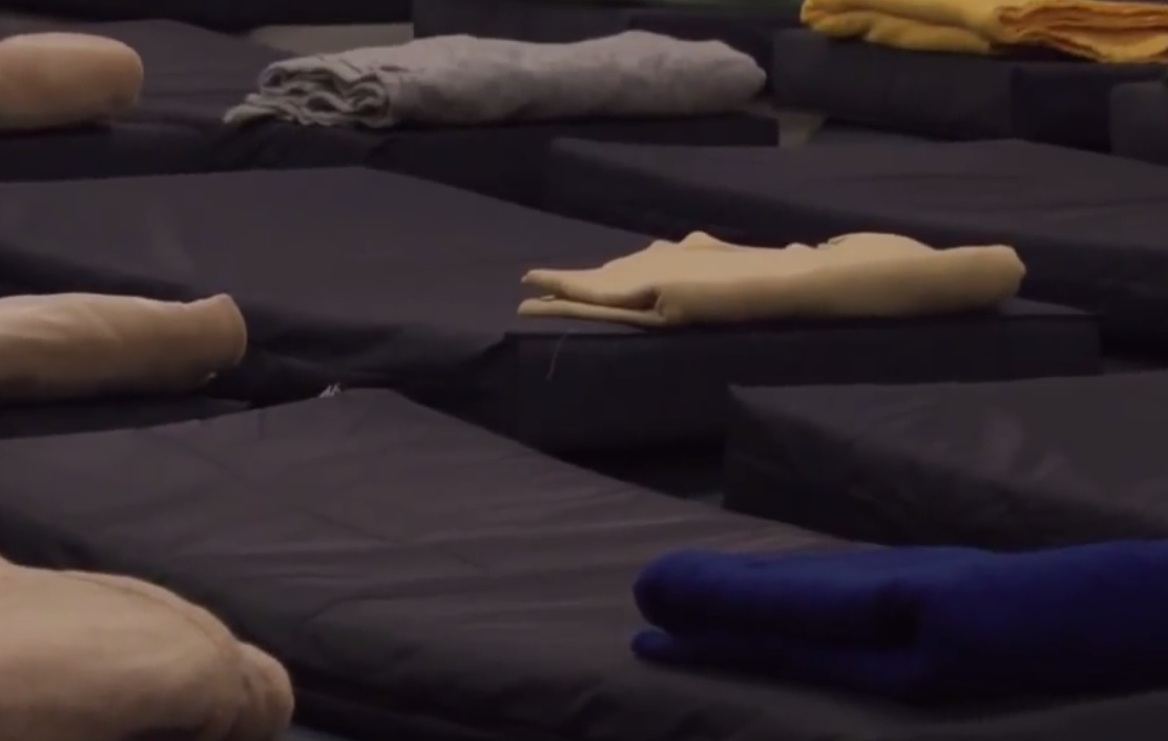
Mats laid out at the Brother Francis Shelter in Anchorage. (Image courtesy of Catholic Social Services)

Harrison says her complaints made a difference: people are no longer allowed to bring food into the sleeping areas and mats are laid out to give people more space. But Harrison says one thing has not improved. She says some staff members at the Brother Francis Shelter bully the clients.

“I’ve even witnessed them setting people up to get a reaction so that they can use that reaction to throw people out. And it’s not all of the staff. It’s the bullies.”

Harrison lists incidents of individuals being accused of drinking when they haven’t and others being given special privileges. She is not alone in her concerns. Mari Burt and a half a dozen other individuals who use the facility started discussing the problems weeks ago. Burt says they tried to contact Catholic Social Services staff and received some follow up, but not enough.

CSS Executive Director Lisa Aquino says the organization takes every complaint seriously. They log them and try to respond to them as best they can.

“We never want our clients to feel bullied, period,” she states. “When we have heard complaints about bullying or about questioning actions that our staff take, we always follow up on that. We always address that if it’s with a specific staff person, our management addresses that with them. And we also talk about the larger issues as a group and as a staff.”

Aquino says in the past they have terminated staff members if they are not a good fit for the program. But the director says the staff is working with a very diverse population with different mental and physical health needs. In the shelter, they have to find a balance of respect and safety for the 240 people who sleep there every night.

“We face the challenge of trying to support all of our guests at the Brother Francis Shelter and treat them with dignity and respect, and to provide them with the individual care that they need as a person while at the same time thinking of the overall health and well-being of all of the clients at the shelter.”

To help do that, they train staff about the culture of poverty, mental health issues, trauma informed care, and de-escalating conflicts. But Aquino says with fiscal, legal, and social constraints, they can’t monitor all areas at all times.

Mari Burt says she has sent Aquino an email on Wednesday requesting a community dialogue at the shelter about the guests’ experiences with bullying. If it does not happen, they’ll hold a public protest. Burt and Harrison have already contact the mayor’s office.

Site notifications
Update notification options
Subscribe to notifications