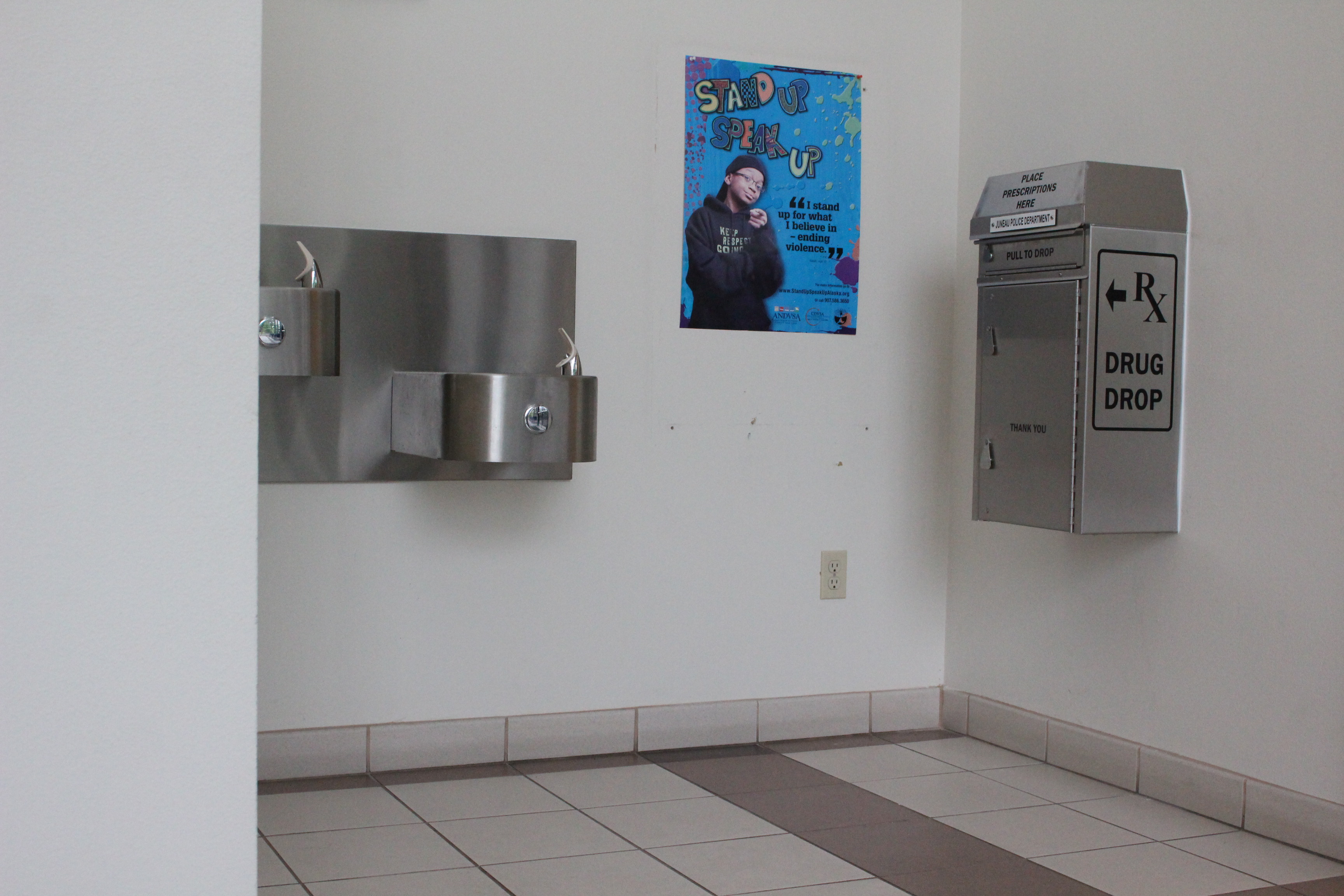
The RX Drug Drop is located in the lobby of the Juneau Police Department. Prescription medication is welcome. Needles and liquids are not. (Photo by Elizabeth Jenkins/KTOO)
Starting Monday, Juneau residents will be able to walk into the police department and hand over prescription drugs without consequence. It’s been several months since the community could safely dispose of their medications.
Adam Nelson is the lead pharmacist at Juneau Drug Company. A quaint, old-fashioned pharmacy in the heart of downtown. He started working here when he was 14 and became a pharmacist about five years ago.
He says his favorite thing about the job is the people.
“Talking to them, finding out about their day and helping in any way I can,” he says.
But something that can be difficult to help customers with is what to do with leftover prescription pills. He says they inquire once or twice a week, “Can I drop this off here?”
“Because they went to the dentist, they give them 20 pain pills in case they need them, they only take three,” he says. “And they need somewhere to put them and most people in Juneau don’t want to throw them in the garbage.”
Adam Nelson says people inquire once or twice a week what to do with leftover prescription drugs. (Photo by Elizabeth Jenkins/KTOO)
Trace amounts of medication, flushed down the toilet or thrown in a landfill, can wind up in your drinking water.
“Let’s say, you go to the dump and you throw in a handful of pills in the dump. All that rain water is going to turn it into liquid and it’s going to flow out into the streams and the creeks,” he says.
Twice a year, the DEA, along with the Juneau Police Department, would round up surplus pharmaceuticals. But that program ended last year after funding was cut.
Lt. Kris Sell from JPD says disposal options were non-existent.
“People were justifiably frustrated when they were trying to do the right thing and there wasn’t an avenue to responsibly and legally dispose of their medications,” she says.
Now with the RX Drug Drop, people can walk in and safely get rid of their meds.
The model has worked successfully in other places, such as Ketchikan. The police department there has been doing it for about 2 ½ years. Sell says people can drop off medication anonymously.
“There’s no forms to fill out it’s just like a book at the library.”
Last year, JPD confiscated 374 prescription opioid pills which can elicit the same effect on the brain as heroin. Sell says addiction can start at home and lead to harder substances.
“When we talk to addicted people, they almost always started with someone’s prescription drugs.”
With the addition of the drop box, JPD hopes it won’t come to that.
Editor’s note: The spelling of Lt. Kris Sell’s first name has been corrected.
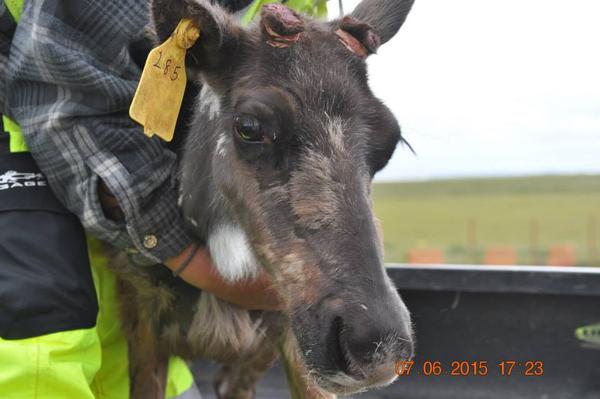
The first of 60 reindeer arrived in Port Heiden last week. The Native village is working to re-establish traditional reindeer herding in the community. (Photo courtesy of Village of Port Heiden)
The first of 60 reindeer began arriving in Port Heiden last week after a several month delay.
Adrianne Christiansen is the business development director for the Native Village of Port Heiden which has been working to reinstate a long-dormant tradition of reindeer herding. She said the reindeer began arriving Friday via charter plane from Stebbins/St. Michael’s.
“And we are really excited to re-establish reindeer herding in Port Heiden,” says Christiansen.
It’s going to be a big community learning experience, says Christiansen. For the next three months, an experienced herder will stay in Port Heiden to teach everyone about the reindeer.
“We have a pen built for them, and we have a traditional reindeer herder down to train our young people to learn how to herd reindeer … so they’ll be in the pen until we all learn how to herd the reindeer.”
Christiansen says about 100 community members, including 30 school-age children, will be trained.
Once the herd is well-established in the area, the community plans to harvest some for food. Christiansen says that may be four or five years down the road.
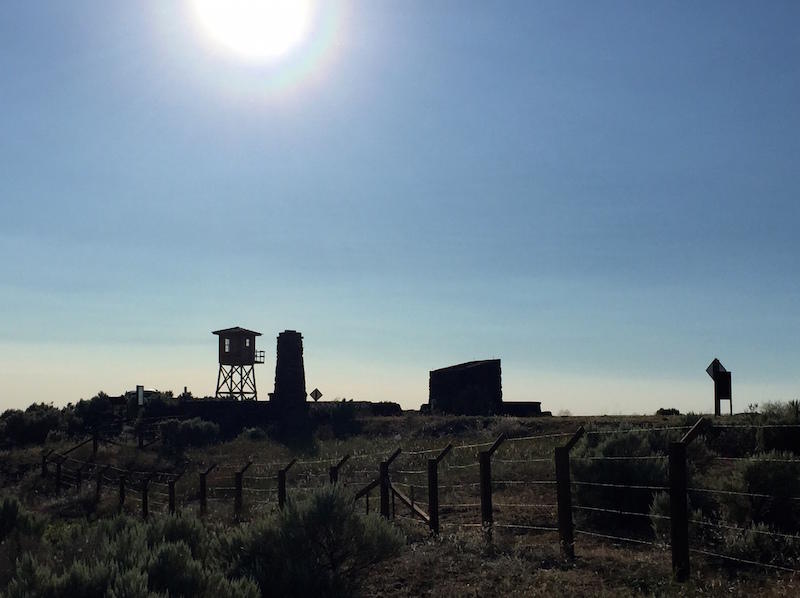
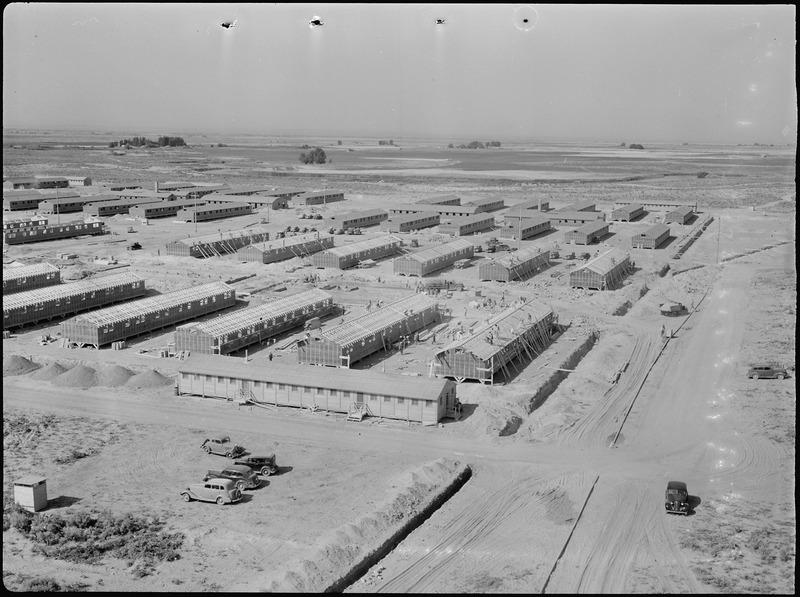
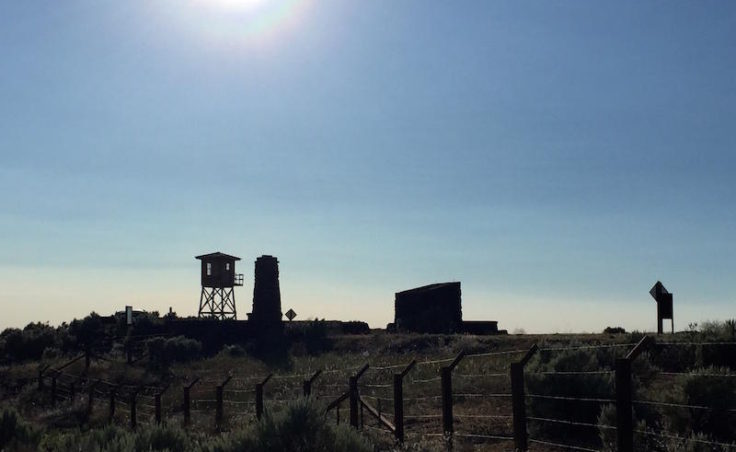
The Minidoka internment camp was hastily erected in 1942 on a stark, sagebrush plain near Twin Falls, Idaho. (Photo by Tom Banse/Northwest News Network)
OLYMPUS DIGITAL CAMERA
A panorama view of the Minidoka War Relocation Authority center in 1942. This view taken from the top of the water tower at the east end of the Center, shows partially completed barracks. (Photo courtesy of U.S. Department of the Interior)
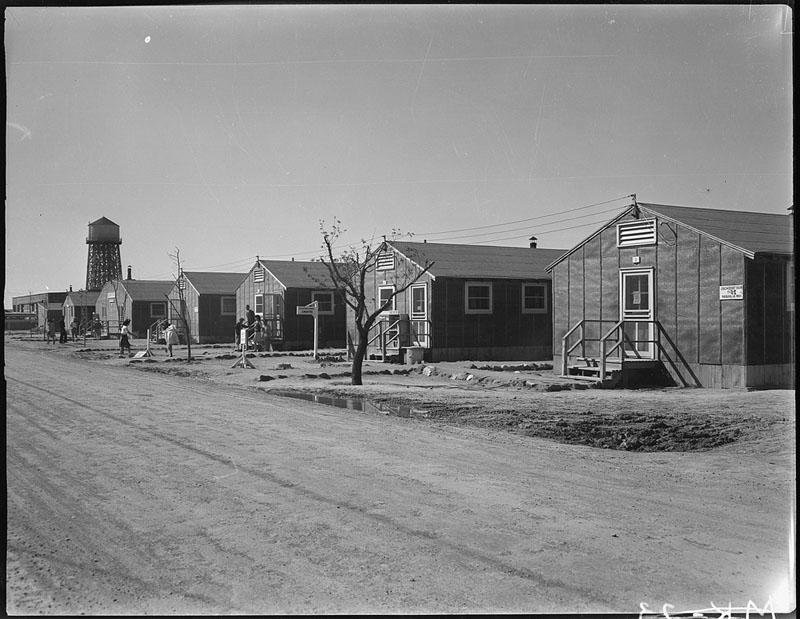
A view of the Minidoka internment camp's flimsy, tar-papered housing barracks. (Photo courtesy of U.S. Department of the Interior)
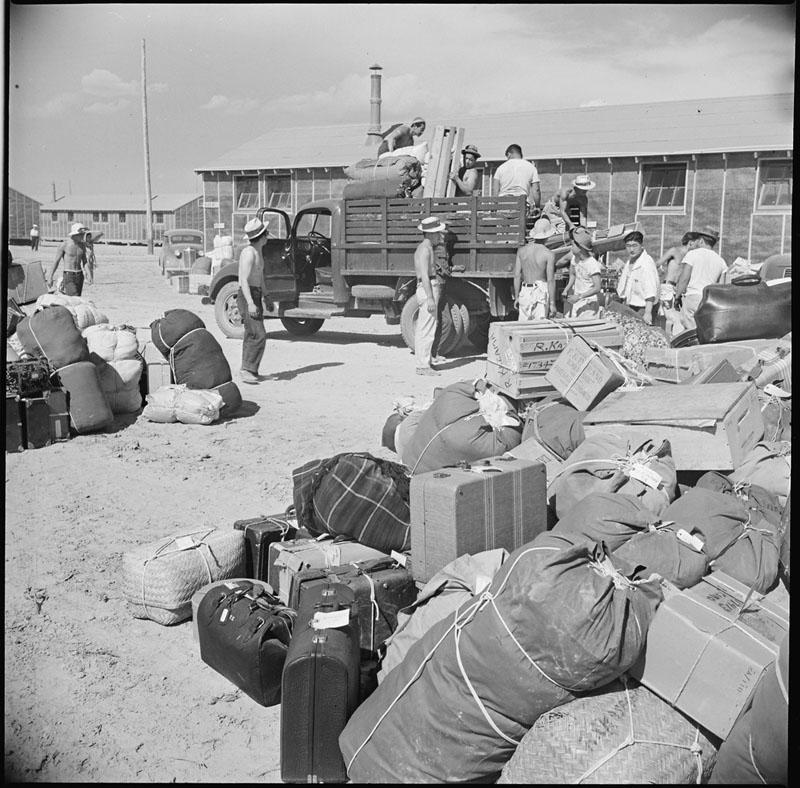
Baggage, belonging to incarcerees arriving from an assembly center at Puyallup, Washington, is sorted and trucked to barracks at the Minidoka internment camp in 1942. (Photo courtesy of U.S. Department of the Interior)
Living witnesses to the forced relocation of West Coast Japanese-Americans during World War Two are growing fewer every year. Many who were incarcerated are in their 80s and 90s now. Their descendants — and historians — want to preserve the memory and lessons from the unjust internment. Some take an annual pilgrimage to the Minidoka internment camp in southern Idaho to find out more.
We need to take a quick detour to the past before dwelling in the present. You know about the surprise attack on Pearl Harbor in 1941. Less well known is that in its wake, President Roosevelt signed an executive order to summarily round up Japanese immigrants and Japanese Americans living along the West Coast.
Minidoka was one of ten main camps built to confine civilians of Japanese ancestry during the war. It held people from coastal Oregon, Washington and Alaska, most of whom were U.S. citizens.
The former internment camp is now managed by the National Park Service. It’s also the destination for an annual pilgrimage.
“The potbellied stove was in the corner,” Sam Kito Jr. says. “Then we had a triple bunk on this side.”
Kito was five years old when his family was crammed into one room in a barrack block guarded by soldiers amidst the dusty sagebrush of southern Idaho.
“And then a double-bunk on this side,” Kito says.
At its peak, Minidoka internment camp held nearly 10,000 people. Kito, 77, hails from southeast Alaska. He says it was his daughter’s idea to join the organized pilgrimage to the site. Hope Kito, 32, is a nurse in Bellingham.
“It was something I always heard about growing up, but it is not something anyone ever talked about for a while,” Hope Kito says. “I don’t think the magnitude of it was ever expressed. So it was worth coming with him.”
“When you get new people or younger people involved, what happens is your mind starts thinking about what should have been better for your parents and your generations,” Sam Kito says. “Well, that’s great. But you can’t rewrite history. You live history the way the cards that were dealt to you and then make sure it doesn’t happen again.”
Mary Tanaka Abo, 75, was held at the camp when she was a child. In the midst of war hysteria, her family was “evacuated” – to use the parlance of the day – from Juneau, Alaska.
“Being here made me ashamed of being Japanese when I was young,” Abo says.
Abo came on the pilgrimage with her daughter and two grandchildren. This was the second trip back for the retired teacher, now living in Bremerton, Washington.
“Just being around people is always good,” Abo says.
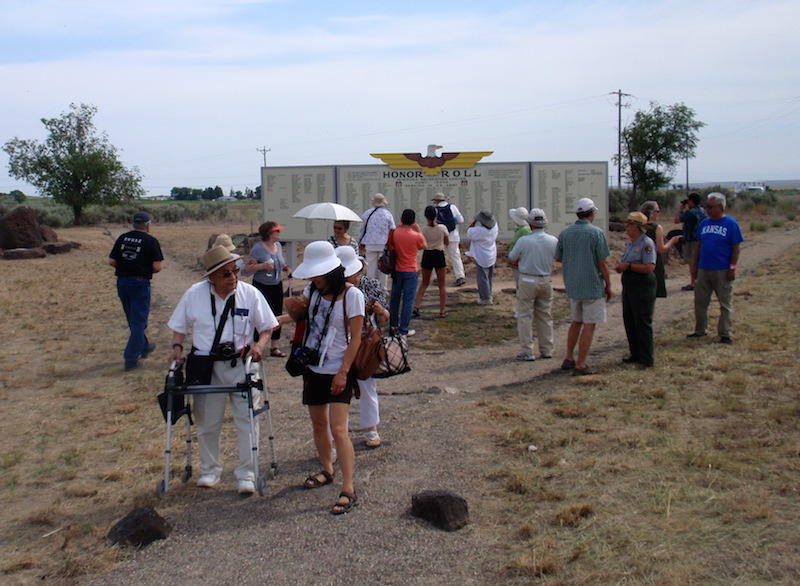
Nearly two hundred pilgrims journeyed to the site on the final weekend in June. Co-organizer Bif Brigman says this was the eleventh edition of the Minidoka Pilgrimage. He says the idea from its genesis carries on today.
“We’re losing the Issei, the first generation, and Nisei, the second generation of Japanese-Americans. We’re afraid of losing those stories,” Brigman says. “That is one of the things that pushes us to do it annually, to keep doing it.”
Brigman says the number of first hand witnesses decrease with every passing year.
“We can see that those memories, those stories are slipping away,” Brigman says.
Minidoka National Historic Site Superintendent Judy Geniac also feels the urgency to capture more voices of witnesses before they go silent.
“It would be incredible for us to figure out a way to have young people interviewing, whether it is their great-grandfather or it is their next door neighbor,” Geniac says. “We know that people from the camp went all over the United States after they left the camp.”
Earlier this June, the National Park Service award more than $368,000 to the Seattle-based nonprofit Densho, which collects Japanese-American oral histories. The latest grant was directed at enhancing an online encyclopedia about this dark chapter in American history and to help Densho do outreach to connect the Japanese-American incarceration story to more contemporary examples of injustice.
Densho curates an online video repository featuring more than 800 interviews about the community’s life before, during and after World War II.
Meanwhile, the physical remains of the Minidoka camp – which nearly disappeared – are being resurrected. A guard tower, barracks, mess hall and fire station have been rebuilt or restored in recent years. Geniac says a visitor center is in the works as are plans to recreate the central baseball field.
Every year, the senior citizens living at the Juneau Pioneer Home throw a “senior prom.”
Cindy Athearn has worked and volunteered at the Juneau Pioneer Home for over 20 years. She enjoys seeing the whole community come together for the event. “Everybody gets involved — families, staff. It’s a wonderful, magical time,” she says.
Resident Ruth Dawson also enjoys the opportunity to connect with others. “It’s a way to get to know each other and just to get to get closer to each other.”
The event is a lot of fun, but there’s also a deeper purpose according to Juneau Pioneer Home Administrator Gina Del Rosario. “Each day, we strive to celebrate life, and this is one way of celebrating life within this community is to enliven it with special events like this one,” she said. “It fits very well with the mission of the Alaska Pioneer Home: ‘providing a home and a community celebrating life through its final breath’.”
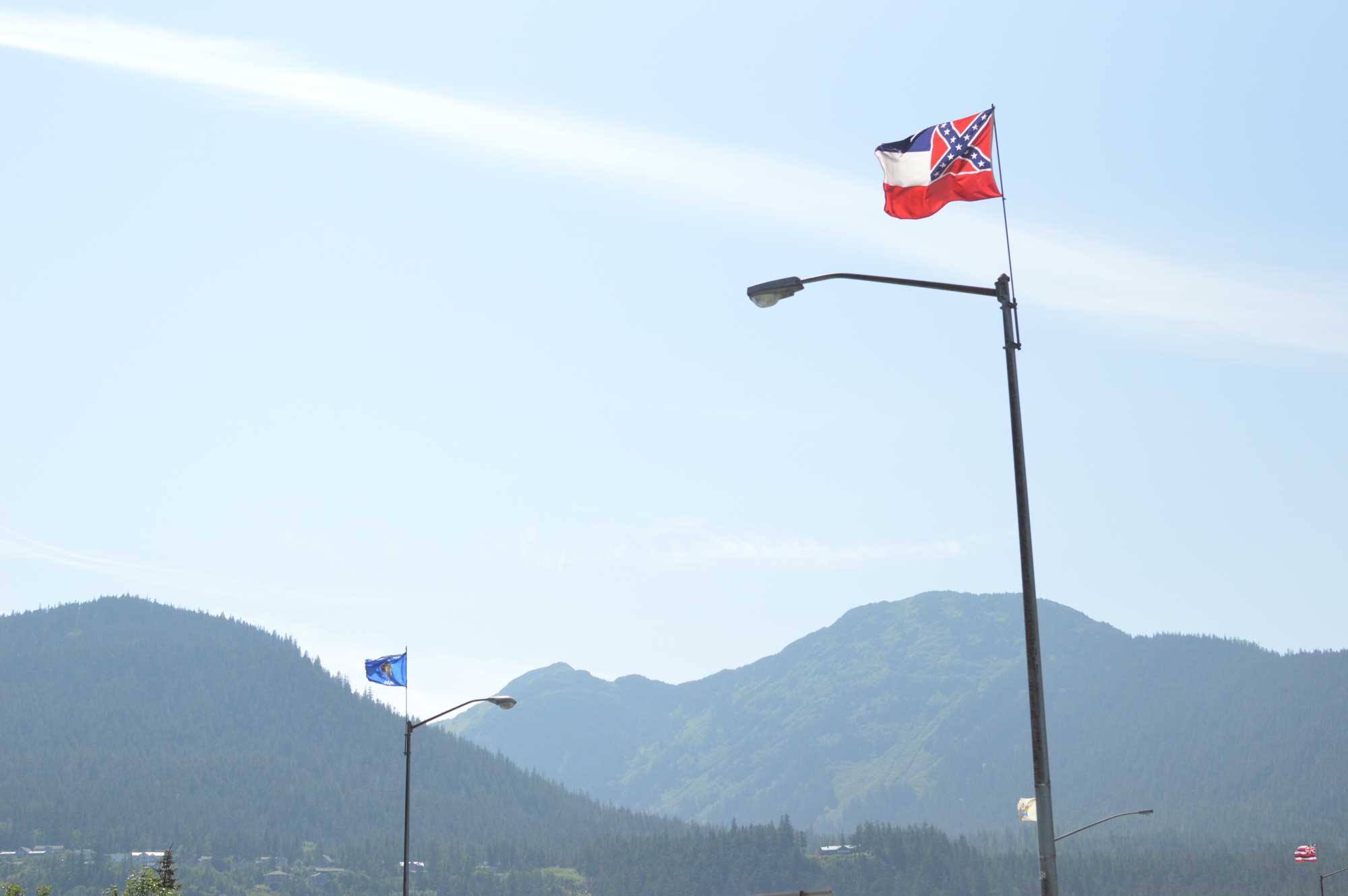
The Mississippi flag on Egan Drive features Confederate imagery in its upper left corner. (Photo by Lakeidra Chavis/KTOO)
Some locals are calling for the removal of the Mississippi state flag flying on the main street into downtown Juneau because it prominently features the Confederate stars and bars.
On Monday evening business owner Marc Wheeler and community member Matt McGuan spoke to the Assembly about removing the flag.
For Wheeler, who’s originally from Louisiana, his connection to the Confederate flag goes back generations.
“On a personal level, my ancestors were slave owners, and I feel like that flag symbolizes our country’s original sin,” he said, “and we have to atone for that.”
Mississippi is a part of an all-states flag display organized every year by a group of volunteers who call themselves Friends of the Flags.
In light of recent events, McGuan decided to do something about it.
“That’s not a welcoming symbol. That’s a symbol of intimidation and hatred. It’s a relic of a terrible time in our country’s history,” McGuan said.
Jim Carroll, has been a Friends of the Flags volunteer since the display’s inception.
“Well, it’s a state representation of the flags, that’s what we have up, no matter what’s on the flag,” Carroll said.
Although he understands the controversy surrounding the flag, he said immediately removing it is impractical. The flags are replaced yearly using a donated piece of heavy equipment.
Mississippi adopted its current flag in 1894. In a controversial statewide referendum in 2001, voters doubled down on keeping the flag.
But the flag doesn’t belong in Alaska, according to McGuan.
“If the people of Mississippi want it on their flag that’s their deal, but we don’t have to give it a place of honor in our community,” McGuan said.
Chair of the Juneau Human Rights Commission Alavini Lata, says the board hasn’t received any complaints from the community. Lata says Friends of the Flags has the final say and the most the commission could do is to talk to them. The issue might be addressed at an upcoming meeting, but he doesn’t think taking down one flag would be effective.
“Generally we don’t take action unless something is brought up by the community and we internally haven’t talked about it as a group,” Lata said.
Georgia removed the Confederate stars and bars from its flag in 2003. South Carolina had flown an actual Confederate flag on its statehouse grounds until late June. South Carolina Gov. Nikki Haley called for its removal and five days later, an activist climbed the flagpole and took it down herself.
Mississippi is now the only state with Confederate imagery in its flag.
Criticism of the Confederate flag has grown after the racially charged mass murder of church parishioners at a historic black church in Charleston, South Carolina, last month.
Since the Charleston attack, stores and major companies like Wal-Mart and Amazon have stopped selling the flag. A supermajority of South Carolina legislators now officially supports removing the Confederate flag from the statehouse.
McGuan says about 10 other community members have met to discuss removing the flag in Juneau. One possible alternative, according to McGuan, is to use the Mississippi Magnolia Flag, which was the state’s first official flag.