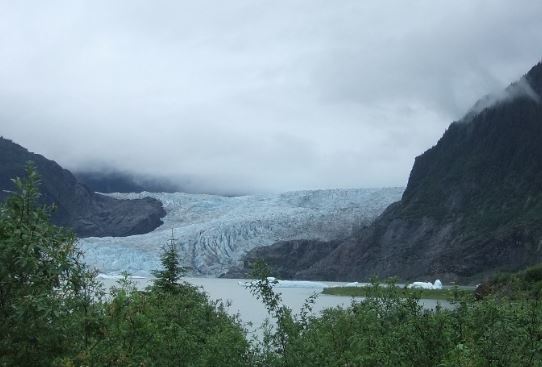
Visitor center director John Neary says a $5 fee would be charged to use some of the trails near the facility.
“Namely the Photo Point Trail, the Steep Creek Trail,” he says. “The restrooms, the viewing pavilion, the bus shelter, if you use those items, you would pay the $5 fee.”
Other paths like the Nugget Falls Trail, the Trail of Time, and the East Glacier Trail will continue to be free. The visitor center entry fee would go from $3 to $5. Seasonal passes would be available, and the fees would continue to be waived during the tourism off-season from Oct. 1 to April 30. During the summer months, Neary says that the fee would be built into tour packages.
It would be the first cost increase at the visitor center in 17 years. Neary says the Forest Service believes the increases will more than double revenues, which the center would invest in facilities, staff, and other changes to improve the visitor experience.
“I have a vision that this place really could be run a whole lot more efficiently than it is, with the problems we have with traffic congestion and restroom lines and things,” Neary says. “In fact we would love to see the place become much more of a Climate Change Education Center where we really can model sustainable operations.”
The Juneau Ranger District will hold a public meeting to discuss the proposed fee increase. The meeting will be held Jan. 13 from 5 to 7 p.m. at the Mendenhall Glacier Visitor Center.
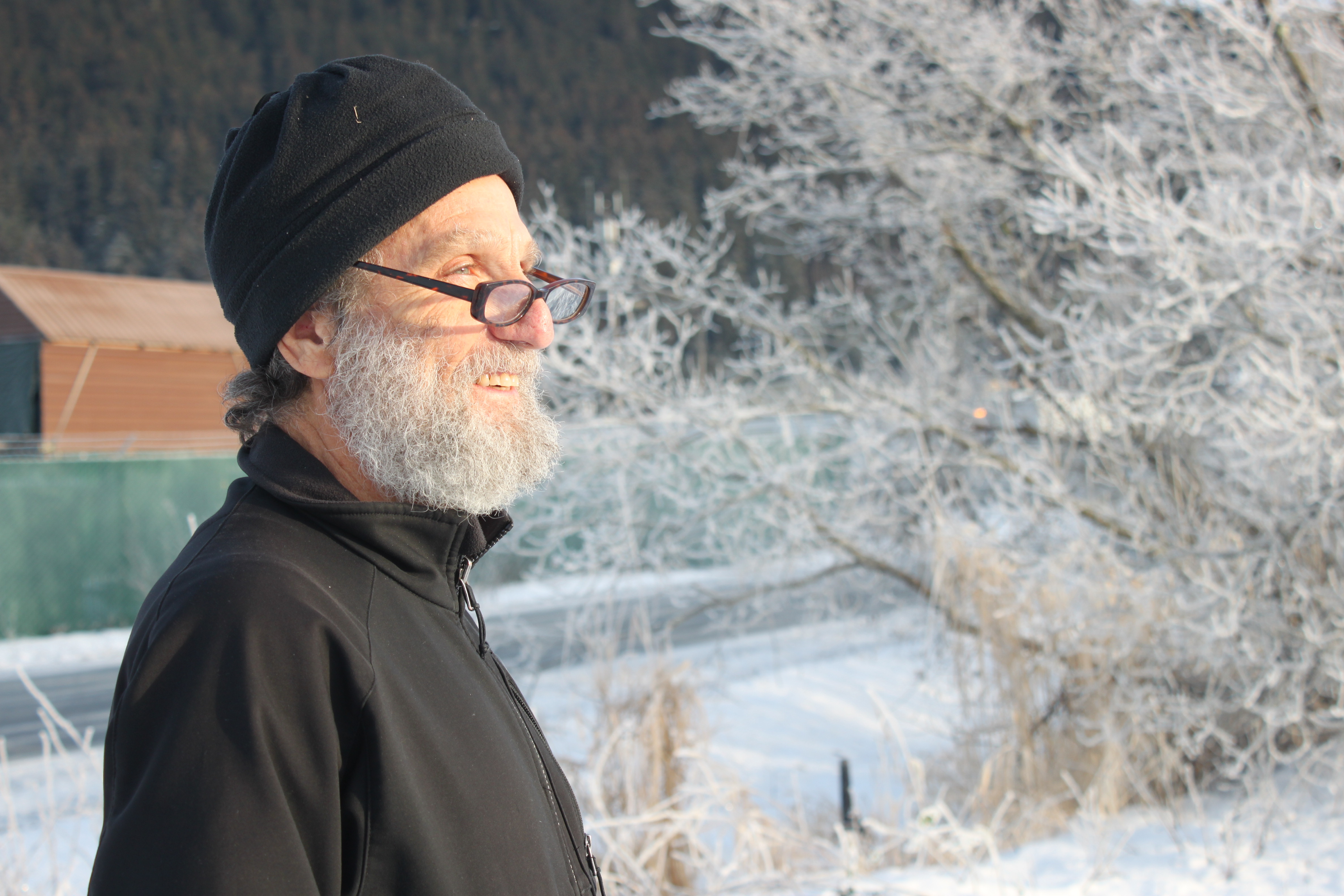
St. Vincent de Paul general manager Dan Austin looks out onto the land where the new senior housing facility will be built. (Photo by Lisa Phu/KTOO)
Juneau nonprofit St. Vincent de Paul and partner agency Seattle-based GMD Development have been awarded $9 million in tax credit financing from the Alaska Housing Finance Corporation. The award will allow the agencies to build 41 units of affordable housing in the capital city for low income seniors.
Thomas Smith is 70 years old and lives in St. Vincent de Paul’s transitional housing for people getting out of homelessness. He’s excited about the new senior living facility.
“Because that means within two years, I can move out of this room and move into my own apartment with a kitchen,” Smith says. “I’m really a good cook and I love my kitchen but I don’t have that here. I have to use a communal kitchen across the way.”
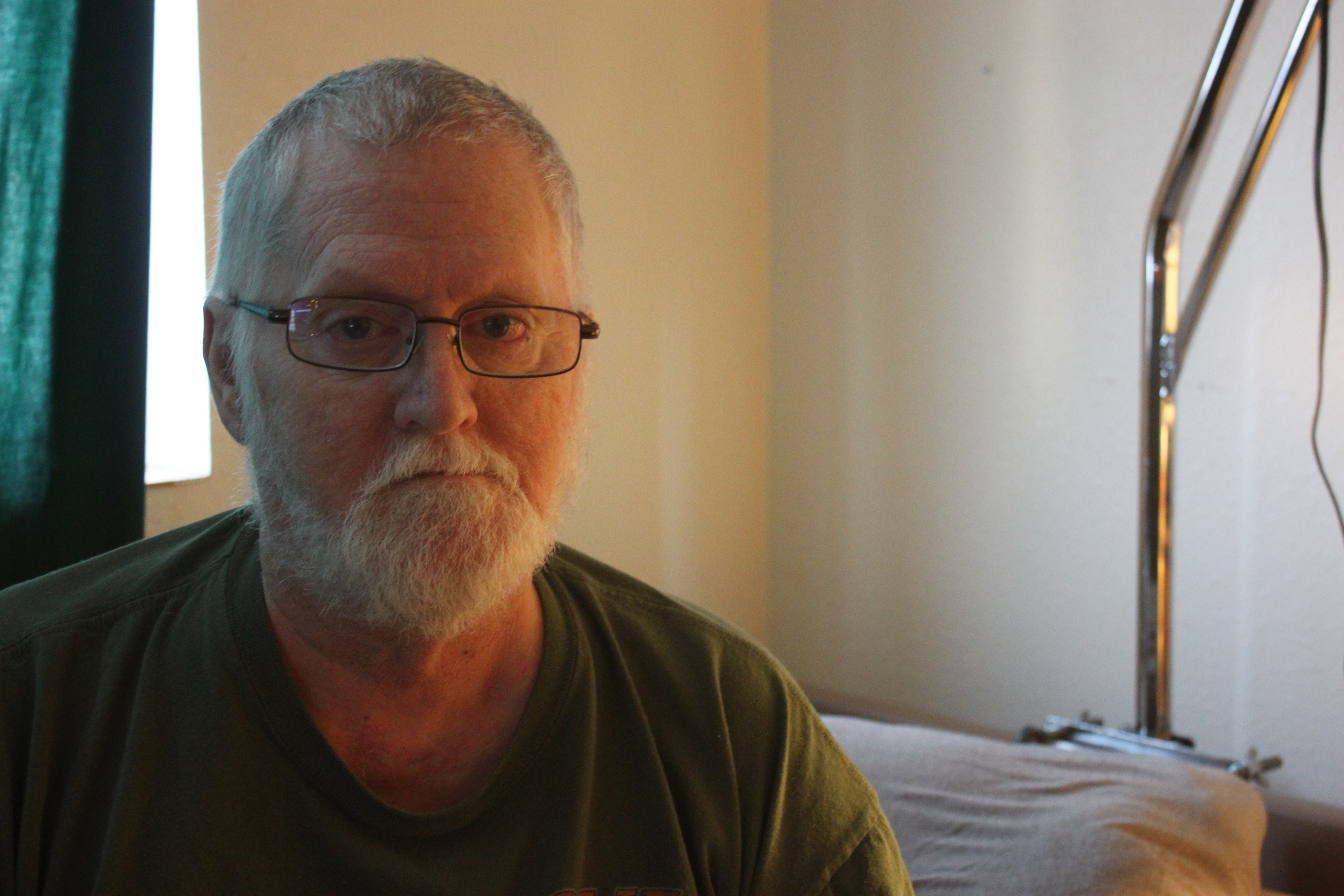
Thomas Smith has lived in St. Vincent de Paul’s transitional housing for a year. (Photo by Lisa Phu/KTOO)
Smith has Parkinson’s disease and other medical conditions that necessitate a wheelchair. He takes eight daily medications. Between social security, senior benefits and general assistance, Smith makes about $1,100 a month. He can’t afford Juneau’s housing prices.
“The rents are so high. I would have to give up eating in order to move into, say, an apartment that cost $750 a month,” he says. “The bills I need to pay for and the medications I have to buy that Medicare will not pay for – it’s very difficult to get by from month to month.”
Dan Austin is general manager of St. Vincent de Paul. He says Smith would be one of the first people to move into the new facility. Austin says some people spend up to four years on the waiting list for the organization’s current 24-unit senior housing.
“The only turnovers here are when somebody goes to the nursing home or somebody passes away,” Austin says.
The percentage of Juneau’s population age 65 and older has doubled in the last 10 years. Seniors now make up 10 percent of the city’s overall population. A recent Juneau Senior Housing and Services Market Demand Study found that in next two decades, seniors will make up 20 percent of the city’s population.
Austin sees that growth reflected in St. Vincent de Paul’s shelter.
“Over the last five and 10 years, we’ve seen the percentage of seniors who are homeless looking for some place to live increase exponentially,” he says.
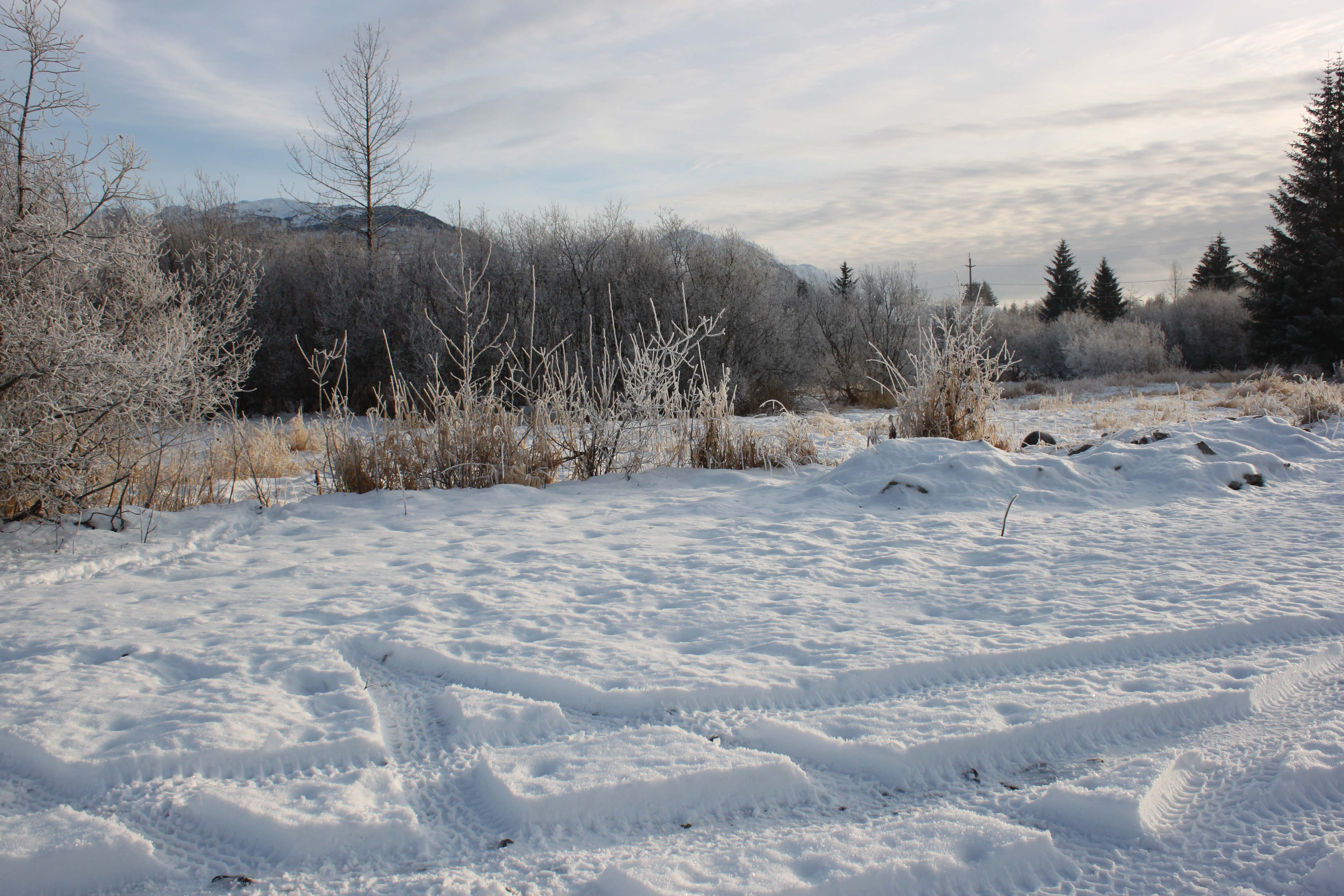
The new senior housing will sit on a 1.3-acre parcel of land. In the summer, Austin says it’s surrounded by grass and fireweed. (Photo by Lisa Phu/KTOO)
The new facility will be a mix of studio, one-bedroom and two-bedroom units with commercial space on the ground floor. The retail space will house the St. Vincent de Paul thrift store. The complex will be built on a lot adjacent to the nonprofit’s current property near the airport.
The target population is low to moderate income seniors. Austin has been working on the project for 10 years and is happy to see it come into fruition. He hopes to break ground late next summer.
“Having worked here for 20 years and watching this organization grow from 10 units of homeless apartments for homeless families to an organization that now owns and manages 124 units throughout this town, what that means to me is, it’s not 124 units, it’s a 124 families that have a decent place to live,” Austin says.
St. Vincent de Paul also plans to renovate two existing housing facilities in Juneau and one in Haines. Once those projects and the senior facility are done, the organization will own and manage about 200 units in the capital city.
Norton Gregory says every unit and every house built in Juneau is a step in the right direction. Gregory sits on the Juneau Affordable Housing Commission. He says the 41 units will target a population the commission sees as one of the most vulnerable.
“We have a lot more seniors that are aging out of the workforce and unfortunately they may not be able to afford to live in our community without these subsidized rental units, so to give them more options is definitely going to make an impact on our community,” Gregory says.
St. Vincent de Paul’s new senior housing facility is expected to be complete by fall of 2016. The project was named the Home Run by a board of directors member who said to Austin, “‘If we get this, man, we hit the home run.’ So that’s what it is. For St. Vincent, it’s a home run.”
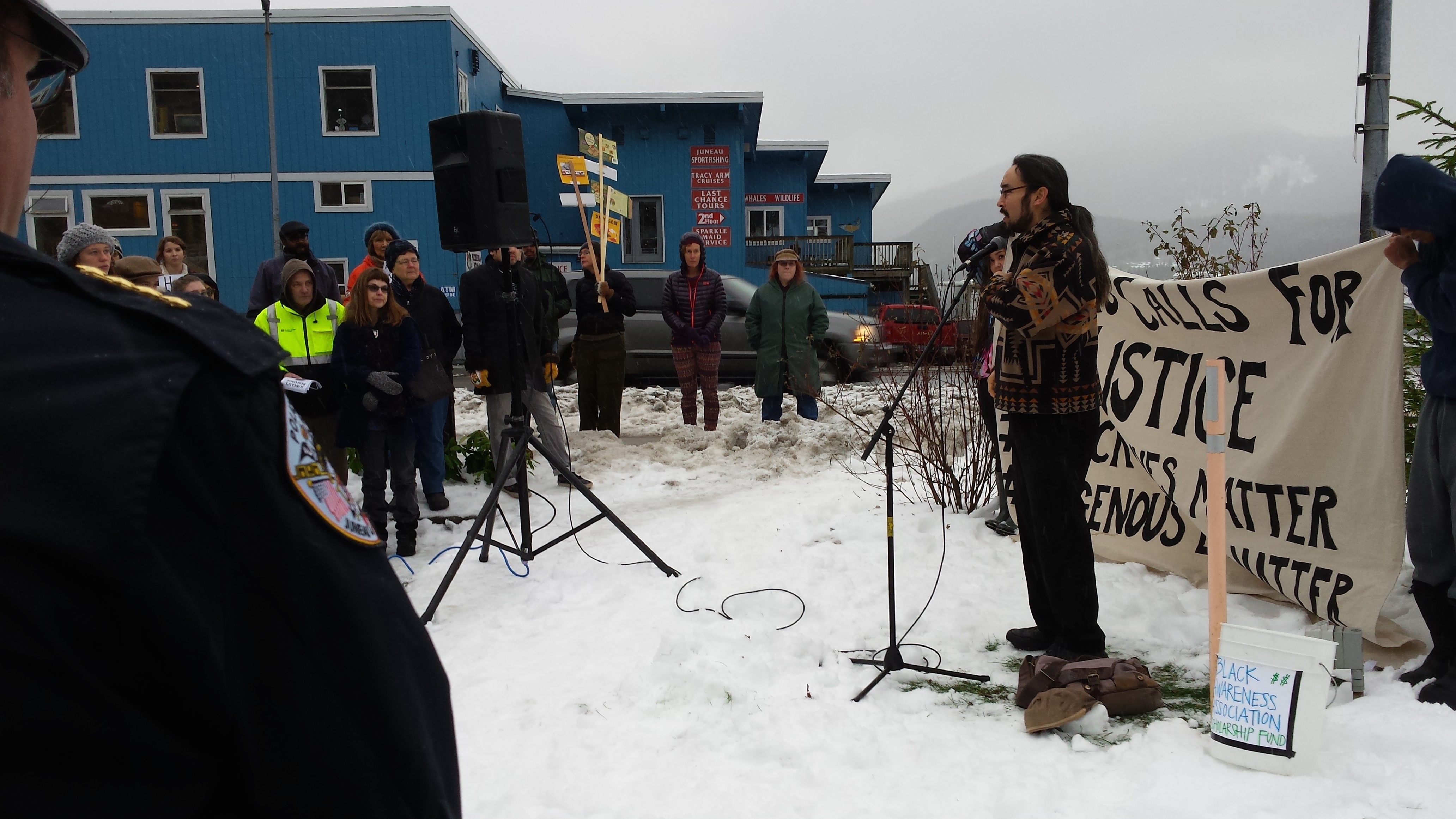
Ishmael Hope speaks at the I Can’t Breathe rally (Photo by Kayla Desroches/KTOO)
About 40 people gathered at Juneau’s Downtown Transportation Center Saturday for an “I Can’t Breathe” rally. Those were the last words Eric Garner spoke before a police officer’s chokehold ended his life this summer in Staten Island, New York.
Similar protests have been held around the country since a grand jury failed to indict the officer who killed Garner. The incident has sparked a number of questions and conversations about race relations in the United States, because Garner was black and the officer who killed him is white.
The crowd gathered at the snow-covered bus terminal, where organizers set up a public address system for people to share their thoughts on racial profiling by police in Juneau and the lower 48.
Ibn Bailey, who’s black, says the last time an officer pulled him over was 10 years ago for speeding. He says his experience with Juneau police has been largely positive, perhaps because the officers who work in the capital city are local residents.
Bailey says Juneau is not like Ferguson, Mo., another community where a young black man – Michael Brown – was killed by a white police officer.
“The people that serve in our community actually live in our community,” said Bailey. “One of the things that you see, especially if you look at Ferguson, what’s happened there is that a lot of the police force do not live in the same community in which they police.”
Alaska Native educator and storyteller Ishmael Hope says even if Juneau is somewhat removed from the national conversation, residents can still play a role by acknowledging that racial profiling does occur and is not excusable or deniable.
“What Juneau could do even if it doesn’t have that same level of state brutality is to start to recognize some of the levels of institutionalized, systemic racism that denies the stories and the experiences of people of color and minimizes it,” Hope said.
Organizers invited Juneau Police Chief Bryce Johnson to the rally. Although he declined to address the specific events in Ferguson and Staten Island, Johnson said the police and public have much to learn from them.
“I think the number one lesson is that the police and the community have to be united and together,” Johnson said. “It is impossible to police an area without community involvement, community support, and community trust.”
Rally organizer Christy NaMee Eriksen says she hopes to see the discussion about race relations continue in Juneau. She invites those who are interested in being involved to come to her store, Kindred Post, Monday at 6 p.m.
The Governor’s annual Holiday Open House will take place Tuesday, Dec. 9 at the Governor’s House.
It will be the first event that Gov. Bill Walker and his wife Donna will hold at the residence after being sworn into office. The Walkers are the 13th family to live in the house since statehood.
“Donna and I look forward to celebrating the holiday season with our new Juneau neighbors,” Gov. Walker said in a press release. “This is a very special time for our family and we are blessed to take part in this wonderful tradition.”
The Governor’s House was built in 1912 and the traditional event has been held every year, with the exception of two years during World War II.
More than 20,000 cookies and 100 pounds of fudge and chocolate candies are being made in preparation of the event. Members of Gov. Walker’s cabinet will serve hot apple cider and treats to guests waiting in line outside. The event will last from 3 to 6 p.m.
It’s finally here! The December First Friday Gallery Walk is usually the biggest of the year. Front Street will be closed to cars but open to art walkers.
“Twin Lakes Outflow” by Jim Fowler
That means it’s time to hit the streets, socialize, eat some crackers and cheese, drink wine out of little plastic cups, and stock up on artful holiday gifts. For this month’s preview let’s imagine you begin at Coppa near the Federal Building. Jim Fowler will be showing a dozen acrylic landscape paintings.
“I just appreciate people coming to take a look. It’s kind of a solitary activity with little feedback from other people so this is kind of my chance to have people see the work and talk to them about it,” says Fowler.
From Coppa, an art walker could mosey here to KTOO to see board paintings and fabric panels from the Zimbabwe Artists Project, then over to the JACC to see Avery Skaggs’ show of ceramics, collagraphy prints, and acrylic paintings.
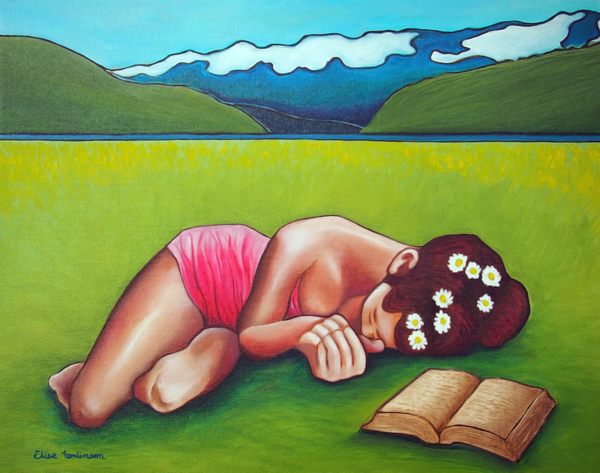
As you near downtown, stop in to hear music from Teri Tibbett and Bob Bloom at Coho’s. Once you’re in the city, check in at Elise Tomlinson’s Suite 5 Studio on Seward Street. Tomlinson
“Wetlands” by Elise Tomlinson
“Some of them are straight landscapes and others have women figures incorporated into them or local plant life, flowers, that kind of thing. The pieces I’ll be showing for gallery walk are a whole bunch of older works, and then newer pieces that I’ve done this month that are small traditional landscapes. They’re all in my style, which is bright, colorful, stylized, outlines, that kind of thing,” Tomlinson says.
From there, you could head up to the Canvas’ show of acrylic works by REACH artists, or up to the Juneau City Museum to see Constance Baltuck’s show of acrylic, nature-inspired abstracts, or maybe down to Front Street to see Pat Race’s show “Whalemont” at Alaska Robotics, or over to Jineít at the Sealaska building to see Wayne Price and Donald Gregory who will be carving on-site, or over to Annie Kaill’s for Karen Beason and M.K. MacNaughton’s show. On A Juneau Afternoon this week MacNaughton said her show is all about color.
“Shelter” by MK MacNaughton
“I like to paint in oil on canvas so I started collecting images and painting in the fall when it was raining-raining, gray-gray and I’ve always loved the Juneau fall because the orange is so brilliant. I run a lot on the Dan Moller trail and up above the Crow Hill condos and the meadow there, it would be the grayest day, and I’d get up there and it was orange, burning orange. I kind of had a love affair with the orange muskeg this fall. I call this my orange muskeg series.”
After Annie Kaill’s you could head over to Trickster Company, where Rico Worl will show new skis featuring his formline design work, or back to Hearthside Books, where Peter Metcalfe and Kathy Ruddy will be signing their new book “A Dangerous Idea” about the Alaska Native Brotherhood and the struggle for indigenous rights. Then over to Kindred Post for the interactive photo booth and music by Acapella, or the Juneau Artists Gallery, or up to Vanity, or, well — again, there are too many to mention. Please use our online, mobile friendly art guide to navigate the rest of your walk.
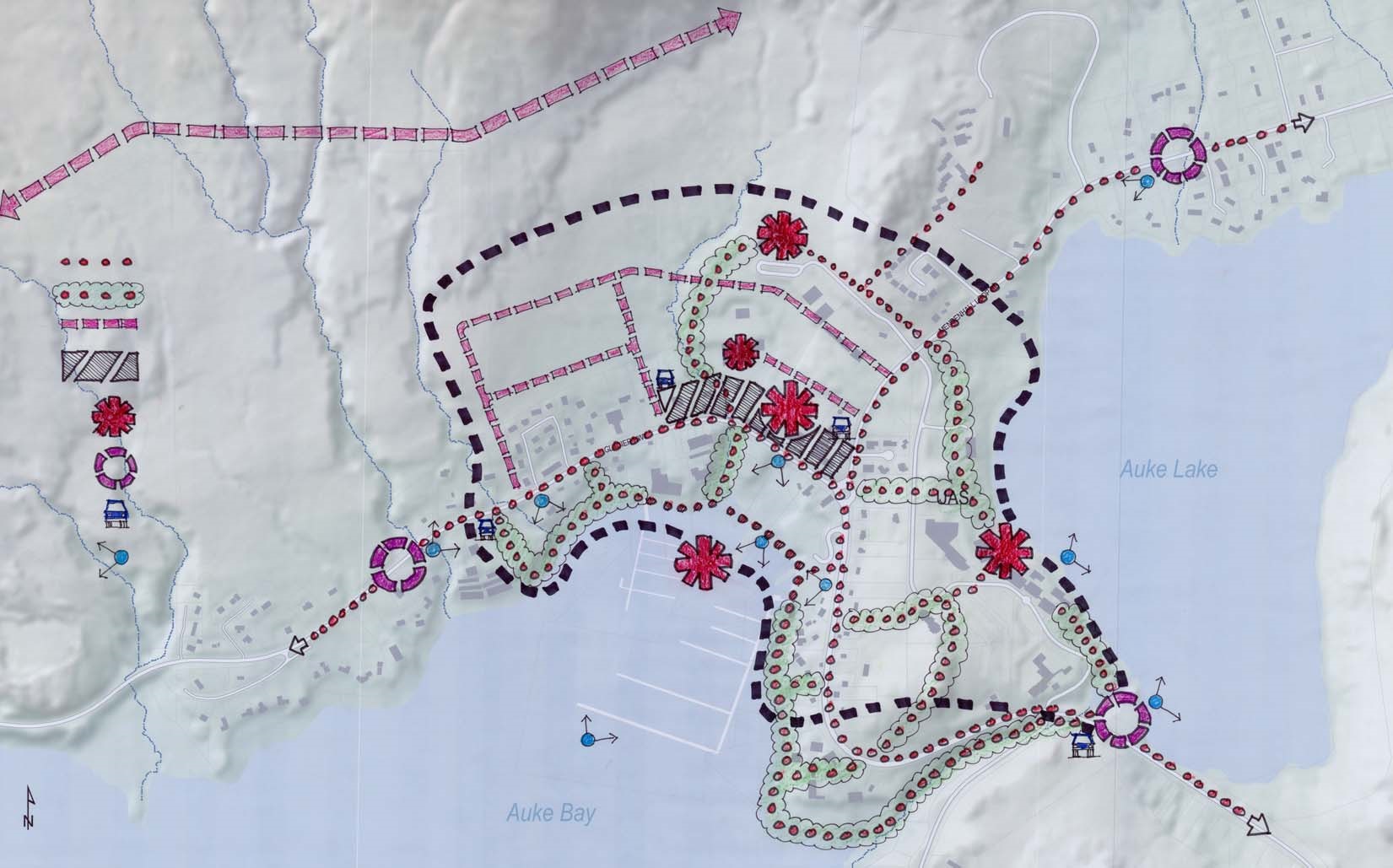
A planning overlay that is part of the draft Auke Bay Area Plan. (Courtesy Christopher Mertl/Corvus Design)
Community members with a vision to turn Auke Bay into a destination for shopping, dining and sightseeing present their plan tonight.
The Auke Bay Plan Steering Committee has been meeting for the last year. Gerald Gotschall is an architect and the committee’s chairman. He says that the area is already a place for locals to stroll and snack, but could grow more.
“They would love to have some place to meet,” says Gotschall.
“And there’s all sorts of potential for there being a slightly nicer, more well developed, more well thought out hub. Not just a bump in the road that happens to sell waffles.”
The committee is trying to satisfy all of the area’s stakeholders. That includes the City & Borough of Juneau, the state Department of Transportation and the university, as well as other landowners and businesses.
Hal Hart is the head of the city’s Community Development Department and says the committee needs to answer a wide range of questions.
“How much housing do we expect in the future? What are the needs for a vibrant, small community center that’s associated with the university? How do we take advantage and not harm the bay? Because for Auke Bay, it’s about the bay, it’s about quality of life,” Hart says.
Lawrence Lee Oldaker is a member of the committee and longtime Auke Bay resident. He says that he and other members of the community attended the meetings to voice their opinions. Oldaker was particularly concerned with road development.
“We are very mindful of the long range DOT vision to build a bypass route,” Oldaker says. “We were trying to protect the environment, historical structures and the viewing of the waterscape and marine environment.”
The committee meets at City Hall at 7 p.m.
Close
Update notification options
Subscribe to notifications
Subscribe
Get notifications about news related to the topics you care about. You can unsubscribe anytime.