Community

Former Haines exchange student now living in war zone

From his bedroom window, Haytham Mohanna took this photo of Israeli flares about a week ago. (Photo by Haytham Mohanna)

Just days after exchange student Haytham Mohanna made the long journey from Southeast Alaska to his home in the Gaza Strip, the conflict between Israel and Hamas escalated into war.

Haytham lived and studied in Haines through a U.S. Department of State program that brings students from Muslim countries to America.

Haytham at the Mendenhall Glacier ice caves. (Photo courtesy of Rich Moniak)

Two months ago, 17-year-old Haytham Mohanna was kayaking in Sunshine Cove and hiking to the Mendenhall Glacier ice caves in Juneau.

Now, Haytham is home in Gaza City spending his summer break in a war zone.

“Every minute we are expecting a bomb. When we hear a near bomb, we are saying that our house is going to be the next one,” Haytham says.

His family has an emergency bag packed with their identification and other important documents. If they get a call that their house will be bombed, they’re ready to evacuate.

“My family is lucky ‘til now that nobody died and they didn’t see anyone dying,” Haytham says.

At the moment, he is living with 14 people – his parents, grandmother, three siblings and his aunt’s family.

“Her house kind of is near the tanks and the bombs, so she’s scared and ran away from there and she came to our house,” Haytham says.

His parents and siblings sleep on the floor, while his aunt’s family shares the six beds in the house. It’s crowded, but up to 50 people have stayed in the house during other wars. This is Haytham’s third.

Haytham says they haven’t had electricity for more than a week. His family has their own gas-run generator, which they turn on to charge flashlights, laptops and phones. They also use it to pump water to the house.

Without a refrigerator, Haytham’s father takes the risk of going to the market a few times a week.

Haytham Mohanna attended Haines High School during the last school year. (Photo by Lisa Phu/KTOO)
Haytham Mohanna attended Haines High School during last school year. (Photo by Lisa Phu/KTOO)

“In the U.S. we had fulltime electricity, we have water all the time, we have freedom to go anywhere. But here, I can be scared to go out to get the trash out of the house and I’ll be scared if I’m going to go to our neighbors’ to drink some tea or something. It’s really hard to get out, even from the house,” Haytham says.

The last time Haytham went outside was more than 10 days ago during a ceasefire. It lasted six hours.

“I went to hang out with my friends. We tried to go and get a haircut but the places were very crowded so we didn’t have a haircut,” he says.

Everyone was in the streets.

“People were happy, you know, just going out from their houses. Not really happy, just relief, you know,” he says.

Haytham says days pass inside the house doing nothing and he loses track of the date. He only sleeps between 5 and 10 a.m. when bombs are less frequent. He says there are more bombs at night.

Inside, Haytham says his family still occasionally laughs.

“But it’s not the laugh that comes from the heart. We just laugh to let my 6-year-old brother to laugh and feel that he’s safe and we’re not in danger,” he says.

Haytham has mixed feelings toward the U.S. due to its relationship with Israel. The U.S. provides Israel with $3 billion in foreign military financing annually, according to the Department of State.

Haytham misses living in Haines, but he says, “I can’t really wish to be there right now. My country now needs me. If everyone wishes to be outside, nobody is going to be in Gaza. There should be people staying in Gaza so they can protect it and after the war, they can build it.”

Haytham is supposed to start his senior year of high school at the end of the month. But, he says, schools have delayed opening. Even if the war ends soon, it’ll still take time to repair.

Related content:
Differences between U.S. & Gaza Strip? Weather and freedom
Origami peace peacock finds a home in the state capitol
Forum@360: Middle East to Southeast
Haytham Mohanna on Photography
Workshop tonight on senior housing in Juneau

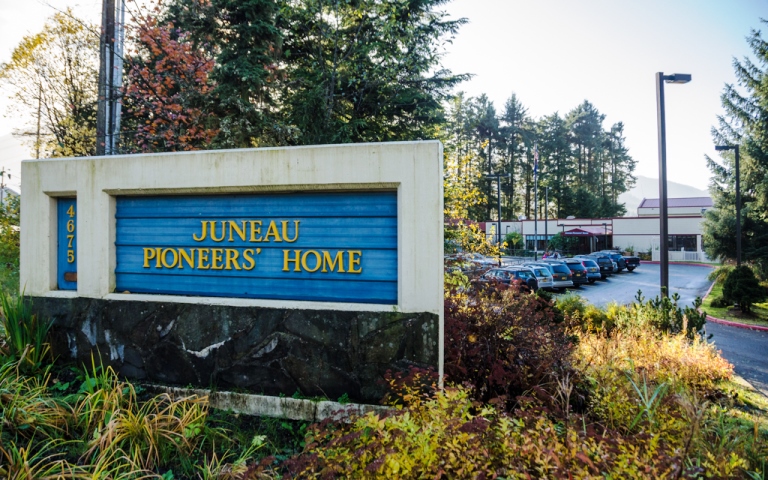
The Juneau Pioneers' Home is 25 years old.  The first Alaska Pioneers' Home opened in Sitka 100 years ago.  Photo by Heather Bryant/KTOO.
The Juneau Pioneers’ Home has been operating for 25 years. (Photo by Heather Bryant/KTOO)

What is Juneau’s vision of housing for an aging population?

The Juneau Economic Development Council is asking that question as it conducts a market demand study of senior housing and support services.

The research is part of an effort underway to bring an assisted living facility to the capital city.

A group of senior citizens started the conversation last year. Now the effort includes JEDC, Senior Citizens Support Services, Alaska Mental Health Trust, and the City and Borough of Juneau.

The groups will share more information in a workshop from 6 to 9 p.m. Tuesday at Centennial Hall.

JEDC’s Margaret O’Neal says anyone with ideas and concerns should attend.

“Whether they’re seniors, have seniors in their family, whether they’re looking at retiring, look at figuring out what they can afford here versus elsewhere,” she says.

An assisted living facility is an intermediate level of care. The state-owned Juneau Pioneers’ Home is licensed as assisted living, and provides care for people who need help with medications, meals, housekeeping and other daily routines, or care related to Alzheimer’s disease or other dementia. It also has a long waiting list. People are encouraged to apply to become a resident long before they need assistance.

Independent senior housing is offered at Fireweed Place and Mountain View Apartments downtown as well as Smith Hall in the Mendenhall Valley.

Wildflower Court near Bartlett Regional Hospital is Juneau’s only 24-hour nursing care facility.

Eight-year-old busks for a cause

One of Juneau’s youngest buskers is raising money this week for a good cause.

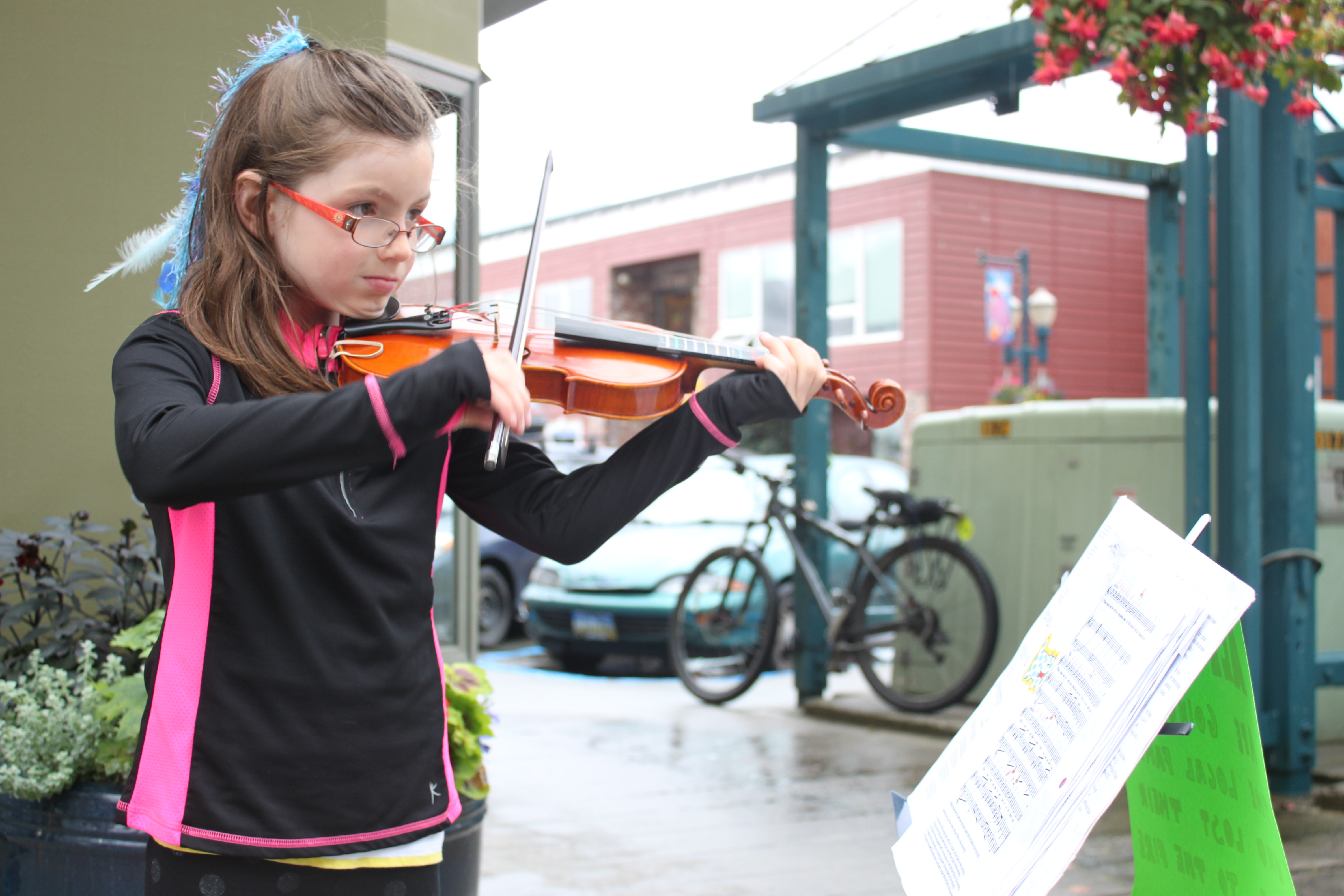
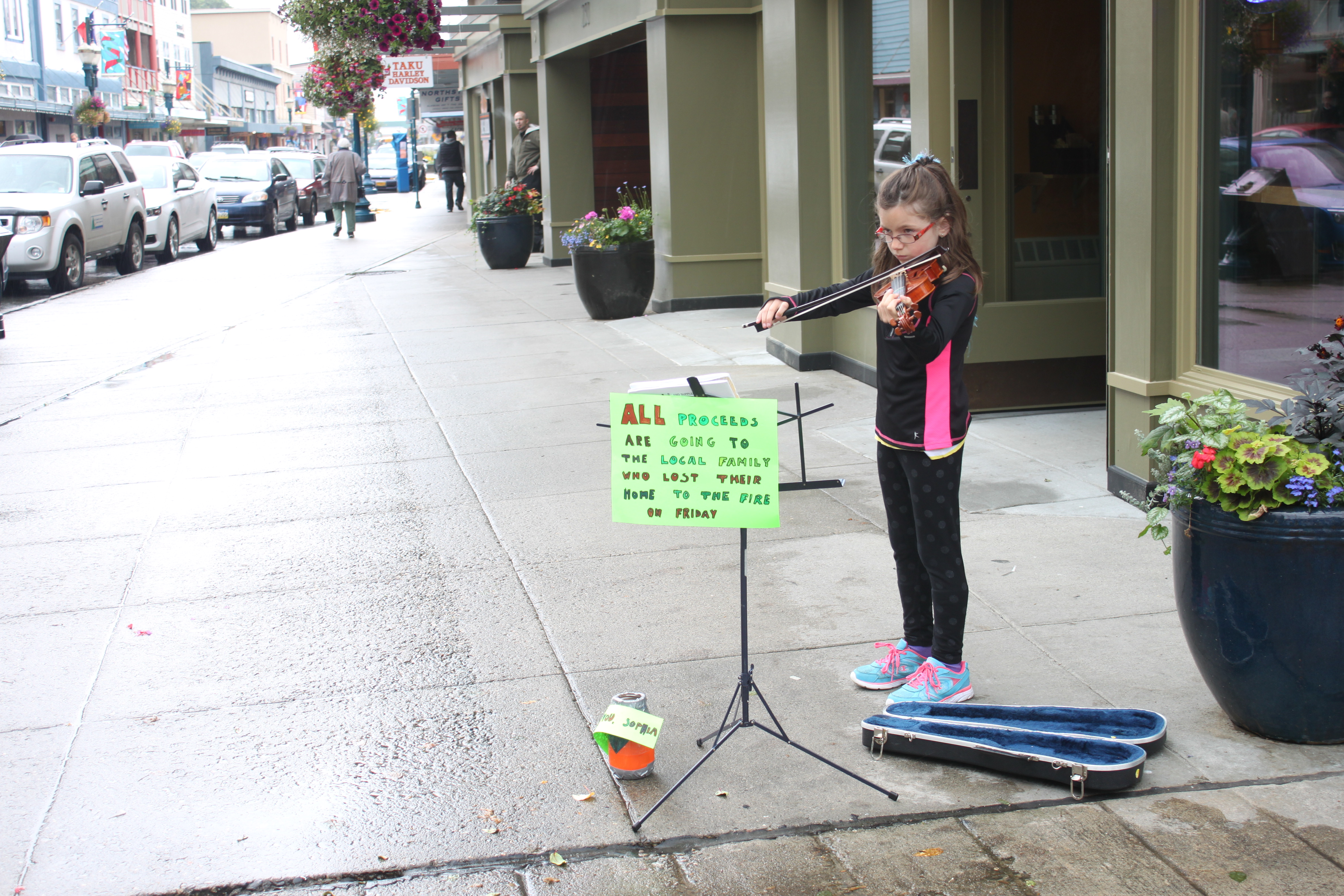
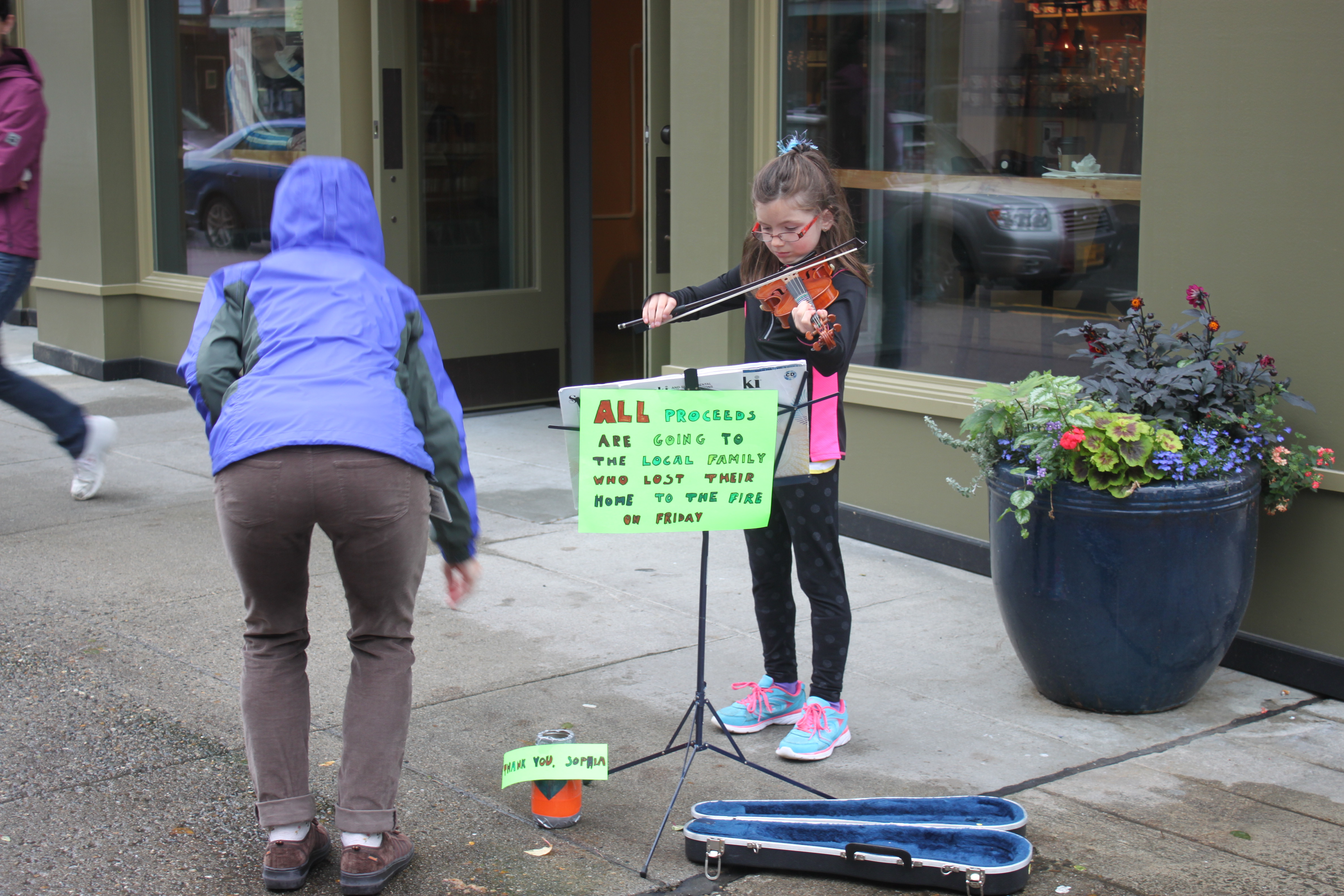
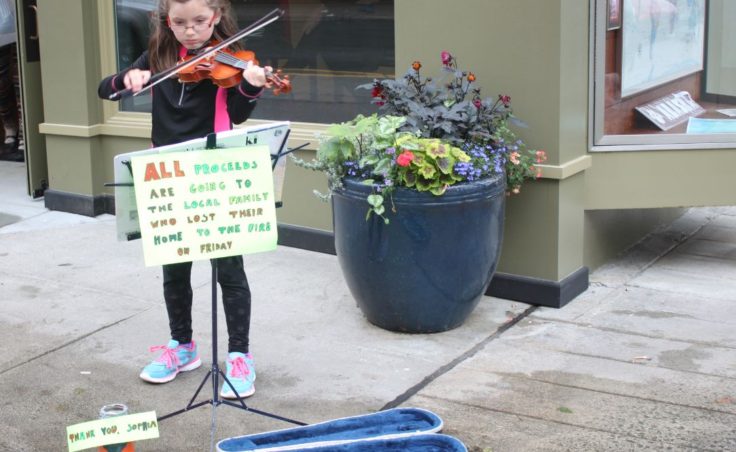
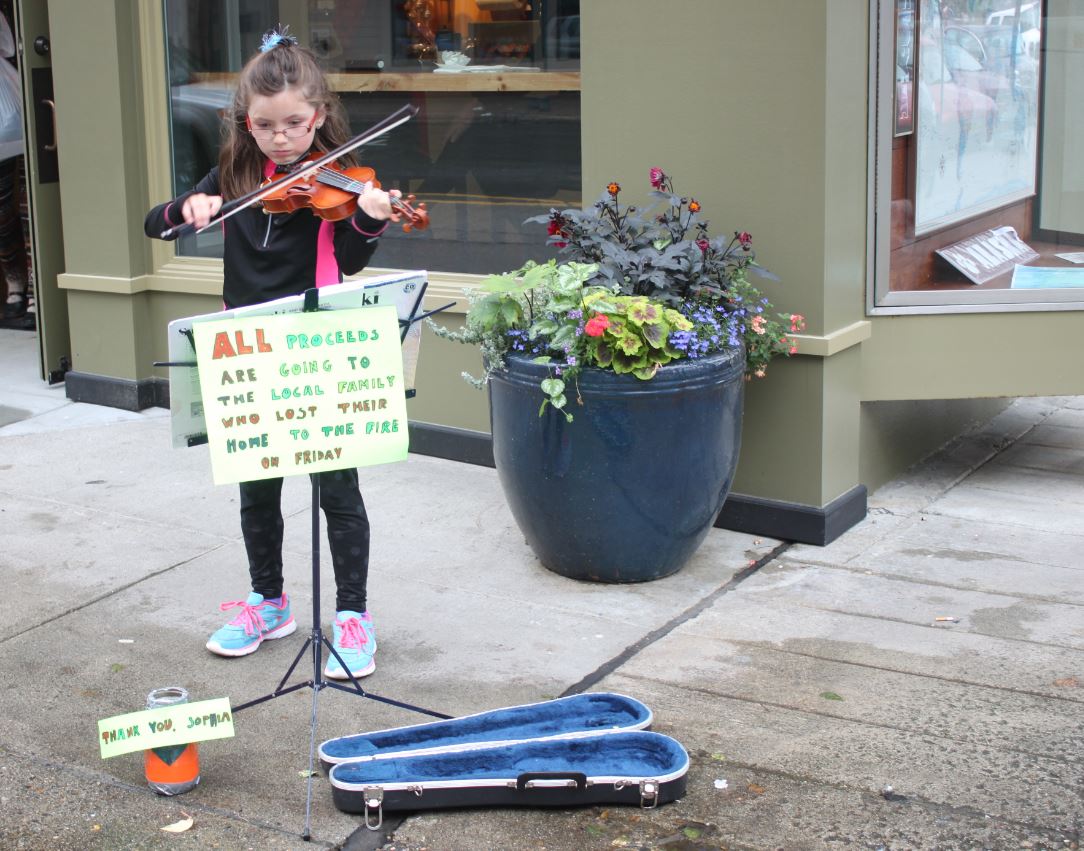
Elementary school student Sophia Nylen can sometimes be seen playing her violin in downtown Juneau with an open violin case to collect money. This week, all proceeds will go to the family that lost their Twin Lakes home to a fire on Friday.

It’s a drizzly Monday afternoon in downtown Juneau. Eight-year-old Sophia Nylen stands in front of the new Heritage Coffee Roasting Company espresso bar on South Franklin Street playing Hunter’s Chorus on the violin.

Like any busker in a city, Sophia gets various reactions from people walking by.

“I like playing for the people because the people enjoy music, and some people don’t like it. They just walk by and go, like, ‘Eh.’ They don’t really care,” she says.

Sophia has been busking since she was 5. She says the money she gets isn’t always for her musical talent.

“When I was little, everyone liked me because I was so adorable,” Sophia says.

She once made $120 in one session.

“They weren’t looking at me playing the violin. They were just looking at me, like, my face.”

Sophia started wanting to play the violin when she was 3.

“I kept asking my mom and she said, ‘Fine. I’ll call the teacher and see,'” Sophia says.

According to Ildi Nylen, Sophia’s mother, the teacher said, “‘You know. She’s quite young. They don’t start this early. But bring her to a group lesson.'”

The plan was for Sophia to see how hard it was to play the violin.

“Well, I took her to the group lesson and by the end of the lesson, she convinced the teacher to start to teach her. She’s quite headstrong, in a good way,” Nylen says.

Sometimes Sophia plays downtown for an hour. Sometimes she plays for 15 minutes.

“Last time she played about 20 minutes, she made $35,” Nylen says.

If you ask Sophia, in the past few summers of playing her violin downtown, she’s earned “maybe a million.” Her mom says it’s more like a couple hundred dollars.

Sophia puts a lot of it in the bank to save for college, and sometimes, she says, she gets to spend some of it.

“I bought this shirt because it’s an Under Armour and I like going hiking a lot so I got it,” she says.

The shirt is black and hot pink. In her hair, she wears a light blue feather.

“I like buying girlie stuff because I’m a fashionista,” Sophia says.

Sophia plays downtown a few times a month during the summer and usually on the weekend. But this week is different.

“On Friday, we were driving by the fire and I saw smoke and we looked behind us and we saw a huge fire. It was, like, flames everywhere,” Sophia says.

The single family home in the Twin Lakes area was destroyed.

“The next day after that, I said to my mom, ‘I want to go play my violin for the people that don’t have their house anymore,'” Sophia says.

Owners Amber and Lucas Schneider have three children.

Sophia plans on playing for an hour each day this week and will give everything she earns to the family.

How squeaky wheels are driving changes in Juneau’s tree cutting policy

Trees cut near Savikko Park
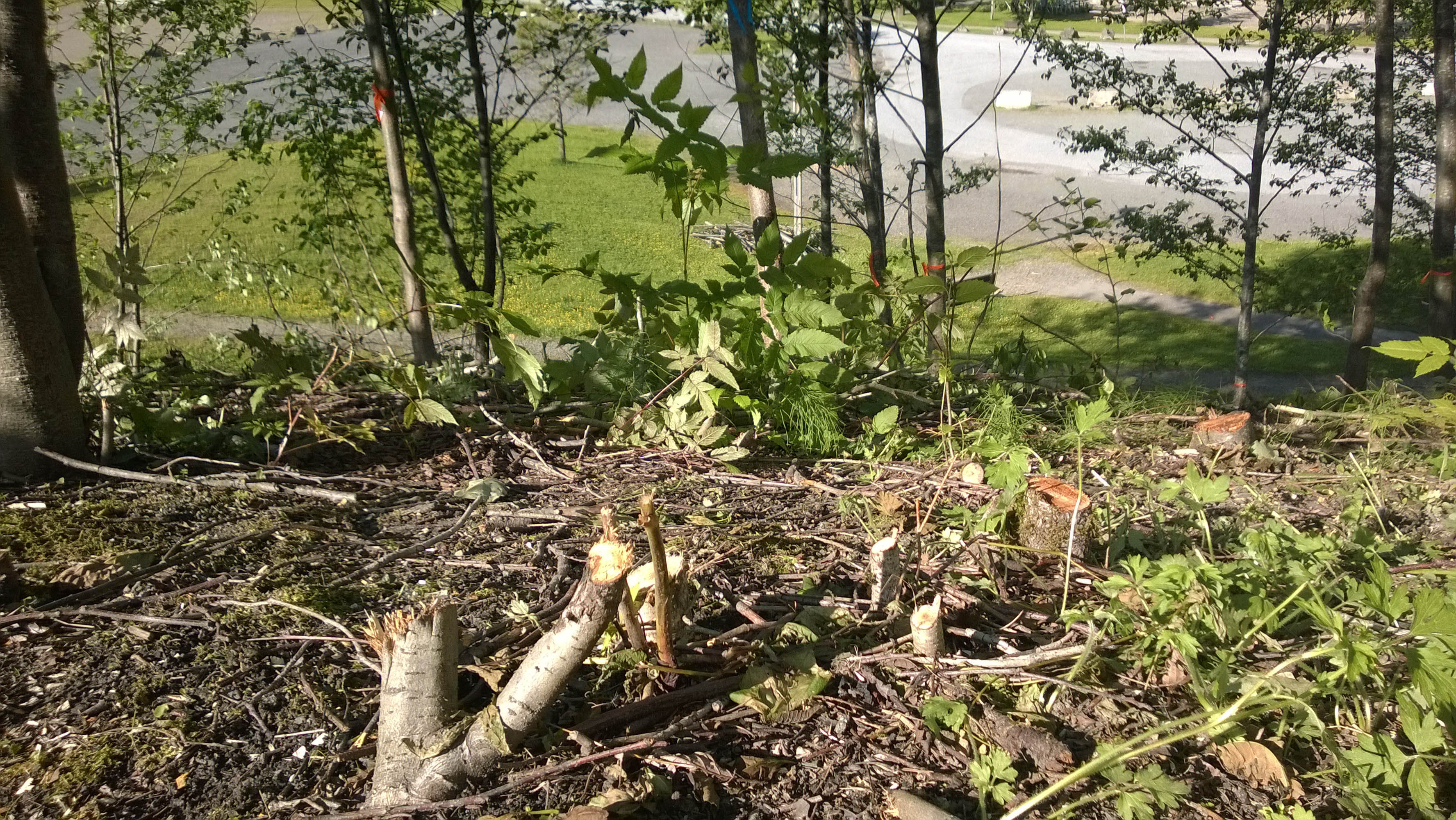
In June, city landscapers thinned the alder trees near a sledding hill between Saint Ann’s Avenue and the Treadwell Ice Arena. (Photo by Jeremy Hsieh/KTOO)

Eight months after city landscapers rejected some Douglas homeowners’ requests to clear cut alder trees to improve their view, city crews cut most of them down.

The city’s near reversal sparked a minor neighborhood drama that’s renewed an effort to revise the borough’s tree cutting policy.

This isn’t a story about a scandal, but about how a few vocal and connected residents became the proverbial squeaky wheel.

In September, longtime Douglas residents Susanne and Sandy Williams asked Juneau’s Parks & Recreation Department to cut down some alder trees on a hillside between Treadwell Arena and Saint Ann’s Avenue. Over the years, the trees had grown tall enough to block the Williams’ Fifth Street view of Savikko Park and Gastineau Channel.

Parks & Landscape Superintendent George Schaaf inspected the site and rejected the request, citing a city policy that specifically bars cutting trees for enhancing the view of private property owners.

Months later, Schaaf’s landscapers cut down most of the trees, leaving the biggest alders.

“Which seems very bizarre,” said Mark Calvert, a Saint Ann’s Avenue resident unhappy about the tree cutting.

“Their reason is for letting trees go higher, when that identical vegetation and the identical trees exist for hundreds of feet along Sandy Beach. And then all of a sudden, just in this tiny swath, you know, trees are significantly thinned out.”

Coincidentally, that  improves the view for a few houses, Calvert said.

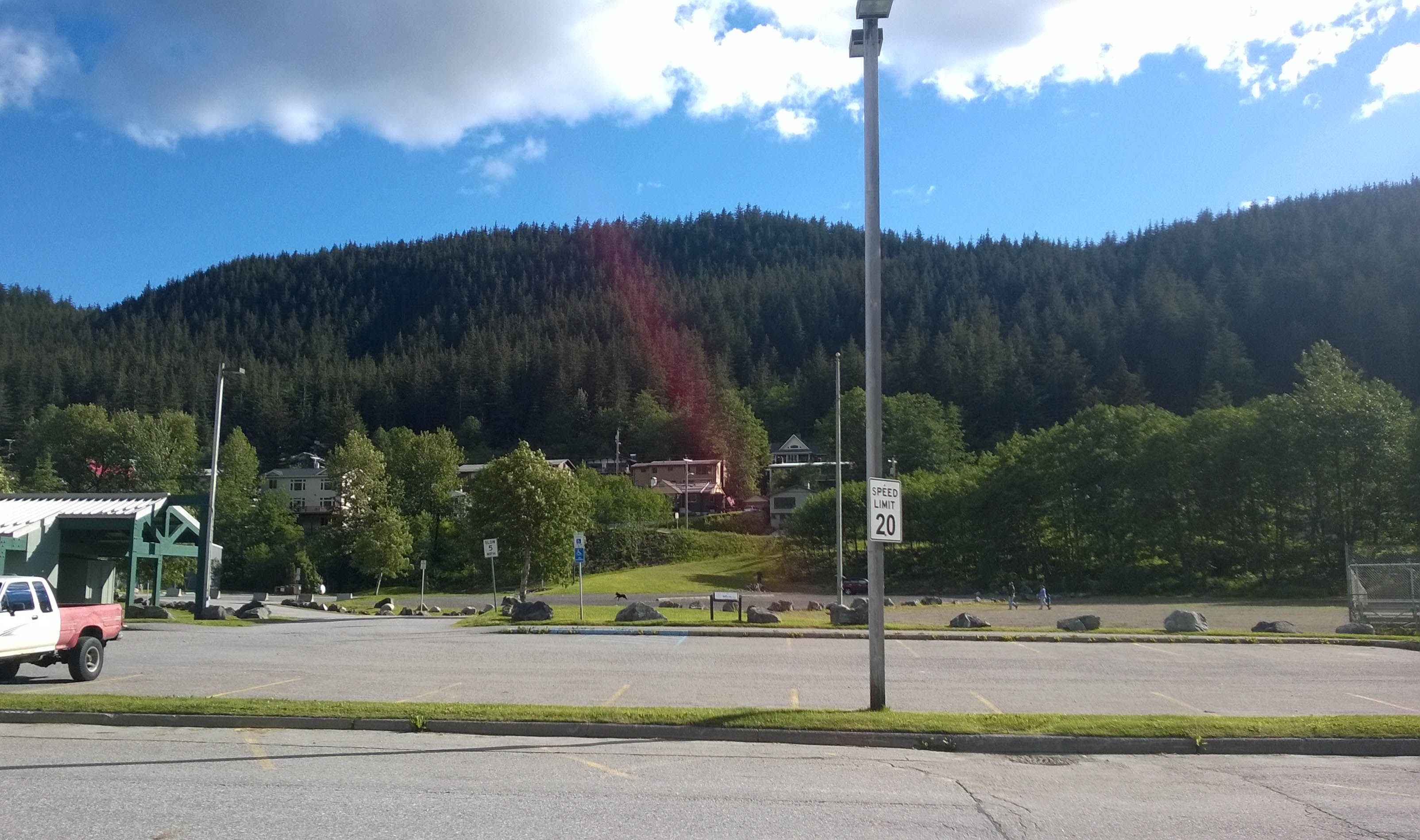
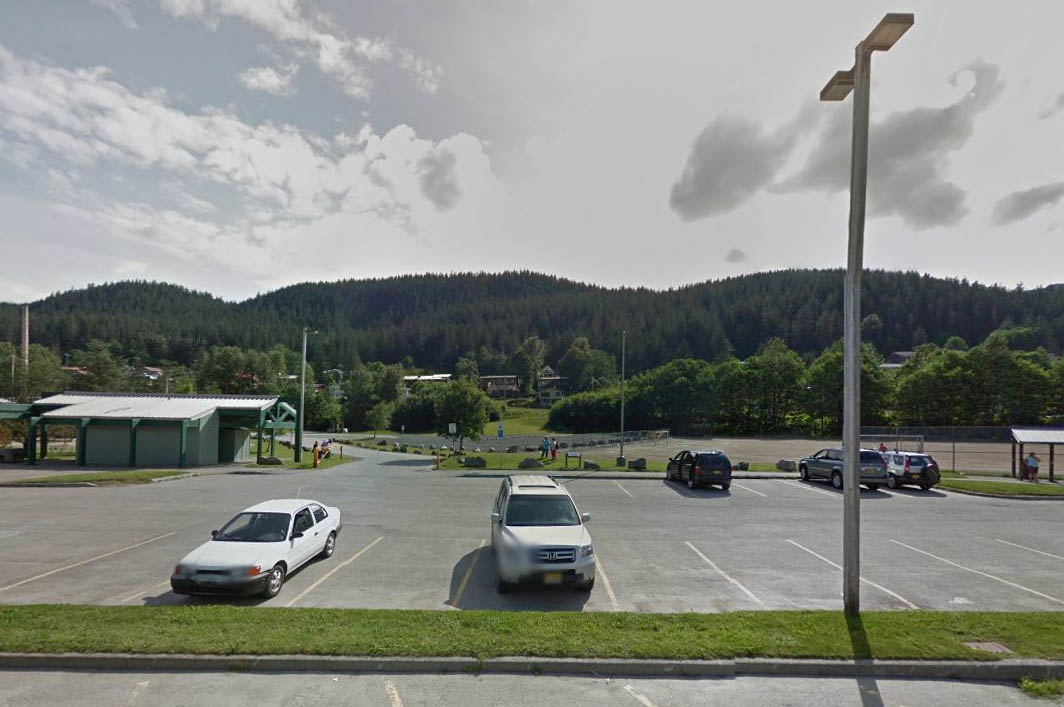
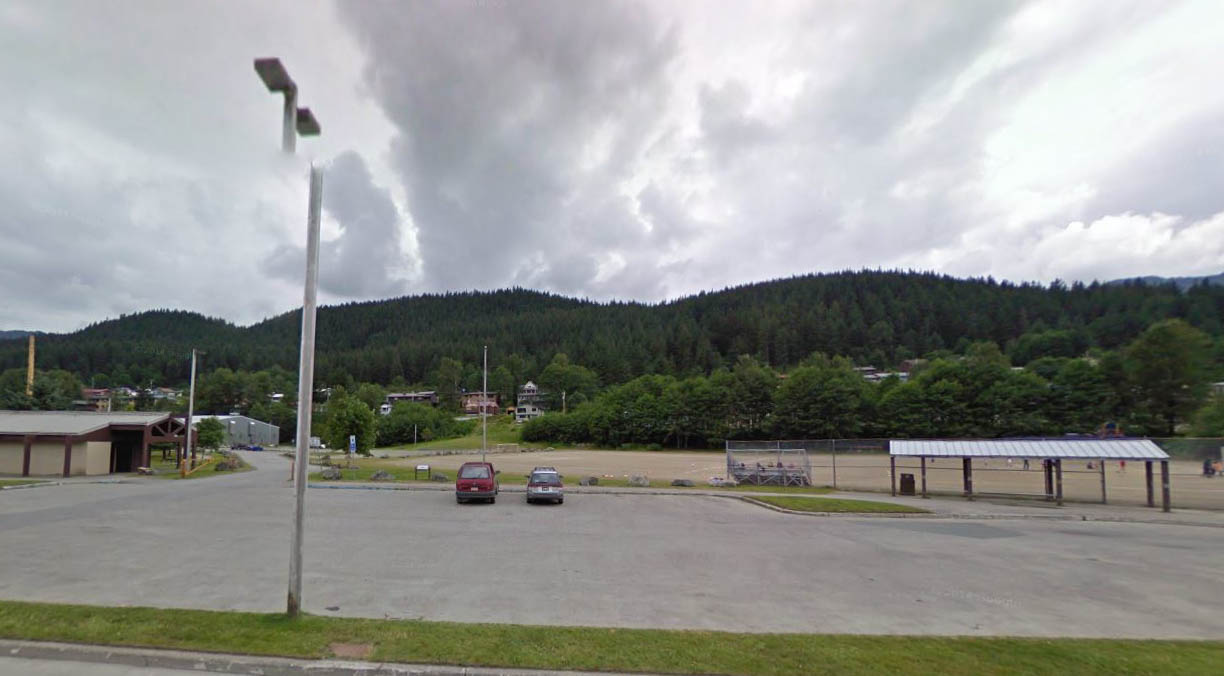
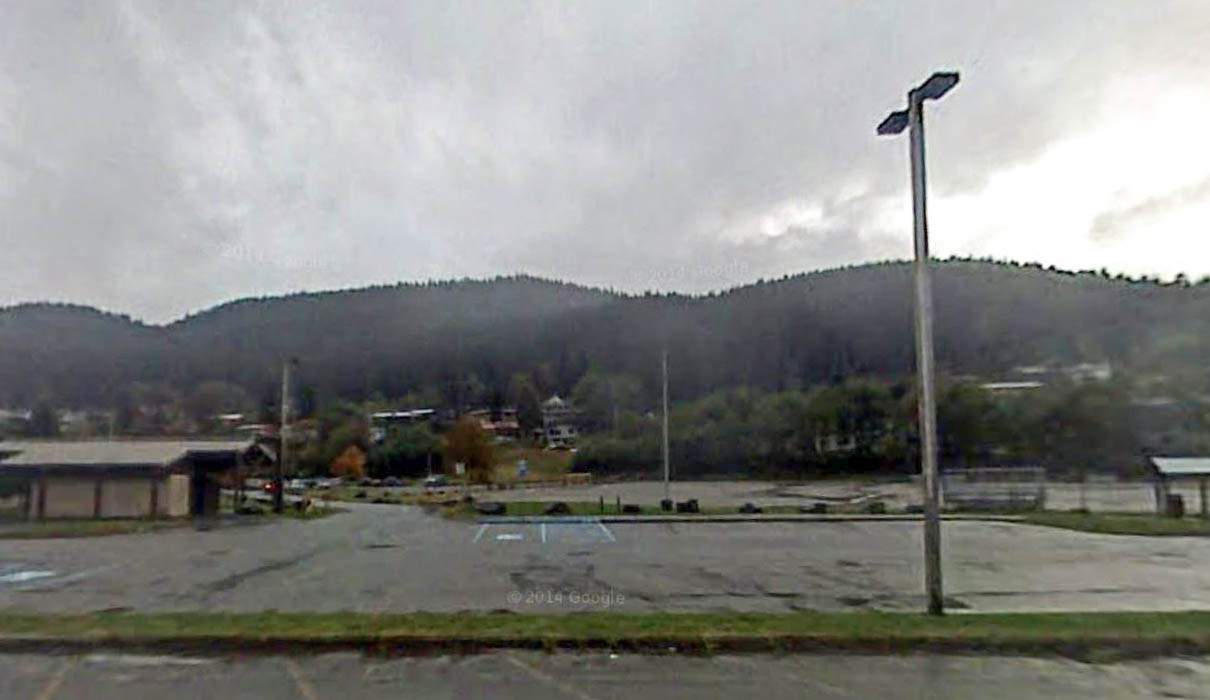
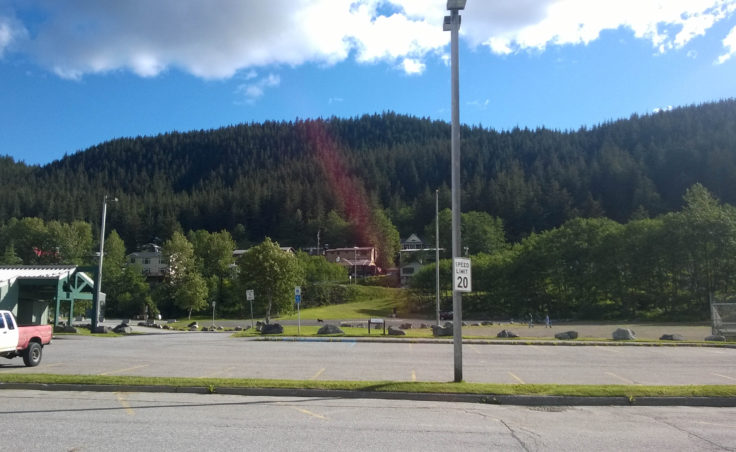
From a distance, the hillside looks much as it did in Google Street View going back to 2007.

After Schaaf’s initial rejection, the Williams wrote directly to Mayor Merrill Sanford and the Juneau Assembly complaining about the trees. Sanford got involved.

Sandy Williams happens to be a donor to Sanford’s successful 2012 mayoral campaign. He gave $100, a tiny portion of the $33,000 Sanford collected for the race, according to campaign finance records.

Sanford acknowledged he’s been longtime friends with the Williams and many of the residents who complained, and of course, he said his involvement was unrelated to campaign donations.

“Had nothing to do with $100 donation, or a $10 donation,” Sanford said.

He said he was sympathetic because views affect property values and falling trees can be hazardous.

“And I’ve been asked by them why our policy is the way it is, and so I looked into it and have been trying to get that changed for a couple of years now, in fact,” Sanford said.
In May, a landscape expert, Sanford, and Parks & Recreation Director Brent Fischer – who is Schaaf’s boss – met with the Williams and several like-minded neighbors.

The city’s experts said they couldn’t clear cut the hillside, but decided they could thin the tree stand, which would accelerate a natural progression; the biggest alders keep growing, the smaller ones die and the understory fills in with other native species, like salmonberry bushes and goatsbeard.

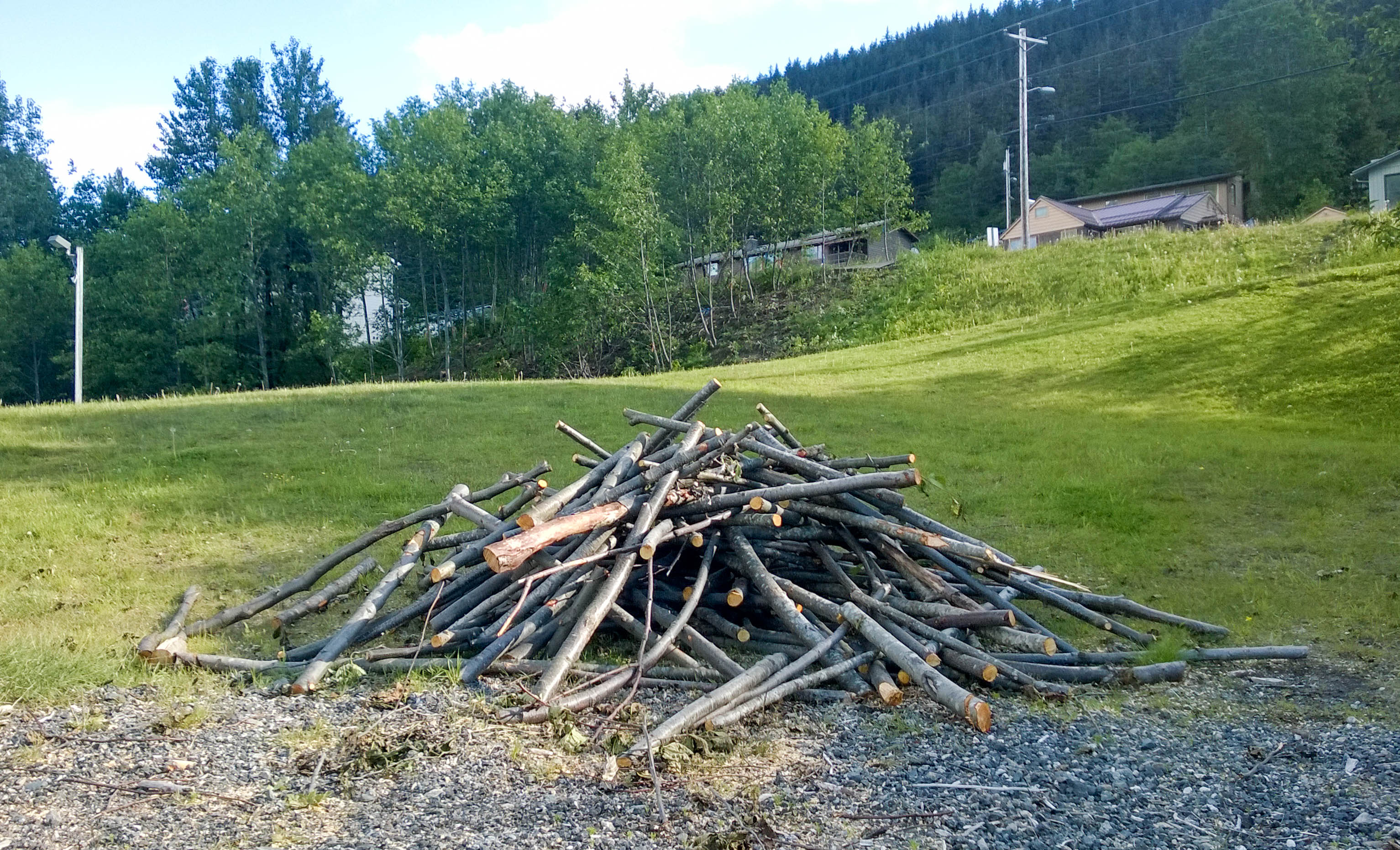
Trees cut near Savikko Park
A pile of alder trunks and branches left after city landscaping crews thinned the tree stands on the sledding hill off Saint Ann’s Avenue. (Photo by Jeremy Hsieh/KTOO)

Parks and Rec manages a few tree stands this way, for example, near the Juneau Montessori School and on the Treadwell Mine Historic Trail. But director Fischer said it’s not something the department can afford to do everywhere.

“We don’t have the resources to actively do this in all areas. Nor do I want to. We just can’t. We don’t have enough resources,” Fischer said.

“We laid off a landscape person this year….We laid off a building maintenance person this year, laid off a rec coordinator position this year because of the budget.”

So why go to the extra effort here? Fischer said that’s just the way it works sometimes in the city. Things get brought to attention, and you get refocused.

Juneau turns out for downtown cleanup

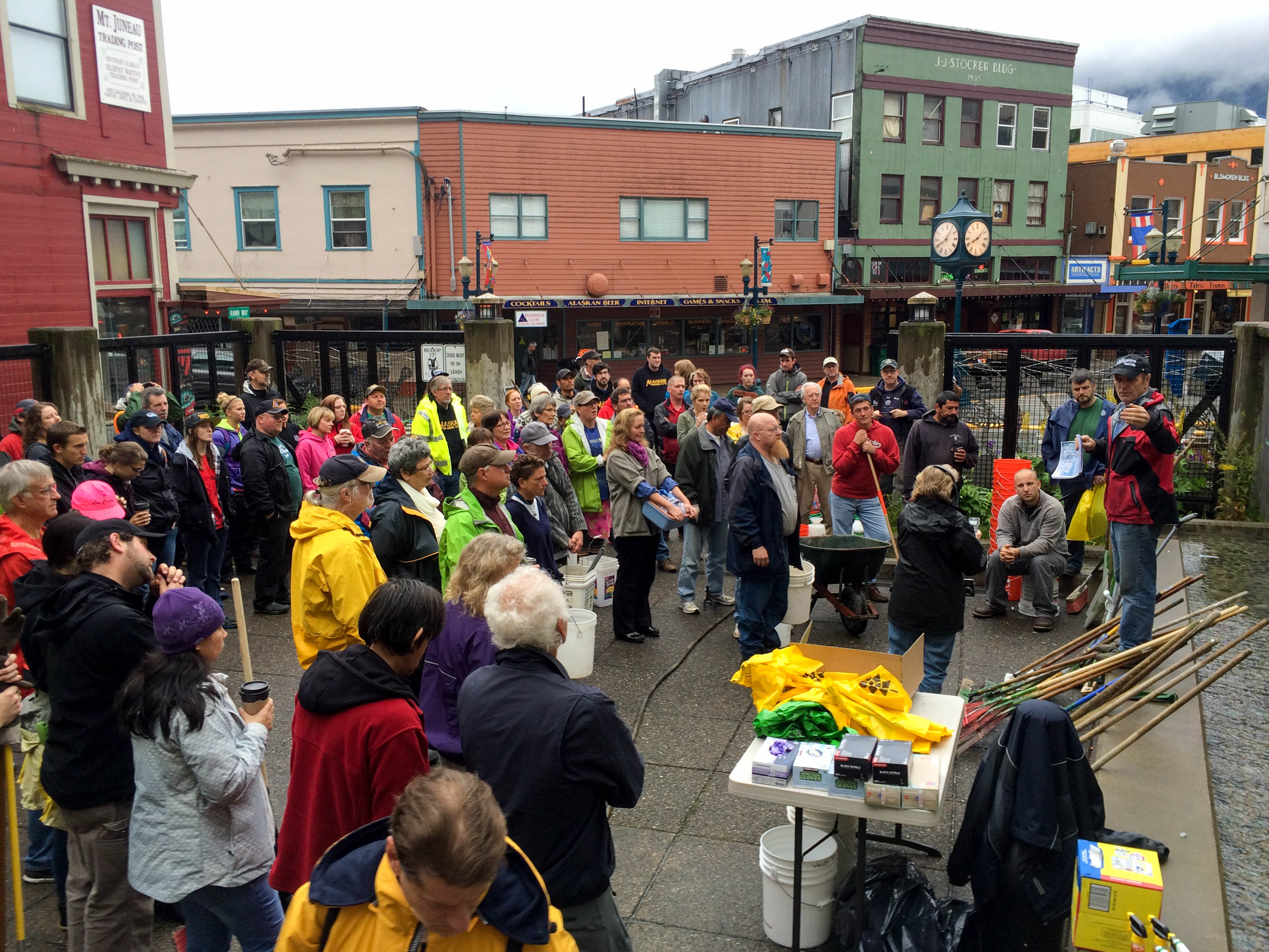
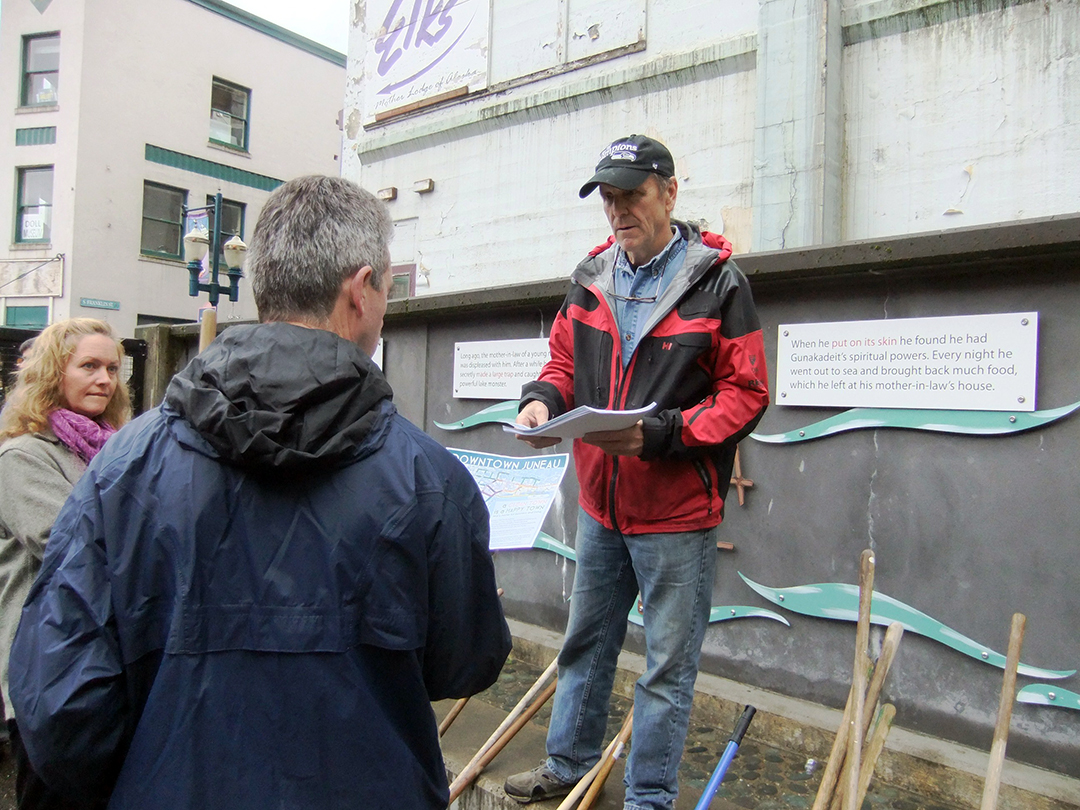
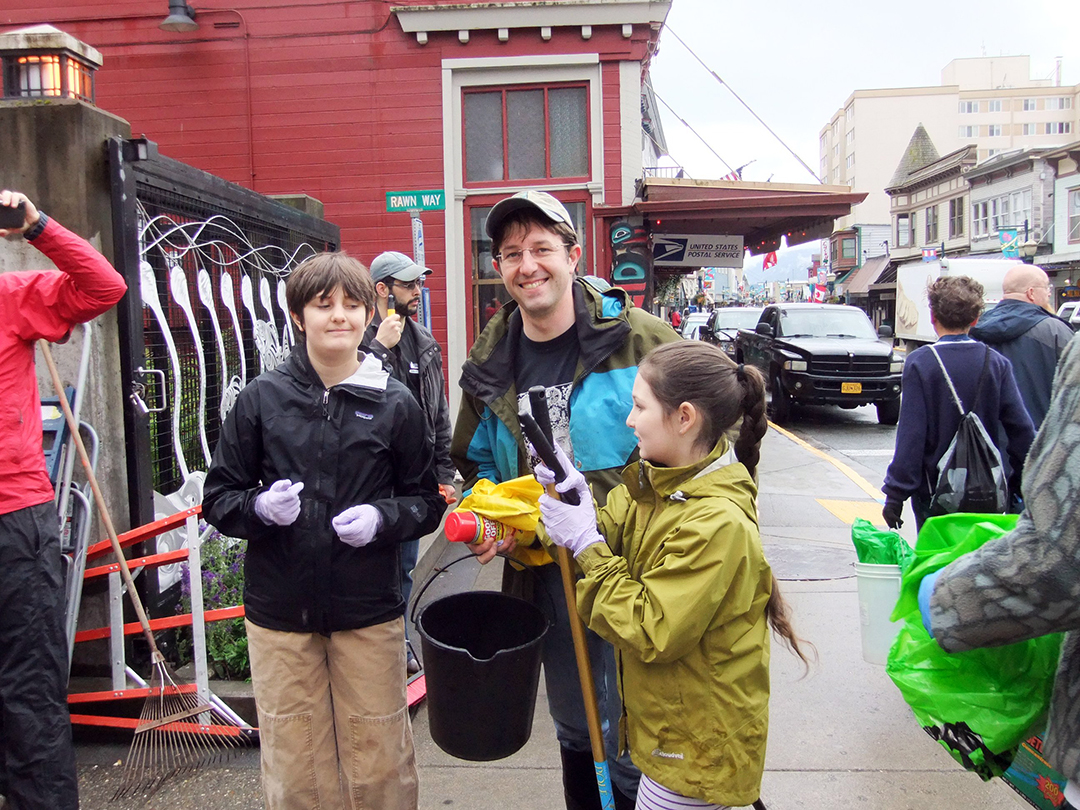
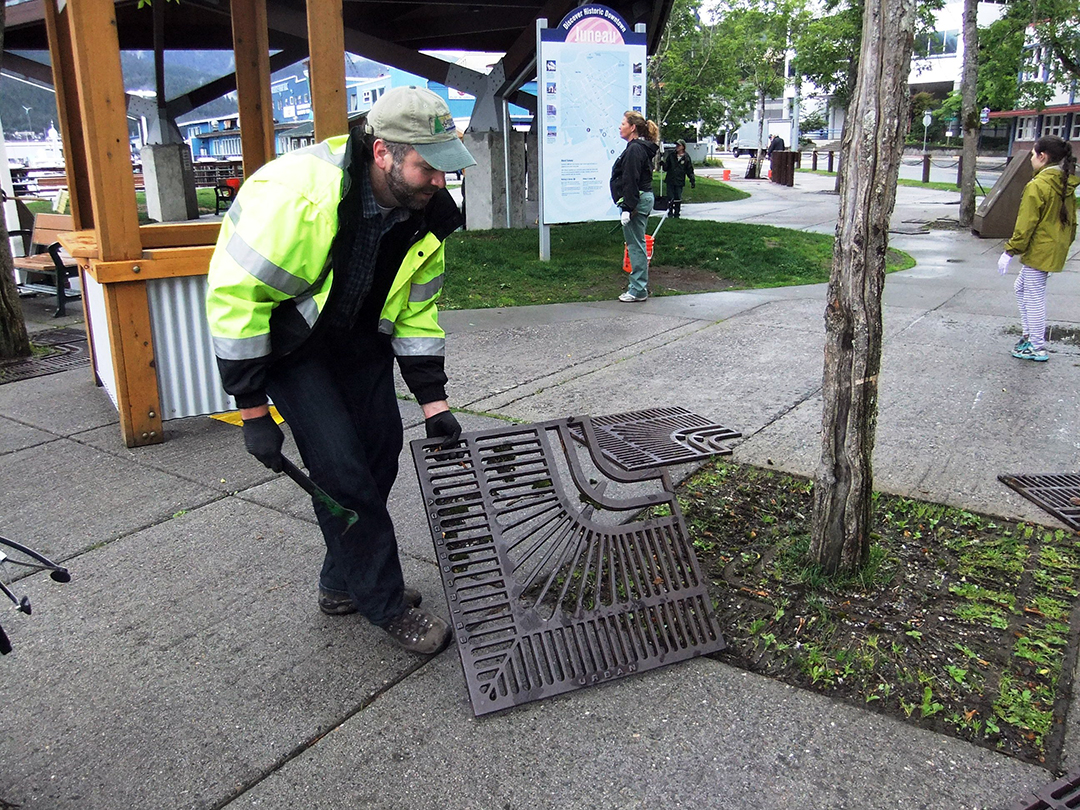
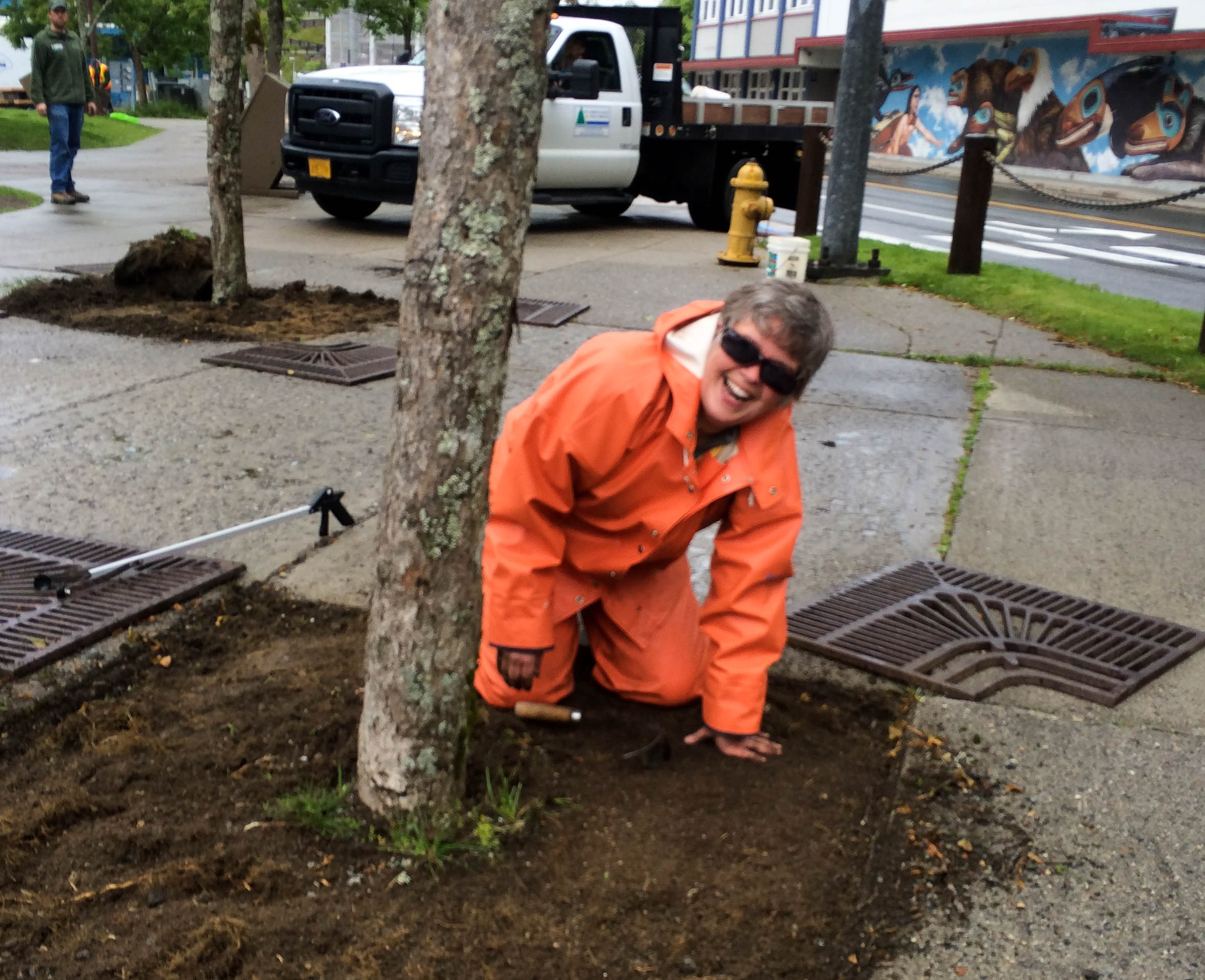
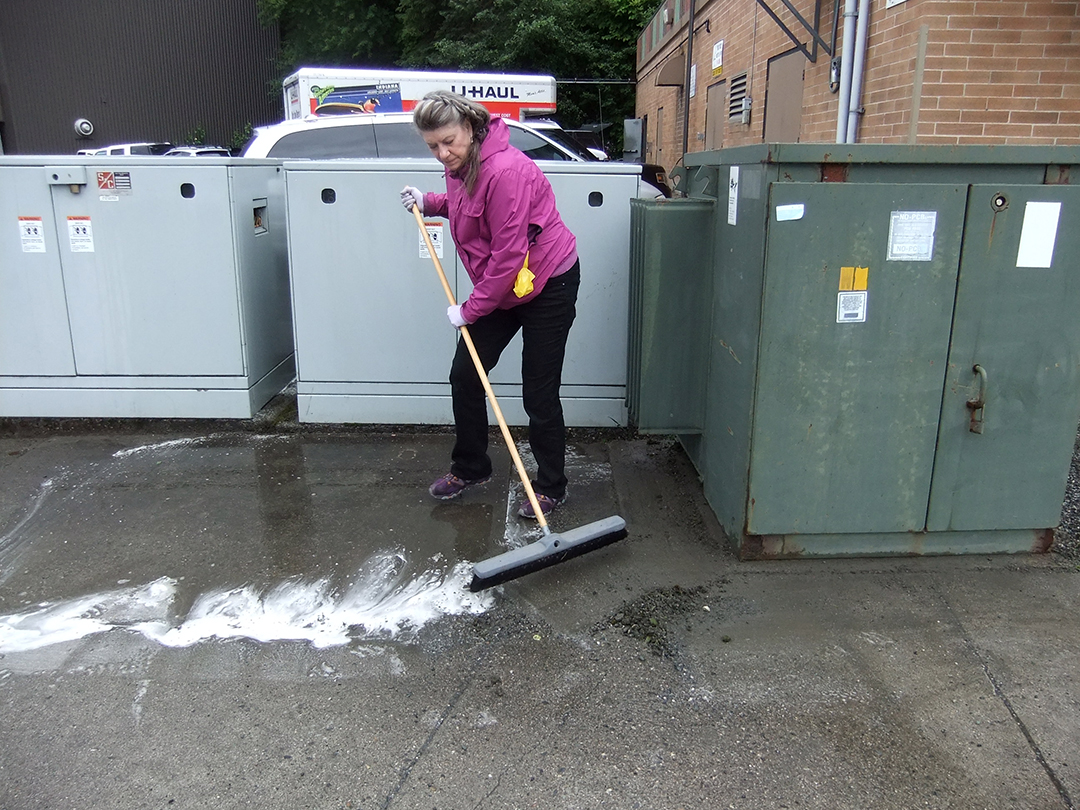
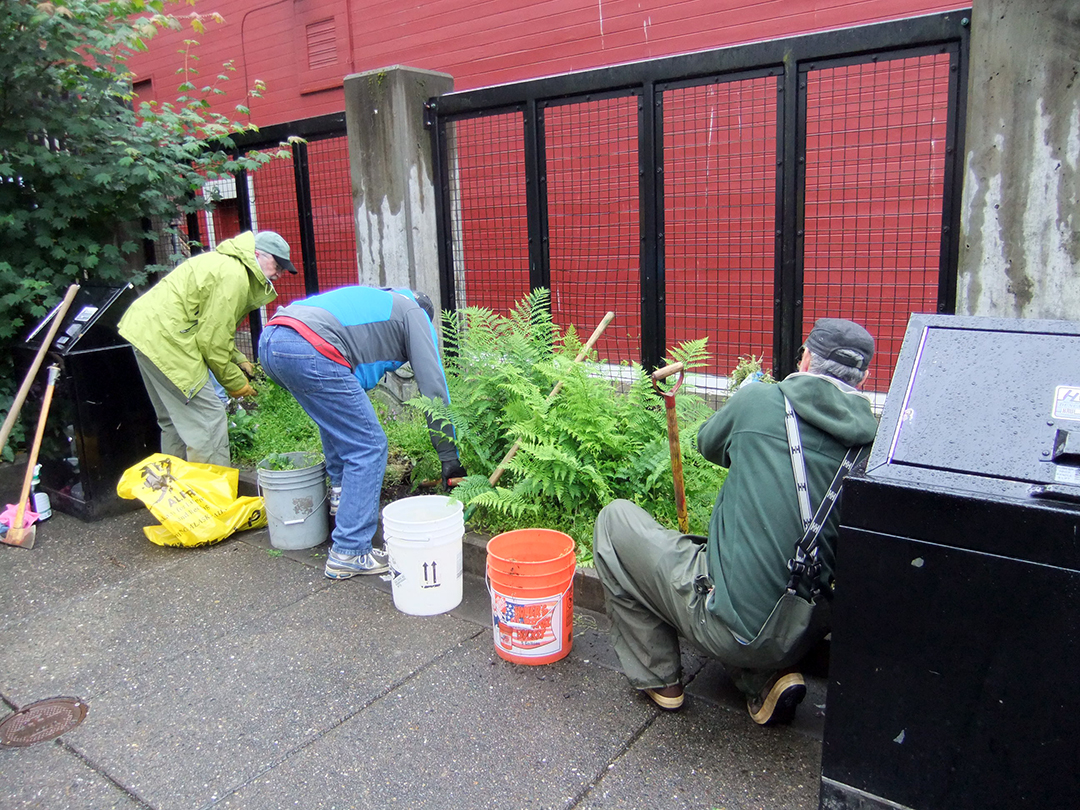
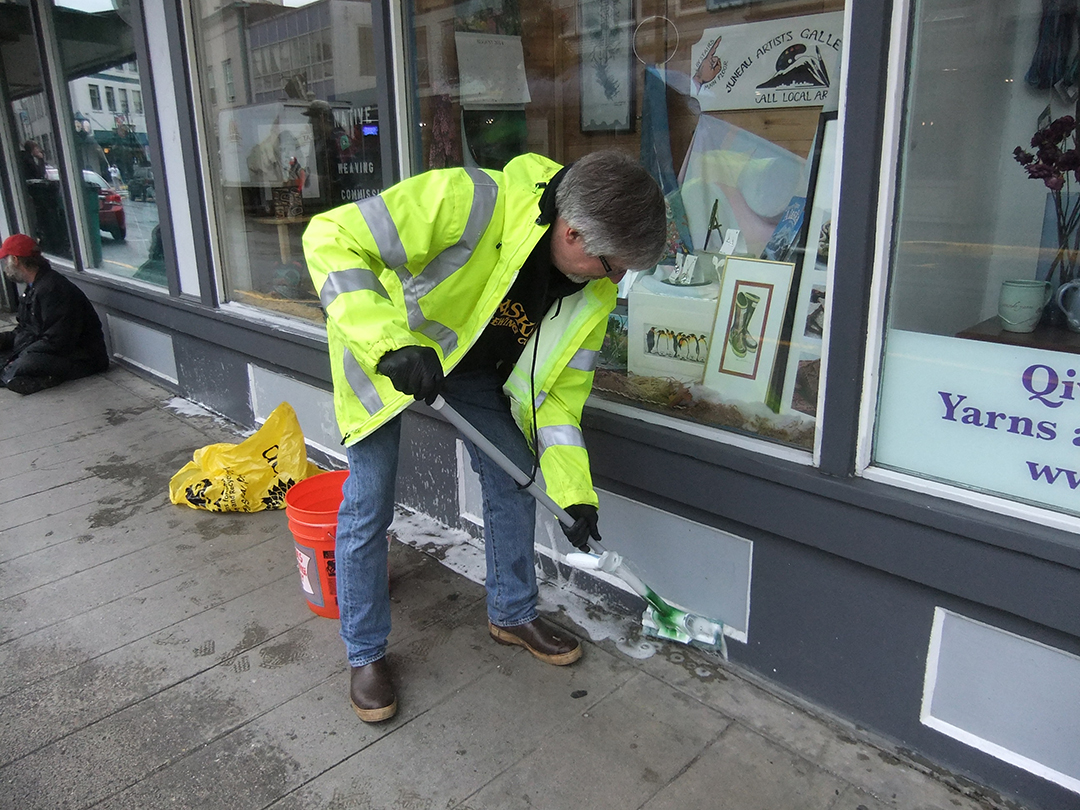
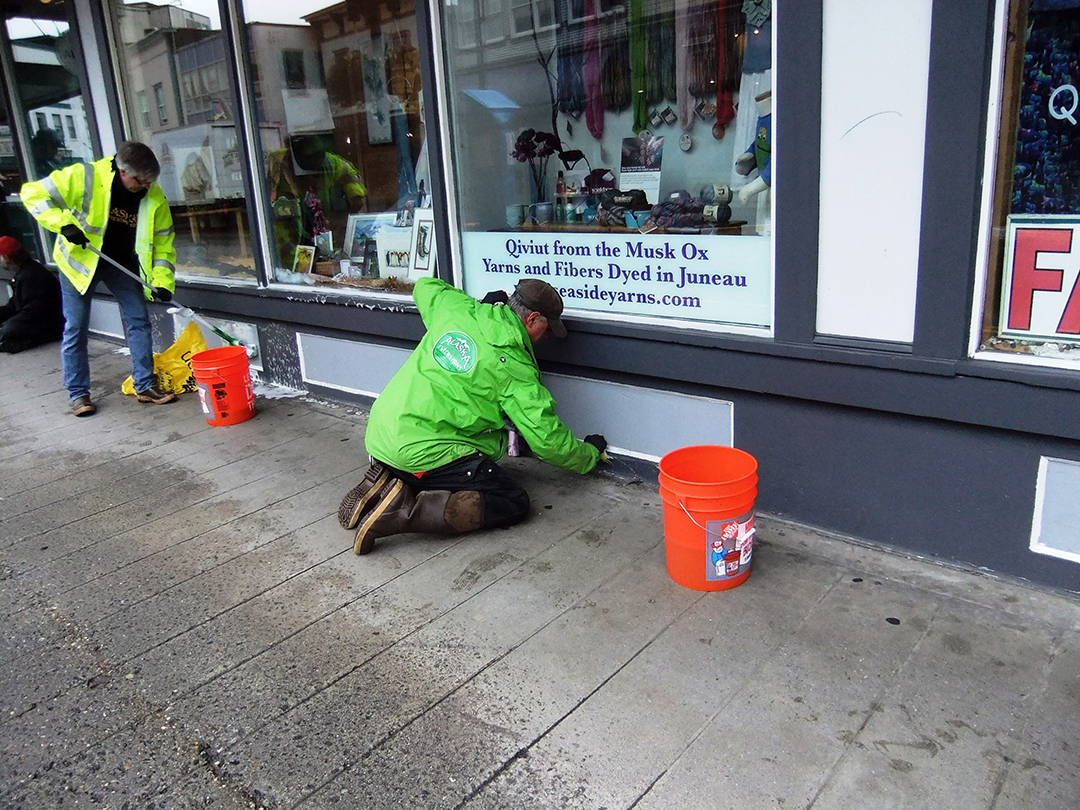
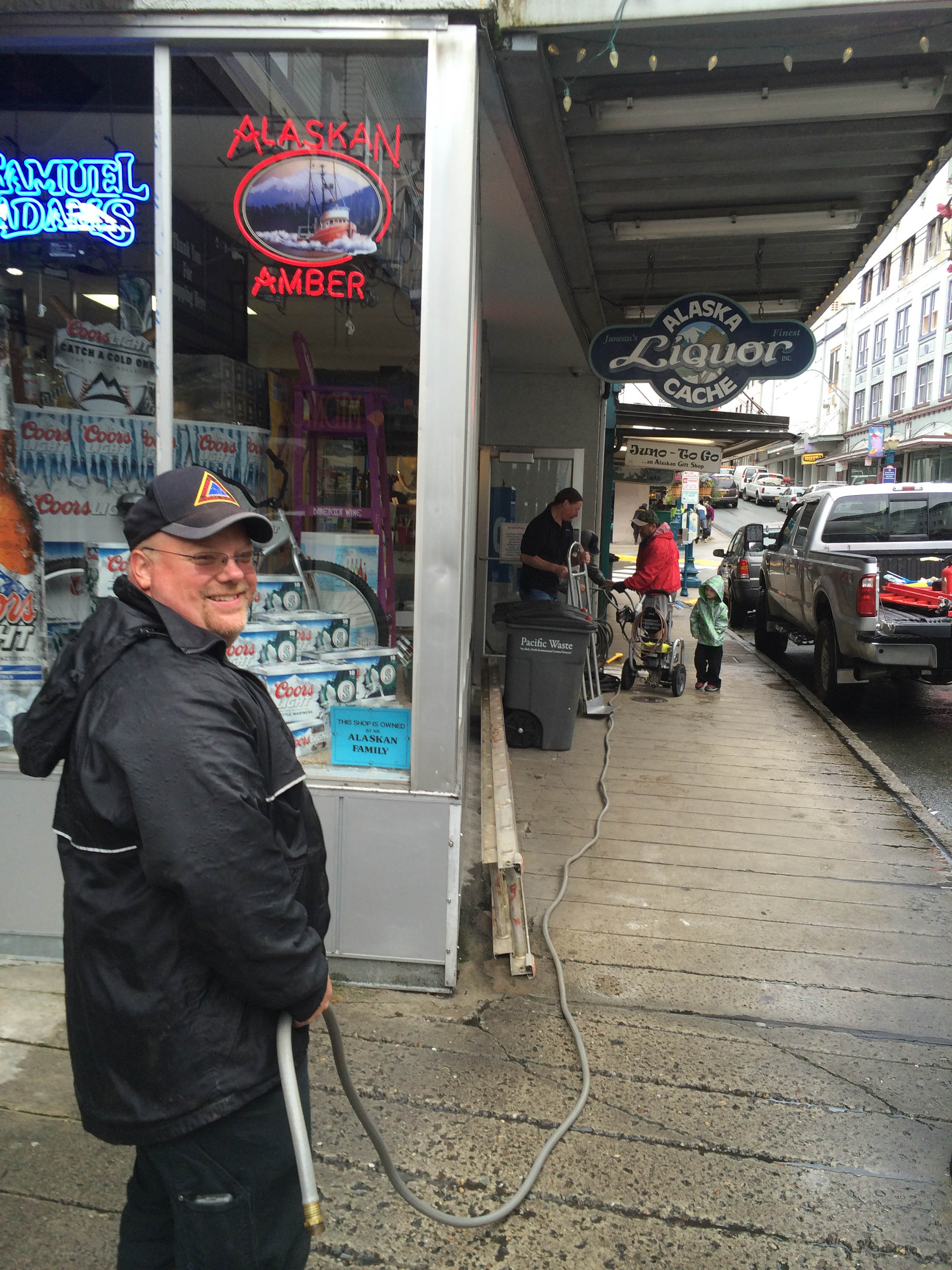
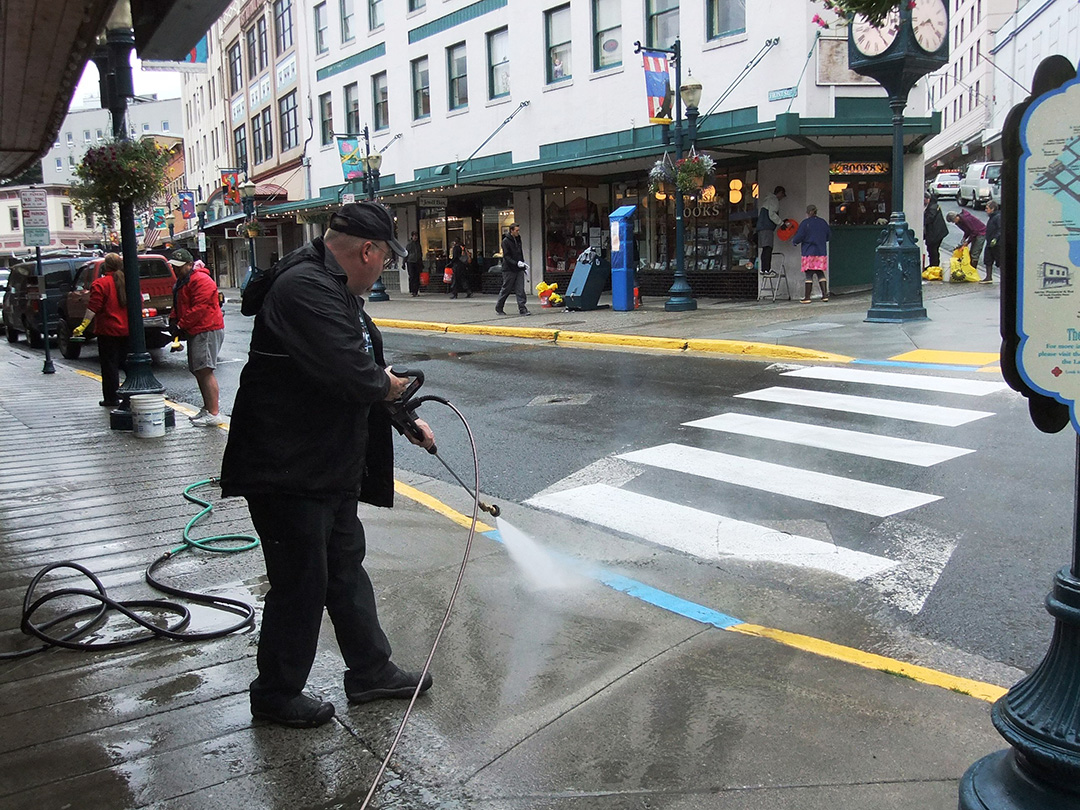
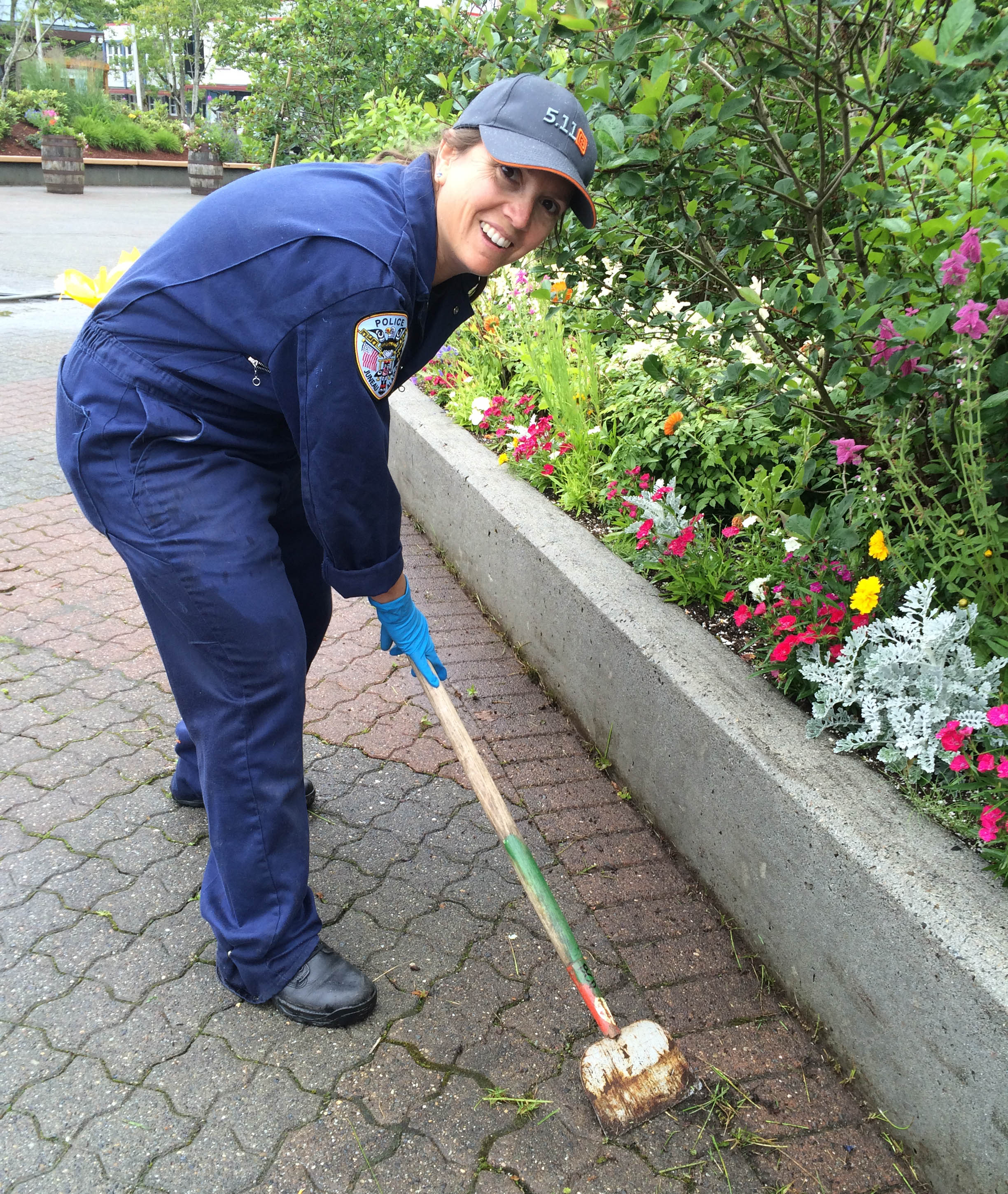
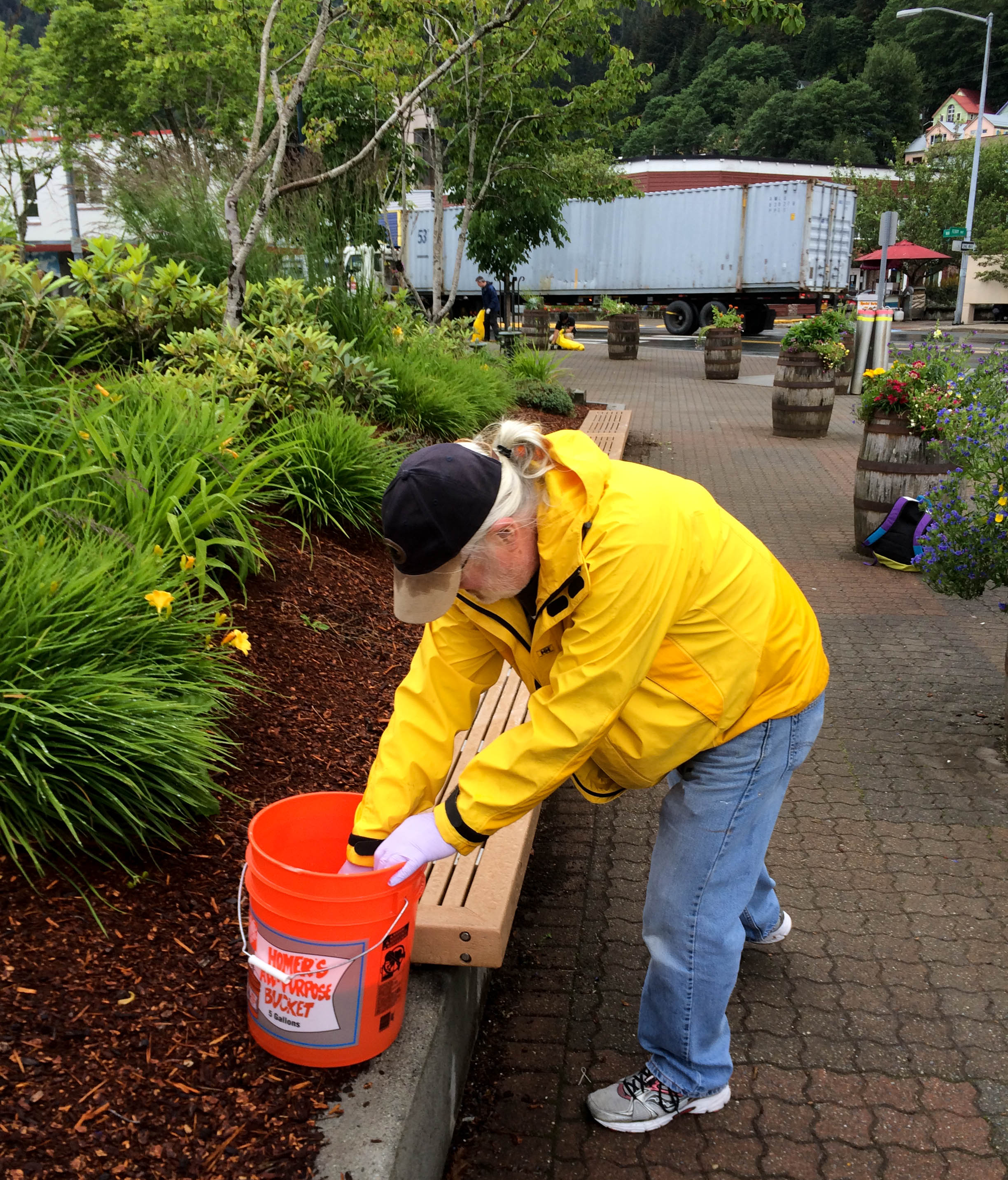
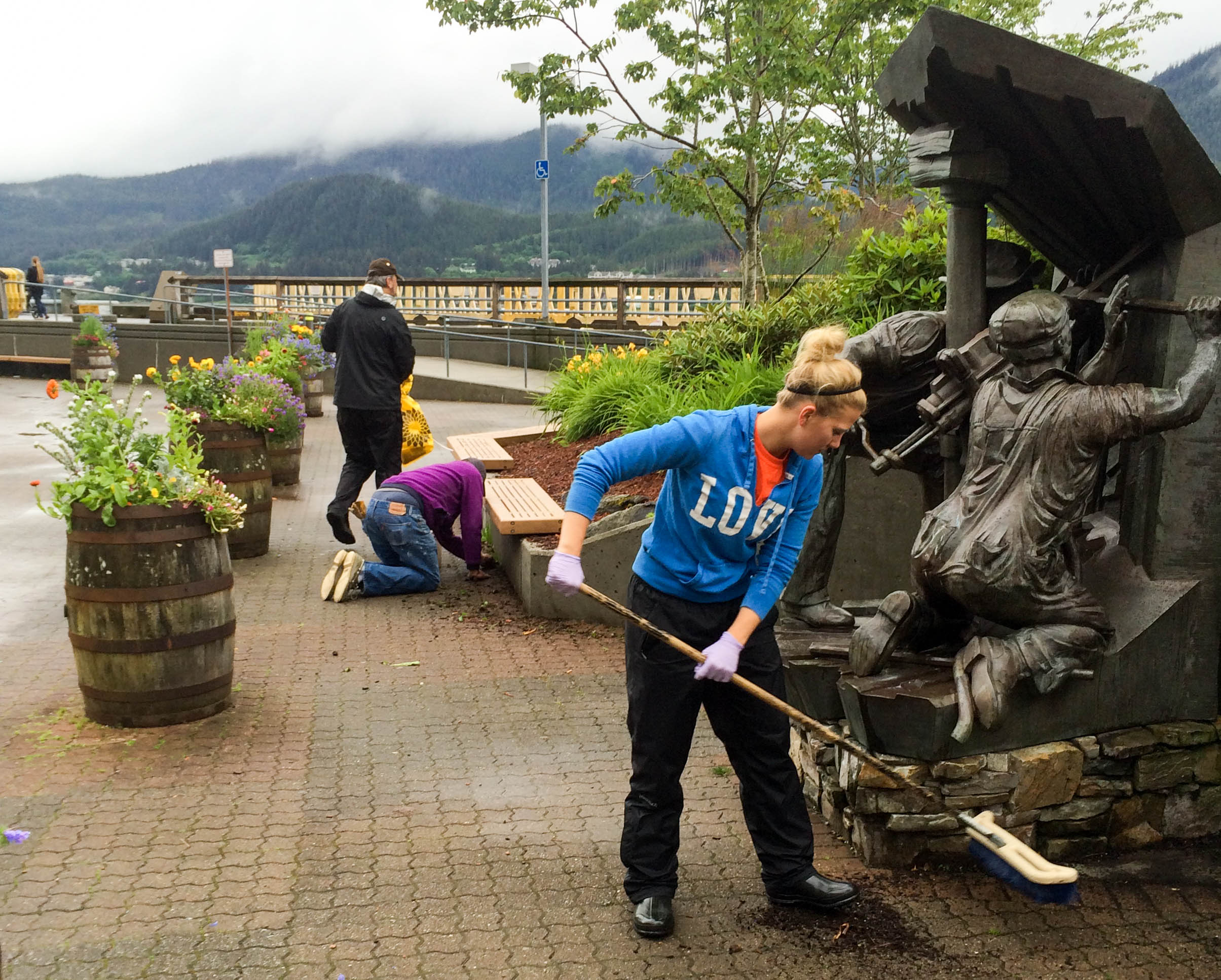
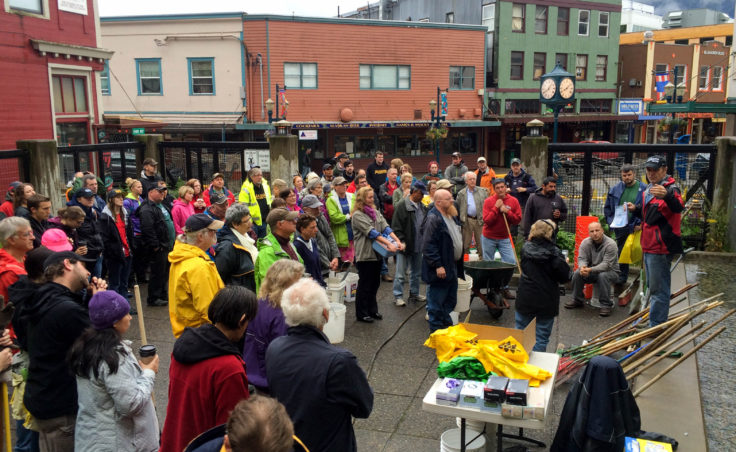
More than 100 volunteers on Friday joined CBJ crews to pull weeds, sweep, hose, scrub and pick up what some estimate to be thousands of cigarette butts.

“I think everyone picked up cigarette butts,” said 9-year-old Adara Allen.

She was a bit grossed out by all the cigarette butts that litter downtown Juneau.

“We scrubbed benches and I scrubbed railings. We picked up a ton of trash. Like a lot of cigarette butts. Almost all of it was that,” she said.

Adara and her 12-year-old sister Tsifira Kiehl joined their dad, Assemblyman Jesse Kiehl, in the cleanup.

“Adara found a whole milk jug, partly full,” Tsifira said. “Mostly I scrubbed benches and railings and stuff. I also picked up a lot of stuff, including cans, broken glass, cigarette butts.”

Cigarette butt litter is the byproduct of Juneau’s indoor smoking ban, despite the number of receptacles that line city sidewalks.

Alicia Smith was scrubbing a butt receptacle on South Franklin Street. Her son Joel also had a scrub brush.

“Right now I’m just scrubbing the lamp post down,” he said. “I just wanted to help clean up downtown.”

Business owner Bruce Denton came up with the idea for a cleanup as part of an effort to improve the heart of the capital city. He’s been joined by an informal coalition of business and property owners, downtown residents, the Glory Hole and social service agencies.

Denton took the proposal to CBJ Parks and Recreation, which welcomed the help. The city provided tools, cleaners, buckets, garbage bags, and rubber gloves. Some volunteers showed up with their own favorite tools and Juneau businesses donated other supplies.

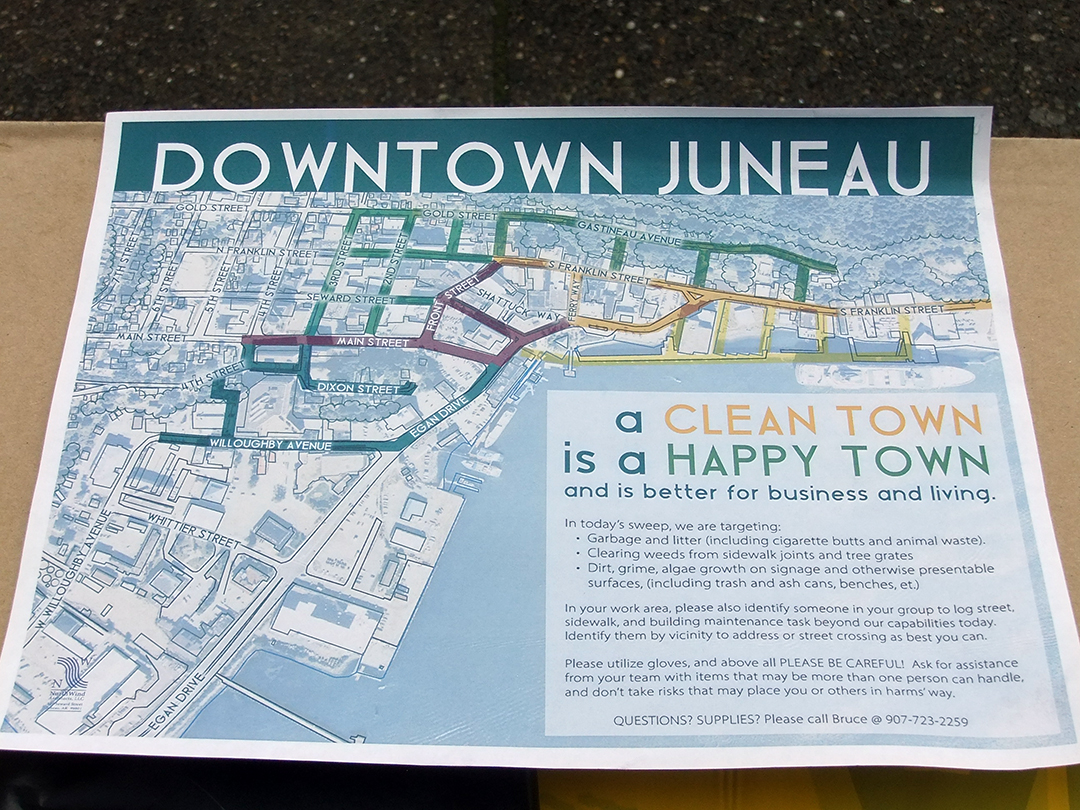
They met at Pocket Park and worked along Front, Seward and Franklin streets, and Marine Way to the Willoughby district.

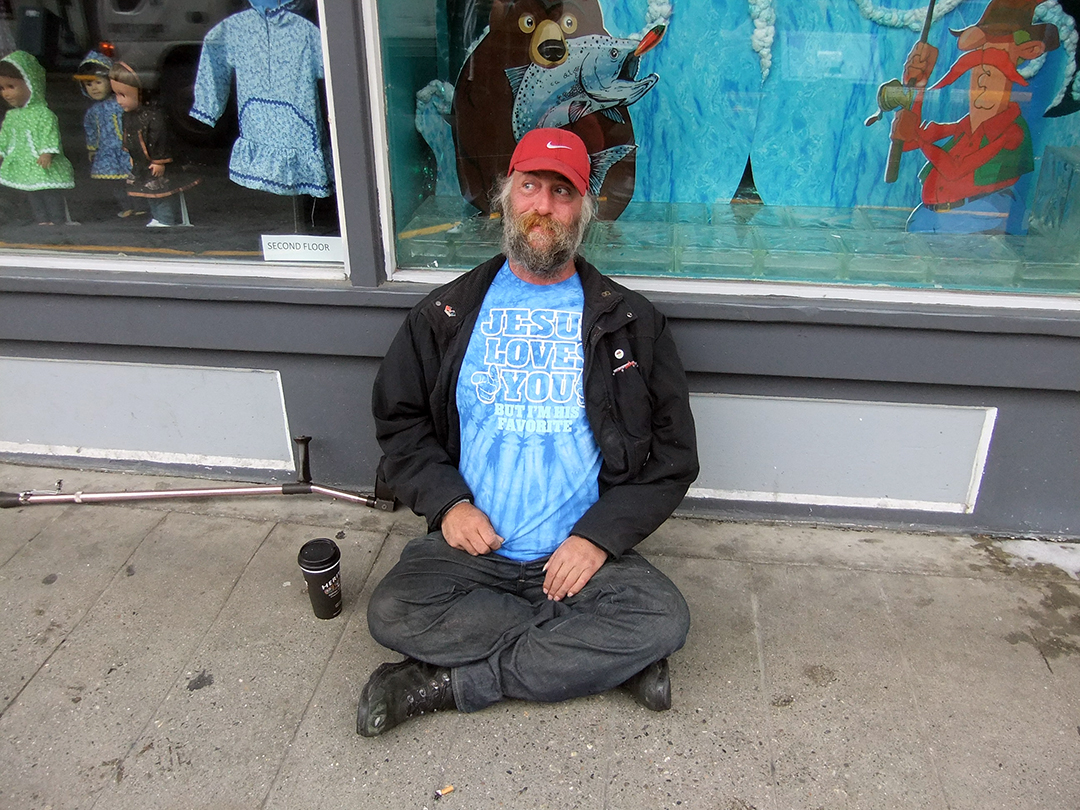
The small army of workers included a who’s who of city officials, a legislator, business owners and employees, a myriad of Juneau residents and some homeless folks.

Deborah Harris has been in Juneau for about a month and is living at the Glory Hole, Juneau’s emergency shelter and soup kitchen.

Harris was washing the historical interpretive sign in Marine Park.

“So this morning we’re just getting’ all the mold and the grime and everything off and scrapin’ it up,” she said.

CBJ Parks and Landscape Superintendent George Schaaf was working in Marine Park, too. He said it’s one of the hardest places in downtown to keep up.

“You know a million people come through here every year, plus everything that just happens on a daily basis, so it’s more than we’re able to take care of right now,” Schaaf said.

Volunteer Mike Patterson organized the Willoughby Avenue group, where they found the usual trash and a lot of Styrofoam.

“And I don’t know where that came from, but it was everywhere,” Patterson said.

He said it shouldn’t require a small army to pick up litter, which ought not be there in the first place.

“If everybody does their part and just picks up litter and puts it in one of the many garbage receptacles we have around Juneau then it doesn’t have to get to that state again,” Patterson said. “It just takes people caring.”

About 11 o’clock, the volunteers arrived back at Pocket Park, stripped off the rubber gloves and enjoyed music and a thank-you picnic for their efforts.

“The last time I saw Gunakadeit Park this clean was when it was built,” said CBJ Parks and Recreation Director Brent Fischer.

Fischer said keeping the capital city clean should be a community effort.

“If we have community support like this, we can get it done. From the city’s standpoint, we can’t do it alone,” he said.

Fischer is already looking ahead to the next scour and scrub.

“I hope we can do this in the spring time, so get your rubber gloves, get your tools out, get your brushes and come back.”

Denton is planning another cleanup after the cruise ships leave this fall to focus on private property, including painting some downtown buildings that could use a facelift.

Original story:

Downtown Juneau is a lot cleaner today thanks to more than 100 volunteers who joined city crews to sweep, hose and scrub streets and sidewalks.

Juneau residents as well as the homeless joined city officials and landscape crews for the three-hour cleanup. It started at Gunakadeit Park, also known as pocket park, then wound along Front, Seward and Franklin streets to the Willoughby district.

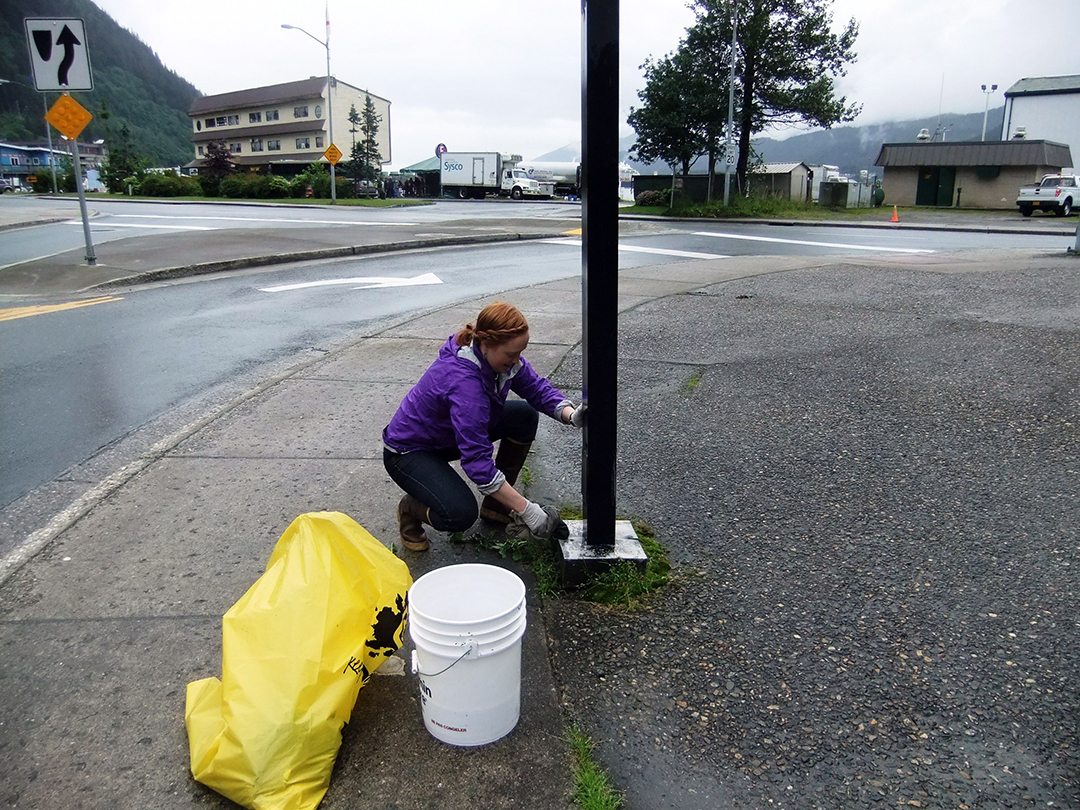
Bridget Smith spent the first hour scrubbing dirt and moss from a forgotten park post.

“As citizens we all have a collective responsibility to make our community better, to make our state better, to make our nation better and this is part of it. And I am so happy to see so many people here,” Smith said.

The Downtown Improvement Group hopes to join the city and borough for another cleanup this fall, at the end of the cruise ship season.


Editor’s note: In the original story, Bridget Smith was mis-named Deborah. We regret the error.

Why Juneau should be next for Housing First

A considerable amount of city resources is spent on addressing the needs of chronic inebriates who are homeless. (Photo by Lisa Phu/KTOO)

Momentum is gaining in the capital city on permanent supportive housing for the homeless who suffer from substance abuse.

Housing First is based on the idea that the homeless can’t deal with problems such as alcoholism and medical issues until they have a permanent place to call home.

Anchorage and Fairbanks have Housing First facilities. In Juneau, some nonprofit organizations, city officials and legislators think it’s a good idea, but other obstacles are holding up the project.

Mark Maleski (Photo by Lisa Phu/KTOO)

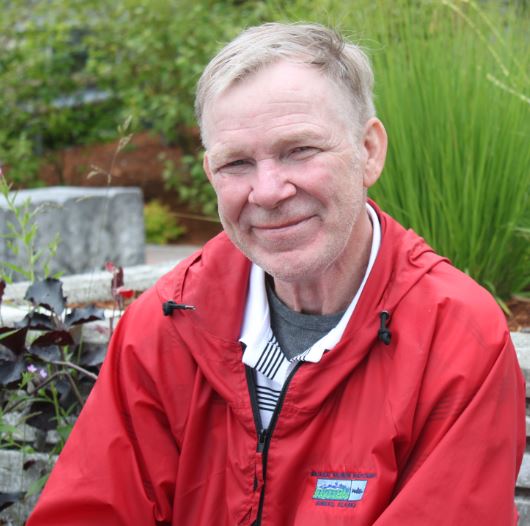
Fifty-seven-year old veteran Mark Maleski sits on a Telephone Hill park bench on a cloudy July day overlooking Merchants Wharf and Gastineau Channel. It’s 1 p.m. and he’s been drinking vodka.

Maleski is homeless. Sometimes he sleeps right there in the park. The night before, though, he picked a spot outside the Arctic Bar on South Franklin Street.

“I was sleeping on the street. The old lady said, ‘Come on, go walking.’ I said, ‘I don’t want to walk. I got no destination. Who wants to walk?'” Maleski says.

Instead, he was picked up.

“Rainforest Recovery got a hold of me,” he says.

Maleski spent the night in sleep off. It’s not the first time that’s happened and likely not the last.

A Rainforest Recovery Center emergency vehicle patrols downtown Juneau six times a day looking for people who are publicly intoxicated. But it mostly responds to calls. In the first three months of this year, Rainforest received more than 480 calls resulting in 364 transports.

Some inebriates are brought to sleep off, a room with five mattresses on the floor, where they can sleep until they’re sober.

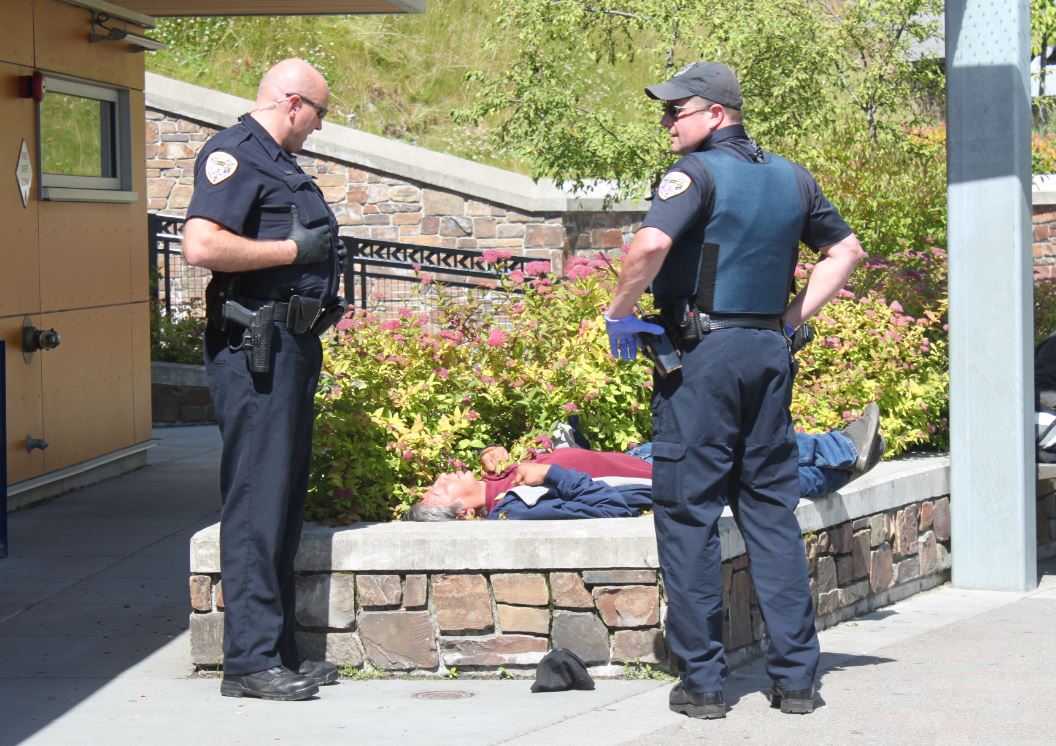
The sleep off facility at Rainforest Recovery Center. (Photo courtesy of Bartlett Regional Hospital)

Rainforest Recovery director Jennifer Brown says a few people regularly use sleep off, as much as twenty times a month.

“In addition to them using Rainforest, they’re likely also high utilizers of other services, including the ER. So perhaps while they’re not with us, they might be over in the ER addressing their other needs,” Brown says.

Rainforest Recovery is part of Bartlett Regional Hospital. The City and Borough of Juneau allocated more than $1.1 million this year to the hospital for the emergency patrol and sleep off facility.

Capital City Fire/Rescue responds daily to calls about public intoxication, including those made by the drinkers themselves. Fire chief Rich Etheridge says about 30 dial 911 on a regular basis.

“A lot of them have legitimate medical issues. It’s masked by the alcohol and when they start sobering up then their symptoms become more apparent. So just because they’re inebriated doesn’t mean they don’t have medical needs that have to be met. People tend to overlook that from time to time. You know, they’re people too and we need to take care of them,” Etheridge says.

Of the estimated 600 homeless in Juneau, a 2012 survey found about 40 are considered vulnerable to dying prematurely on the street.

Both Etheridge and Brown support the idea of a Housing First facility for this group.

“Give people shelter, a safe place to be, and then try to wrap services around them, you see much greater success,” Brown says.

That’s what Ken Scollan has seen at Karluk Manor in Anchorage, the original Housing First facility in Alaska.

“We have six people working. We had one person here who got her CNA license, is currently working as a certified nurse assistant. We actually hire three people from the population to do our janitorial services on site,” Scollan says.

Scollan is the affordable housing manager of the statewide nonprofit Rural Alaska Community Action Program, or RurAL CAP, which runs Karluk Manor. When it opened in December 2011, 46 homeless alcoholics moved into their own efficiency apartments. Since then, Scollan says people drink less. Interactions between residents and police have greatly decreased. Two people have moved into their own apartments.

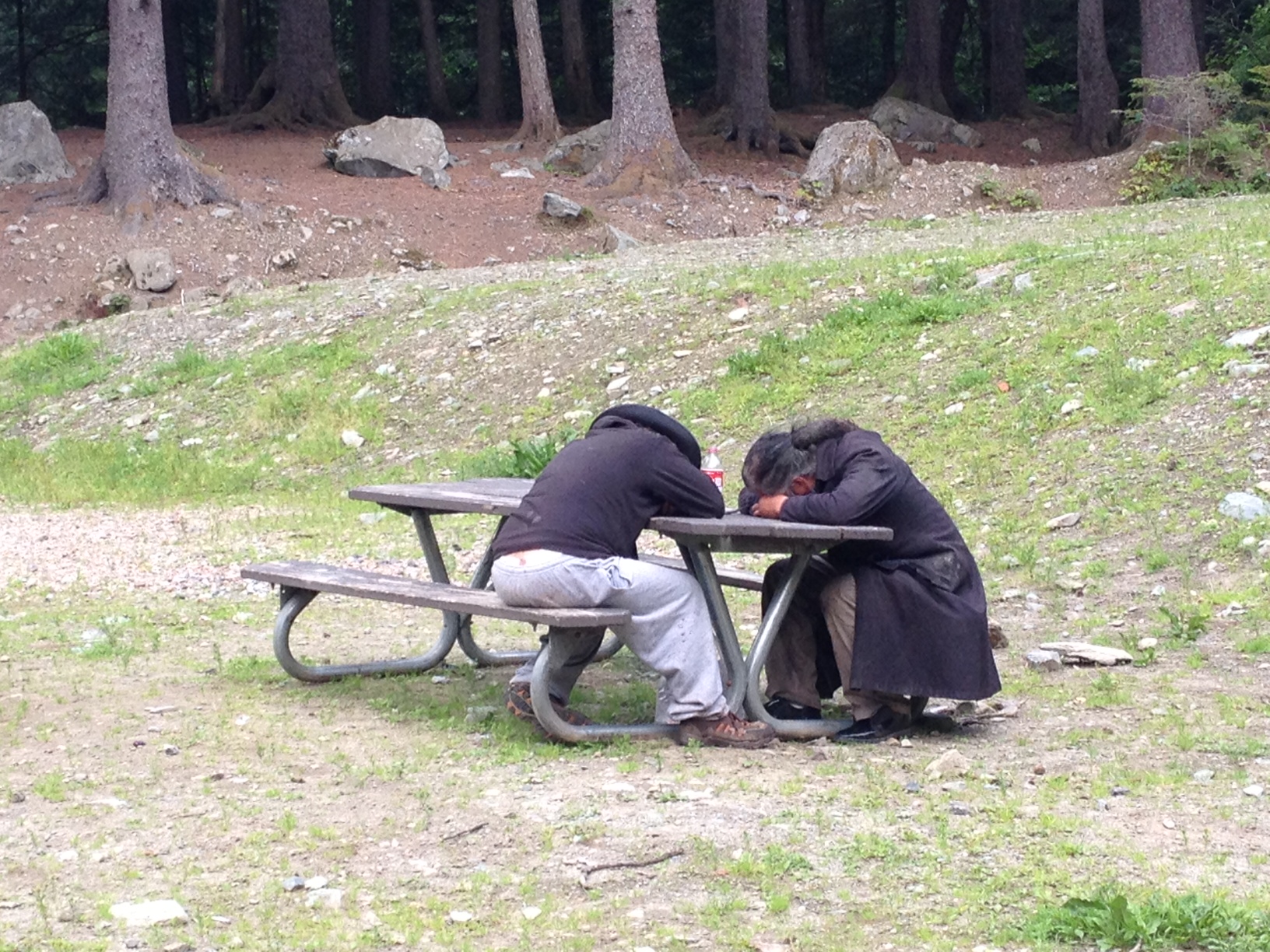
Instead of sleeping in Cope Park, some homeless could have a place to call home through a Housing First project in Juneau. (Photo by Lisa Phu/KTOO)
Instead of sleeping in Cope Park, some homeless would have a place to call home through a Housing First project in Juneau. (Photo by Lisa Phu/KTOO)

Scollan says the concept is simple. With a place to call home and 24-hour support staff, residents are taking better care of themselves.

“They now have an address. They have a place to stay. They have a phone. And now people can get a hold of them. If they have medical appointments, they’re able to call here and set that up. If they have mental health appointments, the same thing. We’ll help them with their food stamp applications, their social security applications,” Scollan says.

A barrier to bringing a Housing First project to Juneau is cost. A new facility is estimated at $7 million. Refurbishing an existing building could cost around $4 million.

Supporters believe the savings to Juneau could be immense. Mariya Lovishchuk is executive director of the emergency shelter and soup kitchen The Glory Hole. She says the cost to a community drops dramatically when a Housing First facility is built.

“The number of emergency room visits, the number of police pick-ups, the number of criminal charges — they drop so, so significantly. And therefore, the cost to tax payers drops so significantly. We’re all paying for this and we need to be paying a lot less,” Lovishchuk says.

Another barrier is finding an organization to take the lead. Scott Ciambor with the Alaska Coalition on Housing and Homelessness has been educating various city and community groups on the Housing First concept for a couple of years.

The 13-member Glory Hole board of directors supports the idea, but members don’t think it’s a project they can develop on their own.

Finding an agency to take the lead may seem daunting, but Ciambor isn’t fazed.

“Two years ago when we had a burst of interest amongst the people who know this population and work in this industry, there was confusion as to what to do as well. Now the demeanor of this conversation is completely different because we know what the solution is. And now it’s about how do we get there as a community,” Ciambor says.

Just this week, Juneau’s legislative delegation met twice to talk about downtown issues surrounding image, alcohol and the homeless. Sen. Dennis Egan says he hopes the legislature will consider an appropriation for a permanent supportive housing facility. Housing First is a Juneau assembly goal and city manager Kim Kiefer says members have discussed providing land.

Other funding sources could include grants through the Alaska Housing Finance Corp., Alaska Mental Health Trust Authority and private foundations.

Efforts have already been made to establish a Housing First Fund through the charitable organization Juneau Community Foundation.

Site notifications
Update notification options
Subscribe to notifications