Community

Bring your brooms and scrub brushes; downtown cleanup is Friday

Pocket Park
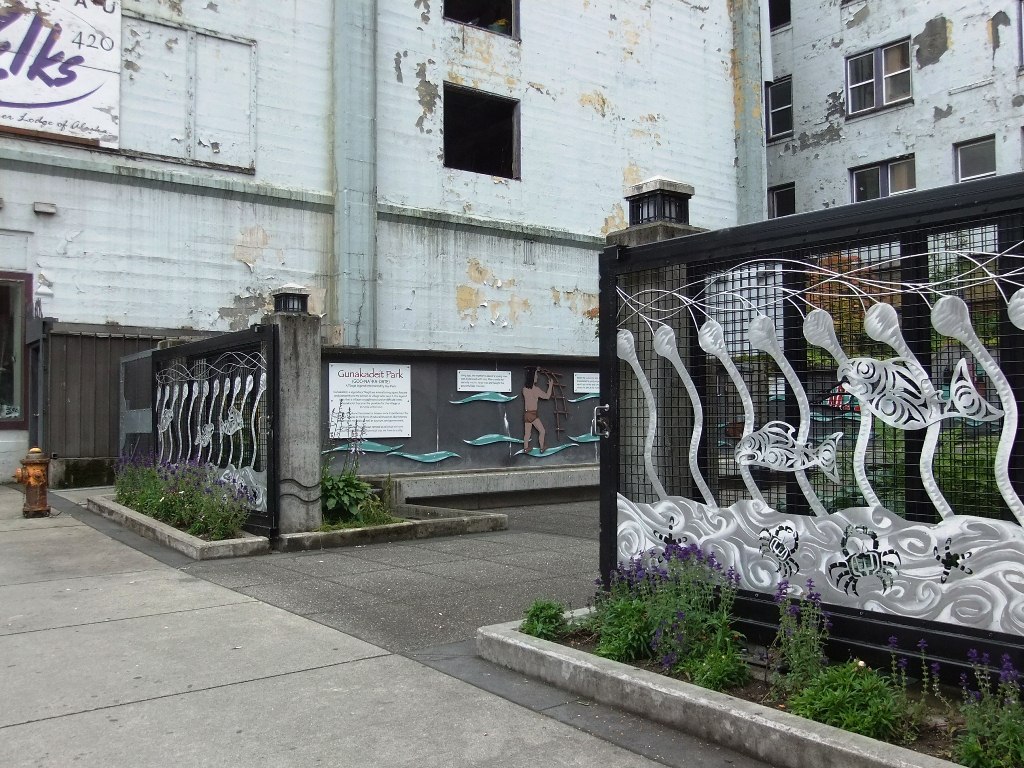
Cleanup volunteers should meet at Gunakadeit Park, also known as Pocket Park, next to the burned out Gastineau Apartments. (Photo by Rosemarie Alexander/KTOO)

A downtown cleanup begins at 8 o’clock Friday morning at Pocket Park on the corner of Front and Franklin streets.

It’s the first organized effort of an informal downtown improvement group to spruce up Juneau’s core as well as tackle some of the bigger social issues that sometimes make the area an uncomfortable place to be.

 “We’re going to kind of clean the town up.”

Brent Fischer, director of CBJ Parks and Recreation, says volunteers are welcome.

“We’re going to pick up trash, we’re going to pull some weeds, we’re going to clean light posts, trash cans, and it’s a great opportunity to help out in the community,” he says.

Fischer helped downtown business owner Bruce Denton organize the cleanup. Denton’s efforts to mobilize a group of business and property owners have gotten the attention of key city and borough staff, the Juneau Police Department and Juneau legislators.

The work begins with a broom and a brush.

“We’ve done a walk around with staff from public works, streets department, parks and rec, docks and harbors, and tried to identify things they can help with,” Denton says. “Our intent was to try and do some of the stuff that they normally do so that they can do stuff that they don’t ever have time to do.”

CBJ Community Development Director Hal Hart has already identified tasks for the CDD team.

“We’ll do some bench cleaning, we’re going to do some moss cleaning underneath benches, and remove graffiti, those kinds of things,” he says.

While city officials welcome such volunteer efforts in these days of tight budgets, Hart says it’s the partnerships they foster that  are important.

“What it takes many times is a Bruce Denton or a catalytic person that makes connections between different groups and as they do that everybody pitches in,” he says. “Perhaps by identifying those things that have been left undone for a while we can prioritize them.”

Kirby Day with Princess Cruises has helped organize about 40 volunteers from the Tourism Best Management Practices group, which represents 60 Juneau businesses.
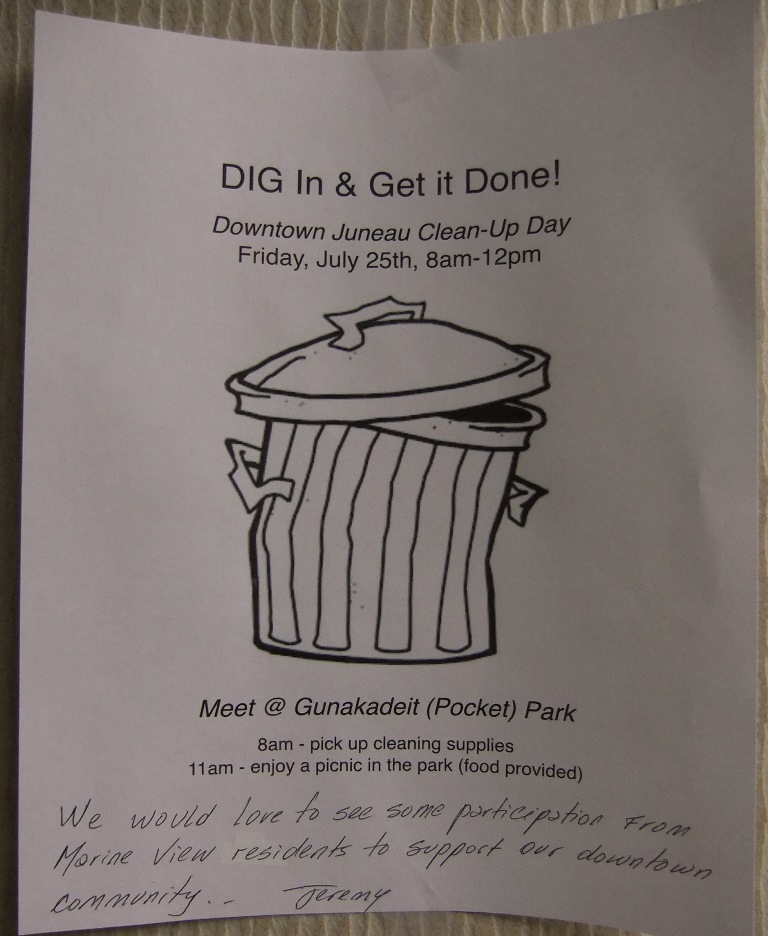
Small poster in the downtown Marine View building announces the cleanup. (Photo by Rosemarie Alexander/KTOO)

“It’s not only important for the visitors that come to town, it’s important for all of us who live here and have pride in our city,” he says,”and I think that’s what Bruce’s group is trying to impart.”

Parks and Recreation director Fischer says anyone who would like to help out should meet at Gunakadeit Park, also known as Pocket Park, at 8 a.m. on Friday. After a quick meeting, workers will disperse with their assignments.

“If you can bring some buckets and brushes and brooms from your house, that helps us. We have plenty of trash bags and rubber gloves,” he says.

Pocket Park — next to the burned out Gastineau Apartments – is a symbolic place to start the cleanup, Denton says.

“The reason for meeting at Gunakadeit Park, it’s like OK, let’s take it back,” he says.                                                                                                                                                                                                                                            The park has become a favorite spot for Juneau street people to congregate and drink, and the resulting behaviors keep others out.

The street people can’t just be swept away and the Downtown Improvement Group is beginning to talk about those issues, too.

In the meantime, Denton says he hopes a hundred people show up ready to attack the easier stuff.


Editor’s Note: KTOO continues its series on downtown issues on Friday, with a look at permanent housing for the homeless who have substance abuse issues.

CBJ Planning Commission considers neighborhood appeal opposing Haven House

Haven House
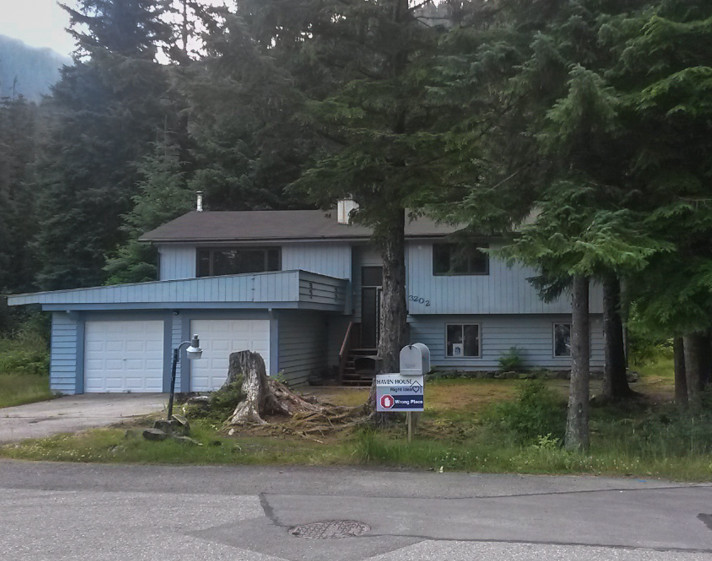
Haven House at 3202 Malissa Drive. (Photo by Greg Culley)

The City and Borough of Juneau’s Planning Commission may have decided the first neighborhood appeal related to a group home for women leaving prison.

The result of Tuesday evening’s hearing won’t be announced until later, and it likely will not be the end of the process.

Haven House plans to use a home on Malissa Drive for as many as nine women, but neighbors have objected to possible traffic and safety issues associated with establishing a group home in a residential area.

In January, CBJ Community Development Director Hal Hart issued an opinion saying that Haven House would likely fit under the definition of a halfway house and could not operate in the neighborhood’s residential zoning.

Haven House representatives initiated an appeal of that decision. Then in March, Hart decided the facility would likely fit under the definition of “use-not-listed” compatible with the neighborhood’s D5 residential zoning as a rooming house or boarding house, instead of as a halfway house. That could allow the organization to pursue a possible conditional use permit.

The issue before the Planning Commission was simply whether Tall Timbers Neighborhood Association could appeal Hart’s latest decision. Was the neighborhood association an aggrieved party that was adversely affected by the decision? And did the group have standing, or a right to appeal?

CBJ attorney Robert Palmer says no. Tall Timbers was premature because no permit has been issued and no one has been injured yet. In addition, the association filed its appeal before their corporate bylaws were adopted.

“Right now, Haven House cannot operate as intended,” Palmer said. “They can only operate if they were given a permit by this body for a use-not-listed or a conditional use permit. At that time, that is when the neighborhood – if a permit was issued – would meet the aggrieved party or the adversity standard to then have standing to appeal.”

Attorney Mary Alice McKeen, representing Haven House, said they welcomed all public comment at the proper stage in the proceedings, such as during the Planning Commission’s consideration of a conditional use permit. McKeen suggested that the neighborhood association’s proposed appeal of the development director’s decision was a delaying tactic that could effectively kill the project. She called for a public hearing on the use-not-listed determination as soon as possible.

“We really want to start this project because we believe that there are women coming out of prison who need this type of housing,” McKeen said.

“There is no disagreement that nine women coming out of prison could rent this home and live in it because the definition of a family is people – one or more persons – living together.”

Attorney Robert Spitzfaden, representing the Tall Timbers Neighborhood Association, repeatedly said during his main arguments earlier in the meeting that the public should just have a chance to provide input.  He had a more forceful and focused rebuttal after McKeen’s comments.

“This is all after-the-fact rationalization when they realize what they’ve done,” Spitzfaden said. “They prevented the public’s input in this particular decision: The decision that says ‘Yes, you have an ability to get a permit.’ That is a final decision. It changed the nature of this whole proceeding.

“Haven House was finished in January. They had absolutely no way to get a permit. And now they do, according to the director’s decision.”

After an hour of arguments, Planning Commission Chairman Mike Satre asked those observing the arguments in the Assembly chambers to leave the room so that commissioners could deliberate in private in executive session. A decision will be issued publicly at some undetermined, later date. Commissioner Nicole Grewe acted as hearing officer in the case.


Long lines for sixth annual Governor’s Family Picnic

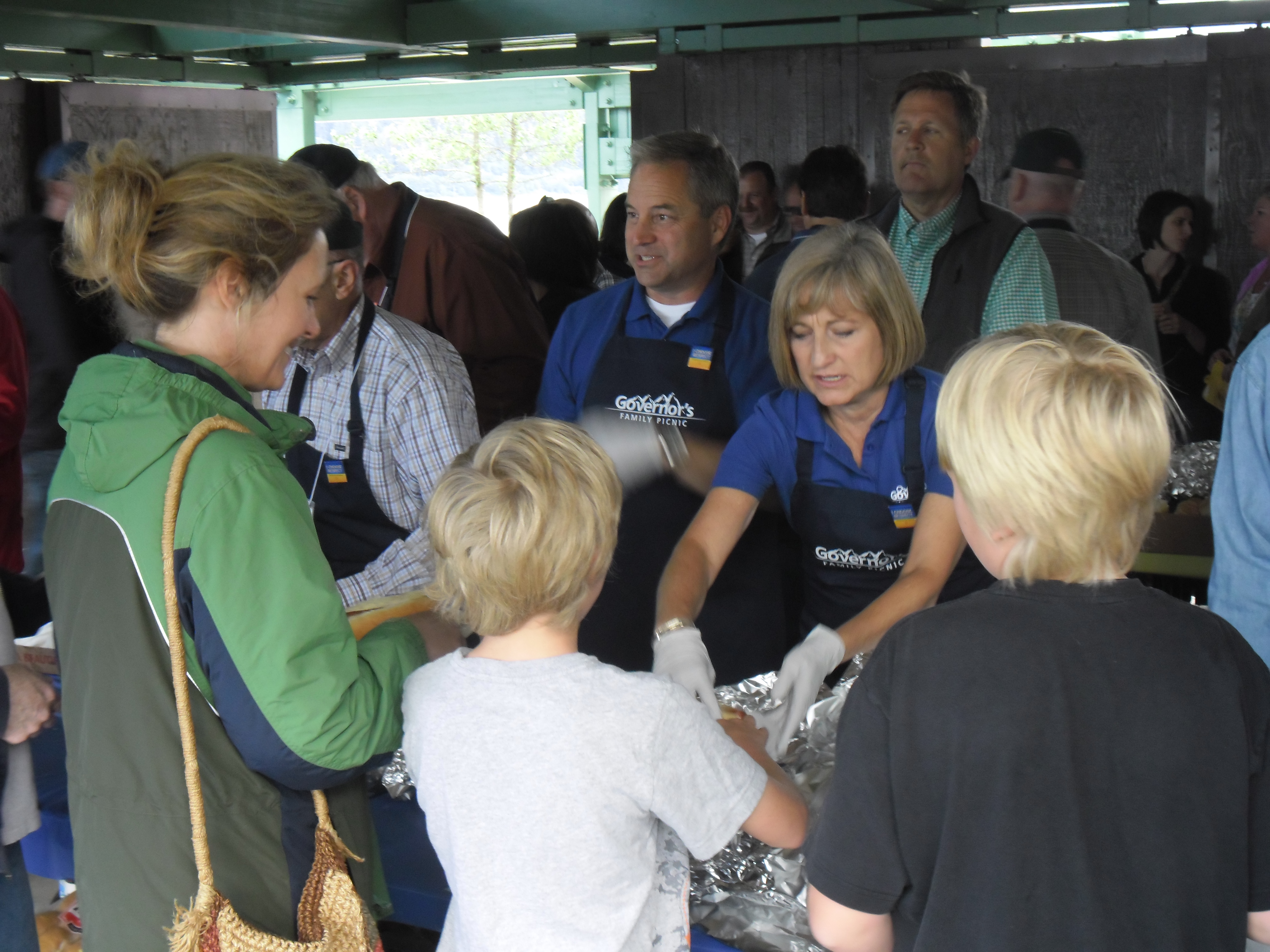
Fifteen minutes before the scheduled start of yesterday’s sixth annual Governor’s Family Picnic, there was already a long line down the sidewalk at Sandy Beach.

By the end of the picnic, 1,599 hot dogs had been served.

There were also salmon, cookies and chips and the Alaska Housing Finance Corp. gave out bags of popcorn. Gov. Sean Parnell, First Lady Sandy Parnell and commissioners served food.

Jan Rice, a retired Juneau School District employee, frequents Parnell’s events.

“Yeah, I’m always there at Christmastime and the parade thing. I try to see him as often as I can,” Rice says.

Raven George, a Fred Meyer employee, brought her young daughter.

“It’s our first time here at the beach, so we wanted to bring her here so she can see the people and feel the sand,” George says.

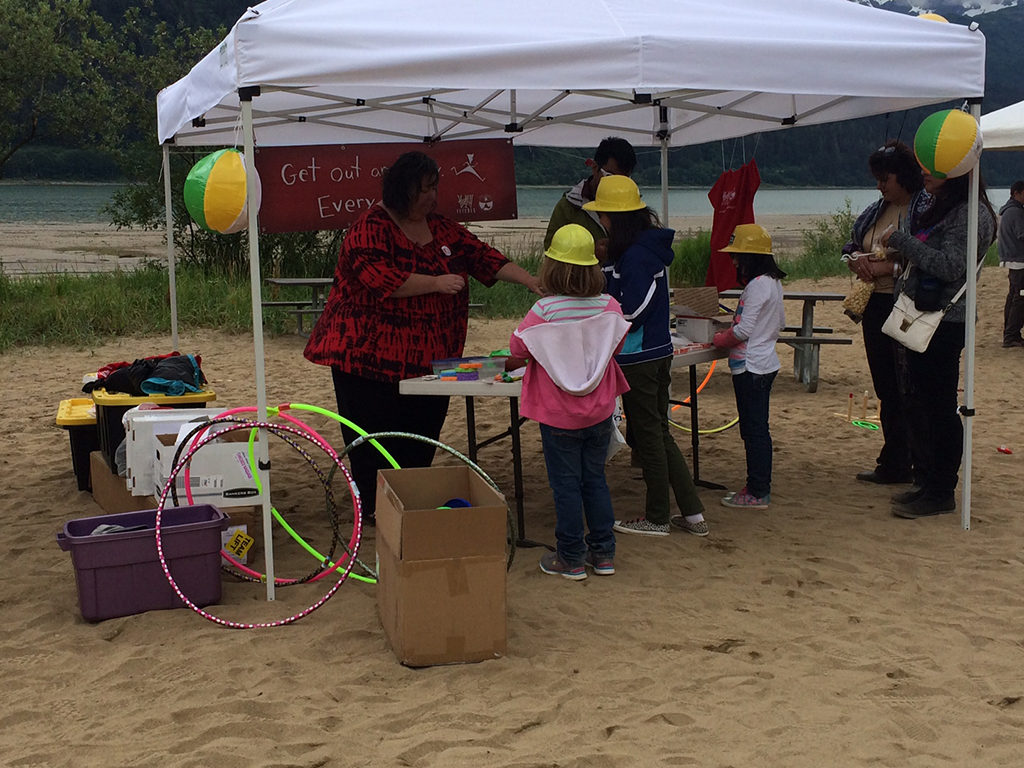
There were activities for kids including panning for gold, a bear pelt exhibit and a fishing game. Some mascots made appearances, including PFD Otter with the Coast Guard Auxiliary. PFD is short for “personal flotation device.”

But the main attraction every year seems to be the food. Particularly, the grilled salmon.

“Our first year, we had three weeks to get everything planned and the biggest deal for us is the fresh salmon that we get,” says Cathie Roemmich, CEO of the Juneau Chamber of Commerce and co-chair of the picnic committee.

Taku Smokeries, Alaska Glacier Seafoods and local fishermen donated about 200 pounds of fish.

Parnell travels to Ketchikan today to hold the last governor’s picnic of the year.

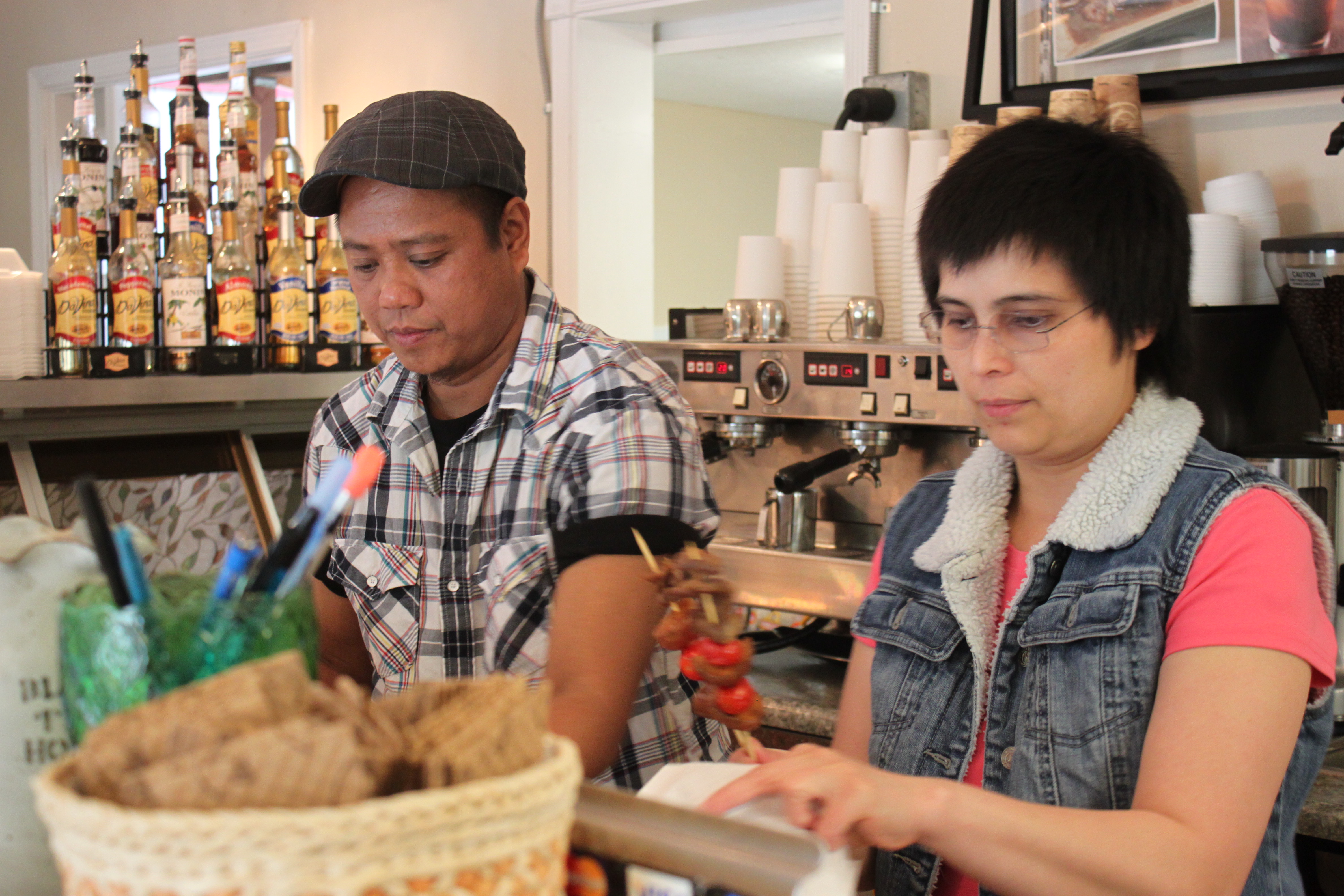
Twilight Cafe wins top award for attractive storefront

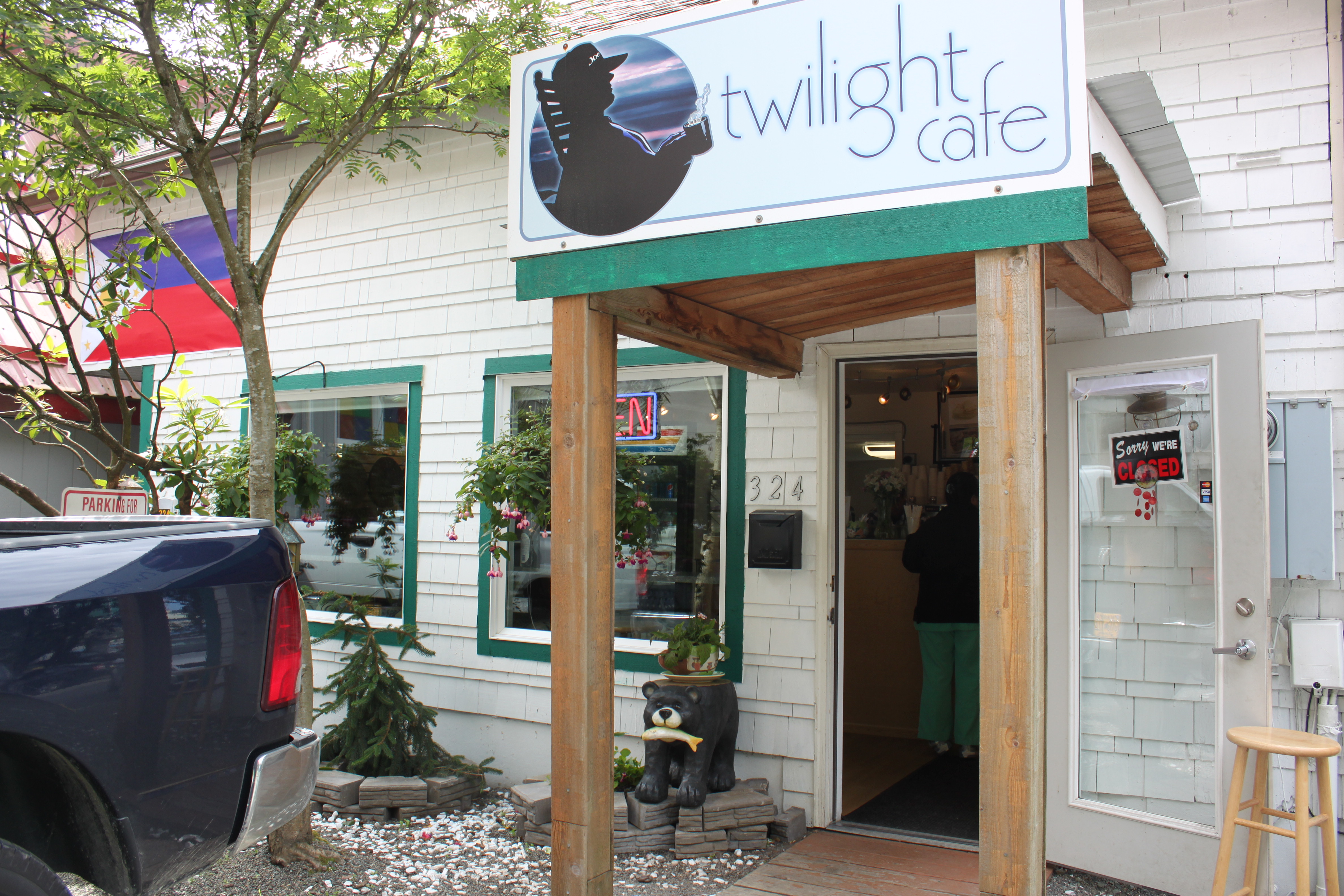
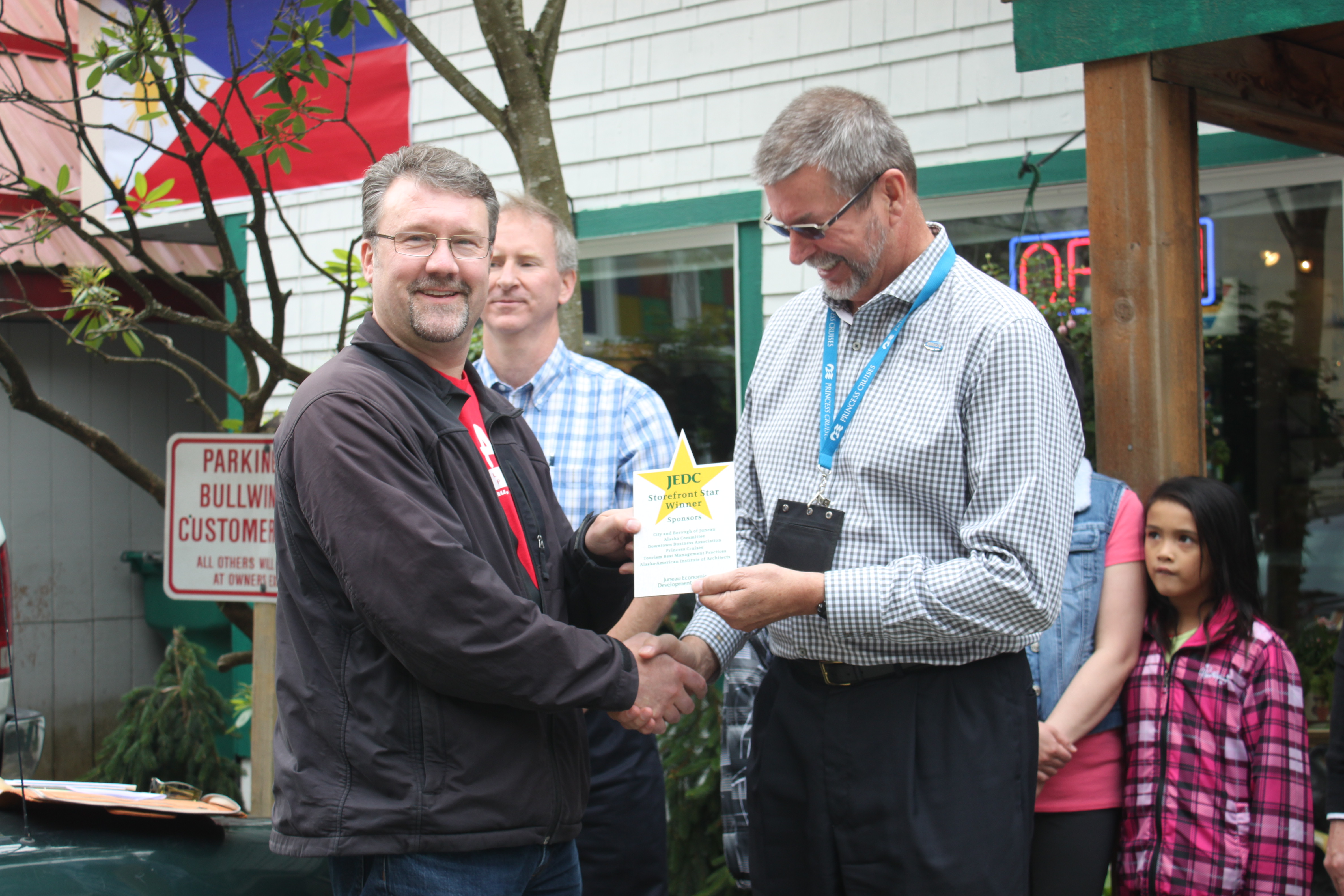
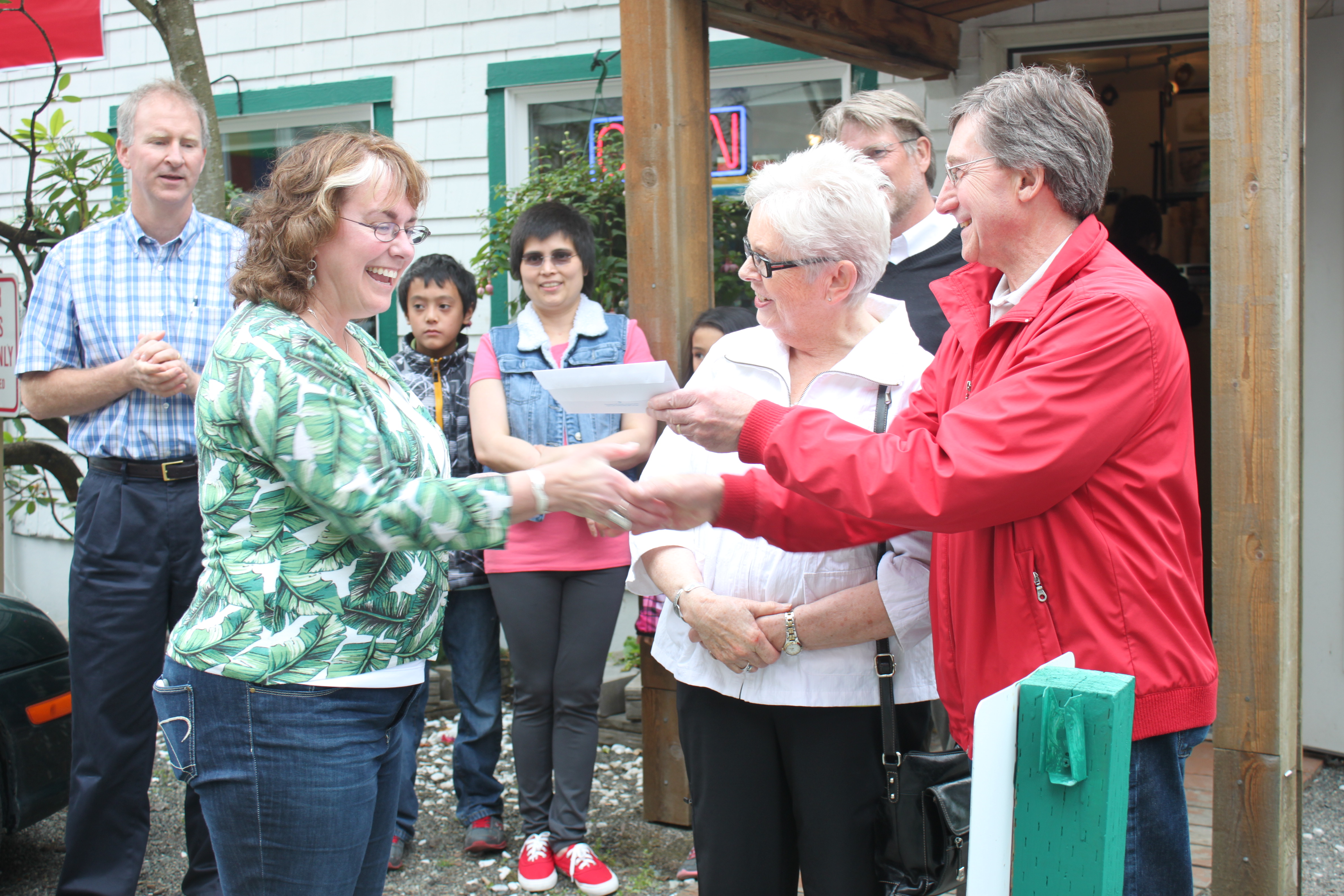
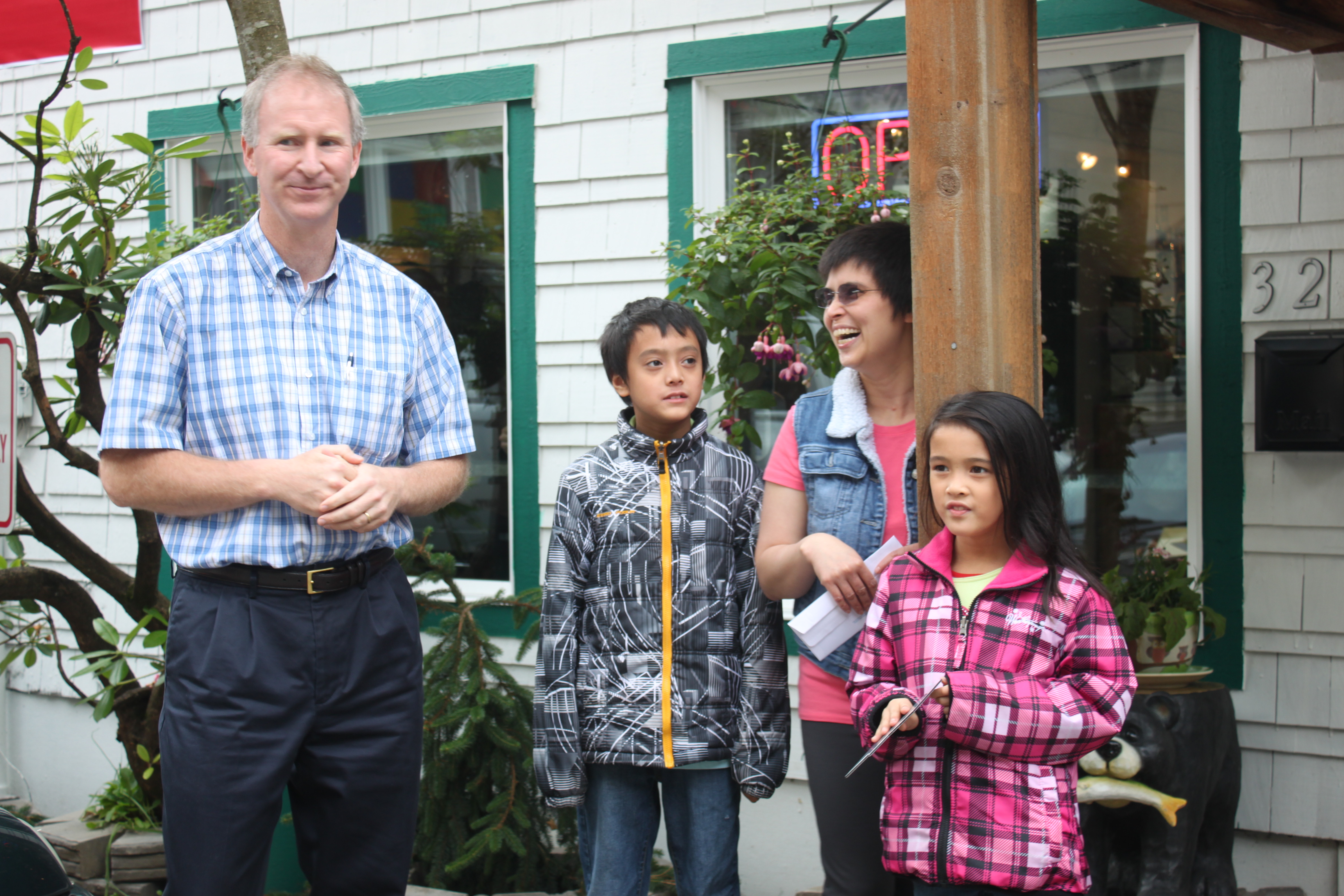
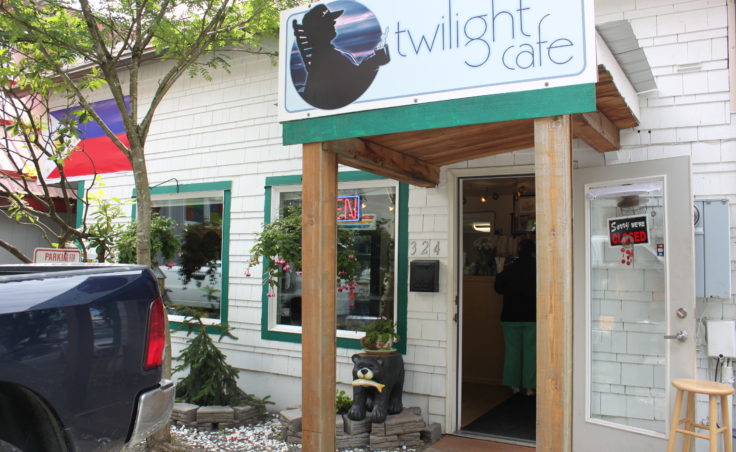
Juneau’s first storefront award has gone to Twilight Café on Willoughby Avenue. The Filipino-owned business won $500 for improving its entrance.

The Juneau Economic Development Council held the first Storefront Star competition this spring to encourage downtown business owners to invest in appearance.

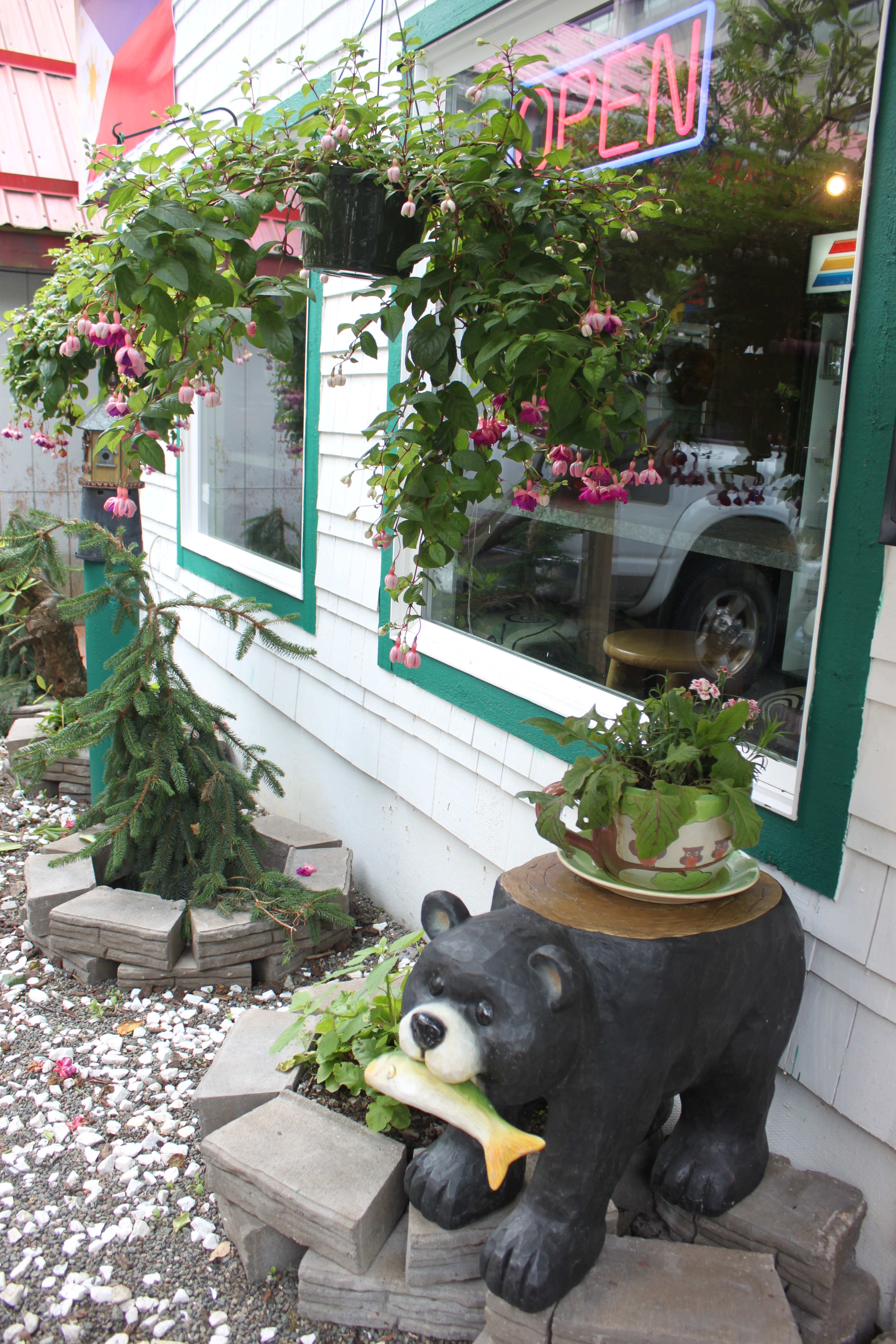
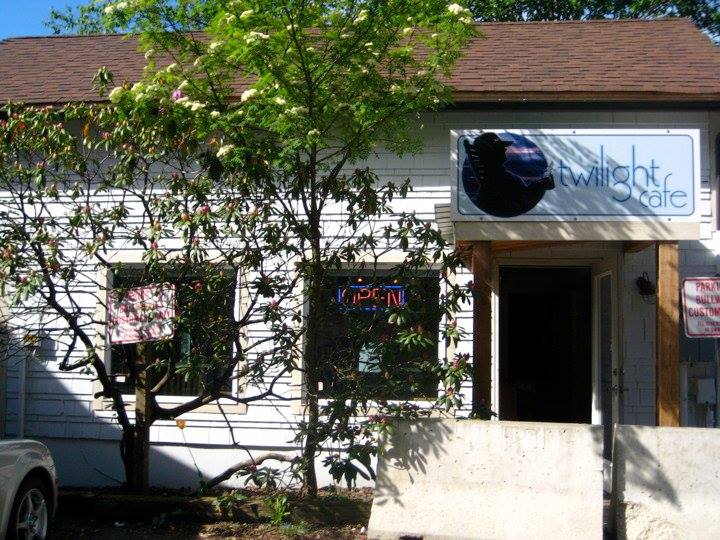
Twilight Café co-owner Catherine Hill-Cristobal says she spent less than $1,000 on changes. She removed two parking barriers that blocked the front entrance, painted the window trim and other parts of the building, hung potted plants, added some landscaping and placed a small bear statue near the entrance.

“I just saw it in Fred Meyer and said, ‘Oh, that’s really nice.’ Because I was thinking more like a water buffalo because it’s more Filipino, but I can’t find it,” Hill-Cristobal says.

JEDC consultant Margo Waring was one of the judges for the contest. She says Twilight Café’s storefront is now more inviting.

“There’s been a significant change in the appearance of the building, its welcome-ness and also its accessibility to pedestrians. So they’ve really put in an enormous amount of work,” Waring says.

The Storefront Star Awards is part of JEDC’s ongoing downtown revitalization effort. Waring says a beautiful downtown will help Juneau remain the capital city.

Executive director Brian Holst says investing in a storefront means investing in the community.

“I think we all know that downtown Juneau is vital to our economy. It’s also a fun place to be and the more attention that we pay to how it looks, the better it will serve the whole community,” Holst says.

Bruce Abel won an award for the exterior redesign of the old Salvation Army building that now houses the Heritage Coffee Roasting Co. offices and plant. Goldstein Development Co. also won for improving the corner of Front and Seward. Annie Kaill’s owner Colleen Goldrich received a $100 prize for People’s Choice award.

JEDC is currently working on a project called Winter Windows encouraging seasonal businesses to think about storefronts even when they’re closed.

Annual governor’s picnic today

Gov. Sean Parnell and First Lady Sandy Parnell dish out food. (Photo by Lisa Phu/KTOO)
Gov. Sean Parnell and First Lady Sandy Parnell dish out food at the 2013 picnic. (Photo by Lisa Phu/KTOO)

The Governor’s Office is hoping for sunny weather for the sixth annual Governor’s Family Picnic in Juneau. The picnic will be at Sandy Beach Wednesday from 4:30 p.m. to 7:30 p.m.

Local businesses and individuals donated food for the free event. Two-hundred pounds of salmon have been provided by John Moller, a commercial fisherman and the governor’s rural affairs adviser. There will also be hot dogs, cookies and chips.

Gov. Sean Parnell and First Lady Sandy Parnell as well as commissioners will serve the picnic fare.

Juneau residents are encouraged to take the opportunity to speak with the administration.

“This is a really great time for the community to come out and meet with the governor, the first lady, talk with them and mingle with the commissioners. If they’ve got anything they want talk to them about, any issues they want to bring up, they’re there to talk with them,” says Sharon Leighow, the governor’s press secretary.

Various state departments, including Motor Vehicles, Fish and Game and Commerce will host activity booths. The Department of Corrections will provide fresh produce from Port Mackenzie Correctional Farm.

Between 1,500 and 3,000 people have attended the event in the past.

Alaska Native artist weaves heritage into modern fashion

A man holds a Chilkat head band
Juneau artist Ricky Tagaban holds a Chilkat headband with sea otter fur and shot gun shells. (Photo by Annie Bartholomew/KTOO)

It has long been forbidden for men to weave in the Chilkat tradition, but Tlingit artist Ricky Tagaban is an exception. Using techniques practiced for thousands of years, Tagaban creates his trademark iPhone bags, hair clips, and head bands, putting a modern spin on an ancient tradition.

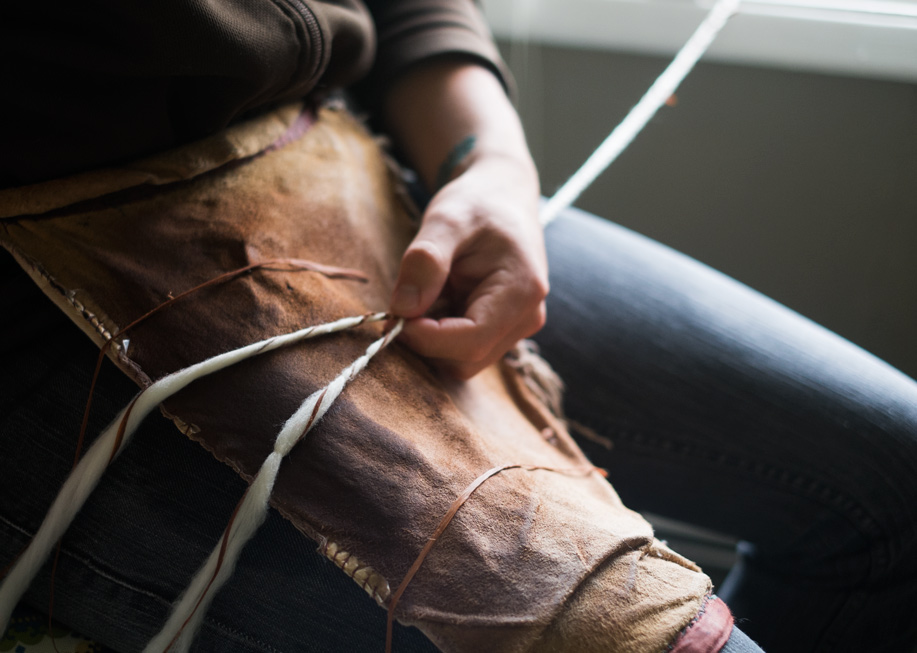
In his living room overlooking the Gastineau Channel in Juneau, Ricky Tagaban is spinning wool and wet cedar bark together on moose hide.

The process joins the fibers together creating something called warp which will give Tagaban’s bags their structure. With the big Celebration cultural event just a few days away, Tagaban still has several commissions left to fulfil. Though his finished pieces vary in size and intricacy, they all begin the same way – as cedar bark softening in a crockpot.

A man spins wool and cedar bark together on his lap
Ricky Tagaban spins wool and cedar bark together on a moose hide pad to make warp for his Chilkat bags and iPhone cases. (Photo by Annie Bartholomew/KTOO)

“Cooking it is kind of the longest and then I soak the bark in hot water and spin it with the wool and I have to wash it and groom it – and that part’s called grooming your balls and you have to go along and cut all the fluff,” Tagaban says. “And that’s all before weaving.”

Tagaban is weaving in the Chilkat tradition. The textile technique is passed down through Tlingit, Haida, and Tsimshian families and there are strict rules guiding its practice. Created on an upright loom, Chilkat use abstract shapes and patterns inspired by nature.

Much of what’s known about Chilkat came from the late master weaver Jennie Thlunaut.

Juneau weaver Lily Hudson Hope has been practicing both Ravenstail and later Chilkat weaving since she was a teenager.

“I feel that the traditions and the rules and taboos are set there, and they’re there to protect us,” Hope says.

One of the taboos in Chilkat is to never place a human hand in designs. Another is to always cover up your work after you’re finished.

The one that applies to Tagaban is that men can’t weave. But Hope says there is one exception.

“We don’t know why it started or where it started, but when Jennie was teaching my mother and other weavers in 1986, she would scream – ‘we don’t teach men, I don’t teach men, we don’t teach men,’” Hope says. “And then she made the exception that if they’re funny, and she said, ‘If they’re funny, I teach them.’ They’re funny in the way that they’re two spirited.”

By two spirited, Hope means gay.

A man wears a Chilkat headband
Juneau artist Ricky Tagaban models one of his headbands in his living room where he works. (Photo by Annie Bartholomew)

In the summer of 2010 Tagaban was invited to learn from Thlunaut’s apprentice and Hope’s mother, Clarissa Rizal because he fit the tradition, and was identified as someone who could carry it forward.

“I was asked to learn this style of weaving because of my sexual orientation and because it’s a Native art form so learning this and practicing it and
really identifying as a weaver had really reconciled my Nativeness and my gayness,” Tagaban says.

A Chilkat woven legging
A single Chilkat legging Ricky Tagaban is working to finish for Celebration. (Photo by Annie Bartholomew/KTOO)

Since learning Chilkat, Tagaban’s works have become more elaborate and experimental, incorporating more modern materials like shot gun shells. This spring Tagaban was awarded his second Rasmuson grant and one of his iPhone bags appeared on the Red Carpet in Los Angeles at the GLAAD Media awards. Hope thinks it’s exciting to see the way Tagaban has brought Chilkat to new audiences.

“He’s taken an ancient art form and put it in the hands of the masses in a way that’s revolutionary,” Hope says. “We don’t have to wait for Celebration or cultural gatherings to share our art form with other people. It’s not just for Tlingit people or just for Haidas or Tsimshian. If you like this and you want to wear this, come have some. Come get it.”

Back at Tagaban’s home studio, he lets me try on a pair of leggings decorated by deer hooves. They’re a work in progress, an old world object with a twist. Embedded in the traditional Chilkat pattern is a small patch of geometric Ravenstail weaving, a hybrid design that’s beginning to gain acceptance in Chilkat weaving.

For Tagaban, harmonizing both aspects, the modern and traditional is important.

“It’s cool to have a really specialized skill but it’s also a lot of pressure,” Tagaban says. “It’s not like we’re saving it, it’s just that we’re holding onto it while we’re here.”

The leggings are almost finished. Tagaban just has to sew sea otter fur to the tops before he can see them on a dancer at Celebration.

Site notifications
Update notification options
Subscribe to notifications