Community

Federal agents blow up explosives at Petersburg’s rock pit

Federal agents destroyed over 50 pounds of an explosive in Petersburg’s rock pit behind the community’s airport Wednesday afternoon. It was a blast that shook some homes and had residents wondering whether an earthquake had struck. The explosives were rounded up by authorities this week after a 59-year-old Petersburg man injured himself in a blast at the rock pit on Sunday.

The blast was large enough to shake a camera on the far side of the large rock pit and felt by residents in town a mile or two away. A small gathering of federal, state and local law enforcement officers, along with volunteer fire fighters and media representatives watched the dust settle afterwards.

Brennan Phillips, an explosives enforcement officer with the Bureau of Alcohol Tobacco and Firearms Seattle field division, said agents recovered over 50 pounds of an explosive called Tovex, along with electric detonators and cord.

“Tovex is really a very safe commercial blasting explosive,” Phillips says. “It really replaces dynamite. Dynamite is still made for specialty applications. Largely what would have been done 80 years ago with dynamite is now done with tovex. Doesn’t have the nitroglycerin in it, it’s safer to handle, it’s cheaper to produce. It’s cheaper for the industry as well.”

Phillips said possessing the explosives requires a license and the material has strict storage standards. Authorities do not know how old the explosives were.

“So one interesting thing about that explosives is it had been removed from its cartridges,” Phillips said. “So there is a requirement for explosives to have what we call a date ship code, that’s part of the explosive law and of course ATF administers that law. And those containers had been removed with basically the description and the date ship codes.”

The agents also burned up what they called “a large amount” of smokeless powder they recovered. It can be used to make improvised explosive devices.
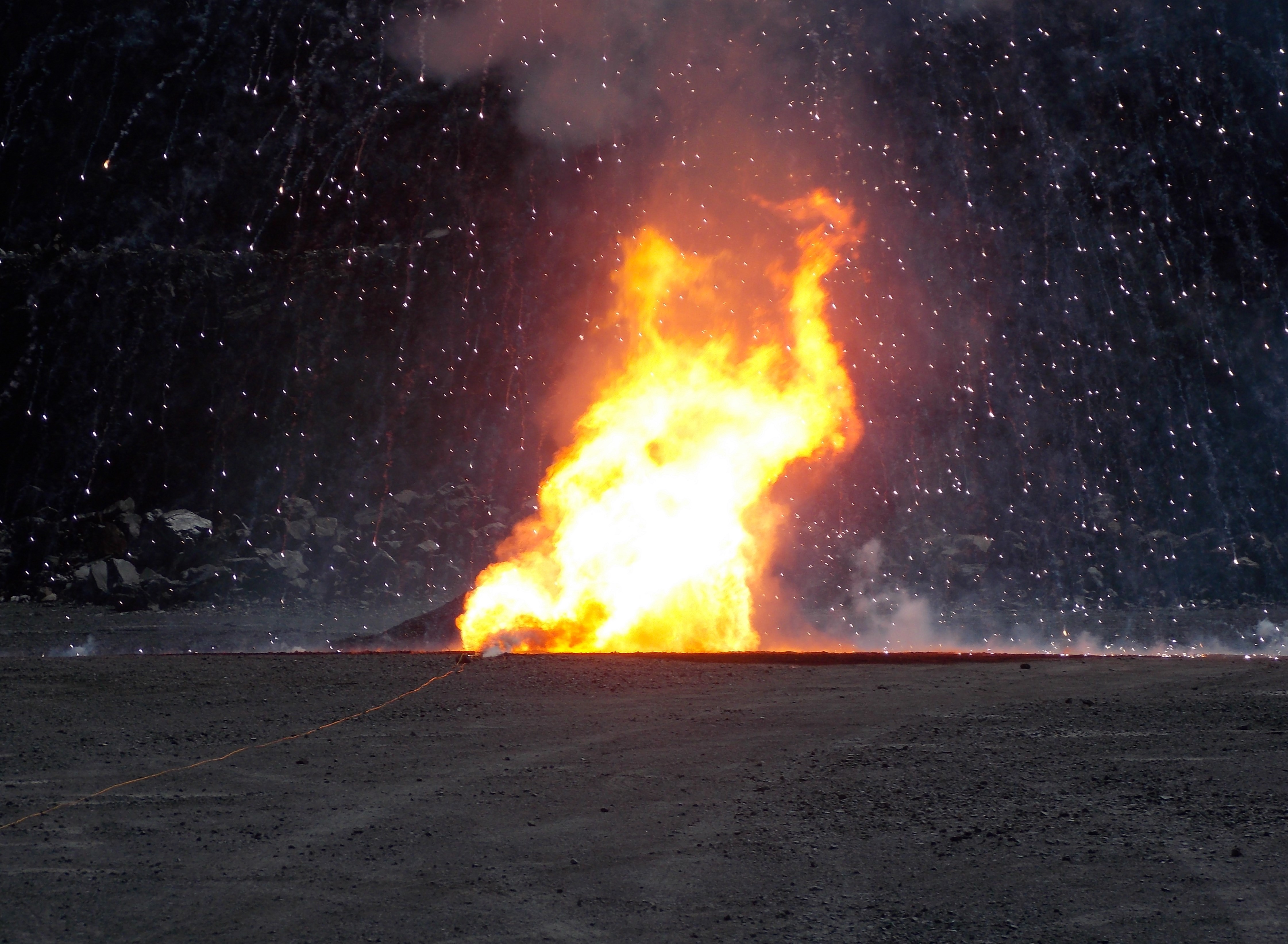
(Photo courtesy KFSK)

Phillips and other ATF officers were in town, along with an detection dog, and agents with the Federal Bureau of Investigation. They were assisting the local police department in investigating Sunday’s unexpected blast. Phillips said they searched for additional explosives.

“We conducted through our investigation, searched the areas that we thought needed to be searched. We searched a number of areas. We brought a fair amount of resources into Petersburg here to work with the local police department. I’ll defer to the police department on some of that but I think we’ve done a good thorough check.”
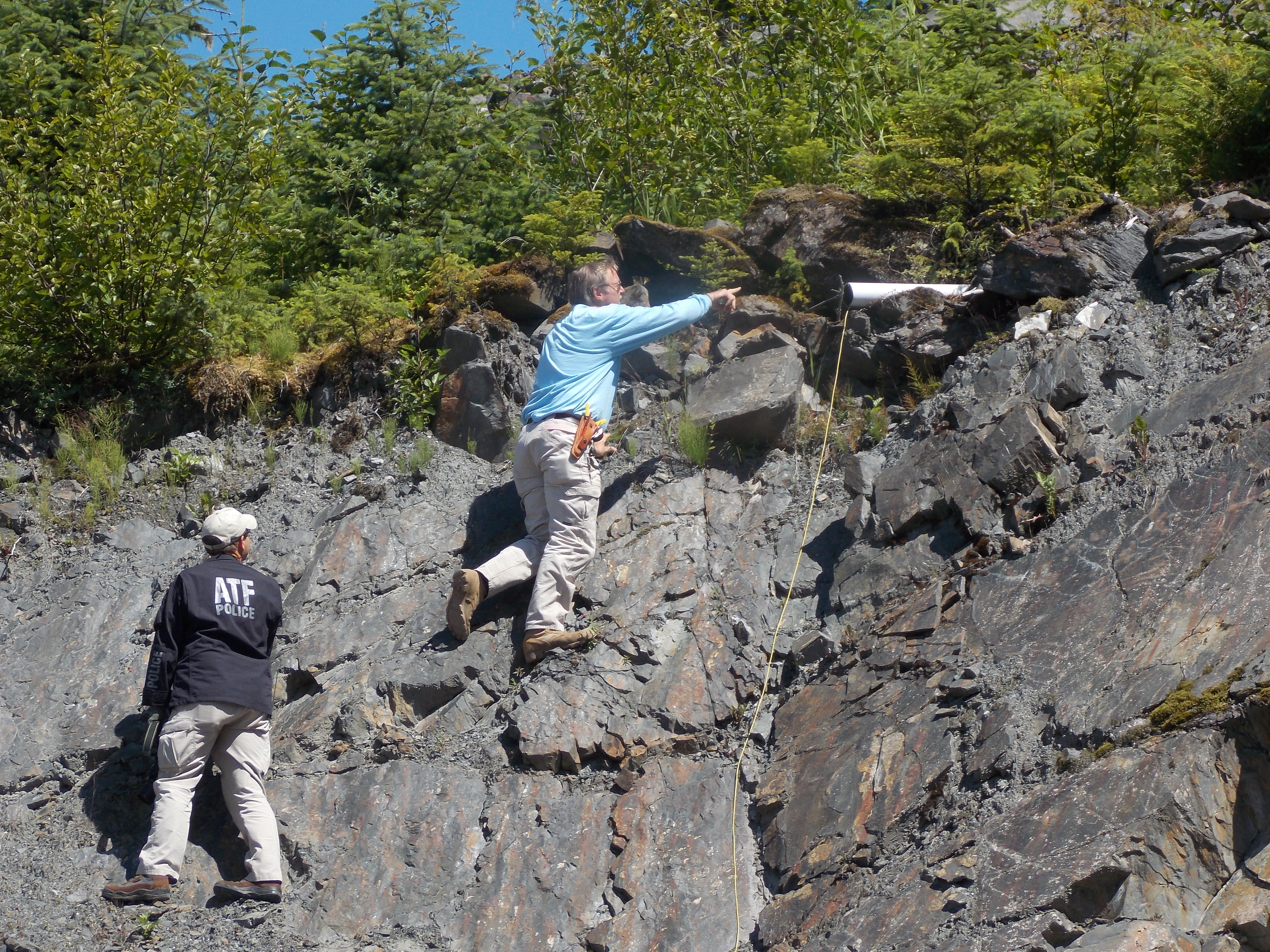
(Photo courtesy KFSK)

Sunday’s blast injured a 59-year-old Petersburg man. Police declined to identify him. However, they were searching a home and property owned by 59-year-old Mark Weaver. Petersburg police chief Kelly Swihart said Sunday’s blast occurred in the same rock pit.

“The initial detonation was down here by this pile of sand from what we can tell. And the victim was able to drive himself to the hospital. We found more explosives in the truck, determined they were fairly stable probably and made the decision to bring them back here and secure it here because we wanted to make sure everything was in one central location as much as possible.”

Police pointed out what they think was the site of the initial explosion with some remaining clumps of the gelatinous substance along with what appears to be blood stains from the victim.
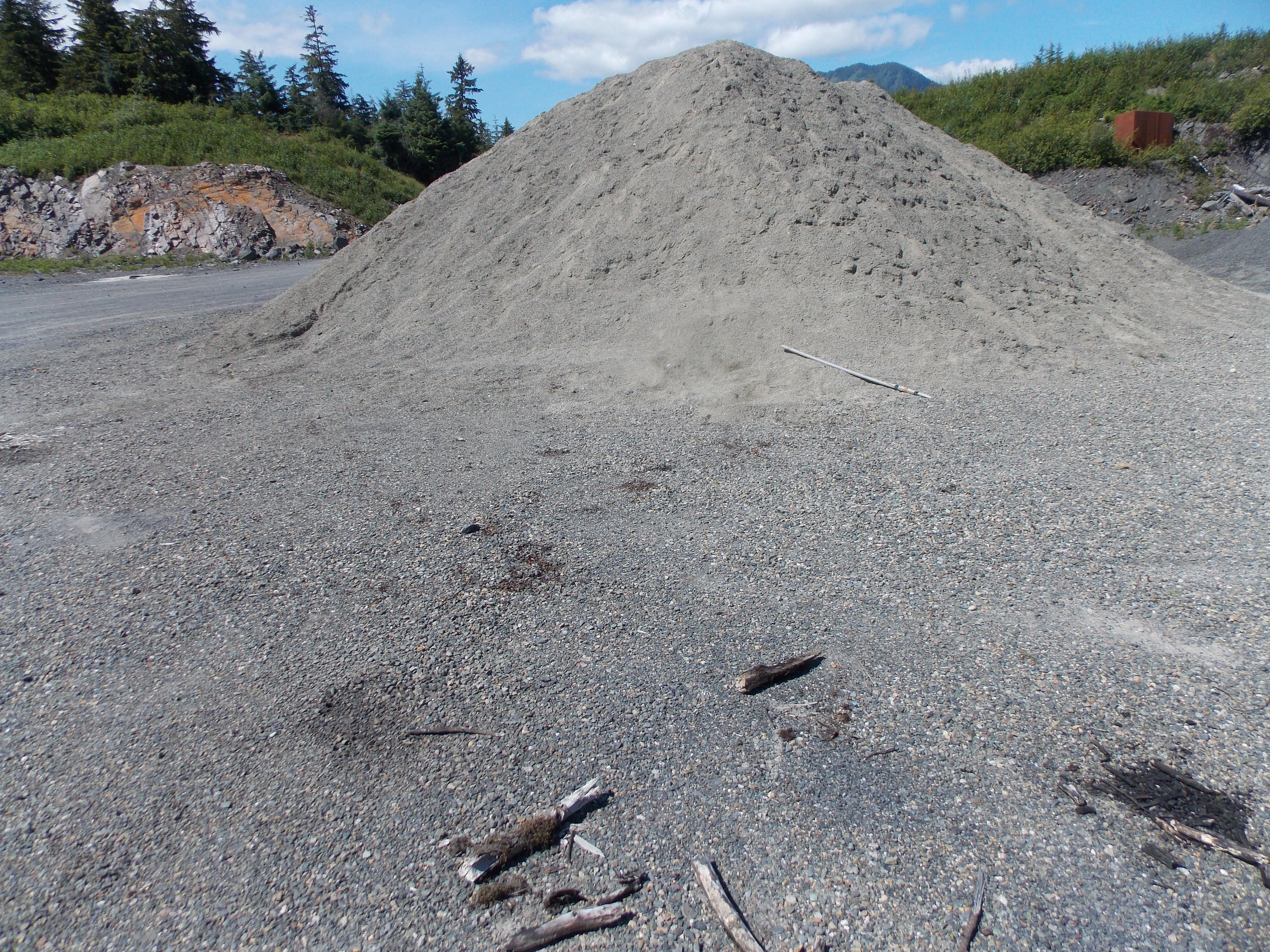
(Photo courtesy KFSK)

Swihart said some material was recovered from the vehicle, some residue from the explosion site, and the bulk of the explosives were recovered when officers served a search warrant on property on Cornelius Road about two miles south of downtown.

“We don’t have any indication that he was trying to hurt anyone else. There’s some indication that he was trying to hurt himself and there’s some indication that it could have been an accident. So we’re still trying to piece all that together but you know there’s a lot of rumors flying around and we’ve done some precautionary checks with the bomb dog from ATF but we don’t have any indication that he was trying to hurt anyone but possibly himself.”

Swihart did not know if any laws were broken in possessing the explosives.

“The explosives that they’ve identified tentatively the tovex is commercially available and if you’ve got the proper permits and licenses in place you can possess that. And I’m not sure if this individual has those or not the ATF is still researching that. But if there’s a crime here it’s how they were put together and how they were used and that’s what they’re trying to figure out.”

Swihart is not sure how long the investigation will take.
Alaska Native leader Don Wright passes away

Alaska Native leader Don Wright has died. He was 84 when he passed away at home on July 5.

Wright was instrumental in developing the tribal lands compensation legislation, Alaska Native Claims Settlement Act, signed by President Richard Nixon in 1971. Wright was leader of the Alaska Federation of Natives that year.

Wright helped organize AFN during the 1960s, and fought to get the best settlement possible for Alaska Natives. Wright and other Native leaders traveled to Washington, DC to lobby for the law, even though funds were scarce. Wright often used his own money for airfare and expenses, since AFN in its early days had no funds at all. Despite the odds, Wright was successful in getting Nixon administration backing for the settlement.

ANCSA compensated Alaska Natives for loss of lands and established regional and village Native corporations with the right to select 44 million acres of land and appropriated $962.5 million to them.

Wright was born in Nenana in 1929. He became a pilot and established his own air service. He later formed a construction company, and helped build airstrips and roads in the Interior. He also helped build the first oil field camp at Prudhoe Bay.

Wright’s family says he was a champion for Alaska. His funeral will take place July 26th in Nenana.

Empty Chair Project recognizes Juneau’s Japanese WWII internees

Seventy-two years ago, more than 50 Juneau residents were forced to leave their homes. It was World War II, and the United States was forcing Japanese nationals and Japanese Americans all over the West Coast into internment camps.

Learn more

The Empty Chair Project supporters blog about history, the memorial and more at http://emptychairproject.wordpress.com/.

The Juneau-Douglas City Museum is hosting an exhibit on Juneau’s interned Japanese until Oct. 26.

Juneau filmmaker Greg Chaney’s documentary “The Empty Chair” premiered Friday.

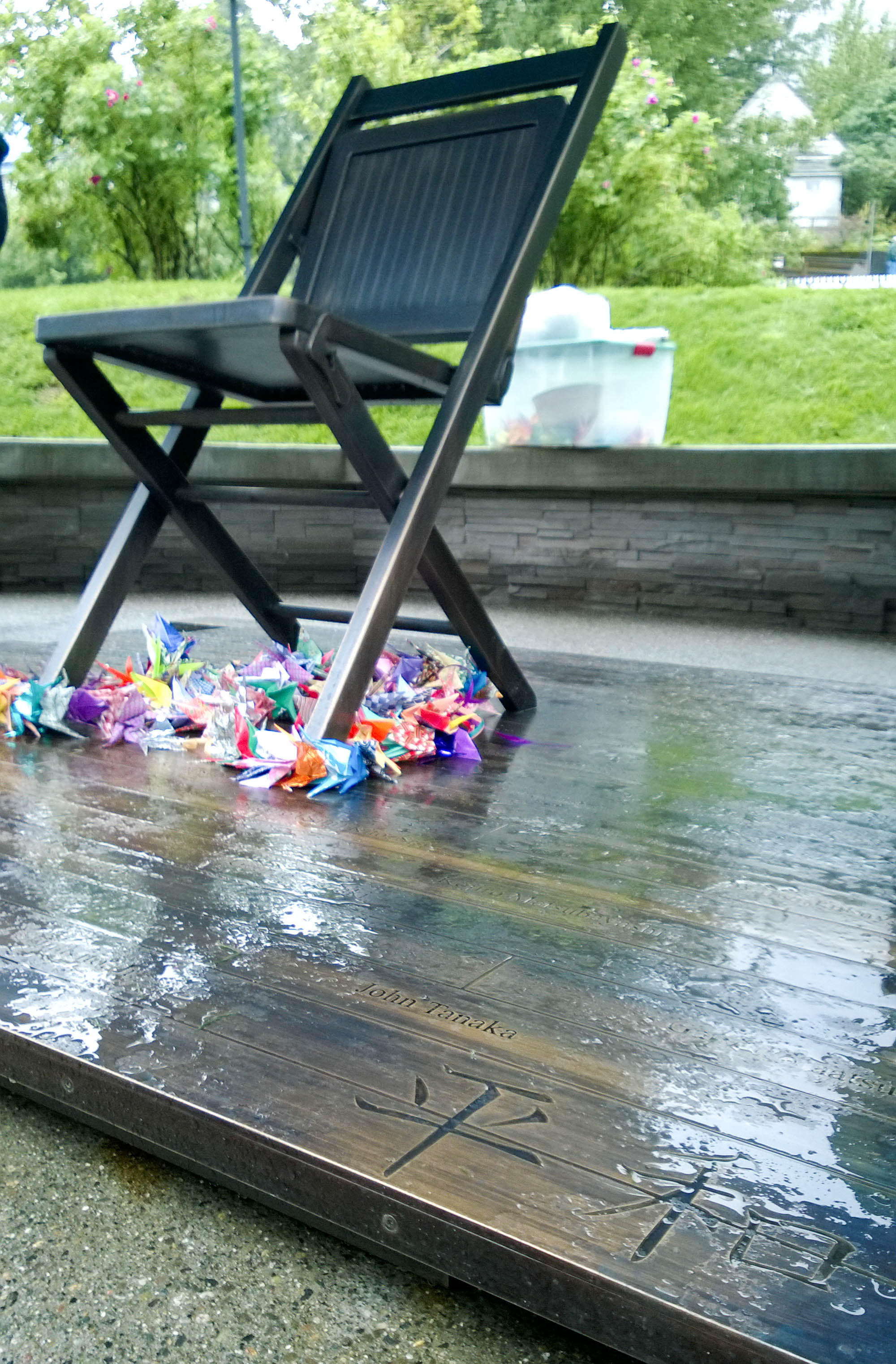
That included John Tanaka, who was shipped out of Juneau in April 1942 with dozens of other Japanese. Tanaka was the valedictorian of Juneau High School that year, but didn’t get to graduate with everyone else. On Saturday, like at the graduation he couldn’t attend, an empty chair was dedicated as a quiet memorial to the interned.

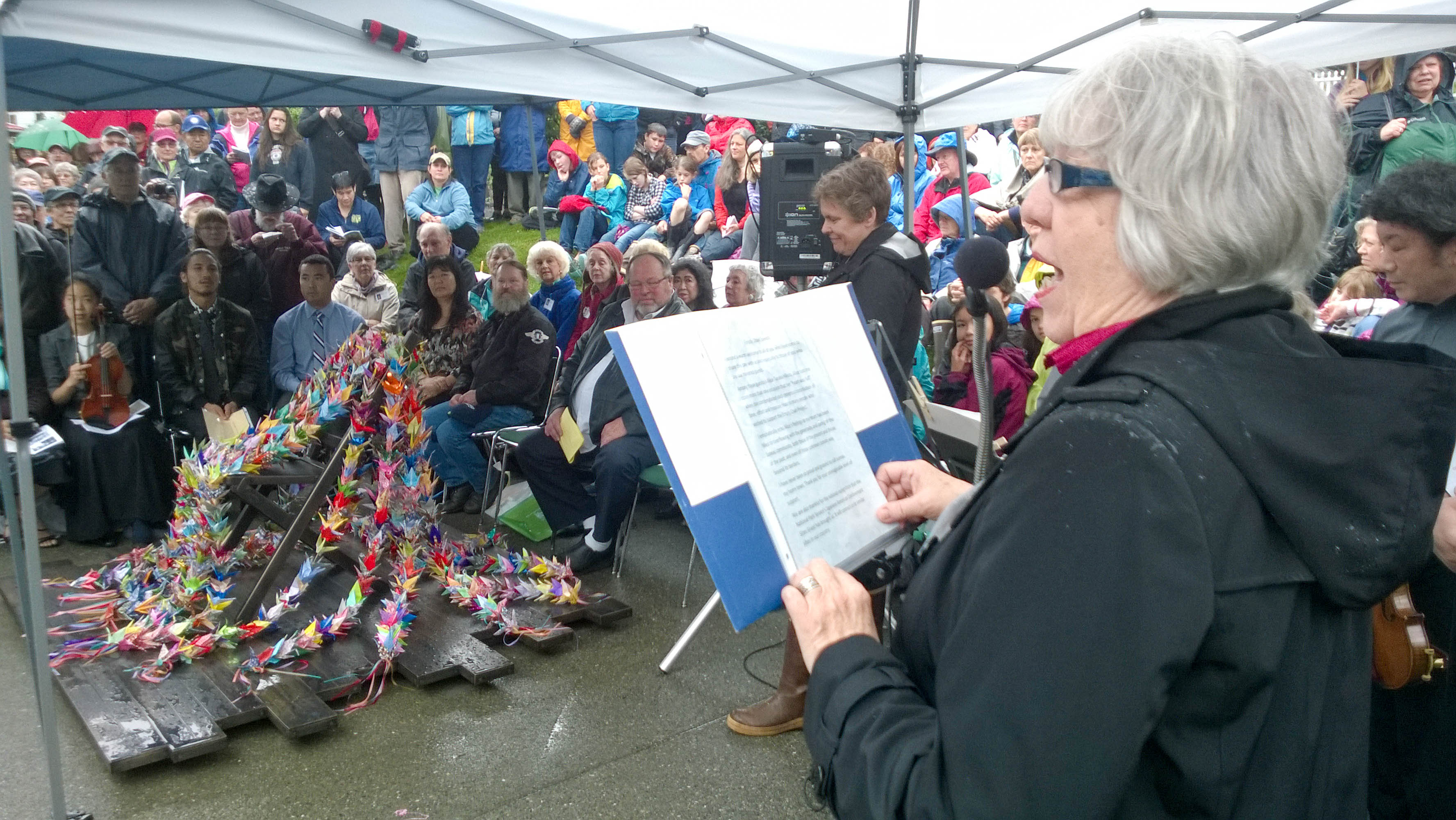
More than 200 people attended the dedication ceremony at Capital School Park for the bronze sculpture that recognizes the 53 people from the Juneau area sent to camps.

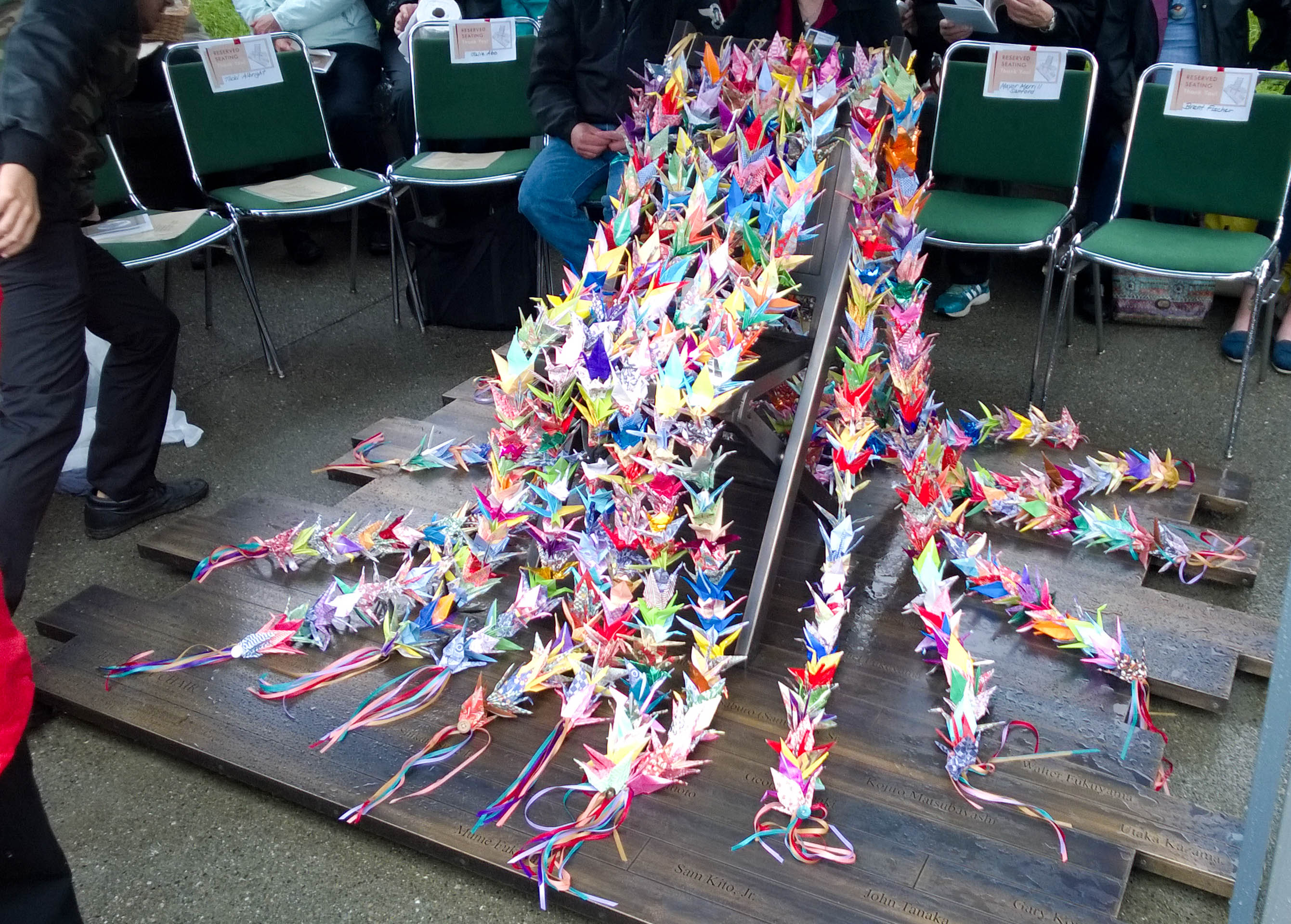
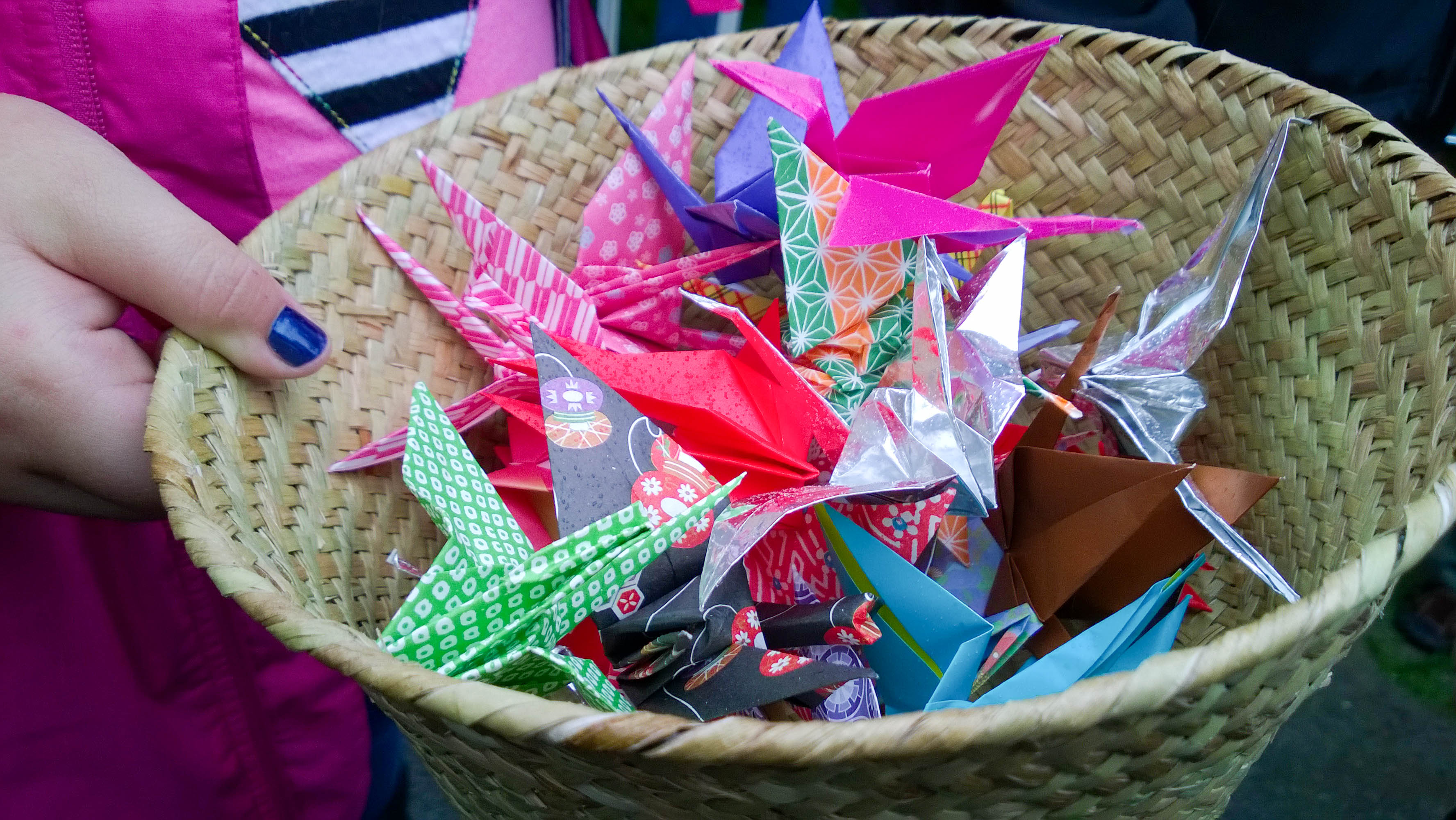
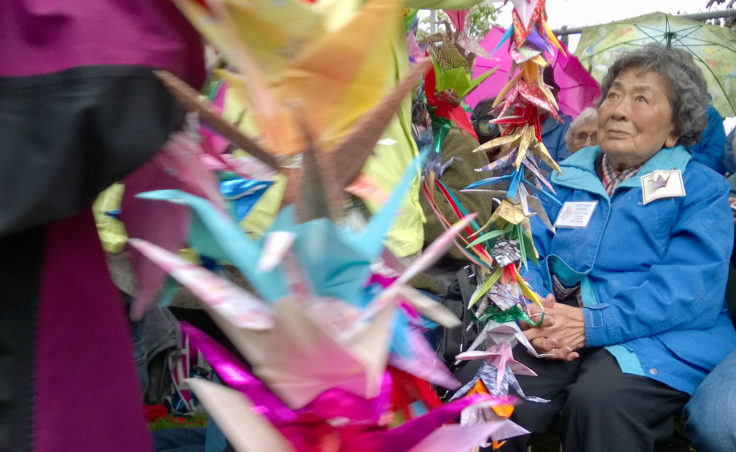
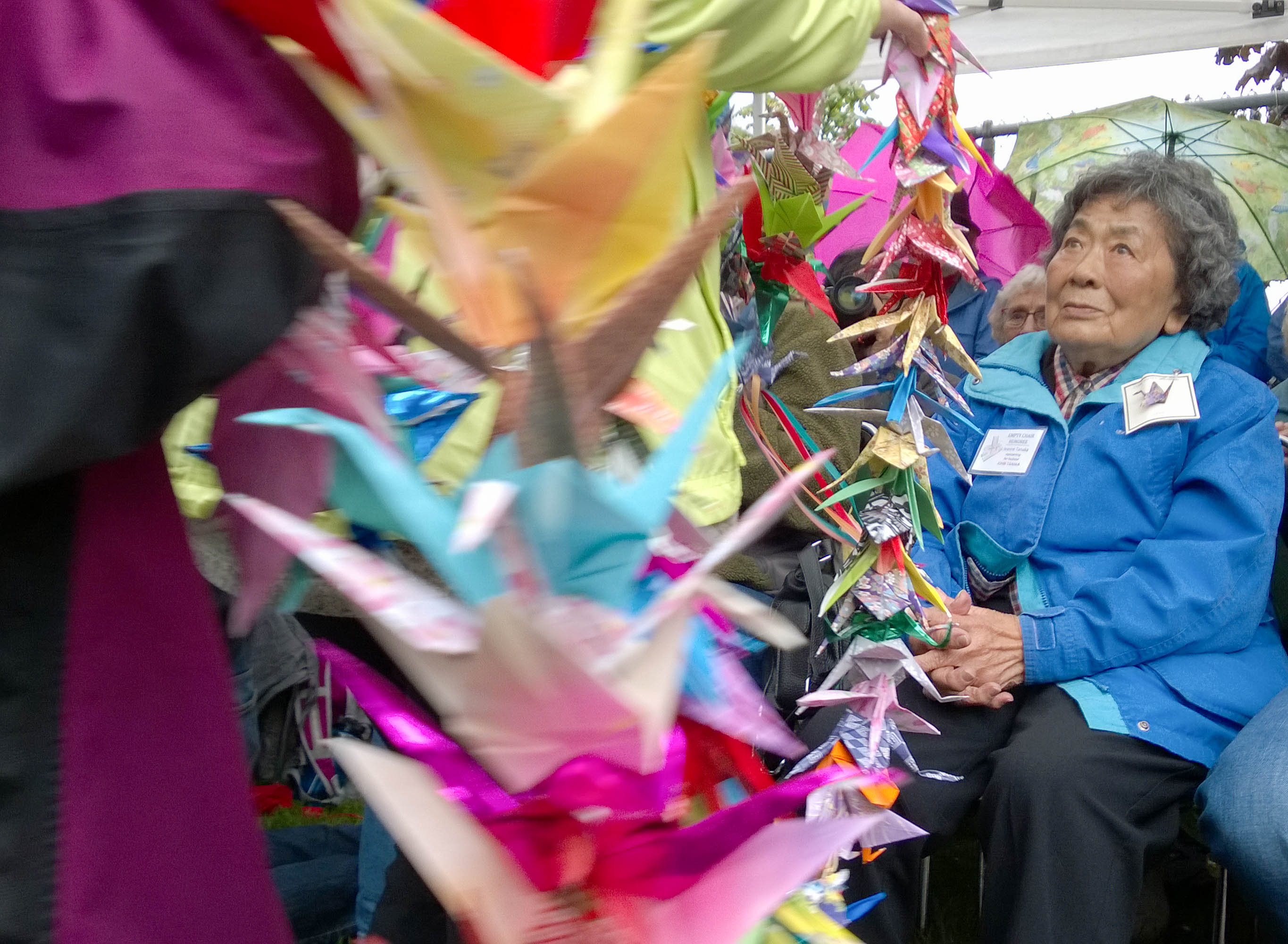
Chains made of a thousand brightly colored origami cranes draped the Empty Chair memorial. It’s a bronze reproduction of a simple folding chair, like the kind Juneau High School used in the 1940s for graduation ceremonies. It has a spartan aura, sequestered in the park with a jagged chunk of planked flooring.

“And the irregular edge of the floor was intended to represent a section of the gymnasium floor that had just been ripped out of the gymnasium as a metaphor for the way that the people were ripped from their homes and their community,” said Peter Reiquam.

Reiquam is the Seattle-based artist commissioned for The Empty Chair Project.

The names of the 53 people forced to leave their homes for internment camps during World War II are etched into the floor planks. The communal, military-style camps were ringed by barbed wire and guard towers.

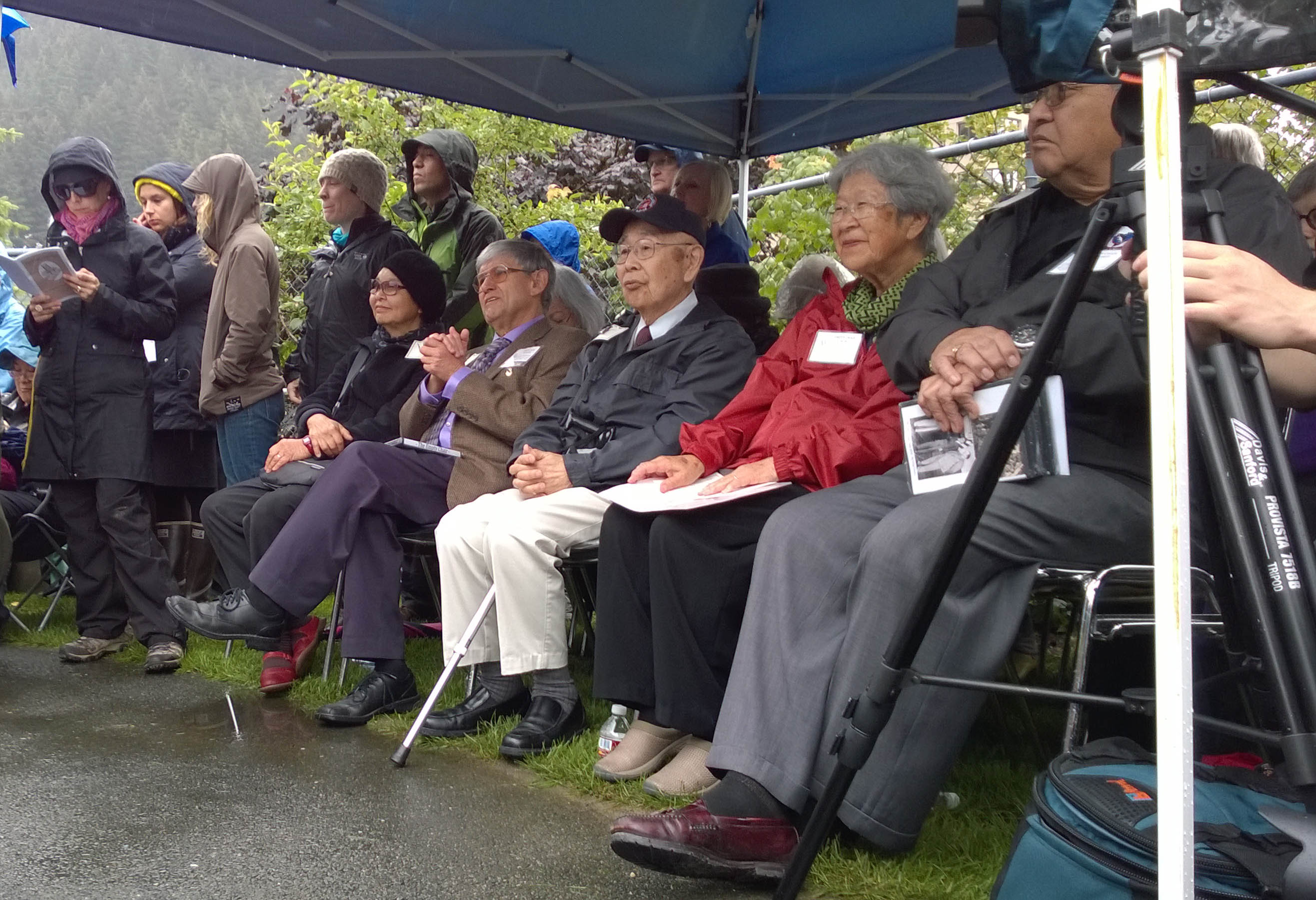
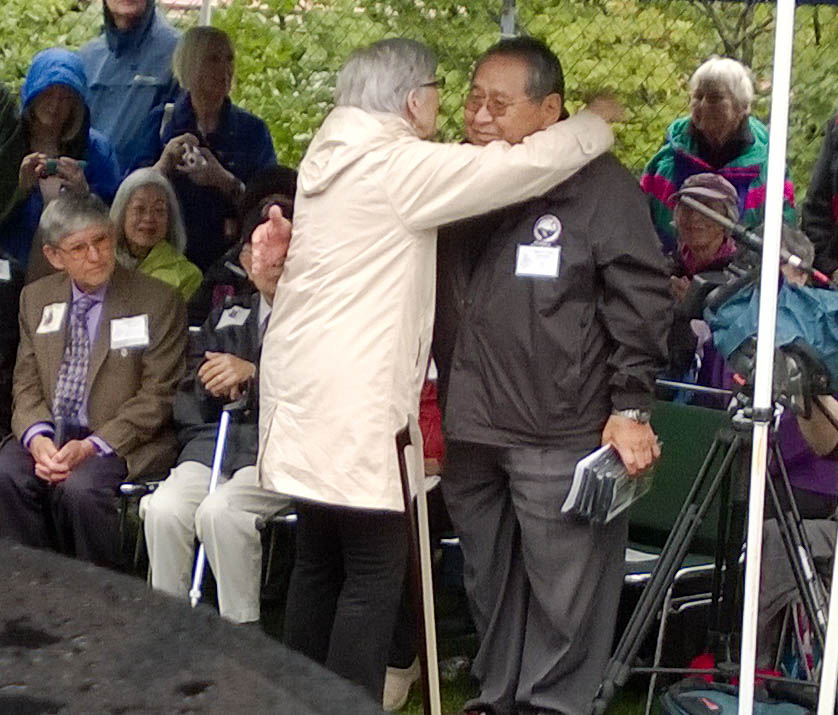
Mary Tanaka Abo, one of John Tanaka’s sisters, teared up during the dedication ceremony. She was surrounded by her extended family, and said seeing her young relatives understand what her generation went through is particularly important.

“You know, our family history? People kind of roll their eyes. The kids, you know. But, you know, when they see the community here, (then) they really think it’s important. Then, it kind of validates everything,” Abo said. “And you know, people (are) nearing the end of their lives. So it’s just really tremendous to share this moment, you know, of our home town, with our families.”

After being interned, John was drafted into the 442nd Infantry Regiment, a Japanese-American Army unit that fought in Europe.

His family returned to Juneau after the war. The lease on the family business, the City Café, had lapsed, but the community helped the Tanakas and others reestablish themselves. The café eventually became a 50-year institution.

John worked summers in the café while going to college and medical school. He became an anesthesiologist and settled in Spokane, Washington. He died in 1977.

His widow, Jeanne Tanaka, says they rarely talked about their internment or the war. But she said John spoke fondly of his hometown.

“I feel it’s a wonderful tribute to him, and to the community that really helped him out so much,” she said. “I’m very grateful.”

Amid some words and music, the sculpture was unveiled by a procession of the youngest members of the extended Japanese families. Each child delivered a chain of the origami cranes to an elder.

Most of the Juneau residents sent away during World War II have died, but a few attended the ceremony.

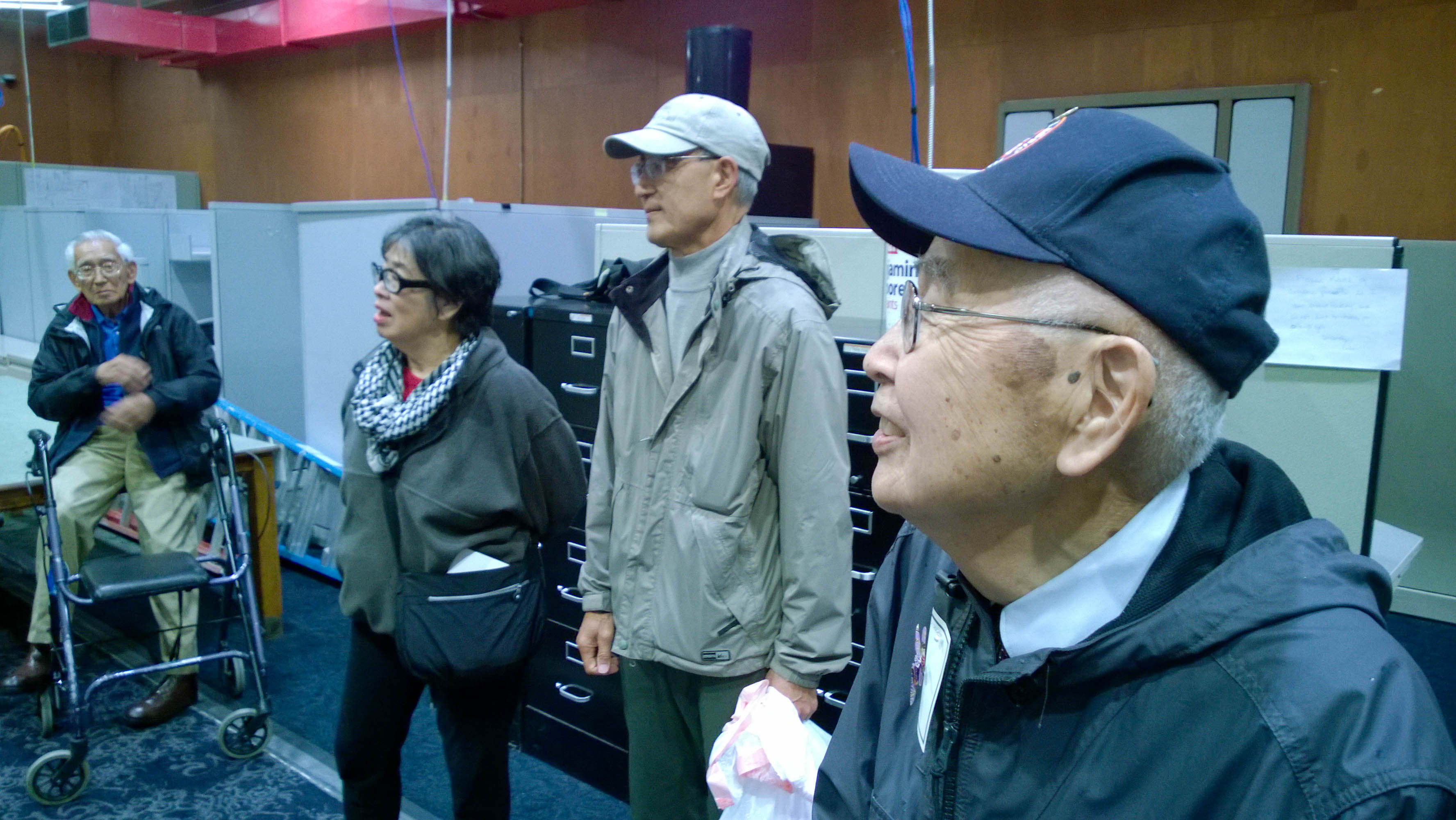
Eighty-nine-year-old Walter Fukyama was one of the high school students who was detained. After the dedication, he stepped into the gym where he had played basketball as a youth, where he should have graduated in 1943. The hoops are still there, but the space has been converted to makeshift offices for Capitol workers. It was the first time he’d been back. He didn’t want to pose for photos, and said he wasn’t sure how he felt. He said he just wanted to reminisce.

Flood warning cancelled, water continues to drop

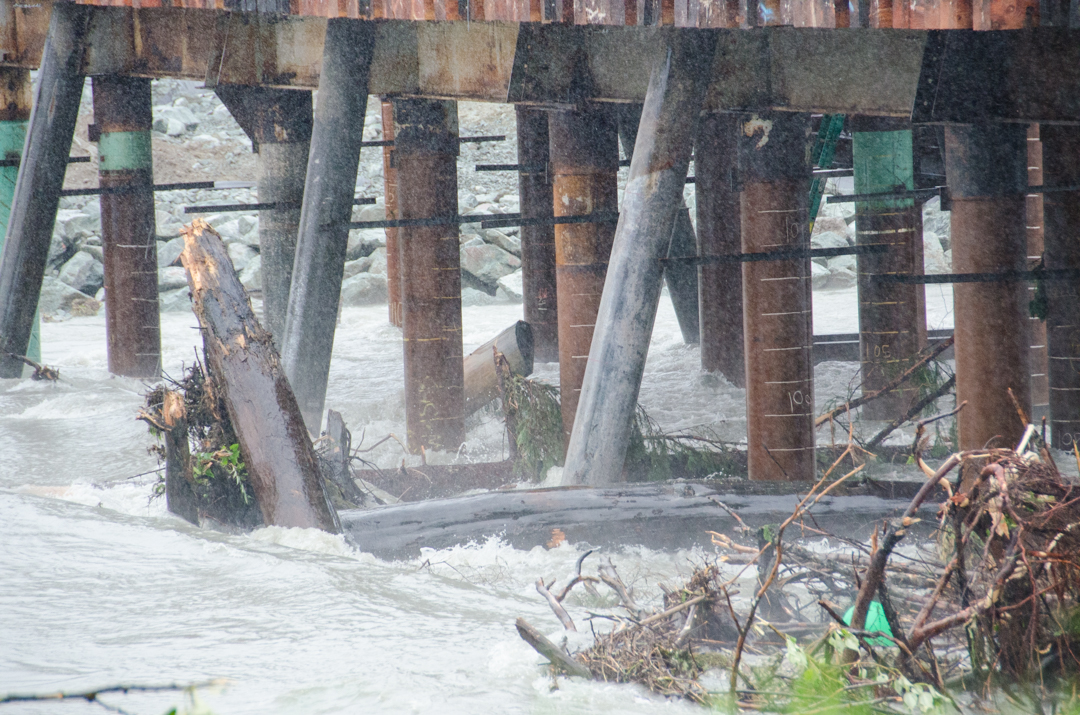
The water levels continue to drop after setting a record height of 11.8 feet in Mendenhall Lake.
Bob Tschantz with the National Weather Service office in Juneau says that the flood warning was cancelled last night at midnight.

The high waters are a result of a glacial outburst, called a jökulhlaup, on Wednesday night.

“Waters are still running high–what we call bank full–but are not technically at flood level anymore,” Tschantz said.

The last measurement in Mendenhall Lake recorded levels at 8.25 feet and 10.5 feet in Mendenhall River.

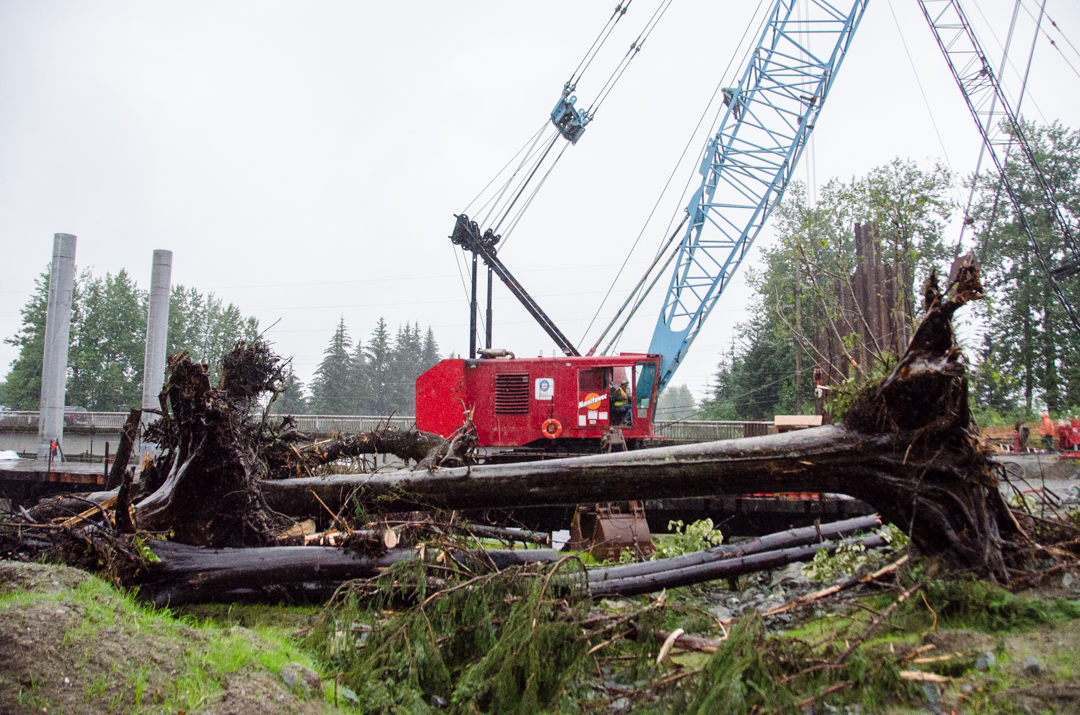
Reports of damage are still coming in. Tschantz says construction workers at Brotherhood Bridge yesterday had to use the crane to remove trees that were caught up in the bridge pilings.

CBJ officials do not yet have a count of how many homes were flooded.

We’ll continue to update this story as more information comes in. If your home was damaged or you have photos of the flooding you want to share, email heather@ktoo.org.

TODAY Show live from Juneau, Alaska

Updated 5:00 p.m.:

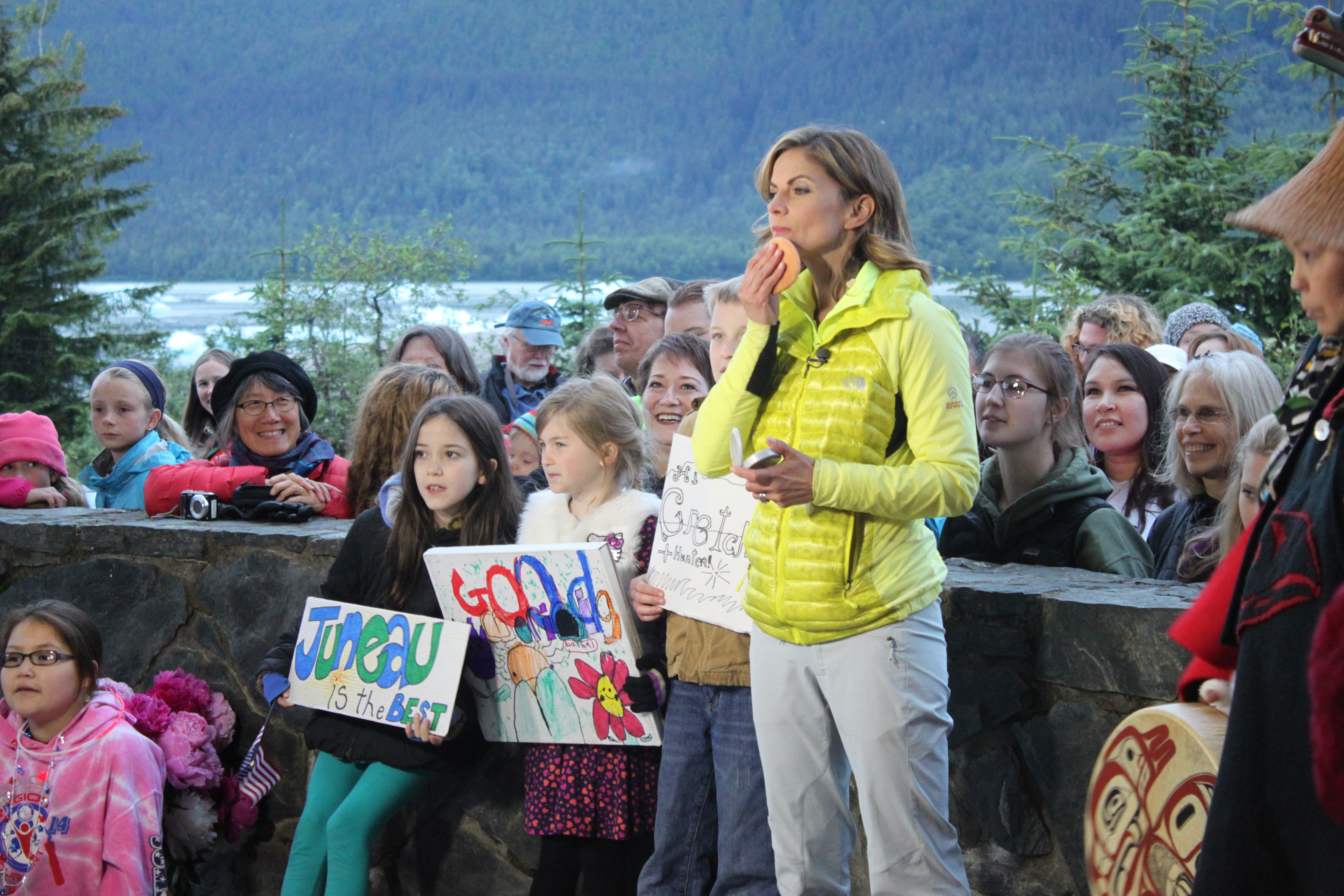
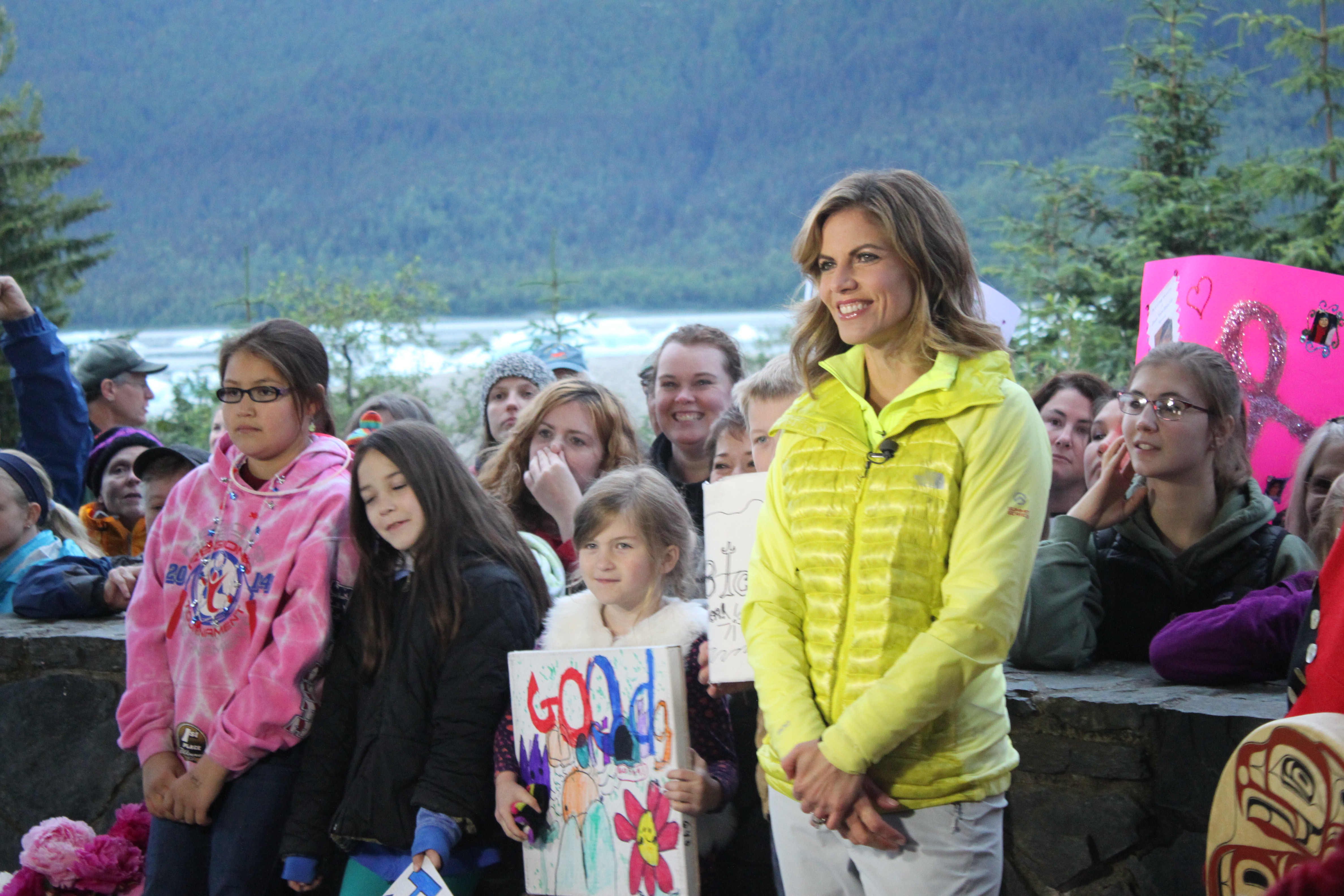
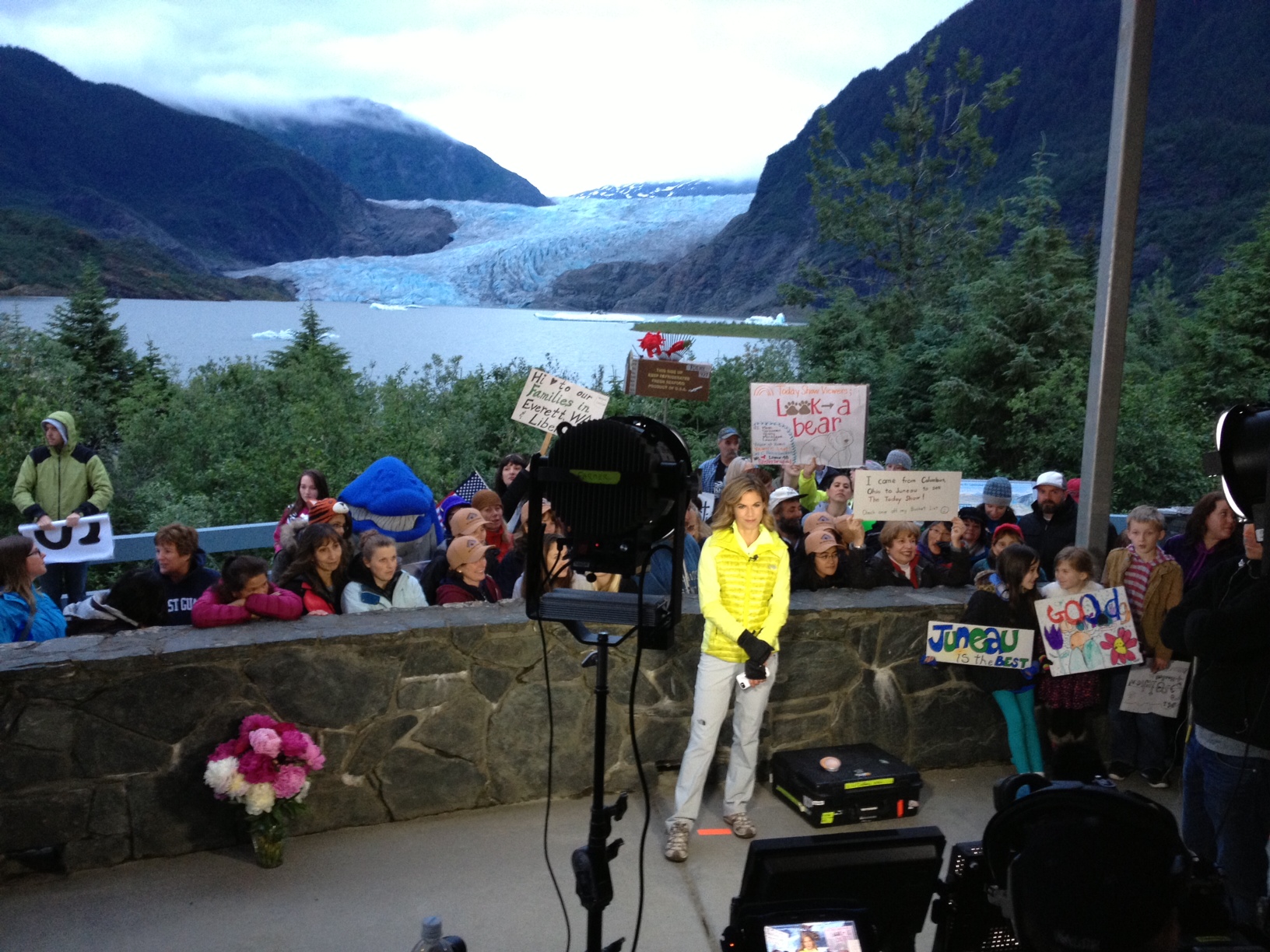
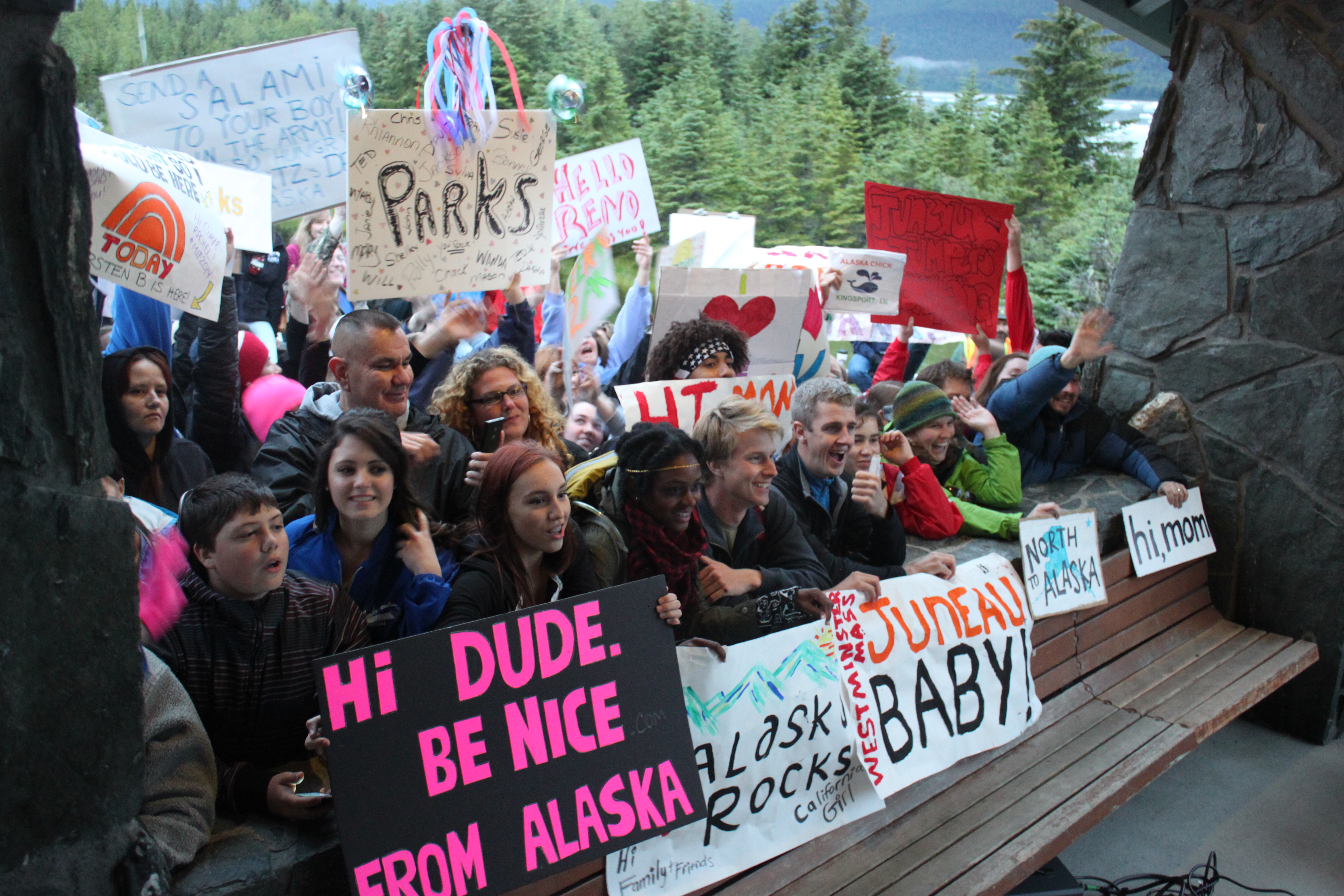
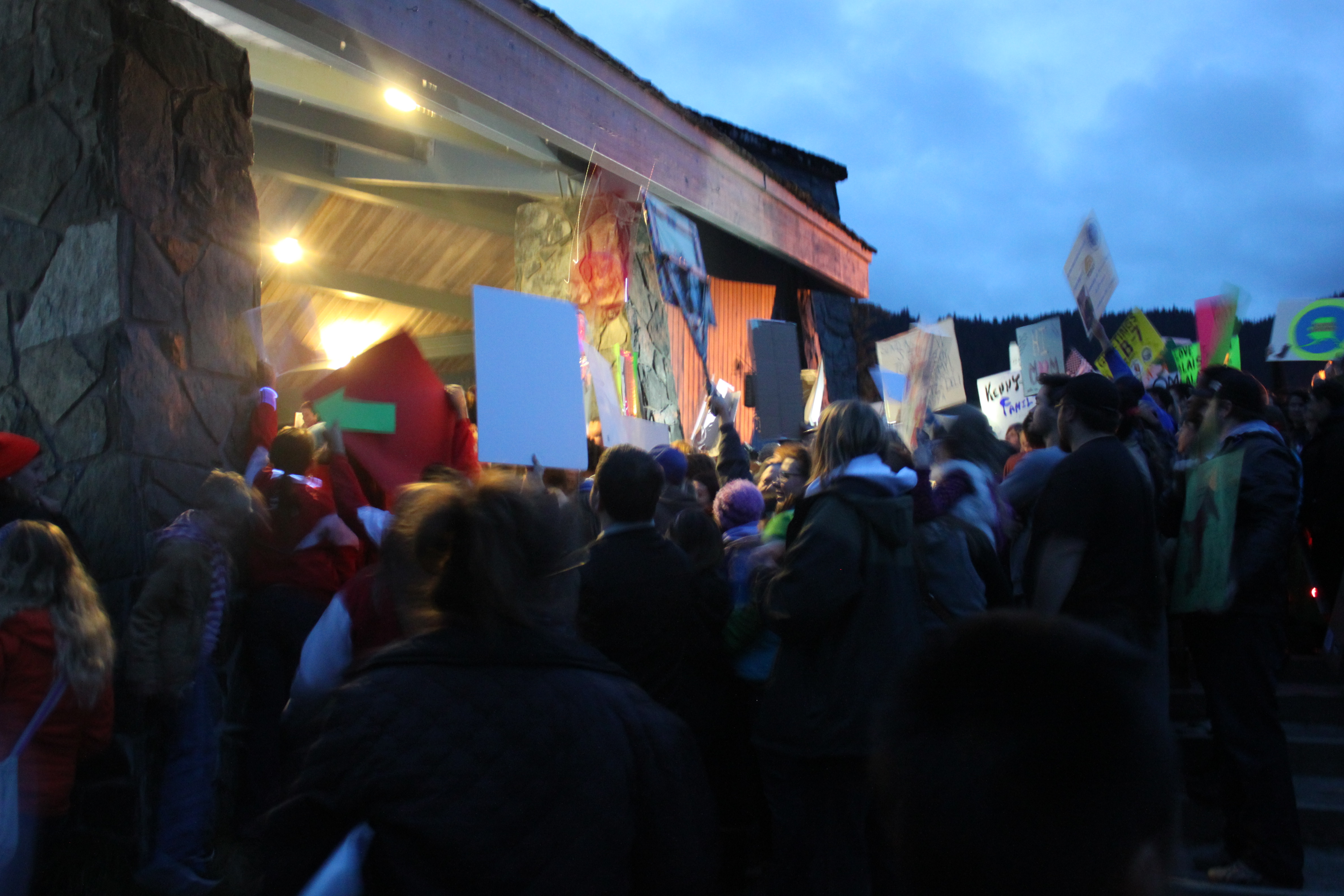
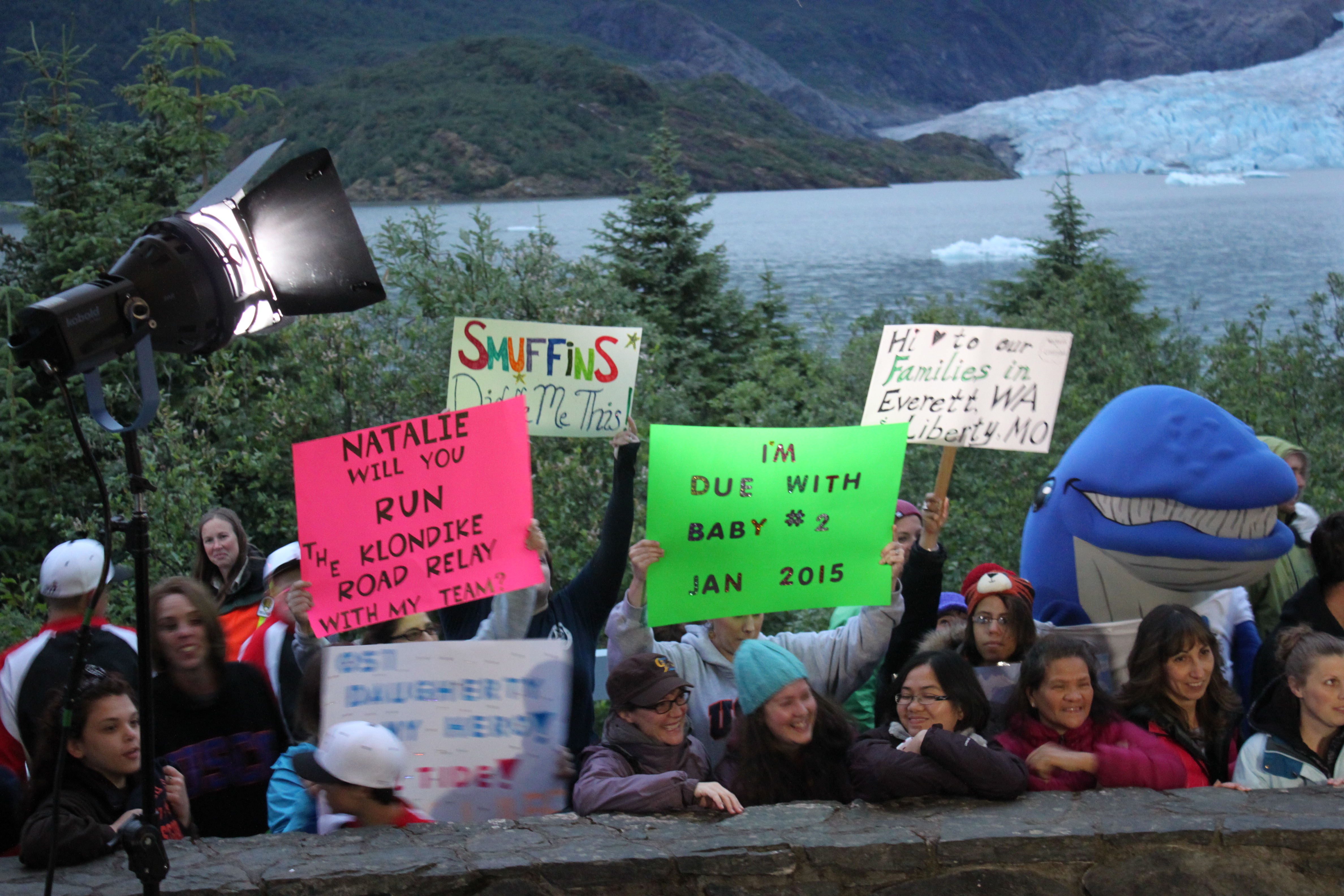
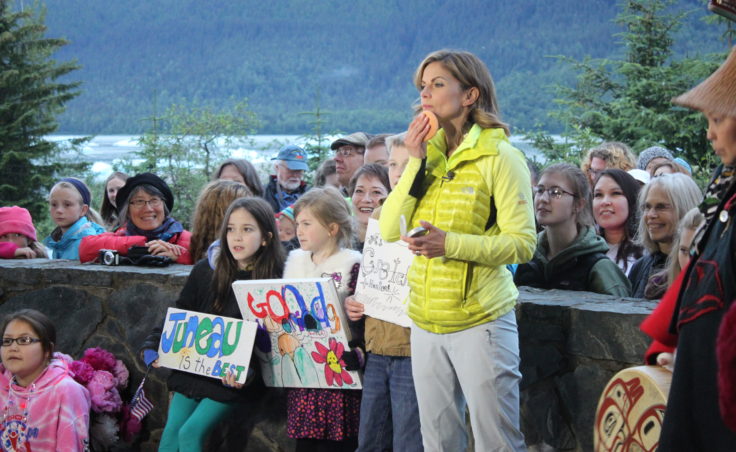
About 1,500 people showed up for an early morning live broadcast of the TODAY Show from Juneau’s Mendenhall Glacier. They waved signs, cheered and waited hours for a chance to be on national TV for a few seconds.

On live television, NBC’s TODAY Show news anchor Natalie Morales praised Juneau’s crowd.

“Hats off to Juneau because all of these folks, about 1,500 of them, they’re here at 3:30 in the morning, so you guys are incredible. Lots of pride here in Juneau as you can see.”

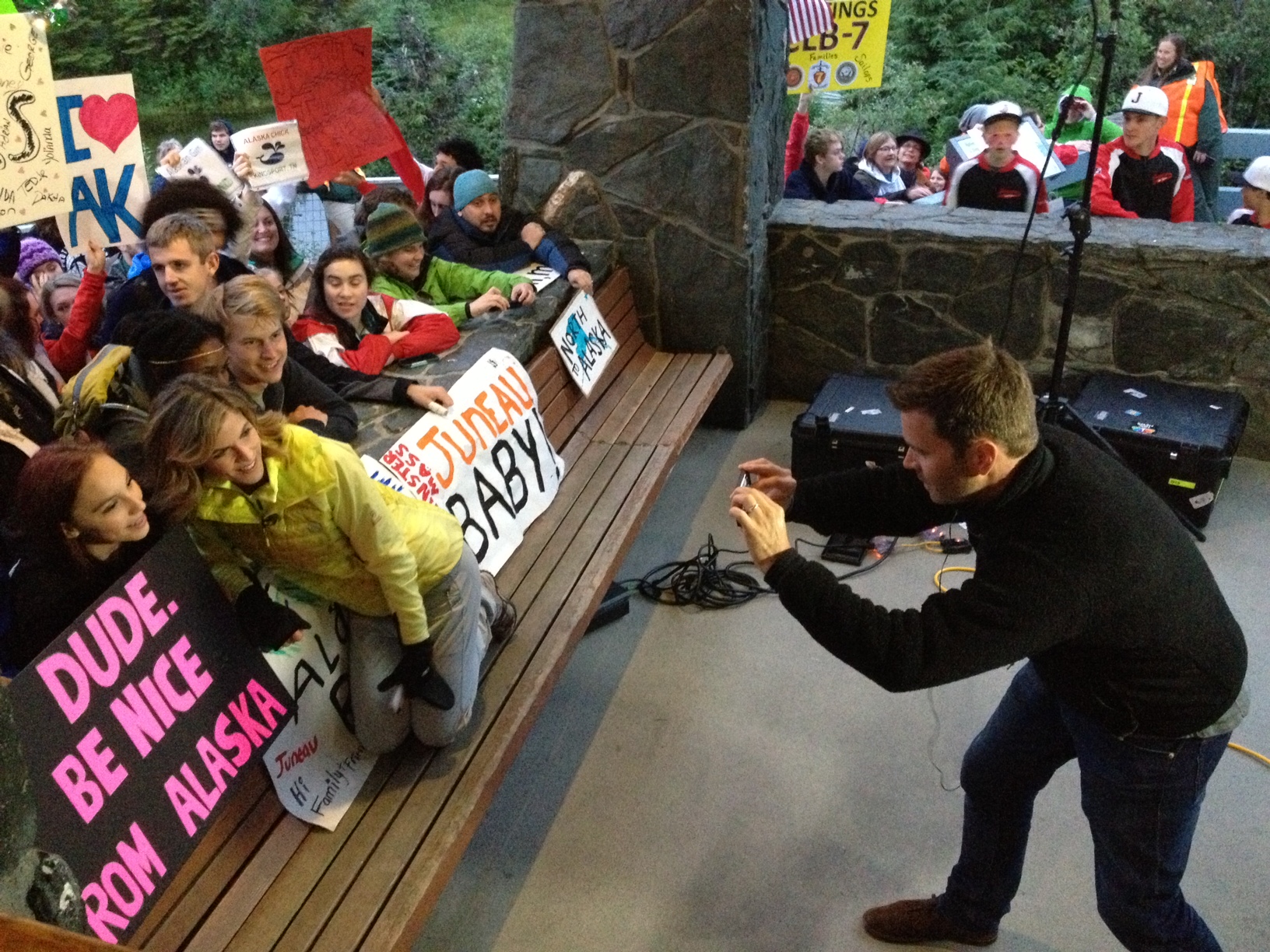
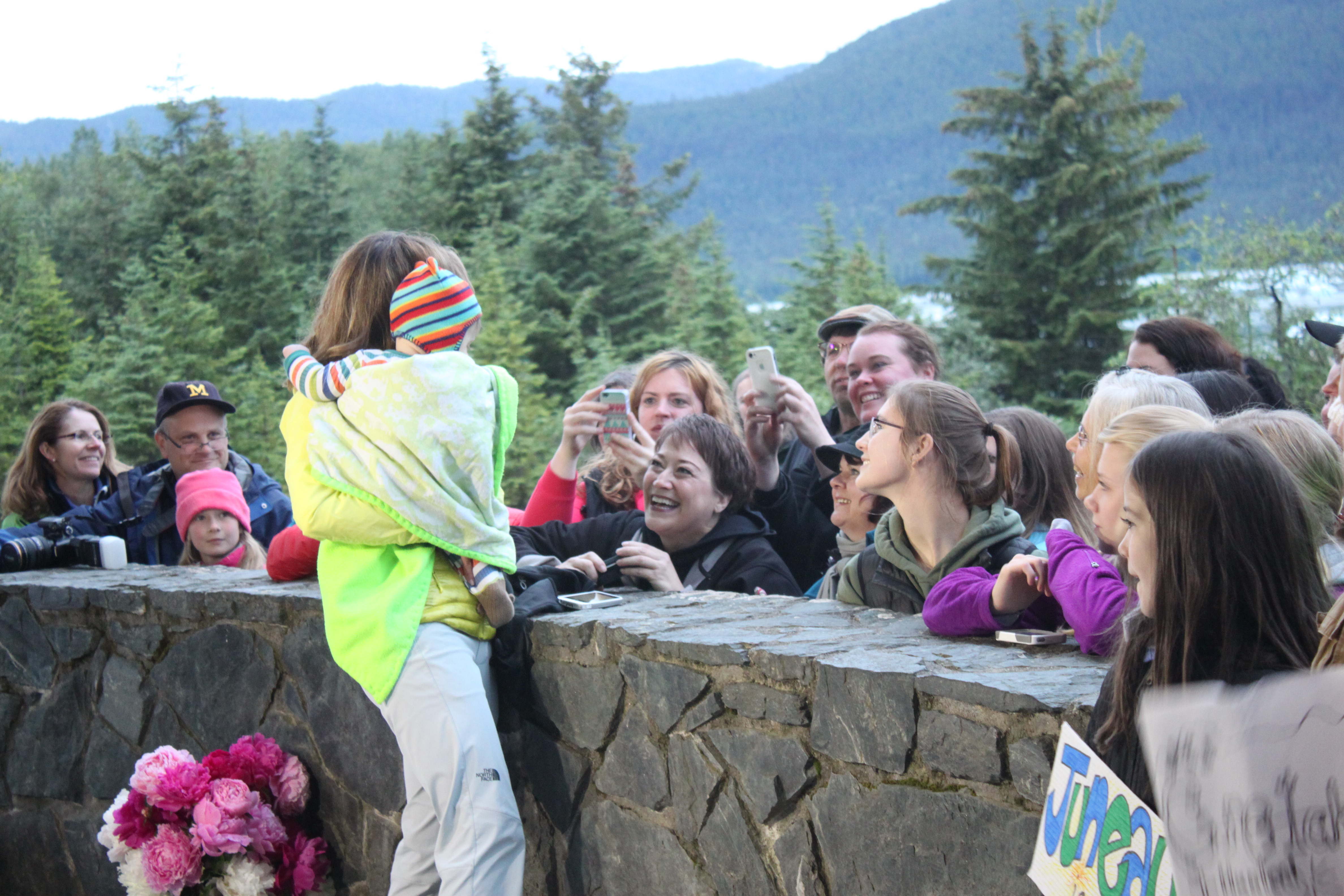
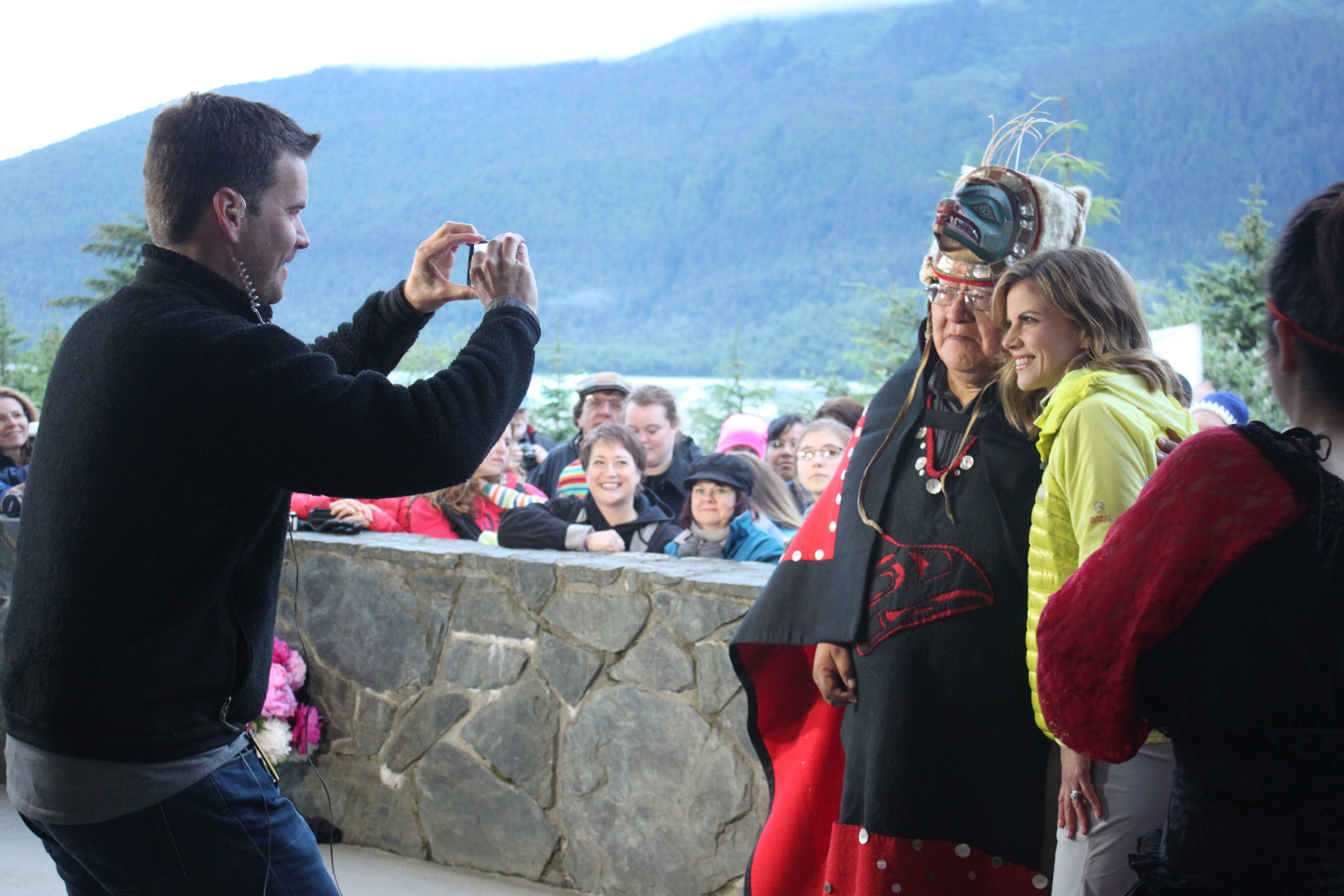
When Morales was off camera, she talked to the crowd, held babies and took pictures with adoring fans.

“I feel bad. I mean they all showed up here at, like, 3 o’clock- No, earlier than that. It was, like, 2 o’clock in the morning. So I want to make sure everybody gets a little camera time, or if not, gets a good selfie out of this,” Morales says.

Juneau resident Neely Perisich arrived at the visitor center at 2:30. She didn’t come empty handed.

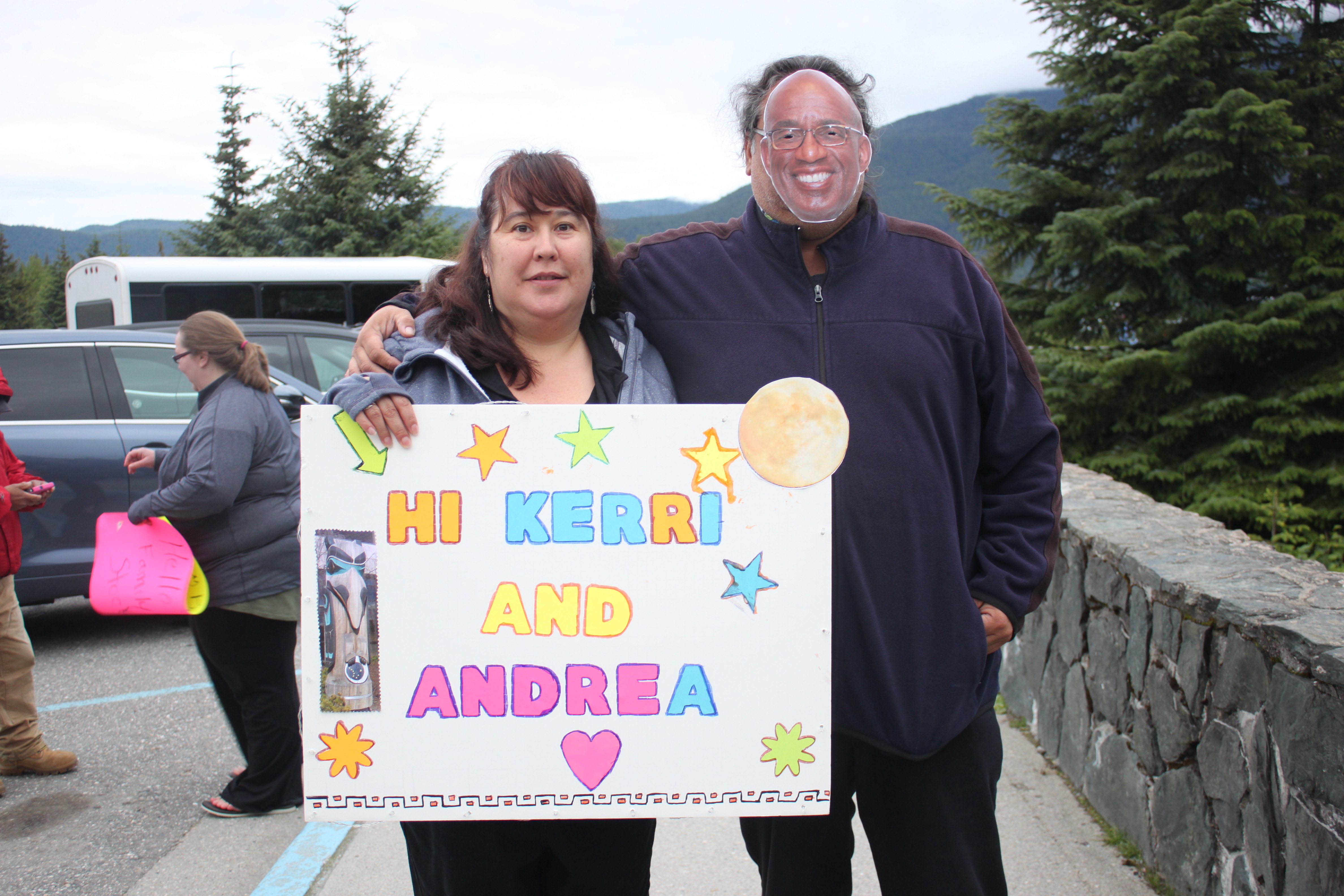
“My sign says, ‘Hi Kerri and Andrea.’ They live in Newburg, Oregon. They’re my sister and my niece and they watch the TODAY Show every day,” Perisich says.

The sign has a border of blinking white lights. Perisich is with her partner Dave Velasquez. He’s wearing a cut out of Al Roker’s head. He’s a big fan of the TODAY Show co-anchor and weatherman.

“So I got an Al head. He’s got a perfectly shaped head for cutting out on paper. There’s no hair or anything,” Velasquez says.

Most of the crowd inside and lining the walls of the pavilion wanted to be there for the excitement, like Tom Chard.

“Years later, people are going to be saying, ‘Well, where were you?’ And, ‘You remember the TODAY Show came around?’ Yeah, yeah, yeah. The line was out the door. We loved it. It was great. It was a lot of fun,” he says.

Eileen McIver had an ulterior motive for being at the live broadcast. She’s a columnist for the Chilkat Valley News in Haines.

“I wanted to pitch this idea I have for a sitcom, so I’m here to get the attention of someone from NBC. Not sure who. I don’t really have a plan,” McIver says.

McIver is writing a sign on a pizza box, which says, “NBC, you have to hear my pitch. We’ll talk.”

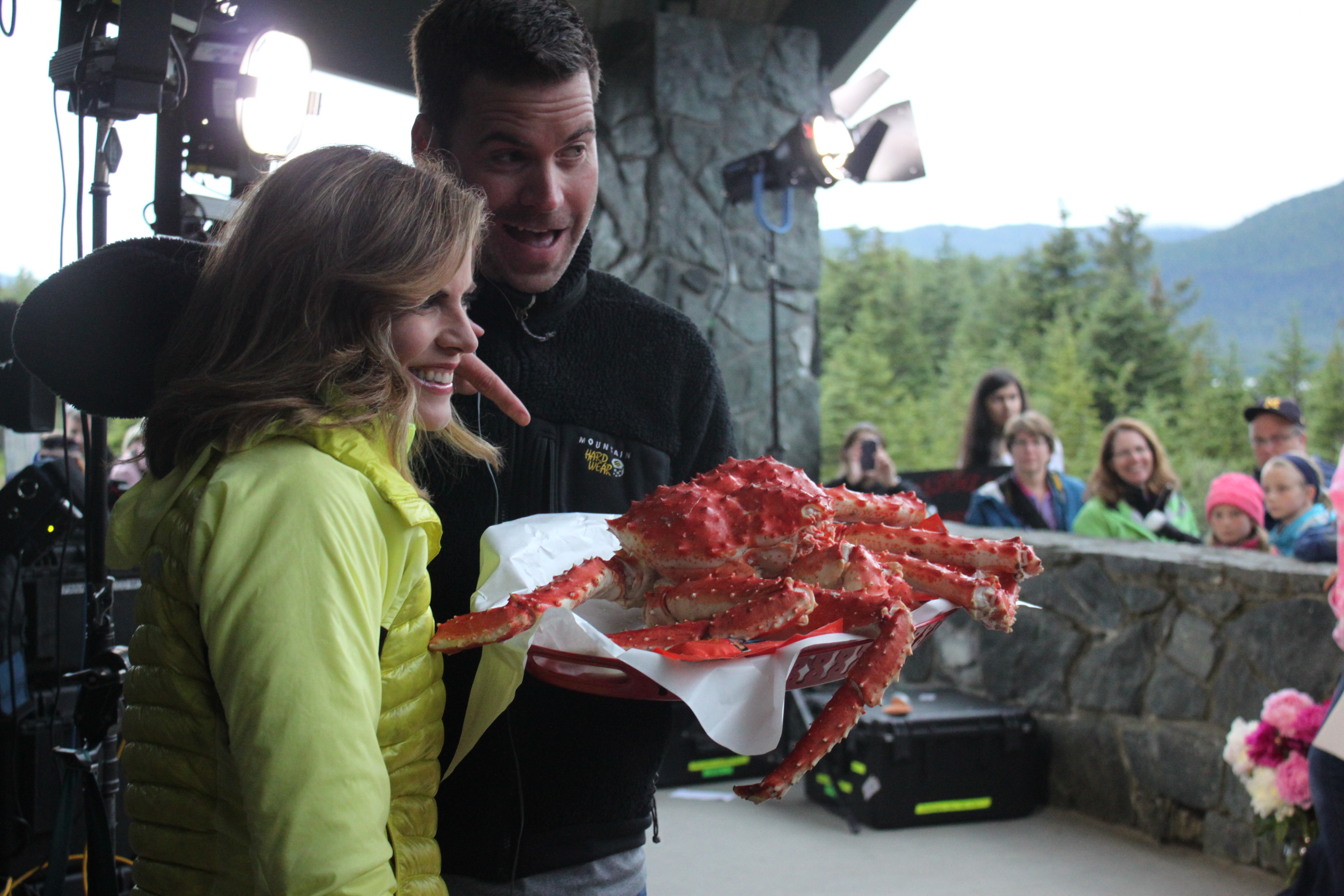
The broadcast from Juneau kicked off a series, #TODAYTakesOff, which sends Morales to famous destinations around the country. She spent a couple days in Juneau kayaking, ice climbing, exploring the Mendenhall Glacier ice caves and visiting Admiralty Island bears. Her adventures were featured on the show.

Visit NBCNews.com for breaking news, world news, and news about the economy

The last time Alaska was on the TODAY Show was in 2012, when Jenna Bush Hager did a segment from Denali National Park. In 2011, Al Roker visited the Knik Glacier.

But this is the first live broadcast from the state.

It’s been a long time coming. The state’s commerce department first pitched the idea to NBC in 2003.


Original post:

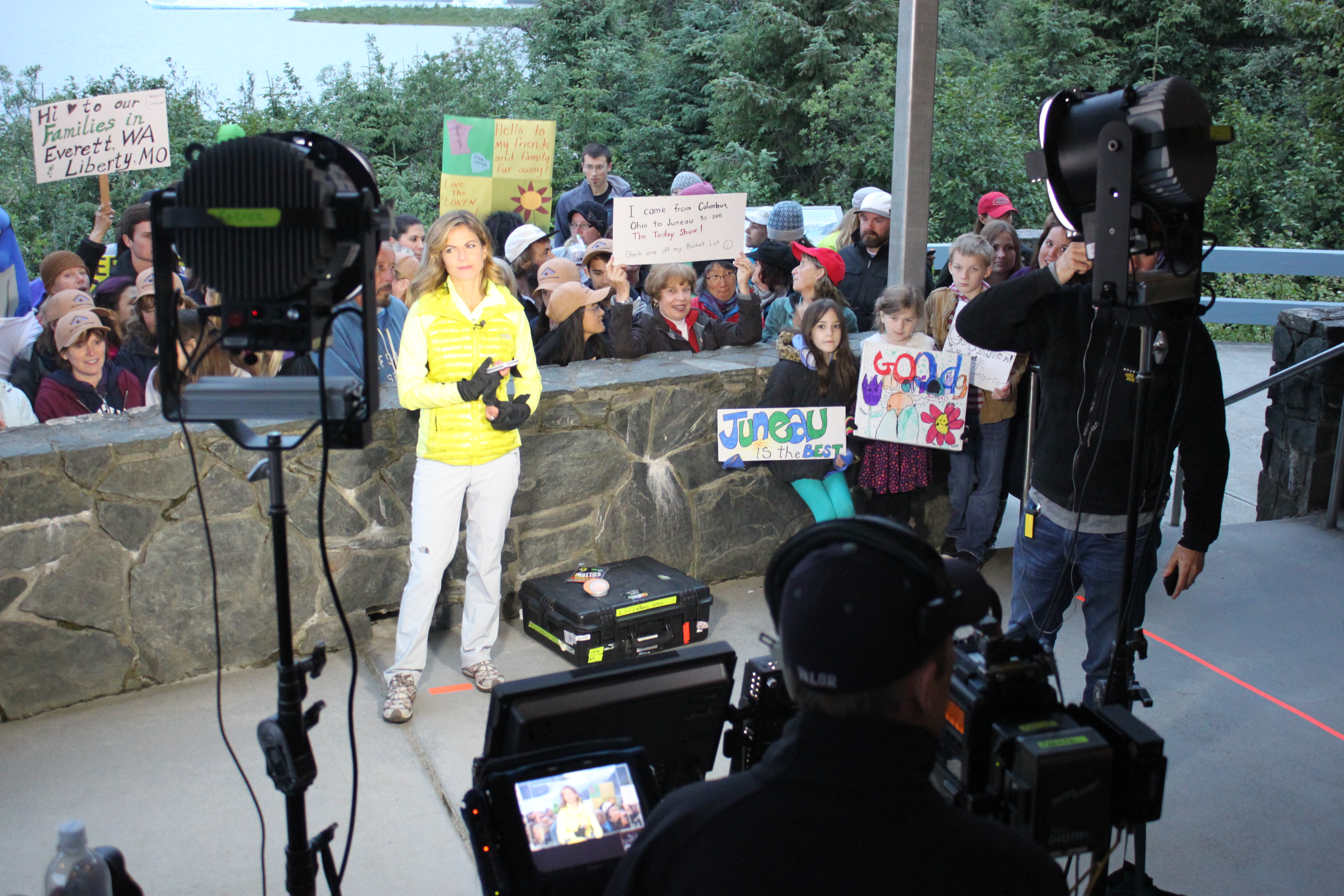
Natalie Morales hosted portions of NBC's TODAY Show from the Mendenhall Glacier Visitor Center pavilion. (Photo by Lisa Phu/KTOO)
Natalie Morales hosted portions of NBC’s TODAY Show from the Mendenhall Glacier Visitor Center pavilion. (Photo by Lisa Phu/KTOO)

More than 1,500 people showed up for the live broadcast of NBC’s TODAY Show from the Mendenhall Glacier.

The broadcast started at 3 a.m. but people started showing up around 2 a.m., like Juneau resident Jonelle Staveland. She didn’t have to wake up early, because she never went to bed.

“I actually stayed up all night. I was super excited. I never see celebrities. Like, my first time actually seeing something live on TV, so I’m excited,” Staveland said.

NBC’s Natalie Morales hosted portions of the TODAY Show from the visitor center pavilion. She spent a few days in Juneau kayaking, ice climbing and visiting the Mendenhall Glacier ice caves. Portions of her adventures were also featured on the TODAY Show.

Morales said she’s impressed with Juneau’s early morning crowd.

“This is unbelievable. When we were driving in and we saw cars backed up for a good ways, I was like, ‘There’s a traffic jam. Is this all for our show?’ So, thank you, Juneau. You guys are very proud and showing up strong here today,” Morales said.

The TODAY Show episode aired in Alaska at 7 a.m. today.

The silver screen comes back to Bethel

The customer line snaked its way from the entrance to the concession stand. (Photo by Charles Enoch/KYUK)

The new movie theater in Bethel lit up its screens last week on Independence Day. It was the grand opening for Suurvik Cinema, the only theatre for hundreds of miles in a vast stretch of Alaska.

A long line of excited moviegoers are ready for the first big screen viewings in Bethel for over thirty years. Bethel resident Ronald Jennings Jr. says it’s a big deal for him.

“It’s like one of the first movies that I get to watch in a movie theater. I only did it a couple of other times and that was in Juneau so I’m pretty excited for it being here in Bethel, and that they had the courtesy to bring anything like this to a rural area,” say’s Jennings.

The theater is a part of the Kipusvik Complex, which is owned by the Bethel Native Corporation. President and CEO Ana Hoffman opened the theater with a ribbon cutting ceremony, she presented BNC board members who used traditional ul’uaqs to cut the ribbon.

After buying their tickets customers move into one of the two theaters with their snacks. Most adults and couples choose the comedy “22 Jump Street”, but Alexis Kinegak chose the children’s adventure: “How To Train Your dragon 2, it was fun and little bit sad,” Says Alexis.

Alexis’s mom is Yvonne Kinegak says she was an employee at the last movie theater in Bethel; the Swanson’s Theatre, which closed in the early 80s.

“It feels really good to be in Bethel and watch a movie. I used to run the movies at the old theater, so it feels really good to have a theater back here, a place to hang out for the kids and it’s just exciting so I’m very happy,” says Kinegak.

Suurvik is the Yup’ik translation for “movie theater.” Suurvik Cinema will be open weekdays in the evenings, and begin operations early afternoon on weekends.

Site notifications
Update notification options
Subscribe to notifications