
Community

Final Friday marks last public day for Alaska State Museum

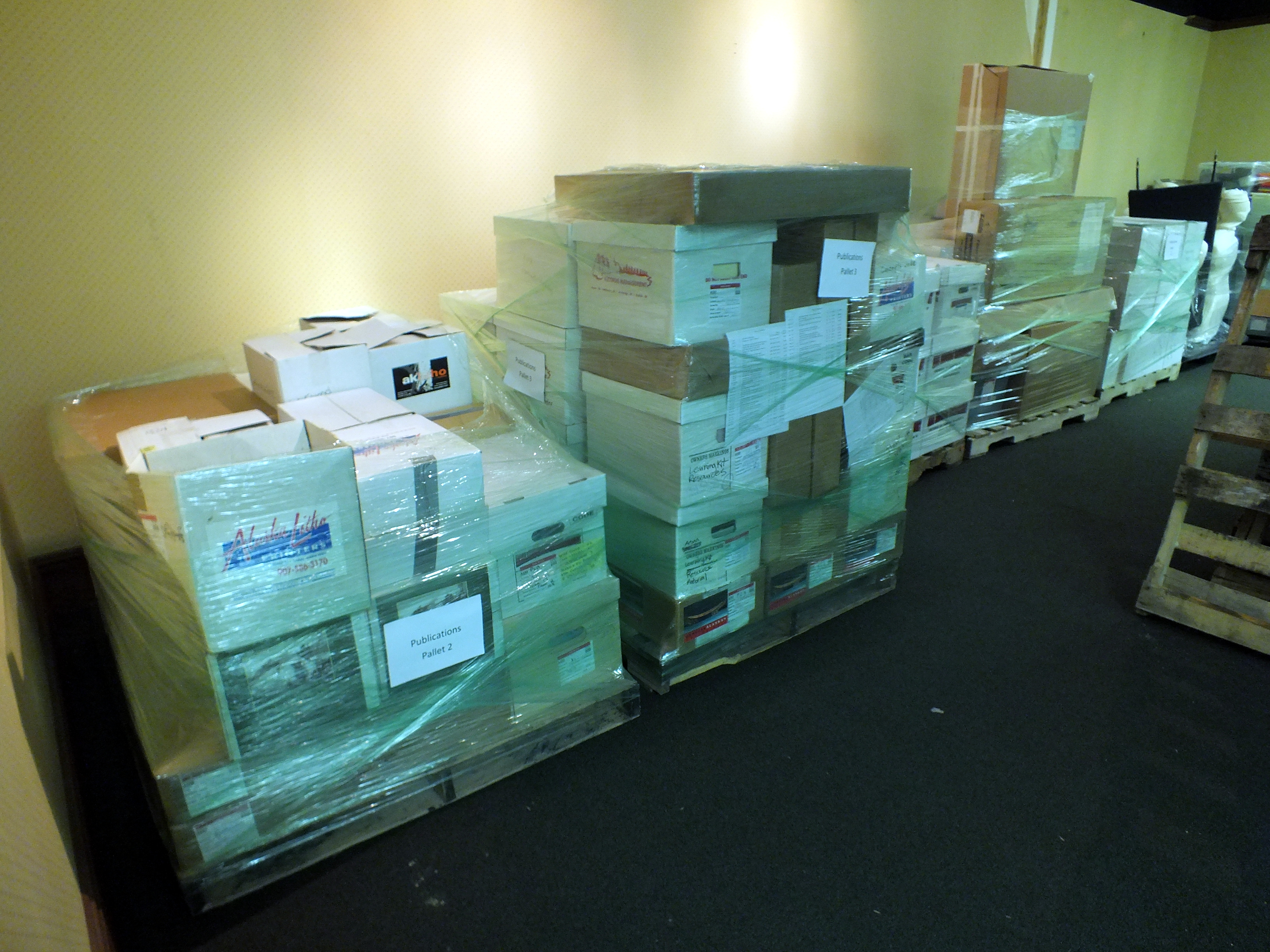
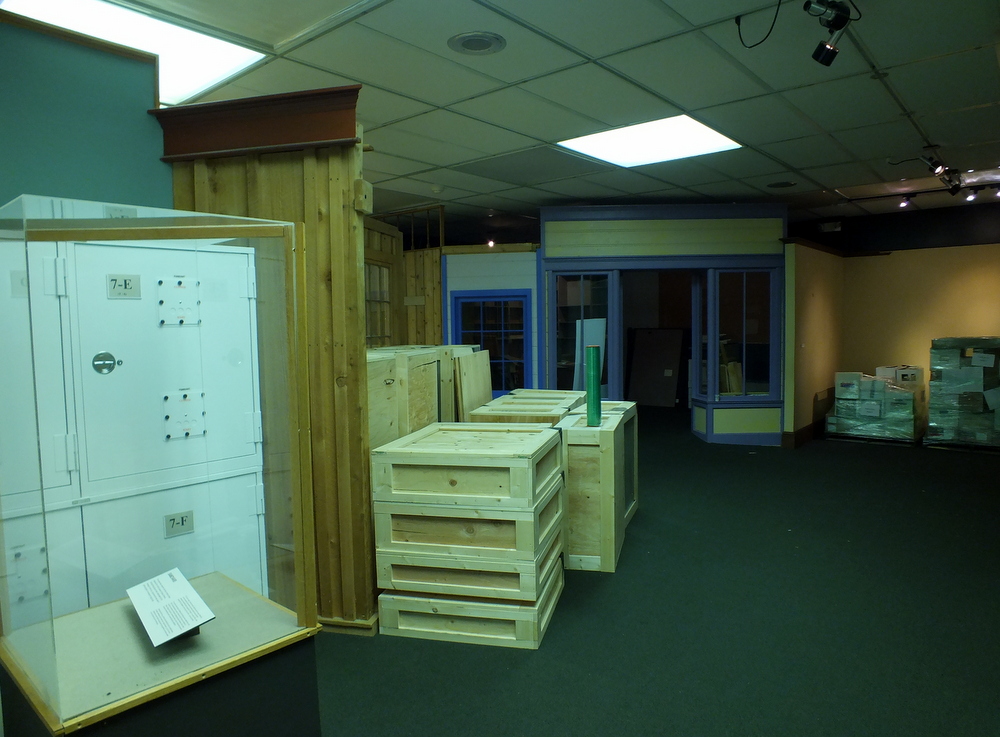
Your last chance to see the Eagle Tree, Science on a Sphere, the Tlingit house posts, and other permanent exhibits at the Alaska State Museum is Friday. The facility in downtown Juneau will be permanently closed to the public this weekend as staff continue boxing up artifacts for this summer’s big move.

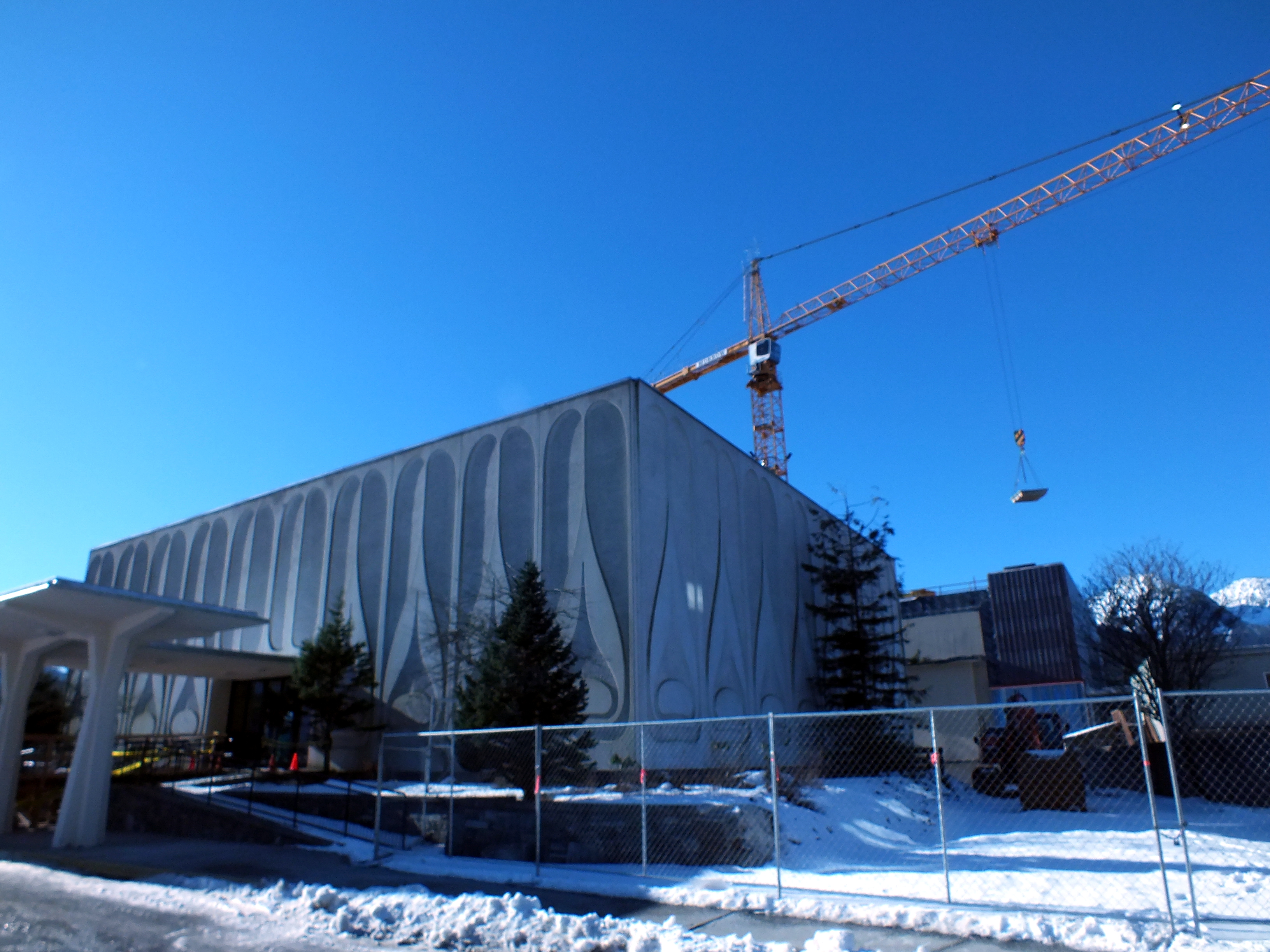
The 24,000 square foot museum will be torn down to make way for a new 118,000 square foot facility that is now under construction on the same site.

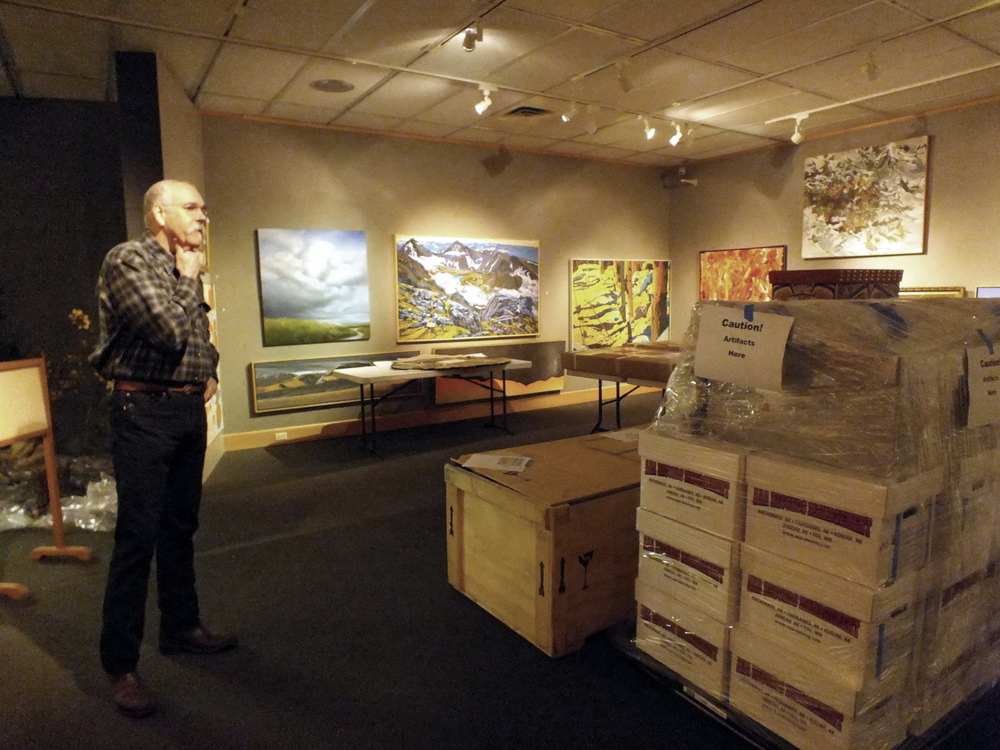
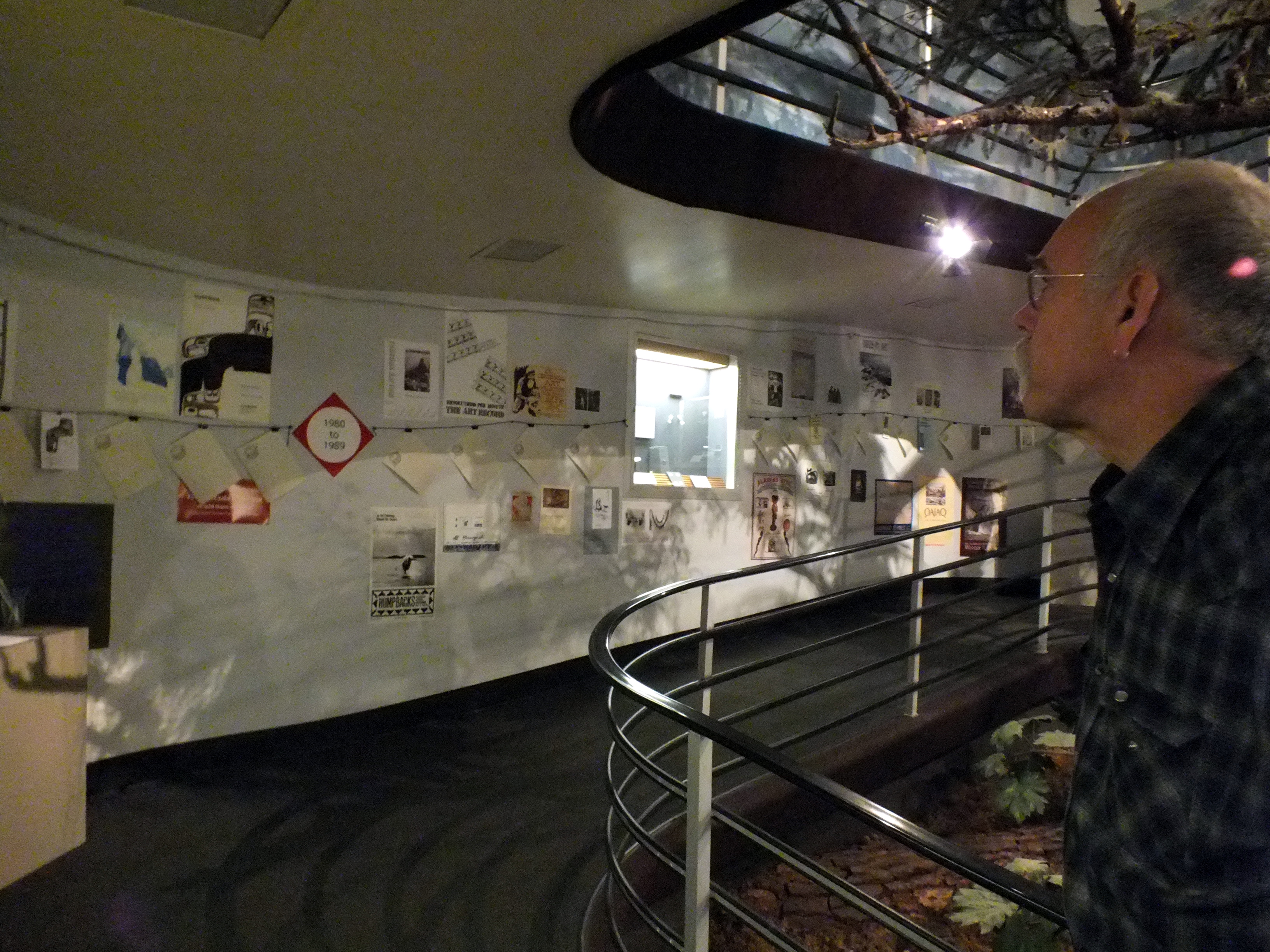
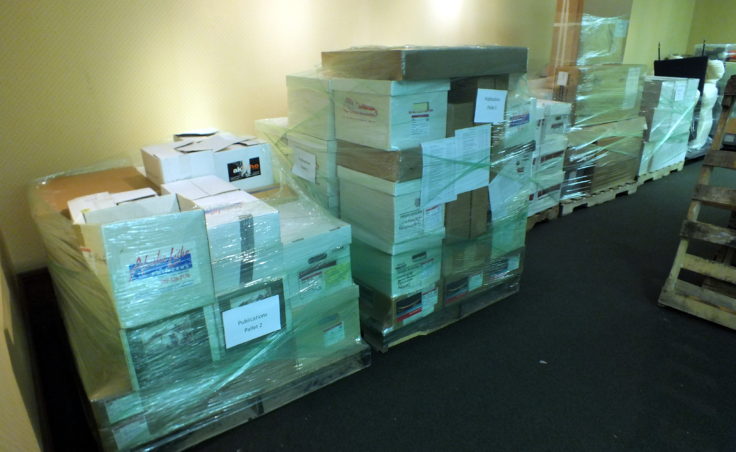
The museum’s Bob Banghart said they’ll begin moving artifacts into the new vault in May. All of the permanent exhibits on the second floor of the Museum have already been packed up in wooden crates and metal cases, or covered and stacked on pallets. Salvaged animals and flora from wall dioramas along the ramp that spirals around the Eagle Tree have been set aside. Artifacts in the basement collection are being carefully packed up and prepared for the move.

That six weeks is our actual moving time. So, we have to have everything done in advance. Think of it like a play. You’ll spend months and months and months in rehearsal, development, and everything. The play only lasts like six weeks and then it’s done.”

The second floor of the existing facility is currently arranged as part storage area, part art salon with the display of notable pieces in the museum’s collection produced by Alaskan artists with familiar names like Boxley, Schoppert, Davis, Woodie, Baltuck, Craft, DeRoux, and Laurence.

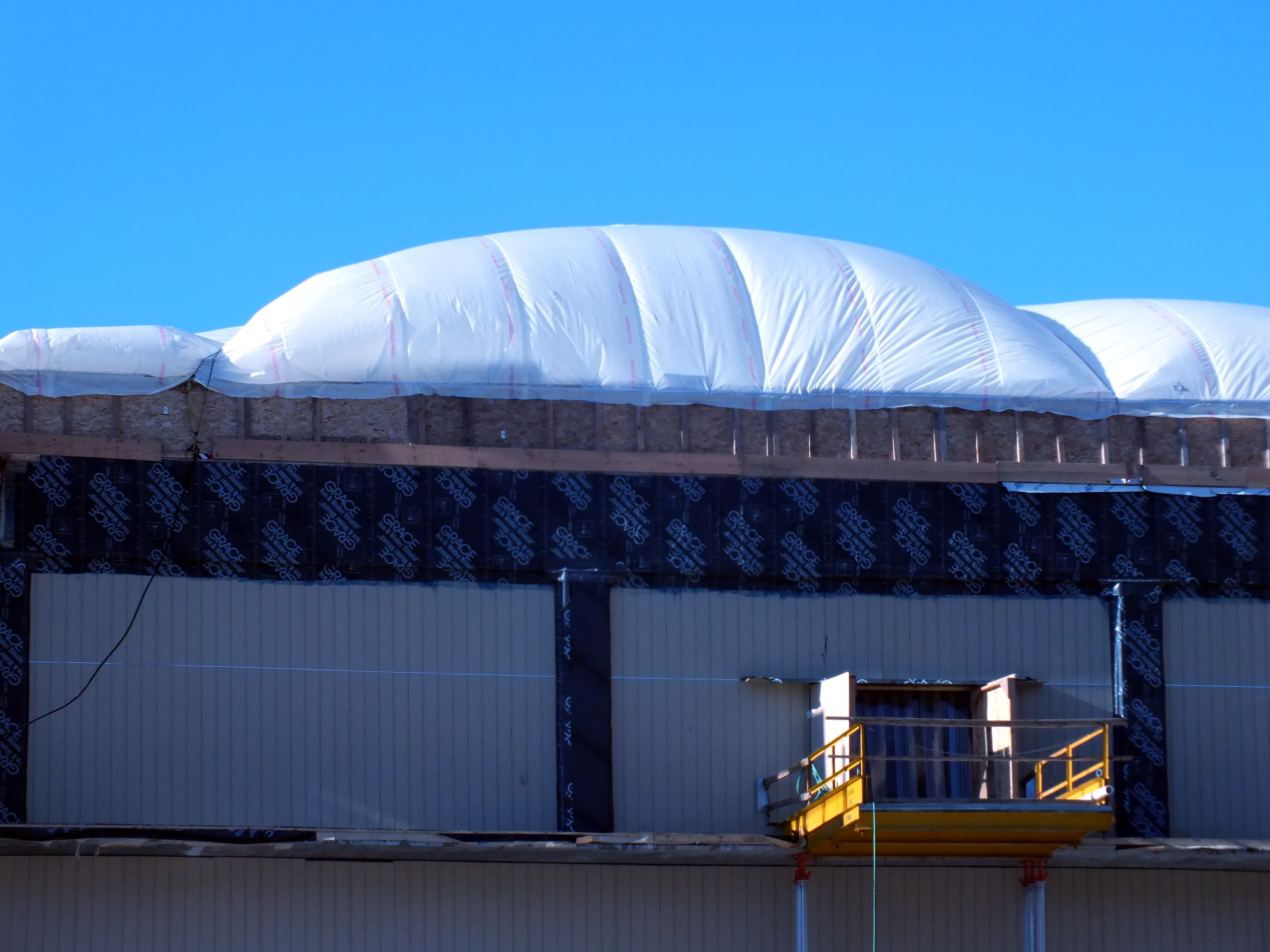
Banghart said the original schedule for demolition of the current museum was pushed back several weeks after gusty winter winds played havoc with the new vault’s tent or a temporary, inflatable roof covering. They also have to wait for the paint, floors, and other interior materials to release manufacturing gasses before they can condition the air and begin safely moving any artifacts inside.

“The downstairs collection vault is enormous. It’s three times bigger than what we have currently,” Banghart said. “It’s going to be the finest collection facility north of Seattle anywhere.”

The physical structure of the building doesn’t encapsulate the spirit and necessity of collecting and preserving history. It’s just a place to do it. As time moves forward, the buildings need to change because they wear out. But the obligation doesn’t change. It still has to be there and it has to be preserved and collected in the best possible fashion.”

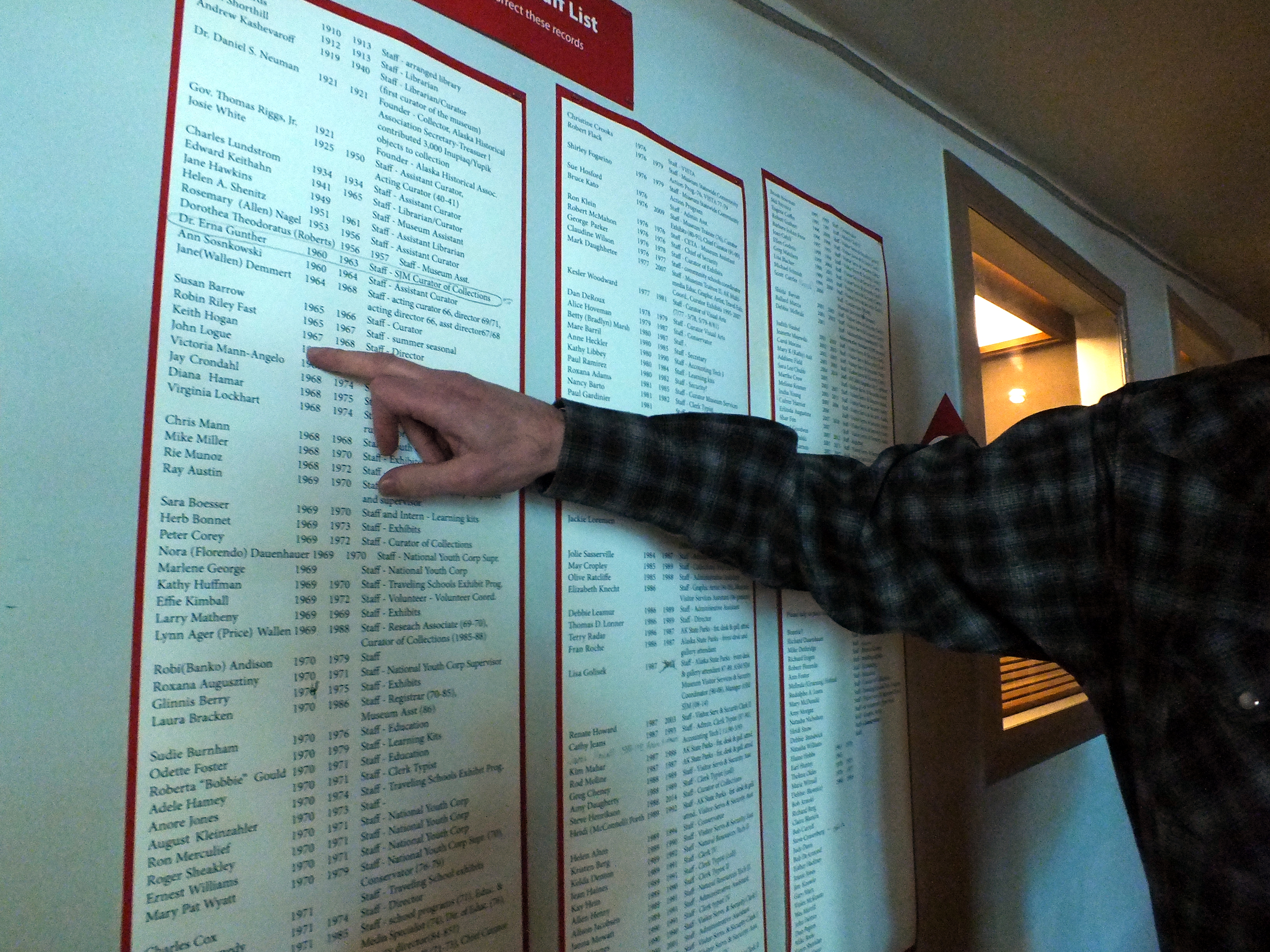
A Final Friday event will feature food, music, and a Five Decade timeline where patrons, artists, staff, and volunteers can add their memories to a new display along the museum’s spiral ramp.  The event starts Friday, Feb. 28th at 5 p.m. and runs until 9 p.m.

Admission for the entire month of February is free.
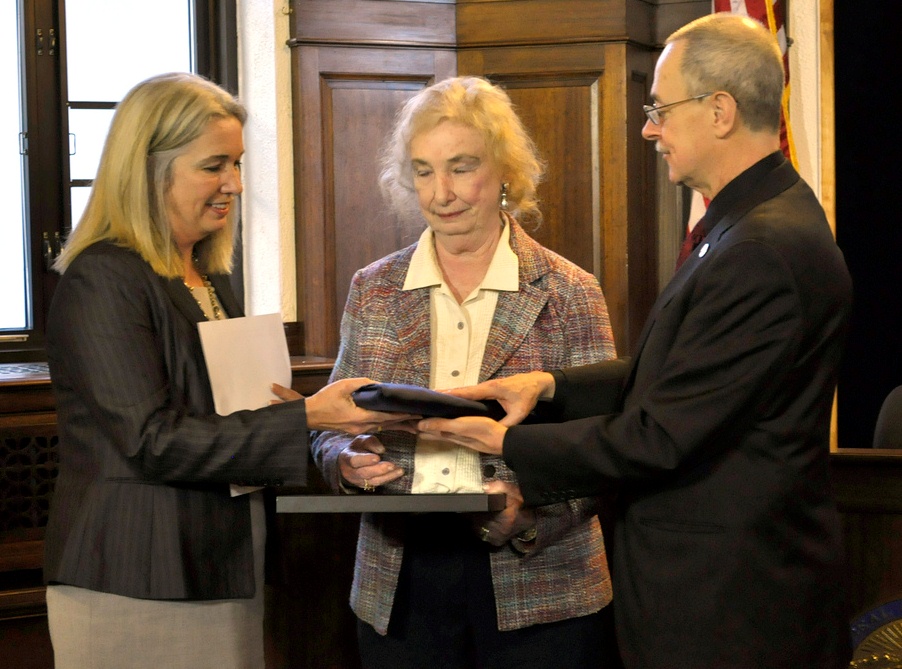
Capitol flag presented to Munoz

Rep. Cathy Munoz and her mother, Sally Engstrom, are given the flag that flew above the capitol in November when her father died. Rep. Mike Hawker organized the presentation. (Photo by Skip Gray / Gavel Alaska.)

The flag that flew above Alaska’s state capitol at the funeral of former lawmaker Elton Engstrom Jr. was presented Wednesday to his daughter, Juneau Rep. Cathy Munoz.

Anchorage Rep. Mike Hawker organized the ceremony and memorial for Engstrom, who passed away Nov.  6, 2013. By coincidence, the presentation was made on what would have been Engstrom’s 79th birthday.

He represented Juneau as a Republican in the legislature from 1965 to 1971.

Munoz is from a long line of Alaska politicians. Her grandmother, Thelma Engstrom, and grandfather, Elton Engstrom Sr., were both elected to the Alaska Territorial Legislature. Then Engstrom Sr. served in the Senate just after statehood. His son was elected to the House in 1965 and to the Senate in 1967.

Munoz was only about a year old when her father ran for office, but she’s heard the stories for years. During a speech yesterday on the floor of the House, she related some of the history of those early years after statehood.

When he was elected in 1965, the budget for the entire state was $100 million. 

Munoz said her father was 30 when he was first elected to the legislature. He served among lawmakers who made legislative history as they helped build the new state, including Ted Stevens, Jay Hammond, Jay Kerttula, Clem Tillion, and Nick Begich. John Butrovich was Senate President at the time.

They were developing the Alaska Marine Highway system, the infrastructure; they were putting together the payroll system for the state, all of the nuts and bolts.  They were building the infrastructure of the communities.

At the same time, they were rebuilding much of Southcentral Alaska after the 1964 earthquake, and Fairbanks, after the 1967 flood.

And then in 1968, the political landscape completely turned upside down with the discovery of oil and an infusion of $900 million into the coffers overnight.  It was quite a change and my father was right in the middle of all of that change.

Munoz called Engstrom her mentor. After she was elected to the House in 2008, she said her father often slipped into the gallery of the House to watch special votes, but would never allow her to introduce him.

Kito gets to work as legislature’s newest member

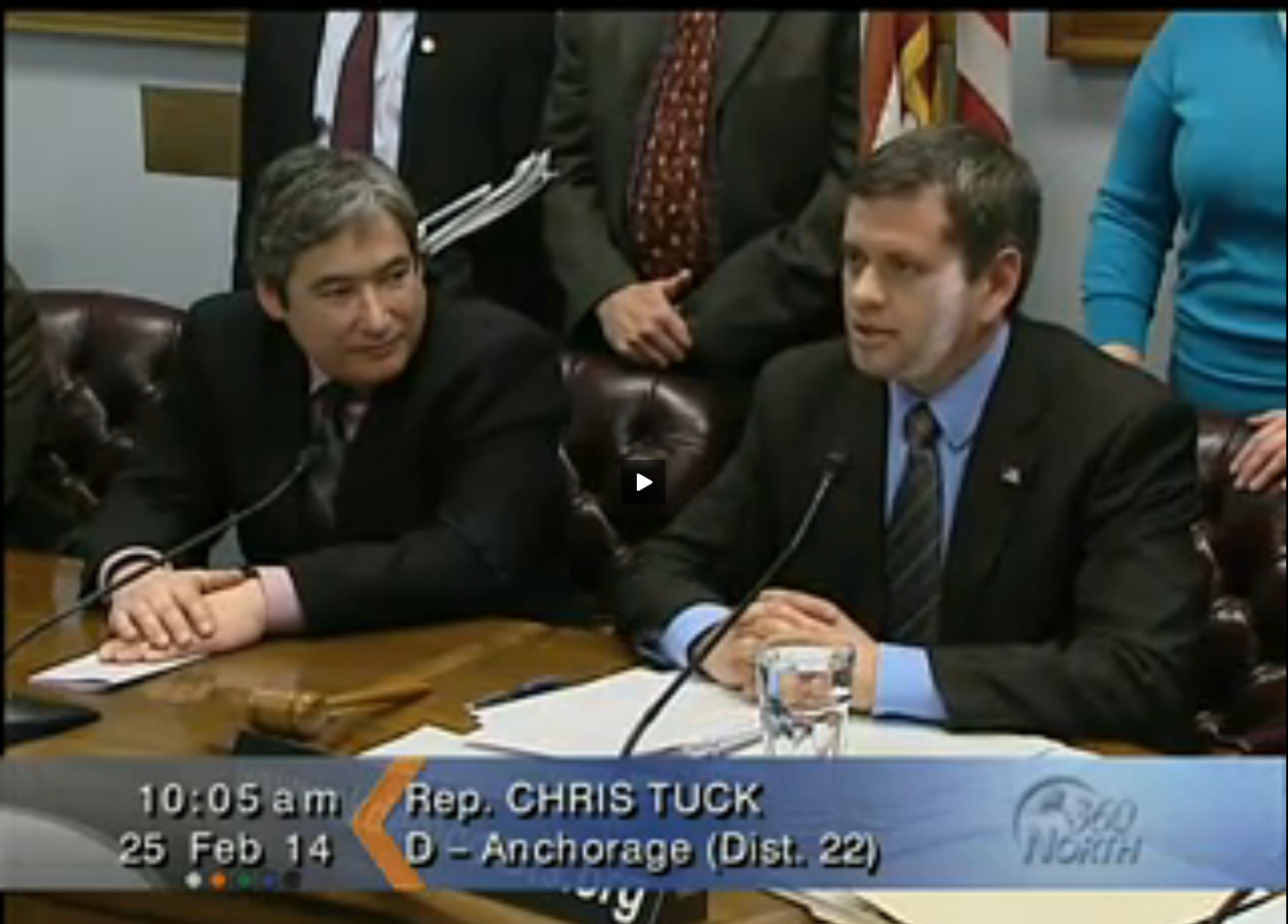
Chris Tuck and Sam Kito III during the February 25, 2014 House Minority Press Availability. Screenshot courtesy of Gavel Alaska.
Sam Kito III looks on while House Minority Leader Chris Tuck announces Kito’s confirmation. (Photo courtesy of Gavel Alaska.)

(Story was updated Feb. 26 at 6:00 a.m.)

Sam Kito III is at work today as the newest member of the Alaska Legislature.

House Democrats Tuesday morning confirmed Sam Kito III to the legislative seat vacated last month by Juneau Rep. Beth Kerttula.

Minority Leader Chris Tuck said Democrats were unanimous in their decision.

“He had to answer some very tough questions both in the public and with the governor and with us, and all through that he was consistent and he spoke from the heart. And I think that speaks a lot for a person.”

Gov. Sean Parnell on Friday appointed Kito to the seat.

The governor asked Democrats to take their vote on the House floor.  But the minority met Monday night in closed caucus then Tuck announced the decision Tuesday on Gavel Alaska, statewide television coverage of the legislature.

With pen in hand, Tuck said party confirmations have been announced by letter for the past 25 years.

“And with that right now I’d like to sign a letter to both the governor and to the Speaker of the House announcing Sam’s replacing Beth Kerttula in the House Democratic 32 seat,” Tuck said.

Kito will fill in for Rep. Harriet Drummond on the Education as well as Community and Regional Affairs committees. Drummond is absent from the capitol for a family medical emergency.  Tuck said Kito will continue on Community and Regional Affairs when Drummond returns.

He inherits Kerttula’s longtime staff members, Ken Alper and Hannah McCarty. Alper was one of nine Juneau Democrats to apply for the seat. Tongass Democrats nominated Kito, Jesse Kiehl and Catherine Reardon.

Kerttula left the job on Jan. 24 for a Stanford University fellowship. It took a  month to fill the seat, but Tuck said the small House Minority did not lose any strength while down a member.

House District 32 encompasses downtown Juneau and Douglas, Petersburg, Gustavus, Skagway, and Tenakee Springs. Kito said he would have been a candidate for the seat if it had been open.

(Editor’s Note: Updated Monday afternoon with additional information.)

Previous Coverage:
Tongass Democrats nominate Kiehl, Kito, and Reardon for Kerttula’s vacant seat
Sam Kito III named as new Juneau representative
Next step: House Democrats to confirm Kito appointment

French introduces measure to strike gay marriage ban

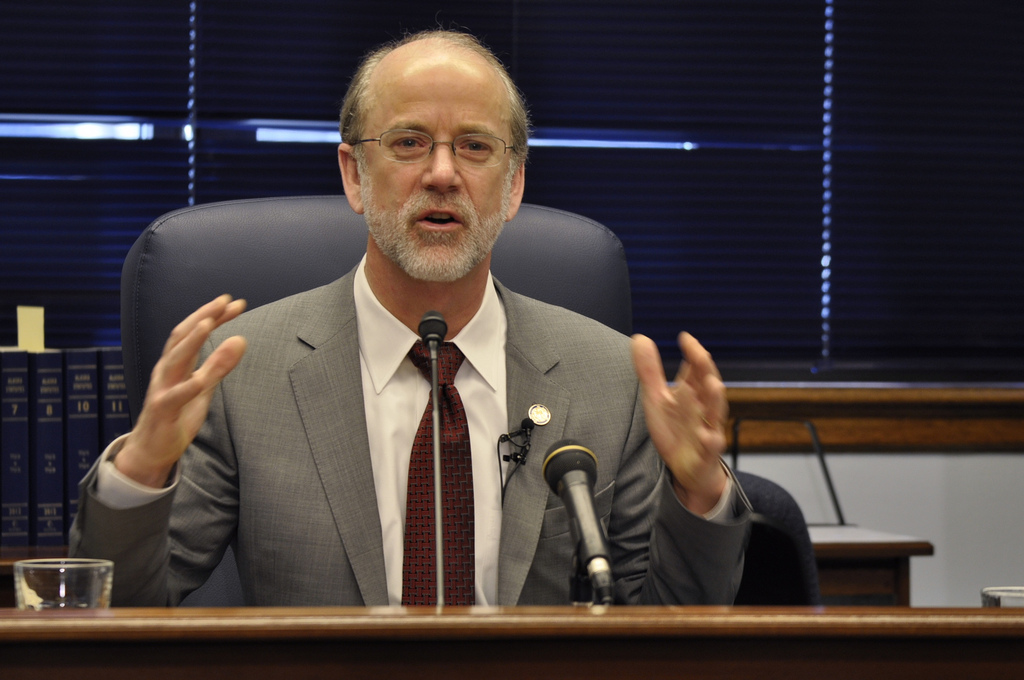
Sen. Hollis French speaks to reporters during a press conference held on Feb. 24, 2014 to announce the introduction of his resolution to allow a constitutional amendment that would remove Alaska’s constitutional ban on same-sex marriage. (Photo by Skip Gray/Gavel Alaska)

In 1998, Alaska became the first state to put a ban on same-sex marriage into its constitution. Now, the minority leader in the State Senate wants to get rid of that ban.

Anchorage Democrat Hollis French is introducing a measure to strike the amendment. Federal courts have recently invalidated similar amendments in Utah, Oklahoma, and Virginia. French says Alaska should be pro-active on the issue in light of those decisions.

“We can wait if we all want to wait for the day — and I think the day is coming soon — when the U.S. Supreme Court rules that state prohibitions on same-sex marriage are inconsistent with freedom, with justice, with liberty, and with equality,” said French, who is also running for lieutenant governor. “Better yet, I believe it should be erased by our own actions – by passing this resolution and submitting it to the voters.”

French’s measure faces an uphill battle. Any changes to the state constitution require approval of two-thirds of the Legislature, and then a majority vote of Alaska citizens. On top of that, key members of Senate’s Republican leadership have said they don’t feel there’s enough support for it.

Same-sex marriage isn’t the only gay rights issue up for consideration by the Legislature. The Senate’s Health and Social Services Committee heard a bill that would prohibit discrimination on the basis of sexual orientation for the first time on Monday.


Read original story on Alaska Public
French Introduces Measure To Strike Gay Marriage Ban

New Capital Transit plan boosts Mendenhall Valley bus service

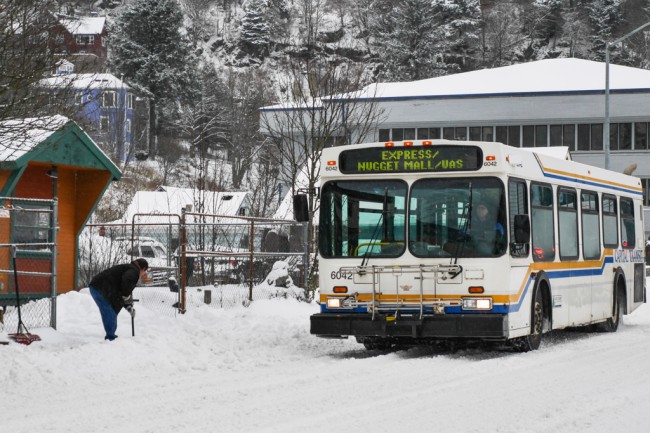
Capital Transit provides between 4,000-4,500 passenger rides each week day. (Photo by Kelli Burkinshaw/KTOO)
Capital Transit provides between 4,000-4,500 passenger rides each week day. (Photo by Kelli Burkinshaw.)

Bus service on Riverside Drive in Juneau’s Mendenhall Valley could start by midsummer, if city officials adopt a new Capital Transit plan.

Valley buses also would be rolling 30 minutes earlier each day.

The bus system has been under review for nearly a year and the 2014 Transit Development Plan is now complete.  The CBJ Planning Commission is expected to adopt it Tuesday night.  The Assembly will take it up next month.

Passengers have been asking for earlier and additional service in the Mendenhall Valley since Thunder Mountain High School was built.

Capital Transit Superintendent John Kern says continued growth along Riverside Drive is the impetus behind the proposal for expanded service.

“We did evaluate bus service for the school, again for the pool, and now we’ve got a library going in there,” Kern says. “I think it’s just a matter of the sheer magnitude of facilities on that location, requiring better service.”  

Due to budget constraints, there are tradeoffs. If Riverside Drive is added to the system, bus service on Back Loop Road and North Douglas Highway would be reduced.  Ridership is lower along those routes.

Kern says bus fares would not increase with the new service.

The Capital Transit study began last spring and included a number of public meetings.  Kern says it’s not too late to take public comments on the final proposal.

Next step: House Democrats to confirm Kito appointment

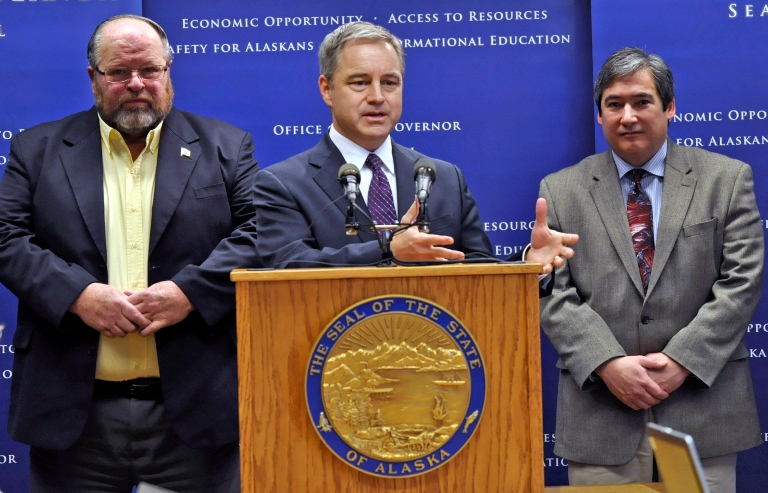
Gov. Sean Parnell explains why he appointed Sam Kito III (right) to the vacant HD 32 seat.  Juneau Mayor Merrill Sanford is on Parnell's left. (Photo by Skip Gray/Gavel Alaska.)
Gov. Sean Parnell explains why he appointed Sam Kito III (right) to the vacant HD 32 seat. Juneau Mayor Merrill Sanford is on Parnell’s left. (Photo by Skip Gray/Gavel Alaska.)

House Democrats must still vote to confirm Sam Kito III to the House District 32 seat vacated last month by Juneau Rep. Beth Kerttula.

Parnell appointed Kito on Friday, meeting the 30-day requirement for filling the seat, but the House minority doesn’t have a deadline. In fact, they have yet to determine the process they’ll use to confirm Kito to the seat. That’s expected early this week.

The governor has asked them to take a public vote on the House floor, rather than in closed caucus.

Parnell said he’d studied legislative appointments and found the process used to be far more open than in recent years.

“From statehood through 1990 there were votes taken in almost 30 cases, where the party that had the nominee, usually by unanimous (consent),”  just confirmed the appointee in public, he said.

If House Democrats reject Kito’s appointment, the governor could go back to the list of three nominees submitted by Tongass Democrats, or the process could start all over again.

Legislative aides Catherine Reardon and Jesse Kiehl were on that list.  Kiehl works for Egan and is on the Juneau Assembly.  On Friday he filed a letter of intent with the Alaska Public Offices Commission, planning to run for a second Assembly term.

He said Tongass Democrats conducted “an unprecedentedly open and transparent” nominating process.  Gov. Parnell interviewed the three candidates.

“My interview was much like Sam’s. The governor never asked any questions that anybody should cast a critical eye on.  They were about getting to know us and what we stood for,” Kiehl said.

What does Kito stand for?

If Kito is confirmed, he said his first priority would be to work on the State Library Archives and Museum project, which still needs about $37 million before it can be completed.  He also said he’s concerned about the state’s economy.

“I’m looking forward to that future where we can have a stable economy,” he said. 

Kito is a civil engineer and in recent years has been a legislative lobbyist. He said about 70 percent of his income comes from lobbying and 30 percent from engineering.

He hasn’t always been a Democrat.  He switched his voter registration from non-partisan to Democrat in 2004.  Over the years, he’s contributed to a number of Republican campaigns, but described himself as more aligned with Democratic principles.  He said he is pro-choice, supports an increase in the minimum wage, and opposes school vouchers.

As for the proposed road from Juneau to Katzehin, he said that as an engineer he knows the project is feasible.

“I do have concerns about building a road, 60 miles worth of pavement that is going to then have to be maintained with general funds. I have a concern of building a road to a terminal that might need to be staffed,” he said. “But I do think interconnecting parts of Southeast is important.

Kito has lived in Anchorage, Fairbanks and in Juneau twice. He was CBJ Transportation Development Manager from 2002 through 2004.

He’s a single dad and is raising a teenage daughter, who is a student at Juneau-Douglas High School.

Saying only that he  “would like to continue to represent Juneau and the other communities in the district,” he declined to commit to running for  election to the House seat.

In addition to downtown Juneau and Douglas, House District 32 includes Petersburg, Gustavus, Tenakee Springs and Skagway.  With redistricting, it will become House District 33 this fall, encompassing downtown Juneau, Douglas, Haines and Skagway.

Previous Coverage:
Sam Kito III named as new Juneau representative

Site notifications
Update notification options
Subscribe to notifications