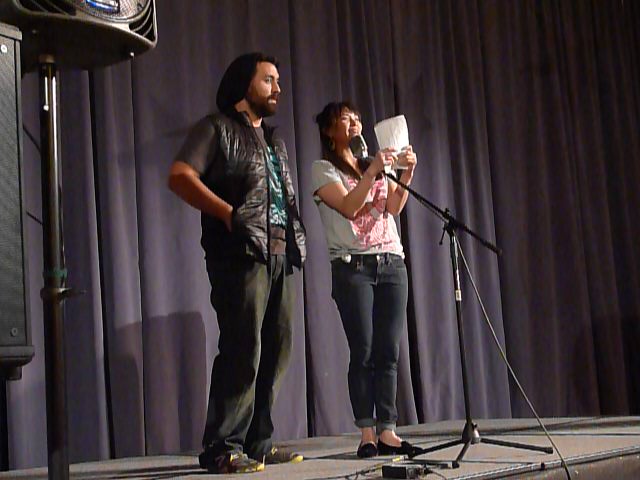
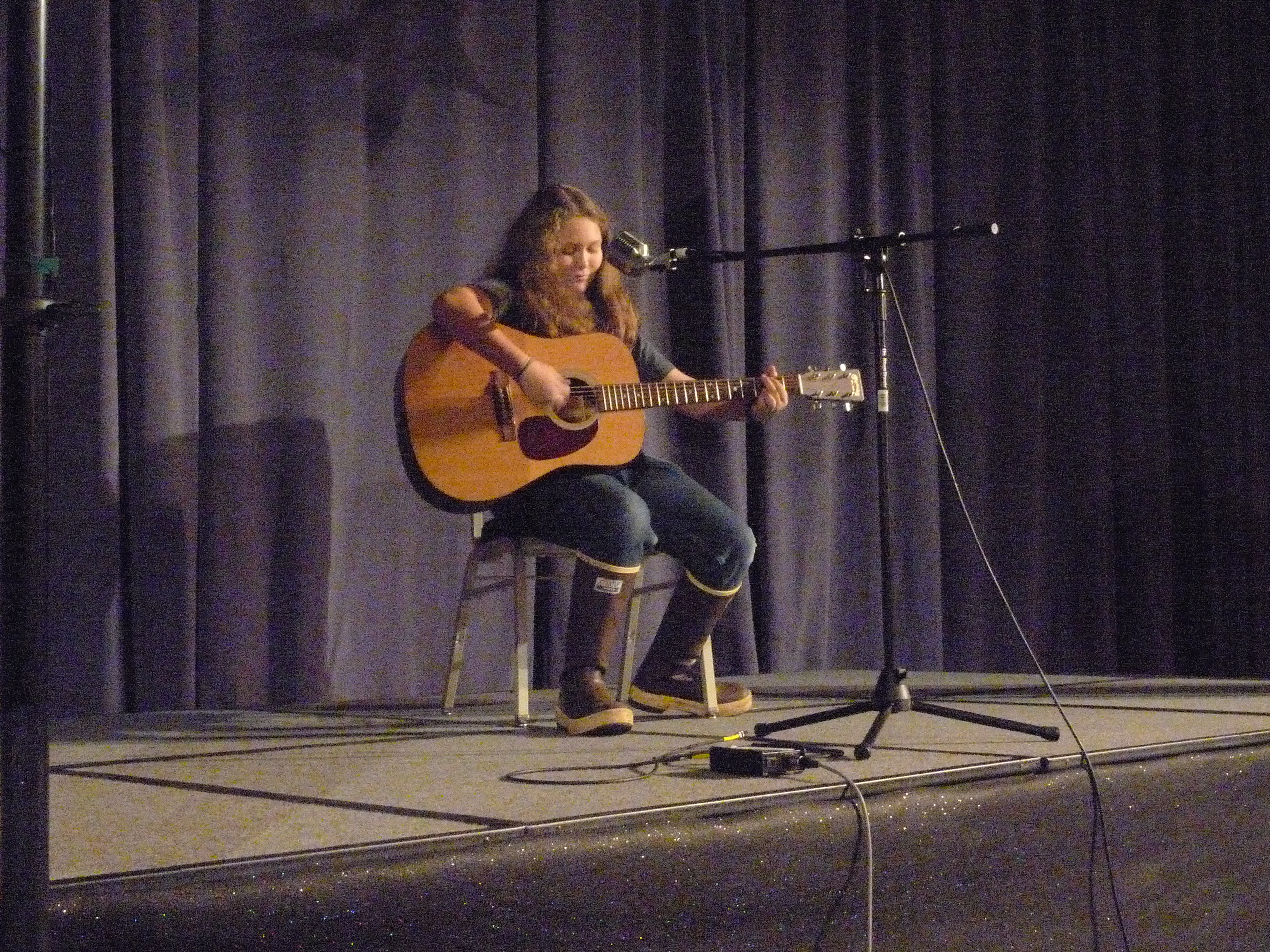
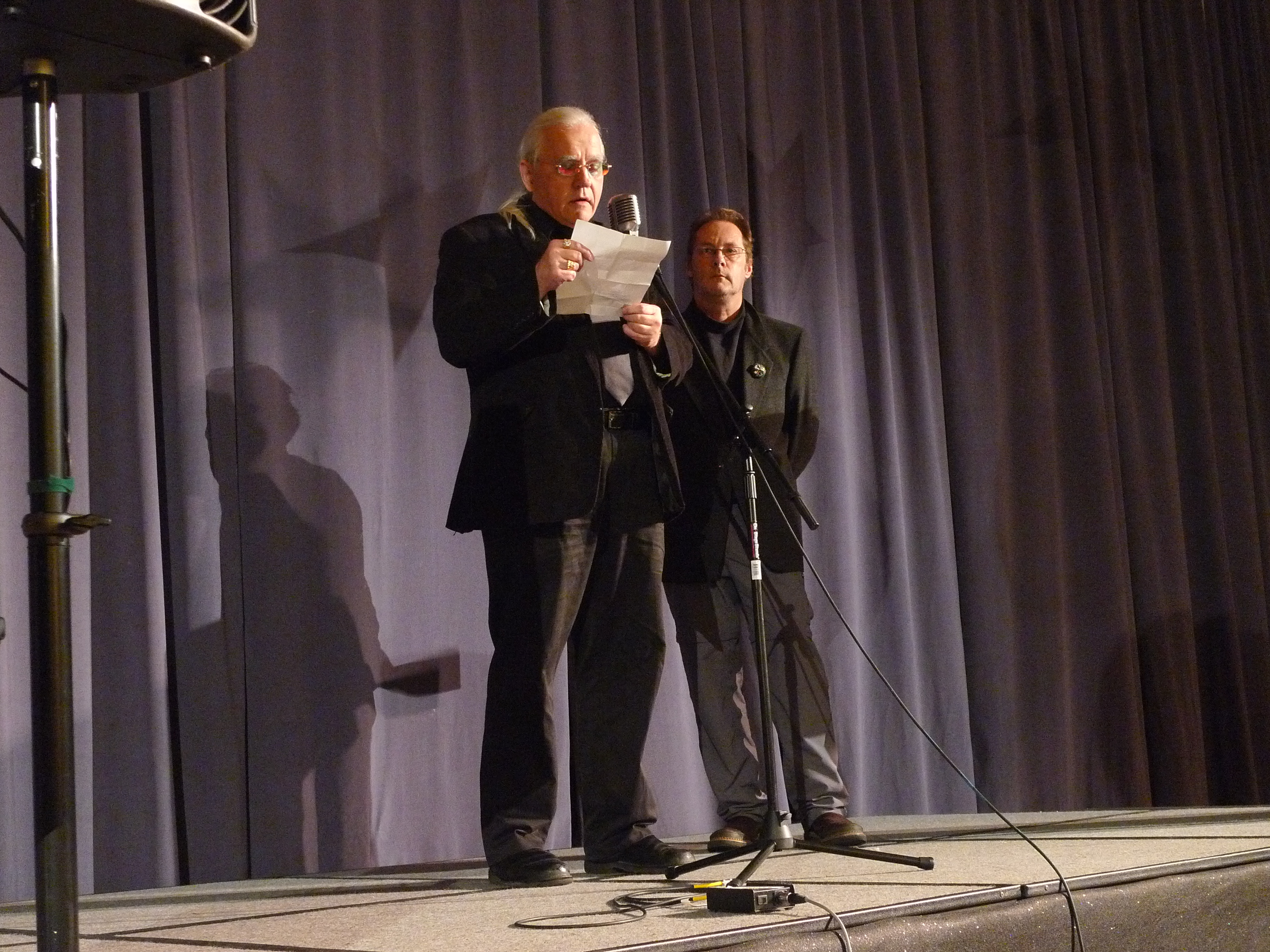
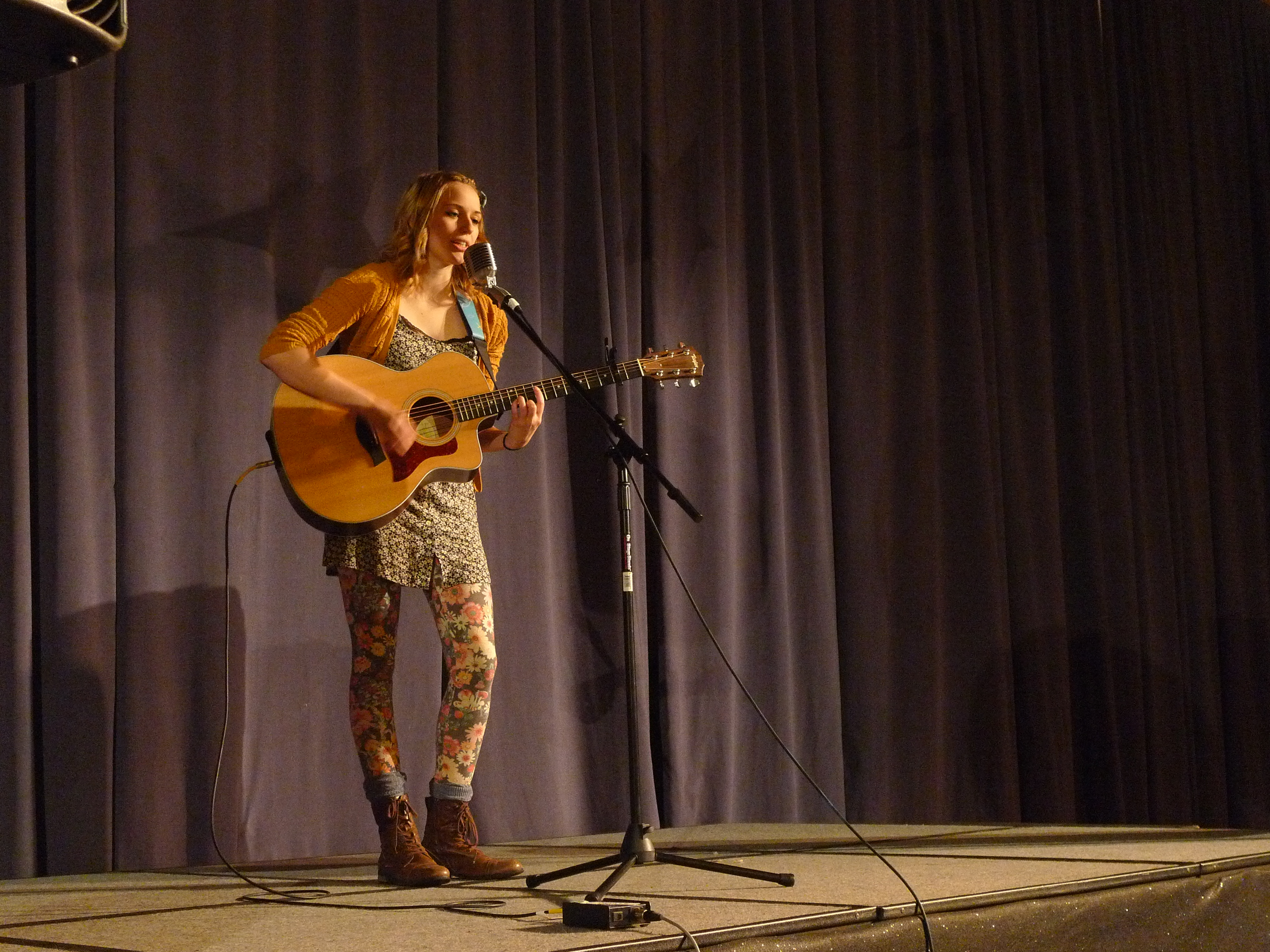
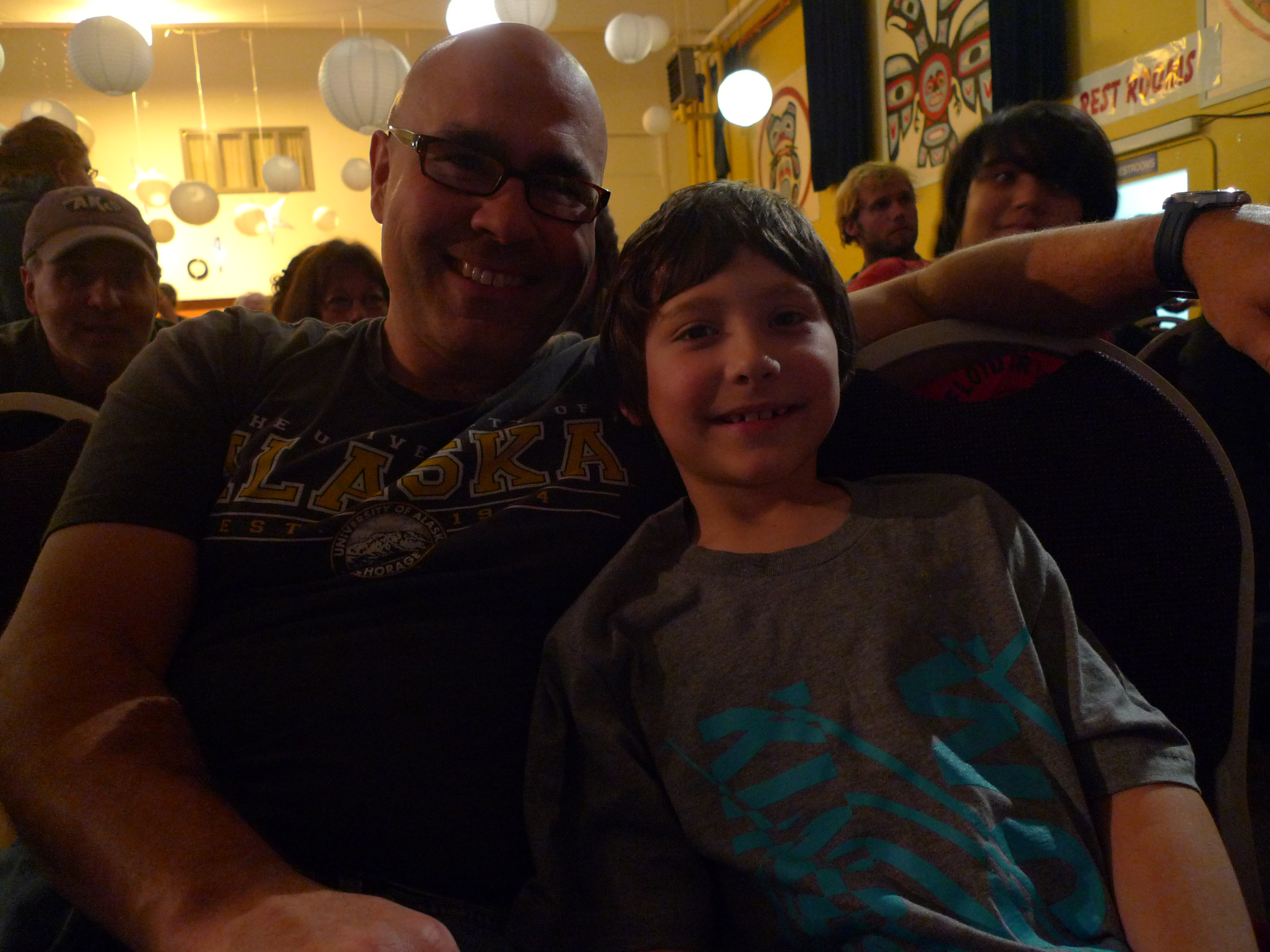
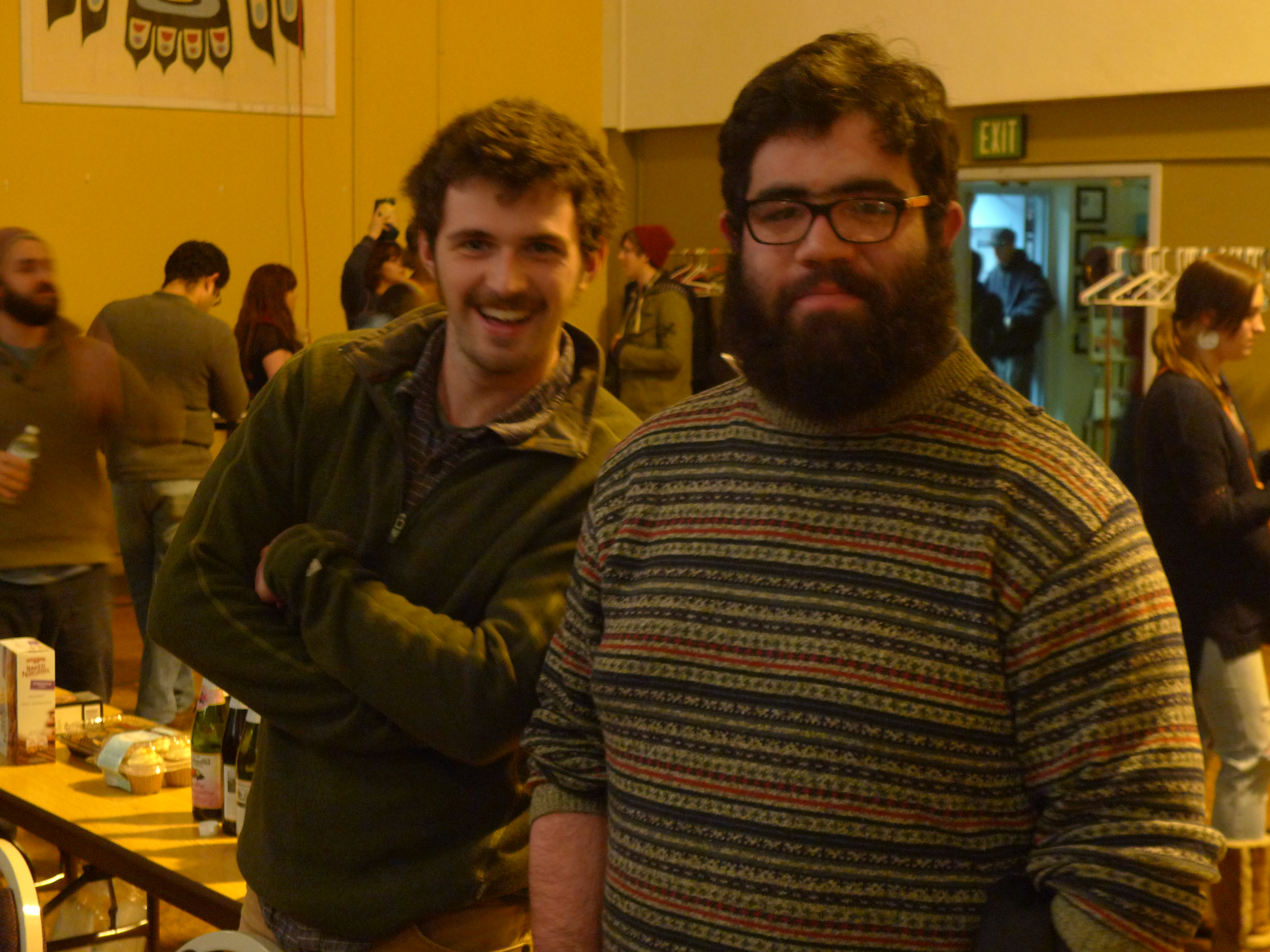
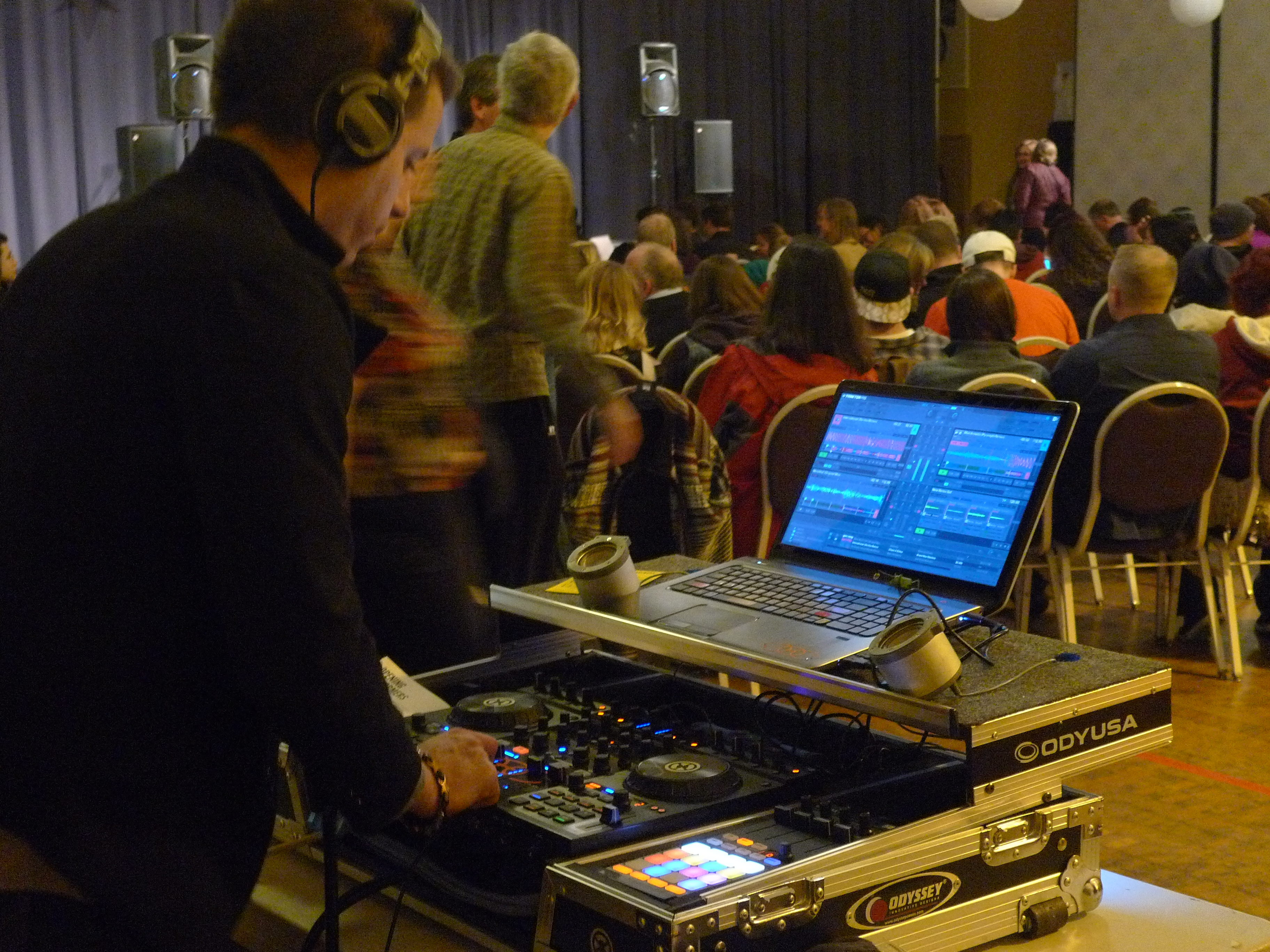
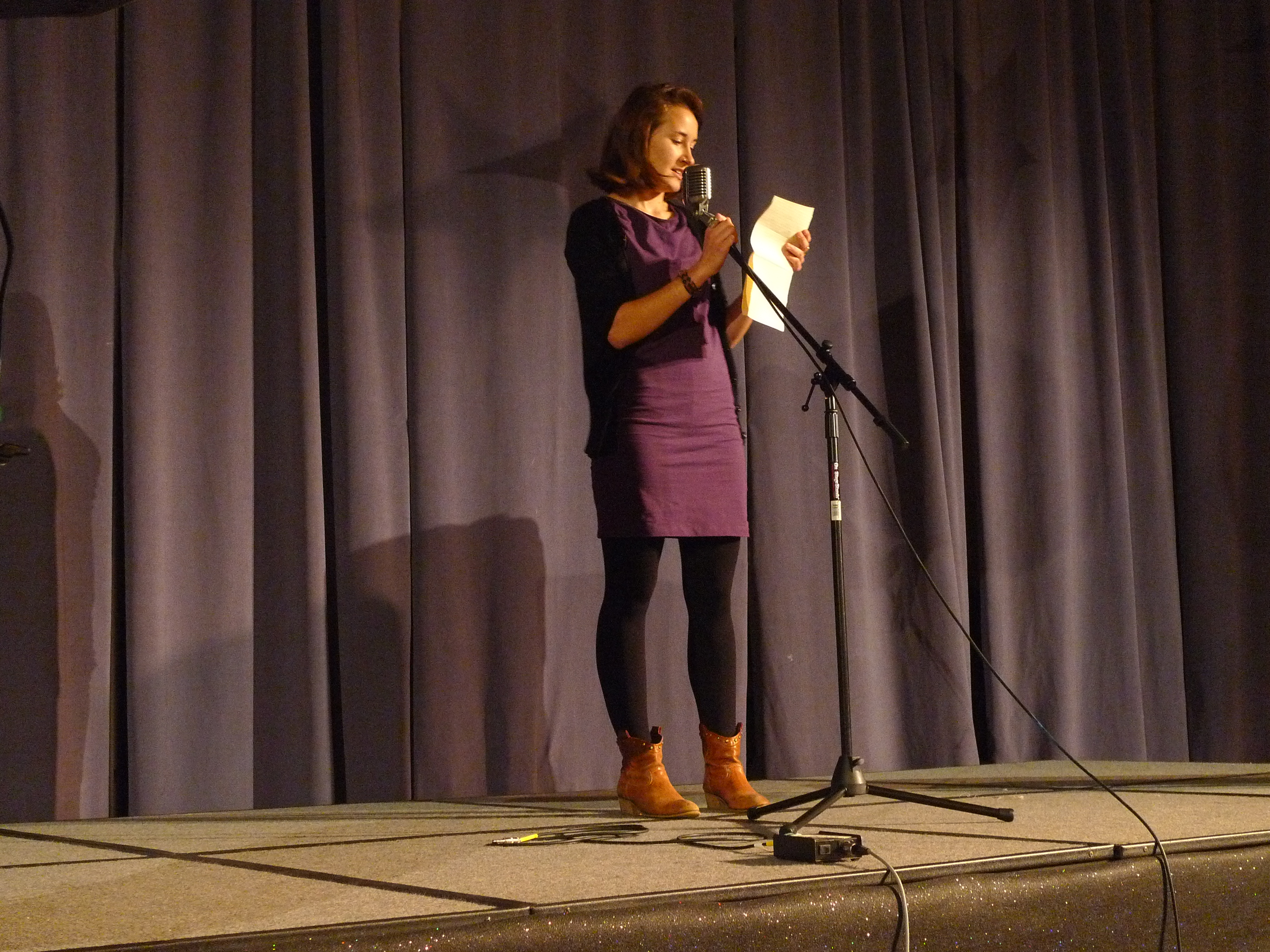
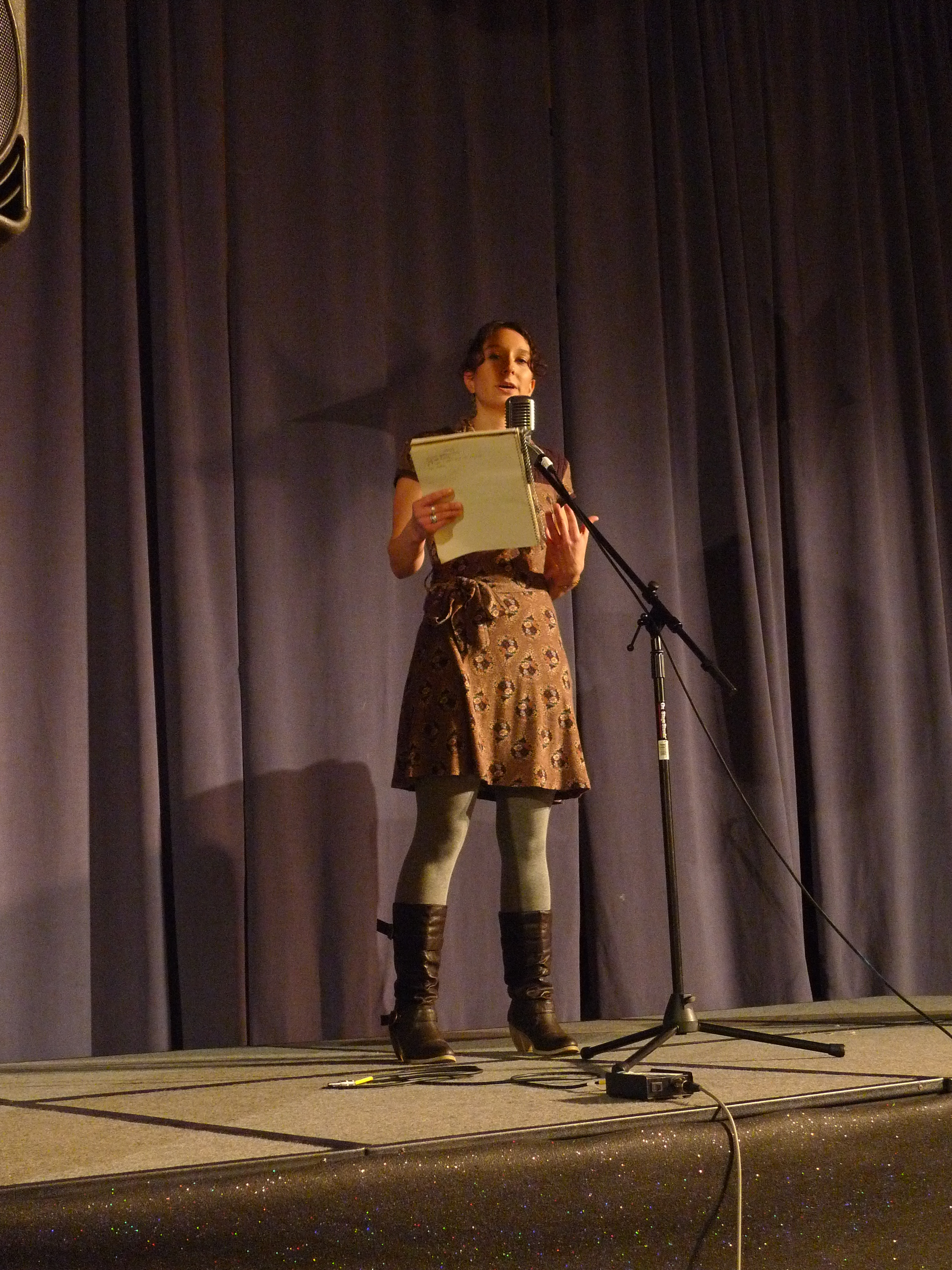
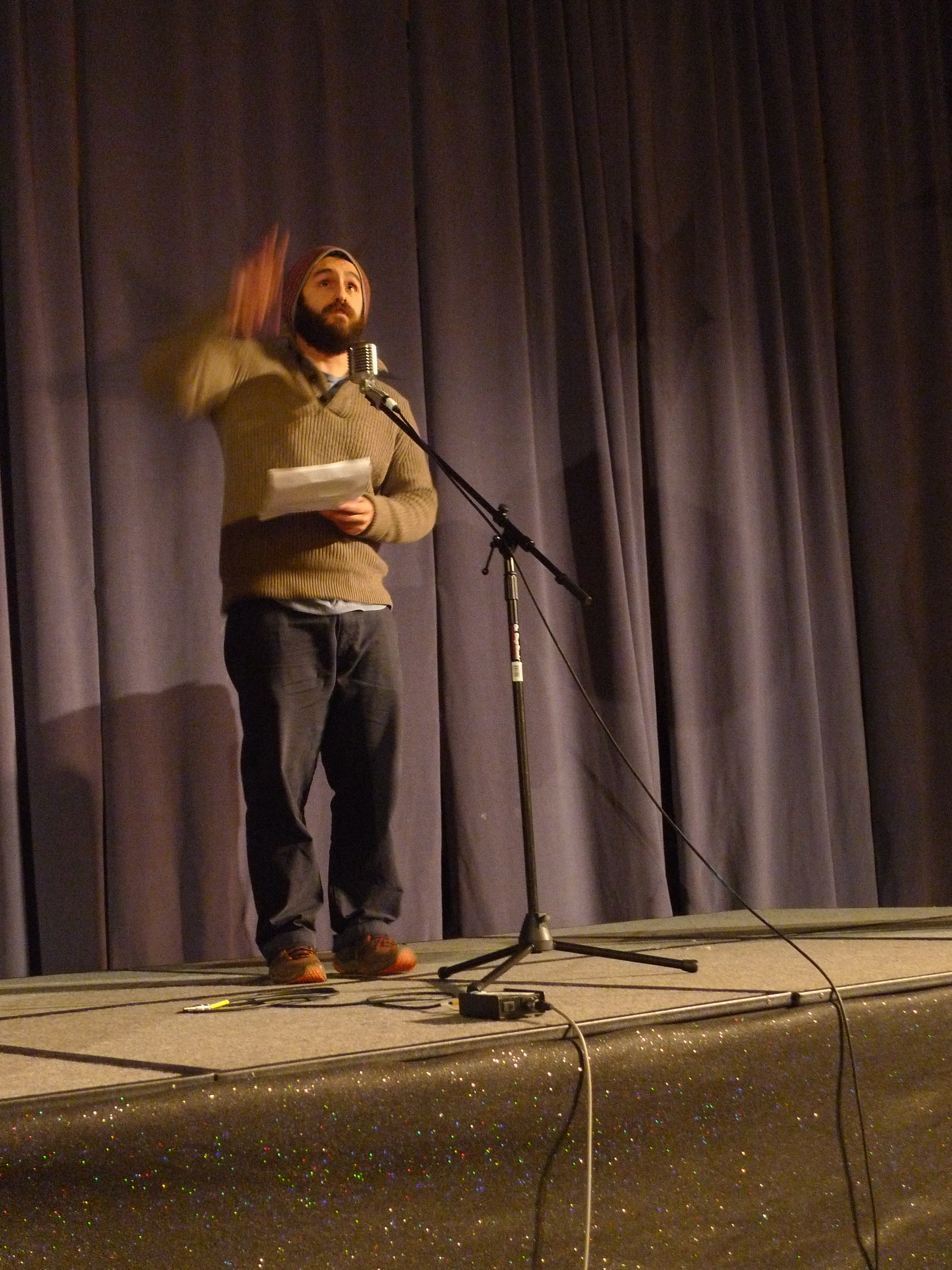
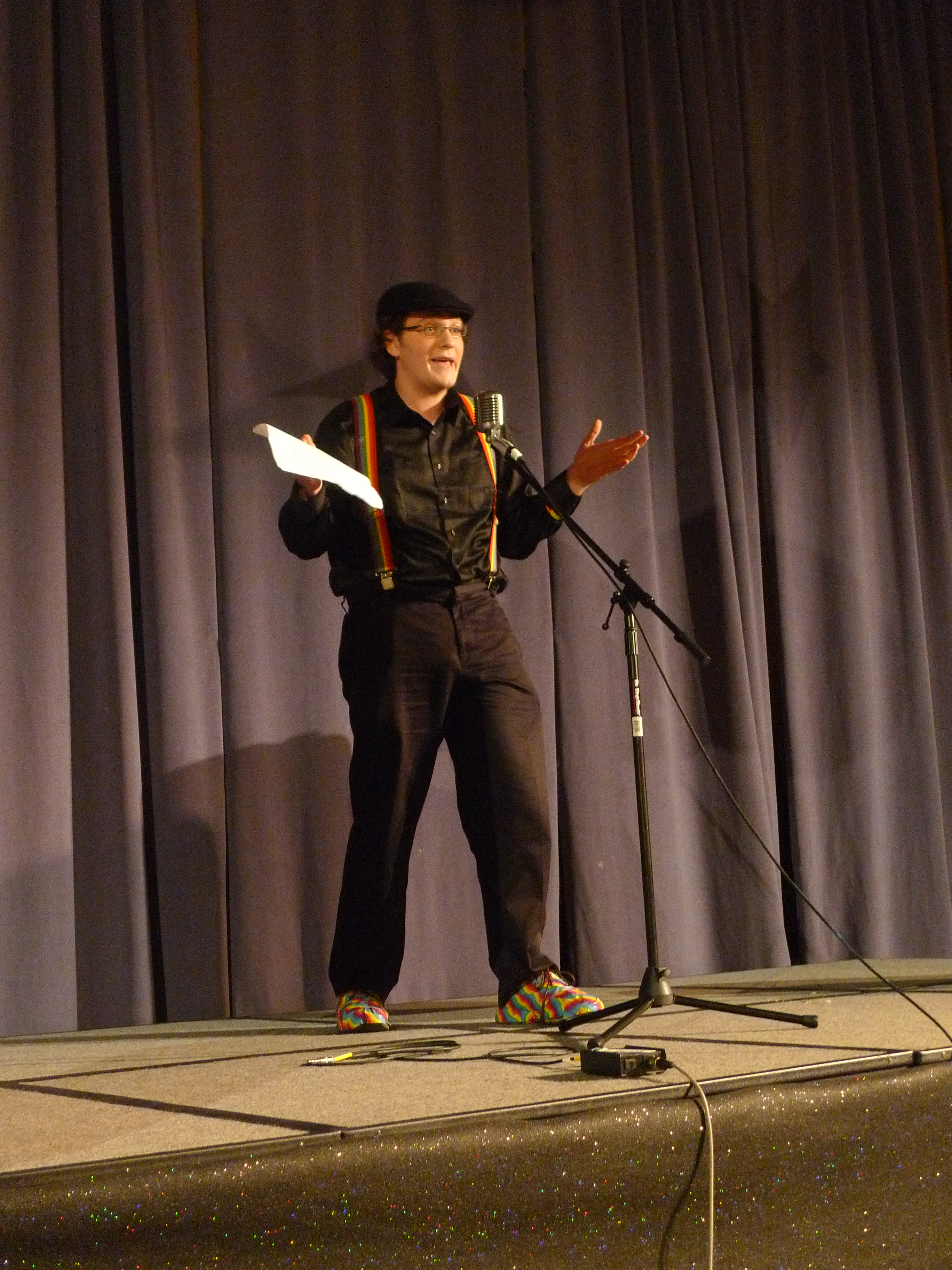
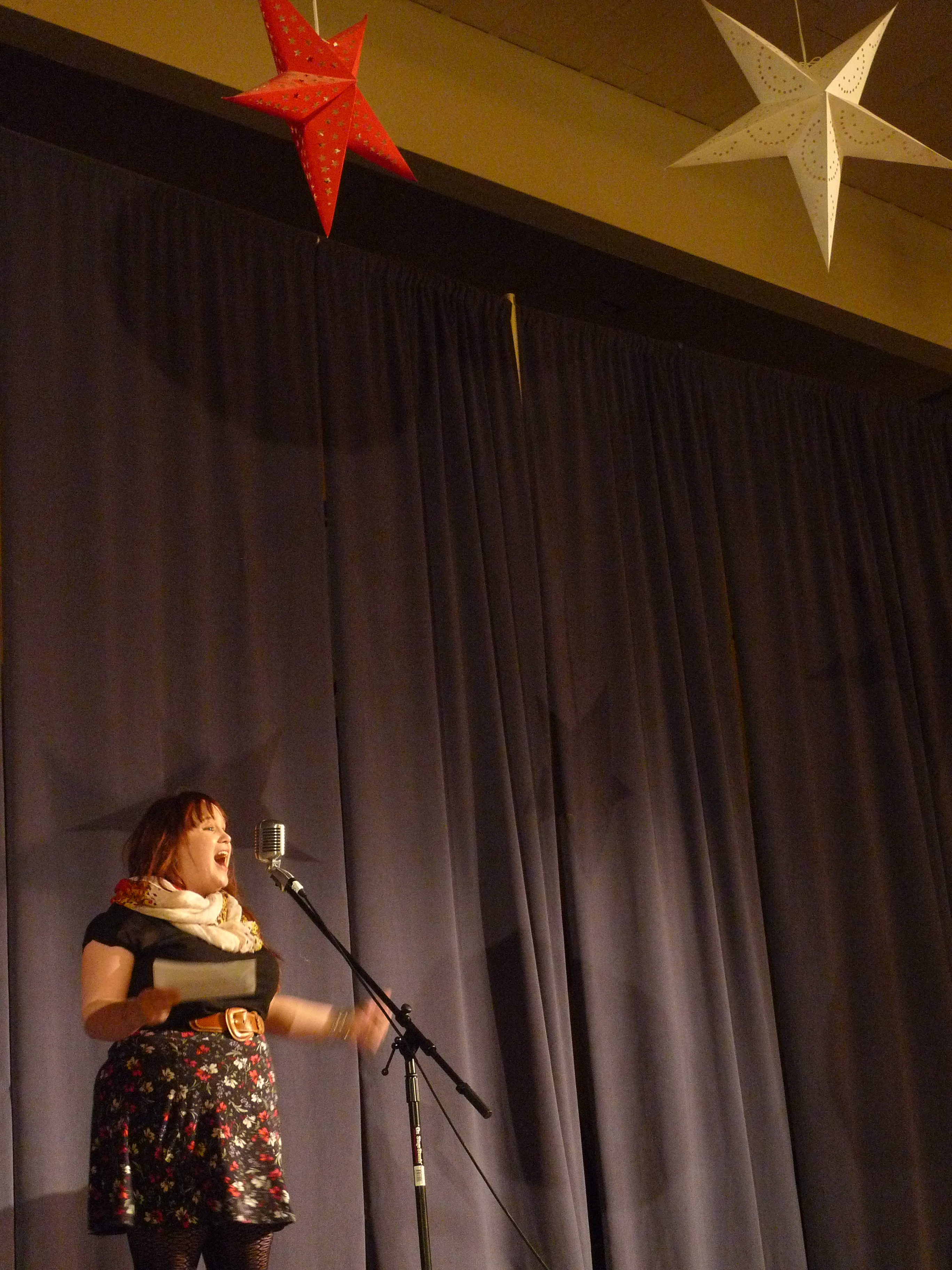
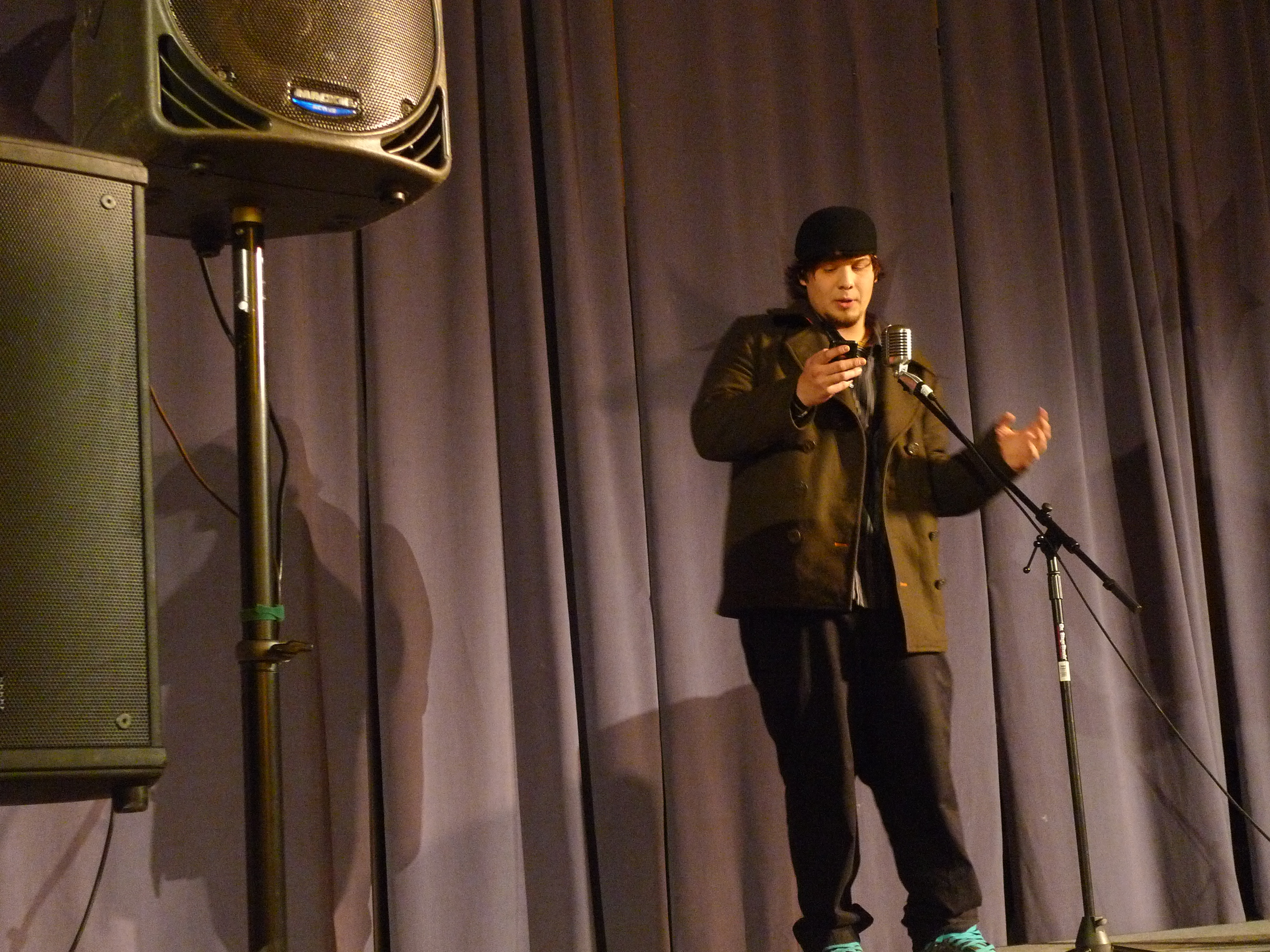
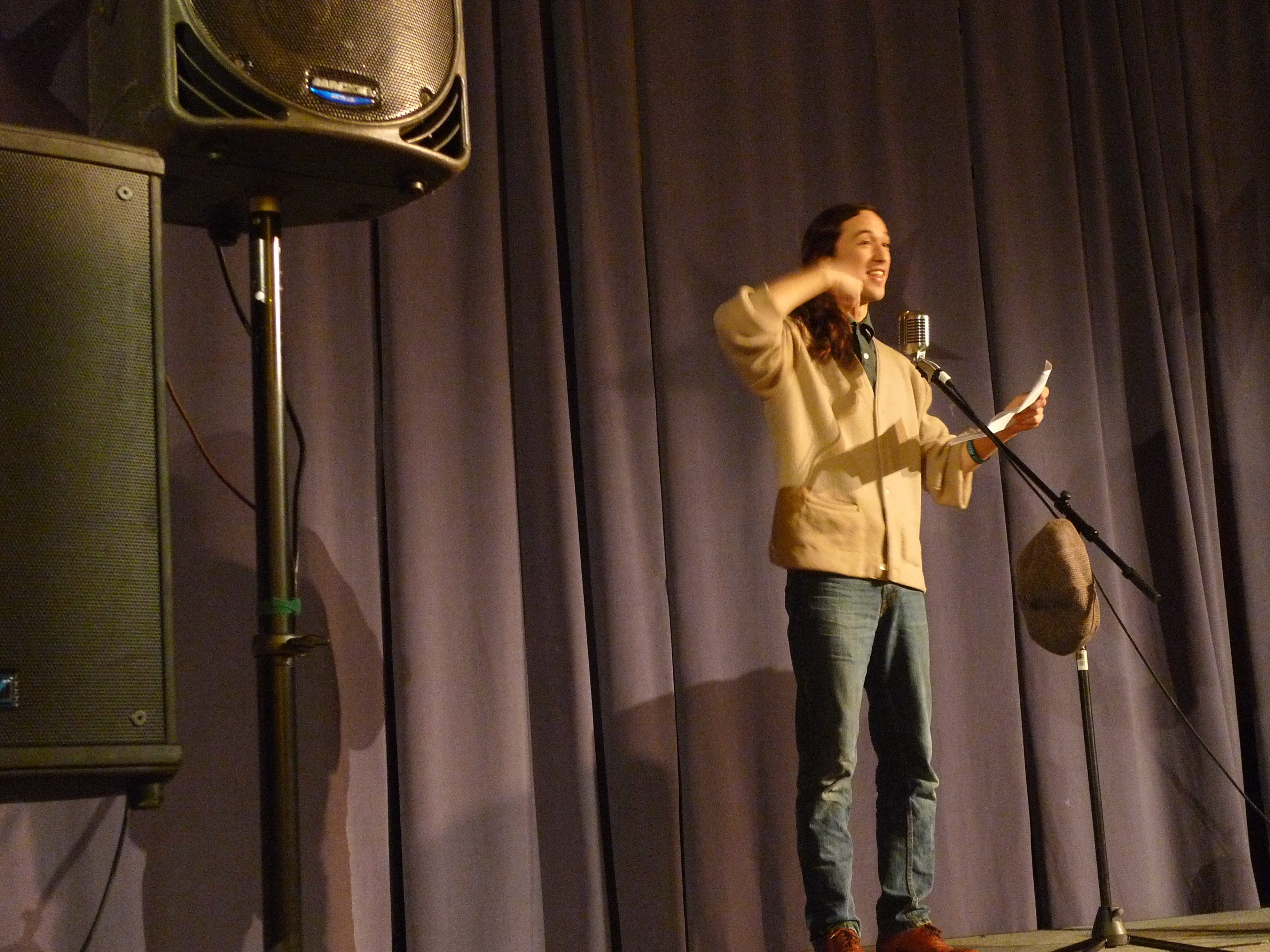
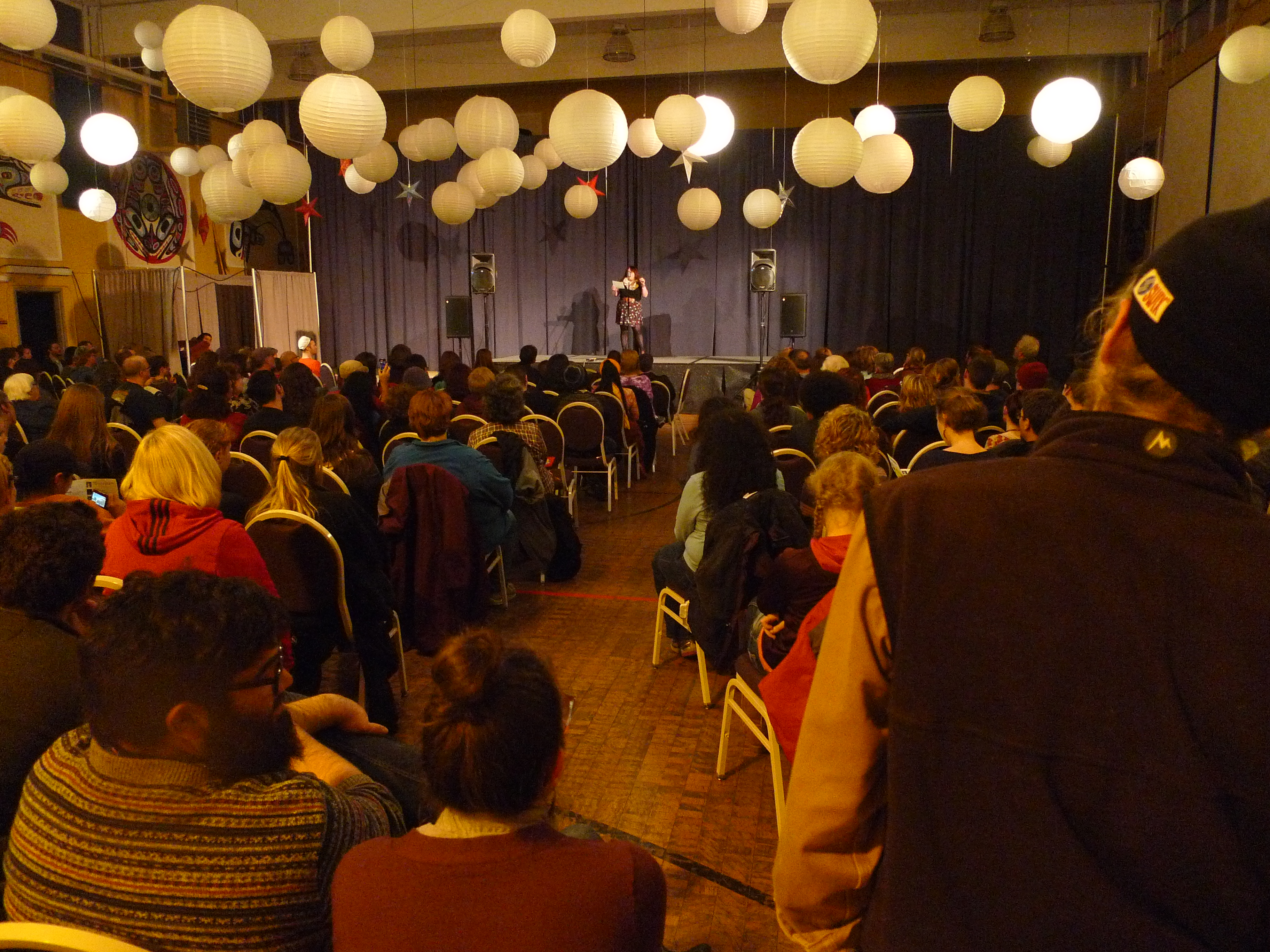
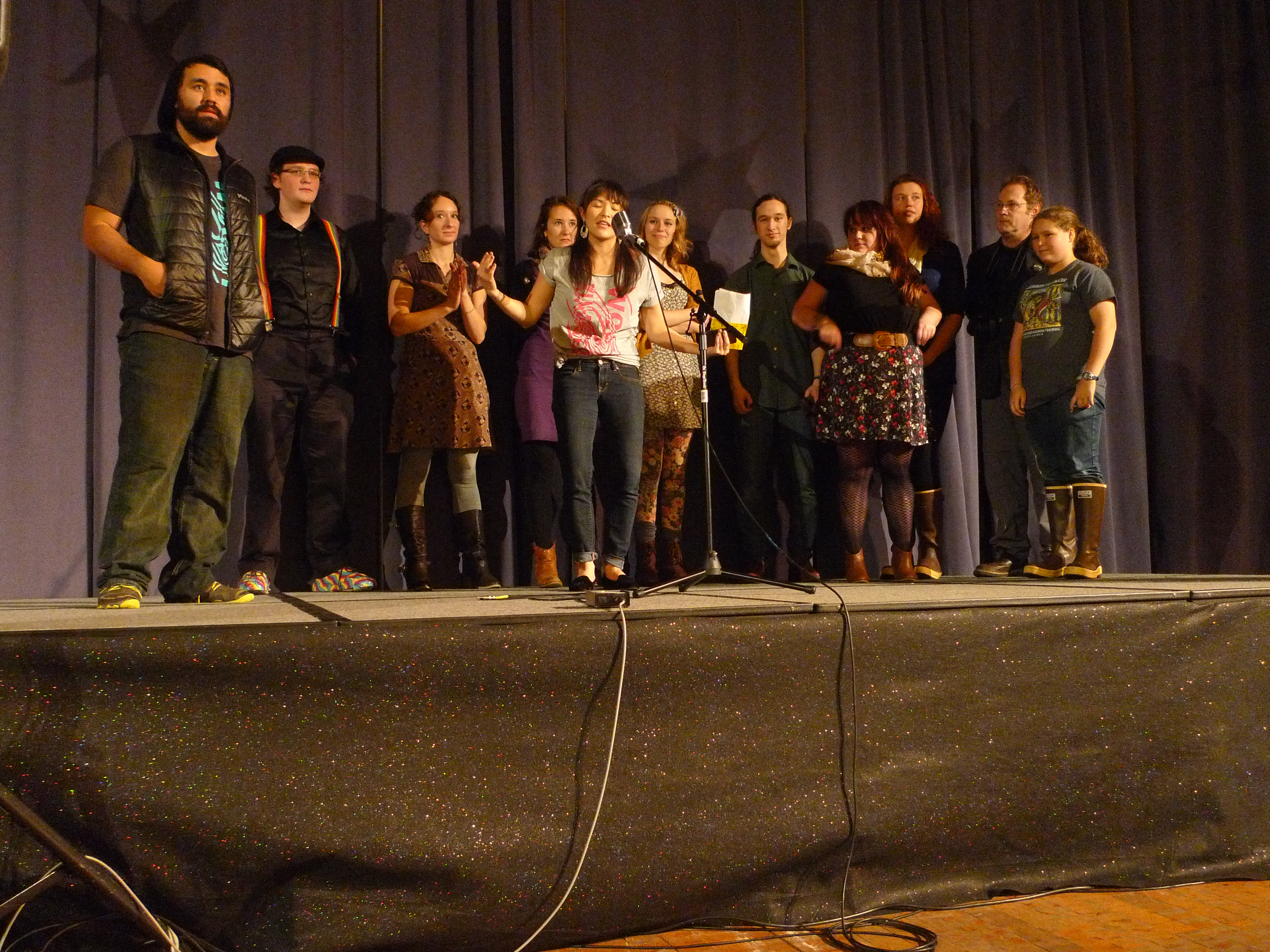
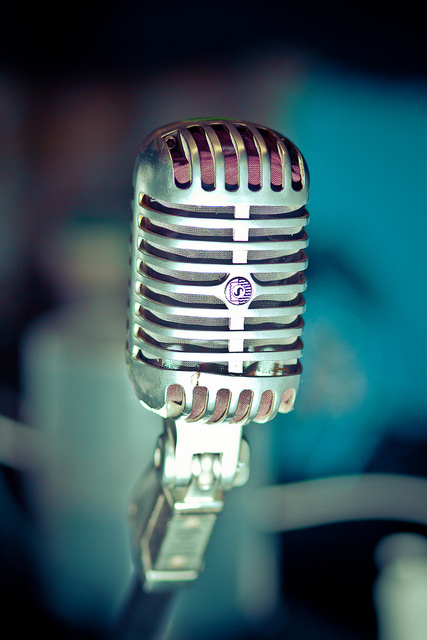
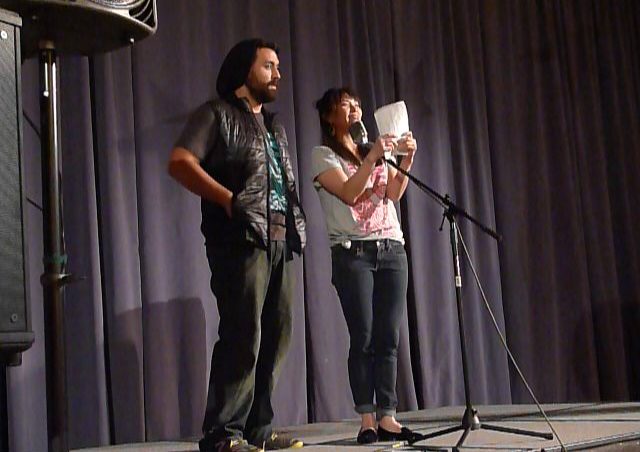
Since 2010, Juneau poets have been taking the stage at open mics and poetry slams hosted by the Woosh Kinaadeiyi arts non-profit organization. Here’s an audio postcard from this year’s grand slam event on Friday, Oct. 18th. Among a multitude of volunteers and talented performers, we’ll hear voices from poets Ziggy, Jacqueline Boucher, Nathan Block, Woosh Kinaadeiyi president and co-founder Christy Namee Eriksen, and co-host Dee Jay Derego.
Open mics and poetry slams happen every third Friday at 6:30 p.m. Locations vary.
A couple in Juneau have a police dispatcher to thank for helping bring a new baby boy into their family.
According to a police news release, at about 10:15 Wednesday morning a man called 911 from the Best Western Hotel in the Mendenhall Valley to report his wife was in active labor. The dispatcher guided the couple through the pre-delivery process. By the time Capital City Fire and Rescue arrived on scene about five minutes later, the baby was being born.
According to the release, the mother and baby were doing well and were not transported to Bartlett Regional Hospital.
The couple’s names and the name of the baby were not released.
Juneau is buying bike racks that double as public art with locally inspired motifs.
The city is paying Minneapolis-based Dero Bike Rack Co. $20,883 for the custom order.
Renderings of custom, two-tone bike racks Juneau is buying that will double as public art. (Courtesy Dero Bike Rack Co.)
“When these racks are installed – this is just going to be glorious,” said Bob Aldrich, who’s in sales at Dero. “These are the coolest racks that we are fabricating this year, without a question.”
Dero makes thousands of racks a year. Juneau is buying 15.
“Every one of which is a one-of-a-kind, unique design that will be present nowhere else in the universe as presently constituted,” Aldrich said.
The designs include a Tlingit-style raven, a boat, waves, mining tools, an umbrella, and of course, rain boots. Each rack will accommodate at least two bicycles.
Juneau Engineering Director Rorie Watt says the racks are in keeping with a 2009 urban plan that encourages accommodations for cyclists and pedestrians.
“We thought it would be nice to have some bike racks that, you know, had a little flair to them,” Watt said.
Aldrich said they hope to ship out the racks in mid-November.
Project manager Skye Stekoll says some of these racks will replace old ones, some will displace racks in good shape to lower profile locations, and some are going to spots with no racks at all. They’ll be installed next spring.
KTOO’s Scott Burton caught Harrison B for a few minutes before his Thursday night show with Alien Ant Farm at Centennial Hall. They spoke about his music–a unique blend of outlaw country, R & B, Motown, and hip-hop–his connection with both Nashville and Juneau, and what he’s cooking up on his upcoming album.
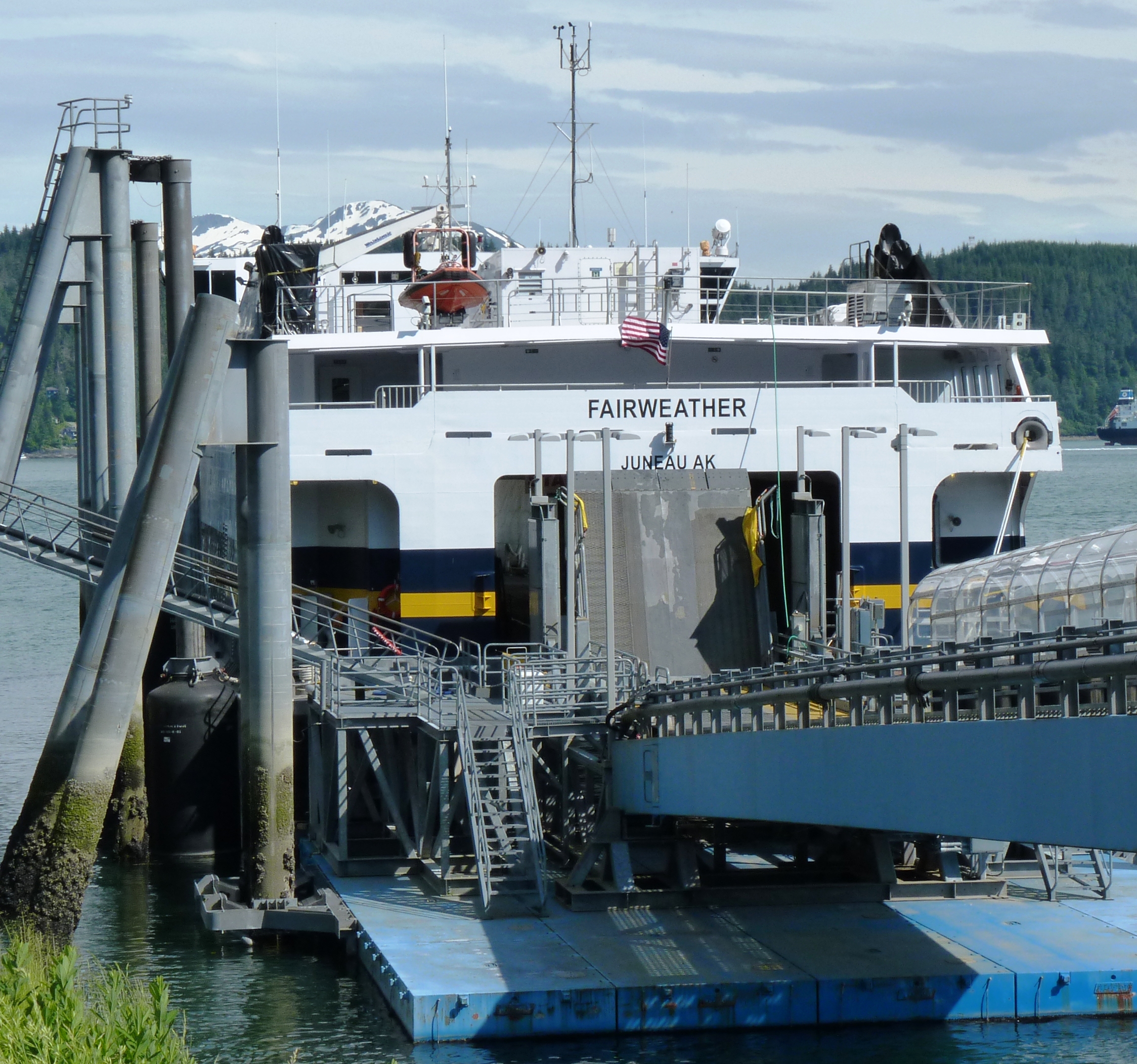
Alaska Marine Highway System’s Fast Vehicle Ferry Fairweather. Photo by Skip Gray/KTOO
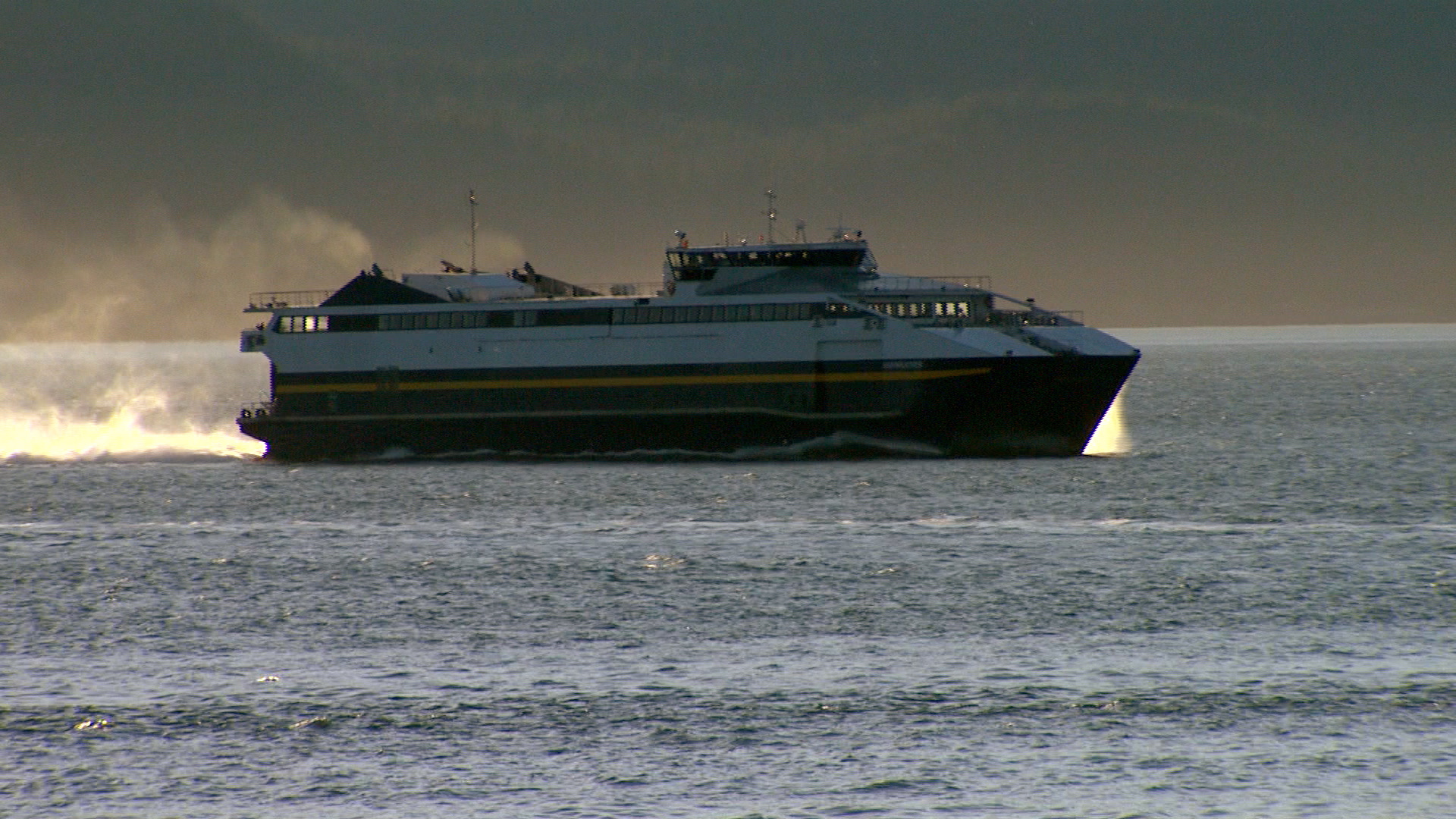
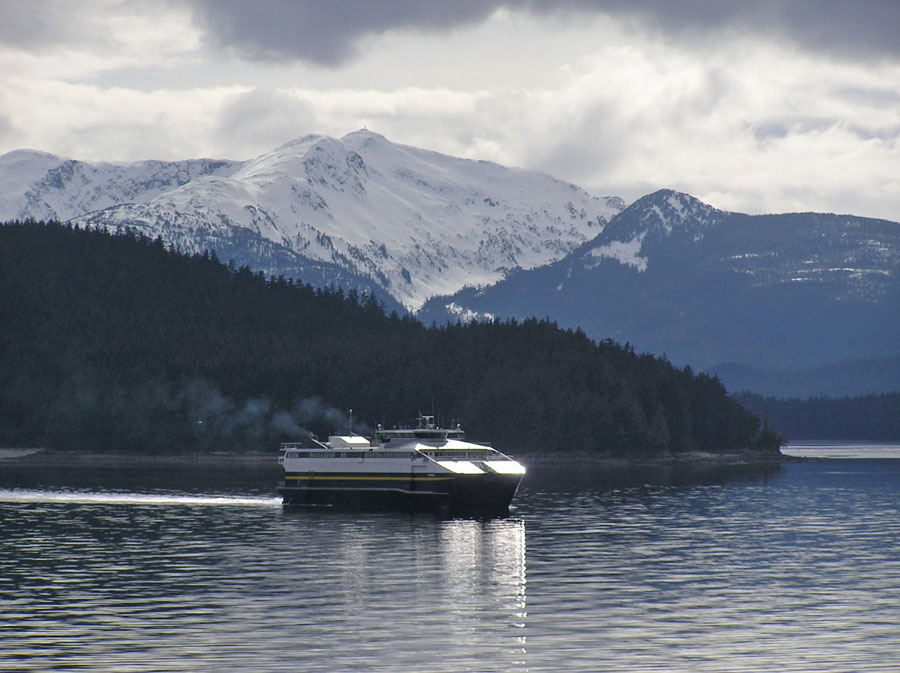
The fast ferry Fairweather is leaving Juneau’s Auke Bay as soon as Thursday for its trip down to a Seattle shipyard. When it returns to Alaska next spring, it will feature a completely new power plant.
The deteriorating engines that were the subject of the State of Alaska’s long-running lawsuit with the engine manufacturer will be swapped out. Then, its sister ship Chenega will go through an identical refit next year.
It’s still unclear what caused the rapid deterioration of the current engines that powered the fast ferries’ water jet drives. State attorneys filed suit alleging that German engine manufacturer MTU Friedrichshafen and MTU Detroit Diesel provided defective engines or recommended the wrong type of coolant. Or perhaps, as MTU suggested, it was the Alaska climate or ferry crews driving the vessels too hard.
One of four diesel engines inside the engine room of the fast ferry Fairweather. Photo by Skip Gray/KTOO
“We’ve had experts, metallurgists, and consultants. And, of course, MTU has equal talent,” said Alaska Marine Highway System General Manager John Falvey. “There (were) a lot of different thoughts on what could have happened.”
The ferries were barely five years old and Falvey said the engines were, unfortunately, already reaching their end of their operating life because of progressive erosion and corrosion. Falvey said they repeatedly bored out the cylinders and inserted interstital rings to keep the engines running.
When you consider the cylinder, which is all part of the metal block of the engine, and that cylinder starts to erode and corrode, what you get into is a situation where you got to be very careful that the engine is safe to operate. The last thing you want to do is bore those engines too much where the cylinder becomes fragile and the piston comes out the side of it.”
East coast ship-builder Derecktor Shipyards dropped out of the lawsuit when the company declared bankruptcy.
Fast Vehicle Ferry Chenega. Photo by gillfoto, Flickr Creative Commons
On the eve of a trial scheduled for April in Juneau Superior Court, the State of Alaska and MTU and Detroit Diesel, now known as Tognum America, suddenly announced a settlement in the three-year long case.
“Neither party is admitting any fault here,” said Falvey.
The trial was off, and the ferry system would get eight next-generation engines at no cost. That includes four engines each for the Fairweather and Chenega with MTU paying for all the costs of the refit. The State of Alaska also has an option to buy two spare engines valued at $1.5 million each.
“I was directly involved in the final negotiations of that final settlement. I believe that the State got a very good deal,” said Falvey.
The settlement also includes a five-year warranty and maintenance agreement for both the new and current engines, specialized tool sets, and training for Alaska Marine Highway System engineers.
“I think we won,” said Senator Dennis Egan of Juneau, chair of the Senate Transportation Committee. He has high praise for the state lawyers and ferry system managers for sticking with the case.
It was a win-win for everyone, actually, engine manufacturer, (and) the ship builder. It could’ve gone to trial and you know how trials are. Somebody loses. I think they saw the handwriting on the wall and that’s why the settlement came to fruition.”
Robert Venables of Haines, chair of the Marine Transportation Advisory Board, said settlement of the lawsuit and potential installation of the new engines is excellent news. “There’s been a lot of questions on the future of the fast ferries.”
Fast ferry Fairweather docked in Auke Bay this summer. Photo by Ed Schoenfeld/CoastAlaska News
Venables said the high-speed catamarans can serve certain routes more effectively than the slower, traditional mono-hulled vessels.
They’re very ideal for the longer routes where the vessels can get speed going, and get point-to-point and provide the service to these more distant communities in a timely manner so we can keep the operational costs of crewing down and get back in the same day.”
The Juneau-based Fairweather usually runs between larger communities in northern Southeast Alaska.
In Prince William Sound, the Cordova-based Chenega may complement the slower mono-hulled Aurora in providing service to Valdez and Whittier.
Boarding the M/V Aurora in Whittier. Photo by TurasPhoto, Flickr Creative Commons
Colleen Stephens of the Valdez Visitors Bureau says the fast ferry is an essential transportation link, especially for the independent travelers who pass through the area.
So you’ll see many people doing loops who’ll come from either Anchorage or Fairbanks to Valdez. And then, continue on their way out of town to either Whittier or Cordova on board one of the two marine highway links. Or the same thing in reverse: come in on the marine highway, depart on the road.”
Steve Ranney of the Orca Adventure Lodge in Cordova says the Chenega provides a steady flow of inbound tourists and groceries, and outbound seafood product, high school athletic teams, and expectant mothers and other residents visiting out-of-town doctors.
When the ferry managers come to town, I do like to remind them that people do like to move along fast these days. There’s a huge difference between a 3-hour trip and an 8-hour trip.”
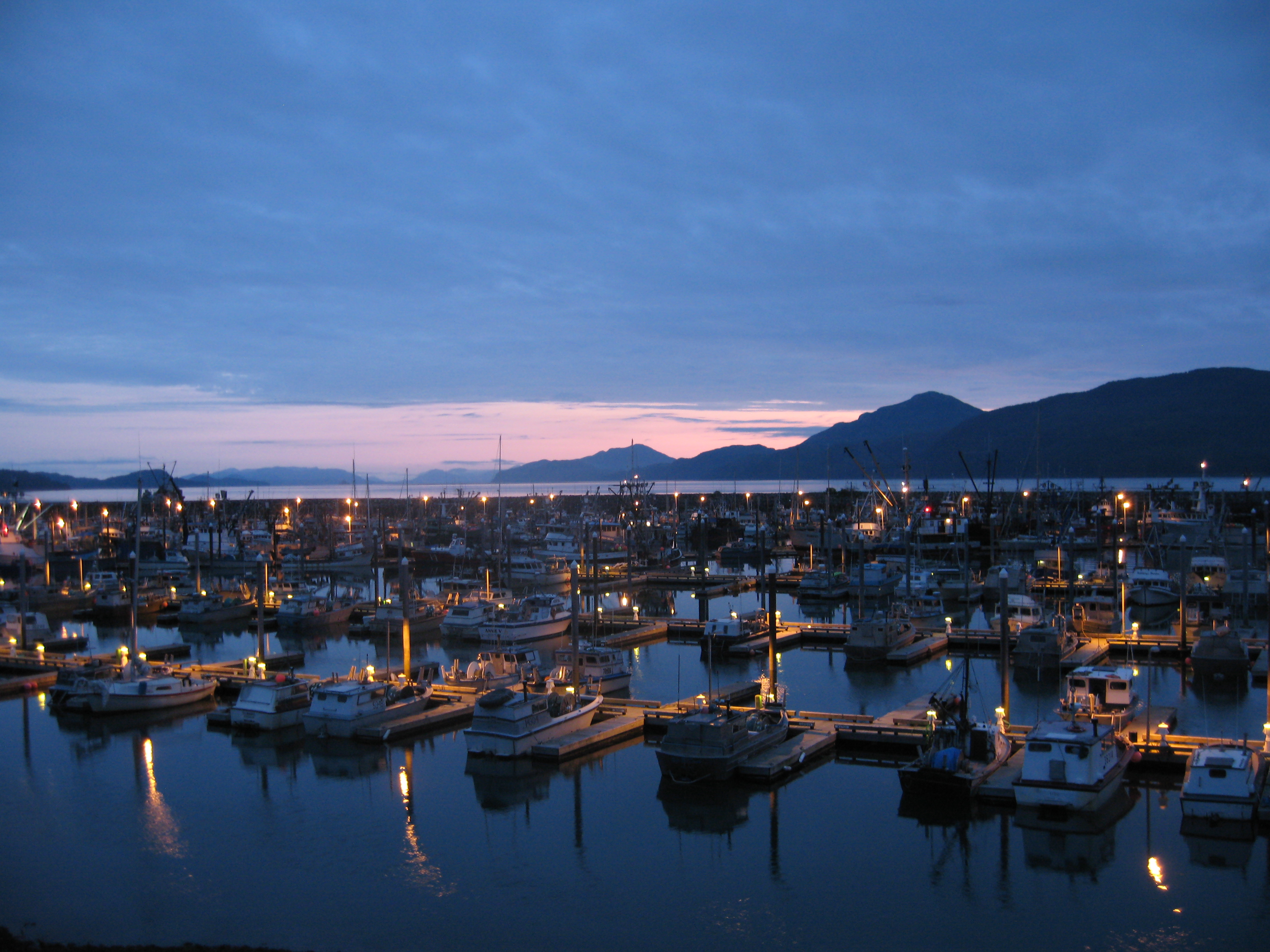
Cordova boat harbor. Photo by mcgeez, Flickr Creative Commons
With the new engines, both vessels could continue cruising at 32-knots for the remaining life of the hull, or another 30-years.
MTU and Tognum America officials declined to comment on the settlement or the new engines. But Falvey expects to continue to have a “solid work relationship” with the company which he credits with helping keep the fast ferries running. He believes that they’ve already set the gold standard for producing such specialized engines for high-speed vessels.
When the Fairweather goes into the Foss Shipyard in Seattle this month, the current 16-cylinder Model 595 engines will be replaced by the new, narrower, and longer 20-cylinder 4000 model.
The 20V 4000’s have a bit more of a power capability. What we need to be careful of is we’re trying to utilize the same reduction gearing that we have, thrust bearings, load bearings, things like that. So we’re still limited as to how much horsepower we can put out through the impeller on the end on the jet.”
The Fairweather is expected to return to Alaska service in late May 2014 while the Chenega will head down for its refit in October 2014.
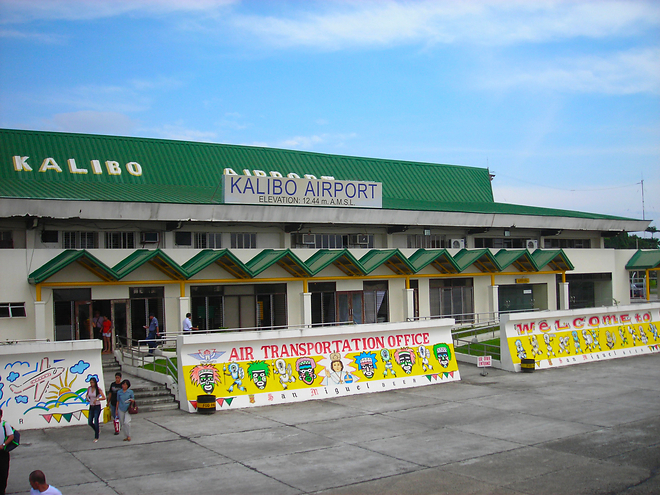
The Juneau Assembly has endorsed a Sister City relationship with the Municipality of Kalibo in the Philippines.
Kalibo is the capital of the Philippine province of Aklan.
After retiring from the U.S. Coast Guard four years ago, Mendenhall Valley resident Larry Snyder says he and his wife, who is Filipino, began living half the year in Kalibo. Snyder says establishing a Sister City relationship could help forge economic ties, especially for Alaska seafood.
“This might be a wonderful opportunity for Southeast Alaska, Juneau in particular, to reach out with some of our products, and some of our knowledge on seafood,” Snyder said. “And I know that Kalibo would be receptive to such ideas.”
Filipino Community, Inc. President Dante Reyes hails from near Kalibo. He also spoke in support of the Assembly’s resolution.
“On behalf of the more than 800 Aklanans in the municipality of Juneau, out of the 3,000 Filipinos, we are in support of the CBJ proclamation,” Reyes said.
Now that the Assembly has adopted the resolution, Juneau’s Sister Cities Committee can proceed with the steps necessary to formalize the Sister City relationship.
Juneau’s other Sister Cities include, Whitehorse, Yukon in Canada, Chia Yi City in Taiwan, Vladivostok in Russia, and Mishan City in China.
Close
Update notification options
Subscribe to notifications
Subscribe
Get notifications about news related to the topics you care about. You can unsubscribe anytime.