Community

Juneau wildlife guide, advocate Greg Brown passes away

Greg Brown
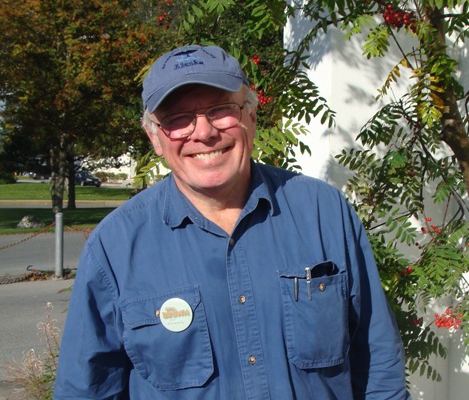
Juneau wildlife guide and advocate Greg Brown passed away over the weekend. Photo by Casey Kelly/KTOO.

Juneau resident and well-known wildlife guide Greg Brown has died. He was 63.

Brown passed away over the weekend, according to his wife Tina, who says he’d recently been diagnosed with angiosarcoma, a rare and aggressive form of cancer.

The couple realized a longtime dream when they moved to Juneau almost a decade ago.

“Our first trip here it was rainy, and it was cold, and we looked up at the waterfall, and that evening we said, ‘Well, when we retire, we’re going to move to Juneau,'” Brown recalled in a 2010 interview when he was running for Juneau Assembly.

“And when the time came, literally it was a three minute conversation about when are we going to get a flight to Juneau?” he said. “It’s a great spot to live, it has some of the nicest people I’ve ever seen anywhere in the world, and I would stack Juneau up against any city in the world.”

Brown was born in Evanston, Illinois, but grew up in Virginia. He attended Virginia Tech University, where he double majored in mechanical engineering and nuclear engineering.

He was an executive for major international electric companies, including Siemens and Schneider Electric.

In a 2008 Evening at Egan lecture at the University of Alaska Southeast, Brown described himself as “an environmental capitalist.”

“I build things, I’ve done that most of my life – plants all over the world in China, Latin America, Europe. But I always try to do it with the most friendly environmental look at how to build it,” he said.
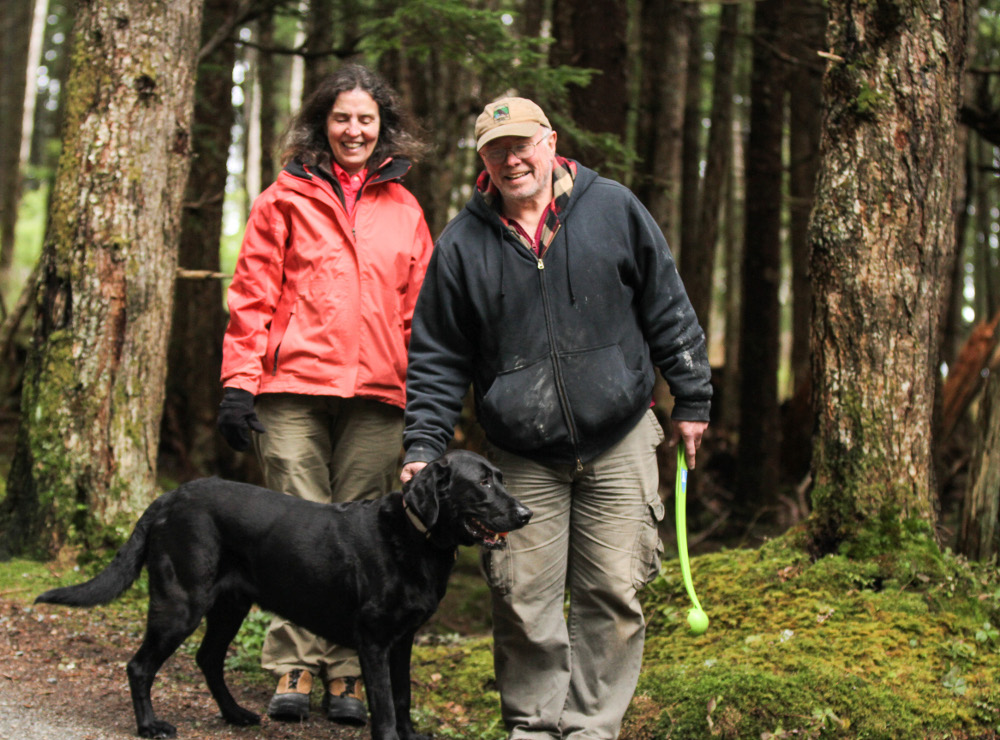
Greg and Tina Brown
Greg and Tina Brown enjoy a walk with their dog, Oscar. Photo courtesy Kerry Howard.

After moving to Juneau, the Browns started a guiding business, Weather Permitting Alaska. But Tina says Greg never considered it a job.

“He loved taking people out to see the whales, because he wanted to teach them about the whales,” Tina Brown said. “He never wanted just to run out there, show them a whale, and run back. He was known to stay up to an hour at no extra charge if the whales were cooperative and the people were enjoying it. Being out on the water and showing people the beauty here and the wildlife was just dear to his heart.”

Tina Brown says she’s not planning a public memorial for her husband. She says Greg didn’t like people making a fuss over him, and never even wanted a birthday cake. But she encourages friends to remember him in their own way.
Labor issues frame Alaska Labor Day celebrations

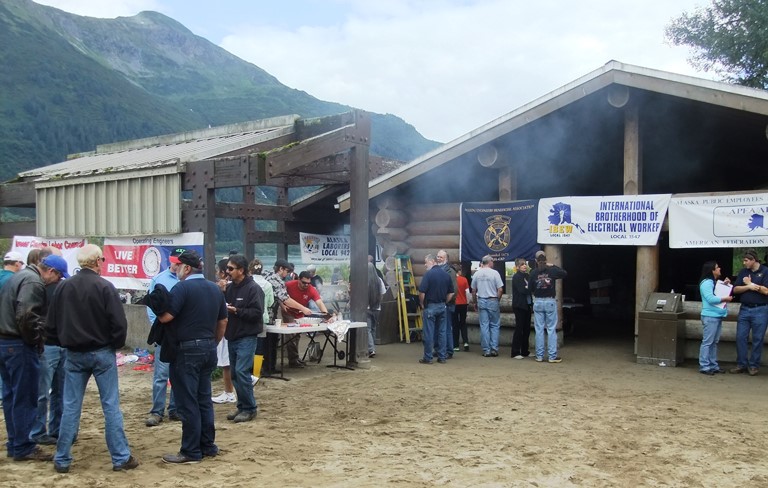
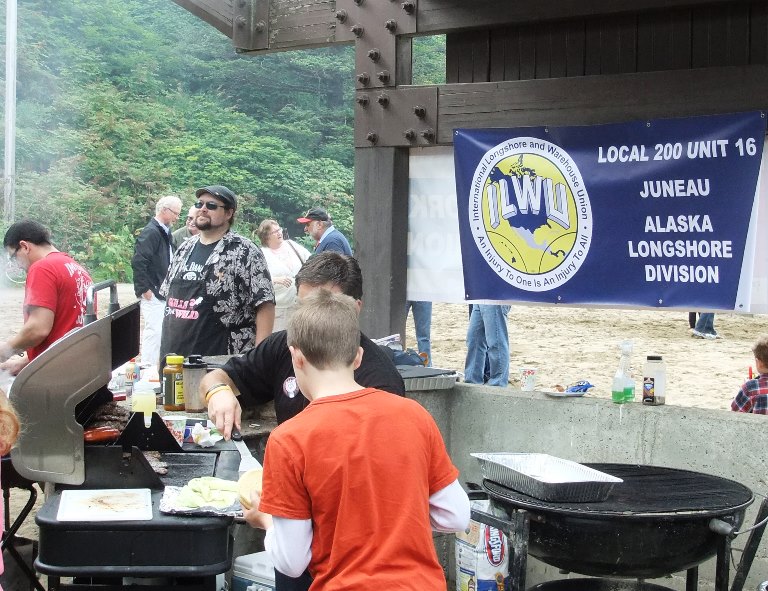
Juneau’s Central Labor Council hosted a Labor Day picnic for capital city union members and their families.

Monday’s Labor Day celebrations in Alaska were a good chance to collect signatures on two initiatives to protect workers.

One is statewide to increase Alaska’s minimum wage. The other asks Anchorage voters to repeal a municipal law that limits the rights of city employees.

Some Alaska union officials are concerned a nationwide decline in wages and benefits is making its way north.

“If we don’t do something about it, then I think Labor Day is kind of relegated to being remembered as nothing more than the last barbeque of summer,” says Vince Beltrami, president of the Alaska AFL-CIO, the state’s largest labor organization.

Beltrami says attacks on organized workers in some Lower 48 states and the “right to work” movement are embodied in the Anchorage ordinance passed in March that eliminates city employee’s right to strike, takes away incentive pay and bonuses in future contracts, and restricts annual pay increases to no more than 1 percent of the Anchorage CPI.

Beltrami is helping collect about 7,100 signatures of qualified voters to put the ordinance on the Anchorage ballot.

“We’ve only had a week to collect signatures and we’re already creeping up on the requisite number,” he says.

Alaska has the second highest union representation in the nation, according to Beltrami.  But he and other union officials are concerned it will be a target for those who want to make it a right-to-work state.

A Labor Day message sent out by Juneau, Anchorage and Fairbanks Central Labor Councils indicates high union participation increases Alaska’s median wage for all workers, union and non-union, by nearly $4,000.

The information is gleaned from U.S. census data.  It also shows a strong correlation between union participation and education.

Labor organization banners hung throughout the Sandy Beach pavilion at Juneau’s Central Labor Council picnic.

Pete Ford, president of the Juneau Central Labor Council, says it suggests that jobs in right-to-work states are often lower income.

“They also tend to be jobs that are not career type jobs and in many instances they’re jobs that tend to get packed up and moved away depending on what political winds might be taking place,” he says.

“Right to work” does not provide a general guarantee of employment.  Instead, right-to-work states prohibit negotiated agreements between labor unions and employers that require employees’ membership or union dues.

About half of U.S. states have such laws.

Minimum wage initiative

Alaska unions are also helping push a statewide initiative to increase the minimum wage from $7.75 to $9.75 an hour by 2016.  Then the minimum wage would be annually adjusted for inflation.

Three former state Labor Department commissioners have organized the effort.  Supporters must collect about 30,000 signatures of qualified Alaska voters to put the initiative on next year’s ballot.

The AFL-CIO’s Beltrami says since 2009 about 70 percent of the jobs created in the U.S. are low wage, mostly in retail and fast food service.

“Meaning that if people work full time they’re still going to be around the poverty level,” Beltrami says.

For a two-person household in Alaska, that’s a little over $19,000 a year, according to the U.S. Department of Health and Social Services.

Alaska is among 19 states and the District of Columbia where minimum wage is greater than the federal floor of $7.25.

The Obama Administration wants the U.S. congress to raise the federal minimum wage to $9 an hour.


Crimson Bears settle a score with the Patriots

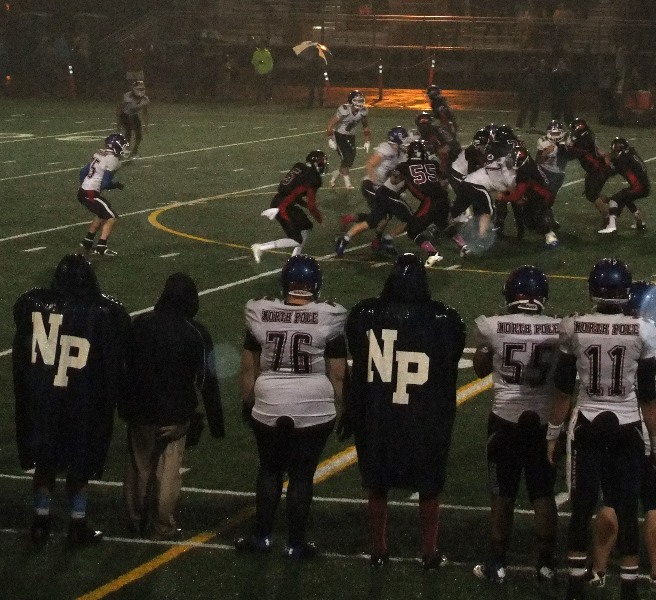
The rain was relentless Saturday as the Crimson Bears ran over the North Pole Patriots 55 to 20 in a home game.

The Juneau-Douglas Crimson Bears turned the tables on the North Pole Patriots this weekend, for a 55 to 20 win at Adair-Kennedy field.

Within seconds after the game began, JDHS senior Demetirus Campos ran 40 yards for the first touchdown.

Shortly after, Campos had another long run on an interception, the extra point was good, and the Bears had set a formidable tone for the rest of the game.

Going into the match, North Pole was ranked first in Alaska’s medium schools’ football.  Crimson Bears head coach Rich Sjoross  had expected it to be the toughest conference game for both schools this season.

“They beat us here last year by 20 points,” he recalled. “They’ve got some great athletes, some tall receivers that are getting division one scholarships.  And we’re just a bunch of scrappy guys from Juneau that know how to stick together and that’s what they’re doing this year.”

Sjoross thought the Patriots were stunned by the Bears.

“Obviously they were. We come out and get two quick scores on them – you can’t ask for a better start than that. And then we were just able to keep the pressure on them,” he said.

The Patriots had three touchdowns to Juneau’s eight, scored by Campos, senior Kris Hill and junior Dorian Isaak.

The Thunder Mountain Falcons’ varsity had a week off.

JDHS and North Pole are in the small Southeast Conference with the Falcons this year.  KTOO will look at that move later this week.

Labor Day celebrates the union movement

Monday (Sept. 2) is Labor Day – the day set aside in both the U.S. and Canada to celebrate workers. It has its roots in the labor union movement.  The first Labor Day parade was Sept. 5, 1882 in New York City, organized by the Central Labor Union. Some 10,000 workers paraded around Union Square.

The idea spread across the county and many state legislatures passed bills making it a legal holiday.  In 1894, Congress enacted legislation making the first Monday of September the official Labor Day.

While the legislation was signed by President Grover Cleveland, history notes that he signed it to help mitigate the criticism he was getting for sending troops to break up a strike, resulting in 13 dead strikers and more than 50 wounded.

Over time Labor Day parades in the U.S. and big celebrations have given way to the “just-another day-off” mentality and the last weekend of summer.

In Juneau, the Central Labor Council sponsors a community Labor Day picnic at Sandy Beach from 11 a.m. to 2 p.m.


Rope jumper 2 for 3 on world record attempts

Aug. 30 Update: Peter Nestler says he made another attempt at the rope skipping and soccer ball juggling record on Thursday evening. He says this time, he completed 126 rope skips in the allotted time.

The Ketchikan-born, Juneau-raised professional rope jumper is two for three on his world record attempts in Juneau.

Peter Nestler knocked out his second unofficial world record during a show Wednesday night at the Juneau Christian Center.

“Well, last night I hit 104 with the soccer ball,” he said. “Ended up being about 44 seconds without missing.”

The current record for most rope skips while juggling a soccer ball in one minute is 31, according to the Guinness World Records press office.

Before he leaves town Friday, Nestler said he’ll make another attempt to go the full minute.

Tuesday evening, he made a grueling attempt to hop the fastest mile on one foot while jumping rope at Thunder Mountain High School. He was on pace to beat the record, but about three-quarters of the way through, he tripped and fell, disqualifying the attempt.

Last week, Nestler unofficially set the record for most bum skips in 30 seconds at Glacier Valley Elementary School.

Nestler lives in Tulsa, Oklahoma.

Carvers begin on new Gajaa Hit totem poles

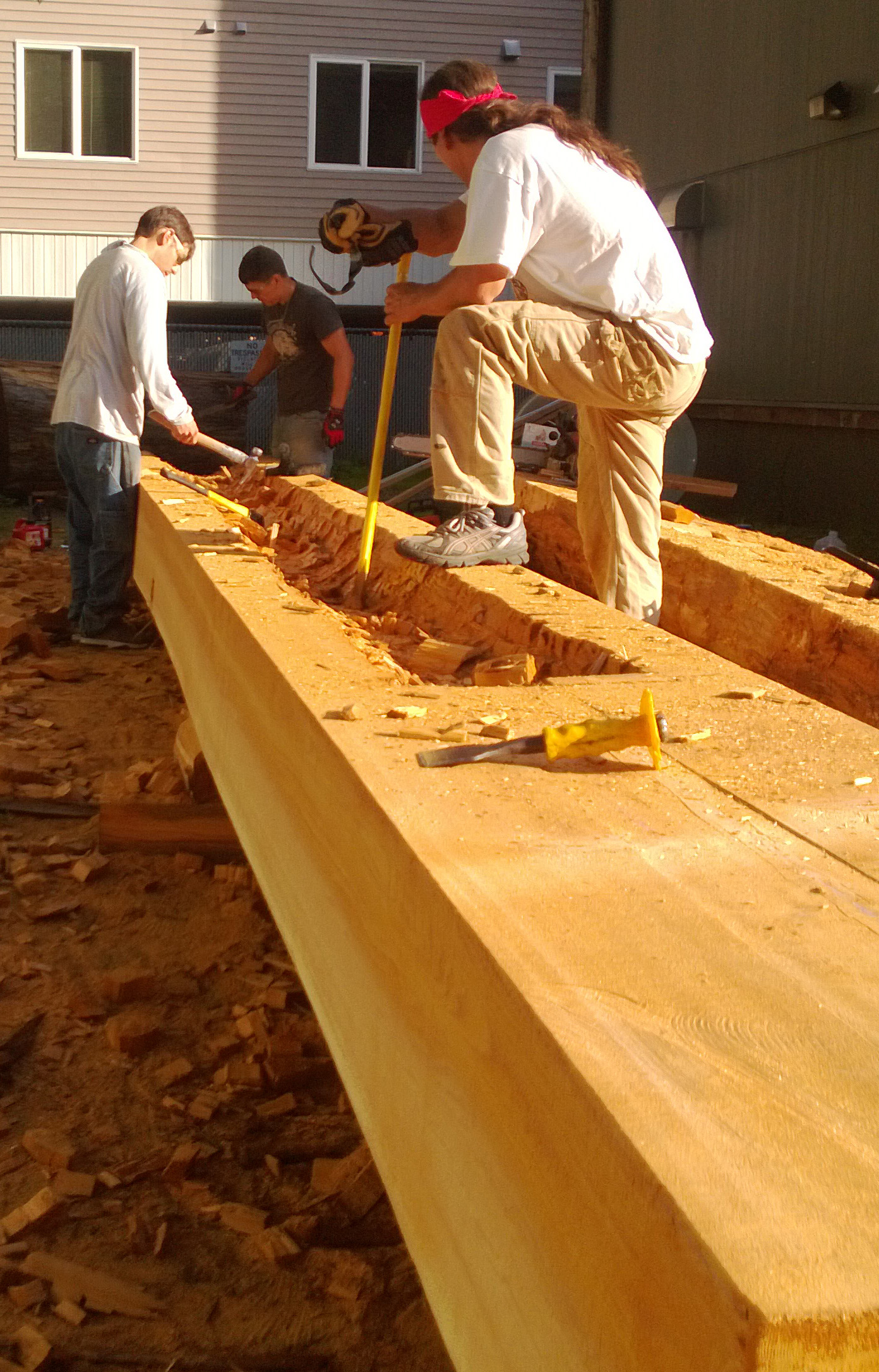
Apprentice Josh Yates, left, and carver Joe Young work on a red cedar log destined to be a new totem pole. (Photo by Jeremy Hsieh/ KTOO)

Sealaska Heritage Institute Art Director Rico Worl rubbed his fingers against the 26-foot tall Raven totem pole in front of the Gajaa Hit building off Willoughby Avenue on Wednesday.

Rico Worl

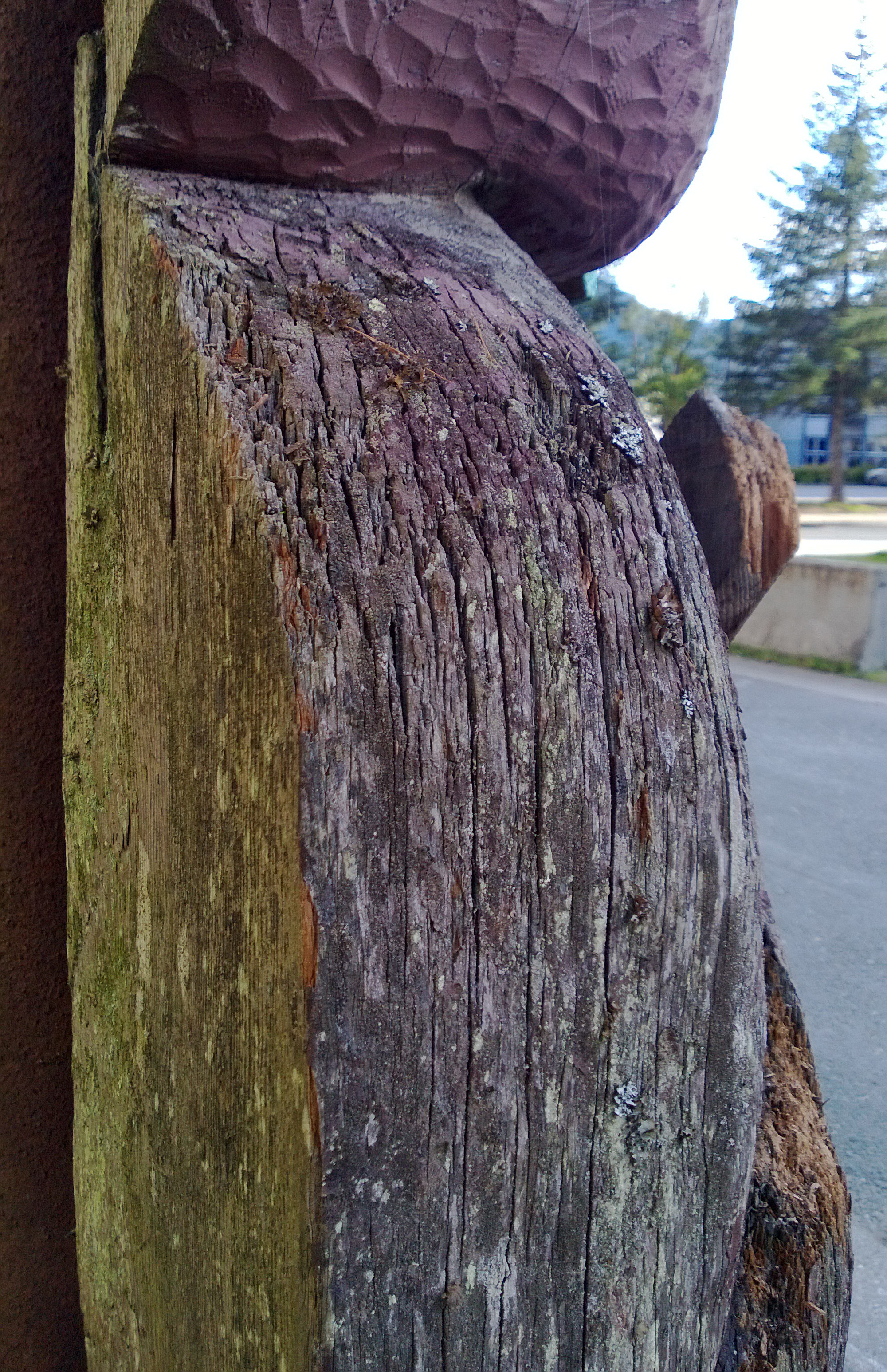
Small bits of the soft wood flecked off.

“The wood is decaying,” Worl said.

And that’s just the beginning of his damage report.

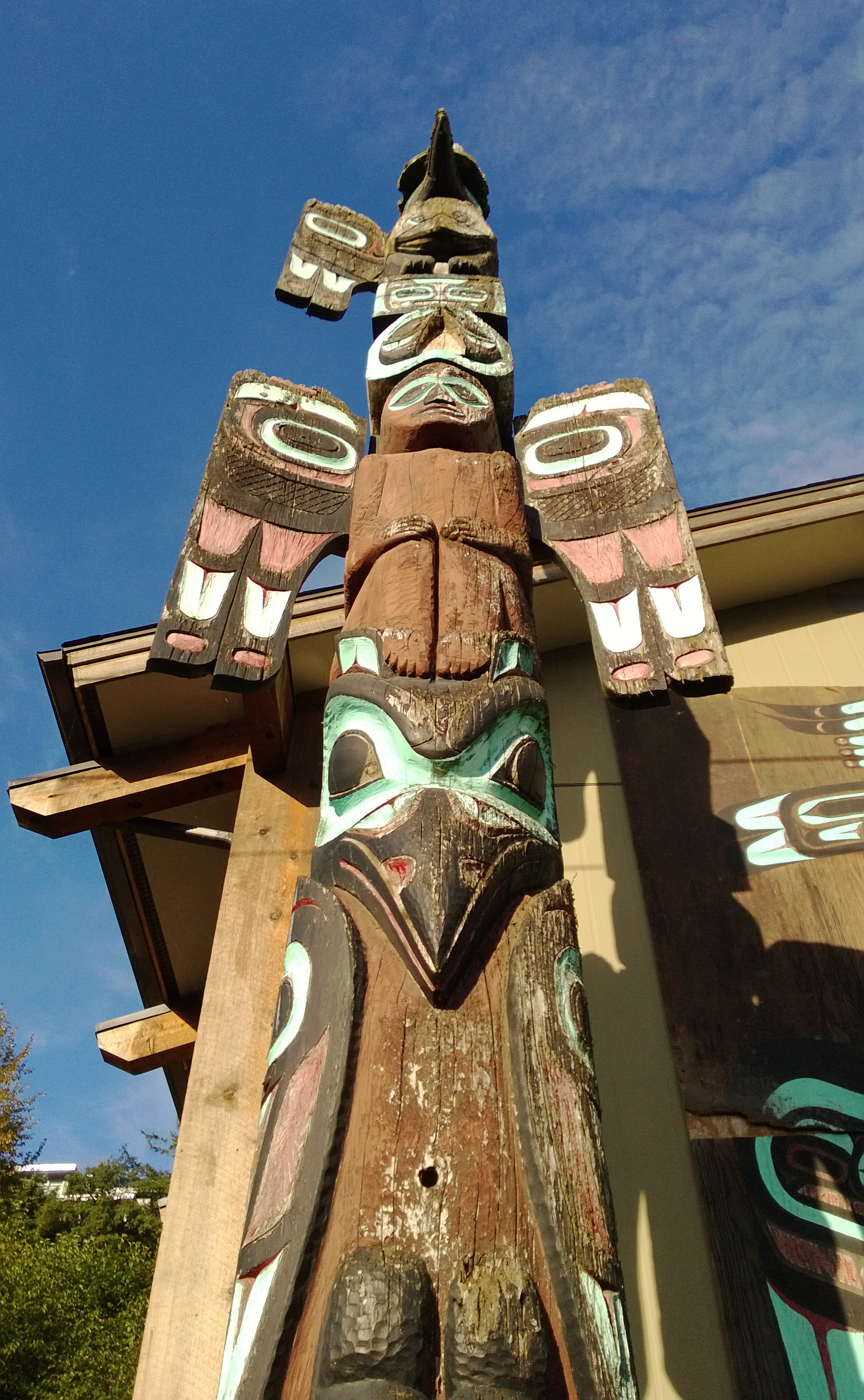
“You can see this pole … the wing that fell off, a beak fell off,” he said, gesturing upwards. “Multiple parts have fallen off.”

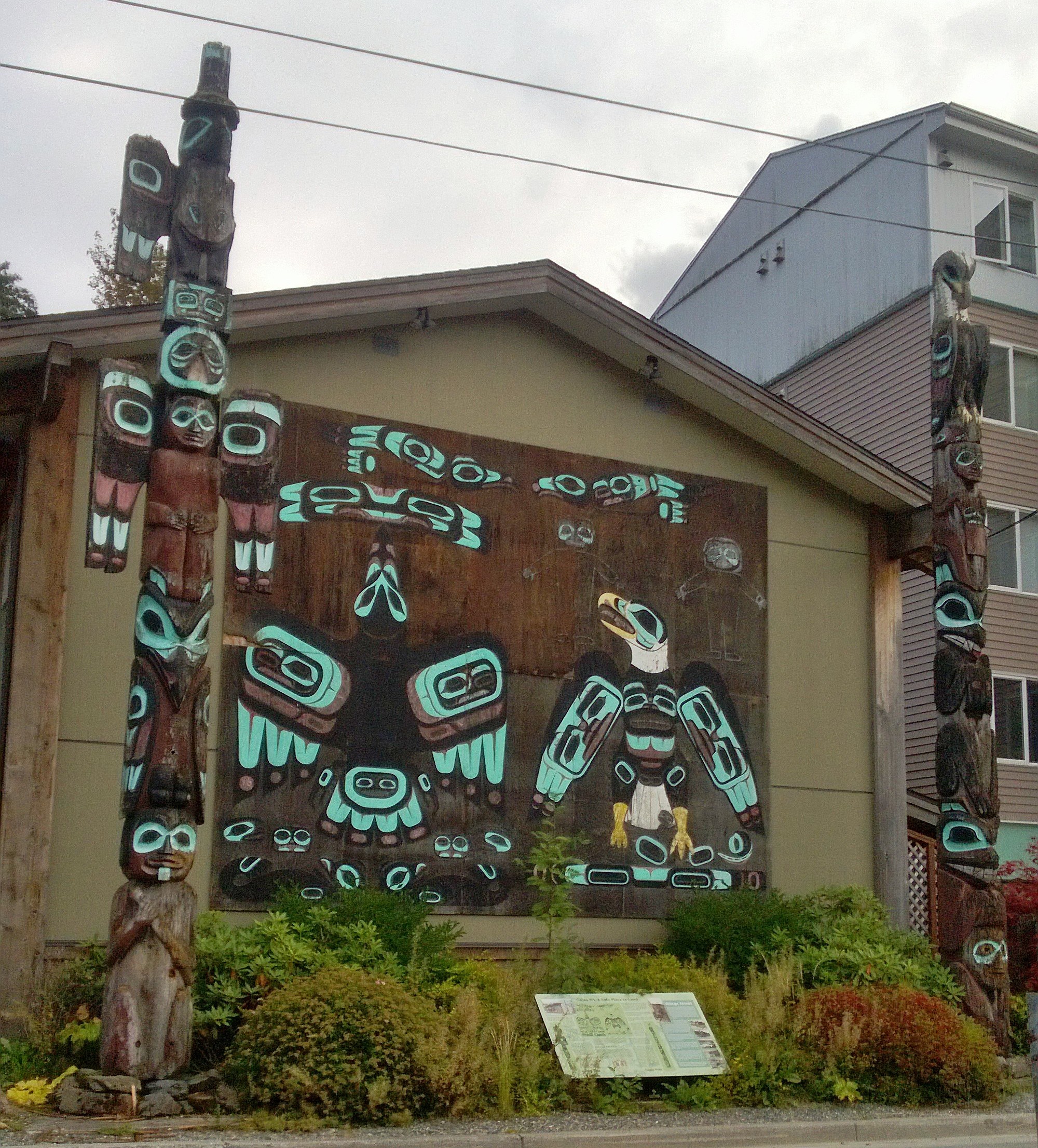
A few feet down the sidewalk, he points out how the powerful Taku winds flow down Willoughby and strip the paint from the Eagle totem pole.

The Tlingit artwork has seen better days. And yet, flanking a similarly weathered Tlingit screen, the 35-year-old woodwork collectively still creates the imposing façade of a traditional clan house.

The Raven pole is missing a wing, among other things. (Photo by Jeremy Hsieh/ KTOO)

Around the corner, the project led by the Sealaska Heritage Institute has begun to replace the two aging Tlingit totem poles and the screen.

Wednesday was the first day of work outside the Gajaa Hit building in the Indian Village area of Juneau. Red cedar was in the air, and sawdust and wood chips piled up. Brothers Joe and T.J. Young were chain sawing, hammering and axing a cavity into the first of two massive logs.

The Haida carvers came from Hydaburg on Prince of Wales Island. They’re the same brothers responsible for the Eagle totem pole at the University of Alaska Southeast campus.

There’s an aggressive, but tentative timeline to have the first pole finished by October 1st, before the weather turns, Worl said. The second pole and new screen are scheduled for next summer.

Worl wasn’t ready to disclose the exact cost of the carving project, but said a $150,000, one-to-one matching grant from the National Endowment for the Arts was a major part of it.

To retire the existing poles, a lowering ceremony is in the works. Traditions can vary, Worl said, but old totem poles may be “returned to the forest” – that is, put out to decay naturally—or they may be burned. He says it’s a decision that will be made with the Indian Village community later on.

The Sealaska Heritage Institute donated the cedar logs and hired the carvers. Additional grants came from the Juneau Arts and Humanities Council and the Juneau Community Foundation. And the Tlingit-Haida Regional Housing Authority, which owns the building, is paying for apprentice carvers.

After the Young brothers complete some initial work at the Gajaa Hit building, their carving operation will move to a more prominent work zone at Sealaska Plaza.

Editor’s note: This story has been updated to correct Joe and T.J. Young’s tribe. A previous version said they are Tlingit. They are Haida.


Site notifications
Update notification options
Subscribe to notifications