Then-Sen. Albert Kookesh addressed a 2011 Native Issues Forum audience in Juneau. He remains hospitalized in Anchorage after suffering a heart attack.
An Alaska Native leader and former lawmaker remained in the hospital Tuesday after suffering a heart attack Monday in Juneau.
Providence Alaska Medical Center in Anchorage listed Albert Kookesh in critical condition as of late Tuesday afternoon.
Kookesh co-chairs the Alaska Federation of Natives and chairs the Sealaska regional corporation’s board of directors.
His family could not be reached for immediate comment. But Sealaska posted an update on its website saying he is resting after undergoing surgery to correct a blockage.
The update says doctors plan to wake him up from sedation Wednesday.
It says his family asked that no flowers be sent because Kookesh is allergic.
The Angoon Democrat served eight years in the House and eight years in the Senate. He lost a re-election bid last year after redistricting separated him from many of the communities he represented.
Kookesh has also been involved in a number of regional and nationwide Alaska Native organizations. He has a law degree and has been a seiner and a store- and lodge-owner.
In a recent interview, he said he was contemplating rejoining the fishing fleet.
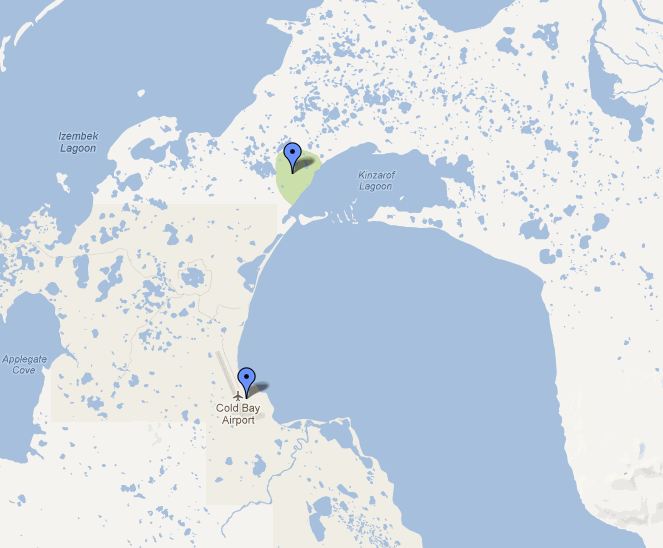
Izembek National Wildlife Refuge lies north of Cold Bay, Alaska
An intense lobbying campaign by Alaska’s congressional delegation has paid off for residents of the Aleutian community of King Cove. A group of them will have the chance to meet face-to-face with Interior Secretary Ken Salazar at the end of the month. As King Cove Corporation administrator Della Trumble explains, the goal is to convince Salazar to allow a road through the Izembek National Wildlife Refuge.
“Hopefully have him say yes, we can have this road, and not go with what [the U.S.] Fish and Wildlife [Service] has, what their recommendation is, which is the no action alternative,” Trumble says.
The group will be ten to twelve people, including several who can speak personally to the challenges of getting from King Cove to the all-weather airport in Cold Bay. Trumble says she hopes their stories will get the Secretary to listen.
“As an example, one of the elders that’s traveling with us had gone to Cold Bay on a boat with his wife who was being medevaced out of King Cove. And basically they got off-lifted from a crab boat, in a crab pot, from the boat to the dock in Cold Bay. And that’s just not acceptable,” Trumble says.
Ultimately, the Secretary of the Interior is responsible for deciding whether the project moves forward. Since the Fish and Wildlife Service announced their opposition to the road earlier this month, all three members of Alaska’s Congressional delegation have been pressuring Salazar to override their analysis. He’s expected to leave his post sometime in March, and hasn’t said whether he’ll make a decision on the project before then.
If he doesn’t, both Senator Lisa Murkowski and Representative Don Young have threatened to hold up congressional confirmation of his replacement, Sally Jewell.
The delegation from King Cove will meet with Salazar on February 28. They had already been planning a lobbying trip to Washington, D.C. for later this spring, but it was pushed up in light of the meeting.
An outbreak of salmonella illness in Washington and Oregon also hit Alaska, according to state medical authorities.
Health officials in Washington and Oregon are now linking the salmonella to Foster Farms chicken, sold widely in the Pacific Northwest and Alaska. But a farm or plant has not been isolated and no chicken has been recalled.
At least 56 cases in Washington were linked to a specific strain of the bacteria called salmonella Heidelberg during the last 6 months of 2012.
Dr. Brian Yablon of Alaska’s public health department says there were 11 reported cases in the state during the same time period, but most food-borne disease is underreported.
“Usually public health hears about only a small fraction of the actual cases, because you can imagine if you’ve had a GI (gastro-intestinal) illness and otherwise feel okay, a lot of people choose not to go in and see a doctor and just ride it out at home. And if you do go see a provider, a lot of people don’t actually submit stool specimens,” Yablon says.
Yablon says the key is in the handling of raw chicken and cooking it to an internal temperature of at least 165 degrees throughout the bird.
Avoiding cross contamination between raw chicken and other products is critical as well.
“In your grocery cart, in your bag, on the cutting board, sink, etc. make sure raw chicken is not touching your produce or other food items. And make sure you’re using good hand washing and surface washing in the kitchen so that you’re not spreading salmonella around or touching your hand to your mouth and consuming raw chicken in that way,” Yablon says.
Dr. Yablon says raw chicken is a commonly known source of the family of bacteria known as salmonella.
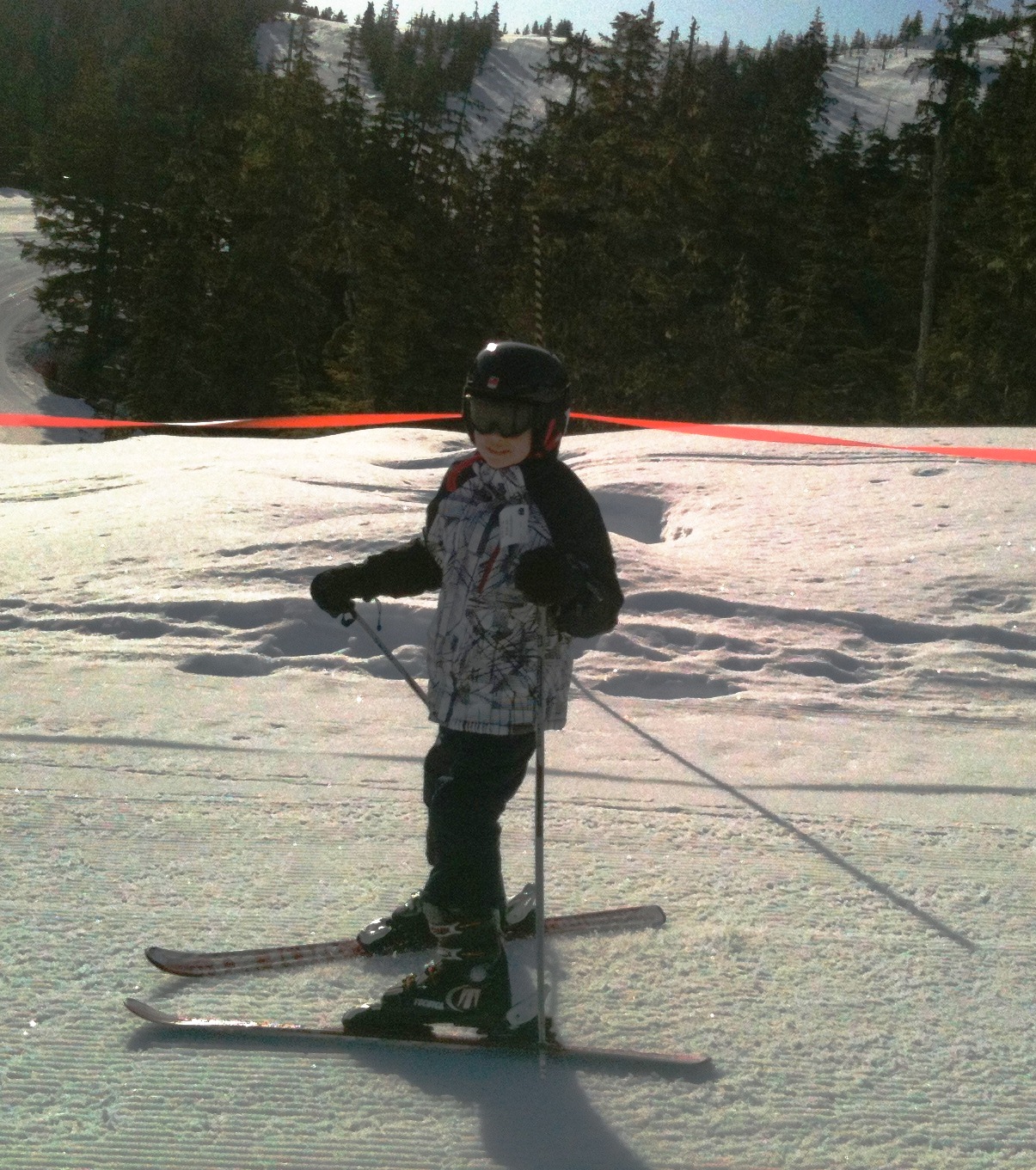
Cameron Okins prefers skiing; lessons also offered through the B2B program.
The Books To Boards program at Eaglecrest Ski Area is in its fourth season, offering a select group of Juneau middle school students a chance to learn to ski and snowboard for free.
It’s sponsored by the Eaglecrest Foundation, a non-profit corporation formed to raise, invest and manage donations for programs and projects at Eaglecrest that are not funded by the City and Borough of Juneau, which owns the ski area.
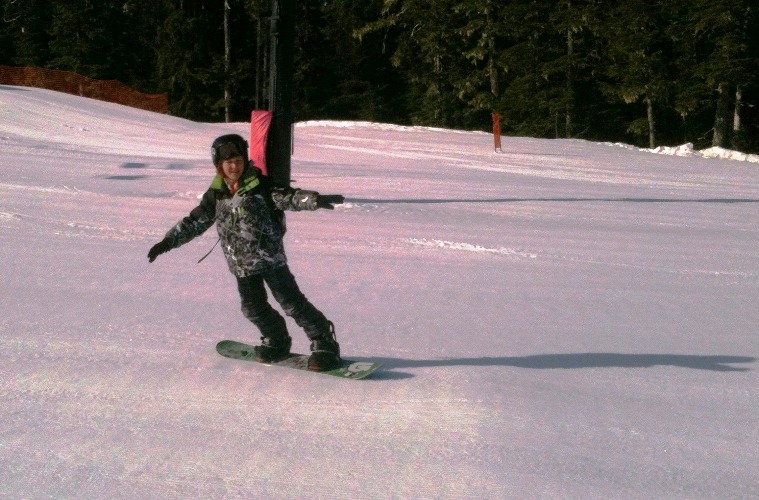
KTOO volunteer Amanda Compton tagged along with two Books to Boards participants, brothers Cameron and Brenden Okins, at the end of the 2011-2012 season.
Brenden Okins learned how to snowboard through the B2B program at Eaglecrest.
The proposed Mendenhall Valley library has its first funding toward planning, permitting and design.
The Friends of Juneau Public Libraries have raised a million dollars toward construction of the new library. The Assembly Monday night approved the initial $225,000 installment.
The Friends group operates the Amazing Bookstore in the Airport Shopping Center and uses proceeds from book sales to enhance library programs and services.
Paul Berans is president of the Friends of the Library Board of Directors.
“How many books does it take to make a million dollars when you sell them at 10 cents a book? Or, with inflation now, 25 cents a book,” he said.
In an executive proclamation, Mayor Merrill Sanford recognized the Friends of Public Libraries for exceptional volunteer effort and dedication. Berans says about 50 volunteers a week work at the Friends’ bookstore, for anywhere between two and a half hours to 20 hours a week.
Former CBJ Deputy Manager Donna Pierce has been hired to manage the new library project, to be built at Dimond Park next year.
Juneau voters in October approved the use of sales tax revenue for library construction. The total cost of the project is estimated at $14 million and includes state funds.
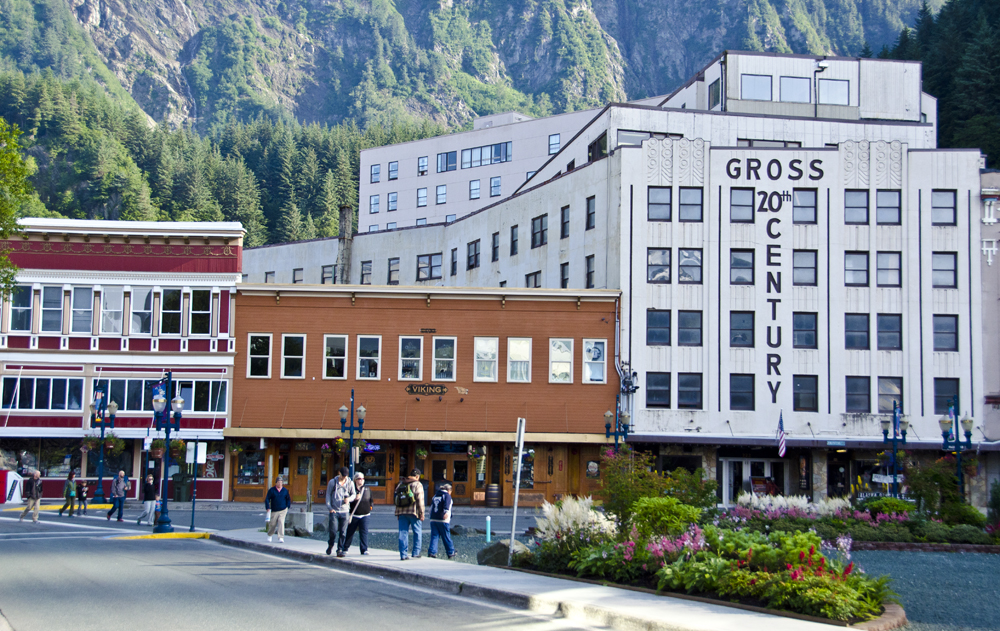
Tourists walk around downtown this past summer. (Photo by Heather Bryant/KTOO)
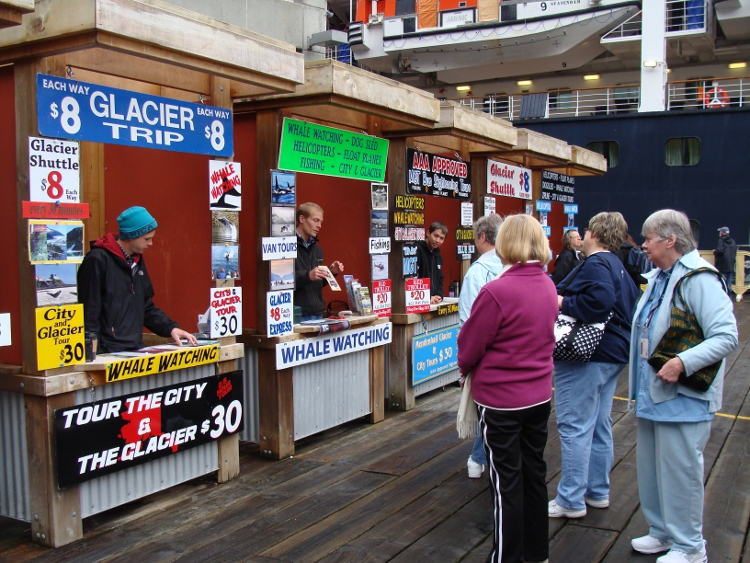
It will soon be illegal to hawk goods, services, tours, or food and beverages in Juneau’s historic district.
The Juneau Assembly has approved an ordinance to prohibit commercial sales on downtown streets. The tourism industry asked for the law.
Princess Tours spokesman Kirby Day told the Assembly Monday that hawking is on the rise in Juneau during tourist season, and he wants to nip it before it becomes a problem.
“I mean somebody walking up and down the sidewalk trying to sell a watch, saying ‘go back to my store,’ those types of things,” Day said.
Downtown Business Association President Larry Spencer said a poll of board members indicated they were unanimous in their support for the new law, which goes into effect next month. Spencer said sidewalk sales reduce a visitor’s experience in Juneau.
“I think things are confusing enough when people get off the ship to not add another layer of tenseness to the atmosphere,” Spencer said.
And Spencer said downtown businesses hawking their wares also disturb Juneau residents.
“We develop a bad reputation I think with our locals when they come downtown in the summer time,” he said.
CBJ Attorney John Hartle said the law is patterned after a Skagway ordinance that has already been upheld by the Alaska Supreme Court.
“No mobile sandwich boards, no passing out leaflets and brochures on the street, or more importantly, badgering people,” Hartle explained. “This restricts person to person effort solely intended to interest pedestrians in, or to solicit the participation of pedestrians in commercial transactions for private profit with a business.”
Hartle said it’s difficult to draw the line between expressive speech protected by the First Amendment and commercial speech, but the key is the ability to sell another way .
Vending booths like these would still be legal in Juneau under a recently passed ordinance prohibiting hawking on city streets. Photo by Casey Kelly/KTOO.
“If someone is supporting their religious cause and they’re selling little pictures for a dollar or something like that, you just can’t prohibit it, that’s what the First Amendment is for. But things like selling tours, the Supreme Court has said that’s commercial speech. It’s more robust. It has money behind it,” he said.
Commercial businesses can advertise, he said.
“They’ll find another way. They’ll go on the radio, they’ll get on the tour ships, and they’ll put up a sign. They’ll find another way to get to those customers,” Hartle said.
The new law does not prohibit street vendors that already have city permits, unless they leave their booth and start soliciting sales on the sidewalk. It also does not affect panhandling, which is allowed but restricted as to where, when and how it can take place.
The ordinance limits the ban on hawking to the downtown area. The sandwich board often seen selling furniture or pizza at McNugget intersection would not be affected.
Close
Update notification options
Subscribe to notifications
Subscribe
Get notifications about news related to the topics you care about. You can unsubscribe anytime.