Community

Tlingit elder, Sealaska board member Clarence Jackson dies

Clarence Jackson
Clarence Jackson. Photo courtesy Sealaska Corporation.

Tlingit elder and original Sealaska Native Corporation board member Clarence Jackson passed away Thursday at the age of 78.

He’s being remembered for his contributions to the Native land claims movement, and for being an ambassador for Tlingit culture in both the business world and his personal life.

Sealaska Heritage Institute President Rosita Worl says Jackson relished comforting people in times of need. He served as master of ceremonies at the memorial service for the late Reverend Dr. Walter Soboleff in 2011.

“He became like our ambassador from Sealaska, where he would attend all of the funerals, all the memorials,” Worl said. “He was there to comfort clans and the family of those who had lost someone.”

Jackson was born in Kake in 1934. He lived there most of his life, attending Sheldon Jackson High School in Sitka, before moving back to the village, where he was a fisherman and operated a small store.

Worl says he was a great fisherman, who loved boats.

“We always say, it is as if the spirits of the animals know him and they give themselves to those kind of people who have those good spirits,” she said. “So, yes, he was a great fisherman.”

In the 1960s, Jackson was involved in the Alaska Native claims movement as a delegate to the Central Council of Tlingit and Haida Indians. He served as Central Council president from 1972 through 1976.

Also in 1972, Jackson signed the articles of incorporation for Sealaska, the regional Native Corporation for Southeast, created under the Alaska Native Claims Settlement Act. He was the only board member to serve continuously from the time Sealaska was founded.

Current board chair Albert Kookesh first met Jackson when he joined the board in 1975. He says they quickly became friends.

“We’re both from villages right next to each other. He’s from Kake and I’m from Angoon,” said Kookesh. “He knew my father and he knew Walter Soboleff, my uncle. So I got immediately scooped up into his little circle.”

Kookesh says Jackson was a champion of village life and traditional culture on the board, something he attributed to being raised by his Tlingit speaking grandparents.

Kookesh says his ability to speak both Tlingit and English fluently made Jackson a valuable asset to the company.

“His Tlingit background, and his Tlingit stories, and his Tlingit upbringing gave him a really good sense of oration,” Kookesh said. “Very, very articulate. Not somebody who went to college, not somebody who went to law school, not somebody who went to graduate school. But somebody who went to the upper learnings of the Tlingit culture.”

When the corporation established the nonprofit Sealaska Heritage Institute in 1980, Jackson became one of its trustees and served as chair of the Council of Traditional Scholars.

Worl says the council was instrumental in identifying the core cultural values that guide the institute to this day.

“Clarence would remind us always, this is what makes us Native people, it’s our cultural values,” Worl said.

Jackson talked about the importance of preserving those values at Celebration 2012, the biennial cultural and educational event sponsored by the Heritage Institute.

“We’re strengthening our culture,” Jackson said. “We might hear a new song here and there this Celebration. But it’s a shoring up time to not be doing anything just for show. But to show the young people, this is the way it is.”

Jackson spent much of the past two months in Seattle receiving cancer treatment. He recently returned to Alaska, and died surrounded by friends and family on Thursday.

A service will be held at the Elizabeth Peratrovich Hall (former ANB Hall) in Juneau on Saturday at 5 p.m.

A video of Clarence Jackson from Celebration 2012:

Clarence Jackson’s last address at Celebration. from Kathy Dye on Vimeo.

Original post:

Tlingit elder and original Sealaska Corporation board member Clarence Jackson died Thursday after a battle with cancer. He was 78.

Jackson was born in 1934 in Kake, where he lived most of his life. He attended Sheldon Jackson High School in Sitka, and was involved in the Alaska Native claims movement in the 1960s with the Tlingit and Haida Central Council.

He served as Central Council president from 1972 through 1976. Also in 1972, he signed the articles of incorporation for Sealaska, the regional Native Corporation for Southeast, created under the Alaska Native Claims Settlement Act.

Jackson had been the only board member to serve continuously since Sealaska was founded. He also served as a trustee for the Sealaska Heritage Institute from the time it was created in 1980.

SHI President Rosita Worl says Jackson was an ambassador of Tlingit culture in the board room and his personal life.

“He lived in the village and he said that it is our responsibility to make sure that our people can continue to live in their homeland,” Worl said. “So, even with all of our businesses and investments, even if they were doing well outside of Alaska, he was always reminding us that we had a responsibility to our people in the villages.”

After the Heritage Institute was created, Jackson not only served as a trustee, but also as chairman of the Council of Traditional Scholars.

Worl says the council was instrument in identifying the core cultural values that guide the institute to this day.

“I remember some of the almost philosophical discussions they would have about how much change is acceptable, how much change can we allow in our society before we become not Tlingit,” Worl said. “And Clarence would remind us always that this is what makes us as Native people. It’s our cultural values.”

Jackson was a lifelong commercial and subsistence fisherman, who also ran a store in Kake and served as a director of Kake Tribal Corporation.

Worl says Jackson enjoyed telling stories and making people laugh. He was often the person who helped organize memorial services for elders who died, including his longtime friend the Reverend Dr. Walter Soboleff, who passed away in 2011.

Worl says Jackson spent much of the past two months in Seattle getting cancer treatment. But he was able to make it back to Alaska, where he died surrounded by friends and family on Thursday.

Services are pending.

Update: Juneau man falls through ice at Mendenhall Lake

Don Thomas, Peter Ord and Scott Fisher work to pull the snow machine back onto solid ice Thursday afternoon.
Don Thomas, Peter Ord and Scott Fischer work to pull the snow machine back onto solid ice Thursday afternoon. (Photo by Heather Bryant/KTOO)

A Juneau man is warning of unsafe ice conditions after going into the water at Mendenhall Lake on Wednesday.

Scott Fischer of the Juneau Nordic Ski Club was preparing to groom part of the lake when his snowmachine got bogged down in the slushy overflow. The snowmachine sank at least two feet on a partially-submerged layer of ice and Fischer was forced to try swimming out.

“I did get about twenty-feet and, finally, I was able to scoot myself up on to the ice,” remembers Fischer.

“It broke under me a couple times, but eventually it held me. I was able to crawl on my stomach for about twenty feet, and then get to my hands and knees, and then eventually to my feet,” said Fischer.

“And then I walked ashore.”

Even though temperatures ranged from the single digits to the twenties this week, recent snowfall may have insulated the overflow and prevented it from freezing up. The snow also hindered a visual assessment of the lake ice.

Fischer recommends staying off Mendenhall Lake because of the dangerous conditions that will only get worse with rising temperatures.

Retrieving the snowmobile

Fischer, Peter Ord, Del Carnes and Don Thomas returned to the snowmachine on Thursday, with a plan to use a helicopter to hoist it out, but fog and low clouds delayed the recovery.  While they were waiting for the clouds to lift, Ord and Fischer decided to try a come along winch.

“So we put in four ice screws about 100 feet away from the machine and attached kind of a very simple, cheesy little come along to the ice screws and a rope to the snow machine and just started working it forward,” Ord said. “It actually moved quite easily. So with 45 minutes of repeating and resetting the come along we had it (snowmobile) on top of the ice. ”

Ord calls the helicopter idea “over-thinking” the problem.  “But in the beginning we were just too nervous about how thick the ice was underneath the machine.  There was two feet of water on top of that ice,” Ord says.

The snowmobile was submerged up to the seat, with the top part of the seat, the handlebars and upper part of the cowling exposed.

Ord says once Don Thomas measured the ice under the snowmobile and found it was really quite thick, they were less concerned.   When the machine was finally pulled out, it was towed to shore and taken to Carnes’ shop for repair.


Early morning earthquake rumbles near Craig

The quake struck about 60 miles west of Craig.

Many Southeast Alaska residents felt an earthquake early this (Thursday) morning.

The quake struck west of Craig and south of Sitka just before 1 a.m.

The West Coast and Alaska Tsunami Warning Center in Palmer reported shortly afterward that there was NO tsunami danger.

The quake’s magnitude was estimated between 5.5 and 6.0, with an epicenter about 100 miles northwest of Dixon Entrance. Shaking was felt in Sitka, Wrangell and other parts of Southeast.

The quake comes nearly a month after a magnitude 7.5 temblor that put most of Southeast Alaska under a tsunami warning. In that instance, which happened around midnight January 4th into the 5th, only minimal changes in sea level were reported.

Mayor’s Arts Award goes to former mayor

Former Juneau Mayor Bruce Botelho has received the very arts award he encouraged.

Botelho has been named Advocate for the Arts in the Juneau Arts & Humanities Council’s Sixth Annual Mayor’s Awards.  As mayor, Botelho suggested the council create the annual awards.  He is among eight Juneau residents to receive honors this year.

Members of the Arts and Humanities Council make the selection from community members’ nominations. Nancy DeCherney is executive director of the council.

“And what we’re trying to look for is people who have made some form of serious impact,” DeCheryney says, “perhaps one that’s been unnoticed, but deserves being noticed, using the arts in some way to benefit the entire community.”

Like Botelho, who as mayor prompted the council to create the annual awards and to open the Juneau Arts & Culture Center in the old National Guard Armory. DeCherney credits his leadership for seed funding for the proposed JACC expansion. He’s been a council member, on the board of the Juneau International Folk Dancers, and part of other local arts initiatives.

“It’s kind of fun to give him the award that he kind of thought up himself,” DeCherney says.

This year’s Artist award goes to Christy NaMee Ericksen, the creator and force behind a monthly Wooosh Kinaadeiyi Poetry Slam.

Gastineau Elementary School teacher Shgen George is receiving the Arts in Education award for her use of arts to help children learn history, social studies and math.

Juneau Empire “Arts & Culture” Editor Amy Fletcher gets the Professional Leadership in the Arts award.

Violin teacher Guo Hua Xia teaches youngsters violin, including in the Juneau Alaska Music Matters program at Glacier Valley Elementary School.  He is the recipient of the Mayor’s Award for Visionary Application of the Arts.

Kathy Ruddy is the Volunteer for the Arts, for her service on numerous local arts boards over the years.

In its 39th year, the Alaska Folk Festival gets the Arts Organization award.  The Lifetime Achievement in the Arts award goes to former Juneau Arts and Humanities Council Director Natalee Rothaus.

DeCherney describes the recipients as quietly going about their work in very creative but not real public ways.  The annual Mayor’s Awards for the Arts will be presented by Juneau Mayor Merrill Sanford at the Wearable Arts Festival on Feb.  9.

Public weighs in on draft management plan for Auke Lake

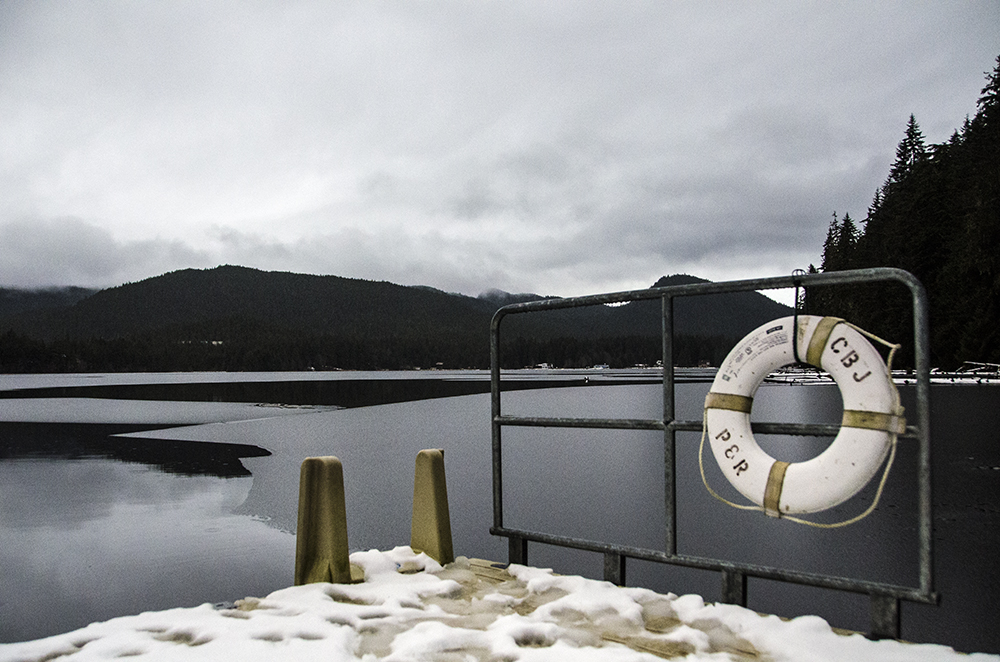
A CBJ Parks and Rec life ring hangs on the floating dock at Auke Lake.
A CBJ Parks and Rec life ring hangs on the floating dock at Auke Lake. (Photo by Heather Bryant/KTOO)

Education and enforcement were familiar themes of public testimony last night (Tuesday) on a draft Auke Lake Management Plan that would prohibit jet skis, water skiing, wake-boarding and other high speed activities on the small lake.

Assembly Chambers were packed as the Parks and Recreation Advisory Committee, or PRAC, listened to three hours of testimony from 34 different people.

Predictably, most of them said a proposed 10-horsepower limit was too drastic a response to an accident last summer that resulted in the death of a teenager being towed by a jet ski.

The city last fall embarked on a review of current regulations put in place in 2007 after a long public process to develop a management plan for the lake.

Jeff Bush was on the Juneau Assembly at the time the ordinances were passed. He said the key management objective then was to retain multiple use of the lake, which requires enforcement.

“I think the Assembly made clear in ’07 that enforcement was important, and the objective of retaining the user groups is important. So I think it is up to the city to devote the necessary resources to meet those standards,” Bush said.

Throughout the current review, CBJ Parks and Recreation staff has said the city has little ability to enforce problems that occur at the lake. Parks Superintendent George Schaff — one of the authors of the draft plan — said it would cost the Juneau Police Department more than $70,000 annually to patrol the lake. The plan recommends the parks department create a seasonal ranger position.  While that would be cheaper, it, too, is not in the budget. There would be start-up costs for both, since neither JPD nor Parks and Rec have marine units. A seasonal park ranger would provide enforcement throughout the Juneau park system.

The draft Auke Lake Management Plan was released earlier this month. While this was the first public testimony since then, the city has held four public meetings and kept the online comment period open for two-months.

The plan says Auke Lake’s size is not adequate for high horsepower watercraft. It also would prohibit towing. That assertion is based on the U.S. Interior Department’s Water and Land Recreation Opportunity Spectrum, or WALROS, used to determine the number of vessels that can reasonably and safely use a lake. Only 70 acres of the 165-acre Auke Lake are considered useable.

Many of those testifying said WALROS should be used to develop a public task force to study the lake even more. Matthew Mielke went to the WALROS handbook.

“The very beginning of the WALROS handbook says the first step you take is to compile a group ranging in different agencies, coming from different experiences, different levels of professionalism in this and people who can be considered experts in this field,” Mielke said.

WALROS became a source of denigrating the draft plan as people used it to come up with other interpretations of the carrying capacity of Auke Lake.

But not all comments opposed the plan. Carl Bottorf lives on Glacier Highway across from Auke Lake, and said he has a great view of what happens there.

“Sometimes it seems like a safe place out there and other times there’s a lot of due disregard. Being a health care professional myself and having special knowledge of what occurred the day of the accident as far as injuries, in my mind you have to ask the question is it not worth it to have more control so you prevent what happened that day again. That was tragic,” Bottorf said.

On June 23rd, sixteen-year-old Savannah Cayce was being towed on an inner tube behind a jet ski. The tube collided with another jet ski. Her father, Glen Haight, told PRAC members he appreciates many of the comments he has heard and read since the Auke Lake review started.

“And some refer to the lake management process that is underway as a knee-jerk reaction. Let’s be clear about a couple of things. Her death was preventable. It was caused by reckless human behavior and negligence,” Haight said.

Haight said Savannah’s brain was crushed in the accident; she was declared brain dead two days later.

“Despite the city’s desire in 2007 to improve access to Auke Lake so that people could have more fun, and despite responsible marine motorized users best intentions to self-monitor it simply has not been adequate, not even close,” Haight said.

The Auke Lake plan rejects a requirement that lake users take a boater safety class. Parks superintendent Schaff called it “virtually impossible” to enforce.

The PRAC meets again next week to determine what changes — if any — should be made to the draft Auke Lake Management Plan. But no more public testimony will be taken on the issue until it reaches the Juneau Assembly.

The PRAC is an advisory board to the Assembly, which will consider the board’s recommendations in changing or retaining Auke Lake management policies.

Juneau makes it to the top of a surprising list

Downtown Juneau. (Photo by Heather Bryant)

When you think of cities with a lot of restaurant options places like Seattle, San Francisco, New York or New Orleans often come to mind.

However, a new study says that Juneau tops the list in terms of the most restaurants per capita in the U.S.

Juneau boasts 112 restaurants, which means there are 36 restaurants for every 10,000 people in the Capital City.

NPD group is an industry market research firm that did the study. According to their press release, the number of restaurants nationwide increased by 4,442 between the fall of 2011 and fall 2012.

They say the total number of restaurants in the U.S. is now 616,008. Their survey includes restaurants that were open as of Sept. 30, 2012.

Approximately 55 percent of the restaurants counted in the survey were independently owned.

Juneau, is followed by Salisbury, Maryland and Bend, Oregon then Panama City, Florida and New York City for the top five most “restaurant-crazy cities,” according to the Huffington Post.

Anchorage was number 7 on the list with 1,012 restaurants which equals roughly 24 restaurants per 10,000 people.


Site notifications
Update notification options
Subscribe to notifications