Energy & Mining

Oil and gas lease sale in Alaska’s Arctic National Wildlife Refuge draws no bids

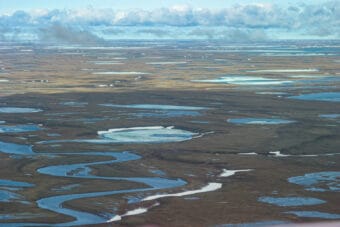
Cottongrass wafts over the tundra in the Arctic National Wildlife Refuge on Sept. 2, 2006. (S. Hillebrand/U.S. Fish and Wildlife Service)

No bids were received in the second congressionally managed oil and gas lease sale in the Arctic National Wildlife Refuge, the Department of the Interior announced on Wednesday.

Had any been received, bids were scheduled to be opened on Friday by the U.S. Bureau of Land Management. That Interior agency was charged with managing the refuge leasing program created through a 2017 tax bill passed by a Republican-controlled Congress and signed by President Donald Trump in his first term.

The absence of bids this time, after very few bids were received in the first lease sale held four years ago, backs up Biden administration officials’ beliefs that drilling in the refuge is bad policy, said a statement released by the Interior Department.

“The lack of interest from oil companies in development in the Arctic National Wildlife Refuge reflects what we and they have known all along – there are some places too special and sacred to put at risk with oil and gas drilling. This proposal was misguided in 2017, and it’s misguided now,” Acting Interior Secretary Laura Daniel-David said in the statement. “The BLM has followed the law and held two lease sales that have exposed the false promises made in the Tax Act. The oil and gas industry is sitting on millions of acres of undeveloped leases elsewhere; we’d suggest that’s a prudent place to start, rather than engage further in speculative leasing in one of the most spectacular places in the world.”

This week’s lease sale follows one held on Jan. 6, 2021, that drew little bidding, and none from large oil companies. Most bids in that sale were from the Alaska Industrial Development and Export Authority, an Alaska state development agency. AIDEA’s head disclosed Wednesday that the agency and the Biden administration have reached an agreement to ensure that the leases acquired in that first sale will not be resold to other parties.

Supporters of oil development in the refuge blamed the Biden administration for the lack of bids this time, saying it put too many restrictions on oil development in the refuge, sometimes referred to as ANWR.

“This is no surprise. From Day 1, Joe Biden and (Interior Secretary) Deb Haaland have sought to illegally shut down any chance of developing ANWR and have said as much. They and their eco-colonialist allies have made every effort to delay, and ultimately kill, any chance of successful ANWR lease sales and have canceled the voices of the Iñupiat Native people of Alaska in the process,” U.S. Sen. Dan Sullivan, R-Alaska, said in a statement.

Sullivan’s statement referred to the pro-drilling stance of many of the North Slope’s Iñupiat people. He said the second lease sale was structured “to circumvent the federal law Congress passed and President Trump signed” by closing off nearly three-quarters of the coastal plain to new leasing.

“The good news is we will soon be working with the Trump administration which, unlike Biden-Harris, has a proven track record of responsible Alaska resource development, faithfully implementing the laws passed by Congress, and respecting the voices of the Iñupiat people of the North Slope who strongly support the ANWR leasing program. January 20th can’t come soon enough,” Sullivan added.

Trump, who won another term in office, has argued for oil drilling in the refuge. He has claimed, falsely, that it could hold more oil than is in Saudi Arabia.

An aerial view of ANWR's coastal plane and the Canning River
The Canning River, seen here in 2018, flows from the Brooks Range into the Beaufort Sea along the western edge of the Arctic National Wildlife Refuge. The sole tract that Regenerate Alaska acquired in the 2021 lease sale — and has now relinquished, lies along the Canning River. (Photo by Lisa Hupp/U.S. Fish and Wildlife Service)

The incoming Trump administration has multiple avenues to pursue oil development in the refuge, though future attempts might be met with more litigation. Republican-led efforts to open the coastal plain to drilling in past decades were blocked, either by Congress or by a veto issued by then-President Bill Clinton. Along with Clinton, past Democratic presidents have consistently opposed opening the refuge to oil development.

Clashing Gwich’in, Iñupiat views

The debate over oil development in the Arctic National Wildlife Refuge has divided Alaska Natives.

North Slope Iñupiat organizations argue that refuge development offers important economic opportunities, including the possibility of drilling on Native-owned land within the refuge boundaries. Iñupiat organizations have opposed Biden administration Arctic policies, and in the 2024 presidential election, voters on the mostly Iñupiat North Slope favored Trump over Vice President Kamala Harris by about 10 percentage points, a contrast to past patterns of Alaska Indigenous support for Democratic presidential candidates.

In a statement, Nagruk Harcharek, president of the advocacy organization Voice of the Arctic Iñupiat, called the Department of Interior statements Wednesday “deeply insulting” to the people of the North Slope. Voice of the Voice of the Arctic Iñupiat has supported North Slope oil development and opposed Biden administration policies.

In his statement, Harcharek reiterated that criticism of the Biden administration.

“This last-gasp salvo by a departing administration is no way to create durable policy affecting Indigenous lands, and we urge the Trump-Vance administration to take a different, more inclusive approach when it assumes office in less than two weeks from today, hopefully resulting in more durable policy for the North Slope, the State of Alaska and the nation,” Harcharek said in his statement.

However, some of the staunchest opposition to oil development comes from the Gwich’in Athabascan people of northeastern Alaska and neighboring parts of Canada. The Gwich’in have long been high-profile opponents of Arctic refuge oil development, citing their dependence on and cultural ties to the Porcupine Caribou Herd that uses the refuge’s coastal plain for giving birth to calves.

“A second failed lease sale in the Arctic Refuge also clearly demonstrates that even oil companies recognize what we have known all along: drilling in the Arctic Refuge is not worth the economic risk and liability that results from development on sacred lands without the consent of Indigenous Peoples,” said a statement issued by the Gwich’in Steering Committee, a coalition of Gwich’in tribal members in Alaska and nearby areas of Canada.

“Today marks a significant success in protecting the Arctic Refuge,” Curtis Gilbert, first chief of the Arctic Village Council, a Gwich’in Tribal government. “The total failure of the second lease sale demonstrates the overwhelming public opposition to oil and gas drilling in the Refuge. We continue to maintain our unrelenting opposition to any development on these sacred lands– grounds that are not only central to our cultural and spiritual identity, but fundamental to the subsistence way of life that has sustained our people for countless generations.”

Environmentalists who have fought against refuge drilling for decades joined the Gwich’in in celebrating the lack of bids in the lease sale.

“The oil industry’s glaring lack of interest in this sale – combined with the undeniable realities of climate change and massive public opposition to drilling in the Arctic Refuge – should make it obvious to everyone that there is no legitimate reason for the federal government to have a leasing program for the sacred land of the coastal plain,” Meda DeWitt, Alaska senior manager for The Wilderness Society, said in a statement. DeWitt is Alaska Native, though neither Gwich’in nor Inupiat.

“This charade of lease sales in the Arctic Refuge would be comical if drilling weren’t so dangerous to one of our planet’s most spectacular ecosystems,” Cooper Freeman, Alaska director at the Center for Biological Diversity, said in a statement. “While Trump raves about turning the Arctic Refuge into Saudi Arabia, even the most unscrupulous oil companies and banks have stayed clear of the refuge’s precious coastal plain. It’s time to put the Arctic Refuge oil fantasy to bed and stop fleecing American taxpayers.”

In contrast, the state government of Alaska and most Alaska politicians have long supported drilling in the refuge. The first refuge lease sale was held on Jan. 6, 2021, with AIDEA as the main bidder.

AIDEA wound up with seven leases in the refuge coastal plain, but those were later canceled by the Interior Department. The department, which had been sued by Gwich’in and environmental groups for holding the first lease sale, concluded that environmental studies conducted by the previous Trump administration were inadequate. As a result, the department eventually canceled the leases. It conducted a new environmental study that resulted in a set of new environmental protections attached to this second lease sale.

The only two other leases sold in 2021, to a small oil company and to an Anchorage real estate investor, were voluntarily relinquished by those bidders.

AIDEA continues planning for development

The state and AIDEA, its development organization, are engaged in legal battles against the Biden administration over what they say are unfair and illegal restrictions on oil development.

AIDEA has filed multiple lawsuits against the Biden administration over its policies in the refuge, with actions in 20212023 and 2024. The 2021 complaint was dismissed in 2023 by U.S. District Court Judge Sharon Gleason.

AIDEA’s board in November approved spending up to $750,000 to continue to press its legal claims concerning Arctic refuge oil drilling and another controversial development, the Ambler Access Project, which would put a road over 200 miles through the Brooks Range foothills to an isolated mining district.

Randy Ruaro, AIDEA’s executive director, said the organization had two reasons for declining to bid this time.

One is that Interior’s new terms make bidding unattractive, not just to AIDEA but to other entities, he said.

“The lack of bidding is no surprise to us, because the terms and conditions imposed by the Department of Interior are so onerous and so strict that we don’t believe development can occur,” he said.

Another reason for declining to bid is the newly struck agreement with the Biden administration that ensures that AIDEA’s seven refuge leases will not be sold off, Ruaro said.

“AIDEA will be protected. Its lease rights will be protected from being sold again to someone else,” he said.

That agreement was reached just in the past few days, Ruaro said.

Whatever legal limbo may exist for the leases, AIDEA believes they remain valid and valuable, he said.

“We think there’s billions of barrels of recoverable oil on our leases and in the 1002 area,” he said, referring to a legal name for the refuge’s coastal plain. “They’re economically worth recovering, can be economically developed. And so we’re hopeful that the Trump administration will correct the errors and mistakes of the Biden administration and follow the statute and hold a sale that has terms and conditions that allow for the development of ANWR.”

The state of Alaska has also sued to overturn Biden Arctic refuge policies. A complaint filed on Monday in U.S. District Court in Anchorage seeks to overturn the environmental stipulations applied to the second lease sale, which the state contends make oil development there economically impossible.

Gov. Mike Dunleavy, in a statement about the lawsuit released on Tuesday, blasted what he said was the Biden administration’s “continued and irrational opposition” to Arctic oil development – and, like Ruaro, said he looked forward to a reversal under a new Trump administration.

“We have already heard comments from the incoming president that his administration will thankfully take a different tack and open up those areas that are meant to be developed. But unfortunately, we can’t wait for that—we have to challenge this unlawful action now,” Dunleavy, a longtime Trump supporter, said in the statement.

The state in July filed a different lawsuit against the Biden administration that sought billions of dollars in compensation for alleged losses incurred after refuge leases were canceled.

Why Alaska is trying to stop the feds from issuing drilling leases in the Arctic Refuge

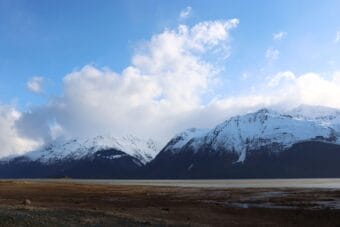
Sea ice in the Beaufort Sea, with the 1002 Area of the Arctic Refuge coastal plain, and the Brooks Range mountains, in the background to the south. (USFWS Photo)

Attorneys for the state of Alaska filed a lawsuit Monday to try to invalidate a federal lease sale for oil and gas drilling in the Arctic National Wildlife Refuge. The lawsuit says the Biden administration is offering so little land for lease and has put so many restrictions on it that the lease sale doesn’t comply with the law.

So the state, a stalwart supporter of drilling in the refuge, is asking a judge not to let the federal government issue leases to oil companies. The role reversal is the latest wrinkle in a long saga over what to do with the coastal plain of the refuge, in the northeast corner of Alaska.

After decades of hot debate in Congress, Sen. Lisa Murkowski championed a provision in a 2017 tax law mandating two lease sales, of at least 400,000 acres each, on the coastal plain of the refuge.

The first was held in 2021, in the final days of the Trump administration. As a measure of industry interest, it was a dud. None of the big oil companies offered a bid. Two private firms won leases but then relinquished them. The main bidder was the state-owned Alaska Industrial Development and Export Authority.

In 2023, the Biden administration cancelled the leases, saying the process was flawed.

The state, citing an earlier congressional estimate, said it was in line to get more than $1 billion in lease revenues, plus royalty payments and the indirect economic benefits that come with more industrial activity.

Bids for the second sale were due Monday, and they’re scheduled to be unsealed Friday. The state lawsuit notes that this time, the government made only a third of the coastal plain available for bidding.

“Worse,” the legal complaint says, “it makes the lands available for lease impossible or impracticable to develop by significantly restricting surface use and occupancy. In essence, the [lease sale conditions] are designed to inhibit and deter, rather than promote, development of the Coastal Plain’s mineral resources.”

The Biden administration says its restrictions are the best way to balance all of the laws it has to follow. Before the 2017 law ordering lease sales, Congress set other goals for the Arctic Refuge, including conserving birds and wildlife, and protecting subsistence hunting and fishing opportunities.

If the lawsuit succeeds the Trump administration could get a do-over to offer more land for lease and under terms that would facilitate drilling.

Alaska nears agreement with private company to lead state LNG project

This illustration shows a rendition of what the liquefaction plant in Nikiski could look like if the Alaska LNG project is completed as planned. (Image courtesyAlaska LNG project.)

The state corporation spearheading an effort to build a $44 billion natural gas pipeline between the North Slope and Nikiski says it is finalizing an agreement with a private company to lead the project.

Alaska Gasline Development Corp. President Frank Richards shared the development during an energy press conference with Gov. Mike Dunleavy on Monday in Anchorage.

“Today, after 10 years of planning, engineering and permitting, I’m announcing that AGDC has reached an exclusive framework agreement with a qualified energy company to privately lead and fund the development of the Alaska LNG project,” he said.

Richards says AGDC won’t release the name of the company until a final agreement is reached. But he says the company has “extensive U.S. and international natural gas and LNG experience.”

“The terms of the framework agreement have been negotiated,” he said. “The next step is for both parties to create legally binding development agreements that will move the project forward.”

Tim Fitzpatrick, the corporation’s spokesperson, said Monday’s announcement came after roughly eight months of discussions between AGDC and the unnamed company. AGDC is now exclusively working with the developer until contracts are final.

It’s been roughly a month since the Alaska Industrial Development and Export Authority approved a $50 million line of credit to update the project’s engineering and design work. Richards said Monday that move was “critical” to the framework agreement, which officials hope to finish soon.

“The sooner that this project is underway, the sooner Alaskans benefit from our North Slope natural gas for the long term benefits,” he said.

Construction of the 800-mile pipeline has been floated for decades. But high costs and questionable demand have stymied progress.

The project got new life after Russia’s invasion of Ukraine sent some countries in Europe looking to diversify their energy sources. And Dunleavy has celebrated what he anticipates will be a more accommodating federal government once President-elect Donald Trump is sworn in later this month.

Fitpatrick said the agreement will cover the full project cost, but that the state will have the option to chip in up to 25% of costs once a final investment decision is made. He says it would be up to Dunleavy and state lawmakers to decide whether the state wants equity in the final project.

On Monday, Dunleavy said he thinks there’s a “real opportunity” for the project.

“I’ve questioned it for years, to be perfectly honest with you,” he said. “And as I mentioned earlier, I’ve been hesitant to talk about it until there’s some real concrete, I think, steps going forward. But I think we’re entering a phase of reality for this pipeline.”

Richards says he expects to announce a final agreement within the next few months. Then, he says, work could start on front-end engineering and design — the last step before any construction could start.

Biden closes Northern Bering Sea to offshore drilling

Sea ice floats in the Bering Strait off Cape Prince of Wales. (UAF photo by Gay Sheffield)

WASHINGTON, D.C. — President Biden announced Monday that he is banning offshore oil and gas drilling in large swaths of federal waters, including 44 million acres off Alaska, in the Northern Bering Sea.

“In Alaska, dozens of Tribes have fought to protect the Northern Bering Sea, a vital ocean ecosystem that supports their traditional ways of life. Vice President Harris and I have listened,” Biden said in his announcement.

President Obama created the Bering Sea Climate Resilience Area (shown in green) in 2016 and closed most of the northern portion to oil and gas drilling. President Biden announced Jan. 6, 2025 that he is closing the remainder. (Image courtesy of White House)

The ban doesn’t cancel any planned lease sales or shut down active development. It continues to allow drilling in the central and western Gulf of Mexico, where 97% of U.S. offshore production occurs.

In Alaska, Biden’s order builds on a 2016 offshore withdrawal then-President Obama made. He created the Northern Bering Sea Climate Resilience Area and closed about half of it to oil and gas drilling. Biden is closing the rest of the area, using a provision of the 1953 Outer Continental Shelf Lands Act.

It’s not clear that incoming President Donald Trump can reverse the ban without an act of Congress. The law doesn’t have a provision for reversing a presidential withdrawal. In 2019, a U.S. District Court judge in Anchorage struck down Trump’s attempt to reverse Obama’s Bering Sea withdrawal.

Alaska’s new congressman issued a quick denunciation of Biden’s order, and of the president personally. In a social media post, U.S. Rep. Nick Begich noted the importance of Cook Inlet gas to Alaskans. Biden’s closure doesn’t extend to Cook Inlet.

New conservation program on Alaska’s North Slope to offset Willow drilling impact

Teshekpuk Caribou Herd animals graze in June of 2014 in the northeastern part of the National Petroleum Reserve in Alaska. The land around Teshekpuk Lake is considered key habitat for the herd, and a new right-of-way agreement gives Nuiqsut residents the authority to prevent development there. (Photo by Bob Wick/Bureau of Land Management)

As ConocoPhillips builds its huge Willow oil drilling project on the western side of Alaska’s North Slope, federal regulators and residents of the nearest Iñupiat village have struck a deal for a new type of environmental oversight to minimize impact of the development.

The U.S. Bureau of Land Management announced last week that it signed a right-of-way agreement with a partnership comprising the Nuiqsut city government, Nuiqsut’s tribal government and the Kuukpik Corp., the Inupiat village’s for-profit Native corporation.

The three entities, combined to form Nuiqsut Trilateral Inc., have authority over about 1 million acres of land encircling Teshekpuk Lake, the largest lake on the North Slope. The area is key habitat for the Teshekpuk Caribou Herd, among other wildlife populations.

The right-of-way agreement prohibits any new leasing, roads, any surface or subsurface exploration activities or oil-related gravel or sand mining on that parcel of land for the duration of Willow’s operations.

The purpose of the agreement, signed Dec. 17, is to “offset the impacts on the herd from the Willow Project by providing durable and long-term protection for the herd by prohibiting certain activities and facilities within the protected property for the benefit of the herd and the herd’s most important habitat,” according to the document.

A conservation right-of-way encircling Teshekpuk Lake, established through an agreement between the U.S. Bureau of Land Managment and Nuiqsut’s city government, tribal government and village for-profit Native corporation, is seen on this map. The map is from the signed right-of-way agreement. (Map provided by U.S. Bureau of Land Management)

Under the terms of the agreement, Nuiqsut Trilateral Inc. has the option to waive any or all of the restrictions.

Willow, which lies in the federally managed National Petroleum Reserve in Alaska, is set to become the westernmost producing oil field on Alaska’s North Slope.

Willow is expected to start producing oil in 2029, and output is expected to peak at 180,000 barrels per day. In comparison, total production of North Slope oil, which peaked in 1988 at over 2 million barrels per day, averaged 461,000 barrels a day for the 12 months that ended on June 30, according to the Alaska Department of Revenue.

The new right-of-way agreement does not establish an additional area of protection. The affected 1 million acres holds no active leases and is already part of the designated 3.65 million-acre Teshekpuk Lake Special Area, where development is limited, the BLM said. But it does establish a new type of protection that is led by the community.

Kuukpik said it was the entity that first suggested the right-of-way arrangement. Although the Native corporation opposes establishment of any new additional protected areas in the National Petroleum Reserve, the right-of-way concept puts conservation decisions in the hands of the local people and “is a completely community-led effort that BLM has adopted and supported from the ground up,” Kuukpik President George Sielak said in a letter sent to the BLM on Sept. 16.

Kuukpik has acknowledged that Willow development will “negatively impact” the Teshekpuk herd, and additional protections for the caribou were needed to gain the corporation’s support for the project, the letter said. Because of that, Kuupik proposed the arrangement as “an additive, forward-looking mitigation measure that was carefully designed specifically to offset Willow’s likely impacts to the herd by preventing oil and gas development during the life of the Willow Project in the core areas that were most vital to the herd’s continued survival and success,” the letter said.

ConocoPhillips’ North Slope acreage is seen in this map from a company fact sheet on Alaska operations. The map shows developments in the western part of the North Slope, including Willow and others in the National Petroleum Reserve in Alaska. (Map provided by ConocoPhillips)

The Biden administration approved Willow development in March of 2023, despite objections from environmentalists about potential climate-change impacts from the additional oil development. Nuiqsut’s tribal and city governments, now part of Nuiqsut Trilateral Inc., opposed Willow at the time, citing potential disruption of movement for the Teshekpuk herd and concerns that more industrialization would impede villagers’ traditional subsistence hunting and food-gathering practices. But the Nuiqsut governments have since changed their position on Willow.

While Willow is being built, ConocoPhillips has been developing several smaller production sites on the western side of the North Slope.

The newest is Nuna, which began producing on Dec. 17, a bit ahead of the expected early 2025 startup. It is a satellite in the Kuparuk River Unit, meaning its oil is processed at existing Kuparuk facilities. Nuna has 29 wells and is the 49th drill site to be developed in the Kuparuk unit, ConocoPhillips said.

Other new sites that started producing oil in recent years on the western side of the North Slope are ConocoPhillips’ Fiord West Kuparuk and Narwhal, both in the Colville River Unit on state land bordering the National Petroleum Reserve in Alaska. They started production in 2023 and 2022 respectively, a ConocoPhillips spokesperson said.

Dunleavy wants quick action by Trump to revoke Biden’s Alaska environmental policies

An aerial view of ANWR's coastal plane and the Canning River
The Canning River, seen here in 2018, flows from the Brooks Range into the Beaufort Sea along the western edge of the Arctic National Wildlife Refuge. The sole tract that Regenerate Alaska acquired in the 2021 lease sale — and has now relinquished, lies along the Canning River. (Photo by Lisa Hupp/U.S. Fish and Wildlife Service)

Gov. Mike Dunleavy is asking President-elect Donald Trump to immediately reverse the Biden administration’s Alaska environmental and tribal lands policies, claiming those policies hurt the state’s economy.

“Your election will hail in a new era of optimism and opportunity, and Alaska stands ready to and is eager to work with you to repair this damage wrought by the previous administration, and to set both Alaska and America on a course to prosperity,” Dunleavy said in a cover letter sent on Nov. 15, along with a 27-page document detailing his desired Alaska policy changes, which was publicly released on Monday.

Dunleavy’s policy document said that Trump, as soon as he returns to the White House, should issue an Alaska-focused executive order that removes restrictions on oil development in the Arctic National Wildlife Refuge and the National Petroleum Reserve. In addition, the document urged Trump to reinstate federal support for a controversial road stretching more than 200 miles through the Brook Range foothills to the isolated Ambler mining district and reverse the ban on new roads in Southeast Alaska’s Tongass National Forest, among other policy changes.

“It is essential that the Alaska specific Executive Order be issued as soon as President Trump takes office. The Biden Administration’s assault on Alaska was carried out through a multitude of official agency actions; reversal of these actions must comply with time-consuming administrative procedures,” said Dunleavy’s policy document, titled “Alaska priorities for federal transition.”

Additionally, Dunleavy wants Trump to create a cabinet-level task force and six new oversight positions to make sure that various federal agencies adhere to the pro-resource-extraction policy mandates. The newly hired officials would oversee the Department of the Interior, Department of the Army, Department of Commerce, Environmental Protection Agency and the Office of Management and Budget.

In his cover letter, Dunleavy accuses the Biden administration of “destroying economic opportunity” in Alaska.

However, Alaska’s economy grew during Biden’s term and shrank during the first Trump term, as measured by gross domestic product. It grew at an annual rate of 3.3%, adjusted for the federal inflation rate, in the first three and a half years of Biden’s presidency. It shrank by an inflation-adjusted annual rate of 1.8% in the four years of Trump’s first term, according to statistics from the Federal Reserve Bank of St. Louis.

Jeff Turner, Dunleavy’s communications director, said Biden’s presidency harmed Alaska, nonetheless. “The dozens of sanctions it has placed on Alaska are strangling future economic growth and denying the state the ability to support itself with revenue and jobs created by developing our natural resources,” Turner said by email.

Dunleavy’s transition plan was sent to the Trump team a month ago, along with the cover letter, Turner said.

A representative of one environmental group vowed to fight against Dunleavy’s priorities for the new Trump administration.

“We’re definitely going to be providing pushback to the wish list,” said Matt Jackson, Alaska state senior manager for The Wilderness Society.

The actions that Dunleavy wants Trump to take may not be legal, Jackson said.

“Legality is not necessarily a top priority for either of these leaders. We may be seeing more and more illegal rollbacks, law be damned,” Jackson said. “We’re prepared.”

In at least two cases, the Biden administration has taken action on items that Dunleavy lists as Alaska priorities.


Dunleavy asked the Trump team to schedule a second Arctic National Wildlife Refuge lease sale, to follow the 2021 sale that failed to result in any exploration. The Biden administration has scheduled that lease sale for Jan. 9, though with restrictions that Dunleavy and other Alaska politicians oppose.

Dunleavy also asked the incoming administration to resurrect a controversial land trade proposal that would allow a road to be built in the Izembek National Wildlife Refuge; the Biden administration has already done that, recommending a trade in a supplemental environmental impact statement released a month ago. Public comments are now being solicited on that land trade plan.

Land into trust

Beyond removing limits on resource extraction in federal lands, Dunleavy wants the new Trump administration to abandon the current Interior policy in favor of putting some lands into trust for the benefit of Native tribes.

The issue has been a subject of dispute for several years. Advocates for putting land into trust say it is important to tribal sovereignty, but the idea has drawn opposition from the state. Tribes argue that they are entitled to control of some land, while the state has argued that the 1971 Alaska Native Land Claims Settlement Act put an end to such land transfers by giving lands and subsurface mineral rights to for-profit Native corporations rather than to tribes.

The Biden administration and the Obama administration before it supported the tribes’ trust lands aspiration, while the Republican administration, both under Trump’s previous term and under that of George W. Bush, opposed them.

The latest dispute over land-in-trust concerns a parcel in downtown Juneau that the Central Council of Tlingit and Haida Indian Tribes is seeking to be put into trust status. U.S. District Court Judge Sharon Gleason ruled in June that Interior does have the right to grant trust status for land parcels, though she said the process used by Tlingit and Haida had flaws and that the application should be resubmitted. The state appealed that ruling.

The Biden administration’s position favoring land-in-trust designations is dangerous to the state’s interest, Dunleavy said in his transition report. Because of that, “there is a risk that for the first time Alaska will have casino gambling thrust upon it by the federal government,” it said.

An attorney representing the tribes criticized Dunleavy’s proposal for an end to federal support for Alaska lands-in-trust transactions.

“We were disappointed to see Governor Dunleavy’s requests to the incoming Administration. Alaska Tribes should be treated the same as all other federally recognized Tribes, full stop,” attorney Erin Dougherty Lynch, managing attorney at the Native American Rights Fund’s Alaska office, said by email.

“This issue has been the subject of decades of litigation, including pending litigation that the Governor initiated. Alaskans would be better served if the Governor chose to work cooperatively with Tribal governments to protect our collective health, safety, and welfare. Other states have successfully navigated these issues and have built strong relationships with Tribal governments. Alaska should do the same,” Dougherty Lynch said.

Dunleavy, though an ardent Trump supporter, has not been selected for any position in the new administration. North Dakota Gov. Doug Burgum was Trump’s pick to head the Department of the Interior.

Site notifications
Update notification options
Subscribe to notifications