Energy & Mining

ExxonMobil says it plans ‘relatively limited’ Arctic investment

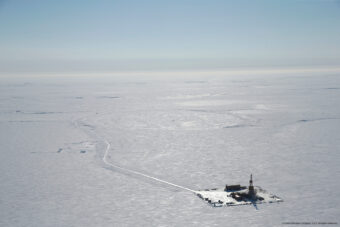
Point Thomson is approximately 60 miles east of Prudhoe Bay. (Photo courtesy Exxon)

ExxonMobil told shareholders last week the company doesn’t expect to expand its activities in the Arctic.

“Our current investment plans do not include exploration activity within the (global Arctic) region, and we plan relatively limited investment to sustain our existing interests in the region,” it said in an April 13 proxy statement.

Exxon has been a major player in Alaska since the dawn of the state’s oil industry. It has a stake in some of the largest oilfields in Alaska, including Prudhoe Bay and Kuparuk, as well as Point Thomson. Exxon also owns a 21% share in the Trans-Alaska Pipeline.

Environmental groups trumpeted the news as a sign that next year’s lease sale in the Arctic National Wildlife Refuge will be a bust.

“I think it shows that oil companies are losing interest in the Arctic and recognizing that it’s a bad investment and it’s bad business,” said Tim Woody, a spokesman for The Wilderness Society in Alaska.

The Wilderness Society, the Sierra Club and other groups have been trying to make the Arctic unattractive to oil companies, in part by pressing major banks and insurance companies not to support industrial activity there.

Kara Moriarty, president of the Alaska Oil and Gas Association, said Exxon’s statement does not indicate any change in the company’s strategy for the region.

“And it does not say that they have no interest, because if they had no interest, then their assets would be up for sale,” she said.

A tax law Congress passed in 2017 requires the federal government to hold a second lease sale in the Arctic National Wildlife Refuge by the end of 2024. The first generated few bids and only a fraction of the revenue that was projected. The only bidder that has kept its leases in the refuge is a state-owned entity, the Alaska Industrial Development and Export Authority.

EPA fines owner of Interior Alaska gold mine for mishandling hazardous waste

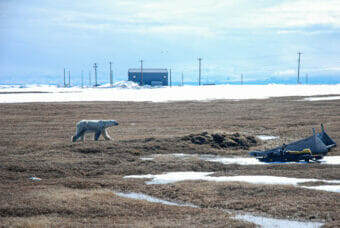
Australia-based Northern Star Resources owns the Pogo Gold mine, located about 35 miles northeast of Delta Junction. (KUAC file photos)

The Environmental Protection Agency has fined the owner of the Pogo gold mine $600,000 for improperly storing, treating and disposing of nearly 365,000 tons of hazardous materials into the mine near Delta Junction.

The EPA said in a news release issued Tuesday that it fined Australia-based Northern Star Resources for 81 violations of the Resource Conservation and Recovery Act, or RCRA. The violations mainly involved hazardous wastes discovered in and around an assay laboratory at the mine.

“There’s a concern that they don’t have a good handle on the types of hazards that they were generating in that laboratory,” says Brett Dugan, an EPA attorney based at the agency’s Region 10 office in Seattle.

Dugan says the violations were discovered during a June 2019 inspection at the mine and two underground tanks beneath the lab.

“They were accumulating acidic waste in one tank underneath the laboratory, and then cyanide-bearing waste in another,” he said, “and then treating them on-site.”

Dugan says the tanks didn’t comply with federal regulations. And neither did the way Northern Star was getting rid of the hazardous materials.

“They were disposing of this waste by mixing it with all the other wastes that are generated as part of the mine, (and) they were disposing it on-site,” he said in an interview Tuesday.

Dugan says workers at Pogo got rid of waste by mixing it in with a concrete slurry and injected it into the mine. He says the process violated federal regulations and posed potential environmental concerns.

According to a Sept. 27, 2022 consent agreement between EPA and Northern Star, “between at least June 3, 2019, and May 29, 2021, Respondent (Northern Star) stored, treated, and disposed of hazardous waste at the Facility without a permit or interim status in violation” of provisions of the EPA-administered hazardous waste-permit program.

A Fairbanks-based Northern Star spokesperson said in a written response Tuesday that the company’s disposal of hazardous wastes at the mine “did not result in any negative impact on or damage to the environment.” The spokesperson added that “Northern Star has already taken steps to enhance its current training in RCRA compliance to address any gaps identified to meet RCRA requirements.”

Dugan said Northern Star has agreed to stop using the tanks and seal them. He said it also agreed to stop disposing of the waste in the mine, and instead to store it in containers and ship it to a permitted disposal facility, as the RCRA law requires.

Editor’s note: KUAC Senior Reporter/Producer Dan Bross contributed to this story.

Liberty, an ambitious offshore oil project that once sparked excitement, is now in limbo

The Beaufort Sea is seen on Aug. 23, 2018, from East Dock on the North Slope. The Liberty Unit, which has yet to be developed, is located about 20 miles east of here. (Photo by Yereth Rosen/Alaska Beacon)

Before the ConocoPhillips’ massive Willow project emerged as a subject of excitement and controversy, a different North Slope oil project promised to open a new Arctic oil frontier.

The Liberty field, with an estimated 150 million barrels of recoverable oil, was to have been the first producing oil field located entirely in the federally controlled Outer Continental Shelf, in the icy Beaufort Sea.

It has a long history, dating back to Royal Dutch Shell exploration drilling in the 1980s. It was pursued by BP Exploration (Alaska) Inc. for two decades. It is now part of Hilcorp’s Alaska portfolio after BP sold off its Alaska assets and, ultimately, departed the state.

And it is currently in limbo.

As state officials pin high hopes on Willow and the revenues and jobs it will generate, the history at Liberty provides a cautionary tale about the uncertainties of oil development projects.

Just a few years ago, Liberty’s current owner was projecting confidence in the project. A Hilcorp development and production plan – the third drawn up over Liberty’s lifetime — was approved in late 2018 by the Bureau of Ocean Energy Management. But that approval was overturned by the federal 9th Circuit Court of Appeals on Dec. 7, 2020.

At Hilcorp’s request, BOEM’s sister agency, the Bureau of Safety and Environmental Enforcement, in December of 2019 put the three leases that comprise the Liberty prospect into suspension, a status that was renewed in 2021, according to BOEM. The suspension is in effect for three years and stops the clock from ticking toward lease expiration, according to BOEM.

The agency in 2021 asked Hilcorp if it still planned to pursue the project; Hilcorp responded in 2022 with a letter saying it is updating its Liberty oil-spill response plan.

BOEM said in a statement that as of March, it had not received an updated plan.

The image on the cover of the final environmental impact statment issued in 2018 by the Bureau of Ocean Energy Management shows where and how the Liberty project would be built. The EIS evaluated what was the third development and production plan submitted over the project’s lifetime. (Image provided by Bureau of Ocean Energy Management)

That history has left Liberty on the sidelines amid the discussion and controversy about the ConocoPhillips’ much-bigger Willow project.

“Liberty seems like an age ago,” said Erik Grafe, a staff attorney for Earthjustice, an environmental law nonprofit.  Grafe managed litigation against federal approval of the project.

Fifteen years ago, however, there was much excitement in Alaska about Liberty.

BP had an ambitious plan to develop the project by producing oil from the shore using ultra-extended-reach drilling. Liberty would have the longest wells in the world, potentially reaching up to 40,000 feet in length, to be drilled by the world’s largest land-based drill rig, commissioned by BP and built by Parker Drilling specifically for the project.

The $1.5 billion project received the go-ahead from BP’s corporate headquarters in 2008, and the company’s Alaska leaders hailed that news with an announcement to reporters.

“This is about as sexy as it gets,” BP Alaska Exploration Inc. President Doug Suttles told reporters at the time. “This is an example of what I’ve referred to as exploration through technology.”

Two years later, Suttles was BP’s chief operations officer and was embroiled in the response to the Deepwater Horizon disaster in the Gulf of Mexico. Four years after BP sanctioned Liberty, it officially withdrew the development plan, even though construction at the site had already started. In 2018, dismantling work began on the giant rig BP had built for Liberty; the rig wound up never drilling a single well. In 2019, BP announced it was leaving Alaska and selling off its remaining assets – including Liberty – to Hilcorp. That sale was made final in 2020.

BP’s ultra-extended-reach drilling project was never a good idea, said Mark Myers, a former Alaska Department of Natural Resources commissioner who served previously as director of the U.S. Geological Survey and director of the Alaska Division of Oil and Gas.

“It was just, technologically, a bridge too far,” said Myers, a geologist who serves on the U.S. Arctic Research Commission and previously also served as a chancellor for research at the University of Alaska Fairbanks.

The problem with such long-distance directional drilling is that it would have required too much drilling through a difficult shale layer, called Kingak, that is known for swelling and slumping, Myers said. Typically, operators on the North Slope try to limit their penetration of the Kingak layer, he said.

The entrance of what was then the BP Exploration (Alaska) Inc. building in Midtown Anchorage is seen on Aug. 27, 2019, just after the company announced its plan to sell off all its Alaska assets. The slogan above the door reads: “Prudhoe Proud: Pioneering the Past, Fueling Alaska’s Future.” BP drew up two separate development plans for Liberty. In 2014, it sold half of the project share to Hilcorp, and Hilcorp became the unit’s operator. In 2020, Hilcorp assumed full ownership of Liberty, along with ownership of all remaining BP assets in Alaska. (Photo by Yereth Rosen/Alaska Beacon)

The plan for ultra-extended-reach drilling was replaced by a more traditional Alaska development and production plan featuring an artificial island similar to four others that are in use elsewhere on the North Slope. That island plan was the one overturned by the 9th Circuit Court of Appeals in 2020. No updated plan has yet been submitted to federal regulators.

Despite the stall, there are still factors weighing in favor of Hilcorp eventually developing the Liberty project, Myers said.

“The oil’s there. It’s not very far from infrastructure,” he said. “They’re definitely motivated to do it.”

The nearby infrastructure, importantly, is now owned and controlled by Hilcorp, eliminating the need for what might be a difficult negotiation with other parties for access, he said.

On the negative side is Liberty’s location, Myers said. “Offshore is always more tricky than onshore,” he said. Arctic ice – which can gouge underwater oil structures – is one of the major complications, he said.

Another point weighing against Liberty’s development, Myers said, is President Biden’s withdrawal of remaining Beaufort Sea territory from future oil and gas leasing schedules. The action putting the unleased portions of the Beaufort off-limits to future development came at about the same time the administration approved the Willow project.

The withdrawal does not affect the existing leases in federal waters of the Beaufort – the three currently suspended Liberty leases and the three leases that are part of the Hilcorp-operated Northstar unit, which is mostly on state territory. But it diminishes investment prospects on those existing leases, Myers said. “It is easier to get investment if you have an active leasing program,” he said. If there is no leasing program, “it’s giving the message that it’s a difficult place to work.”

Hilcorp, which now operates the giant Prudhoe Bay field and other fields acquired from BP, may be busy with work other than Liberty, Myers said. “It’s got its hands full, likely, with its existing infrastructure,” he said.

And the risk of litigation continues, he said.

Hilcorp declined to respond to numerous requests for comments on its plans for Liberty.

Though they were both seen at different times as groundbreaking Arctic Alaska developments, there are some important differences between Willow and Liberty.

A copy of the two-volume 2001 draft environmental impact statement on the BP’s first development plan for the Liberty field is seen on a shelf on Thursday at the Alaska Resources Library and Information Services on the University of Alaska Anchorage campus. More volumes analyzing Liberty development plans are on other shelves at the library. So far, three separate Liberty development plans have been proposed. (Photo by Yereth Rosen/Alaska Beacon)

An obvious difference is location; Willow is onshore, where development is easier, while liberty is offshore. They differ in size; Willow is about four times as big in reserves, with about 600 million recoverable barrels estimated, and ConocoPhillips plans to spend several billion dollars on Willow, much more than the $1.5 billion planned by BP.

But there are links and parallels.

The legal issues that tripped up the federal government’s 2018 approval of Liberty’s most recent development plan also applied to litigation over the Trump administration’s initial approval of Willow in 2020. In both cases, courts overturned approvals based on what were considered flaws and omissions in the analysis of greenhouse gas emissions, Earthjustice’s Grafe said, though there were other issues in each case. While the Liberty case went all the way to the 9th Circuit Court of Appeals, the 2021 federal court ruling overturning Willow approval was not appealed. In Willow’s case, the BLM drew up a supplemental environmental impact statement that resulted in the Biden administration’s approval of a pared-back development plan.

Both Liberty and Willow are in federal territory, meaning that development would produce less revenue to the state than would be the case for oil fields on state land or in state waters.

In the case of Liberty, there was potential for the state to reap up to 27% of the royalties because of a federal law that allows for royalty sharing for oil produced between 3 and 6 miles offshore, under a provision of the Outer Continental Shelf Lands Act. The environmental impact statement released by BOEM in 2018 estimated such revenues would total $1.4 million a year. The state would not be entitled to taxes on oil produced at Liberty because that is federal territory, but it would have the ability to impose property taxes on any pipeline or other associated facilities that extend to state land.

In Willow’s case, what would be the state’s share of the royalties from produced oil is allocated by federal law to North Slope communities. Without royalty contributions to the general fund and with various tax credits that would reduce overall production tax revenues, Willow would lose the state money in its early years, with totals ranging from under $400 million to over $1 billion, depending on the estimate.

The Alaska Department of Natural Resources still includes Liberty in its list of projects that could produce oil in the future – albeit, not among the top five key projects like Willow that are considered most likely and most important.

Some legislators have expressed skepticism about Liberty’s inclusion in the list of pending oil projects.

Sen. Jesse Kiehl, D-Juneau, is among them. At a Jan. 18 hearing where DNR officials gave the production forecast – and made a passing mention of Liberty — he raised a question about the project, noting that he remembered hearing about its impending development many years ago when he was a legislative aide sitting in the same Senate Finance Committee room.

“I got the whole saltshaker out, not just the grain,” Kiehl said later about his remark.

This story originally appeared in the Alaska Beacon and is republished here with permission.

Three Southwest Alaska Native tribes sue federal government, seeking to block gold mine

Yago Jacob of Napaskiak, one of the Calista shareholders employed at the Donlin Mine, holds up a sliced piece of a geological core on Aug. 11. (Photo by Yereth Rosen/Alaska Beacon)

Three Alaska Native tribes, with the help of the environmental law firm Earthjustice, sued the federal government on Tuesday, seeking to block development of a large gold mine in Southwest Alaska.

In a 29-page complaint filed in U.S. District Court, they claim various federal agencies improperly permitted the Donlin Gold Mine.

Specifically, they allege that officials failed to properly analyze the environmental impact if there were to be a failure of a planned dam that would hold back the mine waste, known as tailings.

In addition, they allege that officials failed to correctly determine the mine’s impact on the Kuskokwim River, and failed to take into account the effects of the mine on the health of area residents.

“Tribes up and down the Kuskokwim River and throughout the region are banding together because we do not want to see this mine, including the pipeline, materialize,” said Walter Jim, chairman of the Orutsararmiut Native Council, in a written statement announcing the lawsuit.

The Orutsararmiut Native Council, Organized Village of Kwethluk and the Tuluksak Native Community are the three plaintiffs in the case.

The federal government has not yet replied to the lawsuit.

Donlin is being developed by Donlin Gold, a joint project by two mining firms, NovaGold and Barrick Gold Corp., on land owned by the regional Native corporation, Calista, and the Kuskokwim Corp., the joint Native village corporation for 10 communities in the region.

At full capacity, the mine would produce about 1 million troy ounces of gold annually, Donlin Gold told the state in 2016. That would make it one of the largest gold mines in the world. The mine plan also includes construction of a natural gas pipeline from Cook Inlet and supporting infrastructure, including a large camp and airstrip.

In response to the lawsuit, Donlin Gold issued a written statement that said federal litigation “is ubiquitous and expected” on major projects.

“Donlin Gold’s stakeholders fully believe that this lawsuit is meritless and are confident the actual record will once again fully support the agencies’ decisions. In the meantime, the Donlin Gold team and the owners continue to advance remaining state permitting, as well as drilling and technical work,” the statement said in part.

It isn’t yet clear whether the state of Alaska will seek to intervene in the lawsuit. It has done so in defense of other major development projects within the state.

“As this was just filed, we are in the process of reviewing the case and will determine what sort of involvement the state should have,” said Patty Sullivan, a special assistant to Attorney General Treg Taylor and a spokesperson for the Alaska Department of Law.

This story originally appeared in the Alaska Beacon and is republished here with permission.

6 things to know about heat pumps, a climate solution in a box

James Tucker got an efficient heat pump for his home near Oakland, Calif., last year. Now homeowners can get new credits for heat pumps from federal climate legislation. (Julia Simon/NPR)

Sales of super-efficient electric heat pumps are rising, now overtaking sales of gas furnaces in the U.S. But what are heat pumps? And why do some call them a key climate solution? Here are the answers to your most burning heat pump questions.

What is a heat pump and how does it work?

The name “heat pump” is a bit of a misnomer, says Kevin Kircher, assistant professor of mechanical engineering at Purdue University who works with the Center for High Performance Buildings.

“A lot of people dislike the name ‘heat pump’, right? ‘Cause it doesn’t really convey, you know, the full range of what the machine can do,” he says.

Heat pumps can work for both heating and cooling. Kircher says you can think of a heat pump as an air conditioner that can also work backwards. The highly efficient machines use electricity and refrigerants to cool air on hot days.

In the winter, even if the outdoor air is cold, it’s still normally warmer than the refrigerant inside the heat pump, Kircher says. So the refrigerant can absorb bits of heat from the outdoor air and bring it inside to warm your home.

What are the climate benefits of heat pumps?

The fact that heat pumps use electricity is a big reason why governments around the world see them as a key climate solution, says Yannick Monschauer, energy analyst at the International Energy Agency in Paris. That’s because heat pumps can replace gas furnaces, and the electricity they run on is increasingly powered by renewables, Monschauer says. Reducing gas usage in homes also reduces leaks of methane, a potent planet-heating gas.

Fossil fuel-based heating still accounted for 45% of global heating equipment sales in 2021. But if governments like the US and the European Union meet the targets laid out in climate legislation like the Inflation Reduction Act and REPowerEU, heat pumps could significantly slash planet-heating fossil fuel use in buildings, Monschauer says.

“We see that heat pumps could bring down global CO2 emissions by half a gigaton by the end of this decade,” he says. “So that is comparable to the annual emissions of Canada.”

James Tucker with his heat pump that replaced his old gas furnace. (Julia Simon/NPR)

Will the government help me pay for it?

Last year’s federal climate legislation offers new economic incentives for homeowners to install heat pumps, says Steven Nadel, executive director of the American Council for an Energy-Efficient Economy, a research organization working on saving energy. An IRS spokesperson tells NPR that the new credits can translate to up to $2000 for efficient heat pumps bought after January 1, 2023. If you buy a new heat pump, Nadel says to keep your receipts for reference for next year’s tax season. If you bought a heat pump in 2022 you can get credit for this upcoming tax season, but the previous incentive was smaller, up to $500, the IRS says.

Some states and some utilities also give rebates for efficient heat pumps. Nadel says you should check with your utility to see if there are programs available in your area.

As for renters, it’s also possible to get credits for appliances like efficient heat pumps according to the IRS.

Do heat pumps actually work in cold temperatures?

Earlier generations of heat pumps didn’t work as efficiently in freezing temperatures, but Monschauer says there’s been great improvements in technology.

“In the coldest parts of Europe we also have the highest shares of heat pumps. So in Norway, for example, 60% of the households are equipped with heat pumps. And in Sweden and Finland it is also 40%. So it’s definitely proven that it’s possible.”

The heat pump systems commonly found in Scandinavian homes do not need to run on backup fossil fuels, Monschauer says.

Not all heat pumps sold in the U.S. work well in the coldest weather. It’s important that you consult with an installer who is familiar with heat pumps, and make sure to find a machine that’s most efficient for your weather, Nadel says.

“In a cold climate that gets below 20 degrees Fahrenheit fairly often, you should look into getting into an Energy Star cold climate certified heat pump,” Nadel says, referring to a U.S. government program that makes markers for efficiency.

Heat pumps can work for both heating and cooling. You can think of a heat pump as an air conditioner that can also work backwards. (Julia Simon/NPR)

Can heat pumps save money?

Because heat pumps move heat around instead of burning fossil fuels for heat, they are more efficient than gas furnaces. And while heat pumps are typically more expensive on the front end, the savings come over time when you end up spending less on gas, says Brian Rees, a heat pump installer at Bryant Air Conditioning & Heating Company in Lincoln, Nebraska.

Rees says the cost savings are what attract his customers to heat pumps, “It’s more about hitting their pocketbook,” he says. “It’s more about what’s going to save them money in the long run, and heat pumps will do that.”

Kircher says you can also save money if you can buy a heat pump for both your heating and cooling needs. “It’s typically cheaper than buying a gas furnace plus an air conditioner,” he says.

Are there downsides to heat pumps?

Like refrigerators or air conditioners, heat pumps use refrigerants. The primary refrigerants commonly used in heat pumps are called hydrofluorocarbons, or HFCs, says Duncan Callaway, associate professor of Energy and Resources at UC Berkeley. These HFCs have high global warming potential if they’re released into the atmosphere, Callaway says.

That’s why it’s critical that heat pump installers make sure that those refrigerants don’t leak and are disposed of properly, he says.

“We need well-trained technicians that sort of understand the importance of collecting that refrigerant and not letting it emit into the atmosphere,” Callaway says.

Kircher also notes that researchers are currently working on developing refrigerant substitutes for HFCs that can drastically reduce climate impacts.

Copyright 2023 NPR. To see more, visit https://www.npr.org.

ConocoPhillips can start road work for Willow Arctic drilling project, judge decides

This 2019 aerial photo provided by ConocoPhillips shows an exploratory drilling camp at the proposed site of the Willow oil project on Alaska’s North Slope. (ConocoPhillips)

ConocoPhillips can begin construction immediately on the Willow project in the western Arctic, a federal judge ruled Monday.

U.S. District Court Judge Sharon Gleason denied requests for an injunction that would have stopped the company from working in the final weeks of the winter construction season, which will likely end in late April, when the tundra becomes too soft for heavy equipment to travel on.

Environmental groups and local residents who oppose the project filed two lawsuits last month, claiming the decision to allow ConocoPhillips to develop its leases in the National Petroleum Reserve was made contrary to environmental laws.

Those cases are still pending. But the judge declined to stop work on Willow in the meantime, saying the plaintiffs did not convince her that the company’s winter construction plans would cause serious and irreparable harm.

Her decision frees ConocoPhillips to embark on its plan to build ice and gravel roads, open a gravel mining site and begin hauling and dumping gravel in the National Petroleum Reserve-Alaska. Noise and vibration from blasting at the mine site won’t cause permanent harm, the judge wrote.

She acknowledged that the mayor and some residents of Nuiqsut — the closest village — have concerns about Willow, but Gleason said she gave “considerable weight” to the views of the North Slope Borough, the regional Native corporation and the village corporation for Nuiqsut, all of whom support the project and the winter construction activities.

The Wilderness Society, one of the groups that is suing, issued a statement vowing to continue to fight the project.

Site notifications
Update notification options
Subscribe to notifications