Energy & Mining

BBNC, Millrock Agree to Mineral Exploration on BBNC Land

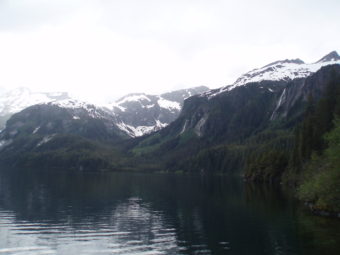
The agreement covers a tract of land with three known porphyry copper-gold occurrences around the Chigniks, down the Alaska Peninsula.

Bee Creek site near the Chigniks, one of three sites on BBNC land Millrock will explore for gold and copper deposit. Credit Millrock Resources, Inc
Bee Creek site near the Chigniks, one of three sites on BBNC land Millrock will explore for gold and copper deposit.
Credit Millrock Resources, Inc

The Bristol Bay Native Corporation and the mineral exploration company Millrock Resources made an agreement to explore for gold, copper, and molybdenum prospects on BBNC land near the Chigniks.

The prospect of copper and gold mining in Bristol Bay is controversial, and the Bristol Bay Native Corporation has been officially against the Pebble mine since 2009. But that doesn’t rule out other development.

“BBNC is opposed to the Pebble prospect. Upon its merits, it is a project we don’t support,” said L. Tiel Smith, BBNC Vice President of Land and Regional Operations. “But there are other resources on and near BBNC land that we want to continue to explore and assess to see if we can develop them.”

According to the corporation’s website, BBNC owns more than three million of the roughly 40 million acres in Bristol Bay, making it the largest private landowner in the region.

“Our interest is to further assess our lands. In this particular case, Millrock is helping us better understand the geology to give us an indication of what resource is there. Then we’ll be able to better determine what our next steps are for further exploration or potential development.”

BBNC’s agreement with Millrock allows for exploration with an option to lease at three sites around the Chigniks, known as Kawisgag, Mallard Duck Bay, and Bee Creek. The lands are split estate; BBNC owns the subsurface rights, but Millrock will need separate agreements with local village corporations for surface rights.

Some exploration around the Chigniks was undertaken in the 1970’s, and again in 2005-06, with results Millrock sees as encouraging. The company has expressed their enthusiasm at the large, lightly-explored area they characterize as “highly prospective.”

Still, the odds of discovering a copper and/or gold deposit that could be mined for profit “aren’t very good,” said Millrock Resources President and CEO Gregory Beischer. “The reality for us exploration geologists is that somewhere near one-in-a-thousand to one-in-ten thousand prospects that are explored actually become a mine. But the payoff’s big if we actually succeed.”

Formed in 2007, Millrock Resources, Inc., is a relatively new junior exploration company. Chief Operating Officer Sarah Whicker recently told Alaska Business Monthly that the company is looking in Alaska “for those massive, world-class deposits that aren’t as easy to find elsewhere in the world right now.”

Millrock’s model is to stake claims with potential, then find investors to cover exploration costs in option-to-joint-venture agreements. Those investors are typically larger mining companies with deeper pockets. In a similar fashion, Northern Dynasty attracted mining giant Anglo American to the Pebble deposit and established the Pebble Partnership.

Millrock has several other projects in Alaska, including the Humble project roughly 50 miles northeast of Dillingham, and Audn north of Levelock.

CEO Greg Beisher has past experience with the Bristol Bay Native Corporation; he spent seven years at a BBNC subsidiary working on oil, gas and mineral resource development.

And the company’s Chief Exploration Officer, geologist Philip St. George, knows a thing or two about mineral deposits in Bristol Bay; he’s credited with the discovery of the Pebble deposit north of Iliamna back in the late 1980’s.

Federal government targets 50 legacy wells for clean-up

Iko Bay Well
State Presses BLM on Legacy Well Issue

Across the North Slope, there are over a hundred oil wells drilled by the federal government that are no longer operational. At some sites, there are abandoned drums sunk in oil seeps; other wells have gas leaking from them. On Wednesday, the Bureau of Land Management released a draft plan identifying 50 of these so-called “legacy wells” for clean up.

Bud Cribley directs the BLM’s Alaska office. He says the plan is to start with the 16 wells in the National Petroleum Reserve-Alaska that pose the greatest risk to human and environmental health.

“It’s going to take time, but we are committed to accomplishing that clean-up.”

Cribley says that the timeline and the budget for the well clean-up are still being figured out, and that sequestration may affect the pace. Still, it’s possible that work on wells near Barrow could start as early as next year.

Of the remaining NPR-A wells, BLM has determined that 68 do not pose any risk to humans or the environment and that 18 are still in use.

Environmental groups like the Wilderness Society described the draft plan as a positive step forward, but a number of Alaska lawmakers say it doesn’t go far enough. Rep. Charisse Millette, a Republican from Anchorage, says she’s happy that the federal government wants to clean up some of the wells but that more should be targeted. She also has concerns about a recent proposal to use some of the revenue-sharing payments that Alaska gets for NPR-A oil to help pay for remediation.

“The BLM has not really come out with anything other than what they’ve been doing, patting the state on the head and then pulling our revenues away from us.”

Alaska’s congressional delegation also opposes the idea of making Alaska pay for remediation, since the wells were drilled by the federal government on federal land. Sen. Lisa Murkowski describing such a plan as “dead on arrival.”

The clean-up plan is expected to be finalized in the coming weeks, after key stakeholders get a chance to comment.

Map of identified wells included in the plan

Pebble Review Panel Finds Flaws With Baseline Studies

Bristol Bay Watershed Map
Bristol Bay Watershed. (Map courtesy EPA)

With two big studies out on the proposed Pebble Mine, there’s been a fight over whether work by the Pebble Partnership or the Environmental Protection Agency is more credible. Now, members of a science panel sponsored by the Pebble Partnership are criticizing the Partnership’s own research.

The Keystone Center’s science panel met in Anchorage this week to review the Pebble Partnership’s baseline environmental studies for the mine it hopes to build in Southwest Alaska. The studies are meant to serve as a reference for what the region looks like now, without any major development.

On Tuesday, panelist Falk Huettman, a professor of wildlife ecology at the University of Alaska Fairbanks, expressed concern that the baseline reports hadn’t fully considered the issue of biodiversity in the region. He also suggested that the work done on habitat use in the area was “insufficient.”

Ecologist Robert McFarlane had the harshest words, and he focused his criticisms primarily on the study of birds.

“I can say the documents is adequate as a list of species that are present,” said McFarlane. “It is not adequate for any type of study that you might want to come back to from some years in the future to ask, ‘Have there been any changes?”

McFarlane acknowledged that when it comes to building a mine, it will be more important to look at the impact on fish than on birds. But he still slammed the methodology used to study the birds, calling the research presented “backwards,” “frustrating,” and “disturbing.”

Terry Schick is the environmental consultant who handled the bird studies for the Pebble Partnership. He said they were limited in the field in how much data they were able to collect. And, he added, their team wasn’t given enough money to use a more current methods.

“We were not given the budget to produce those for this report,” said Schick.

Pebble Partnership’s study isn’t the only big piece of research on the mine out there. In April, the Environmental Protection Agency released its revised assessment of the project, which concluded that a mine in the Bristol Bay region could affect major salmon streams. The Pebble Partnership has called that work “deeply flawed,” because the EPA based its studies on a hypothetical mine plan instead of waiting for the partnership to file the plan they intend to use.
[box]

Watch the panels

[one_half]

Day 1

Day 1 – Part 1

Welcome and Introductions – Todd Bryan, The Keystone Center
Overview and Purpose of the Environmental and Socioeconomic Baseline Studies – Charlotte MacCay, Pebble Partnership
Vegetation and Wetlands & Waterbodies – Mine Study Area and Transportation Corridor
Pebble Consultant Presentations – Chris Wrobel, HDR Alaska

Day 1 – Part 2

Vegetation and Wetlands & Waterbodies – Mine Study Area and Transportation Corridor
Keystone Science Panel Review
Keystone Panel Members – Larry Gough and Robert Naiman
Moderated by Milo Adkison, UAF
Open Discussion

Day 1 – Part 3

Terrestrial Wildlife, Trace Elements, and Threatened and Endagered Species – Mine Study Area
Pebble Partnership 2012 Agency Meeting on Environmental Baseline Studies
Pre-recorded, Feb. 1, 2012

Day 1 – Part 4

Terrestrial Wildlife, Trace Elements, and Threatened and Endagered Species – Mine Study Area
Pebble Environmental Consultant Presentations – Brian Lawhead and Terry Schick, ABR

Day 1 – Part 5

Terrestrial Wildlife, Trace Elements, and Threatened & Endangered Species – Mine Study Area
Keystone Science Panel Review
Keystone Panel Members – Peter Albers, Andy Baltensperger, Larry Gough, Falk Huettmann, and Robert McFarlane
Moderated by Milo Adkison, UAF
[/one_half] [one_half_last]

Day 2

Day 2 – Part 1

Welcome and Introduction – Todd Bryan, The Keystone Center
Terrestrial Wildlife, Trace Elements, and Threatened and Endangered Species – Mine Study Area
Open Discussion

Day 2 – Part 2

Terrestrial and Marine Wildlife, Trace Elements, and Threatened and Endangered Species – Transportation Corridor and Cook Inlet
Pebble Environmental Consultant Presentations – Brian Lawhead, Terry Schick, and Bob Day, ABR

Day 2 – Part 3

Terrestrial and Marine Wildlife, Trace Elements, and Threatened and Endangered Species – Transportation Corridor and Cook Inlet
Keystone Science Panel Review
Keystone Panel Members – Peter Albers, Andy Baltensperger, Larry Gough, Falk Huettmann, and Robert McFarlane
Moderated by Milo Adkison, UAF

Day 2 – Part 4

Terrestrial and Marine Wildlife, Trace Elements, and Threatened and Endangered Species – Transportation Corridor and Cook Inlet
Open Discussion

Day 2 – Part 5

Keystone Science Panel Preliminary Recommendations
Keystone Panel Members – Peter Albers, Andy Baltensperger, Larry Gough, Falk Huettmann, Robert McFarlane, and Robert Naiman
Moderated by Milo Adkison, UAF
Comments from Pebble – John Shively, Pebble Partnership
Closing Remarks and Next Steps – Todd Bryan, The Keystone Center
[/one_half_last] [/box]

Parnell administration shifts focus from oil to natural gas

A natural gas line near Barrow
A natural gas line near Barrow. (Photo by Daniel Cornwall/Flickr Creative Commons)

If this legislative session was all about oil, the next one could be more focused on natural gas. The end goal is a pipeline capable of moving the massive supply of gas on North Slope to market. The state is looking at the issue of getting a project online from multiple angles.

Joe Balash didn’t get much rest after the legislature gaveled out. He didn’t even have time to clean out his desk. As a deputy commissioner for the Department of Natural Resources, Balash had to fly straight to LNG17, a conference that’s billed as this year’s “biggest global gas event.”

“We went directly from Juneau down to Houston.”

After spending the past few months as one of the key players on Gov. Sean Parnell’s bill to lower oil taxes, he and the rest of that team immediately pivoted to natural gas policy.

“We’ve now got some clarity on what the business is going to look like on the oil side, and now we and the producers can turn our attention to how gas fits into that.”

The state is trying to advance a couple of major projects. The bigger project would cost up to $65 billion. The idea is that it would be like the Transalaska pipeline but for gas, making money for the state through export. The other line would be smaller and built to serve Alaska’s own consumers with cheaper energy at a cost of $8 billion. The governor has said that it could be possible to merge the two projects.

Over the next few months, the state will try to move those projects forward from two fronts: the policy side and the design side. When it comes to policy, the state is trying to figure out whether it wants producers to pay them directly in money, or if it wants an actual cut of the gas itself. Right now, Alaska has the option of switching between the two every 90 days, which Balash says creates some uncertainty for companies. The Department of Natural Resources is currently accepting bids from contractors to study the economics of a large-diameter gasline.

On the design front, Gov. Sean Parnell said he wanted the companies involved in the project — TransCanada and the big North Slope oil producers — to be at what’s called the “preliminary front end engineering design” stage this summer.

“That’s a lot of words to say actually doing the math and understanding what it’s going to take to physically put together the pipe,” says Balash.

So far, the administration is still in talks to make that happen. But Balash says they’re hoping companies start doing field work by June.

Dan Sullivan is the commissioner of the Department of Natural Resources, and he says keeping momentum up on the project is important. The natural gas market is volatile. When the state first made financial commitments to develop a big gasline, the idea was to ship gas to the Lower 48. With that market now glutted with cheaper energy, Sullivan says they want send gas to countries like Japan and South Korea instead.

“There’s certainly a window in Asia that’s open right now for gas from Alaska, but we’re not sure how long that window’s going to be open.”

The Parnell administration has put a lot of effort into wooing Asian nations, with the governor even touring the Pacific Rim this fall to promote Alaska’s resources. But Alaska isn’t the only place that’s courting that market.

Larry Persily handles pipeline issues for the federal government, and he follows the economics of energy closely. He says that if the state wants to get enough buy-in from those countries to go ahead with a big pipeline, it’s going need to offer competitive rates.

“There’s no question in the decades ahead — 2020s, 2030s, 2040s — the world is going to need more natural gas than it uses to today. And a lot of the old contracts that were written in the Nineties to supply Asia will be expiring. So, that’s another potential to go in there. But it’s going to come down to price. Alaska gas is not going to command any higher price in the market than any other molecules. It all burns the same.”

As far as whether all of this work from the state will amount to a pipeline anytime soon, Persily says that there are a few indicators as to whether or not North Slope producers are getting serious. His office will be watching for companies to start collecting environmental data for permitting work and for the state to begin official talks on how it should structure its fiscal system with regards to natural gas.

Saudi oil minister welcomes U.S. energy boom

His Excellency Ali al-Naimi, Minister of Petroleum and Mineral Resources, Kingdom of Saudi Arabia.
His Excellency Ali al-Naimi, Minister of Petroleum and Mineral Resources, Kingdom of Saudi Arabia. (Photo courtesy CSIS)

Minister Ali al-Naimi scoffed at U.S. leaders who extol energy independence, especially from the Middle East, as a political goal.

“This talk of ending reliance is a naive, rather simplistic view,” he told a crowded conference room at the Center for Strategic and International Studies. “It seems to conflate on the one hand U.S. foreign policy and on the other U.S. energy policy.”

Al-Naimi said even with the rapid technological gains that led to the current gas boom in the Lower 48, the United States can’t isolate itself from geopolitics or globally commodities markets.

Shale gas accounts for less than half of U.S. gas supply.

And, al-Naimi said, the U.S. bought more Saudi oil in 2012 than any year before.

“Just as I didn’t buy into the peak oil theories, I do not go along with the opinion that increasing U.S. liquid production means the United States could and should detach itself from international affairs,” he said.

That’s especially true considering there are a dozen export permits for liquified natural gas pending before the federal government.

Some 70% of Saudi exports go to Asian markets; the same markets Alaska would like to export its LNG to.


Signature collection starts for oil tax referendum

Vic Fischer
Vic Fischer. (Image courtesy 360 North)

With the signature booklets hot off the printers, opponents of a controversial tax cut for oil companies should be able to start gathering support for their referendum Tuesday.

Vic Fischer, one of the lead organizers behind the repeal movement, says they’re taking a grassroots approach.

“There’ll be some standing on the street, outside the post office,” says Fischer. “And there will be others who will circulate at community meetings wherever they can.”

Backers of the referendum have until July 13 to collect more than 30,000 signatures, if they want their question to appear on next year’s ballot. But Fischer says they want even more than that: They’re try to get over 40,000 voters to join their effort.

There are a few reasons for that. Logistically, organizers want insurance in case some of their signatures don’t qualify, and they have enough support from districts across the state. Deborah Vogt, an organizer in Southeast, says there’s also a political benefit to going beyond the minimum number required by the state.

“It’s certainly an opportunity to start campaigning — to crank people up about voting about on the referendum, even though it’s over a year away.”

While the “Vote Yes — Repeal the Giveaway” effort may already be underway, the measure they’re seeking to repeal has not yet been signed into law. Gov. Sean Parnell, who has long championed tax cuts as a way of encouraging oil production, is still waiting for the bill to transmitted to his office. The bill attracted opposition from a mix of Democrats and coastal Republicans, who argued that it would cost the state about a billion dollars in revenue without any commitments from oil companies.

Site notifications
Update notification options
Subscribe to notifications