Fisheries

Supreme Court’s trawl bycatch case casts a wide net

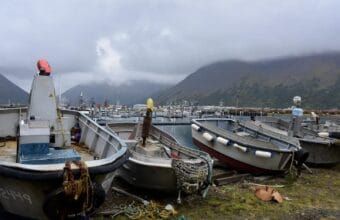
Fishing boats in the Naknek River. (Jaylon Kosbruk/KDLG)

A recent U.S. Supreme Court decision could have important implications for fisheries in Alaska.

Last month, the Supreme Court overturned a legal principle called Chevron deference. For 40 years, that principle gave federal agencies wide authority to interpret the gray area in laws passed by Congress. Now, more of that authority will go to judges.

The decision came after a legal battle over who should pay for bycatch monitors on trawl boats. The potential effects extend to all federally regulated industries — including fisheries.

Many trawl boats are required to have bycatch observers onboard. And in Alaska, the North Pacific Fisheries Management Council can have trawl boats pay for those observers. That’s the law. It’s spelled out in the Magnuson-Stevens Act, which governs commercial fishing.

But that act is not clear on who should pay for bycatch observers elsewhere. In the Atlantic, a federal agency created a similar funding program and a trawling business sued.

“And so (the National Marine Fisheries Service) used its agency authority to interpret the statute and fill in the gap and say, ‘Well, you know, we’re going to do what we do in the North Pacific region here in the Atlantic region.’ And the court said, ‘Nope, you can’t do that,’” said Anna Crary, an environmental lawyer at the firm Landye Bennett Blumstein LLP in Anchorage. She’s been watching that court case.

That Supreme Court decision, in a case known as Loper Bright, was a reversal. Forty years ago, in an environmental lawsuit called Chevron vs. Natural Resources Defense Council, the Supreme Court established a legal doctrine known as Chevron deference.

That doctrine said that when federal laws are vague, federal agencies should fill in the gaps, and courts should defer to the expertise of those agencies. Crary says that understanding of agency power has become a baseline assumption.

“Administrative law, unbeknownst to many people, really forms the backbone of what we perceive as our everyday life, as modern society. But the extent to which this decision destabilizes that, I think is quite profound,” Crary said.

Now, legal analysts say it will be easier to challenge federal agency decisions — and to win. Crary says that challenges could play out in the agencies that set safety standards for everything from drugs to airplanes. It could also make regulations by the North Pacific Fisheries Management Council or the National Marine Fisheries Service easier to challenge.

Crary is also watching for challenges to decisions by the Federal Subsistence Board, which carries out subsistence fishing rules under ANILCA. And, she thinks the ruling could give a boost to lawsuits that challenge the very existence of that board, since it was created by agency regulation and not by law.

“It’s not just the time, place and manner regulations, but it’s the actual regulations creating the Federal Subsistence Board itself. I think we will probably see a challenge to those regulations that follows the blueprint of what the Supreme Court laid out here in Loper Bright,” Crary said.

Crary says the impact of the loss of Chevron deference will depend on the context, “Chevron was, you could use it as a sword, you could use it as a shield.”

In Alaska, questions about how much power federal agencies have are important for all sorts of projects that could impact salmon habitat. Siobhan McIntire is a lawyer at Trustees for Alaska, whose work includes lawsuits opposing Pebble Mine, which many Bristol Bay fishermen see as a threat to salmon.

“If we’re, for example, in a plaintiff’s posture and holding agencies accountable, the overturning of deference to agencies could be positive for our clients. On the other hand, if we’re in defensive posture, seeking to uphold an agency action, then the opposite could be true,” McIntire said.

McIntire said it’s too soon to say what impact last month’s Supreme Court ruling will have on Pebble Mine or in other lawsuits.

“This decision really cuts both ways, and we can’t project into the future as to what that will look like from here,” McIntire said.

Under the Dunleavy administration, the State of Alaska has been fighting a number of federal agency decisions, including a decision by the Environmental Protection Agency to block Pebble Mine.

Commissioner John Boyle, a Dunleavy appointee, leads the Alaska Department of Natural Resources. He says they are starting to look at what the ruling could mean for a variety of legal challenges.

“We can really look at that in the context of looking at environmental laws that have been passed, the Endangered Species Protection Act, the Clean Water Act, the Clean Air Act, etc. The onus is really now on Congress to be more specific in what they want the agencies to do,” Boyle said.

Boyle said Loper Bright might reinvigorate the state’s effort to limit which streams and lakes are subject to federal wetland protection under the Clean Water Act. That’s the law that the EPA used to block Pebble Mine.

“What may or may not constitute a water of the United States becomes a very big deal again, because it can be the difference between being able to see a successful development project move forward or not. So the state has been very interested to better define and narrowly tailor what constitutes a water of the United States to remove as much federal entanglement as we possibly can,” Boyle said.

The Loper Bright decision will also require judges to decide more highly specific and technical questions. Boyle said maybe that’s a good thing.

“So it will cause uncertainty, there’s no question about it. And I’m sure there’s going to be all kinds of new litigation and all kinds of new case law that’s going to feed into to what extent does a court defer to a federal agency but I don’t think reining in the powers of federal agencies in particular is necessarily a bad thing at this juncture,” Boyle said.

Loper Bright is not the only recent Supreme Court case to limit federal agency power. In 2022, West Virginia v. The Environmental Protection Agency also limited how agencies could interpret laws in a way that echoes the reversal of Chevron deference. Another ruling this summer, Corner Post v. Federal Reserve, makes it possible to challenge federal agency decisions for longer. Both of those rulings may also impact fisheries.

9th Circuit Court judges hear oral appeals for king salmon troll fishery lawsuit

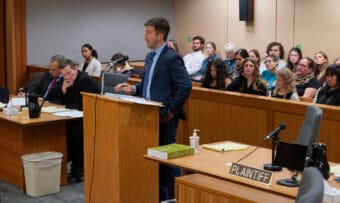
Attorney Laura Wolff (bottom left) speaks on behalf of the State of Alaska in front of judges Mark Bennett, Milan Smith Jr., and Anthony Johnstone on July 18, 2024, from the 9th U.S. Circuit Court of Appeals in San Francisco. (Screenshot from video livestream)

On Thursday, the 9th District Court of Appeals heard cases for and against a lower court ruling that threatened to halt Southeast Alaska’s troll fishery for king or chinook salmon. Although there’s no decision yet, a panel of judges expressed sympathy for the coastal communities that could be hurt by the order.

With an opener the first week of July, Southeast Alaska trollers already got to fish for kings this summer. But the future of their fall season is in the balance at a courtroom over a thousand miles south in San Francisco, California.

The Alaska Trollers Association, the State of Alaska, the National Oceanic and Atmospheric Administration and other entities appealed a lower court ruling that found NOAA broke the law by letting Southeast trollers catch too many kings — to the detriment of a population of endangered killer whales.

The Washington District Court order would have effectively stopped Southeast trollers from fishing for kings. But the case is now on hold in the appeals process and in the hands of judges Mark Bennett, Anthony Johnstone, and Milan Smith Jr.

Attorney Laura Wolff, who represents the State of Alaska, argued that keeping Southeast king trollers off the water wouldn’t only injure the region’s economy. She said it could demolish an entire way of life

“There’s also huge social and cultural harms,” said Wolff. “There are multiple declarations that say, ‘if we can’t fish and earn, if half of our income is last we’ll probably not fish at all.’ So it forces people into poverty or choosing to leave these very small rural communities, and that [has] huge cascading effects. It’s not just harm to some fishermen — it’s remote, isolated communities.”

The Ninth Circuit Court of Appeals last year issued a stay on a lower court order allowing the fishery to stay open — for now. But the Washington-based Wild Fish Conservancy seeks to lift that stay, and keep Southeast king trollers tied up at the docks.

Their case rests on the idea that the trollers intercept salmon that would otherwise feed a population of endangered Puget Sound killer whales, called Southern Residents. Attorney Brian Knutsen, who represents the Wild Fish Conservancy, said trollers should think about fishing for something else to keep their economy going.

“If (the opposing counsel’s) position is that: if (trollers) are unable to harvest chinook, maybe nobody will fish anything,” said Knutsen. “But half — and even sometimes over half — the economic value of the troll fishery is from coho.”

Knutsen also presented research suggesting Southern Resident killer whales, who prefer to eat king salmon, will not recover without immediate and serious intervention.

“The condition is really bad,” said Knutsen. “These whales are continuing to die, and it’s gotten worse during the stay. There’s been no live births since 2023 … Sorry — there was one, but the whale died within a month. There’s been multiple late-stage pregnancies that do not produce calves. These whales need prey now.

But Judge Mark Bennett was skeptical.

“There is a lot of uncertainty around everything here in terms of, is it going to help the whales,” said Bennett. “All we know for sure is that closing some of the fisheries is absolutely going to cause harm to inhabitants of Alaska, and their various subsistence and cultural practices.”

Thekla Hansen-Young is the attorney for NOAA Fisheries. She said that as the appeal moves through the courts, the federal government is rewriting the fisheries rules that were the basis of the Wild Fish Conservancy’s lawsuit. She said NOAA is on track to complete the new version of the rules by November.

And she told the judges she would accept it if they issued more limited instructions — like halting trolling for kings — if NOAA doesn’t finish their rules in time.

With that, the three-judge panel wrapped up the proceedings, with Judge Milan Smith Jr. declaring that he had finally resolved some of his confusion about dolphins and whales.

“I just want to add for the record that (a member of) the audience has informed me that killer whales aredolphins. So there you go,” Smith Jr. said, before tapping the gavel.

The judges may release their opinion on the appeal at any time.

Correction: This story has been updated to correct the spelling of Laura Wolff’s name and the phrasing of one of her quotes. 

9th Circuit to hear oral arguments on Southeast king salmon troll fishery lawsuit

""
King salmon landed in the commercial troll fishery in the summer of 2019. (Photo courtesy of Matt Lichtenstein)

A panel of federal judges will hear oral arguments on Thursday, July 18, in an appeal of a lower court ruling that threatened to halt the Southeast troll fishery for king salmon.

The Alaska Trollers Association, the State of Alaska, and other entities are appealing a Washington District Court ruling that found NOAA Fisheries violated endangered species and environmental laws. The ruling says the agency did so by allowing the Southeast trollers to harvest king salmon at rates that harmed a small population of endangered killer whales in Puget Sound, as well as well as several king salmon populations from the lower Columbia River.

That ruling would have effectively stopped Southeast trollers from fishing for kings — at least, until the National Marine Fisheries Service corrects its environmental analysis. But the Ninth Circuit Court of Appeals issued a stay on the lower court order in June of 2023, allowing the fishery to stay open for now.

The Washington-based conservation group Wild Fish Conservancy filed the initial suit four years ago. The organization’s case rests on the idea that the trollers are intercepting salmon that would otherwise feed the Puget Sound killer whales. The Wild Fish Conservancy has since petitioned the federal government to give Endangered Species Act protections to king salmon across the entire Gulf of Alaska.

Wild Fish Conservancy Director Emma Helverson told KFSK via email: “Wild Fish Conservancy is committed to taking all actions necessary, including through the ongoing appeal process, to prevent the further decline of the Southern Resident killer whales and wild chinook populations. Sustainable management of natural resources is essential for the well-being of coastal communities and ecosystems from Oregon to Alaska.”

Representatives from the Alaska Trollers Association and NOAA declined to comment on any litigation matters before the hearing.

In the San Francisco appeals courtroom on Thursday morning the State of Alaska, Alaska Trollers Association, and other entities will have an opportunity to argue against the lower court’s judgment against them. Then, the Wild Fish Conservancy will make its case for upholding it.

Judges Mark Bennett, Anthony Johnstone, and Milan Smith Jr. will hear the case in the Ninth Circuit Court of Appeals at around 9 a.m. Pacific time, or 8 a.m. Alaska time. You can view the court’s live video stream of the oral arguments here.

New study sheds light on sablefish genetics

North Pacific sablefish exhibit panmixia, or random mating, meaning that a sablefish born in Bering Sea is just as likely to mate with a Southeast sablefish as with a fish from up north. (NOAA Fisheries)

Some species, like salmon, spend most of their lives in the ocean and return to their birthplace to spawn.

“A salmon will go out of its stream and then it’ll go in the middle and mix with a bunch of different populations,” said Wes Larson, the genetics program manager at the NOAA Alaska Fisheries Science Center and co-author of a paper published last month on sablefish genetics. “So it would be like the one that would go to New York for college and then come back home.”

Larson said that sablefish, or black cod, don’t return home to spawn. In this analogy, if salmon move back home to settle down, black cod tend to meet someone abroad and start a family.

“The sablefish, it’s doing its thing, it’s eating, it’s swimming around finding food, and then we think basically, it just sort of spawns close-ish to where it’s at,” Larson said.

That tendency to mate randomly is called panmixia, and it means that Alaska doesn’t have genetically distinct populations of sablefish. A sablefish born in the Bering Sea could mate with a Southeast sablefish — or with a fish from up north.

Larson said there are limits on that mixing.

“It’s not equally probable that a fish from Mexico will come up to Alaska compared to, like, a fish from northern B.C., but the panmixia means that there’s enough exchange across the whole range,” he said.

Larson said that understanding that kind of genetic variation is important in fisheries management.

“When you’re setting quotas and things like that, it’s important to know whether you’re fishing on a stock that exchanges with other stocks or a stock that doesn’t, because if you don’t know that information, and let’s say it’s structured, you can really fish down a certain area,” he said. “If they don’t exchange with other areas, then you can basically fish that out, essentially.” 

Larson and other researchers did a deep dive into Alaska’s sablefish populations, using advanced techniques to map and compare the entire genetic footprints of juvenile and adult sablefish across Alaska and Washington.

Although previous studies have shown evidence of panmixia, a 2023 study by Mexican researchers suggested that Alaska sablefish might actually have distinct populations. Larson said that’s part of the reason that he and other researchers wanted to publish new data.

“If management took that microsatellite paper, that would sort of change the management paradigm,” Larson said. “Which, if it’s real, is important, but we didn’t think it was real.”

Larson said the new data, which used millions of genetic markers, provides a much higher-resolution picture of the population – and confirms that fisheries managers are using an appropriate framework to manage Alaska sablefish.

Metlakatla seiner sinks near Canoe Cove

The F/V Jaci Grace. (Courtesy of Kylie Marsden)

A 52-foot seiner, the Jaci Grace, sank on June 30, just south of Metlakatla.

The Jaci Grace was on its second set of the fishing season and the crew were hauling gear near Canoe Cove, about a mile from the western shore of Annette Island.  That’s when the boat’s captain, Josh Marsden, noticed the boat was sitting lower in the water than usual.

He ran down to the engine room. The bilge was dry. It didn’t make any sense.

“Before I knew it, the boat was — the stern was down so far. There was no saving it, and so I had everybody jump in the skiff,” Marsden said.

The small skiff was tied to the Jaci Grace, which was taking on water fast, but they didn’t know from where. Then things took a turn for the worse. They released the skiff, but:

“The skiff line got caught on the stern, and everybody was in the skiff, and the boat started rolling over,” Marsden remembered. “Your skiff is your lifeboat. But when that gets caught on your boat when it goes down, you’re in trouble.”

TJ Jackson, who was running a boat that was fishing nearby, saw the whole thing. He acted fast and cut his skiff loose as the Jaci Grace listed to one side.

The Jaci Grace was built in 1945. She was a beautiful wooden seiner that went by three names in her life – previously the Shelby Dawn and the Esperanza. Marsden renamed the boat after his daughter Jaci, who was in the skiff with her dad and three other crew members when Jackson pulled them aboard.

TJ Jackson came over with his skiff and just got everybody off the boat safely before everything went down.

Terrifyingly, after the crew was pulled to safety, the Jaci Grace was pulled under, dragging the still-tethered skiff down with it. Marsden said the whole thing lasted two minutes max.

“It just happened so fast that there’s no time to get your survival suits on or anything when something like that happens,” he said. “I was fully prepared. I have everything on the boat, every survival suit, and we go through the drills and everything, but there’s no drill for that one, you know?”

Nothing came afloat but a couple jerry jugs and a cooler.

Marsden has been a skipper for 16 years and has been on a boat all his life. He said what he thinks happened was a plank popped in the rear of the old wooden boat – maybe the rudder post. With how quickly the Jaci Grace took on water, he said a large piece of wood coming dislodged is the only explanation. He’d prepared the boat for the fishing season, and tried to cover every base. But some things you can’t prepare for.

Marsden said if Jackson wasn’t nearby and hadn’t acted so quickly, what could’ve happened is unimaginable.

“Everything is replaceable but your life,” he said

But still, the Jaci Grace was Marsden’s pride and joy. He said when it sank 45 fathoms – or about 270 feet – it took everything he’s ever worked for with it.

“I did lose everything I owned on that boat,” he said.

The Triton, a Metlakatla search and rescue boat captained by Metlakatla Fire Chief Desmond King, responded after to take the rescued crew to shore. The U.S. Coast Guard followed them in and took a report.

In the aftermath, Marsden’s family and community mourn the loss of that old wooden seiner, the Jaci Grace, but are thankful people acted quickly to prevent a greater loss.

Much of Juneau’s king salmon fishery will close this summer, because of a 2020 landslide

Salmon fills a tote in Juneau in August 2022. (Clarise Larson/for the Juneau Empire)

Sport fishermen in Juneau may be disappointed come Monday, because king salmon will largely be off limits this summer. The Alaska Department of Fish and Game has announced an emergency closure for most near-shore fishing areas around Juneau.

The boundaries of the hatchery king salmon closure near Juneau. (Alaska Department of Fish and Game, Division of Sport Fish)

Douglas Island Pink and Chum, or DIPAC’s executive director Katie Harms said hatchery returns are expected to be quite low this year. That’s because most of the chinook that were supposed to come back were killed when a landslide severed the hatchery’s supply of freshwater from Salmon Creek during an atmospheric river in December 2020 that caused flooding and mudslides across the city.

“We had to prematurely release all those chinook salmon that were in raceways at the time,” Harms said. “They entered saltwater before they were biologically able to process saltwater and likely, mostly died.”

Most of the hatchery salmon come back when they are about five years old, so Harms said this summer’s low run was expected.

The closure includes Auke Bay, Fritz Cove, Gastineau Channel and areas around the Macaulay Salmon Hatchery. Starting Monday at midnight, any king salmon caught in those areas must be released immediately. That policy will extend through the end of August.

Closing the sport fishery will allow more mature chinook to gather in Fish Creek Pond, which is one of the local hatchery release sites. The pond will be missing most of those five-year-olds, but there should be some 6-year-olds returning.

“And what we plan to do this year, is use seine nets to seine up the pond in mid to late July, when the vast majority of the fish have made it back. And they should just be milling in that pond waiting to be ready to spawn,” Harms said. “And we bring them back to the hatchery. We’ve done this in the past, in other years, so we know it can be successful if there’s enough fish there.”

Most of Juneau’s summer king salmon come from hatcheries, while most of the wild kings make their way through the area to up to the Taku River, earlier in the spring.

DIPAC aims to use fish from the pond to replenish the hatchery’s broodstock, which will help them to sustain summer king production in the future.

“I’m not sure we’ll get our full broodstock even with this closure in effect, but it’ll put us a lot closer to our goal,” Harms said. “Which would in turn make better fishing opportunity for those that want to fish in five years time.”

Site notifications
Update notification options
Subscribe to notifications