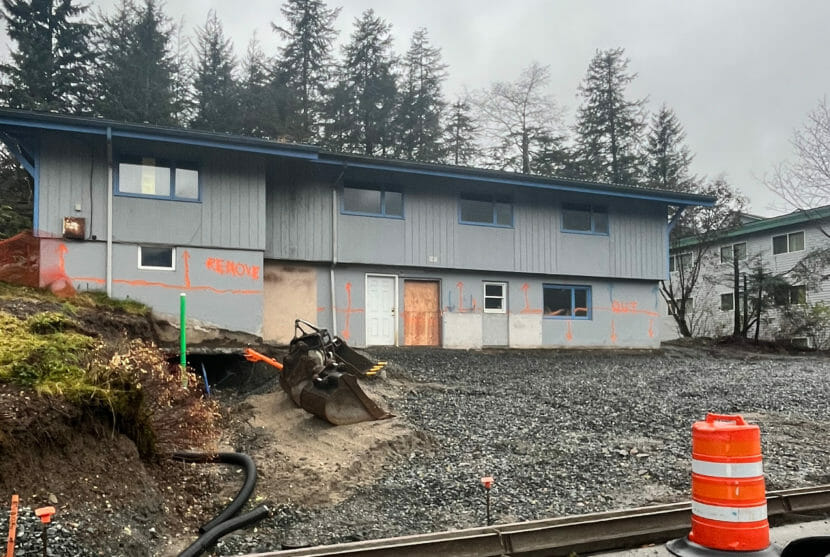
AWARE’s new affordable housing units will be on Cordova Street in West Juneau. The site previously housed the Tlingit & Haida Head Start program. (Photo courtesy of Mandy O’Neal Cole)
Four organizations will receive funding for new housing projects through Juneau’s affordable housing fund. The Juneau Assembly approved $2 million in grants and loans from the fund this week.
AWARE, a nonprofit that supports victims of domestic and sexual violence, will receive a $200,000 grant to develop seven affordable studio apartments in West Juneau. Executive Director Mandy O’Neal Cole said she’s looking forward to offering housing there.
“I think it’s a really good message to survivors, to people who are making the low end of the area median income,” she said. “You get to live in cool neighborhoods, and you get to have the same kind of beautiful view and access to transportation that other people have.”
Cole said the units will help give survivors more privacy and independence than shelters or transitional housing can typically offer. She said the goal is to complete construction by summer.
This is AWARE’s second round of grant funding from the affordable housing fund. It’s also the second round for St. Vincent de Paul. The nonprofit will receive $100,000 for maintenance at its Teal Street Shelter in the Mendenhall Valley.
Tlingit Haida Regional Housing Authority is working to build 10 affordable two to four bedroom homes in North Douglas over the next three years. They’ll get a $500,000 grant through the housing fund.
The fourth recipient will receive a loan instead of a grant. Utah-based company Rooftop Properties LLC will borrow $1.2 million to build 24 units. It’s part of a planned 444-unit project near Glacier Gardens, between Lemon Creek and the Mendenhall Valley.
According to the funding proposal, 19 units will be market rate, at $1,925 per month for a one-bedroom unit and $2,275 per month for a two-bedroom. Rent for the other five units will be about $100 less.
Joseph Meyers is the city’s housing and land use specialist. He said it’s important for the city to try to meet all housing needs, and in Juneau, that includes market-rate options.
“It takes all kinds of housing to make a community,” he said.
Correction: This story has been updated. A previous version said AWARE’s project will be located in Douglas. The project will be in West Juneau on Douglas Island.
Sitka’s planning department will investigate whether several sections of city and state-owned land can be opened up for housing development.
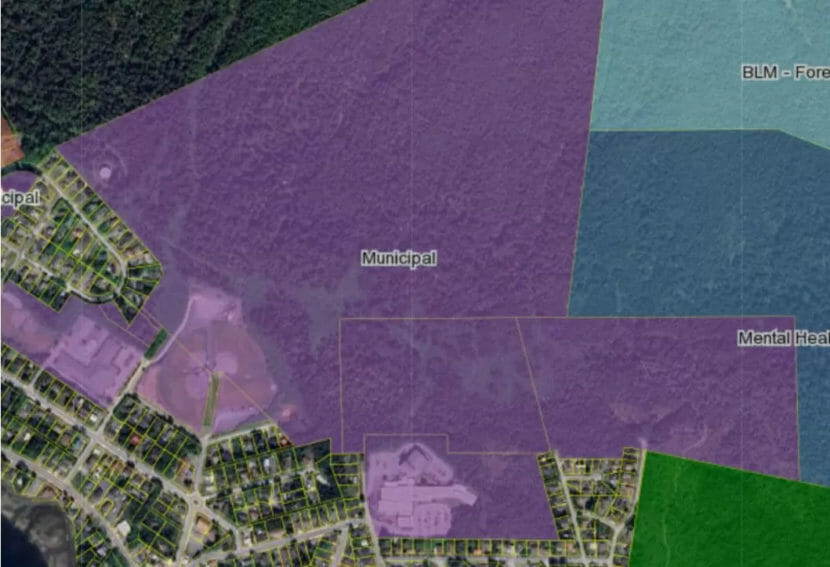
Finding solutions to Sitka’s housing shortage is a goal of both the city’s comprehensive and strategic plans. At a recent Sitka Planning Commission meeting, Planning Director Amy Ainslie highlighted tracts of municipal land that might be good for housing development. Ainslie said she focused on large swaths of land that are close to existing power and water connections.
“As we have found in all of our other studies, the farther you are away from utility infrastructure, the more expensive the cost is going to be,” Ainslie said. “And if the goal is affordable housing, then obviously having high utility expenses…contravenes the whole goal, right?”
Ainslie said a large section of city-owned land behind Sitka High School is at the top of the list. She said the city should also consider state-owned land through the Indian River Valley.
“I think it’s an area worth exploring and with the current administration, there has been some interest in working with with municipalities to open state lands, in particular to give state lands to municipalities,” Ainslie said. “There’s a lot of focus on housing too. So I think it’s a good opportunity for us to be working with the state on this piece of land.”
Ainslie said there are three questions city staff need to answer in evaluating the land – whether it’s safe and buildable, how much housing can be built in the area and how much it will cost. To answer those questions, Ainslie said she’s budgeting for a study of the properties, which she hopes to kick off by the beginning of the next fiscal year, and fund through grants.
Commissioner Katie Riley said she was excited about the prospect of opening up more land for housing. But she noted that it doesn’t solve the immediate problem of affordable housing in Sitka.
“Houses are built. They’re sold to the folks who can afford them, which a lot of the times are not necessarily the folks that are looking for housing in town,” Riley said. “So having having a discussion, you know, amongst this body of what affordability is, what that means? I know that it’s a topic that we all hold a lot of different opinions on, and so I’m excited to explore that as well.”
During public comment, Sitka resident Martina Kurzer said she hoped that further down the line, developers would consider options beyond single-family homes. She recalled apartment buildings she saw on a recent trip to Juneau’s Auke Bay.
“I saw three buildings that were very attractive…overlooking the harbor there,” Kurzer said. “And I was wondering, they have a lot more space than we do. But is that anything? Is there anything we could do? How could we change our thinking to make the best with the limited available space we have?”
Ainslie, the planning director, said in the new year the commission could hold a special session to seek more community feedback on the land and its potential for housing development.
Juneau’s rental market is competitive, and some people have taken advantage of the situation to scam people who are desperate for housing.
Last week, the Juneau Police Department arrested Rebecca Jo Burke for allegedly advertising a property she was not authorized to rent. Police say Burke sent photos of the fake rental to an individual and accepted an $850 deposit after they signed a meaningless lease.
KTOO’s Chloe Pleznac spoke to Lt. Krag Campbell from the Juneau Police Department to learn how people can identify and avoid rental scams.
The following transcript has been lightly edited for clarity.
Chloe Pleznac: Lieutenant, thank you so much for taking the time to talk with me. This month an arrest was made surrounding a scheme to collect rental deposits for fraudulent apartment listings. Has Juneau Police Department dealt with other cases related to rental fraud in the past year? How common is this particular crime?
Lt. Krag Campbell: You know, that’s the first one that I’ve heard about. I think it’s a pretty uncommon thing, at least for rental stuff, to the point where someone actually gets scammed out. I mean, I’m sure everybody’s pretty familiar with online scams through social media, advertising something fake. But as far as reports to the police department where somebody’s out money, this was the first one I’m familiar with.
Chloe Pleznac: And we know people are desperate for housing in Juneau. I know firsthand from my experience moving here this summer that finding a place to live before actually moving here, with the price of flights and ferries, it’s a really hard process. So how do potential renters protect themselves from schemes like this one? Are there specific things that they should look out for when responding to ads for rental units?
Lt. Krag Campbell: You know, I think the best bet is, if you can, try to get recommendations from people you know. But if you are answering things from online advertisements or online rentals is talk with the person, get photographs, do some research as far as who’s the owner of the property. You know, if the person is claiming they’re the owner, you can always look up the city’s assessor database to see are they the actual owner of that property. But then also make sure to — one of the biggest ones is make sure yo go there, go to the property, talk to the person who says they’re renting it, do tours inside, even talk to neighbors. Those things are all helpful just to try to make sure that yes, this person does have the right to rent this property. They have keys, they can go inside, they can do all those things. Nothing just seems out of the ordinary.
Like anything, if you just see an online ad and you respond to it or pay money to it, you don’t really know the full picture. And although this is the first rental fraud advertisement I’ve dealt with, we do figure out they get fraudulent schemes, through Facebook and things like that for job employment, people buying or selling vehicles, all those things. Just a big unknown if you’re, you’re not actually physically speaking with a person who’s renting something.
Chloe Pleznac: So what can someone do if they suspect that they might be a victim of a crime like this?
Lt. Krag Campbell: You know, the very first thing is contact the police department. Let us know so we can start looking into it on their behalf, so we can contact the other person and try to get to the other side of the story and really do some research to see if maybe, who knows, maybe it could be a legitimate rental. But we can look on the other side to see if there could be any type of fraud going on and to see if there’s a crime.
Chloe Pleznac: And are there any other known scams that Juneau residents should be cautious of at the moment?
Lt. Krag Campbell: I’ve definitely seen several scams for buying or selling vehicles online. Sometimes you get those deals, too good to be true. Someone’s selling a vehicle and they’re going to ship it from down south to Juneau at a really low price. Sometimes those things are just too good of an option or too good to be true, like I said. Jobs — people advertising some kind of online job for people. Sometimes those are just — you’ve got to do a lot more research to make sure that they are legitimate. Obviously, some of the biggest ones, too, are someone wanting to have you cash checks for them, even if they claim it’s for some specific business reason. I wouldn’t trust those things.
Chloe Pleznac: All right. That’s Lieutenant Campbell from the Juneau Police Department. Thank you so much for your insight and time.
Lt. Krag Campbell: You’re welcome. Okay. Take care.
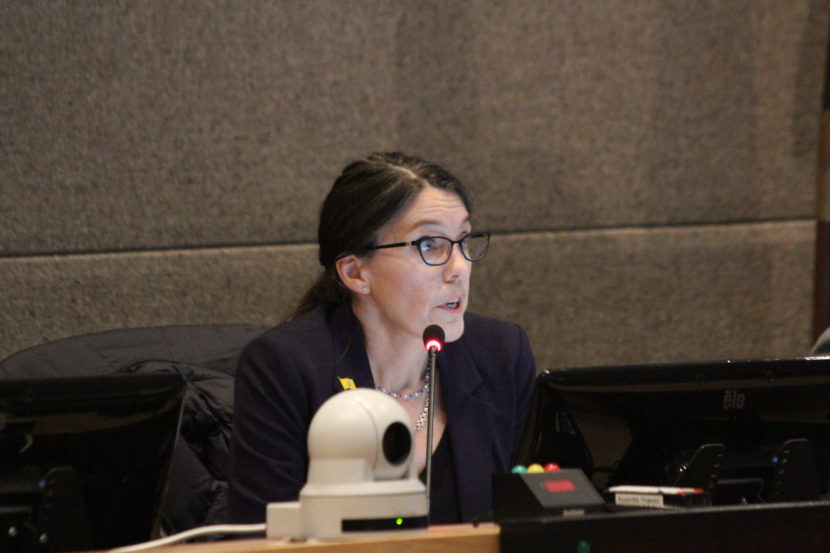
Anchorage Assembly chair Suzanne LaFrance speaks during an Oct. 25, 2022 meeting. The Assembly voted down spending $4.9 million on a proposed homeless shelter and navigation center in East Anchorage. (Photo by Wesley Early/Alaska Public Media)
The Anchorage Assembly voted Tuesday night against spending $4.9 million to build a new homeless shelter and navigation center in East Anchorage, effectively killing the project for now.
The shelter has long been a focal point of Mayor Dave Bronson’s approach to addressing homelessness in the city. But Assembly members, including chair Suzanne LaFrance, said the mayor’s office never gave them enough information about the project.
“What I know for certain is that if the mayor had given the Assembly the information that is needed — that is best practice, that is typically provided for these kinds of projects — I am confident that this navigation center/adult shelter could’ve been built months ago,” LaFrance said.
Some Assembly members also said they were dismayed that the mayor’s administration had given Roger Hickel Contracting the go-ahead to spend millions to begin construction of the shelter without the approval of the Assembly, as is required in city code for spending more than $50,000. The city halted construction in September and later admitted the error to the Assembly.
Eagle River Assembly member Kevin Cross argued that completing the project was still worth doing.
“Did the administration make a mistake in approving the work prior to coming to the Assembly? Yes,” Cross said. “Do we punish Anchorage and the homeless for it? No.”
The Assembly voted against the funding 9 to 3, with members Cross, Randy Sulte and Jamie Allard voting in favor.
Municipal manager Amy Demboski said the contractor has already spent roughly $3.2 million to build the project. She said the Assembly voting down the funding opens the city up to legal action.
“We’ve already received two demand letters from Roger Hickel Construction, meaning litigation is inevitable if it’s not approved,” Demboski said.
In the meantime, the city is using the Sullivan Arena as an emergency shelter, with a surge capacity of 200 beds. The return to the Sullivan came after several months of homeless people being directed to camp at the Centennial Campground in Northeast Anchorage. The city closed the campground last month. City officials say more than 1,000 people used the campground through the summer with more than 550 of them directed to shelters, treatment facilities or permanent housing.
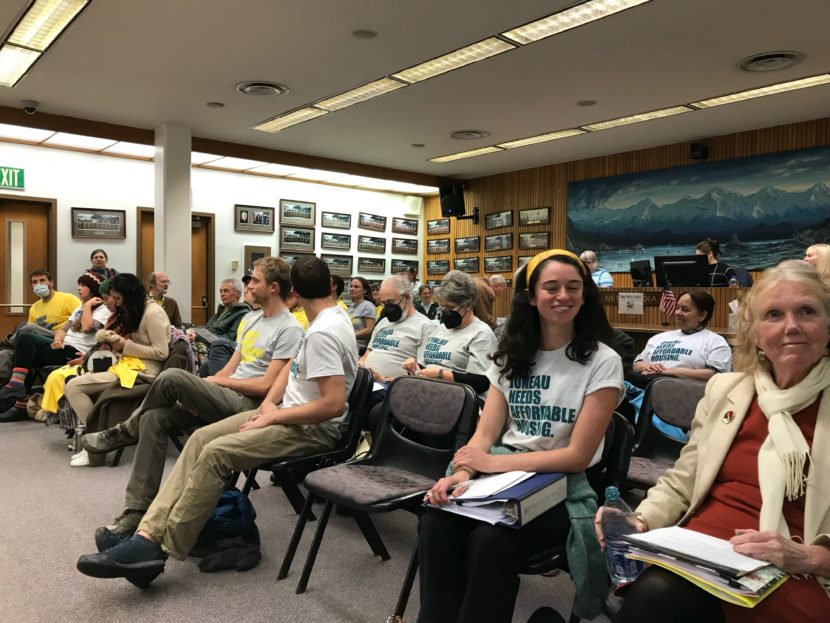
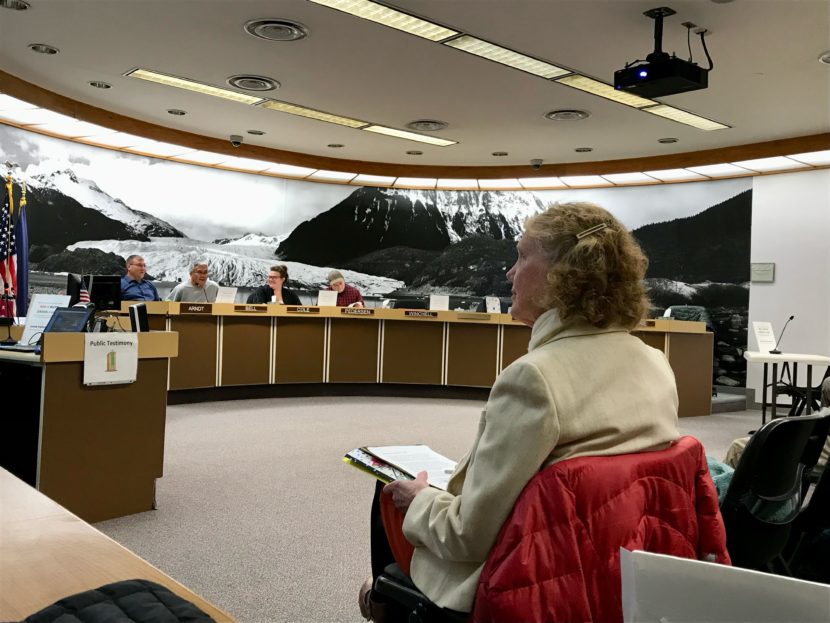
At least 40 people came to the meeting, most of them wearing shirts that said “Juneau Needs Affordable Housing.” (Photo by Jennifer Pemberton/KTOO)
Juneau’s Glory Hall has been granted a conditional use permit to convert the space that used to house its emergency shelter into a seven-unit affordable housing complex.
Nearly a full year after they first applied for the permit, Glory Hall staff and their lawyer went before the city’s planning commission for the last time on Tuesday night.
And their supporters showed up in full force. At least 40 people came to the meeting, most of them wearing shirts that said “Juneau Needs Affordable Housing” in plain block letters.
More than two dozen people testified in favor of the commission’s approval of the permit. They spoke passionately for three minutes each, for more than an hour. No one who testified expressed opposition to the project. There was testimony from people who had experienced homelessness and from people who work with Juneau residents who don’t have stable housing.
Rev. Karen Perkins’s church hosts Juneau’s cold weather shelter.
“I see every day — actually every night — how dangerous it is for people not to have places to live,” she said. “I don’t adequately understand what the concern is about creating these units … help me understand it, if there’s someone who can.”
City officials have denied earlier permit requests from the Glory Hall, citing the part of Juneau’s city code that says construction projects in avalanche and landslide hazard zones can’t “increase density.”
The Glory Hall’s project would increase the number of units in the building, but it would decrease the number of people in the building.
Mary Alice McKeen, who is representing the Glory Hall, at the Planning Commission meeting on Oct. 25 in Juneau. (Photo by Jennifer Pemberton/KTOO)
Mary Alice McKeen has been representing the Glory Hall during the permitting process. She said at the meeting that the city’s definition of density “goes against such common sense and such logic that it leads people to have distrust and frankly scorn of government institutions.”
Four physicians testified. Emergency room doctor Jodie Totten said that homelessness isn’t good for people’s health or the health of the community.
“I think this is an opportunity where our community can provide for some people to be stably housed,” she said. “I don’t understand why we would not take this opportunity.”
Commissioner Travis Arndt made the motion to approve.
“I believe it’s a net increase in public health and safety, as the intention will be reducing the number of people located at that site,” he said. “We’re working with the assembly all the time to get more housing downtown. That is exactly what that does.”
The vote was unanimous. The motion to grant the permit passed, and everyone in the audience applauded.
“I feel like a billion pounds has been lifted off my shoulders,” said Glory Hall Deputy Director Luke Vroman. “Some faith is restored that our leaders understand that we have people who don’t have homes, and they need homes.”
Glory Hall deputy director Luke Vroman smiles after the Planning Commission voted to approve the Glory Hall’s affordable housing project on Oct. 25 in Juneau. (Photo by Jennifer Pemberton/KTOO)
The city will issue the decision in writing by the end of this week or early next week, and the Glory Hall can then collect any permits they need for the project.
According to Jill McLean, who heads the city’s community development department, the city or anyone from the public could appeal, but she said “it’s highly unlikely that the city would.”
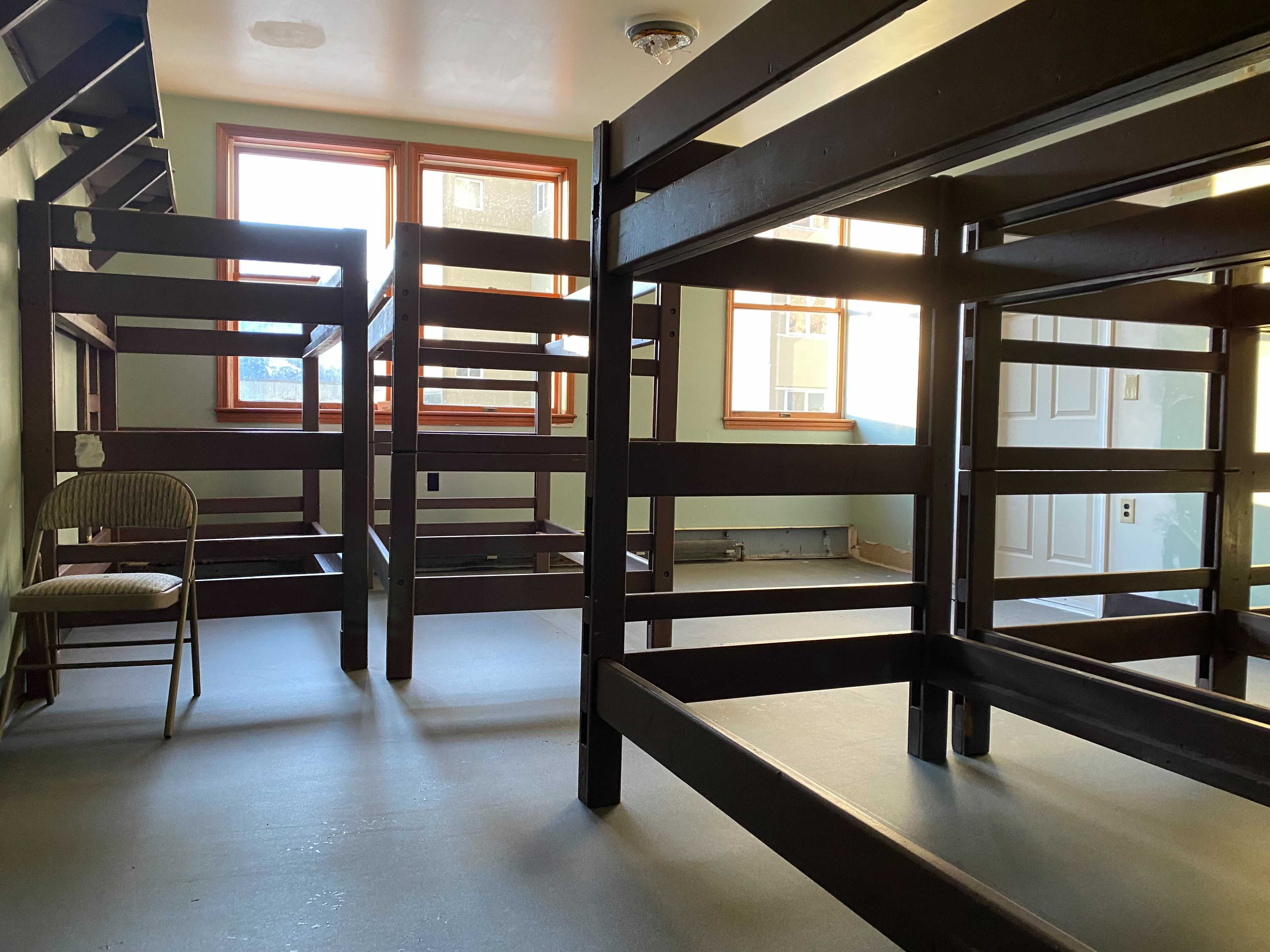
The room that was once the women’s dorm at The Glory Hall in Juneau. December 2021. (Stremple/KTOO)
For almost a year, the Glory Hall has been trying to get a permit to convert the space that used to be a 50-bed shelter to a 7-unit affordable housing complex. The project’s fate could be decided at a Planning Commission meeting Tuesday night.
The nonprofit moved its shelter to the Mendenhall Valley last summer. It still owns the building on S. Franklin Street in downtown Juneau where it used to be housed. And that building is in a known hazard zone for avalanches and landslides, per the city’s maps adopted in the late 1980s.
The Glory Hall did not give up — it submitted an application for a conditional use permit this summer. Earlier this month, the city’s development department recommended that the Planning Commission reject that permit, too.
The Planning Commission will take up the issue of the permit at its meeting Tuesday night. It can grant, deny or impose conditions on the permit. If the permit is denied, the Glory Hall can appeal the decision to the Juneau Assembly. But the Glory Hall is not going down without a fight. It has invited supporters to testify at the meeting and encourage the Planning Commission to grant a conditional use permit for the project. Glory Hall staff had 40 shirts made with the message, “Juneau Needs Affordable Housing.”
Staff expect up to 40 people will show up at the meeting.
“We need as many people in attendance at this meeting as possible! Please come! As we all know, Juneau is in the midst of a housing crisis and we believe that every unit counts,” the Glory Hall wrote in a recent newsletter.
The Planning Commission meets in Assembly Chambers at 7:00 p.m. The meeting will also be on Zoom.
Close
Update notification options
Subscribe to notifications
Subscribe
Get notifications about news related to the topics you care about. You can unsubscribe anytime.