Housing

Historic neighborhood, once envisioned for new Alaska Capitol, is given away by the state

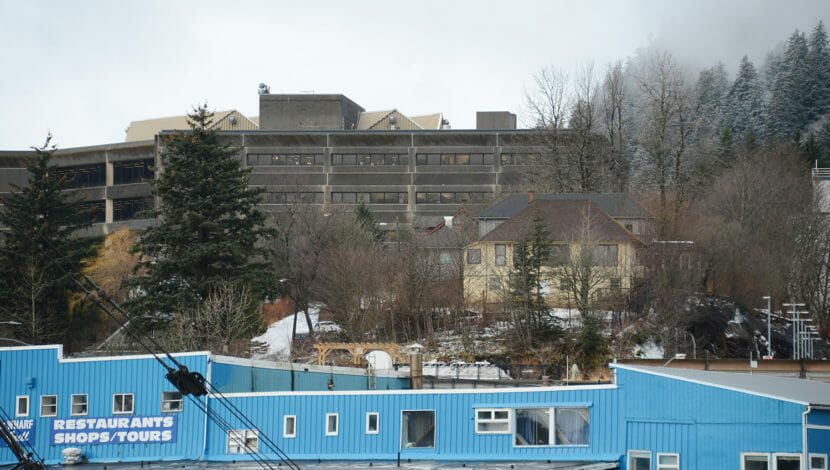
Older houses sit on a small hill with a large government building behind it.
Juneau’s Telephone Hill neighborhood is seen at center right, beneath the State Office Building, on Wednesday, Dec. 28, 2022. The neighborhood, owned by the state of Alaska, is being transferred to the City and Borough of Juneau. (Photo by James Brooks/Alaska Beacon)

The state of Alaska is returning to the City and Borough of Juneau a multimillion-dollar plot of land once envisioned for a new Capitol building.

On Tuesday, acting Department of Natural Resources Commissioner Vasilios Gialopsos signed an order transferring Telephone Hill, a historic residential area overlooking downtown Juneau, to the capital city.

The transfer was required under legislation written by Sen. Jesse Kiehl, D-Juneau, and passed by lawmakers earlier this year, ending an almost 50-year-old project intended to construct a new Capitol for the Alaska Legislature.

“It really needs to be in the hands of the city,” Kiehl said in August. “It’s going to lead to some better use of that parcel, with full public participation on what that looks like.”

The transfer won’t be final until city officials sign an affidavit releasing the state from liability, which would allow the deed to be signed over, said DNR natural resource specialist John King.

Juneau officials have already been considering their options, including using the property for a new city hall.

In October, local voters rejected a proposal to borrow $35 million to build that new city hall, but because the bonding proposition failed by less than 3 percentage points, city manager Rorie Watt said city officials believe voters may have liked the idea of a new city hall, just not the particular plan on the ballot.

Kiehl said he doesn’t care for the city hall idea.

“This is really prime real estate,” he said. “It could be anything from hotel and condo — various housing options, hopefully with an inclusive low-income element — to large-scale light commercial. I’m not inclined for that to be the city hall, though I do think Juneau needs to own its own much larger city hall.”

The residents of Telephone Hill are also concerned by the idea. Since Kiehl’s legislation passed, they’ve been in limbo and subject to unenforced eviction notices.

In September, resident Tony Tengs testified to the city assembly, saying it doesn’t make sense to demolish homes during a housing crisis.

Telephone Hill is Juneau’s oldest historic neighborhood, home to the oldest still-occupied house in Alaska, the Edward Webster House, built in 1882. Seventeen people live in the neighborhood’s seven properties, a city survey found in August. None of the homes in the area are eligible for historic recognition because they have been modified, but all date from before 1920 and are some of the oldest homes still standing in Alaska.

The neighborhood has been owned since 1984 by the state, which was considering construction of a new Capitol and acquired the site in anticipation. The city contributed $2 million to the state’s purchase of the properties on the hill, under the condition that it be developed for a new Capitol building.

That never happened, owing in part to the cost of the project and the unpopular result of a city-sponsored 2005 Capitol design competition. Meanwhile, the city charged the state interest on its $2 million investment. By 2008, the figure had reached $6.4 million, and the state and Juneau signed an agreement that said the debt would be forgiven if the land was given to the city.

When Gov. Mike Dunleavy entered office in 2018, he ordered a review of surplus state-owned land across Alaska, and Telephone Hill — then owned by the Department of Transportation and Public Facilities — was identified as a prime candidate for disposal.

After Kiehl’s legislation passed, DOT transferred Telephone Hill to DNR in preparation for the ultimate transfer to the city. That ended a decades-long leasing arrangement with the neighborhood’s remaining residents, who received eviction notices in August.

Those notices have never been enforced, and Watt said the city has no intention to do so. For the meantime, residents are on month-to-month leases with the city, which is also in charge of managing the property.

How long the status quo remains in place will be up to city officials once the local government takes full control.

“There are any number of good possibilities,” Kiehl said in August, “and frankly, the opportunities for redevelopment of any lot downtown are tremendous.”

This story originally appeared in the Alaska Beacon and is republished here with permission.
2022 marked the end of cheap mortgages and now the housing market has turned icy cold

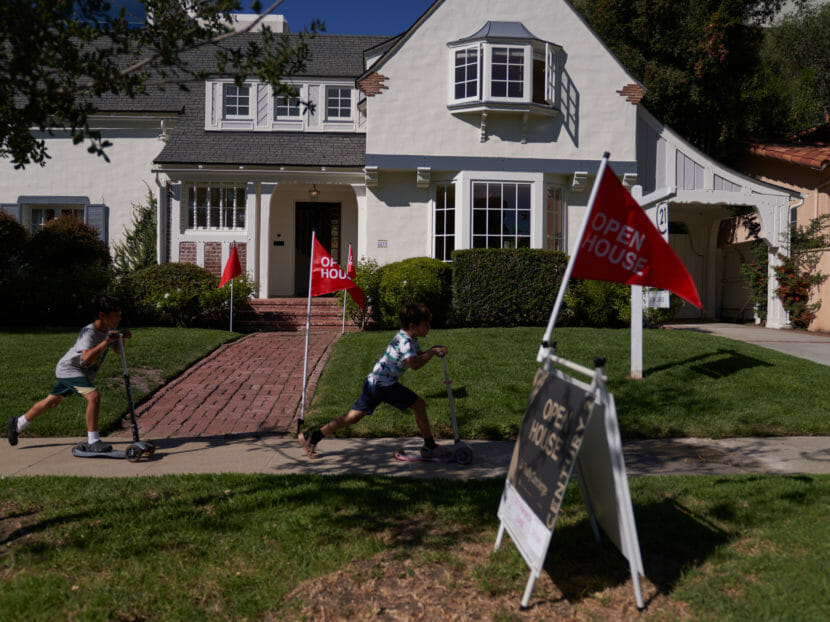
A house for sale with signs for an open house in front of it
Children ride scooters past a house for sale in Los Angeles. Home sales have slowed as mortgage rates have climbed.
Allison Dinner/Getty Images

Evan Paul and his wife entered 2022 thinking it would be the year they would finally buy a home.

The couple — both scientists in the biotech industry — were ready to put roots down in Boston.

“We just kind of got to that place in our lives where we were financially very stable, we wanted to start having kids and we wanted to just kind of settle down,” says Paul, 34.

This year did bring them a baby girl, but that home they dreamed of never materialized.

High home prices were the initial insurmountable hurdle. When the Pauls first started their search, low interest rates at the time had unleashed a buying frenzy in Boston, and they were relentlessly outbid.

“There’d be, you know, two dozen other offers and they’d all be $100,000 over asking,” says Paul. “Any any time we tried to wait until the weekend for an open house, it was gone before we could even look at it.”

Then came the Fed’s persistent interest rates hikes. After a few months, with mortgage rates climbing, the Pauls could no longer afford the homes they’d been looking at.

“At first, we started lowering our expectations, looking for even smaller houses and even less ideal locations,” says Paul, who eventually realized that the high mortgage rates were pricing his family out again.

“The anxiety just caught up to me and we just decided to call it quits and hold off.”

Buyers and sellers put plans on ice

The sharp increase in mortgage rates has cast a chill on the housing market. Many buyers have paused their search; they can longer afford home prices they were considering a year ago. Sellers are also wary of listing their homes because of the high mortgage rates that would loomover their next purchase.

“People are stuck,” says Lawrence Yun, chief economist with the National Association of Realtors.

Yun and others describe the market as frozen, one in which home sales activity has declined for 10 months straight, according to NAR. It’s the longest streak of declines since the group started tracking sales in the late 1990s.

“The sellers aren’t putting their houses on the market and the buyers that are out there, certainly the power of their dollar has changed with rising interest rates, so there is a little bit of a standoff,” says Susan Horowitz, a New Jersey-based real estate agent.

Interestingly, the standoff hasn’t had much impact on prices.

Home prices have remained mostly high despite the slump in sales activity because inventory has remained low. The inventory of unsold existing homes fell for a fourth consecutive month in November to 1.14 million.

“Anything that comes on the market is the one salmon running up stream and every bear has just woken up from hibernation,” says Horowitz.

But even that trend is beginning to crack in some markets.

At an open house for a charming starter home in Hollywood one recent weekend, agent Elijah Shin didn’t see many people swing through like he did a year ago.

“A year ago, this probably would’ve already sold,” he says. “This home will sell, too. It’s just going to take a little bit longer.”

Or a lot longer.

The cottage first went on the market back in August. Four months later, it’s still waiting for an offer.

Copyright 2022 NPR. To see more, visit https://www.npr.org.

Transcript :

STEVE INSKEEP, HOST:

This country’s home-buying frenzy is really, definitely over. Home sales have fallen for 10 straight months. It’s the longest streak of declining sales in more than two decades. NPR’s Arezou Rezvani spoke with buyers and sellers.

AREZOU REZVANI, BYLINE: Thirty-four-year-old Evan Paul went into 2022 thinking this would be the year his family would finally buy a home.

EVAN PAUL: We just kind of got to that place in our lives where we were financially very stable. We wanted to start having kids, and we wanted to just kind of settle down.

REZVANI: Paul and his wife, who both work in the biotech industry, did end up having a baby, a little girl, just a couple of weeks ago. But they never did move up and out of their two-bedroom condo. Initially, it was because of high home prices in their city of Boston. A year ago, low interest rates unleashed a home-buying frenzy, and they were outbid every time.

PAUL: There’d be, you know, two dozen other offers, and they’d all be $100,000 over asking.

REZVANI: Then the Fed started raising interest rates. And after a few months, it was the high mortgage rates that priced the Pauls out again.

PAUL: Yeah. Eventually, the anxiety just caught up to me. And we just decided to call it quits and hold off.

LAWRENCE YUN: There are far fewer buyers in the marketplace.

REZVANI: That’s Lawrence Yun, chief economist for the National Association of Realtors. He says while buyers like the Pauls have been pulling back, sellers are also reluctant to jump into the market because they’d also be slammed by a pricey mortgage.

YUN: To reenter the market today, they would have to give up that 3% and possibly get the new loan at much higher interest rates.

REZVANI: And that right there is what’s contributing to something of a freeze in the housing market, says Susan Horowitz, a New Jersey-based real estate agent.

SUSAN HOROWITZ: The sellers aren’t putting their houses on the market. And the buyers that are out there – certainly, the power of their dollar has changed with rising interest rates. So there is a little bit of a standoff.

REZVANI: Surprisingly, that standoff hasn’t had much of an impact on prices. Home prices have remained high despite the slump in sales activity.

HOROWITZ: Because there’s no inventory. So anything that comes on the market is the one salmon running upstream. And every bear has just woken up from hibernation.

REZVANI: But even that trend is beginning to crack in some markets.

It’s been slow going lately at agent Elijah Shin’s open house in Los Angeles, where he sweeps the sidewalk, waiting for the occasional visitor to swing by.

ELIJAH SHIN: Well, I think we’re in the transition again. And, of course, no one knows the future, but we do look like we need a market correction here and there. It was a few crazy years.

REZVANI: He gives a thorough tour to anyone who comes through…

SHIN: And this can be a closet. And this is the entire master suite.

REZVANI: …And connects with prospective buyers however he can.

SHIN: You want a flyer? We’ll be here Tuesday and Thursday if you want to…

REZVANI: But things are just different now.

SHIN: Well, a year ago, this property would’ve already been sold. I think this home will sell, too. It’s just going to take a little bit longer.

REZVANI: Or a lot longer. This little starter home in one of the more coveted neighborhoods of Hollywood first went on the market back in August. Four months later, it’s still waiting for an offer. Arezou Rezvani, NPR News, Los Angeles.

(SOUNDBITE OF KYLE MCEVOY AND EZZY’S “GARDEN”) Transcript provided by NPR, Copyright NPR.

Alaska Legislature votes $6.6 million for legislative housing near Juneau Capitol building

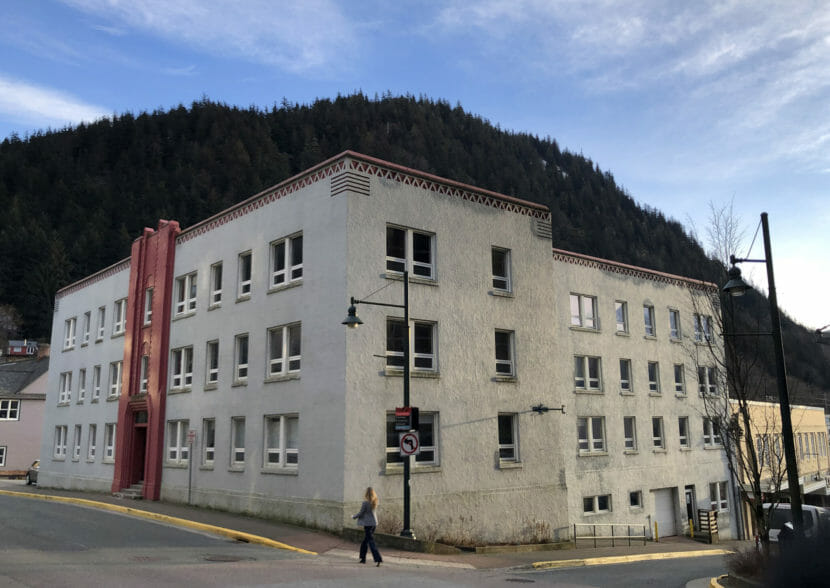
A woman walking past a blocky, grey-and-red office building.
The Assembly Building is seen on Wednesday, Dec. 21, 2022, in downtown Juneau, Alaska. (Photo by James Brooks/Alaska Beacon)

A House-Senate committee of the Alaska Legislature has approved spending $6.6 million to renovate a downtown Juneau office building into 33 apartments for legislators and staff.

During a Monday vote on the proposal, lawmakers said the state-owned building will help alleviate a chronic shortage of housing in the capital city during the legislative session.

“One of the biggest challenges we have is housing,” said Sen. Bert Stedman, R-Sitka.

“I think this is the right move,” he said.

The cost of construction is also being subsidized by a Juneau-based foundation whose goal, at least partially, is to keep Juneau as the state capital.

The Assembly Building, built in 1932, will be the Legislature’s new apartment building. Located kitty-corner to the Capitol, it was originally constructed as an apartment complex but was converted into offices in the 1980s.

Renovations are expected to take a minimum of one year, with a tentative completion date in January 2024. It isn’t yet clear how the building will be managed, who will be allowed to rent space, or whether legislators will forgo their per diem expense payments if they have a state-owned apartment.

In 2022, legislators were eligible for $307 per legislative day to cover food, housing and other expenses during the legislative session. Those payments came atop their annual salary of $50,400.

The 9-2 vote by the Legislative Council to move ahead with the apartment plan passed with Republicans, Democrats and independents voting in support.

Republican Rep. Cathy Tilton, R-Wasilla, and Sen. Mike Shower, R-Wasilla, voted against it.

“I really am not a fan of the Legislature being in the business of being a landlord and competing with the private sector,” Tilton said.

Shower said he is worried about the project’s rising costs. In February, the Legislative Council voted 9-5 in favor of a $5.5 million plan based on preliminary estimates. The final contract, with Dawson Construction, is worth almost $8.6 million.

The Juneau Community Foundation, which bought the building in 2021 and donated it to the Legislature at no cost, is also donating $2 million to pay for part of the building’s renovation, lowering the Legislature’s share to the $6.6 million approved this week.

“Juneau benefits by being the capital city. It fills our restaurants, it brings in people,” said Amy Skilbred, executive director of the $70 million foundation.

In 2014, the wealthy owner of Juneau’s electric company, Alaska Electric Light and Power, sold the business and donated most of the proceeds to the foundation. One of the conditions of that donation was the creation of the Juneau Capitol Fund, which is intended to support the Capitol as long as it remains in Juneau.

Skilbred said purchasing the Assembly Building is in line with the fund’s goals.

Legislators and staff have found it difficult to find housing, she said, because tourist season begins in May, compressing the market for short-term rentals at the end of the legislative session.

The problems are exacerbated if the Legislature calls special sessions in the summer.

“When they are called back, it’s hard to find housing both during and after session,” Skilbred said.

Garrett Schoenberger, a Juneau real estate agent and developer, said the price of the renovation is “high, but it’s not surprising.”

“I’d say that’s probably in line with just the craziness of today’s construction pricing,” he said.

Plans published in February call for 15 one-bedroom apartments and 18 studio apartments with a common laundry on each floor.

Juneau, like most of Alaska’s towns and cities, is experiencing a severe housing shortage, and the city’s downtown has a large number of commercial buildings with disused upper-floor apartments.

Shoenberger said renovating the Assembly Building is “a net gain for our community” and said he hopes it will inspire others to take similar action.

“It’s a welcomed addition,” he said.

This story originally appeared in the Alaska Beacon and is republished here with permission.

Emergency shelters will be open in Juneau this holiday weekend

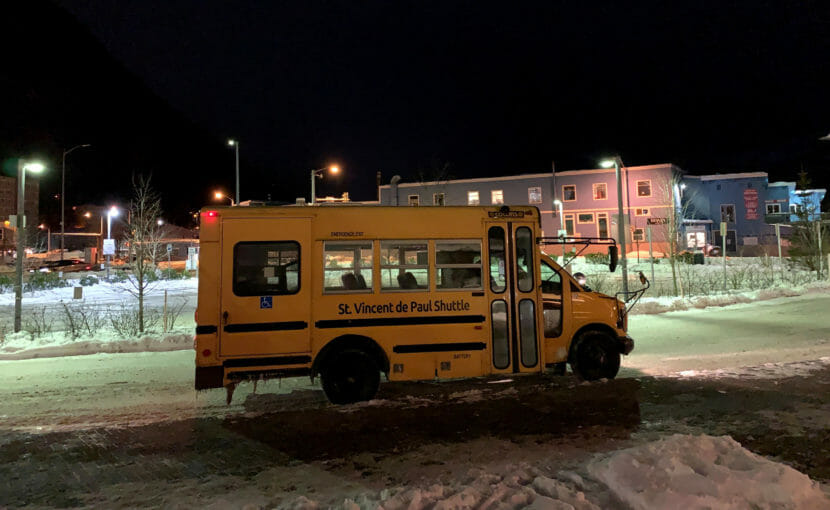
Warming shelter shuttle
A shuttle for St. Vincent de Paul’s warming shelter waits in downtown on Jan. 10, 2020. (Photo by Rashah McChesney/KTOO)

With the National Weather Service expecting heavy snow in Juneau starting Friday afternoon, most shelters will be open during their regular hours throughout the holiday weekend and next week.

The warming shelter at Resurrection Lutheran Church will be open every night through at least Sunday, Jan. 1. The shelter opens nightly at 10:30 p.m., but staff sometimes open by 9 p.m. during extreme weather.

The Glory Hall will remain open during the day throughout the holidays. Check-in for overnight stays at their emergency shelter near the airport is at 9:30 p.m. They offer three meals and a snack each day. Interim executive director Chloe Papier said Congregation Sukkat Shalom will make dinner on Christmas Eve, and Glory Hall staff will cook Christmas dinner.

The Shéiyi X̱aat Hít Youth Shelter and AWARE’s emergency shelter will remain open 24/7 throughout the holidays.

The Zach Gordon Youth Center will be closed Saturday through Monday this weekend and next weekend. Juneau’s public libraries will be closed on Sunday, Monday, and Jan. 1 and 2.

Anchorage Assembly reluctantly approves adding more beds to Sullivan Arena shelter

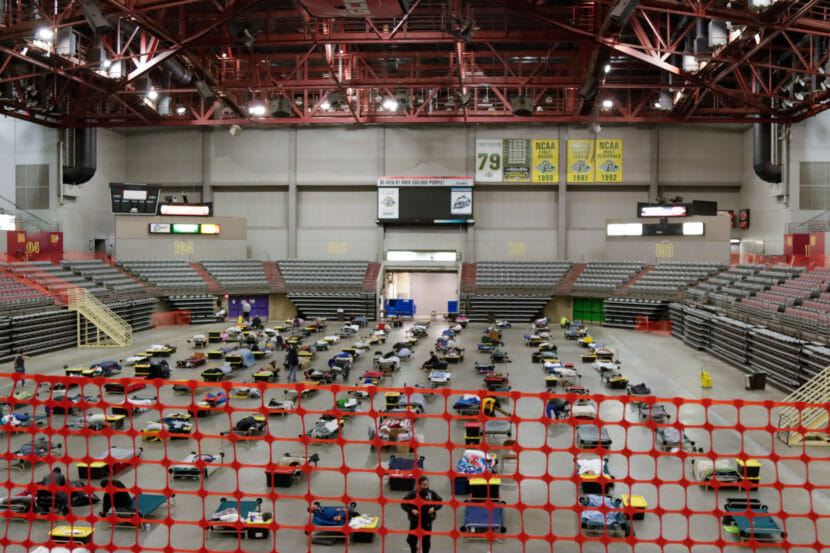
Cots arranged in rows on the floor of an arena.
The Sullivan Arena, Anchorage’s low-barrier emergency winter shelter, can sleep up to 200 people. (Elyssa Loughlin/Alaska Public Media)

Anchorage’s biggest emergency cold weather shelter now has bed capacity for up to 360 people, under certain conditions.

The Anchorage Assembly on Tuesday grudgingly approved adding 160 beds at the Sullivan Arena shelter, green-lighting a version of a proposal that Mayor Dave Bronson’s administration first floated two weeks ago, with the shelter at capacity.

Assembly members said Tuesday that bad communication from the administration, the unauthorized creation of an overflow warming area and the concentration of people who are homeless in one neighborhood didn’t outweigh the humanitarian need.

“Homelessness, and I know some will disagree with this, but it has been politicized,” said Assembly member Randy Sulte, “and the homeless are paying with their lives. We all have a part in where we are.”

Bronson and the Assembly have long sparred over how to house the city’s homeless. Assembly members have said they prefer having multiple smaller shelters to mass shelters. Bronson pushed building a new, large shelter in East Anchorage, but the Assembly rejected spending more money on the project in October.

The Sullivan, formerly a hockey arena and event venue, first opened as a shelter during the start of the COVID-19 pandemic, under then-Mayor Ethan Berkowitz. Bronson closed the shelter this past summer, sending people to a campground in Northeast Anchorage. Then, by fall, the city shut down the campground and transported people back to the Sullivan.

The Assembly authorized up to 200 beds in the arena, which have been full since late November.

There’s also a separate warming area in a bare, concrete hall inside the arena with some tables and chairs. On the coldest days, scores of people crowd in. Many sleep on the ground. Some just stop in for a snack and hot drink. Others are waiting for a bed to open up, which comes with regular meals, navigation services and other amenities.

As many as 178 people have passed through the warming area in a single 24-hour period, said Alexis Johnson, the muni’s housing and homelessness coordinator. Johnson said she can’t offer beds, meal service or navigation services to people in there without exceeding the 200-bed capacity limit, set by Assembly policy.

She encouraged the Assembly to approve adding more beds.

“When we bring people experiencing homelessness inside, and we offer them a bed and services and food, they’re less likely to be in the neighborhood,” Johnson said. “Right now, it feels like there’s a surge in the neighborhood. I want to bring that group of people inside, feed them, give them a bed, give them access to services, and this capacity increase will do so.”

The Sullivan is one piece of the Assembly’s cold weather shelter plan, which includes converted hotels and traditional shelters. Other shelters in the city are also at capacity, Johnson said, and cannot be expanded.

At the same time, conditions outside have been inhospitable, to say the least. Several feet of snow have fallen on the Anchorage Bowl in the last two weeks, followed by days of sub-zero temperatures. The Anchorage Daily News counted 24 people thought to be homeless who have died outdoors this year.

James Thornton, representing the Fairview Community Council, told the Assembly Tuesday that the expansion adds to an unfair burden his neighborhood is dealing with. But after touring the Sullivan and seeing the warming area, he supports the expansion.

“We can do better, and I was quite frankly, just sort of embarrassed, as an Alaskan, that that’s what it resorted to: Folks sleeping on the floor like sardines,” Thornton said.

Beyond the immediate need, he said the people the Sullivan is serving need more permanent situations.

Assembly member Austin Quinn-Davidson said the administration’s expansion request is part of a pattern of behavior.

“You know, this feels a little bit like the same thing over and over again,” Quinn-Davidson said. “You all do something last minute. Sit around for months, don’t solve problems. Do something last minute. Don’t explain it to anyone. Don’t approach Assembly members and say, ‘Here’s what we’re looking to do and this is why.’ And then expect us to vote on something without any knowledge of it. And frankly, it just feels like amateur hour.”

Some members of the Assembly — and the recently fired municipal manager, according to the Anchorage Daily News — have said simply opening the warming space inside the arena violated city code governing the use of the Sullivan Arena as an emergency shelter.

Assembly member Forrest Dunbar asked Bronson why he didn’t declare an emergency to address the unmet shelter need, which would resolve the authorization issue.

“At the end of the day, winter isn’t an emergency,” Bronson told Dunbar. “Cold weather in Alaska is not an emergency. … As I stood there in the warming shelter looking at people crowding in — I had to take action. At the end of the day, I was forced into a moral dilemma, and I chose the one that took the path that protected people in cold weather.”

Before passing the expansion 10-0, the Assembly amended the administration’s original request with several sideboards: The expansion authorization expires Jan. 27, other low-barrier shelters in the city must be near capacity for the extra beds to be authorized and, when authorized, the Assembly and nearby community councils must be notified.

Ketchikan’s housing crisis could cost the community a generation, planning director says

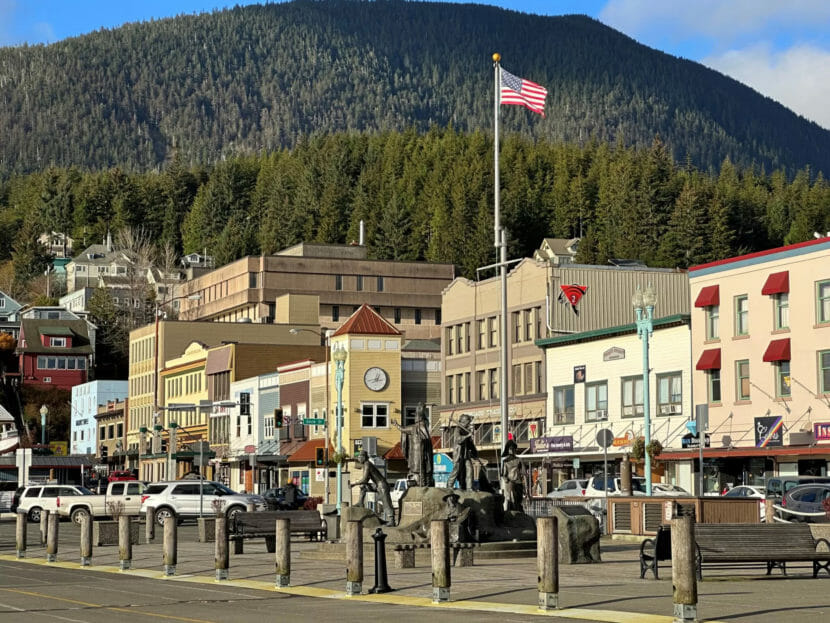
""
Buildings line Front Street in Ketchikan on October 22, 2022. (Eric Stone/KRBD)southeas

Ketchikan’s elected leaders need to decide what future they want for the community. That was one message delivered to the Ketchikan Gateway Borough Assembly on Monday by Planning Director Richard Harney.

“What is it that we want to export out of this community?” he asked. “Do we just want to export the memories and the experiences of the visitors that come here? And that’s fine, if that’s what we want to do. But if that’s what our main focus is, the visitor industry, we’re also going to be exporting our children.”

The remarks came during a discussion of short-term rentals in Ketchikan and their impact on the community’s housing shortage.

nationwide study in 2020 found that increases in the number of units listed on the short-term rental service Airbnb corresponded with hikes in rents and home prices. A separate study in Los Angeles found that short-term rental services like Airbnb and VRBO distort the housing market by taking long-term rentals off the market and displacing residents of affordable homes.

The specific impact of short-term rentals on Ketchikan’s housing market is not clear, though Harney said the problem is especially pronounced in communities that serve as tourist destinations.

But one thing is clear: housing is tough to find and expensive in Ketchikan. And Harney said because of that, only one of his five children might stick around.

“I know at least one assembly member, two assembly members — their children are no longer living in this community,” he said. “They can’t afford to live here. They can’t afford to work here.”

The Ketchikan Gateway Borough doesn’t have firm data on the number of short term rentals in the community. But Harney said that based on rough, back-of-the-envelope estimates from various sources, it’s likely that about 250 of Ketchikan’s homes are listed as vacation rentals during the summer tourism season. And Harney said he can’t blame people for taking advantage of the opportunity.

He used his own home as an example. Citing data from the short-term rental analytics site AirDNA, Harney said he could make about $20,000 a year renting out his family home through a service like Airbnb or VRBO.

“What this is telling me is that I should move to another community, and I should rent my house as a VRBO that’ll pay my mortgage on this property, and also the mortgage or at least a portion of the mortgage somewhere else,” he said. “As a community member, that bothers me.”

He called on the assembly to take concrete steps to assess the impact of short-term rentals on Ketchikan’s economy.

And he offered a few options. The borough could pay a consultant to study the problem or try to collect the data itself. The assembly advanced a measure last month that would require owners of short-term rental properties to register for a free permit at the borough.

But Harney said an amendment included in the measure that would require owners to register just once instead of each year would hamper the effort.

“It kind of defeats the whole purpose,” he said. “Because we can’t track it from year to year, we can’t see where the increase in number is happening, or decrease, or where they’re located, where they’re being relocated, whether or not somebody stops from having one, starts one up that type of thing. If it’s a one time thing, it’s a snapshot in time.”

As a third option, Harney said the Alaska Municipal League was “actively pursuing” a contract with a software company to track vacation rentals around the state in an effort to ensure they’re paying taxes.

“So they will scour Airbnb, VRBO and any of these other other websites that are out there, and they will look for it, and they will then actively let us know who or the community know who’s operating VRBO or a short-term rental,” he said.

Housing is increasingly a problem for Southeast Alaska businesses — the economic development group Southeast Conference identified it as a top issue hampering business growth in a recent report.

Assembly member Jaimie Palmer works in the tourism industry. She highlighted the impacts the housing crunch has on the business environment.

“The regional issue around that is immense, because we can’t have a robust tourism industry if we can’t house workers,” she said. “It’s a double edged sword. Everybody wants to have this robust industry, but where do we put them?”

But assembly members didn’t appear to express a consensus about the best way forward.

Assembly member Judith McQuerry said she’d like to see the borough more aggressively pursue unscrupulous owners who don’t pay hotel or sales taxes on their properties.

“I think it behooves us to crack down on the cheaters and make life as easy as possible for the good guys,” she said.

Assembly member Jeremy Bynum said he would not support any measures that impose fees or penalties on short-term rental owners who abide by borough code.

“We don’t want to interfere with … private property ownership, in my opinion,” he said. “Also, these are providing housing for industries that we want.”

He said the borough should focus the “majority of (its) efforts” on opening up land for housing development.

Assembly member Grant EchoHawk supported the Planning Department’s pursuit of more data, saying it was important to pursue all available avenues to get more housing on the market.

“There’s a lot of moving parts here. This is just one section. So what I don’t want us to do is … to in any way, discount this conversation and just say, well, while we need to focus on these other things,” he said. “We also need to focus on those other things — plus this.”

He also suggested changing the borough’s zoning code to encourage more housing development.

Ketchikan’s Borough Assembly is scheduled to consider a package of reforms aimed at addressing the short-term rental market on Monday. But borough officials are encouraging the assembly to vote down the package and wait until its annual policy meeting in January to discuss the issue in more detail.

Site notifications
Update notification options
Subscribe to notifications