Transportation

IFA Hollis dock breaks, cancels Sunday sailings

(Photo courtesy KRBD)

The Inter-Island Ferry Authority canceled its Sunday sailings between Prince of Wales Island and Ketchikan because the Hollis dock was broken. That left about 150 people stuck on one island, or the other.

This is the IFA’s busy season, so the timing was not good. The problem was with the motor that raises and lowers the bridge, allowing vehicles to get on and off the ferry.

“The ramp was stuck in the down position, so when we figured we weren’t going to be able to fix it in the short term, we had to have everybody get off the vessel, and fly somebody over from Ketchikan to help us out,” said IFA General Manager Dennis Watson.

He said the ferry Stikine’s run from Prince of Wales Island to Ketchikan was somewhat light, but the return trip was packed.

About 150 people and 33 vehicles had booked passage for Sunday’s IFA voyages. That doesn’t include the passengers who don’t book in advance, which often adds another 20 percent.

A lot of those people decided to wait for the next day’s ferry trip.

“Yeah, today is going to be a real massive load coming back from Ketchikan,” Watson said.

And Monday’s sailings were sold out, with a waiting list. People can fly between the two islands, but that’s a more expensive option.

Watson said the Hollis dock, which is owned by the Alaska Department of Transportation, is due for a complete rebuild soon.

“The contract has been advertised,” Watson said. “All proposals are due in soon and they’re going to open on the seventh of July. State DOT will be in charge of administering that contract.”

If all goes well, construction will start next spring.

“It would be most convenient for us if it could be early in the spring, before our busy season started,” Watson said. “That would be easier on everybody. We’ll see how that works out, though.”

The Hollis dock and related equipment are about 30 years old. It was installed for the state ferry Aurora, which used to serve POW. The Aurora now sails in Prince Williams Sound.

The Inter-Island Ferry Authority has daily trips between Ketchikan and Prince of Wales. http://www.interislandferry.com/

All hope for Knik Bridge rides on federal decision

Alaskans who want to see a bridge across Knik Arm would have envied Los Angeles last month. In a U.S. Senate hearing room, California representatives were high-fiving themselves for winning more than $2 billion to extend a subway to the city’s Westside.

“Listen to these numbers. They’re even big by Washington standards,” California Sen. Barbara Boxer boasted. “In addition to the $1.25 billion, full funding grant agreement … the Purple line extension project is also benefiting from an $856 million loan made possible by the TIFIA Program.”

That program, the Transportation Infrastructure Finance in Innovation Act, is the one Alaska hopes will lend the state more than $340 million for the Knik Bridge.

Alaska Gov. Sean Parnell on Friday signed a bill to finance a $900 million bridge across Knik Arm. A decade ago, bridge proponents hoped to fund the project entirely with federal earmarks. But then Congress banned earmarks, in part due to public outrage over this bridge and another in Ketchikan, both derided nationally as “bridges to nowhere.” Now, the Knik project all depends on winning a low-interest TIFIA loan.

Boxer is one of the chief proponents in Congress of the increasingly popular lending program. Year after year, demand for TIFIA funds far outstrips supply. As Boxer explains it, the program is designed to lend the money needed to get a project started while other revenues roll in more slowly.

“Because when you put together projects like this, they’re enormous, and they’re enormously important, so you gotta use all the options at your disposal,” she says.

Los Angeles Mayor Eric Garcetti, who flew to Washington to celebrate the federal funding agreement, thanked his senators but says the real reason his city got the money is that Angelenos reached into their own wallets first. Garcetti commended local voters for approving a 30-year sales tax to pay for transportation.

“We’re not coming here hat in hand with an empty hat. We come here to get it topped off,” he said at the podium in the U.S. Senate hearing room. “We know that in this changed landscape you have to bring something to the game in order to get more, and we consistently do.”

Alaska isn’t coming entirely hat in hand to the feds, either. A few years ago, Knik bridge proponents asked TIFIA to finance nearly half the bridge costs. But federal officials said they wanted to see more of a state commitment — more “skin in the game,” to use the metaphor that’s ubiquitous in TIFIA discussions. So now the state is asking TIFIA to cover about a third. Another third would come from other federal transportation dollars. And for the state’s third, it plans to issue up to $300 million in bonds, but only if it gets the TIFIA money first. The plan is to pay it all off with tolls, estimated at $5 per car.

If there’s not enough toll revenue left after operation and maintenance, the state treasury might be on the hook for the bonds — but not the TIFIA loan. Alaska debt manager Devon Mitchell told the state Senate finance committee this spring if tolls fall short, the feds would have to negotiate some other option.

“None of those options is going to include the state of Alaska appropriating money to pay that TIFIA debt,” he said.

Alaska Transportation development director Jeff Ottesen told state legislators the financing plan is smart for the state.

“We’re getting a chance to build this and, quite frankly somebody else is going to pay a large piece of the tab,” he said.

Ultimately, the U.S. Transportation Secretary decides which projects TIFIA will fund. The department made no one available to interview for this story. But Steve Ellis, vice president of Taxpayers for Common Sense, says the very reason Alaska might like the plan – limited financial commitment — makes it unattractive to federal policymakers. Ellis says Alaska isn’t really bringing revenues to the deal; it’s bringing more debt.

“People may argue these bonds are skin in the game,” he said, “but in reality it’s still somebody else’s skin.”

His group claims credit for pinning the “Bridge to Nowhere” label on the Ketchikan bridge and helped spread the taint to the Knik project as well. Last year Taxpayers for Common Sense gave the Knik project a second “golden fleece award,” a badge intended to highlight wasteful federal spending. Ellis predicts the U.S. Transportation Department won’t like the loose repayment terms Alaska is proposing.

“Certainly if you’re saying that whatever scraps are left will go to pay off the TIFIA loan, that’s going to raise up the hackles of the feds,” he says.

Knik bridge proponents shouldn’t count on Sen. Lisa Murkowski intervening with the department. She says she has concerns about the cost, the routing and the fairness of the project to other parts of the state. As far as winning TIFIA funds, she thinks it’s an uphill battle. Murkowski says it’s unfair, but nationally “big Alaska bridge project” remains synonymous with pork.

“That has clearly stuck, and you can open a newspaper here in Washington, D.C. today and you will still see reference to the ‘Bridge to Nowhere,’” Murkowski says.

A spokesman for Alaska Congressman Don Young says he’ll support the bridge for TIFIA funds. But he notes Young sent hundreds of millions of dollars to the state to build the bridge back in 2005.

“Unfortunately, the State of Alaska chose to spend the majority of that money on anything but the Knik Arm Bridge,” Young spokesman Matt Shuckerow said in an email, “and now, nearly a decade later, they are scrambling to fund the project and squabbling over financial measures that require them to beg President Obama’s bureaucrats for even more federal dollars.”

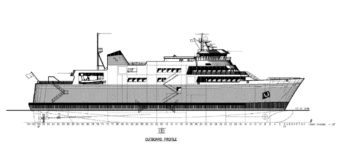
The state ferry Columbia returns

M/V Columbia
M/V Columbia sails into Vigor Shipyard in Portland last year for dry dock. (Photo courtesy AMHS)

The state ferry Columbia is transporting passengers again this week after being out of commission for nearly nine months.

It’s one of the marine highway’s biggest vessels. Jeremy Woodrow, the Alaska Department of Transportation spokesperson, says the ferry schedule should be back to normal.

“The good thing with the Columbia coming back online is that the Malaspina will now return to its day boat status in Lynn Canal so folks who live in those three communities which would be Juneau, Haines, and Skagway will see the Malaspina on a nearly daily basis now,” Woodrow says.

The Columbia was having its engine, propellers, and lifeboat replaced in Portland. The total cost of the repairs was an estimated $30 million. It was slated to be back in service last week. But on its way to Bellingham, the ship encountered some problems: the oil pump wasn’t working correctly.

“So they were able to actually identify the problem on the spot and work with getting the part replaced and work on doing the repairs,” Woodrow says.

Woodrow says, although late, the ferry is coming back at a good time. “June and July are the busiest months for the ferry system. With one of the largest ferries back in service it helps us accommodate passengers that want to get from community to another.”

To check the ferry schedule visit: http://www.dot.state.ak.us/amhs/

Juneau airport gets second scanner for checked baggage

Juneau airport baggage scanning machines
TSA Officer Noah Teshner guides a bag into the new CT scanner. The Alaska Airlines conveyor belt, left, runs to the original machine. (Photo by Rosemarie Alexander/KTOO)

TSA and Juneau airport officials hope the recently expanded screening system for checked baggage will reduce airline departure delays.

After numerous requests, federal funding was finally realized for a second machine at the Juneau International Airport, just in time for the arrival of Delta Airlines.

Delta’s daily summer flight between Juneau and Seattle adds another aircraft at the busiest time of the day, says deputy airport manager Marc Cheatham.

“There’s four aircraft in the morning from 6 o’clock to about 8 o’clock,” he says. “And adding on Delta’s aircraft, that’s five aircraft now. That’s a lot of bags to be going through one machine.”

The reconditioned second scanner cost about $330,000, according to TSA spokeswoman Lorie Dankers. Both machines were made by Reveal Imaging Technologies, and use computer tomography (CT scan) to detect explosives and produce a 3D image.

“We know that not only today, but for several years, explosives remain the number one threat against aviation security. So all checked baggage must be screened,” Dankers says.

Bag exits CT scanner
A bag exits the new CT scanner. The scan produces a 3-D image, seen on a monitor (above left). An alarm sounds if the computer flags a bag as suspicious. (Photo by Rosemarie Alexander/KTOO)

If the scan flags a piece of luggage as suspicious, an alarm sounds and a TSA officer pulls it aside for additional screening.

“We’re going to go inside the bag and look specifically for an item that alarmed the machine,” says TSA officer Noah Teshner. “Once we’ve located that item, we’re going to run a test on it and ensure the item is permitted to go. And then we’re going to repack the bag and send it on its way.”

Teshner says TSA does not open luggage unless the alarm goes off.

At check-in, Alaska Airlines’ ticket agents put baggage on a conveyor belt that runs to the original CT scanner. The Delta desk doesn’t have conveyor access yet.

“Delta employees actually cart them in and put them up the rail and into the new CT,” Cheatham says.

With four aircraft departing in the morning, Alaska Airlines is also utilizing the second machine.

“They can have an employee here that sends it from the bag belt system to the new CT 80 and through it, so they can do a lot more bags much faster,” Cheatham says.

Delta’s seasonal service ends in September. He says Delta will likely not get its own conveyor belt system until the carrier comes back to Juneau next summer.

Even without it, he says, the new baggage screening equipment is expected to end the morning bottleneck.

“The delays for the aircrafts will be limited, hopefully,” Cheatham says.

Related Story:

TSA Pre-Check looking for Southeast applicants

Downtown parking system not a city priority

The city has no current plans to replace downtown coin-operated parking boxes. (Photo by Lisa Phu/KTOO)
The city has no current plans to replace the downtown coin-operated parking boxes. (Photo by Lisa Phu/KTOO)

Juneau city manager Kim Kiefer does not expect a resolution anytime soon in the city’s lawsuit with Nevada company Aparc Systems over faulty parking machines.

“We’re in the collection of all the information piece right now, and so I don’t anticipate, if it goes to court, it probably won’t go to court until mid to latter part of next year is my guess at this point,” Kiefer says.

The city terminated the contract with Aparc Systems last December and initiated a lawsuit after the city invested nearly a half million dollars in the problematic parking system. The Juneau Assembly approved $110,000 for legal fees to outside counsel for the litigation, and so far, about a third has been spent.

Kiefer says the low-tech coin-operated boxes for hourly parking are working. Motorists are paying 75 cents an hour to park in three downtown parking lots. The city still offers two free hours of street parking.

“The piece that we’ve lost now with the Aparc system not in place is that before people could go onstreet, they’d register their car and if they knew they were going to be there for more than two hours, then they could go ahead, pay that amount for an extra hour and pay it right then and have it taken care of. Or, maybe they’re shopping and realize, ‘Oh, it’s going to be longer than what I thought,’ they could have gone to any of those kiosks and put more money into in. So that’s the piece we don’t have now,” Kiefer explains.

The coin boxes were intended to be a temporary fix, but Keifer says the city has not determined a permanent parking system solution.

“Given that we had a $6 million budget deficit this last year and we have a $9 million budget deficit next year, that’s taken a back burner at this point,” she says.

Keifer anticipates a new system will cost the city at least $500,000.

Meanwhile, she says the Downtown Transportation Center and the Marine Parking Garage are heavily used. Both have waitlists for permit parking spots.

Marine highway juggling ferry schedules

The Alaska Marine Highway ferry M/V Columbia sails into Vigor Shipyard in Portland last year for dry dock. (Photo courtesy AMHS)
M/V Columbia sails into Vigor Shipyard in Portland last year for dry dock. (Photo courtesy AMHS)

The state ferry Columbia will not return to service until June 18th, about seven weeks later than expected.

The ship has been out of service since September for a major overhaul, including new engines.

Now there’s a faulty oil pump in the port engine.

State transportation department spokesman Jeremy Woodrow says it could impact some Southeast Alaskans returning home from Celebration, the biennial dance and culture festival in Juneau.

“We’ve revised the schedules for the Fairweather, the LeConte and the Malaspina. And there are going to be some passengers that might want to try get home on Sunday that might not get home until Monday,” he says.

The Columbia went into dry dock at Vigor Shipyard in Portland on September 1, 2013. Work was supposed to be done by May 1. There have been a number of delays since and when the ferry couldn’t make a Wednesday sailing, the Marine Highway pushed the date to next week.

Woodrow says it was fairly easy to absorb Columbia traffic early in the season. With Celebration, it’s more of a juggle for Marine Highway schedulers.

“We revised the schedule around when we knew the Columbia was going to be late, so we could get folks to Juneau. Now we have to move the vessels around once again,” he says. “The ships are full end of this week and through the weekend. That’s why we made some schedule changes so we can get them all home.”     

Woodrow says the Columbia left the Portland shipyard last Friday. The oil pump problem happened in transit to Bellingham, Wash. He says a new oil pump is being shipped from Finland.

Ferry schedule changes can be found at the Alaska Marine Highway System website, or by calling local ferry reservation offices.

Site notifications
Update notification options
Subscribe to notifications