Juneau Schools

Juneau schools could benefit from knowing graduates’ futures

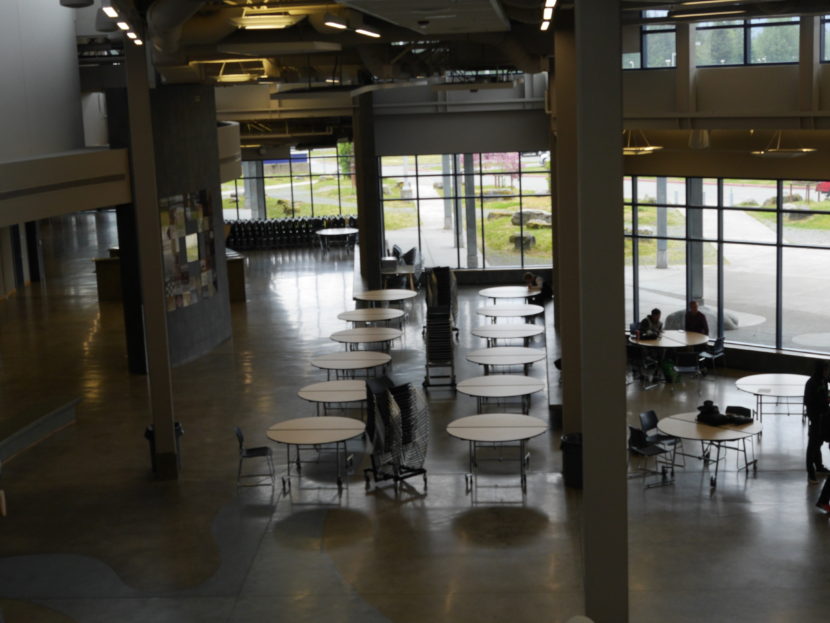
Thunder Mountain High School Commons
Thunder Mountain High School Commons (Photo by Quinton Chandler/KTOO)

The Rusted Root single, “Send Me on My Way” is the class song for seniors at Thunder Mountain High School. And it’s appropriate when you consider Juneau’s three high schools are all asking the question: send you where?

The Juneau School District will see more than 300 seniors walk across the stage Sunday. Some students seem to know their next steps and are looking forward to the end of high school. But the district might never know if most of them follow through on their plans.

Kelley Olson is a senior at Thunder Mountain High School and she’s on track to graduate. She has decided to study biology this fall at Pacific Lutheran University in Tacoma, Washington.

“I love science so much. It’s definitely one of my favorite things and also biology … I love how different things work and everything,” Olson said.
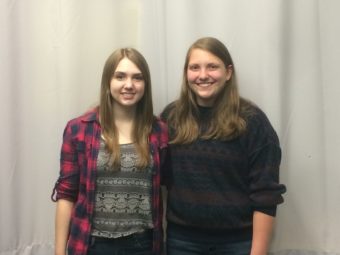
Kelley Olson (right) with her friend and fellow senior Deanna Hobbs.
Kelley Olson (right) with her friend and fellow senior Deanna Hobbs. (Photo by Quinton Chandler KTOO)

She wants to be a doctor. She doesn’t mind blood, so specializing in surgery is what she’s leaning toward.

“I’m possibly thinking of going into the military and helping them out there or going into (a) hospital,” Olson said.

Olson didn’t randomly stumble onto her dream and her plan to make it real. School counselors helped her rule out options and successfully apply to colleges and scholarship programs.

Without that support Olson thinks it would’ve been much harder and taken her longer to decide on a career path.

Terri Calvin is the career adviser for Thunder Mountain and Juneau-Douglas high schools, and she’s worked closely with Olson. She says junior year is the latest they start talking with kids about the future and right now about 80 percent of her seniors have a general idea of what’s next for them.

“Now and then you get the one who comes in and the week after school we’re spending the week in the career center making some plans but for the most part they’ve had exposure to their choices throughout high school,” Calvin said.

But that doesn’t mean plans are set in stone. The truth is that the Juneau School District doesn’t know where most of their past graduating seniors ended up and they probably won’t ever find out how many of this year’s class sticks to their initial plans.

“Tomorrow, at our practices, each school will do an exit survey and the kids will give me an idea what their plans are for next year. Whether they follow through with that or not is a different story,” Calvin said.

The district gives that survey each year but they don’t follow up on it after kids presumably get jobs, graduate college or do whatever they said they would do. Calvin says the survey helps her office and the district as a whole find out whether they’re giving their seniors what they need, and it helps them improve. But she thinks digging a little deeper to discover where graduates go in the future could help on a broader level.

“They fund this, the governor’s performance scholarship, to keep our students in the state of Alaska to go to school so that they stay here and live. And it would be nice to know if that’s what happening,” Calvin said.

According to the Juneau School District the biggest obstacle to a follow up survey is the cost and resources required. The district would prefer performing the survey in-house if possible, but there are also informal discussions of contracting the work out to a third party.

A district spokesperson said a follow up to the exit survey would be extremely valuable, but there are no official plans to start one.

Olson knows what she’ll put down on the survey, but she’s not naïve about the possibility she’ll change her mind.

“One of my friend’s speeches was, ‘the future is always uncertain.’ And you never know what the future holds for you, so I could go in with (the) expectation that ‘Oh, I’m going to try and major in biology,’ but there’s always the possibility that I’m going to find a different thing that I love and I could go into that,” she said.

No matter what happens, Olson says she’s “excited for what the future holds.”

If they want to know too, the school district may have no choice but to cross their fingers and hope Olson, and other graduates send a thank you note with their story of life after high school.
Juneau teachers, school district agree to new contract

The Juneau School District offices. (Photo by Heather Bryant/KTOO)

The Juneau School District and Juneau Education Association have reached a tentative agreement for a new contract.

Terms of the agreement were not disclosed in a joint press release issued on Saturday. They will be announced after the agreement is ratified by both the School Board and JEA membership.

Representatives for both groups said they worked well together to reach a fair settlement.

JEA represents 355 teachers and certified staff in the Juneau School District.

Just last month, the District and Juneau Education Support Staff also reached agreement on a new three-year contract. Other terms of the agreement were not disclosed.

Scholarship program boosts training for Alaska Native teachers

Juneau’s Joshua Jackson earned both Bachelor’s and Master’s degrees in Education in the PITAAS program. (Photo courtesy of UAS)
Juneau’s Joshua Jackson earned both bachelor’s and master’s degrees in education in the PITAAS program. (Photo courtesy of UAS)

While 15 percent of the state’s population is Alaska Native, fewer than 5 percent of its teachers are.

To address this imbalance, the U.S. Department of Education and the University of Alaska Southeast have teamed up to create a scholarship program to groom future teachers and administrators while they’re still in college.

When children think about what they want to be when they grow up, many things would top the list above teacher. But there are exceptions.

Ronalda Cadiente-Brown says teaching can be really appealing to those of us who had good early experiences in education.

“I would venture to guess that if you asked anyone about their experiences in education … you would have an answer. As well as if you asked, ‘Who was your least favorite?’ you would have an answer. Everyone has that experience.”

Cadiente-Brown is the director of Preparing Indigenous Teachers & Administrators for Alaska Schools — or PITAAS. It’s part scholarship program, part support network for helping Native students find success training for a challenging career.

“Oftentimes if they’re coming from a rural area, they’re feeling the heartstrings to be home. Life goes on, and the challenges of dealing with tremendous loss and grief while they’re a student. I’ve seen students step away for a year to get their footing, and return back. So there are a lot of different pathways that are unique to any individual.”

PITAAS is funded by the U.S. Department of Education, but it’s a competitive program. Cadiente-Brown says she accepts about 10 students a year. Applicants have to have been in college for at least two years, with a 3.0 minimum grade-point average. Education majors, though, can enroll as freshmen. Some of her students are already in graduate school.

She says she’s seen a dramatic shift toward acceptance of cultural traditions, since when her mother was in school. Students no longer have to leave their cultural identities at the door.

“And our work today is really about helping to restore that identity. And colleges play a role in that as well. Look at some of the programming that’s available today. You have Native languages being taught in higher education, which is very different from washing it out of an individual.”

Cadiente-Brown was an assistant principal — and later principal — of Juneau’s alternative high school. Her transition to administration came after earning a master’s degree at Stanford. A Tlingit, she says she often encountered Native students who couldn’t quite wrap their heads around her success. Just her presence would turn around their expectations. And low expectations, she says, were rampant in our public schools.

“Probably the most criminal aspect that I saw was low expectations of Alaska Native students. And kids know it. When I worked with high school students they would again and again share that teachers just don’t care.”

Cadiente-Brown herself could have gone down a much different path. Her generation straddles the line between cultural barriers to success and the opportunity that programs like PITAAS now provide.

She says her own early circumstances shaped her decision to pursue an education.

“I come from a very large family myself. And some of my older siblings became teen parents — highly intelligent, very frustrated with formal education. And I’d have to say that they were some of my very early teachers, because I saw how they were struggling to make ends meet, raising families, that very early responsibility. And I always tell them I took the easy way: I stayed in school.”

Cadiente-Brown has been running PITAAS since 2011. Since the program’s inception 16 years ago, 271 students have received scholarships and 256 have received degrees. 50-percent of graduates come from rural parts of the state, and almost three-quarters are female.

Former Juneau teacher named principal of Mendenhall River Community School

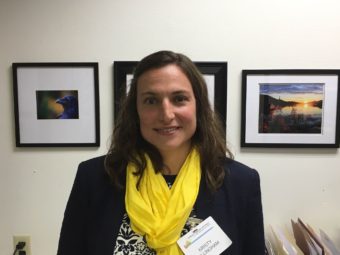
Kristy Dillingham will be the new principal of Mendenhall River Community School beginning in August. (Photo courtesy of Juneau School District)

Kristy Dillingham will be the new principal at Mendenhall River Community School beginning in August.

Dillingham previously taught health, physical education and science in Juneau at the middle and high school levels. According to a news release from the Juneau School District, Dillingham is currently the principal of a pre-K through eighth grade school in Santa Fe, New Mexico.

The school district interviewed five candidates for the position Friday before announcing Dillingham’s appointment Saturday.

Dillingham has two education master’s degrees from the University of Alaska Southeast. She completed her undergraduate studies in recreational management at the University of Southern Mississippi.

Juneau School Board adds back one position for Native Success support

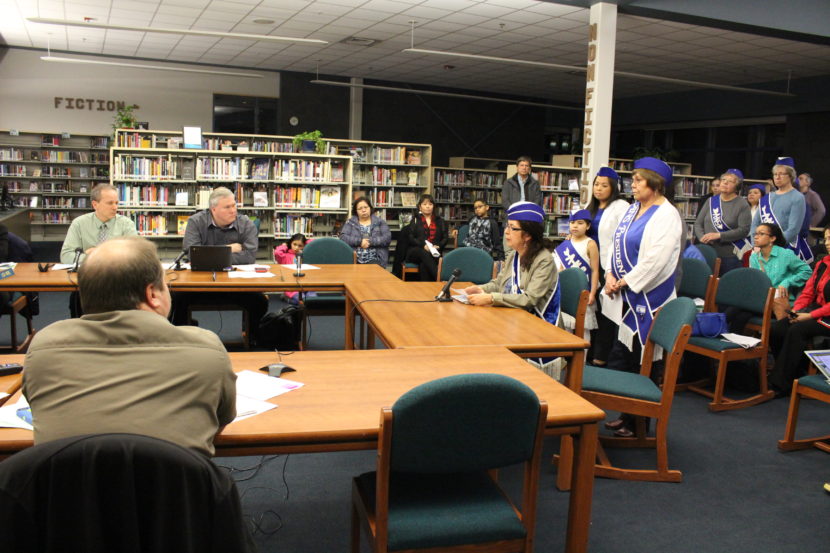
Alaska Native Sisterhood (Photo by Elizabeth Jenkins/KTOO)
Alaska Native Sisterhood former Grand President Freda Westman testifies at the Juneau School Board meeting. About 20 people signed up to testify Tuesday night. (Photo by Elizabeth Jenkins/KTOO)

The Juneau School Board decided to add back one position Tuesday night that was on the cusp of being cut. The budget includes the Tlingit Culture Language and Literacy program, or TCLL. But some program support staff are below the school district’s cutoff for what the governor’s proposed budget will cover. For now, the $35,000 Middle School Native Success support position is safe. 

Members of the Alaska Native Sisterhood, parents and concerned community members told the school board the programs that help Native students graduate should be a higher priority. The school board was taking public comment on its budget — just as lawmakers in the Capitol worked late into the night on the state’s budget, which will affect what the school system can afford.

Here are four voices from Tuesday night’s public testimony to the Juneau School Board meeting: Lorraine DeAsis, Richard Peterson, Barbara Dude and young Kaija Guthrie.

The school board’s final approval for the budget is expected at the end of March. 

Juneau School Board finalizes prioritized list of budget needs and wants

Juneau School Board members finished setting budget priorities Tuesday night, separating essential items from the extras that are contingent on the budget state lawmakers put together.

During an interview on KTOO’s Morning Edition on Wednesday, Superintendent Mark Miller explained that the panel started with a bare-bones budget that would keep schools open. They then tried to prioritize items that could be put back in the budget.

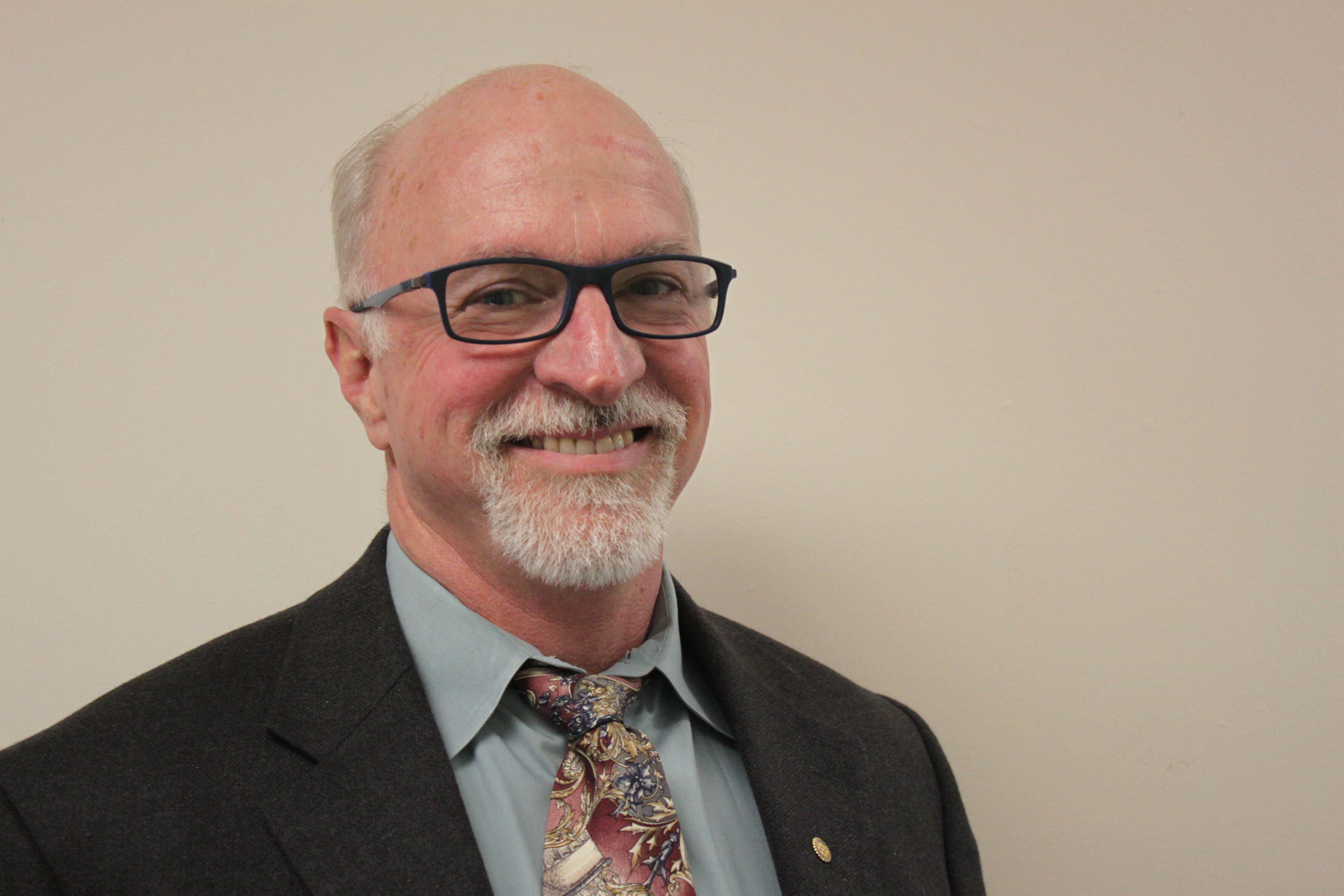
Superintendent Mark MIller
Juneau School Superintendent Mark Miller.

“We were trying to prioritize about $8 million of things that we had done in the past or would like to do,” Miller said. “Between $3.4 million to $3.9 million we felt were the highest priorities to put back into the budget.”

Miller said some of the top priorities included keeping the extended learning program viable, updating the social studies curriculum, retaining a Tlingit language teacher, and keeping class sizes down in grades K-2.

“Everybody agrees that the little guys need as much attention that they can get,” Miller said.

Miller said working from a base budget is a different approach than earlier efforts to just simply cut items from previous budgets.

“That led to some very difficult and poignant conversation,” Miller said. “Rather than come at with the slash-and-burn, we came at with the build from the ground up.”

Miller said it’s better way to look at the problem.

Listen to the interview with Juneau schools Superintendent Mark Miller:

Miller will present the list of priorities during a joint meeting of the school board and Juneau Assembly on March 7. School district staff will flesh out a budget based on those priorities. It will be up for debate and public comment during the school board’s March 8 meeting at Thunder Mountain High School.

Final approval of the school district budget is expected at the end of March.

Site notifications
Update notification options
Subscribe to notifications