Juneau Schools

As first legislative budget cuts emerge, some question rural impact

The community of Selawik, near the mouth of the Selawik River, is home to over 800 people. The site of the village, spread between riverbanks and an island, is also called Akuligaq, meaning "a river fork." (Photo by Steve Hillebrand/USFWS)
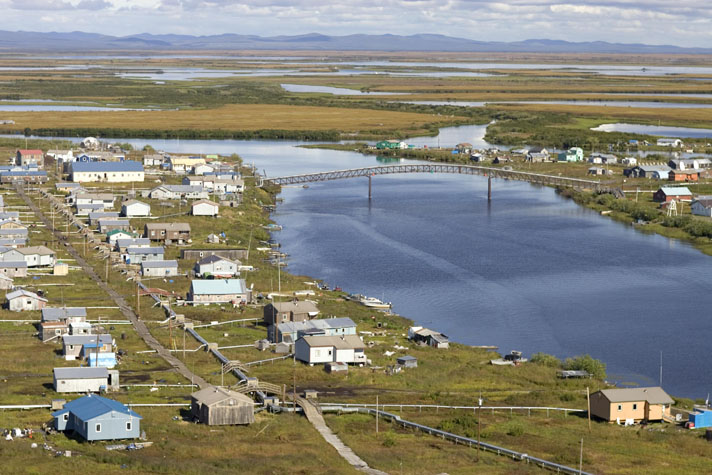
The community of Selawik, near the mouth of the Selawik River, is home to over 800 people. The site of the village, spread between riverbanks and an island, is also called Akuligaq, meaning “a river fork.”
(Photo by Steve Hillebrand/USFWS)

Legislators are looking to cut the state budget deeper than Gov. Bill Walker’s proposal to reduce spending by $100 million.

But some lawmakers – especially those from rural areas — are raising concerns about where these cuts will fall.

More than five weeks into the legislative session, House finance subcommittees recommended the first cuts to the budget for the fiscal year that starts July 1.

They include $9.8 million in cuts to education programs, as well as cutting all $2.7 million in state funding for public broadcasting.

Rep. Daniel Ortiz, a Ketchikan independent, says eliminating the $2 million for a prekindergarten program is a mistake.

“It’s about investing now so that you don’t have higher costs later,” Ortiz said. “And it just makes good economic sense to do this. Yeah, we get the $2 million reduction but, you know, it’s going to be hard for anybody to chart the costs to the state later on down the road.”

Other proposed cuts include eliminating state funding for rural schools and libraries to increase broadband internet access. As well as a state program to fund mentors for teachers, which is aimed at retaining new teachers in rural Alaska.

Wasilla Republican Rep. Lynn Gattis says none of the cuts are easy, but they’re necessary. That’s because the state has a $3.5 billion budget shortfall.

“There’s nobody sitting here, and I suspect nobody in the audience, that’s very comfortable with any of these cuts,” Gattis said at an education subcommittee hearing. “Somebody said to me, ‘You’re making me make a choice: the right arm or the left arm. And the unfortunate part is — which arm do you write with — is where we’re at in making these cuts.”

Juneau Democratic Rep. Sam Kito says the state should be looking for new revenue, like Walker has proposed, before cutting programs that disproportionately benefit rural areas.

“The libraries in many of these communities become the focal point in trying to maintain connections with the outside world to try and engage students with technology,” Kito said.

For Anchorage Republican Rep. Mike Hawker, the debated education cuts are a small fraction of the overall cuts that are needed to close the state’s budget gap. He contends that the state expanded programs during oil boom years that it can no longer afford.

“The decisions that I want to see coming out of this Legislature are the difficult decisions to reduce our spending to a level that is sustainable,” Hawker said. “To do that, there is no question that we are going to have to be reducing programs in areas across the state that are good, that are desirable that people want but that respectfully we just can’t afford these days.”

Nome Democratic Representative Neal Foster says he hopes, before the budget is completed, the effects of the cuts are geographically balanced.

“I agree that cuts have to be made,” Foster said. “I’m sad to see that so many of these cuts are being made out of rural Alaskan programs. And so, I know it’s the beginning of the process, so I’m hopeful.”

Subcommittees are completing their work on the budget over the next week.
Instead of budget cuts, school district asks ‘What can we add?’

The Juneau School District held a public forum on the budget Feb. 2, 2016 at the Juneau-Douglas High School library. (Photo by Lisa Phu/KTOO)
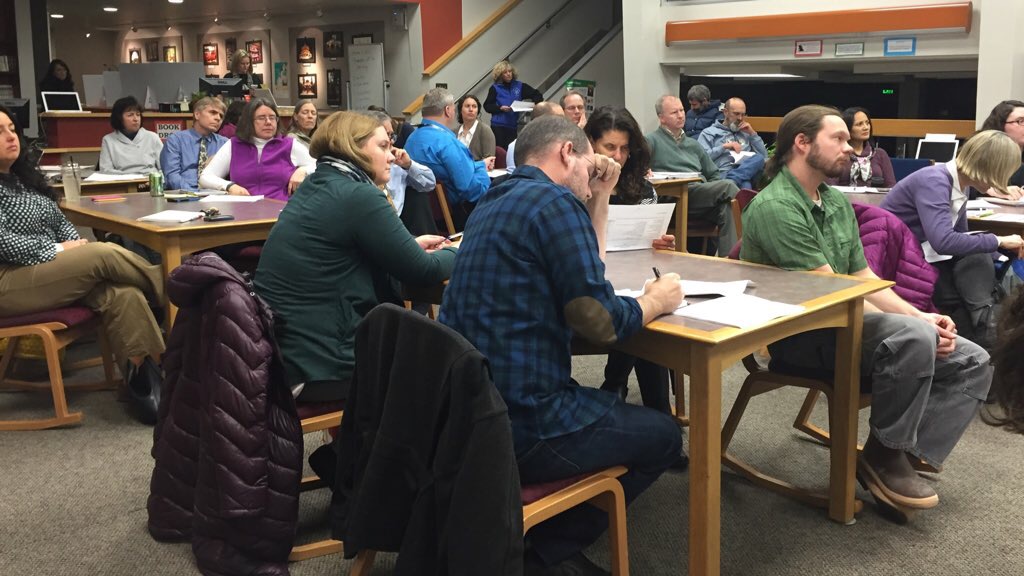
The Juneau School District held a public forum on the budget Feb. 2 at the Juneau-Douglas High School library. (Photo by Lisa Phu/KTOO)

The Juneau School District is facing a sixth year of budget cuts, and it’s handling the budget process a little differently than in recent years.

Superintendent Mark Miller laid out the challenge at a public forum on the school budget last week.

“If we rolled our current budget over into next year with nothing different, just rolled this year’s budget into next year and did exactly what we’re doing now, we’d be about $1.2 million short,” Miller said.

In the past, the question was, what should we cut?

“And so we’re trying to do it from another way which is if we start with a basic budget or just if we were to do what we had to, to keep the doors open, then what more could we add to get to our final number?” Miller said.

This basic budget totals just over $60 million. On top of teachers and principals, it include items like utilities, insurance and custodial services. Under this bare bones budget, an average kindergarten, first or second grade classroom would have 25 students. Current class sizes average 22.5. Funding-wise, that’s a difference of about half a million dollars.

The district anticipates being able to spend an additional $4 million.

Dzantik’i Heeni Middle School principal Molly Yerkes said her site council struggled with what to prioritize. Naturally, the group wanted to focus on middle school. Instead, its number one priority is keeping K-2 class sizes small.

“We really find at the middle school level that students who have a solid reading foundation, which they receive at those primary grade levels, it costs so much less to teach students to read at that age than it does in middle school or high school,” Yerkes said.

Juneau-Douglas High School principal Paula Casperson, representing all three Juneau high school principals, painted a bleak picture of what more budget reductions will mean.

“It isn’t a stretch to say that we believe that we could very quickly be at the point where we can only offer classes to students who need them in pursuit of their diploma, that the free and public education that has allowed so many generations of students to access classes above and beyond the 23 credits may not be an option for our schools in the future,” she said.

The high schools are desperate to hold on to any full-time employees, Casperson said, including two high school counselors that aren’t in the bare bones budget.

“While we have long supported programs and add-on supplemental things, such as drug testing for our student athletes or intramural programs for our school days, we don’t feel like we can at this point, because they don’t have the connection into the classrooms,” Casperson said.

The district is offering the public another opportunity to provide input on the budget at 6 p.m. Monday at Thunder Mountain High School. Comments can also be emailed to budgetinput@juneauschools.org.

The district plans to finalize the budget at the end of March.

28 teams compete in 9th annual Juneau Robot Jamboree

Teams from Southeast Alaska competed during the Juneau Robot Jamboree at Centennial Hall on Saturday. (Photo by Lisa Phu/KTOO)
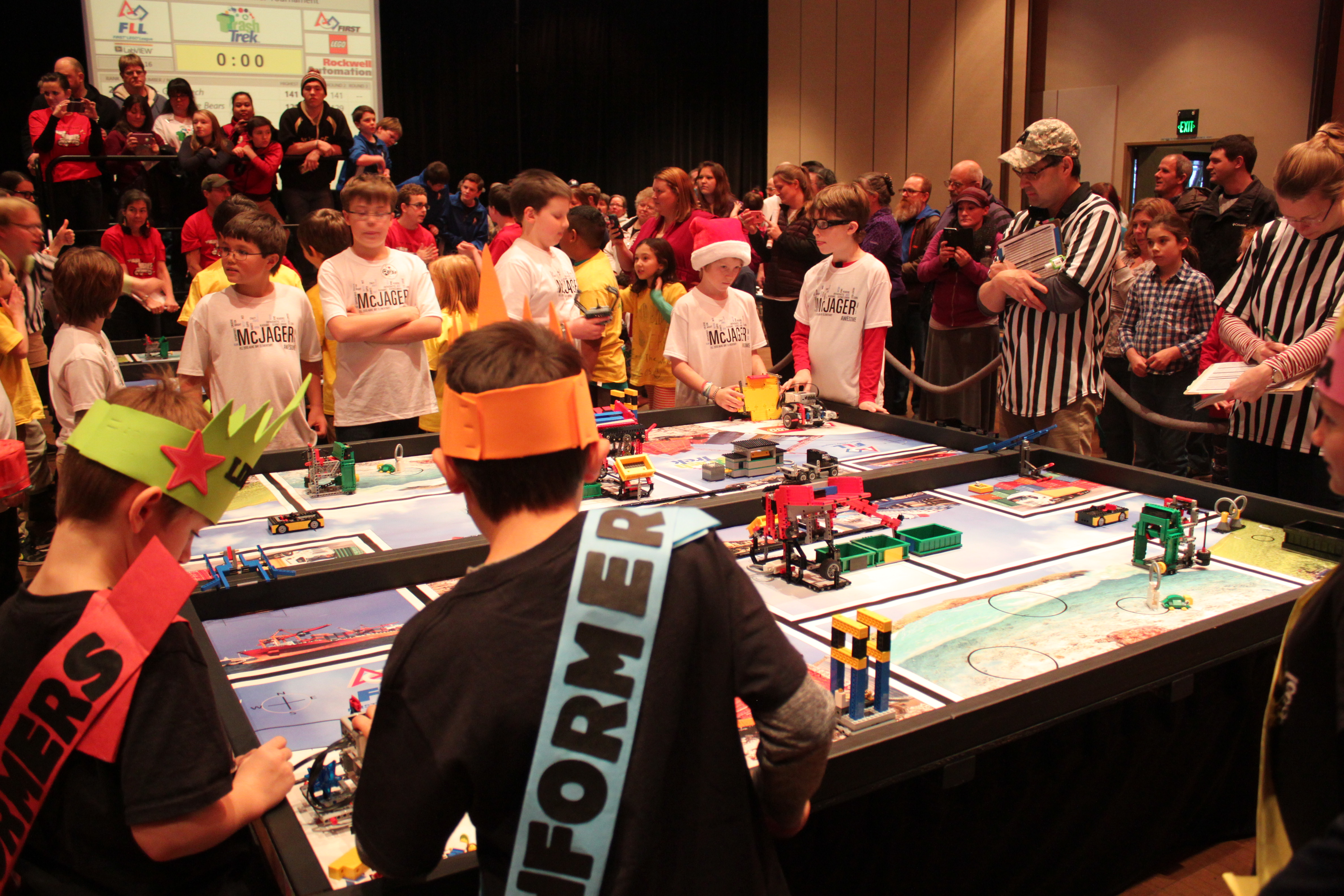
Teams from all over Southeast Alaska competed during the Juneau Robot Jamboree at Centennial Hall on Saturday. (Photo by Lisa Phu/KTOO)

Hundreds of kids took over Centennial Hall Saturday for the 9th annual Juneau Robot Jamboree.

Twenty-eight teams from Juneau, Ketchikan, Skagway, Hoonah, Coffman Cove and Metlakatla put their robots to the test to qualify for the FIRST LEGO League state tournament in Anchorage.

Rebecca Soza is the STEM program manager at the Juneau Economic Development Council, which organized the all-day jamboree.

“It’s supposed to be like an NCAA tournament and a Hollywood film opening all at once. So we’ve got an emcee doing play-by-play for the robot matches. We’ve got a DJ playing music all day. Our referees are dancing and wearing silly costumes,” Soza said. “We want the kids to want to come back. It’s supposed to be exciting and fun and make them want to dedicate hours to computer programming to come have a day like this.”

This season’s challenge was how to make less trash or improve the way people handle trash. Teams competing were in grades 4-8.

Addy Mallott, Devin Moorehead and Grace Sikes are on team Candied Squirrelverines from Dzantik'i Heeni Middle School (not pictured is team member Bradley Dybdahl). Hannah Lager is the team's volunteer coach. (Photo by Lisa Phu/KTOO)
Addy Mallott, Devin Moorehead and Grace Sikes are on team Candied Squirrelverines from Dzantik’i Heeni Middle School (not pictured is team member Bradley Dybdahl). Hannah Lager is the team’s volunteer coach. (Photo by Lisa Phu/KTOO)

Three members of Candied Squirrelverines, the robotics team from Dzantik’i Heeni Middle School, wore matching LEGO earrings. Their robots didn’t place well, but 11-year-old Addy Mallott said it doesn’t matter because they had a lot of fun.

“It’s a lot of teamwork and collaborating while learning about world problems that we can use to make Juneau a better place while learning how to program. That was one of my favorite parts,” Mallott said.

Volunteer coach Hannah Lager said LEGO league builds an awareness of STEM in kids at a younger age.

“They don’t know that they’re learning about the math and the engineering when they’re programming these robots, which is super fun and playing with LEGOs, but that’s what they’re doing,” Lager said.

Eight teams from the tournament received top awards and an invitation to the state championships. The winner in Anchorage is eligible to compete in the North American championship in LEGOLAND, California.

Awards
Champion:
A2Z, Juneau Community Charter School
Project: Mindstorm Masters, Raven Correspondence, Juneau
Core Values: Unibears, Juneau Community Charter School
Robot Design: Trash Talkers, Skagway
Robot Performance: Coffman Cove
Elimination Round Winner: That One Team, Ketchikan
Judge’s Award (Best Idea): Scare Bears, Floyd Dryden Middle School, Juneau
Judge’s Award (Rookies): RoboRovers, Riverbend Elementary, Juneau

Centennial Hall was filled for the 9th Annual Juneau Robot Jamboree on Saturday. (Photo by Lisa Phu/KTOO)
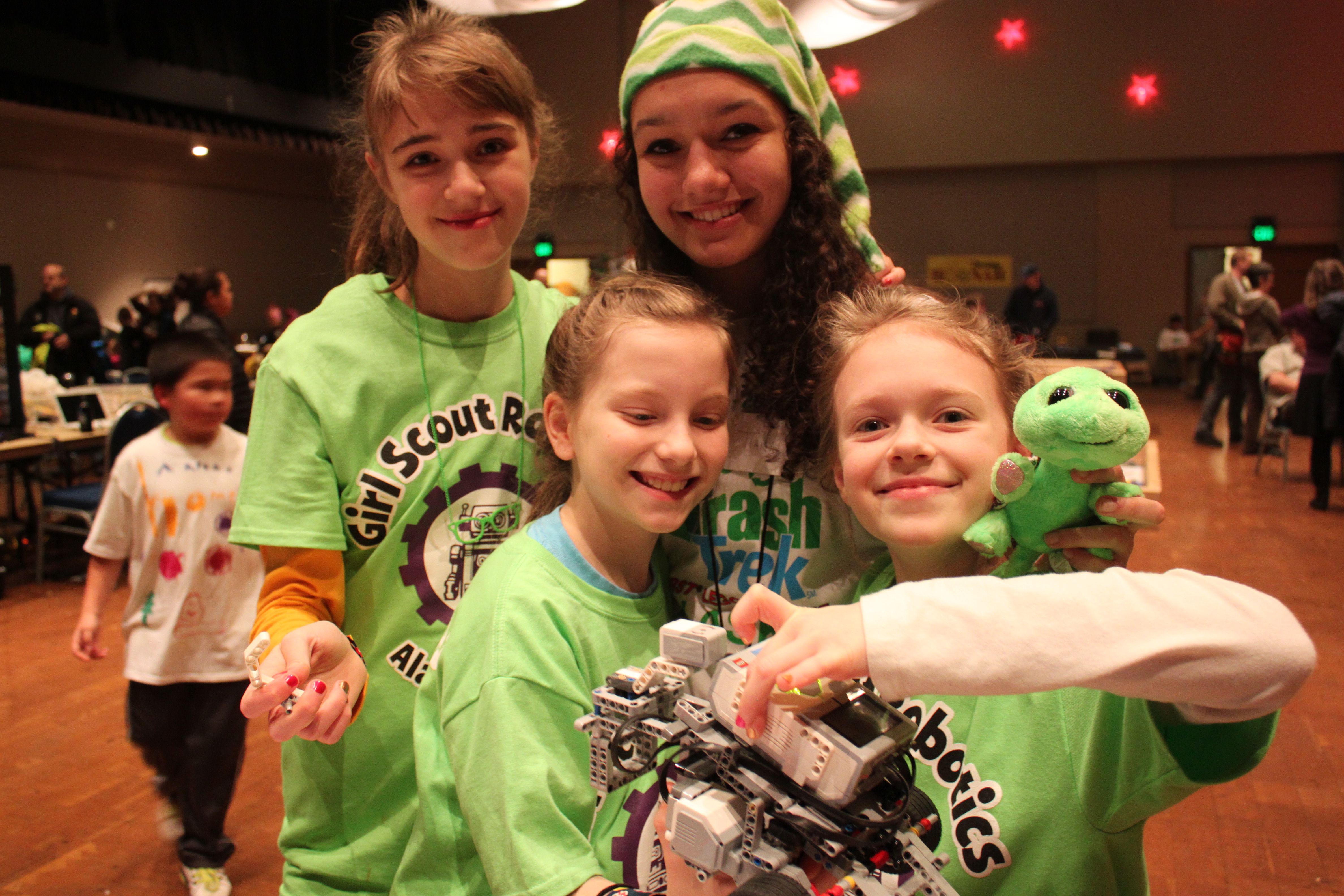
Tania Horvath (pictured top right) received a mentor award at the Juneau Robot Jamboree for helping the two Girl Scout LEGO League teams. A junior at Thunder Mountain High School, Horvath says her favorite subject is math. She takes AP calculus. (Photo by Lisa Phu/KTOO)
Tiana Horvath (pictured top right) received a mentor award at the Juneau Robot Jamboree for helping the two Girl Scout LEGO League teams. A junior at Thunder Mountain High School, Horvath says her favorite subject is math. She takes AP calculus. (Photo by Lisa Phu/KTOO)

School board to change complicated placement process for optional programs

(Creative Commons photo by Marlon E)

Parents have called the placement process for the Juneau School District’s optional programs cumbersome and untimely. For Juneau’s charter school, the placement process may also be illegal. Now, the school board is in the early stages of changing it.

The goal of the placement process is to help balance the enrollment of the optional programs to mirror the diversity of the district’s population.

School board member Barbara Thurston is part of a subcommittee looking at how to change the 10-year-old placement process. During Tuesday night’s work session, she said the board needs to establish defined goals of the process before changing it.

“It was put in at a time when there was a fair amount of concern around the district about equity and our alternative programs, equity in terms of availability, equity in terms of some teaching issues, but most particularly a desire to have these programs reflect the population of students in the district. These were not created to be programs for the elite. These were intended to be programs for Juneau’s children across the spectrum,” Thurston said.

Juneau Community Charter School, Montessori Borealis K-8, and the Tlingit Culture, Language & Literacy Program are free and open to all students in the district regardless of where students live. The district provides transportation.

Within the placement process, diversity preferences are given to students that have been traditionally underrepresented in the programs.

“For example, if a program had a lower than average number of low-income kids, then low-income kids would get a preference until that program hit the district-wide average at which point, they would no longer get that preference; they would just be in the same pool as everybody else,” Thurston said.

The same is true for low academic achievers, English-language learners and students with special education needs. Preference is also given to siblings, and children of optional program employees.

Parents must fill out an application to enroll children into optional programs. School board member Emil Mackey said just that can be a barrier.

“Anytime you have an application process, it’s going to disproportionately hurt those that don’t have the resources. And then the more complex that is or the more intrusive it’s viewed, the more people are going to not participate in that process and self-select out, whether actively or passively,” Mackey said.

Over the years, the placement process has improved diversity within the programs, but none of them completely fulfill the enrollment goals. This fall, city attorneys pointed out the district’s placement process is probably illegal regarding Juneau’s charter school. Alaska law requires a random lottery for charter schools.

The board subcommittee will continue discussion before bringing suggested changes to the full board. One possibility is implementing a separate placement process for each optional program.

Tlingit elders write boarding school history for future generations

Tlingit elder Della Cheney talks during a panel discussion on boarding schools at the "Sharing Our Knowledge; A Conference of Tlingit Tribes & Clans." In the 1920s and 1930s, Cheney's parents attended Sheldon Jackson School in Sitka. (Photo by Lisa Phu/KTOO)
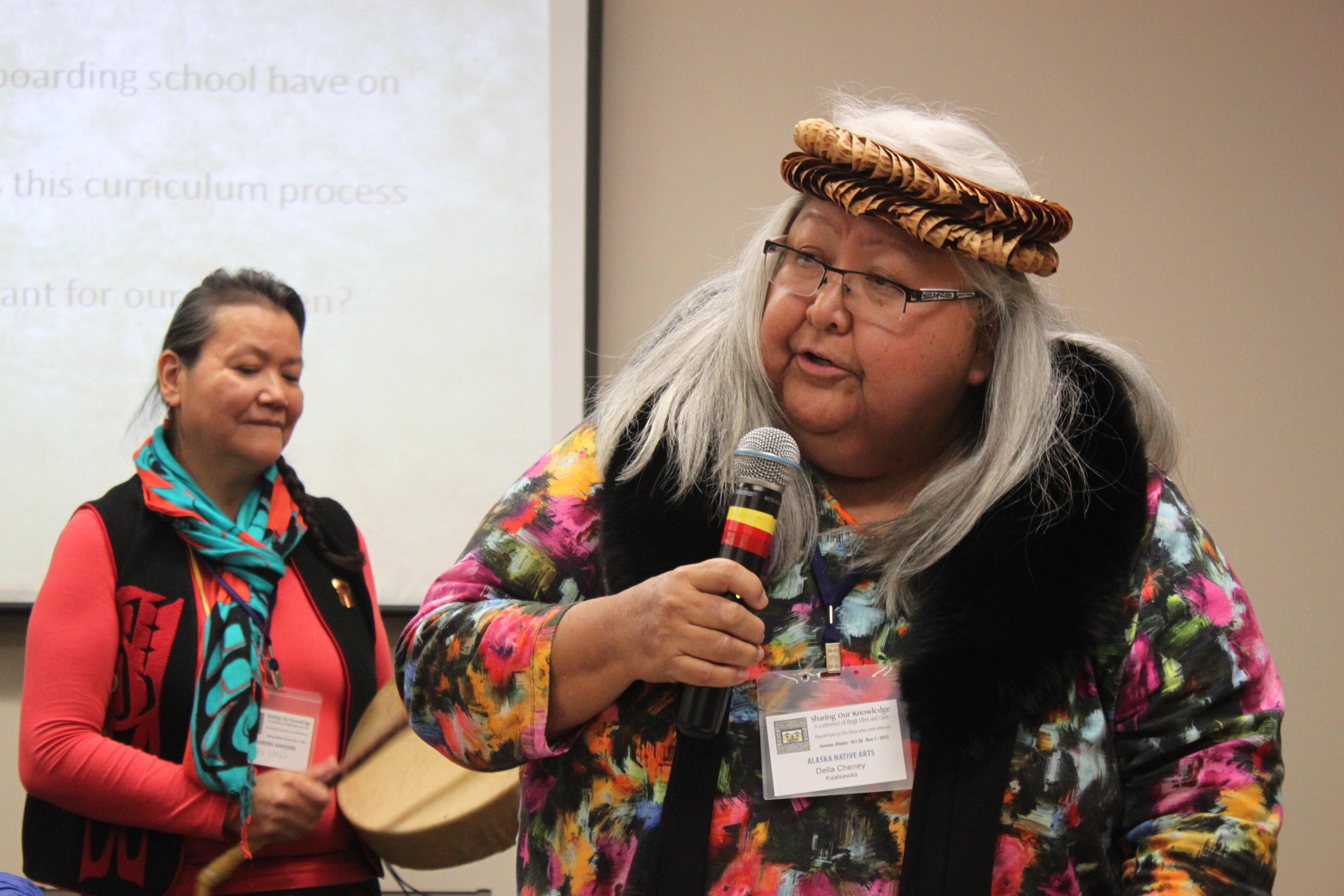
Tlingit elder Della Cheney talks during a panel discussion on boarding schools at the “Sharing Our Knowledge; A Conference of Tlingit Tribes & Clans.” In the 1920s and 1930s, Cheney’s parents attended Sheldon Jackson School in Sitka. (Photo by Lisa Phu/KTOO)

By talking about boarding school experiences, Tlingit elders in Juneau are turning painful memories into sources of healing – healing for themselves and generations still living with the consequences.

The nonprofit arm of the local urban Native corporation is using those stories to create a K-12 curriculum that will focus on the impacts of colonization on the Tlingit people.

Della Cheney and other elders have been meeting once a month at Goldbelt Heritage Foundation since August.

“We’re helping to write down the story of how boarding schools are affecting us and our families today, so that our children and grandchildren will know the history and realize the changes our families, our people faced,” said Cheney, who’s originally from Kake. She was part of panel of Tlingit elders during the recent clan conference in Juneau.

From the late 1800s to the mid-1900s, the federal government split up families and forced Native children into boarding schools to assimilate. Many were also raised in orphanages.

“That time is still walking with us today,” Cheney said. “The people who were raised with no love or affection in a very hostile environment also raised their children without much nurturing or affection. So today we see some of our families suffering from abuse.”

Cheney said both her parents attended Sheldon Jackson School in Sitka. Her mother was only 10 when she was brought there in 1923.

“It just breaks my heart to think that I was raised in such a loving family and to know that my mother and father weren’t,” Cheney said.

But those who went to boarding schools persevered, Cheney said. In Kake, they fought to make the village a first class city in 1951, allowing the community to operate its own school system.

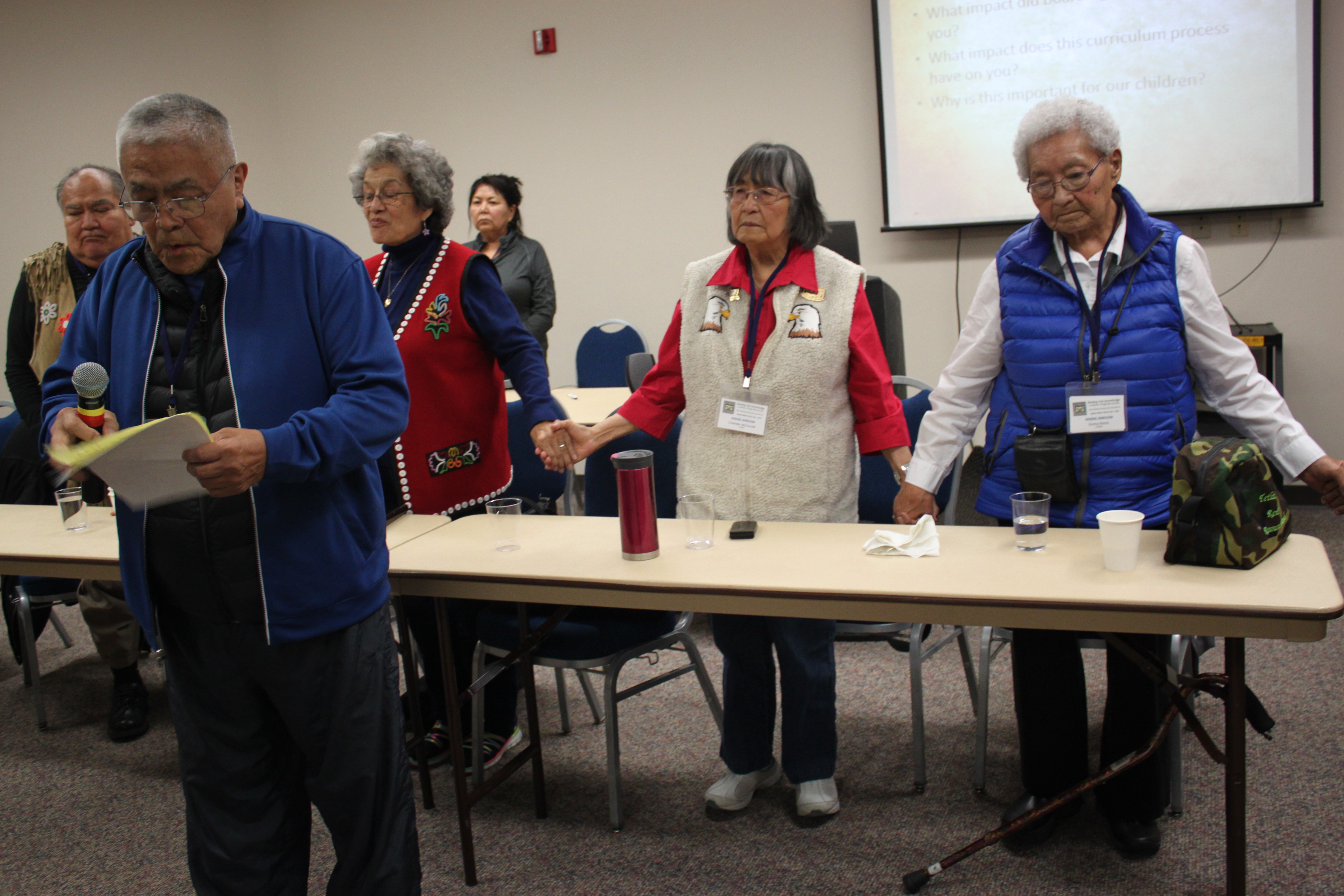
Emma Shorty is from Teslin, Yukon. She was 4 years old when she was taken away from her home in 1937 to go to residential school in Carcross.

“We were never allowed to go anywhere,” Shorty said. “We had to stay in one yard. They put a fence around the school. They used to lock the fence and when we went to bed, they would lock our doors and there were no bathrooms to go to, so we got into trouble for wetting our beds.”

Shorty said she was molested at the school.

“I learned to forgive. I wasn’t always kind. Residential school just about killed my spirit. Today I forgive them,” Short said.

She fought hard to have her first daughter go to public school, even though she was turned away again and again for being Tlingit.

Tlingit elder John Martin said boarding schools "was a form of prison." (Photo by Lisa Phu/KTOO)
Tlingit elder John Martin said boarding schools “was a form of prison.” (Photo by Lisa Phu/KTOO)

John Martin went to boarding school in Eklutna and then to the St. Pius X Mission in Skagway, “but instead of Christianity, there were some ugly things that went on.” Martin said he would not speak about it.

Martin said many of the elders are still hurt.

“By putting us in boarding schools, it was a form of prison,” Martin said. “They disrupted our learning process of the language. They actually took a way of life from us when our elders were teaching us how to gather food.”

Martin said telling the stories from that time and identifying the hurt is the beginning of healing.

Developing the new Goldbelt Heritage curriculum is a multi-year process. Besides boarding schools, it will also share the history of the Douglas Indian Village burning and the Douglas Indian cemetery relocation.

The curriculum will be used during summer academic programs at Goldbelt Heritage and will be available for the Juneau School District.

High school sleep-out raises $3,000 for homeless youth

During the sleep out, students made signs about youth homelessness that they waved outside Mendenhall Mall and Safeway. (Photo by Lisa Phu/KTOO)
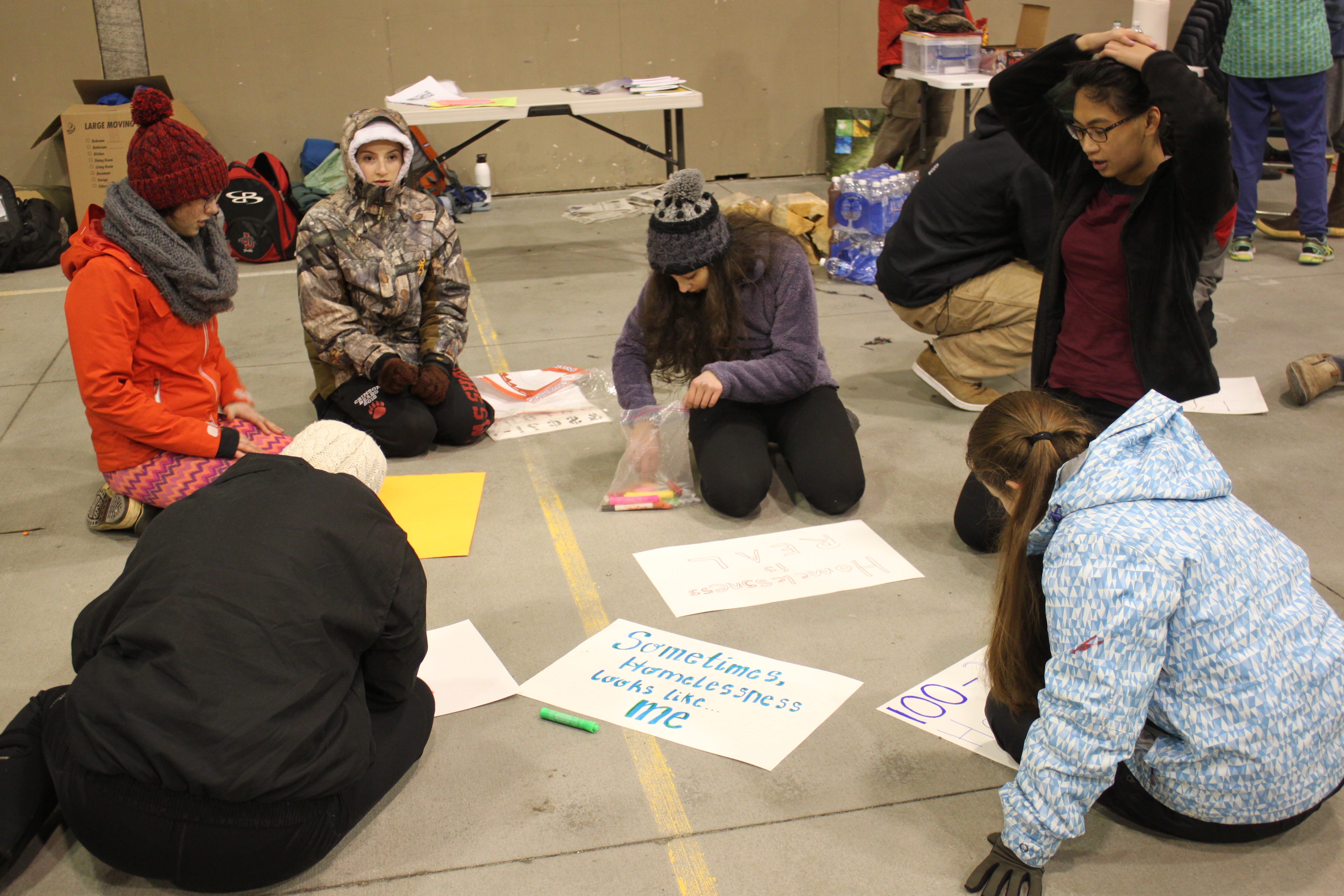
During the sleep-out, students made signs about youth homelessness that they waved outside Mendenhall Mall and Safeway. (Photo by Lisa Phu/KTOO)

About 200 kids and teenagers in Juneau are homeless. There are students without adequate or regular housing in every school in the district.

This past weekend, high school students slept out in the cold to raise awareness of the mostly invisible issue.

Between Saturday night and Sunday morning, temperatures dropped to the low to mid-30s. Two dozen high school students participating in the sleep-out were prepared with sleeping bags, big winter coats, blankets and extra layers.

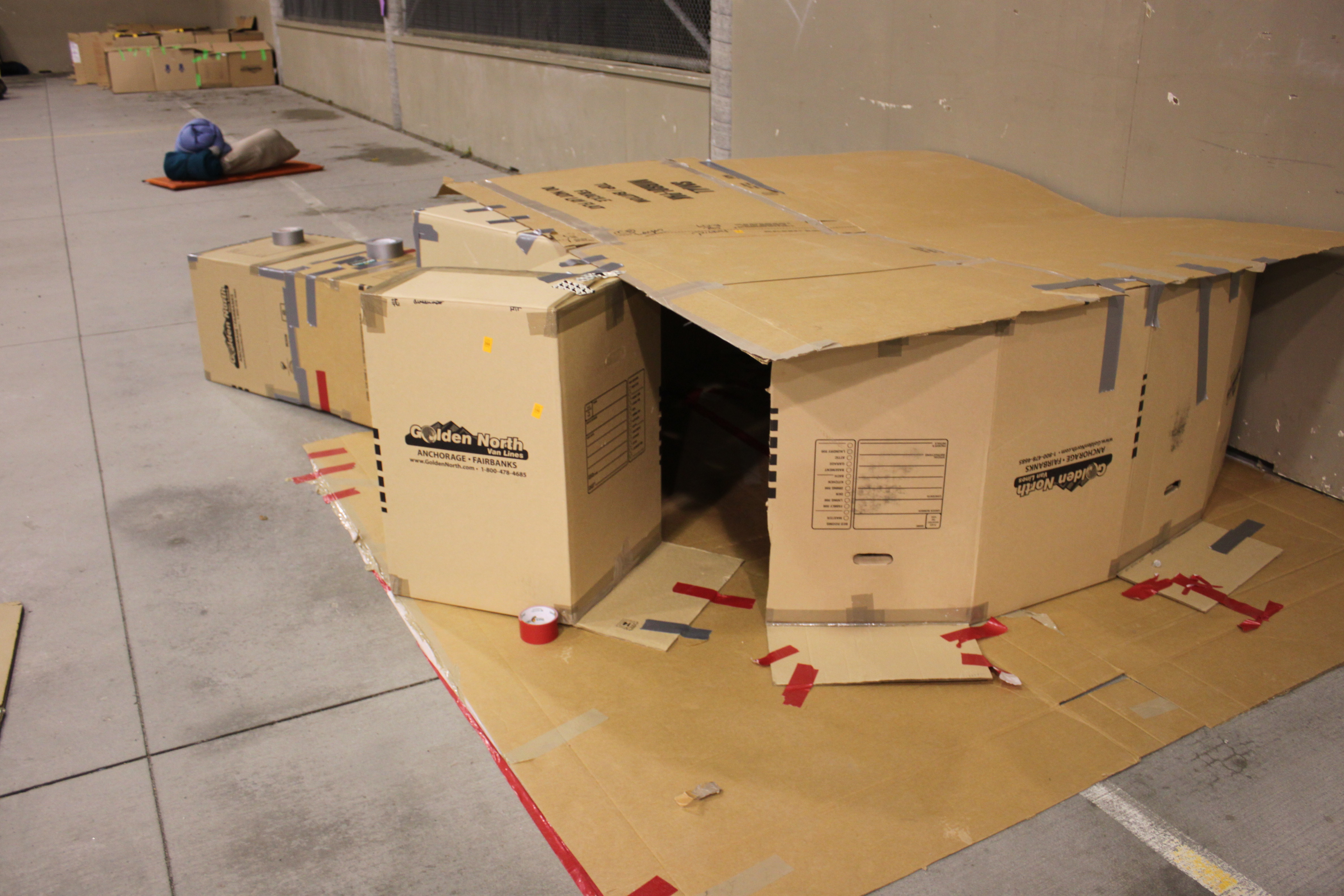
Reilly Walsh, 17, is a senior at Juneau-Douglas High School. She and other students built makeshift shelters out of cardboard boxes and duct tape under the outdoor covered area at Riverbend Elementary School. The goal was to bring attention to their friends and fellow students who are homeless.

“Because it’s something that you can’t really tell always if someone is struggling with homelessness, so we’re just trying to spread the word that it does occur and you might not be aware of it.”

Students slept in makeshift shelters under the outdoor covered area at Riverbend Elementary School. (Photo by Lisa Phu/KTOO)

The cardboard structures are largely symbolic. Kids in Juneau who don’t have permanent housing aren’t typically sleeping outside. Gabi Kito, a 16-year-old junior, said they’re more likely to be hopping from couch to couch.

“People – when they think of homeless(ness) – they think of them sleeping outside and in boxes rather than sleeping in a house and different houses each night.”

Some homeless youth stay with families at shelters through St. Vincent de Paul or AWARE. Others turn to Juneau Youth Services, which offers a 10-bed emergency shelter at Cornerstone Residential Facility.

JYS offers counseling for mental health, substance abuse and family reunification.

The organization plans to reopen its transitional living program early next year, executive director Walter Majoros said. It’ll house six individuals ages 16-21.

Majoros said some kids and teens are homeless due to family discord and instability.

“There may be family violence going on. There may be sexual abuse. There may be alcoholism or drug abuse in the family. There may be a single-parent family that creates some instability. Oftentimes there’s a parent that is incarcerated.”

Another resource is the Zach Gordon Youth Center in downtown Juneau. It’s open every day except Sunday. Manager Jorden Nigro said homeless kids come regularly.

“We have showers here so they can take showers, and we help connect them to resources and we feed a lot of kids here,” Nigro said. “We have kids that come and get their after-school snack here and lots of kids who stay for dinner.”

Besides offering activities and services — such as basketball, tutoring and arts and crafts — Nigro said staff members work hard to build relationships.

“If kids have meaningful connections with adults, they do better in every aspect of their life and that impacts kids whether they’re homeless, whether they’re not homeless and also can help kids who are on the cusp,” Nigro said.

At school, homeless students are offered help with transportation, free meals and snacks, clothing and shoes, toiletries and assistance with activities fees.

Dixie Weiss is the faculty adviser of the service club Interact at Juneau-Douglas High School. Interact has helped organize the annual sleep-out since 2004. Besides raising awareness, the sleep-out also raises money. Weiss has seen first-hand how the funds help.

“Time and time again these kids are giving you these big bear hugs because they never imagined they’d get that yearbook or that senior hoodie or the support,” Weiss said.

The sleep-out also teaches an important lesson, “that sitting next to them in a class, day in and day out, there’s this kid that is, against all odds, making it; that they have courageous peers and this is a way to support that courage,” Weiss said.

So far, the students have raised about $3,000 and are accepting donations through the end of November. Half of the proceeds will go to the school district and the other half to the Zach Gordon Youth Center.

Youth experiencing homelessness can contact Juneau Youth Services at 789-7654, 24 hours a day, seven days a week.
Site notifications
Update notification options
Subscribe to notifications