Alaska Native Government & Policy

One People Canoe Society to paddle for Standing Rock Tribe to protest controversial pipeline

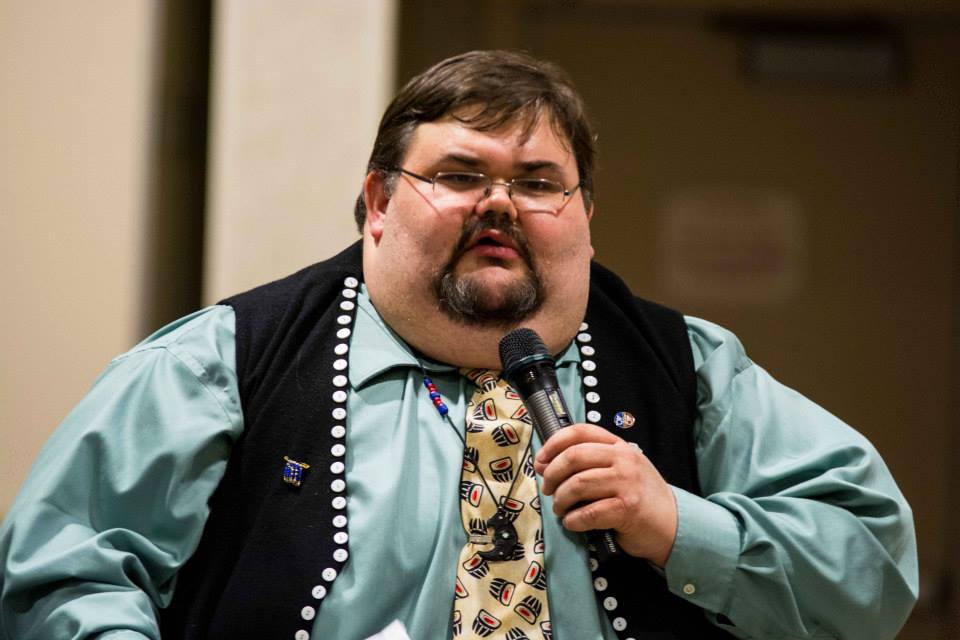
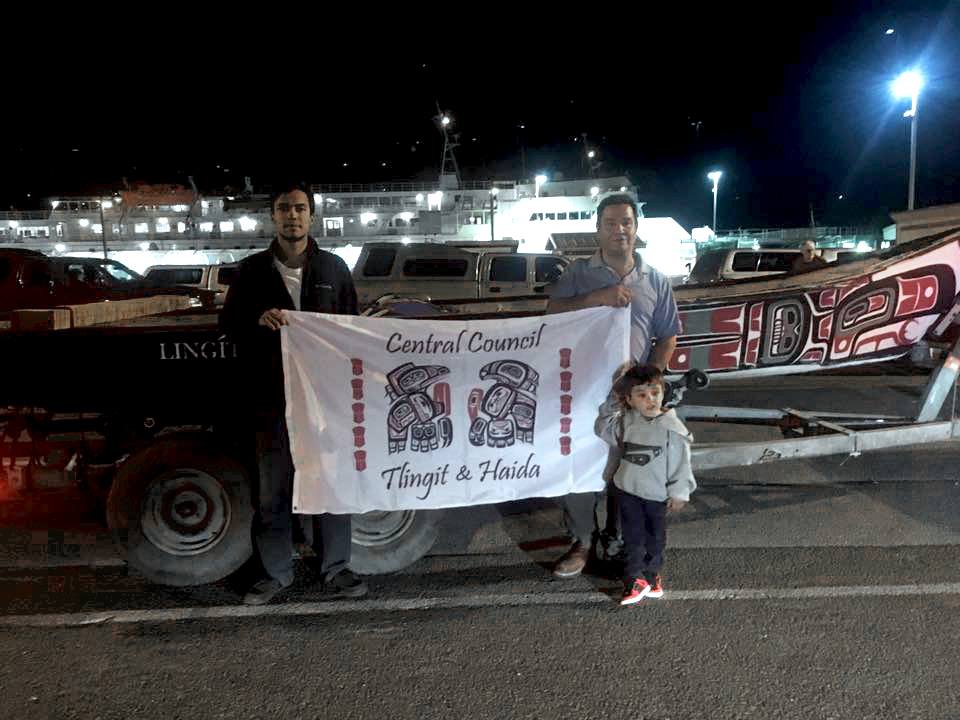
Doug Chilton and DeAndre King in front of the canoe they're transporting to North Dakota. (Photo courtesy of Central Council of Tlingit and Haida Indian Tribes of Alaska)
Doug Chilton and DeAndre King in front of the canoe they’ll take to North Dakota. (Photo courtesy of Central Council of Tlingit and Haida Indian Tribes of Alaska)

Members of the One People Canoe Society will travel this week from Alaska to North Dakota to paddle in protest over a controversial pipeline.

The Standing Rock Sioux Tribe has asked paddlers from around the country to show support with a float down the Missouri River.

Doug Chilton and DeAndre King left Wednesday night on the ferry from Juneau, said Richard Peterson, president of Central Council of Tlingit and Haida Indian Tribes of Alaska.  

“It was kind of a last minute deal because a lot of folks with the One People Canoe Society are actually canoeing here to Kasaan tomorrow,” Peterson said. “So they got together what they could. They got their raven canoe together and they just needed some financial support.”

There’s a ceremony in the village of Kasaan for the restoration of the Chief Son-I-Hat Whale House Naay I’waans on Saturday, but Chilton and King decided to go to North Dakota after the chairman of the Standing Rock Tribe put out a call asking for help, Peterson said.

They’ll be displaying a Central Council flag, and he thinks it’s an important time to show support, Peterson said.

He sees similarities with British Columbia mining and Southeast waterways.

“You know, we’re fighting here on transboundary issues, and we don’t know what turn that’s going to take and we may need people to stand with us as well,” Peterson said.

If the pipeline is built, then a half-million barrels of crude could flow daily from North Dakota to Illinois.

For it to get there, it would have to cross under the Missouri River — Standing Rock Reservation’s water source.

Peterson thinks it could take two days for Chilton and King to reach North Dakota.
Tlingit & Haida: Tribal youth court could launch in a few weeks

About 30 tribal officials and community members recently discussed ways to get a new youth court up and running in Juneau. It’s an opt-in program for youth tribal members in Southeast Alaska that’s an alternative to the regular justice system.

SueAnn Lindoff is in charge of the new program of the Central Council of Tlingit and Haida Indian Tribes of Alaska. She hopes they’ll be able to start taking youth through the program in a few weeks,  a student or two at a time.

“I don’t want five students because I’m a strong believer in quality versus quantity,” Lindoff said.

The framework for the program has a strong emphasis on tribal mentorship and tradition. During the meeting, people suggested youth could work with elders to learn about traditional values and stories.

“We don’t want to reinvent the wheel; we don’t want our personal identity to be first with this program,” she said. “What we want to do is we want to put a spoke in the existing wheel already — if it means make it bigger, make it stronger.”

The youth wellness court program has had hiccups; a coordinator left earlier this spring and planning large meetings has been difficult. This meeting was in a conference room on the top floor of the Andrew Hope Building.

Lindoff said it’s been a huge learning experience for her. She compared it to learning to drive a stick shift.

“If you don’t know how to drive, and you’re used to driving an automatic, well you jerk and jerk and stall,” she said.

But eventually, she said, you learn. The group, which had just met for the first time all summer, created a four-person task force to tackle major aspects of the program and to determine what troubled or disadvantaged youth might be missing. Another meeting is planned late September.

The U.S. Department of Justice awarded the Central Council a $550,000 grant last year to create the youth recidivism program for three years.

Enhanced IDs help some tribal members cross borders

Enrolled members of Alaska’s largest tribal government are getting enhanced photo IDs.

They can be used for border crossings and some other situations where official identification is necessary.

But many other tribes can’t afford them.

The Central Council of Tlingit and Haida Indian Tribes of Alaska counts more than 30,000 members in and outside the state.

It’s issued photo ID cards for more than a dozen years. But Central Council President Richard Peterson said the enhanced ones are more secure.

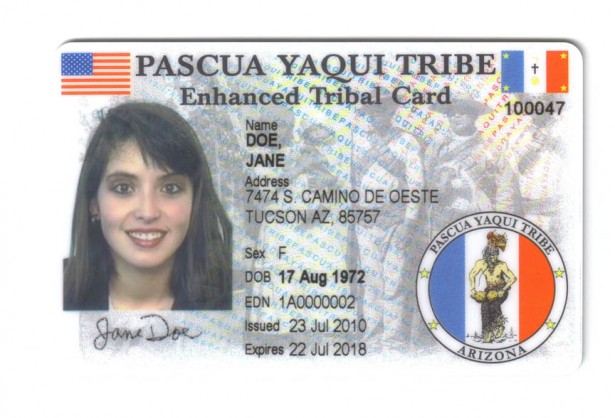
The Pascua Yaqui Tribe was among the first to issues enhanced tribal ID cards. The Tlingit-Haida central Council is now issuing such cards. (Photo by Indian Country Day Media Network)
The Pascua Yaqui Tribe was among the first to issue enhanced tribal ID cards. The Tlingit-Haida Central Council is now issuing such cards. (Photo by Indian Country Today Media Network)

“These new IDs can’t really be replicated,” he said. “They have a hologram, kind of like the state ID has done. (And) TSA prefers having the enhanced cards,” he said.

The IDs have been required for several years by the Department of Homeland Security’s Western Hemisphere Travel Initiative.

“Unfortunately, not a lot of tribes have been able to do it because it’s quite costly,” said Jacqueline Pata, executive director of the National Congress of American Indians. She’s also a Central Council vice president.

“It’s kind of like one of those unfunded mandates from the (federal) government,” she said. “So, unless they’re able to get other resources – some tribes have been able to get some grant monies – but most tribes have had to fund it themselves.”

Enhanced IDs are particularly necessary for tribal governments near Mexico and Canada, Pata said.

“So many tribes are border tribes and our culture doesn’t stop because border lines were drawn,” she said.

The Central Council said the new IDs’ security enhancements will help protect personal data and reduce the risk of counterfeiting.

Council members can apply for the new cards through the organization’s website.

Peterson said they can mail in a photo or catch up with council officials as they travel the region.

“We try to get to our largest population bases for sure and get those done,” he said. “And then we do community visits and then we’ll bring our equipment there because they can print them on site.”

The new Central Council ID cards are good for five years, after which they must be replaced.

Details emerge in tribal welfare cuts, which will include jobs, college support

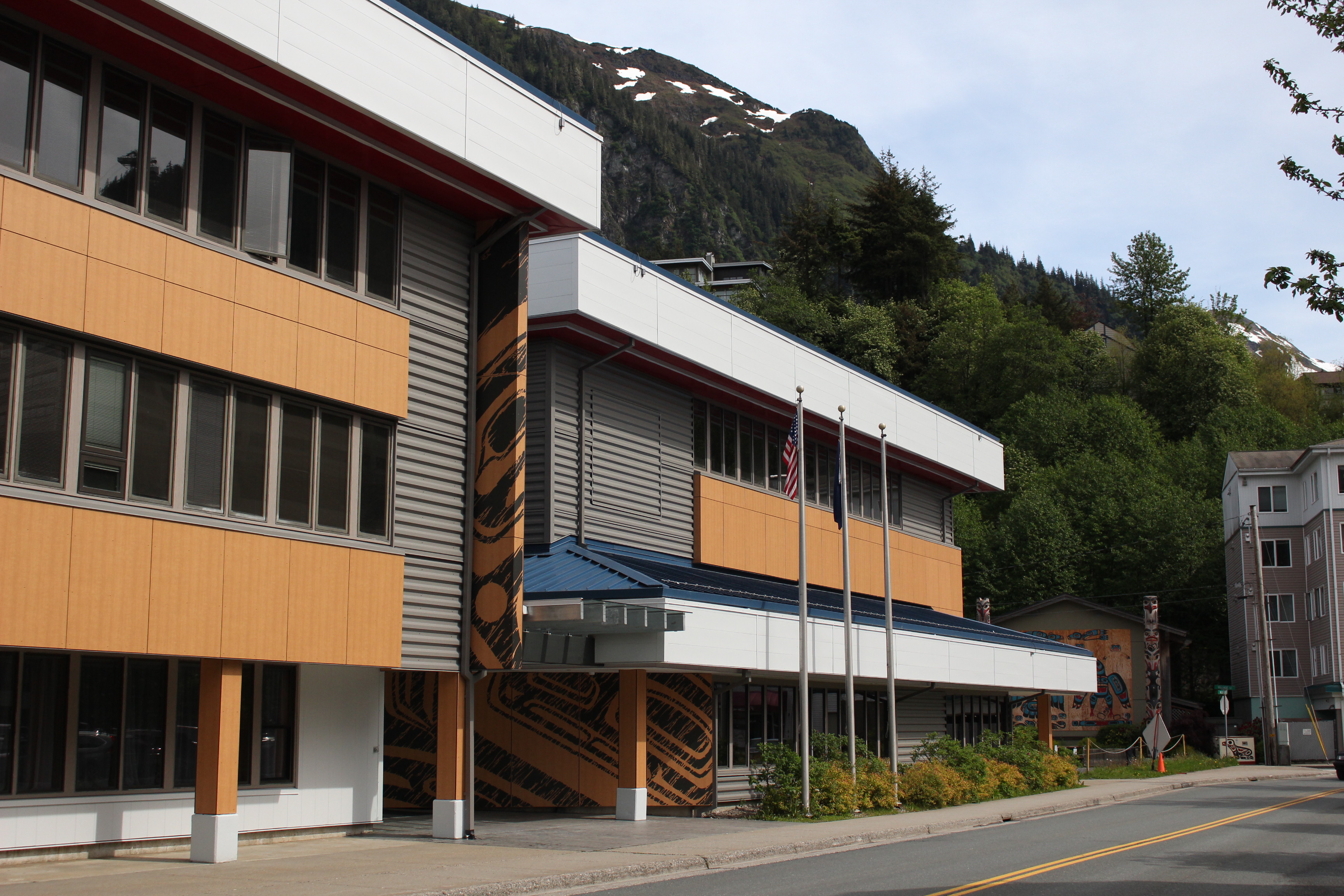
Andrew Hope Building/ Elizabeth Peratrovich Hall (Photo by Elizabeth Jenkins/KTOO)
The Andrew Hope Building in downtown Juneau is owned by the Central Council of Tlingit and Haida Indians of Alaska. (Photo by Elizabeth Jenkins/KTOO)

Federal funding cuts are reducing tribal welfare programs in seven Southeast Alaska communities.

Details have emerged about the four affected programs, offered through the Juneau-based Central Council of Tlingit and Haida Indian Tribes of Alaska.

Funding comes from the Bureau of Indian Affairs, which announced a reduction on short notice.

Tribal council director William Martin said about 230 low-income tribal members are being helped by one of the four programs this month.

The council runs the programs in Craig, Klawock, Douglas, Saxman, Wrangell, Juneau and Haines. They’re run by local tribal governments in some other communities.

One provides bus passes, child-care assistance and other resources to get clients into jobs.

“It’s designed to help them with things like interview clothing, if they don’t have interview clothing,” Martin said. “Or if they need work clothing or specialty work gear, like if they’re going into construction, we’d be able to assist them with the basic needs in construction or in carpentry.”

Martin said another program funds vocational training, including two-year degrees.

The third helps those seeking four-year degrees.

“Unfortunately because of these cuts, we cannot take any new clients and some of the services that we were able to provide for our existing clients will be reduced as well,” Martin said.

A fourth program puts clients in temporary jobs in which they’re paid. Martin said it’s all about gaining skills.

“Work experience is a program that we have designed to assist our clients who have little or no work experience, or who want to try out a career that they think they’re interested in, but not sure about it. So we can put it into a temporary position,” he said. “It’s designed to assist them in beefing up their resume so that they become more employable.”

Five temporary employees will be laid off at the end of this month, Martin said.

The council is continuing a program that provides cash for food, shelter, utilities and clothing.

An earlier report incorrectly stated such assistance would also be cut.

Update: Tribal assistance, job programs lose funds

The Central Council of Tlingit and Haida Indian Tribes of Alaska will get about half the BIA settlement funds slated for Southeast tribal governments. (Photo by Ed Schoenfeld/CoastAlaska News)Southeast Alaska’s regional tribal government is temporarily ending programs that help clients find jobs and pay for living expenses.

The Central Council of Tlingit and Haida Indian Tribes of Alaska says Bureau of Indian Affairs budget cuts are to blame.

William Martin directs the council’s 477 programs, which are named after the federal law that funds them.

He says they provide back-to-school clothing vouchers, on-the-job training and vocational-school and college scholarships.

“The people we’ve been working with are generally low-income, low-resource families. And our job is to assist them in becoming self-sufficient or getting to a place where they don’t need us anymore,” he said.

He says the BIA cut funding to the council by 20 percent, or about $650,000, for this calendar year.

Chief Operating Officer Corrine Garza says the council only learned about it eight months into the year.

“If we knew about it at the beginning of the year, of course, we could make cuts throughout the year, rather than trying to do it all in a period of four months,” she said.

Garza says the council received no formal notice of the reduction. She found the information in a grant document and confirmed it with the BIA. The federal agency did not immediately respond to emails about the cuts.

Tlingit-Haida Central Council runs the programs in Craig, Klawock, Kasaan, Saxman, Wrangell, Juneau and Haines. It’s run by local tribal governments in some other communities.

Council officials say they’re referring clients to other resources, when possible. It’s not clear whether the cuts will extend into next year.

Note: This report has been updated to include additional information about 477 programs. We’ve also corrected an error saying food, housing and other emergency assistance was being cut. That program continues to operate.

Tribal leader optimistic after State Department, EPA meeting

Southeast Alaska’s largest tribal organization said this month’s meetings with the U.S. State Department and Environmental Protection Agency were productive.

Among other things, the agencies could help expand water-monitoring efforts along transboundary rivers.

Central Council of Tlingit and Haida Indian Tribes of Alaska President Richard Peterson. (Photo courtesy CCTHITA)

The 30,000-member Central Council of Tlingit and Haida Indian Tribes of Alaska set up the government-to-government meetings.

President Richard Peterson said representatives heard about potential and existing pollution from British Columbia mines near rivers that flow into Alaska.

“I think we gave them some of our concerns and questions and whatnot,” he said. “That gives them a chance to go back and now have that next conversation that’s more action-based and promissory in nature.”

The federal officials met with tribal government and Native corporation leaders from Juneau, Ketchikan, Saxman, Douglas and Kasaan on Aug. 9-Aug. 11.

They talked about water-quality monitoring along fish-and-wildlife-rich transboundary rivers, Peterson said. Federal officials were interested in supporting the effort.

“And we were able to use that as an opportunity to push for more funding for activities regionwide, so that other communities can do that baseline analysis that needs to take place,” he said.

State Department and EPA public-affairs staff offered no comment on the meetings or any commitments made.

Peterson said they agreed to hold further meetings, which will happen this fall in Washington, D.C.

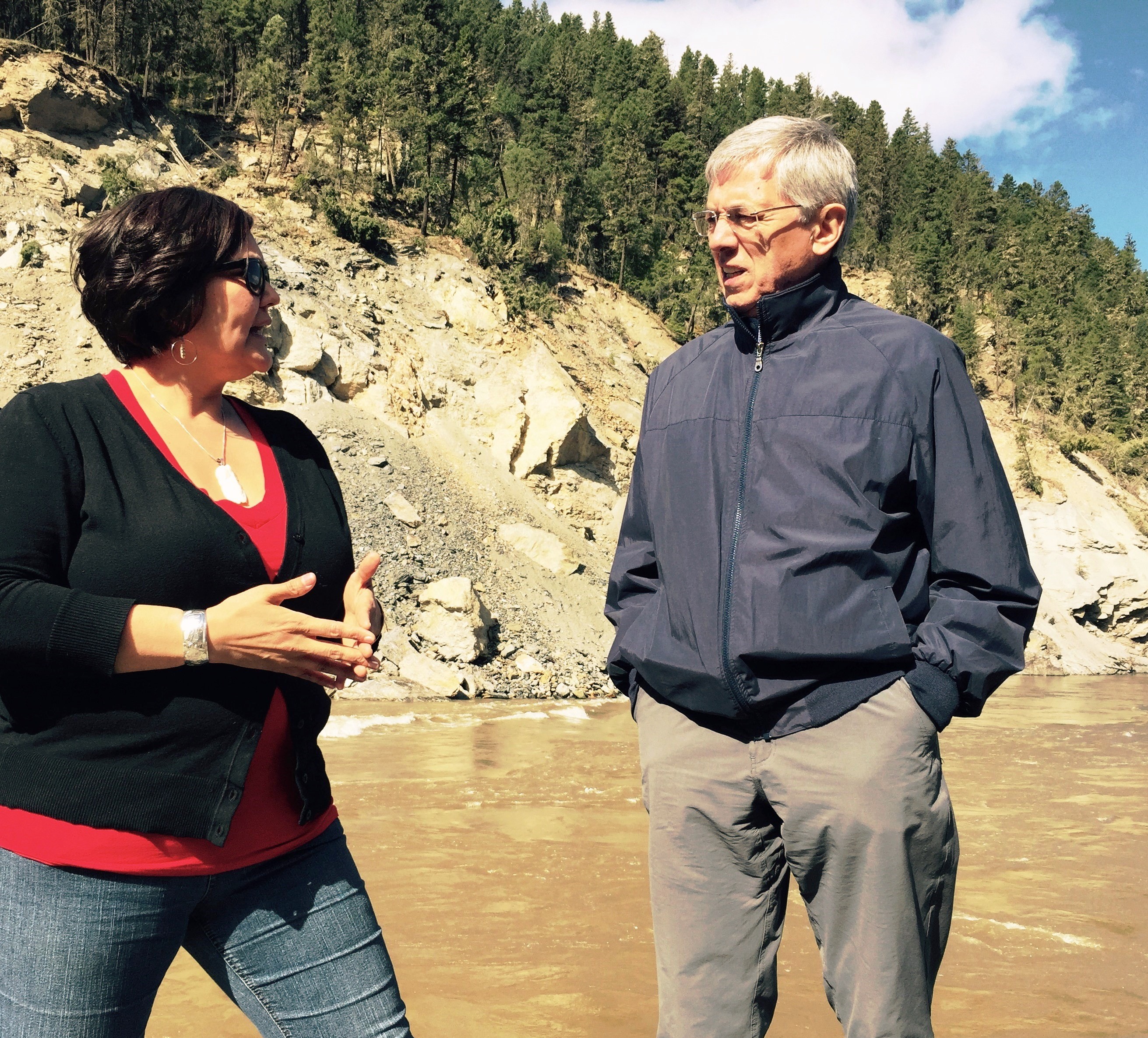
Alaska Lt. Gov. Byron Mallott discusses the Xat’sull people’s traditional fishing on the Fraser River with tribal council official Jacinda Mack on May 6, 2015. The Xat'sull live in the area damaged by August's Mount Polley Mine tailings dam collapse. They’re concerned about reopening plans. (Photo courtesy Office of the Governor)
Lt. Gov. Byron Mallott discusses mine pollution concerns with Xat’sull tribal official Jacinda Mack on May 6, 2015. (Photo courtesy Office of the Governor)

Lt. Gov. Byron Mallott and other state officials presented their concerns at the meetings.

They brought up a U.S. Canada boundary-waters treaty that includes a commission tasked with resolving such conflicts,” he said.

“We emphasized that if, when, how, in what manner, that the IJC, the International Joint Commission, might be engaged that we would No. 1, welcome it and No. 2, be part of it to the degree that that was appropriate,” he said.

Mallott heads up a state task force on transboundary mine concerns.

He and his team also brought up the need for more federal support.

“To put it mildly, Alaska is resource-constrained, at least fiscal resource-constrained, right now,” Mallott said. “These collaborations and network-building is very important.”

Alaska and British Columbia officials have been discussing the state’s concerns for more than a year.

A statement of cooperation detailing ways Alaska can provide more input into mine decisions is nearing a final draft.

Site notifications
Update notification options
Subscribe to notifications