Alaska Native Government & Policy

Akiachak prepares to inventory land for trust status

After a federal appeals court last week dismissed the state of Alaska’s challenge in a tribal land rights case, the four Alaska tribes that sued the Interior Department may proceed with land petition proceedings. That includes Akiachak and Tuluksak.

Alaska tribes can start asking the federal government to take their lands into trust. If approved, the lands would essentially be taken out of state jurisdiction, like Lower 48 Indian Country.

Phillip Peter Sr. chairs the Akiachak Native Community Council. He said trust status would fulfill generations of desire for greater tribal sovereignty.

“Our elders in the past wanted a land base in order to control our jurisdiction,” Peter said. “Land is really important, because all those years we didn’t have any recognition from the state of Alaska. We need a jurisdiction in order to control our village.”

Peter hopes trust status will offer that control through improved public safety and policing. He said defined land jurisdiction and federal funding that comes with trust status will make those changes possible.

The Interior Department will publish a list of tribes that have filed for trust status later this year. Tribes contacted by KYUK would not say if they are among those tribes. But Peter said the Akiachack tribe and Akiachack Native Corp. are meeting after the height of the summer subsistence season to inventory their lands for trust status. Peter said they’ll look at restricted lands, unrestricted lands and corporation lands in the town site.

Peter said trust status advances the Akiachack tribe’s self-determination and fulfills at least one of their elders’ teachings.

“It will be helpful, especially for the younger generation, from my son to granddaughter and grandsons. We are paving the way. And our elders before they passed on, they told us and instructed us to take care of our land, even though we had hard times, not to give up. It’s our right,” he said.

Peter would not comment on the trust legal case. The Tuluksak Native Community would not comment on any land trust issues.

CIRI holds the federal government to a decades old promise

Alaska Native Regional Corporations Map. (Courtesy of the Department of Natural Resources)

Alaska’s delegation to Congress writes bills every year to transfer or sell federal land to local governments and Native corporations. In late May, Sen. Lisa Murkowski sponsored one public land bill for Native corporations that’s particularly far-reaching — apparently more expansive than the senator intended.

Congress, in 1971 promised Cook Inlet Region Inc. more than a million acres of land. CIRI Senior Vice President for Land Ethan Schutt says the corporation is still trying to get its final 43,000 acres but all of the good, income-producing land in the region is spoken for.

“So we’re kind of fighting and scratching and clawing to find something that is reasonable and has economic potential to fulfill the 45-year-old promise made to our shareholders,” he said.

Schutt says CIRI has its eye on some federal acreage outside the region, but it needs a new law to make the government hand it over.

To help CIRI, Sen. Lisa Murkowski filed the ANCSA Improvement Act in May. The bill does a lot of things, but one section would open up vast amounts of land all over the state for CIRI to choose from. CIRI would be allowed to select land from National Wildlife Refuges and the National Petroleum Reserve-Alaska. National Parks, monuments and the Arctic Refuge would be off-limits.

Asked if there are other limitations in her bill, Murkowski thought there were. She said her bill would not allow CIRI to select from areas designated as “wilderness,” the federal category that receives the highest level of protection.

Sen. Lisa Murkowski (File photo by Skip Gray, 360 North)
Sen. Lisa Murkowski (Photo by Skip Gray/360 North)

After further questions to her staff, a Murkowski spokesman later said nothing in the bill now would prevent CIRI from selecting wilderness, but he said the senator intends to add such limits later.

The CIRI legislation is just one part of a 12-part bill that would open up federal land for Native corporations to select, and in some cases, requires the government to convey it. One paragraph likely to attract attention would require the Interior secretary to give a small piece of the Arctic Refuge, near Kaktovik, to the Native corporation for that village.

Andy Moderow, state director of the Alaska Wilderness League, says the bill is a concern for conservation groups.

“Because of how broad the legislation is, many places that have earned protections over the years would be up for grabs,” he said.

Schutt, the CIRI vice president, doesn’t want to say yet what land they hope to obtain, but he says they are aiming for selections near other Native corporation land.

“Are we trying to engender additional controversy? Absolutely not,” Schutt said. “And we’re trying to look at areas that are potentially within wildlife refuges or NPR-A but not brand new holdings that are deep within the heart of some conservation unit.”

This isn’t the first time CIRI has tried to expand its land pool beyond the low-value land it says it was left with, which corporate lore describes as “mountain tops and glaciers.” In 1976 it won the right to select half its acreage from elsewhere in the state. Schutt, though, says that legislation has conditions that make it impractical for getting the final 43,000 acres. The 1976 law, for instance, says the secretary of the Interior must ­agree to give up the land CIRI selects. Murkowski’s new bill says the secretary can’t stand in CIRI’s way.

Murkowski’s committee, Senate Energy and Natural Resources, hasn’t had a hearing on the bill yet. Environmental groups are on the lookout for pieces of it that might be added as riders to other bills.

Sanders only presidential candidate to address National Congress Of American Indians

Bernie Sanders 2016 03 14
Bernie Sanders at a rally in Akron, Ohio, March 14, 2016. (Creative Commons photo by Mark Vitullo)

The National Congress of American Indians invited four presidential candidates to its mid-year conference in Spokane this week. But only one addressed the Congress directly.

Although Hillary Clinton is likely to be the Democratic party’s nominee for president, Bernie Sanders is still on the campaign trail. In a three-and-a-half minute video message to the National Congress of American Indians, Sanders said he’d continue to fight for a progressive agenda.


“To my mind, we need to fundamentally change the relationship between the United States government and the native American community,” Sanders said.

Sanders said he and staff have met with more than 90 tribes throughout the campaign season.

“Poverty is much too high, unemployment is much too high, the healthcare system is inadequate,” Sanders said. “This cannot continue.”

Both major U.S. political parties are unlikely to outline official platforms until they hold their national conventions in July. In 2012, Democrats said they would continue the legacy of achievement under the existing administration. Republicans called for improved government-tribal relationships.

A representative from the Clinton campaign also addressed the assembly.

The Libertarian Party and Republican presumptive nominee Donald Trump declined the invitation.

Federal court sides with tribes in Alaska Indian Country land rights case

Bureau of Indian Affairs BIA Flag
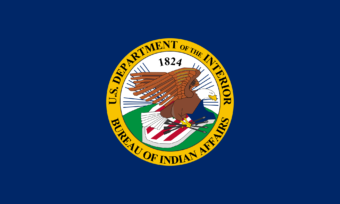
The flag of the Bureau of Indian Affairs.

Tribes in Alaska can move forward with petitioning the federal government to take lands into trust. A federal appeals court Friday dismissed the state of Alaska’s challenge in the litigation.

Tribal land held in a Bureau of Indian Affairs trust would give it “Indian Country” status, affording it the same protections as reservation lands in the Lower 48.

In 2007, Alaska tribes sued the Interior Department for the right to take land into trust. Even after a legal opinion from the Interior Department said it was discriminatory to treat tribes in Alaska differently from tribes in the Lower 48, the state continued its challenge in the case.

Attorney Heather Kendall Miller brought the case for the tribes. She said the decision is a big deal.

Kendall Miller said now that the stay against Alaska tribal petitions has been lifted, the BIA will publish notice of those trust land applications within 30 days.

In an email, state Law Department spokesperson Cori Mills said, “We will review the decision as we do all appellate decisions and determine next steps after a thorough evaluation.”

New California law could jeopardize Alaska’s ivory market

ivory walrus at Maruskiya's
An ivory walrus carving on display at Maruskiya’s in Nome. (Photo by Emily Russell/KNOM)

The ivory market in America just got a lot smaller, or at least that’s how it seems. A new law went into effect Friday in California that bans the sale of all ivory products, including walrus ivory.

Alaska Natives are protected under a federal law, but confusion and inconsistency between state and federal legislation has many concerned.

John Kokuluk Sr. is sitting at his carving booth at the King Island Native Community building. He’s an ivory carver and has the hands to prove it.

“I try to make a little bit of everything: masks, polar bears, wolves. I’ve carved quite a few walrus teeth,” Kokuluk explains.

He’s working on one of those teeth today. Dust flies through the air as he drills tiny holes into the two-inch piece of ivory that he’ll later fill in with baleen.

Kokuluk was born and raised in Nome, but his family is from King Island. When members of the Inupiat community were forced to relocate to the mainland in the 1960s, they brought the longstanding tradition of ivory carving with them.

“It’s in our culture. It was passed down long before my time,” Kokuluk explains. “I feel fortunate to have this talent.”

Just like Kokuluk, Susie Silook has been carving for decades. She’s originally from the St. Lawrence Island community of Gambell.

“I love it. I love ivory carving,” Silook said. “We get to say whatever we want with our work.”

It’s that love of carving that led Silook to start an online petition opposing California’s new law that bans the sale of all ivory.

Section 2 of Assembly Bill 96 defines ivory as “a tooth or tusk from a species of elephant, hippopotamus, mammoth, walrus, whale or narwhal.”

“So this is creating this confusion out there that all the materials listed in these laws (are) illegal now,” Silook said.

But they’re not. The Marine Mammal Protection Act of 1972 makes the interstate sale of walrus ivory legal through its definition of authentic native handicrafts.

Gay Sheffield is a biologist with the Alaska Sea Grant Marine Advisory Program in Nome.

“Authentic native handicrafts are defined as items that are produced, decorated, or fashioned in the exercise of traditional Native handicrafts,” Sheffield explained.

Sheffield said the handicraft definition includes, but is not limited to, weaving, carving, stitching, sewing, lacing, beading, drawing and painting.

Sheffield said she understands the effort to protect elephant and other tusked animals in Africa from poachers, but they’re not one and the same with the marine mammals she studies in the Bering Strait region.

“The general public thinks ivory, elephant, dead elephant rotting in the sun, beautiful elephant with (a) little baby because it’s always on the TV on the documentaries,” Sheffield said. “What they don’t see is walrus ivory, legal harvest, food on the table, economic benefit to rural Alaskans.”

It’s that economic benefit that has many worried.

Carver Susie Silook said ivory brings much-needed cash into rural communities like Gambell. She remembers a buyer from Southeast Alaska traveling to the St. Lawrence Island community in the mid-1990s.

“Within three days, he had purchased $20,000 worth of arts and crafts from the people in just one village, and this is just one buyer,” Silook explains.

But now, buyers are reacting to California’s new legislation. Robert James manages Maruskiya’s, a well-known Native art shop on Nome’s Front Street. He buys from carvers like John Kokuluk Sr. and sells their crafts in town and on the road.

James had planned to stop at this year’s American Indian Art Show outside of San Francisco.

“Because of the legislation that passed, I don’t think we’ll ever be back there,” James said. “So, we might have to find a different show.”

Back at the King Island carving room, John Kokuluk Sr. continues to drill tiny holes in the walrus tooth he holds in one hand.

He worries about the confusion the new California law will create for buyers, but Kokuluk said that won’t stop him from carrying on the tradition his ancestors have been practicing for centuries.

“I feel I’ll be doing this, regardless of what happens, probably till the day I’m gone,” Kokuluk said.

Central Council acquires international contracting company

The Central Council of Tlingit and Haida Indian Tribes of Alaska is doing something few tribal organizations do.

Earlier this month, June 15, the tribe acquired KIRA, Inc., an international maintenance contracting company. The Colorado-based entity has scored more than $1 billion in federal contracts, according to its documents.

Southeast Alaska’s largest tribal organization wants to boost revenue with its acquisition. Central Council President Richard Peterson said the ultimate goal is to serve all of their tribal members, and not just those in Southeast.

“It feels somewhat disingenuous to repeatedly say, ‘I’m sorry you live outside of service area, but hey you’re a citizen, thank you,’” Peterson said.

Grant money that CCTHITA receives mostly limits its services to Southeast. The tribe provides educational, employment, elderly and financial assistance for its tribal members.

Central Council of Tlingit and Haida Indian Tribes of Alaska President Richard Peterson. (Photo courtesy CCTHITA)

Peterson said half of the tribe’s more than 33,000 members live elsewhere in the state or Seattle.

“There’s a misconception out there that we generate funds based on our general enrollment, and we don’t,” he said. “We only generate funds based on the service area enrollment.”

In recent years, CCTHITA has made an active push to generate unrestricted funds by creating a separate company, Tlingit Haida Tribal Business Corp., or THTBC.

Last year, the Small Business Administration certified the company for special government contracting status under its 8(a) program.

Alaska Native corporations have long used the program to win federal contracts, but it’s unusual for tribes.

Congress created the 8(a) certification decades ago to help small and minority-owned businesses win federal contracts. Special provisions were added in 1986 for federally recognized Native American and Alaska Native corporations — they can outgrow “small” status but continue to enjoy the program’s benefits.

Carlos Garcia is KIRA’s founder and president. It was once 8(a) certified, too, but outgrew the program. KIRA will now have those small business contracting opportunities again.

“We were only allowed to bid on a small percentage of them,” Garcia said. “We wanted to bid and the only thing that was missing was the certifications that the tribe enjoys.”

The acquisition of KIRA became official after about a year of negotiations. KIRA was actually looking for an Alaska Native corporation partner, according to company documents from 2014.

Garcia said he decided to sell to CCTHITA instead of an Alaska Native corporation to ensure the profits directly benefited shareholders.

“The money that we make is going to go straight to their tribal members. Many of these large ANCs have enormous bureaucracy in Anchorage and the money goes to those executives,” he said. “And there doesn’t seem to be a lot of profit put forth to the Native programs.”

Richard Rinehart, CEO of Tlingit Haida Tribal Business Corporation. (Photo courtesy of Sealaska)

THTBC’s CEO Richard Rinehart wouldn’t disclose the acquisition price or the projected revenue from the purchase. But he did say one of the goals is to have KIRA compete in Alaska’s market.

“KIRA has not competed a lot in Alaska because there’s so many Alaska-based corporations that have an advantage,” Rinehart said. “Well now they’ll be able to.”

In the coming weeks, Garcia said KIRA will add on multiple new contracts.

He believes that if everyone works hard, the company — and its profits — will multiply quickly.

Site notifications
Update notification options
Subscribe to notifications