Alaska Native Government & Policy

HUD seeks input on Alaska Native, American Indian housing

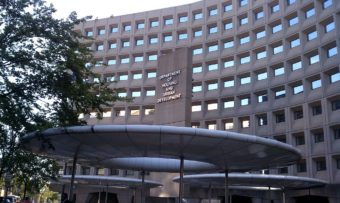
The Robert C. Weaver Federal Building in Washington, D.C., in the United States. As of September 2010, the building housed the U.S. Department of Housing and Urban Development. (Wikimedia Commons)
The Robert C. Weaver Federal Building in Washington, D.C., in the United States. As of September 2010, the building housed the U.S. Department of Housing and Urban Development. (Creative Commons photo by Wikimedia Commons)

The federal government wants to know, among other things, how tribes use federal resources to improve housing.

The U.S. Department of Housing and Urban Development plans to create a special committee to gather that information. Lourdes Castro Ramírez is head of HUD’s Office of Public and Indian Housing. She said her office will bring together people running federal programs and tribal representatives around the country at least twice a year to discuss priorities for Native housing.

“We believe that the creation of a committee that allows for regular feedback, regular discussion — and really, also an opportunity to identify best practices and models that are working across Native American communities — will help further our impact and will also help inform the future of Native American housing programs,” Ramírez said.

There will be up to eight tribal representatives and at least one of them will represent Alaska.

Ramírez said federal funding for housing programs has become scarce and it’s especially important for her agency to have a firm understanding of how Native communities use that money.

The deadline to comment on the agency’s planned Tribal Intergovernmental Advisory Committee is July 23. Comments can be left on the Federal Register website.

Sealaska critic Mick Beasley elected to board of directors

Sealaska shareholder Michael Lee Beasley is author of the term- limits resolution. (Photo courtesy Michael lee Beasley)
Sealaska shareholder Michael Lee Beasley won election to the corporation’s board of directors. (Photo courtesy of Michael Lee Beasley)

One of Sealaska’s most vocal critics is now a member of the Southeast regional Native corporation’s board of directors.

Shareholders chose Michael Beasley, also known as Mick, as one of four winning candidates, according to results announced at Sealaska’s annual meeting Saturday in Ketchikan.

He came in behind three incumbents, each of who ran as the board slate. They are Inside Passage Electric Cooperative CEO Jodi Mitchell, Tlingit and Haida Business Corporation CEO Richard Rinehart and National Congress of American Indians Executive Director Jackie Johnson Pata.

A fourth incumbent, Patrick Anderson, ran as an independent and lost.

Beasley, a carver, authored a term-limits measure on this year’s ballot. It received a majority of the votes cast, but not the majority of all possible ballots. As a result, it will not take effect.

Beasley has put similar measures on Sealaska’s ballot in the past, along with several to eliminate discretionary voting. That allows shareholders to turn their ballot decisions over to the board.

Other approaches would change the board’s makeup and likely its policies.

Four other independent candidates also ran for the 13-member board.

They were, in order of votes received, carver Doug Chilton, former Sealaska Corporate Secretary Nicole Hallingstad, Bartlett Regional Hospital Controller Karen Taug and financial adviser Brad Fluetsch.

Sealaska has 22,000 shareholders who mostly live in Southeast, other parts of Alaska and the Pacific Northwest.

New federal rule could prevent litigation over Native children in state custody

Under new federal guidance, it will be easier for potential Alaska Native and Native American parents to adopt Native children in state custody.

The 360-page rule issued by the Bureau of Indian Affairs Wednesday aims to make interpretation of the Indian Child Welfare Act more consistent, regardless of the state, judge or social worker involved.

With the new BIA regulations, state courts across the country now must establish at the beginning whether the placement of a child is subject to the Indian Child Welfare Act, or ICWA. The new regulations also clarify the law’s placement preference and how states and tribes determine jurisdiction.

“This is going to be entirely helpful for us,” says Christy Lawton, director of Alaska’s Office of Children’s Services. “I think that these rules are providing a lot more clarity to areas of practice that have been somewhat gray and open for interpretation. I think It’s going to reduce, potentially, future litigation.”

The rules likely would have prevented litigation in the Tununak case by requiring ICWA eligibility to have been determined at the outset.

In 2015, the Alaska Supreme Court declined to reconsider a case in which a Native child dubbed “Baby Dawn” was permanently placed into a non-Native home. The child’s grandmother told the state that she wanted to adopt her. But the state argued that since the grandmother did not did not formally file paperwork, there was no ICWA placement preference to apply.

Matt Newman is an attorney with the Native American Rights Fund, which represented the grandmother in the case. Newman says there’s a pattern of Native children being moved to Anchorage or other urban centers. The thinking is that there are more services there to help a child and parent, improving chances of reunification.

But when that isn’t possible, Newman says the court often decides that the foster care family bond should not be broken. Those children do not return to their home villages.

“We saw these situations where time and time again children were being placed in Anchorage or Mat-Su or on the Railbelt road system under the premise that they would be returned or reunified with their communities and their families, only to have the opposite eventually happen,” Newman said. “Once you’re in Anchorage or you’re in the urban centers, you stay there.”

That scenario happens far less frequently, Newman says, since Valerie Nurr’araaluk Davidson, a Yup’ik woman with a background in health care and law, became commissioner of the Department of Health and Social Services. Her department oversees the Office of Children’s Services.

“I think our biggest opportunity is to leverage relationships with tribes and tribal organizations to really improve outcomes for Alaska Native and American Indian children in our communities,” Davidson said.

“When you can provide that care as close to home as possible, we know that we’re going to have better outcomes for children. Tribes are really in the best position to be able to provide that local care.”

In March 2015, under Davidson’s guidance, the state issued emergency regulations that essentially formalized any contact regarding the immediate placement of a child. That means if a grandmother calls the Office of Children’s Services and tells them that she wants to take care of her grandchild, that phone call is documented as a formal request to initiate adoption or foster care placement.

Legislators codified those emergency regulations last month in House Bill 200. Gov. Bill Walker made it a priority for the legislature. The Alaska Federation of Natives strongly advocated for the bill.

Nicole Borromeo is an executive vice president and general counsel at AFN.

“We’re encouraged by the Department of the Interior releasing these BIA guidelines and regulations, and we are looking forward to the state courts complying with the regulations because they’re no longer guidance, they are in fact federal regulations and they are binding,” Borromeo said.

In 1978, Congress adopted the Indian Child Welfare Act to remedy the high rate of removal of Native children from their homes.

According to a 1976 study by the Association on American Indian Affairs, before ICWA, it’s estimated that between 25 and 35 percent of indigenous children in the United States were being removed from their homes. In most cases, those children were placed in homes away from their culture and extended family.

While ICWA is intended to keep Native children in Native homes, the law has been criticized by both its supporters and detractors. Opponents, many of which are Christian adoption groups, say that non-Native families should have the same right to adopt Native children, and that preventing them from doing so is to the detriment of those in state custody. Supporters of ICWA have long spoken against how much power a judge has in interpreting the law, a problem which the new regulations aim to resolve.

The new federal regulations clarify what has been for decades a murky and often divisive law. Newman, the Native American Rights Fund attorney, noted that coincidentally the regulations were announced within two days of the anniversary of the state court declining to reconsider the Tununak case.

In Anchorage, U.S. Attorney General announces new focus on Alaska Native issues

U.S. Attorney General Loretta Lynch spoke to reporters on June 10, 2016, as she rolled out a new Department of Justice focus on Alaska Native issues. (Photo by Rachel Waldholz/APRN)

The Department of Justice is rolling out a new focus on Alaska Native issues.

In Anchorage today to discuss issues of criminal justice and public safety with Alaska Native leaders, U.S. Attorney General Loretta Lynch said it is unacceptable that Native residents are victims of violent crimes at rates much higher than the general population.

“More than four in five Alaska Native women and more than one in three Alaska Native men have experienced violence in their lifetimes,” Lynch said, citing a recent report from the National Institute of Justice. “These numbers are higher than we previously understood, but more to the point, they are completely unacceptable in this country in 2016.”

Lynch announced that she is launching a formal process to consult with Alaska Native leaders on concrete steps to improve public safety in rural Alaska.

One possibility: the creation of a permanent position within the Department of Justice focused on Alaska Native affairs and based in state.

Lynch said she came to Alaska at the invitation of the state’s two U.S. Senators — and of Julie Kitka, president of the Alaska Federation of Natives.

Lynch held a round table with AFN officers and representatives from several Native corporations, where they discussed the opioid epidemic in Alaska, voting rights, and support for tribal courts.

Speaking to reporters in a press conference in Anchorage, flanked by Kitka and by Karen Loeffler, U.S. Attorney for the District of Alaska, Lynch said one common thread is a focus on the most vulnerable, and better access to the criminal justice system.

“When we talk about Alaska Native and Native American women, issues of sexual violence, domestic violence really loom large in their lives,” Lynch said. “It’s definitely an issue of concern because the distances between many villages and law enforcement, the small villages [and] the rural nature of many communities make it very difficult for victims to get treatment, and sometimes even to get law enforcement help.”

Lynch was also asked if she might consider running for vice president — alongside Hillary Clinton.

“Well, that’s quite a question!” Lynch replied to laughter, before giving the standard answer: “I am focused on my current job as Attorney General, and that is my focus, not just here today but for the remainder of this administration.”

Lynch planned to end her day by meeting with Alaska Native young people, and with the staff of the U.S. Attorney’s office in Anchorage.

This was her first visit to Alaska.

AFN announces its keynote speakers for the 2016 convention

Alaska Native dance at AFN 2013.
Alaska Native dance at AFN 2013. (Photo Courtesy of KNOM)

The Alaska Federation of Natives announced its two keynote speakers for this year’s convention and both are from western Alaska. The AFN Board of Directors selected Megan Alvanna-Stimpfle to speak alongside Emil Notti.

Notti is an Athabascan from the Yukon River village of Koyukuk. He served as AFN’s first president and played an important role in the passage of the Alaska Native Claims Settlement Act in 1971.

While her family is originally from King Island, Megan Alvanna-Stimpfle was born and raised in Nome.

“I feel truly honored and thank the Alaska Federation of Natives Board of Directors for their confidence in me,” Alvanna-Stimpfle said in response to the announcement.

Megan Alvanna-Stimpfle. (Photo courtesy of Megan Alvanna-Stimpfle.)
Megan Alvanna-Stimpfle. (Photo courtesy of Megan Alvanna-Stimpfle)

She earned her Master’s in Applied Economics from Johns Hopkins University and served as a legislative assistant for Senator Lisa Murkowski in Washington DC.

“My generation has many options in life,” Alvanna-Stimpfle said. While she says there’s still a lot of work to be done to preserve and promote Alaska Native culture, Alvanna-Stimpfle remains optimistic.

“We are empowered with the political and economic tools to assert who we are as Alaska’s indigenous people and live our way of life on our lands,” she said.

Alvanna-Stimpfle is currently working alongside Kawerak, Norton Sound Health Corporation, elected leaders and the Native community on reforming sewer and water systems in the region. To do that, she says the system needs to be reformed statewide.

Alvanna-Stimpfle also serves on the Nome Port Commission and is an elected member of the King Island Tribal Council.

“AFN is honored to have both distinguished and emerging leaders speak to our delegates,” said AFN President Julie Kitka in the announcement of the keynote speakers.

AFN is the largest annual gathering of Natives in Alaska. This year marks the 50th anniversary of the convention, which will take place in Fairbanks October 20-22, 2016.

Alaska senators revive landless bill

Lisa Murkowski at AFN 2015
Sen. Lisa Murkowski addresses the Alaska Federation of Natives Convention, Oct. 16, 2015. (Photo by Mikko Wilson/KTOO)

A U.S. Senate bill introduced last week would allow Alaska Natives in five Southeast communities to form urban corporations. Haines, Ketchikan, Petersburg, Tenakee, and Wrangell each stand to gain about 23,000 acres of land if the bill passes. But the legislation, which has been introduced before, does not come without controversy.

In 1971, more than 200 Native corporations formed under the Alaska Native Claims Settlement Act, known as ANCSA. But, Haines (Chilkoot Tribe), Ketchikan, Petersburg, Tenakee, and Wrangell were left out of the landmark legislation.

The Alaska Native Claims Settlement Improvement Act was introduced May 26 by Alaska Sens. Lisa Murkowski and Dan Sullivan. It would award those “landless” Native groups 23,040 acres of land each.

Leo Barlow represents both the Southeast and Wrangell Landless Coalitions. He says many in these communities have benefited from Southeast’s regional Native corporation, Sealaska, which pays dividends. But they lack the benefits provided by a local corporation.

“Other village corporations in the region that have received such a settlement have done a lot of things with their land. They’ve been able to do a lot of economic activates to the benefit of their shareholders. Start businesses, eco-tourism, start hotels a lot of relied on resource development on the land as a mean of providing an economic income.”

If passed, the improvement act would allow the five corporations to pick land of historic, cultural and commercial value, but would not allow conservation lands to be awarded.

The Southeast Alaska Conservation Council or SEACC is opposing the bill. Spokeswoman Emily Ferry says the group is concerned about the commercial activity.

“We don’t know how they would be managed. The land would be selected by Native corporations — these new Native corporations and the Secretary of the Interior — and as we know from the past, lands that were transferred to Native corporations previously were heavily logged.”

Ferry says SEACC called upon Murkowski to include the general public by holding hearings on the issue. SEACC would also like more environmental protection, particularly forest preservation, added to the bill.

“We would like to see a dialogue about how that can happen,” Ferry said. “That’s partly why we’re calling on Senator Murkowski to come to SE Alaska to open up a dialog, hold hearings, to talk with communities. Both the people who would benefit from this legislation and the communities who rely on our public land to go hunt and fish and enjoy the fact that we get to live in a spectacular place where we have vibrant runs of wild fish.”

Murkowski’s office did not respond to requests for comment or information.

The local corporations would have surface rights that would allow logging and other surface-based economic activity, but Barlow says he doesn’t expect any excessive clear-cutting.

“Obviously, there are timber resources that could be harvested,” Barlow said. “The whole goal would be to do that on a sustainable basis, not like the old days when there were large extensive clear-cuts all across the Tongass and Southeast Alaska.”

Barlow says the corporations could also focus on eco and cultural tourism to bring in money and says he thinks Natives would not be the only ones to see benefits.

“It actually benefits the whole community. As you can see throughout Southeast Alaska, a lot of the employment created by other corporations throughout the region goes to Natives and non-Natives alike. It would have a tremendous impact on the region and the economy of the whole Southeast panhandle.”

The ANCSA improvement bill is not the first legislative attempt at providing “landless” communities corporate status. The current version combines several Senate and House bills from decades past. Another section of the bill would allow Sealaska to exchange 23,000 acres of land on Admiralty Island for about 14,000 acres of more commercially viable land and could also award Native Vietnam veterans land as well.

SEACC spokeswoman Emily Ferry says the conservation group will wait for Senator Murkowski’s response before stepping up efforts to oppose the bill. Both Murkowski and Sullivan were unavailable for comment for this story.

Site notifications
Update notification options
Subscribe to notifications