CBJ Assembly Meetings

Assembly hopes to attract more federal research jobs to Juneau

TSMRI
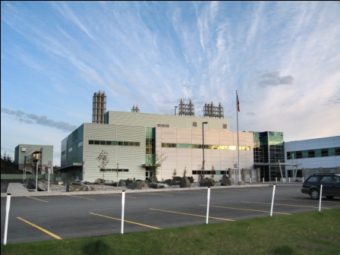
The Ted Stevens Marine Research Institute at Lena Point. (Photo courtesy NOAA)

Did you know the Alaska Fisheries Science Center is not based in Alaska?

In fact, most of the National Oceanic and Atmospheric Administration researchers who support Alaska fisheries are based in Seattle.

The Juneau Assembly wants to change that. Mayor Merrill Sanford this week created a task force to look at bringing more federal marine science jobs to Alaska. While the task force will study the issue from a Juneau perspective, Sanford said other communities could benefit as well.

“There’s other places within Southeast where some of these jobs could go,” Sanford said at Monday’s assembly meeting. “Kodiak has a big fishing industry where some of these jobs might possibly go, and we want to look at all of that.”

Attracting more federal jobs to Juneau is an assembly priority. In addition to laboratory scientists, Sanford said the assembly also wants research vessels based in the state.

“If we could even move a few or some to our own research centers and our own fisheries areas, I think that would be a big advantage to us,” Sanford said.

NOAA Fisheries has about 180 full time employees throughout Alaska, most of them in Juneau. By comparison, the Alaska Fisheries Science Center in Seattle has about 250 full time employees.

Historic factors led the fisheries science center to be based in Seattle.

“That’s where the geographical distribution of the labor force developed around the time of statehood, and it’s mostly just been maintained there,” said NOAA Fisheries spokeswoman Julie Speegle.

She said the agency is spread out for a number of other reasons, including the availability of facilities and housing, and the willingness of some employees to live in Alaska. That’s not to mention the cost of relocating employees during a time of federal budget cuts, Speegle said.

Assemblyman Randy Wanamaker and fisheries consultant Greg Fisk will co-chair the city’s task force. The panel also includes Assemblywoman Kate Troll and Jim Becker, chair of the CBJ Fisheries Development Committee. The group hopes to add a retired NOAA employee.

The task force has six months to complete a report for the assembly.

Juneau Assembly OKs cell tower moratorium

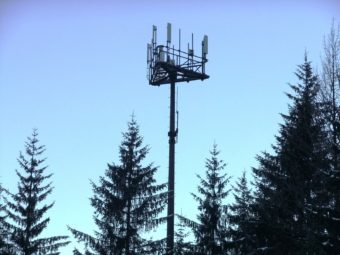
The Juneau Assembly on Monday adopted a moratorium on new wireless communications towers until adopting a cell tower master plan. (Photo by Rosemarie Alexander/KTOO)

The Juneau Assembly last night adopted a moratorium on new cell phone towers and accepted a pair of highly charged appeals.

The moratorium blocks permitting of new wireless communications towers until May 19. Between now and then the assembly hopes to adopt a master plan regulating where and how cell towers are built.

Two people testified in favor of the measure, while nobody spoke against it.

“The view shed is threatened for many of the people in town,” said Fritz Cove resident Jon Lyman, who lives near a tower on Spuhn Island with a constantly flashing air traffic warning light on top of it.

Lyman urged the assembly to get as much public input as possible on the cell tower master plan.

“What we should have is an opportunity, real opportunities, for the public to participate both in the structuring of the final ordinance, and during the siting of different towers,” he said.

North Douglas resident SueAnn Randall lives across the cove from Lyman, where her house also faces Spuhn Island. She urged the assembly to watch three videos she posted to YouTube of the tower’s flashing strobe light.

“Just so you can see what it’s like every second of the day,” Randall said.

(One of three YouTube videos of the Spuhn Island cell phone tower posted by SueAnn Randall)

The assembly voted 5-3 to adopt the moratorium. Assemblymen Jerry Nankervis and Randy Wanamaker, as well as Mayor Merrill Sanford, voted against it.

Nankervis said people want better cell phone service, and with that comes cell towers.

“These aren’t put in arbitrarily,” Nankervis said. “They’re market-driven, they’re studied where they’re going to go in. There’s a limited amount of space where they can go in, and it’s unfortunate that we see them. And you do see them around the rest of the country, and they have cell phone coverage that works everywhere.”

The moratorium only applies to new cell phone towers. It does not apply to towers needed for public health or safety.

Dangerous dog, “field of fireweed” appeals accepted

The assembly on Monday accepted two emotional appeals:

  • Jody and Joyce Vick are fighting a dangerous animal designation for their pit bull-mastiff mix, Sushi. Juneau Animal Control deemed the dog dangerous after he fatally attacked another dog last Thanksgiving. The Vicks claim the label will force them to put Sushi down. Animal Control says they could save Sushi with a homeowner’s liability insurance policy. The assembly voted to hear the Vicks’ appeal itself. Assemblyman Jesse Kiehl will serve as presiding officer.
  • The assembly also voted to accept an appeal from Juneau home builder Bicknell Inc. The company wants to overturn a planning commission decision denying a rezone request for its 82-acre property near the airport. Bicknell wants to use the property for industrial and commercial purposes, but current zoning limits development. Wildlife enthusiasts, who want the property to stay the way it is, have taken to calling it the “field of fireweed.” The assembly voted to have a hearing officer decide the case.

Assembly to consider cell tower moratorium, dog attack appeal

Beware of dog sign. (Photo by unsure shot/Flickr Creative Commons)

A moratorium on new cell phone towers, a pair of emotional appeals and a measure to stave off the city’s “fecal cliff” are on tonight’s Juneau Assembly agenda.

Last month the assembly voted to halt permitting of new wireless towers until adopting a cell tower master plan to regulate where and how they are built. An ordinance on tonight’s agenda would make the moratorium official. It would expire on May 19, around the time the assembly is expected to vote on the master plan.

The assembly will also consider hearing two appeals:

  • And Jody and Joyce Vick say they’re trying to save their pitbull-mastiff mix’s life after he fatally injured another dog last Thanksgiving. Juneau Animal Control labeled their dog Sushi a “dangerous animal.” After a failed appeal to the city’s Animal Hearing Board, the Vicks appealed to the assembly. The Vicks claim the designation will force them to put Sushi down. Animal Control says they could save Sushi with a homeowner’s liability insurance policy.
  • Juneau homebuilder Bicknell Inc. filed an appeal of the planning commission’s rejection of a rezoning request for its 82-acre lot near the airport. Current zoning limits development of the so-called “field of fireweed.” Bicknell wants most of it designated for commercial or industrial use.

The assembly also will vote on a contract with Waste Management to continue shipping the city’s sewage sludge to the Lower 48. The company was the only bidder for the service. The contract is for $1.1 million a year, and has no sunset date.

Juneau Public Works Director Kirk Duncan (a member of the KTOO Board of Directors) last month said the deal is an interim solution, until the city develops a long-term plan for disposing of its partially processed sewage, sometimes called biosolids.

“And it’s important to realize that we always need a Plan B,” Duncan said. “And so we will have the option of hauling biosolids south no matter what happens in the future.”

The assembly meeting starts at 7 p.m. You can listen live on KTOO-FM.

Juneau goes ‘purposely low-tech’ in new parking system

Juneau’s parking holiday is over, as the City and Borough switches to a temporary downtown parking system.
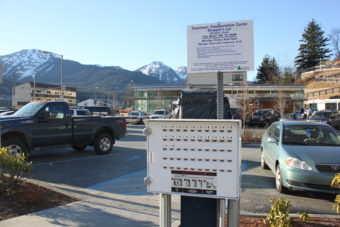
City manager Kim Kiefer says on-street parking will still be free for the first two hours. Beyond that, motorists will have to park in a coin-operated lot.

“The parking lot up by the Baranof will be a coin-pay only parking lot. There will be some spaces in the Marine Parking Garage that will be pay coin ops only, and then the lot that we refer to as Shoppers Lot – the corner of Egan and Main Street – will be pay by space.”

It will cost 75 cents an hour to park in each of the three coin-operated lots.  A number on each parking space corresponds to a slot in a pay box that takes coins or dollar bills.

Keifer calls the system “purposely low-tech.”  She says the coin pay stations are a temporary solution in the downtown parking zone.

“If you’re parking on Whittier Street, it doesn’t count. We’re talking about the area that basically is from the Downtown Library, up to 4th Street, over to Main, and then down to Marine Park.”

Motorists also have the option of buying weekly or monthly parking permits for the Marine Parking Garage. Permits for the Downtown Transportation Center have been sold out and enforcement there has already begun.

Kiefer says the city is planning an informational campaign about the new downtown parking system, including signs and advertisements, before police start to ticket.

“We’ll give people time to get used to the new system. We’ll do warnings.”

The city terminated the contract with Aparc Systems in December and initiated a lawsuit against the Nevada company, after it failed to respond to various complaints. The Assembly last month approved $110,000 for legal fees to outside counsel for the litigation.

Since 2010, the city has invested nearly half-a-million dollars in the problematic parking system.

The temporary pay boxes have so far cost $1,900, including shipping.

Why is Alaska losing market share in the global cruise industry?

The Oosterdam was one of the last ships of the 2013 season. (Photo by Heather Bryant/KTOO)
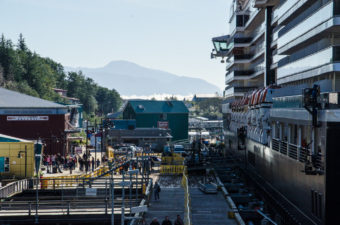
The Oosterdam was one of the last ships of the 2013 cruise season. (Photo by Heather Bryant/KTOO)

Alaska’s share of the global cruise industry is on the decline.

While the number of passengers to visit the state last year was nearly back to the level before the Great Recession, other cruise destinations continue to attract more ships.

The Juneau Assembly on Monday heard about the trend from an industry representative.

Cruise Lines International Association of Alaska President John Binkley. Photo by Casey Kelly/KTOO.

Long before he was a Republican state lawmaker and candidate for governor, John Binkley worked on his family’s riverboat in Fairbanks, doing tours for visitors to Alaska’s Interior.

“When we were growing up in our family business, my father used to always tell us that, ‘If you’re coasting, you’re going downhill,'” Binkley told the Juneau Assembly Committee of the Whole.

Binkley is now president of Cruise Lines International Association of Alaska, formerly the Alaska Cruise Association. He says the state has been coasting when it comes to attracting tourists.

“I think we’ve taken a lot of it for granted, what we’ve had here in Alaska in terms of the industry, and other destinations around the world have not,” he said.

Almost a million cruise ship passengers sailed to Alaska last summer, an increase from 2012 and nearly back to the levels seen in 2007 and 2008. But Binkley says Alaska’s share of the global market has declined from 6.5 percent in 2006 to 4.5 percent.

He says the companies that belong to Cruise Lines International plan to deploy 24 brand new ships over the next two years. But instead of sending them to Alaska, Binkley says they’ll be heading to places like the Caribbean, Northern Europe, Australia, and Asia.

“In Alaska we’ll fall a bit. We’ll actually be down slightly in 2014,” Binkley said. “Some of this capacity is going to these other destinations that will come out of Alaska.”

Still, Binkley said he remains cautiously optimistic about the future. He says some of the most successful cruise ship ports have partnered with the industry to improve their facilities.

“Recently we appreciate the efforts of the mayor and the administration in reaching out to the industry here locally, saying let’s sit down and talk about what the use of some of those head tax funds will be in the coming year,” he said. “What are some of the needs of the industry? How can we work together to make sure the community is spending those dollars to meet the needs of the industry in the future? I think those are examples of how we need to work together to be successful.”

Assembly member Kate Troll asked Binkley for his thoughts on the city’s planned $54 million expansion of its downtown cruise ship docks, to which he gave a lukewarm response.

“That’s $54 million that comes from the passengers that have to try and afford to come to this destination,” said Binkley. “So it’s great to have those facilities, but when you have to pay a premium for those, that then becomes an inhibitor for people to come, because the cost goes up.”

But Troll said she thinks the docks are still in the best interest of the community and the industry.

“I’m particularly interested in the fact that the proposal would provide conduits for shore side electricity for the cruise ships, so we don’t have to have diesel burning in our port area,” said Troll. “So, yeah, that’s all part of the package of making our port more efficient, more attractive, all those things.”

The project is being funded entirely with Juneau’s share of the state’s cruise ship passenger fee revenue. In 2006, voters approved a citizen’s initiative that included the head tax.

Binkley’s organization successfully lobbied lawmakers and the Parnell administration to reduce the per passenger fee in 2010. Last year, the cruise lines were successful in getting lawmakers to change another part of the 2006 initiative, lowering the standards for wastewater discharge.

Site notifications
Update notification options
Subscribe to notifications