Fresh produce is seen at the Alaska Commercial Company grocery store in Bethel on Oct 15, 2025. (Corinne Smith/Alaska Beacon)
Alaskans who qualify for the Supplemental Nutrition Assistance Program received half of their benefits nearly a week late as a result of the federal government shutdown this month. Their full benefits were two weeks late, even though the state had emergency funds to prevent that.
Officials say the state never used the $5 million per week it set aside to keep people from waiting for food benefits because the state’s system had to be reconfigured to use state money rather than its usual federal funding source. SNAP is a federal food assistance program that is run by the state.
Division of Public Assistance Director Deb Etheridge said the state is now prepared to react quickly if a similar situation arises in the future.
“We went through all the steps we needed to create an opportunity for a state-only benefit to be issued through our EBT contractor,” she said. “So in the event that anything like this happens again, we can move swiftly to issue that state-only benefit.”
Gov. Mike Dunleavy signed an emergency order declaration on Nov. 3, following a request by state legislators and similar action by other states.
Etheridge said information technology and system operations teams had to scramble to come up with solutions, but by the time they found a way to get money to Alaskans, the federal government had begun to partially fulfill its obligations.
She said the state was closing in on a solution when the federal government released 50% of the money for benefits on Nov. 4. She said that money was processed and ready for Alaskans to spend by Nov. 6.
Etheridge said the eligibility technicians that process benefits were not excessively burdened by the shutdown.
“Eligibility workers were doing business as usual, processing cases and managing, obviously, increased phone calls — people wanted to know where their benefits were,” she said. “The pressure came on our system operations and our IT.”
The shutdown delayed service in a state division with a history of slowdowns in recent years. The DPA has battled long backlogs in processing food benefit applications as a result of staff shortages and technology issuessince 2022. The division made progress against its backlog before slipping again in 2023. Paperwork slowdowns kept thousands waiting again earlier this year.
Etheridge says the division is currently working to make sure people displaced by the October storms in Western Alaska continue to receive benefits, even if they have lost access to critical paperwork.
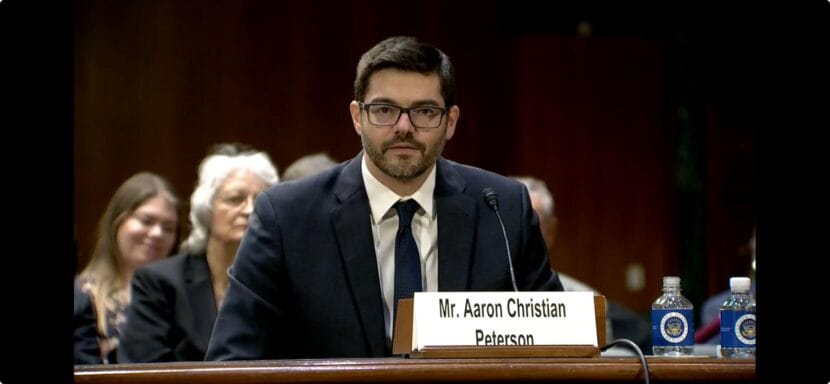
Aaron Peterson at his confirmation hearing in the U.S. Senate Judiciary Committee on Nov. 19, 2025. (Screenshot from U.S. Senate video)
WASHINGTON — President Trump’s pick to be a federal judge in Alaska encountered no turbulence at his nomination hearing Wednesday in the U.S. Senate Judiciary Committee.
Aaron C. Peterson is from Eagle River and is an assistant attorney general in the Alaska Department of Law’s natural resources section. He told the senators that an asset he’d bring to the U.S. District Court bench is extensive knowledge of Alaska-specific federal laws, including the Alaska National Interest Lands Conservation Act.
“The deep familiarity that I have with those laws, with my history of litigating them, I think prepared me for many of the cases that will come before the District Court,” he said.
While he now works exclusively on civil cases now, he also worked as a municipal and state prosecutor for about eight years, which took him around the state.
Peterson got a law degree from Gonzaga University in 2010, is married to a math teacher and is a father of three. He said in documents submitted to the committee that he became a member of the conservative Federalist Society this year.
“He knows and understands our great state and the federal laws that reflect on Alaska,” Alaska U.S. Sen. Dan Sullivan said as he introduced Peterson at the hearing. “I think he will be a great federal judge.”
Sullivan mentioned the last nominee he supported for the federal bench in Alaska. Joshua Kindred (“not my first choice,” Sullivan added) was sworn in in 2020 but resigned in disgrace in 2024, after an investigation found he mistreated a law clerk, among other improprieties.
Sullivan said Peterson is the first nominee to be interviewed by the Alaska Federal Judiciary Council, an advisory committee the senator created that meets in private and vets potential nominees for him.
Sen. Lisa Murkowski favors the prior system for vetting federal judicial applicants. It starts with a poll of the Alaska Bar Association, to gauge the person’s reputation among fellow attorneys.
Peterson went through Sullivan’s vetting system but thanked both Alaska senators for their support.
He was among three nominees at Wednesday’s confirmation hearing. The others have higher-profile positions as U.S. attorneys in Arkansas and Texas and drew more scrutiny. Senators repeatedly asked Peterson to weigh in on constitutional questions only after the others had answered, leaving him little to say.
“Senator, again, I agree with my colleagues. I was only going to add separation of powers concerns, but Mr. Ganjei did that,” he said, referring to his fellow nominee at the hearing table.
The committee could vote on Peterson’s nomination next month and then send it to the full Senate for a vote.
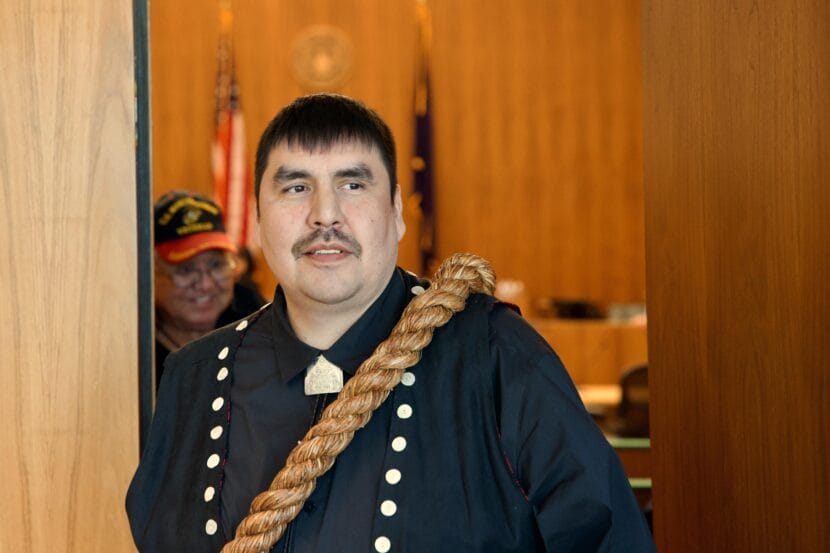
Metlakatla Mayor Albert Smith exits the courtroom at the Robert Boochever U.S. Courthouse in Juneau, Alaska following oral arguments in a fishing rights case on Feb. 15, 2024. (Eric Stone/Alaska Public Media)
A lawsuit from Alaska’s only Native reservation will proceed over the objections of other Southeast Alaska tribes. A federal judge last week declined a request from a coalition of tribes, including the largest in Southeast, to throw out Metlakatla Indian Community’s lawsuit challenging the state’s authority to regulate its fishermen.
Metlakatla Indian Community asserts in its five-year-old lawsuit that the state has no right to regulate the tribe’s fishermen. Its attorneys say that’s because when Congress created Metlakatla’s reservation in 1891, Congress implicitly included a federally guaranteed right to fish in nearby waters.
The case was headed for trial when a coalition of tribes, including the Central Council of Tlingit and Haida Indian Tribes of Alaska, weighed in, arguing it should be dismissed outright.
“They felt this was something that should be resolved between the tribes and not by a federal judge,” attorney Richard Monkman said in an interview.
The tribes argued granting Metlakatla’s members the right to fish in waters near Ketchikan and Prince of Wales Island would violate their rights to their cultural property.
“We would analogize this to other cultural rights, like dances, stories, carvings, other types of rights that all sort of fall under the general category of at.oow, in the Lingít language, or cultural rights, which belong to the clans and belong to the houses within clans,” Monkman said.
Metlakatla’s attorneys, however, argued that the right to fish in those areas wasn’t legally protected — in part because of the Alaska Native Claims Settlement Act. Chris Lundberg is an attorney representing Metlakatla.
“With the exception of Metlakatla, all Alaska Natives participated in that act,” Lundberg said. “In exchange for releasing all claims to aboriginal rights-type claims and claims to land and fishing areas, the tribes received compensation.”
There’s still a long way to go, and it’s unclear when it might go to trial — for one thing, the state has filed a motion to end the case without a trial — but Lundberg said the decision from Judge Sharon Gleason puts the case back on track.
Metlakatla Indian Community Mayor Albert Smith said in an interview he was pleased with the decision and is optimistic about the road ahead.
“Now we are excited about getting back to the main issue: restoring the community’s reserved fishing rights,” he said.
Child care workers interact with infants at Gold Creek Child Development Center in Juneau on May 11, 2018. State rules require certain square footage and staffing levels, which limit this center’s infant care capacity to 10. New state rules being proposed may force that capacity down to 8. (Photo by Jeremy Hsieh/KTOO)
Fewer Alaska babies were born in 2024 than the year prior, continuing a yearslong decline in the state’s births and women’s fertility rates, a new report shows.
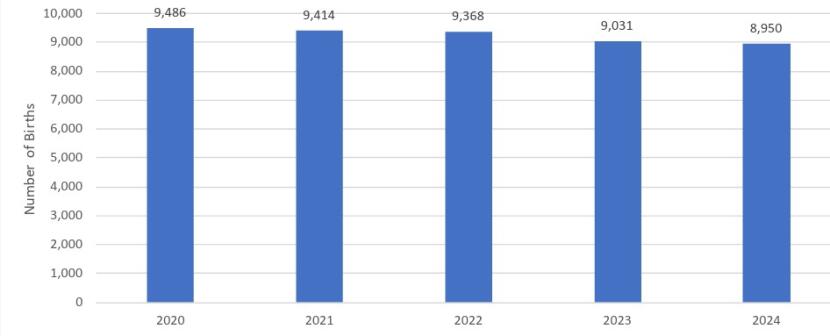
There were 8,950 Alaska babies born last year, down from 9,031 in 2023, according to the Alaska Vital Statistics 2024 Annual Report released by the state Department of Health. The number of births has fallen in each of the past five years, the report showed. In 2020, there were 9,486 babies born in Alaska.
Annual numbers of Alaska births from 2020 to 2025 have declined steadily. The decline continued last year, according to the Alaska Vital Statistics 2024 Annual Report. (Alaska Vital Statistics 2024 Annual Report/Alaska Department of Health)
Fertility rates — defined as the number of births per 1,000 women aged 15 to 44 — also continued to decline. In 2024, the statewide fertility rate was 61, down from 61.8 the year before and 65.5 in 2020.
The most popular names for boys were Oliver and Theodore. For baby girls, the most popular names were Amelia and Olivia, the report said.
At the other end of the life cycle, there were slightly fewer deaths in Alaska last year than in 2023 — 5,525 in 2024, compared to 5,544 the year before, the report said. Alaska’s death total peaked in 2021, during the COVID-19 pandemic, when 6,227 residents died, the report said. Death numbers have declined since then, and the 2024 total was similar to the 2020 total of 5,204.
Death statistics revealed that the top three causes in 2024 were the same as they were in most years: cancer, which was responsible for about a fifth of all Alaska deaths; heart disease, with totals for those deaths on the decline since 2021 and 2022; and accidents, a category that includes poisonings and drug overdoses.
COVID-19, which was the No. 3 cause of death in 2021, slipped out of the top 10 in 2023, a year when it was cited as the cause of 56 deaths. Its impact on state demographics was still small in 2024, when it was found to be the cause of 58 Alaska deaths.
Embedded in the vital statistics report were some positive signs.
Life expectancy increased to a statewide average of 77.6 years, continuing an upward trend since the COVID-19 pandemic year of 2021, when life expectancy hit a low of 75.4 years.
The teen birth rate was the lowest since 2020, the report said. That rate, which measures the number of births per 1,000 girls aged 15 to 19, was 13.5 in 2024, down from 14.8 the year before.
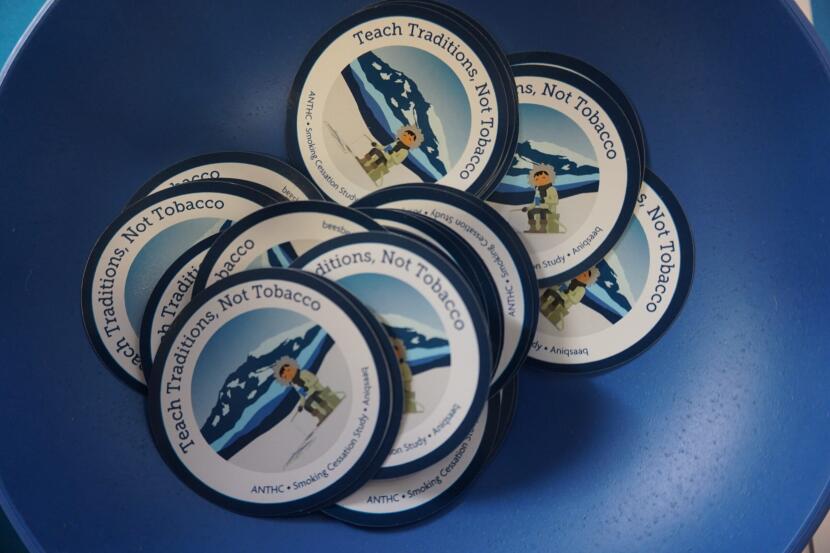
Buttons at a table set up by the Alaska Native Tribal Health Consortium at the Alaska Federation of Natives convention, seen Oct. 16, 2025, bear an anti-tobacco slogan. Fewer expectant mothers in Alaska are using tobacco than in the past, the state’s annual vital statistics report said. (Yereth Rosen/Alaska Beacon)
Use of tobacco by pregnant women has also steadily declined in recent years, according to the report. In 2024, 7% of expectant mothers used tobacco, down from 11% in 2020.
Report shows declines in certain cancers. A separate report released by the department detailed cancer statistics through 2022, the year with the last available data.
Cancer incidence overall in Alaska decreased between 1996 and 2022, especially in the years 2009 to 2012, when incidents dropped by an annual average of 3.4%, the report said. Breast cancer remains the most frequent cancer among women, while prostate cancer is the most frequent cancer among men, the report said.
Certain types of cancers have decreased in Alaska since 2016, including leukemia, bladder cancer, lung cancer, ovarian cancer and prostate cancer. There is a caveat, however. “Recent trends have started to show an increase in prostate cancer statewide and nationally,” Shirley Sakaye, a spokesperson for the department, said by email.
Also on the decline in Alaska was colorectal cancer, which ranked fourth on the list of diagnosed cancers in the state in 2022, according to the cancer report.
Colorectal cancer trends are of special concern in Alaska because of a high prevalence among Alaska Natives. Alaska Native people have had the nation’s highest recorded rates of colorectal cancer, according to a recent report by the American Cancer Society. The reasons are not fully understood by health experts, but they may relate to diet, according to the report.
A walk-in inflatable model colon, on display on Oct. 20, 2022, at the Alaska Federation of Natives convention, gives visitors a close-up view of a typical precancerous polyp. This is the smaller of two inflatable displays that the Alaska Native Tribal Health Consortium and Southcentral Foundation use to raise awareness of colorectal cancer. Alaska Natives have the nation’s highest rate of colorectal cancer, according to the American Cancer Society. (Yereth Rosen/Alaska Beacon)
While colorectal cancer numbers have declined in recent years, rates are notably high in one of the most rural regions of the state: the Yukon-Kuskokwim Delta in Western Alaska. The colorectal cancer rate there was 88 per 100,000 people in 2022, compared to the statewide rate of 40.8 per 100,000, according to the report.
Alaska Native tribal health organizations have boosted awareness, and screening has increased over time.
Because of relatively high rates of colorectal cancer among younger adult Alaska Native people, the Alaska Native Medical Center and Alaska Native Tribal Health Consortium recommend that screenings start at age 40, compared to the recommendation for most Americans to start screenings at age 45.
Correction: This story has been corrected with the proper definition of fertility rate, which is births per 1,000 women aged 15 to 44.
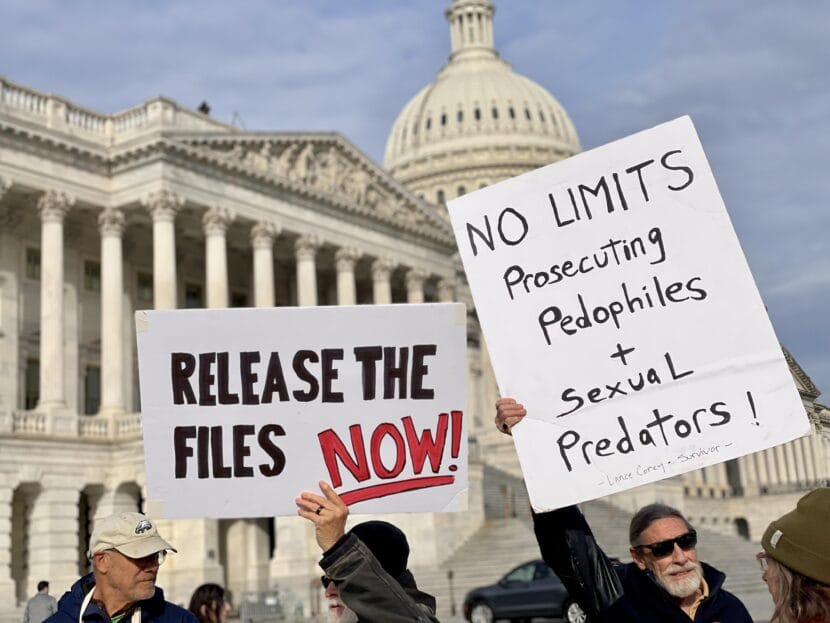
Advocates of releasing the Epstein files protested at the Capitol Nov. 18, 2025, before the House vote. (Liz Ruskin/Alaska Public Media)
WASHINGTON — The U.S. House voted nearly unanimously to force the Justice Department to release documents and investigative materials on the late sex offender Jeffrey Epstein.
Alaska’s lone member of the House, Republican Rep. Nick Begich, voted for the bill, too. And Begich said he would have voted yes even if President Trump was still urging Republicans to block it.
“The American people deserve transparency,” Begich said Tuesday, before the vote. “This (investigation) is a product of the taxpayers’ investment. A lot of money has gone in to investigate these crimes, and I think the people deserve to know what’s there.”
For months President Trump pressed Republicans to block the Epstein bill. That put House Republicans in a political bind: Should they follow Trump, or his MAGA followers, who voted for Trump in part because he promised to release the files?
Trump abruptly reversed course over the weekend and said Republicans should vote for it, releasing his House allies from their dilemma.
The Epstein bill goes next to the Senate, where one of the controversies is whether to make changes.
Begich said he agrees with House Speaker Mike Johnson that the bill needs to be amended, to allow the Justice Department to redact or withhold information to better protect victims and investigative methods.
“I think Leader (John) Thune in the Senate has provided some strong indications to House leadership that those will be addressed once this bill goes over to the Senate,” Begich said. “I think that’s important.”
House Democrats and the four Republicans who signed a discharge petition bringing the Epstein bill to a vote say the bill doesn’t need amendment. They say the bill already protects victim identities and investigative sources and methods.
Survivors of Epstein’s abuse cheered from the House gallery when the 427-1 vote was announced. Many House members turned to face the House gallery, applauding victims who spoke out and have campaigned to release the documents.
The cheers and applause was still underway as the clerk read the procedural rule for the next measures — to repeal Biden administration rules that put the brakes on oil development in the Arctic National Wildlife Refuge and, to the west, in the National Petroleum Reserve-Alaska.
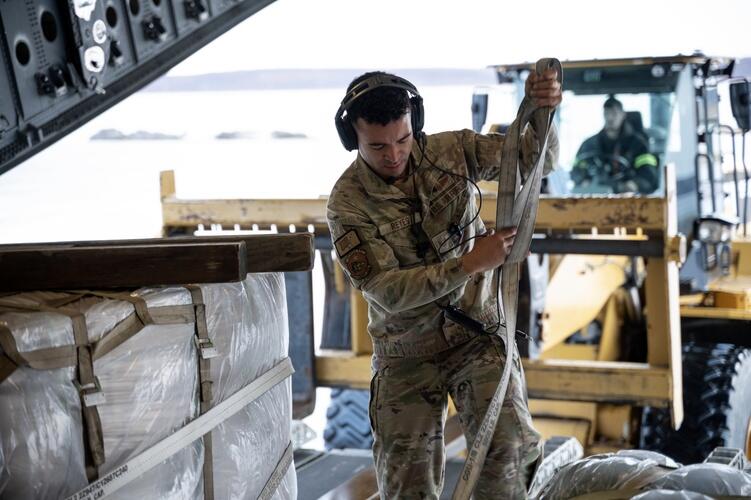
Alaska Air National Guard C-17 Globemaster III aircrew, assigned to the 176th Wing, offload gear and supplies at Bethel, Alaska, while supporting storm recovery operations following Typhoon Halong, Oct. 15, 2025. (Staff Sgt. Joseph Moon/Alaska National Guard)
Alaska legislators with the state Joint Armed Services Committee are raising concerns that a federal directive to prepare the Alaska National Guard to deploy domestically for civil unrest could divert service members from disaster relief efforts.
A spokesperson said the Alaska National Guard has received the directive to prepare a 350 member “quick reaction force” by Jan. 1 but said the state’s National Guard has not begun any specific training outside typical readiness training.
“This mission requirement does not impact our support to ongoing Typhoon Halong response operations, and we continue to meet all state and federal mission requirements,” said Dana Rosso, a public affairs officer for the Alaska National Guard, via email.
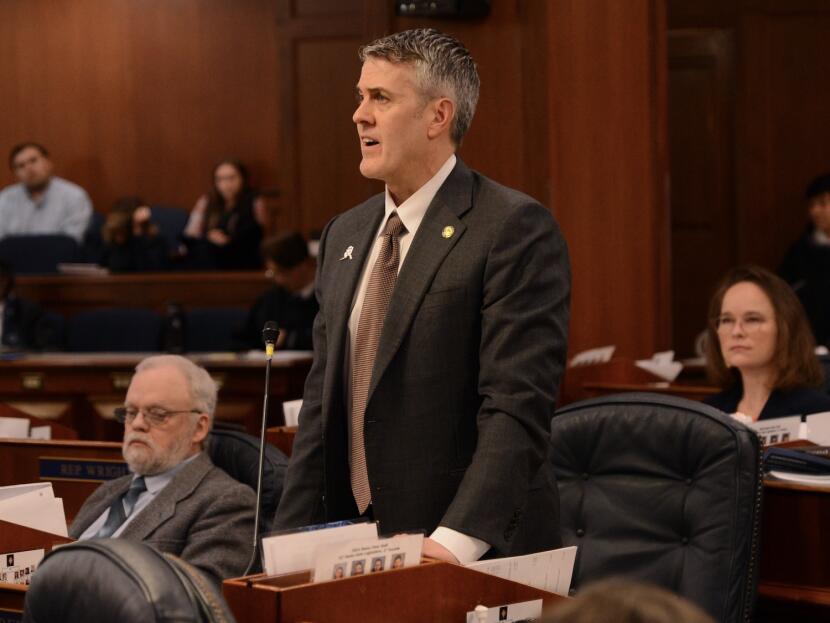
Rep. Andrew Gray, D-Anchorage, is co-chair of the Alaska Joint Armed Services Committee and a veteran of the Alaska National Guard. He said he’s concerned about the possibility of a quick response force being used to quell “civil unrest” in Alaska and across the country.
“The fear is, of course, that when you have a tool, an expensive tool, at your disposal, that you’re going to find a reason to use it. And so I think the fear about having this quick response force locked and loaded is that they could be used when it’s inappropriate to use them,” he said. “Peaceful protest would be the perfect example.”
Rep. Andrew Gray, D-Anchorage, speaks Friday, April 26, 2024, on the floor of the Alaska House of Representatives. (James Brooks/Alaska Beacon)
The federal directive said National Guard members should be training in crowd management and riot control, including the use of batons, body shields, Tasers and pepper spray.
Lawsuits, protests and federal courts have repeatedly challenged and barred the Trump administration deploying National Guard troops to American cities to assist police and immigration enforcement, asserting it is illegal and an abuse of executive powers.
Additionally, an estimated 200 Alaska service members are now deployed to assist with disaster relief efforts one month after the devastation of Typhoon Halong, officials said. It’s deemed the largest off-the-road-system response by the National Guard in the state’s history.
Gray and committee co-chair Sen. Scott Kawasaki, D-Fairbanks, sent a letter expressing concerns to Maj. Gen. Torrence Saxe, Adjutant General of the Alaska National Guard, who is also Commissioner of the Alaska Department of Military and Veterans Affairs.
“The broad and vague nature of this mandate raises serious questions about its intent and implications, particularly regarding the potential use of these forces in domestic law enforcement situations,” the letter said, in part.
Gray published an op-ed in the Anchorage Daily News on Monday saying the committee has yet to receive a response from Maj. Gen. Saxe about the Alaska National Guard’s plans.
Gray served for nine years in the Alaska Army National Guard as a medical provider and deployed to Kosovo in 2019. He commended the agency’s work and unprecedented disaster relief effort.
“I don’t want to disregard the enormous amount of stress and pressure on them right now for this particular disaster response,” Gray said. “That may very well be a valid reason why they haven’t been able to meet to discuss this issue. But that would be really good and reassuring information for the public.”
Gray said he’s requested a meeting with the leadership of Alaska National Guard for an update, but so far his questions have not been answered.
“Most importantly,” he said, “under what circumstances does our leadership in Alaska expect to be utilizing this force?”
Leaders with the Alaska National Guard declined repeated interview requests. Gov. Mike Dunleavy’s office also did not respond to questions about what circumstances would trigger the deployment of the quick response force, whether in Alaska or nationally, or the concerns raised in the legislators’ letter to Commissioner Saxe.
In an email, Rosso said that preparing a reaction force is not a new mission for the National Guard. “It has existed for two decades as a rapid-response capability designed to assist civil authorities when requested by a governor. Each state’s NGRF (National Guard Reaction Force) is organized as a temporary task force under state control and can respond quickly to protect lives, property, and critical infrastructure,” he wrote.
Rosso said the Alaska National Guard has not begun any specific training, but that some readiness tasks “such as security operations and initial protective equipment training,” are already part of the National Guard’s ongoing training. He said they are conducting an inventory on equipment and weapons listed in the memo, like Tasers, batons and pepper spray.
“Many units already use authorized protective equipment and training devices as part of their annual readiness training. Before making any new equipment purchases, we are assessing what capabilities already exist,” he wrote.
Rosso said the Alaska National Guard had no further communication from the Pentagon on the mission of the National Guard response force. “We have not received any official taskings for NGRF support or deployment,” he said.
The Oct. 8 memo signed by Maj. Gen. Ronald Burkett, the director of operations for the Pentagon’s National Guard Bureau, orders all states to prepare National Guard forces, totaling 23,500 troops nationwide, to be ready within a 24 hour notice. The memo cites Trump’s executive order to address the “crime emergency” in Washington D.C., which has come under intense criticism and legal challenges, which has continued as more troops were mobilized to Los Angeles, Memphis, Portland and Chicago.
Retired Lt. Colonel Daniel Maurer, a veteran active-duty Army officer and former Judge Advocate General, testified on the topic to the Alaska Joint Armed Services Committee on Wednesday. He is now an associate professor of law at Northern Ohio University.
But Maurer said none of the Trump administration’s justifications for the order are legally accurate, because he says they’re not based on credible, factual evidence.
The Trump administration has claimed illegal immigration is a national security threat, and troops are needed in U.S. cities for illegal immigration enforcement, as well as to combat protesters accused of being part of “Antifa” or a “domestic terrorist threat.”
“As a result, the military is being ordered in situations where they lack sufficient training and sensitivity to the constitutional rights and protections of those civilian protesters,” he said. “It puts soldiers in terribly awkward positions where they must act like police, and police fellow Americans on American civil streets.”
The remarks were part of a broader discussion at the committee hearing on constitutional concerns and politicization of the U.S. Department of Defense policies and actions in 2025.
The military is prohibited from enforcing civilian law under the Posse Comitatus Act, unless authorized by Congress or by the U.S. Constitution. Only under the Insurrection Act can the president deploy the military to suppress an insurrection.
Maurer said there is no evidence of such a need.
“It is extreme, especially what is predicated on flat out lies. The triggers that these laws are based on aren’t being triggered. They’re just not happening on the ground. Court after court after court have said it’s not,” he said, adding that troops are being used to intimidate protesters.
“There was no problem to fix with the military,” Maurer said. “It is simply an effort to show force — muscular, robust camouflage, armed force — to show protests, because this president does not like protests.”
Gray said he’s also worried about the National Guard intimidating voters around the 2026 midterm elections, including in Alaska. He pointed to Trump’s criticism of recent elections won by Democrats and a social media post falsely calling California’s elections approving redistricting by mail-in voting “rigged.” There’s no evidence the National Guard was involved or used to intimidate voters in recent elections this month, and the memo does not call for such use.
Gray said he’s also concerned that the National Guard would assist in immigration enforcement operations in Alaska like it already has in other parts of the country, especially as the Trump administration has revoked protections and legal status for refugees, like Ukrainians fleeing from war.
“People are afraid to leave their homes. We’ve heard these stories about folks who have to have food brought to them. You know, they won’t even go to the grocery store because they see things happen, like what happened in Fairbanks with the woman literally going to the grocery store and being picked up off the street by ICE,” he said, referring to a Fairbanks woman and mother of six detained by ICE for two months over her immigration status, and recently released.
Gray said based on his own National Guard experience, he also questions whether 350 Alaska service members will be available for rapid deployment. He said in 2019 Alaska was not able to coordinate the 220 service members called on to deploy to Kosovo, so he said others were recruited from Wyoming. “So I’m curious about how easy it would be to do 350 at a moment’s notice,” he said. “Without having it have an impact on folks, families, jobs, etc.”
But his main concern is for transparency about where, when and why Alaska service members could be called to respond to civil unrest.
“Again, we need to be able to ask those questions,” Gray said. “We need to find out what our leaders in Alaska’s interpretation of the use of that quick reaction force is. How will it be used here? How will it not be used here?”
Close
Update notification options
Subscribe to notifications
Subscribe
Get notifications about news related to the topics you care about. You can unsubscribe anytime.