Politics

University of Alaska regents hear pushback on restructuring plan

Last week, the University of Alaska Board of Regents released a plan to reorganize the UA system into three focused campuses and heard reaction from the public.

In light of state budget cuts, the draft Strategic Pathways plan released Tuesday is meant to cut costs by focusing each of the three main UA campuses into certain disciplines.

The proposal defines the University of Alaska Anchorage as the “metropolitan university,” responsible for health, policy and social sciences. The University of Alaska Fairbanks would be the “research university” for science, engineering and rural development. The University of Alaska Southeast is labeled the “liberal arts and sciences” university, focused on fisheries, mining, and interdisciplinary environmental studies. The plan also retains a few core programs, namely education and management, across all campuses.

While the draft plan offers few details about which non-core degree programs would be eliminated, more than a dozen people expressed concerns in Fairbanks on Thursday that their area of interest could be impacted.

“I believe the presence of a robust music theater and fine arts curriculum at the University of Alaska Fairbanks has been a foundation upon which the arts community in Fairbanks has been built,” Jack Wilbur of Fairbanks told the Board. “And I’m concerned that the Strategic Pathways concept as presented might undermine that foundation.”

Others were concerned that narrowing UAF to an engineering school would harm other research areas.

“UAF is not an ivory tower,” said Douglas Cost, a doctoral student with the International Arctic Research Center. “It is a location of real-world problem solving by faculty, adjuncts and graduate students in their research and teaching. In order to help Alaskans deliberate, debate and shape the next 25 years, the importance of interdisciplinary collaboration and outreach must be supported.”

The Strategic Pathways draft doesn’t give estimates of cost savings. But it does contain some specific and ambitious goals for student achievement, including increasing the proportion of Alaskans hired into Alaska teaching positions from 30 percent to 90 percent. The plan also seeks to increase the percentage of graduates in STEM fields from about 4 percent to 6 percent, as well as boost the number of graduates in health occupations.

The plan imagines three phases of restructuring, beginning this spring and finishing around 2019.

In a letter sent to UA faculty and staff Tuesday, President Jim Johnsen said the Board of Regents wouldn’t make any final decisions in their meetings for the week.
Fishing interests question fairness of governor’s fish tax proposal

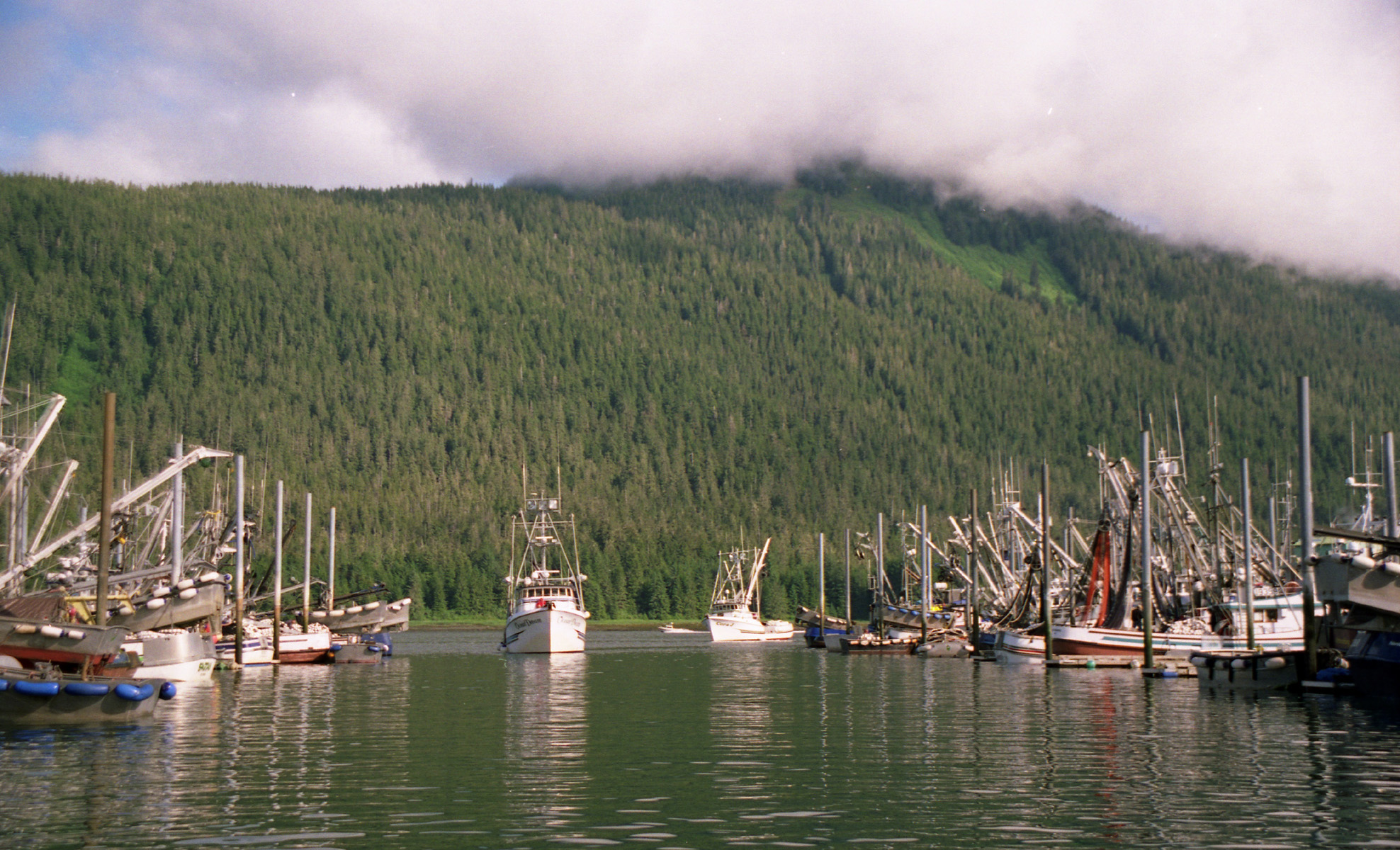
Petersburg's fishing fleet, Sept. 12, 2006. (Creative Commons photo by anoldent)
Petersburg’s fishing fleet, Sept. 12, 2006. (Creative Commons photo by anoldent)

Fisheries stakeholders this week raised lots of questions about the governor’s plan to increase state fisheries taxes, but acknowledged the need for more revenue. Gov. Bill Walker has asked legislators to consider an extra 1 percent tax on fisheries, among a variety of tax increases to help fill the state’s budget gap.

During a House Fisheries Committee hearing Thursday, state tax director Ken Alper explained that the increase, estimated to bring in an additional $18.4 million, essentially would make fish revenue match the cost of fisheries management.

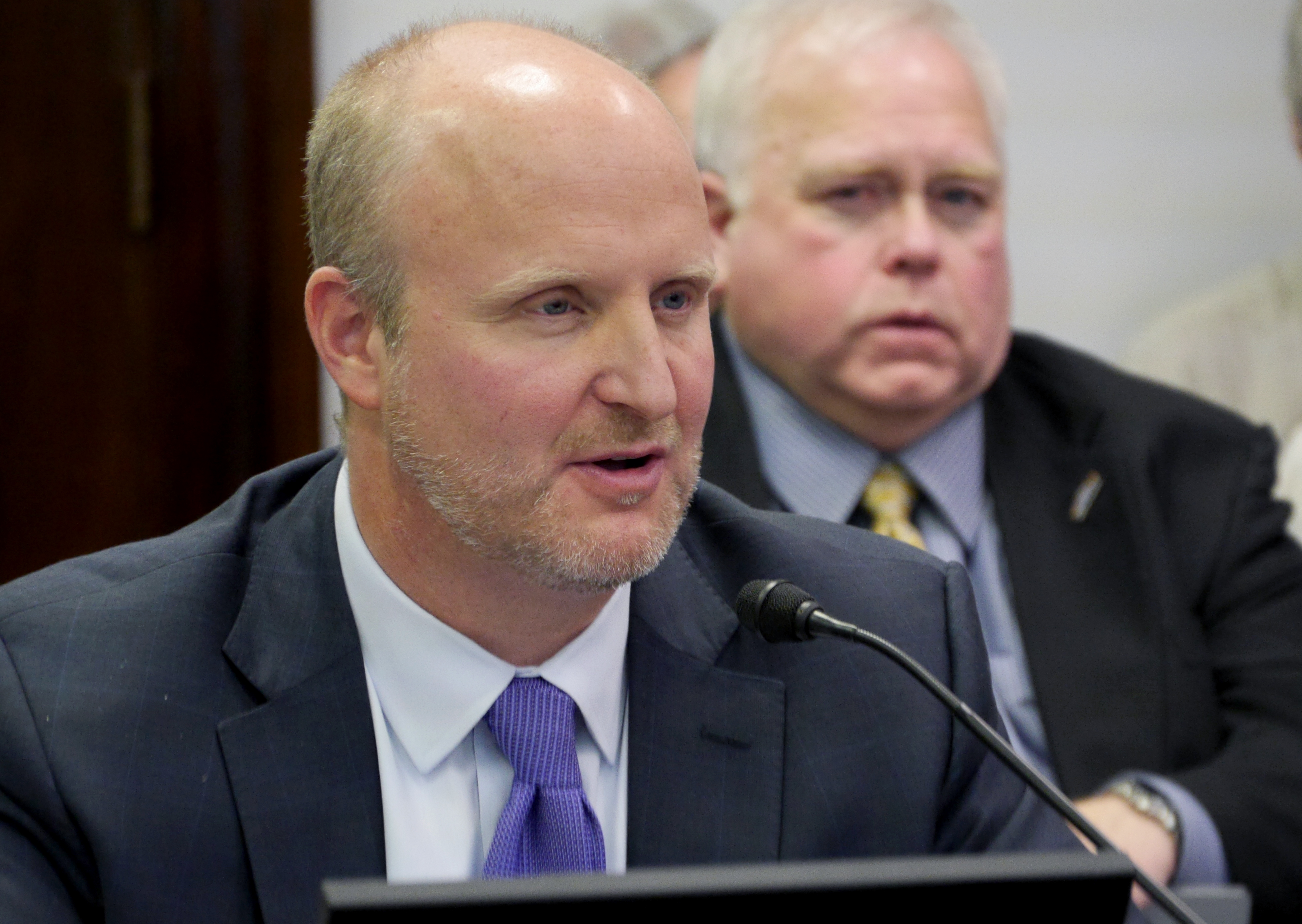
Tax Director Ken Alper
Tax Director Ken Alper in committee, Feb. 3, 2016. (Photo by Skip Gray/360 North)

“The intent was to generate in the neighborhood of $15 million to $20 million of unrestricted GF for the state based on management costs,” Alper said.

At the same time, Alper said the administration didn’t want to totally overhaul the current structure of fisheries taxes. The increase would apply to a variety of taxes, including the raw fish tax and the landing tax.

“There are embedded features in existing statute that the governor did not want to look to upend,” Alper said. “For example, the percentage shares of municipal revenue sharing, or the different existing tax rates between an onshore versus a floating vs a cannery. Those are fully within the legislature’s discretion to move those around. It’s not that 1 percent was a dartboard solution, it was the most rational solution to try to come up with the desired amount of additional funding.”

But some fishermen said that applying a 1 percent increase for all taxes would have different impacts in different fisheries and wasn’t necessarily an equitable way of raising revenue.

Mostly, the committee heard from fishermen and industry representatives who said they know the state needs new revenue, but didn’t understand or support the exact increase proposed.

Seward fisherman and direct marketer Rhonda Hubbard told the committee that the industry needs more time to help craft a plan.

“Fisheries tax is very complex,” she said. “It’s probably one of the most complex tax components within the Department of Revenue. Those taxes do need to be updated. And while it’s admirable that the administration, departments are coming together providing you the information, everything — I think we, as an industry, need to be a part of that meeting, or also come together with them, in creating some more equitable ways of taxing our industry.”

The committee plans to take more testimony on the proposed fishery tax increases at 10 a.m. Tuesday.

House wants details on impacts of oil, gas tax changes

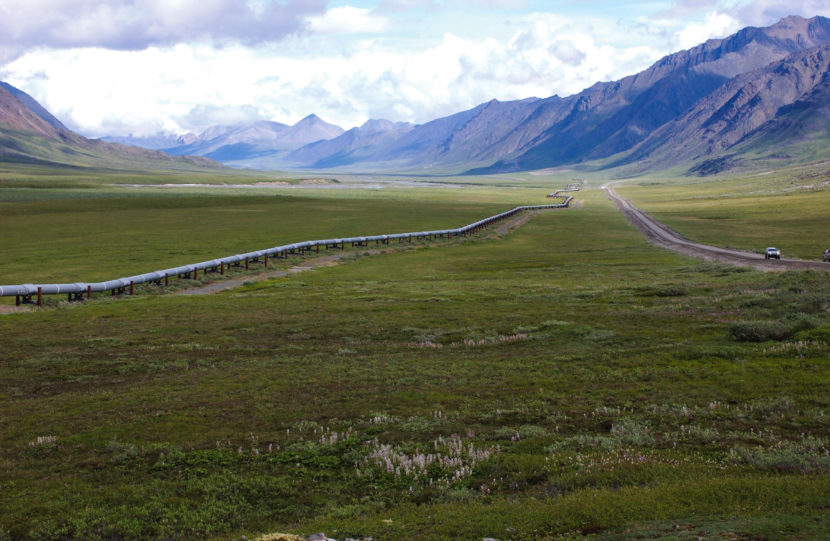
Trans-Alaska Pipeline
The trans-Alaska pipeline in the northern Brooks Range of Alaska in June 2007. (Public domain photo by U.S. Geological Survey)

As Alaska’s Legislature digs through Gov. Bill Walker’s budget proposal, a prime focus is the overhaul Walker put forward for oil and gas taxes.

By reducing tax credits and increasing minimum production taxes, Walker aims to shave $500 million off the state’s budget shortfall.

House members question whether Walker’s administration has done enough analysis of the oil and gas tax changes – as well as other tax increases the governor has proposed.

Speaker of the House Mike Chenault, a Nikiski Republican, said it’s important for legislators to study economic models showing how the changes will affect the state.

Rep. Mike Chenault, R-Nikiski, at a House Majority press availability, Feb. 18, 2016. (Photo by Skip Gray/360 North)
Rep. Mike Chenault, R-Nikiski, at a House Majority press availability Feb. 18, 2016. (Photo by Skip Gray/360 North)

“They were told basically they have no modeling – or that they were working on modeling. Well, it’s hard to put together a tax bill if you don’t have modeling,” Chenault said.

The state didn’t conduct statistical modeling before Walker proposed the tax changes.

State Revenue Commissioner Randall Hoffbeck said officials focused on the fact that the state is committed to paying oil and gas companies more in tax credits than it has to spend.

But state officials did talk with oil and gas company executives about which tax credits were most effective.

Hoffbeck said the process of deciding how to change tax credits had three steps.

“One is, you know, which credits didn’t necessarily work the way they were intended. Either they didn’t get used or really the return on the credits weren’t all that we had hoped that they would be,” Hoffbeck said. “And secondly, you know, which credits worked really well, and may have accomplished their purpose. And then, of course, the remaining is the credits that are still seen as critical moving forward.”

Speaker Chenault is not convinced. He said the fate of Walker’s proposed tax increases depends on the information the House receives.

“How those come out – which ones  pass or not I can’t tell you until we at least hear them, understand them, make sure the administration understands the consequences of the actions that we take as far as public policy for the state of Alaska — and that’s going to take time,” Chenault said.

Hoffbeck said more information will be available next week on the economic effects of the tax changes.

Overnight, Murkowski changes rhetoric on who should pick next Supreme Court justice

Wednesday, U.S. Sen. Lisa Murkowski said she believes it’s “important” that the Senate hold a hearing on President Barack Obama’s choice to replace Justice Antonin Scalia on the Supreme Court.

“I do believe that the nominee should get a hearing,” she said, while taking questions from reporters in Juneau.

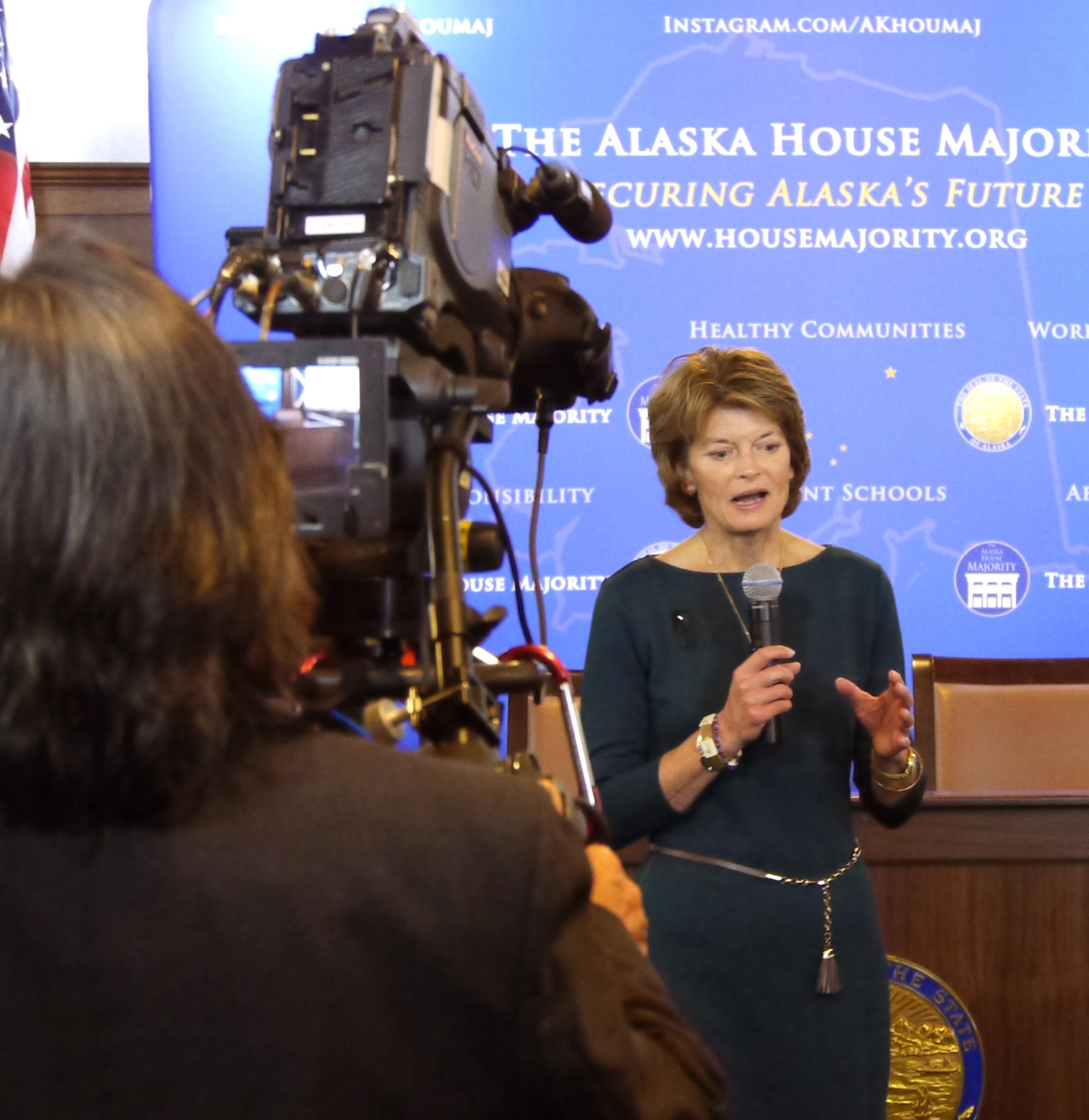
U.S. Senator Lisa Murkowski
U.S. Senator Lisa Murkowski, R- Alaska, at a press availability following her annual address to the legislature, Feb. 17, 2016. (Photo by Skip Gray/360 North)

Late Thursday afternoon, in a series of five tweets, Murkowski essentially said there should be no nominee.

On both days, she said it’s up to the Senate to decide whether the nominee gets a vote on the Senate floor. Thursday, though, she went a step further. In Twitter post number four, she announced that she’s urging Obama to follow what she called “a tradition embraced by both parties” and let the next president make the nomination.

“If POTUS ignores precedent,” she said in tweet number five, “I believe extraordinary circumstances give the Senate every right to deny the nominee an up or down vote.”

It’s not clear what “precedent” and “tradition” Murkowski meant, but the claim that a president in his final year ceases to make court appointments is disputed. The independent website Politifact rated a similar claim “false.”

A spokesman for Sen. Dan Sullivan wouldn’t say whether Sullivan believes an Obama nominee deserves a Senate hearing. But the spokesman did say Sullivan will likely oppose any of the president’s choices.

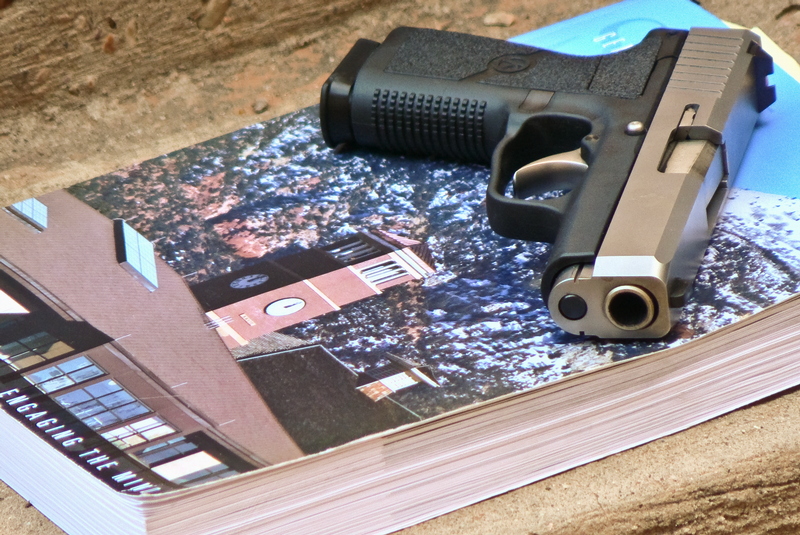
Fairbanks senator wants to legalize concealed guns on campus

guns on campus
(Creative Commons photo by Nathan Cowlishaw)

A Fairbanks state senator wants to remove restrictions for carrying concealed firearms on college campuses, which the University of Alaska opposes.

Republican Sen. Pete Kelly told the Senate Education Committee on Wednesday that his Senate Bill 174 would remove a Constitutional wet-blanket that UA policy puts on students, faculty and staff to bear concealed firearms on campus. Kelly reeled off a series of past shootings on campuses and suggested they might have ended without as much death if students and faculty were carrying.

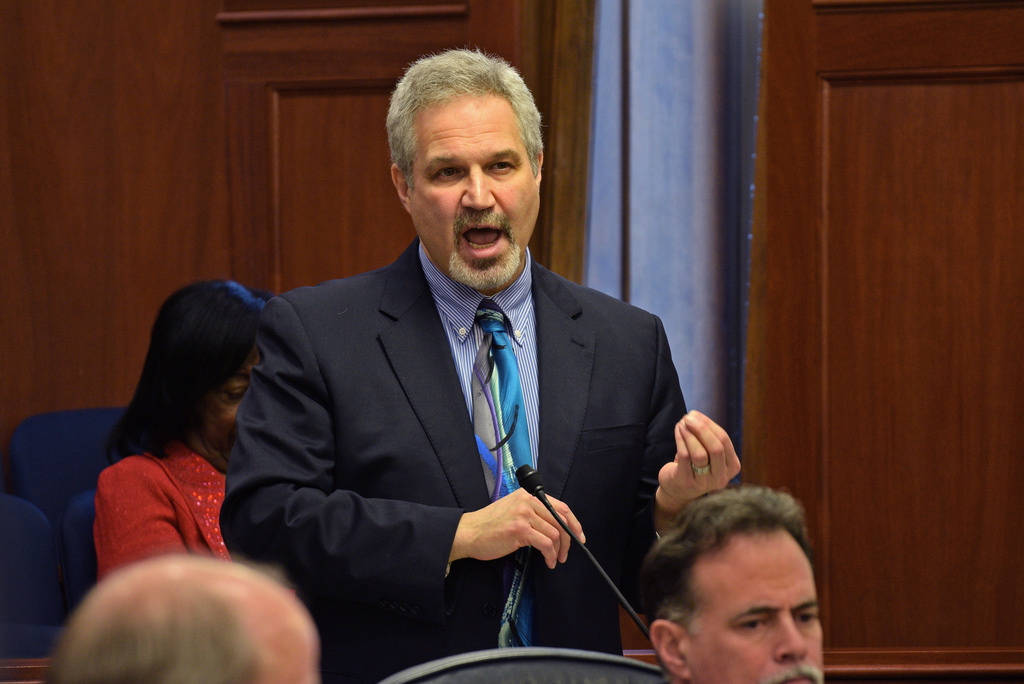
Sen. Pete Kelly
Sen. Pete Kelly in March  2014. (Photo by Skip Gray/360 North)

“Bad guys with guns are stopped by good guys with guns,” Kelly said. “And if the university has made it so all the good guys can’t have guns, they are then at mercy of bad guys with the gun.”

In response to committee members’ questions, Kelly wasn’t able to name any situations on UA campuses where having a concealed firearm would have helped. He conceded state law bars concealed handguns from legislative chambers. But he offered that situation could be remedied with future legislation.

The education committee also heard from UA President Jim Johnsen, who outlined five broad objections to the bill. Johnsen likened the university to courts, the legislature and K-12 schools, where concealed firearms are barred.

“Such places have been recognized by the Alaska Legislature as sensitive places in which regulation of firearms is presumptively lawful,” said Johnsen.

Sen. Kelly told the committee he thought the university had some good points and was willing to amend the bill to accommodate them. The hearing was limited to an hour, so public testimony was truncated. More testimony was expected in committee Thursday.

Former Juneau lawmaker fined $18K for allegedly helping oil companies while seeking oil jobs

Former Juneau Rep. Bruce Weyhrauch has been fined $18,104 for asking for an oil company job while sitting as a state lawmaker who helped draft oil tax legislation.

But his attorney said the opinion released by a legislative ethics committee may not be the final word on the matter.

The House Subcommittee of the Select Committee on Legislative Ethics released their probable cause complaint and final opinion on Tuesday after 10 meetings on the case over the last nine years.

The ethics committee alleged Weyhrauch violated the Legislative Ethics Act by obtaining a promise of future employment with oil services company VECO for helping to draft the Petroleum Profits Tax bill that then-Gov. Frank Murkowski was pushing.

They also found that Weyhrauch agreed or implied that — in exchange for the potential job — he would make sure the bill benefited VECO.

The committee also determined that he exerted official influence on other lawmakers by encouraging them to vote the same way on the oil tax bill, also known as PPT.

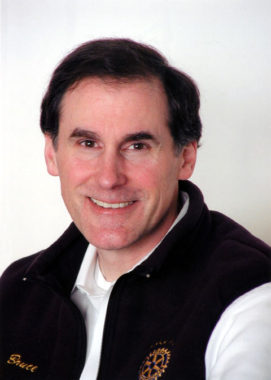
Bruce Weyhrauch vertical
Bruce Weyhrauch represented Juneau in the Alaska House of Representatives for two terms, from 2003 to 2006. (Photo courtesy Alaska Legislature)

The committee determined that Weyhrauch had 51 amendments drafted for the bill as the legislature met in spring 2006. That same year, he sent six letters soliciting clients and employment. Of those, one each was sent to VECO, BP Exploration and ExxonMobil. He also offered his office space to an out-of-state VECO attorney.

The panel said Weyhrauch’s actions demonstrated a conflict of interest even though there was no evidence that he ultimately was employed by VECO.

Reached for comment Wednesday, Weyhrauch referred all questions to his attorney, Doug Pope.

“We contest everything that’s in that probable cause finding, other than the fact that Bruce was a legislator,” Pope said.

Pope said Weyhrauch cooperated with the committee, but he said it was time for the panel to prove their claims.

“They’re going to have to prove that before the full committee and they’re going to have to justify their decision before a court of law,” Pope said.

Pope said the process will likely go on for awhile longer, but not nearly as long as the ethics committee took with their investigation.

“The sword has been hanging over Bruce and (wife) LuAnn’s head for too long,” Pope said.

During their Jan. 26 meeting, the ethics committee fined him $5,000 for each of the three violations. They also tacked on an additional $3,103.70 for expenses related to the investigation and adjudication. Weyhrauch must pay the fine by Feb. 16, 2017. He must also write a public letter of apology within the next 30 days.

As an alternative, ethics committee Administrator Jerry Anderson said Weyhrauch has until March 7 to request a public hearing or closed-door meeting with the ethics committee.

If Weyhrauch does not comply, then the ethics committee will file formal charges against him.

Weyhrauch served in the state House representing a portion of Juneau for four years beginning in 2003. He was indicted in May 2007 after a corruption probe by the U.S. Department of Justice that resulted in the indictments of other lawmakers like former House Speaker Pete Kott, former Wasilla Rep. Vic Kohring and U.S. Sen. Ted Stevens. U.S. Attorney General Eric Holder moved to throw out Stevens’ conviction because of prosecutorial misconduct before Stevens died in a plane crash in 2010.

Weyhrauch eventually pleaded guilty to a misdemeanor state charge of aiding an unregistered lobbyist after federal prosecutors dropped four felony charges against him.

Weyhrauch was fined $1,000 and received a suspended sentence of three months in prison during his sentencing in March 2011.

Weyhrauch told the court he was sorry and he took responsibility for the facts laid out in the plea agreement. He accused the media of getting the story all wrong and never believed he was guilty of the charges lodged by the federal government.

(Editor’s note: Corrected sentence regarding possible actions of ethics committee and the potential filing of formal charges instead of criminal charges.)

Site notifications
Update notification options
Subscribe to notifications