The House Finance Committee sent its budget proposal to the full House of Representatives on Wednesday. The budget, with some late changes, would cut spending by $280 million. It also spends $225 million in funds left from the current budget.
There were some intense exchanges between committee members before the final vote.
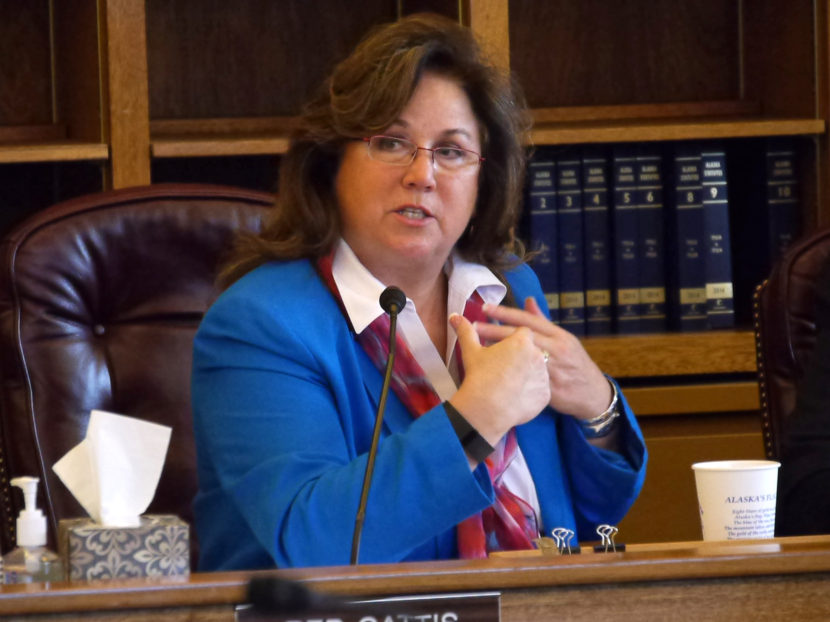
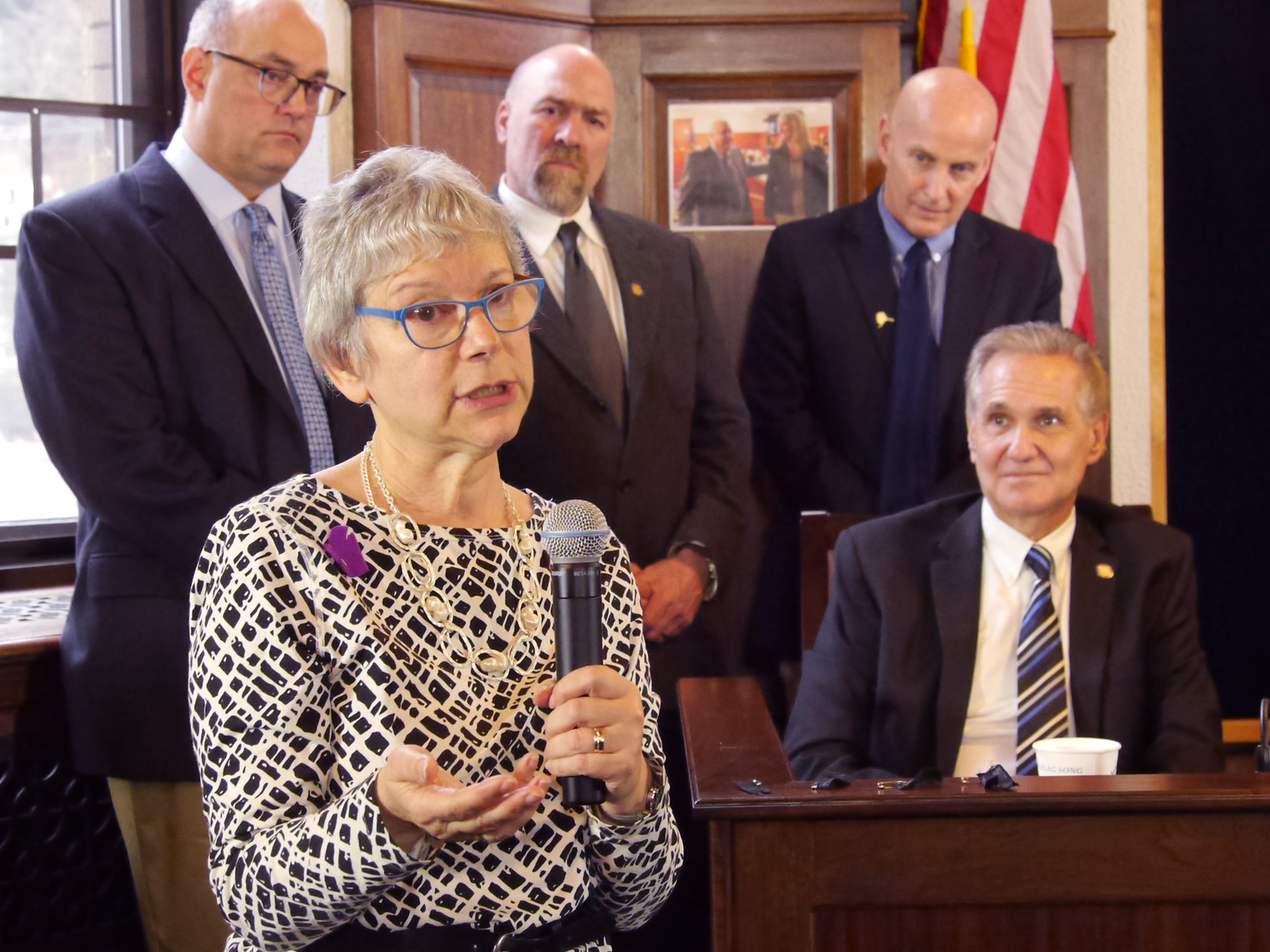
Rep. Lynn Gattis, R-Wasilla, during discussions about the state operating budget shortly before it was passed out of the House Finance Committee, March 9, 2016. (Photo by Skip Gray/360 North)
Wasilla Republican Rep. Lynn Gattis questioned why the leftover funds from the current budget only emerged recently.
“Folks in my district are saying, ‘Why in the heck would I trust you to go and tax me or take my Permanent Fund dividend, when you guys are playing these shell games?’” she said.
But Eagle River Republican Rep. Dan Saddler said spending the savings was a legitimate budget strategy.
On Tuesday, the committee added $30 million for an addiction treatment program, and restored $2.7 million for public broadcasting and $1.7 million dollars for the Nome Youth Facility.
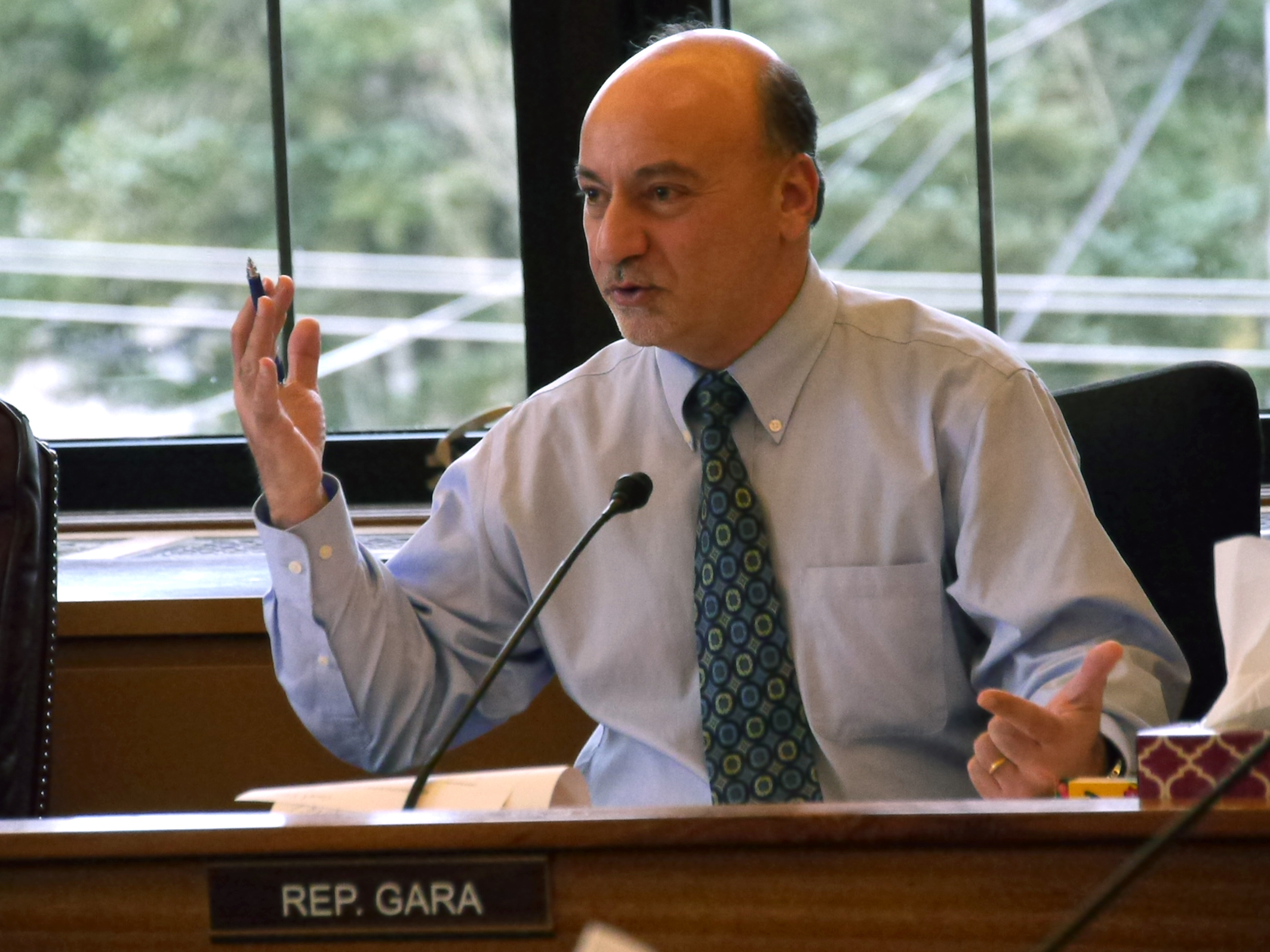
Anchorage Democratic Rep. Les Gara said the budget shortchanged vulnerable Alaskans. He noted the spending plan cuts all state funding for pre-kindergarten.
Rep. Les Gara, D-Anchorage, during discussions about the state operating budget shortly before the House Finance Committee passed it on Wednesday. (Photo by Skip Gray/360 North)
“I understand we have to cut waste. But we don’t have to cut the things that make a difference in people’s lives,” he said. “That’s where I draw the line. And we crossed that line over and over and over yesterday. I don’t believe we have to cut things that senior citizens rely on. Three hundred and fifty thousand dollars got cut from senior citizen help for people who need emergency housing.”
But Committee Co-Chairman Mark Neuman said that as the state considers cutting Permanent Fund dividends and raising taxes, it must cut spending.
“I’ve had to tell every group, every person that’s walked into my office that has approached me on the street – wherever they talk to me – no. I can tell you, look you straight into the eye that everybody that has walked into my office was told no, we don’t have the money.”
The House is scheduled to discuss the budget — and potentially vote on it — on Thursday. The Senate may vote on its version of the budget on Saturday. Then the two houses will work to resolve the differences.
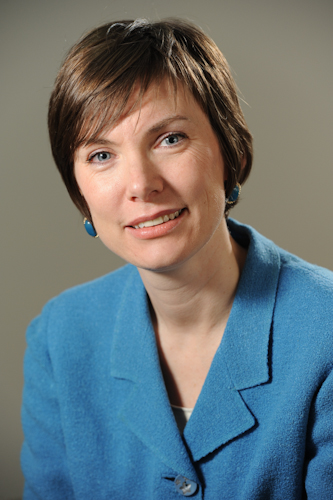
Ivy Spohnholz, Gov. Bill Walker’s pick to fill the House District 16 vacancy caused by the death of Rep. Max Gruenberg (photo courtesy of Governor’s Office)
Gov. Bill Walker named Ivy Spohnholz on Tuesday as his choice to fill the vacancy caused by the death of Rep. Max Gruenberg in February.
Spohnholz is the development director for Salvation Army Alaska and is the vice chairwoman of the Alaska Children’s Trust, which aims to eliminate childhood abuse and neglect throughout the state.
Spohnholz said she wanted the job to address the state’s budget shortfall. Her goal is to avoid economic problems the state experienced in the 1980s. She said when she was a teenager, her parents divorced, and her family faced financial strains.
“I don’t want ever to go through that again and I wanted to be a part of the conversation, in hopes that we can start thinking about the Alaska that we want to have,” she said, “not just the Alaska that, you know, is convenient for us to pay for.”
Spohnholz was one of the three people nominated by Anchorage Democrats for the position.
The House Democrats are scheduled to vote on her appointment either Tuesday night or Wednesday morning. A spokesman for the caucus said she’s unlikely to face any opposition.
She said her first job is to learn about the budget proposals put forward by Walker and legislators.
She’ll also put her experience to work.
“Right now, I work for the Salvation Army, and we see those that are most vulnerable,” she said. “I’m going to be able to bring that experience and the knowledge of what are our most vulnerable elders and youth are facing every day, when we’re making decisions about, you know, how to chart a course forward.”
Walker said he was impressed with the choices that Spohnholz has made, including her founding the organization Foster Kids First, and her family’s decision to adopt a child who has fetal alcohol syndrome.
Walker said he also chose here because of “the life experiences of going through … what Alaska experienced during the ’80s and the downturn in oil.”
He added: “In many respects, that was somewhat similar, although without the loss of life, to what I had been through after the ’64 earthquake.”
Walker said it was a difficult choice. He praised the other nominees – scientist Taylor Brelsford and legislative staff member Kendra Kloster. While he said he could have taken more time, he wanted to make sure District 16 was represented.
Republican Don Hadley also has announced plans to run for the seat this fall. The filing deadline for the primaries is June 1.
The House passed a bill Monday that provides civil immunity to those who give an antidote to reverse overdoses from heroin and other opioid drugs.
Sen. Johnny Ellis in the Alaska Senate chambers, March, 7, 2016. (Photo by Skip Gray/360 North)
Anchorage Democratic Sen. Johnny Ellis sponsored the bill. This made it unusual, since few bills sponsored by members of the minority party ever come up for votes.
The passage of Senate Bill 23 received unanimous support, with every representative present voting for it.
If the Senate – which already passed an earlier version – approves of the current bill, and Gov. Bill Walker signs it – the bill would join a small group of minority Democratic bills that become law.
Ellis said the urgency to pass the law came in part from the rising number of overdose deaths both in Alaska and nationally. The bill allows doctors and pharmacists to provide naloxone, or Narcan, a drug that reverses the effects of overdoses.
“We have a heroin addiction overdose epidemic in the state of Alaska,” Ellis said. “And I knew that we had achieved a breakthrough when I heard Hillary Clinton talk about Narcan, this life-saving miracle drug to reverse opioid overdoses. And heard (New Jersey Gov.) Chris Christie, who was vying for the Republican nomination for president, speak up in favor of the legislation.”
The urgency over the issue was cited by Wasilla Republican Representative Lynn Gattis, who worked with Ellis on the bill. Gattis notes that the House has focused on budget bills recently, but leaders allowed the overdose antidote bill to advance.
“I also applaud leadership for recognizing that this is a life and death issue, for making an exception to this incredibly unique and critically important bill,” Gattis said.
Since 2013, only nine of 180 bills — or 5 percent — passed by the Legislature had minority-caucus sponsors. That’s because the Republican-led majority controls which bills receive votes.
Ellis recalled that a similar pattern held when Democrats have controlled the majority.
He said that over time, the minority bills that did advance had broad support, including backing from important groups. The overdose antidote bill was supported by the Alaska State Medical Association.
“It really did help that the original idea for the bill, the original support was the State Medical Association,” he said. “And Republican majority members often listen to medical doctors, and (doctors) wanted a release from civil liability.”
While minority-supported bills that become laws have very different subjects, one thing they have in common is support from a broad coalition — one that has the attention of the majority.
For example Rep. Jonathan Kreiss-Tomkins, a Sitka Democrat, was the sponsor of another prominent minority-sponsored bill. It made Alaska Native languages official languages in the state.
He said that it helps when bills can draw on broad coalitions of supporters, rather than narrow support.
“If you focus on ideological legislation that isn’t shared by a majority of a body, it’s less likely to pass, whether it’s extreme to the right or extreme to the left,” Kreiss-Tomkins said. “I think if you look at deeply conservative or deeply liberal legislation, the rates of passage for that kind of legislation is pretty low.”
House Minority Leader Rep. Chris Tuck, an Anchorage Democrat, said it can be frustrating that relatively few minority bills become law. He says he’d do it differently if he ever has the power to change it. Democrats haven’t had a majority in the House in 22 years.
“People ask me, well, Democrats are going to do the same thing when they’re in power,” Tuck said. “No, not initially. But if they reigned as long as this majority has control of everything, then things start becoming more heavy handed and more heavy handed and more heavy handed. So I think it’s a really good idea to have the power flip back and forth.”
Ellis noted that Walker has signaled support for the bill, and he’s hopeful that it will become law soon.
The Senate Finance Committee has been weighing a wide-ranging bill to overhaul Medicaid in Alaska, and one provision is aimed at curbing the abuse of opioid drugs.
Senate Bill 74 would require doctors check a database before prescribing opioids. The sponsors want to make sure patients aren’t going from doctor to doctor seeking pills.
The bill would also require pharmacists to check the Alaska Prescription Database Monitoring Program.
Soldotna Republican Sen. Peter Micciche said he became interested in the prescription database when many of his constituents were burglarized. The culprits had addictions.
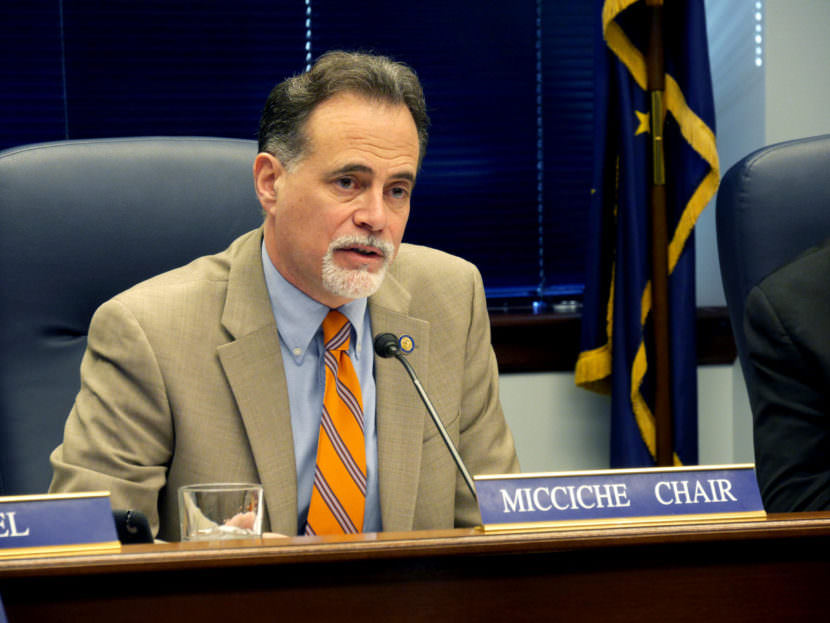
Sen. Pete Micciche chairs a subcommittee meeting on the Department of Health and Social Services budget on Friday. (Photo by Skip Gray/360 North)
He attended court-ordered group therapy sessions so he could better understand the issue.
“These were folks that in some cases, had a very successful path through life, like mine or any other Alaskan, that was diverted to a very unsuccessful path,” Micciche said.
Eagle River Republican Sen. Anna MacKinnon supports making doctors check the database.
“Someone is providing access to a variety of opioids – and then when they can’t get the prescription any longer, they’re turning to heroin, and young men, older women, female, male, are losing their lives,” MacKinnon said.
But the proposal has drawn concern from doctors groups. While the Alaska State Medical Association supports doctors using the database, it doesn’t support requiring it for every controlled drug.
Association leaders say removing doctors’ discretion would create an unnecessary burden and increase costs.
Emergency doctors have voiced concerns. Dr. Carlton Heine of Juneau said he agrees with 90 percent of what the legislators want to do.
But he said doctors aren’t solely to blame. He noted that beginning in the 1990s, organizations that accredit hospitals – and federal programs that pay doctors – encouraged doctors to prescribe more pain meds.
“It’s not that we’re trying to do it to create addicts,” Heine said. “There are other situations that are pressuring the behavior that you’re seeing. I do think we need to find some way to identify the providers that are over-prescribing. I think that is a problem, and I get frustrated with that personally, when I see patients coming in, knowing who their provider might be.”
The committee made changes to address some of the doctors’ concerns. It provided exemptions from checking the database to doctors whose patients are in emergencies and inpatient settings, and on the day of surgeries.
The Senate Finance Committee could vote on the bill as soon as Monday.
Kayla Epstein, widow of Rep. Max Gruenberg, shares memories of her husband during a memorial at the state Capitol on Feb. 17. (Photo by Skip Gray/360 North)
Since Rep. Max Gruenberg died in mid-February, a committee room’s been named after him. It’s part of his legacy. But his legacy is being contested in one area — the legislative records he left behind.
Kayla Epstein, his widow, wants control of his records, but she’s been blocked. She hopes the documents help the bills Gruenberg was working on become law.
“He was working on a lot of legislation that he was not even intending to follow through with himself, but (planned on) giving to other legislators on both sides of the aisle,” Epstein said. “And I’d like to find those. That’s part of his legacy, too, making sure that those get into the right hands.”
However, lawyer Doug Gardner wrote in a memo that Gruenberg’s papers were protected by legislative immunity. Gardner directs the nonpartisan Legislative Services Agency’s Legal Services office.
Anchorage Republican Rep. Craig Johnson cited Gardner’s opinion in denying Epstein access to the records.
The state followed the same rules when Palmer Republican Rep. Carl Gatto died in 2012.
But Epstein disagrees with that interpretation. She notes legislative immunity in Alaska is based on a similar provision in the U.S. Constitution.
“In the federal government, when a legislator dies, their papers are sent to their heirs within 90 days,” she said. “That is their rules. Our rules are based on the federal rules. There really is no reason that I haven’t gotten Max’s papers.”
Legislators are talking about changing the rules, so that they will indicate what they want to happen to their records if they die in office.
Ohio State University law professor Steven Huefner has studied the issue of legislative immunity. He said the precedent for how to handle records after a legislator dies in office isn’t clear.
“What I think is important is to give members, before they pass on, an opportunity to decide what their wishes are,” Huefner said. “Obviously, you’ve got a problem here, because that didn’t happen, so in this instance, it’s tricky. But I think members ought to be able to decide ahead of time that they want their papers to become public.”
Epstein said she plans to file a request for the records soon.
Donald Trump and Ted Cruz at an ABC Republican debate in New Hampshire, Feb. 6, 2015. (Creative Commons photo by Ida Mae Astute/ABC)
Alaska Republicans chose Texas Sen. Ted Cruz as their presidential candidate Tuesday — bucking the trend on a night when Donald Trump took seven states. Cruz received over 36 percent of the vote, with Trump taking about 34 percent.
More surprising than the results was the record-breaking turnout.
At 21,930 voters, the turnout for the Alaska GOP’s Presidential Preference Poll exceeded the 2012 record — 14,100 votes — by 57 percent.
Polling stations in Anchorage, Palmer, and Juneau ran out of ballots, according to Alaska GOP Communications Director Suzanne Downing, and more had to be printed.
Alaska Republican Party Chairman Peter Goldberg said enthusiasm among party members in the state is partially due to acute dissatisfaction with the Obama Administration and its policies toward natural resources and other local issues.
“We’re tired of the federal overreach,” Goldberg said as results came in Tuesday night, during an event held at an Anchorage hotel. “We’re tired of the disdain that Barack Obama has had for the military.”
Goldberg also thinks Cruz’s visit to Alaska to help Sen. Dan Sullivan’s 2014 campaign may have helped him do well. Asked whether Sarah Palin’s January endorsement may have given Trump’s popularity a boost, Goldberg said it likely did the opposite.
“If anything it might have brought it down in Alaska,” he said
The numbers showed a dead heat between Cruz and Trump — their totals were separated by 627 votes as of Wednesday. Trump had an edge in smaller rural towns like Barrow, Nome, and communities across Southeast, as well as some parts of south and midtown Anchorage. Cruz had the lead in conservative Railbelt strongholds like the Kenai Peninsula, Mat-Su Valley, and Fairbanks.
Republican consultant Cale Green said both candidates are tapping into sentiments among conservative voters last tested by former U.S. Senate candidate Joe Miller.
“I think there’s that large underpinning of society that says ‘we’re fed up with some of the political systems and things that we’re being fed,’ I think Jeb Bush dropping out of the race was proof of that,” said Green, who voted for Ohio Gov. John Kasich.
In that regard, Green was in the minority. Kasich received just four percent of Tuesday’s vote. Retired neurosurgeon Ben Carson got around 11 percent — although he did win District 38, representing Bethel, receiving 17 of the 41 votes cast. Florida Sen. Marco Rubio took 15 percent of the vote statewide.
Alaska’s 28 delegates will be divided proportionately among all candidates that received more than 13 percent of Tuesday’s vote. That means Cruz will get 12 delegates, Trump 11, and Rubio will receive 5.
Polling stations around the state saw long lines. By 4 p.m. Tuesday, the line snaked out the door of the First Christian Church on LaTouche Street in Anchorage, and there was a traffic jam in the parking lot.
A line stretched out the door Tuesday at the First Christian Church polling station on LaTouche Street in Anchorage. (Photo by Rachel Waldholz/APRN)
Lauren Larsen said she voted for Cruz because she wants a true conservative.
“Up until this morning, I thought I was going to be voting for Donald Trump,” Larsen said. “But he has a history of being a liberal, and not being pro-life.”
Cruz supporter Rod Wimberly also said his top priority was a candidate with consistent conservative values, which he defined as “bill of rights, second amendment, secure the borders, good defense, good military.”
“He’ll keep the values that we cherish here in Alaska,” Wimberly said. “This is a conservative state, and I think a majority of people here in Alaska do support Cruz.”
In the end, of course, that turned out to be true – at least among Republican voters.
But at the LaTouche Street polling place on Tuesday, the passion — both for and against — was with a different candidate.
“It’s time to make America great again!” said John Krier III, 31, when asked who he was supporting. “Donald Trump!”
Krier showed up to vote with his father – John Kier II – who also planned to vote for Trump.
“He’s the only one that’s self-funding,” said Krier Sr. “He’s going to get us a border, which is important. If you want a country, you’ve got to have a border — just the way it is. ”
Many Trump supporters in Anchorage agreed, saying their top issues were immigration and the economy. And many added that they like the idea that the New York billionaire can’t be bought.
But more than that, they said Trump is bringing up issues other politicians won’t touch.
“What Trump’s done is declare war on political correctness,” said Carl Loerbs, 63 and retired from the military. “All the bad stuff they say about him, it just rolls off his back. His poll numbers jump up every time he’s criticized. So that’s what we need — someone who will break the back of political correctness once and for all.”
Katy Neher had a different perspective.
“I came out to not vote for Donald Trump, let me put it that way,” she said. Asked why, she replied, “Do I have to tell you? Seriously?”
When a reporter mentioned that she appeared to be in the minority, Neher said, “I believe I am, which is really sad. Which means maybe in November I will no longer be a Republican, after my whole life.”
Not that she thinks the other party is doing any better.
“I won’t be voting Democrat, either,” she said. “I might be writing in Mickey Mouse, because, you know what, that’s a pretty good choice right now.”
Neher wasn’t thrilled with any of the Republican candidates – standing in line, minutes from voting, she still hadn’t made up her mind.
Alaska Public Media’s Kaysie Ellingson and John Norris contributed to this report.
Close
Update notification options
Subscribe to notifications
Subscribe
Get notifications about news related to the topics you care about. You can unsubscribe anytime.