Politics

Walker to lawmakers: Putting off sustainable budget is ‘wholly unacceptable’

Update | 7:16 pm. March 24

The letter received a cool reception from the Republican-led House majority today.

House Majority Leader Charisse Millett, R-Anchorage, said legislators know that Gov. Walker can call a special session.

“I think if you take a look at what we’re doing in the House, the letter was probably unnecessary. We are working towards it. We are fully aware. We hear from our constituents every day the impact that the budget is having and the projected price of oil has on our economy. We are fully aware of that, so while I appreciate the governor writing a letter to us, we have an opportunity to talk to the governor. We speak to him quite often,” she said.

Original story | 9:18 p.m. March 23
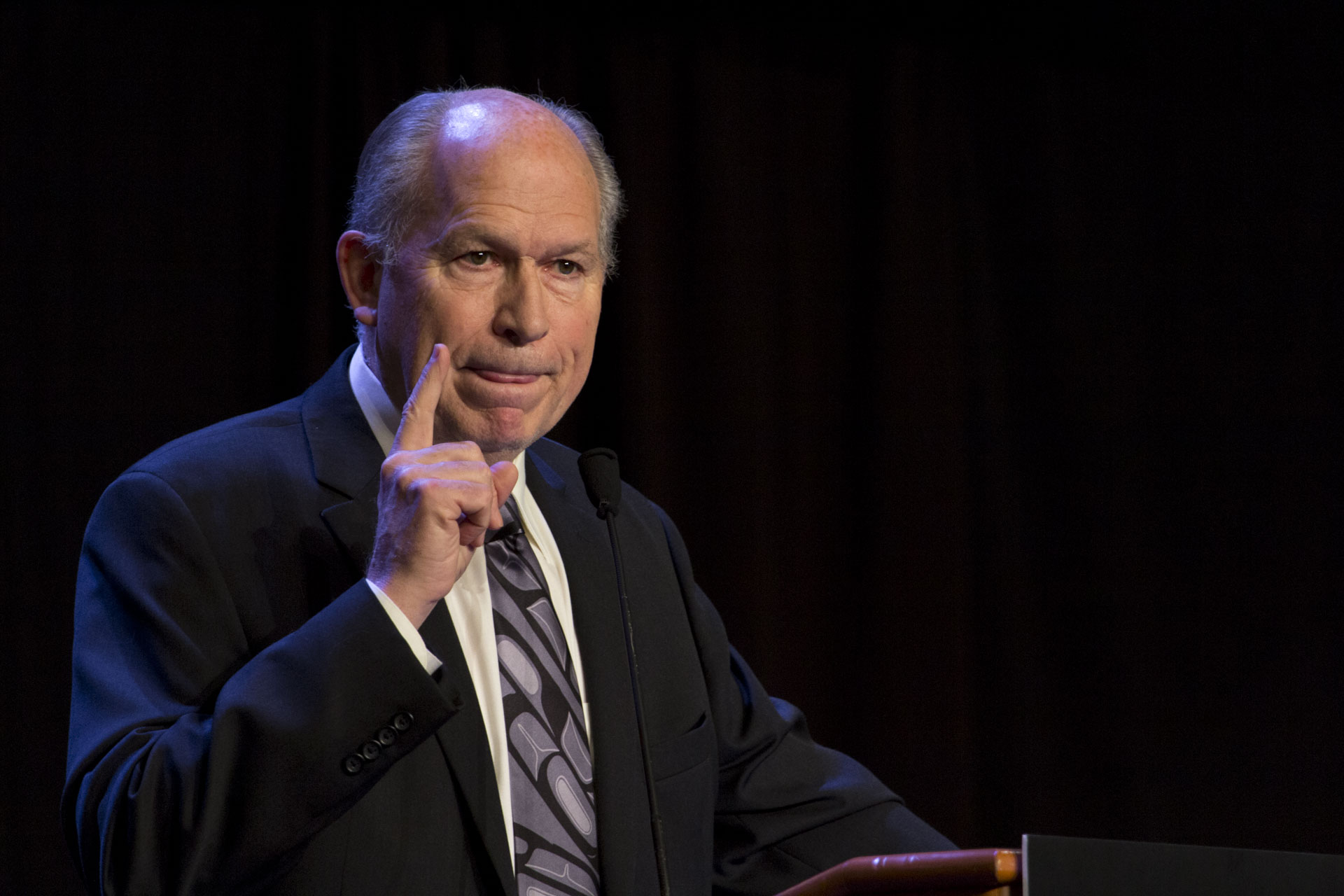
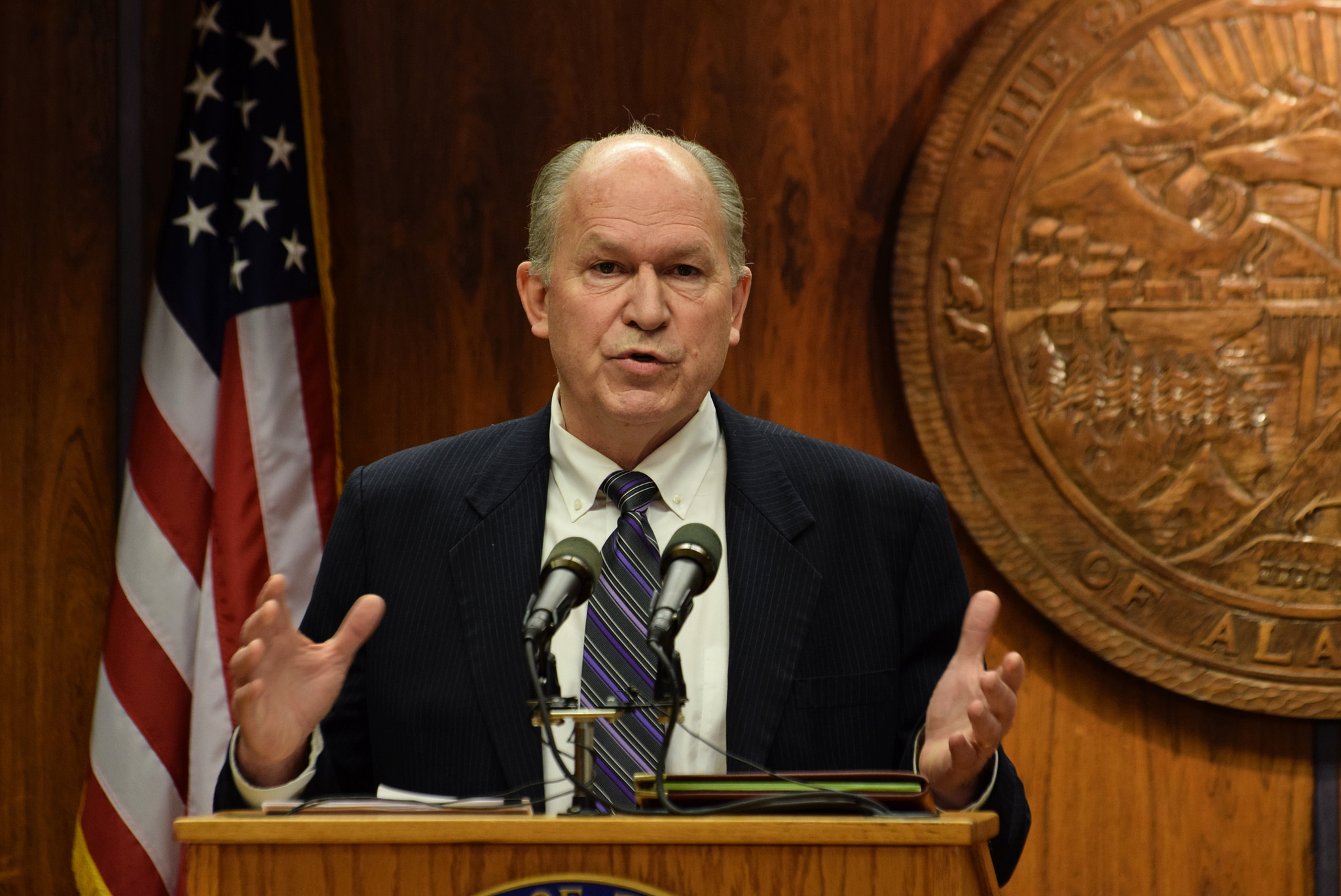
Gov. Bill Walker addresses the 49th annual Alaska Federation of Natives conference in Anchorage. (Photo by Mikko Wilson/KTOO)
Gov. Bill Walker addresses a conference in October. (Photo by Mikko Wilson/KTOO)

Gov. Bill Walker says the legislature must agree to a complete and sustainable solution to the state’s fiscal problem this year.

In a letter to legislators Wednesday, Walker said continuing to draw on reserves without a solid plan to stop doing so is “wholly unacceptable.”

His own budget plan would draw on reserves over the next two budget years before balancing in 2019.

Walker pointed out problems with more delays. The deeper the state draws on reserves, the less money it will have to draw on in the future. And it would drive down the state’s credit rating. He said this will slow investment and cause the state’s economy to spiral down.

Walker said the state must cut spending, restructure Permanent Fund earnings and dividends and introduce a broad-based tax. He said the Permanent Fund changes must be based on rules that produce a stable amount of revenue and protect the fund.

Walker has proposed an income tax, but legislative leaders have resisted. Some lawmakers would prefer a statewide sales tax, but Walker didn’t propose one.

Walker said the legislature can accomplish this without additional sessions.
House bill would trim oil and gas tax credits, but less than Walker’s plan

injection well at CD5 drill site
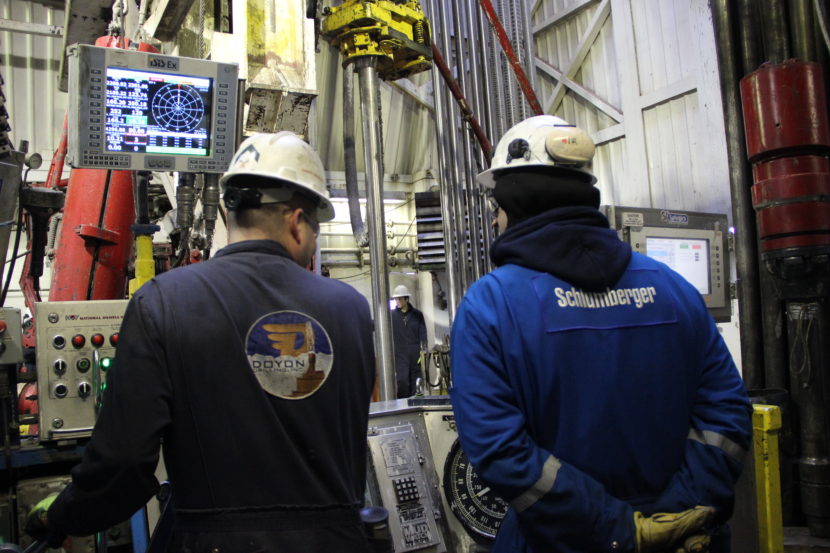
Two contractors monitor the drilling of an injection well at ConocoPhillips’ CD5 drill site on the North Slope. (Photo by Rachel Waldholz/APRN)

The House Resources Committee unveiled  on Saturday its version of House Bill 247, an overhaul of the state’s oil and gas tax credits.

The new version removes one of the key changes proposed by Gov. Bill Walker — raising the minimum tax paid by companies from 4 percent to 5 percent.

The bill would trim the amount of tax credits paid to companies operating in the Cook Inlet.

But Homer Republican Rep. Paul Seaton said the new version would leave credits for companies operating on the North Slope unscathed.

“It’s a huge budgetary expense and we’re talking about how we need to do budget cuts in here,” Seaton said of the legislature. “I see almost no budget cuts.”

But Rena Delbridge, an aide to Anchorage Republican Rep. Mike Hawker, said the sponsors of the new version were concerned about cutting credits deeper. Delbridge worked on the changes.

“The potential impacts to industry of immediate and dramatic changes, in order to resolve a short-term – hopefully short-term or intermediate-term – budget problem, could have fairly significant effects to our production in three years and in five years and in 10 years,” she said.

Walker had proposed eliminating credits based on how much companies spend on drilling and exploration. But he would have allowed companies to continue to get tax credits based on their operating losses.

The new version would scale back both types of credits – for spending and for losses — but wouldn’t eliminate either type.

Walker’s state budget proposal included $500 million from the tax changes. Until a fiscal analysis is complete, it’s not clear how much less the state budget would receive from the committee’s changes.

Ken Alper, state Tax Division director, said the changes will affect the state’s ability to balance its budget. He noted that eight other bills designed to raise revenue haven’t passed.

Walker’s expected to announce Monday that state revenue hasn’t been meeting forecasts, further deepening the budget problem.

The bill also would establish a legislative working group that would make recommendations on broader changes to the tax system for companies in the Cook Inlet and the area south of the North Slope known as “Middle Earth.”

These recommendations would be due in time for the next legislative session.

Walker: No Alaska LNG update before April

Gov. Bill Walker 2015 02 19
Gov. Bill Walker at a press conference in February 2015. (Photo by Skip Gray/360 North)

When Gov. Bill Walker held a press conference in February to announce changes coming for the Alaska LNG project, he left most observers scratching their heads over what’s next for the proposed pipeline.

Standing beside representatives from the state’s three partners – ExxonMobil, BP, and ConocoPhillips — Walker said he would release more details in March.

Friday, Walker said he doesn’t expect to have any update for the public before April, as negotiations continue.

“Things seem to take a bit longer than everyone anticipates,” Walker said. “When we had our press conference … we thought there’d be something out this month, and it doesn’t look like that’s going to happen.”

In February, the governor and oil companies said they were “exploring options” to keep the project going at a time of low oil and gas prices. It’s still unclear what that means.

“We’re just analyzing what the options are, and evaluating the pros and cons of each from a structural standpoint,” Walker said. “That has not concluded yet, so when it does, we’ll have something to report.”

The original goal was to hammer out agreements between the state and companies for lawmakers to vote on this spring — and to put a constitutional amendment on the ballot this fall, to lock in tax rates for the pipeline.

The administration believed that amendment would be necessary before the partners could decide whether to enter the next phase of the project, called FEED or Front End Engineering and Design, in 2017.

But slow negotiations, crashing oil prices and a weak natural gas market have combined to throw that timeline into question.

Walker said Friday it’s clear there will be no amendment vote this year. But, he said, he believes there’s a way forward without it, and he is adamant the project must still aim to come online as planned in the mid-2020s.

“It’s a good target time in the market for this to come online,” Walker said. “That part has not changed.”

The question is whether that’s still realistic, especially for a so-called gigaproject expected to cost $45 billion to $65 billion.

Larry Persily, an adviser to the Kenai Peninsula Borough, just returned from a conference of liquefied natural gas producers and buyers in Singapore.

“The main takeaway is the market has gotten worse in the past year, not better,” he said.

With new projects coming online around the world, there is too much supply chasing too few customers, driving down natural gas prices. Analysts expect the market will need new suppliers in the middle of the next decade, Persily said, but there are a lot of projects competing to meet that need. Alaska can only compete if it can keep costs very low.

That may be what the state and its partners are trying to figure out — behind closed doors, for now.

Lawmakers eye earnings of rural energy endowment to fund state budget

Wind turbines in Chevak
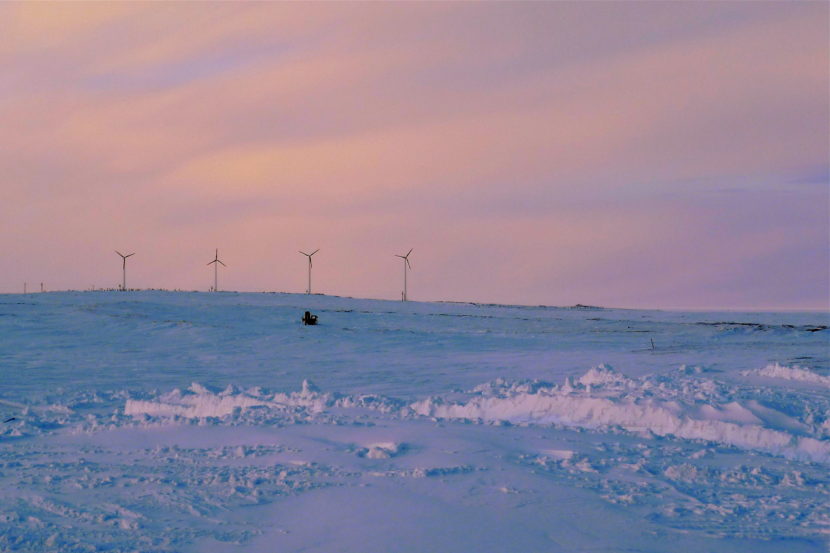
These four wind turbines in Chevak, pictured in March 2012, provide some renewable electricity to the village, but residents still pay high rates. (Creative Commons photo by Joseph)

Rural Alaskans can pay three to five times more for electricity than those in urban areas. That’s why the state launched the Power Cost Equalization Endowment Fund in 2000. It’s paid roughly $40 million annually to subsidize rural energy bills.

But some are questioning if the fund, now worth $900 million, should be committed to benefit only about one in nine Alaskans.

Senate Finance Committee Co-Chairpeople Anna MacKinnon and Pete Kelly discuss the budget. (Photo by Andrew Kitchenman)
Senate Finance Committee Co-Chairwoman Anna MacKinnon alongside Sen. Pete Kelly. (Photo by Andrew Kitchenman/KTOO)

Senate Finance Committee Co-Chairwoman Anna MacKinnon, an Eagle River Republican, said the state government could consider tapping the fund.

“You’ll see Power Cost Equalization come before us. There’s a billion dollars in that fund,” she said. “That billion dollars has been benefiting a selected group of Alaskans with Power Cost Equalization. But is that the highest and best use of those dollars now?”

MacKinnon is a sponsor of Senate Bill 196, which would rebudget fund earnings for other purposes. In years where fund earnings are greater than what’s needed for the Power Cost Equalization program, 60 percent of the excess earnings would go to the state government, 30 percent would go to renewable energy projects, and 10 percent would build up the endowment.

The fund lost money this year, so no excess money is available. It’s not clear whether MacKinnon and other lawmakers are looking beyond Senate Bill 196, to use the fund itself to help close the state’s budget shortfall.

Bethel Democratic Sen. Lyman Hoffman – another sponsor of the bill – sees Senate Bill 196 as a way to protect the fund’s principal while helping the state.

“So what we’re trying to do with this bill is to assure that during those high years, the fund only pay for its intended purpose – and if there are excess earnings, that those earnings be sent back to two different programs,” Hoffman said.

Rep. Bob Herron, another Bethel Democrat, said power cost equalization is fair to rural residents. He notes the endowment was started after the government paid for dams that provide power to cities.

Gov. Bill Walker wants to make sure that if changes are made to the fund, they’re considered along with his plan to close the budget shortfall. He wants to ensure everyone in the state shares the burden.

Walker expressed concern that the combined impact of Power Cost Equalization changes with Permanent Fund dividend changes would put too much of the burden on rural Alaskans.

“That’s why we have focused on a sustainable plan that is a broad-based plan, so that we take into consideration rural Alaska’s situation, which is unique versus urban Alaska,” Walker said. “We’ve tried to take all of that into consideration. That’s why one piece at a time doesn’t really work.”

The Senate Finance Committee heard testimony supporting Senate Bill 196 on Wednesday, but didn’t vote on the bill.

Senate OKs bill to factor credit scores into home and car insurance premiums

Car insurance illustration
(Creative Commons image by Pictures of Money/CheapFullCoverageAutoInsurance.com)

When Alaskans renew their car or homeowners insurance policy, insurers can’t use their credit history to determine their rate without their approval. That’s unlike all other states, where good credit means lower premiums and bad credit means higher premiums.

But the state Senate passed a bill this week that would bring Alaska in line.

Supporters of Senate Bill 127 said this will benefit most people in the state; opponents are concerned about the impact on low-income residents, rural Alaskans and minorities.

Sen. Charlie Huggins, R-Wasilla, discusses House Bill 75, the Marijuana use and regulation bill in the Alaska Senate, Feb. 24, 2016. He was explaining changes to the bill that were made in committee shortly before it passed the Senate. (Photo by Skip Gray/360 North).
Sen. Charlie Huggins, R-Wasilla, sponsored a bill allowing credit histories to be used in auto and homeowner’s insurance. (Photo by Skip Gray/360 North)

Bill sponsor Sen. Charlie Huggins, a Wasilla Republican, said it’s a no-brainer.

“This is a simple bill,” he said. “Very simply, we become one of 50 states that allow, when you’re renewing your auto or your home insurance, credit scoring to be used. And the overwhelming majority of Alaskans will benefit.”

But Anchorage Democratic Sen. Bill Wielechowski noted that those with worse scores could see their rates more than double.

“The people on the lower end of the income scale who can least afford it will see their rates increase under this bill,” he said. “Insurance is not an option in this state. You can’t drive a car without it. You can’t get a mortgage without it. Our economy is sputtering. Lots of people will suffer if this bill passes.”

Wielechowski pointed to studies showing that bad credit scores can increase car insurance premiums more than bad driving.

He added that a 2003 state report raised concerns about the effect of using credit scores on rural and older Alaskans, as well as minorities.

But Sitka Republican Sen. Bert Stedman said the bill would benefit many rural residents.

“I’d like to benefit from this, for a lot of my constituents — the ones that have good credit, that work hard, play … the economic game squarely,” Stedman said. “I don’t think they should be paying for people that don’t.”

The bill wouldn’t apply to health insurance. And the bill protects residents whose credit is harmed by family deaths, divorces, military deployments and catastrophic events.

The Senate passed the bill 15-5. The House will now consider it.

Sen. Sullivan: JBER troop cut not reversed yet

U.S. Senator Dan Sullivan, R-Alaska, at a press availability fol
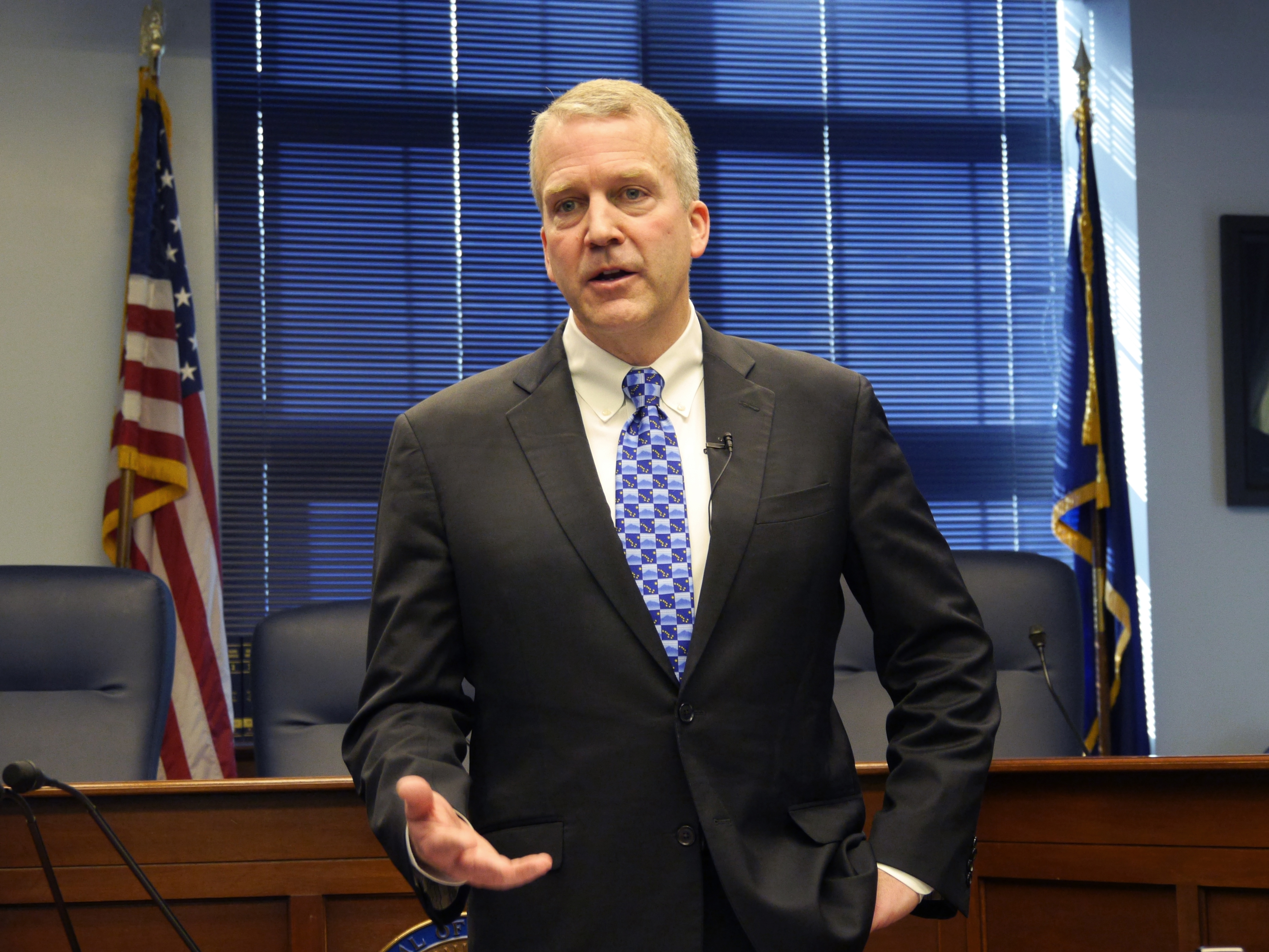
U.S. Senator Dan Sullivan, R-Alaska, at a press availability following his annual address to the Legislature, Feb. 29, 2016. (Photo by Skip Gray/360 North)

The battle to keep the 4th Brigade Combat Team of the 25th Infantry Division at Joint Base Elmendorf-Richardson may seem all but won. The top uniformed officer of the Army, Gen. Mark Milley, said at a hearing last month he wants to postpone the troop cut for at least a year, citing national security interests.

But Sen. Dan Sullivan said it’s not a done deal yet. He is still talking about the value of the 4/25 at hearings of the Senate Armed Services Committee to build support.

“We’ve been working this issue for well over a year now. But now we’re not working against the Army. We’re working with the Army,” he said.

He’s pressing the military’s area commanders, the general in charge of U.S. forces in Europe, the general responsible for the Middle East and the admiral responsible for the Pacific.

“At all of those hearings, I asked them, ‘Hey, Gen. Milley is now reversing this decision. Do you support that?’” Sullivan said. “And importantly … every single one of the combatant commanders who are important to the 4/25 said yes. They support it strongly.”

The decision is up to the secretary of the Army. Right now there’s an acting secretary, who seemed willing to defer to Gen. Milley’s view. It’s not clear, though, whether he’ll make the call. Sullivan, in an interview last week, said he’s also working on Eric Fanning, the man nominated to be the next secretary of the Army.

“I have a phone call with him today to kind of finalize a couple commitments that he and I have talked about, with regard to the 4/25,” he said.

Sullivan also said he’d previously placed a hold on Fanning’s confirmation, blocking him from getting a Senate vote. He said he intended to release it soon.

At least one other senator put a hold on Fanning, though, for unrelated reasons.

Sullivan has also been a general critic of the plan to cut 40,000 soldiers, to bring the Army down to 450,000 troops.

Site notifications
Update notification options
Subscribe to notifications