Alcohol & Substance Abuse

Dangerous form of heroin enters Juneau

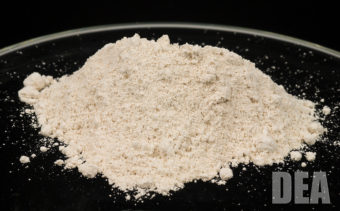
Heroin powder
Heroin powder. (Photo courtesy Drug Enforcement Administration)

The Juneau Police Department recently received an anonymous tip that a dangerous form of heroin has entered the city. Lt. Kris Sell said it’s called “China white,” and the police have been told it may be laced with fentanyl, a prescription drug used for pain management.

“The fentanyl being mixed with the heroin could be a game changer,” she said. “They might misestimate what their dosage would be. What people have been telling known users in the community is to have a friend around, use lightly.”

Five heroin overdoses occurred over the weekend. One of the cases also involved meth. Emergency responders found that China white was involved in two of the overdoses, Sell said.

Sell said typically this type of heroin isn’t found in the city.

“Usually in Juneau we see a black tar heroin that is a more crudely processed form of heroin and usually comes from Mexico,” Sell said.

China white is in powder form and comes from Asia. Sell said the police haven’t been able to confiscate the drug yet. Capital City Fire/Rescue was able to administer lifesaving Narcan to three of the overdose patients.

This year, seven people have died in heroin-involved deaths.

‘We’re not going to hide our family members or be ashamed’

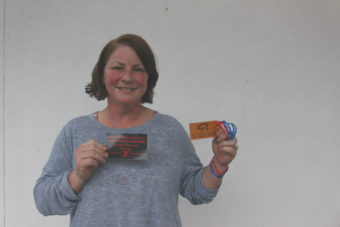
Michele Stuart is organizing the Stop Heroin Start, Talking Event. (Photo by Elizabeth Jenkins)
Michele Morgan is organizing the Stop Heroin Start, Start Talking event. (Photo by Elizabeth Jenkins/KTOO)

There are two different Juneau events this weekend to raise awareness about heroin addiction. This year, seven people have died in deaths involving heroin. The community is banding together to talk about what’s happening to their neighbors and family.

Michele Morgan said she wasn’t aware of an opioid problem in Juneau. The realization happened gradually.

When it came time for her teen-aged son to have his wisdom teeth pulled, she asked if he would tell his friends.

“And he said, ‘No, mom. Don’t tell anyone.’ He said, ‘Mom, because they’ll come to our house. They’ll know I have oxycodone,” Morgan said.

That was about nine years ago. Oxycodone, like heroin, is an opioid. It elicits the same effect on the brain. If you look at the recent drug seizures in Juneau, heroin is gradually increasing.

Morgan, the director of the Juneau Softball Association, said she noticed a shift in 2014. That’s when one of the young players died of an overdose.

“No one talked about it, except through the grapevine,” she said. “We have a benefit tournament we do for our players for those who have passed. So we did a plaque for that kid. And six months later we lost another kid to the same, to heroin.”

Then another. Breyner Haffner, in his mid-twenties. “Like one of my children,” Morgan said.

He used to play on her softball team.

“And I came home and I was mad and I was scared. And so I went on my computer and I ordered some stickers and some magnets,” Morgan said. “Anything I could get to make me feel like I was getting the word out.”

The stickers say, “Heroin will kill you and your friends, please don’t start.” That snowballed into the grassroots initiative: Stop Heroin, Start Talking.

The Juneau police noticed a trend last year in heroin-involved deaths and they’re tracking it now. During the next few months, they’ll be releasing videos of users speaking about their struggles with addiction.

The people appear in silhouette. Their voices are altered.

INFORMATION RELEASESubject: Stop Heroin Start Talking-Part 4 Date: 11-2-15From: Lt. Kris SellThe Juneau Police Department, as part of a six month anti-heroin initiative, will be introducing the public to several former and current heroin addicts throughout November. While JPD continues to work many heroin importation cases, like many other police departments, JPD knows going after only the heroin supply without addressing heroin demand does not give the community the results everyone wants. In order to address heroin demand the questions of why people started using heroin and why they keep using heroin must be answered for the community to have an effective prevention and treatment strategy. One person interviewed by JPD was nearly an overdose death at one point but was saved by Capital City Fire and Rescue. That person continues to use heroin. It is difficult for a non-addict to understand why someone would make that choice. The answer seems to be that the addict’s desire for the heroin high becomes so strong even an addict’s child cannot compete.

Posted by Juneau Police Department on Monday, November 2, 2015

Morgan said the hope with her initiative is education but also to remove the stigma attached to losing a loved one.

Then there’s policy change, like Senate Bill 23. It allows a medication called Naloxone to be distributed at trained agencies or sold over-the-counter at pharmacies.

“And Naloxone under the brand name Narcan stops the heroin overdose or the opiate overdose. Is it a cure for addiction? No, but it could save lives,” she said.

The Senate has already passed the bill, sponsored by Sen. Johnny Ellis. It now needs to pass the House. And as the legislative session gets underway, Morgan said she’ll be focusing her energy promoting it.

Overall, she said she wants to inform the community that having addiction isn’t a character flaw. It’s a health crisis. One that can be addressed.

“We’re coming out,” she said. “We’re not going to hide our family members or be ashamed, we’re going to kick heroin’s butt, and we’re going to do that as a group.”

Before she leaves, she hands over a Stop Heroin, Start Talking bracelet. Morgan said she’s giving them out to everyone she meets.

On Saturday, Stop Heroin, Start Talking is holding a 5:30 p.m. event at Rockwell. It features hip-hop performances and karaoke. There’s a $5 suggested donation.

On Sunday at 3 p.m., Community of Compassion meets @360 for a conversation about heroin addiction.

Sitkans indicted on drug trafficking charges

A Sitka grand jury has indicted a couple on drug trafficking charges, after federal postal inspectors found a package of crystal meth bearing their address in the mail.
Virgil Leal, 45, and Marisol Carranza, 43, were indicted on Friday for allegedly possessing methamphetamine. The indictment further alleges they intended to deliver the drugs. Both were charged with two felony counts each for misconduct involving a controlled substance.

According to court records, the package, addressed to Carranza, was opened with a federal search warrant after a K-9 indicated the presence of a controlled substance. The package contained nearly 1 ounce of meth. Police estimate its value at $5,600, according to the street value in Sitka.

Records say the package was then delivered to the couple without the majority of the methamphetamine. A warranted police search found the package opened as well as several Western Union receipts. Police also found a meth pipe and multiple empty baggies with a white residue. One of the baggies tested positive for meth.

During a police interview, Leal and Carranza allegedly admitted to sending money to a supplier using Western Union — $600 for this particular package. They also said they had received other methamphetamine packages in the past and sold the drugs to make a profit.

Police say their arrest of Leal and Carranza was the outcome of a joint narcotics investigation with United States Postal Inspectors and Southeast Alaska Cities Against Drugs Task Force.

Both Leal and Carranza are in police custody.

Norton Sound looking for ‘something different’ to deal with mental health, substance abuse

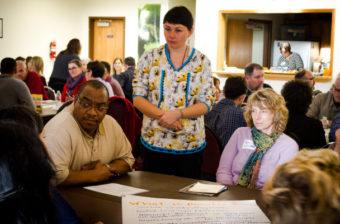
Darlene Trigg (standing) with the First Alaskans Institute listens in on a roundtable discussion with Alaska Dept. of Corrections Commissioner Ron Taylor and Kari van Delden with University of Alaska-Fairbanks’ Cooperative Extension Service. (Photo by Matthew F. Smith/KNOM)

The Alaska Mental Health Trust Authority visited Nome, Gambell, Stebbins and Unalakleet recently. They held discussions with providers and experts from around the region and across the state about what is and isn’t working when it comes to mental health, substance abuse, and intellectual disabilities.

The focus of the talks across the Norton Sound are broad, but discussions at Nome’s Pioneer Hall brought local providers face to face with the heads of major state agencies, forcing many to confront uncomfortable truths.

“Department of Corrections is the biggest mental health facility in our system. Something’s wrong with that picture,” said Ron Taylor, the commissioner for the Alaska Department of Corrections.

Amid discussions of strong families and youth, housing shortages, employment, and education, some participants called for fundamental and systemic changes to how Alaska approaches its jails and prisons, specifically, the disproportionate and disruptive impacts the systems have on rural Alaska Native communities.

Taylor said he was in Nome with an open mind and ready to talk about change.

“It’s obvious that we’ve done in the past hasn’t worked,” he said. “Coming to a rural community in Nome, and learning of the challenges that are here in Nome, a lack of housing, a lack of real community re-integration for our persons that are transitioning out, it makes us realize that, are we on the right track? Or do we need to be shift to something different?”

Just what the state, the Department of Corrections, and others looking for reform should shift to remained an open question.

“If we’re going to shift to something different, we have got to come to consensus on what the different looks like,” Taylor said.

Darlene Trigg, the social justice manager with the First Alaskans Institute, helped lead the conversation on what “something different” should look like. The ideas being offered ranged from broad goals down to specific changes. Trigg said the common ground was making cultural resources part of the solution.

“Integration of culture is something that I’ve heard throughout these conversations,” she said. “The challenging question of how we do that, and how we create space for that, is where the conversations are going … it’s amazing to hear the kind of dynamic solutions people are coming up with.”

Those conversations are continuing in a big way Wednesday night, with a public Community Conversation starting at 5:30 p.m. at Nome’s Pioneer Hall on Front Street.

Trigg stressed the importance of local voices being heard.

“The community conversation is a real opportunity for people to share their lived experience, and in sharing your lived experience it gives you an opportunity to reflect on the impact that it has on your life,” Trigg said. “It offers an opportunity for our communities to start acknowledging some of the traumatic events that happened even in our own community, and it really informs how systems will function inside our community.”

She added that “without the voice of the community, and without the voice of the community members, we may come back with a design that doesn’t work, and we’re back to square one. And that is not what we need right now.”

KNOM Exchange will also be hosting a similar conversation Thursday morning, with guests from the Alaska Mental Health Trust Authority and the Alaska Criminal Justice Commission, who will be listening to share thoughts—and experiences—on the issues of mental health and criminal justice from across the Norton Sound and Bering Strait.

First of its kind joint tribal-state court established

A disproportionately high number of Alaska Natives are incarcerated in the state of Alaska. In 2014, nearly 32 percent of the prosecuted criminal offenders in Alaska were Alaska Natives; they only constitute less than 20 percent of the population. Recidivism rates are higher for that group as well. Now, the state is working on new ways to partner with tribes to help solve both problems.

For the first time in Alaska, there will be a joint tribal-state court. A Kenaitze tribal judge will sit side-by-side with a state judge and have equal say in decisions. It will be a wellness court that hears criminal cases involving substance abuse, and will start taking up to 20 participants in March. Currently, tribal courts only have jurisdiction over civil matters, like adoptions, divorces, domestic violence petitions, and child protection cases.

Kenaitze Chief Judge Kimberly Sweet, who will be one of the two judges who preside over the court, said it will be run like most tribal courts. Everyone will sit together around a large conference table to talk about the problems.

“Parties are allowed to seek legal counsel,” she explained. “They can bring their legal counsel to court with them. Legal counsel are allowed to advise them, but we don’t speak to their legal counsel, we hear directly from the parties themselves.”

Sweet said the process helps get to and treat the root of the problem. Program developers are currently working on a handbook of procedures so the model can be repeated throughout the state.

“It’s not just based on personalities of people who have big hearts that are driving this,” she said. “(We’re writing the manual) so that it actually becomes institutionalized, so it can be picked up and taken by anybody.”

Sweet said having the tribes involved in substance-related criminal charges will also help them when working on child protection cases. The majority of those involve substance abuse and sometimes criminal charges which aren’t known to the tribal courts. The joint court can help solve some of those disconnects.

“So being able to collaborate and cooperate and work in the best interest of these families will do nothing but create a healthier community,” she said.

Similar joint courts already exist in Minnesota and California.

A 2014 change in court rules also allows the state’s court system to use collaborative methods for sentencing adults, like circle sentencing. The Kenaitze tribe and others are already using the method with juvenile offenders. Sweet explains that circle sentencing brings the offender, community members, family members, and sometimes the victim into the same room to discuss the issue and the solution.

“Nobody is an authority in the circle. The circle collaborates and works together as a little mini-community to come up with a plan to put that youth or the adult on the right path with as much input from the youth and the adult as possible.”

For adult cases, the state judge would make the final sentencing decision.

The state is also working on a plan to improve the outcomes for Alaska Natives who end up incarcerated. The Department of Corrections is convening an Alaska Native Focus Group for reducing recidivism.

Alaska’s recidivism rate is 63 percent for everyone leaving the prison system. For Alaska Natives, it’s 74 percent. DOC Commissioner Ron Taylor discussed the formation of the group during AFN.

“We’re concerned about the higher rates of recidivism among that group and looking for ways to improve those outcomes,” he said. “How do we do a better job of providing programming and resources? Of linking them to services once they get released? And how do we do a better job of ensuring they go back to their communities if they chose to do so?”

The group will be chaired by Lt. Gov. Bryon Mallott and meet for the first time next week in Anchorage. It’s unclear why recidivism rates are higher for Alaska Natives, Taylor said. It could be linked to cultural and language barriers with the department’s reentry and treatment programming.

New drug reduces heroin cravings, may reduce recidivism

A new program in Anchorage is trying to get prisoners with substance abuse issues–a common cause of recividism–treatment quickly using a new, little-used drug called Vivitrol. But not all providers are convinced it’s the best option.

Vivitrol

Vivitrol is a monthly injection that stops cravings for opiates and alcohol. If you use heroin or drink liquor while you’re on it, you won’t get high. Family nurse practitioner Jyll Green’s goal is to get people on the drug as soon as they leave the prison system.

“Keeping them on the Vivitrol calms down the brain so that they’re not constantly thinking about where’s that next hit coming from,” she explained.

Green says that way, they can focus on getting jobs, housing and treatment. As part of her doctorate program in nursing practice at the University of Alaska Anchorage, Green is working with the Partners Re-Entry Center to help people get the medication as quickly as possible. For those who have chosen to participate, she’s been able to get them the injection within two hours at her clinic.

Similar programs are popping up all over the country. Some are administering Vivitrol in jails, others in drug courts.

Fred Moses is a municipal judge in Hocking County, Ohio, a rural area in Appalachia with high heroin usage and limited access to treatment facilities. In 2012 he created a drug court where offenders were given monthly injections of Vivitrol along with drug abuse treatment and had to follow other court mandated requirements. Since then, 90 different people have come through his Vivitrol court. Only one has re-offended.

“These are not first time offenders. I’ve taken the hard-core users,” he said. “And what they tell me is, ‘I want to read a book.’ Why that’s significant is their brains are clear. They’re not going through withdrawal. They don’t have a need for a narcotic. So what we see is the treatment goes much better.”

Moses said the program is so successful that judges from around the country are visiting to learn more about it. One of his participants actually traveled from a nearby urban area and purposefully committed a crime so he could get help through the Vivitrol court.

Within three to six months on the drug, Moses said his participants have all of the narcotics out of their system. They are clear-headed enough to really respond to treatment and focus on the causes of their drug addictions.

“The shot’s a great tool, but the key is still treatment. And I won’t ever change my mind about that,” he said.

And that’s part of what makes it complicated. Green said people on Vivitrol who are not court mandated to use it, like the group she’s working with, have to be willing to get treatment at the same time and to come back to the clinic to get their shot again the next month.

“Vivitrol, if you don’t take the shot, well you can just go out and use again,” she said. “There’s no harm in coming off Vivitrol. It’s not painful (like with other drugs), you don’t feel anything, you just don’t go and get your next shot.”

Psychiatrist Aryeh Levenson has run an opiate addiction clinic for five years at Southcentral Foundation. He thinks Vivitrol works well for some patients, but it has limitations. People have to detox before they can use it, which scares some people away, and sometimes Vivitrol causes flu-like symptoms. But one of the biggest hurdles is that patients on Vivitrol don’t always come back.

“I think when folks are not craving or not experiencing a missing of the drug, there’s often a sense that ‘I’ve overcome this, I’ve cured my problem, I don’t need treatment anymore,’” Levenson said.

And then they relapse. So Levenson often uses another more popular alternative, Suboxone, which combines a synthetic opiate with another drug that also blocks the cravings. Levenson said he requires his patients receive substance abuse treatment and work on getting their life in order before he’ll give them another prescription.

“And for people who said they were willing and started on Suboxone and then did not follow through with their commitments, we did not continue giving them their Suboxone,” he says. “We had a very tight, as you might say, carrot and a stick approach.”

He says they also monitor Suboxone users to make sure they are taking the drug and not selling it on the street, which is a common problem.

Alaska Wellness Court Program Coordinator Jennifer Fredericks says that in the Alaska drug courts, they prefer to use Vivitrol or the pill form of the same drug, naltrexone.

“We have tried to work with participants who are on Suboxone, but we’ve found it difficult given how addictive that medication is.”

She says drug court participants on Suboxone often come to court high and that triggers the other participants. The program has only been using Vivitrol for about a year, so they don’t have data on success rates yet. But Fredericks says she sees positive changes, especially with young heroin addicts.

Because Vivitrol is so new, it’s unclear how long people have to use it. Recommendations range from three months to a year depending on the individual. Shots can cost around $1,000 per month or more, but can be paid for with some insurance and Medicaid.

Site notifications
Update notification options
Subscribe to notifications