Alcohol & Substance Abuse

Revisiting the halfway house that got me sober

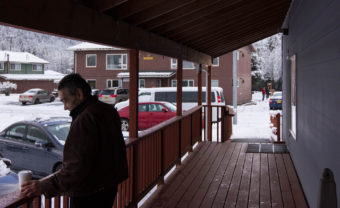
Tom Elasonga Milligrock at Gastineau Human Services. (Photo by David Purdy/KTOO)

With Alaska recidivism rates hovering just above 60 percent, helping prisoners transition back to society successfully is as important as ever. Some prisoners enter a halfway house and receive substance abuse treatment, housing, and help with employment and education.

On my way out of prison, I lived at Gastineau Human Services in Juneau and and attended substance use services.

Back in 2012, I’d been in for six years for assault. And that wasn’t the first time I’d been to prison. I’d been through treatment and transition programs before, but none of them worked like Juneau’s halfway house and its alcohol treatment services. I wanted to put a finger on what worked, and here’s the story. To start, I went back to the halfway house and spoke to a client.

Meet Craig Porter.

“I hit rock bottom, lost everything I had,” he said.

He’s tall, in his late 20s and easy to talk with.

“It took being sober and sitting in a jail cell to realize truly how much I hurt people that I’d cared about and that loved me and how much I’d hurt myself and just took a real moral look at myself and it was — I kinda disgusted myself,” he said.

We’re at the halfway house and he’s sitting in the same chair I was in two years ago. On a day-to-day basis, there’s an average of 80 clients. I see other men and women coming and going, and I wonder if they’ll make it on the outside.

Gastineau Human Services. (Photo by David Purdy/KTOO)

“Drug addiction is what brought me to jail to begin with and I heard about going to the halfway house, GHS, unsentenced. So I figured I’d try that and anything could be better than sitting behind bars,” Porter said.

“Unsentenced” is prison-speak for postponing a court appearance, and during that time you have an opportunity, and possibility, to avoid a harsh sentence by entering something like the halfway house.

“I started talking with the staff and learning more about Juneau Therapeutic Court. And the more I learned about it and what its main purpose was, I decided it would be a good idea to give it a try,” Porter said.

The Juneau Therapeutic Court is part of the court system that sends alcohol and drug abuse-related offenders to treatment and recovery programs instead of prison. Michael Rowcroft is a GHS counselor involved in it.

Michael Rowcroft
Counselor Michael Rowcroft. (Photo by David Purdy/KTOO)

“I consider my approach to counseling as client-centered,” he said.

Rowcroft worked with me back when I was here. I appreciated the way he helped me get through denial and admitting that I had a problem with alcohol. We made a plan.

“The next stage is action. So you take action, you take the plan, you put it and implement it and start working on developing the tools of recovery, we call them,” Rowcroft said.

For me, the tools of recovery included talking about my problem, and being honest and thinking more positive. And they worked. Slowly, like Craig is now, I was able to get out of the halfway house and do more in the community. That’s part of the plan said GHS Director of Client Services Michele Federico.

“We work with folks on looking at some of their other re-entry needs looking at changing thoughts and behaviors,” she said. “We offer a structured phase system that people earn privileges over time so that they — with good behavior — they are allowed to do more in the community.”

Craig’s about half of my age. I hope he makes the most of his tools of recovery so he can enjoy the rest of his life.

“Before I got to jail and got help from the staff at GHS and through Juneau Therapeutic Court, I really wanted to quit, but I didn’t know what to do or where to go,” he said.

And he has a little advice of his own.

“You need to ask for help if you want it, cause it does not come knock on your door and there’s no one that’s going to tell you have to quit and you’re going to quit you have to really want it,” he said. “You know, go talk to someone if you want the help. Don’t wait for someone to come to you.”

If you do need help, GHS offers a variety of services open to the public as well. As for Craig, I wish him continued success and I’ll check back with him to see how things are going.

Michael Rowcroft, Tom Elasonga Milligrock, and Michele Federico at Gastineau Human Services. (Photo by David Purdy/KTOO)
Michael Rowcroft, Elasonga Milligrock and Michele Federico at Gastineau Human Services. (Photo by David Purdy/KTOO)

Editor’s note: Milligrock interviewed Craig Porter in early September. Porter is still at Gastineau Human Services and is doing well. Milligrock plans to check back in with Craig early next year.

AC Quickstop begins plans for Bethel liquor store

AC Quickstop in Bethel
The Bethel AC Quickstop. (Photo by Dean Swope/KYUK)

Bethel received two liquor licenses last month. But the town’s almost half-century ban on legal sales hasn’t entirely broken yet. The two entities who obtained the licenses — Alaska Commercial Co. and Bethel Native Corp. — still need to set up their stores. AC Quickstop began that process last week.

Walter Pickett is the Alaska Commercial Co. general manager. He says the final vision for AC Quickstop’s liquor store in Bethel is ready.

“When you walk into the convenience store currently, the thought is to take that space where the entryway is and that elongated hallway before you walk into the store, and actually take that space and convert that into the liquor store,” Pickett said.

The store should open in August 2016, and Pickett said the company has several hurdles to jump between now and then, beginning this week with sending a project manager to assess the store’s new construction.

AC has budgeted over a million dollars to completely renovate the Quickstop. Plans include shrinking the convenience section, expanding the laundry facilities, adding alcohol storage and creating a new entryway.

Pickett said the liquor store will occupy the area where the cash register and front hallway currently sits and will use what is now the shop’s front door as its entrance.

“It will be a separate entry,” Picket said.It will have its own point of sale. It will have its own staff, that are obviously all over 21, fully trained. So it’s really going to be a separate business within the building.”

Pickett said the company is considering opening a temporary liquor store in March as a placeholder until the renovation finishes. The store would set up in the Quickstop’s storage area until transitioning to its permanent location.

AC holds seven liquor licenses across the state, and Pickett said the company understands the role of alcohol in rural Alaska.

“We have stores in Nome. We have a liquor store in McGrath, Alaska. We have a store in King Salmon. So we understand the sensitivity in the community,” Pickett said, “And we’re doing everything within our power to make sure we’re socially responsible — working with the people of Bethel, working with the city, working with the police force — and making sure our staff are fully educated in proper alcohol sales.”

Bethel Native Corp. didn’t respond to interview requests about plans for their liquor license.

Is Prescription Opioid Abuse A Crime Problem Or A Health Problem?

OxyContin
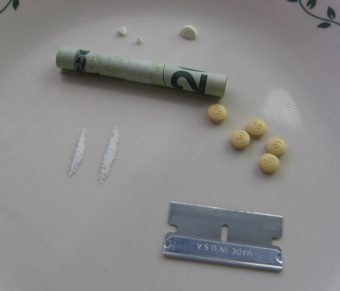
Some OxyContin abusers crush the pills into a powder to be snorted. (Creative Commons photo by 51fifty)

Although many people know someone who has abused prescription opioids, people still think of opioid abuse as a criminal justice issue more than a health problem, a study finds.

Illegal drug dealing is mentioned most frequently in news stories as the cause of prescription painkiller abuse, and two-thirds of abusers are shown as being actively involved in crimes, according to an analysis by researchers at Johns Hopkins Bloomberg School of Public Health.

When it came to possible solutions, more than half the news stories, 64 percent, mentioned law enforcement, either arresting people who illegally buy and sell opioid painkillers or arresting doctors who illegally provide them. Forty-one percent mentioned prevention, and just 3 percent mentioned expanding treatment.

“That surprised me, frankly,” says Emma McGinty, an assistant professor at Johns Hopkins and lead author on the study. “I really expected to see more of a shift to a public health and behavioral health approach to the issue.”

More than 2 million people in the U.S. either abused or were dependent on prescription opioid painkillers in 2013, according to the Centers for Disease Control and Prevention, and more than 16,000 people died of overdoses.

“We as Americans are really prone to think of drug abuse of any kind as a moral failing,” says McGinty. She was surprised to see that that attitude still applied to prescription painkillers. “That is pretty persistent and hard to overcome.”

Analyzing mainstream news coverage is an established method for gauging public discussion around health and social issues, and and news media coverage also influences that discussion. The researchers looked at 673 stories in major-market television and print outlets from 1998 to 2012.

Less than half of the stories, 44 percent, mentioned that opioids are effective for treating pain. And less than 1 percent covered harm reduction efforts like reducing protecting people from criminal charges if they seek medical help for someone overdosing.

Toward the end of the study period, news coverage did start to mention prevention and treatment more frequently, McGinty says. “This was the one glimmer of light from a public health perspective.”

The study was published online Tuesday in the journal Psychiatric Services.

Copyright 2015 NPR. To see more, visit http://www.npr.org/.
Read Original Article – December 4, 2015 12:59 PM ET

Ketchikan City Council bans commercial pot sales

Voters approved the legal the production, sale and use of marijuana for Alaskans over 21 years old in the Nov. election. (Creative Commons Photo by Brett Levin)
(Creative Commons photo by Brett Levin)

The Ketchikan City Council voted Thursday night to ban the commercial sale of marijuana within city limits. Mayor Lew Williams III requested the issue be brought before the council. Williams said he doesn’t oppose the sale of certain items but is concerned with oils, concentrates and edibles.

“Oils and the edibles, I think, are just made for a younger audience. For this community, I am dead against having that sold within the City of Ketchikan,” Williams said. “The other stuff – they can grow it, they can smoke it, it’s legalized in the state, it doesn’t inhibit anybody’s usage.”

Under state law, municipalities can block commercial sales completely, but, if they approve sales, they cannot restrict the types of products sold.

Councilmember Dick Coose made the motion to prohibit commercial marijuana sales.

Coose says he sees no benefit to the city or the people.

“And they say, ‘What do you mean, don’t you believe or trust the voters?’” Coose said. “And I say, sometimes voters don’t always get it right. This is one of them which I think is wrong because there are too many dangers out there. If people are going to smoke it, they’ve got that opportunity. They can grow it in their house and they can share it. But we don’t have to make it readily available, especially the edibles and the other things.”

Cultivation for personal use is legal. Coose said he’s concerned that regulations do not allow a municipality to control THC concentrations. THC is the chemical that gives marijuana most of its psychological effects. Coose added that he does not believe the city would make much money from sales.

Councilmember Bob Sivertsen seconded Coose’s motion, and offered an amendment. Rather than making a final decision, he suggested the council recommend commercial marijuana sales be prohibited to a local marijuana advisory committee. He said a vote was premature since the state is still revising regulations. He too expressed concerns about concentrates.

Councilmember Judy Zenge said voters approved the use of marijuana and their wishes should be honored, with restrictions.

“Now Bob (Sivertsen) might be talking to the 920 people who voted no, but apparently I’ve been speaking to the 1154 people who voted yes,” Zenge said. “Marijuana is legal and there are going to be some people that are going to need some help with that. Just like folks who have alcohol dependency were going to end up with people that have pot dependency.”

Zenge said not everyone who uses marijuana will become dependent. She said taxes can help address dependency issues. Zenge also said she doesn’t understand why people oppose retail stores because the products have to be tested and THC concentrations reported.

The council rejected Sivertsen’s amendment.

The commercial ban passed 5-2. Councilmembers Coose, Sivertsen, Dave Kiffer, Janalee Gage and Julie Isom voted yes. Councilmembers Zenge and KJ Harris voted no.

Recovering from addiction: We are the solution

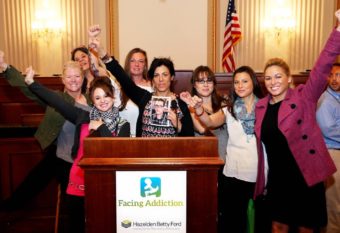
Alaskans were part of the UNITE to Face Addiction Rally in Washington, D.C.: Kim Whitaker, Julee Douglas, Samantha Garton, Terria Walters, Kara Nelson, Delia Williams, Jennifer Mcallister and Christina Love inside a congressional office building in D.C. in October. Nelson is holding a picture of Christopher Seaman, the son of Walters who was murdered in Mat-Su in June. (Photo courtesy Kara Nelson)
Alaskans were part of the UNITE to Face Addiction Rally in Washington, D.C.: (left to right) Kim Whitaker, Julee Douglas, Samantha Garton, Terria Walters, Kara Nelson, Delia Williams, Jennifer Mcallister and Christina Love inside a congressional office building in D.C. in October. Nelson is holding a picture of Christopher Seaman, the son of Walters who was murdered in Mat-Su in June. (Photo courtesy Kara Nelson)

Alaska’s capital city is battling addiction. The Juneau community continues to face substance-related deaths and near deaths.

Three women came to KTOO recently to talk about addiction, long-term recovery and a rally that gave them hope.

Christina Love, Kara Nelson and Julee Douglas are all in recovery. At different times in their lives, they’ve been addicted to different substances.

Love is an advocate at the AWARE shelter in Juneau. She said her addiction started out with Adderall in college. Cocaine was next.

“Then we went to crack cocaine, and alcohol is always there. The hangovers were bad, so we went to pills, then we went to oxys, and then we went to heroine, and then benzos. And really it’s anything that’s in front of you at any given point,” Love said.

Love detoxed in Fairbanks and became sober. Then she started treatment and is in long-term recovery.

“Once you have this disease, you suffer it for the rest of your life, and it can’t be stopped,”  Love said. “But it can be arrested.”

Love and Kara Nelson met on the recovery journey about four years ago. They’d been anonymous in meetings held in churches and basements before they started speaking and advocating publicly.

Last month, they and six other women from Juneau and Anchorage represented Alaska in the UNITE to Face Addiction Rally in Washington, D.C. They marched in the National Mall with close to 30,000 people involved in the recovery movement, including other recovering addicts and those who’ve lost people to addiction.

Nelson is the director of Haven House, a faith-based transitional home for women recently paroled or released from prison. Haven House provides peer-to-peer support for women who’ve faced addiction and incarceration. She organized the trip to D.C.

“As a person in long-term recovery and as someone who has an extensive history in our criminal justice system and continuously sees my friends, our neighbors, our people incarcerated and then the effects of that and then getting out and having even more issues than being in prison itself, this was a very personal thing for myself to be a part of,” Nelson said.

The rally was aimed at changing the conversation around addiction and treating it as a health crisis. Nelson said recovery is a lifelong journey, not aftercare for a month.

“If you have any other kind of illness or disease, you’re going to have these check-ups and you’re going to continuously be checking in to every symptom, right? That’s exactly how substance use and mental health should be treated as well,” she said.

At one of the rally events, people wore T-shirts and carried posters with photos of loved ones who had passed away from addiction. Julee Douglas said being surrounded by that helped her and the others come to terms with the wreckage of their past.

“Any one of us could have been a poster or a T-shirt for sure,” Douglas said.

Douglas also works at Haven House as the house manager. She said offering peer support to the residents gives her support to heal from her alcohol addiction.

During the rally, the group visited Alaska’s congressional delegation to lobby for bills related to the recovery movement, like the Comprehensive Addiction and Recovery Act. The CARA bill will help bring money to grassroots recovery organizations.

Love said it was empowering to be at the D.C. rally and advocate with people who share experiences of feeling rejected, discriminated against and suicidal.

“I’ve said a million times over and over, ‘I’m a person in long-term recovery.’ That’s one of my favorite things about myself and it’s one of my favorite things about the people that I help because it stands for something so completely opposite from what the rest of the world thinks,” Love said. “They see an addict, but I see a person who’s resilient and a fighter.”

Nelson helped form the Juneau Recover Community two years ago. It’s people in recovery helping others through support and social events, like Recovery Fest. But she says more needs to be done.

“We’ve been able to educate ourselves to really be in a position where we are the ones that are the solution.”

Nelson and Love, both recovery coaches, plan to work with local agencies to form a community plan focused on recovery, and are actively meeting with Juneau organizations to try to establish a detox facility.

In Tennessee, Giving Birth To A Drug-Dependent Baby Can Be A Crime

Brittany Crowe just completed an addiction treatment program that helped her regain custody of her children. Here she holds Allan, who was born with neonatal abstinence syndrome, as her son James stands behind them. Ari Shapiro/NPR
Brittany Crowe just completed an addiction treatment program that helped her regain custody of her children. Here she holds Allan, who was born with neonatal abstinence syndrome, as her son James stands behind them.
Ari Shapiro/NPR

In the United States, a baby is born dependent on opiates every 30 minutes. In Tennessee, the rate is three times the national average.

The drug withdrawal in newborns is called neonatal abstinence syndrome, or NAS, which can occur when women take opiates during their pregnancies.

In the spring of 2014, Tennessee passed a controversial law that would allow the mothers of NAS babies to be charged with a crime the state calls “fetal assault.” Alabama and Wisconsin have prosecuted new mothers under similar laws, and now other states are also considering legislation.

Supporters of the laws say they can provide wake-up calls to women dependent on drugs and encourage them to get help. The Tennessee law says that getting treatment for drug use is a valid defense against fetal assault charges. But critics say criminalizing the effects of a woman’s drug dependence on her newborn child makes it less likely for her to seek help when it could do the most good.

The problem of NAS is growing nationwide. Nearly 6 in 1,000 babies born in the U.S. in 2012 were diagnosed with NAS, according to a study published in the Journal of Perinatology in August. That’s nearly double the level seen in 2009.

In Tennessee, billboards on the side of highways declare, “Your baby’s life shouldn’t begin with detox,” with an image of a newborn baby’s foot attached to a medical monitor. The signs are strategically placed in areas with the biggest substance abuse problems, like Oak Ridge — a town surrounded by poor, rural communities in northeastern Tennessee.

On a drizzly Monday afternoon in Oak Ridge, a group of women sits in a circle in a low brick building. Some of these women have their babies — bouncing on their knees or rocking gently in car carriers. These women are all in recovery, and some are recently out of prison for fetal assault. The group is called Mothers and Infants Sober Together, or MIST, and provides outpatient treatment for mothers addicted to drugs.

Each woman takes her turn checking in with Michelle Jones, who runs the MIST program. The women talk about their challenges and triumphs, their cravings. One pregnant woman admits to feeling guilty for being on a medicine prescribed by her doctor to ease her cravings for opiates.

“Can I say something? Don’t feel guilty,” another woman pipes up, “because it’s going to help you right now.”

Jones sits in the circle with them, week after week, asking questions and prompting them to open up. It’s not an easy task. Many of them were afraid to talk at first.

Avoiding Prenatal Care Out Of Fear

Brittany Crowe used to be one of those women. Now, she shares her story.

“I could have gone [to] a baby doctor at first, but I was scared because of the new law,” Crowe tells the group. When she was pregnant with her youngest son, she was addicted to prescription drugs and knew that if she went to a doctor, a drug test would come back positive. So she stayed away. She had no prenatal care through her entire pregnancy. She was so afraid of going to jail and losing custody of her children that she considered giving birth at home.

“I worry about that a lot now,” she told us later. “I wonder how many babies are not known about because the mothers are afraid to get help, and then they’re born at home and nobody ever knows about these babies. If they’re going through withdrawal so bad, they’re going to pass away.”

Crowe finally went to the hospital 10 minutes before she gave birth. Her son was born with neonatal abstinence syndrome. The Department of Children’s Services took him and her older children away and put them in foster care. Crowe enrolled in the MIST program to get clean.

One mother details her journey with addiction in a group therapy session at Mothers and Infants Sober Together. Mallory Yu/NPR
One mother details her journey with addiction in a group therapy session at Mothers and Infants Sober Together.
Mallory Yu/NPR

Crowe’s experience points to one reason medical professionals and social workers oppose the fetal assault law: They worry that the law will keep women from getting medical care. Dr. Jessica Young, an OB-GYN at Vanderbilt University who specializes in addiction during pregnancy, says the law has made her patients afraid.

“So now they’re making decisions on medical care out of fear rather than out of science or what is best for them and their baby’s health,” she says. “Fear makes people make rash unsafe decisions without the consultation or guidance of a physician.”

State Rep. Terri Lynn Weaver, a Republican who co-sponsored the bill, argues that critics misunderstand its intent.

“We want to get these women help,” she says. They “weren’t getting help — not going to prenatal care anyway. Their mindset is not on prenatal care. The mindset is on the next drug.” She hopes the law can act as a wake-up call to addicted women that will motivate them to seek help.

Some of the mothers at MIST told us the law did scare them into getting help. When Jessica Roberts got pregnant, the law drove her to enroll in rehab twice, but it didn’t make her quit. She relapsed both times, injecting herself with opiates.

“What finally broke me was, I was 31 weeks. I had tied off to hit myself. And I put my arm on my stomach. And [the baby] kicked my arm off. And that broke me,” she says. “To me, it was like my baby saying ‘Mom, you can’t do this anymore. I need you.’ And it hurt.”

Treatment Slots Hard To Find

When Roberts wanted help quitting cold turkey, she had a hard time finding it. Not many rehab clinics will detox a pregnant woman, and the few that do have long waiting lists. Doctors disagree on whether detoxing a pregnant woman is really best for mothers and their babies. Instead, most physicians recommend a gradual tapering of less harmful medications like methadone, paired with a comprehensive addiction treatment program. Those programs are scarce, however, and often have long waiting lists of their own.

Young’s clinic at Vanderbilt, for instance, has a waiting list of up to eight weeks, and the majority of her patients have to drive over an hour to see her.

At the state Department of Children’s Services, Connie Gardner says it feels like Tennessee is “drowning in the drug problem,” and nobody has thrown the state a life preserver. She understands why mothers view her office with distrust and fear. The department makes the decision about when babies should be taken from a mother and put into foster care.

“None of these mothers wakes up and says, ‘I’m going to abuse my child today,’ ” Gardner says. “None of them wakes up and says, ‘I’m going to be a bad mother.’ What I have to remember is that they do. They can get better. What’s frustrating, what’s disappointing is that we don’t have the tools to help them get better.”

Even the law’s advocates acknowledge that there isn’t enough help for the women who want it. Barry Staubus, the district attorney for Sullivan County in the northeast corner of Tennessee, has prosecuted more than 20 drug-using mothers this year.

“Of course I’m for funding programs and making those programs available,” he says. “There’s always the call for more funding, but we can’t let that get in the way of a good idea … or an effective program.”

Staubus believes that there need to be real consequences to women who chronically abuse powerful prescription drugs while pregnant. He says the threat of jail time would scare even the most defiant women, who had been previously unwilling to get into a program.

The Tennessee law is set to expire next year, unless state legislators renew it. So its effectiveness is under close scrutiny.

Births Of Addicted Babies Up In Nashville

At Vanderbilt Hospital’s Neonatal Intensive Care Unit in Nashville, the persistent squealing cry of newborns going through drug withdrawal provides an audible reminder that this problem is far from solved. In the year and a half since this law took effect, the numbers of NAS babies have not gone down, says Dr. Stephen Patrick, who researches neonatal abstinence syndrome at the hospital. He saw 100 cases last year, and the hospital is on track to see at least that many this year. He doesn’t think punishment is the right way to solve this problem.

NAS is a treatable condition in newborns, he says, and there isn’t enough research to know what its long-term effects on a child might be. “There was a lot of concern about the cocaine epidemic and Time magazine calling it a ‘lost generation.’ I think we should be really cautious in how we frame this moving forward,” he says. “The evidence really doesn’t support that for neonatal abstinence syndrome. And, in fact, we know that other substances, legal substances such as alcohol, are far more harmful long-term to infants.”

On a warm fall afternoon, Crowe and her children are at the park. Her older kids play in a stream as she holds her youngest on her hip. He’s 9 months old, with big blue eyes and a tuft of blond hair.

One of her boys runs up to her, a mischievous smile on his face.

“Don’t you splash me,” she warns, but there’s amusement in her voice.

He giggles and Mom gets a faceful of muddy water. She laughs as she wipes it from her eyes. He splashes her again.

Is she having second thoughts about having her children back?

“I think it’s a little too late,” she says, laughing. “I can honestly say a year ago I wouldn’t have been here.” She’s grateful to be here now. Free of drugs, and finally reunited with her children.

This is the first story in a series that was produced by All Things Considered in collaboration with Nashville Public Radio reporter Blake Farmer.

Copyright 2015 NPR. To see more, visit http://www.npr.org/.
Read original article – Published November 18, 201510:17 PM ET


Site notifications
Update notification options
Subscribe to notifications