Alcohol & Substance Abuse

New Medications For Treating Opioid Addiction Are On The Horizon

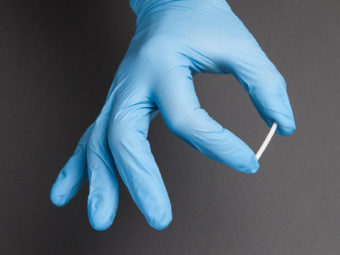
Probuphine
Probuphine. (Photo courtesy Braeburn Pharmaceuticals)

A new method of delivering medication for opioid addicts gained approval from a Food and Drug Administration advisory panel this week. It’s a matchstick-like insert designed to slip under the skin and release a drug over a period of months. Some physicians say the implant will be a useful addition to the currently short lineup of medication-assisted treatment options.

The rod is called Probuphine, developed by the companies Braeburn Pharmaceuticals and Titan Pharmaceuticals. It contains a medication called buprenorphine which the FDA approved for opioid addiction in 2002 and is currently widely in use. The FDA typically follows the advice of its advisory panels on approvals.

This molecule binds to opioid receptors in the body, but doesn’t hit them as hard as something like heroin or morphine would. So it can reduce cravings without giving a full high. It’s often taken in combination with a medication called naloxone, which negates the effect of any additional opiates and acts as an antidote for overdoses. Right now, patients must hold a tablet or a film under their tongue or in their cheek until it dissolves every day.

Source: Substance Abuse and Mental Health Services Administration. (Inforgraphic by Katie Park/NPR. Pill and syringe icons by Sergey Demushkin/The Noun Project)
Source: Substance Abuse and Mental Health Services Administration.
(Inforgraphic by Katie Park/NPR. Pill and syringe icons by Sergey Demushkin/The Noun Project)

This gives a long-lasting implant a few advantages over oral daily doses. Probuphine lasts up to six months. So unless patients want to dig underneath their skin to tear the thing out, there’s no deviating from the treatment.

“With the Suboxone [a daily combination of buprenorphine and naloxone], you can go on these drug holidays,” says Patrick Kennedy, a former congressman and former opiate addict who urged the panel to approve Probuphine. “If I knew I had access to another drug, OxyContin, I would just stop taking the Suboxone and — you know.”

And with the oral medications, health providers worry that patients with a prescription might sell the medication illegally. Buprenorphine is commonly confiscated by the Drug Enforcement Agency, says Behshad Sheldon, president and CEO of Braeburn Pharmaceuticals. “And sometimes it’s actually unfortunately accidentally ingested by children.” The Probuphine implant would reduce those incidents, she says.

On top of that, Sheldon says the implant’s long-acting nature will give patients peace of mind. “They won’t have to think about where their medicine is or worry if it gets lost or stolen. One of the first things I’ve read [from patients] is ‘I want the implant because if you go to jail, they can’t take it from you.'”

But it wouldn’t be for everybody. “It’s really for those doing well on buprenorphine and don’t need a high dose,” says Dr. Adam Gordon, a professor of medicine at the University of Pittsburgh and member of the advisory panel who voted in favor of approving Probuphine.

With the insert, it would be difficult to change a patient’s dosing. Sometimes, within a few months patients need to go on a higher dose of buprenorphine, so Probuphine would be best for people who can get along with a low, constant level of medicine. For different people suffering with addiction, other treatments might be more appropriate.

Right now, there are only two other chemicals for treating opioid addiction: methadone and naltrexone. In broad strokes, each is more suited to different patients and situations, but it’s not always clear-cut, Gordon says.

The entry of Probuphine as a potential treatment option has revived longstanding disagreement over how these medications should be administered. Some doctors think certain patients need to be on medicine forever. “Will they need to be on it six more months, maybe many times over their entire life? When is a good time to stop treatment?” Gordon says. “These are unanswered questions.”

Some doctors think buprenorphine, including Probuphine, can be a stepping stone on a path to being medication-free. “Buprenorphine is a way to withdraw someone from opiates,” says Dr. David Pickar, a psychiatrist at the Johns Hopkins University School of Medicine on the advisory committee who also voted to approve. “The idea of not having any opiates in your body is very disturbing to some. The buprenorphine will help bridge that. Then you give them naltrexone,” he says.

Naltrexone works by blocking the effects of any opioid someone might try consuming. It prevents the high, potentially stopping a relapse. It’s most often taken as a monthly injection, and is likely best for people who haven’t recently been using heavily. Eventually, once someone has regained much of their normal life, Pickar says they might try going off the naltrexone.

But sometimes naltrexone doesn’t work. Some patients never go back for their next dosage. The other option is methadone, which binds to opioid receptors in a way similar to buprenorphine. It’s good for those who used heavily, but it must be administered daily at methadone clinics. “Let me tell you, that is a tough world,” Pickar says. Not everyone can or wants to go to a clinic every day.

Pharma companies, including Sheldon’s, are looking to develop new medications and treatments. In the pipeline is a monthly or weekly injection of buprenorphine, which could be better for those who might still need to see a physician often but struggle to take a daily pill. Ultimately, Sheldon says, there need to be more treatments that can be better tailored to individual patients.

Read Original Article – January 15, 2016 11:58 AM ET
Copyright 2016 NPR. To see more, visit http://www.npr.org/.

Alaska Fred Meyers could start carrying overdose medication

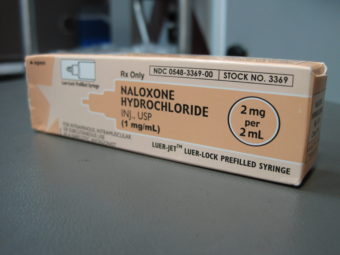
Naloxone HCl preparation, pre-filled Luer-Jet package for intravenous administration. (Creative Commons photo by Intropin)

A naloxone pilot project at Fred Meyer pharmacies down south could be expanding to Alaska. Eight stores in Washington have quietly rolled out access to a drug that stops opiate overdoses. The chain plans to eventually expand to all its locations. In Alaska, this largely depends on the outcome of Senate Bill 23.

Taelyn Coffee started using opiates about seven years ago. She says it started with OxyContin, after seeing her boyfriend and a family member become addicted to the drug. Then she switched to heroin when oxys became harder to find.

One night, she was hanging out with her friends in Juneau.

“We were laughing. We were high of course,” Coffee said.

She remembers one those friends had just finished shooting up and the girl’s lips turned blue. Coffee says they all panicked.

“Trying to shake her trying to get some kind of notion that she was still breathing or alive at this point. Nothing. We got nothing,” Coffee said.

She says they were afraid of being arrested if they took the girl to the hospital. Still, they knew they had to get their friend help. She was overdosing.

With the changes happening in Alaska that night could have gone differently. For starters, the good Samaritan law passed last year, could have protected Coffee and her friends when they called for help. And now, Fred Meyer pharmacies want to make it possible for people to have access to a drug that stops the overdose.

“We see naloxone as a fire extinguisher. We hope you never have to use it but it’s great to have just in case,” said Melissa Hansen, a pharmacy sales manager at Fred Meyer.

The Fred Meyer naloxone pilot project rolled out in October at some Washington stores, but it’s still getting off the ground. Other pharmacies that carry naloxone in Washington include Bartell Drugs, QFC and several independents. Hansen said people wanting to get their hands on the drug don’t have to go to a doctor.

“So they can just walk into any of our pharmacies and say, you know, I’d like to get some naloxone. Even if we know that they’re not the end user,” Hansen said.

Fred Meyer can’t prescribe naloxone sometimes called Narcan under its own pharmacy license. So they rely on something called a collaborative drug therapy agreement.

For people who need it, Hansen says this reduces some of the barriers to getting the drug. After a short consultation with a pharmacist, the person is given an injection kit or nasal spray. Medicaid and some insurance providers cover the expense in Washington. The out-of-pocket cost for the nasal spray is only $40.

Hansen thinks naloxone isn’t just for heroin users.

“The other thing we’re really working on is convincing the medical community that they’re not having risky prescribing habits but that these are risky medications,” Hansen said.

For example, cancer patients sometimes take high doses of opiates for pain. Hansen says it makes sense for them to also have naloxone and someone to administer it nearby.

Fred Meyer Pharmacies plan to start advertising the program at their Washington stores soon. The program expands to Idaho in February and eventually it could come Alaska. Whether Alaska Fred Meyers pharmacies will carry naloxone depends on if the state passes SB 23.

“As soon as this law passes in Alaska, they’re already on our radar to go up there,” Hansen said.

The law gives protections for people administering naloxone.

That night that Taelyn Coffee’s friend OD’d, the group got lucky. They were driving the girl to the hospital and performing CPR.

“Halfway through the trip we were just getting past the intersection from McDonalds and she came to,” Coffee said. “That first breath, I can’t even tell you how that made me feel, and everyone else was just so relieved.”

That was five years ago. Since then, Coffee has kicked her opiate addiction. She now works in an organization that helps women in domestic violence situations. She says naloxone isn’t going to stop heroin use in Juneau but it could save lives. She wouldn’t hesitate to have some on hand.

“I’ll be the first in line to buy some,” Coffee said. “I’m not an addict anymore but I know tons of people who are still.”

Fred Meyer representatives say the program could expand to their 11 pharmacies in Alaska by summer.


Portraits Of Those Killed By Heroin Bring Healing And Awareness

Amanda Jordan, Diane Yelle and Jim Zanfagna hold portraits of their children killed by overdoses at a service for families affected by addiction at the First Baptist Church of Plaistow on Dec. 20, in Plaistow, N.H. Anne Marie Zanfagna stands in the back. Tamara Keith/NPR
Amanda Jordan, Diane Yelle and Jim Zanfagna hold portraits of their children killed by overdoses at a service for families affected by addiction at the First Baptist Church of Plaistow on Dec. 20, in Plaistow, N.H. Anne Marie Zanfagna stands in the back.
Tamara Keith/NPR

When Jackie Zanfagna died last year at 25 years old, her parents did something bold. In the first sentence of her obituary they acknowledge what killed her: an accidental overdose of heroin.

Now her mom Anne Marie Zanfagna is pouring her grief out onto canvas and in the process helping other parents who have experienced the same loss.

Zanfagna is an artist. But, she says, for six months after her daughter died she was too devastated to pick up a paint brush.

“I didn’t want to shower,” Zanfagna said. “All kinds of things. You just don’t want to do anything. But I figured I have to start doing something. And then I decided that I wanted to paint a picture of Jacqueline.”

It is an oil portrait on canvas in bright purple, pink and black. In it, Jackie looks out, a soft smile on her lips. But Anne Marie Zanfagna didn’t stop there. Zanfagna has started painting portraits of other young people killed by overdoses.

State health officials in New Hampshire are projecting 400 deaths this year from overdose deaths from heroin and other opioids. That’s about one-in-every-3,000 people in this small state and double what it was two years ago. It is a crisis affecting every part of the New Hampshire, people from all backgrounds and financial means.

Because of New Hampshire’s first-in-the-nation primary, the crisis has become a front-and-center campaign issue for candidates on both sides of the aisle and came up in the most recent Democratic debate. A recent WMUR Granite State poll found drug abuse ranked at the top of the list of most important issues facing the state.

Once a month, she and her husband, Jim, attend a Sunday-night service at the First Baptist Church of Plaistow.

“Addiction has touched your family in some way or your friends or maybe yourself in some way. That’s why you choose to be here tonight,” pastor Aaron Goodro said to open up the service on the Sunday before Christmas.

It’s a unique gathering for those in this small community who have lost loved ones, or are recovering from addiction. Some weeks, as many as 80 people attend, filling the pews. At a recent service, Goodro called Zanfagna up to the alter.

Art work by Anne Marie Zanfagna at the First Baptist Church of Plaistow on Dec. 20, in Plaistow, N.H. Tamara Keith/NPR
Art work by Anne Marie Zanfagna at the First Baptist Church of Plaistow on Dec. 20, in Plaistow, N.H.
Tamara Keith/NPR

“Anne Marie, our artist friend, would you show us some of your latest work?” Goodro said.

Jim Zanfagna held the picture of Jackie. Then, the pastor called up the parents of other young adults Zanfagna painted. The faces all smile through bold bright colors. After the service, Diane Yelle thanked Zanfagna for painting her son.

“Oh my God, I am in love with this picture,” said Yelle at a potluck dinner after the service. “I really appreciate it. You have no idea how much I appreciate it.”

Zanfagna told Yelle she’s glad.

“It’s very healing for me too,” Zanfagna said, “because I know how you feel.”

Yelle’s son Shawn died of an overdose in September of this year. He was 30.

As she looks at the painting she describes it.

“I feel like he’s looking at me,” Yelle said. “Those eyes. They kill me, because they’re smiling and all we did was laugh together. You know, it’s a nice way to remember him.”

Another mom struggling to deal with the loss of her son is Amanda Jordan. Her son Christopher died of an overdose in September.

“It just captured him,” she said of the portrait. “I mean, she captured the smile, and I just feel like he’s alive in that picture. That’s Christopher. Not the sad you know, ‘I can’t do today’ or ‘I have to have something to get me through today.’ That smile is what he always had.”

Zanfagna is working on another portrait now and will do as many as she can. She wants to show them in the local public library. But Jordan hopes she aims higher — an exhibit in the New Hampshire statehouse.

“The statehouse would be great,” Jordan said. “America needs to know that there’s a problem. An absolute huge huge problem.”

Copyright 2015 NPR. To see more, visit http://www.npr.org/.
Read Original Article – December 27, 2015 5:29 AM ET

On the edge: Shedding light on Juneau murder victim Robbie Meireis

Robbie Meireis
Robbie Meireis.

Robert Meireis had a tough life that included a history of violence, years in prison, even tattoos tying him to white supremacist groups.

He lived a violent life on the edge of society. That he met a violent end in a double murder discovered last month in West Juneau wasn’t necessarily a surprise to some people who knew him.
And yet, he also had people that cared about him and were stunned when the news broke.

One day before Robert Meireis — Robbie to his friends — was found dead, he exchanged texts with an ex-girlfriend. She said they had an on-and-off relationship for months and eventually a falling-out that involved some property being destroyed. But in the days leading up to his death, she said their texts were about making amends and moving on.

The ex, who we aren’t naming because she fears reprisal for talking, also had advice for him.

“I was like, ‘You need to talk to your attorney, get out of town for a minute, come see me,’” she said, because of “rumors and (there was) talk about people taking him out for a couple of months. Because he’s made a lot of enemies.”

She chose her words carefully and wouldn’t get specific. She doesn’t think Meireis’s death was drug-related. She alluded to an altercation Meireis had, but wouldn’t elaborate.

“Not without having a mark on myself,” she said.

She said the Juneau Police Department has contacted her, but she’s got a bad relationship with the department. She’s got baggage from how the department handled domestic violence issues involving her several years ago. Charges were filed against her, but she says she was the victim.

Another perspective

Kristi Willis, a stay-at-home mom, was a friend of Robbie Meireis for about six years.

“He’d always call and check on me, seeing how I was doing and making sure that I was OK, you know?” she said. “He cared about me enough to just check up on me. He just always made sure that I was OK, and that I wasn’t out, or you know, leaving my kids and out partying. That’s pretty much what it was.”

She said he sort of felt like family. But, not the kind of family she wanted around her children.

“I couldn’t put myself in the situation, you know like, his living his life and I have my two kids, you know?”

She felt protective of her children, but wouldn’t say why.

“I don’t really want to answer that,” she said. “I don’t want to be saying anything about a friend, because he was a good guy overall, you know?  … I did care for him. He is going to be missed. It’s just kind of sad that his life had to get taken.”

A friend called Willis with news of Meireis’ death, and she learned more about it on Facebook. A few days after finding out, she said it was still hard to believe. She had just run into him the weekend before at Bullwinkle’s Pizza at the Mendenhall Mall.

“I was kind of heartbroken about it. … I didn’t want to believe it because I … didn’t think this kind of stuff would go on in Juneau. I really don’t know why it happened,” she said. “He cared a lot about people. There’s a good portion of people who talked a lot of crap about him and, you know, they really didn’t don’t really know him.”

For example, the ex said Meireis had an infectious laugh, that he was a sentimental father, and that playing with jewelry brought him a child-like glee.

She said before she met Meireis this year, he’d been severely beaten in prison and had to have his jaw wired shut. An emergency room doctor that treated him for the June 2012 beating at Lemon Creek Correctional Center is quoted in a court document saying his jaw was broken in a way that his “teeth flailed open.” Another doctor, an oral surgeon, said it would be months before he could eat normally again.

The ex thinks that beating led Meireis to change, at least outwardly.

“His persona toward people was badass. ‘I’ll beat your ass. Don’t f— with me,’” the ex said.

A history of violence

Court records suggest Meireis was already a hard man. Meireis’s two prison assailants wanted to claim self-defense, arguing they thought they were in imminent danger after Meireis threatened them for either refusing or failing to distribute white supremacist propaganda. They argued he had a history of violence to back up the threats and the tattoos to prove his ties to white supremacist groups.

Meireis’ past convictions include multiple assaults, criminal mischief, burglary, theft, drug possession and repeat violations of protective orders.

The judge blocked the white supremacist evidence and the case never got to trial; both assailants ultimately pleaded guilty to the prison assault.

The ex thinks Meireis only had the tattoos and associations for self-preservation in prison, where violence often breaks along racial lines. She said he collected Nazi memorabilia, but didn’t think he was genuinely racist. She said he had dated a person of color.

The prison beating wasn’t the first time Meireis was caught up in the justice system as a victim of violence he was accused of provoking. In 2000, when he was 21 years old, he and his 19-year-old brother Justin Meireis and two other men were shot by a Nikiski man outside his home. Justin Meireis died, and it led to a a high-profile, three-week murder trial of the homeowner. The homeowner claimed self-defense and was acquitted of all charges.

“There were a lot of people that were scared, because of the persona, which I understand after going through something like that and what he was doing for a living,” the ex said.

Like Kristi Willis, the ex didn’t want to say what that was.

Robbie Meireis spoke about his employment in court in July, after a state trooper found methamphetamines on him after a traffic stop. At his initial court hearing, Meireis asked for a public defender. The judge asked him eligibility questions. Answering under oath, he said he had a part-time job and earned “a couple of hundred” dollars a year. He said he didn’t have any other income or savings.

Meireis sounded calm and matter of fact during the four-minute hearing. The arresting trooper wrote in his charging affidavit that he’d encountered Meireis in a very different state of mind just 15 hours earlier. Even handcuffed, the trooper wrote, Meireis had kicked and bitten at him.

Drug connections

“He did what was right for him, what he had to live with,” the ex said. “If you got to know him, he had a good heart — very thoughtful and considerate.”

The ex said she met Meireis through a mutual friend after Jenna Miller, who also went by Jenny, died in May. Miller was only 31. According to her obituary, she struggled with addiction.

The ex said she’d seen Meireis occasionally use meth. She admits she has addiction issues, too, with heroin. She said Meireis was helping her.

“He was helping me, you know, ween myself off, get off,” she said. “He didn’t mess around with heroin. But he would get it for me, you know, try to get me off. Little by little, you know?”

When I talked to the ex, she’d been out of state for about a week and a half, trying to quit cold turkey.

“It was my time to get out. I — I needed to change. It was — things were just spinning out of control and I couldn’t do anything about it. So I had to leave,” she said.

She’s not sure how Juneau figures into her future.

“It was just getting out of control in Juneau. You can just feel it.”

She thinks one thing that would help Juneau kick its heroin habit is making opioid addiction treatments more readily available. She said Suboxone, a prescription drug in the form of a strip put under the tongue, has helped with her cravings.

“I think they need to open up groups — like (Alcoholics Anonymous) meetings or (Narcotics Anonymous) meetings. You show up and you can get a strip instead of having these two-month waiting lists, need insurance and all that. That would get people off heroin, if they had an alternative. Or just keep killing people.”

She also said it’s been misreported that Meireis and Elizabeth Tonsmeire, the other victim, lived together in the West Juneau condo where they were found. Police confirmed it was Tonsmeire’s place. The ex said Meireis lived with a friend elsewhere.

Between pretrial facilities, prisons and a halfway house, the Alaska Department of Corrections had Robbie Meireis in custody for more than eight years of the last decade. He lived on the margin, and was shot to death, out of sight, at the age of 36.

The Juneau Police Department said the double murder is still under investigation and they aren’t releasing new information. Police have largely declined to comment, though they did say there’s nothing to indicate the involvement of white supremacy groups. The Juneau Crime Line is offering up to $1,000 in reward money for information that contributes to an arrest.

Correction: An earlier version of this story had misspelled one victim’s last name. It’s Elizabeth Tonsmeire, not Elizabeth Tonsmiere. 

Juneau keeps conversation going on heroin

On Thursday, Lt. Kris Sell with the Juneau Police Department spoke to a packed chamber lunch about heroin. Chief Bryce Johnson is attending Sunday's Stop Heroin, Start Talking event. (Photo by Elizabeth Jenkins/KTOO)
On Thursday, Lt. Kris Sell with the Juneau Police Department spoke to a packed chamber of commerce lunch about heroin. Chief Bryce Johnson is attending Sunday’s Stop Heroin, Start Talking event. (Photo by Elizabeth Jenkins/KTOO)

Legislators, police officers and behavioral health specialists will gather this weekend in Juneau for a townhall discussion on heroin. They’ll be focused on finding local solutions to help people suffering with addiction.

Michele Morgan started Stop Heroin, Start Talking as a grassroots initiative — a homespun way to get the word out about what she saw happening in her community. After throwing events and printing our flyers on her own dime, Morgan is now the one getting help.

Her organization recently partnered with the Juneau branch of the National Coalition on Alcohol and Drug Dependence.

“We realized that what Juneau Stop Heroin was doing is exactly what NCADD wanted to start doing more of,” Morgan said.

NCADD provides advocacy, education, and some clinical services. Being under the umbrella of the nonprofit means donations to Stop Heroin, Start Talking will be tax deductible. It also connects the organization to a slew of other agencies that NCADD has developed partnerships with, such as the California-based Harm Reduction Coalition.

Katie Chapman, executive director of the Juneau’s NCADD, said her organization saw the work Morgan was doing and thought it would be a good fit.

“It’s amazing. It’s really inspiring to see that. I think a lot of change happens from individuals, community members that have the passion,” Chapman said.

For Sunday’s community meeting, Morgan invited Juneau representatives Sam Kito and Cathy Muñoz to weigh in on the Good Samaritan law and Senate Bill 23.

“All I did was email these people and they responded and said, ‘yes I will do this.’ That is a testament to how forward thinking Juneau is getting to be. It’s great,” Morgan said.

The Good Samaritan law passed last year. It protects people who report an overdose from criminal prosecution. SB 23 could prevent deaths by holding harmless those who administer a drug called Naloxone in an attempt to save someone who has overdosed

Another topic at the meeting will be the lack of treatment options for people who want to get clean. There’s practically nowhere to clinically detox in Juneau.

“I hope it’s not adversarial, but it is something that sticks in your head. We can arrest someone for using drugs and put them in jail immediately. But if we want to put them in treatment, which I think is fiscally and for our future more responsible, we don’t have beds.”

City Manager Kim Kiefer has been looking into a program in Gloucester, Massachusetts that helps people get into treatment. She learned that it costs about $50 to connect someone with services and about $230 to incarcerate them.

Like Juneau, Gloucester is a small town of about 30,000. The town is about an hour outside of Boston, and people suffering with an addiction there can go to a police department and ask for help. Then they can get into a detox program and long-term treatment.

“In the six months they’ve been doing this, they’ve had over 300 people that say, ‘I want to get clean,’” Kiefer said.

Kiefer says she doesn’t know much about heroin addiction, but she’s trying to learn more. That means reaching out to people in and outside of Juneau to find what’s working.

More than $800,000 of the city’s social service funds are funneled through the Juneau Community Foundation. The Hope Foundation is pitching in $1 million for grants to look into these issues.

For Morgan — the woman who started the Stop Heroin, Start Talking program — the biggest hurdle has been changing attitudes about addiction, including her own. Three years ago, her sister died of a heroin overdose. She wrote in the obituary she died of cancer.

“My sister would have died this year, I would have said the truth. I would have said my sister Eva died after a long battle of addiction and I would feel fine. But three years ago we were ashamed. We didn’t want anyone to know or smudge her reputation,” Morgan said. “But now people are looking at it as it is a health crisis and in that sense, that’s the big change.”

The Community of Compassion will hold an open dialogue about addiction Saturday at 4 p.m. at the @360 studio. The Stop Heroin, Start Talking panel begins at 2 p.m. Sunday at the Mendenhall Valley Public Library.

Wilderness therapy could battle addiction, is lacking in Alaska

Southeast ocean (Photo by Theresa Soley/KTOO)
One approach to battling addiction and other behavioral health issues lies just outside our front doors. (Photo by Theresa Soley/KTOO)

Police reports, the press and social media are flooded with stories of substance abuse, heroin overdoses and deaths in Alaska’s capital.

One approach for battling addiction and other behavioral health issues lies just outside our front doors.

“Across the world people seek solitude or wilderness experiences because there is a healing process,” said Jerrie Dee, clinical director at Alaska Crossings.

Alaska Crossings is a wilderness therapy program for youth with behavioral issues, including those with a history of drug abuse. The program takes adolescents, ages 12-18, on 64-day canoe trips into wild Southeast from Wrangell.

The program uses wilderness as a catalyst for healing, Dee said. Natural challenges, silence and a sacred process emerge when immersed in the outdoors. Dee said these things can redirect someone’s life.

Dee said wilderness immersion gives recovering drug users an opportunity to reset because external triggers and temptations are not present in the outdoors.

“Often times substance use is more an emotional process than it is physical,” she said.

Using surveys before, during and after immersion, Alaska Crossings has documented a substantial decline in participants’ negative symptoms. Long term effects after leaving the wilderness are harder to measure.

Dee said the process works for adults, too, but as far as she knows, there aren’t any wilderness therapy programs for people over 18 in Alaska.

Larry Olson, a licensed master addiction counselor in Juneau, said that many of the patients he sees started using prescription drugs in high school. With time, the habits spiraled into full addictions. He said there is no formula; some of his patients come from rough homes, but many come from loving families.

Most of the six people who died of heroin overdoses in Juneau since February were under the age of 30, according to Alaska Dispatch News. And Olson said a large portion of his patients are under 30.

Alaska Crossings admits youth who have struggled with addiction, but it is not a drug treatment program. Dee said that in the wilderness, guides can’t monitor for health issues, including withdrawal.

When substance abuse is an applicant’s primary issue, it must be treated before admittance to Alaska Crossings and entering the wilderness, Dee said.

This two-tier theory, detox then therapy, is common for wilderness addiction treatment programs.

Olson, the addiction counselor, said that many adults who are battling addiction have weak, deteriorated bodies. High levels of activity may not be an option.

But Olson said less rigorous wilderness experiences could provide opportunities for healing. He said that many of his patients speak of the importance of nature in their personal spirituality. Rekindling the human relationship with the natural world can be very healing, he said.

“If people can redevelop a sense of awe and wonder at just life, that is really very, very good,” he said.

The program follows a three-step process. The first is to develop discipline and routine, next is a focus on the participant’s unique treatment ambitions and third is learning to apply new skills to everyday life at home, said Alaska Crossings Director Stephen Helgeson.

Helgeson said that paying for wilderness therapy programs, both as an organization and for participants, is the greatest challenge. Lack of funding makes it difficult to provide help to those who need it most.

He hopes that as Medicaid expansion develops, more funding will become available for low-income adults.

Site notifications
Update notification options
Subscribe to notifications