Alcohol & Substance Abuse

An Addict, Now Clean, Discusses Needle Exchanges And ‘Hope After Heroin’

ImageZoo/Corbis
ImageZoo/Corbis

When she was 17, Tracey Helton Mitchell was prescribed an opioid pain killer after getting her wisdom teeth extracted. The medicine helped her deal with the pain related to the extraction, but when the prescription ran out, her desire for its euphoric high remained. That’s when she turned to heroin.

As a teenager, Mitchell imagined heroin to be glamorous, but she found it wasn’t once she became an addict. She tells Fresh Air’s Terry Gross that the drug ruined her health and her self-esteem. She lived in an alley, shot drugs into the bottom of her feet, sold her body for money and was jailed several times. She was also featured in a 1999 documentary about addicts called Black Tar Heroin.

At one of her lowest points, Mitchell says, “I was having heart palpitations, because I was using stimulants, and I thought, ‘They’re going to pull me out of this hotel, I have no ID, my parents, my family … will never know that I died and I’ll just be a Jane Doe and this is how I’m going to expire in this place.’ ”

But Mitchell didn’t die from her addiction. Rather, with the help of the nondenominational 12-step program LifeRing and other support groups and therapies, she eventually stopped using and became a certified addiction specialist. She has been clean for 18 years.

In her new memoir, The Big Fix, Mitchell writes about her addiction and her path to recovery, and also shares insights into today’s heroin epidemic. When it comes to our current treatment system, Mitchell says we would do better to reach out to addicts as individuals, by recognizing each user’s unique needs and motivations.

Our current method of treatment is “sort of a one-size-[fits]-all approach,” she says. “We need to have a variety of different kinds of treatment interventions that address people’s needs.”


Interview Highlights

On what it’s like to watch Black Tar Heroin now that she’s clean

It can be painful to watch, especially when I think about my life now and I contrast that. … My legs did look like I was dropped in a dumpster and picked out by rats. I had, I think, 34 or 36 abscesses. I have scars that have healed, but I had to have surgeries on some and in the summertime when everybody else is wearing shorts and stuff like that, I see those things — even right now sitting here at the table I can see one of the scars on my arms. It’s a good thing in that it reminds me of where I was, but then it’s also very challenging, because this documents a very unpleasant part of my life that can’t be changed.

On why she agreed to be filmed

I really believed that I was going to die, or be murdered. There was lots of evidence to make me feel that way, and I wanted it to be something that people would see after I was dead that showed that heroin was not the glamorous thing that I had thought it was when I was a teenager and had imagined it. I wasn’t paid for the film; it was a huge inconvenience in my life, but I feel like it still is sort of my legacy to the world, because it’s something that’s watched today. Millions of people still watch it.

On black tar heroin in the ’90s versus heroin today

There’s still tar heroin. The heroin that most people get today is much, much stronger. We didn’t have to worry about fentanyl — of us dropping dead from an overdose, because no one cut it with fentanyl. The thing that we really worried about was getting flesh-eating [bacteria, necrotizing fasciitis] … or getting some kind of wound botulism or getting abscesses. There certainly were overdoses then. You could get arrested for overdosing and a lot of people were rolled out at the hospitals or left outside to die … but there wasn’t this culture of heroin where heroin is prevalent absolutely everywhere. It was more localized to big cities, more urban areas.

On ‘hitting bottom’

I don’t believe in the concept of a bottom. I think that if the opposite of addiction is connection, that addicts or people who use drugs are really seeking out — they need some kind of connection with people. And I would say I’ve had a wide variety of bottoms, but I wasn’t ready to stop until I started to believe that there was a possibility that I actually could stop and saw reasons for myself to stop, and my motivation is totally different.

On being ready to get clean

One of the myths about addiction is that you come to this incredible moment of clarity and that you decide that you’re going to stop. And so over the course of my using I had various moments of clarity and I had various points where I had wanted to stop, but they were not always congruent with my opportunities.

So there [were] very few opportunities where I really could truly try to stop, but I would stop using for a few days, I’d try to kick on my own, I’d switch to different drugs, I’d move to different places. I tried different things to stop, but I wasn’t completely ready, because all these different traumas had accumulated in my life, and I wasn’t prepared to deal with the emotional consequences of all these different things. And that’s what to me being off drugs meant — was that I would have to then figure out how I was going to fix all these things on my own. And it wasn’t until I got an idea that maybe other people would help me, talking to my mother, knowing that I would have some kind of emotional support where I’d start seeing [that] maybe I don’t have to totally do all of this on my own.

On needle exchange programs

At the time there was no needle exchange at all [in Cincinnati] and so you would use the same syringe over and over again and hopefully it didn’t break off in your arm. Until the numbers wore off of it, you would sharpen it on a matchbook, and it was just horrible; it was like a rusty nail sticking in your arm.

So I came to San Francisco and they had needle exchanges, which was a revelation, because so many people in the country were suffering from HIV and AIDS, particularly AIDS, because there was no anti-retrovirals. … So the syringe exchange people provided me education about my drug use. …

I’ve seen in my life so many examples of where not having a clean syringe never stopped anyone. I’ve seen people pick them up out of the gutters. Even here in San Francisco, where there’s a lot of access, people break open sharps containers that they’ve stolen from hospitals because they needed a syringe and they don’t have one. … It doesn’t stop people. All it does is spread a public health crisis.

On harm reduction and the argument that harm reduction enables users

My answer is, you can’t get clean if you’re dead, so there has to be harm reduction. We’re not encouraging people to do anything, we’re taking a look at their public health behaviors and then addressing what the particular needs are, so look at the cost of one syringe versus the cost of someone getting hepatitis C and having to take care of them for a lifetime.

Look at the public health cost of various other medical conditions that a person can have. From not using sterile water or alcohol pads, someone having endocarditis or some other infection, so having a safe system for people to take care of themselves and treating addicts, users not just addicts, there’s plenty of people who use who are not necessarily considered on the spectrum of drug addicts, treating people humanely and having them have access to public health services and the things that they need.

On coping with depression since becoming clean

Part of the reason why I wanted to write The Big Fix is because I felt like there’s no … real education on long-term recovery about what really happens over time. So dealing with topics like untreated depression and anxiety and all the other kind of things that you go through when you take the drugs away, and then you have new issues, because before you use drugs, you didn’t have all these guilty, shameful things that you … now have to deal with, if you’re a person like me and you get off drugs.

So I’ve had a very complicated relationship with my emotions in the past 18 years that I’ve been clean. I’ve dealt with very serious post-traumatic stress disorder, being very checked out and dissociative at various points, having to deal with the constant specter of depression, every once in a while having suicidal thoughts. And one of the things that I try to do is really normalize those feelings when people want to know what recovery is really like. It’s like, some days you really feel crappy. You really have some things that are going on with you, and I think the prevalent idea is that you get clean and everything is supposed to be great. … You can have a great life and still not feel all that great.

Copyright 2016 Fresh Air. To see more, visit Fresh Air.
Read original article – March 8, 2016 2:39 PM ET

Overdose antidote bill is one of few minority-sponsored bills that passes

The House passed a bill Monday that provides civil immunity to those who give an antidote to reverse overdoses from heroin and other opioid drugs.

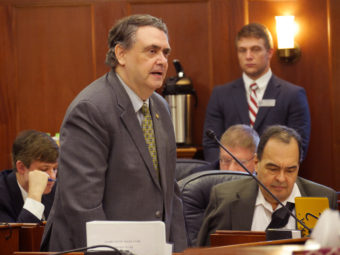
Sen. Johnny Ellis in the Alaska Senate chambers, March, 7, 2016. (Photo by Skip Gray/360 North)

Anchorage Democratic Sen. Johnny Ellis sponsored the bill. This made it unusual, since few bills sponsored by members of the minority party ever come up for votes.

The passage of Senate Bill 23 received unanimous support, with every representative present voting for it.

If the Senate – which already passed an earlier version – approves of the current bill, and Gov. Bill Walker signs it – the bill would join a small group of minority Democratic bills that become law.

Ellis said the urgency to pass the law came in part from the rising number of overdose deaths both in Alaska and nationally. The bill allows doctors and pharmacists to provide naloxone, or Narcan, a drug that reverses the effects of overdoses.

“We have a heroin addiction overdose epidemic in the state of Alaska,” Ellis said. “And I knew that we had achieved a breakthrough when I heard Hillary Clinton talk about Narcan, this life-saving miracle drug to reverse opioid overdoses. And heard (New Jersey Gov.) Chris Christie, who was vying for the Republican nomination for president, speak up in favor of the legislation.”

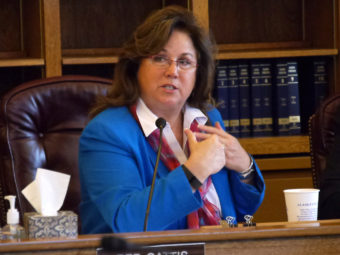
The urgency over the issue was cited by Wasilla Republican Representative Lynn Gattis, who worked with Ellis on the bill. Gattis notes that the House has focused on budget bills recently, but leaders allowed the overdose antidote bill to advance.

“I also applaud leadership for recognizing that this is a life and death issue, for making an exception to this incredibly unique and critically important bill,” Gattis said.

Since 2013, only nine of 180 bills — or 5 percent — passed by the Legislature had minority-caucus sponsors. That’s because the Republican-led majority controls which bills receive votes.

Ellis recalled that a similar pattern held when Democrats have controlled the majority.

He said that over time, the minority bills that did advance had broad support, including backing from important groups. The overdose antidote bill was supported by the Alaska State Medical Association.

“It really did help that the original idea for the bill, the original support was the State Medical Association,” he said. “And Republican majority members often listen to medical doctors, and (doctors) wanted a release from civil liability.”

While minority-supported bills that become laws have very different subjects, one thing they have in common is support from a broad coalition — one that has the attention of the majority.

For example Rep. Jonathan Kreiss-Tomkins, a Sitka Democrat, was the sponsor of another prominent minority-sponsored bill. It made Alaska Native languages official languages in the state.

He said that it helps when bills can draw on broad coalitions of supporters, rather than narrow support.

“If you focus on ideological legislation that isn’t shared by a majority of a body, it’s less likely to pass, whether it’s extreme to the right or extreme to the left,” Kreiss-Tomkins said. “I think if you look at deeply conservative or deeply liberal legislation, the rates of passage for that kind of legislation is pretty low.”

House Minority Leader Rep. Chris Tuck, an Anchorage Democrat, said it can be frustrating that relatively few minority bills become law. He says he’d do it differently if he ever has the power to change it. Democrats haven’t had a majority in the House in 22 years.

“People ask me, well, Democrats are going to do the same thing when they’re in power,” Tuck said. “No, not initially. But if they reigned as long as this majority has control of everything, then things start becoming more heavy handed and more heavy handed and more heavy handed. So I think it’s a really good idea to have the power flip back and forth.”

Ellis noted that Walker has signaled support for the bill, and he’s hopeful that it will become law soon.

Senate considers requiring prescription database checks to combat opioid abuse

The Senate Finance Committee has been weighing a wide-ranging bill to overhaul Medicaid in Alaska, and one provision is aimed at curbing the abuse of opioid drugs.

Senate Bill 74 would require doctors check a database before prescribing opioids. The sponsors want to make sure patients aren’t going from doctor to doctor seeking pills.
The bill would also require pharmacists to check the Alaska Prescription Database Monitoring Program.

Soldotna Republican Sen. Peter Micciche said he became interested in the prescription database when many of his constituents were burglarized. The culprits had addictions.

Sen. Pete Micciche chairs a Senate Finance Health and Social Services Subcommittee during discussions about the close-out of that department’s budget, March 4, 2016. (Photo by Skip Gray/360 North)
Sen. Pete Micciche chairs a subcommittee meeting on the Department of Health and Social Services budget on Friday. (Photo by Skip Gray/360 North)

He attended court-ordered group therapy sessions so he could better understand the issue.

“These were folks that in some cases, had a very successful path through life, like mine or any other Alaskan, that was diverted to a very unsuccessful path,” Micciche said.

Eagle River Republican Sen. Anna MacKinnon supports making doctors check the database.

“Someone is providing access to a variety of opioids – and then when they can’t get the prescription any longer, they’re turning to heroin, and young men, older women, female, male, are losing their lives,” MacKinnon said.

But the proposal has drawn concern from doctors groups. While the Alaska State Medical Association supports doctors using the database, it doesn’t support requiring it for every controlled drug.

Association leaders say removing doctors’ discretion would create an unnecessary burden and increase costs.

Emergency doctors have voiced concerns. Dr. Carlton Heine of Juneau said he agrees with 90 percent of what the legislators want to do.

But he said doctors aren’t solely to blame. He noted that beginning in the 1990s, organizations that accredit hospitals – and federal programs that pay doctors – encouraged doctors to prescribe more pain meds.

“It’s not that we’re trying to do it to create addicts,” Heine said. “There are other situations that are pressuring the behavior that you’re seeing. I do think we need to find some way to identify the providers that are over-prescribing. I think that is a problem, and I get frustrated with that personally, when I see patients coming in, knowing who their provider might be.”

The committee made changes to address some of the doctors’ concerns. It provided exemptions from checking the database to doctors whose patients are in emergencies and inpatient settings, and on the day of surgeries.

The Senate Finance Committee could vote on the bill as soon as Monday.

Sobering center considered as an alternative to prison in Fairbanks

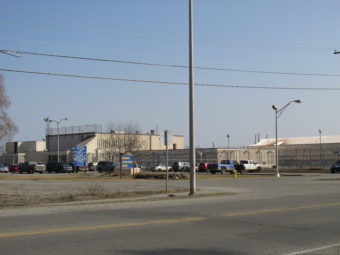
Fairbanks Correctional Center in Fairbanks, Alaska. This is the city's combined jail/prison. (Creative Commons photo by RadioKAOS)
Fairbanks Correctional Center in Fairbanks, Alaska. This is the city’s combined jail/prison. (Creative Commons photo by RadioKAOS)

Recent deaths in Alaska prisons have underscored problems with jailing severely intoxicated individuals, pointing to the need for an alternative approach. Bethel operates a sobering center, where care and treatment are the focus, and a similar facility is being explored as an option in Fairbanks.
State Title 47 requires temporary protective custody of an individual incapacitated by drugs or alcohol in public. It’s motivated by a public safety issue Fairbanks City Mayor John Eberhart says is elevated in Fairbanks.

“Where are we going to take them,” Mayor Eberhart asked. “What do you do if it’s 30 or 40 below zero without a sleep-off center? It’s time to do that; it’s time for a sleep-off center.”

Currently, the city works with the Fairbanks Downtown Association to run a community service patrol, to transport intoxicated individuals home, to jail or to the Fairbanks Memorial Hospital.

Mayor Eberhart says he’s trying to bring together local groups and agencies to talk about opening a sleep-off center in Fairbanks.

“I put out an email to try to organize a meeting of hopefully the hospital, Tanana Chiefs Conference (TCC), the police chief, myself, and others to start talking about a sleep-off center,” said Mayor Eberhart.

The sleep off center approach is successfully employed in other Alaska communities. Kevin Tressler manages a sobering center in Bethel.

“Prior to this program starting, you’d see a lot more intoxicated individuals around town,” Tressler said. “If you had to go to the (emergency room) for any particular reason, the waiting room was packed full it took a really long time to get in to get triaged.”

The 16-bed center provides a place for inebriated individuals, who are triaged by staff, and then allowed to stay for up to 12 hours.

Richard Robb, Director of Residential Services at the Yukon-Kuskokwim Health Corporation (YKHC), says there are several ways to measure the success of the program and the center.

“A lot of it is what we can do to help people,” said Robb. “One of the ways we have really increased in the past year is we’ve measured and we’ve pushed the intervention of SBIRTS. That’s Screening Brief Intervention and Referral to Treatment,”

The program, which Robb refers to as a “harm reduction model,” is a partnership between YKHC, Alaska Mental Health Trust and Bethel Police Department. Robb says after patients sober up, center staff ask them about their drinking, and whether they’d like to be referred to longer term treatment.

“It’s better for everybody and it’s a cost saving measure too,” Robb said. “Because staying a night here is a lot cheaper for the taxpayer than staying the night in the ER.”

The Bethel center is an attempt to avoid what happened to Fairbanks resident Gilbert Joseph last summer. Joseph who was picked up intoxicated and brought to Fairbanks jail died in his cell at Fairbanks Correctional Center. The Title 47 protection case gone wrong is one of several highlighted in a recent Department of Corrections report.

Rhonda Pitka, the first chief of the village of Beaver, where Joseph was a tribal member, wants to work with Tanana Chiefs Conference in Fairbanks to make sure the state is accountable for their actions.

“I feel like that contributed a lot to his death. He would probably still be alive,” said Pitka. “If he wasn’t in prison that night, if wasn’t in the jail that night. If he had gotten medical care he would probably still be alive,”

A local resident has reached out to Mayor Eberhart about a possible sleep off location in South Fairbanks. But Mayor Eberhart says he just in the early stages of trying to find funding for a project to address these issues here in Fairbanks.

“It’s a question of how do you it and who pays for it,” Eberhart said.

Public pushes back against House’s proposed budget cuts

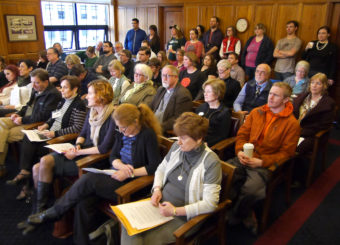
A crowd representing a variety of interests gathered in the House Finance Committee room during public testimony on the state budget, Feb, 29, 2016. (Photo by Skip Gray/360 North)

Alaskans giving public testimony this week on the House’s budget proposal oppose cuts to many areas.

The Republican-led majority released a budget proposal this week that included $145 million more in cuts than Gov. Bill Walker’s budget. It would reduce spending on everything from public libraries to senior benefits.

Roughly 100 people testified Monday and Tuesday on the budget.

The cuts include reduced grants to mental health and addiction treatment programs.

Residents also opposed cuts to prekindergarten, public libraries and the University of Alaska. And they said they want the House to avoid cuts to senior benefits and public broadcasting.

Juneau resident Kara Nelson directs Haven House, a faith-based home for women leaving prison. She opposed cuts to behavioral health grants.

“There are over 120 people today alone that died from an accidental overdose in our nation,” Nelson said. “That is an Alaska Airlines flight that died every single day, and that was in 2015. And so I urge you that we are trying to lessen the beds in our prisons, but we have no supports already to support the well-being of our people.”

Elizabeth Ripley, executive director of the Mat-Su Health Foundation, shared her concerns over behavioral health cuts.

“Cutting behavioral health grants will only reinforce the current system that drives people to seek care in the emergency room,” Ripley said. “A 2013 data analysis shows that Mat-Su Regional Emergency Department had five times the number of visits than our community mental health center. These visits to one hospital cost Alaskans $23 million in 2013, not including doctor, EMS or police costs.”

Kodiak Public Library Director Katie Baxter urged House Finance Committee members to restore funding for the Online With Libraries, or OWL, program. It funds high-speed internet connections and receives federal funds — known as E-Rate — that match state contributions.

“I am here to urge you to restore the governor’s funding of $761,800 to restore the OWL internet connectivity program,” Baxter said. “This program is an intricate system that is cost efficient that involves local and federal funding. By eliminating the OWL program as the house subcommittee has done, now we are leaving federal E-Rate dollars on the table. And I for one really don’t want to do that.”

The House Finance Committee will hear more public testimony Wednesday and Thursday.

House subcommittees cut state operating budget deeper

The Legislature completed the first stage of its annual budget process today. House Finance Subcommittees recommended more than $120 million more in cuts on top of the $100 million that Gov. Bill Walker proposed.

Health and Social Services was the department that received the deepest cuts. They include eliminating $5.18 million in cash assistance to seniors, and $3 million in behavioral health grants.

Rep. David Guttenberg, a Fairbanks Democrat, opposed the cuts. He said reducing treatment of people with addictions will cost the state more in the long run.

“These grants will clearly prevent increases in costs in other places, in the courts, in the Department of Law, in our prisons, in our various higher-end costs,” Guttenberg said. “Dealing with folks that have issues and troubles at the most efficient place to touch them, is something that we need to do.”

Overall recommended cuts to Health and Social Services total $41 million, roughly one-third of all cuts that finance subcommittees recommend.

Rep. Dan Saddler, an Eagle River Republican, compared the difficulties faced by those with addictions to the choices the Legislature faces.

“There are many unfortunate and difficult challenges we face in life and running away from them in a bottle or a needle is not the way to solve them,” Saddler said.

“The way to get through problems is to face the difficult choices and to make difficult choices. And I think that is what we’re doing in this budget, and that’s what we’re doing in this particular allocation. In addition to a heroin crisis in Alaska, we have a fiscal crisis in Alaska. And I think we are making the difficult, but responsible decisions to scale our resources to meet our needs the best way we can.”

Health Commissioner Valerie Davidson during a discussion on Medicaid reform in Senate Finance Feb. 24, 2016. (Photo by Skip Gray/360 North)

Health and Social Services Commissioner Valerie Davidson said she’ll be working to inform legislators about the exact effects of the proposed cuts before the entire Legislature finishes its work on the budget this spring.

“We’ll definitely continue to work with members of the Legislature,” she said. “We realize that cuts have to be made. And our job is to make sure that everybody understands the implications of the cuts that are being made.”

Institute of Social and Economic Research economist Gunnar Knapp said that budget cuts will have broader impacts on Alaska’s economy, along with the direct effect on services.

Institute of Social and Economic Research Director Gunnar Knapp presents possible economic effects of state budget proposals to the Houses Finance Committee, Feb. 25, 2016. (Photo by Skip Gray/360 North)

Knapp told the budget committee on Thursday that for every $100 million  in broad-based cuts to state government, the state will lose 1,260 jobs and $115 million in income.

In comparison, introducing a similar amount in income taxes would impact fewer jobs, but could mean 20 percent more lost income.

Knapp urged legislators to close the state’s $3.5 billion dollar budget shortfall.

 “The smoothest transition is to make a significant start on reducing the deficit this year,” Knapp said. “Not making major progress this year would have a big impact. The rating companies have promised that they would further downgrade our credit ratings and then there would be impacts due to a loss of business confidence and reduced private investment.”

The Legislature will hear public testimony on the budget next week (Feb. 29 to March 3) at locations across the state.


Site notifications
Update notification options
Subscribe to notifications