Sexual Abuse & Domestic Violence

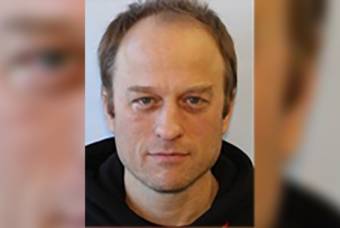
A dozen women have accused former Juneau-area chiropractor Jeffrey Fultz of sexual abuse

The Dimond Courthouse in Juneau on Feb. 27, 2017. (Photo by Jeremy Hsieh/KTOO)
The Dimond Courthouse on Feb. 27, 2017, in Juneau. Former Juneau-area chiropractor Jeffrey Fultz has been indicted three times on felony charges of sexually abusing a dozen of his female patients.  (Photo by Jeremy Hsieh/KTOO)

Content warning: This article includes mentions of sexual assault and abuse that may be uncomfortable for some readers. Resources are available at the bottom of this post.


Five more women have accused former Juneau-area chiropractor Jeffrey “Jeff” Fultz of abusing them under the guise of treating them for medical problems. 

And while several of his accusers — and the state’s prosecutor — have again asked that he be returned to Juneau to post a higher bail and be monitored, a judge decided against it in early July. 

Fultz worked for the Southeast Alaska Regional Health Consortium, or SEARHC, for seven years. He left after a Juneau woman told police in April that he sexually assaulted her. 

Initially, he faced three charges of sexual assault, but when those charges became public, more women came forward. A total of 12 women are accusing him of abuse; he faces 17 charges of felony sexual assault and misdemeanor harassment.   

Currently, Fultz is out on bail. A total of $45,000 in cash has been put up by him or on his behalf, according to case records. The court has ordered him to turn over his passport, avoid contact with SEARHC or any of the women accusing him of assault. He has also been ordered not to provide medical care – regardless of the status of his license. 

But, several of the women who are accusing him of assault and the district attorney want the court to change those conditions. 

The accusations

Each time Fultz has faced new charges, State Assistant District Attorney Jessalyn Gillum asks that the court reconsider its decision to allow him to live out of state, unmonitored. 

“I believe this is our third time addressing bail regarding this case. Each time the circumstances have changed such that the state feels that readdressing the conditions of the defendant’s release is of paramount importance,” Gillum said during an early July arraignment. 

She went on to describe accusations from women who said they were groped during sessions, including one woman who described being treated after-hours. 

“When the entire office was emptied out and most of the office was actually dark. Where she was made to fully undress and the defendant then spent a significant portion of the session massaging her buttocks in a way that did not serve any legitimate chiropractic or massage therapeutic function,” Gillum said.    

She noted the similarities between the details of some of the women’s accounts, saying that multiple women described discovering that Fultz was sexually excited during their sessions with him. 

“All of these women describe being required to undress for these appointments to continue. The defendant never explained why disrobing was necessary. Some of these women have since gone to other treatment providers and now see the distinction and differences in the way they were treated and the way their bodies were handled to fully understand that what was done when seen by this defendant was in fact a violation and an assault rather than legitimate medical treatment,” Gillum said.  

Main Street on July 2, 2013 in Durango, Colorado. Former Juneau chiropractor Jeff Fultz has been accused of assaulting 12 women while working at the Southeast Alaska Regional Health Consortium. He is currently out on bail and living in Durango. (Photo courtesy Daveynin/Flickr)
Main Street on July 2, 2013, in Durango, Colorado. Former Juneau chiropractor Jeff Fultz has been accused of assaulting 12 women while working at the Southeast Alaska Regional Health Consortium. He is currently out on bail and his lawyer said he recently moved to Durango. (Photo courtesy Daveynin/Flickr)

‘I think he should be here’

Gillum said the state is concerned that Fultz is still a threat to the communities he lives in and that the court should weigh the strength of the state’s case against him heavily when considering the conditions of his release. 

“The concern that the state has is that the defendant has shown himself to be an individual that goes from Native community to Native community and seems to have a history of allegations such as this arise at multiple placements,” she said.

According to Indian Health Service records, before Fultz practiced in Juneau he primarily treated citizens of the Navajo Nation working in Arizona and New Mexico for at least 14 years including in: 

The court also heard similar arguments from a handful of the predominantly Alaska Native women who have accused Fultz of sexual misconduct. The court did not identify the women or ask them to identify themselves; it is KTOO policy not to name alleged victims of sexual crimes. 

The Four Corners Regional Health Center is one of a handful of places former Juneau chiropractor Jeffrey Fultz has worked for the Indian Health Service. Fultz has been accused of assaulting 12 women during his time practicing in Juneau. (Photo courtesy Indian Health Service)

A woman referred to as C.E.L. told the court that it is incredibly difficult for her and other victims to come forward and speak. But she characterized Fultz as a “methodical predator” and said she doesn’t want other women to be victimized by him. 

She asked that the court listen to what Fultz’s accusers say they want of him, instead of deciding what is best for them. 

“The truth is that we will eventually have to face Mr. Fultz here in the court,” she said. “But I can honestly say that the discomfort of possibly running into him at the store or anywhere here in Juneau is nothing compared to the thought of him running free in another state without the supervision and monitoring that needs to be in place.”

Another woman cried as she told the court that she met Fultz after seeking treatment from SEARHC during her journey toward sobriety. 

“I could have easily just went down that road again,” she said. “But, as of now I have two years of sobriety and I can’t — and I refuse to let him be any purpose for me to self-destruct anymore.”

She, too, said Fultz should have to be in-person in court in Juneau. 

“You know I feel like I’m coming to court and putting all of this energy into these meetings and he’s able to just call on the phone and just be wherever he’s at and just let the court know, ok well I’m moving to this place now,” she said. “You know, this incident happened in Juneau and I think under the circumstances … I think he should be here and I think he should be monitored also.” 

Fultz is not supposed to be practicing while the case is working its way through the court system. And he can’t legally practice in Alaska. In April, the state’s Director of the Division of Corporations, Business and Professional Licensing asked Alaska’s Board of Chiropractic Examiners to suspend his license to practice, arguing that he posed a “clear and immediate danger to the public health and safety.” Fultz then surrendered his Alaska license on May 17. 

But Gillum said there is no way for the state to enforce the provision that he does not practice when he is living, unmonitored, outside of Alaska. 

Defense attorney Natasha Norris makes her closing arguments before the jury on Monday, Oct. 7, 2019 during the Laron Graham double homicide trial in Juneau Superior Court.
Defense attorney Natasha Norris makes her closing arguments before a jury on Oct. 7, 2019, Juneau Superior Court. Norris is representing former Juneau chiropractor Jeffrey Fultz who has been accused of sexually assault a dozen of his former patients and a colleague at the Southeast Alaska Regional Health Consortium. (Photo by Matt Miller/KTOO)


Pushing back

Neither Fultz nor his attorney, Natasha Norris, have responded to repeated requests for comment. But in court, Norris pushed back against the state’s request that Fultz’s bail be raised or that he be required to move back to Juneau. 

She said it is important to remember that the charges are just accusations, that Fultz is presumed innocent and pointed out that he has cooperated fully with the state. 

“As compelling or heartfelt as some of these statements are, these are allegations at this point,” she said. 

She argued that he isn’t a flight risk because his passport is sitting in her office. And she said he has put up enough money for bail. 

“My client has put up $40,000 of cash,” she said. “He is about tapped out financially. That is a lot of money to put down on the line. My client is not going to run, my client is facing these charges head-on.”

Norris told the court that Fultz is moving to Durango, Colorado to be closer to his daughter. She said he bought a house and gave an address that, according to Zillow,  sold for more than $900,000 in June. 

Juneau Superior Court Judge Daniel Schally addresses those who attended his installation ceremony March 29, 2019 at the Dimond Courthouse. (Photo by Matt Miller/KTOO)
Juneau Superior Court Judge Daniel Schally on March 29, 2019 at the Dimond Courthouse in Juneau. (Photo by Matt Miller/KTOO)


A presumption of innocence

Alaska Superior Court Judge Daniel Schally ultimately sided with Norris, He said he understands how challenging it is for the women to come forward and share their experiences publicly.

“Many such crimes are never reported, period. Whether to authorities, family members, the court… it is incredibly difficult to discuss those matters, and at least a couple of folks who spoke quite eloquently here in court today have spoken in court previously as well — and obviously have testified at a grand jury proceeding, and that takes a lot of courage, and I acknowledge that,” he said. 

Though Schally said the nature of the charges Fultz is facing indicates some level of flight risk, he also noted that Fultz doesn’t have a criminal history. He joined Norris in saying the presumption of Fultz’s innocence applies. 

And, as he has said before, Schally said he believes Fultz shouldn’t be in Juneau. 

“While I understand it makes some people unhappy, I think it’s actually a very good thing on multiple levels,” Schally said. “Usually a geographical distance between the alleged victims of crime and alleged perpetrators of crime is a good thing, and given the number of folks involved in this matter, having Mr. Fultz elsewhere, I think is the best course.”

The Southeast Alaska Regional Health Consortium’s Juneau campus. Former SEARHC chiropractor Jeffrey Fultz has been accused of sexually assaulting a dozen women while working at the facility.  (Photo by Lisa Phu/KTOO)

SEARHC responds

Fultz worked for SEARHC, but the consortium says he was a federal employee assigned to the facility by the U.S. Public Health Service Commission Corps — a type of uniformed health worker that follows quasi-military rules. 

A spokesperson from SEARHC says the organization removed Fultz from the workplace and informed the public health service about the situation in 2020 after getting patient complaints  

“This was before criminal charges were filed,” the spokesperson wrote. 

He is the latest in a string of Indian Health Service medical providers who have been accused of abusing patients. It’s something the U.S. Department of Health & Human Services — the Indian Health Service’s parent agency — acknowledged late last year continues to be a challenge for the service to address. 

As the case against him unfolds, a SEARHC spokesperson said the health consortium is taking steps to address the conditions that led up to the complaints against Fultz. In an email, the spokesperson wrote that consortium leadership has met to review policies with managers. 

“Additional trainings were mandated for all employees to address sexual assault, harassment and offense behavior,” she wrote. 

In early 2021, the Indian Health Services established a hotline for callers to report suspected child abuse or sexual abuse by calling 1-855-SAFE-IHS (855-723-3447) or submitting a complaint online IHS.gov website. The hotline may be used to report any type of suspected child abuse within the IHS, or any type of sexual abuse regardless of the age of the victim. The person reporting by phone or online may remain anonymous.

Locally, people can call AWARE in Juneau at 907-586-1090. 

Fultz’s next hearing is Sept. 8. 

Former Bethel elementary school principal gets 25-year state sentence

The State of Alaska courthouse in Bethel, Alaska. (Dean Swope/KYUK)

A state judge sentenced former Bethel elementary school principal Christopher Carmichael on July 21 to a 25-year sentence with 10 years suspended for sexual abuse of a minor. The judge imposed what he called a severe sentence because the former principal had abused the trust he cultivated in his victims and the community.

On July 21, 57-year-old Christopher Carmichael walked into the Bethel courtroom in an orange jumpsuit, face mask and handcuffs. The courtroom was relatively empty. No members of the public outside of KYUK were present.

Previously, the former teacher and principal had been a trusted, charismatic figure in Bethel. That was before he was arrested in 2019 and pleaded guilty to a state charge of sexual assault of a minor in the second degree.

Carmichael told the court that he accepted the plea agreement of 25 years so that the girls he abused, former students of his, wouldn’t have to testify in court and relive their traumas.

“I’m trying to own what happened, and accept responsibility for it, and serve the time that’s necessary to begin a healing process because many people have been affected by what’s happened here,” Carmichael said.

Carmichael’s attorney asked the judge to temper the severity of the sentence based on his client’s history. Carmichael told the judge about being diagnosed with PTSD from abuses he suffered as a child and from his time serving in the U.S. Marine Corps. He said that he never sought psychiatric help for either experience.

“And it’s not an excuse. I want to make that clear to the court,” Carmichael said. “If there’s any good that can come out of this situation, if you have been traumatized, seek help so that you don’t wind up in the situation I’m in now.”

Judge Terrence Haas said that the 25-year sentence the state and defendant had agreed upon was harsher than what most defendants would receive for similar crimes. However, he said that the sentence was warranted because of Carmichael’s abuse of power and trust that he had cultivated in his victims and the community.

“Your behavior here suggested an extraordinary desire to use your authority to insinuate yourself into the lives of these children, to use that authority to hide your behavior, to use that authority, which was given to you in order to protect children explicitly and specifically, to harm them,” Haas said.

Haas also said that he took into account the fact that Carmichael committed his crimes in a region with a tortured history of sexual abuse crimes by people in positions of power.

“The hope is other individuals who might come here, or who might be here, who might imagine that they could act in this way or take advantage of our community or our most vulnerable citizens in this way, that they would know and understand that the consequences would be as severe as the law permits,” Haas said.

Haas handed down a 25-year sentence with 10 years suspended. He said that would likely translate to 10 years in prison with good behavior. Carmichael’s state sentence will run concurrently with the 15-year federal sentence he received a week ago.

Carmichael will have to register as a sex offender after his release, which will likely be when he is at least 70 years old. As part of his condition of release, he will not be allowed to use any internet-capable electronic device or be in contact with anybody under the age of 18.

Attention now turns to the school district that continued to employ Carmichael after multiple reports of the former principal’s inappropriate behavior with students. Attorneys for four girls have filed lawsuits against the Lower Kuskokwim School District, claiming that LKSD failed to protect the girls from sexual abuse at Carmichael’s hands. Jury trials for those lawsuits are scheduled to begin this fall.

Seven women accuse former SEARHC chiropractor of sexual abuse

The Juneau campus of SEARHC, pictured here on Dec. 19, 2018, is located off Hospital Drive.
The Juneau campus of SEARHC, pictured here on Dec. 19, 2018, is located off Hospital Drive.  Several women have accused a chiropractor who worked for the regional health consortium of sexual abuse. (Jeremy Hsieh/KTOO)

Seven women have accused a former Juneau-area chiropractor of sexually abusing them while he was working at the Southeast Alaska Regional Health Consortium, or SEARHC.

Jeffrey Fultz was working for SEARHC until 2020. Last April, Juneau Police heard from a woman who said he sexually assaulted her while she was receiving medical care from him. 

Initially, Fultz — who goes by Jeff —  faced three charges of sexual assault in the second degree and one harassment charge. 

But Assistant District Attorney Jessalyn Gillum said that after those charges became public three months ago, four more women stepped forward saying they were also abused by Fultz. 

“There are a couple of things that keep coming up. The first is the fact that they were all made to undress regardless of the type of treatment they were expecting to receive,” Gillum said. 

She said there are other common threads between the women’s stories as well. Gillum said several of the women described sexual contact that was disguised as normal medical care — making it difficult to distinguish between the two. 

“It was contact that made them uncomfortable or that raised concerns as far as whether it was appropriate. And then, either through the defendant giving some explanation as to the reason for the contact or the individual patient just sort of assuming they were being overly sensitive or just feeling like they were overreacting in some way, they convinced themselves that it was normal,” Gillum said. 

Six of the women are Alaska Native. SEARHC is a non-profit, Native-run health consortium. The seventh accuser is a former colleague of Fultz’s, according to court documents. 

Maegan Bosak, a spokesperson for the consortium, wrote in an email that they are aware that Fultz has been charged with sexual assault and harassment. Bosak also wrote that Fultz was a federal employee who no longer has any affiliation with the group. 

“SEARHC terminated Fultz’ assignment following patient complaints about inappropriate conduct,” Bosak wrote. 

Fultz was given the opportunity to resign from SEARHC rather than being fired in light of the criminal investigation, according to court documents Gillum submitted on Friday. 

SEARHC Senior Vice President and Chief Administrative Officer Matthew Ione, in a prepared statement, said that the organization — which offers medical, dental, wellness and social services to 27 communities in Southeast Alaska — doesn’t tolerate assault, harassment or offensive behavior. 

“Due to the ongoing criminal prosecution, we cannot say anything more about this specific matter. But we want to assure our patients that they have the right to safe health care at SEARHC,” Ione said. “We will do everything in our power to assure that this is the case. There are no exceptions.” 

Altogether, Fultz is accused of eight felony counts of sexual assault and one count of harassment from alleged incidents that happened between 2014 and 2020. 

He was arraigned on the new charges Monday afternoon at the Juneau courthouse, where he appeared by video. 

Fultz is out on a $25,000 bail and is allowed to live out of state in New Mexico despite testimony last month from two of his alleged victims who asked that he be required to stay in town while the case moves through the court system. 

Gillum asked that the court reconsider Fultz’s bail, given that he faces new charges. She asked for bail to be increased by $25,000 cash and for Fultz to be arrested, returned to Juneau and held at Lemon Creek Correctional Facility. 

She said he’s a flight risk and a risk to community members because there is no way for the state to monitor his behavior to ensure that he’s not practicing massage therapy, physical therapy or chiropractic care and working in the conditions that led to the current allegations of abuse. 

Two of Fultz’s accusers also testified, including a woman the courts are identifying as C.E.L.  

“I have come to know Mr. Fultz to be highly intelligent and highly manipulative,” she said. “The risk of further violence to us as victims is low, but I believe the risk to the community that he lives in as well as to our community is high.” 

She asked that he be returned to Juneau and that his bail be set at a point that he cannot post. She asked that the court remove Fultz’s ability to practice any type of medical care and that he be monitored if he is released on bail. 

Both Gillum and C.E.L. reiterated that the majority of Fultz’s accusers are Alaska Native. C.E.L. told the court that, in her view, the alleged crimes should be considered racial abuse.

Another woman, who did not identify herself but was identified as an accuser by Gillum, also asked that Fultz be returned to Juneau and put in jail. 

“It was really hard for me to understand how Mr. Fultz is out and about and free to do what he is doing right now,” she said. 

She said that every day is a struggle and her entire family has felt an impact from her contact with Fultz. 

“I have to find a medical facility that I’m comfortable with now because of him,” she said. “I just think the conditions on him need to be more serious because these crimes are very serious.”

Fultz’s attorney, Natasha Norris, said that he was willing to pay a higher bail and has been cooperating with the court throughout this process. 

“We understand that the stakes have risen and, in meeting that, he is willing to put down another $15,000 cash,” Norris said. “That’s pretty much going to financially tap him out.”

Judge Daniel Schally agreed with Norris, saying that Fultz has been cooperating with the court. 

“Past behavior is also an indicator of future behavior, and in that regard, the past behavior is good. Now I understand also on the other side of that coin given the very serious and increased number of allegations here the state could as well argue that that’s an indicator of future behavior as well — and point taken,” Schally said. 

Schally said he did not agree that returning Fultz to Juneau is a good idea. 

“I frankly like the idea of Mr. Fultz not being anywhere near these folks in Juneau,” he said. “He’s not here, he’s not going to be here under the court’s current orders. That, in my view, provides a significant degree of assurance that future behavior of these sorts that are alleged here are not possible in this community.” 

Schally said he understood that people who are accusing Fultz of abuse feel strongly that he should be in jail, but that desire was not sufficient for the court to keep him incarcerated. 

“That’s simply not how this works,” he said. “And that is not how it works pre-trial, when — at this point, although there is significant evidence to support these allegations — there is a presumption of innocence that applies.” 

Ultimately Schally ordered Fultz not to practice medicine of any kind anywhere, required that he pay $15,000 more in cash and said he can’t have contact with any of his accusers. 

Fultz’s next hearing is September 8. 

The Juneau Police Department is asking that anyone who knows about this case or who may have similar allegations contact its Criminal Investigation Unit or call AWARE — the shelter and support institution for survivors of domestic and sexual violence — at 907-586-6623.

This story has been updated with details and comments from Monday’s arraignment hearing

Correction: A previous version of this story referred to Jeffrey Fultz as a doctor. He was a chiropractor.  

‘We deserve to feel safe:’ Unangax̂ activists speak up about missing, murdered Indigenous people

“We have the responsibility now, to take care of our kin and our women, our sisters,” said Haliehana Stepetin, an Unangax̂ dancer and scholar from Akutan. (courtesy Mariza Tovar)

Indigenous women in the United States are murdered 10 times more often than the national average, and nearly half of all Alaska Native and Native American women have experienced intimate partner violence in their lifetime, according to the Department of Justice.

Since 2017, May 5 has been recognized as National Day of Awareness for Missing and Murdered Indigenous Women, Girls and Two-spirit People. The day is often referred to as MMIWG2S or MMIW.

Indigenous activists leading the movement are speaking up about the issue, saying this day of awareness is not enough, and it’s time for action.

Taytum Robinson is one of the people working to shed light on the MMIWG2S movement. She uses her creative work as an artist to help advocate for those who have been murdered or gone missing. She said she believes that MMIWG2S is a transnational crisis.

“I wouldn’t describe it as a pandemic or epidemic because, in my opinion, it’s a crisis that is directly linked to genocide,” Robinson said. “It’s a very serious topic. And unfortunately, Indigenous peoples don’t have the support from law enforcement that I feel they really deserve.”

In 2018, a survey by the Seattle-based Urban Indian Health Institute (UIHI) reported  almost 6,000 Alaska Native and Native American women and girls were missing from 71 urban cities. Of these missing women, less than 120 were registered in the Department of Justice database.

According to Robinson, missing and murdered Indigenous women, girls, and two-spirit people fall under the radar far too often.

“I think it’s really important to keep spreading awareness and to hold each other accountable, not only for women to speak up and speak on this, but also for the men as well,” Shaishnikoff said. (Kanesia McGlashan-Price/KUCB)

“One time is too many to see a post saying ‘this person is missing [in] Fairbanks, Anchorage, etc.; height, weight, details about what they were last wearing, who they were last with,'” Robinson said. “When you see that on a post on Instagram or Twitter, any social media, it’s like that sinking feeling of , ‘god, I really hope that they make it home. And I hope that the police take it seriously.'”

Social media has become a large platform for sharing information about MMIWG2S. Posts are shared to raise awareness, but have also become a form of searching for missing people. By creating a public post about a missing person, people are able to reshare the content, which helps spread information quickly. The ultimate goal is to help bring a missing person home or find a lead to their whereabouts, but that doesn’t always happen.

“It’s a sobering realization, especially as an Indigenous person and knowing Indigenous people and having tight-knit communities and friends and family, that if myself or any one of them were to go missing, that there’s a possibility that the report and support that we would need from law enforcement wouldn’t be as big of an impact as you would regularly see for [a non-Indigenous person] who was missing or murdered,” Robinson said.

According to Robinson, harmful stereotypes about Alaska Natives and Native Americans contribute to the lack of response from law enforcement.

“We deserve to feel safe,” Robinson said. “We deserve to feel valid, regardless of our background, habits — whatever it might be — our story, our upbringing, that we deserve the same treatment. We really do because there is a drastic inequality that I feel like will only be addressed if we keep being loud about it.”

While there may be more effective ways to take action in the future, Robinson said she believes that having a vocal and aware community is the most reliable way to bring home missing persons.

Robinson recently graduated with her Bachelor of Science in Biology from University of Hawaii Manoa and is the artist behind Qawax̂ Creations, a seal intestine jewelry line. She uses her social media platform to raise awareness about various social justice issues, including MMIWG2S.

As part of raising awareness, Shayla Shaishnikoff, climate resilience coordinator for the Qawalangin Tribe of Unalaska, said attention must also be brought to those who might be causing these crimes. And according to Shaishnikoff, there is a direct connection between resource extraction and violence against Native women.

“MMIW is an epidemic that we have in our country, as well as in other countries, as a result of the presence of extractive industry, largely due to man camps and things like that,” Shaishnikoff said. “And that’s only one form of violence that we’re seeing from extractive industries. There’s a lot more that come with that, but missing and murdered Indigenous women is definitely a consequence.”

Man camps, or work camps, are temporary housing communities set up for laborers hired by extractive industries. In the case of oil, pipelines often cut through or around reservations and other marginalized communities.

Kaye Gumera paints an original design to honor MMIWG2S at the Qawalangin Tribe office. (Kanesia McGlashan-Price/KUCB)

While migrating across Native land, the transient workers in these camps may also be committing violent crimes, Shaishnikoff said. And for reservations already underserved by law enforcement, responses to missing persons cases are low.

With little action being done to protect Indigenous women, girls, and two-spirit people, Indigenous groups have been the stewards bringing this crisis to the light. According to Shaishnikoff, while it is important for Indigenous people to do that work, it’s also unfortunate that those communities have to bear the weight of providing support.

“A lot of the people committing these crimes are slipping through jurisdictional cracks,” Shaishnikoff said. “And so it’s left to us to stand up and say something about it and make sure that these voices are heard because Indigenous women are oftentimes sexually assaulted and murdered at rates that are like 10 times higher than any other ethnicity.”

According to Shaishnikoff, the responsibility is a community-wide effort.

“I think it’s really important to keep spreading awareness and to hold each other accountable, not only for women to speak up and speak on this, but also for the men as well,” she said.

Last year, the Qawalangin tribe had a fundraising event where they encouraged people to wear red and post it on social media using the hashtag #nomorestolensisters.

For every person that shared a picture, the tribe donated to MMIWG2S. This year, in partnership with other local organizations, the tribe hosted a socially distanced craft night to honor those lost and murdered and to spread awareness.

Shaishnikoff has helped plan MMIWG2S events at the tribe for the last two years and is a vocal activist in the cause. She is currently finishing her second Bachelor of Science in Environmental Science, attending classes at Western Washington University remotely. Last summer, she also completed her first traditional iqyax̂, or Unangax̂ skin-on-frame sea kayak build. She hopes to continue living in the Aleutian region and being a passionate advocate for her people.

Haliehana Stepetin is an artist, scholar and activist from Akutan. As an Unangax̂ dancer and PhD candidate at University of California Davis, she uses her performance and knowledge as a form of activism for the MMIWG2S movement.

According to Stepetin, safety rests in the hands of community, and it’s in part their responsibility to take action to protect women, girls and two-spirit people alike. But she said that responsibility requires more than just recognizing the problem.

“Awareness is just the first thing,” Stepetin said. “And I don’t even think awareness is what we need to be focusing on. We need to be focusing on the safety of missing and murdered Indigenous women — of living Indigenous women so that they don’t become missing or murdered. And that’s something that’s always in my head — how do I protect my kin from becoming missing or murdered?”

For Stepetin, the question of how to help is a call to action.

“We have the responsibility now, to take care of our kin and our women, our sisters,” Stepetin said. “It’s our responsibility to ensure their safety. And so safety to me is community-based. It’s community-created, and it’s community-constituted. It doesn’t rest outside of our communities. It’s our own responsibility.”

One of the ways that Stepetin creates space for dialogue is through dance.

In 2018, Stepetin performed with Indigenized Productions, an Indigenous production company based in Seattle, Washington. Stepetin’s performance was dedicated to MMIWG2S, but also to all of the Unangax̂ that were forcibly relocated during World War II.

After the Japanese invasion of the Aleutian Chain, many villagers from the region were forced to relocate to Southeast Alaska. Poor living conditions and a lack of medical care led to the death of one in 10 people, she said. Many were buried there and never made it home, similar to the Indigenous women, girls and two-spirit people that are still missing today.

Stepetin’s performance materializes the resilience of those Unangax̂ who never returned home.

“The performance is called Slaĝux̂ Chiĝanax̂ Alakax̂, which means, ‘the wind is not a river,'” Stepetin said. “And this was a common phrase that they said in the World War II internment, as a way to remind us that nothing is permanent, like the wind.”

Some of the inspiration for her performance was influenced by traditional hunting stories told by her late father, Thomas Stepetin.

“My dad said we would use the soot of the fire and put it on ourselves to cleanse and before hunting to hide your scent,” Stepetin said. “And I was like, ‘I need a fire. And I need like black paint. I’m going to paint myself, smudge myself, as a performance.’ But I was also like, ‘I think I need red paint because I want to bring in the MMIWG movement and bring attention to the fact that a lot of our people never came home after that.'”

“We deserve to feel safe,” Robinson said. “We deserve to feel valid.” (Kanesia McGlashan-Price/KUCB)

Stepetin said WWII was a significant marker in history that changed the way culture was embraced by Unangax̂ people.

“It affected our dance, the transmission of our dance, and our language and our spirituality,” she said. “It affected a lot of these things — it interrupted them. I’m not going to say that we lost anything because I don’t like the rhetoric of loss. I don’t like saying that and allowing outside influences to have that sort of impact on us. We’re stronger than that.”

She said those outside influences shouldn’t determine what Indigenous communities get to lose and keep.

“So I don’t ever say that we lost anything,” Stepetin said. “It went to sleep. And it went to sleep for good reason, we were mourning.”

According to Stepetin, that lack of permanence means that cultural practices can be reawakened. For example, when she received traditional tattoo markings from Unangax̂ artist Dustin Newman, that was a chance to recover a sleeping tradition. And with each transmission of ink, stories old and new were being weaved.

“We reawoke a tradition of, [about] 150 years that was [practiced] before the WWII internment,” Stepetin said. “Because in Russian Orthodoxy, we’re not allowed to tattoo. So it had been stopped for a long time, but these things are reawakening now.”

Making jewelry, building traditional iqyan and dance are just some of the ways Unangax̂ are leading the revitalizing movement in the region. Robinson said, with a growing sense of community among Indigenous people, voices are growing louder — and these voices want protection.

As it is said in Unangam tunuu, tumaniin ayagan agliisax̂tan — protect our women.

Some accuse Instagram of censorship after posts for Missing, Murdered, Indigenous Persons Awareness Day disappear

Women carry red dresses to raise awareness for Missing and Murdered Indigenous People during the Women's March in 2019 in Juneau, Alaska. (Photo courtesy Lyndsey Brollini/KTOO)
Women carry red dresses to raise awareness for Missing and Murdered Indigenous People during the Women’s March in 2019 in Juneau. (Lyndsey Brollini/KTOO)

The morning after Missing and Murdered Indigenous Persons Awareness Day, Iñupiaq advocate Jacquii Lambert noticed that half of her stories she’d shared on Instagram about that day had disappeared.

Lambert immediately tweeted about it because it was so odd.

“I thought it was just me, I thought it was some kind of glitch. But then I went to go look at other people I know who have also shared onto their stories, the same thing was happening for them,” Lambert said.

On Wednesday, people all across the country shared stories and pictures and memorialized the thousands of Indigenous people who have disappeared.  Now, many Instagram users reported that content they shared to their stories disappeared too. 

One account whose posts were deleted from Instagram stories was Jordan Daniel’s account Rising Hearts.

Daniel, who refers to the movement as Missing and Murdered Indigenous Relations, is Lakota and a member of the Lower Brule Sioux Tribe.

When she posted on her Instagram that her stories were deleted, hundreds of people commented with similar experiences.


View this post on Instagram


A post shared by Rising Hearts ? (@rising_hearts)

“It feels like a never-ending hamster wheel. When you’re trying so hard and you know the community is trying so hard, and to have this one day be taken away was just heartbreaking,” Daniel said.

This is not the first time that the company has been accused of targeting Indigenous voices. Earlier this year, Indigenous beading accounts were being deactivated without explanation.

Daniel said that social media is one of the greatest tools for Indigenous advocacy — like in the case of the Standing Rock protests.

“But it’s also a double-edged sword because we are advocating for justice so we have to talk about the injustice,” Daniel said. “We have to talk about all of the problems that have created these systems of oppression. We have to talk about colonization. We have to talk about white supremacy and racism. And so that’s when censorship comes in. That’s where erasure comes in.”

To Lambert, there was a certain irony to these specific stories disappearing.

“It just felt weird, that we’re talking about Missing and Murdered Indigenous Women and then all of our content to raise awareness goes missing,” Lambert said.

Many Indigenous Instagram users tagged Instagram’s social media accounts to call them out on taking down MMIP content. Later that day, Instagram tweeted a response saying that there was a widespread issue with Instagram stories that is not related to any particular topic.

In other words, no one was being targeted.

But Daniel thinks the company’s response does not explain why so many stories specifically about Missing and Murdered Indigenous people were taken down.

“I just find that really odd, especially when it’s a lot of the content that only addressed [Missing and Murdered Indigenous people] stuff,” Daniel said. “That even allies who are not Indigenous, all of their posts that had nothing to do with this advocacy remained, but anything that had to do with advocacy and awareness for [Missing and Murdered Indigenous people] was removed.”

Regardless of whether Instagram’s removal of the posts was intentional or not, the effects of the removal of stories and content about missing and murdered Indigenous people remained.

Daniel described being put into emergency-response mode, trying to re-do all the work that was done the day before and re-share everything that was taken down.

All of this confusion was happening just as another Alaska Native woman had been found dead. Her ex-boyfriend has been arrested. 

Jerilyn Nicholson was discovered dead at Eklutna Lake near Anchorage about a week ago.

“It’s still fresh, especially for Alaskans, you know,” Lambert said. “We are facing a tragedy right now.”

On Missing and Murdered Indigenous Persons Awareness Day, Lambert felt a sense of solidarity and healing with the Indigenous community who experienced this loss. But the next day when all the stories she shared were gone, Lambert realized “they do see us and they do know us, but they’re silencing us.”

Late Friday, Instagram tweeted that they had identified and fixed the problem. The company’s communication account lays out that several communities were affected and that it wasn’t just Indigenous content creators who were having problems.

And they apologized, saying: “We are so sorry this happened. Especially to those in Colombia, East Jerusalem and Indigenous communities who felt this was an intentional suppression of their voices and stories.”

House lawmaker introduces bill changing definition of consent to better prosecute rape, sexual assault in Alaska

Rep. Geran Tarr, D-Anchorage, speaks during a House floor session, March 11, 2019. (Photo by Skip Gray/KTOO)

A bill has been introduced in the Alaska legislature that would change Alaska laws concerning sex abuse and rape. House Bill 5, introduced by Rep. Geran Tarr of Anchorage, would change the definition of consent to make it easier to convict people accused of rape. Statistics indicate that in 2015, more than 90% of the reported felony-level sex offenses did not result in a conviction.

“Our current statute is broken,” said Tarr. “It’s outdated and incomplete. As a result, it means that we are not prosecuting sexual assault effectively in Alaska. It’s why only 1 in 10 sexual assaults in Alaska is prosecuted.”

Tarr’s bill would change the legal definition of consent in the law so that rape can be more effectively prosecuted, even when it does not include violence. It also adds a new provision called “rape by fraud.”

“Situations like, an individual lives with their boyfriend, and the brother gets in bed with the girlfriend, pretending to be the boyfriend. So we added a specific ‘rape by fraud’ provision,” Tarr said.

Time is quickly running out in the 2021 legislative session. House Bill 5 will likely not make it to the House floor this year, but will remain for consideration next year. Yukon-Kuskokwim Delta Rep. Tiffany Zulkosky is a co-sponsor of the bill.

Site notifications
Update notification options
Subscribe to notifications