History

Walter Harper Day commemorates first person to summit Denali

From Hudson Stuck’s “The Ascent of Denali” (Project Gutenberg)

Today is Walter Harper Day — honoring the mountaineer and guide who was the first person to climb to Denali’s highest summit. Alaskans are celebrating the day with work on a new statue of Harper and a special episode of the “Molly of Denali” TV show.

This is the second annual Walter Harper Day – it was passed into legislation in April 2020.

“Walter Harper left an indelible mark on Alaska history when, at the young age of 20, became the first person to stand atop the summit of Denali on June 7, 1913,” said Sen. Click Bishop who sponsored the bill.
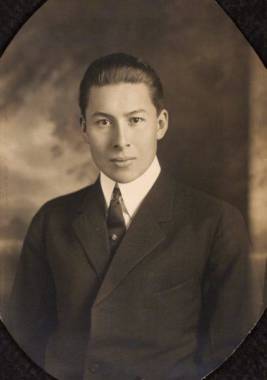
Formal Portrait, Walter Harper, 1916.
(courtesy UAF Rasmuson Library)

Alaska historian Mary Ehrlander stumbled on Harper’s story when researching Hudson Stuck, the English immigrant, cowboy and Episcopal archdeacon of the Yukon River. But it was Harper’s story, she thought, that needed telling.

​“I thought, this is a spectacular story! We will need to know about him. Every school kid should learn about Walter Harper,” she said.

Ehrlander wrote “Walter Harper, Alaska Native Son,” published in 2017. Ehrlander was the director of Arctic and Northern Studies at the University of Alaska Fairbanks.

In 1913, expedition co-leaders Hudson Stuck and Harry Karstens put together a team of Robert Tatum, Walter Harper — who was Stuck’s Athabascan guide — and two 15-year-olds, John Fredson and Esaias George. It took about three months to get from Fairbanks to the top. Fredson and George maintained the base camp for four weeks while the expedition team summited Denali. It was Stuck who thought that an Athabascan should be the first to step on to the taller, southern summit.

A group of Alaskans formed the Walter Harper Project at the time of the centennial of the first summiting, in 2013. They have a website, WalterHaper.org and are taking donations there to help erect a statue. Earlier this spring, Doyon Ltd. put $25,000 in the pot. Spokesperson Sarah Obed says that’s because Native history matters.

“We really hope to educate the public about Walter Harper and his accomplishments and his life, we believe his leadership is something to emulate,” she said.
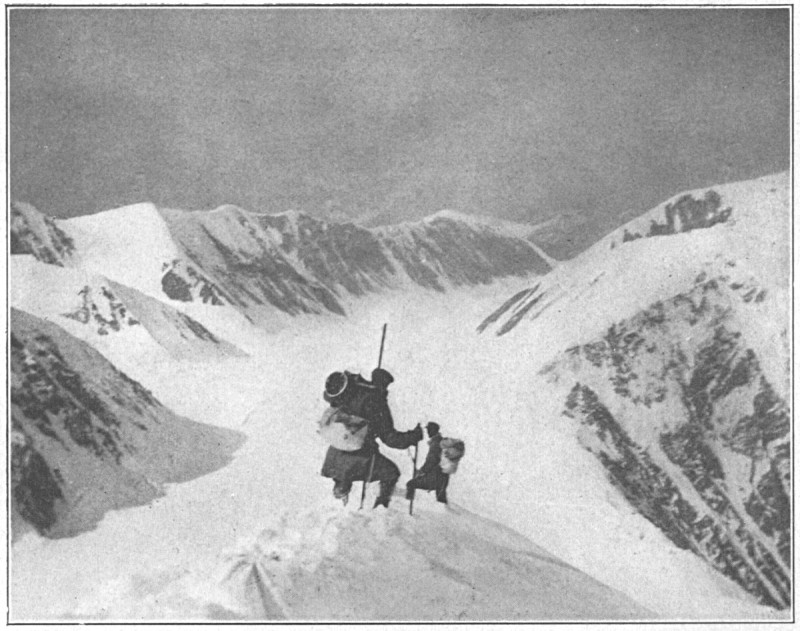
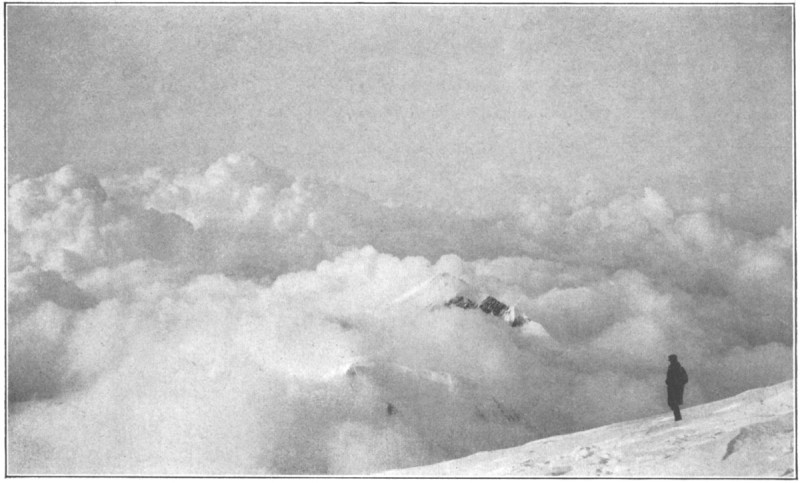
Beginning the descent of the ridge, looking down 4,000 feet upon the Muldrow Glacier. From Hudson Stuck’s “The Ascent of Denali” (Project Gutenberg)

Obed says Doyon has also offered a home for the statue, near the Chena River.

“It’s a prominent landmark here in Fairbanks, and homeland of the Athabascan people, and it will be a really great place for community members and visitors to learn about this part of our history.”

The committee has selected Gary Lee Price to design the Walter Harper statue, which is scheduled for unveiling a year from now on Walter Harper Day, 2022. Fairbankans may be familiar with Price’s work, as he did the sculpture of children in front of Denali School on Lathrop Street in Fairbanks.

Historian Ehlander says one of the models for that sculpture was Mike Harper, Walter’s grand-nephew.

“We loved the movement in that sculpture, and just how lifelike the children were. And we wanted to convey that energy and enthusiasm and love of life and love of nature that Walter had,” she said.

There’s also a special one-hour episode of the children’s animated series “Molly of Denali” marking the day, airing today on PBS Kids. That’s at 1 p.m. and 6 p.m. on KUAC-TV.​

Ehrlander says it is not just the summiting of Denali that makes Harper remarkable, but his complement of subsistence skills and character traits.

“Here’s a guy who is universally admirable, whom every Alaskan could feel proud of,” she said.

Harper was only 25 when he and his wife, Frances Wells, died on the steamer Princess Sophia when it ran aground in Lynn Canal on Oct. 25, 1918. The couple were on their way to the Lower 48 so Harper could attend medical school.
Sitka vigil a chance to mourn, reflect on history of residential schools

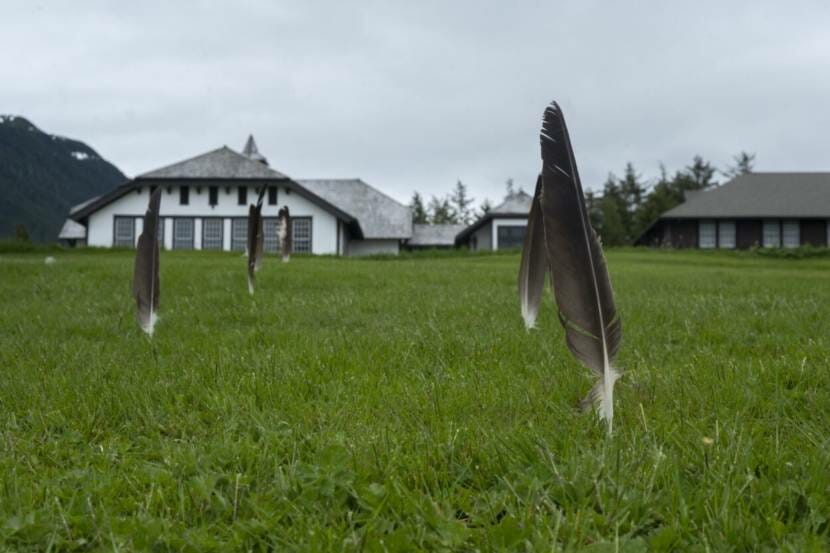
Last week, 215 feathers were placed on the lawn of Sitka’s former residential school, Sheldon Jackson, in remembrance of the 215 children whose remains were discovered at a former residential school in Canada, drawing (KCAW/Tash Kimmell)

Following the discovery late last month of the remains of 215 children in a mass burial site at the former Kamloops Indian Residential School in British Columbia, an anonymous artist installed 215 eagle and raven feathers on the lawn of Sitka’s own former residential school, Sheldon Jackson.

Steve Johnson noticed the installation shortly before it was taken down.

“I drove by one day, and I saw a bunch of feathers there, and I didn’t have to count them or think. Immediately I knew what it was and why,” he said. “It was a very powerful statement to me.”

Johnson was born and raised in Sitka, and his family has a deep connection to Sheldon Jackson.

“My father’s name was Steve Johnson, who was a teacher at Sheldon Jackson College and a painter,” he said. “And my grandfather was A.P. Johnson, Andrew P. Johnson, who was the first valedictorian of the first graduating class of Sheldon Jackson when it was an industrial school. The history of my family and the history of residential schools are very intertwined.”

And he said that history is complex.

“There are many people in this town and many people within my family who the legacy of growing up with Sheldon Jackson, as a college and as a trade school, is very close and very near and dear to their hearts. And we recognize that. And there are people that have benefited greatly from their experience there,” Johnson said.

“But when we step back and look, these things were tools of assimilation,” he said. “And although they were great things that came of it. There were also things that are not so great.”

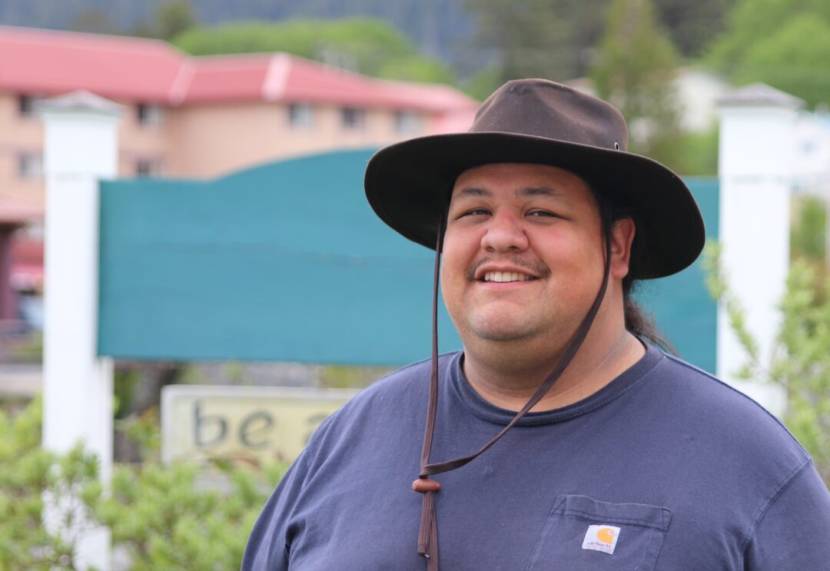
Steve Johnson (KCAW/Katherine Rose)

Johnson says there are plenty of parallels with the history of residential schools in Canada and the United States. The policies, the timeframe — it’s all similar. For over a century both governments forced Indigenous children from their homes and into boarding schools.

“And a lot of these kids that went to industrial residential schools, many of them never went home. And there’s different stories from different schools in different parts of the country. But the simple fact is, nearly every residential school has a graveyard,” he said.

Johnson is organizing a vigil to remember the 215 children in British Columbia and to acknowledge Sitka’s own history, which includes some children who were involuntarily sent to Sheldon Jackson, whether as orphans or as the result of relocation.

“I feel like the kids who were rounded up and taken to Sheldon Jackson College, their story is underrepresented,” he said. “And I would like to see it included in the canvas that is our town.”

He hopes the event will open up a dialogue about a subject that can be difficult to discuss.

“To gather together and to talk a little bit about the history. And to talk about how it’s impacted us, as two, three, four generations down the line from our parents, from our grandparents who experienced these things,” Johnson said. “And also to lend support and to recognize that we don’t have to whisper about these things anymore, we can talk about them, and we can address them.”

While Johnson has speakers lined up for Sunday’s vigil, he doesn’t want to discourage anyone in the community from attending and sharing their stories.

“Bring a candle. Bring a tissue. Bring a story if you’d like. Bring a picture,” he said. “This is this is an event by and for all of the people who wish to talk real history. Good or bad.”

After 77 years buried in unmarked grave, Unangax̂ WWII soldier will receive grave marker

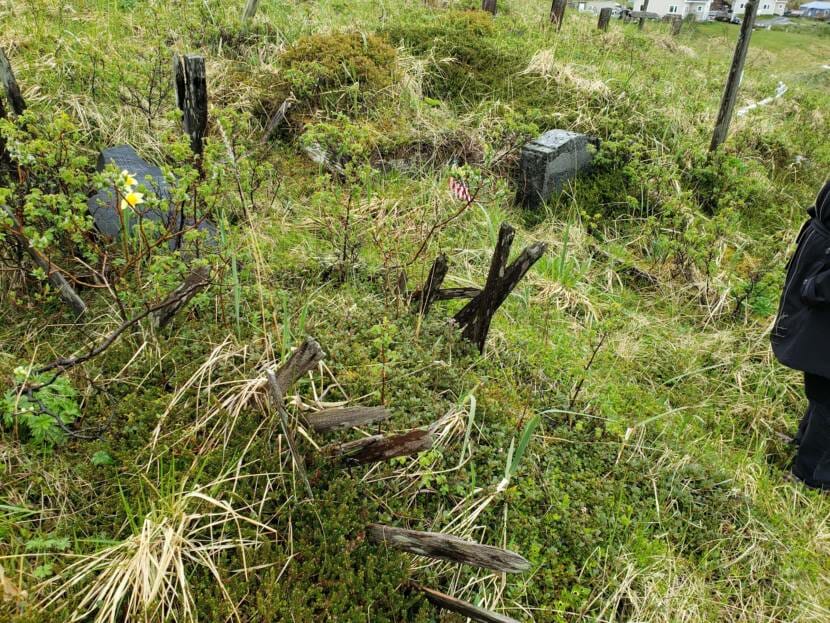
A single small U.S. flag marks the grave of World War II soldier George Fox, who was killed in action in Italy in 1944 and is buried in Unalaska. (Photo courtesy of Michael Livingston)

For years, a small American flag was all that marked the grave of George Fox. Now, his resting place will finally be recognized.

Every year, Unangax̂ elder Gertrude Svarny visits the Russian Orthodox cemetery in Unalaska and puts a tiny U.S. flag on an unmarked grave.

The grave is for her childhood friend, George Fox who was an Unangax̂ soldier who died during World War II.

“It is very powerful that Gertrude Svarny remembered him and has taken the time to honor his memory every Memorial Day to go up to his gravesite and to place the United States flag on his grave,” said Michael iqyax̂ Livingston, a cultural heritage specialist with the Aleutian Pribilof Islands Association. Livingston worked with others to get a grave marker for the World War II soldier.

“Here we are about 77 years later and his sacrifice is basically gone, almost gone. Had it not been for Gertrude Svarny, it would have been completely forgotten,” Livingston said.

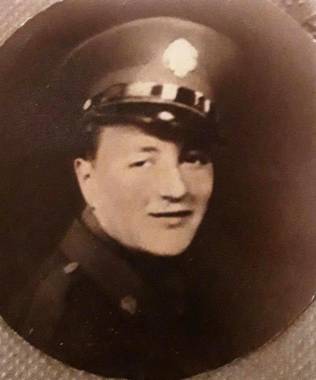
George Fox (Photo courtesy Georgean Scott)

Fox was born in 1920 on Unga Island, off the Alaska Peninsula about 250 miles northeast of Unalaska. He joined the U.S. Army in January of 1941 and served in the military police during World War II

The German occupation of Rome began in September 1943, and Allied forces led an offensive campaign that would eventually capture the Italian city.

Fox was killed in action in Ardea, Rome, Italy — just three days before the American forces took possession of the city on June 4, 1944. He’s the only known Aleut/Unangax̂ soldier killed in action during World War II.

When Fox’s body returned to Unalaska, Livingston said his funeral service was at the Russian Orthodox Church.

“He’s buried right next to his mom,” Livingston said. “And his mom was Russian Orthodox and he was Russian Orthodox, too.”

The grave of his mom, Emma Fox, is marked with a large solid black stone with her name on it.

And at 91, Gertrude Svarny, who is an accomplished Unangax̂ artist and culture bearer, continues to visit the grave of her friend.

But he never received a marker. Fox’s grave has been unmarked for more than 70 years, and his name is missing from World War II killed in action memorials in Alaska.

“We really don’t know why this grave was not marked,” Livingston said. “Times were different back in the 1940s. It was basically open-faced racism against people of color, including soldiers of color. And so that might have been a play in it”

“When you compare Private George Fox’s grave, two other graves — for example, out at Fort Richardson National Cemetery — those are, those graves are immaculate lawns and very beautifully placed stones and flags and sidewalks,” Livingston said.

Livingston and others worked for at least five years to get Fox a marker. They managed to get some records from the National Archives. And applied for one.

“We were able to enlist the help of United States Sen. Dan Sullivan. And since Sen. Sullivan’s office got involved and helps us, has helped us in the project, we have finally able to get some resolution from the Veterans Affairs,” Livingston said.

This May, the U.S. Department of Veterans Affairs approved the order of a gravestone for Fox.

“We’re just grateful that the stone is being ordered and hopefully it will arrive in Unalaska soon,” Livingston said.

Livingston estimates the stone will arrive about mid-July, and this will likely be the last Memorial Day without a marker for George Fox’s grave — besides a small U.S. flag from a friend.

131-year-old fish plant, other Alaska sites to be considered for national historical places registry

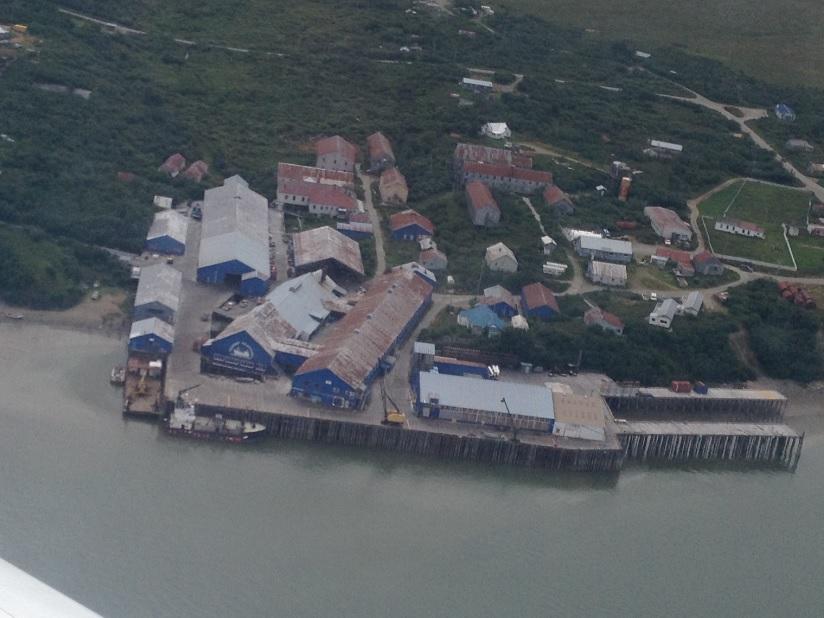
An aerial view of the 131-year-old Diamond NN Cannery at South Naknek in 2017. (Photo by John Wachtel)

On Tuesday, a state commission that oversees historical place names and registries will consider nominations for the National Register for Historic Places.

Alaska’s longest-running fish plant facility, the Diamond NN Cannery, is among the nominations for the Alaska Historical Commission to consider passing on to the National Register of Historic Places. The South Naknek cannery operated almost continuously from 1895 to 2015.

The Alaska Historical Commission is a nine-member panel that advises the governor on programs concerning history, prehistory, historic sites and buildings and historic names.

Katie Ringsmuth is Alaska’s state historian and deputy state historic preservation officer. She has studied and researched the NN Cannery extensively. And prior to her position with the state, she worked to get the site on the historic places registry.

“There’s 51 buildings still standing …  it’s that each building tells a story,” Ringsmuth said. “Those buildings help tell the story of people who oftentimes are omitted or haven’t been included in that history.”

Though largely segregated in the beginning, the cannery eventually became an integrated workforce that consisted of workers of Italian, Scandinavian, Chinese, Filipino, and Alaska Native heritage, among others.

“The fact that these buildings are still standing tells this extraordinary story of people who, you know, whose stories may be lost in the historic record, the written record,” Ringsmuth said. “So that’s why these buildings matter and why it’s so important to care for them. And importantly, to understand, you know, the people whose lives were shaped by them.”

A historic village site in the region is also among the nominations before the commission.

Qinuyang, or Old Igiugig or Kashanak, is a village site in the Bristol Bay region that sits near the confluence of Kvichak River and Slushy Creek. The village site is believed to date back as many as 6,000 years.

In the 1890s, the village was permanently settled as a fishing community. Qinuyang is the Central Yup’ik traditional place name for what is now South Naknek

High Ridge, or the Machetanz Cabin, and the Gould/Morris Thompson Cabin are also among the considerations.

To qualify for the national registry, a site must be at least 50 years old and meet at least one of four criteria:

  • Does it reflect an important period in American history?
  • Is it associated with a significant person or group?
  • Does it have architectural significance?
  • Will it yield more information down the road?

The Alaska Historical Commission will also consider changing the name of natural geographical landmarks.

One of those proposals would change the names of two peaks 15 miles southeast of Anchorage. In the 1950s, railroad workers named the mountains Suicide Peaks.

Palmer resident Bill Pagaran is a musician and works in the mental health field and suicide prevention.

“I’m an avid hiker. I, you know, I love to hike. And a few years back, I found out that there’s a couple of mountains just right outside of Anchorage, and I found out that there’s a couple of mountains called Suicide Peak,” said Pagaran, who is Tlingit and Filipino and carries the Lakota name Wakanyan Hentopi Na Wakan Gakonka (Sacred Sound of Thunder) and the Tlingit name is Keeg’an (Strong Warrior).

“I was like, ‘oh, my gosh, how horrible is that? Suicide Peak, really?’” Pagaran said. “I understand that talking about suicide in the right context and in the right way is important. But when you hear the word suicide immediately, you’re thinking death. Maybe you’re thinking of giving up immediately.”

Pagaran says the railroad workers submitted the name to the Alaska Mountaineering Club, which accepted it.

“There was no awareness or honor to the people of the land who were are the caretakers of the land, the first peoples of the land,” he said. “In the renaming process, that’s what I wanted to be done. And so that’s why we came up with the name Yuyanq’ Ch’ex.”

Pagaran worked with tribal leaders and elders to develop the name Yuyanq’ Ch’ex, which is Dena’ina for “heaven’s breath,” and applied for the name change.

Other proposals include naming an unnamed lake in the Matanuska-Susitna Borough to Dalteli Lake.

Alaska’s secret Cold War export? Shellfish toxin for the CIA

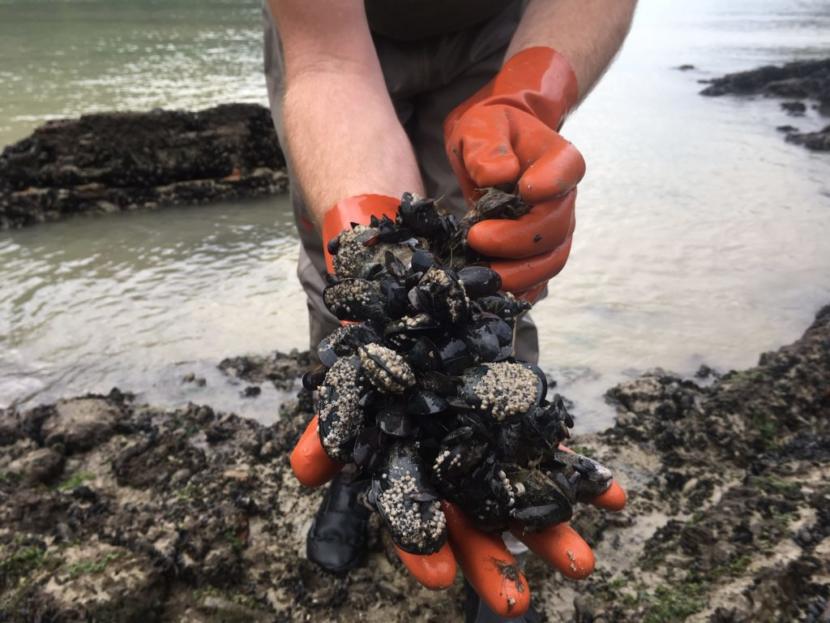
Blue mussels at Nahku Bay. (Claire Stremple/KHNS)

Alaska is well known for its seafood — halibut, cod and salmon destined for the dinner table. But there’s one seafood product that you don’t want to eat. And it may have been harvested for the CIA: a lethal toxin used as an alternative to cyanide.

In May 1960, Francis Gary Powers’ U-2 spy plane was shot down over the Soviet Union during a high-altitude reconnaissance mission. In his pocket was a modified silver dollar containing a hidden needle loaded with a lethal dose of shellfish toxin.

At the Kodiak Area Marine Science Symposium, oceanography Patricia Tester said she might know where the poison, known as saxitoxin, came from.

Saxitoxin causes paralytic shellfish poisoning. It paralyzes muscles by interfering with signals from the body, which can stop respiration.

Tester says she learned about saxitoxin experiments from a trove of documents found in Kodiak that revealed tests on mice in the 1950s involving shellfish toxins. The research was conducted in a facility in Ketchikan that no longer exists.

The documents Tester reviewed include a contract for clams and a shipping receipt to the U.S. Army Biological Warfare Laboratories at Fort Detrick in Maryland.

“In one of the files, there was a Department of Defense contract for toxic shellfish,” she said. “And this is what led to the detective journey that brought us through the Cold War history. The contract was from the Department of Defense and it was for toxic clams written in Oct. 6, 1952.”

The contract was for $10,000 of toxic clams — closer to $100,000 today — to be shipped to the East Coast.

“The department worked with the CIA to actually develop a replacement for the cyanide poison pill that was provided to US covert agents and spies during that time,” Tester said.

Cold War enthusiasts might remember that, under Nixon’s orders, the United States destroyed its stockpile of biological weapons in 1969. But in practice, the CIA interpreted the instructions liberally. During a 1975 congressional committee investigation, the CIA admitted it had kept a small stockpile of saxitoxin. And this was the same saxitoxin that Powers carried on his flight over the USSR.

Tester says it is possible to save somebody who has acute saxitoxin poisoning by putting them on a respirator and giving the toxin time to work its way out of the body. But the amount carried in Powers’ needle would likely be lethal within minutes.

The document Tester found doesn’t determine definitively that Powers carried saxitoxin from Alaska, but Tester says that her research indicates that it’s likely.

“There could have been another order, either earlier or later than the one I found,” she said. “There could have been orders for toxic clams off the East Coast, which happened as well, I think for the first time down in the Woods Hole area in the Massachusetts area about 1972. But that would have been, you know, pretty late in the game for them to have been doing anything like that.”

Powers never used the poison. He was captured after ejecting from his plane and ultimately returned to the United States in a prisoner exchange about two years later.

No other cases of operational use of saxitoxin by the CIA have come to light.

House passes bill to protect Unangax̂ cemetery at Funter Bay

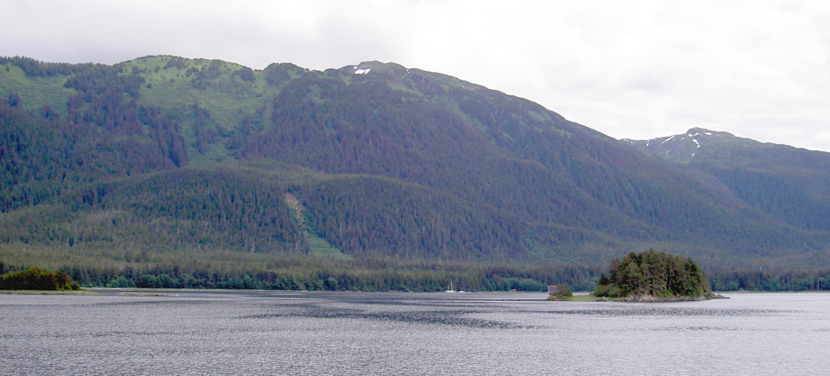
Funter Bay on the Mansfield Peninsula of Admiralty Island on Aug. 2, 2011.
Funter Bay on the Mansfield Peninsula of Admiralty Island on Aug. 2, 2011. (Creative Commons photo by Stepheng3)

Update: The bill passed 31-8 and is headed to the Senate. 

The Alaska House of Representatives is expected to vote today on a bill to protect the Unangax̂ cemetery at Funter Bay. The bill would add about 251 acres of state land, including the cemetery, to Funter Bay State Marine Park.

The cemetery holds more than 30 graves of people from St. Paul and St. George who died at Funter Bay during World War II after the U.S. military forced them from their homes and held them for much of the war at the remote spot on Admiralty Island.

Last year, the bill looked to be on its way to passing when the COVID-19 pandemic cut the session short. This year, a group of Republican representatives complained during floor debate that the bill transfers too much land to the park.

Republican Rep. Kevin McCabe, Big Lake, said he supports the intent of the bill, but he proposed an amendment that would transfer 90 acres to the park instead of 251.

Without the amendment, McCabe said, the state would be transferring additional acres, “including an island that’s offshore and not even part of this cemetery — that is unneeded transfer of Alaska’s wealth into a state park.”

Republican Rep. Dave Eastman (Wasilla) said the bill could stand in the way of future resource extraction.

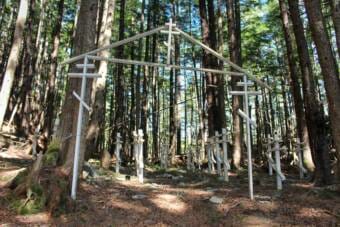
A recent photo of the Unangax̂ cemetery at Funter Bay. (Courtesy of the Juneau-Douglas City Museum)

“We are going in the wrong direction for a mere 30 interned individuals in the cemetery,” Eastman said. “We don’t know what technologies and future mineral discoveries might happen involving this area.”

Most of the people who died at Funter Bay were elders or very young children who were left to survive without clean water or basic medical care in the remains of an old cannery, more than a thousand miles from their homes.

The movement to protect the cemetery was motivated in part by what happened at another internment site, on Killisnoo Island, near Angoon. It’s on private land, and the owner has blocked access. The Funter Bay families want to make sure they can care for the graves — and that the site will serve as a memorial of the Internment.

Democratic Rep. Jonathan Kreiss-Tomkins, Sitka, is one of the bill’s sponsors. He said he had not heard any opposition to the bill from local residents or mining interests.

“I understand the concerns being highlighted by previous members,” he said. “But I think it may be more ideological and is not corroborated by any on the ground or local concern or hesitation about this proposal.”

Juneau Democratic Rep. Sarah Hannan, who is also sponsoring the bill, said the Department of Natural Resources had found the land has no commercial value. DNR recommended transferring the entire 251-acre tract because it would streamline management. Instead of two state divisions having separate management responsibilities in Funter Bay, the parks division could manage it alone.

McCabe’s amendment failed, 21-19, and the bill advanced without objection. If it passes the House, it goes next to the Senate.

Site notifications
Update notification options
Subscribe to notifications