History

For The Navajo Nation, Uranium Mining’s Deadly Legacy Lingers

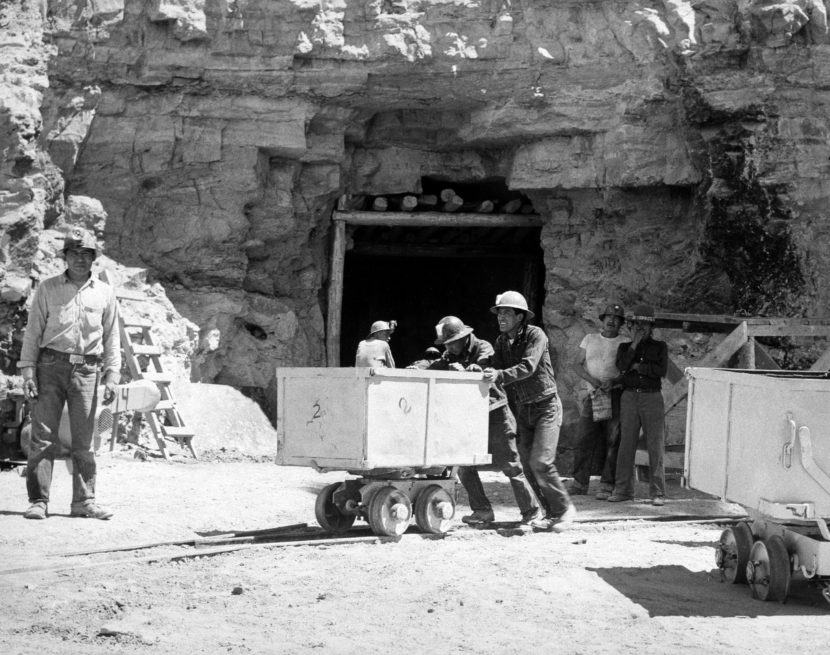
Navajo miners work at the Kerr-McGee uranium mine at Cove, Ariz., on May 7, 1953. AP
Navajo miners work at the Kerr-McGee uranium mine at Cove, Ariz., on May 7, 1953.
AP

The federal government is cleaning up a long legacy of uranium mining within the Navajo Nation — some 27,000 square miles spread across Utah, New Mexico and Arizona that is home to more than 250,000 people.

Many Navajo people have died of kidney failure and cancer, conditions linked to uranium contamination. And new research from the CDC shows uranium in babies born now.

Mining companies blasted 4 million tons of uranium out of Navajo land between 1944 and 1986. The federal government purchased the ore to make atomic weapons. As the Cold War threat petered out the companies left, abandoning more than 500 mines.

Maria Welch is a field researcher with the Southwest Research Information Center, which is working with the federal Centers for Disease Control and Prevention and state and local groups to gauge the impacts of uranium on Navajo families today. She surveys Navajo families for the Navajo Birth Cohort Study, which has 599 participants so far.

On a recent day in Flagstaff, Ariz., she asks a mother about feeding practices for her baby. Forty percent of the tribe lacks running water. Welch learns that the mother mixes baby formula with tap water.

One of the study’s findings: 27 percent of the participants have high levels of uranium in their urine, compared to 5 percent of the U.S. population as a whole.

Welch, who is Navajo, got involved in the study because of her own family’s exposure to uranium. Both of her parents grew up next to mines, even playing in contaminated water.

“When they did the mining, there would be these pools that would fill up,” she says. “And all of the kids swam in them. And my dad did, too.”

Many Navajo unwittingly let their livestock drink from those pools, and their children play in mine debris piles. Some even built their homes out of uranium.
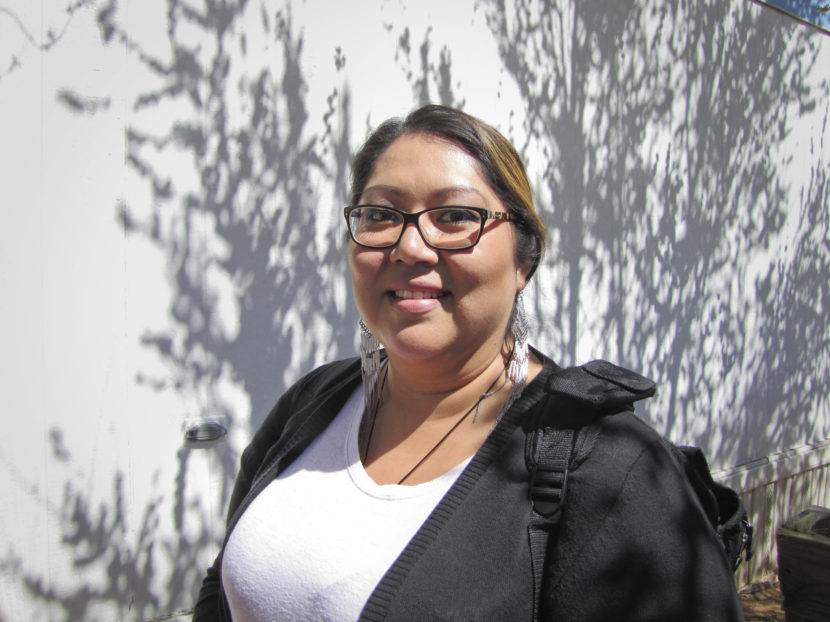
Maria Welch is a researcher studying the impact of uranium mining on Navajo families today. She also has a personal interest: Both her parents grew up next to mines. Laurel Morales/KJZZ
Maria Welch is a researcher studying the impact of uranium mining on Navajo families today. She also has a personal interest: Both her parents grew up next to mines.
Laurel Morales/KJZZ

All four of Welch’s grandparents have died, and she worries about her parents’ health and now her daughter’s. Cancer rates doubled in the Navajo Nation from the 1970s to the 1990s.

“Why isn’t there more of an outrage? Why isn’t there more of a community sense of what the heck is going on? How did this happen? Why is this still occurring? Why hasn’t anything been done?” she asks.

George McGraw, a human rights advocate working on the Navajo Nation, has one answer.

“Problems like this really disproportionately affect low-income communities of color,” says McGraw, whose organization DIGDEEP is raising money to dig wells on the reservation.

“Flint (Michigan) might feel really far away from the Navajo Nation in rural Arizona. But when you look at the demographics of it, it really isn’t,” he says. “This is a community that has found themself voiceless.”

The U.S. Justice Department has recently gone after some of the mining companies. Since 2008, the Environmental Protection Agency has hauled away thousands of cubic yards of mine waste and has rebuilt nearly 50 contaminated homes, says EPA Regional Administrator Jared Blumenfeld. But there’s still much more to be done.

“We’re spending a lot of time making sure that the polluters pay, so it isn’t the federal taxpayer,” he says.

One company, Anadarko Petroleum, and its subsidiary Kerr-McGee recently paid $1 billion to the Navajo Nation for cleanup and as compensation to people living with the effects of uranium contamination.

But one-third of the mining companies have shut down or have run out of money. The federal government knew about some of the dangers decades ago, but only started the cleanup in recent years.

“We understand that there’s frustration,” Blumenfeld says. “We share that frustration that some of this takes a long time.”

And the uranium issue on the Navajo Nation is part of a much bigger problem. Across the western United States there are more than 160,000 abandoned hardrock mines — thousands of which continue to pollute.

Copyright 2016 KJZZ-FM. To see more, visit KJZZ-FM.

Joseph Medicine Crow, Historian And Last Crow Tribe War Chief, Dies At 102

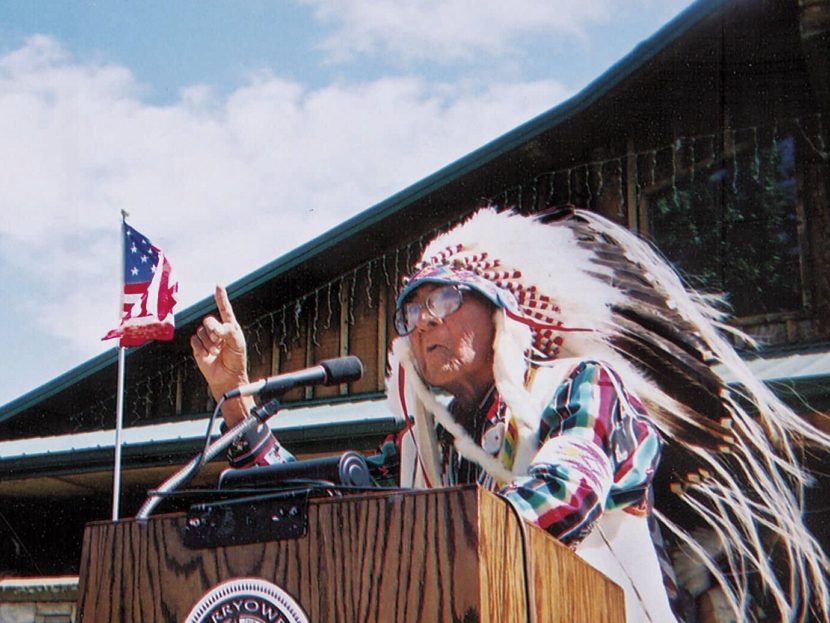
Crow tribal historian Joe Medicine Crow speaks of unity in 2001 at a dedication of a "Peace Memorial," near the site of the Battle of Little Bighorn. Becky Bohrer /AP
Crow tribal historian Joe Medicine Crow speaks of unity in 2001 at a dedication of a “Peace Memorial,” near the site of the Battle of Little Bighorn.
Becky Bohrer /AP

Joseph Medicine Crow, a Native American historian and the last war chief of the Crow Tribe of Montana, has died. He was 102.

Medicine Crow earned the title war chief “for his deeds in Europe in World War II, which included stealing enemy horses and showing mercy on a German soldier he could have killed,” Montana Public Radio’s Eric Whitney reports.

He was also a living link to the 1876 Battle of the Little Bighorn, having heard direct testimony from someone who took part in the battle and later chronicling it as a historian.

“He is the last person alive to receive direct oral testimony from a participant in the Battle of the Little Bighorn: his grandfather was a scout for General George Armstrong Custer,” the White House said in a statement when it honored Medicine Crow with the Presidential Medal of Freedom, the nation’s highest civilian honor, in 2009.

“Wearing war paint beneath his uniform and a sacred feather beneath his helmet, Joseph Medicine Crow completed the four battlefield deeds that made him the last Crow war chief,” President Obama said during the ceremony. “Dr. Medicine Crow’s life reflects not only the warrior spirit of the Crow people, but America’s highest ideals.”

Medicine Crow, whose Crow Tribe name was “High Bird,” was also the first member of his tribe to earn a master’s degree, Eric says. He went on to receive several honorary doctorates.

“Joe was a true American hero,” Darren Old Coyote, chairman of the Crow Tribe, told the Billings Gazette. “He was a great man in two worlds.”

As The Associated Press reports, Medicine Crow became the official historian for the Crow Tribe shortly after returning from service in World War II. The news service adds:

“With his prodigious memory, Medicine Crow could accurately recall decades later the names, dates and exploits from the oral history he was exposed to as a child, [curator emeritus at the Smithsonian Institution’s National Museum of American Indians Herman] Viola said. Those included tales told by four of the six Crow scouts who were at Custer’s side at Little Bighorn and who Medicine Crow knew personally.

“Yet Medicine Crow also embraced the changes that came with the settling of the West, and he worked to bridge his people’s cultural traditions with the opportunities of modern society.”

Copyright 2016 NPR. To see more, visit http://www.npr.org/.

Only Script In Shakespeare’s Handwriting Urges Compassion For Migrants

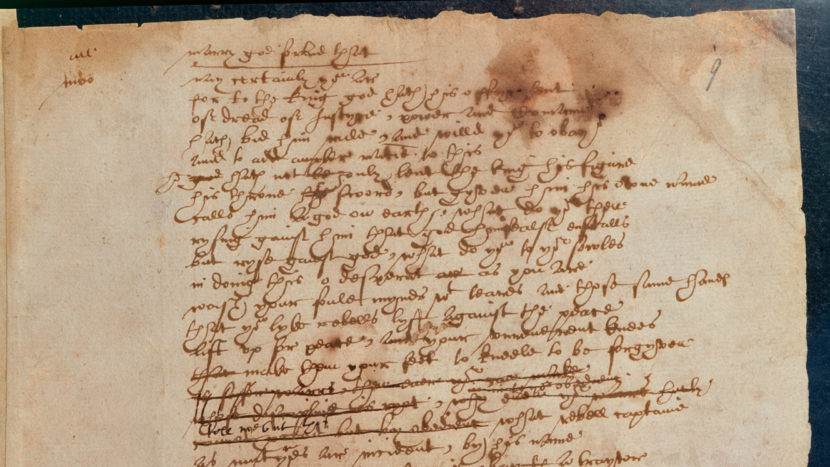
A section of the only surviving script in Shakespeare's handwriting. Courtesy of the British Library
A section of the only surviving script in Shakespeare’s handwriting.
Courtesy of the British Library

This week the world’s been treated to a commentary on immigration reform from a surprising source: William Shakespeare.

2016 being the 400th anniversary of the Bard’s death, many institutions are doing celebrations of one sort or another. The British Library, in hosting a major exhibition, has put online the only surviving scrap of a script in Shakespeare’s handwriting — a scene that finds eerily poignant echoes in today’s arguments about refugees and immigration on both sides of the Atlantic.

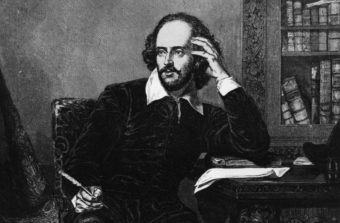
William Shakespeare, circa 1600. Hulton Archive/Getty Images
William Shakespeare, circa 1600.
Hulton Archive/Getty Images

It’s a speech from a play, The Book of Sir Thomas More, that was not by Shakespeare. Nor was it produced in his lifetime, apparently for fear that it would incite unrest at a time of religious tensions that had created an unprecedented refugee crisis in Europe. The Bard and several other authors did rewrites, but while his own contribution was an impassioned plea for tolerance, the revisions weren’t enough to get the play produced, and its script languished for centuries.

When it was finally staged in London in 1964, a young Ian McKellen played Sir Thomas More (which has enabled him to joke in speaking engagements that he is “maybe the last actor who can say ‘I created a part written by William Shakespeare’.”)

https://youtu.be/RFJaqVG_nMY

A part only partly written by the Bard, but powerfully so. In the stirring speech penned in Shakespeare’s hand, it is More’s task to silence a mob that’s rioting about “strangers” in their midst. King Henry VIII had offered safe haven to too many refugees, scream the rioters. “They must be removed!”

More begins by pretending to agree, then points out that there’s a problem with mob rule when it denies clemency to the downtrodden. Though Shakespeare’s handwritten revisions to The Book of Sir Thomas More qualify as a rough first draft, they do not lack for eloquence in decrying the mob’s “mountainish inhumanity.”

You’ll put down strangers,/

Kill them, cut their throats, possess their houses,/

And lead the majesty of law in lyam/

To slip him like a hound. Alas, alas! Say now the King/

As he is clement if th’offender mourn,/

Should so much come too short of your great trespass/

As but to banish you: whither would you go?/

What country, by the nature of your error,/

Should give you harbour? Go you to France or Flanders,/

To any German province, Spain or Portugal,/

Nay, anywhere that not adheres to England:/

Why, you must needs be strangers.

Shakespeare’s original handwritten script is now on loan at the Folger Shakespeare Library in Washington. It is one of more than 300 texts being digitized as part of the British Library exhibition, Shakespeare in Ten Acts, that opens April 15 in London.

Copyright 2016 NPR. To see more, visit http://www.npr.org/.

Ancestral remains to return home to Chirikof Island

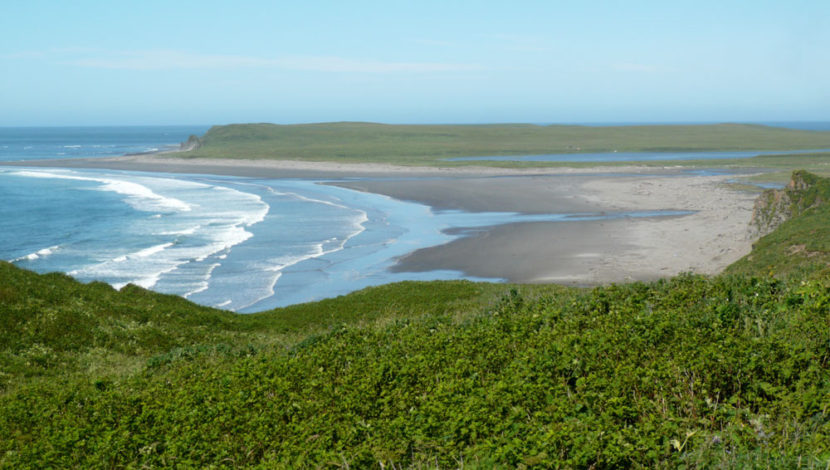
Anchorage Beach on Chirikof Island looking west. (Public Domain photo by USGS)

After a struggle that’s lasted more than a decade, ancestral remains long removed from the Kodiak Archipelago will soon return home.

Following excavation in the 1960s, they traveled to the University of Wisconsin and ended up at Indiana University Bloomington. They’ve been the subject of study and research papers, but Alaska Native ancestors in Kodiak who would like them returned for burial.

Many places in Alaska, including Kodiak Island, have a history of non-Native archaeologists excavating and removing ancestral remains and artifacts.

Alutiiq Museum Executive Director April Laktonen Counceller says archaeologists in the 1960s did an excavation of a graveyard that was eroding onto a beach south of Kodiak on Chirikof Island. They removed the remains of approximately 150 people.

“From what we had heard there was even exposed coffins and things like that, and so this is a graveyard from probably the 1800s when there was a Russian settlement on the island. There was also a historically Alutiiq habitation,” Counceller said.

The archaeologists transported the remains from the island and since then they’ve ended up at Indiana University. Counceller says she thinks of them as people’s great-grandparents.

“Forty boxes of human remains stacked floor to ceiling, and it’s really hard for me to remain emotionally neutral when I imagine that,” Counceller said. “I think of my own grandparents, I think of my own village where this happened, where archaeologists during that time would come into the village, and even when people would say, ‘Please don’t dig up our graveyard.’ They would just do whatever they wanted.”

Councellor is from Larsen Bay where one landmark repatriation case took place in the late 1980s. The Larsen Bay tribe and the Kodiak Area Native Association asked the Smithsonian Institution to return remains excavated in the 1930s.

Marnie Leist, the Alutiiq Museum’s curator of collections, says that case is part of the reason the Chirikof Island remains will soon come home to be reburied. It contributed to the establishment of a federal law called the Native American Graves Protection and Repatriation Act, or NAGPRA.

“Many tribes around the country have their ancestors and collections from their land scattered throughout the nation,” Leista said. “This law was developed to help tribes and also museums to develop procedures so that there’s a process for returning funerary objects, sacred objects and human remains to tribes.”

NAGPRA requires federally-funded institutions like universities and museums to inform Native tribes and peoples if they are holding any artifacts or remains that are connected to them. Leist and Councellor say the researcher at the university who was studying the remains did not do that.

A U.S. Fish and Wildlife archaeologist made the discovery of the collection’s whereabouts in the mid-2000s. Chirikof Island is federal land and managed by the U.S. Fish and Wildlife Service, which means they also manage the remains. The archaeologist was documenting the organization’s collection and discovered that many items had ended up at Indiana University.

The extent of the university’s research on the remains is unknown, but anthropology professor Della Collins Cook has included her observations on the collection in several papers.

Councellor and Leist are critical of Cook and the university for the delay and for failing to contact members of the Kodiak community about studying the remains of their ancestors. Leist says the university and Cook have an ethical responsibility.

“These human remains have been on loan, or whatever the circumstance may be, at Indiana University. Because they don’t have control … (they assert) they technically never had to comply with NAGPRA … and we feel like that since these are literal ancestors for the Kodiak Alutiiq people that they should have lived up to the spirit of the law,” Leist said.

Cook would not agree to an interview with KMXT.

Jayne Leigh-Thomas, director for the university’s Native American Graves Protection and Repatriation Act office, said she could not speak for Cook or the university, but she said she’s been assisting with returning the collection to Fish and Wildlife so they can get the remains back to the tribe since last summer.

Leist says it’s taken years for Fish and Wildlife to finally take control of the remains.

“That’s where we are feeling frustrated because the NAGPRA process can’t begin until that happens. … Until the U.S. Fish and Wildlife Service has the human remains, has access to them, and has the project documentation, we can’t move forward. They can’t create an inventory for human remains they don’t have.”

She says Fish and Wildlife needed to establish a legal right to the remains before they could make plans to take control of them with the help of the U.S. Army Corps of Engineers.

Now that those plans are finally in place, Leist will travel to Indiana along with Army Corps representatives to retrieve the remains in early March. She will represent the Sun’aq tribe, which has claimed cultural affiliation with the remains on geographic grounds.

Leist says they hope the repatriation process will be completed by 2018, and they will finally be able to bury their Chirikof ancestors.

Video: Gastineau Apartments demolished

City officials plan to file a complaint in court this week as a first step toward getting a lien on the newly cleared Gastineau Apartments property in downtown Juneau.

According to Municipal Attorney Amy Mead, a lien on the property would entitle the city to recover the cost of demolition from any sale of the property. The selling price could be significantly less than the demolition cost — the land was appraised for just over $810,000 a few years ago, but the demolition cost almost $1.4 million. To make up the difference, the city could choose to work with current or future owners on alternatives such as providing public parking spaces.

Public Works Director Rorie Watt says the demolition has gone smoothly.

“It was a difficult project in terms of trying to plan and do it in a way that was least impactful to downtown,” he said. “The buildings came down a lot easier than we thought they would, and the reason they did was that there was a lot less steel in the concrete. And so that was both good that they came down easier, but it was also scary because they came down faster.”

Besides the land previously occupied by the apartments, the demolition also included Gunakadeit Park. Watt says it’s possible the land could be turned back into a park, but the city is also open to including it in future development.

“Depending on who ends up with the Gastineau Apartments property – whether the current owner or somebody else – if there was a development proposal that made use of the park property and created the possibility for commercial and/or residential building, I think we would be really excited about that. It’s kind of a key piece of property and I think it needs to be put to its highest and best use.”

A fire rendered the century-old Gastineau Apartments uninhabitable in November 2012. Last year, the city determined it was unreasonable to repair and ordered their demolition. The owner failed to comply, so the city hired a contractor who demolished the building over the past few weeks.

Gastineau Apartments Timeline

Some Take Massive Risks To Save Syria’s Cultural Heritage

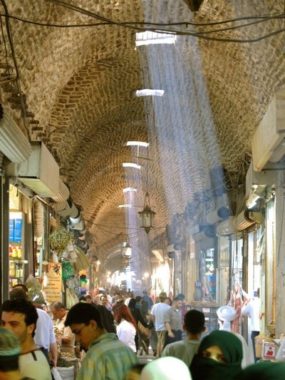
Souk al-Medina, pictured in 2007, is a large covered market in Aleppo, Syria that has history back to the 14th century. Flickr user Alex Keshavjee/Flickr.com
Souk al-Medina, pictured in 2007, is a large covered market in Aleppo, Syria that has history back to the 14th century.
Flickr user Alex Keshavjee/Flickr.com

More than 250,000 people have been killed and millions more displaced as a result of the conflict in Syria. But the destruction also extends beyond human lives. Significant parts of that country’s heritage are now lost. Architecture, art and antiquities dating back more than a thousand years have been wiped out — in what some have called cultural genocide.

Reporter James Harkin has spent time on the ground in Syria. He reports on the race to save Syria’s archaeological treasures in the recent issue of Smithsonian Magazine.

The threat to the country’s antiquities comes from different places. “Some of the most valuable have been destroyed as collateral damage in the shelling and crossfire between government forces and various rebel factions,” Harkin writes. “Others have been sold off, bit by valuable bit, to buy guns or, just as likely, food or a way to escape the chaos.”

And the Islamic State has destroyed historical artifacts deliberately in what Harkin calls “a new kind of historical tragedy.” ISIS militants, shown in videos, “have attacked priceless artifacts with jackhammers, rampaged through museum galleries housing historically unique collections, and exploded sites in territory they control for scarifying effect.”

Harkin spoke with NPR’s Eric Westervelt about his experience traveling to Syria and reporting on efforts to save this cultural heritage.

On the historic Aleppo souk, the market

It’s a kind of wonderful, natural archaeological maze in which you can get lost in the bustle. And so, it was an amazing thing to behold, along with the famous mosque there, the Umayyad Mosque. And so to go back, five years later and see the pummeling of this place. You know, 1,000 of the market stalls in the souk have been reduced to nothing. One hundred and forty of the historic buildings have been tangled. The only sound you can hear is the sound of metal — the metal corsetry of damaged buildings twisting in the wind like sinister wind chimes. And so it was eerie. Like a scene of a crime.

On the Umayyad Mosque

The Umayyad Mosque is in very very bad shape. It sort of lies there like a sort of agonized soldier crying in no man’s land in World War I. The famous minaret is lying there — and I saw it with my own eyes from this military watchtower, it’s lying there in pieces. In fact, one whole side of the whole mosque is in stones. It’s in very very bad shape. And what was famous about that mosque, or one of the things that was famous about it was its riches of Islamic art. And who knows where they are now.

On Palmyra

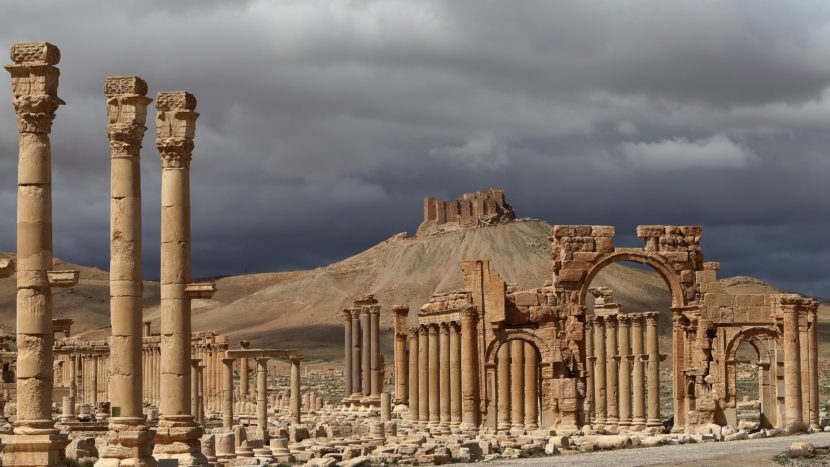
A photo from 2014 shows ancient ruins of Palmyra that date back 1,800 years. Much of it has now been destroyed by ISIS. Joseph Eid/AFP/Getty Images
A photo from 2014 shows ancient ruins of Palmyra that date back 1,800 years. Much of it has now been destroyed by ISIS.
Joseph Eid/AFP/Getty Images

Palmyra has taken such a hit from all sides in some ways. Hundreds of Islamic State militants converged on the city, they took the city and they began holding not only the archaeology, but the people — including the staff, the archaeological staff — hostage. And famously they gruesomely murdered the head of antiquities in that city, Khalid al-Asaad.

On why ISIS murdered Palmyra’s chief of antiquities

There were a number of reasons that were floated at the time. For a start, they simply don’t like archaeologists. They see them as secular and idolatrous and part of a civilization that they find offensive. Another reason why they apparently killed Khalid al-Asaad, according to some of his relatives, was that he refused to tell them where the archaeology was hidden. Because his staff had been very courageously involved in concealing some of it.

A different story was told to me by professor Abdulkarim, who’s the head of antiquities in Syria, who said that for some reason the Islamic State were convinced that there was tons and tons of gold in the museum in Palmyra, which only needed to be liberated with the help of finding out where it was.

Ma’amoun Abdulkarim, the archaeology professor, said, “You know, these people are crazy. They’re stupid. There was no gold.”

But it’s possible that they might have killed Khalid al-Asaad because he refused to tell them where nonexistent treasures were that they were convinced — for their own paranoid reasons — were there.

On saving antiquities

Some very courageous people were involved in that. One of the curiosities of the Syrian regime is that this regime thrives on the prospect of crisis. When I was in Damascus early in 2012, I was told by a friend of mine, a civilian, that the regime had already begun taking down the statues of Hafez al-Assad, the old dictator and the father of the current president. In other words, very early on, this regime for its own authoritarian slightly paranoid reasons had begun secreting all of its archaeology. And according to professor Abdulkarim, they have saved already 99 percent of the museum collections within Syria.

So much of what you see on the TV where you see statues, you see Nimrud, you see Palmyra being exploded — that’s the outdoor archaeology which couldn’t be hidden away. And it simply gets blown up by the Islamic State. But there are lots of very courageous people on both sides who are working against the grain to try and save this for better days.

Copyright 2016 NPR. To see more, visit http://www.npr.org/.
Read original article – February 28, 2016 6:48 PM ET


Site notifications
Update notification options
Subscribe to notifications